






It’s complicated!
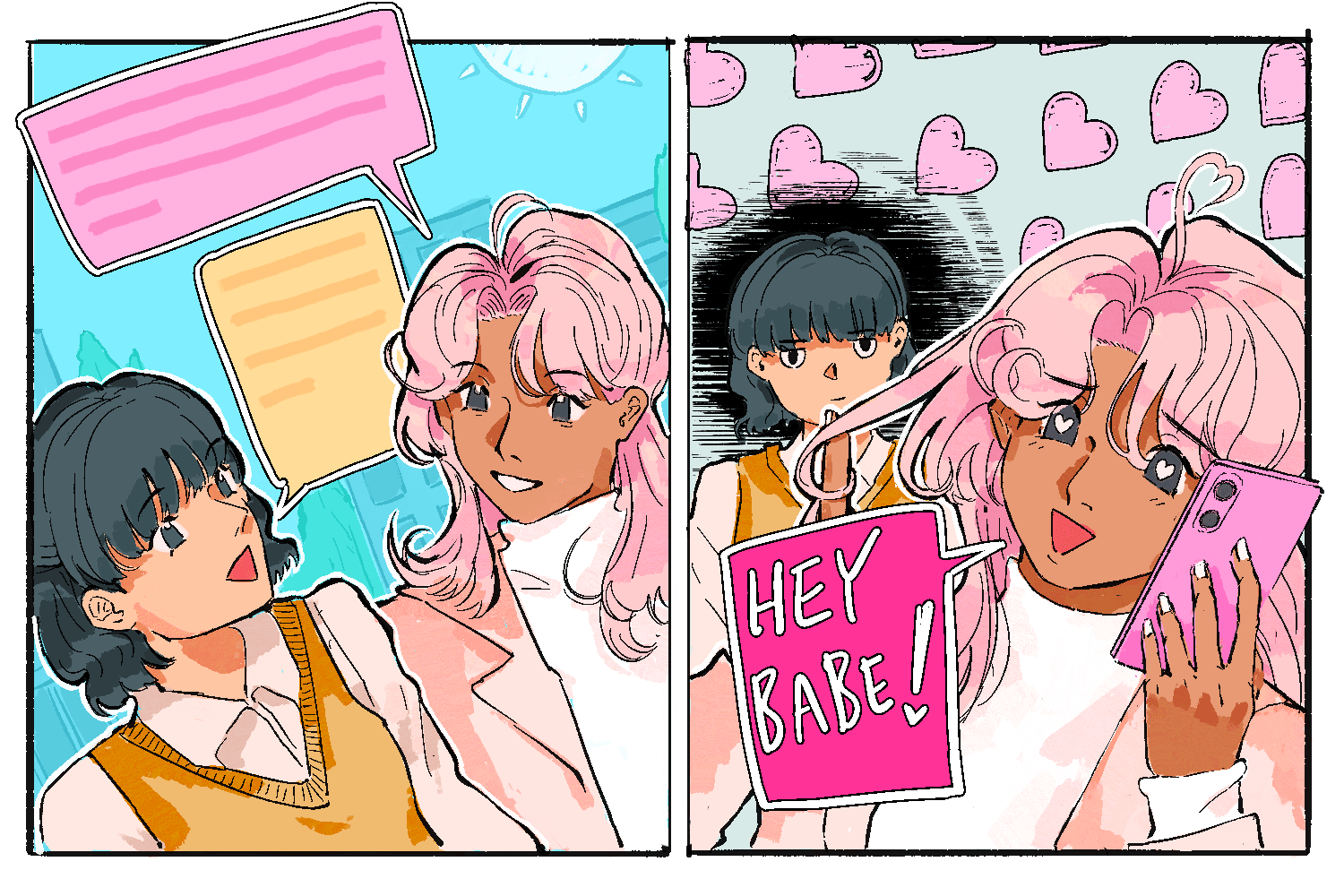
Why friendships between single and partnered women can be tense
By ABHINAYA KASAGANI — akasagani@ucdavis.edu
For most of my adult life, I existed in a group of single female friends. None of us ever had the desire to share our lives with a romantic partner and were largely content with the idea of a white picket fence being divvied up among ourselves. Over time, this changed. Now, some of us have long-term partners, while others talk about how unlucky we are in love. Despite this, an unspoken tension exists in close female friendships where the single person’s primary form of intimacy lies in their friendships, while the partnered person’s is with their partner.
Modern dating has also exacerbated the age-old tension of outgrowing one another. Most of us, at some point in our adult lives, have encountered strained female friendships, largely due to our inability to prioritize each other, which becomes easy to dismiss by saying “things change.” While this rarely ever results in active conflict, the shift in priorities that accompanies coupling also shifts our levels of intimacy with one another. This is not to suggest that I am not largely dependent on my friends for anything and everything (because I am), but there is often a sting of betrayal that is explained as jealousy. Most times, it is an inadequate descriptor.
It is not primarily time that dictates these shifting allegiances; rather, it is how this time is unevenly distributed or prioritized within relationships. While some friends are prone to isolating themselves and cutting off support systems outside of their relationships, others tend to include their partner in other existing dynamics. Although it is not surprising that romantic partners tend to become the primary confidant — seeing as how they are default witnesses to your life — being replaced by a friend’s romantic partner can feel like a demotion in its own right.
The partnered person might feel as if this transition is natural; romantic partners have long been socially presented (primarily to women) as the most central relationship, one that requires a great deal of time and effort. Either way, it feels as if one person (whether that be the partner or friend) has been relegated to a lower status of intimacy. The weight of expectations can bog both parties down, causing resentment and distance.
Some women have reported feeling annoyed upon learning that their friends disclose secrets they’ve told them in confidence to their partners. In her article, Please, Stop Telling Your Partner My Secrets, Hannah Ewens recounts how a friend mentioned her partner becoming an emotional support blanket for processing her conversations with friends. Ewens’ rebuttal was this: “What strikes me is how easily this arrangement has been adopted, as though intimacy with one person requires the sacrifice of another’s privacy.”
One issue that arises is that, while the single friend relies primarily on their partnered friend for emotional support, their friend can seek that from their partner instead. This imbalance causes the pair to feel inadequate in their respective roles, either as if they are asking too much or having too much expected of them. This feeling of being met with mismatched reciprocity, as Ewens notes, “isolates single people, who are left with no true confidant — and potentially traps people in relationships because they’re overly dependent on this closed system.”
Most friendships form during periods of similar circumstances or shared life experiences, especially when one is navigating adulthood, independence or college. When one person’s life changes significantly, it can disrupt the existing relationship. The single friend might feel pressured to move forward in their romantic lives or risk being left behind.
While there is extensive discourse around romantic relationships, what to expect and how to maintain and manage them, friendships are treated as secondary. This leaves most women without the vocabulary to vocalize and negotiate their needs in platonic relationships. It also allows partnered women to dismiss any criticism from single women as coming from a place of jealousy.
Oftentimes, strained friendships between single and partnered women result from differing levels of intimacy with one another, discrepant value systems or incompatible ideas of freedom and autonomy. This not only impedes platonic relationships but also prevents other relationships from ever forming. Just as partnered women must ensure they don’t isolate themselves once they enter romantic relationships, single women should form other relationships that don’t hinge on a singular person.
While some friendships avoid this by mutually communicating and investing, often acknowledging this strain can move the conversation forward. It may involve renegotiating what intimacy looks like and being more intentional with your time — like romantic relationships, friendships risk neglect if these conversations aren’t had. This existing tension between single and partnered women is only avoidable if both parties acknowledge that intimacy should be shared and not allocated.
Written by: Abhinaya Kasagani— akasagani@ucdavis.edu
Disclaimer: The views and opinions expressed by individual columnists belong to the columnists alone and do not necessarily indicate the views and opinions held by The California Aggie.