






UC Davis adds new NCAA sport
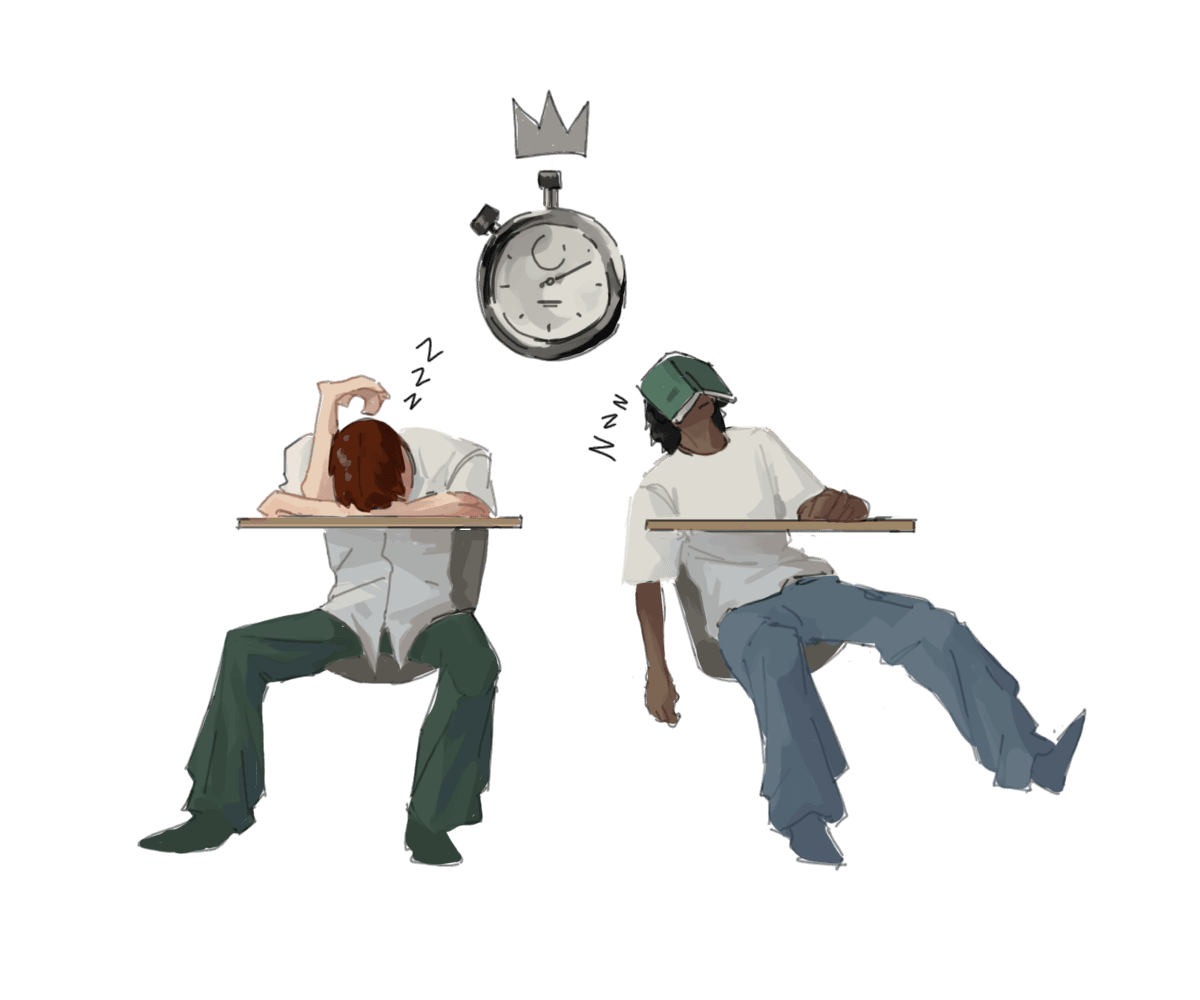
Competitive napping on the rise across college campuses
By DANIELLE WIRNOWSKI— sports@theaggie.org
As spring quarter starts up for students, a new sport is on the rise: competitive napping. Students are encouraged to try-out for the Division 1 team. Competitive napping has four different categories for students to try-out for: speed-sleeping, inconvenient napping, marathon napping and power-naps.
Student-athletes, regardless of their year, are encouraged to try-out and represent their school in these competitions.
The recruitment process tests students in the middle of day, keeping in mind student schedules as well as the increasing temperature in the spring at UC Davis. The students are timed to the hundredth of a second, exemplifying the importance of getting the exact time for napping and testing the student athletes' ability to sleep.
Speed-napping assesses the athletes’ ability to fall asleep as fast as possible and to stay asleep for at least 15 minutes. A student is considered “disqualified” from the round of competition if they failed to stay asleep for at least 15 minutes. Student-athletes should strive to fall asleep within 3 minutes if they want to be considered as a starter.
The record time for a student athlete to fall asleep under the “speed-napping” category so far is 2 minutes and 15 seconds, which is a high standard, but not entirely unachievable.
Inconvenient napping assesses the athletes’ ability to fall asleep in a variety of situations that would be considered "inconvenient" for most nappers: a bright lecture hall, hammocks along a major pathway and a triple dorm room with at least one other roommate home.
Bright lecture halls allow the student athletes to be tested on their ability to fall asleep in different times of day, as well as the comfort of sleep conditions. Hammocks allow testing for inconsistent noises and activity level, mainly focusing on the presence of conversation. A triple dorm room with at least one roommate present allows for the test of a high comfort level along with consistent noise level, focusing on noises other than talking.
Marathon napping tests how long student athletes can remain asleep during mid-day, rather than focusing on naps later in the day. Marathon napping student athletes should strive to remain asleep for at least 45 minutes.
This minimum allows student athletes to border between napping stages and sleep. A nap is considered under 90 minutes, meanwhile sleep is considered between seven and nine hours.
Power-napping tests the student athletes ability to time their napping length as accurately as possible. The time to match is a 25-minute power nap, where student athletes must be able to wake up exactly at the 25-minute mark.
The closest record to the exact time would be 23:37.026, so the recruitment team is still looking for a student athlete to beat it.
Power-napping is considered to be the most difficult aspect of the competitive napping sport, as it requires athletes to time exactly how long they can sleep, as well as how long it takes to fall asleep.
Recruitment and try-outs for the napping time are occurring during the first two weeks of the spring quarter, with times and more information posted on the UC Davis Athletics Department website. Competitive napping on the whole is increasing in popularity, and will see more events during May, with the ability for students to watch the competitions.
Written by: Danielle Wirnowski — sports@theaggie.org