






3D cryo-electron microscopy structure of plant cell augmin published by UC Davis researchers
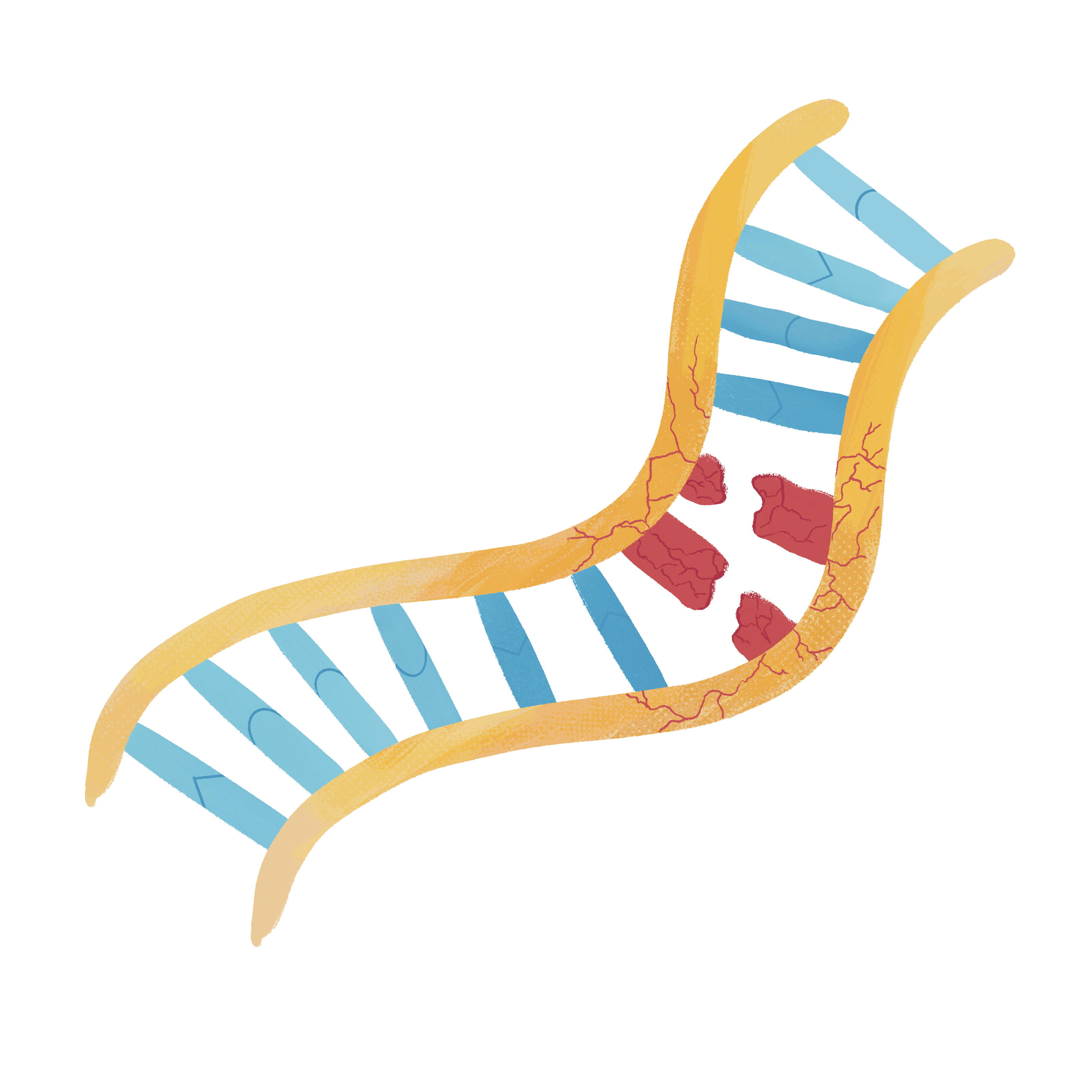
These findings are the culmination of over a decade of research into the augmin protein complex
By JOANNA ABRAHAM — science@theaggie.org
In December 2025, UC Davis researchers published cryo-electron microscopy (cryo-EM) structures of augmin, a protein complex that helps organize the microtubules that comprise the mitotic spindle, which helps sister chromatids separate during mitosis. The team, whose findings were published in Nature, was led by Dr. Bo Liu, a professor of plant biology, and Dr. Jawdat Al-Bassam, an associate professor in the Department of Molecular and Cellular Biology.
These findings are the culmination of over a decade of research into this protein complex in plant cells. Augmin was first discovered in Drosophila melanogaster, the fruit fly, in 2008.
“Most people did not think augmin was also in plants,” Liu said in a UC Davis press release.
However, in 2011, a team led by Liu found the complex to exist in plants with a key function: centrosome-independent spindle microtubule organization.
Centrosomes, or microtubule organizing centers, are structures that move to opposite ends of an animal cell prior to the start of cell division, according to the National Institutes of Health. Microtubules are tube-like proteins that attach to the centrosomes to form the mitotic spindle. During anaphase, spindle fibers pull sister chromatids to opposite poles of the cell.
Plant cells do not possess centrosomes. How then, are microtubules organized to form the mitotic spindle? The answer involves augmin, according to the 2011 paper co-authored by Liu.
Researchers disrupted AUG3, a gene that codes for a subunit of the augmin complex in Arabidopsis thaliana, a plant in the mustard family. Compared to the bipolar arrangement of mitotic spindles in the control, plant cells with an AUG3 disruption exhibited abnormally shaped mitotic spindles (half spindles and elongated spindles). As a result, defects were observed in cell division.
Therefore, researchers concluded that augmin is involved in microtubule organization during plant cell division. In 2014, a paper co-authored by Liu found that augmin helps maintain cell structure and controls patterns of cytoskeletal expansion during interphase in plant cells. In other words, its role is not exclusively limited to the mitotic spindle during cell division.
The 2025 findings — a three-dimensional (3D) reconstruction of augmin — continue to build on the repository of research on the protein complex.
Researchers used cyro-EM to create their models. Cyro-EM is a type of electron microscopy, according to the SLAC National Accelerator Laboratory. First, a sample is frozen into a “glassy state” and placed under a transmission electron microscope (TEM). Then, a 3D model of the sample is reconstructed by stringing together thousands of the two-dimensional images obtained from the TEM.
The cryo-EM structures revealed that augmin is a fork-shaped eight-subunit protein complex that exhibits antiparallel dimerization, among other structural features.
Al-Bassam, whose lab group led the several-month-long process of reconstruction, commented on the publication of these findings in a UC Davis press release.
“It was a real labor of love that required a lot of people working together,” Al-Bassam said.
Written by: Joanna Abraham — science@theaggie.org