





Review: ‘Michael’ can’t deliver more than the bare minimum
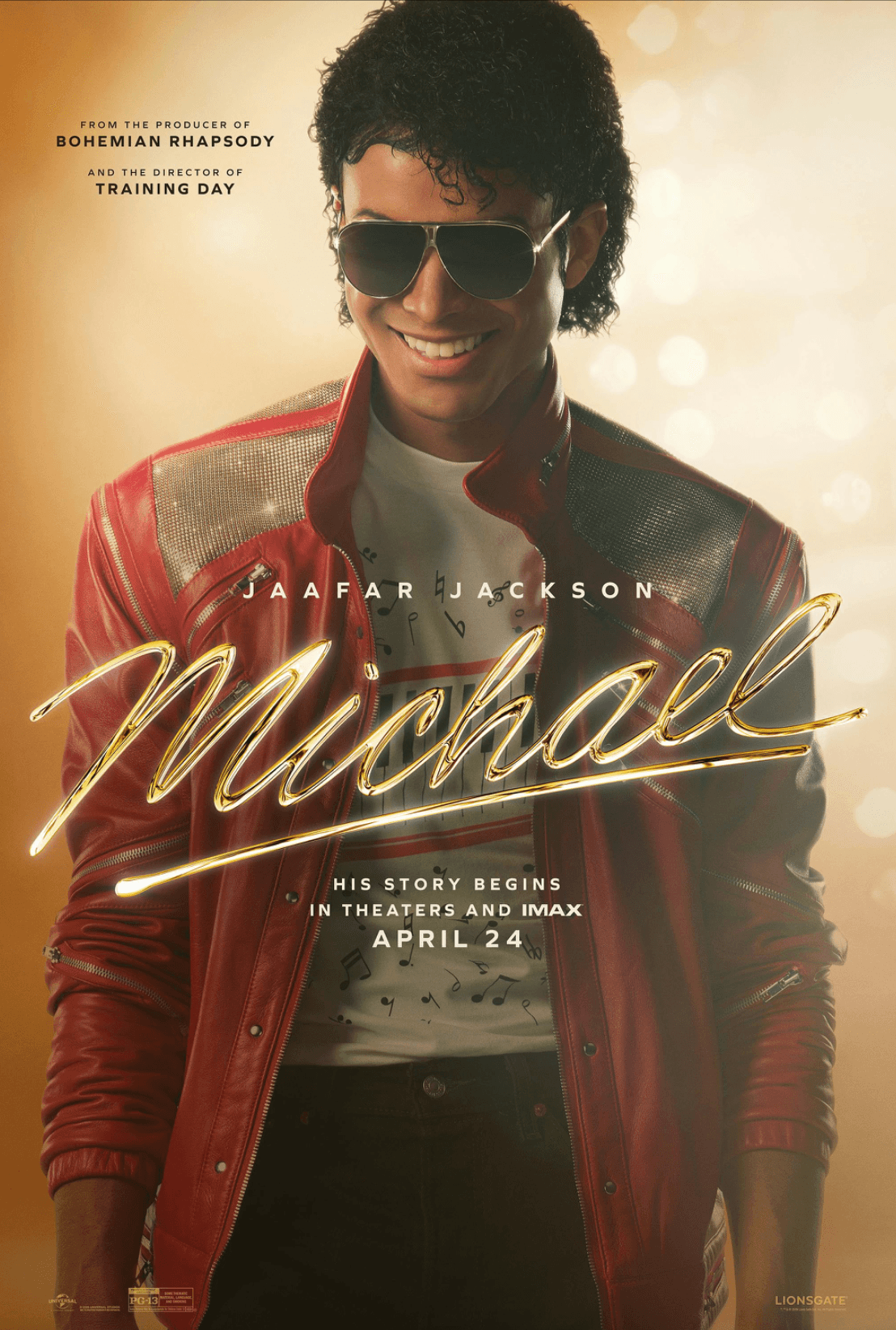
The new Michael Jackson biopic fails to provide a unique perspective on the life of the pop singer
By JONAH BERMAN – arts@theaggie.org
In recent years, biopic films have been no stranger to financial victory at the box office, with films such as “Bohemian Rhapsody” (2018) and “A Complete Unknown" (2024) garnering notable critical acclaim and commercial success. Last month, moviegoers showed up in droves to one more installment in this continuously growing genre: “Michael.”
Starring Michael Jackson (MJ)’s own nephew, Jaafar Jackson, the film explores the story of the titular pop icon from his childhood in Gary, Ind. to the heights of his superstardom in the 1980s. Directed by Antoine Fuqua, best known for “Training Day” (2001), the film also features Colman Domingo as Jackson’s father Joseph, Nia Long as Jackson’s mother Katherine and Miles Teller as Jackson’s lawyer John Branca. The film is produced by Graham King, who also supported “Bohemian Rhapsody.”
From an acting perspective, the standout performance in “Michael” is from Juliano Krue Valdi, who plays a young MJ during the beginning of the film. Given the infamously varied quality of child actors in cinema, Valdi is a welcome surprise. When Joseph terrorizes the family in his relentless pursuit for the Jackson 5’s success, Valdi’s performance, working in tandem with Long’s, aptly elicits moments of meaningful empathy.
Furthermore, the visual palette and production design is of high quality. Interiors from decades past are faithfully recreated, and symptoms of the infamous “Netflix lighting” infecting so many contemporary blockbusters are nowhere to be seen.
Unfortunately, however, that’s where the film’s high points end. Domingo, usually a brilliant performer with a keen eye for nuance, falters significantly in his role as the elder Jackson. The one-note material Domingo is given certainly does him no favors, but great performances should be able to find variance even within a limited emotional range.
Teller is even worse as Branca, whose portrayal comes off as a complete caricature of his real self. Branca steps in from the first scene and assumes the role of a renegade hero and the individual who believes in MJ the most. Given this self-indulgent glorification, it should be a surprise to no one that Branca himself was one of the film’s producers.
“Bohemian Rhapsody” (2019), another of King’s productions, was ridiculed for its poor editing; it’s incredibly disappointing to confirm that “Michael” is perhaps an even worse offender. Put succinctly, the rhythm of the edit is not remotely illustrative of cinematic professionalism, and is far more akin to a robot pressing a “change shot” button every three to five seconds at random. Most cuts and camera placements are completely unmotivated and only serve to support the idea that the filmmakers were working on autopilot, barely even putting in the time to diligently block the actors.
The screenplay, written by John Logan, is insipid and hackish on levels unprecedented even for this increasingly trite genre. All the hallmarks from past cookie-cutter biopics are here: the opening with the musician preparing for a show before a flashback to their childhood, the montage of songs rising up the charts, the time skips spanning years. You’d be hard pressed to find any creative deviations from this tried-and-true money printing method, except for that even more of the film's runtime consists of narratively unnecessary refilmed performances and music videos than usual.
The fanbase, who will presumably fill most seats at any given showing, are catered to with eyeroll-inducing lines: at one point, MJ corrects a family member by saying that his fans aren’t just fans, but his “family.”
As others have noted, perhaps the film’s most reprehensible element is its purpose in acting as uncritical glorification of the late performer. In fact, the film was originally supposed to end in the 1990s and cover allegations of child sexual abuse, allegedly portraying MJ as completely innocent and the accusers as financially motivated. However, a resurfaced legal settlement from that trial meant all those scenes had to be removed, causing massive reshoots, according to Rolling Stone. The result became a stilted and horrifically paced mess, though the alternative certainly wouldn’t have been any better.
Meanwhile, what remains is an MJ that barely has agency, and Jaafar Jackson’s middling performance does little to help; while he excels as a recreator of MJ’s dance moves and stage presence, he utterly fails to provide the protagonist with a true sense of interiority. When MJ does make choices, they either relate to music (i.e. something that the audience already knows will happen), rebuke the painfully bland personification of evil that is Joseph, or do random acts of philanthropy to his adoring fans.
Not only is the story that the filmmakers chose to tell a profoundly uninteresting one, but this method of film structure denigrates narrative itself. When nothing is unexpected, the only way the film can be evocative is by shutting up and playing the hits.
In all, the film’s depressing lack of ambition shouldn’t come as a surprise. From an economic perspective, the financial powers behind “Michael” had apt reason to scrub every ounce of true intrigue from this deeply complicated story, lest the film convey the true brokenness of Jackson’s life or even anything resembling an imperfection that could curb box office profit.
The insults from members of the Jackson family toward negative critics are no less abhorrent and emblematic of the same impulse for hagiography that seems to have defined this film from beginning to end. “Michael” isn’t a cause of the film industry’s decay, but surely a symptom, and both audiences and filmmakers alike ought to look themselves in the mirror and make a change.
Written By: Jonah Berman — arts@theaggie.org