






Shifting gears
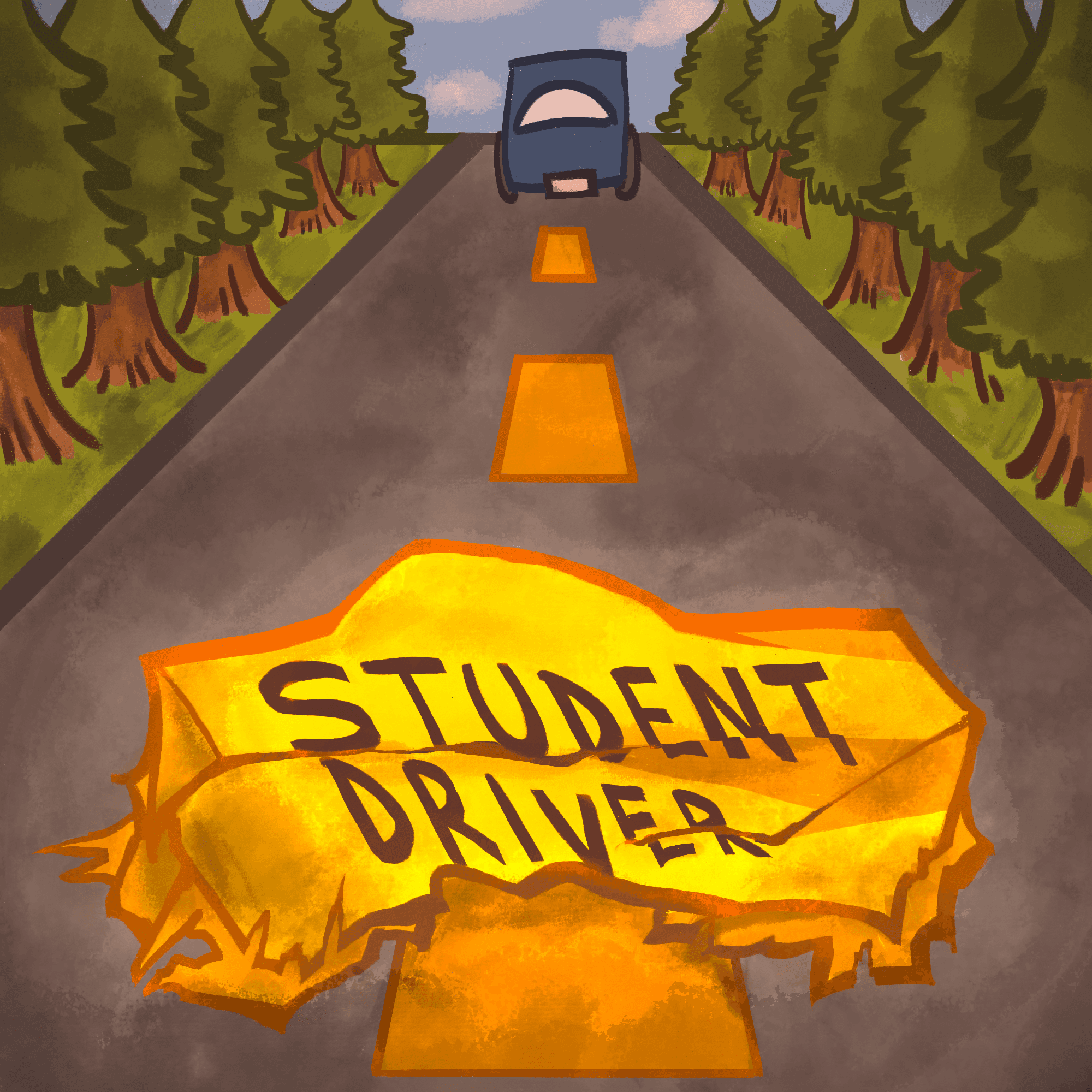
The prominence of the passenger princess
By ABHINAYA KASAGANI — akasagani@ucdavis.edu
I don’t drive. I can drive, but I have felt less and less inclined to actually get my driver’s license, as I: do not have a car waiting for me at the end of the road; have only ever lived in cities with a good transit score and have rarely felt inconvenienced; and do not particularly feel the need to invest in a vehicle when I have access to services like Uber and Lyft in case something goes awry.
I’m not alone in this: The number of young adult drivers over the past few years has been dwindling, and what was once seen as a rite of passage or an opportunity at freedom, seems to be falling out of favor by the day. The lack of present-day drivers can be attributed to present-day economic pressures, sustainability concerns and changing patterns of urban developments that are transforming the way we think about moving through the world.
Between 2006 and 2015, the number of high school seniors with a driver’s license dropped from 81% to 72%, according to a 2017 study published by CNN. Not only this, but in 2022, only 25% of 16-year-olds in the United States had a driver’s license, according to the Federal Highway Administration.
For decades, obtaining a driver’s license signaled newfound access to opportunities that many wouldn’t otherwise have had. Today, most people find the extent to which vehicles — and their subsequent maintenance — are affordable and sustainable, disappointing. Fewer young people are in possession of a car than in the 1970s, and most are fairly uninterested in getting their driver’s license or learning how to drive.
People spent an average of $2,154 in 1975 to both own and drive a vehicle, while the average cost of doing so in 2024 was determined to be $12,296, according to the U.S. Department of Transportation. The rising costs of car ownership — insurance, fuel, parking, upkeep, etc. — make driving financially inaccessible to many young adults who are plagued by rent, student debt, utilities and other monthly payments. Since the service industry (specifically services like Uber and Lyft) has, in many ways, replicated the sense of freedom that once came with owning your own vehicle, we are no longer as reliant on others for car rides and are still able to remain independent without the added costs.
Climate consciousness has also been at the forefront of most of our minds. Younger generations are more likely to consider the implications of transportation (and its oftentimes frivolous use of vehicles) as an obstacle to sustainability. Most people with cars are largely reliant on them — even when it is unnecessary and primarily convenient to walk instead — suggesting that we are more dependent on cars than we are free because of them. As awareness of climate change grows, most people are finding themselves in favor of more sustainable alternatives like biking, walking and public transit.
As seen with the expansion and investment into the automotive industry and what we think is possible with cars (think Waymos, flying cars, etc.), it is evident that much of our country is organized around our dependency on vehicles for transportation. This allows such industries to expand with reckless abandon, with no true forethought into how it affects their consumers and the environment. By opting out of this car-centric culture, we are better able to influence decisions about zoning and housing (which have long catered primarily to drivers). If fewer people drive, urban planning committees will have to rethink their understanding of housing and transportation. Investments in public transit will become increasingly important (and hopefully well-funded) as demand grows.
Most young adults have reoriented their priorities — and are asking the rest of us to reorient ours — by questioning whose well-being we have in mind when we fail to think about Americans as plagued by economic, sustainability and urban development concerns. Not only does this stand as a defense of why younger people should no longer be expected to get licenses (especially considering their lack of affordability and sustainability), but also why it remains important for our youth to stray away from a vehicle-centric life. This decline of youth in the literal driver’s seat straps them into the metaphorical one, wherein they advocate for a conscious reckoning with our realities and implore us to collectively reconsider how mobility and housing are addressed in our present-day policy, both for ourselves and the welfare of the people.
Written by: Abhinaya Kasagani— akasagani@ucdavis.edu
Disclaimer: The views and opinions expressed by individual columnists belong to the columnists alone and do not necessarily indicate the views and opinions held by The California Aggie.