






Seeing double
Media literacy is flailing — here’s one of the reasons why
By ABHINAYA KASAGANI — akasagani@ucdavis.edu
I cannot remember the last time my outing at the movies wasn’t accompanied by the sight of a thousand cellphones, lifted in near-unison as users photographed their moviegoing experience. For the longest time, the act of documentation has eclipsed taking part in most things. While I remain guilty of occasionally reaching for my phone to look up the directors’ intentions of films during my viewings, I usually like to focus my attention on the media at hand.
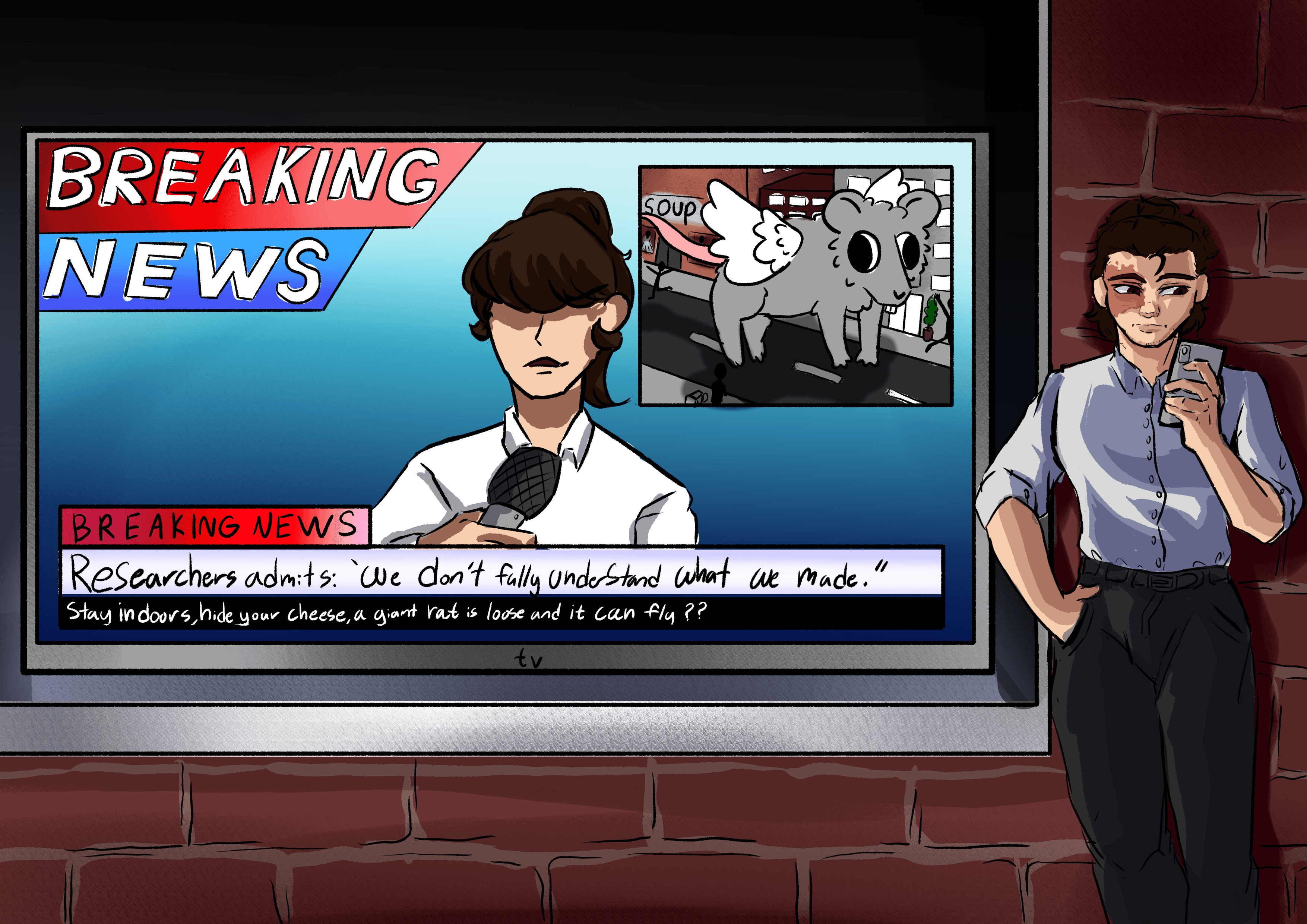
Second-screen viewing occurs when audiences use a second device while watching television, either to occupy themselves or further research their media. At the start of 2025, several news outlets detailing the rise of second-screen viewings considered this accommodation a threat to media literacy. An article by Fast Company, “Netflix knows you’re looking at your phone—and it’s changing how shows get made because of it,” notes how “studios are asking for ideas that people will kind of ignore, so they can be on their phone.” Although terrifying, Netflix’s eagerness to accommodate second-screen viewings is not particularly shocking. Not only does this undermine our ability to critically engage with film altogether, it no longer demands participation at all.
Currently, the object of media relies on some sort of measurable distinction — whether in the form of five stars or reactionary “thumbs up” and “thumbs down.” The rise of second-screen viewings delineates media literacy and social behavior in ways that are frightening and quite disillusioning. While this is not entirely a case against all media, it ultimately criticizes how media now releases viewers from having to participate at all. The article additionally references New Yorker writer Kyle Chayka’s term “ambient TV” to describe Netflix programming, noting how not all film or TV requires an Ebert-like or Kantian sense of taste.
Observing media closely doesn’t, by itself, mean that the audience is paying attention; rather, they have chosen to apply themselves in order to generate sentiments unique to them, regardless whether they are shared or contrarian. Our inclination towards critiquing media by means of a binary measure makes it so that we find anything polarizing instantly disagreeable, without resolving to understand the context within which it originated.
It is no surprise that multitasking reduces comprehension, especially when viewers are torn between a primary and secondary screen. Additionally, the declining attention economy has effectively introduced several viewing changes that contribute to the loss of our attention, making it so that audiences almost automatically side with the slew of underbaked “hot takes” on the Internet instead of the carefully crafted media on their screens. By refusing independent and evidenced judgement, we deny ourselves of the very opportunity to engage the media as it is meant to be engaged with — by means of critique.
While second-screen viewings might sometimes be beneficial in helping enhance literacy for those who need some easing in, these cases must be thought of as the exception to the rule. The issue is not that second screens are inherently incompatible with media literacy, but that the dominant form of media consumption remains passive. They can help strengthen understanding — if, say, the viewer uses their phone to research relevant historical context during the film — or they can inadvertently make audiences reliant on context prior to their viewing.
Most times, even though viewers are active in online discourse about a certain subject or object of their consumed media, they remain less involved with the media itself. The loss of narrative comprehension makes it difficult to retain nuance then, especially since being spoon-fed the answers makes people collectively more reactive than reflective. It also makes them lazy.
In recognizing that media literacy is at an all-time low, audiences must consciously resist and remain intolerant toward second-screen releases, expressing their belief in how sustained attention and care toward media subjects is precisely what makes the production of media and subsequent media critique generative. I am not suggesting that we eliminate devices from our viewings entirely (ironic since a TV is a screen as well), but that we recognize the extent to which we have failed to attend to the media. Pick a screen, any screen — but only one.
Written by: Abhinaya Kasagani— akasagani@ucdavis.edu
Disclaimer: The views and opinions expressed by individual columnists belong to the columnists alone and do not necessarily indicate the views and opinions held by The California Aggie.