





Safe biking 101: University experts on bike, travel safety on campus
With e-bike and e-scooter accidents on the rise, here’s how students can travel safe in winter conditions
By RACHEL TRAN — campus@theaggie.org
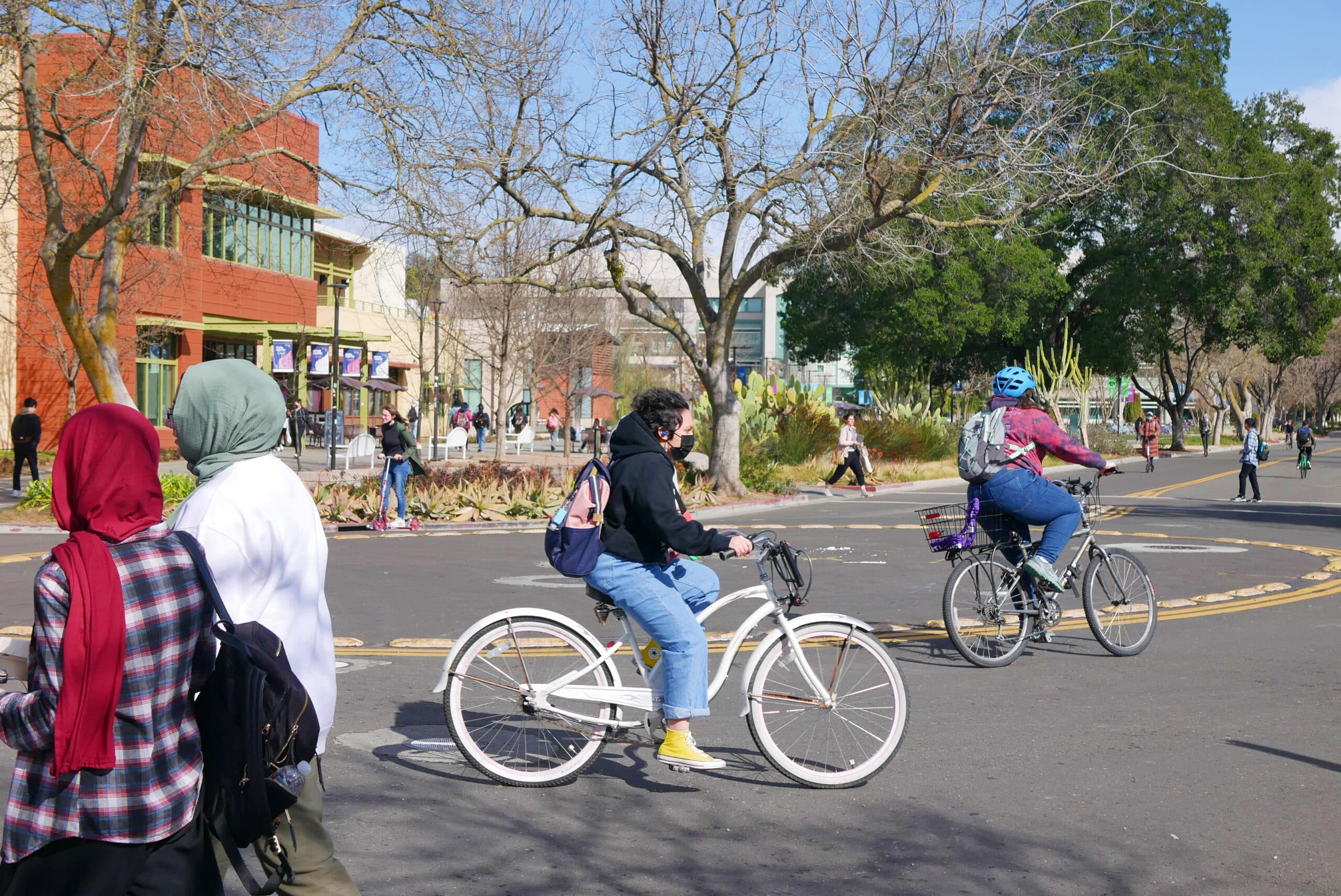
Davis is widely known as the bicycle capital of the United States, equipped with all types of infrastructure and paths for bikes and scooters. Still, with the staggering number of students who cycle around campus — some 37% of people commute by bike to UC Davis per 2021 data — there remains room for accidents and injuries. As students make their return to campus for winter quarter, we asked university experts and staff for advice on how to travel safely this season.
Transportation safety programs are an important part of the university’s overall health promotion goals, according to Senior Health Promotion Specialist and Helmet Hair Don’t Care Lead Shantille Connolly. The most notable programs are Lit Not Hit and Helmet Hair Don’t Care, which provide free lights and helmets, while supplies last. Both programs also provide educational courses for students.
“Helmet Hair Don’t Care aims to increase access to safe and comfortable helmets, improve students' knowledge of how to safely ride regular and electric bikes, skateboards and scooters on campus and in the community and create a positive culture around helmets at UC Davis,” Connolly said.
Health 34 and Student Health and Counseling Services also have helmets available for students seeking protective biking gear, but Connolly says stock is limited.
“Helmet stock is getting low,” Connolly said. “We are actively searching for funding to ensure we can continue providing access to free helmets.”
Students can also take advantage of Cycling Savvy, an online course that discusses defensive biking: a practice similar to defensive driving. While supplies last, students can also receive a free helmet for completion of the course.
UC Davis Active Modality Manager Jeff Bruchez noted that, while freebies are a draw, there are other benefits students can receive by taking bike safety programs.
“Regardless of the incentives that may or may not be available, Lit Not Hit and Helmet Hair Don’t Care are good education programs that give you a lot of information on how to operate safely,” Bruchez said.
At dusk, Bruchez suggested that riders wear bright clothes and ensure that their bike or scooter has bright lights and reflectors (using bike reflectors at night is mandatory by California law). These precautions are especially important during winter, when daylight is limited.
In Davis, rain is common during the winter. Bruchez explained that it is important to mind tire pressure on your wheels, lubricate your bike chains and get protective rain gear like fenders, waterproof bags and ponchos. For those using U-locks to protect their bikes, a drop of lubricant can help prevent rust in the keyhole.
With heavy rain, Bruchez emphasized the need to bike slowly and stay in designated bike lanes, along with being aware that — in cold weather especially — roads may be wet the morning and day after it rains.
The speed limit for all vehicles in bike paths and roadways in the central core of campus is 15 miles per hour, and riders should be careful to follow it, according to University Spokesperson Bill Kisliuk.
“Exceeding this limit creates risks for riders and pedestrians, because it reduces reaction times, requires greater stopping distances and increases the likelihood and severity of injuries when accidents occur,” Kisliuk said.
In order to increase awareness of this speed limit, Kisliuk shared that the university plans to add posted and painted signs on campus reminding those on bike paths and roads of the speed limit. Additionally, UC Davis is currently developing another education system where safety officers will engage with students and faculty to promote safer riding habits.
There was a major increase in electric vehicle related accidents between January 2024 and June 2025, according to UC Davis police and fire department records shared with The Aggie. In all of 2024, there were 22 campus-related incidents, but in just the first six months of 2025, 34 were reported.
“These crashes often involve e-device riders traveling at higher speeds than they would on regular bikes, resulting in more injuries and more serious injuries,” Kisliuk said. “Overall, the campus community is on-pace for a substantial increase in e-scooter and e-bike accidents.”
Incidents involving regular bicycle crashes remained about the same, with 58 regular bicycle crash incidents in all of 2024 and 30 in the first half of 2025. However, Kisliuk noted that these statistics only consider the accidents reported to first responders.
If you or someone you know is involved in a crash on campus, always contact 911 for emergencies and serious injuries. For minor injuries, students can visit Student Health and Counseling Service’s Acute Care on the first floor of the Student Health and Wellness Center. Students can also contact Health 34, the UC Davis’ fire department's 24-hour non-emergency support line, at 530-754-3434.
More information from Student Affairs regarding the basics of biking and how to stay safe on bikes and e-scooters can be found on their website. Other bicycle resources and repairs can also be done by the student-run Bike Barn near the Silo.
Written by: Rachel Tran — campus@theaggie.org