






ASUCD Judicial Council unanimously votes to not impeach Senator Aaron Heth
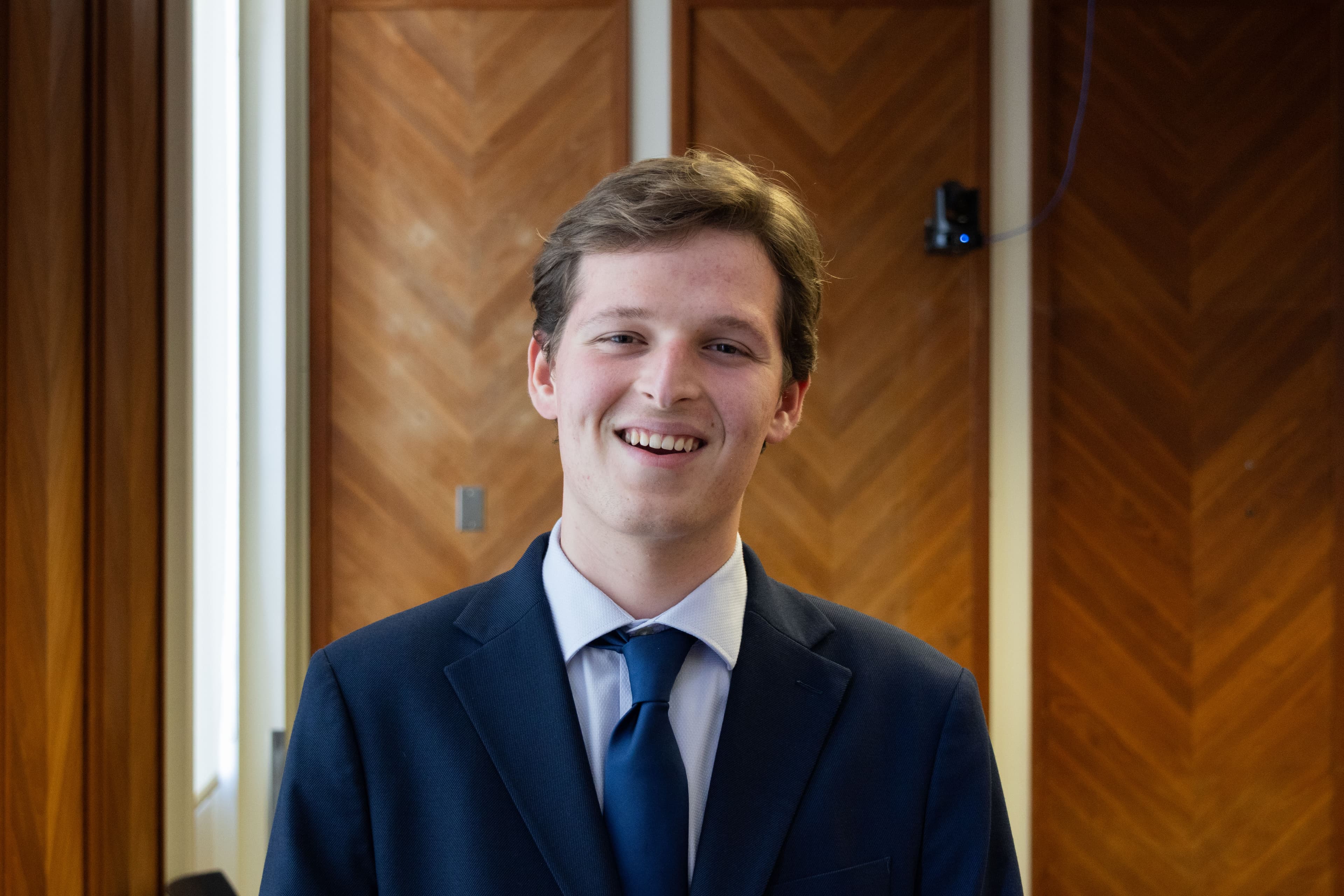
Heth will be allowed to serve out the rest of his term through fall quarter 2026
By LILY KENROW — campus@theaggie.org
The ASUCD Judicial Council has unanimously decided against impeaching Senator Aaron Heth, a third-year political science major, and removing him from office over alleged misconduct relating to his attendance of a Campus Victory Project (CVP) conference in December 2025. The CVP conference, which was fully funded by the conservative nonprofit Turning Point USA (TPUSA), aimed to advise students on winning student government elections across the country.
In their May 20 decision, the justices wrote that the ASUCD Senate — which voted to start impeachment proceedings against Heth in late April — had failed to demonstrate that the impeachment was not pursued on partisan grounds or provide substantial evidence of Heth’s violations to the degree required by the ASUCD Constitution.
“To publicly denounce a fellow senator because of his differently held political viewpoints runs contrary to what the Associated Students of the University of California, Davis proclaims as its core, institutional mission,” the decision, the full document of which has yet to be made public, reads. “Even if this Council holds that the impeachment proceeding was raised on non-partisan grounds, there is insufficient evidence to conclude Respondent’s [Heth’s] actions amounted to gross misconduct.”
Senate Pro Tempore Jaliah Payne, a third-year political science major who represented the Senate in the case, had argued during the impeachment trial that Heth violated ASUCD Bylaws Section 1406(A) during his run for ASUCD President by accepting a free plane ticket and accommodations to the conference. Heth maintains that he received no material donations from CVP to his campaign.
The seven justices ruled that the issue was a matter for the ASUCD Elections Committee, and given that Heth dropped out of the race, no further reprisal was necessary.
“If one is to believe that impeachment serves the purpose of remedying violations of the ASUCD Bylaws and Constitution, then one also has to believe that campaign finance cannot be the issue driving the impeachment,” the justices said in the written decision. “The issue has been remedied, and attempting to adjudicate on a matter from which no material harm has been incurred is a moot point.”
Payne and her co-petitioner, International Student Representative Robi Castaneda, a fourth-year political science and music double major, also argued that Heth had broken the ASUCD Code of Ethics and that Heth’s attendance violated his duty to act in the public interest. However, the Judicial Council ruled that Heth attended as a private citizen and not as a representative of ASUCD.
“Even if Section 200(A)(5) were considered, there is an equal lack of evidence that Senator Heth was acting for personal gain and not in the public interest,” the decision reads. “It cannot be said that it is inherently the goal of Respondent [Heth] to ‘commandeer student governments’ simply because he attended a CVP conference.”
In their decision, the Judicial Council also established a three-pronged test for evaluating gross misconduct: “(1) An ASUCD official knowingly or recklessly engages in a prohibited act, (2) the act violates a specific provision of the ASUCD governing documents, and (3) the violation causes harm to ASUCD or compromises the official’s capacity to act in the public interest.”
While the decision was rendered unanimously, Deputy Head Justice Katherine Zhang, a second-year economics and political science double major, and Justice Aitana Sahni, a third-year economics major, filed a separate concurring opinion attached to the overall decision. In it, the pair wrote that while they agreed with the majority opinion at large, they believed the definition of the third-prong of the gross misconduct test to be too broad. They argue that the threshold of gross misconduct should require evidence of “substantial harm” and not just “harm” outright.
“The majority’s decisive choice to not include the word ‘substantial’ to clarify the third prong of gross misconduct releases a floodgate of potential violations,” the opinion reads. “Any official, if unhappy with their peers for any reason, may be able to raise an impeachment resolution for the smallest infraction which exists under the majority’s standard.”
Per the Judicial Council’s decision, Heth will be allowed to serve out the remainder of his year-long term on the ASUCD Senate.
Written by: Lily Kenrow — campus@theaggie.org