






Looksmaxxing is a recession indicator
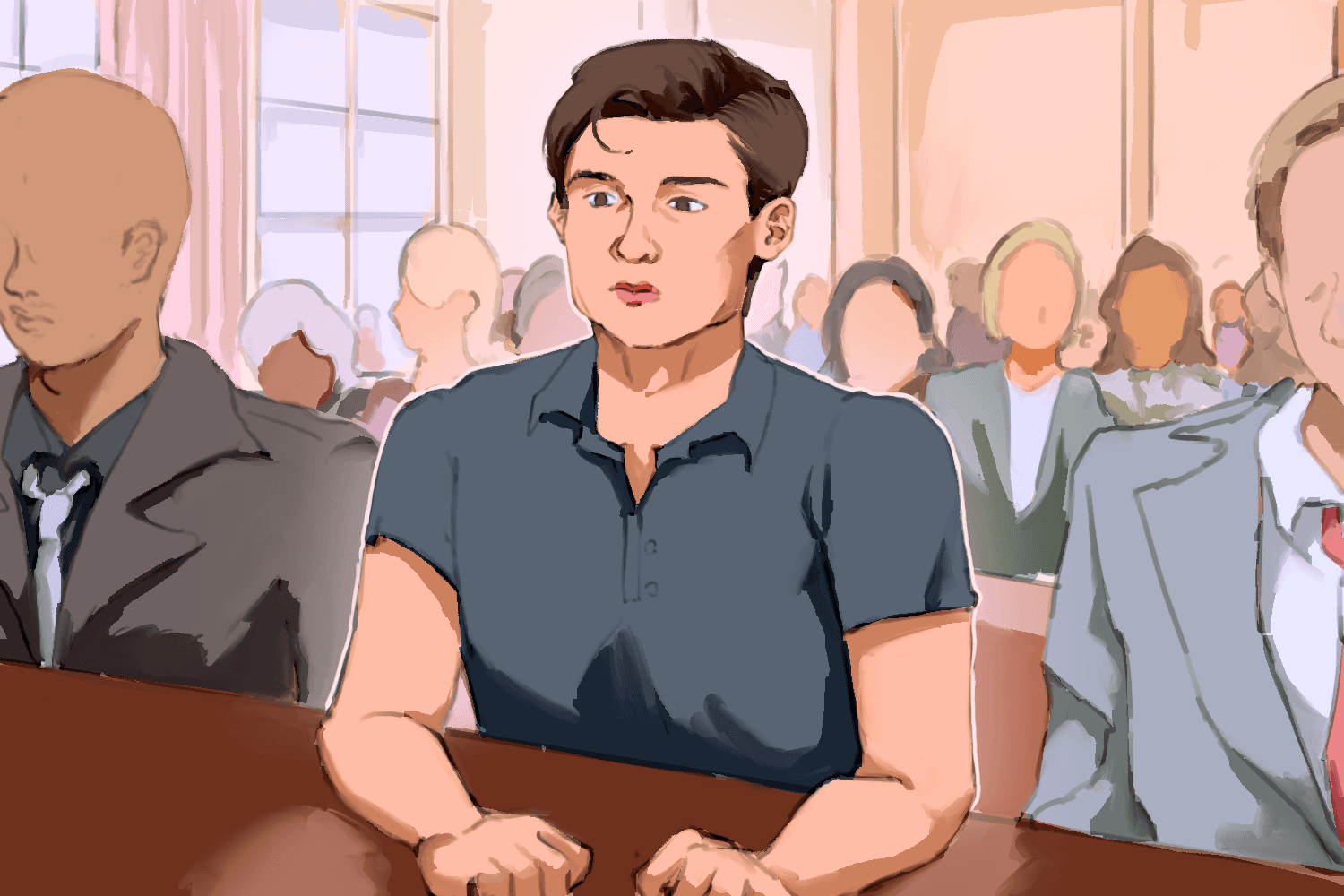
The male obsession with aesthetic ascension is a response to the stagnation of the middle class
By ANJALI IYER — amiyer@ucdavis.edu
If you have fallen victim to the algorithmic slop of short-form content, you’ve likely witnessed clips of Clavicular — the most prominent influencer in the looksmaxxing community. The term “looksmaxxing” emerged from the shadowy corners of the “manosphere,” with roots in the incel subculture (often found in online forums, these groups consist of men who bond over shared frustration with their lack of sexual opportunities or experience). It describes an extreme form of male self-improvement that can be obtained by maximizing one’s aesthetic value through a regiment of cosmetic rituals.
Unlike the brutish hypermasculinity of “alpha males,” looksmaxxers aim to embody the highest possible standard of male beauty. Through the use of pseudoscientific and eugenicist language, the looksmaxxing community has created an objective set of criteria for what constitutes peak aesthetic performance: “hunter eyes,” a "lantern jaw” and an optimal chin-to-philtrum ratio are just some of the features that comprise a seemingly arbitrary list of acceptable traits.
Clavicular, whose real name is Braden Peters, has dedicated his content to sharing his life as a looksmaxxer, providing tips for young men on how to elevate their appearance. His stage name is a reference to the clavicle bone — a feature that becomes more prominent when one has reached a low body fat percentage. Looksmaxxers aim to achieve “ascension,” a kind of incel Nirvana in which one has successfully elevated their aesthetic value, having graduated from a less desirable rung of physical appearance.
Like most social media users, I initially dismissed Clavicular and the looksmaxxing trend. I thought he was yet another ridiculous evolutionary form of the humble incel. But as more clips of him explaining his philosophy emerged, it became evident that the popularity of the looksmaxxing movement was indicative of a wider social reaction to an increasingly dystopian world.
I distinctly remember the moment my disdain for Clavicular evolved into intrigue. The Internet was abuzz after his latest shenanigan: a disastrous 60 Minutes interview which abruptly ended when Clavicular walked off in response to being asked if he identified as an “incel.” As social media erupted, with users ridiculing his inability to answer the reporter’s basic questions, I couldn’t help but feel as though mainstream media was failing to ask something else: Why has such a ridiculous trend become so popular amongst the young men devoted to its practices?
The short answer is because the socioeconomic conditions of the world are increasingly nihilistic, which has led to the emergence of alt-right coded movements using their own sort of Darwinian rhetoric. However, I think that, in order to truly understand why looksmaxxing has garnered a cultlike following, it’s imperative that we examine its ideology to see why it appeals to young men in particular.
Looksmaxxing is marketed as an “apolitical” movement, which contrasts its manosphere predecessors (often rooted in right-wing, MAGA ideology). To an outsider, this is blatantly false advertising, as looksmaxxing streamers use eugenicist language, worship Eurocentricity and are often associated with other alt-right creators. But to a young audience enamoured with the singular pursuit of aesthetic ascension, the need to think critically about looksmaxxing becomes irrelevant.
The societal expectations of peak masculinity used to mean acquiring as much wealth as possible whilst being as attractive to women as possible. As young people have come to accept our dismal economic future, the dream of financial mobility seems to have taken a back seat in the manospheric world. As a result, a new priority arose: beauty — something that requires fewer financial resources than buying a yacht to post on Instagram, but garners just as much clout.
The looksmaxxer implements extreme beauty and workout regiments (even going so far as to smash facial bones with a hammer), often at the cost of long-term health. Clavicular is open about his use of methamphetamines to suppress his appetite and steroids to aid in muscle growth — drugs that he says have rendered him temporarily infertile.
These extreme measures seem counterintuitive to the manosphere’s values of gender essentialism and pronatalism. At a certain point, it begs the question of whether or not adopting these extreme regiments truly stems from the desire to attract women. Rather, are these the manifestations of a homosocial desire to impress other men in an effort to join the ranks of the upper echelon?
It seems that, as a subgroup of the wider incel culture, looksmaxxers are a result of young men struggling to adapt in a capitalistic society that places an outsized value on affirming men who acquire wealth as a means of validating their masculinity. But in a world where acquiring wealth has become infinitely more challenging and no longer guarantees access to women, this frustration has manifested itself in a new trend. Ultimately, It’s a lot easier to attribute personal failings to immutable aesthetic characteristics than to unpack the systems of oppression that surround us.
My pity toward looksmaxxers derives from the fact that the pursuit of ascension as one’s ultimate life goal seems incredibly superficial and inherently asymptotic; nobody will ever reach Clavicular’s impossible beauty standards, not even Clavicular himself.
I fully understand the urge to make fun of a 20-year-old man who promotes meth to children and gracelessly blurts slurs on livestream; in fact, I encourage people to continue to criticize his ridiculous and harmful philosophy. However, to simply dismiss Clavicular as a nihilistic influencer is to ignore the driving force behind his popularity — a mistake that allows mainstream media to avoid addressing the root cause of rising disenfranchisement with a growing wealth disparity.
Clavicular is a product of an increasingly uncaring world. He appeals to a generation of hopeless men who would rather smash their faces with hammers in pursuit of higher cheekbones than simply consider how a hierarchical society contributes to their discontent. Instead of encouraging young men to fight against the reality of oppression, looksmaxxing provides a compelling cause to follow and a sense of purpose.
Looksmaxxers aspire to physical perfection by denying the universal intrinsic value within us all — something that exists regardless of wealth, status or looks. Instead of confronting the structures that oppress us, it’s easier to pursue beauty as a remedy to the frustration of financial stagnation: because if one cannot be rich, one might as well look beautiful.
Written by: Anjali Iyer — amiyer@ucdavis.edu
Disclaimer: The views and opinions expressed by individual columnists belong to the columnists alone and do not necessarily indicate the views and opinions held by The California Aggie.