






Whole Earth Festival to return this Mother’s Day weekend
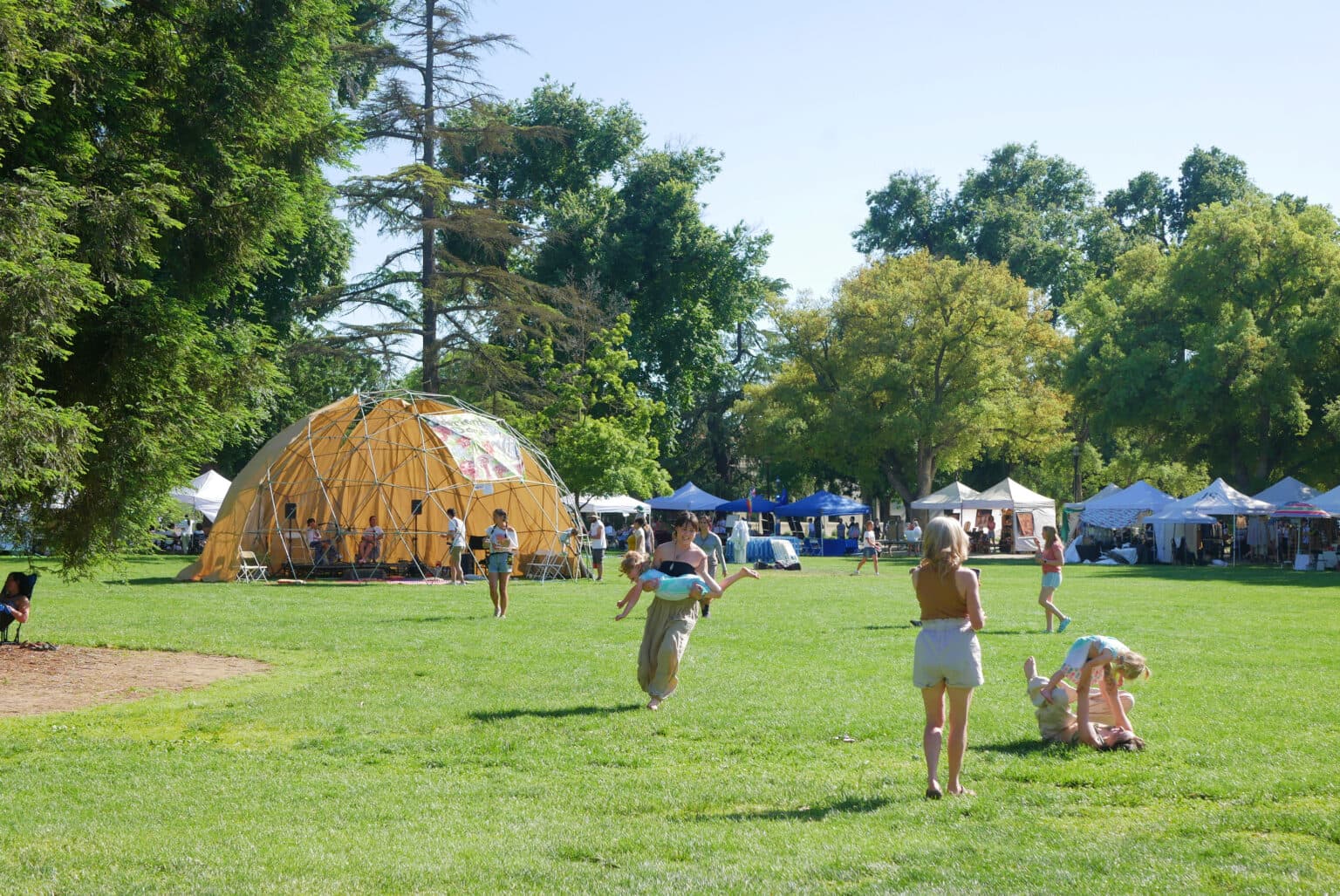
The student-run event enters its 57th year with a focus on community solidarity and environmental advocacy
By MICHELLE BEKHTEL — campus@theaggie.org
The annual Whole Earth Festival (WEF), which promotes environmental activism through music, crafts and education, is set to return to the UC Davis Memorial Union (MU) Quad from May 8 to 10.
The festival began in 1969 as a small “Art Happening” organized by UC Davis students and faculty. Over the last five decades, it has expanded into one of the largest student-run festivals in the country.
The festival is traditionally held during Mother’s Day weekend, intended to connect the celebration of family with environmental stewardship. WEF Co-Director Jessica Wong, a fourth-year psychology and design double major, said that the timing and location are intertwined with the event’s underlying philosophy of inclusivity.
“I think it’s kind of representative of commemorating the themes of the festival consistently, which is nature and honoring our planet,” Wong said. “I think the Quad is also a great location for uniting Davis community members, families [and] students.”
The festival will host vendors selling art, handcrafted goods and other products — often made or sourced locally. In terms of entertainment, the Quad Stage will serve as the weekend’s musical anchor, featuring headliners Twen on Friday, RYL0 and Reysha Rami on Saturday and Junior Varsity on Sunday.
Beyond music, the festival encourages active learning through its specialized spaces. In the Experiential Dome, the schedule moves from creative workshops to educational sessions, such as “Know Your Rights” training sessions hosted by NorCal Resist for potential encounters with law enforcement.
WEF Co-Director Ella Estabrook, a fourth-year sociology major, said that the open space is essential for balancing the festival's diverse programming.
“We find it a great place to fit everything we have going on,” Estabrook said. “Two stages, over 100 craft vendors, our art and education and experiential space all fit on the Quad. The natural shade is also really great.”
Unlike other campus events like Picnic Day, WEF spans over multiple days. This extended duration allows the festival to function as a destination for travelers while maintaining a steady flow of specialized programming.
“WEF allows people to come from all over California, all over the country to attend the festival, visit and enjoy everything that it has to offer,” Estabrook said.
Each year, the 40-person student staff selects a theme to reflect the current campus atmosphere. The 2026 theme is "SOLARdarity," which echoes the staff’s desire to merge environmental concepts with social advocacy.
“The ‘solar’ part of it speaks to our power as a community,” Estabrook said. “We think the sun is something very powerful that we want to emulate when we bring people together in solidarity against the current administration and oppressive forces.”
WEF is a do-it-yourself (DIY) project, and students are primarily responsible for the physical construction of the event. Setup begins the Wednesday before the festival, with volunteers and staff set to construct geodesic domes that host activities during the event.
“Even though the festival has evolved into such a large scale, with so many attendees every year, it is still a very hands-on project that requires students to be building this together,” Wong said.
A central goal of the festival is maintaining zero-waste operations. This is achieved through the Whole Earth Reusables Cooperative (WERC), which manages over 13,000 reusable dishes for the food vendors. All vendors at WEF are required to serve only vegetarian dishes, according to WERC guidelines. Students also manually sort all compost and recycling.
Estabrook credits the work of volunteers, guided by WEF’s year-round staffers, for keeping the festival running.
“The festival isn’t possible without the hundreds of volunteers that show up with a willingness to contribute in any way, whether it’s sorting, compost, moving a table or building a dome,” Estabrook said. “This event is something that is created by staff and also by the community and for the community.”
Written by: Michelle Bekhtel — campus@theaggie.org