





A sit-down interview with outgoing ASUCD Internal Vice President Dhilena Wickramasinghe
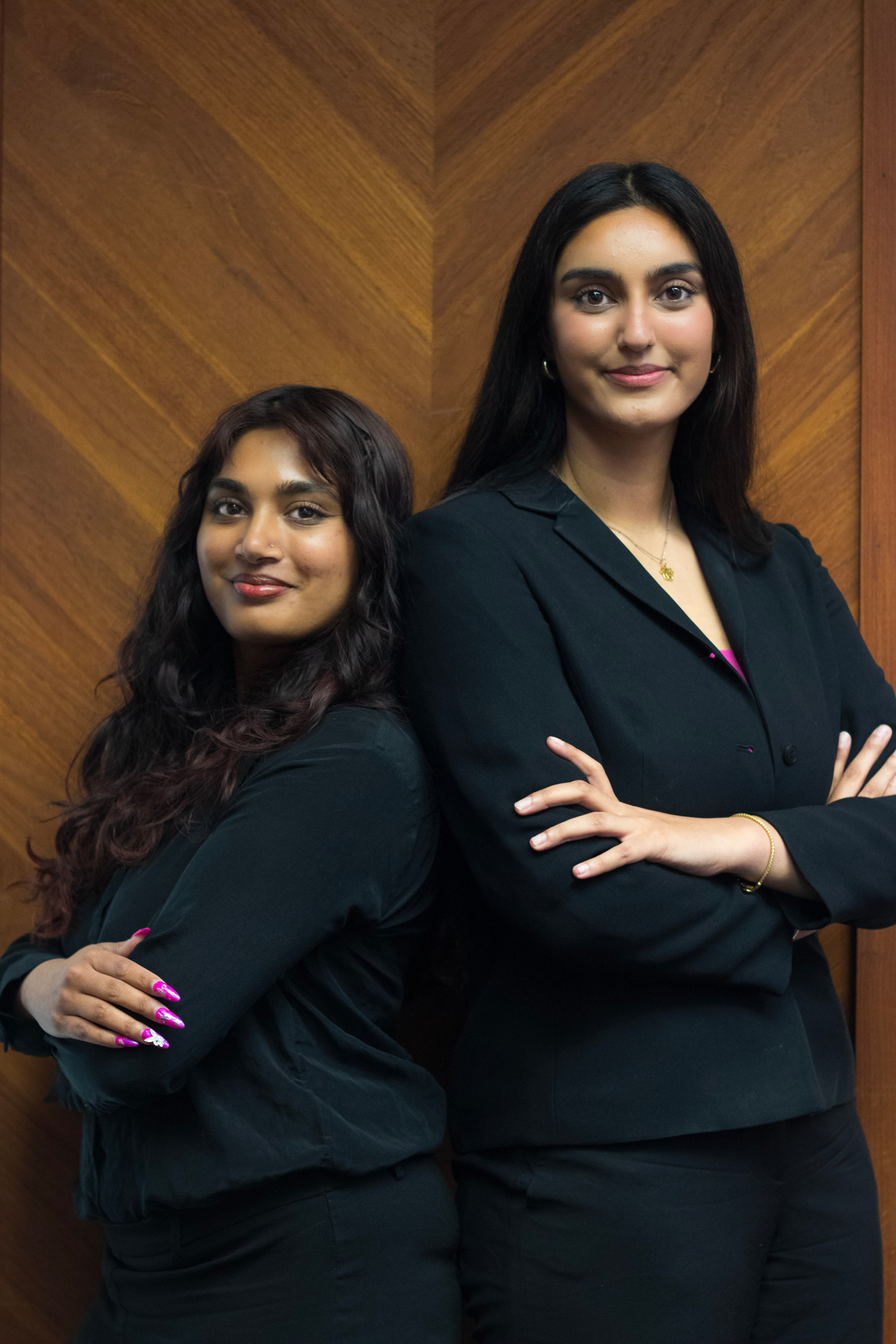
Wickramasinghe, who graduates this spring, reflects on three years in the Association
By AALIYAH ESPAÑOL-RIVAS — campus@theaggie.org
ASUCD Internal Vice President Dhilena Wickramasinghe, a fourth-year sociology major, has spent the past three years serving in multiple sectors of the Association and is now coming to the end of both her undergraduate career and time in student government. She sat down with The California Aggie on Friday, May 22 to discuss her journey — from working in the Coffee House to becoming the chief presiding officer over Senate meetings — and to give some thoughts on ASUCD as she prepared to graduate.
Below is a transcript of Wickramasinghe’s interview with The California Aggie, edited for length and clarity.
Q: In two weeks from now it will be the last Senate meeting of the school year. How are you feeling about the Association and its accomplishments this year?
Wickramasinghe: I would say I'm feeling pretty good. Comparing the Senate and the vibes of the Senate from last year to this year, I’d say that for the most part — and heavy, heavy emphasis on the ‘most part’ — the Senate has been very efficient this year. We've been getting out at earlier times than ever before. I'd say the vibes on the table, for the most part, are consistently positive.
I tried to foster a more positive environment for the table. I did this through not really getting involved in any of the Senate politics this year. If there was drama happening within the Senate or the Association, none of it ever surrounded me, which I'm so happy about. People would come to me and ask for advice and that sort of thing, and I would just give my advice and that was it. I never really personally got involved in anything. And I think that made for being more of an effective leader in terms of leading the Senate.
I don't have any personal grievances with any members of the table, and I don't think they do either. I just kind of go do what I need to do and that's it. And that's one of the goals I had. I remember saying during a Senate meeting last year that I wanted to foster more of a positive environment within the Senate table. I know some things are definitely out of my control, like with the [Senator Aaron Heth impeachment] proceedings that happened recently. But for the most part, I would say that the vibes were consistently good until that.
Q: You’ve been part of the Association for a really long time now, how has that been for you?
Wickramasinghe: It's kind of crazy to think about where I started in ASUCD, because I actually started as an employee at the Coffee House (CoHo) during my fall quarter of my sophomore year. And then after working at the CoHo for a while, I decided to apply for a bunch of different roles in ASUCD. I applied to work in the Admin General Office with HQ and was working at the front desk. I also joined SAAAC [Sexual Assault Awareness Advocacy Committee] because I saw that it was a volunteer position, and I wanted to get more involved on campus. It wasn't until I did my interview for HQ, when I was doing research for the position, that I started to make the connection that ASUCD included the CoHo, and that's connected to the Pride Festival, and that it’s connected to Sunset Fest and Entertainment Council. Then also my friend who was an ASUCD senator is also connected to all these things too. That's when I realized how big ASUCD really is. And that made me really interested in it. Then from being in SAAAC, I also joined the staff of Chasa Monica, a former ASUCD senator. That encouraged me to run for Senate, and then I won and served for a full year and then decided that I wanted to keep working within the Association and then ran for Internal Vice President (IVP).
And thinking about that journey, I remember talking to Gaius [Ilupeju], the former ASUCD president, about this and he was like, ‘Wow, you've been in almost every aspect of ASUCD.’ And he said this to me when I was a senator-elect because I was also training to be a DJ at KDVS at the time too.
When ASUCD President Amrita Julka (AJ) and I were initially thinking of running, we were initially deciding which role should go to who. She was like, ‘What if you were the president, I was the IVP.’ And I was like, ‘We could do that,’ but I think AJ's a lot more diplomatic and better at talking to external bodies. And I think given the fact that I've been in so many niche aspects of ASUCD like KDVS, CoHo, HQ and student government stuff, I thought that would definitely prepare me a lot for the role of IVP, and I would say that it did. I think having relationships with the units and an understanding from being in a unit and being in a committee and then also how things operate on the admin side of things gave me a lot more understanding on how the Association internally functions. So when issues are brought up to me, I'm able to use that knowledge to navigate those issues.
Q: After being in all the different sectors of the Association, how do you feel about leaving at all?
Wickramasinghe: It's kind of bittersweet, I'm not going to lie. I feel like ASUCD, especially for these past two years as an active member of the table, has been such a pressing part of my life. There's just always something happening, whether it be good or bad. And I think I've definitely done a better job this year in balancing my work, school and social life than I did last year. Last year it felt a little bit more all-consuming — daunting at times. Whereas this year, I feel a lot more secure.
I'm ready to see where things go afterwards. I trust that the Association will be in good hands afterward as well. So right now, as I'm finishing up my last two weeks, it's kind of setting up systems for the future and making sure that things can run smoothly, even after I'm gone.
Q: How do you think the Association has evolved since you first joined three years ago?
Wickramasinghe: I'd say the first two immediate things that come to my mind is the fact that when I joined as a committee member, I was a volunteer and now committee members are paid positions. So that's one of the most tangible things I can think of. Another thing is that I think the Senate had the reputation for going very late when I first joined, and now I think the hard cut off is 10 p.m. for Senate meetings in person. The longest Senate meeting I've ever been in was the night I was sworn in as IVP, which ended at 12:30 a.m., and that went on to Zoom.
I'd also say Creative Media and ASUCD’s outreach has gotten a lot better in recent years with the new trading card and Dotty the Cow branding. A lot more people are cognizant of what ASUCD is just because they want to get a free t-shirt or a free trading card.
Also, this might be tooting my own horn a little, but I know in the past two years, the Personnel Committee has been very inactive and so I worked really hard this year to reestablish it and make it more of a functioning committee. One thing I did was to codify how termination procedures actually happen within the Association.
Our code of ethics in our bylaws was also very minimalistic. There was not much to it at first. So one thing that was first initially brought up in personnel was that we don't have a full code of ethics. And it was something I was thinking to myself as well. So, now we have a fully established code of ethics that covers a variety of topics, from duties as someone who is serving on ASUCD, whether it be through a volunteer position, elected senator representative on whatever it may be. There are expectations that you are held to within our code of ethics, and then also other aspects like hazing, financial ethics, digital conduct, all of those things are also things that are listed within our code of ethics now. I'm happy to say that we have a much more comprehensive list of how people in ASUCD are expected to act and behave as someone in ASUCD.
Q: Why did you decide to continue to stay in ASUCD?
Wickramasinghe: I'd say for me, I had a lot of projects that I still wanted to work on as a senator that I wanted to see continue to be done. For example, with menstrual equity, something that we worked on within the menstrual task force was getting more dispensers installed across campus. That's something I really wanted to see continue to happen. Also, with the wellness-to-go machines, that was a conversation that's been happening for a while as well. Projects like that — I wanted to just kind of see them get carried through.
Q: Out of all the positions you’ve held in ASUCD, which has been your favorite one of all?
Wickramasinghe: I think the most fulfilling position I've had has been IVP, for sure. I think on an objective level, I've been able to develop so many skills through this position and I'm always constantly challenged, which is something I enjoy in a role. I don't like stagnant work where I just sit at a desk and do a monotonous routine. I like the fact that with IVP, it's less meetings and more answering people's concerns. People usually come to me with like, ‘Hey, this happened in our commission where so and so said this, how do you resolve that?’ So I would go and help with that or another issue happening. It's more problem solving and working through the issues and troubleshooting than just standard meetings and routines. It's funny because sometimes when I'm filling out my timesheet, I'm like, what did I do this week? Because I look at my calendar and I don’t see many meetings, but it felt like I was just working all week.
If I want to say my favorite and the most fun position, I would say being a DJ at KDVS. It's all more creative. I get to curate playlists with basically whatever I want. And I've had up until this quarter a show consistently from fall 2024 to winter 2026. I had one show consistently and then I had a second show last summer where we were playing international music. So we’d spin a wheel and then it would land on a country and then we would do music from that country for the next week. And I think KDVS was also sometimes challenging because they have different rules about what you can and can't play. I definitely learned a lot more about music and music genres and just different artists in general. And I was forced to go out of my comfort zone and listen to new things, which I also liked.
Q: Is there anything you wish you could have done more during your term as IVP?
Wickramasinghe: I think since I am a graduating senior this past quarter, I will say I've been a little less involved in my position. I still do what I have to do, but I'm not going above and beyond if that makes sense. I'd say I wish I was a little bit more involved this quarter.
I also think ASUCD is like an institution at the end of the day. So I think when you see people coming into ASUCD with more ‘radical’ ideas that they want to implement, it's a little too late because people don't realize how hard it is to implement those ideas because there is a lot of bureaucracy within an institution and there's a lot of red tape. I think that's something that I would like to see more senators realize as they're running. I feel like every year there's always new senators and people running and saying, ‘Oh, we want to do this and we want to do that.’ And it's like, people have already tried, you know? Because all of their ideas are amazing, but sometimes the reasons why they haven't been implemented is because they just keep getting blocked by campus or by other barriers. So I think it's not more of something I wish I did more specifically, but it's just an issue that happens within such a large institution like this.
Q: This is my favorite question. If you had to summarize your term in one song, what would it be?
Wickramasinghe: Oh, I think this might be a fun one, “Don't Stop till You Get Enough” by Michael Jackson. And that could be a good motto for people who want to continue to work in advocacy and serve students.
Q: This year, ASUCD faced a lot of budget cuts, with the overall 10% cut across all sectors. You saw how the deficit came to be when you were a senator, and now you've seen how it's kind of been alleviated — how do you think the Association has shifted its focus to avoid these kinds of issues?
Wickramasinghe: I cannot give any more kudos to our Controller Trinity Chow. She is so competent, so amazing. And she has been in ASUCD for so long too, which I think really helped because she understands how people in ASUCD government think. She had that involvement and she was senate pro-tempore for a budget hearing cycle in the past. So she had that certain knowledge as well.
I think when we shifted our focus, we decided to do the 10% equally across the entire Association because we knew how people get during budget hearings. And we wanted to make sure we were as communicative as possible. I think good communication and not really playing favoritism were great ways that we were able to decrease or get rid of the deficit, because it wouldn't have happened if we were not communicating on goals or our plans ahead of time. And it wouldn't have happened if we were just choosing random units to deplete their budgets off and then increase in others. We were also more firm with our expectations this year because I remember last year there was the proposed budget and there were those increases and decreases to certain units, committees and commissions that a lot of people may say weren’t equitable. And then once budget hearings came, it was kind of near the end, I remember the controller and the president were like, ‘It's okay, just do whatever you want.’
Q: What has your working relationship been like with the incoming executive team and how has the transition of power been going?
Wickramasinghe: I've been meeting with Rosa Linda [Martinez] every week, answering her questions and doing IVP training with her. She's been sharing a lot of her goals for internal reforms that she has, and I've been giving feedback and I'm even offering to help get started with those as well just so there's a base to go off from. I would say I do have a good working relationship with Rosa Linda. We [Wickramasinghe and Julka] invited them to our next chancellor meeting, so they will be coming for introductions and for the handoff. We recognize that the Association will be existing for years after this. So, we want to make sure that it's as stable a place as possible.
Q: Do you have any advice for her that you would want to make public that you might have not already said to her?
Wickramasinghe: Stay out of the Senate drama. It's not worth it. It's never going to be worth it. I think time and time again will prove that if you get involved in Senate drama, nothing good will come from it, especially as someone who's not a voting member. Your job is to preside over the Senate and facilitate things, and it's hard to facilitate if the people you're facing hate you.
Also utilizing the summer to get started on your projects and the platforms that you said that you're going to run on. Students are on break during the summer, but campus is not — administrators and other staff are still working full-time over the summer and people don't realize that. So really using the summer hours to make those connections and get started on projects that may involve outside bodies is something that I would advise.
Q: What are your hopes for the future of ASUCD?
Wickramasinghe: I want ASUCD to really increase their outreach, and I would say if eventually we could get the voter turnout for ASUCD to be above, I want to say 35% — and that's already asking for too much. But if there was some way to get the voter turnout to be a larger part of campus, I would like to see that happen. For example, with the Lawntopia ticket situation, people were upset about the pricing for that; people will be upset about the things that affect them, right? But they don't realize that they can actively make a change with how ASUCD is being run through voting for their elected representatives. So I think having a lot more civic engagement within ASUCD is something I'd like to see continue.
And just more awareness about ASUCD in general for the resources we provide for students. At the beginning of the year AJ and I did a basic needs survey with the Innovation Research Lab (IRL). The survey asked students questions on things like food insecurity, housing and different things. And then, as follow-up questions, it would ask how often do you utilize this ASUCD unit that's related to that, like filling the gap for that basic need. And you would see that a lot of students were facing gaps in access to basic needs, but were still unaware of the services we provide. If students are not aware of the services we provide for them, then we're not doing a good job, especially since there's such a large demand for these services.
Q: Would you like to share your post-grad plans and anything beyond?
Wickramasinghe: Well, I'm going to be doing UCDC [University of California Washington Center] over this summer, so that will be exciting being on the East Coast. I used to live in Michigan, so that's not the East Coast, but [I’ll be] on that side of the country for an extended period of time again. And then after UCDC, I don't have any solidified plans, I'm mostly just going to be studying for the LSATs and then applying for law school. But yeah, then also deciding if law school is the route I actually want to go.
Q: My last question is, do you have any final comments that you'd like to make to the student body?
Wickramasinghe: I'd say it's genuinely been an honor to serve in this position for the past year, and it's been an honor to serve as a senator for the year before. I'm really glad that I was able to have this experience and do the work that I've been doing to serve students.
Written by: Aaliyah Espanol-Rivas — campus@theaggie.org