






The horse barn: built-in responsibility
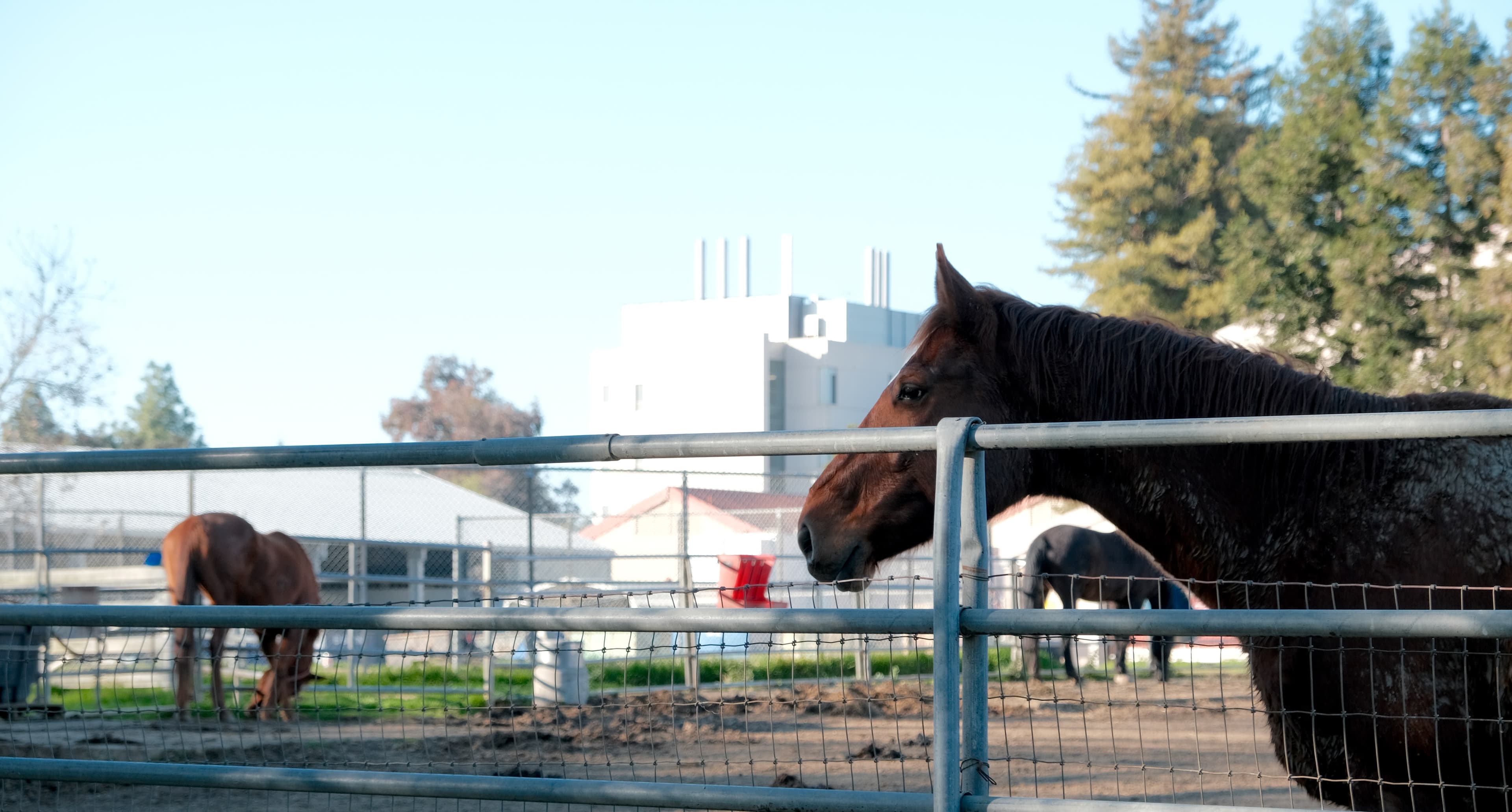
Students and members of the UC Davis horse barn reflect on their community
By ADITYA SHUKLA — features@theaggie.org
Situated in the oldest facility on the UC Davis campus, the Animal Sciences Horse Barn has been home to a large community of students caring for, training and selling horses. A primarily student-run institution, the facility continues to be home to anywhere from 30 to 50 animals within a school year — bred, trained and sold by the 24 yearly interns that work the barn daily.
Managed by Barn Manager and UC Davis alumna Kelli Davis, the horse barn functions as both a breeding facility and an educational resource for the student community. Typically the location for any laboratory sections of animal science courses, the barn has continued to be open to all majors to learn about and participate in the care of the horses, mules and donkeys living there.
For Davis, a key factor of the horse barn’s importance rests in its accessibility to the equine world. She noted that the often-expensive and legacy-oriented realm of horse husbandry serves as a barrier for prospective students looking to get into a $7 billion industry.
"At the horse barn, anybody can come and get involved regardless of your background,” Davis said. “Our internships are not major-restricted and the horse barn owns the horses, so it's not like you have to have your own horse in order to be included."
For Rane Shim Clark, a fourth-year animal science major, working in the horse barn community has proven to be a multi-year test of her self confidence and responsibility. She cited her experience working as a mare and foal intern for the horse barn as particularly impactful.
"It's really rewarding to see the difference in progress they made within just six months — from not even being able to halter them or just walk them in a straight line, to being able to line jump over barrels and do all these fancy tricks,” Clark said.
Part of the challenge in building a functioning breeding facility is maintaining a tightly operated student community, according to Davis. Being able to collaborate, learn and take responsibility are core skills that Davis hopes her interns will have learned by the end of their college careers.
"No one person can get everything done in a day here at the horse barn," Davis said. "They have to work together, and they have to work as a team. The interns end up learning a ton about communication, about teamwork, about delegating and communicating responsibilities."
The benefits of the program stretch beyond teaching students soft skills. Hayley Skebba, a fourth-year animal science major, expressed that her experiences at the horse barn, both in husbandry and sales, have given her confidence in pursuing a career within the industry. She explained that networking with her fellow students was especially beneficial for finding jobs and getting a career headstart.
"The horse barn helps you make connections [...] you meet a lot of cool people at the horse barn," Skebba said. "We're all gonna eventually go out there and hopefully go into the horse world, so it'll be nice to have those connections."
From breeding to delivering and taking care of foals, student interns at the horse barn have a large range of responsibilities. With both Skebba and Clark having worked in the horsing world for much of their lives, they both described their surprise at the learning experience working at the barn provided.
“[Davis] just wants all her students to have a good basis going out into industry, whether it's working with horses in the future or just knowing how to be safe around them," Skebba said. "I definitely would not be the horse person I am today if it wasn't for [Davis] and the horse barn in general."
Each student internship is capstoned by the horse barn’s annual production sale, where caregivers present the horses and mules they took care of the previous school year to sell. The sale on June 20 and 21 marks the 33rd anniversary of the horse barn’s auction, where visitors can tour the 100-year-old horse barn, ask the interns questions about their trained horses and submit their requests to purchase them.
Having participated in three of these sales, Skebba described the importance of her last production sale, noting it as a crucial send-off in her senior year. Crediting Davis’ support, Skebba noted the new perspective that being a manager of the horse barn has given her.
"It's so rewarding and gratifying to see the facility run so smoothly — just how clean it gets, how organized the events go,” Skebba said. “To see the interns go from getting dragged across the arena by their yearling [horses] to winning first and second place at [competitions] — that is really, really cool to see from the management perspective."
Written by: Aditya Shukla — features@theaggie.org