





More than just a game: Chess Club at UC Davis
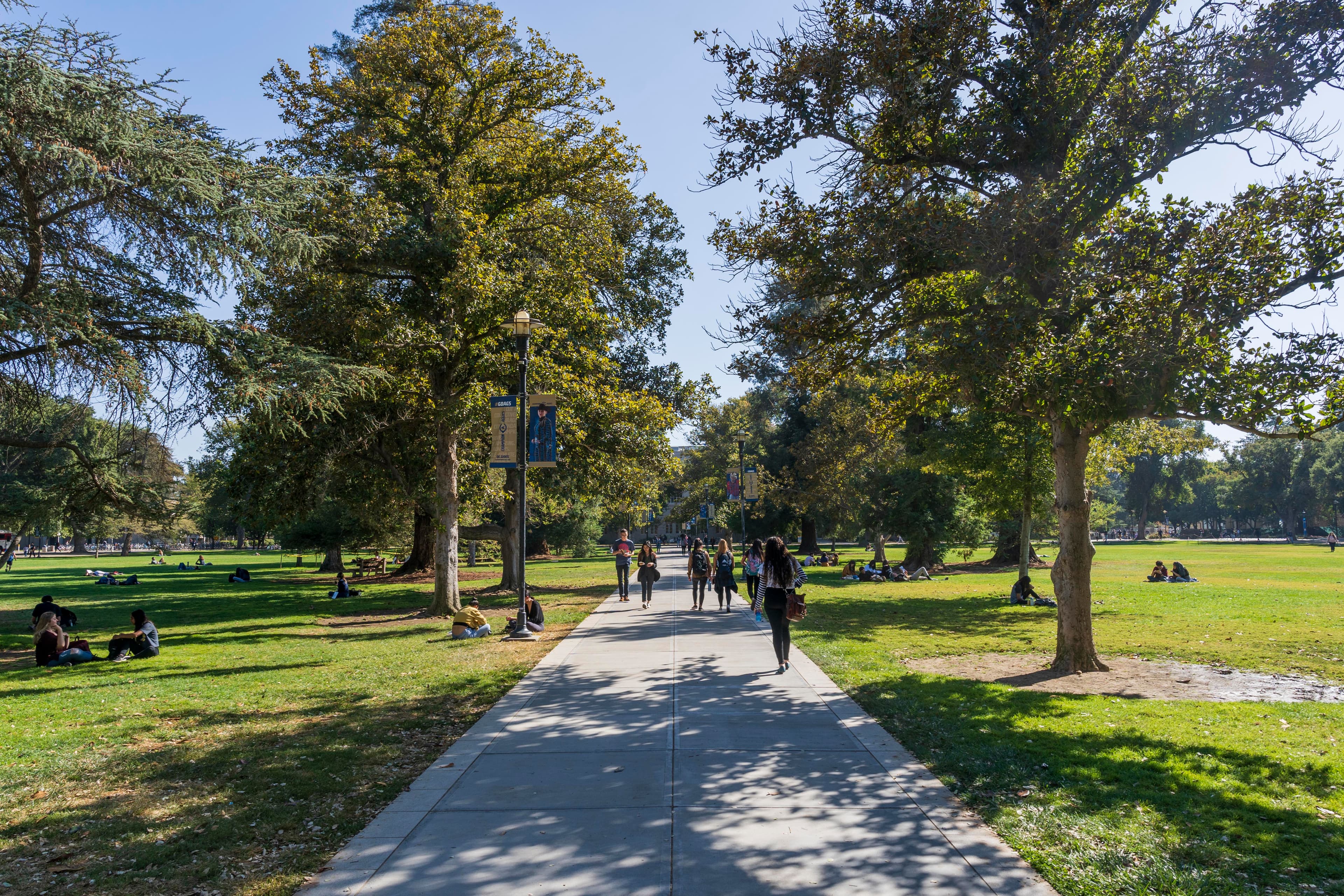
Students in the Chess Club discuss what makes this club unique
By AMRA ABID — features@theaggie.org
If you take a moment to notice the clubs tabling at the Memorial Union (MU) on a Tuesday or Wednesday afternoon, you may spot a dozen people crowded around three chessboards. Wait a couple more moments, and you will notice the scene start to shift; as someone leaves a game to catch a class, another takes their spot, all while more and more passersby linger to observe.
"This is what I imagine Central Park feels like," Catherine (last name), a fourth-year human biology major, said.
Tabling by the patio of the MU is central to how the Chess Club at UC Davis operates. Club President Ethan Pinnell, a fourth-year environmental engineering major, said the energetic atmosphere of the club sets it apart from other student groups.
“Sometimes you go to a chess club — like I've [gone] to the San Diego Chess Club — and it's really, really quiet and kind of sad,” Pinnell said. “[The Davis Chess Club is] one of the most lively clubs for chess.”
Although the Davis Chess Club regularly holds indoor meetings, what attracts newcomers and chess enthusiasts alike is their outdoor tabling, with members challenging each other to games for four hours every Tuesday and Wednesday afternoon. This was the case for Catherine, a newcomer, who only got involved after walking by, noticing the games and realizing there was more to the club than just the game itself.
“I love the people because I'm really […] a newbie […] and everyone's super patient with me,” Catherine said. “Everyone can adapt to someone else's playing style [and] teach each other, which is nice. Sometimes, when I lose my queen really early, they'll give it back […] because they'll be like, ‘Wait, are you sure you want to do that?’ And I'll be like, ‘Oh wait, you're right.’”
Part of what makes the club so approachable is the wide variety of people who participate. Pinnell noted that the membership extends beyond the usual demographic of college students, often also including Davis residents.
“We have people of all ages and groups, which is cool,” Catherine said. “We have some older people who show up as well. It's more community-focused than most clubs.”
This wide range extends to skill level and experience as well. Dominic Avila, a fourth-year biotechnology major, said it’s one of the things that keeps the experience from feeling unwelcoming.
“There's a lot of people of differing skill levels, which is really fun,” Avila said. “So you can almost always find a good match for your level, whether you'd be a beginner or [a] tournament-winning expert.”
Avila also shared the ways in which the atmosphere has helped cultivate an engaging and accessible community.
“[At] Chess Club, even if this is the first time you're meeting [the other members], they're very friendly,” Avila said. “They're very open to conversation. I guess it's just because at the end of it, you still just want to play chess. And so in order to play chess, you’ve just got to be friends with people. You’ve got to meet people. And so them being very friendly has been very good for their club, which I appreciate.”
Even though the club has brought people together because of a shared love for chess, the club is still a place for those who just want a place to be present without the pressure of conversation. Club Treasurer Elycia Eng, a second-year environmental policy and planning and philosophy double major commented on this.
“I quite liked Chess Club because [it] felt like it was a club where I could play games and not really talk and just absorb everything," Eng said.
Ultimately, whether they come for the people, the game or just out of curiosity, it seems to students such as Elizabeth Louie, a fourth-year cognitive science major, that no matter your expectations, you will leave having learned something.
“I was [initially] surprised I was learning from people,” Louie said. “But everyone has knowledge to share about the game [...] and, even if they're a beginner player, there are some values that they hold that you might not have thought of before. You can always learn something from anyone — whether it's [about] chess or not.”
Written by: Amra Abid — features@theaggie.org