






Less is more
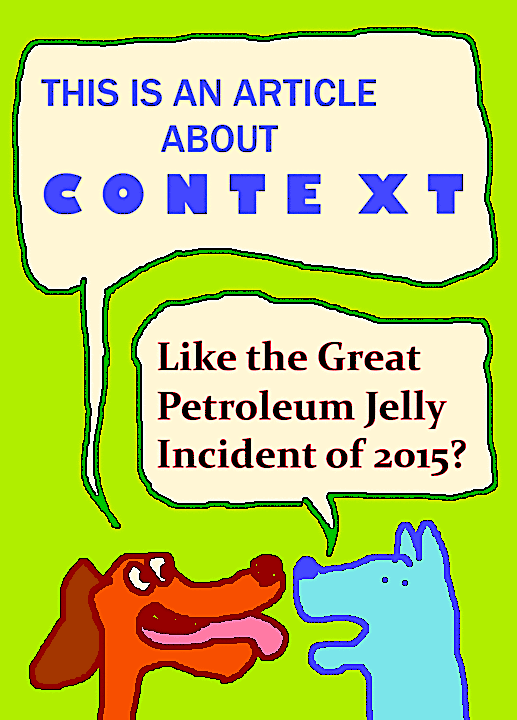
The evolution of the minimalist meme
By ABHINAYA KASAGANI — akasagani@ucdavis.edu
In “Walden” (1854), transcendentalist Henry David Thoreau, who left his life behind to live beside a pond, alone and without resources, concluded: ”Our life is frittered away by detail […] simplify, simplify.” To him, limiting his day-to-day affairs to no more than three tasks was more honorable than being bogged down by so many that he couldn’t give any of them enough attention.
In 2022, curled up and isolated in my room (though not fending for myself in any way that Thoreau was), I discovered Instagram user @Sotce’s brilliance in peeling back layers to see what it revealed. Named Amelia, the influencer not only made minimalist memes that one could flip through like a diary, but also became an online guru who offered Buddhist philosophy through her lowercase sans-serif, white or minimal color scheme and single-image format.
While I am now older and hopefully wiser — having successfully managed to be more chronically offline than online — I have also moved away from blindly idolizing someone on the Internet. Still, Sotce launched a minimalist movement of sorts, at least for me and many other meme compatriots. It was cooler to say less, and it balanced out the vulnerability it took to bare your soul to a public audience.
Four years later, in 2026, the minimalist meme prevails. While the original connotations of the word “minimalism” were negative — meaning more “empty” or “sterile” than visually sparse — minimalism soon grew out of 20th-century modernism, especially in the field of interior design and architecture. It became popular for “designers [to demonstrate] now that minimalist homes can combine clarity with comfort and practicality with style,” according to the BBC article, “The Rise of ‘Relaxed Minimalism.”
Witnessing the minimalist meme gain popularity has been fascinating. The downside of minimalism is that there are only so many ideas that can be expressed at once, but that is also where its merit lies. Granting users some order and simplicity amidst the chaos of our lives eases their cognitive load and makes details easier to spot. Cleaner designs also make it clear where to look, without any visual clutter.
In Harper's Bazaar’s article “The Rise and Rise of Minimalism,” Deputy Editor Lindyl Crabb noted that when “confronted with an absence of something, it’s possible to pinpoint what is most important:” similar to the effects of a sensory deprivation tank. In a society that practices nonchalance, it has become harder to gauge whether there remains enough value for context: Is it “cooler” to be concise, or are we okay with becoming unprecedentedly obtuse?
The rise and reign of minimalism is, in large part, due to how quickly trends arrive and depart. The universality of minimalism allows anything to be paired with it just as quickly, accommodating different themes without redesign and eliminating the need to reconcile color schemes and typefaces. Not only is “less” more, but fewer choices also limit decision fatigue for creators, optimizing production by reducing all costs and speeding up the process.
The level of restraint we had initially resorted to through the minimalist meme in order to say what we want — while still being able to feign nonchalance — is impressive. Using fewer words and simpler sentences allows us to shirk responsibility and avoid feeling embarrassed about admitting to our feelings.
Despite the range of wonderful possibilities minimalism offers, it can also create a feeling of detachment wherein the meme, stripped of color and set in format, remains easily replicable. For instance, Instagram user @horses_and_memories, although known for similarly minimalist content, manages to distinguish themself from other mememakers like Sotce through their intentional use of more verbose text. This addition of language propels creative voice and vision onto the centerstage, reinforcing that it is words, not simply format, that birth vulnerability.
While the original template avoids any explicit honesty, the newer format has moved toward earnestness. In this version, the same sparse visuals are accompanied by longer chunks of text that are more explicit in their reflection. The minimalist meme has now evolved to accommodate a greater amount of text while maintaining its universality, giving it the ability to be both funny and vulnerable. Despite the death of explicit details, and whether or not one desires to replicate Thoreau’s brevity, the gap between nonchalance and vulnerability can solely be bridged with words. Less is more, but more is valuable.
Written by: Abhinaya Kasagani— akasagani@ucdavis.edu
Disclaimer: The views and opinions expressed by individual columnists belong to the columnists alone and do not necessarily indicate the views and opinions held by The California Aggie.