






Show and tell
Why documentation drags the artist down
By ABHINAYA KASAGANI — akasagani@ucdavis.edu
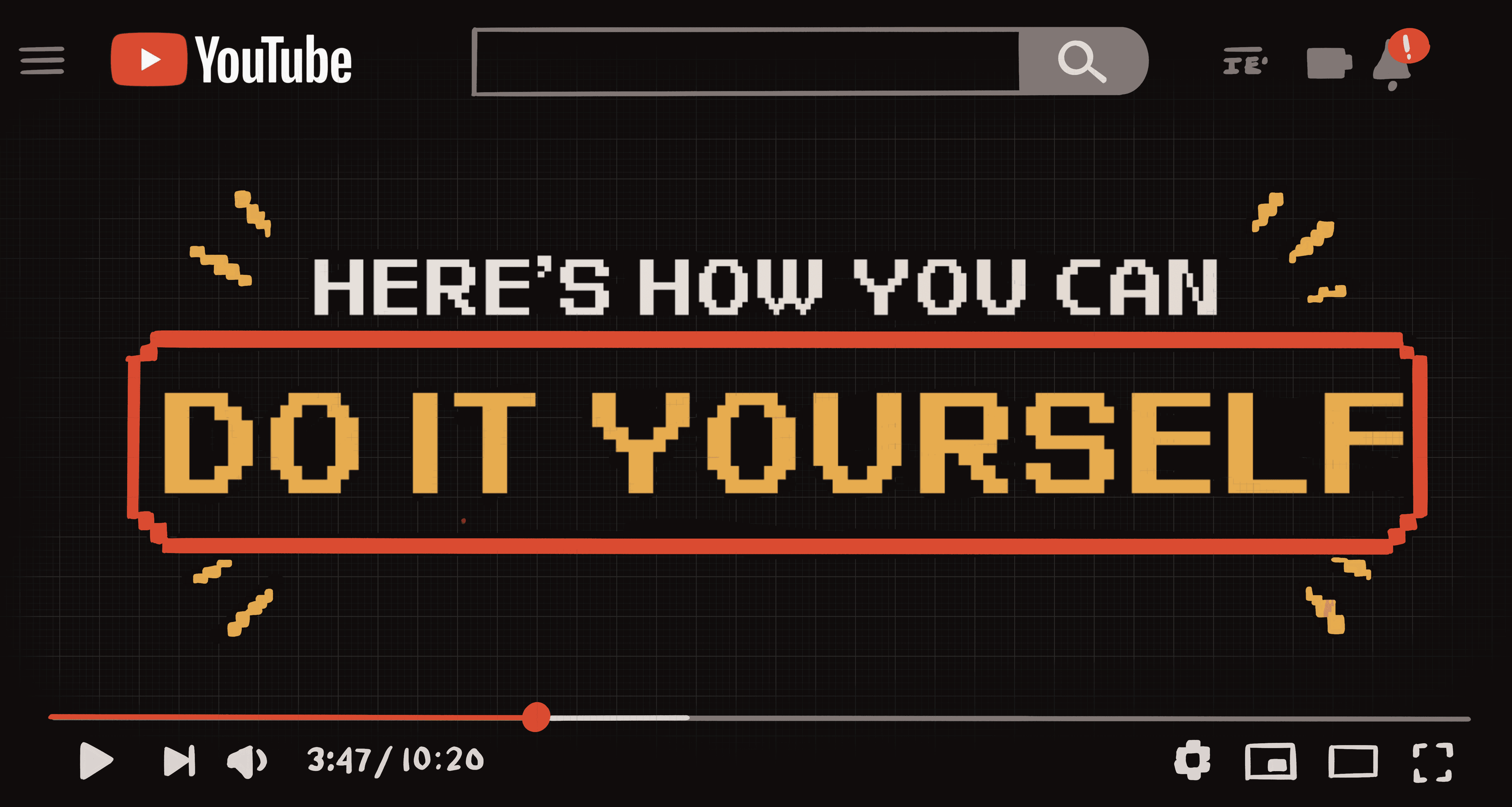
During one unfortunate, disastrous afternoon of doomscrolling, I came to the realization that I was seeing less of anyone’s art and more of their step-by-step process. Videos titled “Here’s how you can do it too” popped up on my social media feed, urging me to watch and learn even if I had no desire to do so. At first, I believed that my qualms with this type of content were centered around the way it made me feel — as if I were being held accountable for remaining plastered to my phone instead of making art. But the longer I thought about it, the less I felt that way.
While I did believe that it was wonderful to see art and its process being democratized in public spaces, it also felt as if we were losing something in the process. This endless documentation of the artistic process that was instead being reframed as the art itself felt like a cop out. So I did what most of us do in a crisis: I looked it up. Most of what I found failed to corroborate my stance on the subject.
The Rocky Mountain College of Art and Design (RMCAD) listed not only the benefits of documenting the artistic process, but also the necessity of it. It claimed that, while novices struggle to incorporate documentation into their processes as seamlessly as seasoned professionals, this fails them in the long run in terms of connection and self-reflection. Documenting one’s work can bolster their credibility to the consumer, allowing their work to inspire another’s. It also requires the artist to be answerable for the criticism they receive; instead of claiming that their critics aren’t privy to the process and can’t make a contestable claim, they now have the opportunity to prove them wrong (or be proven right).
This argument, however, proved immediately insufficient to me. While I acknowledge the benefits of communal crafting, feeling like I had to constantly prove myself felt tedious — it also defeated the purpose. This is not to say that documentation in itself can’t prove resourceful for the archive; however, public documentation becomes about the spectacle. The FREE GYST Professional Practices for Artists Resources claimed that “how you document your work [...] can mean the difference between getting a grant or securing an exhibition, or being rejected and passed over for opportunities.”
Los Angeles-based designer and Art Director James Junk contended that shifting towards documentation disrupts his workflow.
“The attention is moved away from the work itself and toward how the work will read, how it will perform,” Junk said.
He also noted — in a point that wonderfully addressed RMCAD’s initial point about being answerable to the criticism — that this conditioning is more structural. He hit the nail right on the head; the process is what the artist is defined by: not alongside, but in lieu of their art.
“In online creative spaces where credentials seldom matter and audiences blur together, documentation fills the gap,” Junk said. “It explains, justifies and reassures [...] as though evidence in court.”
Maybe for some, leaning into the digital age and the challenges it brings isn’t inconceivable due to the sense of opportunity that follows. Yet, the original rhetoric of “show, don’t tell” that was once drilled into creatives has now turned into a practice of both showing and telling, the concept of which (even for kindergarten) was undeniably exhibitionist. Making it so that the process is commodifiable refocuses the artist’s pursuits, making their work not only iterative but reductive as well. Is it no longer enough to solve the equation, will I always have to show my work?
Written by: Abhinaya Kasagani— akasagani@ucdavis.edu
Disclaimer: The views and opinions expressed by individual columnists belong to the columnists alone and do not necessarily indicate the views and opinions held by The California Aggie.