






Fashionably ate
If it ain’t broke, don’t quick-fix it
By ABHINAYA KASAGANI — akasagani@ucdavis.edu
Hollywood is always in search of its newest recruits — fads, health kicks or standards by which it can ascribe beauty and glamour to its stars. First, it was aerobics, cigarettes and keto diets; then, when the craze for that dwindled, it became waist trainers, 7-day workouts and juice cleanses. Bodies that were defined as the “beauty standard” shifted, as did our attitudes towards them. What was once positive became negative and, later, neutral.
We are currently witnessing bodies shrink in real time. Anything that reminds us of our humanity — our creases and wrinkles — is out: Botox, fillers and buccal fat removal are in.
This “skinny epidemic” in Hollywood isn’t surprising, especially considering the extent to which bodies have historically been regulated and remain subjects of examination. While this development is palpable to most, we remain reluctant to voice how these standards have become detrimental, instead choosing to cater ourselves and our expectations to these criteria.
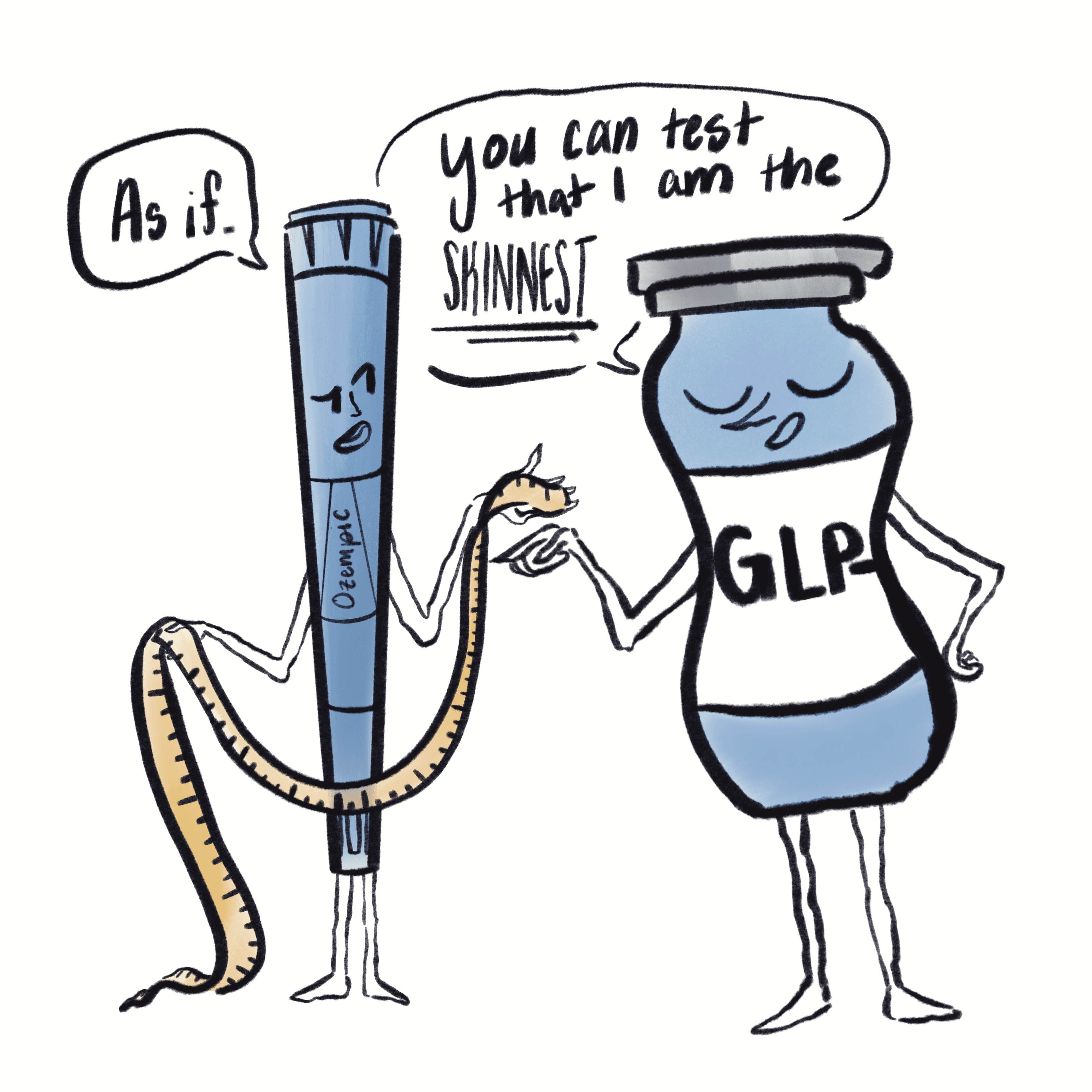
Looking at our television, we are met with hollowed out, frail bodies. Recently, Golden Globes host Nikki Glaser joked about the event being “Ozempic’s biggest night,” calling attention to what everyone was thinking but wouldn’t say. Jameela Jamil, who has spoken openly about her own body dysmorphia, also acknowledged the “scarily thin” women at the 2026 British Academy Film Awards (BAFTAs) and reproached the “rapid rise of the aesthetic of emaciation amongst women in Hollywood.” While putting celebrities under a microscope for Ozempic use without confirmation can be harmful, not discussing its possibility allows for naive young fans to imitate their idols.
Starting as a Type 2 diabetes management tool, Ozempic delivered rapid weight loss results, offering life-saving benefits. The rise in its off-label use began in 2021, with the surge in interest following the United States Food and Drug Administration’s (FDA) approval of Wegovy as a weight management tool for adults. Semaglutide medications like Ozempic and Wegovy suppress appetite and slow digestion to produce results; alongside stimulating insulin production while blood sugar is high, preventing the liver from releasing too much sugar.
Nearly everyone has access to these medications on paper, with several insurance plans taking measures to cover them for patients with Type 2 diabetes (some more expansive plans cover it for other reasons as well). However, access is largely reserved for those in the upper income bracket, further exacerbating health disparities.
What was once a theoretical point of contention is now harming our bodies, as we rely on prospective drugs to do our bidding. What was once achieved through dietary regulation (and starvation) can now be administered through weekly injections. As much as Hollywood loves regulating beauty, it loves it even more when it is offered up as attainable for the wealthy.
It isn’t like the secret of Ozempic use is largely well-kept. Most of these sudden transformations, which celebrities insist are simply the result of a balanced diet and intentional movement, happen too quickly to uphold the excuse. Everyone regurgitates the same phrases, as if rehearsed, expecting the audience to pretend as if nothing’s happening and stop asking questions entirely.
Hollywood is not new to unrealistic aspiration, nor is it above capitalizing on insecurities to manufacture desire in the market. Except this time, the target is not simply celebrities, but the audience to whom this standard has been exported. Everyone becomes a culprit, especially when targets start as young as pre-pubescents.
Hollywood standards alone do not shape attitudes; general cultural norms often come into play as well. Some alternatively suggest that this might be indicative of a recession; it is not uncommon for beauty trends to veer toward excess or abundance during periods of the boom, and glamorize thinness during periods of financial instability or distress. The desirability of thinness is not simply a result of scarcity or inconspicuousness, but a desire to appear disciplined — hence, why rigorous methods of weight loss have always been glamorized.
Beyond body image, the industry’s general aesthetics also cater to minimalism, opting for neutral, clean palettes and quiet luxury to further signal our economic anxieties. Businesses might further attempt to capitalize on these anxieties to generate revenue for their parent companies, peddling solutions to problems that do not exist.
Ozempic and other drugs in the GLP-1 class were developed to help treat Type 2 diabetes, and have been adopted as a weight loss aid because of their insulin stimulation and digestion slowing effects. The companies that manufacture name-brand GLP-1s haven’t meaningfully tested them or approved them for weight loss for anyone with a body mass index (BMI) below 27 — they’re a medical tool for people that need them, not a cosmetic tool for anyone who wants them. Despite this, much of the society (especially online) has latched onto them as a vehicle through which they can achieve an alarming level of thinness, which is only exacerbated by advertising from the companies themselves. Abusing these drugs can have incredibly harmful ramifications — they’ve been directly linked to osteoporosis, along with other symptoms and the general health risks that come with being underweight. So, when these drugs are heralded by influencers and Hollywood starlets alike, a narrative of a beauty standard that is far more detrimental than it is good is being severely perpetuated.
What makes this shift particularly alarming is the extent to which we collectively agree on the necessity of these products and welcome them almost immediately into our lives. By integrating these aesthetic pressures with our product solutions, we have reverted to damaging rhetoric that signals that “nothing tastes as good as skinny feels.” Under the guise of health and self-discipline, we uphold standards that no longer serve us — proving ourselves to be as hollow as these faces themselves.
Addressing the growing normalization and subsequent use of prescription drugs for non-therapeutic, aesthetic purposes becomes necessary. If healthcare professionals do not advocate this misuse, capitalizing on age and insecurity becomes largely contestable.
It becomes exhausting for all parties to participate in these expectations, holding newer ideas of body inclusivity with older ones of manufactured beauty and desirability. We are so easily persuaded to adapt to these new extremes, recycling old fads until we encounter newer technologies that produce the same results.
Ozempic is not necessarily a new concern, but rather an indication of the eventual need for pharmaceutical interventions for a problem we have been trying to fix for years. It stands as the holy grail for all our beauty needs, delivering results quickly and effectively. Hollywood claws at any chance for visibility in the spotlight, even as its bodies become closer to invisible.
Written by: Abhinaya Kasagani— akasagani@ucdavis.edu
Disclaimer: The views and opinions expressed by individual columnists belong to the columnists alone and do not necessarily indicate the views and opinions held by The California Aggie.