






Bear on campus raises questions about wildlife entering human spaces
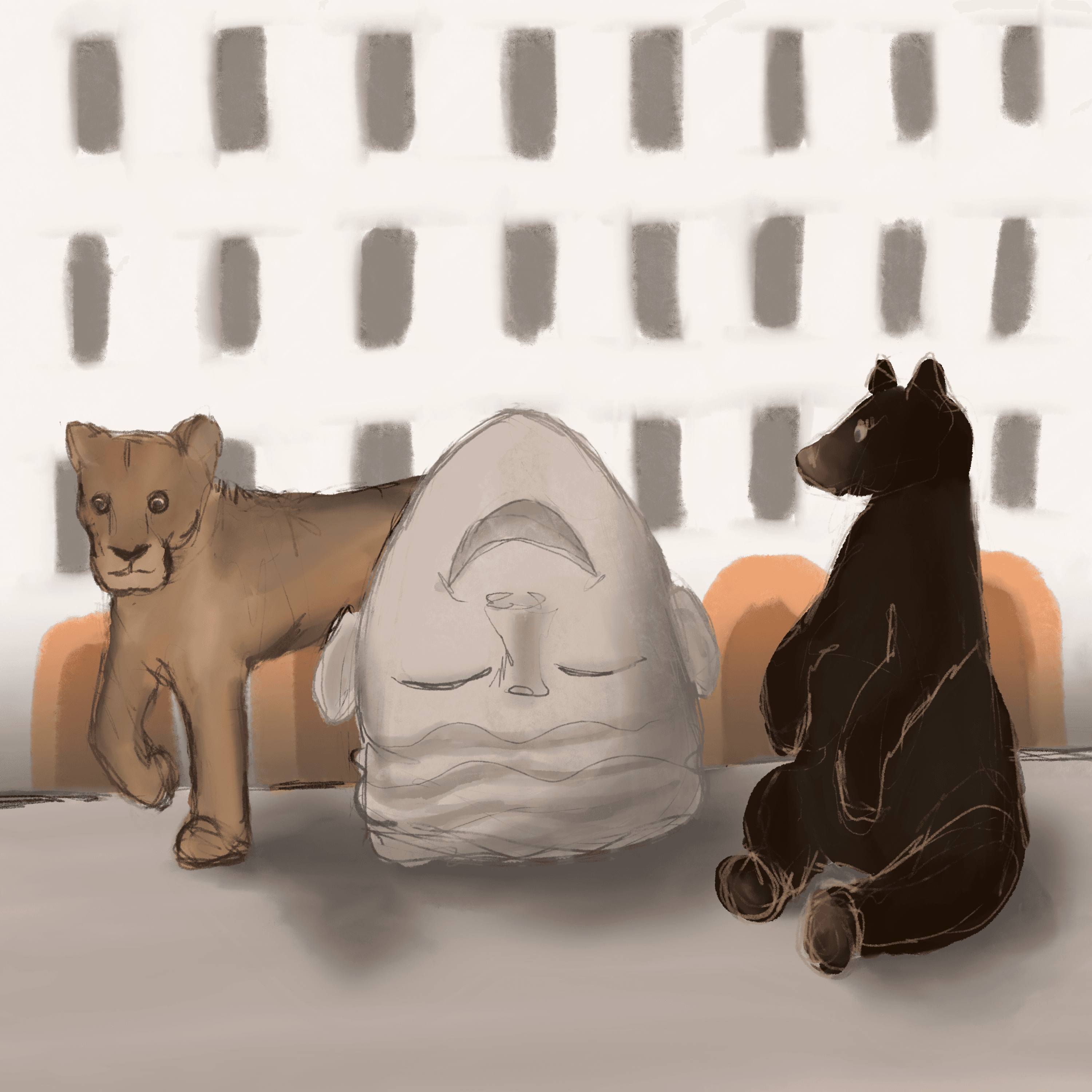
Wildlife professors and students discuss the recent bear sighting and why animals continue moving through UC Davis’ campus
By NOOR AHMED — features@theaggie.org
When reports of a juvenile black bear wandering through the UC Davis campus began circulating among students, reactions ranged from excitement to confusion. An Aggie Alert issued shortly after midnight on May 15 warned students not to approach the animal after it was seen moving through West Village, Segundo and Primero residence areas, as well as near the Activities and Recreation Center (ARC) before eventually leaving campus through the Student Farm area.
The bear was believed to be a juvenile in search of its own territory after being separated from its mother, according to UC Davis police and the California Department of Fish and Wildlife. While sightings of foxes, birds and even mountain lions occasionally make headlines in Northern California, many students were surprised to see a bear moving through such a populated college campus.
For some experts, however, the incident reflects less of a dramatic wildlife invasion and more of a reminder that humans and animals already exist in overlapping environments.
“This particular case where we had a juvenile bear roaming the UC Davis area is most likely a case of a young animal searching for a territory of its own,” Assistant Professor Kevin Ringelman from the Department of Wildlife, Fish and Conservation Biology, said. “It seems unlikely that it was actively trying to colonize suburban Davis — rather, it wandered in and wandered out again.”
Davis’ geographic location in the California Central Valley makes wildlife encounters less uncommon than students may initially assume, according to Ringelman. Assistant Professor Justine Smith from the Department of Wildlife, Fish and Conservation Biology added that part of the reason wildlife sightings feel more noticeable today may also be because of technology and social media.
“I think a big part of why there is a perspective of animals being sighted is because of technology,” Smith said. “Ring cameras and animal camera traps make these sightseeings seem more common. Animals have probably always been moving through our environments. We developed our societies in animal habits after all. We have social media and a lot more ways to connect, which makes it easier to spread our observations. It is our own technology and behavior that is making it seem more apparent.”
Smith also noted that animals are not necessarily entering human spaces at higher rates out of novelty or adaptation to people, but often as part of normal ecological behavior.
“A lot of animals have run an innate fear response,” Smith said. “They either avoid us or change their activity to try to avoid us. That is not the case for all animals, of course — like squirrels or birds that are common on campus. Even when animals do move through neighborhoods, they are not detached because they don’t want to be seen.”
Safa Iqbal, a first-year environmental policy analysis and planning major, said that despite living in Northern California, seeing a bear move through campus still felt unexpected.
“Although it seems like something that could occur often in Northern California, a bear grazing across campus did initially come as a shock,” Iqbal said. “Other animals, such as mountain lions and foxes, have been known to come into human spaces from time to time, but bears are not often talked about in this scenario.”
Smith added that in similar cases, movement is often tied to natural dispersal as young animals search for territory.
“In terms of bears, they are making big dispersal movements,” Smith said. “That is normal for them to try to establish their own territories. They are trying to figure it out and establish themselves.”
Iqbal suggested that multiple factors could be contributing to wildlife entering human spaces, including environmental disruption and broader ecological change.
“This could also be an issue of the animal’s habitat and what led it to wander off — whether that be food scarcity, increased predators or global warming,” Iqbal said.
Smith emphasized that dispersal itself is not a sign of abnormal behavior, but a necessary part of how animal populations sustain themselves.
“Dispersal is part of what animals do,” Smith said. “The young go off and go to try to establish their own homes. They leave their mothers. This is very necessary because that is how we get diversity and inbreeding is diminished. We are more likely to encounter them through this very natural process.”
Smith further explained that environmental stressors like droughts can also influence how far animals travel and how often they come into contact with humans.
“A paper that was published by my colleagues and I states that droughts increase wildlife encounters because [animals] are having to move more as a result, and this causes them to come in contact with us,” Smith said. “We are modifying their habitats, so that is a natural response from the animals.”
Smith also noted that ongoing environmental change, including habitat loss and fires, are influencing wildlife movement and behavior in complex ways.
“We are starting to investigate that more,” Smith said. “[There’s] quite a bit of evidence, like mountain lions chang[ing] their behavior when closer to humans. They become more nocturnal. We have also found that fires can really influence mountain lions and their ability to find territories and food. We also have quite a bit of habitat loss. All these things are happening all at once and climate change makes that worse and has changed animal behavior.”
While researchers do not necessarily believe wildlife encounters will dramatically increase everywhere, Smith noted that areas like Davis — where developed spaces closely border natural habitats — will likely continue experiencing moments where humans and wildlife unexpectedly overlap.
“We do expect that if we continue to fragment these core habitats, it would not be surprising to me that we will see animals seeking out resources from those areas or disperse to human spaces,” Smith said.
Despite the initial surprise many students felt, Ringelman emphasized that encounters like the UC Davis bear are not unusual in a broader ecological context.
“Davis is surrounded on all sides by agriculture mixed with natural areas, and is only a couple dozen miles from more wild spaces, so wildlife sightings are expected to be more common here than in urban Sacramento,” Ringelman said.
For students like Iqbal, the encounter sits at the intersection of curiosity and concern. It is a moment that feels both ordinary in theory and striking in practice.
“Humans are definitely becoming more aware of wildlife, but whether that is by their own choice or because animals are roaming our spaces is debatable,” Iqbal said.
Still, Ringelman suggested that these moments can shift how students think about the ecosystem surrounding them.
“In so many other contexts, people go out of their way to see wildlife — especially large mammals like bears,” Ringelman said. “I think this is an in-your-backyard opportunity to learn about and appreciate the wildlife that is all around us.”
Written by: Noor Ahmed — features@theaggie.org