






I found out I know nothing
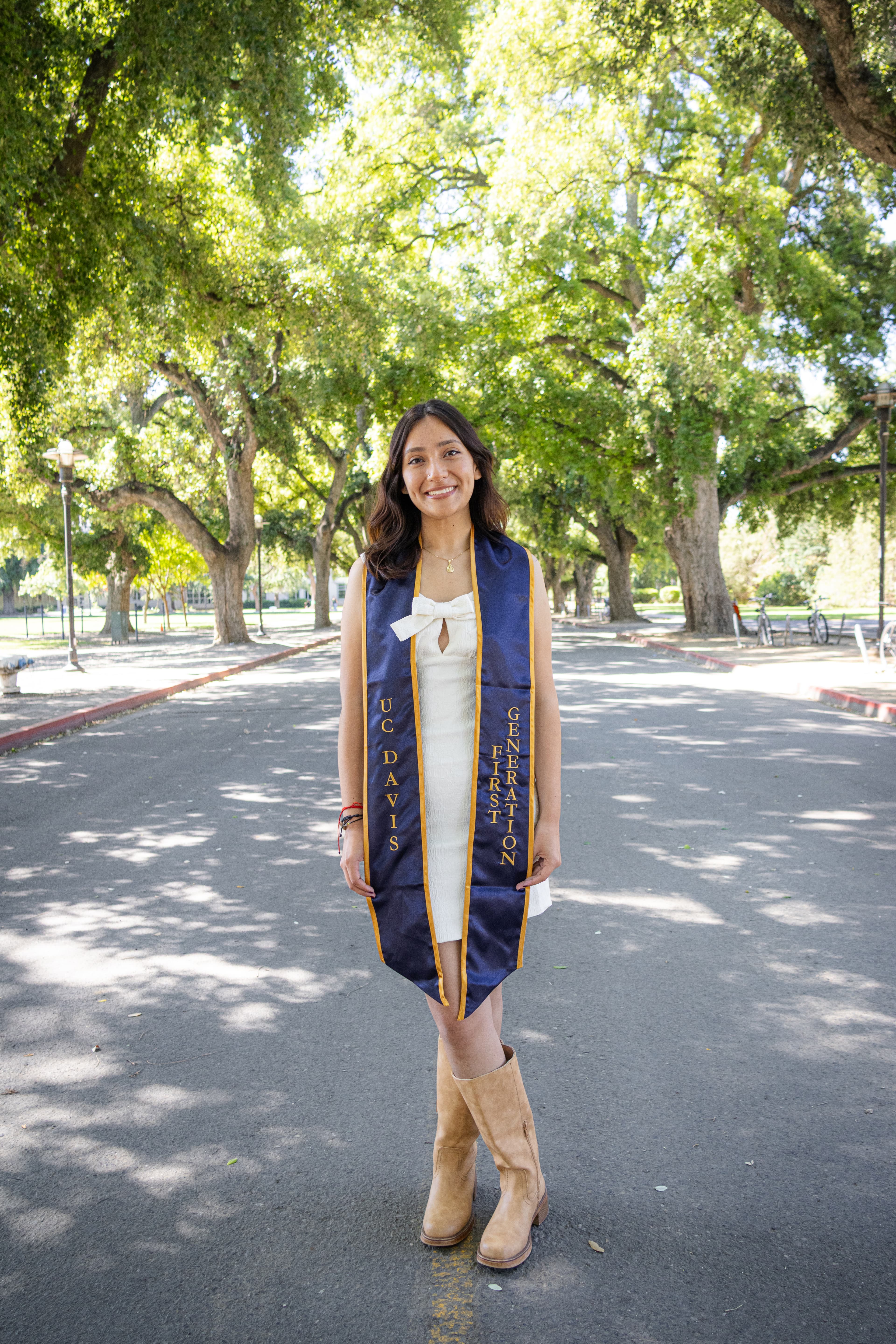
Realizing you don’t have to know everything is college’s biggest act of love
By SABRINA FIGUEROA — sfigueroaavila@ucdavis.edu
When I first got to UC Davis, I had a whole plan: I would study communication and political science and become a political correspondent. I went to my classes thinking I knew a lot about my field and thinking I knew exactly what I wanted out of my college education, a common and hopeful — but naive — mindset.
I first started writing for The California Aggie on the features desk during my second year, and I thought I would soon have the skills of Bob Woodward and Carl Bernstein. As I interviewed for, researched and wrote my articles, I soon realized that something felt off — none of it was enjoyable. I tried so hard to come across as a credible journalist, attempting to prove to editors, friends and family that I did know things, even though none of them ever doubted that. That mindset eventually sucked the fun out of what was meant to be a passion of mine.
Simultaneously, my second year was when I began to take political science courses. While I excelled in other classes, I quickly learned that my knowledge in this field was limited. People would raise their hands to ask the professor about a niche political event irrelevant to the content or would begin to play devil’s advocate, almost just to prove they knew something the rest of us didn’t. The more I witnessed these interactions (and the more I found them annoying), the more I began to wonder whether everyone — including myself — could stand to embrace genuine curiosity more.
We often don’t realize it, but we tend to think we know everything — not just in our academic or career plans, but in our day-to-day conversations. For example, have you said you’ve read a book or seen a movie even though you didn’t? Or, have you tried to say a fun fact about something and someone corrects you? It’s humbling, but it just goes to show that we want to know things, but we get so stuck on the “know” part that we forget that, in order to do so, we must first learn.
My time at The Aggie and at UC Davis has only made me realize how little I know, but it’s not necessarily a bad thing. I changed career paths and academic plans more times than I can count, and although it was terrifying, it was a pleasure to explore the unknown and create new versions of myself I didn’t know existed.
One of my favorite quotes was written by John Steinbeck in “East of Eden”: “And now that you don’t have to be perfect, you can be good.”
We get so caught up in being intellectuals that we forget humans can’t possibly know everything; there are limits to our memory and brain functions. What is in our human nature is curiosity, and by accepting our abilities, we free ourselves from the burden and impossible task of trying to be flawless beings. We — college students especially — are messy, disorganized and make mistakes, but that’s what learning is.
At the end of the day, college, education and journalism are all about uncovering truth and knowledge, providing you with all the tools to embrace the fact you don’t know everything. One day you may take a class that will completely change your perspective on the world, as my international relations and strategic communication classes did for me. One day you may meet people who are completely different than you, and you’ll find your curiosity clawing at you to find out more about them. One day you might read a column and finally choose to write your own simply because you tried it once and you liked it, even though you never thought you would.
College will catch you off-guard, play around with your brain like a child with Play-Doh and mold yourself into a person you could never imagine being. That was its act of love to me, so this is my love letter back.
Written by: Sabrina Figueroa — sfigueroaavila@ucdavis.edu
Sabrina Figueroa Avila is a 2024-2026 Opinion Columnist. Before this, she was a Staff Writer on the Features Desk.