






Pick up a record and feel the music
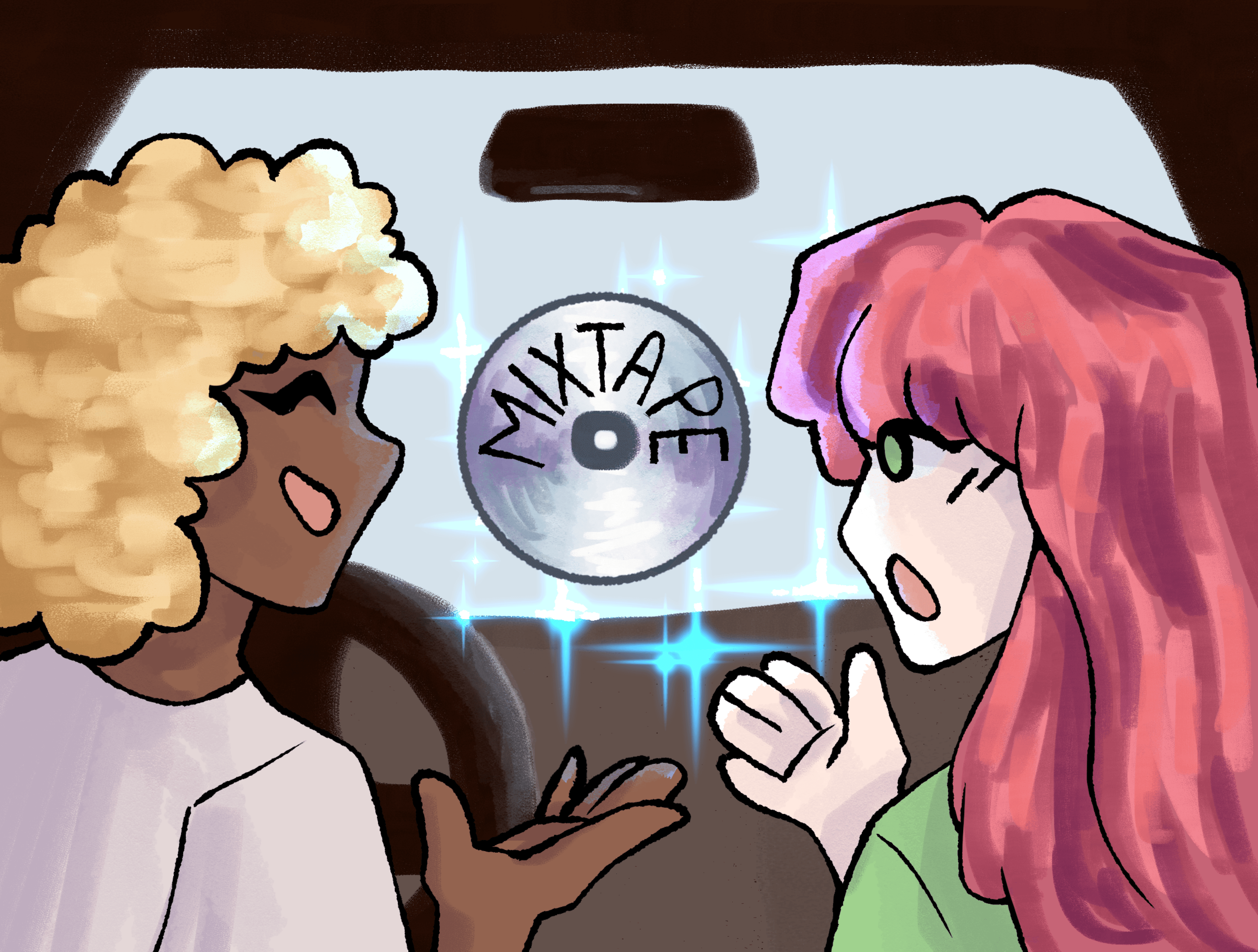
We must make our return to physical media
By AMBER DUHS — alduhs@ucdavis.edu
I long for the days when a record collection was a representation of your personal music taste, rather than a collection of dusty vinyls that sat idly on a shelf — for the times you’d pop a cassette tape in each time you drove or spent late nights sharing a burned CD among friends at a small gathering. I find myself often reminiscing about a time I haven’t truly ever experienced: a time when music made its physical presence everywhere.
Today, music is the most digitally accessible it’s ever been — users can easily jump between songs, albums and curated playlists. With Spotify and Apple Music, we slowly leave the archaism of a record or cassette in the past, exchanging the personal experience of picking a piece of music and truly connecting with it for convenience. It's no mystery why many prefer a digital music streaming service over physical music with all its accessible glory, but there’s something indescribably satisfying about getting to tangibly hold your favorite album or snap open a CD case.
The crux of the experience is that a physical piece of music feels so much more personal when you can grasp it between your fingers. Could you imagine the scene in “Almost Famous” when Zooey Deschanel's character gives William a box of records, if instead she had left him a few links to a Spotify playlist? How many perfectly crafted ending scenes would be ruined by a digital album failing to load? It’s simply not the same.
As the modern world is underscored by utility and fast-paced lifestyles, physical music is a breath of fresh air. Young people are starting to opt for collecting records, sharing CDs and shuffling through old boxes of cassette tapes, finding that the slowness it requires is a welcome respite, rather than an inconvenience.
The rise of digital music — not alongside physical music but in its place — has tarnished our relationship with the art form, causing us to become impatient and stagnant in our engagement with music. When we discuss our favorite artists, we aren’t able to pick out our favorite album or era, only a single song we think fits perfectly into our playlist.
I’m not a defender of the annoying “name three songs” argument, per se, but I'm also not ignorant of the fact that we’ve attempted to simplify an art form that is inherently complex. Physical media requires time and care — you must store your music a certain way, dust off the records you haven’t favored and research the best way to bring a vinyl to life. Music isn’t meant to be just a soundtrack that plays on a loop in the background; it requires effort and an attempt at connection.
There are arguments to be made against physical music, no doubt: it can be clunky and expensive, and often proves to be a financial burden when it comes to taking a chance on a new artist. But I'd counter with this: all of these problems can be solved if we don’t focus on consuming as much as we can, as quickly as possible. Taking the time to appreciate a single record rather than constantly keeping ourselves enthralled with a stream of new media allows us to become satisfied with a “less is more” mindset, listening to full albums and taking time to appreciate the craftsmanship instead of moving on quickly.
In the past, we discovered new music by exchanging records with friends and discussing our favorite tracks, or lending CDs to be shared at a party. It was, in essence, a more intimate exchange. The music you connect with is personal, and that’s what we’ve lost — the realization that it’s as valuable as any other art form, revealing our inner thoughts, feelings and qualms. Not only do we prioritize interpersonal connection when we abandon our need for instant gratification, but also our respective knowledge of the different music we like and its influences on us.
Prior to the accessibility of literally millions of artists at the touch of a button, we had to at least have a basic understanding of different sub-genres to know what music to pick up. If one understands the context behind the development of their favorite bands' sound, not only can they find newer and smaller artists to indulge in, but they can also develop their own understanding of the artistic movements, politics and social change that influence music.
I beg a return to physical music, not because I’m elitist or don’t have 25 perfectly-crafted Spotify playlists (with titles and cover images to match), but because I think properly enjoying, interpreting and feeling music is just that important.
We must allow ourselves to process each lyric and guitar strum, not in passing but with focus, personally engaging with both “good” and “bad” music. Share your records with your friends and trust that they’ll take great care of them, or burn a CD and go through the painstaking process of deciding exactly what songs are worthy of sharing. Reconnect with the personal side of your music experience, and value it. We must not sacrifice an art form that has the phenomenal ability to transcend any social division to the allure of convenience.
Written by Amber Duhs — alduhs@ucdavis.edu
Disclaimer: The views and opinions expressed by individual columnists belong to the columnists alone and do not necessarily indicate the views and opinions held by The California Aggie.