





Just watch the paint dry
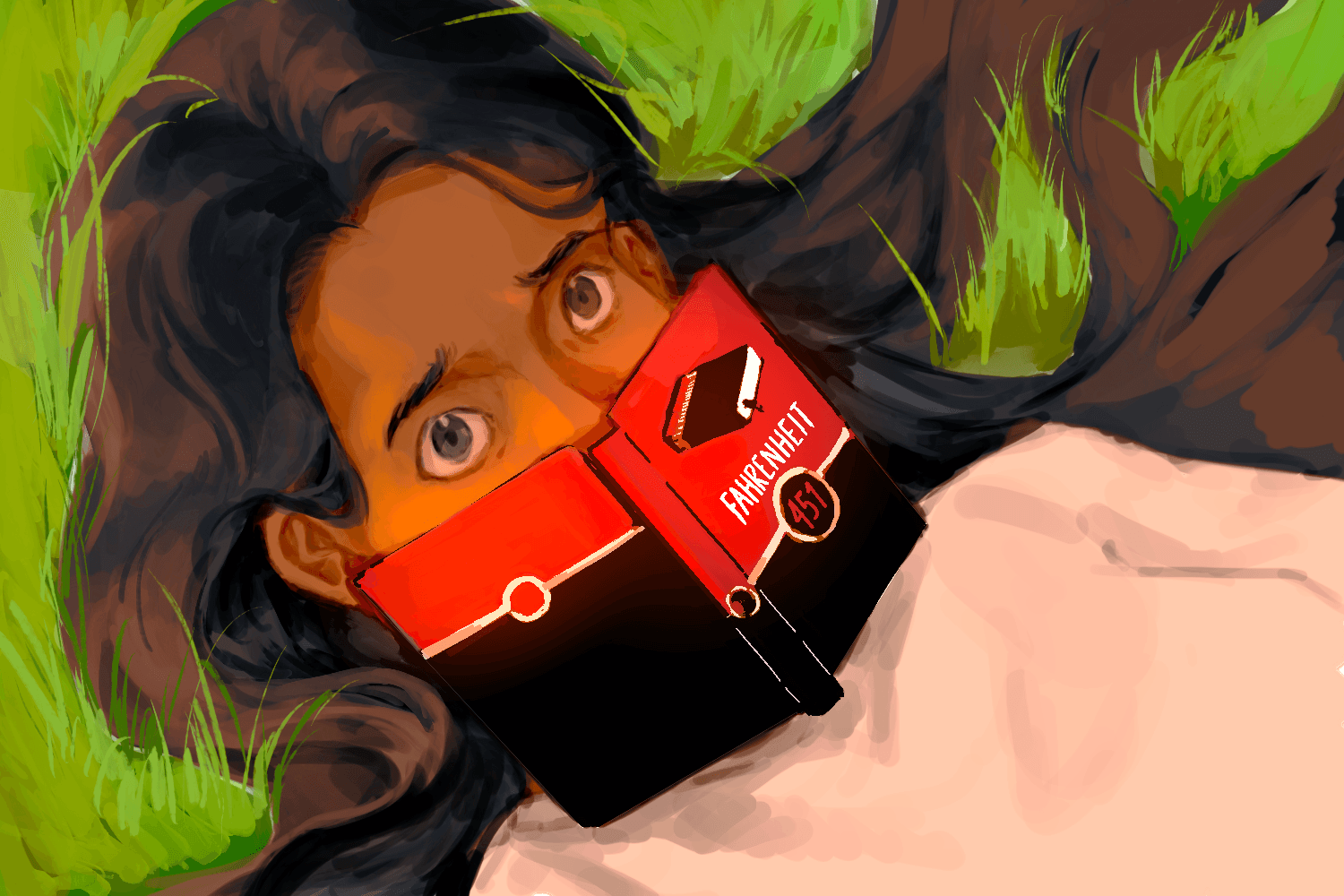
Anti-intellectual propaganda dilutes our brain’s plasticity
By NEVAEH KARRAKER — nakarraker@ucdavis.edu
The average person is constantly exposed to a firehose of information. Every day, we’re exposed to over 100,000 words through news outlets, social media posts and online articles. However, it often comes in the form of nonsensical memes that we quickly scan through, inhibiting us from truly imbibing this knowledge.
It’s no secret that our attention spans have collectively decreased with the usage of smartphones — our collective screen attention span has plunged from 150 to 47 seconds in the past two decades. Furthermore, the National Assessment of Education Progress (NAEP) reported that younger generations are performing significantly below their expected reading levels. This is partially due to the transition in literacy complexity over the past few centuries. For example, “Pride and Prejudice” by Jane Austen and “It Ends with Us” by Colleen Hoover are thematically uncomparable. Modern literacy is shallow and facile as it exhibits succinct sentences, simplified prose and hyper-accelerated storylines. Unlike literature prior to the 21st century, there is substantially reduced effort required for immersion or plot analysis.
Unfortunately, this has manifested in all mediums — including the artistry of film.
In just a quarter of a century, the average shot length (ASL) of movies has declined from more than 10 seconds to less than four seconds. Intentional and cinematic wide shots are swapped for fast-paced, vacuous close-up shots that mimic what we see on social media platforms.
Whether represented through literature or film, this is often the author's direct response to society’s diminishing attention span. An aspect of an author’s role is to keep the audience captivated. Consequently, this heavily limits creative autonomy.
It’s a heavily compounding cycle — the shorter our attention spans become, the higher the demand for elementary stories. This orchestrates a dystopian market which forcibly determines the selection pool of public media, and society is thus thrust into a gradual evolution of limited cortical flexibility. With each poor piece of media produced, our standard for the arts lowers.
This cycle has manifested into a projection of anti-intellectualism. When we consume superficial content — whether found in contemporary novels, films or social media clips — we reinforce patterns of passive consumption. This gives our brains fewer opportunities to practice activities that challenge us and strengthen our neuroplasticity.
Modern technology provides access to limitless knowledge, and yet we continue to solely choose the narratives being spoon-fed to us. We must be exceedingly selfish, then, to refuse to capitalize on the opportunity to become an unprecedentedly erudite generation —- to an extent, our diluted intelligence is self-inflicted. We have the resources, yet we’ve instead allowed ourselves to become dependent on digital infrastructure.
Our political duty is unfortunately impacted by this cycle. If we lack the comprehensive ability to understand basic political documents, such as ballots — most of which are ranked at an advanced university reading level — our civil illiteracy results in the loss of our constitutional rights. Oppressive policies are at liberty to be deceptively incorporated, ranging from confusion in the Utah Legislature or accidentally rejecting a 2025 anti-slavery policy in California. It poses an unnerving crux suggesting that society is unable to grasp complex concepts.
Ballots are no different from modern films or our social media algorithm, then — the scriptwriter considers the audience’s competency. This is a contributing factor that enables federal control, and, thus, it’s logical that current satisfaction in governmental policy and quality of life is at an unparalleled low.
This downward trajectory in mental capacity augments a call for action to intervene in this continuous cycle of literary degradation before we allow it to imperialize ourselves. We must refuse dependency on technology and always exercise the mind with resolute studying of literature, law and the arts.
Written by: Nevaeh Karraker—nakarraker@ucdavis.edu
Disclaimer: The views and opinions expressed by individual columnists belong to the columnists alone and do not necessarily indicate the views and opinions held by The California Aggie.