






Inside UC Davis’ Russian department, where small class sizes fuel big conversations
Students discuss their experience in the Russian program
By JENNA LEE — features@theaggie.org
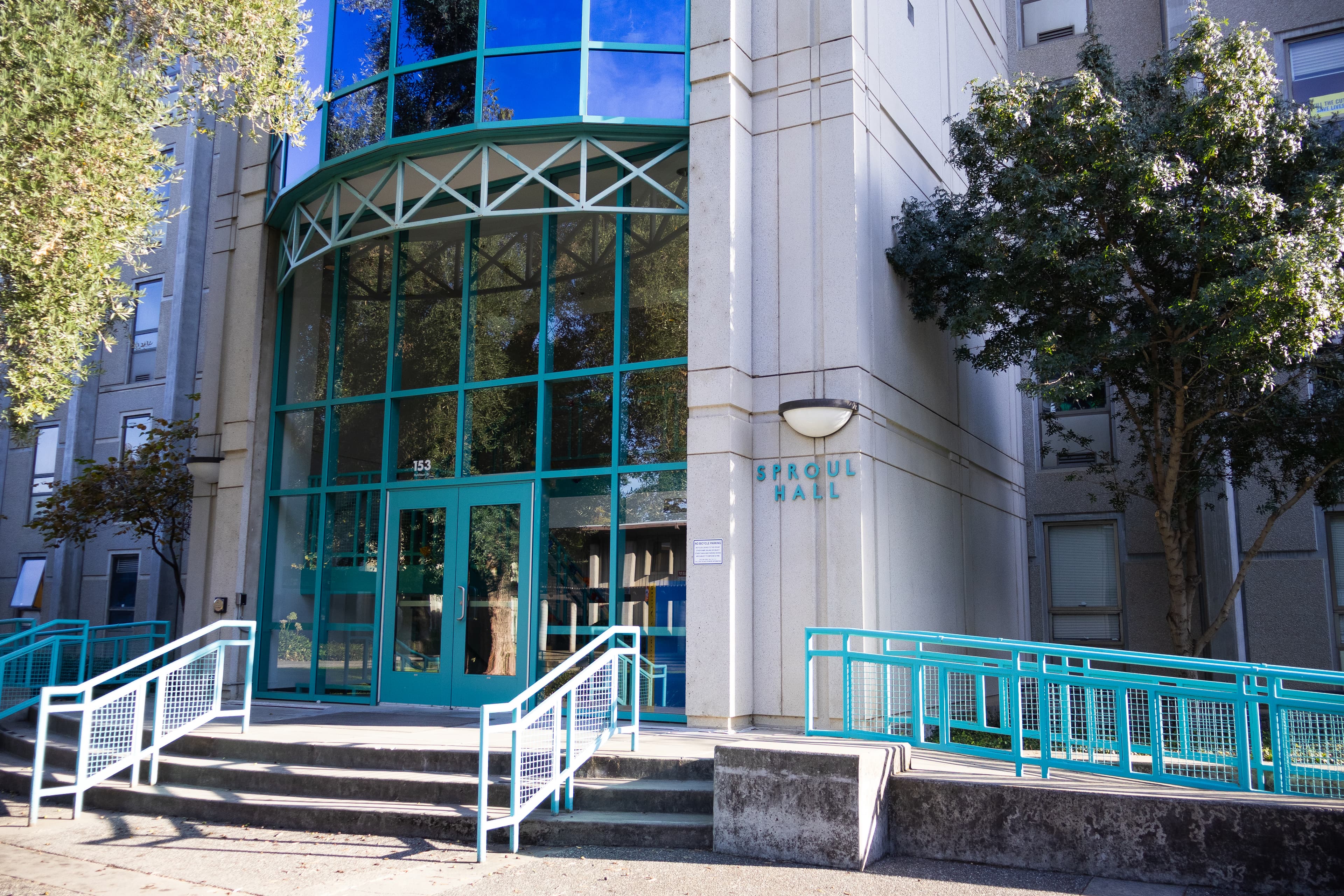
On the fourth floor of Sproul Hall, Mukhlisakhon Erkinova, a third-year Russian and biological sciences double major, sips chamomile tea from a white Styrofoam cup. Every month, Erkinova joins her fellow students for tea parties, where they practice their Russian conversation skills over tea and sweets. These are the most entertaining days for Erkinova. Instead of sitting in the back of a crowded lecture hall, she spends the afternoon chatting about Russian literature with her classmates and professors.
Erkinova is just one of 14 students majoring in Russian in the 2025-26 academic year, a department whose numbers have dwindled as interest in foreign language degrees declines. But students argue that this low enrollment offers a rare silver lining: a fiercely supportive community and opportunities that may get lost in large departments.
“In Russian classes, you actually get to know the whole class,” Erkinova said. “You know their names, you know what they’re doing and everything. You even get to work with them one-on-one — every single person in the class.”
This environment means professors can give students personal attention. Last year, only two students enrolled in RUS 105: Advanced Russian Conversation. The class was taught by Professor Valeria Mutc, who, as fourth-year Russian and biochemistry and molecular biology double major Tim Krassiev recalled, took the low enrollment in stride.
“She was like, ‘Alright, there’s only two of you guys,” Krassiev said. “‘Lesson plan — super flexible. Just tell me what you want to learn, and we can learn it.’ And I was like, ‘That is incredible. So awesome.’”
Krassiev admitted to Professor Mutc that he wanted to expand his vocabulary. Growing up in a Russian-speaking household, his language skills were largely confined to domestic topics. It wasn’t until he enrolled in Russian classes at UC Davis that he became exposed to Russian literary and historical concepts for the first time.
“It’s putting so much more ‘oomph’ into my Russian side, really rounding out my knowledge beyond just the language, which I super appreciate,” Krassiev said.
In last year’s Alexander Pushkin class, students engaged in an intense debate over Eugene Onegin’s feelings for Tatiana in Pushkin’s 1833 novel “Eugene Onegin.” Professor Mutc divided the classroom into two groups. Krassiev’s side — which happened to be the side he personally believed — argued that Eugene truly loved Tatiana. Erkinova, however, took the opposite view. The two often had heated debates in the library over the characters.
“That was a really fun activity, a really fun class,” Krassiev said.
Professor Mutc’s reputation is so strong that many students actively seek out her classes. In Mutc’s Anton Chekhov class last winter, every seat was taken.
“All her lectures are electric,” Krassiev said. “I don’t know what it is, but she gets the class going.”
But Mutc is not the only professor who left a lasting impression on Krassiev. He credits lecturer Liliana Avramenko with helping him improve his public speaking.
“Presenting in another language is super hard,” Krassiev said. “Even as somebody who grew up speaking Russian, presenting in Russian is way harder […] If I’m trying to remember how to say something, and I’m nervous during a presentation and I blank, it is over for me. I’m not remembering that word. I’m not remembering what I was talking about.”
Thankfully, professors are always willing to help — even for matters outside the class. Erkinova, for instance, sought out Professor Mutc during office hours to learn more about research opportunities in Russian literature. Mutc gave Erkinova valuable advice on choosing a mentor and explained the steps to get started.
The main disadvantage of such a small department is that only one or two upper-division Russian classes are offered per quarter. Research is one way Erkinova can obtain credit toward her upper-division requirements. Students can also satisfy requirements through equivalent classes in history, political science, comparative literature and other departments.
In one such class — HIS 138C: Russian History: The Rise & Fall of the Soviet Union, 1917 to Present — Erkinova learned about the Hujum, a Soviet campaign launched in 1927 to force Muslim women to remove their traditional face and body veils.
“Taking that class really opened my eyes to everything that happened,” Erkinova, who immigrated to the United States from Uzbekistan 10 years ago, said. “In our countries, we’re given history books that have much bias. A lot of things you learn don’t mention the details.”
For Erkinova, Russian classes have become a window into her own heritage. Her professors make a conscious effort to highlight Uzbek culture. Professor Mutc, in particular, regularly introduces facts about Uzbekistan and connects them directly to the current lesson.
Krassiev, too, finds that his Russian classes have become more than just the vocabulary and grammar. He has a new appreciation for language-learning.
“If you only speak one language, you should push yourself to learn another language cause I think learning another language is so beautiful, really challenging [and] really helps you feel like you’ve accomplished something,” Kassiev said. “No matter what, try to learn another language.”
Written by: Jenna Lee — features@theaggie.org