






Review: ‘Teenage Sex and Death at Camp Miasma’ is an electrifying love letter to ‘campy’ slasher flicks
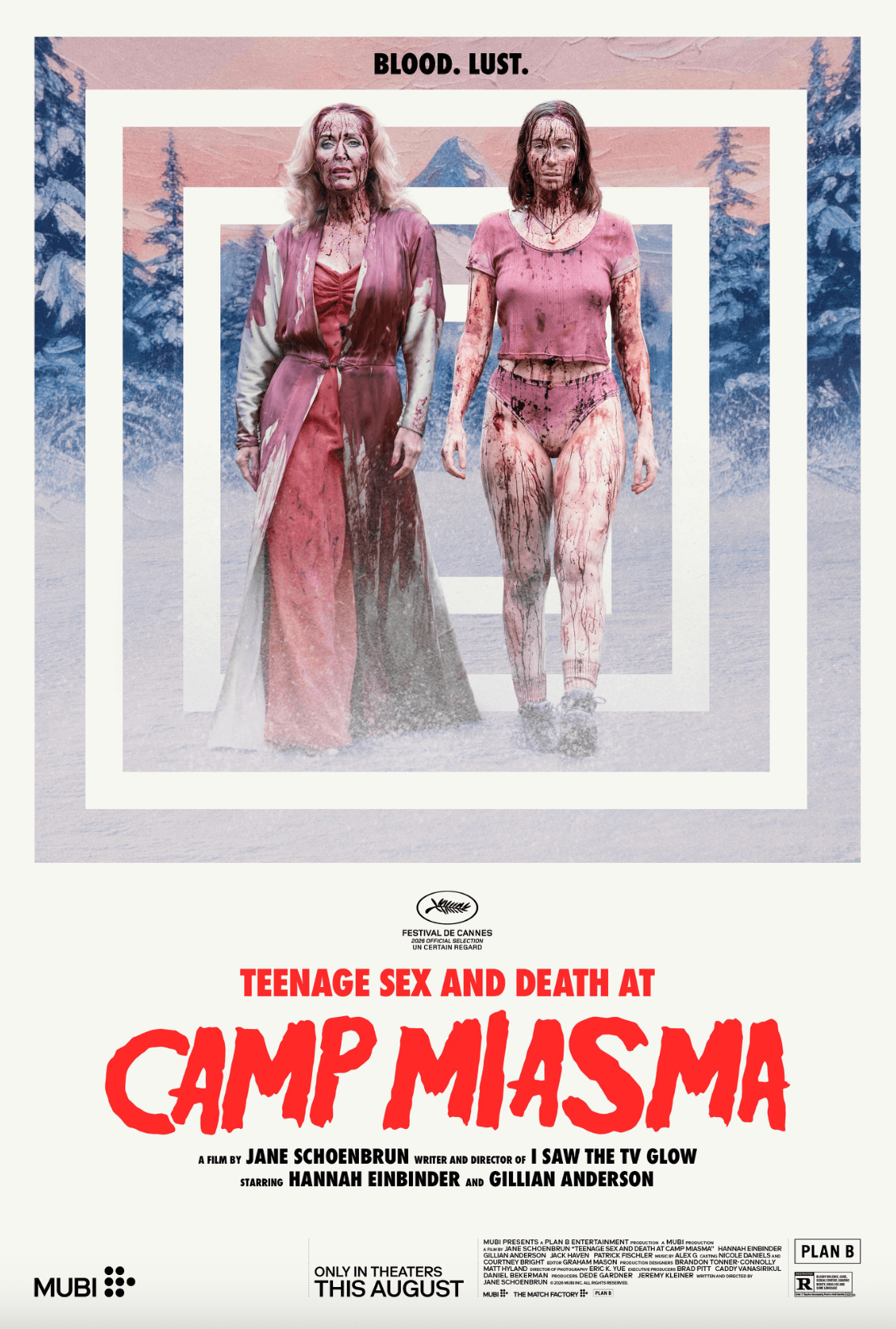
Jane Schoenbrun’s third feature-length film astonishes horror fans with its bold delivery
By BELLA PETERSON — arts@theaggie.org
Jane Schoenbrun established their abilities as a filmmaker in 2024 with the release of “I Saw the TV Glow,” which garnered lots of attention from the general public and critics. However, despite the noise surrounding the film’s release, there was a mixed overall reaction to the director’s unique style.
“Teenage Sex and Death at Camp Miasma,” Schoenbrun’s newest project, has seemingly produced a similar result with its striking imagery and heavy-handed approach to meta-storytelling.
The film reflects upon the fictional hit slasher series “Camp Miasma” as it devolves into absurdity, mirroring many slasher series in the real world.
Hannah Einbinder stars as Kris, an up-and-coming queer director looking to resurrect the “Camp Miasma” title with the help of the original star and now retired actress Billy, played by Gillian Anderson.
The film goes above and beyond in paying homage to its respective genre. It’s littered with horror references both surface level and more deeply concealed depending on the viewer’s experience with slasher movies. Slasher film fanatics will be thrilled to catch “Teenage Sex and Death at Camp Miasma” for themselves.
Two slashers in particular act as the beating heart of the movie: “Sleepaway Camp” and the “Friday the 13th” series. Schoenbrun’s clear vision may only be recognized by the most dedicated fans of the slasher subgenre, although familiarity with these films is not required before watching Schoenbrun’s work.
Schoenbrun commits to not only honoring the long-running history of horror slashers but also the filmmaking process itself. Kris’ journey serves as a commentary on navigating authentic filmmaking.
The film presents viewers with a horror antagonist who goes by the name Little Death. The character is played by Jack Haven, who also starred in “I Saw the TV Glow.” Little Death is the ideal caricature of many past slasher killers, serving both as an allegory for the film’s meta-commentary and as an iconic villain within this fictional slasher universe.
Additionally, the character Little Death functions similarly to the previously mentioned “Sleepaway Camp” killer, with the question of transgender identity serving as its own commentary within the context of its time.
Queer storytelling has been a trademark of Schoenbrun’s since the beginning of their career, and “Teenage Sex and Death at Camp Miasma” is no exception. As the plot unfolds and reality begins to blur, tensions rise between the two leads. Schoenbrun doesn’t shy away from exploring Einbinder and Anderson’s electric chemistry.
Schoenbrun doesn’t stop there when it comes to their bold choices. The film takes a headfirst dive into the surrealist approach that Schoenbrun is no stranger to. Toying with whimsical visuals and absurd dialogue, Schoenbrun wholeheartedly shapes the film around their distinctive vision.
Similar to their previous project, the soundtrack acts masterfully as its own character in the world. Setting the mood perfectly, the music is reminiscent of many iconic slasher scores.
“Teenage Sex and Death at Camp Miasma” is a pure campy masterpiece that breathes life into both slasher horror and comedy in a perfect marriage of genres.
Ultimately, “Teenage Sex and Death at Camp Miasma” won’t be for everyone, but it certainly has an audience among dedicated fans of the slasher subgenre or anyone who embraces the chaos and unpredictability of Schoenbrun’s one-of-a-kind style.
Written by: Bella Peterson — arts@theaggie.org