





Spirits of a lost art
Home fermentation preserves heritage
By NEVAEH KARRAKER — nakarraker@ucdavis.edu
I grew up picking hops — green flowers used to brew beer — to help my dad win 26th place out of 400 in a homemade brewing contest at our state fair. The pungent bitterness that clung to my nostrils and the syrupy discharge sticking to my fingers turned me away from alcohol for years.
When I came to UC Davis, I was exposed to viticulture. My friends interned at the on-campus winery or worked in research labs to advance alcohol production technology. Making alcohol involves culture, technique, passion and one of my favorite subjects: chemistry.
Fermentation is the foundation for all alcoholic beverages. Whether it’s from grains or fruits, yeast converts sugars in the base into carbon dioxide and ethanol. From here, this liquid can either be aged for years or channeled through a secondary process called distillation — a technique dating back to 2000 B.C..
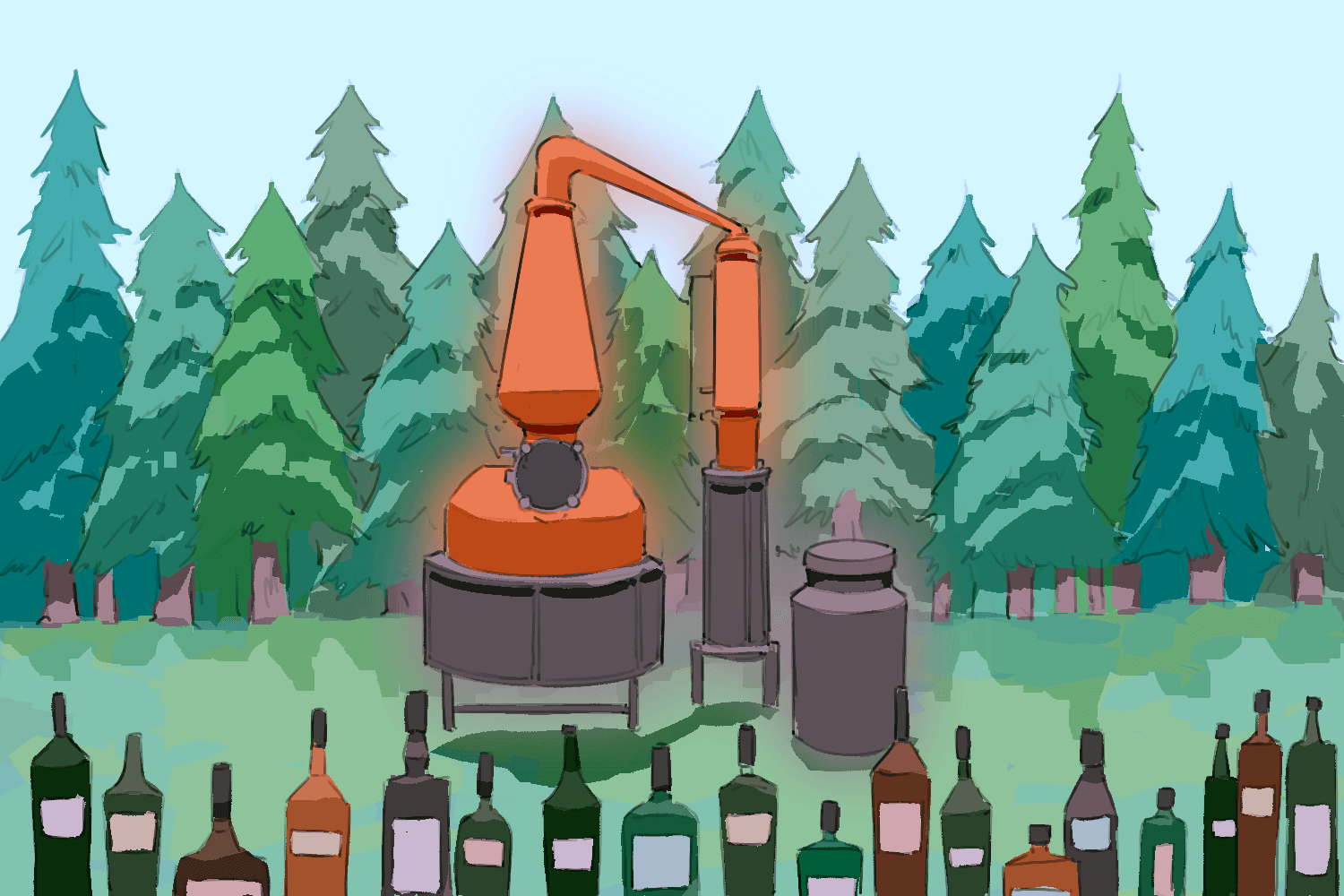
Although the creators of the process itself is unknown, ancient Islamic Golden Age alchemists further developed distillation during the eighth century with pharmaceutical chemistry experiments. This process utilizes vaporization and condensation to separate two liquids based on boiling points. When it was discovered that you could consume the extracted ethanol distillate, or “heart” — what we now call high-proof alcohol or spirits — from a fermented beverage, the practice spread prolifically.
Over time, the original medical purpose altered into a cost-effective alcoholic one, with the apparatus commonly set up in many homes. It wasn’t until the 17th century when commercial distilling gained track that licensing and taxes on spirits became an issue. The unregulated at-home distillation allowed citizens to use the practice as a method of tax evasion and defiance during the Whiskey Rebellion in the 18th century. By 1868, federal legislation deemed homemade liquor production strictly illegal.
Safety and health concerns further justified this outlaw; improper distillation can fail to remove harmful impurities. For instance, methanol forms during fermentation when the alcohol base contains a carbohydrate compound called pectin, primarily found in citrus and other fruits or plants. This toxic chemical is highly concentrated in the “foreshots” and “head” — the first two liquid parts removed after distillation — and can eventually bleed into the drinkable “heart.” Consuming contaminated hearts is lethal, even sometimes causing blindness or death.
While high-proof alcohol is now commercially mass-produced, it cleaved culture. From beer in Germany to wine in Italy, alcohol has been situated at the heart of communities for centuries. These delicacies rallied communities during harvest season to pick, ferment, crush and age fruit before savoring their synchronized labor in sacred ceremonies. Even involved in ancient worship rituals and peace offerings, it stood as a spiritual and political pillar.
In Nordic tradition, the same hands that poured mead — a simple fermented alcohol crafted from honey — from animal horns simultaneously weaved together social cohesion when sharing this drink. The rarity of honey allowed mead to be considered a divine luxury, especially when accented with regional additives like berries, so mead became a focal point in political and cultural currency. In colossal halls, Vikings of all occupations put aside their rivalries and gathered to exchange poetry, worship and display peace while distributing the valuable liquid. Today, that culture is echoed in celebratory toasts at weddings or a bottle of liquor shared between friends in the warm bequests of a cozy home.
Smelling the wood of barrels stained purple with wine at the Davis winery and witnessing the collaboration required to maintain the equipment, I began to understand the authenticity my dad was pursuing when he brewed. To him, beer was more than just alcohol or a soothing creative hobby; it was a symbol of unity, craftsmanship and hospitality. Surrounded by laughter, food and music, my cousins and I picked hops deep into the summer afternoons while my dad shared his perfected recipe with neighbors. Our efforts were an imitation of ancient traditions.
Home fermentation preserves the essence of a forgotten heritage. It reminds us of the value of combined effort in a community. Our consumption of a substance was crafted by many hands, meant to be savored, kept alive and shared among all.
Written by: Nevaeh Karraker — nakarraker@ucdavis.edu
Disclaimer: The views and opinions expressed by individual columnists belong to the columnists alone and do not necessarily indicate the views and opinions held by The California Aggie.