





Why vote?
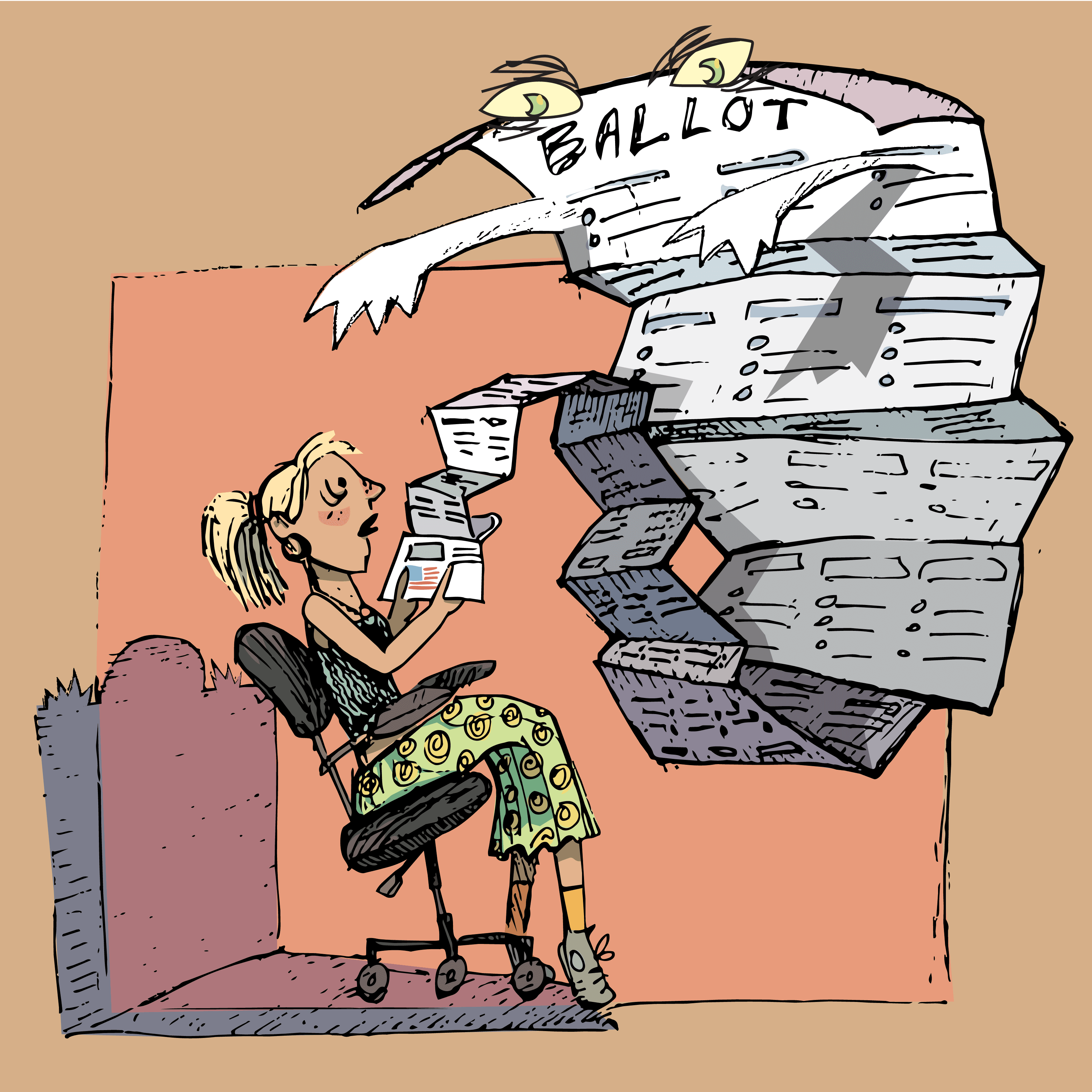
A look at why young adults vote less than other age groups, and what students say about going to the polls
By AMBER WARNKE — features@theaggie.org
As the 2026 midterms have come to a close, many UC Davis students participated in the voting process, exercising their civic rights by showing up to the polls or mailing in their ballots. In fact, only 27% of young adults voted in this year’s midterm election, according to the Center for Information and Research on Civic Learning and Engagement (CIRCLE).
Additionally, the Berkeley Initiative for Young Americans Democracy Policy Lab found that, even though voter registration in general has increased across age groups in recent years, younger voters are still registered at lower rates than other age groups.
Jessie Rivera, a third-year political science and gender, sexuality and women's studies double major, said that one factor preventing young people from voting could be how much time voting can take.
“A lot of young people, especially in this day and age, have other stuff to worry about, like in terms of college, going to work but also paying bills,” Rivera said. “Some people take multiple jobs to afford stuff. On the other hand, those who are 65 and older are mostly in retirement, so they have more time to pay attention to politics than young people.”
In this year's midterm elections, 28% of voters aged 18 to 29 who did not vote cited conflicting work or school schedules as a major reason, compared to just 4% of voters aged 65 or older, according to CIRCLE. On election day, the line for the ARC voting center reached wait times of over an hour; increased wait times is one of many factors that may discourage voter turnout, according to Pew Research Center.
Braeden Davis, a second-year political science Ph.D. candidate, feels that another reason young adults can be hesitant to vote is the belief that it doesn’t make a difference.
“I think a lot of young voters feel like their vote doesn't actually make an impact,” Davis said. “They can feel like because their vote is so miniscule in the race, they might as well just stay home. But that becomes a self-fulfilling prophecy, because then their voice really doesn't get heard at all, and it can even lead to other people following and staying home from voting too.”
As Davis pointed out, every individual vote plays a role in an election’s end result.
“We just saw states change political parties because of everyone that came out and went to the polls,” Davis said. “It’s time that we encourage people to vote because it’s our duty as Americans and as citizens.”
Research shows that politicians listen to voters, providing more attention and prioritizing policy and resources to communities who vote more. Voting can also have positive effects on personal health, with voting in the 2008 and 2012 presidential elections being associated with 26 to 32% lower risk of premature death, according to CNN. The American Medical Association even recognizes voting as a social determinant of health.
Rivera points to Mississippi as proof of the change voter turnout can bring, where senator Scott Colom won his race by only about 4,000 votes.
“For the first time since the reconstruction era, they have elected a black Senator,” Rivera said. “Those 4,000 votes made an impact on who in the state of Mississippi gets represented.”
Thao T., a third-year human development major, said that voting turnout can help ensure that everyone is represented in government, while also being a way to recognize the struggles that have been pursued in securing voting rights.
“Everybody should have a voice, because individuals in our society and in our past have worked very hard for us to achieve these voting rights, and we should exercise them when we get the chance.” Thao said.
Written by: Amber Warnke — features@theaggie.org