






Mummies, vampires and zombies
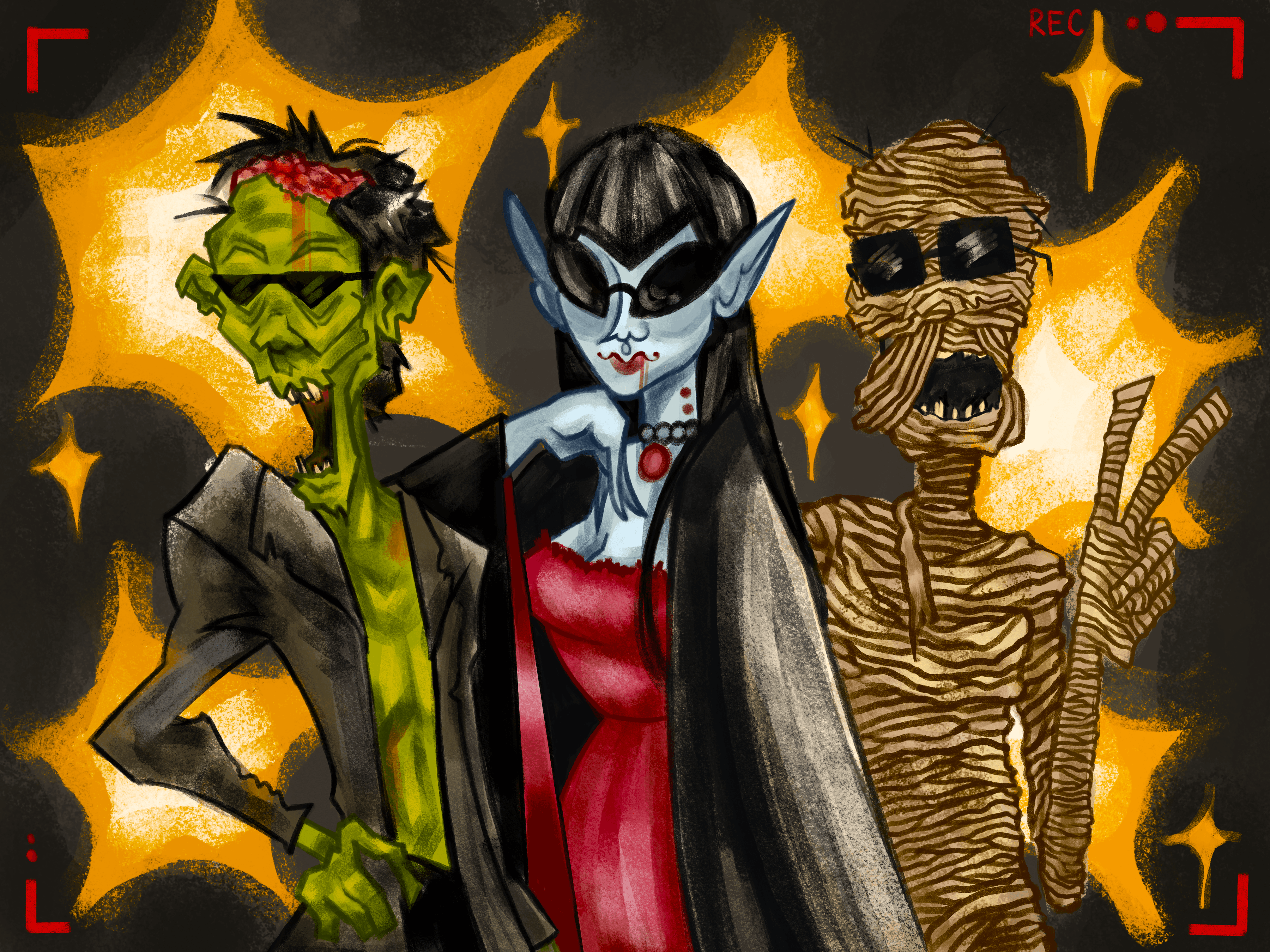
The history of Halloween’s favorite monsters and their rise to fame
By MIRIAM RAMAKRISHNAN —- arts@theaggie.org
From plastic fangs to fake blood, monsters like vampires, zombies and mummies dominate Halloween decoration aisles. As their figures grin from front lawns and party stores every October, have you ever wondered how these icons clawed their way into pop culture fame?
Blood-thirsty creatures
In the 19th century, vampires had evolved from eerie, little-known folklore into fixtures of literature and art. Cultural historian Violet Fenn noted that John William Polidori’s 1819 short story “The Vampyre” truly created the romantic figure that we know today. This text sparked a frenzy of vampire-themed operas, ballets and plays across Europe. The story was created for a ghost story contest, formulated by writers Mary Shelley, Percy Shelley and Lord Byron; this very contest was the origin of “Frankenstein” (1818).
Bram Stoker’s 1897 classic “Dracula” marks the beginning of the explosion of vampire myth. The novel’s antagonist indirectly suggests that one may be able to come back from the dead — an attractive concept in an evil form, according to the National Geographic. When Count Dracula left his home of Transylvania for England, true horror and evil started to take shape in the text; this aspect of the novel reflected the Victorian fear of the “foreign other,” at a time when many feared that those colonized by the British would strike back.
The centuries of vampirism in stories, films and media explain its prominent role as one of Halloween’s central motifs. It’s no surprise that the vampire has sunk its fangs deep into Halloween culture — the legend is truly immortal.
Green with envy
When one thinks of zombies, images of green skin and stitches may arise. However, the word “zombie” actually comes from the Haitian word “zombi”: a person resurrected through magic and stripped of their will, according to writer Mike Rampton. This word carried deep political weight in enslaved Haiti, where the idea of being alive but enslaved even after death represented the ultimate horror.
In 1818, Mary Shelley’s aforementioned “Frankenstein” was published, telling the story of Victor Frankenstein, a scientist who reanimates dead flesh and builds “the Creature.” Though considered to be the root of zombies in Western literature, Shelley’s text and the original Haitian “zombi” both express fear of power gone wrong and a loss of control. Frankenstein’s monster is rejected by its creator; the “zombi” is trapped by its master.
The 1932 film “White Zombie” utilized the Haitian concept of enslaved zombies, serving as the catalyst for more of the same media to be produced, according to Rampton. Decades later, “Night of the Living Dead” (1968) reinvented the zombie as a flesh-eating symbol of social collapse, while “The Walking Dead” and “The Last of Us” exist as modern pieces of undead media that continue to keep the genre alive in popular culture.
All wrapped up
Mummies have an extensive history in human anatomy, current knowledge of ancient cultures and modern disease and health, according to UC Davis Anthropology Professor Jelmer Eerkens’ “Mummies of the Ancient World” course.
The discovery of King Tutankhamun’s tomb in 1923 jumpstarted the myth of the “mummy’s curse” that lives on till this day. Lord Carnarvon, the financial backer of the excavation, died a few short months after the opening of the tomb. Every death and tragedy was blamed on this “curse,” and its mysterious effects sold books and movies galore, according to Eerkens.
The 1932 film “The Mummy,” released by Universal Pictures, the producers of “Dracula” (1931) and “Frankenstein” (1931), launched another instantly recognizable monster icon into pop culture. However, the early 20th century theme of horror quickly transitioned into comedy, with films such as “Abbott and Costello Meet the Mummy” (1955), “Bubba Ho-Tep” (2002) and Murray the Mummy in “Hotel Transylvania” (2012).
These three classic characters have never gone out of style, escaping their myths and tombs to become pop culture staples. Each monster mirrors the fears of its time, evolving from folklore into widespread symbols in film, literature and even video games. As Halloween rolls in and the streets fill with fangs, bandages and fake blood, we’re reminded that the undead never truly die: they just land a reboot.
Written by: Miriam Ramakrishnan — arts@theaggie.org