53.8 F
Davis

Davis, California

Saturday, December 20, 2025
Home Blog Page 10

Little glass animals

We are made of those we love


By NEVAEH KARRAKER — nakarraker@ucdavis.edu


The last year of high school stirs something within us all. One foot is in the door of the future, while the other is rooted in the past. Every “last” moment we experience — like the last night living with our parents and the last late-night snack with friends — weighs heavier than the one before and heavier than we expect.

We start to understand that home isn’t like a photograph frozen in place when we leave, and returning is no longer returning “home.” The air in our room feels different when we come back to visit; there’s a hollowness in the city as friends scatter and our pets age. 

We don’t realize the good things we have until we lose them: You don’t know what you’ve got until it’s gone.

And, when those moments come, we reflect on all the memories we’ve made throughout the years. We come to realize that the people we have lived our entire lives with have majorly shaped who we are today.

We often encourage others to “discover themselves,” which, while incredibly important, overlooks how others have weaved their ways into our lives. Maybe we picked up our habit of dipping pizza in ranch from our second grade friend and our favorite music album is one we discovered alongside an old classmate; these are behaviors, values or preferences that were not necessarily something we found on our own.

Like light, we reflect the environment we are in: The more time we spend with someone, the more we adopt their habits. It’s practically impossible to separate ourselves from the traces our loved ones leave behind — their warmth and lessons stitch us together. Every person we encounter impresses something on us, whether it’s a laugh, favorite song or book. 

We all have special little traits that make us unique and distinguishable. It’s like the way all fictional characters have one recognizable feature, such as the innocent demeanor of Rory Gilmore in the first season of “Gilmore Girls.” It’s a key factor in crafting any iconic book or movie —  it makes the characters memorable. 

After all, that’s why diversity is so powerful: This pool of idiosyncratic personas illuminates the way we live. For instance, one person I know always bounced when he walked, another friend would talk animatedly with her hands. Without noticing, we start to do the same; we start to use a coffee shop napkin as a bookmark and make the same cheesy jokes as they do.

These, as I like to call them, are our “little glass animals” — they are what make us who we are, making us recognizable beyond our physical attributes. 

Over time, we fill our shelves with these tiny figurines — some are given to us, while others we uncover ourselves. Some are delicate and clear, like the glass deer that stays kind and resilient in times of struggle: like our grandma. Others are colorful and durable, like the turtle that emulates our friend’s motto to wisely “take things slow.”

Depending on where they stand, they’ll catch light in different ways. They might seem like miscellaneous objects, but each reflection tells a story of where they’ve been and who’s  touched their surface.

When we move forward, it’s important to hold tight to our little glass zoo while still being open to collecting more. They’re reminders of who we once were, who we are now and the ways people have influenced us along the way. Sometimes, it’s the only way someone’s presence is still with us — despite the distance, despite the dissociating friendships, we relive our memories through their one-liners and eccentric behaviors. The collection will never be complete, as we are constantly being shaped by the love of those around us. 

So, line up all your little glass animals on the windowsill where there’s sunlight, and they’ll sparkle and shimmer on the walls of your heart with every memory of all those you have ever loved — even for just a second. And, maybe one day, someone will carry a reflection of us with them, in their own miniature glass zoo.


Written by: Nevaeh Karraker—nakarraker@ucdavis.edu


Disclaimer: The views and opinions expressed by individual columnists belong to the columnists alone and do not necessarily indicate the views and opinions held by The California Aggie.


Feed your soul

Food as a form of art and storytelling


By VIOLET ZANZOT— vmzanzot@ucdavis.edu


Deciding what to get at a street market is the best problem I’ve ever encountered in my life. The tantalizing choice between one plate of sizzling delicacies or another is strenuous only because there are simply too many right answers. Each stall or stand represents a compilation of generations of work in and out of kitchens around the world, unique from all other takeout or restaurants.

I think the food the stalls produce carries a similar weight to, say, a vinyl record. It’s a piece of art that, when you consume it, makes you feel aware that it was not made for the instant gratification we’re used to today — it was made to be savored. Just like a delicate seasoning blend, each note is meant to hit our senses in a specific way, just as the spindle reaches the vinyl. Spotify might have the same lyrics, but the songs have their own sounds unique to a physical record. In the same way, Trader Joe’s frozen pad thai might go by the same name as one found in a hot wok under a vendor’s tent, but it won’t sing the same tune; it’s just not as authentic.

It isn’t that street food took many years to prepare, but that it took many years to evolve into the form you see today; embedded in everything we eat and consume is a time-honored, complicated story.

An important part of actively choosing to romanticize your life is realizing food can be an experience. I’m sure I learned this lesson in stages — probably beginning when I enjoyed my first homemade pasta at the age of eleven — but I really gained a greater appreciation for it through my studies at UC Davis. I attribute this mainly to two classes, one on toxicity (ANT 104, in which I learned that chemicals are everywhere) and the other on food in world history (HIS 012, in which I learned that food is extraordinarily telling and deeply mobile). 

Chemicals have become a tool of greed — allowing food to be made efficiently at the expense of quality. Looking back on the past, we can see plainly that food was, at once, so much simpler and so much more complicated. It was made exclusively with real ingredients, but also moved globally, bringing onions and garlic to cast iron skillets across the world.  

Matcha, once the star of Japanese tea ceremonies, is now the hottest thing served iced, with strawberry and oat milk. Globalization and commercialization have commodified classics: if we use this for good, we may all get to embrace traditional and diverse cultures that we may never otherwise have the opportunity to experience, but if we use it for evil, it becomes another example in an already negative narrative. That is, it becomes another way in which we use chemicals to synthetically make life and food convenient. 

Has food become overcomplicated in that sense — as a cocktail of chemicals? Has it simultaneously become so oversimplified that we have lost our appreciation for what it’s meant to be? Food provides a way for people to connect to the world around them, to the cooks that created it and to continuing journeys. It’s more than a way to nourish ourselves; it has the potential to make us feel so much joy. If we eat without understanding and appreciating the value of the food itself, we lose its meaning. Just as music is only an art form if you listen to it with a conscious and open heart and mind, food has the same potential — it is an avenue for art and a vessel for history. 


Written by: Violet Zanzot— vmzanzot@ucdavis.edu


Disclaimer: The views and opinions expressed by individual columnists belong to the columnists alone and do not necessarily indicate the views and opinions held by The California Aggie.

 

‘No Kings’ rally and march held in Davis on Oct. 18

The rally drew thousands of attendees and featured a speech by U.S. Representative Mike Thompson


By MICHELLE BEKHTEL, GIA LOOMIS city@theaggie.org


On Oct. 18, the “No Kings” rally and march took place at Civic Central Park in Davis, as part of a nationwide act to call for more restrictions on President Donald Trump’s power. This rally was organized by Indivisible Yolo, a grassroots organization aimed at promoting progressive policies, and Davis Phoenix Coalition, an organization devoted to community building and embracing diversity. 

The rally began with a march through Downtown Davis with around 4,800 attendees, according to a speech made by Gloria Partida, a city councilmember and co-founder of the Davis Phoenix Collection.

The first nationwide “No Kings” rally took place on June 14, with the closest local rally occurring in Woodland and consisting of nearly 4,000 attendees. The protest’s main focus was to come together as a community, in opposition to the Trump administration and with the goal of upholding democracy.

This month’s “No Kings” rally resembled the previous protest, this time with a focus on the theme “We the People.” The Davis march was not the only protest with a large attendance; the “No Kings” cause drew over seven million people at 2,700 rallies across the country.

After thousands of attendees marched the streets of Downtown Davis, several speakers took the stage, including United States Representative Mike Thompson. Thompson led a “No Throne! No Crown! No King!” cheer, rallying the crowd. After the chant, Thompson delved into current issues and expressed anti-Trump sentiments. 

  “Americans are experiencing skyrocketing prices, stagnant wages; gun violence is the No. 1 cause of death for kids and teens,” Thompson said. “The climate’s changing [is] causing all kinds of problems, and, we [have] a wannabe king. Instead of dealing with those things, he’s trampling on our Constitution, and he’s trampling on the will of the people.”

During their speeches, Thompson and other speakers emphasized their critique of Trump’s “kingly” status within the American government. 

“You can put all the gold bling you want in the Oval Office,” Thompson said. “But you can’t hide the fact that he’s no king. He’s no king. The wannabe and the [Grand Old Party (GOP)] are out of control, and they’re out of step with the values of the American people.” 

Demonstrators showed support for the cause by bringing homemade signs and wearing costumes to the protest. Attendees took a stance on a variety of federal issues, from a protester dressed as the Statue of Liberty to individuals carrying chains to women dressed as Supreme Court justices inspired by Ruth Bader Ginsburg. 

The language and imagery on the signs varied, giving insight into people’s interpretation of the “No Kings” cause. Jono Sison, a fourth-year legal studies major at UC Berkeley, wore a dragon costume to the event and held a sign reading “Make Orwell Fiction Again.” Sison explained his inspiration behind the sign, citing literature and current political issues. 

“My sign was inspired by everything that’s going on in the country,” Sison said. “From authoritarianism and censoring of speech to a central individual who feels like he can seize all power and spread false information. It was especially inspired by ‘Animal Farm’ by George Orwell and how it talks about authoritarianism, manipulation and propaganda. Trump talks a lot about authoritarianism, and we’ve got to make that fiction again, because it’s a reality right now.”

The rally also gave various local organizations the opportunity to table at the protest in order to spread awareness for their message and engage with the public. One of these organizations was the League of Women Voters of Yolo County (LWV). Michelle Famula, a co-president of LWV, shared how their organization helps support democracy in the community. 

“You can summarize the League of Women Voters in two phrases,” Famula said. “One is defending democracy, and the other is encouraging voters.”

Famula emphasized that LWV is a non-partisan organization that defends democracy and helps voters become more knowledgeable about the elections process. At the rally, the LWV was working to educate attendees on how to register and vote in the upcoming election. 

Famula also explained that Yolo County ensures students have the opportunity to vote. 

“Yolo county opens up an in-person vote center at the [UC Davis] Activities and Recreation Center [ARC],” Famula said. “And, on election day, they take Ballroom A and B.”

Another organization tabling at the event was the Davis College Democrats (DCD). This student-run organization is aimed at educating students about the Democratic Party and encouraging political participation within the UC Davis community. DCD’s Director of Membership, Benicio Orsua, explained their reasoning for tabling at the rally. 

“We are tabling here, because we want people to know that the youth want to get involved,” Orsua said. “We want people to know that we aren’t going to put up with this stuff, especially with what’s coming with cuts being made to schools […]; especially with the [University of California (UCs)] right now.”

DCD created a space at the “No Kings” rally that educated and aided younger people in becoming politically involved. 

“I do feel like a lot of younger people feel that it’s hard to get involved in politics,” Orsua said. “I feel that they don’t know exactly where to go [to get involved], and that is sort of our goal. We want to make sure that we show up anywhere that youth will be walking by so they know that there are places to get involved with — like DCD.”

  The “No Kings” rally was a protest that focused on allowing attendees nationwide to become politically involved in their local community. For more information, visit the “No Kings” website

Written By: Michelle Bekhtel, Gia Loomis city@theaggie.org

Davis community reflects on the upcoming election for Proposition 50

 Discussion includes the Election Rigging Response Act’s origins and student reactions


By KATYA OKS — city@theaggie.org


On Nov. 4, Californians will vote in a special election regarding Proposition 50, also known as the Election Rigging Response Act. If implemented, the act will “authorize temporary changes to congressional district maps,” which would flip five seats in the House of Representatives in favor of the Democratic party and expire in 2030, according to the summary on the official California Voter Guide website

The special election comes as a direct response to Texas’ 2025 redistricting. In August, lawmakers redrew congressional maps to gain five Republican seats in the House of Representatives for the 2026 midterm election, according to The Texas Tribune. 

Texas Governor Greg Abbott was encouraged by President Donald Trump to push the new maps through. Trump reasoned that receiving votes from Texas in the 2024 election would justify the congressional map changes.

“I got the highest vote in the history of Texas, as you probably know, we are entitled to five more seats,” Trump said in an interview with CNBC.

Catalina Silva-Oliveira, a second-year communication major and member of the Davis College Democrats, expressed concerns over a lack of checks to Trump’s executive power. 

“What’s going on in the White House today is pretty much pervasive; it’s a devilish type of fascism,” Silva-Oliveira said. “Donald Trump has been absolutely unchecked and has been wreaking havoc across the country.” 

After Texas passed the newly redistricted maps, Trump responded in a Truth Social post.

“Big WIN for the Great State of Texas!!!,” the post reads. “Everything Passed, on our way to FIVE more Congressional seats and saving your Rights, your Freedoms, and your Country, itself.” 

As of September, lawmakers in Missouri redrew their maps to give Republicans an advantage in seven of their eight districts, following Texas’ efforts, according to PBS. Proposition 50 was put on the ballot by the California State Legislature and Governor Gavin Newsom, justifying their response as necessary to stop Republicans’ “power-grab,” according to the Stop Election Rigging website. 

The proposition’s main goal is to ensure the 2026 midterm elections are “conducted on a level playing field without an unfair advantage for Republicans” while maintaining its commitment to “fair redistricting,” according to the website.

Silva-Oliveira agreed with that assertion.

“Prop 50 simply adds a district where Latino voters make up a third of the population,” Silva-Oliveira said. “It’s a relatively fair redistricting, at least compared to Texas, [which] has purposely racially gerrymandered [district lines] to get rid of Black and Latino voices.”

The introduction of Proposition 50 comes at a time when many voters are growing increasingly frustrated — not just with the Republican party, but with what they see as Democratic inaction, according to a poll conducted by the Associated Press-NORC Center for Public Affairs Research

Clara Zhong, a second-year statistics major, expressed her own perspective on the lack of action.

“I feel as though [Democrats] always tend to take a very centrist response,” Zhong said. “[They] perceive themselves as the [moral] high ground. […] But I just don’t think that’s an apt response anymore.”

Zhong also shared what she believes to be the current impact of such a strategy. 

“[By not being] reactionary to Donald Trump and his coalition, I feel like [the Democrats] are losing a lot of political power and ground, and, in many ways, [are] starting to alienate certain parts of the Democratic base as well,” Zhong said. 

Newsom has also emerged as a prominent figure in the Democratic party’s recent wave of political action. In response to the Trump administration, Newsom has mirrored some of its language in his social media presence.

“FOX HATES THAT I AM AMERICA’S MOST FAVORITE GOVERNOR (“RATINGS KING”) SAVING AMERICA,” Governor Newsom Press Office’s tweet reads.

His social media presence also reflects on his work on Proposition 50. 

“When Trump tries to rig elections, we must fight back with every legal tool available,” the campaign website reads.

Silva-Oliveira described her thoughts on Newsom. 

“Most people disagree with a lot of his policies towards homeless people and people of color; I personally disagree with those policies, too,” Silva-Oliveira said. “But the reason why he’s gaining so much popularity is because he has taken a stance of leadership when not a lot of people are willing to.”

Silva-Oliveira also noted how the proposal of Proposition 50 “finally puts Democrats in an offensive stance.”

And yet, many have also expressed concerns over the potential future impacts of Proposition 50 if it passes. 

The “Vote No on Prop 50” campaign expresses that California needs to maintain its “gold standard for fair redistricting” and to “lead the country in showing that independent, citizen-led redistricting is the better path forward,” according to their official website

Zhong shared similar concerns about the extent of this sort of political action.

“I obviously know that this type of action would end in 2030, [but] it’s similar to Republican redistricting in Texas, which was obviously not fair in many aspects,” Zhong said. “Having a bipartisan redistricting committee commission is really important. Just because they’re gerrymandering in favor of my [political] side doesn’t necessarily mean that’s a good thing.”

 Silva-Oliveira also believes in California maintaining a bipartisan redistricting process. She expressed that Proposition 50’s temporary nature lessens her worries. 

“I think the keyword [in the proposition] is temporary; the state legislature has been very clear on what exactly [this] means [and] any effects it will have if it is passed,” Silva-Oliveira said. “This proposition [is] an emergency […]; it’s simply a protective measure in the name of democracy.” 

Zhong expressed the importance of voting and doing one’s research. 

“[People] should make their own informed decisions about whether they decide that [Prop 50] is helping to solve the bigger issue of fighting against unfair redistricting and if they support that type of action,” Zhong said.

Silva-Oliveira also shared the importance of becoming active in politics, especially for the upcoming special election.

“Neutrality is not an option when people’s rights are at stake, and that’s why I believe people — especially youth — should vote yes on Prop 50,” Silva-Oliveira said. “It’s really a shot at something different; a shot at hopefully saving our democracy.”


Written By: Katya Oks — city@theaggie.org

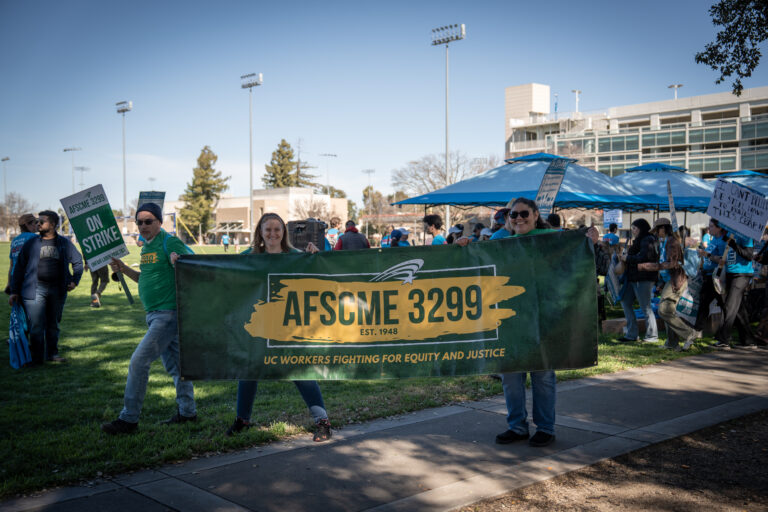
AFSCME 3299 authorizes strike, alleging unfair labor practices

The union, which represents 37,000 workers across the UC system, has yet to announce a strike date


By KHADEEJAH KHAN — campus@theaggie.org


On Oct. 17, the American Federation of State, County and Municipal Employees Local 3299 (AFSCME 3299) announced that they have voted to authorize a strike, alleging unfair labor practices, lack of a fair contract and bad faith negotiations by the University of California (UC).

​​AFSCME 3299 represents more than 37,000 service, patient care and skilled craft workers. In the 2024-2025 academic year, the union went on strike four times, with their most recent strike on May 1. AFSCME 3299 has yet to announce a date for their next strike.

The union has gone without a contract for over a year. According to UC Office of the President spokesperson Heather Hansen, the UC presented their “last, best, and final offer” in April, proposing a 5-year contract and $600 million in wage increases. 

However, the offer failed to address several issues, including inflation, call pay, healthcare premiums and parking, according to AFSCME 3299. 

“Our workers are the backbone of the University, but they aren’t being treated with the dignity they deserve,” Communications Associate at AFSCME 3299 Dara Streit said via email. “Instead of coming to the table ready to hear our concerns, UC implemented their own unfair terms back in July.”

“Their last offer isn’t just inadequate — it’s disrespectful,” Streit said. “No inflation adjustment. No housing benefits for frontline workers. Removing caps on increasing our healthcare costs. They’re offering crumbs and expecting us to say ‘thank you for this meal.’” 

Hansen wrote via email that the UC is “disappointed” with the union’s decision to authorize a strike following negotiations.

“At a time when the University is under considerable and unprecedented financial pressure, we hope AFSCME [3299] will stand with us, not against us, as we work to preserve fairness for employees and stability for the entire UC community,” Hansen said.

The union has filed unfair labor practice charges against the UC, most recently at UC San Diego and UC San Francisco after workers were laid off without notice. The union has also raised attention to the UC’s distribution of $530 million in low-interest home loans to over 500 executives and faculty.

“UC has proven it can provide housing assistance for workers; it just chooses not to for frontline workers,” Streit said. 


Written by: Khadeejah Khancampus@theaggie.org

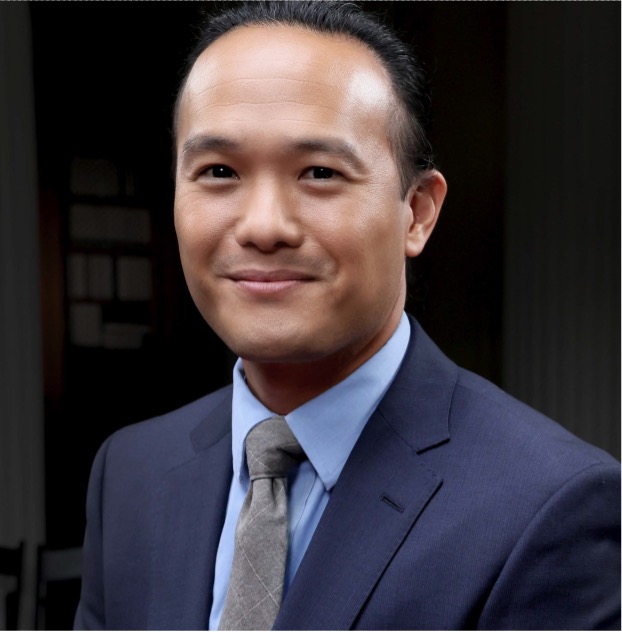
UC Davis law professor featured in new PBS series

‘Breaking the Deadlock’ aired its third episode, ‘Truth Under Fire,’ on Oct. 21


By ROBIN FRANKLIN and ASA GENTRY — campus@theaggie.org


UC Davis Law Professor Aaron Tang is returning to the Public Broadcasting Service (PBS) series “Breaking the Deadlock,” where he serves as host and moderator. The program’s most recent episode, which aired Oct. 21, follows a group of panelists wading through a hypothetical case of misinformation.

Each episode of the public affairs series features a set of panelists, often from opposing and diverse backgrounds, who are presented with a scenario that is both plausible and relevant to the modern political landscape. The setting is conceived with help from outside experts who bring the scenario together over the course of a month.

Tang has the key role of delivering the scenario to the panel. He memorizes the details of the situation well enough to shepherd the panel and answer any questions they have. With many opposing viewpoints present, he encourages the panelists to find common ground and debate approaches to fictional political problems in hypothetical dilemmas. 

I most enjoy watching panelists reach surprising decisions in ways that do not always follow baseline assumptions about partisanship and ideology,” Tang said via email. “It turns out that many people actually do want to find common ground on hard issues, rather than merely ‘own’ the other side. It’s just that our real life politics is so divisive that it occludes genuine shared values that people often hold in common.

The latest episode, “Truth Under Fire,” was filmed in front of a live audience on Sept. 21 at The New York Historical. The hypothetical scenario follows the spread of disinformation on social media after the passing of a controversial school board mandate in a fictional school district.

Panelists on the program include: journalist Soledad O’Brien; conservative pundit Ann Coulter; NBC News Senior Business Analyst Stephanie Ruhle; Professor of African American Studies at Princeton University Eddie Glaude Jr.; and Co-founder and CEO of Moms for Liberty Tina Descovich.

They do not have advance knowledge of the scenario,” Executive Producer John Bredar wrote via email, referencing the panelists. “They don’t know what’s going to happen. In [the show], it’s ‘reality improv’ with Aaron as the conductor.”

Off the air, both friendships and disagreements bloom in the green room through conversations off camera, according to Tang.

“Prominent figures who we recognize from our politics are also ordinary people, and some of the conversations that take place in the green room can be surprising, whether because there are surprising friendships, or because the disagreements we come to expect actually do surface,” Tang said.

The PBS team conducted a nationwide search for the moderator role, and invited Tang to audition as host after watching his commencement speech to the UC Davis Law School’s graduating class of 2019. One of the show’s executive producers found the clip on YouTube and PBS deemed the speech “extraordinary,” according to Bredar.

After his initial interview, the production team had Tang perform in a rehearsal episode, complete with a full practice scenario and even a practice panel. The team did this with multiple candidates from the nation’s top law schools and law firms. Tang, who clerked for Supreme Court Justice Sonia Sotomayor, stood out the most, according to Bredar.

“Aaron delivered a bravura performance,” Bredar said. “He’s incredibly smart, very funny, thinks quickly on his feet, and has a warm, sincere rapport with the panelists. In the try-out scenario, he even modified the ending on the fly to deliver a final riveting twist. Hands down [the] best candidate.”

For his part, Tang hopes that audiences will be receptive to the dialogue and conversations at the heart of the program. 

It’s been a wonderful opportunity to do these shows, and my hope is that viewers will watch and be both entertained and better informed,” Tang said. “We won’t always agree as Americans — far from it. But if we are willing and able to sit down and really listen to one another, we might find that the spaces between us are different in size and character than we thought.”


Written by: Robin Franklin and Asa Gentry — campus@theaggie.org

Tickets quickly sell out for Malala Yousafzai event at UC Davis

The youngest Nobel Peace Prize laureate and education activist is coming to campus to speak with Chancellor Gary May 


By RACHEL TRAN — campus@theaggie.org


Malala Yousafzai, the renowned Pakistani education activist, is coming to UC Davis on Nov. 18 to speak with Chancellor Gary May. Tickets for the event, which is part of the ongoing Chancellor’s Colloquium series, sold out on Oct. 3 — the first day they were released to the public.

Yousafzai is the youngest Nobel Peace Prize laureate, receiving the award in 2014 at  17 years old. She started her activism journey at the age of 11 by blogging about her life under the Taliban. Yousafzai was shot in the left side of the head by the Taliban in 2012 while on a bus in the Swat District. After recovering, she continued her activism and has been continuously involved in sharing her story, writing books, helping produce films and speaking at events all over the world.
“Dear sisters and brothers, I’m not against anyone,” Yousafzai said at the United Nations Youth Assembly in 2013. “Neither am I here to speak in terms of personal revenge against the Taliban or any other terrorist group. I’m here to speak up for the right of education of every child.”

Yousafzai’s 2013 book “I Am Malala” was an international best seller; her latest memoir, titled “Finding My Way,” was published on Oct. 21.

Mondavi Center for the Performing Arts Executive Director Jeremy Ganter told The California Aggie that he is honored to be hosting Yousafzai’s talk on campus.

“Malala Yousafzai has been an inspiration for millions around the world,” Ganter said via email. “Her fearless advocacy for girls, women, education and human rights in Pakistan put her at great personal risk, but she has never backed down.”

The event is currently at capacity, but The Mondavi Center’s box office may be able to release tickets later if seats become available. 

“It was one of the fastest selling events for the Mondavi Center and we were excited to see so many students, staff, faculty and community members show an interest in seeing Malala Yousafzai speak with Chancellor Gary S. May,” Mondavi Center Director of Marketing and Communications Reuben Greenwald said via email.

The event is the first this year of the Chancellor’s Colloquium — a speaker series hosted by May. Previous guests of the series include Women’s National Basketball Association (WNBA) player Brittney Griner and Former Mayor of San Francisco London Breed.

“Malala is one of the world’s great champions of human rights and the value of education to uplift humanity,” Ganter said. “We’re excited to welcome [Yousafzai] to UC Davis and hear her story and her thoughts on advancing the causes to which [she] has devoted her life.”

Written by: Rachel Tran campus@theaggie.org

ASUCD Senate discusses their strengths at Oct. 16 meeting

The table approved the usage of over $11,000 from their reserves for two bills


By AALIYAH ESPAÑOL-RIVAS — campus@aggie.org 


In an unconventional meeting, the Associated Students of University of California, Davis (ASUCD) Senate participated in a strengths training exercise held by UC Davis Student Affairs during its public Oct. 16 meeting. 

Hosted by Jeff Heiser from UC Davis Staff Coaching and Development, the hour-long training, titled “Start with Talent and Finish with Strength,” delved into the strengths of each member of the ASUCD Senate. 

Prior to the training, the Senate filled out the “CliftonStrengths” assessment test. The assessment test is a “tool that identifies an individual’s natural talents in areas of thinking, feeling, and behaving, and then helps them develop these talents into strengths,” according to Gallup, the company behind the test.

The test results include a breakdown of an individual’s “themes,” comprising a list of 34 themes under the four domains of team strengths. The four strengths include strategic thinking, relationship building, influencing and executing. 

To kick off the training, each member of the table was asked to write their top-five strengths on a piece of paper. Afterwards, each person went around the table and shared their name, favorite part of their ASUCD role and a word they thought others would use to describe them.

Following the icebreaker activity, the table engaged in multiple exercises that challenged their strengths, such as writing competition with their non-dominant hand. Additionally, in between activities, the Senate reflected on how their strengths influence their success within ASUCD. 

After finishing the training, several senators thanked Heiser for his time and the uniqueness of the experience within a Senate meeting.

“Thank you for coming; this is definitely something a bit more unorthodox for our table to participate in, but it has been a really valuable experience,” Senator Lexi Raben said. 

“I had a lot of fun doing the training, and it led me to learn more about myself,” ASUCD Internal Vice President Dhilena Wickramasinghe said.


Legislation Tracker: 

SB#6: Allocates $7,800 to the Entertainment Council (EC) to purchase Reusable PortaFloor Event Turf (rollable temporary outdoor event flooring strip). Introduced and authored by Senator Luis Garcia; passed unanimously. 

The PortaFloor would replace the difficult plywood that is typically used during EC events, according to EC Assistant Unit Director and fourth-year design major Abigail Wong. 

“Those plywood sheets are extremely heavy,” Wong said. “Usually we have around 20 volunteers, and we have had several injuries with them. They don’t last long, usually cracking while trying to support 80 to 100 per square foot (PSF) as opposed to the 28,000 PSF PortaFloor can support.”

Furthermore, SB#6 allocated the reusable PortaFloor Event Turf for usage for any major ASUCD events as approved by ASUCD Headquarters, such as Lawntopia and Whole Earth Festival.

SB#11: Allocates $4,194.26 to the Campus Center for the Environment (CCE) for garden supplies and a tool shed. Authored by Controller Trinity Chow and introduced by the Environmental Policy and Planning Commission (EPPC); passed unanimously. 

Originally introduced as SB#97 in spring quarter 2025 by then-Senator Zack Dollins, the bill was unanimously passed at the May 29 Senate meeting before being sent for signature. However, as noted in the bill, due to the passage of SB#97 late in the school year and slow turnover by internal personnel, it was not signed by then ASUCD President Gaius Ilupeju.                                                                                                                                                                                                                                                                                                                                                                                                                                                                                                                                                                                                                                                                                                                                                                                                                                                                                                                                                                                                                                                                                                                                                                                                                                    

While most of the line items of the spending breakdown remain the same, the CCE requested a storage container and cargo door lock in lieu of the original metal storage shed that was initially proposed in SB#97. 


Written by: Aaliyah Español-Rivascampus@theaggie.org

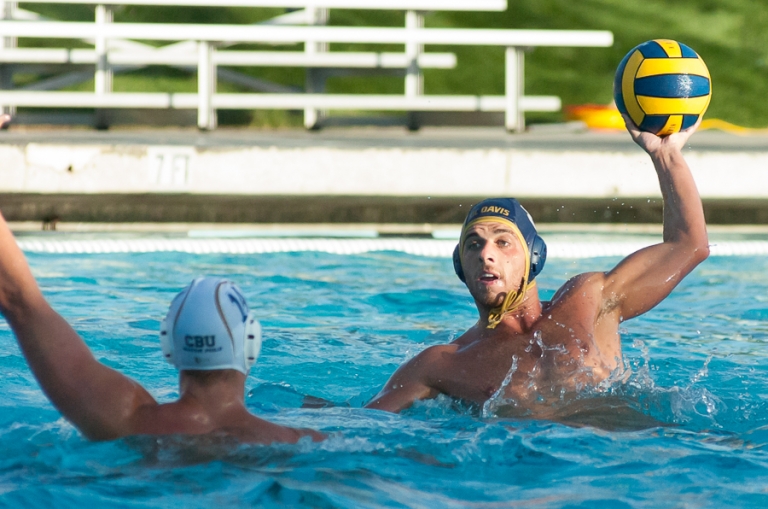
UC Davis men’s water polo suffers narrow loss against SJSU

Despite loss, the Aggies show improvement in match against San Jose State University


By DANIELLE WIRNOWSKI— sports@theaggie.org


The UC Davis Aggies’ men’s water polo team headed down to San Jose on Oct. 4 to participate in the BW Invitational, the San José State University (SJSU) State Tournament, where they went head-to-head against SJSU and Loyola Marymount University. 

The Aggies, ready for a rematch against SJSU, went into their game with a fighting spirit. 

“I want to prove [SJSU] wrong,” Brody Crouch, a fourth-year communications major, said. “I want us to come out firing.” 

UC Davis’ team went on the attack from the whistle, scoring one goal within the first four minutes of the game. Despite the goals SJSU scored, the Aggies prevented them from taking the lead. By the end of the first quarter, the Aggies were up 3-2. 

Davis’ players continued this attack well into the second quarter, only allowing SJSU to score two additional goals while the Aggies were able to score three. By the start of the second half, the Aggies had earned a 6-4 lead.

Thomas Marr, a second-year managerial economics major, and Thomas Kiesling, a third-year economics major, helped their teammates remain in the lead heading into the second half, scoring two goals each. 

The Aggies held on to their lead through the third quarter and up until the midway point in the fourth quarter. At the beginning of the fourth, SJSU went on a scoring drive, scoring two goals within the first two minutes. This put them in the lead, 8-7, with six minutes left in the match.

In the last three minutes of the game, the Aggies turned to Crouch, resulting in a tied score at 8-8. In the last 20 seconds, SJSU got past the Aggies’ defense and managed to score one last goal, giving them the victory. 

Despite UC Davis’ loss, the players showed significant improvements in multiple areas in their play and narrowly missed a victory.  

“You either win or you learn,” Crouch said of his water polo coach’s philosophy.

From the Aggies’ match against SJSU on Sept. 6 to this match, it is apparent they have learned from their previous match and made significant improvements. 

Crouch described his mindset and remaining positive after losses. 

“Knowing that if we lose, then we lose, [it goes] on our record but doesn’t really matter. Who cares?” Crouch said. “You have to have a goldfish mindset about it. You have to just be ready to move on.”  

During the same match-up in September, the Aggies only managed four steals — in this match, they had 23 steals. UC Davis’ team also took more shots in this match than in the previous, taking a total of 37 shots versus 35. Baxter Chelsom, a third-year psychology major, increased the number of saves he made as a goalkeeper, going from eight to nine. Additionally, the Aggies decreased the number of penalties they received, moving from 13 to nine. 

Improvements were made in both offensive and defensive strategies, resulting in a close score for the Oct. 4 match. These improvements were made possible due to the team atmosphere and leadership on the men’s water polo roster, which fosters an environment of growth and support, according to Crouch. 

“These guys are my family,” Crouch said. “We really rely on each other for everything outside of classes [and] outside of practices. We spend time together; we live together.”

This leadership and friendship, as noted by Crouch, encourages team bonding and cultivates cooperation and communication within the team in and out of the water.  

The Aggies hop back into the water on Oct. 10 against the University of California, Irvine. Following this match-up, Davis’ team will return home on Oct. 17 to play against California State University, Fullerton, a game that will feature a cowbell giveaway and a faculty and staff appreciation.


Written by: Danielle Wirnowski — sports@theaggie.org

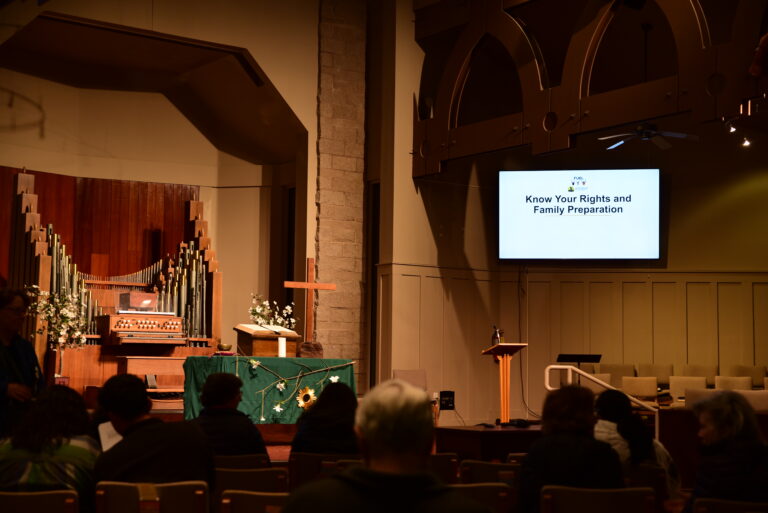
NorCal Resist hosts a ‘Know Your Rights’ training at the Davis Night Market

Community members gathered for free food, clothes and workshops on handling interactions with law enforcement


By MADELYN SEVIGNY — city@theaggie.org


On Oct. 27, NorCal Resist hosted a “Know Your Rights” training at the Davis Night Market.

The Davis Night Market is a group that redistributes excess food to members of the community on weekday evenings from 9 to 11 p.m., aiming to “reduce our community’s carbon footprint and increase equitable access to food through organized collective action,” according to their official website.

NorCal Resist is a Sacramento-based grassroots organization that provides mutual aid, community resources and support for immigrants. One of the programs that they provide include “Know Your Rights” trainings, where individuals can learn their constitutional rights, how to assert these rights, how to navigate interactions with United States Immigration and Customs Enforcement (ICE) and what to do if ICE comes to their door.

Giselle Garcia, the programs director at NorCal Resist, presented information on identifying ICE and law enforcement vehicles, what kind of language and tone to use when interacting with law enforcement and how to ensure the validity of a judicial warrant. 

“[NorCal Resist “Know Your Rights” training] focuses on both […] interactions with regular criminal law enforcement, as well as immigration law enforcement agencies,” Garcia said. “How you should invoke your rights, but also, [what the] best practices [are] for documenting to hold any kind of government abuses [and] to hold officers accountable.”

Garcia explained the goal of “Know Your Rights” trainings and how the information they teach can impact communities.

“It’s always important to know what your rights are because, at its core, it’s about […] not incriminating yourself,” Garcia said. “We’re not here to make law enforcement’s jobs easier, we’re not obstructing, but we are not going to be giving them the tools and the information to harm our community. That’s what ‘Know Your Rights’ is about. It’s about empowering yourself and those around you to keep each other safer. And especially in the case of immigration, it can be the difference of not opening the door, you know, whether someone gets detained or not. So we just want to make sure that we’re emphasizing all of those kinds of nuances.”

Before the presentation, community members were offered bread, fresh fruits and vegetables, sandwiches, homemade cookies and more. 

In addition to the food given out by the Night Market, warm clothing and shoes were also offered to the public by volunteers from the Big Gay Garden (BGG).

Bailey Kallas, a volunteer with the BGG, explained the purpose of the garden and their connection to the Night Market.

“The Big Gay Garden is a local queer community garden,” Kallas said. “This is the first time we’ve done our little pop-up closet. We’re hoping to do it more often. […] We just realized that it’s getting cold and we had a lot of stuff from [our] yard sale.”

An organizer with the Night Market, who wishes to remain anonymous, highlighted how the Night Market seeks to remove barriers immigrants face that make it difficult for them to access resources through a traditional food bank.

“Right now, if you’re trying to access something like a food bank, often you have to have proof of residency,” the organizer said. “That can be more intimidating if you’re asked to provide something like an ID or a bank note […]
That knocks a lot of people out, and it’s a lot more intimidating to go to an official place where law enforcement might be, […] and often that also happens during the day and a lot of immigrants, and just everybody, is working during the day […] This is at night and there’s absolutely no requirements.”

Lilly Marie, another organizer and Night Market volunteer, elaborated on how the event being held at night helps include community members who may be hindered by work schedules.

“A lot of beneficial community-geared trainings like this, a lot of that information, […] can feel inaccessible,” Marie said. “If you’re a regular person, especially if you’re an immigrant, maybe you’re working two jobs, you work 9-to-5 and you’re not able to do things if they’re during your work hours to kind of meet that need. We’re able to help provide and remove that barrier.”

In her presentation, Garcia emphasized the importance of community action.

“Everyone should be doing something,” Garcia said. “And that can look like 5 minutes of work a week or 5 hours, whatever your capacity lends itself to. But there’s so many things that you can do, whether you volunteer at our court watch program where we’re observing immigration proceedings and making sure people come out of their hearings, or accompanying folks to their ICE check-ins or appointments at the Social Security Office or helping us with translations. […] There’s so many things that you could be doing, but you need to do something, […] so find what it is that you can and want to do and do it, because it’s not the moment for silence or for standing still.”

To learn more about NorCal Resist and their work in immigration advocacy, visit their website.


Written By: Madelyn Sevigny — city@theaggie.org

Here’s how and where you can cast your ballot on campus

We’ve gathered what you need to know about voting and registration for California’s Nov. 4 Special Election

By VINCE BASADA — campus@theaggie.org

With today’s statewide Special Election, we’ve collected the information you need to know about casting your vote on campus and getting same day registration, if needed.

Where to vote on campus: 

  1. The UC Davis Activities and Recreation Center (ARC): Meeting Room One, 760 Orchard Rd. Voting Assistance Center and Ballot Drop-Off Station.
  • Hours: Nov. 1 to Nov. 3 — 10 a.m.-6 p.m. Election Day, Nov. 4 — 7 a.m.-8 p.m.

UC Davis Transportation Services will be providing complimentary 30-minute parking in Lot 25. Voters must check in at the ARC’s front desk with their vehicle’s make, model and license plate number for an electronic pass.

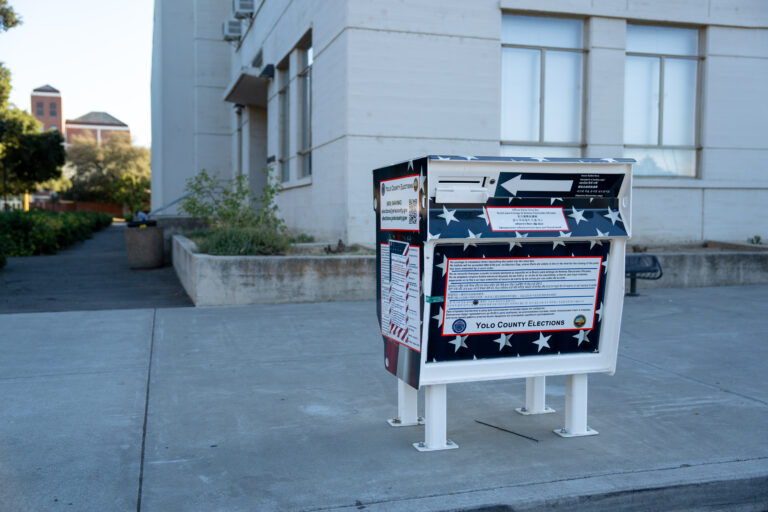
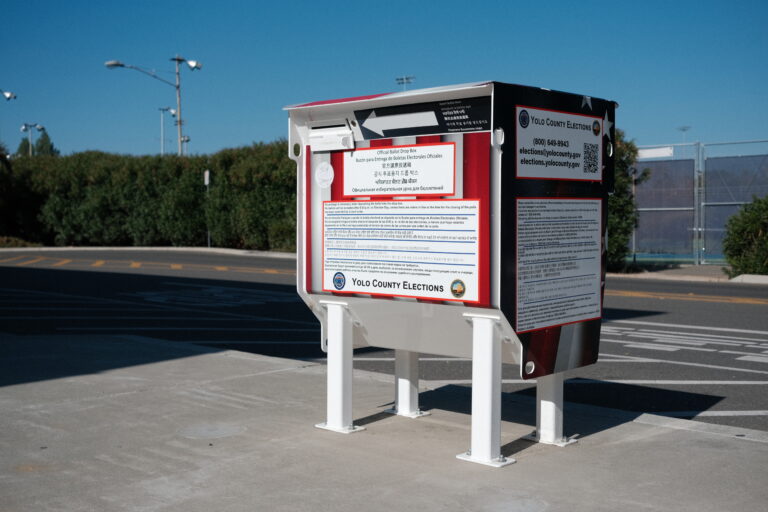
  1. Hunt Hall Ballot Drop Box for Yolo County ballots only: located between Hunt Hall and the tennis courts, 282 Tennis Court Lane.
  • Hours: Open 24/7. Last pick-up will be at 8 p.m. on Election Day, Nov. 4.

To be eligible to register to vote in California, you must be a United States citizen, a resident of California, 18 years or older on Election Day, not currently serving a state or federal prison term for the conviction of a felony and not currently found mentally incompetent to vote by a court of law.

Residents who have missed the Oct. 20 voter registration deadline can instead apply for Same Day Voter Registration (Conditional Voter Registration).

Yolo County residents wishing to apply for Conditional Voter Registration must appear in-person at a voting location and can do so from now until polls close on Election Day. Conditional ballots will be processed and counted once the county elections office has completed the voter registration verification process. Voters who hope to complete Same Day Voter Registration must still meet all regular eligibility requirements.

In California, mail-in ballots must be postmarked by election day and received by the collecting election office within seven days after the election. All registered voters in California are sent mail-in ballots, though voters can choose to vote in-person if they are able.

If you’re not a resident of Yolo County or California, refer to your county for specific voting information and instructions on casting an absentee or mail-in ballot. Additionally, voters sending mail-in ballots to areas outside of Yolo County should do so as soon as possible, and are recommended to drop off their ballots directly at the post office.

For more information and a full list of Voting Assistance Centers and Ballot Drop Boxes, visit the Yolo County Elections website at elections.yolocounty.gov.

Written by: Vince Basadacampus@theaggie.org

Your science and technology guide to Davis

Nine can’t-miss science and technology events in Davis: including the Chemistry Magic Show, Pre-Health Conference and HackDavis


By NAREN KRISHNA JEGAN  — science@theaggie.org


  • Davis Science Café

Held each month in collaboration with G Street WunderBar, UC Davis Chemistry Professor Jared Shaw hosts the Davis Science Café to bring real-life research closer to the general community. Every Science Café brings in a local expert in basic or translational science. Past lineups include professors of psychology, entomology and even statistics. Unlike departmental or research meetings aimed at sharing results, the Davis Science Café aims to introduce community members from diverse backgrounds to new science fields, in an exciting environment which fosters interaction and removes the isolated feeling that comes with sitting in a college lecture hall.

The Davis Science Café has cemented itself as one of Davis’ beloved science events. Taking place on the second Wednesday of each month at G Street WunderBar from 5:30-7 p.m., the goal of each café is to bring forth a new piece of science you may not have known existed. For more information, contact Jared Shaw (jtshaw@ucdavis.edu) or Haleigh Patten-Trujillo (hpattent@ucdavis.edu).

  • The Bohart Museum of Entomology

Tucked inside Academic Surge, the Bohart Museum of Entomology is one of UC Davis’ most fascinating hidden gems. Home to over 7 million insect specimens, it’s the seventh-largest insect collection in North America and a must-visit for any science enthusiast. The museum offers regular open house days, where visitors can learn about insect biodiversity, ecology and behavior; lucky visitors sometimes even get the chance to hold live insects from the “petting zoo.” Whether you’re a first-year biology major or simply curious about the six-legged world, the Bohart Museum is one of the best ways to truly bask in the diversity of life on this planet. 

  • California Raptor Center

No, it’s not that scene from Jurassic World where Owen Grady hops in to tame the hungry Velociraptors; it’s one of the top research animal science facilities in the world, dedicated to the rehabilitation of injured and orphaned birds of prey.

The California Raptor Center, located at the UC Davis School of Veterinary Medicine, rehabilitates injured and orphaned birds of prey like hawks, owls and eagles, while also serving as a vital research and education hub. Visitors can tour the facility, meet ambassador birds and learn about the crucial ecological roles raptors play as top predators and environmental sentinels. The center’s mission blends public education with hands-on veterinary science, making it an ideal destination for students interested in wildlife biology, veterinary medicine or environmental science.

  • The BioInnovation Group Research Training Program

New to research or looking to gain some solid wet-lab experience? The BioInnovation

Group (BIG) hosts a variety of research programs that students can participate in. Among these, the BioInnovation Group Research Training Program (BIG-RT) provides students with knowledge in running tasks such as gel electrophoresis and polymerase chain reactions — completely for free. In small groups, students are tasked with using these lab techniques to solve pressing real-world problems, providing strong critical and research thinking skills. BIG-RT operates multiple sessions every quarter and is on a first-come-first-serve basis. Once students finish BIG-RT, they are awarded a certificate of completion, which can be used to join research labs on campus. For more information regarding BIG-RT session availability per quarter, follow @big.rt.ucdavis on Instagram.

  • Picnic Day 

Known all over the United States, Picnic Day is a day-long celebration where the Davis community joins together in festivities, from dawn until dusk. UC Davis’ science departments host numerous interactive exhibits on campus, including the famous “Chemistry Magic Show.” Packed with parades, numerous tabling events and interactive exhibits on campus, one could find themselves sampling sorbets made from liquid nitrogen in the morning, tinkering with sound-following robots and launching weather balloons in the afternoon, ending the day with a variety of shows offered by the Physics, Entomology, Chemistry and Computer Engineering Departments. Among all of the activities mentioned in this article, Picnic Day is one event you cannot miss.

  • Undergraduate Research Conference

Held every spring and spread over multiple days, the annual Undergraduate Research Conference (URC) brings together hundreds of students who share ongoing research projects in areas from science to arts and humanities. If you’re interested in expanding your research skills or want to see what your fellow classmates have been working on, this is the place for you.

  • Pre-Health Conference at UC Davis

Whether you are familiar with the pre-health field or are curious about which career to choose, the Pre-Health Conference at UC Davis is the largest pre-health event in the nation, boasting over 3,000 attendees and 200+ exhibitors representing over 20 health professions. Attending the conference provides students with the opportunity to understand the various programs and careers available, while directly networking and interacting with deans of admission and admissions committee members. Students also get the opportunity to learn from individuals from all stages in their pre-health journeys and gain valuable clinical skills through didactic and interactive workshop sessions. If you’re a new pre-health student at Davis or looking to explore a career path that fits your interests, this event is a must-attend.

  • HackDavis

Run entirely by students, HackDavis is one of the largest collegiate hackathons on the West Coast and an exciting opportunity to collaborate, innovate and create something meaningful. Over a 24-hour weekend, students form teams to design apps, websites and hardware projects that address real-world issues in sustainability, education and social good. Even if you’re new to coding, HackDavis welcomes all skill levels with workshops, mentors and free food to keep ideas (and energy) flowing. It’s an inspiring, fast-paced event that embodies the creative and collaborative spirit of Davis’ student tech community. Even if you don’t have a strong background in technology, this is a great way to work with friends in a team to create a project you can be proud of.

  • The UC Davis Arboretum

Home to over 2,500 plant species and varieties, the UC Davis Arboretum is one of Davis’ crown jewels. Stretching along the Putah Creek waterway, the Arboretum offers a scenic escape filled with native and international plant collections; from Australian eucalyptus groves to California native gardens. It is a favorite spot for students to walk, jog or simply unwind amongst the ducks, turtles and fish that inhabit the Arboretum’s ponds. Moreover, if you’re interested in learning about the biodiversity of natural environments, the UC Davis Arboretum and Public Gardens team hires student interns and volunteers to help maintain the ecology and land management of the Arboretum. Whether you study ecology or agriculture, or are simply looking to get back into nature, the Arboretum is one of the most blissful places to be. 


Written by: Naren Krishna Jegan — science@theaggie.org

California Special Election runs through Nov. 4

0

Community members discuss the details and impact of the special election


By GRACIELA TIU — features@theaggie.org


California voters have begun receiving mail-in ballots for Proposition 50, part of the statewide special election on Tuesday, Nov. 4. As the sole ballot measure in the irregularly scheduled election, Proposition 50 would authorize the early redrawing of California’s congressional district maps. 

The last day to register to vote in this special election passed on Oct. 20, but there are still options available for those who missed this deadline. 

 “Eligible citizens who missed the October 20 deadline to register to vote may complete the ‘Same Day’ voter registration process through Election Day on November 4, 2025, at their local county elections office or any in-person voting location within their county,” the California Secretary of State website reads. 

Every registered voter in California should have received a vote-by-mail ballot, which can be returned by mail, at a drop-off location or at the county’s election office on or before election day. Voters can also obtain a polling place ballot if choosing not to vote by mail.

Voting Assistance Centers in Davis available for voters — with notable locations including the Activities and Recreation Center (ARC) pop-up — will all be open by Nov. 1. Ballot Drop Boxes are also available until 8 p.m. on Nov. 4, with an on-campus box behind Hunt Hall. For more information, visit the Aggies Vote page on the Student Affairs website.

Supported by California Governor Gavin Newsom, the proposed measure would lead to new congressional districts that aim to temporarily give California five extra Democratic seats in the House of Representatives — a direct response to the Republican partisan gerrymandering in Texas and other states. The ballot measure marks the Democratic party’s pushback against the Republican party, with both attempting to gain more seats by the 2026 midterm elections. 

Typically, each state will redraw its district maps every 10 years, after the United States Census occurs, with one representative allocated to each district. However, under pressure from President Donald Trump, the Texas Legislature recently passed a bill allowing for early redistricting that would favor the Republican party. In response, Newsom put forward Proposition 50, known as “The Election Rigging Response Act,” to counteract the ongoing actions in Texas. 

The “Yes on 50” committee website describes how the measure “levels the playing field,” “gives voters the power,” “is fair and proportional” and “is temporary.” The measure differs from that of Texas in that it gives voters the choice to allow for the redistricting and would only temporarily change the process, as it would restore California’s independent redistricting process by 2031.

“From my perspective, it mainly reflects California’s frustration with the Republican party and fights to keep government overreach in check,” Claudia Brion, a second-year political science major, said. 

The constitutionally mandated, decennial redistricting process remains in place to ensure that districts consistently adjust to reflect population changes. Each voter in the U.S. lives within a district, with one member of the House of Representatives allocated to the specific drawn areas. Through the redistricting process, every state draws the “lines” of their districts, with each having roughly equal numbers of constituents. The process varies by state, but most have either state legislatures, independent commissions or hybrid models establishing the boundaries.

Gerrymandering, defined by Merriam-Webster as “the practice of dividing or arranging a territorial unit into election districts in a way that gives one political party an unfair advantage in elections,” challenges the ideals that the redistricting process upholds. Both partisan gerrymandering and racial gerrymandering have occurred throughout the country’s history, with partisan gerrymandering unequally benefiting or hurting one political party and racial gerrymandering diluting the voting power of marginalized or minority groups. 

The Supreme Court has ruled racial gerrymandering as unconstitutional under the Voting Rights Act of 1965 on multiple occasions, though partisan gerrymandering still remains legal, as the Supreme Court ruled the practice nonjusticiable in 2019. 

Despite the distinctions between racial and partisan gerrymandering, critics argue that partisan gerrymandering can still disproportionately impact marginalized groups.

“Racial gerrymandering can look a lot like partisan gerrymandering in places segregated by race where communities of color have distinct political preferences,” Michael Waldman, the president and chief executive officer of the Brennan Center for Justice at New York University School of Law, said in an analysis.

 The two most commonly used gerrymandering strategies can be summated into the terms “cracking” and “packing.” Michael Li, senior counsel in the Brennan Center’s Democracy Program, described what each form of gerrymandering looks like in an article.

“Cracking splits groups of disfavored voters among multiple districts,” Li said. “With their electoral strength divided, cracked groups struggle to elect their preferred candidates in any of the districts because they are too small a share of the electorate to be effective. Packing is the opposite of cracking. With packing, map drawers cram members of disfavored groups or parties into as few districts as possible. The packed groups are able to elect their preferred candidates by overwhelming margins, but their voting strength is weakened everywhere else.”

With these strategies in mind, both parties in multiple states find themselves in a redistricting race, with each side aiming to create more party-favorable districts and subsequently gain more House seats before the 2026 midterms. Historically, the president’s party almost always loses House seats in the midterm elections, with political scientists offering various explanations for the pattern. However, if Texas and other Republican-led states gain more seats through their moves to partisan gerrymander halfway through the decade, and Democrat-led states don’t make a move to counteract, this trend may shift.

“If Prop. 50 fails and red state maps go to effect without pushback, we might risk a political environment where the Executive Branch tightens its hold on every level of government, and the guard rails — the checks and balances that are supposed to protect representation and democratic accountability — grow even weaker,” a UC Davis alum with a Bachelor of Arts in Political Science — Public Service who works in California politics and wishes to remain anonymous, said. “I think that there’s still a lot on the line. Right now, the federal government can’t be really trusted to represent the constituents within states, so motivating governors, state leaders and those that control Congress [is] going to be the best defense that we have at protecting democracy.”

The alum further emphasized the significance of this special election in comparison to general and primary elections. 

“It’s very rare that you consider redrawing congressional maps before the time is up,” the alum said. “There are unique aspects — a combination of federal courts stepping back from addressing partisan gerrymandering and also the escalating pressures from outside actors trying to shape control of Congress, which isn’t typical of undrawn congressional maps. And politicians with national platforms are uplifting it, even in this type of special election.”

The political atmosphere under the Trump administration has left many UC Davis students feeling especially interested in topics like this special election.

“I first heard about the special election a few months ago via an ad while studying on YouTube,” Presley Backus, a third-year animal science major, said. “The political advertisement stated that, ‘To protect American values, Vote No on Prop. 50.’ Naturally, this sparked interest because, one, I, like many others, do not like to be told what to do, especially when there was little to no information within the advertisement about what Prop. 50 was. And two, the term ‘American values,’ at least in a political context, raised red flags for me. In general, I find that the Internet is a breeding ground for misinformation, especially when the target audience is young adults.”

Backus explained how her experience in the state has influenced her decision to vote in this upcoming election.

“When deciding whether to vote, a large factor that comes into play is my bicoastal residency,” Backus said. “At times, I can feel a bit lost when deciding whether I should have a voice in a state that I do not plan to call home following my undergraduate education. […] The current policies of the Trump administration have, to put it conservatively, been unsavory in their representation of what I define as ‘American values.’ To witness the unconstitutionality coupled with the lack of decorum displayed by the actions of the Trump administration and stand idly by is immoral. To me, utilizing my right to vote is essential. I come from a family of Black ex-marines, and I know this is not the America they served to uphold.”

The special election brings a sense of political momentum to Newsom and the Democratic party, with some people noting how their strategy against the Trump administration has evolved.

“I think that in Sacramento, they’re really trying to seize this political moment,” the alum said. “You can see it in Governor Newsom’s social media and all of these different things. It took a while for them to warm up to feeling comfortable to speak out so explicitly about what’s happening at a federal level, but I think now it’s very clear. A lot of voters are feeling the repercussions of what’s happening at the federal level — they want to take action and allow Congress to be more balanced.”


Written by: Graciela Tiu — features@theaggie.org

Woodland impacted by mail theft incident ahead of the California Special Election

Jesse Salinas, Yolo County registrar of voters, recounts Woodland mail theft incident


By KATYA OKS — city@theaggie.org


On Oct. 8, a mail theft incident was reported in Woodland, which impacted several Cluster Box Units (CBUs) ahead of the California Special Election.

CBUs, or “community mailboxes,” are defined as “a centralized unit of individually locked compartments for the delivery and collection of mail,” according to the United States Postal Service (USPS).

Jesse Salinas, the Yolo County assessor, clerk, recorder and registrar of voters, shared how his office found out about the incident.

“We were contacted on a Wednesday afternoon [by USPS], that, earlier that morning, there was a break into a cluster mailbox,” Salinas said. “There were a number of items — not just ballots — that were left in parts of the community and found in other locations.”  

As soon as the Yolo County office found out, Salinas and his team began to work directly with the USPS to determine the impacted neighborhoods. Through this process, they were able to find the number of registered voters who were impacted by the incident. 

“Four CBUs, covering 61 addresses, were broken into, impacting approximately 135 registered voters; “The impacted CBUs serve “800–1120 Shiloh Ct.”; “237–268 Pearl Ct/Way”; “236–261 Carlsbad Pl.”; and “300–341 Pinnacles Dr.,” according to the official Yolo County website

Authorities recovered 30 damaged ballots in partnership with local law enforcement, according to CBS News.

“A sprinkler probably got on [the discarded ballots], and they became wet and unusable,” Salinas said. 

Salinas, through discussion with the local Postal Service in Woodland, explained why this might have been the case.

“When these break-ins happen, the ballot mail information is really just a residual of what [perpetrators] are really looking for,” Salinas said. “They’re looking for credit cards, other helpful information to do other shenanigans, for lack of a better term, [which is] why they typically discard the ballots.”

In response to the incident, Salinas and his team began to reach out to voters through their phone numbers, which were registered in their database. For the many others whom the office could not reach — around 105 voters — Salinas’ team created a new strategy. 

“We drafted a letter that came from [our office], and we sent them new ballots, replacement ballots, while voiding the original ones,” Salinas said. “What was pretty impressive is that we did all of that within a 24-hour period.” 

Salinas expressed that such a quick turnaround was only possible with the relationships the Elections Office had built with the Woodland Postal Service and the efficiency of the team. 

“I have to thank the Postal Service — they contacted us right away, they were able to provide the addresses that were impacted, and then they went out and actually hand delivered the replacement ballots,” Salinas said. “I would like to thank my staff. I was out of town, but they contacted me, [and] we developed a game plan. They then executed that response plan very quickly.” 

Salinas also discussed how a quick and efficient response from the Yolo County Elections office was necessary, given that the mail ballot theft occurred so close to the date of the California Special Election for Proposition 50. He noted how, in addition to a partnership with local law enforcement and the postal service, the location of the incident had a huge impact in executing such a rapid response. 

“We’re fortunate; we actually have one of the major regional distribution centers in the entire state, right here [in West Sacramento],” Salinas said. “That allows for a quicker turnaround [for] us being able to get our materials through.” 

He also mentioned that the size of the county aided in the quick turnaround.

“I’m not sure you can get that kind of response in Sacramento or Los Angeles, because it’s so large, but we were lucky that we could have that kind of responsiveness,” Salinas said.  “Because we are smaller, we can respond more timely and quickly.” 

Salinas also discussed the importance of communication with local elections offices to ensure the impact of such incidents are mitigated quickly. 

“If you know your mailboxes have been broken into, contact us,” Salinas said. “Because if you didn’t get your mail or you just put your ballot in the mail, and something like this happens again: That’s a problem. We want to be able to help address it and make sure your voice is heard.”

With the upcoming election, Salinas also explained the importance of registering to vote sooner, rather than later. He also stated that the Yolo County election office is partnering with UC Davis to make the process easier for students and community members.

“One of our vote centers will be open starting on Saturday right by the [Activities and Recreation Center (ARC)] ballroom, the weekend before election, […] open from 10 a.m. to 6 p.m.,” Salinas said. “We encourage people not to wait until Election Day to go and vote.”


Written By: Katya Oks — city@theaggie.org

Mummies, vampires and zombies

The history of Halloween’s favorite monsters and their rise to fame 


By MIRIAM RAMAKRISHNAN —- arts@theaggie.org 


From plastic fangs to fake blood, monsters like vampires, zombies and mummies dominate Halloween decoration aisles. As their figures grin from front lawns and party stores every October, have you ever wondered how these icons clawed their way into pop culture fame?


Blood-thirsty creatures

In the 19th century, vampires had evolved from eerie, little-known folklore into fixtures of literature and art. Cultural historian Violet Fenn noted that John William Polidori’s 1819 short story “The Vampyre” truly created the romantic figure that we know today. This text sparked a frenzy of vampire-themed operas, ballets and plays across Europe. The story was created for a ghost story contest, formulated by writers Mary Shelley, Percy Shelley and Lord Byron; this very contest was the origin of “Frankenstein” (1818). 

Bram Stoker’s 1897 classic “Dracula” marks the beginning of the explosion of vampire myth. The novel’s antagonist indirectly suggests that one may be able to come back from the dead — an attractive concept in an evil form, according to the National Geographic. When Count Dracula left his home of Transylvania for England, true horror and evil started to take shape in the text; this aspect of the novel reflected the Victorian fear of the “foreign other,” at a time when many feared that those colonized by the British would strike back. 

The centuries of vampirism in stories, films and media explain its prominent role as one of Halloween’s central motifs. It’s no surprise that the vampire has sunk its fangs deep into Halloween culture — the legend is truly immortal.


Green with envy

When one thinks of zombies, images of green skin and stitches may arise. However, the word “zombie” actually comes from the Haitian word “zombi”: a person resurrected through magic and stripped of their will, according to writer Mike Rampton. This word carried deep political weight in enslaved Haiti, where the idea of being alive but enslaved even after death represented the ultimate horror. 

In 1818, Mary Shelley’s aforementioned “Frankenstein” was published, telling the story of Victor Frankenstein, a scientist who reanimates dead flesh and builds “the Creature.” Though considered to be the root of zombies in Western literature, Shelley’s text and the original Haitian “zombi” both express fear of power gone wrong and a loss of control. Frankenstein’s monster is rejected by its creator; the “zombi” is trapped by its master.

The 1932 film “White Zombie” utilized the Haitian concept of enslaved zombies, serving as the catalyst for more of the same media to be produced, according to Rampton. Decades later, “Night of the Living Dead (1968) reinvented the zombie as a flesh-eating symbol of social collapse, while “The Walking Dead” and “The Last of Us” exist as modern pieces of undead media that continue to keep the genre alive in popular culture.


All wrapped up

Mummies have an extensive history in human anatomy, current knowledge of ancient cultures and modern disease and health, according to UC Davis Anthropology Professor Jelmer Eerkens’ “Mummies of the Ancient World” course. 

 The discovery of King Tutankhamun’s tomb in 1923 jumpstarted the myth of the “mummy’s curse” that lives on till this day. Lord Carnarvon, the financial backer of the excavation, died a few short months after the opening of the tomb. Every death and tragedy was blamed on this “curse,” and its mysterious effects sold books and movies galore, according to Eerkens. 

The 1932 film “The Mummy,” released by Universal Pictures, the producers of “Dracula” (1931) and “Frankenstein” (1931), launched another instantly recognizable monster icon into pop culture. However, the early 20th century theme of horror quickly transitioned into comedy, with films such as “Abbott and Costello Meet the Mummy” (1955), “Bubba Ho-Tep” (2002) and Murray the Mummy in “Hotel Transylvania” (2012). 


These three classic characters have never gone out of style, escaping their myths and tombs to become pop culture staples. Each monster mirrors the fears of its time, evolving from folklore into widespread symbols in film, literature and even video games. As Halloween rolls in and the streets fill with fangs, bandages and fake blood, we’re reminded that the undead never truly die: they just land a reboot.


Written by: Miriam Ramakrishnan — arts@theaggie.org