53.8 F
Davis

Davis, California

Saturday, December 20, 2025
Home Blog Page 9

An insight into the 2025-26 UC Davis men’s tennis team

“I would rather be on the court than anywhere else”: Captain Lucas Bollinger discussed setting goals and leading the team


By DANIELLE WIRNOWSKI— sports@theaggie.org

Interviewed by Megan Joseph


With fall quarter underway and sports teams reaching the beginning or end of their season, the UC Davis men’s tennis team is deep into its preseason. The preseason includes tournaments, fundraisers and other events for the UC Davis Aggies to settle back into college play and the rigorous expectations of collegiate athletics. 

The preseason is also a way for first-year students to acclimate and balance the fast pace of the quarter system and the demanding schedule of university athletics, as well as learning to rely on other team members for support. 

The 2025-26 UC Davis men’s tennis team is made up of three first-years, three second-years, three third-years and one fourth-year. While the team has a higher number of lowerclassmen, four of the members have two or more years of experience — after preseason success, this leaves the Aggies with a strong potential in their upcoming spring season. 

As the only fourth-year on the team, Captain Lucas Bollinger, a political science major,  spoke with The Aggie about the upcoming season and his team’s focus on success. 

“I think that leadership and having the guys get close together really leads to better results, even if you don’t have as talented or as seasoned [of] a team,” Bollinger said. “Being a good leader is very important to me this year, and it is something I am working on.” 

Collegiate tennis standardly features three simultaneous doubles matches and six singles matches. Despite this isolated atmosphere, team bonding significantly impacts the outcomes of the season. 

Bollinger emphasized leadership as integral to success and building team relationships. 

“Team bonding things and doing things off the court [like playing cards] really pay off in the long run,” Bollinger said. “My [second] year, we had the best team but had the worst results because our team was not close.” 

Bollinger also discussed the team’s goals for the upcoming season. 

“The goal for [UC Davis men’s tennis team] stays the same: to win the Big West [Conference],” Bollinger said. “We’ve come really close in the past. We’ve lost in the semifinals [this past year]; we lost four or three in the semifinals last year. […] [It] was a really hard loss, to come so close. So, we are hoping to change that this year.”

As the oldest member, Bollinger offered advice for the younger players on the team.

“Trusting the process — that some days you’re not going to play your best — [and] coming back for that next day is really important,” Bollinger said. “It’s easy to […] go into a spiral and keep losing, and, if you keep losing, then you have a lack of confidence in yourself. But, I mean, personally, […] even if I lose, I want to be the person on the court playing. I would rather be on the court than anywhere else.”

This fall season, the men’s tennis team has seen decent results. Bollinger most recently made it to the finals of the Big West Invite in Santa Barbara on Oct. 4., and — despite losing in his finals match on Oct. 5 — still gave an impressive performance throughout the invite.

Other notable performances during the Big West Invite included Perry DiGiulio, a first-year communication major, and Rithvik Katpelly, a second-year undeclared major, who made it to the semifinals as a pair.

The UC Davis Aggies’ most-recent tournament is the Intercollegiate Tennis Association Tournament, recently concluding on Oct. 22 in Stockton, California. Next, the team will head down to San Diego from Nov. 4 to 8 for the San Diego Classic.


Written by: Danielle Wirnowski — sports@theaggie.org

Six Aggies compete at 64-player Big West Qualifier tennis tournament

Polina Marakhtanova leads successful weekend effort for UC Davis, advancing to the final 16


BY THEO KAYSER— sports@theaggie.org


On Oct. 2, the UC Davis women’s tennis team began competition at the Big West Qualifier in La Jolla, California. The 64-player tournament took place over the span of four days, with six Aggies entering the ring in hopes of victory. 

The Big West Qualifier is a yearly tournament held for schools in the Big West Conference to face off early in their seasons. These schools included UC Santa Barbara, UC Irvine, UC Riverside, UC San Diego, California State University, Fullerton, California State University, Northridge, University of Hawaiʻi, Long Beach State and California Polytechnic University, San Luis Obispo (SLO).

In the tournament’s inaugural 64 rounds, five of the UC Davis Aggies’ six competitors walked off the court in victory. 

Mika Ikemori, a third-year psychology major, and Penelope Wong, a second-year environmental engineering major, competed early in the day and both earned victories in three sets. 

Following suit, Vivian Gallaway, a first-year business major, and Polina Marakhtanova, a second-year cognitive science major, competed 30 minutes apart and won their matches in just two sets. Finally, Maya Youssef, a fourth-year political science major, won a three-set match against her opponent from UC Irvine, concluding day one. 

The tournament’s second round proved much less successful for the Aggies, with four of their five players exiting at this stage. The sole Aggie who saw victory on the morning of Oct. 3 was Marakhtanova, who built upon her dominant first match win with another two-set sweep. This time, she squared off against Diana De Simone from Long Beach State, winning with a score of 6-4 in both sets. 

The tournament’s round of 16 began for the Aggies with Marakhtanova’s third match of the weekend just seven hours after her second. It was at this point that the Aggies’ competition for the weekend concluded, as Marakhtanova suffered a two-set loss against Cal Poly SLO’s Jessica MacCallum with a score of 6-4, 6-3. 

After a weekend of both success and loss, the Aggies will have another opportunity in a tournament-style competition, as the Intercollegiate Tennis Association (ITA) Northwest Regional in Berkeley, California will begin Oct. 10. After this tournament, the season will march along with a long series of dual meets, beginning with San José State University on Oct. 25. 


Written by: Theo Kayser — sports@theaggie.org

Is mind-wandering the root of creativity?

Diving into the dynamics of focus and certain ADHD traits


By EMILIA ROSE – science@theaggie.org 


We all get distracted sometimes. Maybe even right now. Maybe you’re distracted while reading this, preoccupied with some other part of your day. But what is distraction, and why are we so quick to demonize it? 

When our minds drift during work or study, we often get frustrated, as if complete focus is the only kind of thinking we allow. But why? There are a surprising number of levels to this question and to the types of distractions we experience. This is the crux of mind-wandering and how it both helps and harms us — especially for individuals with attention-deficit/hyperactivity disorder (ADHD).

At the 35th annual European College of Neuropsychopharmacology conference, preliminary research featured two studies involving two independent groups. Both found a positive correlation between measured creativity and people who self-reported mind-wandering. 

Even if this is early-stage research, some natural questions arise: How do you measure levels of creativity? How reliable are the self-reports? Yet, despite these uncertainties, the study points towards a fascinating implication that certain types of mind-wandering are linked to creative thinking. 

Before going any further, it is essential to establish a definition for what “mind-wandering” is. UC Davis Professor of Psychology Dean Simonton commented on the neurological process of mind-wandering.

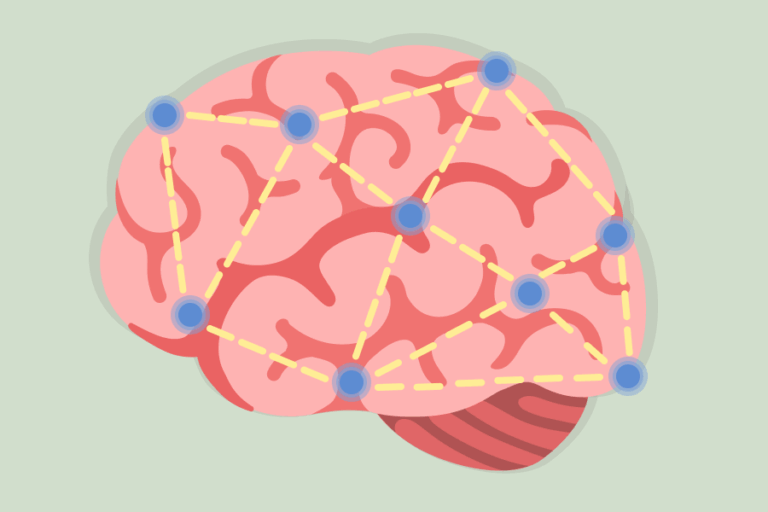
“Mind-wandering occurs when conscious thought is no longer under executive control, resulting in ‘defocused’ or ‘disinhibited’ attention,” Simonton said. “This cognitive state is often associated with the brain’s ‘default mode network’ in which electrical activity becomes less concentrated on a particular task.” 

Additionally, Simonton further explained the connotations of ADHD.

“The link to ADHD is most accurately attributed to the ‘AD’ part of the acronym, namely ‘attention deficit,’ in which executive control lapses, leaving the mind to wander,” Simonton said.

Thus, when we lose focus on a given task, we are not lazy. Instead, it is our brain returning to its natural state, full of loosely connected ideas and intermingling thoughts. For people with ADHD, this phenomenon is more common.

However, the question still remains: How exactly does mind-wandering lead to creativity? Julie Schweitzer, a UC Davis psychology professor and clinician at the Davis MIND Institute, has an answer.

“Mind-wandering is essentially internal distractibility,” Schweitzer said. “If you’re able to disengage from what you’re doing and you have more possibilities that you go towards, that may be why you can come up with more novel solutions. 

Simonton also briefly comments.

 “Creative ideas or responses are by definition low-probability events, yet focused attention will by its very nature filter out low-probability events such as ‘distractions’ or ‘noise.’” 

Like entropy in the wider universe, focusing our brain will tend towards more highly probable states, meaning a loss in creativity. But when we do let our minds stray, a new universe of possibilities and ideas opens up to us. Mind-wandering, at its core, leads to divergent thinking, allowing us to explore multiple paths, instead of one. In focusing the brain, we cut off the branches of divergent thinking, putting us on a single path forward.

It can be more counterproductive to tell easily-distractible people, like those with ADHD, that they need to focus when their divergent thinking is the basis of new ideas. In fact, many of humanity’s greatest achievements stemmed from mind-wandering. Isaac Newton often wrote about being bored, and it was during one of these moments — when his mind wandered to observation and recognizing patterns — that led him to the theory of gravity. 

If mind-wandering is so beneficial and largely responsible for new ideas, why is it so frowned upon? Why are we told to focus on specific tasks from a young age, when we could be thinking about so many new concepts? This is where the different levels of mind-wandering and divergent thinking come into play. In everyday life, there are situations where distraction can be a benefit and a curse. 

“I had a patient many years ago who worked in advertising, and he was very creative,” Schweitzer said. “I think for somebody like him, mind-wandering could be very good because he was able to make associations that people who weren’t mind-wandering couldn’t do.”

In this case, mind-wandering was helpful because of the patient’s profession. But in other cases, it can be detrimental.

“When I talk to students who are trying to study and they have to reread the same paragraph again and again, that’s when mind wandering is detrimental,” Schweitzer explained. 

This variability is the problem with mind-wandering. It can be good; there is no doubt. When new ideas are needed, letting the brain travel down a web of interconnected thoughts — both conscious and subconscious — means that mind-wandering can serve as that path of travel. But when there is a specific task in mind and there is no need for novelty, our brain’s default mode network simply won’t cut it. 

Like a galaxy, our focused thoughts orbit a central task — stars circling the galactic nucleus. There is nothing inherently wrong with this pattern. It is stable, predictable and reliable when applied to most tasks. But, when the mind wanders, those stars drift outward, forming new constellations for us to discover. The dynamics of focused and unfocused thought are interdependent. The original study suggested we’ve been too quick to disregard mind-wandering and the fruits it bears. 

There is no truth in claiming that either divergent or focused thinking is better. In reality, it is contextual. As more research is undertaken about the interconnectedness of ADHD traits, creativity and how we learn best, mind-wandering will likely play a key role in the mechanics of our understanding.

Written by: Emilia Rose — science@theaggie.org

The Earth and Planetary Sciences Department hosts Friday Lunch Talks

Talks organized by graduate students offer a look into ongoing research in the department


By KATELYN BURNS — science@theaggie.org


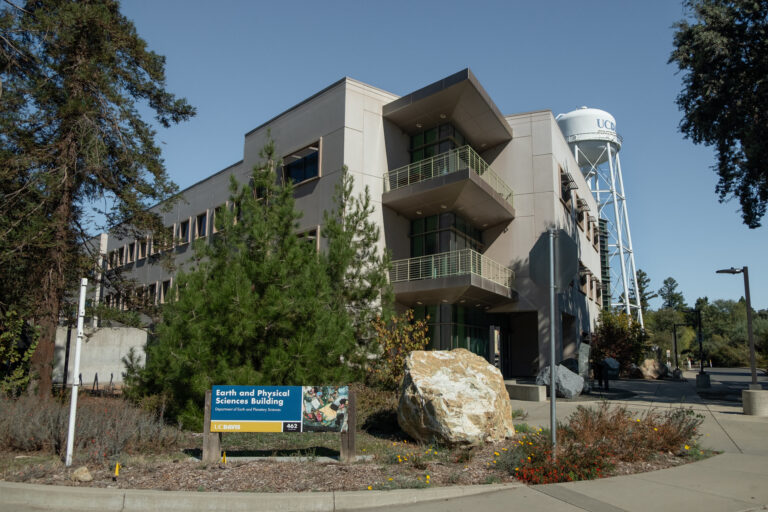
The Earth and Planetary Sciences Department offers informal seminars on earth sciences in the form of their Friday Lunch Talks series. The talks occur every Friday at noon — the dates are noted on the events calendar for the Earth and Planetary Sciences Department in the Earth and Physical Sciences building. 

Eduardo Alatorre-Acevedo, a graduate student and the organizer of the Friday Lunch Talks, explained how he received the role as an organizer for the event.

“Each of the graduate students here in the [Earth and Planetary Sciences] Department gets assigned graduate jobs for the community,” Alatorre-Acevedo said.

At the beginning of the quarter, Alatorre-Acevedo sends out a call and sign-up sheet for speakers. Priority is given to graduate students, particularly those practicing for their qualifying exams or their presentations for conferences. Graduate students also typically make up the majority of the audience, with the number of professors and undergraduate students attending varying every talk. 

Alatorre-Acevedo noted that some talks are geared more towards one group or the other, with undergraduates more likely to attend talks on volcanoes and fossils or talks with captivating titles. Given how broad earth sciences are, the topics of the talks vary greatly, ranging from 500 million-year-old fossils from the Cambrian era to models of mantle plumes found at the center of the earth.  

“People are always excited about having a slice of pizza and listening to the science talks [no matter the subject],” Alatorre-Acevedo said. 

An upcoming talk on Oct. 24 at 12 p.m. will cover two different research cruises that gather data from subduction zones — the boundaries where one tectonic plate goes beneath the other.

“We’ll be having two of our graduate students who were aboard two different research cruise ships,” Alatorre-Acevedo said. “They are using that information to improve their computer models and understand what’s going on at those boundaries.”

The speakers are two graduate students from the Earth and Planetary Sciences Department, Nathalie Redick and Lucy Lu. The talk will occur in Room 1348 of the Earth and Physical Sciences building, and is titled “Science at Sea: Summary of the August 2025 PACSAFE & EXTEND Research Cruise & Plume Meets Slab: A Cruise of OBS Recovery and Seamount Dredging in American Samoa.”

Both research cruises sailed in summer this year, and the Friday Lunch Talk on Oct. 24 is an early opportunity to learn about the cruises.

“The acquired data will facilitate precise earthquake locations and structural imaging, provide data for regional tectonic and geodynamic studies, and ultimately contribute to enhanced assessment of seismic and tsunami hazard along British Columbia’s central coastline,” the Seismological Society of America suggested when discussing the PACSAFE Cruise, a multi-year program with its third phase occurring in August 2025.

For students interested in graduate-level earth sciences, the Earth and Planetary Science Department’s Friday Lunch Talks offer a broad range of topics, including the unique opportunity to discuss the recent research cruises in an informal environment.


Written by: Katelyn Burnsscience@theaggie.org

Examining current evidence on Tylenol usage in pregnancy with Autism Spectrum Disorder

Large multi-decade studies across multiple sites show that there is no link between ASD and Tylenol usage in pregnancy


By NAREN KRISHNA JEGAN — science@theaggie.org


Autism Spectrum Disorder (ASD) is a diverse group of neurodevelopmental conditions commonly characterized by challenges with social interaction and communication, as well as the presence of restricted or repetitive patterns of behavior, interests or activities. Although previously thought to present with universal symptoms across different individuals, research on autism has revealed that it presents differently in every individual. As such, autism is better modeled as a spectrum, where each autistic person has a unique combination of characteristics. 

Recent Centers for Disease Control and Prevention (CDC) research estimates that across a 20+ year period beginning in 2000, the prevalence of ASD diagnoses has increased from less than seven in 1,000 children to 32 in 1,000 children, marking a 4.5-fold increase. 

A challenge scientists face regarding the treatment for ASD is the lack of a singular cause that determines the presence or absence of autism in an individual. Recent advancements in research have identified various environmental and genetic factors that increase the chance an individual acquires the symptoms of ASD. However, many of these results are correlative, not causative, and as more information is uncovered about ASD, stronger claims can be made regarding its origins. 

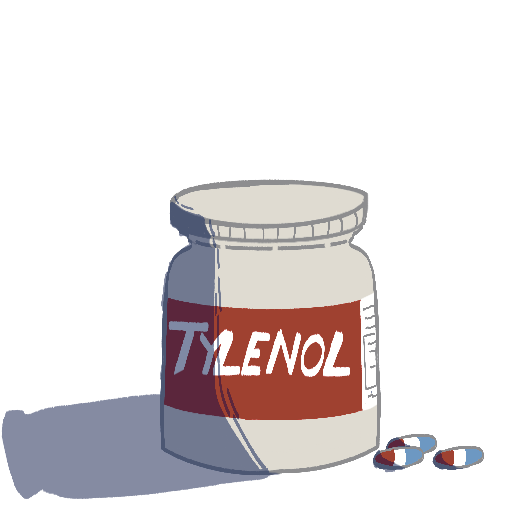
The Department of Health and Human Services (HHS) announced the implementation of “bold new actions to confront the nation’s autism spectrum disorder (ASD) epidemic, which has surged nearly 400% since 2000” through the use of leucovorin to aid with folate deficiency and alleviate ASD symptoms. More well-known, however, is the claim that acetaminophen (Tylenol) usage during pregnancy causes adverse neurodevelopmental outcomes. 

The Food and Drug Administration (FDA), in response to prior clinical and laboratory studies, which suggested a potential association between acetaminophen usage in pregnancy with “adverse neurodevelopmental outcomes,” issued a physician notice and initiated a safety label change for acetaminophen. 

FDA Commissioner Dr. Marty Makary backed this statement.

“Given the extent of the current autism epidemic, physicians should immediately have this treatment option available (leucovorin) for candidate children,” Makary said. “We are also sharing new information about the potential risks of acetaminophen so patients can make a more informed decision with their health care provider.” 

In a press conference that introduced these directives, President Donald Trump did not provide any scientific evidence or studies to prove these links. In support of the claim against the use of Tylenol, Trump provided a response in a press report. 

“Don’t take it! Don’t take it!” the statement reads. “And if you can’t live–if your fever is so bad, you have to take one, because there’s no alternative to that[,] sadly.” 

In the fact sheet published by the HHS that was associated with this report, contraindicative studies were also included, which are concerning for expectant mothers and pediatricians. 

Currently, general scientific consensus shows no association between Tylenol usage in pregnancy with ASD.

Tylenol is a common over-the-counter medication used to relieve pain and reduce fever. Maintaining core body temperature in a vital time, such as early pregnancy, is crucial for fetal development; elevated temperatures resulting from untreated fever, saunas or environmental heat have been shown to increase neural tube defects in the fetus. If left untreated, this could potentially lead to conditions like spina bifida, anencephaly and encephalocele

Last year, an over 25-year study in Norway highlighted the controlled results of the Tylenol-autism claim. Using a technique called sibling control, where different siblings were treated with Tylenol in utero while others weren’t, over two million children were studied and monitored. When controlling for sibling pairs, the researchers found that there was no evidence of increased risk of autism, attention-deficit/hyperactivity disorder (ADHD) or intellectual disabilities associated with acetaminophen use. 

Moreover, they showed that models without sibling controls identified slightly increased risks of autism and ADHD associated with Tylenol use during pregnancy. Meta-analyses of over 16 studies validated that Tylenol use during pregnancy was not associated with the risk of ASD when considering physician-based diagnoses.

Moreover, the increase in ASD cases as reported by both the Trump administration and the HHS may not even involve Tylenol at all. Improvements in technology, accessibility and awareness around ASD have improved diagnostic accuracy, helping bring more people in for screening and potential diagnosis. Historically, ASD has been shunned in many communities, limiting the number of families that would seek medical support.

While the use of Tylenol during pregnancy is an area that has not been widely studied, current scientific evidence finds non-significant links. Ongoing studies and further research aim to further clarify the biological mechanisms underlying ASD development to improve understanding and prevention strategies.

Written by: Naren Krishna Jegan — science@theaggie.org

Review: Shinkoskey Noon Concerts at Ann E. Pitzer Center offer free musical performances

Performers such as the Ars Pacifica Trio provide students and Davis residents with stunning live musical shows


By NATALIE SALTER—arts@theaggie.org 


Live musical performances can be one of the most exciting and enjoyable ways for us to engage with the arts. However, concerts organized by bands, soloists and orchestras alike often come with steep ticket prices, dissuading potential attendees from attending. But, what if a seat at a show was completely free?

Enter the Shinkoskey Noon Concerts: a series of free musical performances taking place every Thursday from 12:05-1p.m. in the Ann E. Pitzer Center on campus. The concerts are named for the late Joy S. Shinkoskey, in honor of her lifetime passion for music. Her daughter, Deborah Pinkerton, and son-in-law, Bret Hewitt, donated to support these noon concerts in the UC Davis Department of Music.

These concerts host a variety of professional musicians, allowing Davis students and community members access to their stunning performances — free of charge. Staged in the beautiful Pitzer Center rehearsal hall, each concert is as atmospheric and immersive as they are musically masterful. Anyone who wishes to attend any of the hour-long concerts simply has to walk right in, take a seat and enjoy the show.

On Thursday, Oct. 9, the Shinkoskey Noon Concerts hosted the Ars Pacifica Trio. The group is composed of Iryna Klimashevska on violin, Jon Mayhew Anderson on horn and I-Hui Chen on piano — a UC Davis lecturer in music. Formed by Anderson, the group also leads classes and interactive concerts to engage closely with their audiences. 

“I am glad that this is a free concert; as a musician, this is a very good opportunity to share our work,” Chen said. “As faculty in the music department, I always love to share my experiences within the music, both in performance and teaching.”

After the lights had dimmed and the crowd fell to a hush, the trio opened their performance with Mozart’s “Allegro from Horn Quintet in E-Flat Major, K. 407.” The warmth of the horn, the liveliness of the violin and the delicate melody of the piano knitted seamlessly into an enchanting composition. The entire piece came together like the perfect backdrop of a fairytale ballet, dancers twirling through an iridescent garden. The trio followed this performance with Brahms’ “Horn Trio in E-flat Major, O. 40,” another masterful showing of their individual and collective talents.

Throughout these performances, each of the three musicians shone. Klimashevska’s violin playing was enthusiastic yet carefully controlled, keeping an electric energy coursing through each piece. Anderson’s horn provided a resounding depth and fullness of sound to the concert, each note alive with incredible feeling. Lastly, Chen’s work on piano stunned, dancing across each tune with a brilliant combination of gracefulness and passion. 

As each of these shows are only an hour long and completely free, they are an incredibly accessible way for students and Davis residents alike to easily immerse themselves in the wonder of live music. Further, they can be educational experiences for anyone curious about musical artistry; an avenue to engage with a variety of musical styles and discover new pieces to fall in love with. 

More weekly performances have been planned by the Shinkoskey Noon Concerts through late November, with a variety of offerings worth taking the time to discover. Nov. 6 will feature the opening concert for the Taproot New Music Festival, and on Nov. 13 audiences can hear Sakurako Kanemitsu on piano, accompanied by a display of visual art works.

If you want to support and discover more about the arts, or find yourself yearning for a magical concert experience, stop by one of these shows — each is a wonderful experience that will make you fall in love with musical arts more than ever before.

Written by: Natalie Salter—arts@theaggie.org

Review: ‘Little Nightmares III’ brings up mixed feelings

The eagerly awaited third installment of this popular indie horror title is, in short, disappointing 


By BELLA PETERSON — arts@theaggie.org 


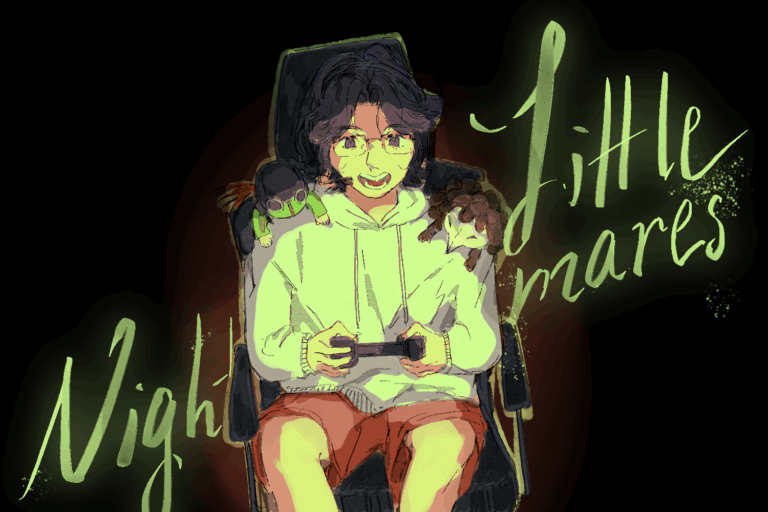
On Oct. 3, the beloved indie horror game “Little Nightmares” made its return with a third installment. “Little Nightmares III” (“LN3”) takes place in the fictional world of Nowhere, made up of different, but equally terrifying, realms. While the first two games were set in the realms of the Maw and the Signal Tower, “LN3” takes its players through The Spiral, which links one creature-filled area to another through mirrors. With an unfamiliar environment and entirely new characters, this third installment is more distanced from its predecessors. The creators decided to take a chance on something new: but did it pay off? 


An underwhelming run time

An irritating factor of the game actually comes up even before you press play, and that’s the price. Priced at $39.99 on Steam, it can be frustrating having to pay that much for a game that’s run time doesn’t exceed 10 hours, especially when other games listed for similar prices can be played for much longer. 

While the “Little Nightmares” franchise isn’t known for its longevity, and shorter games can still feel worth taking out your wallet, “LN3” falls short in how effectively it uses its time. Even though the previous two installments were listed at only slightly cheaper prices, the depth of their storytelling and detail made the games feel worth it. The lengths aren’t significantly different from each other either — the difference comes with the fact that this time, they couldn’t make the most out of the short run time and fell short in fleshing out their chapters. 


New characters 

As for the characters, it’s hard to find a complaint. Players are able to choose between two new characters, Low and Alone. You can select one to play for the entirety of the game, and depending on whether you choose co-op or single player, the other character is played by a friend or an artificially-intelligent bot. 

Low, who’s fighting to escape the Nowhere realm, is a character determined to return home. As a child, Low found comfort in a doll, which manifested as Alone when he arrived in the nightmare world. While quiet, Alone is loyal to her companion as the two travel through the game together. 

The designs for Low and Alone show how much the game creators have grown from past games, with adorable but intricate visuals. Low wears a bird mask and cape while Alone’s face is obstructed by her green jumpsuit, hat and goggles, complimented by her giant wrench and offset by her orange pigtails. The designs are both offputting and endearing. The villains, on the other hand, efficiently send nothing but a chill down your spine. 


Mechanics & gameplay 

The game mechanics are definitely where the “LN3” proves to be weakest, with the gameplay being a direct copy of its predecessors. The game incorporates puzzles and chase sequences as the leading element, while action itself takes a backseat. Where the puzzles of “LN1” and “LN2” felt interesting and complex, created with expertise, the new challenges players face don’t even feel like puzzles at all. 

For “LN3,” a puzzle can be something as simple as pushing a switch on the lever on a minecart to change the tracks. A player then finishes the puzzle by allowing the other character to push the cart the right way, filling it up so that both characters can proceed to jump on the cart and move to the next portion of the game. It’s not always easy, but, for the most part, the puzzles in this installment didn’t shine as bright as the puzzles seen in previous games. 

The chase sequences in which Low and Alone try to get ahead of the game’s monsters also suffer from abnormal programming. While the sequence of necessary actions and platforming paths the characters need to take may be straightforward, it seems that the characters jump when you want them to only half of the time. There’s also little to be done about glitches that prevent you from progressing, making interacting with objects feel clunky. 

Those aren’t the only issues. If you choose to play the game alone and are joined by an AI companion instead of a real person, the change in gameplay is glaringly obvious. At one point during gameplay, the AI companion was unable to keep up, getting caught by the antagonists and causing the sequence to start all over. Even if you’re completing a level or task well, the AI companion has the capability to ruin your progress. Including a co-op option in a video game game isn’t new, and definitely a strong point considering only one person has to purchase the game for two players. However, the problem arises when someone chooses to play on their own and finds they can’t effectively complete levels because of the other character’s default play quality. 


An underwhelming conclusion 

A handful of stories have a common, melancholic ending: one where you’re left feeling a small pit of sadness in your stomach as the credits begin to play, and you realize that’s all the closure you will be getting. It’s haunting, unresolved and adds a value to the game that stays with you even after you finish. While “LN3” aims for that pattern, they leave the player with not just a pit of sadness, but more questions that they began with. One could argue it was with the intention of making space for future installments, but a game should be able to have an open-ended conclusion without leaving the player with almost no new takeaways.  

When it comes to future installments, the past developers of the first two games, Tarsier Studios, actually have plans for their own title. “Reanimal,” set to release in March of 2026, is separate from the popularity found in “Little Nightmares,” but shares similar themes: two young characters, in this case siblings, journeying through an eerie horror realm. While not entirely fair to either game studio, many fans have stated that this will be the true “LN3.” 


So, what’s the consensus on “LN3”? The clear reason behind the confused feelings surrounding the game’s quality lies in the evolution of its originality. When “Little Nightmares” first released in 2017, it received an immense amount of positive reviews for how unique it felt. The environment was reminiscent of unsettling but comforting childhood oddities: “Coraline,” “James and the Giant Peach,” “Corpse Bride.” It’s hard to follow up the experience of seeing the “Little Nightmares” world for the very first time, but “LN2” was a success by choosing to keep its beloved character Six in the story. 

On paper, “LN3” isn’t completely distinct from the other two. It’s possible the concept of the universe is already starting to wear out, or that fans’ expectations for the future of the series are simply too high after so long. Despite its flaws, “Little Nightmares III” isn’t entirely unplayable. While it may not be a favorite of the trilogy, its original charm, themes of childhood growth and the amount of effort put into characters like Low and Alone remains visible. 


Written by: Bella Peterson — arts@theaggie.org

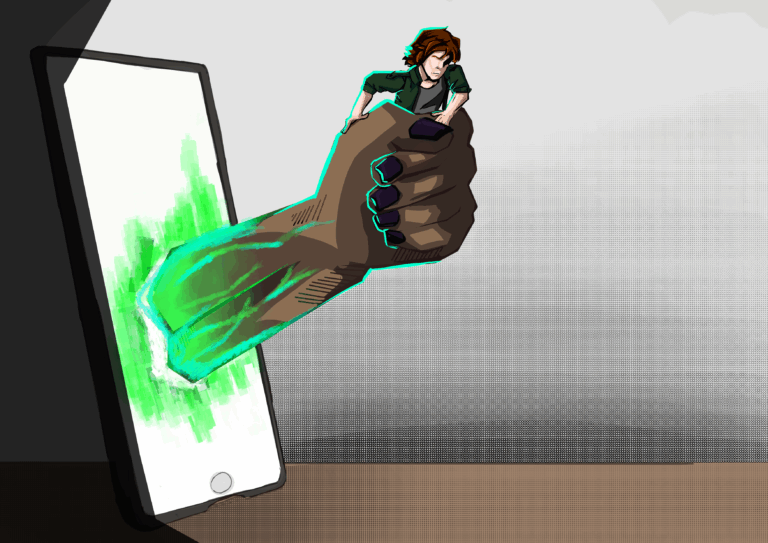
Commentary: The disturbing reality of parasocial relationships in the digital era

In the age of the over-invested fan, parasocial relationships turn into real life consequences


By IQRA AHMAD — arts@theaggie.org   


Parasocial relationships in the digital era have come to more recent attention, as many recent cultural reckonings do, with a TikTok. Last year, pop artist Chappell Roan addressed her fans via video, telling them that their devotion had crossed into obsession. The clip resonated not just because of Roan’s candor, but because it exposed a growing tension at the heart of modern fandom: the muddied relationship between admiration and attachment.

Parasocial relationships, defined as, “nonreciprocal socio-emotional connections with media figures such as celebrities or influencers,” are not new. They began when the faces of TV anchors and movie stars first entered our screens in black-and-white, with the era of social media only exacerbating this phenomenon. Through incessant livestreams, interviews and a constant stream of rumors, however, these one-sided bonds have never felt more intense.


The psychology behind the obsession

At its core, parasocial behavior is not just about celebrity worship — it’s about connection. What begins as harmless admiration can, over time, deepen into emotional investment. 

Research shows that parasocial attachments can become intertwined with psychiatric symptoms like maladaptive daydreaming or a desire for fame, factors that jointly explain about 31% of the variance in celebrity worship behaviors, according to a 2019 study. Psychologists suggest that for some, these relationships act as a coping mechanism for loneliness, offering stability and comfort in an unpredictable world. 

Some believe that parasocial relationships aren’t inherently unhealthy. They can foster empathy and connectedness, especially through engagement tools on social media, like live videos and the ability to leave comments. Fans often report that their favorite artists help them through personal struggles or inspire creativity and activism. For these artists, that appreciation can be fulfilling, but often draining or invasive when it goes too far. 

“[It’s] not normal, it’s weird,” Roan said via TikTok. “It’s weird how people think that you know a person just cause you see them online or you listen to the art they make.” 


When fantasy crosses the line

Quickly, what starts as internal feelings of attachment can turn into physical manifestations. One darker example is the 1980 murder of John Lennon. Fan Mark David Chapman stalked the musician after becoming obsessed with his lifestyle, eventually assassinating him outside his home. In 2018, a man was arrested after breaking into Taylor Swift’s home and sleeping in her bed, another disturbing instance of fans blurring boundaries to the point where they become criminals.

Just recently, on Oct. 9, Billie Eilish was singing to fans and giving out high-fives in Miami when an audience member grabbed her, almost pulling her down to the ground. What was meant to be an intimate moment for Eilish to connect with the crowd became dangerous and possibly terrifying.  

While extreme cases, these echo everyday worries about the potential intensity of these relationships and the deep emotional investment fans feel in the lives of celebrities. Consequences can be not only physical, but violently emotional. In most cases, while they don’t hurt artists physically, their presence is made known by impacting real-life relationships. 

When actor Robert Pattinson began to date musician FKA Twigs in 2014, the Twilight fandom flooded the internet with racist remarks over the interracial relationship and criticism of Twigs, leading to their eventual split.

 More recently, fans have begun to “ship” and share rumors about the chemistry between celebrity pairs like India Amarteifio and Corey Mylchreest from “Queen Charlotte: A Bridgerton Story” and Lola Tung and Chris Briney from “The Summer I Turned Pretty,” despite both male leads being in long-term relationships. Actors trying to stay professional were then accused of “icing-out” their costars via TikTok, with fans speculating that the rumors led to the end of their platonic friendships. 

“While there’s nothing wrong with enjoying celebrity love stories and rooting for our favorite stars, many forget that they’re real people, not characters in rom-coms,” a Forbes article by Mark Travers reads. “It’s important to recognize when admiration turns into entitlement.” 


Reframing the relationship

The attention brought to this type of treatment of social figures by fans isn’t about condemning fandom, but instead redefining it and forming healthy boundaries. Artists like Roan are beginning to speak more openly about their experiences, encouraging fans to engage without losing themselves or their morals in the process. This evolving dialogue acknowledges that interest in celebrity culture is normal, but fantasizing intimacy or entitlement can lead to harm both for fans and the figures they idolize.

As our screens continue to narrow the space between public and private life, perhaps the healthiest move is not to retreat from fandom, but to engage with it consciously: with empathy, curiosity and self-awareness. Admiration connects us, but obsession consumes us.

Written by: Iqra Ahmad — arts@theaggie.org

Culture Corner

The Arts Desk’s weekly picks for music, movies and more 


By JENNA LEE — arts@theaggie.org


Album: “Disintegration” by The Cure (1989) 


The Cure’s “Disintegration” is the perfect fall album. Its majestic and melancholic atmosphere transforms sadness into something beautiful and nearly otherworldly. The lyrics touch on themes of aging, heartbreak and despair — the latter of which I especially relate to during midterm season. From the grand, lush opening of “Plainsong” to the somber ending of “Untitled,” I can’t wait to walk through campus on gloomy days with this album on repeat.


TV Show: “Scooby-Doo! Mystery Incorporated” dir. Victor Cook (2010)


As Halloween nears, I am reminded of my favorite childhood show. Of all the media in the “Scooby-Doo” franchise, this one stands out for its dark, character-driven narrative. The series follows the high school gang as they solve mysteries in their hometown, Crystal Cove, also known as “The Most Hauntedest Place on Earth.” While this version follows the standard one-mystery-per-episode formula, it simultaneously delivers an overarching story with serious consequences and plenty of character development. Between the drama, the show manages to provide hilarious comedic relief and pop culture references that I am now finally old enough to appreciate.


Song: “Frozen Love” by Buckingham Nicks (1973) [2025 Re-release]


I am kind of cheating here because I actually want to talk about the “Buckingham Nicks” re-release, not just “Frozen Love” — although it is my favorite song from the album. As a huge Fleetwood Mac fan, the Buckingham Nicks re-release was a welcome surprise earlier this year. The album showcases Lindsay Buckingham’s intricate guitar work and Stevie Nicks’ distinctive vocals from before Fleetwood Mac. Songs like “Don’t Let Me Down Again” and “Frozen Love” seem to foreshadow “Second Hand News” and “The Chain,” respectively. If you’re a fan of Fleetwood Mac or enjoy 70s folk-rock, this album is a must listen.


Book: “Dust” by Patrick Wack (2021)


Over the summer, I had the privilege of visiting the Géopolis Centre for Photojournalism, a small education center in Brussels, Belgium. There, I discovered the work of French photographer Patrick Wack. In his photobook, “Dust,” Wack documents the Chinese autonomous region of Xinjiang and the Uyghur communities inhabiting it. The book is split into two parts. The first section, “Out West,” features images from Wack’s expedition through Xinjiang in 2016 — oil fields, abandoned buildings and vast landscapes comprise many of the photographs. The second section, “The Night is Thick,” takes a grave turn, portraying Uyghur life under the oppression of the Chinese government. Wack depicts rampant Chinese nationalism and pervasive surveillance, offering an early glimpse into the grim reality of Xinjiang.

Written by: Jenna Lee — arts@theaggie.org

MFA student Emily Tonnos’ ‘Embodiment’ encapsulates the multisensory quality of human emotion

The UC Davis Design Museum’s latest installation presents viewers with a range of sensation and a message of simple joy 


BY JULIE HUANG – arts@theaggie.org


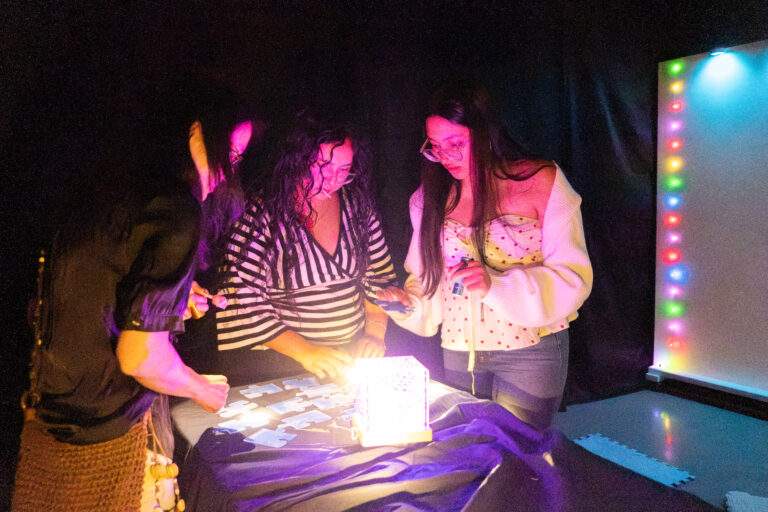
From Oct. 8 to Nov. 5, the UC Davis Design Museum is displaying “Embodiment,” an installation by Master of Fine Arts (MFA) design graduate student Emily Tonnos. Free of charge and available for viewing to all, the exhibit seeks to merge theatrical and narrative design elements into an immersive experience of human struggle and growth. 

“I broke ‘Embodiment’ up into six scenes, hoping that each one would trigger a different emotion or series of emotions,” Tonnos said. “For the first couple of scenes, I wanted to take audiences on a downward spiral, reflecting how we might feel anxious, sad or angry when difficult situations pop up.”

When viewers walk into the darkened space, they are immediately met with a curtain. Upon passing through at the stagehands’ behest, viewers are transported into a shifting environment designed to induce an uncertain flurry of emotions.

 In one moment, the room reminds visitors of a childhood nursery. In another, it transforms into a messy bedroom, capturing the experience of navigating everyday life through an unhealthy, exhausted headspace. 

“I tried to take audiences through those negative emotions in our daily lives,” Tonnos said. “When we’re faced with these negative situations, how can we come out of it in a way that’s positive, instead of succumbing to the darkness?”

Tonnos described how she was inspired by her time interning with the Disney College Program

“My inspiration for ‘Embodiment’ started with my time working for Disney, which really inspired me about how we can use architecture and design to create meaning through storytelling,” Tonnos said. 

Tonnos also noted that she was influenced by her love of figure skating, having skated competitively since the age of 5. 

“I’ve done figure skating shows all of my life, and the idea that we can take a theatrical performance and turn it into something that can share a message is something that I’ve always been passionate about,” Tonnos said. 

With “Embodiment,” Tonnos hopes to give audience members a different way to experience a museum space. Viewers are encouraged to physically interact with exhibit materials and leave their own changes to the space: a direct contrast to the conventional experience at a traditional museum, where viewers are instructed to stay a certain distance away from the artwork. 

Periodically throughout the performance, viewers are prompted to write down certain goals, visions and emotions onto pieces of paper that they can attach to Tonnos’ handmade props, which then become their personal contributions to the installation. 

Tonnos did not start the creative process of designing “Embodiment” with a specific end result in mind. She believes that the fluid, ever-developing nature of the project is a crucial quality in itself. 

“I knew that I wanted [it] to be an experiment, [which] resonates with the fact that none of us have all the answers,” Tonnos said. “We’re constantly going through life, growing and changing. That’s what this show is representative of.” 

The installation has not yet solidified into a final form, as Tonnos envisions new changes that could be made to improve the experience of immersion. The viewers that come into the space of “Embodiment” become a part of the experiment, as their reactions and interactive choices shape Tonnos’ ideas for what to update next. 

“There’s a transformation that is happening now that the show has started,” Tonnos said. “Now that I’ve had groups of people come in and experience the show, I’ve been able to watch how they interact with the different props and how they move throughout the space, which has given me new ideas on how I want this experience to unfold.” 

Despite its capacity for change being essential to its mission, Tonnos knew from the beginning that there were key moments in the installation’s narrative structure that she wanted to include, which form the emotional core of “Embodiment.”

“I was hoping to make a personal connection with the people who come to watch this show because a lot of the emotions that are present come from my personal story,” Tonnos said. “The more vulnerable I was with this show, the deeper it got, and I hope people can take something away from that.” 

One thing in particular that Tonnos hopes audience members can take away is an appreciation for the combination of exhibition and theatrical design practices, which can heighten the sense of immersion that a person feels in certain situations. 

“The next time viewers go to an amusement park or a themed restaurant, I hope they are able to think about how these things are made to be immersive and entertaining,” Tonnos said. 

Tonnos also intended for the tactile aspect of the exhibit to add to the level of immersion experienced by audiences. The exhibit props take on varying levels of realism, ranging from a laundry basket full of real, wearable clothes to a table stacked high with puzzle pieces, inviting the audience to work together to solve it. 

“I see a lot of new virtual experiences popping up and I wanted to do something different, where everything remained physical,” Tonnos said. “We seek out certain experiences for a sense of escape, and part of that is feeling like you are in another world that has been transformed from the one you’re used to.” 

Engaging multiple senses simultaneously, “Embodiment” ends with what Tonnos calls “a tree of hope.” To her, the tree represents the experience of sharing “simple happiness” with others. 

“My goal is for viewers to remember that there is this beauty in simple happiness that we can find in our everyday lives, and it doesn’t have to be something big,” Tonnos said. “It can even be something that brings us joy while we’re still sad.” 

Just as Tonnos is open to making changes to “Embodiment” depending on audience feedback, she hopes that viewers walk away feeling changed for the better.

“I hope that my audience leaves feeling uplifted,” Tonnos said. “I want them to feel like no matter what tough times they might go through in their lives, there’s always a reason for happiness.” 

Written by: Julie Huang — arts@theaggie.org

Fall activities to explore in and around Davis

0

Students reflect on their cozy, spooky and fun plans for this season


By AMBER WARNKE — features@theaggie.org


As autumn enters full swing, many students have taken advantage of the season to involve themselves in a variety of fall-themed activities in and around Davis. Cooling temperatures allow for students to spend more time outside, and the changing color of leaves is enough to make anyone get in the mood to wander through a hay maze or visit a cozy farm. 

Perhaps the most accessible fall activity to UC Davis students is leaf peeping, the recreational activity of observing the leaves as they change color in the fall. 

This can be done on the way to campus, as noted by David Katrikh, a second-year marine and coastal science major.

“You can walk down Russell, and there’s like a line of trees,” Katrikh said. “And, when the sun hits it just right […] during fall, it illuminates all the different colors in the leaves. It was the most beautiful thing I’ve ever seen in my life.” 

Another excellent location for leaf peeping on campus is at the Arboretum, which boasts the vibrant yellow colors of Ginkgo biloba trees in the fall. The area also includes Chinese pistache trees, with vivid rust orange leaves, and Formosan flame trees, which bloom with deep red fruits.

Students can continue to visit these trees throughout the fall season, as their colors will peak in November. If Aggies want to look into specific tree types, they can use the Campus Planning Public Tree Database to identify specific tree types as they go leaf peeping in between classes.

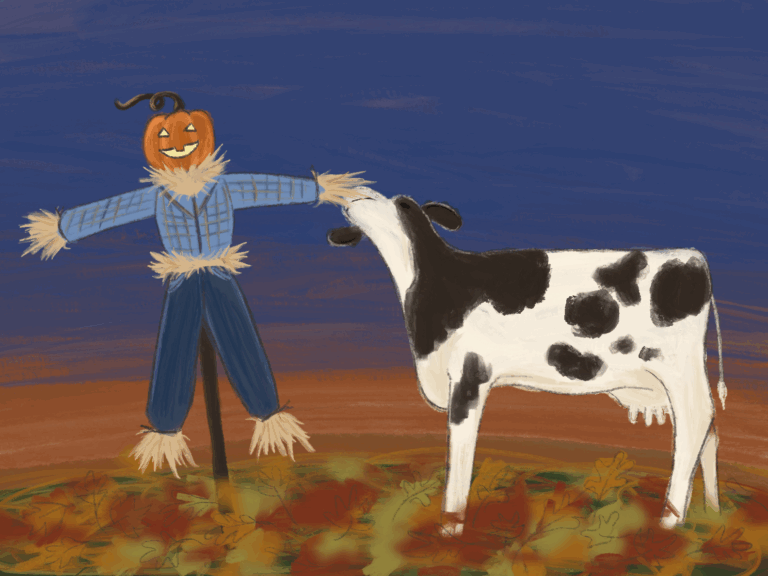
Off-campus, students can visit the pumpkin patch and animal barn at Impossible Acres in West Davis. For only four dollars, students can visit goats, sheep, donkeys, calves, piglets, bunnies, kittens, chicks, ducklings and geese

From there, less than a 10-minute drive away is Bobby Dazzler’s Pumpkin Patch in Woodland. In addition to hosting a pumpkin patch and free corn kernel bath, Bobby Dazzler’s allows customers to ride in the “cow train,” a tractor that tugs a trail of personal cow vehicles behind it on a joyous Halloween ride.

A little further away in Dixon is perhaps the most well-known seasonal attraction for Aggies, which won the Guinness World Record in 2014 for being the largest corn maze. Cool Patch Pumpkins, a 10- to 20-minute drive from Davis, features a 40-acre corn maze with six bridges. 

Warren Frasenyak, a first-year science and technology studies major, shared his excitement to go to the corn maze with his friends this fall. 

“I’m excited to go to my first corn maze, see what it’s like and hopefully not get lost,” Frasenyak said. “If I do get lost, [I will] at least have some fun along the way.” 

Aggies who share worries about not being able to find a way out, but still hope to traverse the maze, can access a free map of the maze when they buy their tickets. Additionally, the maze has markers along the way, telling frolicers their coordinates within it.

However, for Aggies who want a more spooky fall activity, Sacramento hosts several horror-themed exhibits, including Corbett’s House of Horror. This attraction has several options for horror activities, including zombie paintball, a creepy scarecrow cornfield and medical and clown-themed haunted houses. Similarly, the Sacramento Scream Park has multiple haunted house options, with sanitarium, amusement park, school and swamp themes. 

Katrikh hopes to have time to check out these attractions this month, as he is an avid lover of the horror genre. 

“I like feeling scared, but knowing that nothing’s actually gonna happen,” Katrikh said. “It’s a fun thing to do with other people. You’re all collectively scared, and you know the danger isn’t real, but you have a fear response and you bond with the people around you. That’s what I like about it the most.”

Frasenyak has a similar perspective, having worked in two haunted houses before college. 

“I got to pop out of a corner and be a vampire,” Frasenyak said. “It was fun seeing everyone have fun.”

For a tamer outing, students can drive a little further from Davis to Apple Hill in Placerville, a series of orchards selling a variety of apple products. Some orchards even allow guests to pick their own apples.

Monica Willsey, a 2023 Davis alum with a Bachelor of Arts in international relations, grew up going to Apple Hill every year. 

“My earliest memory was actually sleeping in a hammock that was set up at one of the orchards,” Willsey said. 

As Willsey has grown up, her favorite part of Apple Hill is the community it has allowed her to foster. 

“I not only get to enjoy myself, but I get to share the experience with my friends, and that makes it even more fun,” Willsey said.

Willsey recommended students take Apple Hill as an opportunity to support small businesses while trying out local treats, as well as enjoying the rural scenery of the area. Students looking to enjoy leaf peeping this fall can keep Apple Hill in mind as they consider nearby locations for their hobby.

Whether students’ fall activities lead them to take up leaf peeping and apple picking, wandering corn mazes, visiting farms or visiting spooky haunted houses filled with monsters and gore, Aggies can enjoy the season through many different ways. Regardless of our preferred methods for celebrating the fall, Davis residents and students can enjoy the countless opportunities this season offers to spend time in the community and appreciate the outdoors.


Written by: Amber Warnke — features@theaggie.org


Students bring ‘performative male’ and ‘performative masc lesbian’ contests to the UC Davis campus

0

Students don carabiners and Labubus as part of viral contests 


By LAILA AZHAR — features@theaggie.org 


On Sept. 27, 2025, students gathered in front of the Peter J. Shields library on the UC Davis campus for a “performative male contest.” Less than a week later, on Oct. 3, 2025, a similar contest, this time for “performative masc lesbians,” was held. 

The contests — which were organized anonymously on YikYak — have sprung up on college campuses across the country, playing off popular online archetypes. 

The “performative male” is often depicted as a matcha-drinking and Clairo-listening man who adopts traits and interests associated with femininity in an attempt to garner attention from women. The “performative masc lesbian” is similarly characterized by traits aimed at gaining attention from women; however, this archetype leans on common online jokes and stereotypes surrounding lesbians, such as wearing jorts and snapback hats or having tattoos. 

The performative male trend has garnered criticism by some who believe the trend discourages genuine vulnerability and emotional expression; others argue it simply satirizes how gender and sensitivity are performed in modern culture.

For many, the contests have been a way to turn online jokes into shared, communal experiences.

Nina Jorgensen, a 2022 UC Davis graduate and an administrative officer for the College of Biological Sciences dean’s office, attended the performative masc lesbian contest after hearing about it through their friends. Their “performative masc” costume included a carabiner, a backwards snapback, a Superclean, a “Vol. II” by The Marias vinyl and a copy of Brené Brown’s “Atlas of the Heart.” 

“My favorite part of this whole thing was how spontaneous and authentic the event felt,” Jorgensen said, noting the irony. “Yes, there was authenticity at an event for ‘performative’ stereotypes.” 

Jorgensen then pointed out the significance of an event highlighting queer culture at a time when many LGBTQ+ individuals feel unsafe. 

“Participating in a flash mob based on queer culture — especially when queer rights are contested on the national level — was really heartwarming and speaks to how tight-knit supportive the queer community is in Davis,” Jorgensen said. “There was a whole lot of putting trust in strangers to show up, in a time where people could have very easily and reasonably not shown up.” 

Another student who attended the contest, who chose to remain anonymous in order to keep her sexuality private, noted the uniqueness of the event. 

“It was nice to attend an event on campus that didn’t involve networking or career


advancement in any way,” the student said. “There’s an expectation in college that everything you do has to be optimized to look the best on a resume, so it was fun to be at a silly, lighthearted event that was organized for nothing other than having fun.” 

Even students who only viewed the event enjoyed witnessing others’ costumes. 

Jacob Nguyen, a third-year managerial economics major, was walking around campus when he saw the “performative male” contest. 

“At first I was confused about why there was a huge crowd outside the library,” Nguyen said. “I vaguely remembered seeing something about the contest on Instagram, and, as I got closer and saw everyone’s outfits, I quickly realized that’s what it was.” 

He watched the contest for a while, noting the energy and creativity of the participants.

“I think people had a great time getting to dress up for a unique event,” Nguyen said. “Just from watching it, I definitely felt a sense of fun and community — like, ‘wow this feels like exactly the type of thing you would stumble upon at a college campus.’ It’s just so college.” 

For many students, what began as an online joke managed to create a moment of shared laughter, capturing the spirit of college life. Considering the interconnectedness of both the UC Davis campus and its online community through platforms like YikYak, similar events are sure to take place in the coming months. 


Written by: Laila Azhar — features@theaggie.org

Is mass consumption killing creativity?

Capitalism breeds monotony 


By GEETIKA MAHAJAN — giamahajan@ucdavis.edu


The apocalypse is really having a moment right now. Between “The Last of Us,” “Fallout” and “Yellowjackets,” it seems like people are captivated by watching the world collapse in on itself, or seeing their favorite characters navigate the psychological trauma of surviving in an environment that clearly wants you dead. “I like this game,” I said to my friend while fighting a zombie on my television screen, “but if an apocalypse happened tomorrow, I wouldn’t want to be alive for it.” 

What I thought was an unpopular opinion was echoed by most of my friends; life would be too scary, too unpredictable, too lonely, too unfulfilling if we had to spend the rest of our lives just surviving. Living in a real-life survival-horror game would be simultaneously terrifying and monotonous.

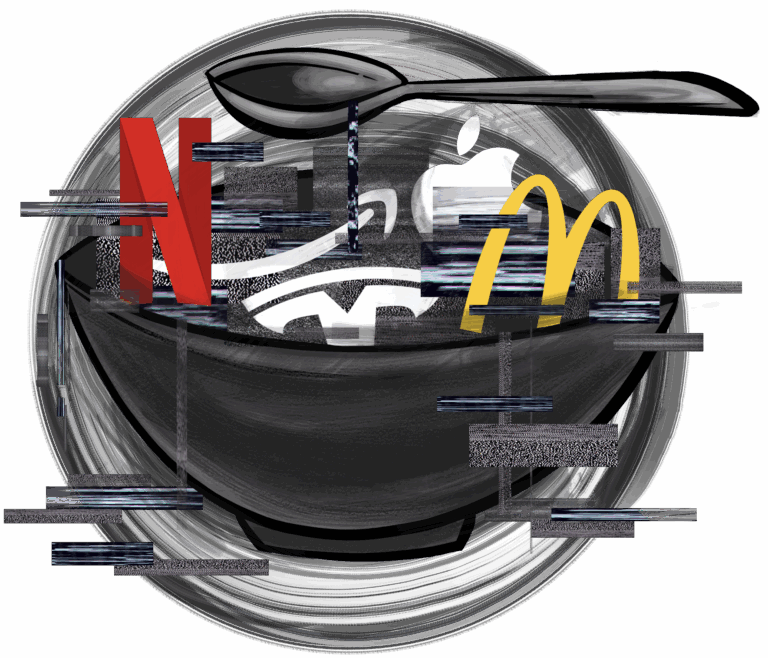
Our lives today are far from apocalyptic, but they still have terrifying and monotonous aspects. We’re seeing an obvious collapse within the media, entertainment and even food industries; there’s a constant demand for more — more empty consumables like “Love Island” or more Trader Joe’s snacks — but rarely is there a demand for something truly different. The diversity of choice is an illusion, because everything is made up of the same basic components. We want more spice in our food, books and movies, but we want the ending to stay the same. 

Why do six different brands of chips all taste the same? Why does every young adult romance novel have the same cover art and story elements? The obvious answer is because this is what people are buying, ergo, that’s what companies are making. But there’s a much more sinister cause-and-consequence chain here as well: Capitalism does not breed innovation among companies, making our outlook on life, as consumers, a lot smaller. 

This constant cycle of audience preference informing production has reverberated through the entertainment industry. What emerges is an array of books, movies, shows and songs that contain less substance and more content. Shows like “The Summer I Turned Pretty” and “Love Island” are so heavy-handed that they practically make the edits for you. Musicians intentionally create trendy soundbites of their songs for TikTok, hoping to be responsible for the next viral dance. In an attention economy, studios are forced to chase exposure while creativity is left by the wayside; people get more of what they already like. 

This hurts consumers too. Being flooded with perfectly accessible, easy content that mirrors what we’re already familiar with shrinks the pool of what we’re exposed to, putting us in media echo chambers. If every song on the radio consists of two verses and a bridge, our definition of music becomes limited and it becomes difficult to recognize and create art outside of this formula. 

The advent of artificial intelligence (AI) augments every concern about the disappearance of innovation and creativity. Currently, AI cannot construct its own ideas — it’s only capable of reflecting the data it’s been fed. Yet, it’s already filtering into our lives through Instagram reels, soundbites on TikTok and a vehicle for “art.” Too many people, despite how vehemently anti-AI they may present themselves, are tuning in. The loss of creativity in entertainment is one thing, but the loss of humanity entirely requires a whole genre shift. We have to acknowledge that the symptoms of this media apocalypse — the monotony of content, the brainrot — happen slowly, and, before we realize, they are already upon us. We might be zombies before we even know it.  


Written by: Geetika Mahajan — giamahajan@ucdavis.edu


Disclaimer: The views and opinions expressed by individual columnists belong to the columnists alone and do not necessarily indicate the views and opinions held by The California Aggie.


Give yourself grace

Imposter syndrome in college can be heavy, but you’re not alone


By SABRINA FIGUEROA — sfigueroaavila@ucdavis.edu


My first year at UC Davis was a crushing experience. I remember sitting in an elementary statistics exam, staring blankly at the first page. More and more students trickled out of the room as time went on, and I couldn’t help but think: “I used to be good at math. What went wrong?” In the span of just two quarters, I had convinced myself that I was not as smart as everyone else here; that I was mediocre at best.

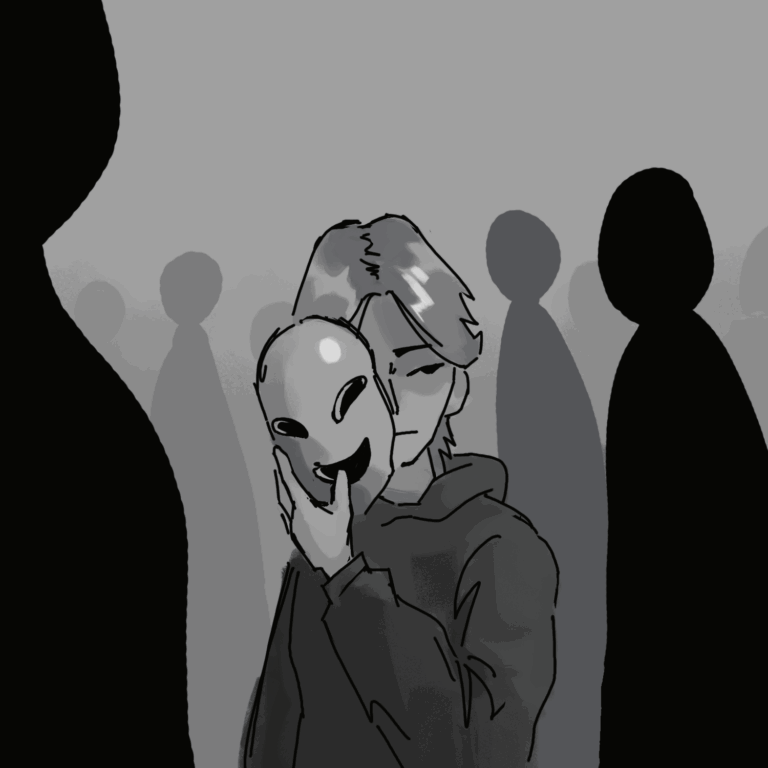
As first-generation students, attending one of the best public schools in the country is an expectation that you feel obligated to achieve, and it’s a veritable breeding ground for imposter syndrome. Once you do reach it, it’s like navigating Daedalus’ Labyrinth pretending you’re Theseus until the Minotaur finds you and tears you to shreds. 

During winter quarter of my third year, the Minotaur finally caught up to me. I couldn’t deny that, no matter where I looked, I felt like I didn’t fit in at all. Yet, my family members and the high school students I worked with were still enamored with the fact that I went to UC Davis, a well-renowned university. The reputation behind the name alone made them think I was a genius, and I couldn’t help but feel like their beliefs were far from the truth. I felt guilty, like I was lying to them, and pressured myself to keep going just so I wouldn’t disappoint them. 

I did push myself, though I can’t say I did it effortlessly — I even looked into taking time off — nor did I do it by burying all the stress down and hoping it went away. 

“I keep thinking, ‘What went wrong?’” I said to a counselor I discussed this with. To which they said to me: “that’s not the question you should be focusing on. We always wonder ‘what went wrong,’ or ‘where did I go wrong,’ but the truth is that it’s not really our fault, sometimes our situations are simply inherited and we have to keep working on it to make it better for ourselves or others.”

Especially as first-generation students, so much of what we feel is the result of the situations we were born into. Some of us don’t have the same resources or knowledge as our peers because we are the first to go through this process. Some might feel isolated because they don’t see other students of their ethnicity or race around them, often due to historical prejudices in education and housing. Some might have to work multiple part-time jobs to support themselves as students because they come from a low-income household. None of that is their fault; it’s systematic. Time spent trying to figure out how you “went wrong” — when you clearly didn’t — is time wasted; you’re looking for something that doesn’t exist. 

College was not a choice for many of us. It was an expectation, and without a real familiarity with the American education system, it feels even heavier. None of that is your fault, nor is it anyone else’s; it’s a situation born out of years of biases within our world. Blaming ourselves only takes away accountability from all the broken systems that need to be fixed.

Imposter syndrome can be lonely, too. It makes you feel like no one else is as lost, that everyone has their life figured out. But that is not true; college is a time where people are figuring things out. From learning how to study, to switching majors multiple times, to changing career paths, we are all navigating the Labyrinth that is adulthood. Even if it doesn’t seem like others are in the same position, life is merely a performance — this is no different.

To any student — new or old, first-generation or not — who is feeling like they don’t belong here, you do. The very fact that you were accepted into this rigorous institution only proves that you have the potential to grow into who you would like to be, even if you don’t know what that is yet. Allowing yourself grace — to ask others for help, to accept you’re lost, to accept and learn from a low grade — is one of the strongest, kindest and most intelligent things you can do for yourself. You do belong.


Written by: Sabrina Figueroa — sfigueroaavila@ucdavis.edu

Disclaimer: The views and opinions expressed by individual columnists belong to the columnists alone and do not necessarily indicate the views and opinions held by The California Aggie.

Biting the hand that feeds you

The irony of America’s dependence on immigrant labor


By ABHINAYA KASAGANI — akasagani@ucdavis.edu


America’s reluctance to admit immigrants into the country stems from their reluctance to acknowledge that their economy has been dependent on immigrant labor for decades. While there has been a recent influx of several half-baked and outdated ideas about how the immigration crisis should be resolved, or whether there’s even a crisis to be resolved to begin with, one fact remains true: America’s economy relies on the contributions of immigrants. 

Our economy has, for decades now, remained dependent on immigrant workers — whether in the agricultural sector, construction, healthcare or technology — and yet we, as a nation, refuse to acknowledge how much we depend on this very work. Instead, we hide behind a reluctance to welcome or even acknowledge immigrants, concealing how essential they really are.

While some claim that Donald Trump is playing a game of four-dimensional chess that is beyond the comprehension of the ordinary person, others recognize this lack of dimension and substance for what it is — “the land of the free” once again choosing to be heavily self-congratulatory despite having done nothing to earn that praise. The National Immigration Law Center notes that anti-immigrant policies — in what is ironically referred to as the “One Big Beautiful Bill Act” (OBBBA) — cut “health care, nutrition and tax benefits while expanding detention and enforcement” in an attempt to position immigration as a threat, rather than a resource. 

53.3 million immigrants lived in the United States in January 2025 — the largest number ever recorded. However, “in the ensuing months, more immigrants left the country or were deported than arrived,” according to the Pew Research Center

While politicians continue to make grandiose claims about securing the border and protecting American jobs, they fail to note the irony of the matter: Very few Americans want the jobs that immigrants are willing to take. Entitled Americans remain resistant to jobs they deem undesirable, resorting to the creation of unfounded claims that immigrant policies allow for job theft. 

Out of the roughly 2.6 million people working in the agricultural sector, 1 million workers are primarily noncitizen immigrants. On top of this, roughly 3.3 million immigrants of the total immigrant population work in the construction industry, often underpaid and underprotected. Millions of immigrants also operate within white-collar industries and professional jobs in the tech sector or as business professionals, educators and health services professionals. The American Immigration Council, through new data analysis, confirms the extent to which immigrants are contributing billions of dollars to the U.S. economy. 

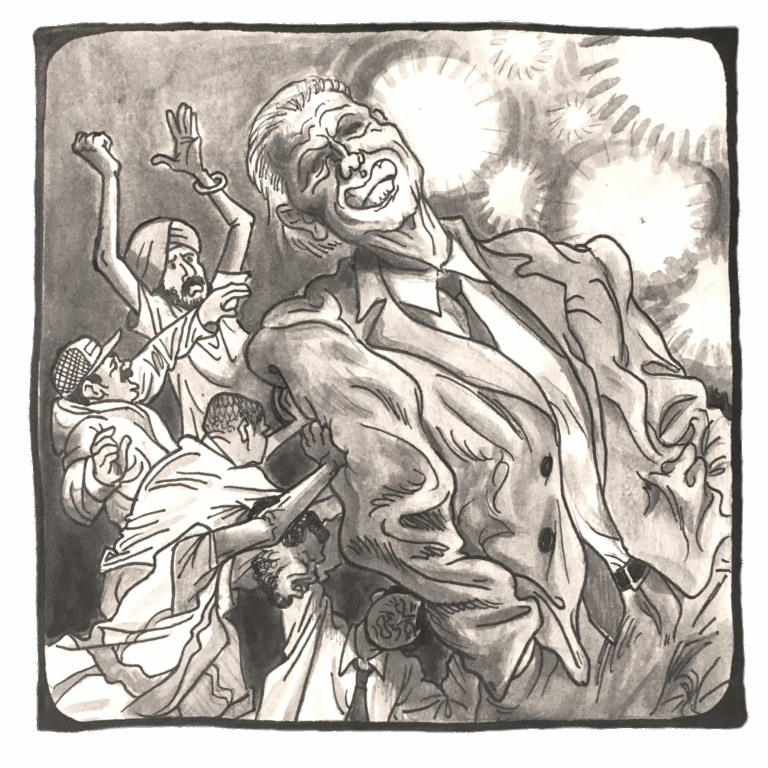
Despite this dependence, national discourse attempts to claim full ownership of the country’s successes and attribute partial responsibility for their failures to immigrants. The reluctance to admit that the U.S. is dependent on immigrant labor — in an attempt to strengthen their political posturing as a self-sufficient nation — is cause for concern. The social exclusion of immigrants allows the federal government to ensure it profits off of cheap workers, while simultaneously refusing to integrate immigrants into its national identity. Millions of immigrant families live in fear of deportation, poor working conditions, deprivation of basic human rights and lack of access to healthcare and education. To this day, no concrete solutions are being considered on the matter.

The U.S., for whom democracy claims to be built on “liberty and justice for all,” seemingly handpicks who it decides is deserving; excluding the rest by refusing them any extension of justice. This reluctance hasn’t grown overnight, and the country’s persistence is interesting to note — the image of a “self-made” nation, years later, still depends on an invisible collective force that makes individual success possible. 

“Go back to where you came from, but please don’t go too far — we need you;” this, as a sentiment, can’t sustain a developed nation built on the labor of others. Only when America stops pretending that immigrants aren’t its backbone, or that they rely on them in order to survive, can they truly deliver on the promise of freedom and fairness they have always stood for. Otherwise, we will be left debating whether or not there is a crisis to be resolved when millions of livelihoods are at stake.


Written by: Abhinaya Kasagani— akasagani@ucdavis.edu


Disclaimer: The views and opinions expressed by individual columnists belong to the 

columnists alone and do not necessarily indicate the views and opinions held by The California Aggie.