53.2 F
Davis

Davis, California

Saturday, December 20, 2025
Home Blog Page 8

2025 Fall Elections: Meet the Candidates

Meet the students running to serve on the ASUCD Senate


By AALIYAH ESPAÑOL-RIVAS — campus@theaggie.org

In this week’s Associated Students of the University of California, Davis (ASUCD) Fall Election, 13 candidates are running to fill six available seats on the ASUCD Senate — the main legislative body of the UC Davis undergraduate student government. Elections are open from Monday, Nov. 10 at 8 a.m. to Friday, Nov. 14 at 8 p.m. Students can vote online at elections.ucdavis.edu. The elected candidates will serve terms for one year, and be sworn in at the end of this fall quarter. 

The California Aggie has compiled a summary of their relevant experience, policy positions and campaigns to help you make an informed decision when choosing your next student representatives.


Aggie Alliance Slate: Priorities include: improving bike paths and lighting; working closely with Unitrans to improve bus timeliness; increasing Registered Student Organizations (RSOs) engagement; and addressing parking pricing.

Aaron David Heth, third-year political science major
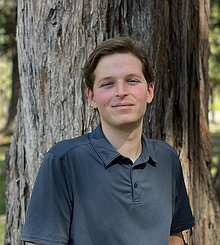
Heth is running a transportation-centered campaign. He hopes to work with Unitrans, noting concern over bus timeliness, and wants to see the budget allocated to the unit increased by the student government. Additionally, he wants to expand on bike path accessibility and lighting to make the campus more bike-friendly for cyclists.

Heth has prior experience serving on the transportation committee of his hometown in Calistoga. He transferred to UC Davis this academic year.

“If they want someone who’s transparent, engages with them and brings a fresh perspective, then they can vote for me,” Heth said.


Ryan Kan, third-year political science and economics double major
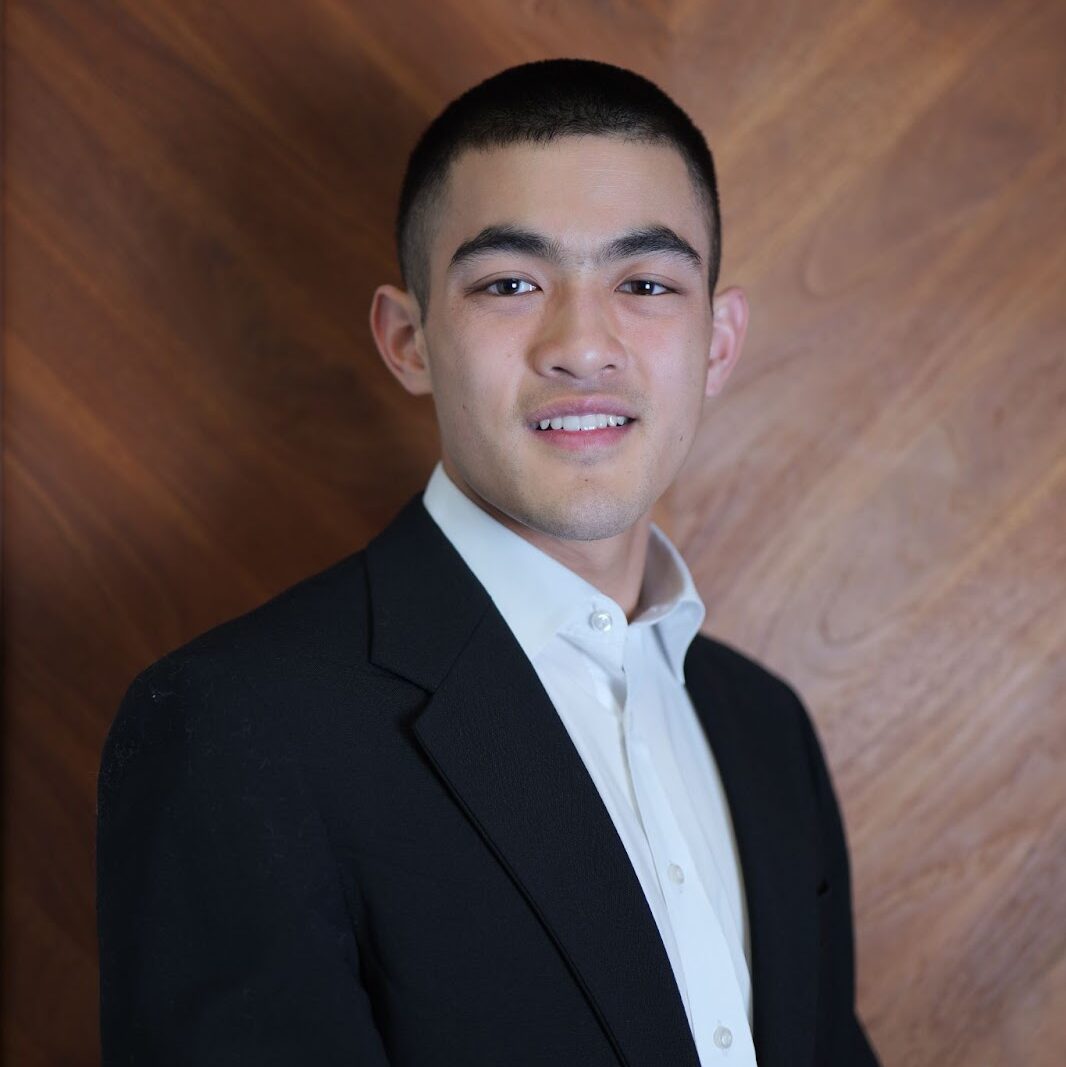
Kan wants to be a part of ASUCD to better represent his constituents, as he hopes to improve in giving students the space to be heard outside of weekly Senate meetings. He previously made a bid for senator in the spring 2025 elections.

Kan aims to support students through implementing quarterly parking passes, increasing inter-RSO engagement, hosting quarterly club fairs to increase promotion amongst student communities and improving campus lighting. Kan says his background as an Eagle Scout has provided him with different leadership skills, as has his job at Latitude Dining Commons. Kan hopes to reach a wide range of students to ensure the larger student body’s needs are met.

“I’m running for ASUCD in order to represent my constituents, because I feel as though the ASUCD fails at that one part,” Kan said.


Mia Oscanoa, first-year political science major 
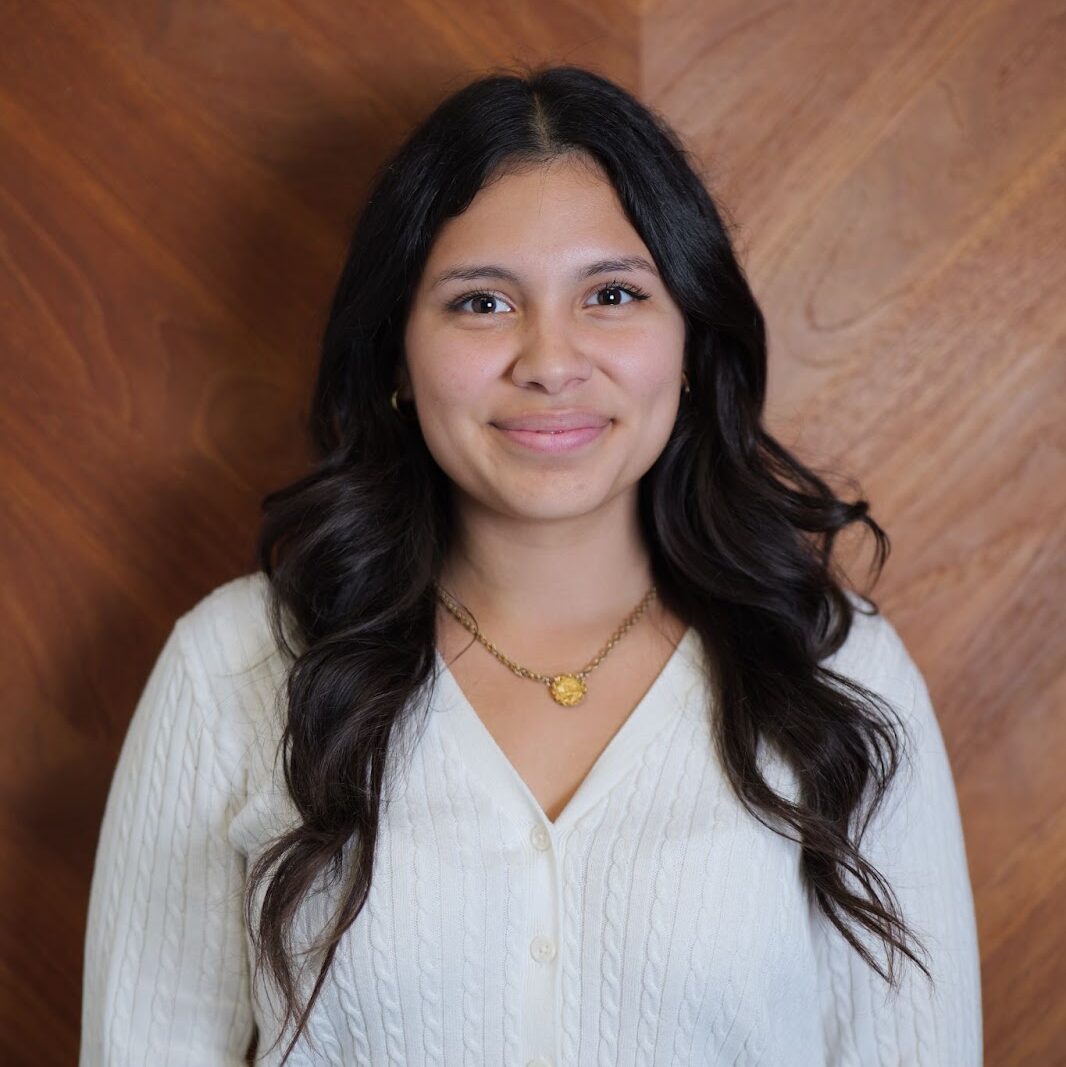
Oscanoa has previous experience serving on multiple student organizations, councils and committees at the high school, district and city levels. She hopes to improve bike routes and lighting, improve school spirit and push for more nutritious food options at the ASUCD Coffee House (CoHo). 

Oscanoa aims to carry out her goals by hosting more events to bring students together, working closely with the CoHo to implement other food options and create preventive measures to decrease bike crashes on campus. She is open to learning about the inner workings of various ASUCD units to better understand how they can serve students more efficiently. 

“I ran because I know how important it is to see people who look like me in leadership roles. Sometimes, you have to be the first to say yes,” Oscanoa said.


UNIDAD Slate: Priorities include: unifying student groups on campus; building stronger relationships with student centers and underrepresented groups on campus; and increasing advocacy and visibility for marginalized students.

Rosa Linda Martinez Ruano, third-year sociology and community & regional development double major
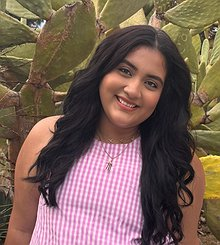
Ruano is a first-generation AB540 student and Guatemalan immigrant who believes there needs to be more representation of students from different backgrounds in ASUCD. She currently serves as chairperson of the ASUCD Undocuscholars Advocacy and Aid (UAA) Committee and as an administrative coordinator at Students Obtaining Leadership y Latinxs United in Navigating Academics (SOL y LUNA) in the Student Recruitment and Retention Center (SRRC). 

With her experience, Ruano aims to empower and protect the safety of underrepresented communities and support undocumented students’ success. With recent budget cuts affecting many underrepresented student centers and organizations, Ruano hopes to build and reaffirm stronger relationships to ensure students are being heard and reached. 

“It is my empathy and the way I communicate with our students and the relationships I’ve built that has made me realize the need for support in our community,” Ruano said.


Kelly Zamudio, fourth-year political science and sociology double major
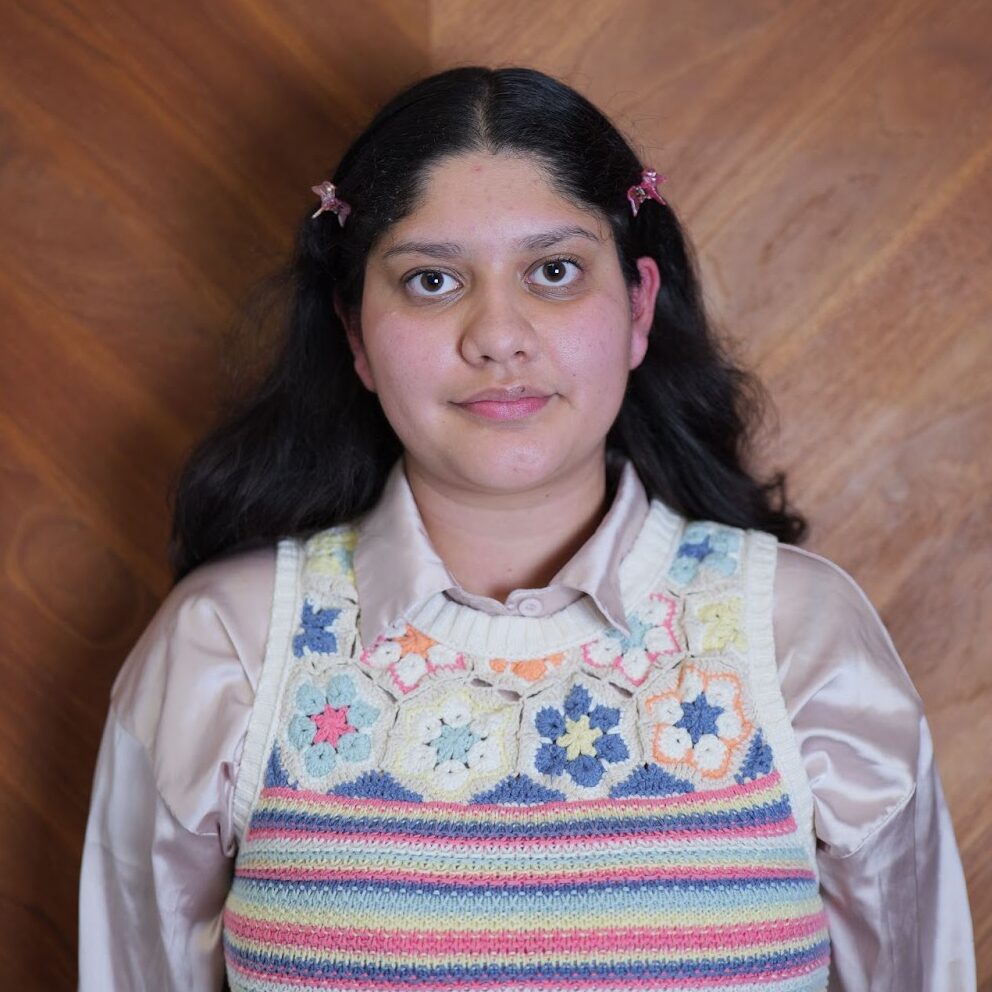
Zamudio says she aims to build community and equity on campus, particularly with the Chicano and Latino community and undocumented students. As a transfer student, she ran for Transfer Student Representative in the spring 2025 election and now serves on the ASUCD Academic Affairs Commission (AAC) as vice chair. 

Zamudio’s campaign seeks to increase transfer student advocacy within ASUCD commissions and bring back the currently defunct Aggie Mentors program. She also wants to work on incorporating legal absentee exceptions in class syllabi to allow students to get at least three days of excused absences to go to court hearings or detention centers if their loved ones are involved in immigration enforcement action. She believes that with ongoing federal administrative decisions, it is now more important than ever to support students through advocacy and empathy. 

“The reason why I’m running is because I have lived experiences that really affected my time as a student and person as a whole, and I don’t want my community to go through that,” Zamudio said.


Warda Slate: Priorities include: protecting students and student activists; creating and providing new resources for students; and bridging the gap between RSOs and ASUCD. 

Laurene Karajah, third-year international relations majorKarajah’s three main campaign goals are uplifting RSOs, ensuring moral investments and preventing harassment and discrimination on campus. Karajah hopes to create a Senate resolution or bill that takes away funding from certain companies deemed unethical; part of an effort to ensure students’ tuition money isn’t going towards causes that the majority of students may not morally agree with.
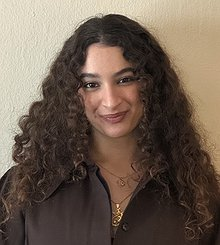
Karajah hopes to build a stronger relationship with RSOs to make them more aware of ASUCD’s resources. She also hopes to push for bills to prevent the harassment of students from marginalized backgrounds by people coming on campus with those intentions. Karajah would like to create a committee for the safety of students of color. 

“I am very passionate about what I believe in, and I want to be a part of my community and contribute to it,” Karajah said.


Jenna Younes, fourth-year international relations major 
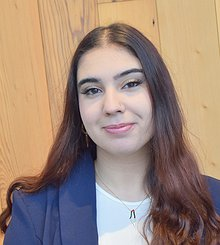
Younes currently serves as an ASUCD senator and is seeking re-election to a second term. She has served as an officer for different RSOs, having worked closely in the past with the CoHo and ASUCD Creative Media. She is running on the Warda slate because of its focus on ethical spending and financial transparency. 

Younes believes that students should be aware of the money ASUCD handles and where it is going — especially concerning companies complicit in human rights abuses or environmental abuse. She is also the chairperson of the ASUCD Ethical Spending Committee, which oversees and reviews student funds to ensure they are spent ethically and transparently. She hopes to inform more students about ASUCD’s financial activity, bridge the gap between RSOs and ASUCD and increase student safety (particularly for student activists). She aims to do this through hosting more “Know Your Rights” workshops and streamlining ASUCD’s resources.

“I am here to advocate for everyone, not just people in my own community. I have the experience to help them, and I’m going to continue using that to advocate for them throughout the rest of the time I’m on [the] Senate,” Younes said.


Independent: Independent candidates run without slates and hold individual policy platforms.

Jake Beeman, second-year philosophy major
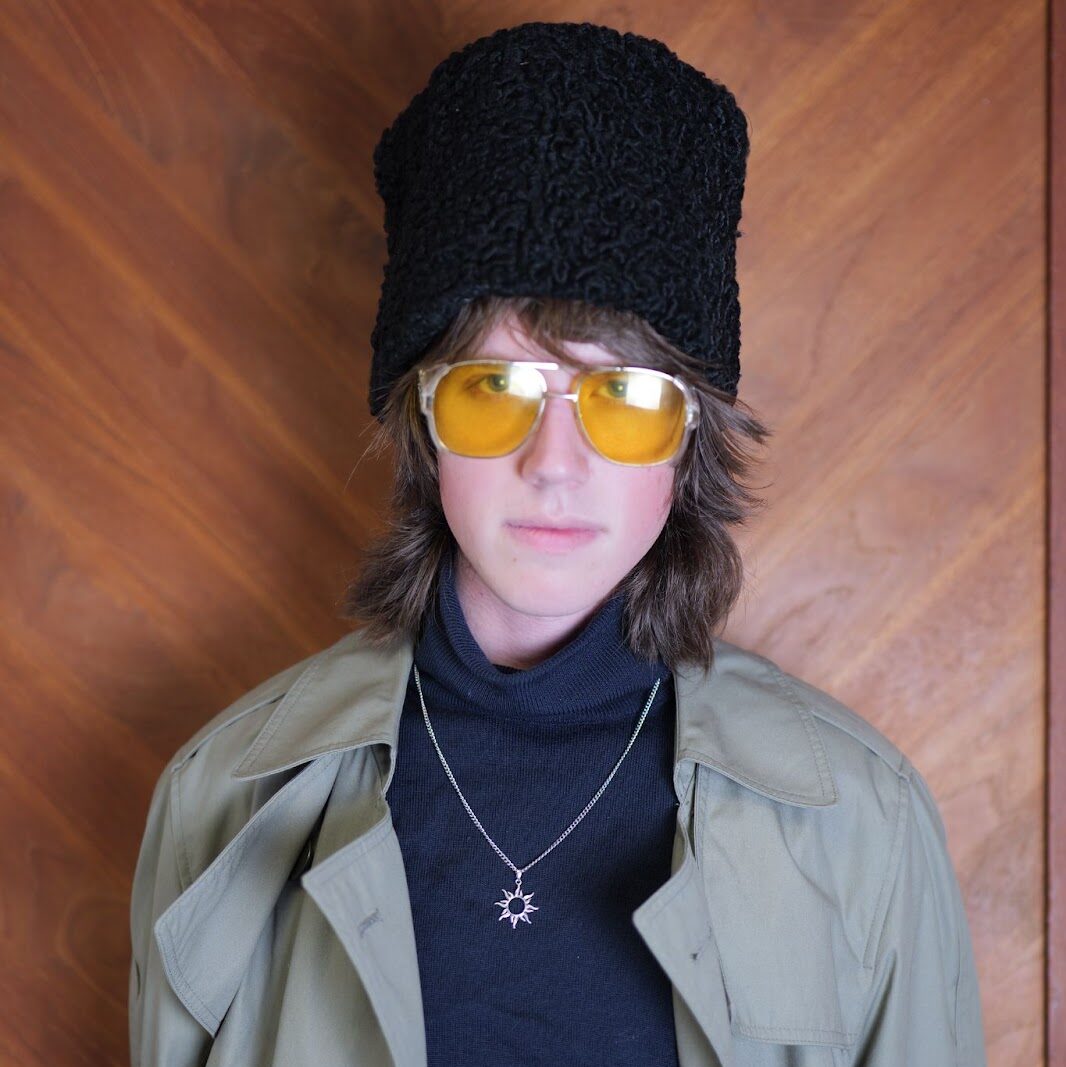
Beeman is running for ASUCD because he strongly disagrees with how the current ASUCD table conducts themselves and wants to increase their importance to students. Beeman aims to manage the budget deficit by reducing the Entertainment Council’s (EC) $500,000 budget and redistributing that money to basic needs programs.

Beeman also aims to enshrine greater legislative protections for units essential to the functions of the student government, like Unitrans and The Pantry. Beeman does not aim to add anything new to ASUCD, but rather to reallocate the government’s funds in a way that is best for students.

“A vote for Beeman is a vote of no confidence [in ASUCD],” Beeman said.


Ivan Garcia-Cervantes, third-year political science major
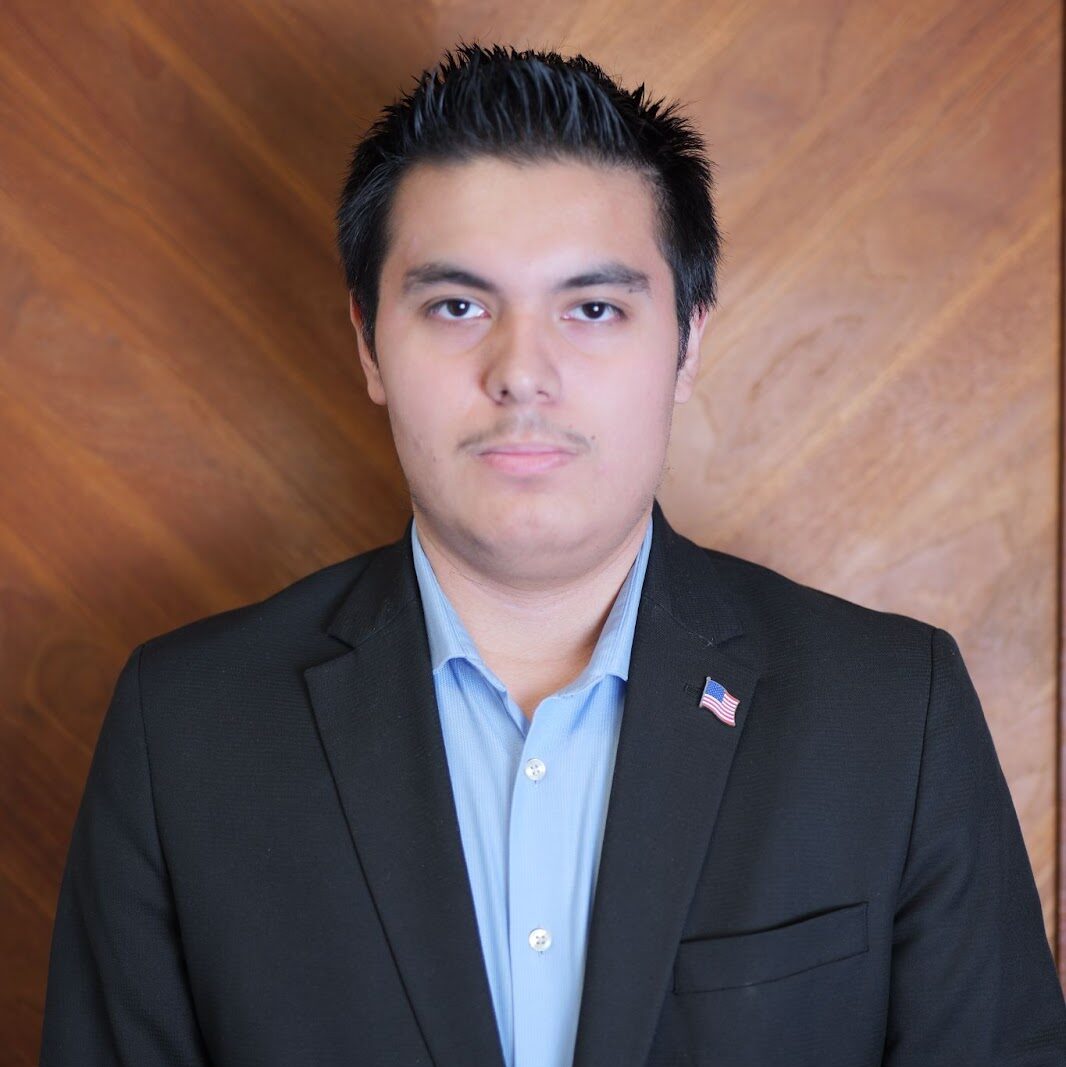
Garcia-Cervantes transferred to UC Davis at the start of this academic year and aims to run for ASUCD given his extensive background as student body president of his community college’s student government.

Garcia-Cervantes aims to empower students for life after graduation, increase awareness of ASUCD and fund general ‘quality of life’ upgrades across campus. He hopes to do this through monthly town hall meetings for students, hosting more informational workshops and strengthening Wi-Fi on campus. He also wants to see increased lighting on campus for bikers and pedestrian safety, and hopes to work with Unitrans to improve their services and provide more stability for students. 

“The goal of ASUCD should be helping students get the most resources possible to set them up for success in the future,” Garcia-Cervantes said.


Tanishka Kandakatla, first-year political science — public service major 
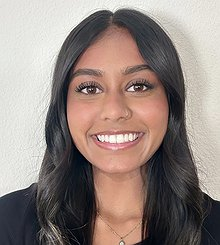
Kandakatla decided to run for ASUCD this election cycle to get involved with student government as a first year. Her main priority is to make the campus safer by improving crosswalks and repainting bike lanes. She plans on doing this by working with Unitrans and other student organizations to reduce the amount of crashes on campus. She also hopes to increase Science, Technology, Engineering and Mathematics (STEM) student connections with ASUCD.

Kandakatla has previous experience as captain of her high school’s mock trial and speech and debate team. She also has internship experience at the Alameda County District Attorney’s Office and with Tabletop Strategies, a political consulting firm. 

“Whether you walk, bike or scooter to class, I want to make sure you get there safely and without a worry,” Kandakatla said.


Nate Little, first-year political science major
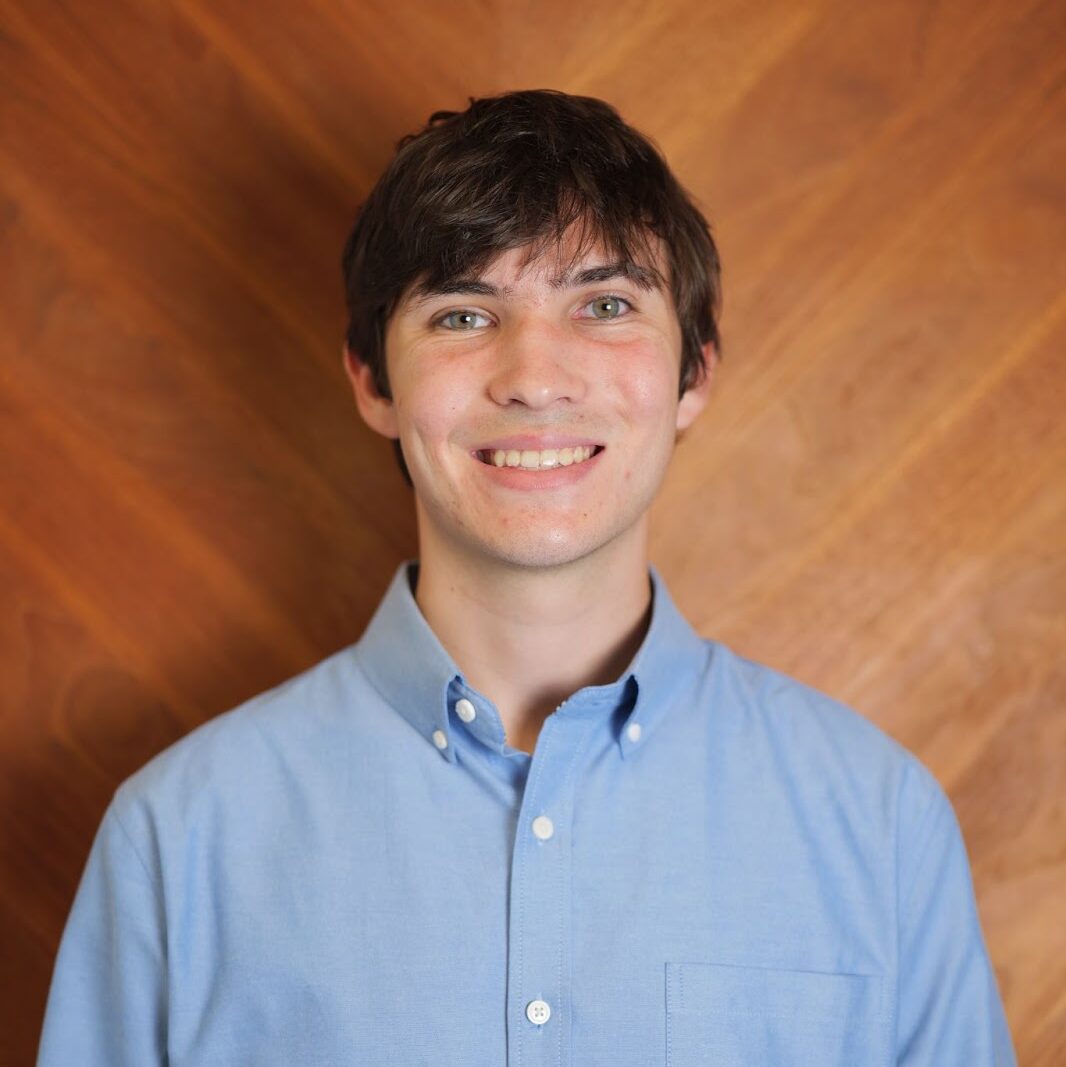
Little decided to run for ASUCD to help manage their budget, especially on the administrative side. Before arriving at UC Davis, Little kept up with the Senate’s budget, meetings and legislation to see how he could help with their ongoing budget deficit. His main focus is funding clubs on campus; he notes that the Club Finance Council (CFC) saw a $30,000 budget cut this year. He aims to cut back on administrative spending and put it towards clubs to better foster community on campus. Another one of Little’s goals is to increase transparency between ASUCD and students, as information about the senators and their office hours is often hard to access. 

Little believes basic needs should be the top priority of ASUCD amidst ongoing federal administration decisions and funding cuts to support programs, and wants to ensure the budget is being used to serve students’ needs above all else. 

“If you want more from ASUCD — if you want to see them actually caring about you, someone who is accessible, somebody who is actually focusing on you and not some personal side project of theirs — then vote for me,” Little said.


Aayush Raina, first-year political science major
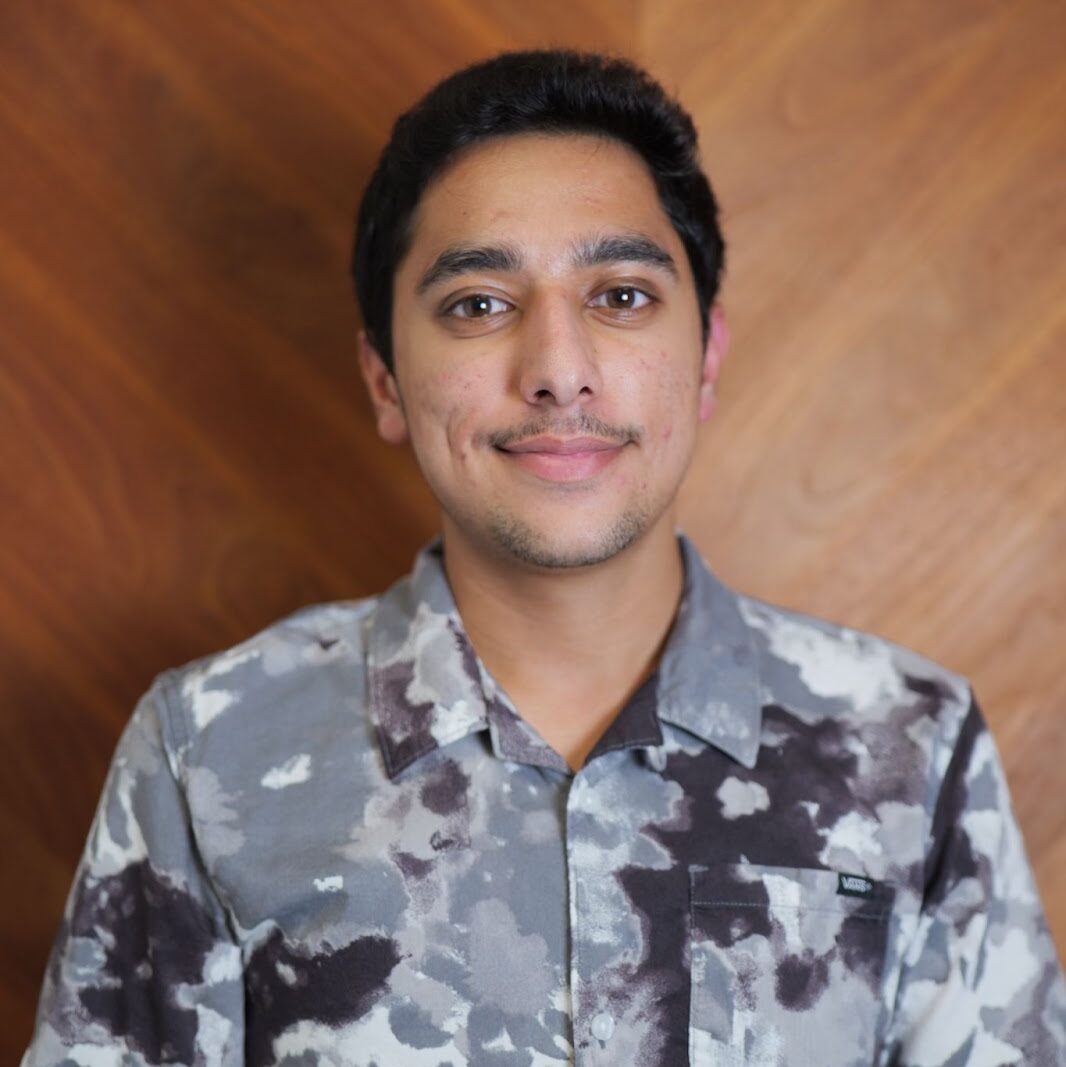
Raina decided to run for ASUCD after being a part of his high school’s associated student body for four years, where he served some time as treasurer. His goals include improving communication and accessibility, making Davis more affordable and ensuring transportation is more reliable.

Raina hopes to do this by streamlining information, increasing awareness about scholarships and grants and collaborating with Unitrans. Additionally, Raina hopes to work with Student Housing and Dining Services to increase vegetarian options at the dining halls on campus. He is open to working with any unit, RSOs and a subset of the student community to ensure they have the support they need to succeed.

“The first and foremost priority of mine as a senator would be to protect the students and their needs,” Raina said.


Ezra Rubin, third-year classics and international relations double major
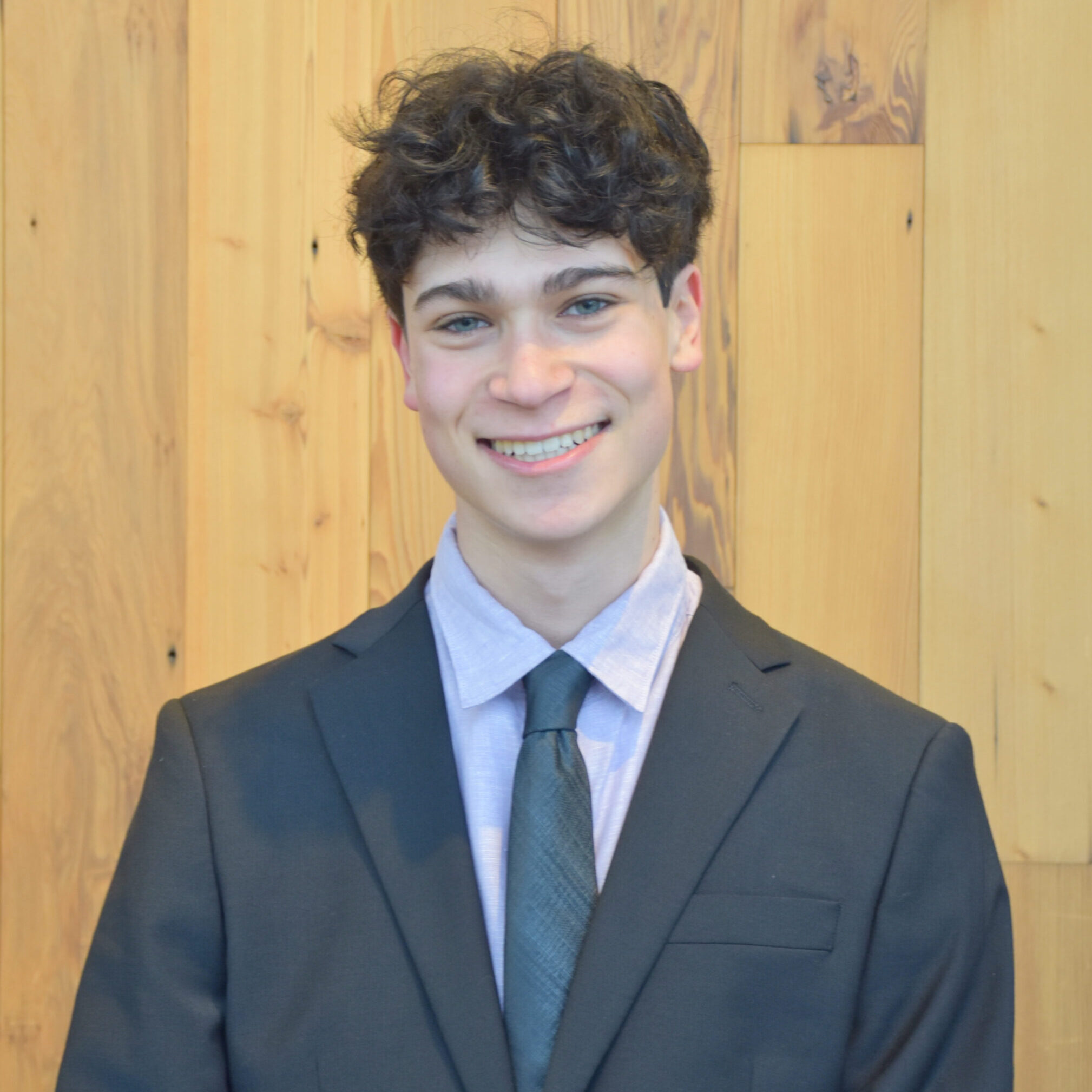
Rubin is seeking re-election to the Senate to continue the work he began as a senator during his last term, which ended in the spring. There, he actively worked with the Housing Advising for Undergraduate Students (HAUS) unit and was the chairperson of the Vital Emergency Shelter and Transitional Assistance (VESTA) task force, a sub-unit to help support the Aggie House, a transitional housing shelter for students. 

Rubin’s goals include supporting clubs by increasing the ClubFinance Council budget, increasing representation on the Senate table through quarterly town halls and continuing housing services within ASUCD. Moreover, Rubin is well aware of the ongoing budget deficit and wants to prioritize basic needs, advocacy services and mental health resources.

“I am diligent about scrutinizing legislation; making sure we’re being as effective with the money we’re spending as possible,” Rubin said.


Lily Kenrow and Robin Franklin contributed to this article.

Written by: Aaliyah Español-Rivas campus@theaggie.org

Artist Felipe Baeza discusses the complexities of his work and identity with UC Davis Assistant Professor Ruben Zecena

The Brooklyn-based artist describes his career and creative process at the November Visiting Artist Lecture 


By JONAH BERMAN—arts@theaggie.org


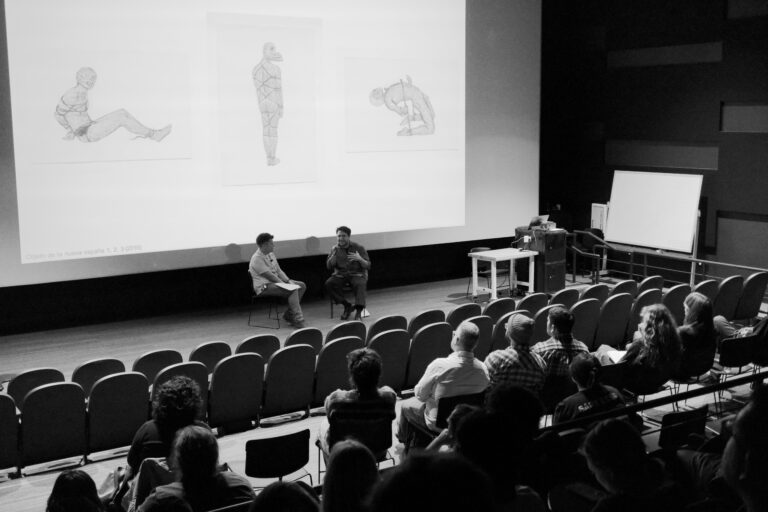
On Nov. 6, the Maria Manetti Shrem Art Studio Program hosted its latest installment of its annual Visiting Artist Lecture Series, bringing Brooklyn-based artist Felipe Baeza to Davis for a discussion with Assistant Professor of English Ruben Zecena at Cruess Hall.

Baeza’s work combines a variety of media to create layered, fragmented pieces that are visually arresting. With seven solo exhibitions under his belt, Baeza’s works have been showcased at museums such as the Los Angeles County Museum of Art and the Whitney Museum of American Art. Born in Mexico and raised in Chicago, he received a Bachelor of Fine Arts (BFA) from The Cooper Union for the Advancement of Science and Art and a Master of Fine Arts (MFA) from Yale University.

Zecena’s research focuses on contemporary Latinx literature and culture and is influenced by his experience as a formerly undocumented queer migrant. Zecena explained the process by which he became acquainted with Baeza and his work.
“I actually start my book [‘Impossible Possibilities: The Unruly Imaginaries of Queer and Trans Migrants’] by writing about one of Felipe’s pieces,” Zecena said. “In the process of publishing the book, I need[ed] to obtain an artist’s permission, so this summer I emailed Felipe.”
When The Art Program approached Baeza about giving a talk on campus, he suggested having an open discussion with Zecena, rather than a more traditional lecture.

“Felipe’s work is really unique, particularly [in] what it does with its medium,” Zecena said. “In terms of queer migrant artists, it’s not always often that they are included in art spaces.”

During the event, one topic of discussion was the role of art in challenging American norms and structures. Art engages in its own form of “worldmaking” and “embraces the refusal to belong” according to Baeza. Baeza’s work challenges norms about the body, queerness and nationality. 

Along these lines, the pair discussed the “queer migrant imaginary,” a concept covered in the work of both speakers. Baeza specifically said that while he didn’t want to glorify the challenges that immigrants in the United States face, it was important to focus on the ways in which they are able to thrive, even in the face of hardship. 

“I don’t want to run the risk of romanticizing those conditions, but that’s the reality of many of us, that we have to continue to find joy under these moments of threat,” Baeza said.

Simultaneously, many of Baeza’s pieces resist one singular interpretation. Baeza and Zecena thoroughly discussed the frequent pitfalls of “lazy” art analysis, which they feel minimizes work, often by minority artists, into only having a singular meaning. Ignoring the intricacies a work might depict, viewers may solely focus on the content they can get out of a piece.

Baeza also mentioned his interest in how museums and galleries across the U.S. describe him differently, reflecting on the various perceptions of him and his art that exist.

“The work has now gone to institutions, and they’re trying to figure out what this is,” Baeza said. “Is this a print? Is this a work on paper? Is this a painting? And I like that conversation.”

The variety of meanings and analyses that can be applied to Baeza’s work mirrors itself in the physical attributes of the art. Trained in printmaking, Baeza’s oeuvre contains many works with a plethora of physical layers. 

“Every surface you see is made through a monoprint process that then is collaged together,” Baeza said.

One subject, which Zecena noted frequently reappeared in Baeza’s work, is commentary on the body and fleshiness. For example, Baeza’s “Unruly Forms” series centers on the depiction of humanoid, yet supernatural, bodies situated against abstract backgrounds. 

“I’m depicting figures that are vessels and containers of these histories,” Baeza said. “I work primarily on paper, and I love how paper functions, sometimes, as skin.”

Furthermore, Zecena and Baeza both cited their affinity for the work of Gayatri Gopinal, a queer and feminist studies scholar who formerly taught at UC Davis before taking her current position at New York University. Gopinal’s concept of “states of suspension” worked as a useful companion to ideas presented in his work, according to Baeza.

Zecena, who teaches a course titled “Ghosts and Racial Hauntings,” inquired about the influence and meaning of the supernatural and spiritual in Baeza’s work. The artist cited his Catholic upbringing as an influence, and one that often crept up on his work without him realizing. 

“I found them fascinating,” Baeza said. “I think [about] the role of how the body was portrayed, how flesh was portrayed. For a long time, I didn’t see the connection, and unconsciously I think that’s been [shown] in [my] works.”

The pair also discussed the importance of community and care networks in contributing to their accomplishments. 

“From the outside it might look like I got here by myself, but that’s not the case,” Baeza said. “There’s been collective care since the beginning that [has] allowed this to happen. But I think it’s also showing up for other people too, right? And that’s where I speak about these architectures of care that sustain me and sustain the work.”

Specifically, Baeza spoke about how immigrant care networks allowed him and his community to thrive both during his time in Chicago and presently in Brooklyn. 

Before the talk, Baeza had also spent time discussing his work with UC Davis MFA art studio students. With many budding artists in the audience, Zecena asked Baeza what helped him develop his unique style and perspective. In a time when the ways in which others perceive art is so critical, Baeza noted, it’s vital to make some art that is solely for oneself. Baeza also spoke significantly to the importance of failure, even when that may not result in immediate gratification. 

“If I have one piece of advice to students, it’s to stay weird and fail productively,” Baeza said. 

Written by: Jonah Berman—arts@theaggie.org

Dark matter detection and its significance

What is dark matter, how do we detect it and what does it mean for our understanding of the universe?


By EMILIA ROSE — science@theaggie.org


How much of the universe do we know about? Everything we can touch, see or even imagine — from the smallest particles to the largest stars —  makes up only around 5% of our universe. Roughly 27% is something that we cannot even see: This substance is aptly named “dark matter.” 

To further explore this mysterious substance, we must first evaluate what it means “to see.” Typically, when we see something, it is due to visible light bouncing off an object’s surface and entering our eyes. Some objects, like our sun, are even able to emit their own light because of the amount of energy they contain. 

Now, what about dark matter? Can light reflect off it, or can it emit light itself? The answer is no. Dark matter is, quite literally, dark. In fact, scientists hypothesize that dark matter doesn’t interact with any form of light at all, making it invisible to the human eye. Given that dark matter is so elusive, and yet makes up so much of our universe, how do we know it’s there and how do we measure its existence in the wider cosmos? For scientists, one of the main forms of detecting dark matter is through gravitational waves. 

Gravitational waves can be thought of as ripples in space-time caused by extreme cosmic events like black holes merging. Similar to when you throw a rock into a lake, these waves extend radially outwards. 

Large observatories like the Laser Interferometer Gravitational-Wave Observatory (LIGO) use machines with extremely long lasers to detect these ripples in space-time. When a gravitational wave passes through, the lasers distort in an incredibly small amount of distance (smaller than a proton), known as a strain. From this distortion, scientists can find the source of the wave and the dynamics of the gravitational event.  

Yet when we look at this event, the gravitational effects we observe don’t match the amount of matter we see. From this, we can infer that there is some unaccounted mass altering the dynamics of the system. This is the implied existence of dark matter.

However, this method has a glaring weakness. Here on Earth, instruments are constantly affected by interference. We have air molecules throughout our atmosphere, minor shifts in the ground with tectonic activity and stray particles coming from outer space. Even with advanced filtering, these disturbances can disrupt readings.

Recently, a research team from the Universities of Birmingham and Sussex designed a new, much smaller detector that counteracts these problems, according to their newly published paper. Giovanni Barontini, a member of this team, commented on the mechanics of their proposed design.

“Due to [the detectors’] compact size, they are marginally sensitive to Newtonian and seismic noise, which are the main sources of noise for km-scale interferometers,” Barontini wrote in the paper.

An interferometer is an instrument that uses light or other waves to make extremely precise distance measurements. In other words, a “km-scale” interferometer would be something like LIGO. This new detector works roughly the same way LIGO does but on a much smaller scale, calibrated to detect gravitational waves at a frequency we have not been able to observe yet.

This is a groundbreaking achievement because it replaces massive, noise-prone machines with a compact device that can see in ranges we haven’t touched, while remaining more resistant to disruptions. 

Centuries ago, humans started out using just their eyes to observe the cosmos. Now, we are working to observe the things our eyes cannot see. But, could there be a limit to how much our detectors can advance?  

Matthew Citron, a high-energy physicist at UC Davis, explained his perspective on the matter.

“I think fundamentally, there are limits to how good a detector can be,” Citron said. “There are certain types of noise that are almost impossible to remove entirely. And, there are certain backgrounds that are impossible to remove as well.”

Jacob Steenis, a UC Davis graduate student in high-energy physics, commented on the idea of a theoretical limit. 

“I do really admire how physicists often find clever ways to sidestep the impossible,” Steenis said. “I have the utmost confidence that — even where limits are found, theoretical or otherwise — physicists will continue to sidestep through indirect methods of measurement. To me, it really is amazing.”

 Imagine two galaxies, both inconceivably massive, orbiting each other at incredible speeds. They circle each other over and over again until they become one. Their collisions are some of the most monumental interactions in our universe; yet when their effects reach us, their influence is almost undetectable. Like ripples fading as they spread across a pond, gravitational waves weaken as they travel vast distances. 

Even with our most precise detectors, parts of our model of the universe still elude us. The existence of dark matter may one day be confidently confirmed, or it may remain something we can only infer through its effects. 


Written by: Emilia Rose — science@theaggie.org

What makes Donald Trump’s rhetoric so effective?

UC Davis professors and students discuss Trump’s persuasive techniques


By GRACIELA TIU — features@theaggie.org


Throughout both his campaign and his presidency, President Donald Trump, arguably one of the most polarizing figures in America, has proven his ability to appeal to his base: drawing support from his followers while alienating those outside of it. 

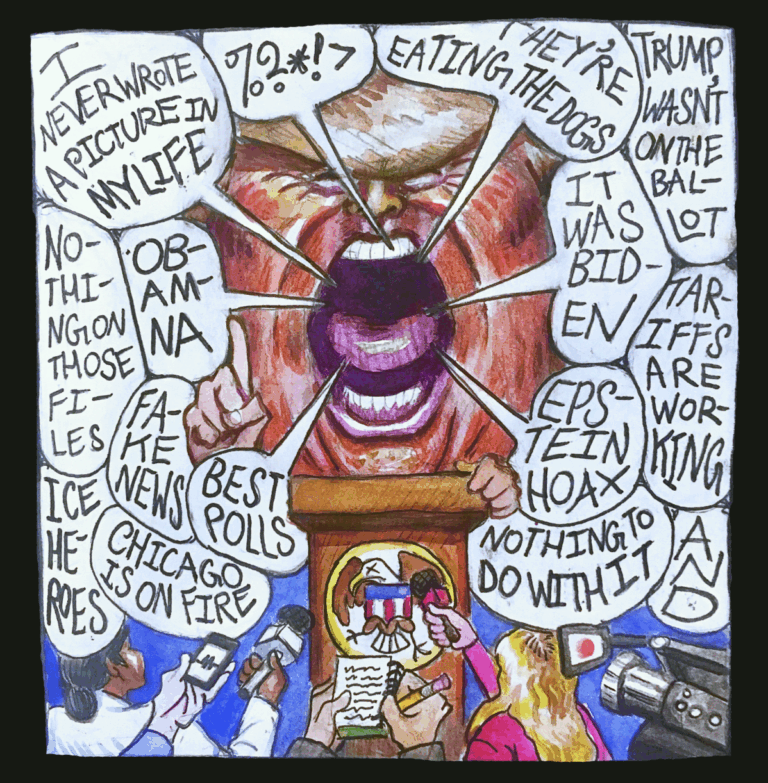
His rhetoric often draws on populist themes, portraying himself as a representative of the people in opposition to an established elite. He highlights himself and his supporters as victims of various political opponents and establishments, consistently reminding his followers of the various grievances he faces. In a nationalist sense, he emphasizes patriotism, a sense of national identity and a specific air of American exceptionalism. 

Critics argue that his rhetoric taps into themes of authoritarianism, centralizing his own authority above the institutional and democratic norms of American politics in order to suppress his perceived opposition and maintain control. These overarching concepts of populism, nationalism and authoritarianism are present within each and every one of his speeches, social media posts and actions, and can help explain why his rhetoric resonates so deeply with his supporters and how it supports his media strategy as a whole.

Trump also uses specific psychological and emotional drivers to persuade his audience, including fear, anger, pride and loyalty. Utilizing fear as a political tactic works especially well because it can motivate a sense of urgency in the public, thus influencing their behaviors and opinions.  

UC Davis Communication Professor Supreet Mann, who teaches the course “Theories of Persuasion,” discussed the role of fear in political campaigning strategies. 

“Fear, in order for it to effectively persuade, really needs to fit into a kind of ‘Goldilocks zone’ of fear,” Mann said. “Too much fear, and people will be too focused on calming themselves down. Too little fear, and they just don’t care enough. One thing that Trump does very well is bring in [a] kind of a perfect Goldilocks [zone] of fear campaign and provide really clear and tangible solutions for how to combat the fear.”

The use of anger also works well for Trump, as it energizes his voters and encourages media engagement — especially when he invokes it to discuss threats or opposition. Pride and loyalty function similarly when he uses language emphasizing nationalist or patriotic ideas, creating a sense of belonging and reinforcing collective identity. 

Audience identification can also work well as a psychological driver and rhetorical strategy. UC Davis Professor Emeritus of English Don Abbott, who specializes in rhetoric and rhetorical theory, explained the concept.

“I think he’s had a good feel for what his audience wants — their prejudices, their fears, their hatred,” Abbott said. “[There] is the notion of identification — that you are persuasive if you can identify your ways with other people’s ways, so you identify with your audience. And again, Trump is very good at that, which is strange because he’s really not like his primary audience.”

Trump also consistently reminds his audience of his authority, dominance and power, which can also work to further his credibility. Mann explained how the two concepts of audience identification and authority can work together.

“Authority is a really fundamental element of credibility, but credibility has so many elements,” Mann said. “There’s goodwill and social attractiveness. I don’t know if he has every other element, but I think authority is one that’s really relevant for some audiences, depending on how they view authority. […] What really matters then, from an audience perspective, is what matters to his audience — and how he shows authority in those spaces.”

The president, whether intentionally or intuitively, incorporates these broader themes of populism, nationalism and authoritarianism — along with the psychological drivers of various emotions and his audience appeals — into his messaging and rhetorical techniques. 

Trump’s signature style is both aggressive and confrontational, using violent language, interrupting interviewers and mocking his opponents, according to Abbott. These choices reinforce his anti-establishment narrative and aim to invoke feelings of anger in an attempt to remind his audience of his self-perceived dominance and authority. 

“Part of it is it deflects criticism,” Abbott said. “Instead of answering, he always engages in some kind of personal insult and gets people to defend themselves rather than continue to ask him questions. I think that’s been particularly effective for him. And once again, I suspect it’s more intuitive than strategic.”

Trump also uses simple language, repetition of slogans and branding as rhetorical devices to promote a sense of pride and loyalty and identify with his audience, according to Mann.

“Slogans overall are most effective when they are easy to understand, are repeated in a way that helps solidify them and don’t require a lot of cognitive energy,” Mann said. “They’re not very cognitively complex; they don’t require a lot of effort to break down and understand the message. The more it’s repeated, the more likely we are to recall it, and the more likely we are to think favorably upon it.”

Another common aspect of Trump’s media presence is his tendency to use hyperbole and dramatic framing. This can tie into the simplified messaging and also work as an attention-grabbing tool, according to Abbott.

“I think it becomes entertainment for [his audience],” Abbott said. “And I also think now he’s become so established as this kind of character, like a clown. I don’t think they expect anything else. They don’t go expecting a clear political presentation. They just go for reinforcement — to see what he does and be reminded of the kinds of dislikes he has.”

  A particularly important aspect of Trump’s rhetoric includes his efforts in othering and scapegoating, according to Abbott. This concept can manifest in xenophobia and the use of hate speech, stereotypes and harmful tropes.

“I think the one that he relies on, the one that’s often quoted or cited in rhetoric studies, is the concept usually called scapegoating — identifying a particular enemy, placing all of a group’s problems and ills on that one group,” Abbott said. “Clearly, the primary scapegoats are immigrants, particularly Latino immigrants, although other immigrants will do. […] But that seems to me probably may be his dominant strategy. And again, it’s, as I say, a very old and common one.”

Abbott detailed how identification and scapegoating can work in tandem, and how he sees these devices in Trump’s rhetoric.

“I think the biggest part is — I heard someone say this after he was elected the first time, explaining why he was popular, and the line was: ‘He hates who they hate; And I think that’s true. I think that’s part of the identification,” Abbott said. “You know, he can tap into this latent racist tendency in American life and say, ‘Okay, these are the bad people. They’re doing it to you. It’s not your fault.’ And that’s obviously appealing to people who think they’re not doing as well as they should be doing.” 

Trump also frequently makes false claims about opponents, elections, policy and the media as a whole, often delivered confidently and simply. Spreading misinformation works to reinforce fear in his base, allowing Trump to display his control over the narrative through his perceived authority and pull in media coverage and attention. 

“I think the main thing I see is he’s stating a lot of things as facts that, if you did some further digging, or just a simple Google search, you would find out are untrue,” Eliana Shor, a third-year managerial economics major, said. “I think people go to him as a news source, so he has a lot of power, and he’s misusing that.”

A final, yet especially prevalent, feature of his rhetoric is his frequent rule-breaking and his unorganized messaging structure, which some refer to as “the weave.” An Associated Press News article, written before the 2024 election, described the typical formatting of this speech style.

“Trump’s speeches, while never the same, all employ consistent devices and themes,” the article reads. “He wields humor, braggadocio, anecdotes, grievances and grand promises. There are non sequiturs, fantastical falsehoods and withering attacks on opponents. He sprinkles in vulgarities and superlatives. There are even the occasional stints read from the teleprompters he mocks when any other politician uses them — and then claims that he doesn’t use teleprompters or doesn’t need them.”

Mann described how this break from the typical expectations of political rhetoric can actually work in Trump’s favor.

“Because he’s not viewed by his audience as a typical politician — because he had success outside of politics — there’s a sense that he’s chosen to come into this space and break the mold of what it means to be president,” Mann said. “And that’s what’s so appealing to his base — [Trump is] not like every other president. Because he doesn’t have that experience, he’s seen as something new and different. That’s part of the appeal.”

All of these rhetorical themes, drivers and techniques serve a greater political strategy, which can be referred to as “flooding the zone,” according to political scientists. With the constant, seemingly never-ending controversy surrounding the president — whether through statements, speeches, actions or posts — the media and his opposition can become overwhelmed and distracted, often struggling to cover the sheer amount of content at hand. This can lead to topics being remembered for shorter periods of time, and eventually being forgotten. 

“You can’t really track all those points in any reasonable way,” Abbott said. “I think [Trump has] always been undisciplined like that. I can’t tell if it’s really a strategy or just the way he operates. But it clearly works.”

Analyzing Trump’s rhetoric can help voters understand the underlying forces of his political influence. Studying his methods of political communication can clarify why his message resonates with so many, challenging both his supporters and critics to question their own responses to his statements. It also raises important questions about how the media can best report on the president in an unbiased way, while still recognizing the intention and impact of his language.


Written by: Graciela Tiu — features@theaggie.org

UC Davis Washington Program students live in D.C. amidst government shutdown

0

Despite being furloughed, congressional interns share key takeaways from their experiences 


By SAVANNAH ANNO — features@theaggie.org


On Oct. 1, Congress was unable to reach an agreement that would extend or approve proposed funding for the new fiscal year, beginning what is now the second longest government shutdown in United States’ history. 

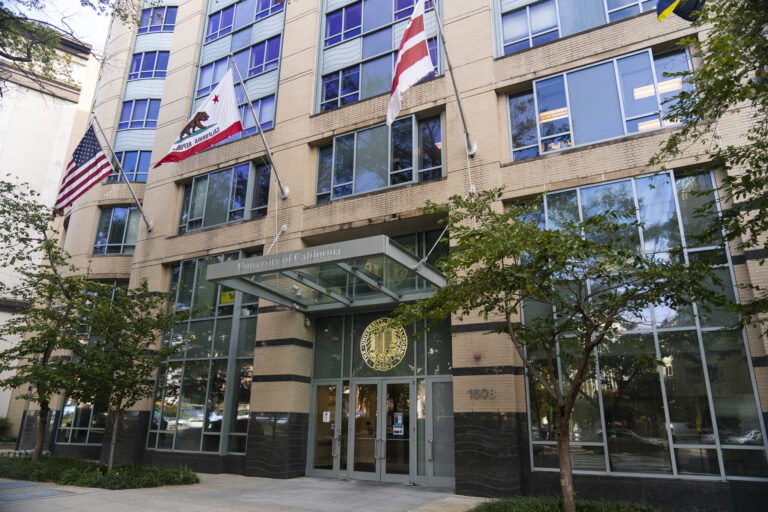
As a result, around 670,000 federal workers have been temporarily suspended from their jobs — with another 730,000 working without pay, according to the Bipartisan Policy Center. UC Davis students working as congressional interns through the University of California Washington Program (UCDC) in Washington D.C. were no exception to these changes. 

Adrien Villanueva, a fourth-year political science and a UCDC legislative intern, began working in her congressman’s office just one week before the shutdown. 

“The lead up was a pretty normal week, but there were whispers of the shutdown,” Villanueva said. “I went in on Tuesday, [Sept. 30] and my supervisor told us what the shutdown would mean for us: the house interns have been deemed nonessential and unable to work.” 

In the week prior to the shutdown, Villanueva was responsible for answering constituents’ phone calls, monitoring her congressman’s social media and working on a special research project. 

“It’s kind of been my dream,” Villanueva said. “I’ve been a judicial intern for Santa Clara County [and] I was a field intern for the Mayor Matt Mahan’s campaign, so I feel like I’ve been building up to eventually working for the federal government.” 

Aidan Hyman, a fourth-year agriculture and environmental technology major and a UCDC legislative intern for California District 4 Congressman Mike Thompson, had similar ambitions going into the program. Like Villanueva, Hyman had limited time in the office before the shutdown began. 

“The unfortunate answer is that nobody really knows what’s going on and it was pretty devastating for a lot of people because so many of us worked really hard to apply and get into the program,” Hyman said. “I’m still on payroll, but I’m not allowed to go into work and won’t get paid until whenever the budget is resolved. I wasn’t aware the fate of my internship would be so up in the air when I got here.” 

Mikayla Lavitoria, a fourth-year political science major and a congressional intern, also shared her initial reaction after receiving the news that she would be unable to go back into the office. 

“I’m a little sad,” Lavitoria said. “I spent so much money to be here and I put so much work into my applications: […] this lost time is disappointing because I wanted to be at Capitol Hill, working with the community.”

Transitioning from their full-time internships to being out of the office entirely, congressional interns like Villanueva, Hyman and Lavitoria have had to find other ways to spend their time. Outside of the courses UCDC offers — ranging from topics like “Museums and Politics” to “Economic Policy” and “Science and Federal Policy” — interns have found value in exploring the city of Washington D.C. itself. 

The museums are now shut down because the Smithsonians are government-funded, but we had this really great first week where they had a grace period,” Villanueva said. “So, I’ve been to the National Museum of Natural History, the Asian Art Museum and the African American History and Culture Museum. It’s been nice to have the freedom to experience D.C. culture, because it really is different here.” 

Hyman and Villanueva also both spoke to the quality of the program beyond their internships. The program has filled their time with speaker events and discussions about the federal government, with a talk led by President of the UC Board of Regents James B. Milliken.

“A lot of us are not in our offices, but we’re living in D.C. and we’re fortunate enough to be here in such a crazy time,” Hyman said. “The most important thing we can be doing at our age is learn[ing] and try[ing] new things.” 

For Hyman, Villanueva and Lavitoria, their experience being furloughed during the government shutdown has altered the way they view themselves, their future careers and the federal government. 

“I’ve always talked about working federally and on Capitol Hill where legislation happens, but I feel like being here has made me realize local government is so much more important than people think it is,” Villanueva said. “Especially in a time [when] facism is on the rise, it’s important to focus on local institutions — because that’s where you’re going to be feeling it the most.” 

Similarly, working in D.C. amidst the government shutdown has changed Lavitoria’s perspective on where she may see herself working in the future. 

“I really wanted to have a career in legislation and I think being here during the government shutdown has shown that it’s maybe an unpredictable career path,” Lavitoria said. “At the federal level, I’m reconsidering if I want to go into it, and state or local politics feels a bit more stable.” 

Hyman also recognized the feeling of fear students may feel pursuing a career in the federal government, but encourages his peers to try their hand at it anyway. 

“For anybody who’s reading the news right now, it’s intimidating,” Hyman said. “But now, more than ever, it’s so important to have [the] youth and Gen Z making their voices heard, learning the ropes and moving their way up, because we’re inheriting this country. It was important to me, despite my fears and reservations, to still face that head-on.” 

As the shutdown moves into an almost month-long affair, the interns also expressed their personal opinions on what they hope the U.S. will get out of Congress’ standstill. 

“Yes, I want the shutdown to end, but I don’t want the Democrats to give up healthcare — there [are] bigger things ahead and we have to think about the long-term,” Villanueva said. “Of course it’s hard on interns and what we get out of the experience is important, but there [are] people suffering a lot more than we are and I hope the government can compromise to keep these very essential services for people.” 

Hyman similarly noted the role of Democrats and their reasoning for maintaining their stance as the government shutdown continues. 

“I’m personally glad the Democrats are standing up to extend healthcare subsidies and protect social programs,” Hyman said. “I think it’s not just about the budget, but also about drawing a line in the sand — we’re not just wanting to reopen the government, but prevent the slow erosion of public services.” 

With their internships set to finish at the end of the quarter, UC Davis UCDC House interns are still unsure when or if they will be able to return to their offices. As they reflect on the first two months of their experience, students have shared hopes that they’ll still be able to take away important lessons, despite being furloughed. 

“It’s opened my eyes to the way people our age can be involved, and why they should be,” Hyman said. “It’s reinspired me to continue working in public service and to want more young people in office: running for office, working for someone’s campaign or being a staffer. I can’t think of a role that’s more fulfilling — you’re working to leave the country a better place than you found it.”  


Written by: Savannah Anno — features@theaggie.org  

Why and how do we look for alien life?

Unidentified objects appear in the sky, like 3I/ATLAS, offer insight into the key signs of life that scientists look for

By EMILIA ROSE — science@theaggie.org

We have insects, birds, fish and even intelligent, bipedal mammals right here on Earth. But what could be beyond Earth? The likelihood of extraterrestrial intelligent life has been subject to the Drake Equation, a formula calculating the probability of intelligent life in the Milky Way. On the other hand, the fact that we haven’t found anything has been subject to Fermi’s famous Paradox, which highlights the dissonance that is found in the absence of extraterrestrial life. However, what if extraterrestrial intelligence has been closer than we thought? 

In July, scientists detected a massive interstellar object, designated 3I/ATLAS, on an orbital path towards the Sun. Harvard Researcher Avi Loeb and his team have published a paper, not yet peer-reviewed, discussing the idea that this object could be an alien probe. Is there any truth to that? 

To determine the answer to this question, we need to look at the methods we use to detect alien lifeforms and their possible spaceships. In an article from Science Daily analyzing Loeb’s findings, the author, Sara Webb, detailed some of the ways we might detect an alien probe.

“Because a natural origin is most likely, we would look for evidence that no aliens were involved. One clue in this direction might be if the object were emitting a ‘tail’ of gas in a way that comets do,” Webb’s article reads. “One very strong piece of evidence would be any kind of radio waves coming from the probe […] Another dead giveaway would be signs of maneuvering or propulsion.” 

In regards to 3I/ATLAS, although he covers many sides of his argument, Loeb notes a few reasons why the object might be of natural origin, rather than an engineered probe.

“The object must be around 20 kilometers in diameter […] and as of writing, the Minor Planet Center does not provide estimates of non-gravitational accelerations for this object,” Loeb said. “It should be noted that for interstellar objects, we have a sample size of only three, therefore rendering an attempt to draw inferences from what is observed is rather problematic.”

Thus, it is unlikely that 3I/ATLAS is an alien spacecraft. It is not only the size of a small moon, but it has shown no signs of artificial propulsion and it is difficult to compare it to other objects that come from beyond our solar system with only a couple of known cases. 

If 3I/ATLAS isn’t a sign of life, what is? How do we look for extraterrestrials in our universe? Dr. David Gold, a professor of geobiology at UC Davis, speaks on the key things we analyze when looking for alien life.

“You need the building blocks of life […] You need things like proteins, you need amino acids. Those things need to be present,” Gold said. “You need water because water drives the chemical reactions that drive life […] And those are common in many places throughout the solar system and throughout the universe.”

Even though many are curious about large spaceships that could be coming in Earth’s direction, the same basic building blocks that scientists assume make up life on Earth are what really guide the search for life elsewhere. Among the things scientists consider are atmospheric composition, temperature and many other indicators. Yet, another question remains: What do we do, and how would we react if we actually detect something? How can we even know if the evidence we find is legitimate? 

One such tool to categorize evidence in terms of the likelihood of alien life, and what the organization Search for Extra Terrestrial Intelligence (SETI) would use to notify the public if alien life were found, is the RIO scale. In simple terms, the RIO scale uses final values from zero (no significance) to 10 (extraordinary) to determine the likelihood of an observed event caused by intelligent extraterrestrial life. When the calculation was performed on 3I/ATLAS, it yielded a one (insignificant) on the RIO scale.

Based on several factors, 3I/ATLAS is unlikely to be anything more than an interstellar asteroid. However, Loeb’s initial reaction to it is enlightening for all of humanity; we continue to form fascinating questions about the objects we observe in our universe. 

Written by: Emilia Rose — science@theaggie.org

Getting your Hands on the Land

Hands on the Land provides free trips that allow students and community members to gain access to the UC Reserves and participate in habitat restoration

By LILA MAGBILANG— science@theaggie.org

Tucked away among the sprawling wilderness of California lies the University of California (UC) Natural Reserve System. With each of the nine UC undergraduate campuses responsible for a handful of these lands, this resource is abundant — yet inconspicuous.

In 2021, a group of graduate students from UC Davis gathered with the common goal of raising awareness about these reserves. With the aim of increasing accessibility for environmental education and habitat restoration, the students saw the reserves as the perfect space to get people out into nature. And thus, Hands on the Land was born. 

Perhaps you have participated in some type of habitat restoration before: maybe you’ve gone out and planted a tree with a group or spent an afternoon weeding. Although any amount of work is beneficial for the well-being of the environment, the founders of Hands on the Land felt something was lacking — there was a disconnect between the people and the land. 

By providing recurring trips to the two reserves closest to UC Davis — McLaughlin and Stebbins Cold Canyon — Hands on the Land invites students and community members to explore the nature surrounding Davis and take part in habitat rehabilitation. With the trips free of charge, the group hopes to incentivize repeated exposure to specific areas for an extended period of time.

Alana Luzzio, a Ph.D. candidate in the Ecology Graduate Group and a founding director of Hands on the Land, described what they’re doing differently. 

“We visit the same two places throughout the year so that participants can see seasonality and phenology,” Luzzio said. “They can see tangible positive impacts of their work from previous trips.”

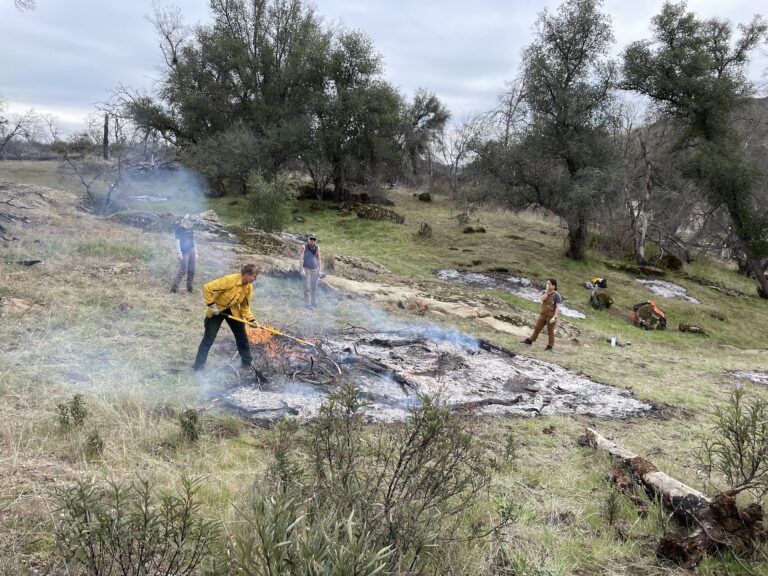
With trips happening nearly every month for the entire school year, students are encouraged to participate in various seasonal activities Hands on the Land organizes. In October, they can be seen collecting native seeds, and, in February, they might do a controlled burn. 

Repeated and long-term restoration efforts are not only one of the best ways to actually rehabilitate a landscape, but they are also essential aspects of fostering a community of people with the same goals and passions. Though Hands on the Land naturally attracts those already interested in conservation, part of their initiative is making sure that everyone has the opportunity to make a positive impact on the environment. 

Brooke Wainwright, another founding director and Ph.D. candidate in the Ecology Graduate Group, elaborated on their inclusivity efforts.

“If you’ve never been in a natural setting before — if it feels really unfamiliar to you — we want you to come on this trip,” Wainwright said. “You don’t need any experience. You can come from any discipline, and you are welcome at Hands on the Land.”

A typical Hands on the Land trip involves boarding a UC Davis Fleet Service van early in the morning, then making your way through the golden California hills to your destination. Saturday is when the majority of the work is usually done — you’ll spend a good chunk of the day out in nature, surrounded by the gnarled oaks and squawking scrub jays. Then, in the evening, all the volunteers come back to the field station and prepare dinner as one big family. Everyone lends a helping hand. 

On Sunday morning, you’ll find participants engaging in a creative activity — may it be journaling, painting or even just taking a walk — to wrap up their experience. The field station becomes like a little home; somewhere you want to return to. 

Cathy Koehler, the resident director of McLaughlin, explains how difficult it’s been to spread awareness about the UC Reserves. She notes that she is thrilled when someone comes to Hands on the Land and is inspired to come back. 

“We’ve seen that happen where somebody comes out on Hands on the Land and then says, ‘I want to be involved in this more,’” Koehler said. “[The reserves] are places where there are opportunities for students to experience nature in its very many different forms, whether it’s heavily invaded by non-native species, be they animals, be they plants.” 

Vivian Zerkle, a fourth-year environmental science and management major, is one of the Hands on the Land participants who found herself drawn to McLaughlin. After reaching out to Koehler, she was invited to come back to the reserve on her own time, sometimes with a group of friends in tow. Between her individual trips and Hands on the Land, she’s seen the landscape of McLaughlin start to change little-by-little. 

“We pulled so much of this one weed one year,” Zerkle said. “The next year, I returned to that same hillside, and there was so much less of that weed taking over the hill. That was a really cool specific impact — I could see that my group and other volunteers had made a real effort and seen a real result.” 

Restoration takes a long time. To many volunteers, it may seem disheartening to see the vast amount of work that needs to be done to restore just a few acres of land. However, with community mobilization and accessible opportunities for restoration, individuals can make a tangible impact — and part of that is choosing a specific place to dedicate yourself to and fully immerse yourself in.  

As Wainwright noted, everyone is welcome to join a Hands on the Land trip. There will be upcoming trips in November 2025, as well as January, February, April and May 2026. For more information about signing up, follow the Hands on the Land Instagram.

Written by: Lila Magbilang— science@theaggie.org

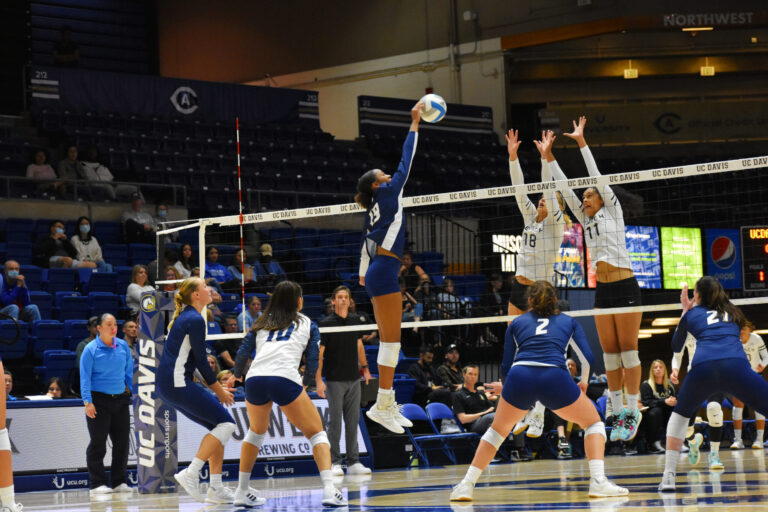
Women’s volleyball notches 10th straight win in exhilarating five-set match against UCSB, then suffers first conference loss of the season

0

Head Coach Daniel Connors and outside hitter Jade Light comment on the season’s success

By COLINA HARVEY — sports@theaggie.org

This season’s women’s volleyball team has made its mark on UC Davis athletics with their historic 10-game winning streak. The team boasts an impressive 0.917 winning percentage thus far, having won all but one of their conference matches. Their home games are high-energy, with fans on their feet cheering for the team. 

“We have a group of women that are very bought into our team culture. We have some great leadership and a team that’s setting a good direction for the group,” Head Coach Daniel Conners said. 

Fourth-year outside hitter and aerospace science and engineering major Jade Light expressed a similar sentiment.

“We’re really comfortable when we’re out there together, and everyone has each other’s backs with a deep sense of love,” Light said, attributing the team’s success to their chemistry.  “Our offense is very balanced, and so it’s hard for teams to set up a defense for us, because they can’t just camp on one player. They have to be ready for all three positions to attack you, maybe even four.”

On Oct. 23, the Aggies beat UC Santa Barbara (UCSB) in a thrilling five-set match, notching their 10th win in a row. The first set was extremely close, with four set points. The Gauchos ended up taking the first set, with a final score of 28-26, leaving the Aggies trailing. 

In the second set, UC Davis built up a large lead, comfortably taking the set 25-10. 

The third set was very close throughout; however, the Gauchos managed to snag the win. 

The fourth set displayed the Aggies’ perseverance and grit when playing with their backs against the wall. Once again, the set was neck-and-neck to start. UCSB managed to gain a bit of separation and lead the set 19-16. Towards the end, the Gauchos held the momentum, forcing the Aggies to work hard for every point. UCSB increased their lead to 24-20, creating a match point and putting maximum pressure on the Aggies. However, the Aggies were determined to stay in the game. 

Back-to-back kills by third-year international relations major Breeze Czapinski held off the Gauchos. Then, a kill by Light brought the score to 23-24, with the Gauchos leading. An error by the Gauchos tied the game up, and a service ace by third-year sociology major Rachel Dunagan gave the lead to the Aggies. With the game attendees at the edges of their seats, a kill by Light won the set for the Aggies, keeping the UC Davis team in the game. 

“The best thing about this team is we don’t give up. We have a lot of fight. That’s one of our strengths. And so that really came out in the fourth set,” Light said. “We executed the game plan point-for-point, until the end.”

In the fifth set, the Aggies kept their winning momentum and finished off the Gauchos with a final score of 15-8. 

The game featured strong offensive performances by a number of players on the UC Davis team. Third-year biological sciences major Brooke Hibino and Czapinski both recorded 18 kills, with Light recording 16. 

In their next game on Oct. 28, The Aggies did not fare as well; during their stop to San Luis Obispo, the California Polytechnic University Mustangs were able to snap the Aggies’ 10-game winning streak. Even though the Aggies won the first set, Cal Poly managed to lead for the whole second set and crushed the Aggies in the third, taking the game.

“We typically are a very aggressive team, but we didn’t play that way [against Cal Poly],” Light said. 

Conners added on the differences between this game against Cal Poly and previous ones. 

“I think we learned a lot from that match. I think we were not quite on our job assignments, both offensively and defensively,” Conners said. “[In the future], I think if we’re doing a better job of executing, we’ll make it a much more competitive match.”

Despite the loss, Light managed to hit the 1000 career kills mark during the match, becoming only the 13th player in Aggie history to do so

“I’m trying to live in the moment because that is really just it; this is my fourth year at the program, and that happens to people who play for four years,” Light said. “So I’m really grateful that it happened, but I’m trying to stay in the moment and stay focused on the next game.” 

The Aggies bounced back from their loss with a comfortable win over UC Riverside at home on Oct. 28. Davis crushed Riverside in the first set, winning by a 25-11 margin. Although Riverside was more competitive in the next two sets, the Aggies still won in straight sets. Third-year human development major Ally Chandler and Light both hit double-digit kills. 

On Oct. 30, the UC Davis women’s volleyball team faced the University of Hawai’i in another home game. The Aggies took the first set, and the Rainbow Warriors tied the game up with a win in the second set. Throughout the duration of the third set, both teams traded points until an error by Hawai’i put Davis ahead two sets to one. In the fourth set, the Aggies were able to pull away and maintain a lead. They eventually won the set 25-20, defeating the Rainbow Warriors. Light recorded an impressive 19 kills — the most of any player in the match. 

The Aggies will be on the road for four games before returning home for their last two games of the season. After the regular season wraps up, they will prepare for the Big West championship; the team hopes to make a statement in the postseason and potentially reach the National Collegiate Athletic Association (NCAA) tournament. 

“I think every day [it’s] just coming in the gym and having the same attitude to get 1% better every day and sticking together with the hard times and enjoying the highs,” Light said. “The season gets long, so not letting the grind stop and not getting complacent with where we are [is important].”

Written by: Colina Harvey — sports@theaggie.org

UC Davis women’s soccer team comes up short in last home game of the season

0

The Aggies lose 0-1 against University of Hawai’i’s Rainbow Wahine

By MIKALA SLOTNICK— sports@theaggie.org

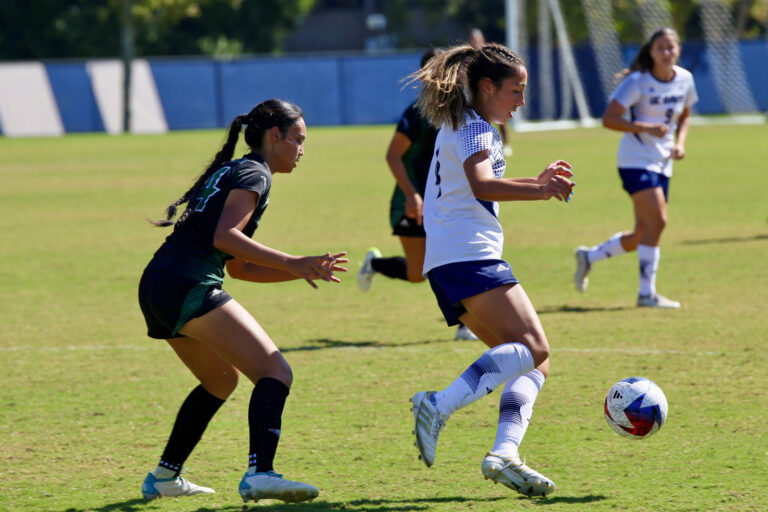
In the final home game of the season on Oct. 23, the UC Davis women’s soccer team hosted the Hawai’i Rainbow Wahine, losing 1-0. The evening held additional significance, as the team’s Coach Kat Mertz was honored before the match for her courageous battle with breast cancer. During the ceremony, Mertz was given a jersey; she spoke about her battle with breast cancer and her commitment to spreading awareness. In Soccer Coach Weekly, Mertz discussed how important it was to educate young women in college about early detection of breast cancer. 

“One in six women [in their 40s] will be affected by breast cancer,” Mertz said in the Soccer Coach Weekly interview. “If you’re coaching a college team, with 27 to 30 young women, I think it’s important to talk about early detection.”

 Mertz was hired in January of 2025 and served as the fifth head coach in Davis’ women’s soccer program. She was also the head coach for the University of Oregon for seven seasons and helped transform the program at University of Nevada, Las Vegas.

On the field, the Aggies’ determination was high at the start of the match, but Hawaii struck early at the 8:13 minute mark of the first half with a goal from Nalani Damacion, assisted by Amber Gilbert. The Aggies remained determined throughout, but were unable to complete a goal due to Hawaii’s goalkeeper, Kennedy Justin, making multiple saves. This is not the first time Hawaii has scored first throughout the season — their sixth time doing so. 

Throughout the match, UC Davis had multiple chances to even the score. One of the clearest opportunities to tie the score came from third-year political science major Sydney Bushman’s free-kick in the 30th minute. Though the goal was possible, it hit the crossbar and Davis lost the opportunity to find its equalizer. This season, Bushman has had a total of eight shots on goal and scored two goals for Davis. 

The Aggies challenged Hawaii’s goal keeper as third-year sociology major Karla Sandoval, second-year political science major Summer Humphreys and first-year human development major Bailey Rakela all had shots on goal, which were unfortunately saved by Justin once again. 

UC Davis goalkeeper, third-year political science major, Cat Pieper recorded four saves, all in the second half, to keep the Aggies in reach of a potential victory. Pieper performed key saves in the 57th and 86th minute, and UC Davis’ backline denied a shot in the 72nd minute to keep the game at 1-0. With 65 total saves this season, Pieper ranks second in the Big West in total saves, starting in all 17 matches this season. As a team, UC Davis ranks third in the Big West in saves per game. 

The Aggies finished the match with nine shots, four of them on goal. Though Hawaii outshot the Aggies overall, Davis outshot the Rainbow Wahine in the second half with a score of 5-4. Despite the one shot on goal, Pieper saved multiple shots from Hawaii players Krista Peterson, Izzy Ayala and Damacion. 

UC Davis’ record after the game is 2-12-4 overall; 0-8-1 in conference play. This is UC Davis’ final season in the Big West, as they will be joining the Mountain West in 2026. 

Despite mixed results, the Aggies ended their season with a win against UC Riverside (UCR) on Oct. 30. Fifth-year neurobiology, physiology and behavior major Genavieve Fontes lobbed the ball over both the goalie and UCR defense, hitting the back of the net. The team will now move to off-season training and prepare for their next season.

Written by: Mikala Slotnick — sports@theaggie.org

Still creating music: Acme Rocket Quintet

0

The Acme Rocket Quintet returns to the Davis music scene, 30 years later


By AMRA ABID — features@theaggie.org


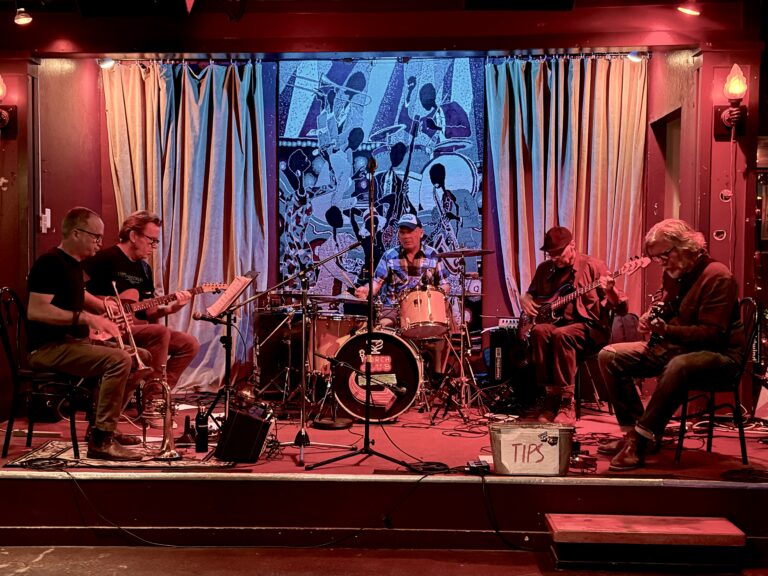
On Friday, Oct. 24, Delta of Venus hummed with the vibrant sounds of the Acme Rocket Quintet, as their instrumental, jazz-inflected music filled the intimate space. 

The Acme Rocket Quintet, starring Roger Kunkel, Rusi Gustafson, Dave Thompson, John Killebrew and Adam Hancock, is a living representation of one of the most unique things about Davis: its music scene. Formed over 30 years ago as the Acme Rocket Quartet, the band’s story is a testament to how the small college town has long been a magnetic hub for creative communities.

To understand the Acme Rocket Quintet is to know Davis in the early 1990s, when KDVS90.3FM wasn’t just a college radio station but rather, the lifeblood of a vibrant music ecosystem. 

Kunkel, the band’s lead guitarist, shared how college radio has historically celebrated alternative music.  

“The alternative music scene was really focused on college towns that had radio stations, because commercial stations weren’t playing the stuff and there was no internet for streaming,” Kunkel said. “Most people who were into indie or alternative music of some variety would listen to college radio stations. And so, Davis was on the map.”

For Kunkel, a Sacramento native, the influence of Davis’ unique music scene had an effect on him long before he ever picked up an instrument. 

“I started listening to KDVS when I was like 10 or 11,” Kunkel said. “I had an older brother who was listening already, so I was hearing stuff from real early that was […] all across the board, because KDVS had all these different shows and different DJs and you choose your favorite DJs […] and listen in. I wasn’t even really a musician yet, but I was just absorbing all this stuff, you know?”

Gustafson, the band’s current drummer, shared that the importance of the radio station went beyond music, offering a gateway into the world of making art.

“KDVS was so open that you could go down there as a teenager and hang out and look through the records and listen to the DJs and talk with [them],” Gustafson said. “Sometimes they’d play stuff for you that you wanted.”

To Gustafson, the openness of the community alone was enough to translate into real opportunities for a young musician like himself.

“The very first night that I played drums with them in [a friend’s] garage, we recorded what we were doing on a cassette boom box,” Gustafson said. “We knew who the DJ was that night at KDVS. We rode our bikes over — because none of us were even driving yet — with a cassette that we had just recorded and said, ‘Listen to this; this is our band,’ and the guy said, ‘Really?’ And they just played our band on the radio station. I was just 16 years old, and to just have that opportunity was so cool.”

Gustafson also shared how the community contributed to the formulation of their group dynamic. 

“This community was really just supportive […] and there was an opportunity for young people to do [collaborate],” Gustafson said. “I think […] a huge part of what influenced us, besides the radio station and the amount of music that we could hear, is that it was something fun that you could do with your friends — put a band together, [find] something to do.”

For Gustafson and his peers, that sense of creative possibility was especially meaningful.

“In the early 80s, Davis was kind of boring, and you kind of had to make your own fun,” Gustafson said. “It was small and boring but we had the radio station, we could hear music and we could get our stuff on the radio — that was really really [influential].”

Although the artists originated from a vibrant punk rock scene, Kunkel wanted to shift gears with the sound of the Acme Rocket Quartet.

 “We both sort of come out of rock and punk more than jazz,” Kunkel said. “But I sort of had some amount of interest in jazz my whole life. I wasn’t really attempting to play it that much until Acme Rocket Quartet.” 

He describes their sound as “jazz-esque:” instrumental explorations that blend jazz with blues and other influences, ultimately creating music that resists easy categorization.

In the group’s early days, venues were simply wherever the artists could find space.

“We’d occasionally have fundraising shows at the [Veterans] Memorial Theater,” Kunkel said. “We played on the side of the stage. We were the intermission band or the transition band. Like between bands, we’d play weird music on the side of the stage.” 

It was a thriving time for indie bands, a scene built on house parties, basement shows and the constant circulation of ideas through KDVS’ airwaves. Nonetheless, it didn’t stop them from going on to release multiple records and play shows wherever they could. As the years passed, families and growing careers gradually pulled the members in different directions, causing the group to eventually go on hiatus. Then, Roger decided to reach out to see if that flame was still there.

“I sent an email to everybody saying, ‘Do you have any interest in reforming a band that at least is something like Acme Rocket?’” Kunkel said. “And, to my surprise, everyone said yes.”

The band officially reunited in 2022, with Hancock as an additional member — transforming the Acme Rocket Quartet into a Quintet.

While the passing years have changed both the band and the City of Davis itself, Kunkel found that the essence of the scene he was once a part of had endured. A few years ago, Kunkel says he went to a basement show next to campus and was struck by the continuity.

“I was amazed because it was so much like it was,” Kunkel said. 

What he discovered upon his return was a familiar energy that seemed to transcend generations.

“You have to be careful not to assume that you’re not gonna like stuff, because like ‘It’s not from my world, like things were different 30 years ago’ — and they were different,” Kunkel said. “I feel like then, we were all enmeshed in this [certain] community, but that still goes on.”

Although many aspects of the scene remain the same, Kunkel reflected on the ways in which it is different.

“All that we were exposed to […] was on the radio all the time — you know there was really no other way we would have found it,” Kunkel said. “I mean, I don’t know how you could have found it without hearing it on the radio.”

Still, the musicians’ primary motive never changed. 

“None of us have really made it,” Kunkel said. “And it hasn’t been the reason that we’ve done it, forever, you know? [As a band], you don’t really make any money, or even break even. But, like I said, we’ve never been in it for the money. It’s more because we’re really into the music itself and pushing ourselves as musicians. And the social aspect, the fun part.”

Gustafson shared that what has kept the band going for all these years was primarily the social aspect of the group.

 “It’s just fun to get together with your friends and form a band,” Gustafson said. “You know, you gotta get together and socialize around something. So for us, music is that thing.”

Ultimately, Kunkel wants today’s aspiring artists to know that, regardless of what city they are in, they should not let anything get in the way of continuing to make art.

“You don’t need commercial success to justify the endeavor,” Kunkel said. “You just need a space to play, friends to play with and a community willing to listen.”


Written by: Amra Abid — features@theaggie.org

‘The middle of everywhere’ or ‘the middle of nowhere?’

0

Is Davis Northern California’s best-kept secret? 


By AMBER DUHS — features@theaggie.org 


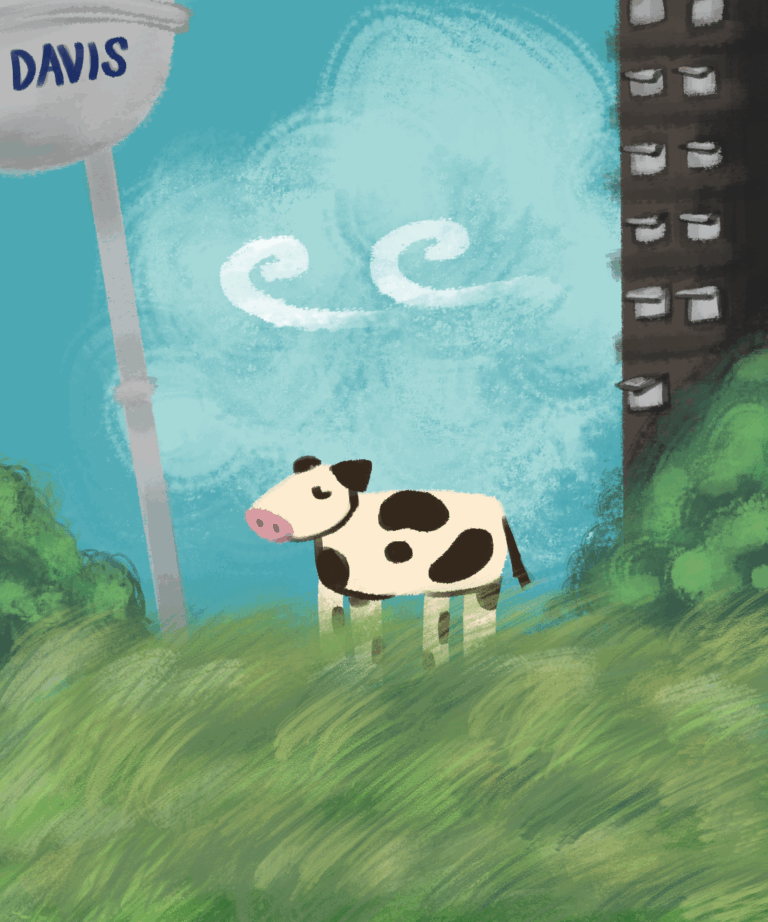
UCLA, in the heart of one of the biggest cities in the world; UC Berkeley, in the bustling corner of the Bay Area; and UC Davis, cow-town, USA? 

Compared to its other UC counterparts, UC Davis doesn’t always fit the “college town” archetype students typically imagine. With farmland on either side of the town and a well-known agricultural program, differing perspectives emerge on whether Davis is truly in “the middle of nowhere,” or, more affectionately, in “the middle of everywhere.” 

With this in mind, future Aggies across the country are warned of the possible negative effects of the university’s location. From rumors of cow-tipping being a Davis student’s favorite (or only) pastime, to the standard worries of whether your top school hosts a bustling social scene in addition to strong academics — these whisperings often impact the overall narrative that UC Davis holds. 

“I was under the impression that Davis was going to be really boring and that I would have nothing to do,” Sophia Aran, a third-year political science major, said. “I was kind of worried that my whole life would be just school and that I wouldn’t be able to find a sense of community or activity to do around here.” 

Though many incoming students mirror these fears, Davis is like any other college town: it has opportunities and social events for those who seek them out.

“I think [Davis is] what you make it,” Sophie Morrill, a third-year wildlife biology major, said. “Davis, physically, yes, is incredibly in the middle of nowhere, but I think in this town and on campus between the student organizations and all the things randomly going on downtown on a random Saturday, there’s kind of always something to do.” 

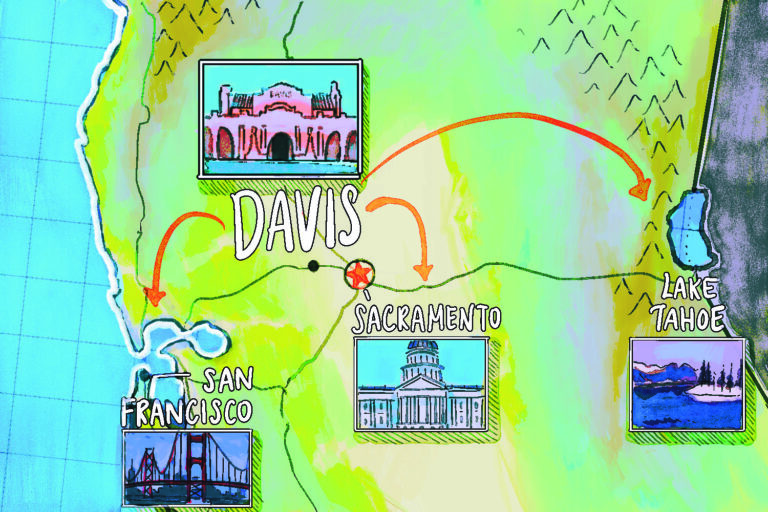
Davis, as a town, is located near California’s state’s capital of Sacramento: a walkable city with antique stores, political and legal opportunities for students and live music. Like everything else in life, however, making the most of it takes effort. 

“I feel like there are certain places in Sacramento, if you know, you know,” Erin Hale, a third-year psychology major, said. “You have to go looking for it [though]; you have to go spend days just finding these places.” 

Beyond the immediate Davis area lie both Yosemite National Park and Lake Tahoe — both only a few hour drive away — not to mention convenient options (often with student discounts) for a train ride to the Bay Area.

So, with all of these places and possibilities at our fingertips, why is it that Davis is still regarded as the college town with nothing going on? 

“Honestly, I think Davis is kind of a little gate-kept secret,” Aran said. “When you look at it on a map, it does kind of look like the middle of nowhere, and when you drive here it’s really underwhelming — But I think once you immerse yourself in the community and you explore, it’s very unique.”

Even if some students, especially first-years and transfers, are restrained to campus, there’s hidden beauty in every corner.

“The Arboretum is just so beautiful,” Aran said. “When I first discovered it, I was like ‘this is probably the best thing ever.’”

The opportunities don’t end at the edges of campus. In the walkable downtown area outside of the university, small dining and shopping businesses line the streets, student organizations host after-hours events and the Davis farmers market arrives semi-weekly. 

“There’s a really fun music community [in Davis],” Aran said. “I work at Watermelon Music, and I’ve met a lot of local musicians and bands. And seeing them play and perform and have little house parties is really fun.” 

If you want to explore downtown but aren’t sure where to start, oftentimes you don’t have to look beyond UC Davis’ own student body, who will always be excited to share their recommendations for restaurants, thrift shops and more. 

“If we’re talking food [there are] many, many options,” Hale said. “Ike’s [Love &] Sandwiches […] is amazing; I have my go-to sandwich. Taco Bell, Guad’s — anything in general, there’s a lot of good food [in Davis].” 

Additional fan favorites to check out downtown, according to students, include: Yesterday Vintage, a vintage thrift shop; Bohème Clothing & Gifts, a Davis-favorite local thrift store; and Armadillo Music, every record or CD-lover’s dream.  

Despite Davis’ slightly underwhelming physical location in terms of proximity to booming cities or the Pacific coast, there are plenty of local events for students to check out. From student organizations — like the KDVS90.3FM radio station hosting band parties where students can meet and connect over a shared interest in music — to the multitude of local restaurants and businesses that need student traffic, if you go out and try new things, it seems you’ll never truly be bored in Davis. 


Written by: Amber Duhs — features@theaggie.org 


UC Davis Aggies race in the Big West Cross Country Championship in Honolulu, Hawaii

The Aggies take home a first-place title thanks to Muhammed Ahmed 

 BY DANIELLE WIRNOWSKI — sports@theaggie.org

Queen Kapiolani Regional Park in Honolulu, Hawaii hosted the Big West Cross Country Championship on Oct. 31, 2025. 

The park welcomed the following 10 universities from California and one from Hawai’i: California Polytechnic San Luis Obispo, California State University Bakersfield, California State University Fullerton, California State University Northridge, Long Beach State University, University of California Irvine, University of California Riverside, University of California San Diego, University of California Santa Barbara, University of California Davis and University of Hawai’i. 

The last time the University of Hawai’i hosted the Big West Cross Country Championship was in 2016, at the Kahuku Golf Course in Kahuku, Hawaii

The men’s cross country race was scheduled for 7:30 a.m. Hawaii Standard Time (HST). The women’s race took place at 8:30 a.m. HST, with the awards ceremony following at 9:30 a.m. HST.

While the Big West Cross Country Championship features an individual race, rather than a relay, there are still individual and team champions present from each university.

The men’s 8K race featured nine out of the 11 schools in the Big West, each bringing around 10 runners. There were a total of 80 runners for the men’s race, with only two runners not finishing the race. 

Meanwhile, the women’s 6K had all 11 schools participating, with each school bringing no less than seven runners. The total runners for this race were 94, with two runners, similar to the men’s 8K, unable to finish the race. 

UC Davis brought 10 runners for each of the races, giving them more opportunities to finish higher in rankings. Typically, bringing more runners can increase a team’s score, as well as their ability to place within the top 10 rankings for individuals. 

In the men’s 8K race, three runners placed in the top 10: Muhammed Ahmed, a fourth-year human development major; Chris Coles, a fourth-year biochemistry major; and Donavan Cheruiyot, a third-year neurobiology, physiology and behavior major. 

These three players increased the team’s score to a total of 47 points, putting UC Davis in No. 2 ranking among all competing teams. 

Ahmed placed No. 1 with a 24:14.2 minute running time for the Aggies. Cole finished No. 5 with a 24:33.3 running time and Cheruiyot finished No. 10 with a 24:40.2 running time. 

Ahmed is the first UC Davis Aggie to finish No. 1 in the individual men’s Big West Championship since 2017

For the women’s 6K race, only one Aggie finished in the top 10; Fiona McGrath, a third-year biochemistry and molecular biology major, finished No.9  for the Aggies with a run time of 21:37.8. Meanwhile, Stormy Wallace, a fourth-year biomedical engineering major, finished No. 12 with a run time of 21:48.3. 

The UC Davis women’s team finished No. 4 overall with a score of 119, trailing just behind UC San Diego, which had 82 points overall. 

Next up, the Aggies are set to participate in the NCAA West Regionals on Nov. 14 at 10 a.m. in Sacramento, California. 

Written by: Danielle Wirnowski — sports@theaggie.org

Following the COVID-19 pandemic, the BRAVE project aims to limit disease spread through cleaner indoor air

UC Davis, as part of a multi-institutional team, is working to change how buildings operate with new biosensors and a risk model to maintain energy efficiency


By KATELYN BURNS — science@theaggie.org


A multi-institutional research team, which includes UC Davis, began work on a project to develop a system capable of reducing pathogens in indoor air. The Bioaerosol Risk Assessment interVention Engineering (BRAVE) project features four main areas:

  1. Developing new biosensors that allow for the detection of pathogens and other pollutants in real time.
  2. Developing a risk model that uses the data from the biosensors to determine the current risk the detected pathogens pose to occupants.
  3. Changing how buildings operate, using tools to filter or ventilate the air and making suggestions to occupants: ultimately decreasing pathogens in indoor air.
  4. Assessing the project’s outcomes using epidemiological tools, with the goal of determining whether these efforts lead to better outcomes — such as less sickness for occupants and their families. 

Christopher Cappa, a professor in UC Davis’ Department of Civil and Environmental Engineering and UC Davis’ BRAVE project lead, commented on the project and the university’s role in improving building ventilation.

“I’m super excited to see all of this really come together,” Cappa said. “We’ve never had the ability to do this real-time pathogen monitoring in a way that is scalable.”

The COVID-19 pandemic sparked new research and increased interest in indoor air quality. The BRAVE team is leveraging these new developments in technology into an engineering strategy that can improve indoor air quality.

Christine Johnson, a professor of medicine and epidemiology at UC Davis School of Veterinary Medicine and the director of the National Science Foundation (NSF) Center for Pandemic Insights, explained what made the COVID-19 pandemic unique.

COVID-19 was the first pandemic to emerge with massive, globalized travel and social media playing a big role in how we receive and share information,” Johnson said.

The epidemiological triad, made up of pathogen, host and environmental factors, explains the spread. The changing environment — now with massive, globalized travel and social media — wasn’t the only thing responsible for the pandemic’s spread. As hosts, individuals were immunologically naive to the novel COVID-19 virus. The virus itself contributed to the spread in several ways.  

This virus had such a vast array of responses, from asymptomatic to severe pneumonia. The less sick, or asymptomatic, would continue to travel and spread the virus. Not only did tit result in such a wide array of responses; it mutated fast and was capable of airborne transmission. 

Airborne transmission is not the same as droplet transmission. Droplet transmission involves larger particles, with coughs and sneezes spreading the virus through droplets of saliva and mucus. On the other hand, airborne transmission involves smaller particles travelling further and remaining in the air even after the host has left the area. While 6 feet of social distance may have been enough to prevent droplet transmission and slow the initial spread, once the virus was capable of airborne transmission, 6 feet was no longer enough.

“We’ve got programs for monitoring water and prevention of waterborne pathogens, and it’s about time we do the same to every extent feasible for pathogens that move around through airborne transmission and continue to place a significant burden on society,” Johnson said.

Linsey Marr, a professor of civil and environmental engineering at Virginia Tech and the BRAVE project lead, commented on the project’s goals.

“[Advanced Research Projects Agency for Health (ARPA-H), the government agency funding the project], wants us to be able to detect 25 different things in the air, which is a lot,” Marr said. “Ultimately, they want us to show at least proof of concept that we can detect 100 different things in the air.”

The BRAVE project is still in its early stages. While teams at other institutions are working to further develop the biosensors, UC Davis prepares to eventually demonstrate their biosensors by integrating them into buildings across the country.

Buildings are currently designed to balance thermal comfort and energy efficiency, according to Marr.

“In order to save energy, you want your building to be tight and you want your air that you’re heating or cooling to mostly stay there and recirculate,” Marr said. “That means that things in the air — viruses, bacteria, fungi — can build up in the air over time if you’re not exchanging it with outdoor air to dilute it.”

While recirculating air is more energy-efficient while maintaining a comfortable temperature, recirculating air will eventually need to be filtered or ventilated for health. The biosensor and risk assessment model would be able to determine when intervention becomes necessary, and, otherwise, allow the air to continue to be recirculated and maintain peak energy efficiency. This process involves determining when the health risks make it worth spending that extra energy.

Why demonstrate the systems in buildings across the country? The climate impacts how the building is going to operate, which means testing in different climates are important. In Davis, the hot, dry environment in the summer means buildings have larger heating, ventilation, and air conditioning (HVAC) systems. More moderate climates may have smaller systems, changing the amount of air that can be moved. Alternatively, more humid environments can restrict how often the windows are opened. While BRAVE’s goal is to have general strategies, the final results must be adaptable to specific environments; every building is unique.

“Although the ideas that we have here are very general to any kind of environment, we’re very focused on childcare centers,” Cappa said. “Kids get sick a lot. There can be a lot of transmission through those areas, and so this can be a way to keep those kids healthier, their parents healthier and their families healthier; we think it could have some big impact.”

Currently, the UC Davis team is in discussion with childcare center providers and building managers to find the locations that will eventually be used to demonstrate the project, according to Cappa. The eventual goal is to develop a product that building managers and owners can buy.

“[Having the product] is one thing, and the second thing is that the product works and makes the air healthier and cleaner for building occupants, having less illness as a result,” Marr said.

Individuals have come to expect clean and safe water. The same should be expected of our air, indoors and out. The BRAVE project aims to achieve this with their biosensor, risk assessment model and engineering interventions that ultimately aim to help keep our indoor air clean and decrease the spread of sickness.

Written by: Katelyn Burns — science@theaggie.org

Inconvenience yourself: It’s good for you

Tuning out of our busy digital world


By MADISON SEEMAN— meseeman@ucdavis.edu


We live in an age where convenience is so abundant that we’re practically drowning in it. It’s an extra burden off our shoulders; the shifting goal post at the end of progress. It’s in the endless stream of instant gratification — so instant it’s instinct. It’s beautiful, addictive and largely responsible for the slow rot of society — but you’ve heard all that before.

To put a fine point on a dull subject: Screens are rotting your brain and we’re all getting progressively dumber. We’re doomed — we get it! It’s so everpresent that even an earnest reminder is a cliche.

We all know modern responsibilities demand that you give into the digital impulse: You need your phone and you’re not going to stop using it. Who could even think of asking you to?

But, for those of us even passively concerned about the way digital players compete for every inch of our lives, I propose that you introduce a little bit of playful inconvenience.

Okay yes, I can see how the idea of making things harder on yourself seems like bad advice — maybe it is. But maybe, regulating your emotions with a steady stream of high-resolution highs and lows (doom scrolling) is worse.

I’m talking about boring yourself on purpose. Not just in class (that’s too easy) but try a new location (maybe even touch grass) and immerse yourself in a whole bunch of nothing. True boredom is a skill, and in the use-it-or-lose-it environment of the brain, it’s becoming increasingly rare. 

Think of movies or music videos where the main character spends a few dramatic moments gazing longingly out the rain-speckled window in the backseat of a taxi; the moment isn’t just made meaningful by clever composition and fancy lighting — it’s a moment full of space, something you can fill with a memory, an introspective look at your childhood friendships or a concept for a space-cowboy sitcom. Emotion, reflection, imagination.

At the risk of sounding like my grandpa, when you spend all that time on your phone, you’re filling up that space with chatter — an alarmingly rapid succession of joy and stress or an empty idle searching. Maybe you can learn about Kim Kardashian’s new line of Skim’s “Bush Thongs” the second they hit the market, but when a long train of tidbits designed to compete for your attention fill all of those little moments, we start to lose something subtly vital: little opportunities for development and growth that are hidden in the quiet spaces of your morning bus ride.

No, you don’t need to live your life according to what looks nice in a movie shot, but there’s something potentially dangerous in filling every waiting moment and giving in to the billions of sources competing for your attention from inside the handheld device you use constantly.

Get bored on the bus, in a waiting room or smack dab in the middle of the Memorial Union. If you’re always tuning out life’s liminal spaces with a little noise-cancelling and Sabrina Carpenter, how are you supposed to eavesdrop on the rich lives of all the little strange characters around you? Look up and tune in — you never know who you might meet; a potential lover, a lifelong friend or the stranger who tells you you’re not getting into heaven because you won’t send her money on Cash App: sometimes you have to do it for the plot.

Yesterday, I stood in a 10-minute line straight out of a cartoon in the New Yorker: about 30 college students with identical tech-neck posture, slowly shuffling forward, looking at — you guessed it — their phones. Don’t get me wrong, I checked my phone once or twice (or 10 times), but at this point we’re starting to look like parodies of our own generation.

What happened to filling that time with dreams of a domestic future with your Trader Joe’s cashier, awkward and slightly amusing small talk with a stranger or a game-changing revelation about your relationship with shame? At this point it takes an active effort not to distract yourself, but we’ve reached a point where that effort is necessary.

We’re all at least a little tired (if not bone-achingly exhausted) balancing commitments and trying to maximize the college experience in every way that we can. Maybe a little intentional inconvenience is a lot to ask, but it might just be exactly what we need.


Written by: Madison Seeman — meseeman@ucdavis.edu

Disclaimer: The views and opinions expressed by individual columnists belong to the columnists alone and do not necessarily indicate the views and opinions held by The California Aggie.

‘Breath(e): Toward Climate and Social Justice’ serves as a throughline between human and non-human communities of all kinds

The latest Jan Shrem and Maria Manetti Shrem Museum exhibition considers the importance of connections across time, space and species 


By JULIE HUANG — arts@theaggie.org


Open from Aug. 7 to Nov. 29, “Breath(e): Toward Climate and Social Justice” is one of two exhibitions available to the public at the Jan Shrem and Maria Manetti Shrem Museum this fall quarter. The project originated as a traveling exhibition that was guest-curated by conceptual artist Glenn Kaino and independent curator Mika Yoshitake at UCLA’s Hammer Museum. The Manetti Shrem is its last stop. 

Kaino and Yoshitake first began to conceptualize this exhibition in February 2020, gaining new clarity on the message of their work with the rise of the COVID-19 pandemic and the increased awareness of police brutality amid the Black Lives Matter movement. 

Manetti Shrem Curatorial Assistant Grace Xiao explained that the pandemic and the Black Lives Matter movement left foundational and lasting influences on the show’s intended themes. 

“They remind us that breath is precarious,” Xiao said. “The curators were really gesturing towards the idea that because of its precariousness, breath can be a point of resistance. Breath is survival, and survival for marginalized communities is resistance in and of itself.”

The theme of environmental consciousness permeates the gallery, also taking the form of a collection of paintings by Brandon Ballengée, an artist, educator and biology professor based in Louisiana. These works depict fish in the Gulf of Mexico, which have recently disappeared — likely due to oil spills in the area.  

“These Ballengée works have been a student and staff favorite,” Xiao said. “The five paintings displayed are all made from oil that came from oil spills.” 

Ballengée’s unconventional usage of this material, which is typically considered harmful, to create delicate artwork, highlights the often-ignored reality that the adverse effects of human activity on vulnerable environments like the Gulf of Mexico are regrettable, but not inevitable: that the negative relationship between people and the environment can be changed.

Another series of works, by Cannupa Hanska Luger, an enrolled member of the three affiliated tribes of Fort Berthold who is of Lakota descent, further examines the necessity of responding to climate change in ways that break away from prevailing attitudes. One such attitude is anthropocentrism, or the idea that everything in the world exists in relation to human beings. Through this worldview, natural landscapes and other living things are defined and valued only by how well they serve as resources to further human goals. 

Combating this human-centric view of nature, Luger’s works, and “Breath(e)” as a whole, present an anti-anthropocentric and non-Western view of the world. Sculptures of people in futuristic suits, which are a part of Luger’s “Sovereign Series,” are made of a variety of materials including ceramic, steel, felt paper, cork, wood, synthetic hair, glass and detritus. 

“Anti-anthropocentrism is about what happens when we understand other things around us as sovereign,” Xiao said. “Cannupa’s work imagines the land as sovereign. For example, the boots [of these statues] are made up of clay from the local area. He’s really thinking about how all these things around us are sovereign.”

Like Ballengée’s fish, Luger incorporates a range of materials into his work that are not always associated with art in the public imagination. Another piece of his on display, titled “Red Rover,” refashions outdoor furniture and discarded materials, granting them new purpose in the form of artwork. 

“[Luger] is thinking a lot about Indigenous futurity, which is the idea that there are a lot of indigenous knowledge structures that we can learn from, in order to better face the climate changes that we have today,” Xiao said. “Indigenous peoples had been living on this land rather sustainably for centuries before settler-colonialism came into the country.” 

Luger’s work centers the perspective that in nature, there is a place for everything. Rooted in Indigenous American culture, this view reveals that humanity’s environmental future might be preserved through connections to the past. 

The anti-anthropocentric perspective that is diffused throughout the gallery space takes on a unique manifestation in Michael Joo’s 3D-printed coral sculptures and “Noospheres (Composition OG:CR),” a multichannel live AI-edited video installation. 

“Michael is thinking a lot about how we might use AI to help the environment, and how artificial coral structures might benefit marine life if scientists find a way to use them appropriately,” Xiao said.

Acknowledging the controversial, culturally-charged reputation of artificial intelligence (AI), Xiao noted that learning of the AI-usage in the making of Joo’s piece can evoke emotional reactions in visitors, which ultimately become a part of their viewing experience.  

“I approached the piece by sitting with my frustration, and it helped me discover more about the work,” Xiao said. 

Occasionally, text appears at the bottom of the display screens, based on a conversation that Michael had with his collaborators — including scientists, programmers and engineers — about the concept of flux. 

“He ran it through AI and it morphed the text a bit, so now the language occasionally makes sense and occasionally is garbled,” Xiao said. “The usage of AI, even if unintentionally, helps reflect the ways that language morphs over time.” 

The centrality of time in “Breath(e)” continues in Jin-me Yoon’s “Turning Time (Pacific Flyways),” an 18-channel video installation filmed at a bird sanctuary on Vancouver Island, Canada. It features a group of dancers, all Korean-Canadian young adults, performing a traditional Korean crane dance. 

Yoon coined the term “vertical time” to describe her work, referring to the ways that the future and the past are represented in the present moment. 

“ I really love that description, which I think underlies a lot of the work in ‘Breath(e),’” Xiao said. “The Korean dance is about longevity, and this piece feels like it’s honoring what came before and what’s coming in the future.”  

Yoon’s installation reflects a greater theme threading together the collection of works displayed in the “Breath(e)” exhibit center: the connections that can be made across the boundaries of space and time. 

“Each of these artists are thinking about this idea that, in order to face climate change, we have to come together globally,” Xiao said. “Even though it began with something that could be called tragic, this is more of a hopeful show than anything.”

The exhibition suggests that dominant notions of what constitutes culture and appropriate reactions to cultural issues must be re-evaluated. “Breath(e)” challenges what true growth looks like, as humans might have to consider resources and perspectives that were previously dismissed in order to reach an uncertain future. 

The Manetti Shrem is committed to supporting the community-building themes displayed in “Breath(e)” with its own hands-on events. One of these programs is “Art Spark,” a weekly activity that invites the community to make their own artwork related to the exhibits currently on view. 

Linda Alvarez, the Manetti Shrem’s coordinator for programs and student connection, explained that there have been three different free weekend art activities centered around the “Breath(e)” exhibition, including a bee-themed sculpture in the vein of Garnett Puett’s “Apisculpture Studies” and a gel plate printing activity inspired by Ballengée’s research with fish species.
“Art Spark serves a wide audience range, and you have elementary-age kids, college-age students and elders all processing information from the show and making their own connections,” Alvarez said. 

  Manetti Shrem’s Academic Liaison Qianjin Montoya stated that “Breath(e)” also inspired a course taught by Professor Margaret Kemp, titled “Major Voices in Black World Literature.” 

“It’s an embodied experience, as students respond not only to texts in the form of books but also artwork and images,” Montoya said. “What Margaret is doing is aligning Black storytelling with non-Western narratives that don’t always follow a linear structure.” 

Montoya finds that this unconventional approach to art also resonates with the central themes of “Breath(e),” as individual artist experiences come together to form a message of environmental consciousness and social justice, not the other way around. 

“Almost every artist in ‘Breath(e)’ is making artwork in response to their work with another community, whether it be a community of bees or a community in Flint, Michigan,” Montoya said. “All of them are building bridges to wider issues like climate change and social justice through personal connections to another community.”

Xiao noted that visitors have been spending more time than usual in the gallery space that constitutes “Breath(e),” which she hopes reflects the strength of interests that visitors are able to form with the artwork. 

“I feel like there’s something for everyone in this show,” Xiao said. “One of my colleagues told me that she has a friend who never goes to museums, but this time he went and saw the Tiffany Chung piece. He loved it, because he’s a data scientist.” 

Montoya said that the variety of mediums and forms represented by the pieces in “Breath(e)” allows its message to resonate with a wide variety of people who might think in different ways, but are each connected by shared communities, global problems and ultimately, the act of breathing.

“These urgent situations and issues that we’re dealing with can’t be communicated on a single register,” Montoya said. “They need to come through multiple registers, whether that looks like data, visual art or dance.” 

Xiao characterized her own experience with the gallery space of “Breath(e)” as one of slow contemplation, reflecting on how that experience slots into the weight of its message. 

“Topics like climate change and social justice have an urgency to them,” Xiao said. “There’s this idea that we always have to think about the solution, but in this exhibition, I resonated with this idea of slowing down and taking the time to stand in front of a work of art and absorb it. What can we learn from our ancestors? What can we learn from the people who have stewarded this land for centuries?”


Written by: Julie Huang — arts@theaggie.org