53.5 F
Davis

Davis, California

Tuesday, December 23, 2025
Home Blog Page 58

The 2025 Academy Award nominations have arrived

The 97th Oscars airs on March 2 with an eclectic group of nominations


By AALIYAH ESPAÑOL-RIVAS — arts@theaggie.org


On Jan. 23., the Academy of Motion Picture Arts and Sciences announced their nominees for the 97th Academy Awards show. Otherwise known as the Oscars, it is the biggest ceremony for the film industry, recognizing the best production, actors and films of 2024.

The nomination announcement, originally slated for Jan. 17, was postponed for a second time due to the Los Angeles wildfires. Hosted by actors Bowen Yang and Rachel Sennott, the announcement ceremony aired through a live broadcast on the official Oscars website. 

“Emilia Pérez,” a Netflix original musical film, is leading with 13 nominations. Starring Karla Sofía Gascón and Zoe Saldaña, the film explores the story of a lawyer helping a drug lord transition into a woman, in the hopes of starting a new life. The film, both acclaimed and criticized, is a force to be reckoned with this awards season, already winning four Golden Globe Awards. Moreover, Gascón’s nomination for Best Actress has made history, being the first openly transgender actress to receive an Oscar nomination.

Behind “Emilia Pérez” are “Wicked” and “The Brutalist,” with 10 nominations each. “Wicked,” starring Cynthia Erivo and Ariana Grande rocked the box office in November, becoming the highest-grossing Broadway musical adaptation of all time. Although it only won one out of four nominations at the Golden Globes, the film remains a strong contender for Best Picture, Best Actress, Best Supporting Actress and Original Score.

“The Brutalist,” starring Adrien Brody, follows the story of a Jewish architect who flees post-war Europe in 1947 and attempts to rebuild his life in America. The film, unlike “Emilia Pérez” and “Wicked,” is a period drama film, which won big at the Golden Globes for Best Motion Picture — Drama.

Also in the running for Best Picture include “Anora,” “A Complete Unknown,” “Conclave,” “Dune: Part Two,” “I’m Still Here,” “Nickel Boys” and “The Substance.”

Beyond the major category of Best Picture, the two categories for Best Actress and Best Actor are stacked with memorable performances. For Best Actor, there is Adrien Brody for “The Brutalist,” Timothée Chalamet for “A Complete Unknown,” Colman Domingo for “Sing Sing,” Ralph Fiennes for “Conclave” and Sebastian Stan for “The Apprentice.”

This is Chalamet’s second Best Actor nomination, and he is set to be a strong contender after his performance as singer Bob Dylan in the biopic film, “A Complete Unknown.” However, Adrien Brody is also a strong contender, having already taken home a Best Actor award this season.

For Best Actress, there is Cynthia Erivo for “Wicked,” Karla Sofía Gascón for “Emilia Pérez,” Mikey Madison for “Anora,” Demi Moore for “The Substance” and Fernanda Torres for “I’m Still Here.” For Madison, this is her first Oscar nomination for her role as Anora in “Anora,” showcasing emotional depth and comedic timing. However, similar to Best Actor, another nominee, Demi Moore in “The Substance,” won the Golden Globe for Best Actress in a Motion Picture — Musical or Comedy.

For production aspects, the big categories of Best Cinematography, Best Editing and Best Director are also a battleground amongst some of the Best Picture nominees, with a few standouts such as “Dune: Part Two,” “Maria” and “Nosferatu.”

For animated films, the nominees include “Inside Out 2,” “Flow,” “Memoir of a Snail,” “The Wild Robot” and “Wallace & Gromit: Vengeance Most Fowl.” “Inside Out 2,” the highest grossing film of 2024, is a strong contender for the award, though it lost to “Flow” at the Golden Globes.

While it is undoubtedly difficult for the Academy Awards to narrow down five nominees for every category, there were many films and performances from 2024 that went unacknowledged.

Surprising for some, the critically acclaimed Luca Guadagnino film “Challengers” starring Zendaya, Mike Faist and Josh O’Connor received no nominations despite being nominated for four at the Golden Globes and winning Best Original Score.

The highly anticipated 2001 Best Picture sequel “Gladiator 2” only received one nomination for Best Costume Design, despite its cast including 10-time Oscar-nominated actor Denzel Washington and up-and-coming actor Paul Mescal.

Additionally, despite “Dune: Part 2” receiving five nominations in major categories such as Best Picture, Cinematography and Visual Effects, director Denis Villeneuve did not receive a nomination for Best Director.

With two musicals being the biggest rivals of the season, it will undoubtedly be an interesting Oscars ceremony. Although “Emilia Pérez” seems to be the biggest challenger, will “Wicked” defy predictions yet again or will “The Brutalist” wickedly subvert expectations?

The Oscars will air on March 2, 2025, at 4 p.m., PST live from the Dolby Theater in Hollywood. Hosted by comedian Conan O’Brien, the awards show will be broadcasted on ABC and live on Hulu. You can view the full list of nominees on the official Oscars website. 


Written by: Aaliyah Español-Rivas — arts@theaggie.org 
 

‘Disrupt the norm’: Davis Rave Collective hosts first morning set at Volt Coffee

0

Local electronic music collective brings a lively approach to sleepy Saturday mornings 


By EMME DUNNING — features@theaggie.org


For many, listening to live music is strictly a nighttime activity. Electronic dance music (EDM) shows in particular have a longstanding reputation for large crowds, dark rooms and a party-like atmosphere. Davis Rave Collective, a local music collective, is attempting to shift this narrative. 

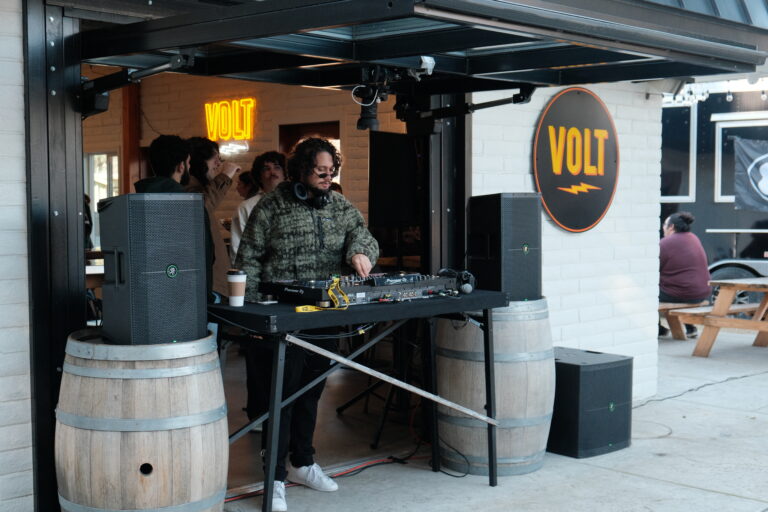
On Jan. 18, Davis Rave Co. held a morning music set at Volt Coffee, Tea & Taps, a coffee shop and beer garden located on Olive Drive in Davis. As patrons enjoyed their morning beverages, rotating DJs with the group played varying subgenres of electronic music such as minimal tech, progressive house and melodic tech. 

The set was the first event of a new initiative DRC is hoping to make a regular addition to Davis mornings — a monthly morning music set highlighting local artists for new and different audiences. For DRC, the main goal of the morning coffee set was increasing accessibility to live music. 

“Some people are morning people, and just because you’re a morning person doesn’t mean you need to be any less involved in music,” Mikayla Bailey, a fourth-year environmental science and management major, said. “It’s a lot about expanding access.” 

Bailey is the current marketing lead for the DRC and believes that electronic music can and should be enjoyed by people of all ages, beyond just a traditional concert or rave setting. On the morning of Jan. 18, patrons of Volt could be seen doing just that. People of all ages gathered to enjoy the music while socializing, studying or nodding along. 

“People were there to vibe and have that morning boost and carry on with their day,” Bailey said. 

The DRC hopes that events such as this one will help integrate more people into the local music community and — as Aaron Helali, a recent UC Davis alum with a Bachelor of Science (B.S.) degree in biological sciences, described it — “disrupt the norm.” 

For Volt Coffee, this idea of disrupting the norm is a core value — the shop itself was born out of an unconventional idea: to be a traditional coffee and tea shop during the day and transition into a beer garden in the evening. 

Jacqueline Siefker, a manager and partner at Volt, outlined the motivations behind this goal.

“Our vision for Volt is to be something different and unique,” Siefker said. “We want our space to be inviting and a place people enjoy coming to. We aim to have something for every guest — whether that be coffee, beer or food.”

It is this very vision that made DRC a natural partner for the local shop. 

“[They] reached out to us with a vision to do something different by changing the typical music scene from clubs and night events or bars to something that can be enjoyed in the morning,” Siefker said. “DRC helped us connect with more people which is a big mission for Volt as we want to be inviting for everyone.”

For Helali, Davis Rave Co.’s mission to make music accessible is personal. As the current chief operating officer (COO) of Davis Rave Co. and a DJ himself, Helali is familiar with the ins and outs of the music industry — but this hasn’t always been the case. 

Growing up, Helali gravitated toward sports and science-related activities, which majorly shaped his interests in college. These activities included his decision to major in biological sciences, as well as his pursuing the men’s club lacrosse team while enrolled at UC Davis. 

“If you told me freshman year that this is the position I’d be in, I’d have been like, ‘What happened?’’’ Helali said. 

It was not until Helali met Caden Velasquez, the founder of Davis Rave Co., through the UC Davis club lacrosse team that he considered pursuing music in any formal capacity. Helali began working with Velasquez at different events, learning the ropes along the way. 

“Gig after gig, I just started learning more and learning why everything is set up the way it is,” Helali said. 

Today, Helali is a key figure within Davis Rave Co., taking on a large role in event planning. A major goal for Helali is to help others find the same joy that music has brought him in an inviting and accessible format.

“Finding this perspective and this community was eye-opening for me,” Helali said. “I realized how important it is and how important it is to share that love with others. I think it’s just important to have these third spaces for people to be able to connect with each other, connect with music and have a safe space to enjoy themselves.”

Helali noted that the music community can also bring solace and a sense of unity throughout times of turmoil. 

“Especially with how the world is now, it’s important to find places where you’re safe but you can also express yourself,” Helali said. 

The morning coffee set aimed to promote this very atmosphere — a goal that Helali believes proved successful. 

“It went really, really well,” Helali said. “There were people from start to finish and it was just a really nice organic little vibe. It was nothing too crazy or energetic, but it was groovy. It was fun.” 

For both Volt and DRC, the event fulfilled key values of building community and creating a unique experience for everyone involved. Although the initiative may move locations in the coming months, Davis Rave Co. hopes to host similar events in the future, whether at Volt or at different local locations, to spread their love for both EDM and the Davis community. 


Written by: Emme Dunning — features@theaggie.org

Ohio State defeats Notre Dame in the College Football Playoff National Championship

0

The Buckeyes make history as the first team to claim the title in the inaugural 12-team playoff era


On Jan. 20, 2025, the National Collegiate Athletic Association (NCAA) football held the College Football Playoff National Championship at the Mercedes Benz Arena in Atlanta, Georgia. 

The No. 8-seeded Ohio State University Buckeyes faced off against the No. 5-seeded University of Notre Dame Fighting Irish. This is the first season where the college football playoffs featured a 12-team bracket. The top four conference champions are awarded first-round bye weeks with the remaining teams selected based on a combination of the best available teams, as seen by the committee, or the two highest-ranked conference champions not already in the playoffs.

This change was most likely due to the heavy controversy the College Football Playoff (CFP) Committee was involved in last year when the Florida State University Seminoles made history as the only undefeated 13-0 team to be left out of the playoffs. For the past 11 years, the CFP Committee has adopted a four-team playoff bracket, where they rank the best four teams in the nation in a championship bracket. This new 12-team playoff structure allows many of the lower-ranked teams, such as Ohio State University, to have a chance at winning despite their seeding rank. 

As the game began, the Ohio State University Buckeyes were awarded the ball in the coin toss aftermath. However, the Fighting Irish were able to strike first with a historic long 18-play drive as quarterback Riley Leonard ran it into the endzone for a touchdown. Leonard contributed 40 running yards throughout the championship, surpassing former Irish quarterback Tony Rice and setting a new record for the most rushing yards by a quarterback in a single season, with 906 yards

The Buckeyes responded with an eight-yard touchdown pass from quarterback Will Howard to wide receiver Jeremiah Smith. As Notre Dame attempted another drive and was stopped, Ohio State had the momentum from there. The Buckeyes marched down the field to score another touchdown, this time from running back Quinshon Judkins.

Following a Notre Dame blocked attempt, Judkins would score another touchdown, this time receiving the ball with less than 30 seconds left in the half. Ohio State entered halftime with a commanding 21-7 lead. 

After the half, Judkins scored his third consecutive touchdown to begin the third quarter, setting a team record as the first in national championship history to score a touchdown on each of their first four drives. With a field goal by the Buckeyes that extended the game into what seemed like an unreachable score, 31-7, Notre Dame mounted a valiant comeback. 

Wide receiver Jaden Greathouse came alive in the second half, connecting with Leonard on a 34-yard touchdown reception in the third quarter. The Fighting Irish then earned a much-needed turnover with a forced fumble caused by linebacker Jake Bowen on the first play of the fourth quarter. Unfortunately, the Fighting Irish’s kicker could not convert on a 27-yard field goal, leaving the score at 31-15.

After a series of changing possessions, the Fighting Irish charged down the field again and ended up scoring another touchdown from Greathouse, this time on a 30-yard reception. Notre Dame went for two extra points and converted on a trick play with a touchdown throw from wide receiver Jordan Faison to wide receiver Beaux Collins, cutting the lead to a one-possession game score of 31-23 with 4:15 minutes left in the game.

As Ohio State faced a critical third down and 11 yards, with Notre Dame poised for a chance to tie, the Buckeyes’ Howard threw a more than 50-yard catch and reception to Smith, sealing the national championship for the Buckeyes.

Smith set new records this season for most Ohio State receptions in a season by a freshman with 70, and most Ohio State receiving touchdowns in a season by a freshman with 14. Wide receiver Emeka Egbuka became the new Ohio State all-time reception leader, with 205 catches in his collegiate career. This is the eighth Football National Championship Ohio State University has won in program history, their previous title being in 2014. This marks the second consecutive championship for the Big Ten Conference, with Ohio State joining their long-time rivals, Michigan State University, who claimed the title in 2024.

 The first season of the 12-team college football season can be deemed as a success. Although the formatting may be confusing to fans, it has undeniably brought more excitement and unexpected twists to the postseason, similar to NCAA basketball’s March Madness-style bracket. College football is entering a new era where every bowl game matters, igniting a new wave of creativity and excitement in the sport.


By (Diego Cerna) — sports@theaggie.org

Blake Lively, Amber Heard and the power of a good public relations team

0

Online smear campaigns use social media to shape public opinion


By LAILA AZHAR — features@theaggie.org


Early into the press tour for “It Ends With Us” — a 2024 film based on Colleen Hoover’s 2016 novel — fans were quick to point out tensions between the cast members. 

Co-stars Blake Lively and Justin Baldoni, who also directed the film, were rarely spotted with each other outside of filming. At the movie’s premiere, the two didn’t pose for a single photograph together. Lively and Hoover, alongside cast member Jenny Slate and Lively’s husband, Ryan Reynolds, subsequently unfollowed Baldoni on Instagram. 

On social media, a narrative quickly emerged, and Lively was widely criticized for her lighthearted tone in promotional interviews. 

“Grab your friends, wear your florals and head out to see [the movie],” Lively said in a promotional video posted on Instagram. 

Baldoni, on the other hand, spoke soberly about the realities of domestic violence, a theme the movie devotes much of its attention to. 

A 2016 video of Lively responding to an interviewer’s question about her pregnancy resurfaced — titled “The Blake Lively interview that made me want to quit my job.” Additionally, Lively promoted her beverage company and launched a hair-care company alongside her promotion of the film, as well as revealed her husband had written a scene and commissioned her own edit of the film, earning her a producer credit.  

In the court of social media, Lively was found guilty of being abrasive and hard to work with, of being controlling and of skirting Baldoni’s authority over the movie and guilty of being callous toward the serious subject matter of the film, according to public opinion. 

In December 2024, nearly five months after the movie’s release, The New York Times’ article, “‘We Can Bury Anyone’: Inside a Hollywood Smear Machine,” revealed the behind-the-scenes details of the situation. 

Lively had called a meeting with Baldoni and Jamey Heath, the film’s lead producer, in which she had made several complaints regarding inappropriate conduct on set, according to the article. 

“She claimed Mr. Baldoni had improvised unwanted kissing and discussed his sex life,” the article reads. “Mr. Heath had shown her a video of his wife naked. […] She said that both men repeatedly entered her makeup trailer uninvited while she was undressed, including when she was breastfeeding.” 

Following these complaints, Lively then made requests requiring an intimacy coordinator to be on set during her and Baldoni’s scenes together to ensure her safety and comfort. In return, Baldoni, alongside public relations (PR) executives Melissa Nathan, Jessica Abel and Jed Wallace, orchestrated a media frenzy aimed at painting Lively in a negative light, according to the article. 

For example, the report states that the official marketing strategy for the movie involved keeping an uplifting tone when discussing the film. When Lively received criticism for this approach, Baldoni and his PR team chose to display a more serious attitude, according to The New York Times article. 

While the details of how the campaign operated are murky, communication between the PR executives contain references to “social manipulation” and “proactive fan posting,” according to the article. 

“We’ve started to see shift on social, due largely to Jed and his team’s efforts to shift the narrative,” one of Nathan’s employees wrote in a group text. 

 A leaked voice note, however, shows Baldoni apologizing to Lively for his initial reaction to her version of a scene, praising her creative skills. Many believe this shows that Baldoni was not responsible for a hostile environment on set and was instead receptive and accommodating to her ideas. 

His legal team additionally released a video of Baldoni and Lively on set together while filming a slow dance scene, claiming it refutes her allegations of harassment. Baldoni denies the allegations made by Lively, alleging that she collaborated with The New York Times to portray him in an unfavorable light. He has filed lawsuits against both Lively and The New York Times for defamation and libel, respectively. The trial is set for March 2026. 

The public discourse over the PR campaign has brought attention to a similar situation of an actress’ abuse allegations being discredited. In 2016, Johnny Depp’s ex-wife Amber Heard filed for a restraining order claiming she had been physically and sexually abused. 

“She’s begging for global humiliation,” Depp said via text message. “She’s gonna get it.”

In 2022, the Depp v. Heard defamation trial took the internet completely by storm. This case, however, wasn’t the first time these claims of physical abuse had been tried in court.

When an article published in The Sun referred to Depp as a “wife beater,” he filed a lawsuit against News Group Newspapers Limited in the High Court of Justice in London, claiming the piece was libelous. He lost the case, and in 2020, the judge ruled that 12 cases of alleged assault had been proven to a civil standard. 

The 2022 case regarded an op-ed Heard published in The Washington Post in 2018 — an op-ed in which she did not specifically name Depp. Rather, Heard had stated that she had become “a public figure representing domestic abuse.”

The livestreamed trial sparked a barrage of online hate toward Heard. Social media users scrutinized every detail of her body language, mocked her testimony and criticized her every move.

As Depp was more famous than Heard, he had a natural advantage when it came to garnering the public’s sympathy. Additionally, he employed a crisis PR team (which included Melissa Nathan, who would later go on to represent Baldoni), and the conservative media outlet The Daily Wire, founded by Ben Shapiro, spent thousands of dollars promoting anti-Heard advertisements. 

In a 2023 journal article, researchers analyzed the impact different forms of information diffusion on social media have on public discourse, comparing viral diffusion (when information is spread through a peer-to-peer network) and broadcast diffusion (when an external event serves as a catalyst for discourse across various internet communities). 

Richard Huskey, a co-author of the paper and a professor in the UC Davis Department of Communication and the Cognitive Science program, commented on the broadcast-like nature of the Depp v. Heard trial’s coverage on social media. 

“Even I heard about it,” Huskey said. “I’m not connected to those kinds of people on the internet at all — I am not following that kind of discourse, and somehow it even made its way into my conscious awareness.” 

While topics like this one initially generate a lot of attention, eventually the internet moves on. 

“When we’re looking at an event that will elicit a broadcast diffusion, there’s first not a lot of conversation and discussion, and then all of a sudden everybody’s talking about it all at once,” Huskey said. “The peak happens almost at the very beginning and then discussion kind of decays over time.” 

However, despite their short lifespan online, the impact of these situations are far-reaching — as one student at UC Davis has observed, they reveal a culture of misogyny online.

“It shows how thinly veiled the hatred for powerful [and] beautiful women really is,” Ella Fodor, a second-year wildlife, fish and conservation biology major, said. 

As Cuahtemoc Martinez Marquez, a second-year international relations and psychology double major, pointed out, these situations display the immense power of social media.

“Using the press to shift everyone’s opinion and cover your own faults is a gaslighting technique,” Marquez said. “This situation shows a very negative side to social media: its ability to ruin reputations.” 

This sentiment echoes the ideas expressed in an open letter signed by more than 130 domestic violence organizations and experts: Powerful men, armed with public relations teams and media manipulation, have seemingly learned to weaponize the internet to tarnish the reputations of women who speak out, setting a dangerous precedent for victims everywhere.

On social media, it’s often easy to scroll mindlessly, passively absorbing online content without fully understanding the forces behind it. We can be flooded with posts, opinions, and content that generate conversation and have the potential to shape our thoughts, without even realizing how this discourse might be manipulated to serve a specific agenda. 

The Depp v. Heard trial has largely faded from online discourse. In a few months, the Lively and Baldoni situation will likely follow suit, but the online culture that subjects victims of abuse to onslaughts of public ridicule will remain. The internet is not an inherently neutral space — it can be shaped by existing social structures and manipulated to meet the needs of powerful individuals.  

Melissa Nathan — who worked on both Depp and Baldoni’s campaigns — encapsulated the underlying dynamics of these media strategies in a leaked text from The New York Times article. 

“And the socials are really, really ramping up in his favour,” Nathan said. “She must be furious. It’s actually sad because it just shows you how people really want to hate on women.”


Written by: Laila Azhar — features@theaggie.org

Remembering that ‘The Land is Our Community’ at The Avid Reader

Roberta L. Millstein’s clarification of Aldo Leopold’s environmental ethics suggests that we rethink what we owe to our natural communities 


BY JULIE HUANG – arts@theaggie.org


At The Avid Reader on Jan. 23, UC Davis Professor Emerita and researcher Roberta L. Millstein presented her interpretation and defense of Aldo Leopold’s “The Land Ethic,” an approach to human interaction with the environment, as outlined in Millstein’s book, “The Land is Our Community: Aldo Leopold’s Environmental Ethic for the New Millennium.” 

Millstein began the talk by introducing Leopold’s history and background as a hunter, forester, wildlife manager, ecologist, conservationist and professor, giving context to the development of his attitude on ethical behavior toward the land. Although he is best known for his book, “A Sand County Almanac,” and the essay, “The Land Ethic,” contained within it, which were posthumously published in 1949, Leopold published more than 500 works and wrote just as many unpublished works. 

“He’s kind of a standard figure in all of the anthologies for environmental ethics, and you can’t help but teach him,” Millstein said. 

When asked what inspired her to write about Leopold specifically, Millstein cited her experiences as a professor. They led her to observe how Leopold’s ethical views were universally appealing, allowing students of many different academic backgrounds to find value in his philosophy. 

“This [‘Land Ethic’ approach] was a view that a lot of [students] find attractive, and I mean students from different backgrounds and majors, like art, philosophy, history and different kinds of science majors,” Millstein said. “This is something that could draw a lot of people in and get people interested.” 

However, Millstein noticed that there were many interpretations of Leopold’s “The Land Ethic” that misrepresented the intended meaning of his work. She eventually decided to write a book with the aim of clarifying his beliefs and defending the validity of his arguments. 

“I felt that a lot of interpretations out there were leading people to reject him too quickly, so I wanted to write this book and clear things up so that if people reject him, they at least reject his theory on the right grounds,” Millstein said. 

Taking an analytical approach based on the history of environmental science, Millstein explained how Leopold’s ethics emphasize the status of the individual as a member of a natural community that includes living beings, such as plants and animals as well as abiotic components like soil and water. Sharing the status of membership within a community implies that humans owe a level of respect to the natural environment in which they reside, also termed by Leopold as “a conviction of individual responsibility for the health of the land.” 

Two sentences that Millstein identified as a major source of misinterpretation of Leopold’s ethic are: “A thing is right when it tends to preserve the integrity, stability and beauty of the biotic community. It is wrong when it tends otherwise.” 

“A lot of people took these sentences to mean that the individual should be sacrificed to the community — which a lot of people read, found to be fascist and rejected immediately, saying that, ‘This is off the table,’” Millstein said. “Others read it, came to the same conclusion and agreed with that wrongful interpretation.” 

The enduring nature of this interpretation of Leopold’s original perspective published in mid-century America has had far-reaching implications, as future environmentalists were influenced by his words in the following decades. 

However, Millstein argued that when examining Leopold’s actions throughout his life, it is clearly impossible for Leopold to have intended for this interpretation. From his writing, readers gathered that actions are wrong if they do not benefit the entire community or that individual outcomes should be sacrificed for the good of the collective. However, Leopold meant something different entirely, according to Millstein. Rather, in addition to the obligations that humans have toward other humans, there exists also an obligation to protect and promote the capacity of land communities. 

“Why should we undertake efforts to protect and restore the natural environment?” — Millstein posed the question before going on to answer it. The individual is a member of a community of interdependent parts. Protecting the health of the land that human societies exist on also protects the capacity of the environment for self-renewal, which comes back to benefit humanity in the end, according to Millstein. 

“In human communities, we accept limitations on our freedom of action and rules of social conduct, because we are parts of competing and cooperating interdependent human communities,” Millstein said. 

Drawing from the disciplines of history and ecology, Millstein argued that we should extend our understanding of the interdependence between beings to include not just humans but the other members of our land communities — soils, waters, plants and animals. 

The existence of bees was used as one example. Various crops and flowers grown by humans are dependent on bees for pollination, and yet there are a variety of threats to bees that are also caused by humans, such as pesticides and climate change.

“Harmful interactions with bees make them vulnerable, and that vulnerability is important, because it makes them dependent on us — on human actions — and what we do or don’t do,” Millstein said. “The key point is to recognize and act on obligations to the land over and above self interest.”

If we are capable of accepting limits on our personal freedoms and obligations to other human beings in order to participate in society, consistency demands that we expand these ethics to include the land, which we share an interdependent relationship with. 

“Each of us has a role to play, especially with the ongoing climate crisis, rapid extinction of species and loss of habitat,” Millstein said. “We need, more than ever, to understand that we cannot just focus on ourselves.”

When the conversation shifted toward recent political developments and the light they have shed on the environmentally destructive actions, as well as policies pursued by a small number of individuals with vast amounts of wealth and power, Millstein voiced a call to action. 

“It is up to the rest of us,” Millstein said. “We [are greater than] them in numbers. If I had the most grandiose hope for the book, I’d hope that we all start to say that [this kind of policy] isn’t in our best interest, and it is not in our community’s best interest.” 

Written by: Julie Huang — arts@theaggie.org

Rōki Sasaki: the newest MLB star hailing from Japan

The Los Angeles Dodgers add a third Japanese superstar


By THEO KAYSER — sports@theaggie.org


On Jan. 17, 2024, Japanese baseball sensation Rōki Sasaki announced that he would be signing a contract with the Los Angeles Dodgers, via his Instagram. 

The decision came after a long-awaited posting by his former team — the Chiba Lotte Marines of Nippon Professional Baseball (NPB). Much buzz surrounded Sasaki’s arrival to Major League Baseball (MLB) about which team would land the young superstar, and in the end, it was the reigning World Series champion, the Dodgers. 

Sasaki’s rise to stardom in the United States accelerated after his performance in the 2023 World Baseball Classic, which helped his team, Japan, triumph over the U.S. in an epic battle. In this tournament, as well as his four seasons in NPB, Sasaki dominated opposing batters with his signature splitter, which has been lauded by scouts as elite, and his high-velocity fast ball. Both of these attributes are suggestive of a relatively smooth transition to MLB in 2025 and his potential to continually thrive in the future. 

Many of the expectations that are now being set for Sasaki’s career in the MLB are thanks to his track record relative to his 23 years of age. Others can likely be attributed to the long and ever-growing legacy of Japanese players dominating in the world’s premier league

Through his signing with the Dodgers, Sasaki is joining two other Japanese players in Los Angeles. One of whom is teammate Shohei Ohtani, sometimes called the “Japanese Babe Ruth” due to his two-way prowess as both a pitcher and batter. Since his signing to MLB in 2018, Ohtani has collected three Most Valuable Player (MVP) awards and has cemented himself as the face of baseball on the global stage.

The other is Yoshinobu Yamamoto, who just last season signed the largest-ever free-agent pitching contract when he left NPB to join the Dodgers on a 12-year, 325-million-dollar deal. In his first season stateside, Yamamoto joined Ohtani in leading the Dodgers to a World Series championship. 

The history of Japanese baseball runs even deeper in the Dodgers organization, too, as the organization also signed the second-ever Japanese MLB player, Hideo Nomo, in 1994. This came 30 years after the first when Masanori Murakami had a brief two-season stint from 1964 to 1965 with the San Francisco Giants

Another worth mentioning is the Dodgers’ signing of Chan Ho Park, who became the first Korean player in MLB when he debuted alongside Nomo in 1994. Some have connected the Dodgers breaking ground in the Asian baseball market 30 years ago with their recent success in landing Ohtani, Yamamoto and Sasaki. 

Japanese baseball in the U.S. also vastly transcends the Los Angeles market. Notable in any discussion of Japanese baseball is the legendary Ichiro Suzuki — usually referred to by just his first name — who will become the first Japanese player to be inducted into the Baseball Hall of Fame on July 27, 2025. Ichiro, known for his reliable contact, lightning speed and fantastical defensive abilities, captured a whopping 99.7% of votes on the 2025 ballot, finishing just one vote shy of joining Mariano Rivera as the only player to ever be inducted unanimously. 

Ichiro won the hearts of sports fans everywhere during his magical MLB debut with the Seattle Mariners in 2001, where he collected the MVP, Rookie of the Year, Silver Slugger and Gold Glove awards, along with the batting title and an All-Star game selection. This season set the tone for his 19-year career, which has gone down as one of the greatest of any player.

So, while Sasaki is far from the first star to transition from Japanese to U.S. baseball, his path to MLB is a rather unique one. 

Traditionally, players coming to MLB from Japan’s NPB or the Korean Baseball Organization (KBO) wait until they have turned 25 years old and have played in six seasons in their respective leagues. Once a player has met both of these criteria, they are then allowed to become free agents, meaning they can negotiate with MLB clubs freely. 

This was the path taken by Sasaki’s now teammate, Yamamoto, who through this process was able to secure his record-breaking contract last year. Some other stars who used this process include Ichiro and Masahiro Tanaka.

Speculation surrounding Sasaki for the past several years left many questioning when he would make his transition to MLB. In the 2024 offseason, Sasaki reportedly attempted to make the change but was denied by his club, the Marines. If a player, such as Sasaki, attempts to move from NPB to MLB before they meet the above criteria, they are liable to be denied by their club, who have both financial and team performance incentives. Luckily for Sasaki, the Marines granted his request this time around.

At just 23 years old, Sasaki did not meet the requirements to become an MLB free agent, which denoted that he would be categorized instead as an “international free agent.” This meant that any team who wished to sign him could only use funds from their international bonus pool. This explains why Sasaki signed with the Dodgers for a 6.5-million-dollar bonus, a massive bargain compared to what his value likely would have been in the open market. Now Sasaki must wait until, at the earliest, the end of the 2030 season to reach free agency. 

While this path is quite uncommon, as it severely limits a player’s immediate earnings, it’s worth noting that it is similar to the journey Ohtani took to MLB. With Ohtani and Sasaki as exceptions, international free agency is generally made up of much younger amateurs from around the globe. This ranges from Latin American 16-year-olds to the occasional high school graduate from Japan, Korea or Taiwan. 

In the 2025 season, Sasaki will be looking to establish himself as the newest Japanese superstar in the now trio who headline the roster of the World Series favorite Dodgers. If he meets expectations, he’ll join a long and ever-growing list of baseball icons from the country of Japan. While his supreme abilities deserve all of the praise they are receiving, it’s important to note that he is one in a long line of similarly gifted players and is sure to be followed closely by other stars. 


By (Theo Kayser) — sports@theaggie.org

UC Davis students and staff reflect on the frogs in the community, discuss their history and conservation

0

The background behind the frogs that live in Davis and how students can help them out


By AMBER WARNKE — features@theaggie.org


Frogs have long been objects of fascination and been depicted in countless memes, stories, TV shows and other aspects of pop culture. It is no surprise that they have found their way into the hearts of many UC Davis students as well. 

Ethan Negus, a second-year biological sciences major, grew up loving the creatures. 

“I used to always go to the [Los Angeles] Zoo and go to the little [amphibian exhibit], and I would always just stare at the frogs,” Negus said. “I don’t know what inextricably drew me to them, but I just feel like when I stare [into] the eyes of a non-thinking frog, I just feel my soul at peace. They’re just so chill.” 

Matthew Perez, a fourth-year chemical engineering major and long-time frog lover, tuned into the frog conversation as well.

“I’ve noticed that a lot of people are into frogs [in Davis],” Perez said. “They’re really seen as a symbol of nature itself, and there [are] a lot of people in Davis that came here because they love the amount of nature.” 

Brian Todd, a professor of conservation biology and herpetology at UC Davis, agreed with this statement, explaining that amphibians help connect him with nature as a whole. Todd also believes that many people love frogs because of their strange, alien-like appearance.  

“Half their body looks like a mouth, and I think that creates this really weird alien perspective — and yet they always seem pretty harmless,” Todd said. “And with the exception of some of the grumpy frog memes that you see on the internet, they also seem to always be in a relatively whimsical mood.”

Negus shared Todd’s love of frogs, describing the amphibians as lovely, but added that his feelings are multifaceted.

“They’re pretty awesome, except for when they do irrevocable damage to the ecosystem,” Negus said.

Certain invasive frog species can greatly harm ecosystems, especially when they outcompete native frog species. Invasive species often threaten native ones by competing for scarce resources, reducing biodiversity and altering habitats. 

“One [species] that you’ll sometimes see [in Davis] that’s not native is the American bullfrog,” Todd said. “[They] will either eat the [native] tadpoles or they’ll outcompete them. One [native species] you don’t see a whole lot anymore but can still be found in the area, especially along Putah Creek, is the western toad.”

The western toad frogs can grow up to four inches in length and are brown, gray or olive with black spots. They can secrete an irritating fluid from glands on their skin and feed on aquatic plants, insects and small invertebrates.

Todd also explained that contrary to popular belief, toads are still frogs, but not all frogs are toads. 

“We reserve ‘frogs’ often for the more aquatic or arboreal species, [ones that are found] climbing in trees,” Todd said. “We reserve ‘toads’ for the more terrestrial, drier-skinned species that are found.”

Todd continued by describing some other common frog species in Davis. 

“The other [species] that you’ll see more commonly, and [that] you’re more likely to hear than you are to actually see, is the western chorus frog,” Todd said.

These frogs, also called the Hollywood frog, are quite small, growing up to only 1.5 inches in length, and have several dark brown or gray stripes. 

“Anytime you see a movie or a TV show and they have frogs calling, it’s usually a recording of the western chorus frog or Pacific chorus frog,” Todd said. 

Todd added that the Pacific chorus frog can also often be heard calling in the UC Davis Arboretum but can be hard to spot, as they often hide in dense vegetation. In recent years, pacific chorus frogs are much more populous in Davis than western toads, but this hasn’t always been the case. 

“Western toads used to be all over Davis, so much so that Davis was famously made fun of on Fox News because, at the expense of the city, they developed a tunnel that went under a road, and it was called the toad tunnel,” Todd said. 

The Davis toad tunnel was constructed in 1995 at a cost of $14,000 and ran underneath Pole Line Road overpass. Unfortunately, the frogs overheated and died from lights in the tunnel and were picked off by birds that waited at the tunnel’s end.

“[The tunnel] was supposed to connect one side of the road to a wetland on the other side, so that all the toads would go under it,” Todd said. 

While the tunnel is no longer operating, students can still visit Toads Hollow, a small set of frog-themed statues and ornamental houses that were meant to await the toads on the other side of the tunnel. 

Today, Todd said the major challenge native frogs in Davis face is tied to the way the land of Davis has been altered over time.

“We have changed a lot of the waterways in California so that they don’t dry out every summer like they were supposed to and like they used to,” Todd said. “That’s actually really good for amphibians, when they dry out — because it keeps things like fish and bullfrogs from taking over.” 

This has led to less space for frogs to breed, lay their eggs and survive, according to Todd — majorly problematic as frogs are also highly important to ecosystem health. Frogs are a “keystone species,” balancing the food chain by acting as both predator and prey: They act as a food source for birds, fish, snakes and other wildlife while also controlling pest levels. Most critically, however, they are also an “indicator species,” which means that frog species are the first to be affected by pollution and ecosystem changes. Frog species’ well-being thus reflects the general health of an ecosystem. 

Because of this, however, over half of all frog species are in danger of becoming extinct, especially as the Chytrid fungus, discovered in 1998, has been causing rampant disease in frog species across five continents.  

The most important way to protect frogs is by pushing for environmental protection in general by supporting laws that emphasize conservation and combat climate change. Increasing the amount of habitat available to frogs, such as by incorporating more ponds and greenery into gardens, can also be beneficial. 

“If you live in a place where you can manage your landscape, having lots of shrubs and bushes around seems to be where all these frogs like to hang out,” Todd said. 

Avoiding using pesticides and slug pellets is also vital, as these pollute the environment with chemicals that can be absorbed directly into frogs’ skin. Lastly, Todd added that students should look, but not touch, any froggy friends that they see. 

“Not handling them is a good thing,” Todd said. “It’s hard not to want to pick up every frog you see, but a lot of times that can stress the animals out and can introduce or spread diseases around.”

Protecting these amphibians is especially important to Negus, who believes that frogs carry life lessons all UC Davis students can benefit from. 

“I think at least every person in their time on Earth should look into the eyes of a frog as it’s just really living it up in a water structure and just existing,” Negus said. “I think we could all learn to exist like frogs and just put aside whatever troubles us. Anything in life that seems insurmountable at any point, we should just take a minute to appreciate that frogs, [who] no matter their strife and effectiveness of their tunnels, just seem to have a good time, all the time.”


Written by: Amber Warnke — features@theaggie.org

Recreational soccer at UC Davis helps students’ physical and mental well-being

0

UC Davis recreational soccer players share their love for the sport


By GRACIELA TIU — features@theaggie.org


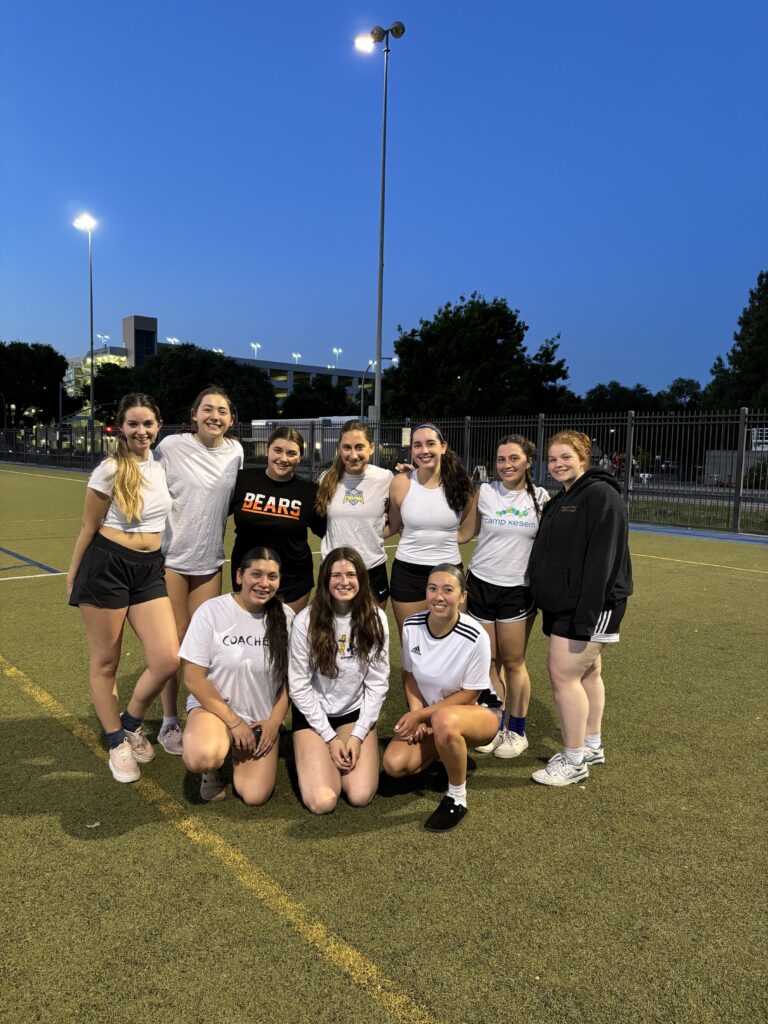
Recreational sports provide a unique opportunity for people to play the sport they enjoy without the stress of a large time commitment. Recreational soccer at UC Davis is a popular sport of choice, with many students finding benefits from the recreational soccer program.

“Rec soccer has helped me stay physically good and mentally happy,” Sammy Aguilar, a second-year psychology major, said. “In a place like college, it’s easy to get caught up in schoolwork and the stress that comes with it. Rec soccer has helped me relieve that stress and keeps me mentally calm, since I am playing the sport I love the most with friends, worrying about nothing and enjoying the time I have playing out there.”

Recreational soccer at UC Davis accepts people from various levels and backgrounds, welcoming those with years of experience and those with little to no experience at all.

“I have been playing soccer my entire life at a variety of levels — and coming from

playing every day throughout high school, I knew I would want to continue playing in college,” Kate Bienkowski, a first-year mechanical engineering major, said. “As much as I love playing at a highly competitive level, I wasn’t quite prepared to join the school’s official club team, so rec soccer seemed like a perfect fit for me. I also wanted to expand my social circle and meet new kinds of people that I otherwise would not have the opportunity to meet.”

One of the most fulfilling aspects of recreational soccer for many students is the tight-knit dynamic fostered by recreational sports teams.

“The overall culture and environment of the rec soccer community is family-like,” Adi Srivastava, a second-year nutrition science major, said. “Most people know each other because we’ve played throughout our time at the university. Everybody is light-hearted and everybody does a great job of playing clean but also making the games competitive.”

Many students comment that they find the atmosphere on the field feels very encouraging and comfortable. Bienkowski discussed that this was especially helpful as a new student who was seeking an environment to play with others who share a love for the sport. 

“The environment in rec soccer is overwhelmingly supportive and welcoming,” Bienkowski said. “As a freshman who came to college not knowing a single person here, I was anxious about finding a group to play with. Without having to do much work on my end, I was invited to join a team full of strangers who welcomed me with open arms, with no concerns over my skill level or how well I would mesh with the group. I feel like that is a perfect example of what kind of community the rec soccer teams are.”

Students often find more than just supportive teammates on the field — they also make meaningful friendships.

“Many of the friends I have now I met through playing recreational soccer,” Aguilar said. “These friends have become an important part of my life and I’m really grateful to have found them. I love that we all share the common love of soccer, but we’re also able to connect outside of it.”

Although the time commitment is relatively low compared to club or official school sports teams, the practices and games sometimes require players to develop time-management skills. 

“Being a student and a person who plays rec soccer is quite a thing to balance, but I am a firm believer in the idea that as much work as you put into school, you also need to put some time into yourself,” Aguilar said.

Having the opportunity to get exercise while getting to escape from everyday worries and tasks can help students’ mental well-being.

“Participating in soccer definitely impacts my mental health, as it allows me to put all my focus on the field and my problems [and] stresses on my mind are washed away,” Srivastava said. “It’s an extremely beneficial activity for my mental health, and [it] obviously also keeps me physically fit.”

Bienkowski also added how she believes playing soccer can feel more enjoyable than other types of exercise.

“It is also a great option for physical exercise that is less tedious than your typical forms of cardio, such as running or biking,” Bienkowski said.

For students who want to get involved with the sport or find a team to play with, there are multiple options for finding fellow players.

“It’s often easy to recruit players for your rec sports team,” Aguilar said. “Most of the time you contact your friends to make a team — and when you need more players to fill in certain gaps, the best way to recruit players is to go to Dairy Field and play some pickup soccer. That’s where you can meet new people and potentially new players you would want to recruit for your team.” 

The UC Davis Campus Recreation website provides an overview of the sports programs and shows different ways to get involved. Another way to get more information is through the app “Fusion Play.”

“For those who are hesitant to join, I know that the app that rec soccer is organized through has different options for skill level and effort necessary,” Bienkowski said. “People who have never touched a soccer ball in their life can very easily find a team that fits their preferences, and people who are looking for more competition can also very easily find that option. I think retainment of players comes fairly easily for a majority of teams because of how welcoming and warm the community is.”

Altogether, the recreational soccer program at UC Davis allows students to bond with one another and feel fulfillment while exercising an appreciation for the sport.

“It’s a sport that I really enjoy playing, so when I saw the opportunity to play rec soccer I knew I had to sign up,” Aguilar said. “For me, it’s a way to take a break from school and enjoy playing the sport I love with no distractions — just me and the ball.”


Written by: Graciela Tiu — features@theaggie.org


Will the Kansas City Chiefs get their three-peat?

0

The Super Bowl race is narrowed down to four teams, with the Chiefs looking to advance to the championship for a third time 


By Lucienne Brooker — sports@theaggie.org


As the National Football League (NFL)’s 2024-25 season draws to a close, all eyes are on the four teams fighting for a Super Bowl LIX victory. Ticket demand has soared, increasing dramatically from past conference championship playoff games with many fans tuned in to see who will be crowned champions this year. 

Sports betting websites are overwhelmingly picking the Kansas City Chiefs to win their third Super Bowl in a row. Finishing the season ranked No. 1 in the American Football Conference (AFC) West, the Chiefs have been a dominant force in recent years. They have appeared in four consecutive Super Bowls since 2019 and won three of them under the guidance of Head Coach Andy Reid. As last year’s champion, the Chiefs have a lot to live up to — most fans still haven’t gotten over their overtime defeat of the San Francisco 49ers in Super Bowl LVIII. 

Led by quarterback Patrick Mahomes and tight end Travis Kelce, the Chiefs only lost twice during their regular season. However, one of those defeats came at the hands of the Buffalo Bills — a team they recently won against in the AFC Championship on Jan. 26. While this was like a tight match-up to Kansas City, winning 32-29, the Chiefs will be heading to Super Bowl LIX. 

Their opponent, the Buffalo Bills, pulled off a tight two-point win over the Baltimore Ravens on Jan. 19 to set up their match with the Chiefs. Despite having made it to the final match four times, the Bills have yet to win a Super Bowl championship. They currently hold the record for most appearances with no victories and were looking to alleviate themselves of that burden this year, having lost only four times this season prior to their game against the Chiefs. 

On the other side, experts were predicting a high-scoring and exciting game for the Washington Commanders versus the Philadelphia Eagles. Both teams boast strong offenses, so it was likely to come down to whose defense played a better game. The Commanders have won three Super Bowls, although none in the last 30 years. They haven’t appeared in the playoffs at all since 2020, with many people viewing the team as a wildcard despite their high-scoring performance this season. Even with five losses, they never failed to score less than 15 points and were looking to give the Eagles a real test. 

The Eagles, on the other hand, have had playoff success in recent years with their Super Bowl win in 2017. However, that was their only win in four appearances. Additionally, the Eagles never scored less than 15 points this season. The home match against the Commanders on Jan. 26 was set to provide them with a boost, as they are notorious around the league for having one of the most die-hard fan bases — a prediction that rang true with an Eagles victory of 55-23.


The Super Bowl will take place between the Kansas City Chiefs and the Philadelphia Eagles on Feb. 9 at 3:30 p.m., PST. The match will be hosted at the Caesars Superdome in New Orleans, Louisiana for the first time in over a decade and will feature a halftime performance from Kendrick Lamar. Lamar also headlined the Super Bowl halftime show in 2022. 

Aggie football fans can catch the action at the Super Bowl Watch Party hosted in the Memorial Union Games Area recreation room and play a game of football bingo. Additionally, head over to the Memorial Union Information Desk at any time during the week before the match to answer Super Bowl trivia questions and get the chance to win a $50 Amazon gift card. Although the actual game is over 2,000 miles away, there will be plenty of opportunities for UC Davis students to get involved and have some fun during the Superbowl. 


By Lucienne Brooker — sports@theaggie.org

UC Davis student founds School of Freedom to educate Afghan girls amid Taliban ban

0

Walid Jailani launches the non-profit to provide education in support of over 1,200 students and empower local educators


Walid Jailani, a fourth-year neurobiology, physiology and behavior major and education minor, founded the School of Freedom — a non-profit organization dedicated to providing education to young Afghan girls who have outgrown the limited schooling opportunities available to them in Afghanistan. 

Jailani shared that he was deeply moved to help young girls in Afghanistan after seeing their videos posted on TikTok. In these videos, they revealed that they were unable to continue their education beyond the seventh grade as a result of new bans implemented by the Taliban.

“I showed my brother and said, ‘This is making me very sad, I want to do something about it,’ and he joked and said, ‘Oh, just start a school,’” Jailani said.

The School of Freedom was originally the Women’s Education Movement (WEM), a UC Davis on-campus club that Jailani started as a second-year in 2023. Jailani and other undergraduate members began tutoring girls in Afghanistan, initially teaching only English-language courses to a classroom of 30 students. Eventually, they had 1,200 students sign up, allowing them to create separate English courses: Elementary English, Intermediate English and Advanced English.

“Depending on their level and proficiency, we placed them in those classes and UC Davis students were teaching them,” Jailani said. “They tutored these girls for about 13 to 14 months themselves and so did I. It was a good time.”

Jailani also said that the dedication of the School of Freedom volunteers helped to create an established program. 

“Props to my volunteers, they would be waking up at 8 a.m. every day — they don’t even wake up for their classes at 8 a.m. — and they were ready to teach,” Jailani said. “It was very interesting for me to see them wake up and be so excited to teach and give back to these girls and this community when they wouldn’t even want to wake up for their own 8 a.m. classes.”

Word quickly spread about their classes, and soon, Afghan teachers who had lost their jobs began reaching out to Jailani, eager to contribute. With their support, Jailani established the School of Freedom, creating a platform for Afghan educators to teach a variety of subjects to Afghan students, expanding the curriculum beyond just English.

“At that time it was two different branches,” Jailani said. “We had the Women’s Education Movement that was being run in the [United States] and the School of Freedom that was taught voluntarily by teachers that lost their jobs in Afghanistan.”

The Women’s Education Movement aimed to provide crucial financial support to Afghan teachers and students through fundraising and donations. To ensure the most efficient use of its limited budget, the organization developed a financial aid application system to assess and prioritize students with the greatest need.

“We paid for their internet and anything else we could help them out with,” Jailani said. “For students, we set up a financial aid system. We were getting donations from the Willow Way Tutoring Club. […] They would give us a budget every month to pay out 30 to 40 students for Wi-Fi money because some students couldn’t afford it and we wanted to accommodate them any way we could.” 

Eventually, the Women’s Education Movement and the School of Freedom united as one, with the School of Freedom being officially registered as a non-profit organization. The School of Freedom now serves approximately 1,200 students and has 35 teachers, including a principal and vice principal. The school follows the official Afghan curriculum, while UC Davis student members focus on management-related tasks, including fundraising and outreach efforts to enroll more students.

Robina Haqiqi, a fourth-year psychology major, serves as the vice president of the School of Freedom at UC Davis, leading projects and supporting Jailani in carrying out their mission to teach. She emphasized that the School of Freedom is not just about teaching a set curriculum but also about a larger social impact.

“This work has been deeply meaningful to me because it represents hope and resilience,” Haqiqi said. “Knowing that we’re making a huge difference in the lives of girls who are denied basic opportunities motivates me every day. It’s a reminder that even in the face of unimaginable challenges, education can still be a tool for freedom and change.”

The School of Freedom’s students have already been inspired to shape the future, according to Mariam Saleh, a fourth-year neurobiology, physiology and behavior major. Acting as the organization’s social media coordinator, Saleh had the privilege of connecting with students one-on-one and sharing their stories with the rest of the world.

“One thing that inspired me from the interviews [with the students] is that a lot of the girls wanted to become journalists, which is very powerful because they want to use their voice to make a change as well,” Saleh said. “Overall, I am very excited for what [the] School of Freedom can do, and [I am] hoping it can create a bigger and more powerful change.”

Moving forward, UC Davis members of the School of Freedom club are working on launching a youth program for Middle Eastern and other refugee communities in California to provide mentorship, mental health resources and tutoring support for high school-aged students. 

“They come to this country and they might be good at science and math but struggle with the language barrier,” Jailani said. “As far as mentorship, most of the members here are refugees or immigrants and have gone through this process themselves and are now at UC Davis. We want these [high school] students to get connected with our undergrads so they can see and know, ‘If they did it, I can do it too.’ […] We want to introduce them to trade schools, community college[s] and four-year universities to get them thinking about continuing their education.”

The School of Freedom organization is eager to welcome new volunteers. Students who are interested in becoming members or donating to their cause can find information through their organization’s website or by emailing admin@schooloffreedom.org

“Mostly, we are looking for people who can help us with fundraisers, people who can [do] outreach [and] people who can help us get donations,” Jailani said, “Once our youth program starts, we are looking for people who can help us with presentations, help out with workshops and tutor students [who reside in California].”

Jailani emphasized that the School of Freedom would not exist without the help and support from his peers, saying that the collective strength of their teamwork and shared commitment to the cause was the foundation of its success.

“I want to thank Sadia Haidari, the principal and co-founder of the Afghanistan part of School of Freedom, Moheb Salemi, who helped me out to turn this entire thing to a non-profit, and Robina Haqiqi, Jasmine Alhuniti, Mariam Saleh and Ghezal Karim for being there since day one and now help me with the management on board,” Jailani said.


Written by: Jalan Tehranifar — features@theaggie.org

Cloud Forest Café becomes the first ‘Ocean-Friendly Restaurant’ in Davis

0

The achievement is recognized by the non-profit organization Surfrider, which strives to conserve and protect oceans and waterways 


By RACHEL GAUER — features@theaggie.org


Nestled on D Street in Downtown Davis, Cloud Forest Café is a cozy coffee and breakfast hub known for its outdoor patio and homey interior. Now, the café has been recognized for its trailblazing efforts to instill sustainable practices in its operations.

The café is the first establishment in Davis and the greater Sacramento region to be formally considered an Ocean-Friendly Restaurant, an achievement recognized by the non-profit conservation foundation, The Surfrider Foundation.

Currently, there are 580 establishments nationwide that are recognized by The Surfrider Foundation as Ocean-Friendly Restaurants that follow the organization’s particular guidelines outlining sustainability and conservation methods.

To be considered Ocean-Friendly, establishments must abide by Surfrider’s seven mandatory criteria, which include the elimination of plastic bags for takeout orders and plastic bottles for beverages and providing single-use utensils only by customer request.

Additionally, the restaurant must choose at least three of their eight optional criteria to instill in their practices, such as providing a discount to customers who supply their own reusable items, like cups or bags, or regularly offering vegan or vegetarian options on their menus.

T.H. Fang and his wife, Tina, have co-owned the café since 2014 and have strived to be involved in the community through both the café’s inviting atmosphere and their art gallery events. After receiving financial assistance through the purchasing of café gift cards from both the city of Davis and UC Davis during the pandemic, Fang felt a strong sense of responsibility to give back to his community.

“When we were able to catch our breath, we thought we should do something for the community,” Fang said. “If there is something that I can do, that I can afford to do, I should.”

Emily Dumont, a fourth-year environmental science and management major, has worked as a barista at Cloud Forest Café since August 2023. On a personal level, Dumont named sustainability as one of her top priorities and serves as the vice president of the Zero Waste and Sustainability Club at UC Davis.

Dumont first learned of the Ocean-Friendly program through UC Davis’ Surfrider Foundation Club in winter 2024 and felt inspired to bring the practices to her workplace. After conducting research regarding the financial and logistical changes the café would have to take on, she proposed the idea to Fang.

“Given that I work at a cafe with a boss who is environmentally conscious and willing to make changes, I figured I’d have a conversation with him to gauge his interest,” Dumont said. “Everything was within reason and he was on board.”

Over the last year, Dumont and Fang have worked together to transition their practices to fully abide by the organization’s criteria. The transition focused primarily on minor changes, and Fang explained that the effort to become Ocean-Friendly was not the café’s first move to become more environmentally sustainable.

“Over the years, we have been trying to improve ourselves: we got rid of a lot of those paper and plastic cups, and we were using ceramics and glass prior to this effort,” Fang said. “We were moving towards the direction to be more environmentally friendly — that has always been our goal.”

Dumont outlined that the changes mostly concerned their takeout orders and single-use dining materials.

“One thing we had to change was the utensils for the to-go orders,” Dumont said. “They were plastic and we would include them in every takeout order. Now we’ve switched those to plant-based materials and we’re not including them in every order unless the customer asks.”

Dumont has more recently been working with the Davis chapter of Surfrider. The club will now be responsible for conducting compliance checks for the cafe to ensure that its practices align with the organization’s requirements.

Siobhan Gallagher and Samantha Settelmayer, both fourth-year environmental policy analysis and planning majors, first volunteered with the Surfrider organization in San Diego before bringing the chapter to the Davis community. They established the club in UC Davis during the 2022-23 academic year. Now, Settelmayer serves as president of the club and Gallagher as vice president.

Settelmayer explained that due to environmental requirements already set by the city, local restaurants tend to be very close to meeting Surfrider’s Ocean-Friendly requirements.

“Most of the mandatory requirements are already mandated by the city of Davis,” Settelmayer said. “However, a couple of them are not and those couple are the ones that have been most challenging to get restaurants on board with. We think it would be great for Davis, because a lot of students here like to be sustainable with their consumer habits.”

Gallagher expressed that the main issue lies in visibility, as many restaurants are unaware that they could somewhat easily transition their business practices to suit the requirements.

“It’s really easy for them to comply — it’s more just about raising awareness about it and drawing attention to the [organization],” Gallagher said.

Because of Davis’ distance from the coast, businesses may not recognize the necessity of implementing Ocean-Friendly practices. Dumont discussed that despite this distance, the city still directly has an impact on local waterways.

“We’re near the Sacramento River, and our water system is connected to the Delta which affects the bay,” Dumont said. “Just because we’re inland doesn’t mean we can neglect our plastic use and over-usage of single-use materials.”

Dumont hopes that Cloud Forest Café’s efforts will be recognized by other restaurants and inspire them to make similar changes.

“I want to demonstrate to other businesses in the area that making these changes is reasonable,” Dumont said. “A lot of students care about sustainability at UC Davis; Hopefully, that will bring in some more customers who care about the environment and will attract people who haven’t been coming already, which will maybe inspire other restaurants to do the same.”

Fang expressed that though he is proud of the café’s accomplishment, he hopes that their efforts provide inspiration to other local businesses.

“I’m happy and honored to be the first — but more importantly is what we can do for the community,” Fang said. “I think each business and each person should assess themselves to see what they can do to improve themselves in a way that benefits the whole community.”


Written by: Rachel Gauer — features@theaggie.org


Fossil-fueled flames

If it isn’t the consequences of our own actions…


By MOLLY THOMPSON – mmtthompson@ucdavis.edu


For a lot of us, climate change has always felt like something that we were going to face in the future. We are warned to be conservative with our resources so future generations won’t run out; told that we need to work on creating renewable energy sources because fossil fuels aren’t sustainable in the long run; reminded that the deadline for causing irreversible damage to our environment is approaching.

Spoiler alert: that ship has sailed.

Now, more than ever before, we are seeing the devastating effects of global warming in our own backyards. Rising temperatures, water shortages and extreme weather events have begun creating food shortages. Every year is hotter than the one before, and new record-high temperatures are recorded annually. Hurricanes, floods, droughts and other natural disasters are more frequent, and more detrimental when they occur. Warming seas and ocean acidification is starting to wipe out populations of fish that are crucial food sources for us, along with other important species. The Arctic is warming twice as fast as any other region on earth and could be entirely void of ice during the summers in as few as 15 years if we continue at our current rate of greenhouse gas emissions. The number of large California wildfires doubled between 1984 and 2015. All of this is not normal.

The current Los Angeles wildfires, as tragic as they are, are a perfect example of climate change in action. Southern California had a particularly dry year — the recorded rainfall so far in the wet season is the second lowest in nearly 150 years — along with high temperatures causing more dry chaparral (perfect to kindle a flame) and more dramatic seasonal winds (which are also linked to global warming). In aggregate, the situation was a perfect storm for severe wildfires.

Unfortunately, the “unprecedented events” we are currently witnessing are going to become regular. The magnitude of these disasters is only increasing — the nightmares of today are tomorrow’s baseline. It’s a terrifying reality.

If we don’t alter our current path, it’s only going to get worse. We’re already unprepared for the symptoms we’re seeing now — that’s already a fact that doesn’t bode well.

In the early days of fighting the massive Los Angeles wildfires, fire hydrants ran out of water, stalling the efforts of firefighters. To be clear, this didn’t occur because Los Angeles is in a drought (even though it is), it happened because the magnitude of the disaster is beyond what the city thought they’d ever have to face. The fire hydrants are hooked up to gigantic water tanks containing millions of gallons of water for emergency use. Combined with the fact that a significant water reservoir was unavailable when they needed to tap into it, those tanks just simply did not provide enough water to combat the record-breaking blazes. The very infrastructure of Los Angeles failed to foresee the realities of our world as it warms, and it’s not alone.

Louis S. Warren, a professor of western history at UC Davis, shared a similar (though much less devastating) story that happened right here in Davis.

During a particularly wet season, Davis residents issued complaints about a clogged storm drain, which caused a buildup of water that flooded the streets. The city eventually investigated the issue and found that the drain was, in fact, clear of debris. The issue was actually that the network of storm drains beneath the city was too small and the pipes too narrow to accommodate the amount of rainfall Davis received that year. The city hadn’t anticipated the more severe weather conditions we’re facing now, as a result of climate change. Our infrastructure can’t accommodate the more dramatic weather conditions caused by global warming, and it is progressing too fast to realistically keep up with.

These natural disasters — like the Los Angeles fires — are impossible to ignore. We are being flooded with bad news from all angles, and for a lot of us it literally hits far too close to home. But these environmental changes are no coincidence; In reality they’re quite predictable, and they’re going to happen again. They’ll cease and we’ll rebuild, but, as morbid as it is, they’re going to come back stronger.

Not to say that it is out of our control, though. If we want to save our home, we have to seriously reevaluate our society as a whole. The incoming administration doesn’t offer a lot in the way of hope, but all is not lost. We may not be able to reverse climate change anymore, but we can certainly slow its roll. We can’t turn back the clock, but we can stop it in its tracks if we try hard enough.

Because, in the end, it’s worth it. Without a doubt, our homes, our lives and our communities are all worth the insurmountable effort — we just can’t afford to wait.

NASA says that “climate change is not a future problem,” and they couldn’t be more right; Climate change is here and now.


Written by: Molly Thompson — mmtthompson@ucdavis.edu 

Disclaimer: The views and opinions expressed by individual columnists belong to the columnists alone and do not necessarily indicate the views and opinions held by The California Aggie.

I’m sober and I’m confused

Do you all actually like alcohol or is it all an elaborate ruse?


By MADISON SEEMAN— meseeman@ucdavis.edu


LED lights, red solo cups and the worst acoustics possible filled a room holding 40 sweaty, drunk and sleep-deprived college students. Everyone else was drinking, and the party was in full swing; Noah was eyeing his class crush, Emily was eyeing the gin and Sarah looked dangerously close to texting her ex. In an effort to find something to do, I squeezed my way over to the drink table and took stock of my options: straight tonic, a quarter cup of orange juice and straight grenadine. Yum!

Low inhibitions and bad decisions — I look at moments like these, in dens of iniquity and vice, and think: “What’s the big deal?” What about straight vodka makes drinking until 2 a.m. on a Wednesday night worth it? Sober and confused, I decided to investigate.

I asked my friend Tomas — an experienced drinker — about his take on the substance’s appeal.

“For me, it’s the taste,” Tomas said. “Well no, actually, it’s not always the taste. I mean, I despise the taste of vodka and that’s never stopped me from getting wasted. But other times? It’s the taste.”

Digging deeper only fanned the flames of my confusion. I asked my friend Lupita, who has been an alcohol expert ever since she took “Introduction to Wine and Winemaking” last spring, to describe the flavor profile of some of my friends’ favorite drinks.

I was pleased to hear that gin was made of a berry — I can definitely understand the appeal of a fruity little drink. But Lupita set me straight: “It tastes like… trees. Bitter trees.”

Lupita’s description of rum started off stronger: “It tastes like vanilla and caramel” — but ended on a slightly more inedible note: “It also tastes like fire and wood.”

Vodka, she told me, tasted like “pure alcohol,” although she was quick to clarify that she had “only ever had the cheap kind,” so she “might not know what she was talking about.”

My research on the appeal of alcohol’s taste brought me up short, and it was time to move on to the other obvious appeal: getting drunk.

I asked my coworker Sarah what she liked about getting drunk, but her answer wasn’t what I was hoping for.

“I think I like making bad decisions, actually, and boxed wine really helps me get there,” Sarah said. “I wake up in the morning and it’s like I have my own soap opera to catch up on. But it’s my life. So, fun!”

Personally, I feel pretty confident in my sober bad decision-making and a little less thrilled about drunk bad decision-making than Sarah. Deciding she was an outlier, I asked my friend John Ray why he liked to get drunk.

“I miss my ex,” Ray said. He declined to comment further.

Since my interviews weren’t yielding the responses I wanted, I moved to another form of research: observation.

Embarrassing texts, drunk fighting, stumbling over feet. Nights of vomiting, hungover mornings. Is it fun? Evidently, it seems like people think so! Over the years, many parties have revealed to me the animal that lies beneath sober human skin, something I had very much appreciated being hidden.

But, it goes deeper than notes of aged berries and ruining your life. The further my research brought me, the more I uncovered the social hierarchy. Seltzers are for the weak and desperate, bartenders hate mojito lovers, suburban moms love rosé. There’s a hierarchy, a social game — symbolism behind each drink choice that says something about you. Alcohol is about status. And, if I order a Shirley Temple, where does that put me?

But really, why would you order anything other than a Shirley Temple with a little cherry on top? They’re so good! No hangover, no notes of inedible objects, no liver damage.

Maybe they’re just having fun. Maybe I’m just a bitter party-hater who has too much homework. Maybe I just really love Shirley Temples. All I know is that I don’t know anything.


Written by: Madison Seeman— meseeman@ucdavis@ucdavis.edu


Disclaimer: (This article is humor and/or satire, and its content is purely fictional. The story and the names of “sources” are fictionalized.)


Revolutionary heart device debuts at UC Davis Health, offering hope to high-risk patients

UC Davis Health cardiology team is one of the first in nation to use novel pVAD system 


By NAREN KRISHNA JEGAN — science@theaggie.org


The circulatory system relies on blood vessels to carry deoxygenated and oxygenated blood to and from the heart, respectively. When vessels are blocked as a result of plaque/cholesterol buildup, this can cause changes in blood flow which may lead to serious cardiovascular conditions. 

For patients with severe blockages or complex cardiovascular conditions, restoring blood flow often requires procedures like angioplasty or stent placement. These procedures insert and inflate balloon catheters to the site of plaque buildup to allow for enhanced blood flow. For individuals with hearts that are too weak to pump blood and allow for consistent flow, the heart may struggle to maintain circulation during these procedures, increasing the risk of complications. 

This is especially true for patients with weakened heart muscles, severe coronary artery disease or conditions like cardiogenic shock. In such cases, a percutaneous ventricular assist device (pVAD) is used to temporarily assist the heart.

A pVAD is a mechanical device inserted through the skin (percutaneously) into the heart via a catheter. It temporarily supports the heart by maintaining blood flow and reducing the workload on the heart during high-risk cardiac interventions. The pVAD ensures that vital organs continue receiving oxygen-rich blood while doctors perform life-saving procedures, such as clearing blockages or placing stents.

The Supira pVAD System, recently introduced at UC Davis Health, offers a novel design. Its low-profile size makes it less invasive, reducing the risk of vascular complications associated with larger devices. 

UC Davis Health’s Dr. Tai Pham shared the rationale behind a low-profile approach in comparison to bulkier, heavier devices.

“Achieving high flow rates has typically required larger devices, which can be challenging from both an access and positioning perspective,” Pham said. “The combination of a low-profile and high-flow system is extremely attractive as we look to address the risks of vascular complications associated with currently available devices.”

The pVAD system’s small, versatile manner using real-time sensors in the device allows for monitoring of aortic and ventricular pressures, enabling precise adjustments and better patient outcomes.

Certain individuals, such as those with severe coronary artery diseases or comorbidities, are often at high risk for select procedures because of the heart’s inability to pump blood. The pVAD system allows healthcare providers to now operate on such patients in more complex procedures, expanding the patient base to provide personalized care for a more diverse patient population. 

Currently, UC Davis Health is one of four sites nationwide with access to the Supira pVAD system for early investigational access; In the western United States, it is the first hospital to acquire such technology. Results from UC Davis Health’s early feasibility study using the Supira pVAD system will be a part of the submission to the U.S. Food and Drug Administration for a pivotal investigational device exemption study, where it will undergo further testing before being used across clinics over the country. 

UC Davis Health’s Chief of Cardiovascular Medicine Dr. Thomas Smith highlighted the potential benefits of this novel system. 

“Being one of the first centers in the country to offer this novel system is a testament to our outstanding team-based approach to patient care,” Smith said. “The cardiovascular research team is among the best and most comprehensive in the nation. Our mission of providing complete, efficient and high-quality care to the patients we care for is what drives us to lead the field.”

Review: ‘Beg, Borrow, or Steal’ brings some charm to the romance genre

Sarah Adams’ 2025 release delivers wit and chemistry as two second-grade teachers (and secret authors) find their lives intertwined


By IQRA AHMAD — arts@theaggie.org


Whimsical, cute and not overly corny — these are hallmarks of a great romance novel. There’s nothing quite like the feeling of falling head over heels for two characters as they discover themselves and each other. Sarah Adams’ newest release, “Beg, Borrow or Steal,” delivers on whimsy and charm, with just a touch of corniness.

The novel kicks off with Emily Walkers, a second-grade teacher spending her summer break in her small hometown of Rome, Kentucky. Emily is quickly established as the perfectionist older sister type, meticulous and always looking out for her loved ones. While at the salon, she learns that her longtime nemesis from college and second-grade teacher, Jack Bennet, is no longer getting married. Unsure how to feel, Emily heads to her favorite Saturday spot at the local coffee shop to work on her secret romance novel. But guess who beats her to the spot?

Ding ding ding! If you guessed Jack Bennet, congratulations, you guessed right.

This ensues a bickering match — because, “He’s a seat stealer, that’s what he is,” as Emily puts it. She recalls how their feud began years ago when Jack spilled coffee on her shirt on the first day of class. To make matters worse, he tried to flirt with her and asked her out for coffee afterward. Fresh from a breakup and running late to class, Emily was not having it. When they finally made it to class, they argued over the last seat near the front, but Jack’s appeal won over the professor, leaving Emily stuck in the back. Ever since then, whether it was test scores, the best parking spot or even jobs, they turned every interaction into a competition.

“It’s like we’re cursed to walk adjacent in this life no matter how much we despise each other,” Emily said.

Now, Jack’s back in town, and to top it all off, they find out they’re going to be neighbors. Determined to get Jack on his merry way out of her town, Emily hatches a plan. She convinces everyone in town to shun him and even persuades the local contractor to refuse to help Jack renovate his decrepit, borderline falling-apart house. But Jack, ever the trooper, decides to tackle the renovation himself. Despite Emily’s best efforts, the two can’t help but find each other attractive, even as they seek to annoy each other at every moment.

Things take an unexpected turn one day when Emily decides to go for a drive through the backroads of town. A mysterious man on a motorbike starts flirting with her, and she flirts back. When she reaches her exit, he takes the same one. As they near her driveway, the man pulls up to Jack’s house. And then when he removes his helmet, she realizes it’s Jack. Mortified, Emily tries to dash into her house, but Jack stops her, admitting it was nice to be on the receiving end of one of her smiles. What starts as a reluctant conversation turns into a moment of connection. Emily lets Jack inside her home, spotting her bookshelf and something in him freezes. Turns out Jack is a New York Times bestselling author, writing under a pen name to compete with his narcissistic father. Their banter softens when Emily texts him later that evening to stop doing wheelies on his bike — he agrees, no more wheelies. By the very next day, the whole town is waving at Jack and welcoming him with open arms. Emily, it seems, has told everyone to accept him. Who would’ve thought their rivalry would lead to this? (But hey, it’s a romance…wasn’t it always going to end up this way?)

One night, after Emily’s sister cancels her trip back from New York, she drowns her frustration in a bit too much wine and accidentally sends her secret, steamy romance novel to none other than Principal Bart, the ultra-conservative head of her school. Panicked and desperate for a solution, she runs straight to Jack for help. Needing support, Emily and Jack share a rare moment of connection and devise a plan to retrieve the manuscript. In a surprising twist, they decide to put their feud aside and officially call themselves friends.

Jack even reads Emily’s novel and declares it one of the best he’s ever read. But when Emily asks for critiques on her more intimate chapters, the two end up scene-blocking together and nearly share a kiss. With their rivalry melting into something more, the lines between them begin to blur. Their closeness intensifies on their mission to retrieve Emily’s manuscript — forced to hide in a closet, Emily and Jack share a heated kiss, marking a turning point in their relationship.

The next day, Emily meets Jack’s mom, who comes to town seeking his help as Jack’s father spirals into bad habits. The encounter brings out a tender side of Jack, deepening Emily’s feelings for him. To cheer him up, she invites him to Hank’s, the local bar where Friday nights are a family tradition. Feeling lonely as she watches her siblings with their significant others, Emily finds solace in Jack’s company. After the bar closes, as they clean up together, they share another kiss and open up about their pasts and families. It’s then that Jack finally reveals his biggest secret: he’s the famous mystery author competing with his father.

But just as things seem to be falling into place, Emily receives a crushing email from the publisher Jack encouraged her to submit her book to. The feedback is brutal, ripping her manuscript to shreds. Distraught, Emily’s confidence falters, and her budding relationship with Jack hits a rough patch. Third-act breakups are always angsty and fun to read, but this one is nothing short of frustrating.

Eventually, with the support of her sister’s return and time to reflect, Emily realizes she’s in love with Jack. When Emily’s sister invites Jack to a family breakfast, everything clicks. Watching Jack fit seamlessly into her world, she knows he’s become a part of her home and family. Jack, in turn, confesses his love for her, saying he wants her — “the good, the bad, the in-between” and all of her “sharp edges, hot temper, fiercely protective nature, gooey heart.”

Jack and Emily share a heartwarming moment and seal their love with a kiss, deciding to give their relationship their all. In the future, after Jack’s father publicly reveals his identity and Emily publishes her first book, it’s clear that “Beg, Borrow, or Steal” is a romance that truly delivers. If you enjoy a cute romance every once in a while, definitely give this one a try!


Written by: Iqra Ahmad — arts@theaggie.org