As video game visuals become more and more lifelike, the question arises: Is that even what the masses want?
By BELLA PETERSON — arts@theaggie.org
When it comes to discussing video games, the graphics quality plays a considerable role in the conversation. As more years pass and more games are released, it’s not hard to notice the increase in hyperrealistic graphics. It seems that what so many game developers strive for is a lifelike appearance to their game that will leave both reviewers and fans stunned. Bordering on achieving the “uncanny valley” effect aside — it seems that realistic graphics are no longer the stand out when it comes to gaming.
Realistic graphics in video games went from being a groundbreaking evolution to a simple standard that developers had to meet. Appearance isn’t the most important factor of a video game — but one might argue it has a lot to do with its relevance and popularity; after all, who wouldn’t want a nice view while staring at a screen for multiple hours in a day?
But does a “nice appearance” always have to be realistic? While more and more games move in the direction of scarily realistic graphics, fans are becoming drawn to the niche group diverting from this trend.
When video games don’t center on realistic graphics, artistic freedom becomes a major part of the creation process. If they aren’t stunning us with their technical prowess, then they have to impress in a different way.
When most people think of games with abstract graphics, however, it’s not surprising that their minds drift to titles classified under the genre of children’s video games, such as “Minecraft” or “Roblox.” It’s interesting to think that the most popular games resisting realistic graphics tend to predominantly target children. Luckily, it’s not always the case.
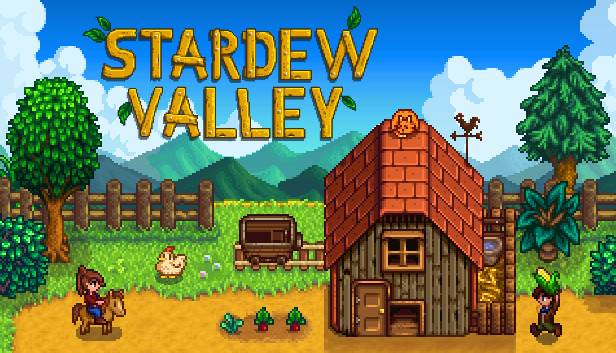
Indie developers, for example, aim to steer away from mainstream graphics. The hit title “Stardew Valley” was developed by a single man, Eric Barone. Despite the graphics of his game being limited to a 2.5D perspective with hand-drawn pixel art, the game ended up being a major success, selling a total of 3.5 million copies by the end of 2017.
The simplicity in graphics was an admired factor of the game, as it managed to still create a comforting atmosphere in the world players were dropped into. The question of whether the game would have been as successful with more realistic graphics still begs to be asked.
Another indie developer that stands out is Wrong Organ; their 2024 psychological horror game, “Mouthwashing,” received handfuls of positive reviews. The game is supported by its unique, low poly character graphics meant to unsettle the players. One might think that the “better” the graphics in a horror game, the scarier. With “Mouthwashing,” its positive reception proves that the choice in design was just right.
Unique graphics, however, aren’t just reserved for indie game developers. The company Telltale has developed unique graphics for their beloved series such as “The Walking Dead” games and “The Wolf Among Us.” Both share a similar style with the characters and world appearing to be a comic book that has come to life. This style was confidently adopted due to both games taking inspiration from graphic novels.
Despite both games displaying surrealistic human characters, there isn’t a demand for a “bettering” of the graphics. Fans are satisfied with this approach, calling it creative and interesting. The concept of adapting a comic into a video game and allowing the similar style to be displayed is something to be admired, seeing as graphic novels are also a valued form of art.
Something not everyone may understand is just how much work goes into making a game’s graphics appear unrealistic and original. In a similar vein as regular animation, it’s something to be respected. There are so many developers that have adopted this method and continue to stand by it. But will this format of game creation continue to survive?
“South of Midnight,” Compulsion Games’ newest creation, brings up this question. A game company not new to the concept of distinctive game graphics — having proven that with their previous project, “We Happy Few” — “South of Midnight” isn’t just unique, it’s inspiring. The game’s graphics pull from the concept of clay figures placed in stop-motion animation.
There’s already such an admiration for the art style of stop motion, that it’s just natural for the game’s story to adopt. Whatever else is said about the game, it’s obvious that the art style and its choice of graphics is truly admirable.
So, do gamers prefer a more unique direction of art style? It’s hard to say. Not everyone has the same opinions when it comes to what they’re looking for in a game. Some players prefer realistic depictions of a story, while others find importance in the individuality of an artistic appearance. Thankfully, we live in a world where all types of developers are making their own visions come to life in their respective video games.
Written by: Bella Peterson — arts@theaggie.org