


Seeing red, feeling blue and tickled pink
By MOLLY THOMPSON – mmtthompson@ucdavis.edu
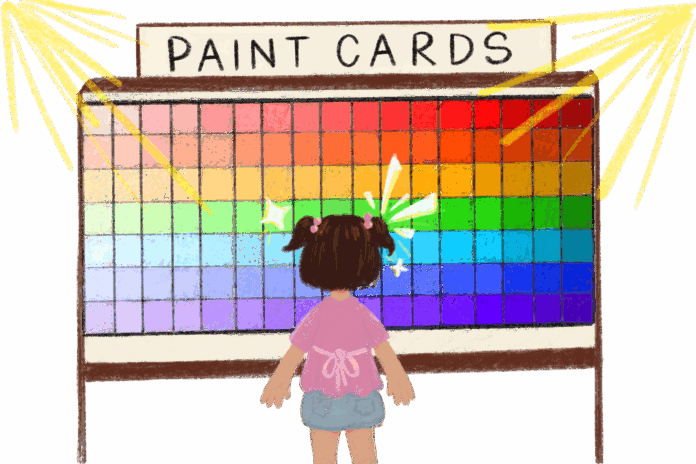
When I was in first grade, one of my most beloved elementary school teachers would call me “rainbow girl” because of my constant propensity to dress myself in an array of vibrant neons and cheerful pastels. I would enthusiastically accompany my dad on his trips to Home Depot just so I could stare at the wall of paint chips (and squirrel the prettiest ones away to keep on my bookshelf at home). My bedroom, my wardrobe and even the contents of my desk drawers have always been full of a spectrum of saturated hues, and to this day, you’d be hard-pressed to find black in my closet. Needless to say, I love colors.
My fervent adoration of anything colorful led to a similar fascination with color psychology — the science behind how colors affect us. While certain people tend to gravitate towards certain colors more than others, there’s a relatively small group of colors that we all tend to prefer. For example, light, bright or muted shades of blue, purple, green and pink are generally favored over hues like brown, orange, yellow or in-between shades mixed with green.
This is likely due to our intrinsic biological adaptations. We like colors that represent positive things (clear skies, green foliage, clean water, ripe fruits) and we’re repulsed by colors that represent negative things (rotten foods, feces, illness, decay). So as a species, we’re naturally much more drawn to brighter or lighter colors than darker or muddier colors.
Similarly, we also like colors that we’ve personally associated with positive things. You might like red because you grew up loving Spiderman or Lightning McQueen, or you might prefer baby blue because that was the color of your favorite childhood stuffed animal.
While our perception of colors and what they mean is contextual and dependent on many external factors, every color also affects us in its own way. Red, which is bright and eye-catching, can elicit feelings of passion and excitement, energy, danger and urgency. Red has also been known to bring out hunger, which might be linked to the fact that red is a common naturally occurring color in food.
Yellow is known to be optimistic. While it’s also attention-grabbing, it’s generally warmer and more inviting than red. Yellow has also been shown to enhance feelings of hunger, which is why red and yellow are some of the most common colors in grocery packaging and restaurant branding. Most fast food chains use red or yellow as their most prominent colors — think about McDonald’s, In-N-Out, Burger King or Jack in the Box. These companies use colors like red and yellow intentionally to subconsciously nudge their customers towards purchasing more food. Colors like green and brown are used much less frequently in food marketing because they have the opposite effect and tend to make people feel less hungry or less ready to eat.
But green still often evokes positive emotions like tranquility, peace and renewal. Likely because we associate green so closely with nature, certain shades tend to make us feel safe, rejuvenated and calm. That’s why so many wellness brands use green as their primary colors; green feels balanced, relaxing and generally good for you. Green is also sometimes associated with jealousy, envy or greed, but that can be attributed more to artificial cultural ties than an inherent emotional connection.
Purple often feels mysterious or spiritual, likely because it mimics the depth of the night skies or dusky sunsets, which also feel mystical. Purple is also often associated with luxury or creativity, which is another artificial connection we’ve made as a society. Purple dyes have historically been more rare and expensive than other colors, so only the highest-class citizens (usually royalty) could afford to wear or own purple things. That association has persevered throughout centuries, and purple still feels more luxurious than many other colors.
Black and white both have a lot of cultural connotations that vary across the globe, but black is intrinsically mysterious and depressing. We tend to think of black as negative because darkness and shadows are so unknown. Anything could be lurking in a black swath of an unlit forest glen or a room with the lights off, and that’s scary. White is the opposite; it’s clean, pure and open. White is safe because it’s bright, it feels safer and more positive than black does.
Blue is the most commonly-loved color in the world, with 42% of people claiming it as their personal favorite. Blue is calming, relaxing and cool. It’s the color of the clear sky and the ocean, so it’s familiar and safe. It’s sometimes associated with sadness or depression, but that also tends to be a cultural connection rather than a natural one. Gray carries some similar connotations but is more naturally justified because it reflects storms and dreary weather. Blue also often elicits feelings of trust, clarity and serenity, which is why so many financial companies use it in their logos — they want you to trust them with your money.
Colors are powerful. If used strategically, they can have a significant effect on how people feel and act. Department stores, dining establishments, financial institutions and even Disneyland designers use colors in very specific ways to get you to subconsciously behave one way or another. Colors can be used to hide things in plain sight, draw you in, make you trust one thing over another or repel you from something else. Because colors hold such strong natural affiliations, we tend to judge new things based on their colors before we even get a chance to make a logical decision about them.
Your favorite color is probably your favorite color for a reason — it might say more about you than you think.
Written by: Molly Thompson — mmtthompson@ucdavis.edu
Disclaimer: The views and opinions expressed by individual columnists belong to the columnists alone and do not necessarily indicate the views and opinions held by The California Aggie
