55.7 F
Davis

Davis, California

Wednesday, December 24, 2025
Home Blog Page 119

The appeal of liminal horror

Why young people find transitional spaces so frightening


By JOAQUIN WATERS — jwat@ucdavis.edu 

If you want to gauge the current state of any given society, one of the best methods is to look at the scary stories they tell. Horror, by its very definition, is a reflection of someone’s fears — hence popular horror often serves as a reflection of a more universal anxiety.

Take the 1950s and 1960s for example: giant monster movies and alien invasion narratives were the dominant form of horror, which isn’t surprising if we consider the era’s political climate. “Invasion of the Body Snatchers,” a film about shapeshifting aliens infiltrating the human race, is a very clear allegory for how Americans viewed communism at the height of the Cold War. Comparatively, a very different narrative of invasion swept across the Pacific. The original “Godzilla,” a dark and somber monster movie, was born out of Japan’s collective trauma resulting from atomic bombs dropping on two of their cities. 

Additionally, the original “Exorcist” movie, in which a little girl is possessed by a demon, was considered downright horrific in its day due to its representation of religious anxiety. A still widely Christian establishment at the time, society feared the impact of an increasingly atheist youth. But these days, I think it is safe to say that horror has taken on quite the transformation. No longer are films the only indication of global fear — if you want an unfiltered peek into the things that haunt the dreams of the current generation, you only need to look online. 

Internet horror has undergone an interesting development. Anyone familiar with the subject (in other words, weirdos like me) are no doubt familiar with the term “creepypasta,” but for everyone else, I’ll provide a definition. The word “creepypasta” is a pun on the term “copypasta,” itself a slang variant of “copy/paste.” A copypasta is a story or concept that has been copied and pasted all across the internet to the point where it has become something of an urban legend. As you have probably inferred, a creepypasta is a copypasta that takes the form of a scary story. 

If you’re still having trouble, think of it as something like a meme meant to scare you instead of make you laugh. They’ve been around almost as long as the Internet itself; almost like digital campfire stories — what is Slenderman if not a modern Bloody Mary? But in the last few years, one concept has come to completely dominate the field: liminal horror. 

The word “liminal” is a synonym for “transitional.” A “liminal space” can be defined as any space that exists solely to get from one place to another: a hallway, an airport, a bus stop or a hotel — places where we are not meant to linger. Liminal horror uses these spaces in a frightening and contorting way, and it has become the dominant form of creepypasta. Search the phrase “liminal horror” or even just “liminal spaces” on Google and you will find hundreds upon hundreds of unnerving images and videos (some real, some digitally created) depicting liminal spaces that seem to stretch on forever, emptied of all people. 

Perhaps the most famous example of liminal horror right now is the creepypasta known as “the Backrooms.” The Backrooms legend spawned from one image of a windowless yellow room in what appears to be an empty office building. From that image, an entire Internet mythology was born of an alternate dimension called “the Backrooms,” a place made up entirely of identical empty yellow rooms that we are in constant danger of vanishing into and becoming trapped forever. 

The creepypasta has reached astonishing levels of popularity among young people. A movie produced by A24 is even in development. So what is it about empty transitional spaces that our generation finds so frightening? And why did it only start in the last few years?

This is my thesis: the current liminal horror craze, like so many things, is the direct result of our time in quarantine. The year 2020 was, in many ways, defined by liminality. The pandemic was a time of unexpected and forced transition in which our homes became our worlds. Is it any wonder that horror, so reflective of our fears, became consumed by images of enclosed interiors stretching on forever? 

Adolescence has always been a transitional period, but not since World War II has that transition been accompanied by such a sudden and frightening global shift. For this reason, liminal horror like the Backrooms and other contemporary creepypastas (believe me, there are many) are a fascinating and telling time capsule of this era, like “Godzilla” and “Invasion of the Body Snatchers” were for theirs. The fear of being trapped in an enclosed transitional space is pretty abstract, but creepypastas like the Backrooms are definitive, even occasionally silly. That’s a good thing. 

I am far from the first person to point out the cathartic nature of scary stories; they allow us to give a concrete form to abstract fears, and in doing so, hopefully conquer some of our anxiety with ease. So while I find liminal horror to be very interesting, I also look forward to the day the fad ends. Such a moment might suggest that young people (myself included) might have finally emerged from that endless transitional space on the other side, stronger than we were when we entered it.


Written by: Joaquin Waters — jwat@ucdavis.edu 


Disclaimer: The views and opinions expressed by individual columnists belong to the columnists alone and do not necessarily indicate the views and opinions held by The California Aggie.
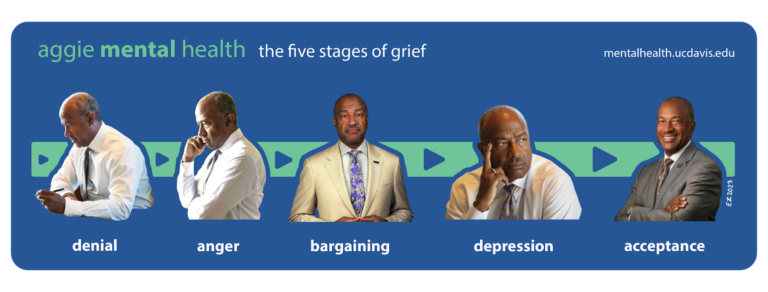

The five stages of grief

Drawn by: Emma Lapidus –– eblapidus@ucdavis.edu

Disclaimer: (This cartoon is humor and/or satire, and its content is purely fictional. The story and names of “sources” are fictionalized.)

Commentary: How video games improve by limiting the routes a player can take

A look at how constraining choice opens up storytelling possibilities


By ELI KELLEY — arts@theaggie.org


Gamers will often praise a game for the breadth of choices it offers. This makes sense —  interactivity is key to the identity of video games. Many gamers fantasize about the most extreme form of interactivity, what in their mind would be the Ultimate Game. This would take a form similar to the “Star Trek” holodeck. Like the holodeck, it would allow the player to do absolutely anything and respond in more sensible and engaging ways. However, as with the holodeck, the Ultimate Game lies squarely within the realm of science fiction. 

Even if this game could exist, its players would inevitably feel a level of disappointment. While there’s an inherent appeal to the promise of unfettered freedom and choice, video games are often most impactful because of the ways that choices are limited. Rather than culminating in some all-encapsulating mega-game, video games are better understood and appreciated in light of how their boundaries give shape to the player’s experience.

Video games can’t simulate everything — video game designers need to choose what actions players can perform. “Mario” would be a very different game if the eponymous protagonist could abandon his quest against Bowser to instead take out a mortgage on a home. It would be equally disruptive if in “Animal Crossing” the player could abandon their island home to fight Bowser. These examples may seem ridiculous but they highlight an essential truth in video games: a game achieves a unique identity through the particular, specific ways that the player interacts with it. 

On a more granular level, having limited options imbues choices with specificity and meaning. Imagine a hypothetical video game where the player controllers a college student named John. At one point John has to decide how to spend a Saturday afternoon. If the player’s only options are “knit,” “read a book” and “study,” that would suggest, among other things, that John spends most of his time indoors. If the options are, alternatively, “go hiking,” “hit the gym” and “play basketball,” John would come off as someone who enjoys physical activity. The limitation on the range of possible choices grounds this hypothetical game in the specifics of the character.

In this example, there’s a trade-off between expressing something about the game’s characters and the player’s ability to express something about themself. If instead of being John the player were playing as themself, and they personally find knitting and reading dull, they would chaff against a range of options that didn’t include alternatives. However, even in games centered around the player expressing their personal desires, having too many options can be detrimental. 

Research has shown that past a certain number of options, it becomes extremely difficult to make well-considered choices (numbers vary but 12 is a conservative estimate for what qualifies as too many options). People spend less time thinking through their choices and are ultimately less satisfied with their decisions. With a certain number of options, each potential outcome begins to blend together. Would players really benefit if, for instance, they were given the choice between knitting a scarf or a shawl? Perhaps in a game focused on knitting. Otherwise, having a choice between the two only muddles the player’s ability to make a firm decision.

In the real world, decisions are infinitely granular. Video game choices are much more discreet. Instead of trying to mimic the granularity of actual life, video games should and do benefit from only presenting options that are meaningfully distinct. What qualifies as “meaningfully distinct” varies according to the game. The important thing is identifying what choices prompt actual decisions and which choices prompt mindless button presses.

Options don’t have to be radically different to be distinct. They can be largely similar while remaining meaningfully different. In fact, some of the most powerful uses of choice lie in exploring the nuances among similar options. To illustrate this idea, consider a scene from the game “Kentucky Route Zero.” The player controls Conway, who had, in a bout of drunken irresponsibility, caused a young man to die. During a conversation with the dead boy’s mother, the player decides how Conway describes this death. They can call it “an accident,” “a tragedy” or “a shame.” 

These choices don’t impact the narrative going forward. Instead, they let the player explore different facets of Conway and the death he had a hand in. Calling the death “an accident” could suggest that Conway doesn’t take responsibility for the death — that it was truly an unfortunate bit of happenstance. To describe the death as “a tragedy” brings to mind the tragedy genre and how Conway is a tragic figure crippled by his tragic flaw of alcoholism. Conway calling the death “a shame” emphasizes the guilt he feels from his role in the boy’s death. 

This moment works so well because even though the choices are similar, each suggests subtly different shades of Conway’s grief and guilt. Furthermore, all are simultaneously both true and latent. The player only picks one option, but that doesn’t make the other possibilities false. Conway on some level believes all three. Choices like these can make the player aware of the multipotentiality of the world and of people by considering not just the significance of their own choice but what each potential choice entails. 

“Kentucky Route Zero” doesn’t present all possible actions a player can think of. Instead, it makes the player think through the plausible actions characters can take and has them decide which outcome feels the most true. What’s important isn’t the choice itself, but how making a choice prompts the player to think deeply about the situation. 

Choice is one of video games’ strongest tools for crafting engaging, resonant, important experiences. It’s understandable then that gamers sometimes treat the ability to make choices as an end in itself. However, choice is not an unalloyed good. Like any tool, choice in video games works in particular ways and is effective only under particular circumstances. Choices are powerful but are most effective when implemented judiciously and sparingly. In limiting what options are available, video games give the player space to not merely pick one of many options from a list, but to actually ponder and, eventually, decide.


Written by: Eli Kelley — arts@theaggie.org

K-pop creates strong connections between UC Davis students

0

The musical genre is a popular subculture on campus


By LYNN CHEN — features@theaggie.org


At UC Davis, you might have occasionally heard K-pop songs playing at the dining commons, Latitude or in the markets. In fact, K-pop is quite a staple of music playlists here on campus.

As part of 2023’s “Spotify Wrapped,” the music streaming service matched each user to a “Sound Town” to show them which city in the world has listeners with similar habits to them.

An unusual number of K-pop fans unanimously discovered that Davis was their music city avatar, according to social media reactions on platforms such as Reddit and X. For instance, a comment exclaiming with full capitalization, “WHO THE HELL IS DAVIS FROM USA,” received almost 60,000 likes on X.

On campus, students’ love for the musical genre is manifested in the many clubs and organizations dedicated to K-pop dancing, an iconic component of the subculture. For example, dance teams such as EKHO and SoNE1 are active throughout the school year.

Additionally, many of the bonds students make throughout their school career can be attributed to the shared affinity to the genre.

“The [K-pop] scene is fairly open [at UC Davis],” Martin Carrillo-Alvarez, a third-year animal science major and dance member of SoNE1, said. “A lot of people tend to openly showcase that they like K-pop. [The community] is fairly welcoming.”

For example, student fans may keep photocards of their favorite artists in cardholders on their phones and quickly bond with others over shared interests.

“I’ve had an instance where I carried a photocard of my two favorite members from the group Zerobaseone and people came up to me saying ‘Yo, who’s that on your cardholder?’” Carrillo-Alvarez said.

“I got their Instagram and ended up making friends [with them],” he stated. “It was out of nowhere.”

He continued on to describe the many facets of the genre and the positive impact it can have on the community of listeners.

“K-pop can be a musical thing, it can be a cultural thing. But I feel like it’s more of a personal or societal thing,” Carrillo-Alvarez added. “People [interested in the genre] themselves are very open and comforting. I feel like [the subculture space] brings together non-Kpop fans and K-pop fans too.” 

Citing his own experiences as an example, Carrillo-Alvarez said that as a member of SoNE1, he has seen how his performances act as a medium that connects him to his non-fan friends and others as well. The joyous atmosphere of each public dance brings everyone closer.

Christina Chung, a second-year managerial economics major, also agrees that K-pop is an efficient way to connect with strangers.

“A friend of mine told me how in her orientation group, her orientation leader really connected with everyone because of [the group’s] shared love for K-pop,” Chung stated. “I do think [K-pop] is a huge thing [on campus].”

Alisa Zhu, a first-year mathematics major, said many of her friends who are not into K-pop have heard songs of the genre here and there.

“A lot of [K-pop] songs are trendy on TikTok,” Zhu said. She explained that as the reason why non-fans are still likely somewhat familiar with the genre.

As such, some songs that people might have heard of on TikTok include “Cupid” by FIFTY FIFTY, “Super Shy” by NewJeans and “DARARI” by TREASURE.

Many have probably been exposed to K-pop in one way or another before, whether they like it or not. This is especially true for those who remember the era when “Gangnam Style” blew up in the 2010s.

For some, the musical genre is just fleeting background music, but to others, it represents a comforting space and a way to connect with others.


Written by: Lynn Chen — features@theaggie.org

Gorman Museum of Native American Art recognized as one of top 10 native art events of 2023 by First American Art Magazine

The museum recently celebrated its expansion and continues to highlight Contemporary Native American art while engaging the local community 


By MADISON PETERS — campus@theaggie.org


The Gorman Museum of Native American Art was recently recognized as one of the top 10 native art events of 2023 by the First American Art Magazine.

Run by Native American artist and publisher America Meredith, the First American Art Magazine is a publication that serves to expand knowledge of art by indigenous peoples of the Americas. The Executive Director of the Gorman Museum, Veronica Passalacqua, spoke on the significance of this recognition.

“We are really thrilled that [Meredith] included the Gorman in that list,” Passalacqua said. “Even though we are a small university museum, it demonstrates our place within the larger field of Native American art.”

The Gorman Museum was established in 1973 in honor of one of the founders of the Department of Native American Studies at UC Davis — Carl Nelson Gorman. Originally based in Hunt Hall, the museum started from a collection of artwork that Gorman himself brought to the campus.

After a large push from those involved with the museum and 10 years of renovation, the Gorman Museum recently celebrated both its grand opening and 50th anniversary on Sep. 22 and 23 of last year at its new location on Shields Avenue, according to Passalacqua. 

 “We knew that the museum could be a lot more than it was if we had more space, [it] was just a matter of convincing everyone else of the vision that we had,” Passalacqua said when asked about the transformation of the museum.  

Passalacqua revealed that the new location is four times the size of the original museum and the amount of staff is expected to increase as well. 

Passalacqua elaborated on what this expansion means for the future of the museum.

“I’m really excited to be able to really support our exhibitions with more programming and events and activities that reach across the board,” Passalacqua said.

The current collection of the museum contains around 2,250 works created by a range of Native American artists such as Oscar Howe, George Morrison, Allan Houser, Kay WalkingStick, Jaune Quick-to-See Smith, Robert Davidson, Bill Reid, Kenojuak Ashevak, Rick Bartow, Lucy Lewis, D.Y. Begay and Lee Marmon.

The Gorman Museum is unique in that it is only one of two museums in the United States dedicated exclusively to displaying Contemporary Native American art, according to the First American Art Magazine. This means the museum works with living artists whose programming focuses on current social, political and cultural activities, according to Passalacqua. 

“[It is] artwork that’s created by and for Native American and First Nations’ communities,” Passalacqua said. “We don’t show work about Native artists, we show work by Native artists. There aren’t spaces for what we do so it’s unique in that way to have a focus. This is a space for Native artists to show their work and those [spaces] are needed to succeed.”

The Gorman Museum has put on 225 group and 88 solo exhibitions, in addition to collaborating with local student and community groups. 

Passalacqua spoke on one meaningful collaboration with the Arboretum’s Learning and Leading Program in which students, local Native American communities and the Cache Creek Tending and Gathering Garden planted a wall of native plants along the front of the museum.

“It demonstrates how [because] we moved to this new place we can really do other campus collaborations that we just couldn’t do before,” Passalacqua said.

When asked about future plans and inventions for the museum, Passalacqua said that she hopes people will continue to visit and experience the art that they proudly display.

“We just want people to come on by,” Passalacqua said. “Everyone is welcome. It’s a place that even though we are representing Native American art, we want it to be a place where everyone feels welcome and comfortable and maybe learns a little something”.


Written by: Madison Peters — campus@theaggie.org


49ers, Ravens lead playoffs as AFC and NFC top teams

0

Major games left in the last week of the NFL season before the playoffs


By MEGAN JOSEPH — sports@theaggie.org


As the NFL season comes to an end, with one final week remaining, there is much uncertainty as to who will earn certain spots in the playoffs and eventually the Super Bowl. The San Francisco 49ers and Baltimore Ravens have secured their spots in the playoffs as the two first-seeded teams in their divisions and conferences, the American Football Conference (AFC) and the National Football Conference (NFC). 

With strong seasonal performances from teams in each respective division, the playoffs will consist of 14 teams, seven from each conference. The teams are seeded from one to seven based on their performance throughout the season and will remain divided into the NFC and AFC. The winner of the conference earns the AFC or NFC Championship title and a ticket to the Super Bowl to determine who the NFL Champion is. 

This season for the AFC has proven to be dynamic, with many top teams falling victim to defeat. Nonetheless, the Ravens pulled out first seed for the division playoffs after their win over the Miami Dolphins during week 17 of the season on Dec. 31. As the first-seeded team and winner of the AFC North sub-division, the Ravens are awarded a “bye” — meaning they do not have to play to advance — for the first round of playoffs.

Having one of the best records this season out of all NFL teams, the Ravens are a strong prospect to make the Super Bowl and play against their NFC counterpart. Suffering only a total of four losses this season and securing 13 wins, the Ravens will be a hard team to beat in the championship. 

Although the Dolphins lost to the Ravens, they have still had a strong season, currently being placed as the second-seeded team in the conference. The Dolphins are guaranteed a spot in the playoffs despite still awaiting to see if they have earned the title of AFC East champion over the Buffalo Bills. If the Bills secure a victory over the Dolphins, then the Bills will win their fourth consecutive season as AFC East Champion and surpass the Dolphins as the second-seeded team in the conference. However, if the Dolphins secure a win, then they will maintain their current position as the second-seeded team and avoid falling to the sixth-seeded spot.

Another impressive performance this year came from the winners of the past Super Bowl, the Kansas City Chiefs. Despite not leading the AFC division this season, the Chiefs should not be counted out of the Super Bowl and AFC championship just yet. As the third-seeded team in the conference, the Chiefs have shown they have what it takes to stay in the game with their AFC West title that they secured with support all around.

With such strong teams coming from both the AFC and NFC divisions, there is no question that this season’s playoffs and subsequent Super Bowl will be very entertaining. As the only other team in the league to suffer four losses this season, the San Francisco 49ers have been seeded first in the NFC division. After winning a total of 12 games this season led by underdog quarterback Brock Purdy, we can expect to see the 49ers go far in the playoffs and potentially make it all the way. 

Similarly to the Ravens, the 49ers have also been granted a bye for the first round of the playoffs and are one of the more favored teams for the Super Bowl. At the 49ers’ recent game against the Washington Commanders, the 49ers played remarkably well, with Purdy breaking the 49ers’ all-time passing yards record in his first season as the team’s starting quarterback.  

Even though the 49ers have secured their win as the NFC West champions, the NFC East champion is yet to be announced. The second-seeded team in the NFC division, the Dallas Cowboys, still has one last game to play before the NFC East champion is to be announced. This game against the Washington Commanders will prove very crucial for the NFC division standings. If the Cowboys are unable to pull out a win against the Commanders, then that gives the Philadelphia Eagles a chance to win the NFC East title and move up to the second-seeded position. 

Additionally, if the Cowboys lose their final game then the third-seeded team, the Detroit Lions, has a chance to take over the second-seeded position. As the NFC North winners, the Lions can only take the second seed position if the Cowboys lose their final game and the Eagles lose their final game. Thus, there is a lot riding on this week’s set of games for not only the Cowboys and Eagles but also the Lions. Nevertheless, no matter the outcome of the games all three teams will have a spot in the playoffs and a chance to fight for the championship.

With both conference divisions battling for their spots in the playoffs and Super Bowl, this season is far from over. 


Written by: Megan Joseph — sports@theaggie.org

City of Davis seeking community feedback on how to improve downtown lighting

The city sent out a survey inviting residents to provide feedback on three proposed new lighting options


By HANNAH SCHRADER — city@theaggie.org


The city of Davis is asking residents to fill out a survey to choose among three potential lighting fixtures to help illuminate the downtown area. The survey was opened to the public on Jan. 2 and will close on Jan. 31 at 5 p.m.

There are three proposed options to improve lighting that residents can vote for in the survey: option 1, a laser unit attached to the ground that will project moving lights onto trees, option 2, lights that are strung along poles and option 3, lights that are strung along trees. 

Jenny Tan, director of community engagement for the city of Davis, discussed the advantages and disadvantages of each option and said the city is balancing concerns of being cost-effective and environmentally friendly. 

“The city of Davis looks at ensuring that the work we do is something that can be maintained, is cost-efficient and, in this case, prevents deterioration of the trees downtown,” Tan said. “Of the three options, the cheapest option is likely to be option 3 (lights strung on trees) as it only requires the string lights to be purchased. Option 2 is a bit more expensive with the purchase of the lights and the poles, and option 1 is the most expensive with the base unit costing $130 each. We may need to buy two units for option 1 if one unit is not bright enough or provides enough ambient lighting.”

Tan said that previously the city would wrap lighting along the trunk of trees which was less beneficial for the tree and the new options will be better for tree health.

“The new options presented would not be strung around the trunk, but would either be a light shining up [option 1], from pole to pole [option 2] or from a single branch in each tree [option 3],” Tan said. “The three options try to balance ambiance with tree health and were selected after research by city staff and local groups or commissions.”

The survey comes after an Oct. 3 city council meeting regarding the possibility of new lighting fixtures being installed downtown in order to enhance safety and promote business during the limited daylight hours in the winter. This agenda item sparked debate during the public comment section as the proposed lighting would be installed in the trees and possibly result in the natural landscape being harmed.

Roberta Millstein, a professor of philosophy at UC Davis, believes there are shortcomings in the survey the city provided. Millstein shared that additional lighting might not make residents actually safer

The first thing that strikes me is that the survey lacks a fourth option: do nothing (no additional downtown lights),” Millstein said via email. “Note that, as the preamble to the survey admits, the proposed options do not meet the city’s Dark Sky ordinance. The city seems to be presuming that we are safer with more lighting, but this assumption has been called into question. Lights mainly make us feel safer; they might in fact make us less safe.” 

Millstein believes these options may be harmful to wildlife and take away the night sky views Davis residents enjoy.

“The city seems to be overlooking the harm to humans and wildlife from excessive nighttime light, as well as the loss of our night sky views that have inspired humans for millennia,” Millstein said via email. 

The city of Davis has a Climate Action and Adaptation Plan (CAAP) that guides the city into making environmentally friendly decisions and reaching carbon neutrality by 2040. Millstein is skeptical that the city can achieve this and adopt more lighting.

“More lighting means using more electricity and thus increasing the city’s carbon footprint, undermining the city’s commitment to achieve carbon neutrality by 2040,” Millstein said via email. “Finally, money spent on downtown lighting is money that can’t be used for other needs, such as fixing crumbling bike lanes or park structures, like Slide Hill Park or for things that would reduce our carbon footprint.” 

Millstein believes that there shouldn’t be additional lighting and that the city should have had more discussion about the decision. 

For all of these reasons, it is my opinion that no additional downtown lights beyond the current street lights should be added,” Millstein said via email. “Before even doing this survey, the [city] should have held a robust conversation that actually considered the pros and cons of having additional downtown lighting at all.”

The city is currently piloting each of these options downtown that way residents can view them before voting. 

“Community members can also view a test pilot of these three options in person before providing input,” Tan said in a press release. “The three options are located downtown at three of the four corners at Second and E Streets.”

Tan shared that once the survey is over, the results will be shared with local organizations; city commissions and the city council will need to approve the decision.

“After the survey is over, there are still other steps that the city will need to take, including creating a guideline or protocol for lights, tree care and long-term maintenance, among other items,” Tan said. “Staff will also need to discuss the lighting options with local commissions and organizations, as well as bring the survey results and any research or draft protocols back to the city council to approve.”


Written by: Hannah Schrader  city@theaggie.org


PSA: No messy foods on first dates

Drawn by: Sandhya Pfile –– sbpfile@ucdavis.edu

Disclaimer: (This cartoon is humor and/or satire, and its content is purely fictional. The story and names of “sources” are fictionalized.)

Proceed with caution: How AI is changing writing

Think carefully about AI’s traits and how they stack up to actual humans


By CLAIRE SCHAD — cfschad@ucdavis.edu 


As a fourth-year college student about to begin my professional life, I find myself wondering, and sometimes feeling nervous, about how AI will affect my ability to get a job or impact how I may do that job.

Being someone who hopes to work in the communications field, I’ve had mentors and even former coworkers try to steer me away from committing to this career. “You won’t have a job in five years,” one told me, referencing the rise of AI platforms such as ChatGPT. “I don’t recommend going into the writing field right now, there is just too much uncertainty around AI,” a former coworker said. 

With all of this happening so quickly, I have been trying to figure out if I should embrace AI or fear it. After all, it seems like a legitimate threat to some careers. May of 2023 marked the first time AI was cited as a reason for job loss, with almost 4,000 people losing their jobs because of new technological advancements. 

Additionally, earlier this year, negotiations surrounding the Hollywood screenwriters’ strike were largely focused on limiting the role of AI in the writer’s room. In September, after a five-month-long strike, the Writer’s Guild of America (WGA) finally agreed to a contract that provided strict restrictions on how and when AI could be used in screenwriting. 

This contract states that stories generated by AI will no longer be referred to as “literary material,” meaning they are not considered usable storylines or scripts. By successfully achieving these regulations, the WGA is working hard to protect screenwriters from losing their jobs and hard-earned credits to AI. 

So the evidence is out there — AI has the potential to threaten jobs in certain career areas, and people are worried. However, I think as college students and soon-to-be professionals, we need to take a deeper look at both the strengths and weaknesses of AI. 

While AI might be able to write you that essay that you have been procrastinating until the very last minute, there is no guarantee that it will be good. Actually, it will likely be missing some key details and source references. However, most importantly, it will be missing one key aspect: the assurance that a human being wrote it. Sure, getting a bad grade on an essay that you didn’t write is a big bummer that could have been avoided, but it’s not the end of the world. While you may be thinking that the lack of human-likeness of AI is only a concern in the academic world, I argue that it is actually just a piece of a much larger problem.

It has been found that AI lacks the ability to understand creativity, strategy and, most importantly, empathy-based social skills. These characteristics are exactly what our world needs more of in a time of great inequality and transition. We should be hesitant to become even more reliant on this new technology, which would most certainly be miserable in human form. After all, who wants to surround themselves with content that lacks the human traits that many of us seek out in our peers? 

While the development of AI is inevitable, and likely does have some great benefits, we should be careful to not blindly become reliant on it. We must educate ourselves on what AI can and cannot do, and then decide for ourselves whether or not to use it. So, the next time you are thinking about just turning in the essay that ChatGPT wrote for you, think deeply about the characteristics it lacks and how it ranks in comparison to yourself as not only a writer but as a person. 


Written by: Claire Schad — cfschad@ucdavis.edu 


Disclaimer: The views and opinions expressed by individual columnists belong to the columnists alone and do not necessarily indicate the views and opinions held by The California Aggie.



Social media has created a virtual playground, but it’s not a safe space

Adults can help children navigate this social realm rather than criticize how they are being influenced

By THE EDITORIAL BOARD

It may be difficult to remember a time when entertainment came from something other than electronics. But before free time was taken up by scrolling on TikTok or playing several hours of video games, people spent more time doing hobbies in physical spaces: knitting, playing soccer or cooking, for example. 

Now, we’re experiencing a time in which our average amount of daily internet exposure is rapidly increasing, while the onset age of internet exposure is decreasing — a phenomenon sometimes called “the iPad kid” era. 

While social media has created an interconnected information platform, and some would say has even built communities, social media also has many negative effects, especially on the younger generation. 

Many social media platforms require users to be above the age of 13 to activate their profiles, but studies show that 40% of children using social media are between eight and 12 years old. Another study highlights that children younger than eleven years old using social media have a greater chance of taking part in online harassment, are more likely to only have online friends and are more likely to exhibit problematic internet usage. 

Along with changes to their online behavior, social media consumption clearly impacts kids’ behavior in real-world settings as well. We see the effects of this in recent trends, like TikTok’s “Sephora kids,” who purchase expensive makeup products that they’ve seen older influencers using. Kids record their in-depth skincare routines and review the products they are using. These mini influencers have been spotted all over TikTok explore pages with their hauls racking up millions of views. 

Searching the hashtag “10-year-olds at Sephora” reveals a multitude of videos on the phenomenon, in part made by concerned adults harshly judging the kids. Instead of simply criticizing a twelve-year-old for wanting “anti-aging” skincare, adults and parents should recognize that kids’ desire to be “cool” has always existed. Years ago, kids wanted Silly Bandz and Eos lip balm. Now, kids have a more expensive laundry list: Drunk Elephant products, Dior lip oils and more, all influenced by internet advertising. Knowing that kids are still learning to navigate social media, adults should grant them a little more grace, understanding that kids are exposed to social media pressures in the same way that all of us are. The key difference is that these pressures introduce them to the desire to change themselves from a much earlier age before they have the maturity to discern which products are worth the investment and which ones are just well-advertised.

However, the TikTok trend has caused some kids to make a scene when out at their local makeup stores, including Sephora, even by rummaging through tester products and being disrespectful to store employees. 

When social media trends are translating to rude behavior in the real world, it’s a problem — and if it’s revealing larger issues with how the internet has changed our social standards, we need to work together to find a way to change the culture we’ve created. To start, parents of young social media users should have a conversation with their kids regarding the uses of social media as well as boundaries for general internet usage. 

As for college students, having access to social media comes with an obligation to be conscious about how you are interacting with other users, especially younger ones. With this in mind, it is important for adults to be careful about what they are saying about children online, even when they perceive kids as behaving inappropriately. 

Finding an alternative space for entertainment that promotes healthier values such as camaraderie and in-person interaction with one another can benefit both children and us much more than an Explore page can. This could be climbing trees, biking around the neighborhood or joining a sports team. 

This is not to say that children should have zero access to social media, but instead that there is a healthy way to use these platforms responsibly. While we wait for regulation that better protects kids on the internet and allows us to better filter what we see online, being conscious of online actions allows us to use these platforms to learn about skincare or message with friends without falling victim to blind consumerism and losing basic social skills. 

Written by: The Editorial Board

New President Pro Tempore elected after impeachment of ASUCD President and Internal Vice President

Senator Binh Do was elected as the president pro tempore and Internal Vice President Aarushi Raghunathan addressed her impeachment resolution 


By KAYA DO-KHANH — campus@theaggie.org


On Thursday, Dec. 7, at 6:21 p.m., Vice President Aarushi Raghunathan called the Senate meeting to order and recited the UC Davis Land Acknowledgement. 

The Senate table then listened to farewell addresses by Senators Gaius Ilupeju, JT Eden, Erek Leschyn and Zahar King. The addresses included advice, words of admiration for those at the table and other reflections on their time serving on the Senate table. 

The senate then moved into the seating of new officers. Jonathan Ng, Leah Jung, Yara Kaadan, Katia Bouali, Jacob Klein and Curtis Chen were all seated. 

After a closed session was held on Wednesday, Dec. 6, the Senate unanimously voted to pass two resolutions for the impeachment of both President Francisco Ojeda and Internal Vice President (IVP) Aarushi Raghunathan. 

Following the impeachment resolutions of the previous session, Senator Binh Do and Senator Dani Antonio were nominated separately for President Pro Tempore. Senator Do was then elected as the President Pro Tempore by a vote of 8-5-1.  

After a quick break, the Judicial Council gave its quarterly report. They went over updates, such as the addition of a new chair, and recent accomplishments, such as their weekly meetings with public discussion and the release of memos on SB #2 and SB #22. 

This quarter, the council experienced challenges in terms of communication and relations, with an example being communication on budget hearings. Its goals for winter quarter are to increase its social media presence and to hire two more Justices for the Judicial Council after fall quarter. 

Next, the Student Health and Wellness Committee’s (SHAWC) quarterly report was given by Chairperson Julia Miller. She touched on the committee’s recent collaborations, including a monthly Instagram series focused on mental health with Senator Trinity Chow. One of their ongoing projects is doing well, with the Safer Sex Product Dispensers that they put in at the Memorial Union being almost completely empty every two weeks. 

Miller also expressed concerns with budget limitations, where she gets paid for five hours a week but works an average of 20 hours. Additionally, the committee’s goals for winter quarter include education with UC Davis Panhellenic about sexual assault awareness. 

The Pantry then gave its quarterly report and talked about its goals such as increasing food services and connecting with hygiene product vendors. Some accomplishments from the quarter include The Pantry’s Menstrual Equity event in which volunteers were able to provide consistent menstrual products, the Mobile Pantry which is running two times a week and is more accessible for students with disabilities and the re-launch of the Spice Program which allows for students to get a variety of spices for free. 

The Sexual Assault Awareness Advocacy Committee gave their quarterly report next. This quarter, they had many collaborations such as working with Students Demand Action and Empower Yolo on a drive to provide supplies for survivors of domestic violence. The committee also worked with the fire department, specifically Health 34, to collaborate for Sexual Assault Awareness Month as well as further support their Narcan distribution. Their winter goals include increasing their membership as they currently have only four members total.

The Campus Center for the Environment followed with its quarterly report. The team purchased a storage container where they are able to store many of their tools, as well as a chicken coop, a purchase they have been waiting to make since 2019. Aiming to capture the attention of more students, they also painted their logo on their trailer. 

Next, the meeting moved into public comments. 

“I find that the ASUCD Senate has violated its own bylaws that are set to govern themselves when they congregate either in the Executive Office with the door closed, the TSR/ISR Office or the commissions/committees room,” an anonymous speaker said. 

“You can have group chats, you can talk to other senators about this, just don’t talk about legislation,” Senator Nur Ambaw said next. “It’s making it seem like we can’t be friends on the table, but we can be friends. You can have group chats, we can talk about everything else, but when it comes to legislation, as long as it’s not the majority […] read the bylaws and make sure you aren’t in violation of them.” 

Another public comment was from second-year political science major Zeph Schnelbach, who brought up the performative aspect of the ASUCD Senate reciting the Land Acknowledgement without active support for Native American and Indigenous peoples. Schnelbach proposed training for the senators and called for more representation for such groups. 

The Aggie Mentors Committees, the Office of the International Student Representative, the Office of External Affairs Vice President, Internal Affairs Commission and the Gender and Sexuality Commission also gave their quarterly reports. 

Next, the Senate went into the consideration of old legislation. 

SB #31, which supports unregistered student groups by providing assistance and legitimation through the Affiliated Student Organization (ASO) program, passed unanimously. 

SB #35, which reallocates the Aggie Housing Advocacy Committee from the oversight of the Ethnic and Cultural Affairs Commission, under the oversight of the External Affairs Commission, passed unanimously. 

SB #38, which formally dissolves the ASUCD Committee on Engagement Initiatives, passed unanimously. 

SR #5, which aims to state the overarching goals and priorities of the ASUCD Senate for the 2023-2024 academic year, passed unanimously.

SR #6, which calls on the City of Davis and campus administration to take initiative regarding on and off-campus lighting, sparked debate on the table over getting the resolution passed versus having meetings with the university on the topic instead. It passed with amendments to remove any mention of campus. 

SR #7, which supports the UC Student Association’s Racial Justice Now campaign for academic reparations and the establishment of a permanent $1 billion endowment fund to improve Afrikan UC Student Access, retention and graduation rates passed unanimously

The Senate table approved past meeting minutes and went into an open forum in which Raghunathan addressed her impeachment resolution. 

“There is no other person on this table that has had their average word count counted out for them, and that has never been a reason to impeach someone,” Raghunathan said. “That’s ridiculous. Did you want every detail of every single thing I do all day? That would be insane, and this week I gave you every single detail […] I just feel like as a woman of color in this position it’s already so hard to hold. You’re holding me to an insane standard that’s unachievable by any means by anyone. They’re not even viable standards, they’re not things that are actually in the rules — half of this is made up. Some of this says things like ‘whereas Aarushi is part of the executive branch, and the branch is not performing well.’ I am not the entire branch, I am one part of the branch, there are so many others on this table that are a part of that branch.”

Raghunathan also brought up her contributions to the Senate table environment for her term. 

“Two years ago, this table was so toxic. Everyone hated each other and everyone was fighting all the time. […] Right now, do you guys see how well you get along even with everything going around in the world in the entire social climate? You guys are still working together so well, and that did not happen two years ago and it’s happening now. I know you might think that I might not have an impact on that, but I’m telling you, the way I have handled and managed and presided over you is a core part of how you’re working so healthily together. […] You can’t say that I’m not doing my job or that my personal life means that I shouldn’t be able to do this — that’s ableist, that’s misogynistic. I do my job perfectly fucking fine. This entire resolution is petty.”

Do adjourned the meeting at 2:24 a.m. 


Written by: Kaya Do-Khanh — campus@theaggie.org


Culture Corner

The Art Desk’s weekly picks for movies, TV, music and more 


ELIZABETH WOODHALL  — arts@theaggie.org


Song: “Nonsense” by Sabrina Carpenter (2022)


Her rise to fame was not sudden; it was a culmination of several years of trying to break through the pop world. Her career started at Disney, but she is far from being that young girl who had once released “Can’t Blame a Girl for Trying.” I’ve been following her career since her Disney days and seeing how her albums were performing and being received was underwhelming because of how incredibly talented she is. Now, she is touring with Taylor Swift, where fans know her from her “Nonsense” outro she does for every single place she’s at (which has also garnered a great deal of attention on TikTok) and has also dissociated herself with the Olivia Rodrigo and Joshua Bassett drama. She can be seen on stage with her fan-favorite corset dresses and palpable stage presence. “Nonsense” is only proof that she has everything pop needs today: upbeat, catchy lyrics and vocals that transcend our expectations. She consistently references how her thoughts are all over the place because of her interests in this person, leading her to speak incomprehensibly, or in a way that is nonsense. She has what it takes to dominate the pop world — and she’s giving it all she’s got. 


Album: “MAÑANA SERÁ BONITO” by Karol G (2023)


It’s not uncommon for a Latin artist to make waves around the world, but for a female reggaeton artist to do so? Now that’s worth noticing. With her recent album, she established her place as the “it-girl” of reggaeton by garnering features from popular names like Shakira and Romeo Santos. She’s sold out stadiums all over the world and she is an artist who has dominated the charts. With 52.7 million listeners on Spotify, she’s not going anywhere any time soon. Songs like “AMARGURA” offer a new sound that mixes all the great elements of reggaeton to form something unlike anything on the radio today. “TQG” features Shakira, a powerful duo of women who want to send their men “to el carajo” — which can be translated in English to “go to hell.” It’s an empowering track that also established Shakira into the reggaeton scene after taking a break. Her album explores breakups, love and what it means to be a woman like Karol G: hardworking, passionate and not afraid of making her mark in a male-dominated genre that has often been fueled by machismo. 


Book: “Remarkably Bright Creatures” by Shelby Van Pelt (2022)


This book does not stray far from its title. If having it wasn’t enough having a perspective of a giant Pacific octopus called Marcellus, this book delves into what it means to take the present to make sense of the past. Tova Sullivan is no stranger to loss; she lost both her husband and son, ultimately only having her and her knitting club to count on. She takes up a job as a cleaning lady at the Sowell Bay Aquarium and forms a friendship with Marcellus, who appears to be way smarter than he looks. In comes Cameron Cassmore: a guy from Modesto, California, who travels all the way to Sowell Bay in hopes of meeting his father — who he isn’t even sure is his actual father. He takes up a job at the aquarium and the three form a bond through loss and the uncertainty of both the past and future. 


TV Show: “Sex Education” (2019)


The first season premiered on Netflix on Jan. 17, 2020 and was deemed a critically acclaimed fan-favorite show, it has since then welcomed a total of three seasons. The first season centers on Otis Millburn (Asa Butterfield) and Maeve Wiley (Emma Mackey) as they both open up a sex therapy clinic at their high school, which offers students a safe space to open up about their sexual struggles. It’s not meant to be entirely serious: the show is a comedy that makes light of serious issues and it offers dynamic relationships between teenagers struggling to find a place in the world. This show offers an insightful discussion of sexual education while still providing watchers with a feel-good experience. And unlike sexual education in typical high school classrooms, they also acknowledge and open up a space for queer students’s sexual concerns. 


Written by: Elizabeth Woodhall — arts@theaggie.org


The decline of Disney

The studio giant has rested on its laurels for too long 


By MAYA KORNYEYEVA — mkornyeyeva@ucdavis.edu


Disney, the company which has continuously dominated the entertainment industry since its establishment in the 1920s, has historically created some of the best animated feature films in the world. From classics like “Mulan” and “The Lion King” to more recent films such as “Soul” and “Coco,” there’s something positively enchanting about the way their stories come to life through animation. 

However, over the last few years I have noticed a change in the general quality of Disney’s newly released films. More often than not, over-bubbly CGI, transparent characters and loosely woven stories dominate the screen. Examples of such movies include box office flops “Strange World” and “Turning Red” — don’t get me wrong, these movies aren’t terrible, but they by no means measure up to some of the films Disney released earlier in its career. 

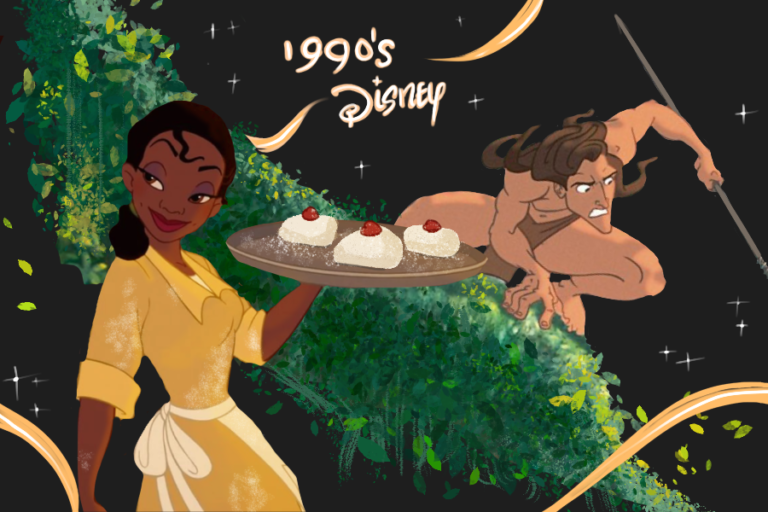
Call me nostalgic, but I truly miss the glory of Disney’s 1990s “renaissance era.” What I believe made this 10-year period such a success was the beautifully hand-drawn 2D animation and the incredible depth of the stories. The characters didn’t feel superficial or forced; for instance, animated films like “Tarzan” and “The Princess and the Frog” both contained well-developed character arcs while also presenting hidden commentary about social standards and world views. In “Tarzan,” the prevailing message was the need for the preservation of the natural world, along with the complex notion of identity and belonging. In “The Princess and the Frog” the underlying message supported the idea of following your dreams through independent hard work and the concept of not allowing society to confine you based on your appearance or background. 

Most, if not all, of the 2D animated hit films from the ‘90s contain similarly complex morals that worked to educate an entire generation. I find this aspect of earlier Disney movies lacking in films released in the last two to three years. 

Another key feature of earlier Disney films is, as aforementioned, the animation. There’s just something so incredibly satisfying about watching two-dimensional animation in action: Disney’s classic style created soft, natural features with the aesthetic of European illustrations — dubbed “storybook realism” — which was initially developed by the founder of the company Walt Disney himself. This art style was specifically designed to make the characters come to life, to feel as though they exist in the real world and are burdened with real-world problems. 

This aspect of the animation allows viewers to directly relate to the characters, even though they are merely illustrations on the screen. Paired with a well-developed plot and camera angles that mimicked those used on live-action movie sets, Walt Disney managed to approach 2D animation in a fundamentally unique and profound way. 

In a 1935 memo, Walt Disney wrote: “Our study of the actual is not so that we may accomplish the actual, but so that we may have a basis upon which to go into the fantastic, the unreal, the imaginative – and yet to let it have a foundation of fact, in order that it may more richly possess sincerity and contact with the public.” Up until recently, I think the company has been staying true to this ideal. Watching newly-released Disney movies, I feel as though something crucial is missing. 

What could be the reason for Disney moving away from the quality of animated feature films they were so championed for producing in the 1900s and early 2000s? I believe that it may have a lot to do with budget and technology, as well as over-stretching the capabilities of the company. In the last ten years, Disney has grown into a monopoly-like power within the global entertainment industry, specifically with its acquisition of franchises like Marvel, Star Wars and Pixar. As it stands, Disney seems to have a lot on their plate — not to mention the upkeep of Disneyland, Disney World and Universal Studios theme parks and their streaming service, Disney+. 

Furthermore, 2D animation is a tedious process that requires a lot of time. With CGI becoming cheaper and more accessible, 3D animation is simply easier and faster to achieve, especially with the help of artificial intelligence and other similar technologies. 

With all that being said, I can only hope that, with this switch to 3D graphics, Disney ensures that their upcoming film repertoire is not oversaturated with shallow messages: the company truly needs to gain back their viewer’s attention to bring up earnings from box office ticket sales and encourage people to leave the comfort of their streaming services to watch Disney movies in theaters once again.  


Written by: Maya Kornyeyeva — mkornyeyeva@ucdavis.edu


Disclaimer: The views and opinions expressed by individual columnists belong to the columnists alone and do not necessarily indicate the views and opinions held by The California Aggie.

 

Davis Books to Prisoners works hard to make a difference in the lives of the incarcerated

0

The co-founder and a club officer discuss the organization’s purpose


By SABRINA FIGUEROA— features@theaggie.org


In the United States, 3 out of 5 inmates are considered illiterate, but only about 6 percent of inmates receive education to be able to read during their time in prison. That doesn’t stop them from wanting to learn and read about different topics they find interesting, nor does it stop non-prisoners from helping them achieve that goal. 

Founded at UC Davis in 2017, Davis Books to Prisoners is an independent organization of many Books to Prisoners across the United States that are part of the larger Seattle-based nonprofit. The organization’s mission is to promote literacy and self-directed education for inmates, as well as “foster a love of reading behind bars, encourage the pursuit of knowledge and self-empowerment, and break the cycle of recidivism,” as stated on their website. From 2019 to 2022, they have sent over 2,000 books to incarcerated people located in various states. 

“Our mission is kind of in the name, we’re just trying to get books to people in prison,” Colin Meinrath, co-founder of Davis Books for Prisoners, said. “We try to help disadvantaged prisoners achieve their own desired educational outcomes and help them do the kind of reading that they want to do which includes a wide range of [topics].”

The club communicates with prisoners all over the country primarily through mailed letters and books — so long as state law allows it. Some of the most popular states for the organization are California, Texas and Pennsylvania. Occasionally, they get letters and emails from people who aren’t incarcerated, but who request books on behalf of prisoners they know in either local or federal prisons. 

The process of sending books can be seen in depth on the organization’s TikTok account. Every box of books and letters is sent through the United States Postal Service, so every donation of postage, paper and even envelopes is appreciated. 

“[The sending process] is very old fashioned. Our mailbox is at the Center for Student Involvement, and they say that no other group gets as much mail as us. We do our best [to reply back], but it is hard because we aren’t a huge group,” Gisselle Garcia, an officer of Davis Books to Prisoners, said. “Sometimes we hold letter writing nights because, aside from just sending books and helping to promote education, we want to promote building community with people inside [of prisons].” 

Handwritten letters sent to the organization from inmates are usually their requests for genres and topics they’d like to read about. Depending on the donation of books and money from community members or authors, Davis Books to Prisoners decides which books best fit an inmate’s request. 

Some of the most popular genre requests are reference books, self-help, African-American studies, Latin-American studies, psychology, fiction and science fiction or fantasy books. 

“Because we don’t get a great level of funding, we ask for general genres and try to fulfill [requests] that way instead of specific titles or authors,” Garcia said. “I think it’s interesting, though, because the range of requests is always fun to read. We get everything from picture books to things on gardening. I think someone also asked for books on ancient Mesopotamia, so super random, but there’s range.” 

Meinrath also chimed in about book requests: “This I can say is true about other ‘Books to Prisons’ projects, too: the most commonly requested book is the dictionary, and that is because of their reading level and them seeking to improve their reading level.” 

It is also important to note that these books are not just for one incarcerated person and that sometimes these ranges of books are shared with other inmates who also want to read and learn. These books help create a community inside of prisons just as well as they do outside of them. 

“When [the inmates] say ‘We have a mini library’ or ‘We share books,’ we see that [the books we send] can touch other people’s lives,” Garcia said. “So, we have to remember that prisons have libraries, but what are the conditions of those libraries? What [reading] material do they really have in there? Sometimes it’s old [books], very limited or just very small. We seek to fill those gaps the best we can.” 

Meinrath and Garcia also stated that the club sometimes takes phone calls with prisoners and that they are similar to the letters because they also contain requests for books, discussions of solidarity and community building, in addition to educational conversations. 

“It’s a lot of community building, again, you know if sometimes [the inmate] is going through something, we’ll listen,” Garcia said. “We’ve built some lifelong friendships with people through [calling], so sometimes we’ll just be like ‘Hey, what’s going on?’ and things like that.” 

Davis Books to Prisons is always looking for help, whether that is through volunteering, donating or even reading, learning and raising awareness about prison literacy — starting with understanding prisons in a broader sense. 

“There are two organizations that can help inform people about prison literacy. One is called The Marshall Project, and they do work on prison reform generally. The other is called PEN America, and they do stuff around freedom of speech and censorship around writing, but they have taken an interest in prisons in the last few years,” Meinrath said. 

UC Davis students, staff and other Davis community members with incarcerated loved ones are heavily encouraged to contact Davis Books to Prisons so that they can get connected with them. All information will be kept private and will not be disclosed unless otherwise instructed. 

However, you don’t have to know someone in prison to get involved and contribute meaningful work. Volunteers with the organization recognize how important their work in the program is.

“Working alongside the Books to Prisons project has been so rewarding,” Aiden Willet, a third-year sustainable agriculture and food systems major, said. “Building connections with incarcerated community members reminds us that they cannot just be discarded by the system.” 

The program’s efforts do not go unnoticed by the inmates, either. Their work is highly valued among their readers, and they continuously receive letters of gratitude that show how much of a difference they make in their lives: “I must express my gratitude to you and others who provide reading material for those incarcerated. As for one who didn’t know how to read [and] has fallen in love with reading, I thank you again.”


Written by: Sabrina Figueroa — features@theaggie.org

The Editorial Board calls for an immediate ceasefire to the Israel-Hamas war

A ceasefire is only the start to addressing a crisis that has existed for decades 


By THE EDITORIAL BOARD


Less than three months into the Israel-Hamas war, an estimated 6,000 buildings have been damaged and nearly 20,000 total people have died — with women and children representing nearly 70% of all deaths reported. Amidst local and global demands for a ceasefire, it is clear that the war in Gaza is a humanitarian crisis. The Editorial Board calls for an immediate ceasefire to end the violence against civilians in the regions. 

The United Nations General Assembly approved a resolution with large support calling for a ceasefire on Dec. 12, with the U.S. being one of 10 nations who voted against the decision. The same day, the Davis City Council also came to a unanimous decision to pass a resolution calling for a ceasefire to the war. The Editorial Board stands with the city’s decision. 

A ceasefire is only as legitimate as the parties who abide by it. Israel and Hamas alike have a responsibility to not break a ceasefire for the sake of civilian lives. In 2012, there was a ceasefire between Hamas and Israel after an eight-day-long conflict — Israel later broke this pact by firing on farmers and fishermen. And, according to the Israel Defense Forces (IDF), Hamas broke the temporary ceasefire that happened in November, firing toward Israeli territory shortly after the truce began. 

While a ceasefire may come with concern of violations, the growing number of civilian casualties must be stopped. We understand why governments feel the need to defend their people or respond to terror attacks, but this cannot come at the expense of thousands of civilian lives. Collective punishment is never acceptable.

There must be an immediate end to all acts of terrorism and violence committed against civilians. Hamas does not represent all Palestinians and the IDF does not represent all Israeli citizens — civilians should not have to pay the price for decisions they did not make. 

As part of an immediate ceasefire, there must also be a diplomatic attempt to seek permanent solutions to the conflict. This is not a war that occurred in a vacuum; the conflict has roots in centuries-old cultures and events. All parties also have a responsibility to adhere to international law and abide by the recommendations of the Geneva Convention for times of war. 

There must also be a return of essential utilities to the Gaza Strip, such as water, food, fuel and electricity. Gaza receives most of its electricity from Israeli power lines and according to the U.N., most commodities in Gaza, such as food, are imported from Israel. After the Oct. 7 attacks, Israeli Defense Minister Yoav Gallant announced a “complete siege” on Gaza, saying the region would be cut off from said utilities. Despite the challenges inherent in providing humanitarian aid to a warzone, the parties involved must keep in mind that such restrictions only further human suffering in the region. 

As part of a ceasefire, there must also be an unconditional release of all civilian hostages by Israel and Hamas. Last month, during the temporary ceasefire, Hamas released 100 hostages in exchange for approximately 300 Palestinian prisoners held by the IDF. Recently, three escaped hostages who had previously been held captive by Hamas waved a white flag and shouted for help in Hebrew, but were shot and killed by the IDF, who had mistakenly identified them as a threat. This tragedy serves as a reminder of the brutal treatment of hostages during war. People should not be used as bargaining chips.

We recognize that the privilege of writing this editorial from relative safety in the U.S. is one that not everyone shares. Samer Abudaqa, a Palestinian journalist for the TV network Al Jazeera, was killed in an Israeli airstrike while working, according to the network. Abudaqa is one of more than 60 journalists who have been killed in Gaza since Oct. 7, according to the Committee to Protect Journalists

As a student newspaper, we recognize the important role we have in condemning violence committed against journalists. We applaud anyone who has dedicated their life to exposing the truth, especially in times of war. 

According to The New York Times, on Oct. 30, Prime Minister of Israel Benjamin Netanyahu compared Israel’s military action against Hamas and unwillingness to sign on to a permanent ceasefire following the events of Oct. 7 to the United States’ military reaction to the events of 9/11 and the bombing of Pearl Harbor. Hamas also recently denied a temporary ceasefire proposed by Egypt; according to NPR, this may be in part because previous drafts of the proposal involved removing Hamas from power, and in part because Hamas says they will only accept a permanent ceasefire. 

As we watch these tragedies occur overseas, it’s difficult not to feel hopeless. While we realize that this editorial alone can’t end the war in Gaza, it is important to share our voices to stand in solidarity with our community. From vigils to protests, it is clear that the crisis has greatly affected many Davis community members. 

A ceasefire is not a perfect solution to this conflict. It does not address the conditions that existed before and the conditions that will exist after the war. However, when faced with a horrific and ever-increasing number of civilian casualties — it is a start to something better. If a diplomatic solution to this complex issue is to eventually be made possible, it will require a concentrated effort to care about the lives of civilians, and that begins with a ceasefire.


Written by: The Editorial Board