59.1 F
Davis

Davis, California

Wednesday, December 24, 2025
Home Blog Page 120

Student summers abroad at the Silo Crepe Bistro

Summer at the silo has a nice ring to it


By ALLISON KELEHER — adkeleher@ucdavis.edu 


Not so breaking news — two months ago, in the middle of the night, many fliers were put up around the UC Davis campus offering an internship abroad for Summer 2024. There was even one found on a lamppost by the cows. 

The internship appeared to be the opportunity of a lifetime! The compensation would be free room and board plus $450 a week for only three hours of work. The rest of your time could be spent cafe hopping in Paris and meeting new people. 

One rejected applicant said, “I really liked the Eiffel Tower graphic on the flier — that’s what made me want to apply.” 

Hundreds of undergraduate students scanned the QR code on the flier and filled out the Google form. The link to the Google form doesn’t exist anymore, however one of my sources told me, “One of the questions mentioned that a passport was optional, which I thought was weird.” 

Currently, I am concerned for the UCD student population because the lack of critical thinking is astronomical. Addressing the applicants now — did you expect to be smuggled into the country in a cargo plane? 

The lucky winner was notified last week on Sunday night to report for orientation in front of the Silo. My sources tell me that she was unsure of where to go because the email just said, “Meet in front of ze silo to begin your work – sent from my iPad.” She warily approached a man wearing white with a French mustache. Luckily, it turned out to be the orchestrator of the internship.

She was brought through the Silo and given a tour, and finally, the tour ended in the Crepe Bistro where she was given a hat and an apron. She went along with the training, sort of unsure of what was happening. After a full four-hour training shift, she finally asked “So when do I get more information about the internship?” To which the French man said, “This is ze internship.”

My sources tell me that her face became red with anger before she ripped the apron off and threw it on the ground. “You said I would be cafe hopping this summer, not making crepes!” she exclaimed. 

“Have you checked out Peets yet?” he called out after her as she stormed out. 


Written by: Allison Keleher — adkeleher@ucdavis.edu


Disclaimer: (This article is humor and/or satire, and its content is purely fictional. The story and the names of “sources” are fictionalized.)
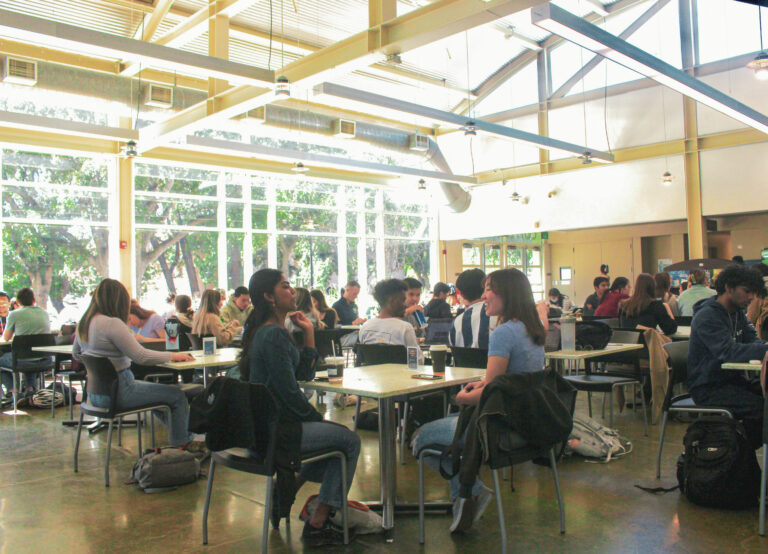

New construction to expand CoHo westward

The project will have three focuses, including more seating, an improved back-of-house area and the renovation of customer restrooms 


By RODRIGO VILLEGAS — campus@theaggie.org 


In 2022, the ASUCD Coffee House (CoHo) began its expansion project under the leadership of Food Service Director with the Associated Students Dining Services Darin Schluep. 

“I was approached by somebody from the campus, a regular Coffee House customer, who had mentioned the idea [following] the Freeborn Hall transition,” Schluep said. “The work being done at the Freeborn Hall location right next to [the CoHo] kind of opened up an opportunity.”

According to Schluep, this created the potential for a westward expansion of the CoHo. He hopes to address several focuses with this project, such as additional seating in the area. 

With the Freeborn Hall location now opened up, the bike parking currently on the west side of the CoHo may get relocated. The project aims to take advantage of that space to create more patio seating. While Schluep said that he does not consider outdoor seating as valuable as indoors, he said that this will serve to address the constant need for more seating options. 

“Even though we’re not necessarily serving as many customers every day as we were before COVID, we still have a pretty impacted dining room, so we identify that all the time as an opportunity for growth,” Schluep said. 

The project also addresses the back-of-house area, which currently does not provide a suitable space for staff to prepare for their shift or store their belongings. Matthew Fucile, the Executive Director of Operations and Events Management at The Division of Student Affairs emphasized the lack of space. 

“The staff don’t really have an appropriate back-of-house space to sit down and put [their] shoes on or take a break,” Fucile said. “They have to do that out in the dining room, which is almost always impacted during any of the hours of operation.” 

He also cited the lack of safe storage for staff’s belongings as another issue. 

“Student staff can come in through two different ways and one of the ways is right from the dining room space over by the bathrooms, and it’s not managed,” Fucile said. “So you can have a person — whether that be students or [the] public — walk in there and most of the time there [will] be a lot of students’ belongings unsecured that [they] could get to.” 

The project would enable the CoHo to better manage its current operations and staff, allow for storage cubbies or lockers and a private break area for staff. 

Lastly, the project includes a renovation of the customer restrooms to shift towards gender-inclusive restrooms.  

The project is in its early stages with a final design near completion. However, the cost of the project is still unknown, and as a result, it is unclear whether or not sufficient funding is available.

“There’s some behind-the-scenes work being done with electricians and plumbers to identify what the needs are with the project,” Schluep said. “This is so that we can finalize all the different structural components that’ll have to happen in order to provide some quotes.” 

A price estimate for the entire project will likely be solidified in early Jan. 2024, according to Schluep. Once these estimates are provided, he and his team will determine whether or not they can go through with the project, though Schluep feels fairly confident that at least some of the project will be funded. 

Furthermore, Schluep hesitated to provide a timeline due to many unknown variables. He hopes that the project will be completed in the upcoming summer 2024 so that it does not impede the CoHo’s operations or interfere with customers. 


Written by: Rodrigo Villegas — campus@theaggie.org

Yolo County recommends wearing masks in crowded indoor areas, getting vaccinated this winter

As the rates of COVID-19 and RSV increase across the county, Yolo officials recommend residents protect themselves against these viruses


BY EMMA CONDIT city@theaggie.org


Yolo County officials are encouraging residents to wear masks in crowded indoor areas and vaccinate to protect against the spread of respiratory viruses, according to a recent press release. The county made this recommendation after monitoring wastewater which has detected the highest levels of COVID-19 and RSV since the surge of these viruses last winter.

“Our wastewater monitoring program is currently detecting high COVID-19 and RSV levels,” Dr. Aimee Sisson, Yolo County public health officer, said in the press release. “I recommend that everybody in the community take steps to protect themselves from infection, including wearing a high-quality mask when indoors around others. In addition, if you have not yet gotten the updated COVID-19 vaccine, annual flu vaccine, and RSV vaccine, I strongly encourage you to do so — it is not too late.”

Wastewater monitoring is currently the most effective tool for detecting cases of COVID-19 and RSV. This method is efficient, accurate and fills in the gaps created by a lack of personally reported cases. Through this monitoring, Yolo County can obtain accurate amounts of each virus present in wastewater, rather than a specific number of cases. 

According to Colleen Naughton, an assistant professor of environmental engineering at UC Merced and a lead researcher at the primary wastewater testing program for Yolo County, this system reveals the amount of each virus present in Yolo’s sewage rather than the exact number of cases. She also noted the benefits of wastewater testing. 

“Many more people are taking at-home rapid tests and not always reporting their cases,” Naughton said. “Tests have become more inaccessible, so testing wastewater is a good alternative and has grown in the last couple of years.”

Current wastewater data shows that the recent peak of SARS-CoV-2, or the COVID-19 virus, was from Dec. 22 to 27. Across the county, the highest amount of the virus was found in Davis, followed by Woodland and then Esparto. Fewer RSV rates than COVID-19 rates have been detected, with its peak also from Dec. 22 to 27. The highest levels were found in Esparto, followed by Winters and then Davis. 

“As the New Year approaches, Yolo County is closely tracking a rise in respiratory virus activity in the community through wastewater monitoring,” the press release reads. “Recent wastewater data indicate high levels of the SARS-CoV-2 virus that causes COVID-19, along with high levels of respiratory syncytial virus (RSV). For both these viruses, the current Yolo County average is in the top third of levels seen nationally over the last year, indicating high activity.”

The recommendation applies to all Yolo residents, including UC Davis students who have recently arrived back in town. Gray Engstrom, a second-year theater and dance major, feels that this is a necessary recommendation to protect the university community. 

“I feel like [masking and vaccination] are good ideas since a lot of people get sick during winter quarter,” Engstrom said. “It’s also one of the more stressful times for students academically, so it’s really hard to miss class. It’s also not just about protecting yourself, it’s about being considerate of other people. You should try to not spread anything and not go to class sick.”

Yolo County residents are encouraged to monitor themselves for symptoms, stay out of public spaces if infected, receive their COVID-19, RSV and influenza vaccines and practice good hygiene. The county provides access to masks and free COVID-19 antigen tests at specific sites in Davis, Esparto and West Sacramento that are listed on the county website.

Written by: Emma Condit city@theaggie.org

Where the UCD Majors would take you on a date

Hubba Hubba


By CARMEL RAVIV — craviv@ucdavis.edu


Davis is often compared to Paris, mainly for how they share being the “City of Love.” Admit it, you can’t help being swept up in the romance of Davis, California and all of the eligible bachelors/bachelorettes. Even the cows are procreating for Tercero residents to see! (I saw a cow give birth on the way to the gym.) But if there is a specific love story you’re going for, I have outlined where the different UC Davis majors are likely to take you on a first date to begin your romantic journeys. 


Biological Sciences: A Bio Sci major will propose a study date — they may think you’re cute but their O-Chem grade is not. 

Sociology: They’ll take you to the vintage fair while you look at 40-dollar gem-stone earrings and talk about their relationship with their mom. 

Avian Science: Bird watching, duh.

Computer Science: A Target run so you can show them how to buy body wash.

Mechanical Engineering: Why don’t we go bowling at the Memorial Union Games Area? It would just optimize our free time in our day-to-day schedules by staying on campus. Plus, it’s not that expensive. I heard they have Jenga too haha. Also, I 3-D printed you an octopus.

Wildlife, Fish and Conservation Biology: Sushi!!! :333

NPB: An Arboretum walk. It’s their comfort place and where they have mental breakdowns about going to Med School.

Managerial Economics: They’ll invite you over to watch a movie on their bed. (You met on Tinder, what did you expect?)

Geology: These exist?

Animal Science: Petting zoo. Remember, the heavy petting is only for the animals.

Clinical Nutrition: Just a normal restaurant. They will be heavily judging as you decide between a salad and fries.

Medieval and Early Modern Studies: Renaissance Fair! Whether or not it’s a red flag will be decided by how good they are at dueling with a foam sword. 

Global Disease Biology: Challenge yourselves in a themed escape room where you work together to solve puzzles to prevent a fictional outbreak. The twist? It’s just a room locked from the outside! There’s no escape!

Undeclared: “I don’t know. What do you want to do? I’m down for anything. As long as I don’t have to make a decision.”


Written by: Carmel Raviv — craviv@ucdavis.edu


Disclaimer: (This article is humor and/or satire, and its content is purely fictional. The story and the names of “sources” are fictionalized.)

 

Carlos Dominguez, suspect of three stabbings in Davis, deemed mentally fit for trial in court hearing

The decision comes after Reales Dominguez spent months in a state hospital for mental disorder


By ALMA CULVERWELL city@theaggie.org 

On Friday, Jan. 5, Yolo County Judge Samuel McAdam read a confidential medical report stating that Carlos Reales Dominguez, former UC Davis student and suspect of three stabbings last year, was deemed mentally fit to stand trial. 

The hearing, which lasted nearly 10 minutes, came after Dominguez spent three months at a state hospital after previously being deemed unfit for trial. A preliminary hearing for the trial is now set for Feb. 26 at 9 a.m.

“The court received a report from the state hospital certifying that Mr. Dominguez has been restored to competency,” Wendy Wilcox, executive assistant to the Yolo County District Attorney, said via email. “[Dominguez] will be returned to Yolo County and will appear in the Superior Court on Jan. 5 at 9 a.m. in Department 10. If there are no challenges to that report criminal proceedings will be reinstated.” 

On May 4, 2023, Dominguez was arrested as the suspect in the stabbing and murder of David Henry Breaux, a community member affectionately known as “The Compassion Guy” and UC Davis student Karim Abou Najm, as well as the attempted murder of community member Kimberlee Guillory.

“The Yolo County District Attorney has filed two murder charges and one attempted murder charge against 21-year-old Davis resident, Carlos Dominguez,” a press release made on May 5, 2023 from Yolo County District Attorney’s office reads.

The press release made after the arrest states that a Special Circumstance For Multiple Murders was alleged, potentially allowing for a sentence of life without parole and even the death penalty. 

“A Special Circumstance for Multiple Murders has been alleged which makes the case eligible for either Life without the Possibility of Parole, or the death penalty,” the press release reads. “The decision regarding whether to pursue the death penalty will be made at later date.”

Dominguez was a third-year biological sciences major enrolled at UC Davis until April 25, when he was expelled due to academic reasons. Judge McAdam said that the report of Reales Dominguez’s mental health stated he had a schizophrenic and catatonia disorder. 

In August, Dominguez’s public defender argued that he was not competent to stand trial. Dominguez was diagnosed with schizophrenia by three mental health professionals and was ordered to take medication and be placed in the state hospital. 

Dominguez was ultimately ruled as not a risk of harming himself and others in an institutional setting and is now being held in the Yolo County Jail without bail rather than returning to the hospital.

Both Maria Breaux, sister of David Henry Breaux, and Nadine Yehya, mother of Karim Najm, attended the hearing on Friday, according to The Sacramento Bee. Maria Breaux has attended multiple memorials to honor the legacy of her brother. When asked to make a statement, Maria Breaux shared that she is glad Reales Dominguez received mental care.

“I’m glad that Carlos Reales [Dominguez], after living with seemingly untreated schizophrenia for two years, finally got the help he needed,” Maria Breaux said via email. “Nothing that happens from here will bring David back.” 

David Henry Breaux dedicated his life to understanding compassion. At a vigil, Maria Breaux said her brother told her to forgive someone if they ever harmed him. Maria Breaux hopes that the trial can help bring compassion to people living with mental illness. 

“But I hope, at the very least, that this case brings more awareness and compassion to those living with an extreme, untreated mental illness, and the loved ones who support them,” Maria Breaux said.  


Written by: Alma Culverwell — city@theaggie.org 

UC Davis students use art as a form of stress relief

0

How artistic activities can be used to combat overwhelming winters 


By JULIANA MARQUEZ ARAUJO — features@theaggie.org


The start of winter quarter, albeit a fresh start, comes with a set of new challenges. To students, it may symbolize the beginning of the most jam-packed and intense quarter of the whole school year. While some students experience no effect from the changing seasons, it is difficult to ignore the significant level of increased stress that many students undergo during winter. 

This phenomenon may relate to the condition known as “seasonal depression,” where people feel a weight of sadness caused by a specific season in the year. Students feel just how short the winter days are as they sit in class watching the sun go down before 5 p.m. This dark and gloomy weather is then followed by the loss of motivation and overwhelming feelings of defeat. 

“I definitely do experience seasonal depression,” Larissa Fitzhugh, a first-year sustainable agriculture and food systems major, said. “It tends to take more time and energy to do the same amount of work I can do during other times of the year.”

She claimed that in order to succeed academically, she has had to sacrifice her own mental well-being. Many students share this sentiment, as it can be difficult to pay attention to one’s health when schoolwork piles up. However, in the midst of a stressful period, finding awareness through expressing creativity with art can be liberating. 

Art comes in plenty of forms. Some enjoy writing poetry, others prefer to draw or paint. Music, dance, photography — these activities bring out positive emotions in people, or allow them to release negative ones.

“I like to crochet, it is a nice way to relax and do something I enjoy,” Fitzhugh said. “It is also nice to have a physical finished product I can be proud of when I am done. It makes me feel good even when I don’t initially think it will.”

There is more to the process of art than the journey of the creation. While not every result will or has to be perfect, it is satisfying to know that one has created, released or learned something. The positive change in moods will always reveal itself in the end.

Numerous students are aware of their lack of attention to their mental health. The hard part is knowing how to move forward.

“I want to learn to read my body and my mental state more to determine when I need to separate myself from school work,” Chris Meza, a first-year music major, said. 

Realizing when it is important to take a break from things that are causing one mental distress is vital to that individual’s health. After all, no grade is worth sacrificing mental stability. The mindset that the end result is worth the struggle is not always healthy. To some individuals, it can be draining. 

Participating in an artistic exercise may help people realize that the world does not end after a bad grade. Getting in touch with one’s artistic side guides these individuals in understanding that life means so much more than one single commitment.

Meza claimed that college is not the sole priority in student’s lives, and oftentimes, it gets challenging having to balance every other factor with schoolwork, especially when it takes so much time out of one’s day. 

During these frustrating times, academic-oriented students can find themselves ignoring their own hobbies or activities that bring joy into their life for a “more important” goal — this being their grades. 

What many students fail to realize is that ignoring their emotional health often backfires.

“I usually lose almost all my motivation to do my best in my classes and instead, I just do the bare minimum without even trying to push myself,” Meza said. “And usually with this, it also ties into my hobbies, where I begin to not do those anymore. I lose the motivation to even try enjoying my hobbies.”

Giving up on one factor ties into other important factors. Picture a line of dominoes collapsing on each other. Taking breaks is key to succeeding and being satisfied with how one succeeds. 

“When I kind of just need a break from everything, I’ll either pull out my piano or guitar and just play some songs I already know or if I’m up for it, I’ll learn a whole new song,” Meza said. “It’s one of the ways I’m able to just relax and play whatever feels right. Sometimes, I’ll just pull together some random chords and play a pattern of some sort.”

Making a habit of exploring musical instruments, like Meza does, creates excitement in the practice. This generates a purpose in life outside of academics. The wonderful thing about art is how subjective it is. Consequently, there is little desire for the finished result to be of the best quality, as art can be personal, so there is no need for it to be judged.

Leilani Velasco, a first-year landscape architecture major, shared the process of her sketches and how it promotes relaxation.

“You can put on music as a background and go with the flow,” Velasco said. “Drawing, in my opinion, is one of those hobbies that doesn’t require a lot of thought or stress, unless you want it to.”

She claimed that art should be beneficial in an emotional sense. There is a familiar comfort when participating in these activities. When someone associates drawing or music with peace and relaxation, that same soothing feeling resurfaces each time it is exercised. 

Velasco shared other healing aspects that come with the process of creating art.

“For sketches, I like to go ride my bike and go look for buildings I can draw throughout the school. You can sit outside that building for hours and just observe every detail, even everyone that’s walking by. It’s so healing to me, in so many different ways.”

An artistic approach to mitigating stress is not only beneficial, but necessary. It is never too late to make a change in an unhealthy routine and break free from winter’s gloom.


Written by: Juliana Marquez Araujo — features@theaggie.org

Women’s basketball suffers three straight losses in December games

The Aggies fell to Stanford, UC Santa Barbara and Cal Poly in back-to-back games


By LUCIENNE BROOKER — sports@theaggie.org


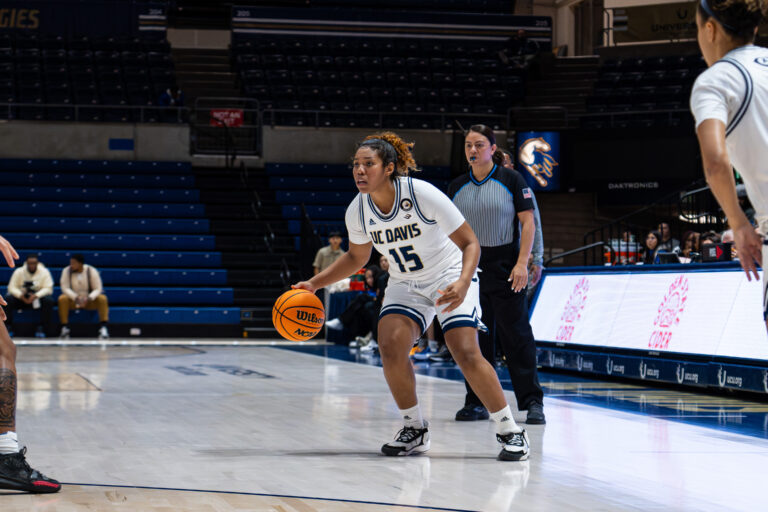
The UC Davis women’s basketball team had a difficult slate of games in the last month with the team only winning two of their six matchups. These consecutive losses leave the Aggies hoping to break their three-game losing streak as they look forward to another lineup of formidable opponents in January. 

While December started on a sour note for the Aggies as they lost 52-77 to Washington State, they were able to turn things around in time for their next matches. The team returned to their home turf at the University Credit Union Center to face Jessup University on Dec. 5 and Saint Mary’s on Dec. 10. 

The Aggies dominated the match against Jessup University with a massive win of 79-40. The team shot a season-high 52.5% from the floor and saw fourth-year Tova Sabel lead the team in scoring with 20 points. Defensively, they forced 13 turnovers and held Jessup University to 25% from the floor. 

Five days later, the Aggies were able to continue their winning streak against Saint Mary’s, where they walked away with an 87-66 point victory. Fifth-year Evanne Turner was the highest scorer in the game with a total of 23 points. Although all five Davis starters scored double figures, Turner impressed everyone and was later named Big West Player of the Week after her stellar performance. 

Unfortunately, after such impressive performances, the Aggies couldn’t maintain their winning momentum for their next string of games. 

In the final non-conference matchup of the season, the Aggies faced ninth-ranked Stanford, who had lost only one game so far in the season. Stanford jumped out to an early lead that UC Davis was never able to catch up with, ultimately resulting in a 52-92 loss. 

While the defeat was difficult, Aggie players enjoyed decent performances all around. Turner scored 17 points and the defense forced 13 turnovers yet, it was not enough to defeat the Cardinals. Stanford shot over 50% from both the floor and three-point range and held an advantage in rebounds. 

The first match of Big West conference play for UC Davis was none other than fellow UC school, UC Santa Barbara (UCSB). Tensions were high as both teams wanted to start off the season with a winning record. The Gauchos and the Aggies fought to the final buzzer with an ending score of 60-49 and UCSB with the first conference victory. 

While this was a relatively low-scoring game for offensive dynamic duo Sabel and Turner (registering 10 and 11 points respectively), other Aggies stepped up. Notably, second-year Nya Epps also hit double digits after she was brought into the match during the first half of the challenging game. Additionally, third-year Megan Norris finished the game with nine points. While the offense was not at its best, the team was strong defensively, forcing 21 turnovers and five steals. 

The Aggies had to move on quickly from their narrow loss to the Gauchos in order to face Cal Poly two days later, but they didn’t fare any better against the San Luis Obispo team. 

The Mustangs, who haven’t beaten Davis since 2015, were able to beat their 15-game losing streak and claim a tight 57-54 victory. While the Aggie offense performed better than their last game, they were held back by a season-high 24 turnovers. Although the Aggies held the lead in the final 10 seconds of the game, they were unable to close out the victory and as a result, they head into their next conference games with a 0-2 record and a three-game losing streak. 

Next up, the Aggies will regroup as they return home to face UC Riverside, UC Irvine, and Cal State Fullerton at the University Credit Union Center. On the road, they’ll take on Cal State Northridge, Cal State Bakersfield, UC Irvine and UC San Diego. The Aggies will look to turn their momentum around as the race toward Big West playoffs begins.

Despite their disappointing start, they’re predicted to finish third in conference standings and they will surely be pushing for that number one spot as the season ramps up. 


Written by: Lucienne Brooker — sports@theaggie.org

Highlighting the importance of seasonal work and travel experience for college students

0

Opportunities and advice for those seeking to learn more about the world around them without breaking the bank


By ZOEY MORTAZAVI — features@theaggie.org


Throughout the average college experience, students can often become overwhelmed by their courses and extracurriculars, sometimes losing sight of the kind of learning that cannot be achieved in a classroom: experience, discovery and exposure to different cultures and ways of life. According to many students in Davis, gaining experience and knowledge about lifestyles and cultures beyond our own small college town is crucially important. 

Some of the most memorable experiences for UC Davis students come from taking trips with their friends over the summer. Many of these trips are centered around outdoor activities like skiing, hiking and exploring naturally beautiful parts of the world. 

There are many opportunities where students can reach these locations with their friends, while still being able to work and earn money during the week, as well as explore at their leisure on the weekends. For example, seasonal positions at national parks across the country are always hiring college students for jobs ranging from 1-3 months in duration. These jobs typically entail a 20 to 30-hour work week with free weekends. They also often provide inexpensive housing for employees. 

“I think it’s so important for the younger generation to take advantage of combined travel and work opportunities because it teaches them important life skills like responsibility, empathy and perseverance,” Mikaela Abella, a first-year marine biology major, said. “It’s a completely different environment and way of learning; it positively forces you to tap into these skills, which will really change the way you speak to others and view the world.” 

There are many alternative ways for students to travel while keeping it somewhat affordable. Studying abroad is a very popular option, especially considering that UC Davis offers both educational and internship opportunities abroad. 

A key component of student-based travel affordability is finding programs that operate during the school year so that any financial aid and scholarships can be applied to those programs. Information about UC Davis Study Abroad programs can be found through the Global Learning Hub, as well as on the UC Davis website

“I think that traveling during college is really helpful in developing a more holistic worldview, especially if you’re staying in another country for a long time,” Olga Muys, a second-year history major, said. “You get the opportunity to see how people live and work outside the American cultural bubble. That’s something that’s really valuable when you’re a young person figuring out what sort of life you want to lead [and] what sort of values you want to hold for yourself.”

Additionally, there are many programs specifically tailored to fit the needs and schedules of college students. Some of these programs include CEA Study Abroad, as well as CIEE College Study Abroad, among many others. These programs offer a wide variety of scholarship opportunities for students and can be helpful with the planning process, informing students about what they should both expect and contribute in order to succeed while studying abroad.

However, for students looking to make money while still being able to travel during the summer months, there are options aside from working at a fast food restaurant in your hometown. At UC Davis and elsewhere, many are beginning to consider and take advantage of seasonal job opportunities. 

“Landing a seasonal job isn’t just about extra income, though that’s certainly a cherry on top. It’s also about the rich, diverse experiences each role provides,” a FlexJobs article by Adrianne Bibby reads. “Every seasonal job places you in a new role and a different environment where you can hone your skills, tackle fresh challenges, and uncover new roles or duties to explore.”

Through websites such as CoolWorks and Aramark, you can apply to work — which often comes with housing options — for the summer in national parks, resorts and other locations. There are a variety of jobs and places, and it’s a way for students to travel during the summer while still making money. There are also many resources for these types of jobs through the California Department of Parks and Recreation

“I think getting a seasonal job in a national park is a great opportunity for students to meet new people from all different types of backgrounds and learn new skills in a hands-on environment, as well as experience the beauty of nature in new places,” Nicole Mayer, a third-year economics major, said. “That’s something you really can’t get in a classroom.”

People at the college level are highly encouraged to consider these kinds of opportunities. So long as students have the time and flexibility to make these kinds of memorable experiences happen, there seems to be a great deal of benefits. 

“The parks need seasonal workers, especially for the busy summer, which offers nature lovers an opportunity to immerse themselves affordably in a beautiful setting and earn some money to boot,” a Washington Post article by Sharon Waters reads.

Seasonal jobs can expose students to financial independence, grant them hands-on work and learning experience and expose them to various work industries. At the college level, studies show that exploring many different career paths can make students more well-rounded, as well as prepare them for the workforce. 

Regardless of the method each student chooses, having the opportunity to gain new skills, getting away from your hometown and ordinary way of life, while still being paid and working while away from home, appears to be a rare and exciting opportunity. Seasonal employment can launch students into productive working environments, and allow them to be stationed in idyllic travel destinations while still helping them save money for their futures. 


Written by: Zoey Mortazavi — features@theaggie.org


Five easy GEs being offered in winter, spring 2024

Enjoyable lower-division courses and an upper-division psychology course that any major will enjoy


By LORENA ALVAREZ — arts@theaggie.org


A hallmark in the quarter system is frantically searching for easy and fun general education (GE) courses amidst the rush of finals season. Those who find themselves hopelessly reading through Reddit posts in search of easy GEs that will not bore them to sleep or add on unnecessary stress have come to the right place. The following are some GEs offered at UCD that continuously hold the spotlight for their ease and level of enjoyment.


GEL 012: Evolution & Paleobiology of Dinosaurs 


This course uses dinosaurs to teach students the basics in biology and geology, exploring how evolution and the environment have influenced our mental image of dinosaurs. While previously remote, the class now meets twice a week on campus. When taught by D. Gold, the grade breakdown is made up of three short activities, a media assignment and a final exam. As of today, Jan. 2, the class is being taught by R. Motani and currently has a four-person waitlist, but will also be offered in the Spring.


ECH 001: Design of Coffee — An Introduction to Chemical Engineering


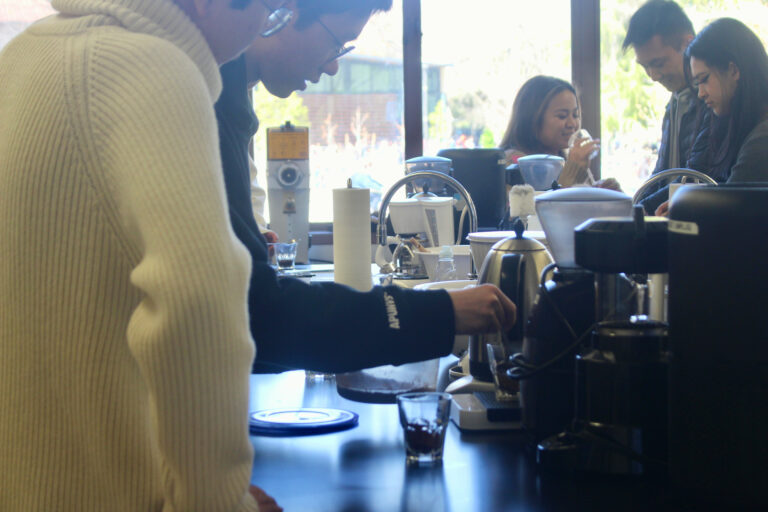
With the growing need to boycott large companies to bring awareness to social justice, or a lack thereof, learning how to brew your own coffee has become even more important than ever before. Here, students make and sample coffee while they learn about the chemical engineering principles behind the surprisingly long production process. This class is being offered in person, with a hybrid option that as of today, only has a two-person waitlist. A large portion of this class concentrates on a quarter-long project consisting of a design contest in which students are tasked with testing different chemical makeups (type of coffee, time spent brewing and brewing process) in their lab section, with the end goal being to make the ideal cup of coffee.


PSC 150V Relationship Science: Lust, Love, & Evolution 


This upper-division remote course explores the evolutionary explanations of attraction and relationships. It incorporates social psychology, evolution and biology to teach students how to maintain healthy relationships and understand one another. Students are graded on quizzes and exams on the content covered in lectures. Although this class is not being taught winter quarter, it will return in the Spring. 


PLS 006V: Flower Power; Art & Science of Flowers & Their Uses 


Another easy A is “Flower Power,” a memorization remote P/NP course that teaches students about the production and marketing of flowers in such a big and delicate industry. The grade breakdown consists of quizzes, small assignments and exams. This course will be specifically enjoyable to those who are interested in flowers and their production. If you are frantically in search of a course to complete your winter schedule, this class is easily a must not only because of its easy content but also because of its availability, it has over six hundred open seats. 


NUT 010: Discoveries & Connects in Nutrition 


This nutrition class provides a comprehensive introduction to food science, teaching students how to read nutrition scores and take care of their physical and mental health. D. Fetter provides an exemplary emphasis on the importance of understanding nutrition and its unique impact on each individual body. While the class has students examine their own eating habits, Dr. Fetter highlights the value of eating diverse foods and the importance of portion sizes, stressing that there is no such thing as a “good” or “bad” food when eaten in moderation and prioritizing both your mental and physical well being. This in-person course meets once a week and has plenty of open seats for those looking for a course that will teach them valuable knowledge that is easily applied to everyday life. 


All these GEs are a sure way to boost your GPA and provide a moment of relief from an otherwise busy schedule. That said, for those who are new to the quarter system, language classes and first-year seminars are also excellent opportunities to meet graduation requirements and become comfortable with the environment while learning about the world around us and how it functions.


Written by: Lorena Alvarez — arts@theaggie.org

Caption Contest

Drawn by: Sandhya Pfile –– sbpfile@ucdavis.edu

Disclaimer: (This cartoon is humor and/or satire, and its content is purely fictional. The story and names of “sources” are fictionalized.)
Newly designed scaffold can reduce the time it takes burn wounds to heal

The scaffold utilizes a special molecule that interacts with endothelial cells, accelerating the healing process and reducing complications


By KATIE HELLMAN — science@theaggie.org 


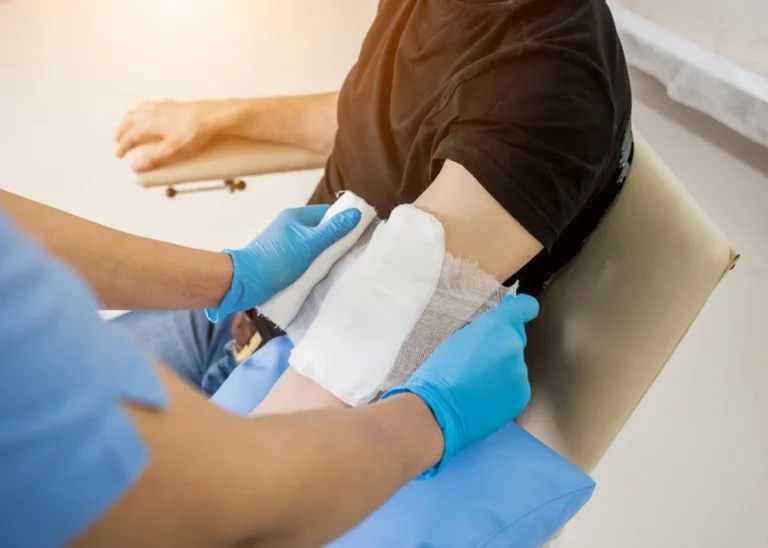
UC Davis researchers have bioengineered a scaffold, a structure that provides support for cellular attachment and tissue development, to accelerate the healing time of deep burn wounds. 

Since large deep burn wounds often lack the adequate amount of perfused soft tissue to sustain a skin autograft, it requires a greater metabolic effort and more time to develop an appropriate wound bed for autografting,” the study, published in PubMed, reads. “These contribute to the overall morbidity of large surface area deep burns, which includes insensible fluid and heat losses, increased metabolic demand, increased risk of infection, and overall increased risk of poor scar formation.”

The scaffold can reduce the severity of these issues by encouraging the formation of new blood vessels and by reducing the need for skin grafting, which involves the transplantation of skin onto the burned area. The scaffold uses a molecule called LXW7 that interacts with endothelial cells, which are found in the skin and promote the formation of blood vessels during the healing process.

Aijun Wang, author of the study and co-director of the Center for Surgical Bioengineering, commented on the purpose of the molecule in an interview with UC Davis Health.

“At UC Davis, we developed the LXW7 molecule that can specifically interact with endothelial cells and help in their attachment, migration and survival,” Wang said. “Commonly used scaffolds lack specific binding sites to endothelial cells. When LXW7 molecules are added to scaffolds, they provide a gripping site for endothelial cells to bind, which allows for better interaction between the cells and their supportive structure known as extracellular matrix.”

Vanessa Dartora, a co-author of the study, explained the implications the new scaffold might have on the future treatment of burn wounds. 

“This scaffold represents a significant advancement in burn wound treatment,” Dartora said via email. “Its ability to promote faster and more efficient wound healing, along with improved vascularization and collagen deposition, suggests potential reductions in morbidity associated with open burn wounds. It could reduce the need for autografting, especially in patients with limited harvestable skin areas.”

When mice were treated with the scaffold during the study, their burn wounds healed faster and complications were reduced. These findings are significant because, depending on the severity of the burn, complications like infection, fluid loss and a painful skin-tightening condition called a contracture can arise. With revascularization that rebuilds the damaged blood vessel networks, oxygen flow can promote tissue regeneration crucial for the healing of these wounds.

To find out the best type of scaffold for angiogenesis, or the formation of new blood vessels, burn wounds in mice were treated with collagen scaffolds, collagen scaffolds with endothelial cells, collagen scaffolds with a collagen-binding peptide bound to dermatan sulfate and the LXW7 molecule and a collagen scaffold with the same molecule in addition to endothelial cells.

Wound healing consists of the homeostasis, inflammation, proliferation and remodeling phases; the scaffold that used the combined molecule with endothelial cells was found to promote wound healing more efficiently in the proliferation phase.

Written by: Katie Hellman — science@theaggie.org

Davis College Democrats criticize impeachment of ASUCD President, Internal Vice President

While both impeachments were passed unanimously by the ASUCD Senate, DCD said that the manner in which the resolutions passed was unfair


By VINCE BASADA — campus@theaggie.org


On Dec. 6, the ASUCD Senate unanimously impeached both President Francisco Ojeda and Internal Vice President (IVP) Aarushi Raghunathan during a closed special session. With both impeachment resolutions passed, hearings held by the Judicial Council are expected to proceed during winter quarter 2024. 

Former Senator Erek Leschyn, whose term ended in Dec. 2023, was the lead author of the resolution impeaching IVP Raghunathan. The Senate only turned to impeachment near the end of fall quarter, according to Leschyn. 

“I was probably one of the senators that was talking about [impeachment] the earliest, but it only became clear really in maybe the last 2 weeks of the quarter,” Leschyn said.

Senator Jacob Klein said that the Dec. 6 meeting was initially planned to discuss a possible censure of both Ojeda and Raghunathan and to host a conversation about a solution forward. 

“The closed session took place because we hoped that private discussions with President Ojeda and Vice President Raghunathan could result in productive discourse,” Klein said. “However, they gave responses that suggested a lack of accountability.”

After senators discussed their concerns with the President and IVP, according to Leschyn, both individuals were asked to leave the room for some time. This is when the Senate ultimately decided to impeach them instead. 

“The Senate table [during the] fall quarter was one that had been experiencing, to put it bluntly, incompetency [from Ojeda and Raghunathan],” Leschyn said. 

The original censures were modified to pass as impeachment resolutions over the course of the special closed session. After the impeachment resolutions were passed, the Senate then presented them to the President and IVP. 

Ojeda’s impeachment resolution, authored by Senator Dani Antonio, cites his failure to specify how he spends his budgeted 19.5 paid work hours, his failure to properly introduce SR #1 — which lays out yearly goals for ASUCD — and frustrating interactions between Ojeda and the Senate table. 

“The reasoning behind the Senate’s unanimous impeachment of President Ojeda was that a few key job responsibilities were not being performed, which hindered communication and was in violation of the bylaws,” Klein said. “We were under the impression that removing him would open the door for a replacement who could uphold these requirements and help ASUCD run more smoothly.” 

Raghunathan’s impeachment resolution specifically says that her leadership resulted in bias and disorder during more than one Senate meeting, which Leschyn said alluded to an incident at a Senate town hall meeting in which she clashed with a member of the student body during public comment. 

“Throughout this past quarter, it has been revealed that there was not just mediocrity from the [IVP], but a severe underperformance,” Leschyn said. “[Because the IVP] is the member of the executive branch that is probably the one most closely beholden to the Senate, the presiding officer of the Senate and is in a high-level position that’s representing ASUCD and this student body, we thought that they should be kept to the highest standard.” 

On Dec. 11, the Davis College Democrats (DCD) released a statement that criticized the Senate’s choice to pass the resolutions in a closed special session. 

“While we do not seek to defend the actions and records of either President Ojeda nor Vice President Raghunathan, we unequivocally condemn and call out this undemocratic and precipitous move by members of the ASUCD Senate table,” the statement reads. 

DCD President and co-author of the statement Aiden Ledbetter said that it was not his place to comment on the reasoning behind the impeachments, but that DCD takes issue with the manner in which the resolutions were passed. 

“There were no announcements that impeachment resolutions were going to be considered within this meeting,” Ledbetter said. “When the actual meeting came about, they ended up completely dropping the whole censure and went straight for [impeaching] the President and IVP, which [DCD] thinks is completely unfair to the student body.”

Ledbetter then said that it is concerning that the duly elected executive branch can be impeached without any warning to them or the student body. 

“I think the way they did that is completely undemocratic in that we can have a [meeting closed to the public] where we can just remove these representatives who have been fighting for us this whole time without any sort of conversation with [the student body],” Ledbetter continued.

Ledbetter also personally feels that a threshold has not been met to warrant the Senate table’s actions. 

“I think these impeachments have a higher bar that [the impeached] need to cross for them to be, in my view, legitimate,” Ledbetter said. “I say that just because there is so much that ASUCD does to benefit and help the lives of all students. I mean, they run Unitrans [and] so many of the committees and commissions that go on to use our tuition dollars to improve our lives.”

Ledbetter hopes that the impeachment proceedings will bring about a longer conversation into the operations of ASUCD and movement away from “personal, slimy politics that [have] happened within the Senate table.” 

Leschyn said that he stands by his decision to impeach both President and IVP. 

“I do think that fall quarter was kind of embarrassing on [the President and IVP’s] side for a lot of things,” Leschyn said. “They’ve been in this position for a really long time, and things have not gone well. Whether or not they do improve, it could be too little too late in terms of what they’ve actually been able to do.”

Klein concluded with his comments on both impeachments as a whole.

“Regardless of the outcome, communication, transparency and accountability are paramount,” Klein said. “ I look forward to seeing an executive branch that prioritizes these values, whether it be President Ojeda and Vice President Raghunathan or whoever replaces them. I know the Judicial Council will exercise its power fairly and I trust that their decision to uphold or overturn the impeachment resolutions will be made carefully.”


Written by: Vince Basadacampus@theaggie.org

Record watch 2024

A selection of records from the coming year to look out for


By CHARLIE MCBRIAN — arts@theaggie.org  


This year anything can happen. 2024 comes in the wake of one of the oddest years for pop in recent memory. Hip-hop’s market share has been declining but there hasn’t been much to replace it. The disco-inflected fun of 2021 has fizzled out, and listener bases are once again trending towards insularity. In this fractured environment, it is not surprising that country — a genre defined by its specific listener base — has thrived. That being said, here are some releases to look forward to in the new year.


Confirmed Releases: 


“Loss of Life” by MGMT (Feb. 23)

MGMT has taken many forms since their 2007 breakout. Most recently, their 2018 album “Little Dark Age” saw MGMT reborn as a gothic synth duo, receiving revived popularity and acclaim. Now in 2024, they are back with “Loss of Life,” a record that signals a return to the slacker-psychedelia of 2010’s “Congratulations.” “Loss of Life” appears to swap the hipster antagonism of “Congratulations” for a weathered sincerity. Whether this new perspective enhances their sound is yet to be seen, but the two new singles show promise.


“Bleachers” by Bleachers (March 8)

Jack Antonoff is huge right now. Entering the public consciousness as a member of Fun, Antonoff has gone on to produce Lorde, Lana Del Rey, Clairo, The 1975 and Taylor Swift. It will be interesting to see how Antonoff’s prolific production work will be reflected in his solo work and vice versa.


“Orquíedas” by Kali Uchis (Jan. 12)

Developed alongside 2023’s “Red Moon in Venus,” “Orquídeas” will be Uchis’s second Spanish-language album after “Sin miedo (del amor y otros demonios) ∞.” On “Orquídeas” — named after the Colombian national flower — Uchis delves further into Latin pop, serving as a tribute to her Colombian roots.


Speculated releases:


“Music” by Playboi Carti

This technically should be confirmed because it has an album name, a date and four singles, but with Playboi Carti you never know. 2020’s “Whole Lotta Red” had a bleeding-edge concoction of numbingly repetitive vocals and stuttering electronic beats, influencing the niche and mainstream alike. “Music” appears to lean into the fog of Playboi Carti’s enigmatic persona.


“AG7” by Ariana Grande

Fans have speculated that Ariana Grande has been teasing her new album through the “Apple emoji search bar.” While this is wishful thinking, it reflects a continued listener base for Grande’s music even after a turbulent 2023.


“Y2K!” [assumed title] by Ice Spice

After making a name for herself in hip-hop, Ice Spice has her sights set on super-stardom. To her credit, she took strides towards this goal. In 2023, Ice Spice released her first EP, notched her highest charting song and collaborated with Nicki Minaj and Taylor Swift. Her debut album will determine if she can maintain this momentum and establish herself as a chart mainstay.


Frank Ocean

After a disastrous Coachella headlining performance, Ocean’s reputation has hit a low point with even die-hards’ faith waning. Ocean releasing music sometime this year remains a possibility, as he recently shared clips of himself in a recording studio. I wouldn’t hold out hope though.

The unpredictable nature of the music industry is one that may surprise or disappoint us. Artists’ “confirmed” release dates may fall through but despite this 2024 is shaping up to be an interesting year for music. Sonic inflection points like that of Justin Timberlake’s “Sexy Back,” Lorde’s “Royals” and Migos’ “Bad and Boujee” are by their nature unpredictable. But because the landscape is due for a shake-up, 2024 has the potential to be an exciting year in music.


Written by: Charlie McBrian — arts@theaggie.org 

ASUCD Senate unanimously passes two resolutions for the impeachment of ASUCD President and Internal Vice President

Hearings for both impeachments will start at the beginning of the winter quarter 2024


BY LILY FREEMAN — campus@theaggie.org


On Dec. 6, the ASUCD Senate held a closed session where the table unanimously voted to pass two resolutions for the impeachment of both ASUCD President Francisco Ojeda and Internal Vice President (IVP) Aarushi Raguhunathan. 

According to the ASUCD Senate Instagram, newly elected senators, Jonathan Ng, Katia Bouali, Yara Kaadan and Leah Jung had no participation in the impeachment process and were not active members of the table at the time of the closed session.

Impeachment Resolution #1, which impeached Ojeda, outlined several causes for the impeachment. 

“President Ojeda has not produced any legislation to establish executive task forces,” the resolution read. “President Ojeda has rejected requests to verbally communicate to the ASUCD Senate as a whole on the work he has taken upon and instead deferred members of the Senate to ‘speak with him privately.’”

According to the resolution, Ojeda does not communicate how he utilizes the 19.5 hours allocated per week for the job of the presidency. 

“Several members of the Senate table have expressed discomfort with meeting privately with President Ojeda and asked information on the President’s work be publicly disclosed,” the resolution continued. 

Ojeda has also failed to introduce a satisfactory Priorities Resolution, according to the impeachment document. This is supposed to be introduced during week one of the fall quarter to voice the goals, priorities and strategies of ASUCD for the upcoming academic year.

This has been an ongoing conflict within the Senate. During the Oct. 26 meeting, the table expressed their frustration about the resolution being incomplete and verbalized that they would file a complaint to the Judicial Council if no further progress was made. 

“President Ojeda introduced a second Priorities Resolution, named SR #4, in Week 5 of Fall Quarter 2023,” the resolution continued. “President Ojeda was absent from the November 9th Senate Meeting of Week 6 in which SR#4 was scheduled to be considered by the Senate and did not assign any designee.” 

The resolution said that SR #4 failed as a result of Ojeda’s absence and the overall dissatisfaction with the lack of comprehensiveness and incorporation of feedback in the document.

After two failed Priorities Resolutions, according to the resolution, the Senate requested that Ojeda give a State of the Association to clarify the progress of his goals and projects and to discuss the current state of ASUCD as a whole. 

“During the November 21st Senate meeting of Week 8, President Ojeda delivered a State of the Association that the Senate publicly regarded as unsatisfactory, on the grounds that not only did it not address the state of ASUCD outside of the Office of the President but also the information conveyed about the Office of the President was still lacking detail on overall accomplishments, goals, and current work progress,” the resolution read.

The resolution concluded by saying that the Senate filed articles of impeachment against Ojeda due to an overall failure to perform the duties of his office outlined in the ASUCD constitution and bylaws. 

“President Ojeda, who represents 37,000 undergraduate students, is the primary leader of over 2,000 ASUCD student workers, and is the Chief Executive Officer of ASUCD’s $19.5 million operations, has not demonstrated the bare minimum requisites of being president,” the resolution said. “The ASUCD Senate expressed no confidence in President Ojeda’s capacity to be ASUCD President.” 

Impeachment Resolution #2 impeached Raghunanthan. The document addressed some of the following issues regarding responsibilities that have not been fulfilled by the IVP including updating the ASUCD roster, sending out quarterly report sign-ups in time, making all Senate packets public on time, supporting ASUCD commissions and committees and effectively leading the Personnel and Awards committee, which she is the chairperson of. 

The resolution then wrote that the incompleteness of these responsibilities has resulted in an increased burden on other members of the Senate table. The document then outlined Raghunathan’s unprofessionalism, as perceived by the Senate. 

“The leadership of IVP Raghunathan has received in perceived bias and disorder at more than one senate meeting, specifically through interactions with members of the public, that have gone unresolved,” the resolution read. 

Raghunathan also did not hire the Senate Recorder or Associate Vice President in a timely manner, according to the document, and other executive office staff, such as a chief of staff, have still not been hired. 

“The Senate is dissatisfied with the work of IVP Raghunathan thus far, believing it is not in accordance with what is required in the Constitution,” the resolution concluded. “The ASUCD Senate has no confidence in the ability of IVP Raghunathan to effectively fulfill the duties and responsibilities of the Internal Vice President… Raghunanthan is incapable of her office.” 

Senator Dani Antonio, the author of the President’s impeachment resolution and a co-author of IVP’s, discussed the next steps in the impeachment process. 

“With the impeachment resolutions of both the President and Internal Vice President unanimously passed by the fall 2023 Senate table, removal will be dependent on the decisions made by the Judicial Council,” Antonio said. “Due to the fact that these resolutions were passed during week 10, hearings for this will most likely start in week one of winter quarter 2024. Here, the Judicial Council will be able to hear out both the defendants and prosecutors of the case.” 

Written by: Lily Freeman — campus@theaggie.org

Davis City Council votes to call for immediate ceasefire to Israel-Gaza war

The council voted unanimously to pass a resolution calling for a ceasefire in meeting with large public attendance


By CHRIS PONCE — city@theaggie.org


Content warning: This article contains discussions of war, violence and genocide. 


On Tuesday, Dec. 12, at their regularly scheduled meeting, the Davis City Council voted to call for an immediate ceasefire to the war in Gaza. Item 4 on the council agenda contained Resolution 23, called the “Resolution calling for peace in Israel and Gaza,” which was passed unanimously.

The resolution contained five demands as part of the ceasefire. The city and city council called for: (1) an immediate ceasefire by all parties and to seek diplomacy, (2) an immediate end to terrorism and violence committed against civilians, (3) an unconditional release of all hostages, (4) the unrestricted restoration of food, water, electricity and medical supplies and (5) mutual respect for international law. 

After the resolution was adopted, it was sent to several governing agencies to urge them to use their authority to help “end the violence.” The city shared the document with the Yolo County Board of Supervisors, Rep. Cecilia Aguiar-Curry, Rep. Mike Thompson, State Sen. Bill Dodd, Sen. Laphonza Butler, Sen. Alex Padilla, Gov. Gavin Newsom, Vice President Kamala Harris and President Joe Biden.

“Nothing can be more emotionally charged than watching humanity, especially children, maimed and killed,” Councilmember Gloria Partida said before the public comment portion of the meeting. “[…] Although we can’t directly affect a lot of the policies that happen outside [our] purview. I believe — I think we all believe — that one of the most important roles of city leadership is to commiserate and to respond to the hurt and pain its community feels.”

The council chambers were at full capacity, holding 104 people. People seated in the chambers held yellow signs that read “Ceasefire Now.” Some people in attendance also wore shirts that read “Not in our name” and “Jews say ceasefire now.”

Because of the large amount of people in attendance, Arnold allocated a minute and a half per commenter. Arnold said that the majority of feedback the council received was about what was not included in the resolution rather than what was included. He said the language in the resolution used was criticized by people on both sides of the issue. 

The first public commenter, who did not share their name with the council, wore a Yamaka and called the war in Gaza an attempt at genocide by the state of Israel.

“This killing of Gazans can’t plausibly be seen as a reasonable military response or targeted operation to remove Hamas, but is instead an attempt at ethnic cleansing,” the commenter said. 

Jennifer, who did not share their last name, is a Jewish-American and a historian. They said governments can’t be complicit in the war in Gaza.

“When individuals, communities and governments turn a blind eye to human rights catastrophes like we’re seeing in Gaza now, it’s corrosive and literally soul-destroying,” Jennifer said.“

Jennifer also said they were disappointed in the U.S.’s opposition to the United Nations General Assembly resolution that called for a ceasefire. They explained the role the city of Davis has in calling for a ceasefire. 

“Some may ask why the city of Davis has any business engaging in global affairs,” Jennifer said during the public comment. “As residents of Davis, we are a part of the larger world. Our local community contains people from Palestine and Israel, those representing multiple faith groups, to whom the city of Davis owes it to show equal respect.”

Jennifer said that they have lost extended family members to genocide and that they cannot stand by a genocide made in their name. 

“Having lost extended family members to genocide some 80 years ago, I cannot sit by and see it done again in my name,” Jennifer said. “[Done] by Israel, a government that has dehumanized those whose lives and well-being it has unjustly held in its hands for more than 75 years. When we say never again, it means never again for anyone.

Rabbi Bess Wohlner, an affiliate of Congregation Bet Haverim in Davis, also attended the meeting. According to Wohlner, the congregation is the only synagogue in Yolo County. She said that her heart has shattered every day since the Oct. 7 attacks on Israel. 

“The God I believe in cries in the deaths of the innocent, no matter their religion or nationality, always, full stop,” Wohlner said. 

Maayan Gadisman, a Davis resident, said she has family in Israel and friends from the Palestinian territories. Gadisman said that all violence against innocent people needs to be condemned, but urged the council to vote no on a ceasefire. 

“Right now is not the time [for a ceasefire] while Hamas is still in power,” Gadisman said. “While Hamas is still saying they will repeat Oct. 7, a second, a third, a fourth time until Israel no longer stands. That is not the time to call for [a] ceasefire.” 

Another commenter, who did not share their name during the meeting, said she is Palestinian and that “love, not violence,” is the solution to the war. She urged the council to keep their minds and hearts open as they discussed the resolution.

“I am Palestinian and my husband is Jewish, we both have family in the region,” the commenter said. “Our children are born of a love that most call impossible. Love makes it possible to see all innocent humans as beautiful miracles that deserve to live freely and in peace.” 

Dillan Horton, a member of the Davis Police Accountability Commission and 2024 city council candidate, attended the meeting and called on the council to vote in favor of the resolution. 

“I hope this council calls for that direct ceasefire and I hope y’all stand up for our values,” Horton said. 

After the public comment, the council discussed the resolution. Councilmember Donna Neville said she believed the resolution the council adopts needs to clarify a call for a permanent ceasefire. After updating the amendments to the resolution, the council voted unanimously for the immediate ceasefire. Arnold said that the addition of the word “ceasefire” into the resolution had an impact on their statement. 

“I’m hearing both from our community, from our colleagues and the general assembly of the United Nations and others that this is an important step toward what could be a permanent peace,” Arnold said.


Written by: Chris Ponce — city@theaggie.org