60.8 F
Davis

Davis, California

Wednesday, December 24, 2025
Home Blog Page 121

A review of holiday items at Trader Joe’s

Trader Joe’s snacks to get you through finals and into the holiday spirit


By LORENA ALVAREZ — arts@theaggie.org


With finals just around the corner, many students turn to the holidays as a way to push through the end of the quarter. Although it may be a stressful time, there are many ways to ease one’s anxiety. Some turn to shopping and procrastination, while others rely on their favorite comfort foods. Luckily, Trader Joe’s has stocked their shelves with their classic and new holiday treats just in time for finals season. The following is an overview of items returning and debuting this season.  

Jingle Jangle fans will be happy to hear that they have added Astounding Multi-flavor Mini Pretzels to the collection. This item features coffee candy, peanut butter candy, dark chocolate and milk chocolate pretzels — a wide variety of flavors that are sure to check off every sweets lover’s wish list. This is the perfect snack to decoratively place on a dish for any holiday event or to enjoy while studying for finals.

For those who wish they could indulge in this beautifully crafted treat but cannot because of a nut allergy, Butter Toffee Pretzels are the next best option. These pretzels take sweet and salty to another level. Despite their addictive flavor, the pretzels are surprisingly harder than one would expect. However, they are missing that “crunch factor” and don’t clearly iterate that on the label. While they are not a new item, these pretzels are a classic that will have you running to Trader Joe’s for a second bag.

To put you in the holiday spirit, Iced Gingerbread Squares are an excellent lemony treat for anyone who enjoys gingerbread cookies. With a snowflake-covered festive box, this new item is the perfect alternative to regular gingerbread cookies. They are made with butter, brown sugar and ground ginger. While alluring, I mistakenly put this dessert back on the shelf in exchange for the Brownie Crisp Coffee Ice Cream sandwiches.

The Brownie Crisp Coffee Ice Cream in an ideal world would be the perfect snack to get you back on your feet with finals coming up. The coffee aroma smells appealing but reveals a lot more than you would expect. While bewitching, the brownie tastes like an espresso puck. Out of all of the snacks I have tried from Trader Joe’s, this one will not be making an appearance in my freezer anytime soon.

Trader Joe’s Dark Chocolate Stars are distinguishable because of their star shape and the box’s festive look: a blue box with star cut-outs revealing the delicious cookies inside. These stars are sure to shine to those who adore dark chocolate and shortbread cookies. That said, personally, these cookies did not hold up their reputation. While cute, the dark chocolate was overpowering and resembled a stone more than a cookie when bitten into. Although they are not a terrible snack if you can get past the density, Trader Joe’s has a lot of alternatives to select from. 

And of course, we cannot forget the comfort food that never fails to lift our spirits, even during this chilly season: the Mini Hold the Cone ice cream cones. Their seasonal peppermint-flavored ice cream is elegantly paired with a chocolate coat and a chocolate-infused cone, an excellent counterbalance to the peppermint flavor. Not only do the flavors balance each other to perfection, but they are also the perfect size for a small pick-me-up.

The perfect pairing to Trader Joe’s vast cookie selection is their Cookie Mug Hangers. These cookies are designed to hang over the edge of mugs and add a cute and delicious touch to your choice of beverage. Not only are they sweet and crunchy, but when paired with a warm drink like hot chocolate, are the epitome of sitting by a fireplace watching holiday movies under a warm blanket. You can brighten your mood this finals season with a cute movie night paired with an adorable cup of hot chocolate and this cinnamon-spiced treat.

These are just a few of the snacks available – Trader Joe’s is constantly restocking their shelves with new items, making sure there’s something for everyone. Even if you do not celebrate the holidays or turn to comfort food during finals, their snacks are worth trying because of their affordability and the vast selection to choose from. 


Written by: Lorena Alvarez — arts@theaggie.org
Se ha identificado una proteína que puede “activarse” para matar células cancerosas

El receptor CD95 puede ser usado con inmunoterapia para matar las células cancerosas


POR KATIE HELLMAN — science@theaggie.org 

Investigadores de UC Davis Comprehensive Cancer Center han identificado una manera para matar células cancerígenas. Este nuevo avance puede facilitar el desarrollo de tratamientos más efectivos contra el cáncer.

Los resultados fueron publicados en la revista Nature: Cell Death & Differentation (Discriminación y muerte de células), el cual habla sobre la epítome, una sección de la proteína que puede activar una proteína más grande en el receptor CD95 (también conocido como el receptor de la muerte). La muerte subsecuente de células fue observada específicamente en el cáncer de ovarios.  

“A pesar de su rol como regulador y funciones importantes en tumores de ovario y otros tumores sólidos, otro receptor de muerte enriquecido por tumores llamado Fas (CD95) había sido subestimado en inmunoterapia de cáncer hasta hace poco”, dice el estudio

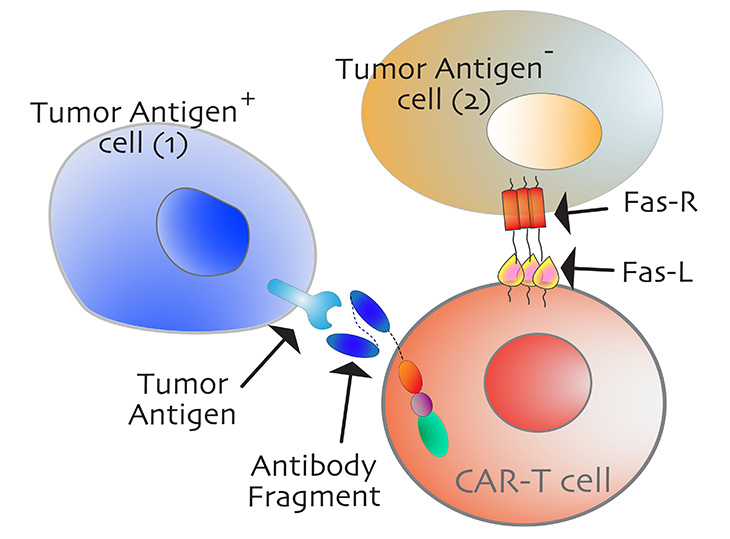
Los receptores CD95 están localizados en las membranas de las células y emiten una señal al ser activados que causa la muerte de la célula. Este nuevo descubrimiento puede llevar al desarrollo de terapias contra el cáncer ya existentes, como terapias de células T con receptores antígenos quiméricos (CAR). Este tipo de tratamiento de inmunoterapia utiliza células T modificadas genéticamente (un tipo de célula inmune) para matar células cancerígenas. 

Los tratamientos contra el cáncer, en este momento, suelen involucrar una combinación de cirugía, quimioterapia y radioterapia. Pueden ser muy efectivos y permitir que los pacientes lleguen a remisión, la etapa en la cual los signos y síntomas de cáncer desaparecen. Sin embargo, los pacientes pueden tener una recaída después de su tratamiento original, por lo cual la inmunoterapia puede ayudar —puede ser más efectiva para evitar la recidiva. La inmunoterapia activa anticuerpos que hacen que los tumores sólidos se encojan, aunque todavía se realizan pruebas clínicas para maximizar sus efectos.

Jogender Tushir-Singh, profesor asociado del Departamento de Microbiología e Inmunología Médica, tiene la esperanza de que estos nuevos descubrimientos mejoren el futuro de los tratamientos contra el cáncer.

“Esto es una marca definitiva para la eficacia del tratamiento de células vecinas de la terapia CAR-T”. Dijo Tushir-Singh en una entrevista con UC Davis Health. “Pero lo más importante es que esto establece la plataforma para desarrollar anticuerpos que activan Fas, matar células de tumores selectivamente y puede asistir la terapia de células CAR-T en tumores sólidos”. 

Ahora que el epítome específico ha sido identificado, Tushir-Singh y otros investigadores pueden trabajar en el diseño de una nueva clase de anticuerpo que pueda activar el receptor CD95. Esto también puede crear un efecto del vecino CAR-T, donde mueren células cancerígenas y la eficacia de CAR-T aumenta al mismo tiempo. 

En la muerte de células vecinas, “ las células tumorales objetivo se destruyen junto con las células tumorales vecinas, independientemente de que expresen un antígeno”, según un artículo de la red de hospitales Mount Sinai.

Escrito por Katie Hellman science@theaggie.org

Kevin Fabian

Ashley Preciado 

Anahi Reyes-Atristain

Alfredo Vasquez-Aguilar

Gissel Ventura Rivas

La comunidad de Davis honra a sus queridos finados celebrando Día de Muertos

Este año, el evento de Día de Muertos en Central Park también reconoció el Día de la Memoria de las Personas Transgénero 


Por Chris Ponce city@theaggie.org


Advertencia de contenido: Este artículo contiene discusiones sobre la transfobia. 


Si bien Día de Muertos cae el 1 y 2 de noviembre, los estudiantes y residentes de Davis se reunieron en Central Park el viernes 3 de noviembre para celebrar la tradicional festividad latina.

El evento fue dirigido por Davis Phoenix Coalición (DPC), la academia de YOLO y otros grupos de la comunidad. La reunión contó con varios vendedores así como ofrendas (dedicadas a los seres queridos) y estuvo decorado con flores de cempasúchil (marigold).

La celebración de este año también contó con una ofrenda a personas transgénero que fueron asesinadas por su identidad. La ofrenda se inspiró en el próximo Día de la Memoria de las Personas Transgénero, una celebración anual que honra a las personas transgénero que murieron debido a la violencia contra las personas trans. La conmemoración cae el 20 de noviembre.

“He perdido muchos amigos y familiares transgénero a causa de la violencia”, dijo Sol Valdés, miembro de Davis Phoenix Coalition. “Tengo un hermano transgénero al que adoro. Entonces, para mí, esta festividad significa celebrar la vida de las personas que llegaron a nuestras vidas y nos cambiaron para mejor, que nos mostraron que el género puede ser un espectro; ser uno mismo libre y plenamente, y celebrar a las personas que perdimos en esa lucha”.

Valdés ha celebrado el Día de Muertos antes, pero esta fue la primera vez que lo celebró junto con el Día de la Memoria de las Personas Transgénero. 

La ofrenda fue decorada con banderas trans, flores de cempasúchil hechas de papel y fotos de más de veinte personas transgénero que murieron. Unas de las fotos era de Sherlyn Marjorie, una trans latina mujer y artista drag. 

“Transgender Day of Remembrance is an annual observation on November 20 that honors the memory of the transgender people whose lives were lost in acts of anti-transgender violence,” a note on the ofrenda read.

“El Día de la Memoria de Personas Transgénero es una conmemoración anual cada 20 de noviembre que honra la memoria de las personas transgénero que han perdido sus vidas debido a los actos de violencia antitransgénero”, decía una nota en la ofrenda. 

María Isabel Mandujano, miembro de la junta de Yolo County Communicare Health Centers presentó el evento y compartió la importancia del Día de Muertos. 

Esto es muy importante porque es un evento cultural de México y es muy importante para nosotros celebrar el evento con esta generación y generaciones futuras”, dijo Mandujano. 

       Communicare Health Centers ofrece un grupo de apoyo para el duelo para hispanohablantes cada segundo jueves del mes de 5 a 6 p. m. El centro de apoyo está ubicado en 215 West Beamer St., Woodland. 

Apoyamos a la comunidad hispanohablante en su lucha contra problemas de salud mental”, dijo Mandujano al describir el trabajo que hace Communicare.  

En lugar de ser un día de luto, el Día de Muertos es un día para celebrar y honrar. Se dice que las flores de cempasúchil color naranja brillante que se colocan es los altares ayudan a guiar las almas de los difuntos a las ofrendas que están preparadas para ellos. 

El evento se realizó al otro lado de la calle de “Compassion Beach”. Cempasúchil y una foto enmarcada fueron colocadas en el banco para honrar la vida de David Henry Breaux, también conocido como “Compassion Guy” (hombre compasión).

Mandujano repartió panfletos que explicaban la importancia de los altares y las ofrendas en el día festivo.  

“El altar es una mezcla de las ideas de nuestros ancestros, que creen en la permanencia de las conexiones que mantienen los vivos con los difuntos, que no abandonan este plano en absoluto y están con los vivos”, dice el panfleto de Mandujano. “Para los antiguos nativos de México, y hasta el día de hoy, la muerte es vida y trascendencia que se traduce en rituales, como las ofrendas de Día de Muertos”. 


Escrito por: Chris Ponce — city@theaggie.org


Traducido por:

Alejandra Ponce

Alvaro Vaca Mendoza 

Diego Ramirez

Nevaeh Herrera

Carol Perez

Teresa Monroy

Mayerly Mazariegos

Cursos de viticultura y enología prácticos y colaborativos sirven como preparación para diversas opciones en la carrera

Una especialidad muy cercana y su departamento enseñan la ciencia detrás del vino y el cultivo de vides


Por LYNN CHEN — features@theaggie.org


Economía, informática, filosofía, estadística… ¿y viticultura y enología? Todas son especialidades diferentes de UC Davis para los estudiantes, pero ¿qué ofrecen exactamente la viticultura y la enología?

El Departamento de Viticultura y Enología de UC Davis es muy respetado y elogiado. Según el director del departamento, David Block, Ph.D., este ha impulsado la innovación en el cultivo de la vid y la vinificación en California y los alrededores por más de 135 años. Al fin de cuentas, el campus queda a solo 45 minutos de Napa Valley, una de las regiones de élite para el cultivo de la vid. De hecho, UC Davis también tiene conexiones fuertes con investigadores de vino y productores de esa zona.  

La viticultura es el estudio del cultivo de la uva, mientras que la enología es el estudio del vino y el proceso de hacer el vino. Los estudiantes que toman cursos de viticultura y enología (VEN) aprenden sobre fisiología y crecimiento de la vid, historia mundial detrás del cultivo de la uva, química, microbiología y ciencia sensorial de los vinos, así como tecnologías y procesos químicos involucrados en la elaboración del vino.

Para algunos, puede resultar sorprendente cuánto de “ciencia dura” tiene la especialidad, según Patricia Howe, Ph.D., profesora del Departamento de Viticultura y Enología.

Por ejemplo, los requisitos previos para la especialización VEN incluyen clases STEM que un estudiante de premedicina también debería tomar.

“Se estudia física, química, biología y estadística”, dice Howe. “Si eres científico, este es un buen campo”.

Asimismo, los estudiantes de VEN participan en clases prácticas sobre la producción de vino, evaluaciones sensoriales y estabilidad del vino.

“Nuestro departamento también tiene muchas experiencias prácticas a través de las clases de laboratorio”, dice Ron Runnebaum Ph.D, profesor asociado del departamento.

Además, muchos estudiantes de VEN también pueden expandir las aplicaciones prácticas de su conocimiento mediante pasantías y oportunidades de investigación. Los estudiantes pueden hacer pasantías en una vinería o un viñedo durante el verano, o viajar de intercambio a regiones famosas productoras vino, como Francia o Italia. 

Además, el ámbito de la viticultura y enología es un campo especialmente interdisciplinario. 

Este campo permite crear conexiones a través de especialidades diferentes”, menciona Howe. “Muchas veces, si eres biólogo, todo lo que haces es biología; si eres químico, todo lo que haces es química. Sin embargo, como enólogo debes ser capaz de trazar tu educación, y a veces mucho más. Por ejemplo, hay un número sorprendente de personas especializadas en filosofía que son enólogas”.

Equipados con habilidades de razonamiento elevado y lógico, las personas con especialidades en filosofía pueden fácilmente trazar su camino en la ciencia como viticulturistas o enólogos. 

“Es una integración de todos los tipos de aprendizajes que tienes y su aplicación a los problemas del mundo real”, menciona Howe.  

VEN también va más allá su campo empleando habilidades que uno necesariamente no asociaría con especializaciones de STEM. Por ejemplo, aprender a utilizar el lenguaje correcto es tan importante como la ciencia dura.  

“En nuestro curso sobre la evaluación sensorial del vino, un aspecto grande es aprender cómo describir los vinos”, dice Runnebaum. “Parte de los laboratorios de este curso involucran tener estándares sensoriales y ser capaz de reconocerlos y describirlos. No todos crecieron con el vocabulario del vino, entonces desarrollar las habilidades comunicativas es importante”.

Recalcó la importancia del futuro de los enólogos siendo competentes en describir cómo los productos del vino impactan sobre nuestros sentidos, como el sabor o el olor, para mejorar la calidad.

Howe también está de acuerdo con el siguiente punto de Runnebaum: “¿Cuántos periódicos tienen una columna sobre ingeniería? Muchos periódicos tienen una columna sobre vino o una columna sobre críticas de restaurantes. Entonces yo pienso que eso muestra el punto de vista cultural de la vida cotidiana, lo importante que es hablar sobre la comida y el vino.”

La habilidad de la comunicación efectiva siempre ha sido una herramienta útil para la viticultura y vinificación, según Runnebaum. Históricamente, los viticultores necesitaban examinar visualmente las plantas y articular sus características físicas tales como la estructura de las hojas o las características de los racimos.

“Ahora tenemos herramientas donde se puede mirar y comparar la composición genética de una vid”, dice Runnebaum. 

Adicionalmente, las personas que se especializan en VEN deben poder colaborar bien con los demás. 

“Muchos cursos no solo implican trabajar solo en una clase de laboratorio, sino también trabajar como parte del equipo. Uno debe desarrollar las habilidades que le serán útiles cuando ingrese a la industria del vino”, dijo Runnebaum.

“En UC Davis, los estudiantes de VEN tienen la oportunidad de interactuar con un grupo diverso de compañeros.  

“Yo diría que una de las cosas que hace que UC Davis sea tan especial es que hay diversidad, no solo desde un punto de vista cultural, sino también desde un punto de vista profesional”, dice Howe. 

Debido a que la viticultura y la enología ofrecen un amplia variedad de posibilidades laborales en el campo, hacer amistades y contactos en Davis podría generar conexiones en la industria vitivinícola en general y más allá.

“He tenido compañeros de clase que ahora son profesores en la universidad; unos compañeros que son enólogos y otros que han dejado el negocio del vino. Hay muchas conexiones de la gente que conocí cuando era estudiante”, dice Howe.


Katarina Kent, estudiante actual de viticultura y enología, comparte el mismo sentimiento que Runnebaum y Howe. 

“La comunicación es muy importante porque en el futuro probablemente terminarás trabajando de una manera u otra con alguna persona que hayas conocido”, dice Kent.  

La viticultura y la enología tienen muchas ramas en diversas carreras profesionales, ya que la industria en sí es intrincada y compleja a su manera.

“Puedes estudiar el cultivo de la uva o la vinificación, y las compañías que contratan a un graduado pueden ser diversas, desde una pequeña bodega familiar de dos personas hasta un gran conglomerado internacional”, dice Howe. 

Howe explica que incluso existen posibilidades de especializarse que van desde hacer microbiología en una empresa establecida, cultivar uvas o ser un ingeniero que da mantenimiento a los equipos e instalaciones de elaboración del vino.

Los candidatos del trabajo también pueden entrar en los aspectos más comerciales y empresariales de la industria, como el marketing o los recursos humanos. 

“Uso mucho la analogía del béisbol”, dice Howe. “Puedes ser jugador de béisbol, pero también puedes ser entrenador, jardinero, conductor de autobús o fisioterapeuta.”

En definitiva, los especialistas en VEN tienen la libertad de seleccionar futuras oportunidades de empleo adaptadas a sus intereses. 

A pesar de ser una opción bastante flexible, VEN sigue siendo una de las especialidades con más nicho del campus. Sin embargo, algunos perciben esto como un beneficio. 

“Es una especialidad muy pequeña”, dice Kent. “Pero eso era justo lo que estaba buscando”.

Posiblemente por su tamaño más pequeño, la especialidad tiene una comunidad más íntima. “La especialidad en sí y la comunidad que la rodea es unida”, dice Kent. “Tengo muchas ganas de hacer conexiones con otras personas de la especialidad”.

El vino es una bebida que da placer, y estudiar viticultura y enología es la fuente de alegría para muchos también. Así lo vive Kent: “espero poder trabajar en una bodega algún día, poder hacer vino y darles a las personas la oportunidad de apreciar un buen vino”.


Escrito por: Lynn Chen — features@theaggie.org


Traducido por:

Chelsea Rodriguez

Liz Lopez

Nandini Jagarlamudi

Chris McKerracher

Harumi Arvizu

Lauren Kim 

Graciela Quinones

Sarah Bautista

Tiffany Ramirez

Lesley Reyes

What are the benefits of speaking more than one language?

0

Multilingual professors and students share their experiences with learning multiple languages


By FAITH DEMEULENAERE — features@theaggie.org


In a world where communication is key, the significance of being multilingual cannot be overstated. Embarking on a linguistic exploration within the vibrant realm of bilingualism unravels the myriad of benefits through the perspectives of a distinguished linguistics professor, a passionate volunteer at a Spanish immersion school and a hard-working college student who became proficient in the language outside of the education system.

Julia Menard-Warwick, a linguistics professor at UC Davis and second language acquisition researcher, has quite a bit of experience and insight on the ups and downs of language learning. Knowledgeable in Spanish, French, Arabic, Japanese and Russian, Menard-Warwick has plenty of relative knowledge and insights that could show a potential language learner what that process entails. 

Menard-Warwick’s research consists of second language learning and teaching, emphasizing the topic of identities and ideologies. She’s done research on both English and Spanish as a second language, more specifically on how learning a second language affects people’s lives.

“This society considers monolingualism to be normative,” Menard-Warwick said. “You can learn a language and not expand your worldview at all, [just] learn the grammar and the vocabulary. That’s what some people like to do. But I mean, as far as I’m concerned, that’s pointless. If you’re going to learn a language, it’s to speak to people who speak that language, and of course it’s for a better worldview. You are expanding your cultural expectations for all human life.”

When it comes to academics and jobs, Menard-Warwick discussed the importance of respecting another’s culture through language. 

“You can always make [non-English speaking peers] learn English,” Menard-Warwick said. “But then you are always speaking your language and never speaking theirs. You can have much more awareness of who they are and where they are coming from if you even try to speak their language. It’s a sign of respect, to show the want to see their perspectives on things.”

On the other hand, Menard-Warwick explained the value of bilingualism, or potentially lack thereof, in the workforce. 

“Unfortunately, very often bilingualism is valued at the surface, but I don’t believe it’s something that will get you paid more,” Menard-Warwick said. “It might get you the job, but it wouldn’t necessarily get you a promotion.”

Lily Vanhoy, a fourth-year linguistics major with a Spanish minor, shared her personal journey.

“Even though I come from a monolingual family, I am extremely grateful for the opportunity to have been placed in a Spanish immersion program as it has completely changed my life for the better. My passion for language and culture began at the very same elementary school I now volunteer at and one day hope to work at as a speech and language pathologist.”

Vanhoy highlighted the impact that speaking numerous languages has on one’s perception of the world and their participation in it.

“Being bilingual or multilingual allows someone to become more of an active participant in our multicultural and lingual world,” Vanhoy said. “Being multilingual can definitely expand one’s world view, as by learning another language you become immersed in more than only one cultural community.”

Samuel Baron, a third-year political science major, learned Spanish through secondary education practices. 

“I feel as though second language acquisition is definitely not emphasized in American education and culture as it is in other countries,” Baron said. “Because English is globally recognized as a prominent second language to other countries, it kind of feels like we have a privilege of knowing it fluently from the get-go and don’t feel the pressure to conform to other cultures.”

Baron expanded on the restrictions of learning a language within the educational system. 

“Even though we technically learn second languages in schooling, most students don’t take it seriously,” Baron said. “If it wasn’t for the other opportunities I took to immerse myself in Spanish outside of school, I wouldn’t be nearly as successful as I am with the language today.”

Overall, with a wide variety of opinions on second language acquisition and its importance, most would agree that monolingual English society shortens our horizons and views on other cultures. Language learning is not only a skill but a tool for broadening one’s worldview.


Written by: Faith DeMeulenaere — features@theaggie.org

Christmas decorating with housemates

By LANHUI ZHEN –– lazhen@ucdavis.edu

El Festival de Cine de Davis regresa nuevamente en su decimoquinta edición

El evento se llevó a cabo el 5 de noviembre en el Veterans Memorial Theatre y contó con una gran variedad de películas.


Por HANNAH SCHRADER — city@theaggie.org


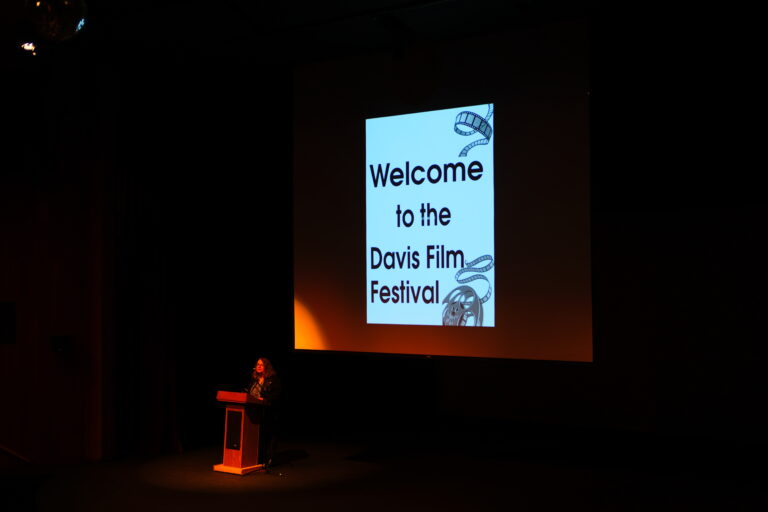
El Festival Anual de Cine de Davis se llevó a cabo de 2 a 10 p. m. el domingo 5 de noviembre en el teatro Veterans Memorial Theatre. El festival presentó una gran variedad de películas, algunas de las cuales abordaron temas como la realidad que enfrentan las personas sin hogar en Sacramento, los daños de los desechos electrónicos, el hostigamiento (bullying) y las aventuras del nuevo ministro. 

According to Bazooka, un dúo musical vintage local de Americana, actuó a las 5:30 p. m. como entretenimiento para los invitados durante el período de descanso de la cena del festival. La sección de la tarde del festival estaba destinada para la audiencia general, pero el contenido de las películas durante la noche fue diseñado solamente para una audiencia de adultos.  

La directora del Festival de Cine de Davis, Judith Plank, habló sobre la historia detrás del festival del cine, así como de la escena cinematográfica local en Davis.

Cuando comencé en 2003, no había ningún festival de cine en la ciudad”, dijo Plank.   “Y ahora, UC Davis tiene el Festival de Cine Estudiantil y luego el Festival de Cine Feminista. Pero aun así, solo mantuvieron cortometrajes y categorías pequeñas. Tengo largometrajes, cortometrajes, todo: tenemos un nicho”.

Plank ha sido escritora y actriz desde los doce años. Desde entonces, ha ganado bastantes premios en el norte de California. Tiene experiencia de voluntariado en festivales de cine y ha trabajado con Davis Varsity Theatre.

   Fui voluntaria en algunos de los festivales de Berkeley durante varios años”, dijo Plank. “Me encantaba. Nos sentábamos allí por horas. Ya sabes, eres voluntaria, pero luego te sientas allí y ves todas estas películas por horas y horas. De veras es muy divertido. Fui voluntaria por unos años y luego regresé con una película de Sundance al teatro Varsity en abril de 2003… y el lugar se llenó. Digo, yo llené el teatro”.

También es probable que el festival se expanda para tener una recepción y ofrecer bebidas alcohólicas en los próximos años, como dice en la página de información del evento de este año.

“NO SE VENDERÁ ALCOHOL en el festival de este año. (El próximo año, probablemente habrá vino y cerveza, junto con una recepción/fiesta)”, dice el sitio de web. 

Este año, el festival dio dos “Premios del Público” a las películas que ocuparon el primero y el segundo lugar. El año que viene también se añadirá el “Premio del jurado”. El objetivo del festival es reunir a los amantes de películas de Davis, según la declaración de su misión.    

En años recientes, el festival del cine también sufrió retrasos debido a la pandemia de COVID-19 y otros asuntos.

“No se puede decir que este sea el festival anual número quince o algo así, porque con COVID, ya nada es anual”, dijo Plank. “Pero de todos modos, hemos estado funcionando por quince años aquí.

Laura Luke, voluntaria del festival de cine, habló de su experiencia en el festival a través de los años. 

“Es mi cuarta vez asistiendo al Festival de Cine de Davis”, dijo Luke. “Lo disfruto cada vez y he sido voluntaria en las últimas dos ediciones. Es maravilloso conocer a las personas que han trabajado en las películas y aquellos que están conectados a sus historias”. 

Luke continuó hablando sobre su experiencia con la comunidad local. 

“También me encanta conocer a la gente de Davis. Estoy emocionada de que llegue el próximo año y ver crecer el festival junto con la audiencia. Gracias a Judith por dejarme ser parte del Festival de Cine de Davis”.


Escrito por: Hannah Schrader — city@theaggie.org


Traducido por:

Noemi Villalobos

Lauren Conway

Diana Nery Dominguez 

Laura Jojoa

Frida Lopez

Catherine Sanchez

Giselle Castañeda

Nohemí Dueñas

Community advisors for on-campus housing find joy in mentoring fellow students

0

Despite its rewards, being a CA carries a lot of responsibility


By LYNN CHEN — features@theaggie.org


According to the 2022-2023 Joint Housing Report, approximately 38.1% of UC Davis students live on campus. With so many students in residence halls and campus apartments, Community Advisors (CAs) play a vital role in developing safe and comfortable living spaces for these communities.

As part of their employment, CAs are given a single or double room on the floor of their assigned residence hall or apartment. Additionally, they receive a five-day or seven-day unlimited meal plan depending on which property they are appointed to. In exchange, CAs have a variety of responsibilities in their position.

For example, in order to foster an inclusive and positive environment for their residents, CAs organize social events that range from designing T-shirts and making Orbeez jar decorations to mug painting. CAs may also host educational events such as study breaks.

CAs are also tasked with administrative duties. “[We do] facilities checks, occupancy checks and we also put up informational bulletin boards,”  Mahek Bhora, a third-year economics major and one of the CAs for Live Oak Hall in Tercero, said.

Additionally, part of a CA’s job is interacting with students on a day-to-day basis. They must be up-to-date with all the resources and services available on campus.

“We make sure to check in with our residents and see where we can help out,” Madison Wong, a fourth-year environmental policy analysis and planning major said. “If we get an email from a resident saying that they need a resource or that they need some information about something, we do our best to connect them with those resources or answer any questions we can.”

Wong is currently a CA for the Orchard Park and Primero Grove apartments. Because of this, she interacts with a resident population that is much more diverse than that of the residence halls.

“We serve undergraduates, graduates and families,” Wong said. As a result, she has to prepare for all ages to attend the events she organizes.

Furthermore, an important part of being a CA is resolving conflicts between residents. Cindy Dam, a second-year sociology major, stated that she experienced friction while living with her first roommate in the dorms last year. However, her CA was able to quickly connect her to the school housing administration and relocate her to a new room.

“[My CA was] very supportive and made me feel validated and heard,” Dam said. “They were willing to do something [about my issue] and report it to the higher-ups.”

In situations like this, being a CA can be a rewarding and enjoyable experience. Bhora appreciated the opportunity to get to know her residents and witness their growth throughout their time on her floor. 

“It’s nice seeing them finally getting in their routines, building their life on campus,” Bhora said.

Wong found herself becoming more empathetic as a result of being a CA. 

“You just have so many people from different backgrounds, and you don’t have any way of knowing what it’s like to be them,” Wong said. “But you can definitely listen, you can definitely ask questions and you can definitely try to find some similarities between your experiences and theirs.”

Bhora echoed a similar sentiment, commenting on how important this job is: “I think [future CAs] should know that this is a really, really meaningful job. It impacts hundreds of people each year, and you affect others pretty deeply. I definitely wouldn’t trade this experience for anything else.”


Written by: Lynn Chen — features@theaggie.org

Culture Corner

The Art Desk’s weekly picks for music, movies and more


By CHARLIE MCBRIAN — arts@theaggie.org 


Movie: “The Apartment” dir. by Billy Wilder (1960)


“The Apartment” sees Writer-Director Billy Wilder as well as actors like Jack Lemon and Shirley MacLaine at the height of their talents. In the film, CC Baxter (played by Lemon) attempts to climb the corporate ladder by allowing his superiors access to his apartment for affairs. Much of the film consists of Baxter dealing with how this negatively affects him and others including Fran Kubilek — played by MacLaine. Fred MacMurray’s heel turn as Baxter’s duplicitous boss Mr. Sheldrake is played perfectly as he is simultaneously vile and charismatic. “The Apartment” provides a healthy dose of cynicism balanced by an earnestness that allows the movie to explore dark places without ever losing hope. I recommend this for anyone with a pair of eyes and a beating heart. 


Book: “The Number Ones” by Tom Breihan (2022)


Tom Breihan’s “Number Ones” examines 20 US number one singles from Chubby Checkers’ “The Twist” in 1951 to BTS’s “Dynamite” in 2020. The book covers a range of artists including Michael Jackson, Prince, The Beatles, Vanilla Ice and The Supremes. The diversity in artists allows Breihan to reveal new aspects of modern standards by contextualizing each song within the culture that embraced it. The content reads as a cohesive history of American pop music rather than mere idol worship. A great book if you want to learn more about what American pop is and how it came to be.


Album: “27 Demos” by Margo Guryan (2014)


Like a warm cup of cocoa, “27 Demos” provides a bittersweet warmth in these cold months. Not properly appreciated in her time, Guryan released only one album, 1968’s “Take a Picture.” Later, Guryan developed a cult following leading to the release of “25 Demos” in 2001 and the expanded “27 Demos” in 2014. Don’t be fooled by the “demos” title, though. These songs aren’t half-baked, but rather contain more exceptional songcraft than most artists’ entire career. On “Demos,” Guryan mixes The Mamas and Papas syrupy soft pop and the cosmopolitan cutesiness of French pop with the loungey sophistication of Bacharach and mid-60s Beach Boys. It makes you wonder how many amazing artists slipped through the cracks without being “rediscovered” like Guryan. Regardless, this record aged exceptionally well and I would recommend it to all, especially if you’re into 60s pop like me.


TV Show: “Sex and the City” (1998-2004)


Currently, “Sex and the City” sits in sitcom purgatory: not old enough to induce nostalgia, but not new enough to exist within public discourse. The show overflows with a catty charisma that middle-of-the-road sitcoms often lack. By broaching taboo subjects, “Sex and the City” subjects itself to the whims of shifting cultural norms, leading to some poorly-aged jokes. But the characters, format and — above all — entertainment value remain evergreen. With its decidedly feminine charm, “Sex and the City” is not for everyone. But if you need a new sitcom in your life, the show makes for a consistently entertaining watch that gets stronger as it goes along.


Written by: Charlie McBrian—arts@theaggie.org

Picnic Day Board picks theme, parade marshall for 110th Picnic Day

As part of the theme “Picnic Palooza,” Associate Vice Chancellor Sheri Atkinson will serve as the parade marshall 


By SYDNEY AMESTOY — campus@theaggie.org


The ASUCD Picnic Day board recently announced the theme and candidate chosen for the role of parade marshall for the 110th Picnic Day.

The theme of the event, which will be held on April 20, 2024, is “Picnic Palooza.” According to Picnic Day Board Chair Bradford Martin, a third-year economics and psychology double major, the theme is meant to embrace the UC Davis community and all that it stands for.

“Our theme is Picnic Day Picnic Palooza, and we have a little add-on to it,” Martin said. “That’s like, [to] create your reality, to make your existence and just make the best of your life. And that’s what we think Picnic Day represents, and we think the community might embrace that as well.”

Alongside the theme, the board announced Associate Vice Chancellor of Student Affairs Sheri Atkinson as this year’s parade marshall.

Atkinson began her career at UC Davis 20 years ago as the director of the LGBTQIA Resource Center before becoming the executive director of student affairs. She has been an associate vice chancellor for the last six years.

“Sheri united everyone; she kind of embraces the fun of Picnic Day,” Martin said. “She really seems like she would embrace the Palooza. She is the associate vice chancellor of student affairs and has influence over all the [registered student organizations] on campus. She stands for the students and making our experience possible.”

According to Atkinson, being chosen as the parade marshall was a surprise.

“I had no idea,” Atkinson said. “I was notified via email. Prior to receiving the email, I got a little heads-up from our Picnic Day Chair. I didn’t know I was being considered until I was selected, and they shared that with me, and I was very excited. I’m very touched. It means a lot to me to be selected by students for this role. I feel very lucky.”

According to Martin, the parade marshall is the person who starts the parade and is at the front of the processions.

These decisions were made after deliberations by the Picnic Day board, which, according to Martin, were partially inspired by the theme posters of past Picnic Days.

As the board continues to plan for Picnic Day, applications for assistant directors are also going to open soon, according to Martin.

“When it comes to Picnic Day, the assistant directors are the ones taking charge,” Martin said. “They’re helping lead some of the fun activities. They’re the ones at the info booth helping the public understand what the day is. They’re helping set up everything all over campus.”

Martin said that this year’s Picnic Day will be focused on classic activities, including the Doxie Derby and the chemistry show, and will aim to have a more carnival-type atmosphere.

“I want to make the 110th Picnic Day something special, you know. It’s a landmark year, being 110,” Martin said. “I can promise you that it will be a great year and a great thing.”


Written by: Sydney Amestoy — campus@theaggie.org


Pence Gallery’s annual Holiday Market aims to showcase local artists

The market space advertises roughly 2,000 different handmade products to choose from 


By SAVANNAH ANNO — arts@theaggie.org


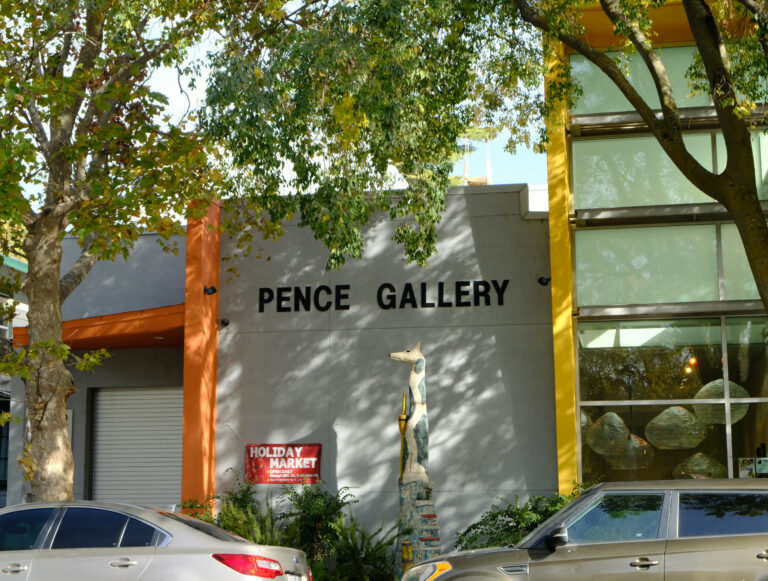
For roughly 15 years, the Pence Gallery has been creating a space for local artists to sell one-of-a-kind gifts at their annual Holiday Market. Spanning from ceramics to fiber arts to handmade soaps, the gallery prides itself on having something for everyone. Open daily from 11:30 a.m. to 5 p.m. until Dec. 24, the holiday market typically supports around 50 local artists, each with their own unique style.

“The idea is to make local artists more visible, but also encourage people to shop local and to support their local [Davis] community,” Katharine Schultz, the gallery’s education and development coordinator said.

The market offers a range of not only products but prices. One artist, Eileen Hendren, offers hand-made trays, bowls and Christmas ornaments that start at $10. Schultz shared some of her own favorite pieces, like artist Kathy Matsumura’s hand-made baby booties and bobbin trees. Decorated with small flowers and ribbons, the pieces most notably showcase the beauty of sustainable creation.

“She also uses recycled cashmere and wool to make new scarves, so I love that she takes things that maybe were discarded and repurposes them into something new and unique,” Schultz said.

The Pence also makes an effort to post weekly staff picks of products from the market on their Instagram account as well as their email list. The most recent choice came from Gallery Associate Loraine Watson-Fox who noted the whimsical nature of ceramicist Liz Webb’s animal figurines.

“They remind me of childhood toys: ‘The Wind in the Willows,’ Beatrix Potter and classic Victorian Christmas decorations,” Watson-Fox said. “I think they would make a wonderful gift if you can bear to part with them after buying one!”

Beyond small decor items, winter accessories and figurines, the holiday market is also home to a vast array of framed prints, paintings and larger ceramic vases. Although the market is located in a singular gallery space, it can hold roughly 2,000 products at once, according to Schultz.

After surveying the market space, visitors are encouraged to explore the rest of the Pence Gallery, which has been open and creating space for regional artists since 1975. As a non-profit art organization, admission to the Pence is free for everyone.

“I feel like a lot of people, especially UC Davis students, don’t know that the Pence exists,” Schultz said. “So if they’re looking for somewhere that’s free just to look around at art, and also to find gifts — that I would say are pretty affordable — for family, they can come here. They’ll find lots of handmade, local things.”

The rest of the year, the Pence hosts workshops, family art programs and receptions for Davis’ monthly 2nd Friday ArtAbout. Located in the middle of downtown, the gallery serves as a center for local creatives to feel celebrated by their community and aims to provide a space where everyone is given the opportunity to participate in the arts.

Written by: Savannah Anno — arts@theaggie.org

Taco stands line the streets of Woodland for a chance at success

Street vendors share stories about the hard work it takes to run a small business


By SABRINA FIGUEROA — features@theaggie.org


Editor’s note: Some of the sources in this article chose not to give their full names when being interviewed. For this reason, some sources below are referenced only by their first name.


After years of California’s beloved taco vendors playing “a game of cat-and-mouse” with officials, the state bill SB 972 was signed by Gov. Gavin Newsom in September 2022. The bill took effect in January 2023, supporting street vendors in the process of getting the correct permits required to start a small food business.

“Street food vendors are woven into the culturally diverse and culinary fabric of California,” CA State Senator Lena Gonzalez said. “These workers, however, lack access to the permitting they need to be able to work and provide for their families. This is due to policies in the California Retail Food Code that make it difficult for them to enter local permitting systems. SB 972 will remove those barriers and at the same time uphold public health and safety standards to protect consumers.”

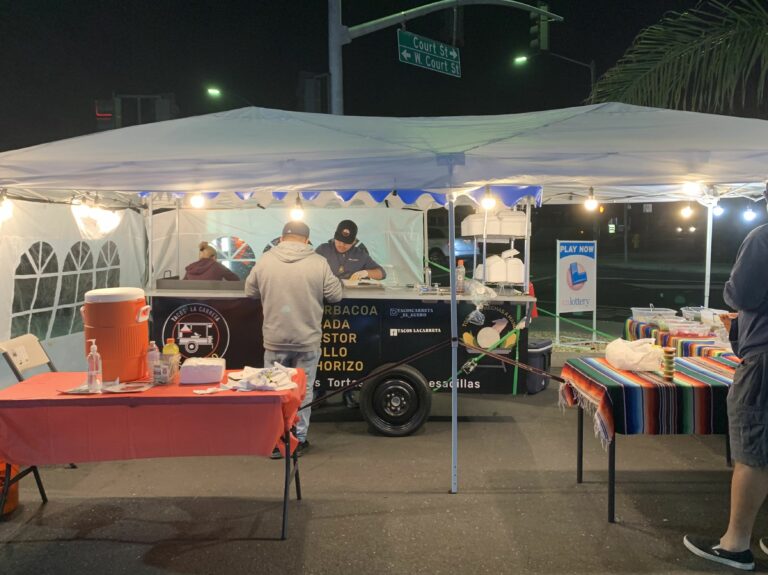
Just 15 minutes outside the city of Davis, an influx of taco stand owners in Woodland have set out on the side of busy streets with bright lights and blue tarps, wanting to share a taste of Mexico with locals.

Located on 300 West St., Tacos La Carreta: El Guero is one of the newest vendors in Woodland. Open every Thursday through Friday, this stand is owned and operated by Julio and his wife who are immigrants from Sinaloa, Mexico.

“We’ve been open for about a year now, since 2022,” Julio said. “It’s a family business, so my wife and my son usually help. I have another daughter that also comes to work with us sometimes.”

El Guero makes and sells an assortment of Mexican food including tacos, enchiladas, sopes and burritos. The customer is not restricted to one type of meat either, they can have asada, barbacoa, al pastor, chorizo or chicken. As a complimentary treat, sides are laid out on a table buffet-style so customers can make their tacos a bit more colorful.

For the current transitional period to wintertime, they even offer a homemade “champurrado” — a warm and thick chocolate drink from Mexico.

A special thing about this taco stand is that their soft, fluffy tortillas are artisan and made on the premises by Julio’s wife.

“My wife knows how to make great food, and that’s what gave me motivation to open a stand,” Julio said. “I’ve always wanted to open up a family business because of it.”

Julio shared some insight about the permits required to open a stand; “I needed two permits… and I have to renew them every year. One of them cost me a little over $1,000 and the other one was about $400.” Depending on the location, these street vendor permits can cost anywhere from $200 to $1,000 per year.

Near the Woodland rice mills is another family-operated taco stand called Tacos Los Martinez which is owned by Oaxacan-born Medardo Martinez.

Open the same days as El Guero, they offer a wide variety of Mexican foods in an Oaxaxan style, including quesadillas, mulitas, papas rellenas and homemade agua de horchata. Their al pastor meat is displayed on a “trompo” — a vertical rotating spit — for their customers to see the process of how they cook and cut the meat.

Tacos Los Martinez began selling in May 2021 but switched locations.

“We actually started selling in Sacramento first, not Woodland,” Martinez said. “I was going to put up two, this one and one in Sacramento, but there aren’t enough workers for both.”

It’s not rare for the owners and their families to have other jobs. Most workers have full-time jobs as well as these “side hustles” to keep them financially stable in the expensive California economy. It is also the concept of the “American Dream,” the promise of opportunity and success through hard work, that keeps street vendors motivated.

“We have been working in the tomato fields for about 20 years,” Martinez said. “I made this stand so that I could eventually have my own restaurant, leave the tomato fields and still be well-off financially. It’s a dream that I have.”

Arturo, a worker at another Oaxacan-style taco stand called La Flamita de Oaxaca Tacos, also shared that they work in grape fields around the area.

Located in front of the Walmart on East Main Street, La Flamita is one of the more popular street taco vendors in the city of Woodland. Its populated location in front of a busy Walmart parking lot and I-5 exit makes it easier to attract hungry customers coming back from shopping or driving.

They have one of the most extensive menus, offering regular tacos as well as vampiros, tortas, burritos, mulitas, carne asada, papas rellenas, quesadillas and even full-plated meals called “alambres.”

They are open the same days as El Guero and Tacos Los Martinez, but their hours differ in that La Flamita stays open longer. Many street vendors take advantage of the “late-night bites” people may be craving. For example, they set up outside of stadiums after concerts or sporting events, as well as near big freeway exits and entrances.

“We’re open until 12 or 1 a.m.,” Arturo said “It gets full when people are coming back from dances or concerts and they see us right off the I-5, so it pays off.”

A review by Luke Cheng at the Sacramento Food Review gave La Flamita an A rating.

“15 years ago I would have never come to a place like this to eat. I’m glad I got over myself and opened up my mind and taste buds to delicious new experiences!” Cheng said.

Gaining the support of the people is another important part of success for street vendors, which can be achieved by opening up your mind and trying these taco stands, much like Cheng did. Not only will you be eating delicious food, but you’ll also be helping small businesses take off.


Written by: Sabrina Figueroa — features@theaggie.org

Get a real tree this year if you want to be on Santa’s nice list

Deck the halls with boughs of Balsam Fir


By MOLLY THOMPSON — mmtthompson@ucdavis.edu


It’s the central, time-worn discussion of the modern era. Every year, we hear exhaustive takes from all of the most reputable and renowned sources, ranging from the uncle you see once a year to the single person left running Buzzfeed: Is it better to get a real Christmas tree or a plastic one?

Now, this is a multi-faceted dilemma. We have to take into consideration cost, practicality, aesthetics, tradition and environmental sustainability. Depending on your retailer of choice, live trees cost around 80 to 100 dollars, while faux ones go for anywhere from 50 to thousands of dollars. But, of course, the natural caveat is that a plastic tree can be reused, right?

In the long run, a plastic tree can be more cost-effective. However, this depends on how long you’re going to use it and how long it’s going to last. A cheap fake tree is likely to disintegrate just as a real one eventually does, and you’d have to use an expensive one for 40 or so years before it would pay for itself. Naturally, it is possible to straddle the middle ground between both ends of that spectrum, but, as a whole, plastic trees are not necessarily more frugal compared to their live counterparts.

In terms of practicality, a faux tree requires a lot of storage space. It only gets its moment in the spotlight for a few measly weeks out of the long, arduous year, which means it needs a suitable place to hibernate during the off-season. If you don’t have a place for it to stay, the live tree is your perfect solution. When its time is up, you simply have to lay it out on the curb and forget about it — easy peasy Christmas trees-y.

Aesthetically, retail conglomerates know what you want. They’ll frost your plastic tree’s tips like it’s 1999 and light it up in a way that’ll make Fall Out Boy jealous (their songs know what you did in the dark). So convenient! But nothing can rival the real thing when it comes to vibes. The thing about a fake tree is that, simply put, it looks fake.

If you want to live like the people in the movie “The Lorax,” then by all means, put a plastic tree covered in plastic snow in your living room. But, if you want to have your dreamy, cozy, Nutcracker, hot-shot-city-gal-is-forced-to-visit-a-small-town-to-destroy-the-local-candy-shop-but-falls-in- love-with-the-hunky-owner-of-said-candy-shop-and-restores-the-magic-of-Christmas Hallmark movie holiday, get a live tree. It looks fresh, lively and spirited, and it smells like what Bath and Body Works festive candles wish they could be.

Furthermore, a trip to a Christmas tree farm is a bonding experience. A plastic tree gets dragged out of the attic and that’s it, no fanfare, no celebration, no joy when it could be a whole event.

Let me take you there: you and your family pile into your car, wearing the Santa hats your mom insisted on. Your sister is on aux, and soon you’re all singing along to Mariah Carey and Bing Crosby, with the occasional Ariana Grande cover. Once you get there, you wander around, arguing about whether the tree should be tall or fat or fluffy or otherwise until you find one you all agree is perfect (read: you all settle on a suitable tree because you’ve been there for too long and you’re tired). You’re dubbed the winner because you found the perfect tree — congratulations. Your dad and grandpa struggle to haul the giant tree on top of the car and strap it in nice and tight before you stop for hot chocolates on the way home. Classic holiday cheer. You don’t get any of those wonderful, warm holiday memories to cherish from a fake tree.

Now, the most important reason you should consider cutting down your own tree this year instead of buying a fake one is the fact that they’re more environmentally friendly. I know the classic argument is that a plastic tree is better because you don’t have to decapitate one of Mother Earth’s precious younglings, but that’s not necessarily true.

For one, fake trees are often manufactured internationally and shipped from across the world, dumping tons of CO2 into the atmosphere along the way. The manufacturing process of plastic trees also burns massive amounts of fossil fuels, releasing quantities of carbon emissions that would make even the Grinch squirm. Natural trees absorb CO2 during their entire lives as they grow big and tall before they get cut down for the holidays. Natural trees are also biodegradable and will decompose quite quickly, while fake trees will end up in a landfill forever or until they break down into microplastics and end up in our food and water supplies.

You don’t want to eat your Christmas tree, do you? Yes, your plastic tree can be reused, but eventually, it goes to waste. It likely won’t be recycled, and it will still have a higher carbon footprint than a live tree, even if you use it for years. A plastic tree will put CO2  into the atmosphere while cutting down a live tree will simply remove a vessel that was absorbing a small amount of CO2  — it’s not comparable. Additionally, higher demand for live trees means more trees will be planted, which is ultimately a good thing.

With all that said, go forth and build a happy, wholesome tradition that brings holiday cheer to your home and the planet. Give Mother Earth a Christmas present too — she’s had a rough year. She deserves it. Deck the halls with boughs of spruce and pine, not plastic.


Written by: Molly Thompson — mmtthompson@ucdavis.edu 

José Hernández, the first Mexican migrant farmworker to go to space, speaks at Chancellor’s Colloquium event

The event featured a screening of “A Million Miles Away,” a recent film that depicts Hernández’s life 


By CHRIS PONCE — campus@theaggie.org


On Nov. 28, the Mondavi Center sold out of seats for an event featuring José Hernández, the first Mexican migrant farmworker to go to space. The event is a part of the Chancellor’s Colloquium Distinguished Speaker Series and included a Q&A with Hernández that was moderated by Chancellor Gary May.

Before the Q&A, there was a screening of “A Million Miles Away,” a new film directed by Alejandra Marquez that tells the life of Hernández. The film follows Hernández from his childhood to his moment serving on the Space Shuttle Discovery.

Hernández grew up south of Stockton and spent his childhood picking crops and working in the fields of the Central Valley and Southern California with his family. It wasn’t until he was 12 years old that he learned to speak English, but this didn’t stop Hernández from thriving academically.

Currently, Hernández is the CEO of an aerospace company located in Stockton, Tierra Luna Engineering, LLC, and serves on the UC Board of Regents.

“This is a case where a great person literally needs no introduction,” Jeremy Ganter, executive director of the Mondavi Center, said. “So instead, I’ll borrow a phrase from the film we just watched: Let me invite to the stage ‘one of the very few, highly skilled extraordinary people on this planet deemed capable of flying a rocket into space,’ UC Regent José Hernández.”

May called Hernández an “American hero,” as they both stepped onto the stage. Hernández shared that he had dreamed of being an astronaut since he was 10 years old and talked about his parents who supported him.

“My father, who only has a 3rd grade education like my mother, had this wisdom and set me aside to do two important things,” Hernández said. “First, he empowered me in believing that I could achieve that dream. Second, he said ‘You want to do this son, you got to follow this simple five-ingredient recipe.’”

“A Million Miles Away” is broken up into five thematic parts that each follow one of the “five ingredients” his father, Salvador Hernández, shared with him. The ingredients described in the film are: 1. Find your goal; 2. Know how far you are; 3. Draw a roadmap; 4. If you don’t know how, learn; 5. When you think you’ve made it, you probably have to work harder. The film used different phrases to describe the ingredients than Hernández used when he shared the advice his father gave him.

“[My dad] said, ‘Determine your purpose in life, what’s your purpose?’” Hernández said. “Then [my dad] said, ‘Recognize how far you are from that purpose, then draw yourself a roadmap so you know where you’re at to where you want to go.’ Fourth, prepare yourself accordingly to the challenge you chose. And fifth, apply the same work ethic you do picking fruits and vegetables on Saturdays and Sundays –– seven days a week in the summer with your family –– apply that here.”

Hernández said that while his father didn’t have a formal education, he had a “Ph.D. in wisdom,” to which May agreed. He shared the parting words his father left with him.

“‘Always give more than what people expect out of you,” Hernández’s father said. “‘You mix that up mijo, that’s the recipe to succeed.’”

Before working at NASA, Hernández worked as an engineer at the Lawrence Livermore National Laboratory for 16 years, but still, he carried on his dream of being an astronaut. He applied 11 times to work at NASA — each time he was rejected. It wasn’t until his 12th application that Hernández was selected for the program. Hernández gave a sixth ingredient to his father’s recipe.

“It wasn’t until the 12th time, so the 6th ingredient is perseverance: never giving up on yourself,” Hernández said.

Hernández graduated with a degree in electrical engineering from the University of the Pacific, and later graduated with a masters in electrical engineering, signals and systems from the University of California, Santa Barbara.

During the Q&A, an audience member asked a question about how to stay motivated as a first-generation student. At UC Davis, 42 percent of students identify as first-generation students. First-generation students are more likely to report job and/or family circumstances as obstacles to their academic performance, according to the UC Undergraduate Experiences Survey (2018).

Hernández said that not being motivated isn’t an option and that not all high schools adequately and equally prepare students for college. He shared his struggles and said that what kept him motivated when he felt like quitting was his parents.

“What motivated me the most was imagining my parents’ reaction when I told them I was going to quit college –– that I didn’t have what it took,” Hernández said. “That I was just going to throw away all the sacrifices they had made up until that point, and that’s what gave me the energy and motivation to say ‘I can’t do that.’ I owe it to them –– to give them a college degree.”

In response to another student’s question, Hernández shared that people who look like him, as well as other people of color, have to work harder to be taken seriously in life.

“We’re asked to do more in our community, because we’re role models,” Hernández said. “We’re asked to work harder in our jobs because we don’t get the same recognition, but as soon as you learn that’s the rule of life, you take one of two routes. One, you could have a chip on your shoulder and try to fight the system and the best that’s going to get you is being labeled a troublemaker. Or two, you understand those rules and you work your butt off. I chose the latter. I worked harder because I knew I had to.”


Written By: Chris Ponce campus@theaggie.org


UC Davis women’s cross country is running the scene

Third-year student-athlete becomes an NCAA Champion while making UC Davis history 


By MI’ZAUNI REESE — sports@theaggie.org


UC Davis athletes have always been trail-blazing inspirations for the UC Davis community, with many players being leaders in their respective sports. This season, the Davis cross country team has surpassed fan expectations, making headlines and breaking records.

The Aggies led their division this season as they climbed the NCAA ranks and headed toward the NCAA Division I (D1) Cross Country Championships and the NCAA Big West Regional Cross Country Championship. Many of the cross country athletes claimed awards this season, including fifth-year Sierra Atkins, who claimed the 2023 Big West Women’s Cross Country Athlete of the Year. Last season, Atkins ran an outstanding time of 19:50.3 in the Big West Championship, beating her previous personal record and earning her fourth place in the 2022 meet.

Another outstanding performance this season came from third-year Brianna Wielder who shattered records and made not only school history but national history as well. With an illustrious career as an athlete at UC Davis, winning both the Big West Conference Freshman of the Year in 2021, the Big West Cross Country Athlete of the Year the following year and participating in the 2022 NCAA Championship, Wielder is not unfamiliar with being first to the finish line.

For the second time in her career, on Nov. 22, Wielder was invited to run at the 2023 NCAA Division I Cross Country Championship, an intense 6k race where she competed against male and female athletes from around the country in Charlottesville, Virginia. With 31 schools present and 38 individual athletes to race against, the pressure was on to perform as well as she did last season.

After running a record-beating time of 19 minutes and 23.8 seconds for Davis earlier this season and earning both Top 10 and All Regional honors in the NCAA West Regional earlier this month, Wielder was prepared to compete to the greatest of her abilities. Wielder was prepared to represent the team even while fighting the infamous Virginian humidity.

Following her finish in 51st place in the country at last year’s championship, she pushed herself even farther this year, shortening her 20-minute and 17.2-second runtime to an impressive 20-minute and 0.2-second time, putting her at a well-earned 31st place.

The dedication and discipline Wielder exhibited allowed her to run a near 20-minute race, as well as help push her team to secure a 7th place spot. Wielder received All American honors for running the fastest race for Big West Women’s Cross Country since 2016, a first for UC Davis Cross Country history. If that wasn’t enough, Wielder was also named our D1 Women’s All-American, gaining her nationwide recognition for her accomplishments.

It’s safe to say the Aggies had a strong finish to their 2023 season as fans look forward to what is in store when the team returns to the fields next season.


Written by: Mi’Zauni Reese — sports@theaggie.org