60.8 F
Davis

Davis, California

Wednesday, December 24, 2025
Home Blog Page 122

City of Davis holds annual candlelight parade and tree lighting ceremony

0

The 42nd annual event showcased entertainment, speeches and Christmas spirit to bring the Davis community together 


By HANNAH SCHRADER —  city@theaggie.org


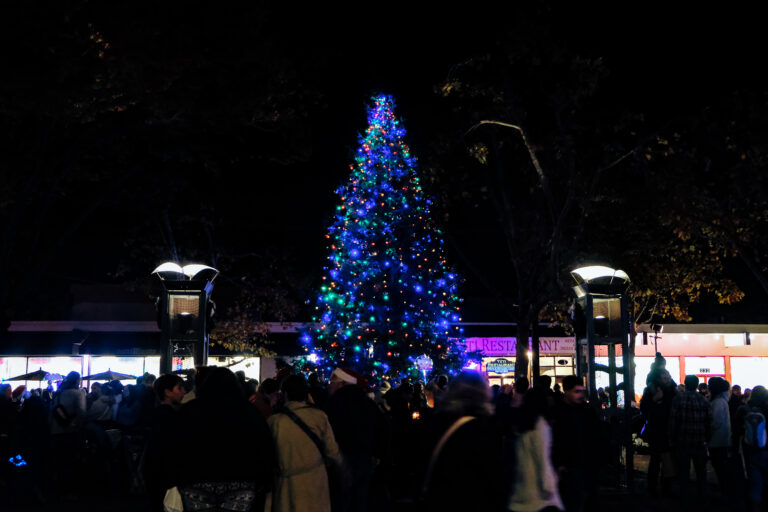
On Nov. 30 at 6 p.m., the city of Davis hosted its holiday candlelight parade and tree lighting ceremony at E Street Plaza.

This was the 42nd annual tree lighting ceremony in Davis with similar activities as previous years, but a longstanding and cherished Davis tradition nonetheless. The event is intended to bring local residents together and kick off the start of the holiday season, as the parade and tree lighting ceremony are normally held on either Dec. 1, give or take one day.

As one of the sponsors of the event, the candlelight parade started off at 6 p.m. in the Davis Food Co-op parking lot and ended at E Street Plaza. There were multiple street closures downtown as a result of the event, creating limited parking and encouraging residents to walk, bike or take the bus to participate.

The activities of the evening included: Varsity Theater’s free showings of the short film “Shrek the Halls,” holiday mascot characters, a Santa letter writing station, a photo opp station with Santa and carriage rides sponsored by the city.

Mayor Will Arnold made the opening announcements and did the countdown to the tree lighting. The tree was backlit blue with multi-colored lights and sat across from the stage on which the performances took place. Santa’s sleigh was adjacent to the tree, and the entire E Street Plaza was brimming with holiday cheer.

“Now my friends, it is the time you have all been waiting for — it’s the raison d’être

for tonight’s entertainment,” Arnold said. “And it is my solemn duty as mayor to lead us in the countdown of the lighting of our holiday tree, and I tell you when I say lead us, I mean lead: I want to hear from everyone. So we’re gonna start with [a countdown from] 10. Happy holidays everybody, let’s have the jazz choir close it out for us.”

UC Davis student Anna Carmelo shared her experience at the event right after the tree lighting ceremony, as well as what she was most looking forward to at the holiday event.

“I just got here, but I really like [it] –– it’s super cute,” Carmelo said. “I love the tree and the singing and the Christmas spirit. Just more of the performances that are to come.”

Local Davis resident and owner of the “My Davis California” Instagram, Richard, spoke about the event and the part of the night he enjoyed most.

“This will be my second time [attending the annual Davis holiday event],” Richard said, “The train was awesome. Came down G Street, saw Santa Claus and Mrs. Claus over there.” Richard then spoke about his favorite part of the event: “Probably the band, [it’s] got to be the band.”

There were a variety of local shops set up at the festival selling holiday treats, and a local jazz choir sang to end the night of festivities. The city of Davis thanked the Davis Food Co-op via X before the celebration.

“Thank you to the Davis Food Co-op for sponsoring this year’s Candlelight Parade,” the city said.

To get more information about the event, visit https://www.cityofdavis.org or contact Carrie Dyer at cdyer@cityofdavis.org.

Written by: Hannah Schrader  city@theaggie.org

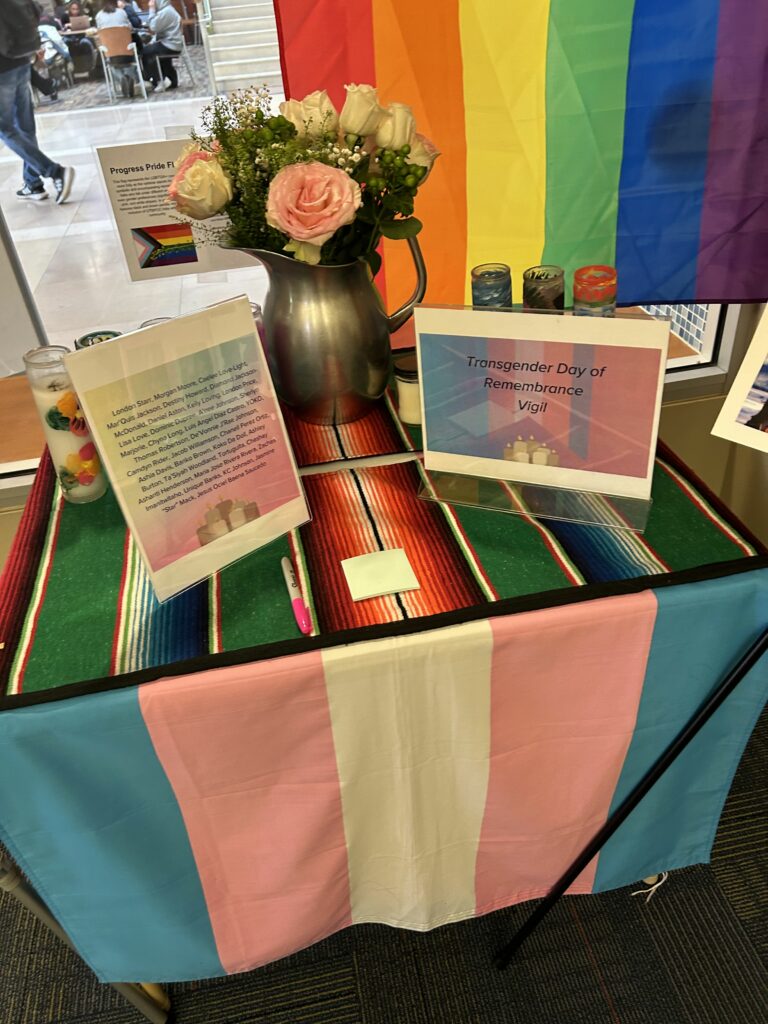
UC Davis LGBTQIA Resource Center hosts annual Transgender Day of Remembrance vigil on Nov. 20

The candlelight vigil honored transgender individuals who passed away in the past year


By BENJAMIN CARRILLO — campus@theaggie.org


On Nov. 20, the LGBTQIA Resource Center held a vigil for community members to remember transgender individuals who have passed away. Attendees were also welcome to bring photos of passed transgender loved ones, according to the LGBTQIA Resource Center Instagram. The altar for this vigil is inside of the LGBTQIA Resource Center.

Angel Bernardino, the Trans Advocate & Student Services specialist for the LGBTQIA Resource Center, discussed the importance of having this vigil updated and remembering the newly fallen transgender individuals every year.

“I included people who were murdered since [the] last Transgender Day of Remembrance,” Bernardino said, “[and made] sure to include people that were on the official list on the Human Rights Campaign’s website to remember those who passed away.”

It is crucial that the vigil continues to be held every year with updated information in order to raise greater awareness for transgender deaths, according to Bernardino.

“I think the way that we honor our dead says a lot about us,” Bernardino said. “Moving forward, it would be great to see more support for events like this. It’s important to show up for the community, and even though it’s Transgender Day of Remembrance, it’s also for allies and people of the LGBT community to be aware of those who lost their lives for being [themselves].”

Alongside the vigil, the Transgender Non-Comforming United (Trans-GNC) held a meeting in the LGBTQIA Resource Center to create a safe space for students to talk about their own experiences in the community and the sacrifice to the LGBTQIA+ movement made by loved ones who came before them.

Fin Piper, a first-year environmental engineering major involved with the Trans-GNC, said that the vigil itself was a “nice symbolic gesture.”

“[However], I feel like it would be more meaningful to me if we sort of did something more concrete and something bigger to support trans people at this school,” Piper said.

It is also important to vote and be active in transgender politics, according to Piper, so that the vigil’s death count and the amount of people remembered on it decreases every year.

One student who asked to remain anonymous said that this is xyr first time being at a vigil since being out.

“This is my first time as a non-heterosexual person, [and] it’s so sad looking back at all the shit that has happened, especially with current politics,” the source said.

Blake Tallo, a third-year psychology major also involved with the Trans-GNC, said that vigil needs to be talked about more.

“It doesn’t affect just transgender people in the community, but also everyone, including allies,” Tallo said. “Just taking time to remember these individuals and knowing that there’s a support system to hear more within the UC Davis community could be nice.”

In the future, Bernardino hopes to advertise this event more.

“It would be great to get feedback from the community on what they’d like to see in future iterations,” she said.

The vigil will be up for at least a few more months, but Bernardino hopes to have it open until the next academic year, and she encourages students to come visit whenever they have a chance to.


Written by: Benjamin Carrillo — campus@theaggie.org

Saving guilt for the holidays

Sometimes you want to cry on Santa’s lap


By ANDIE TARABZOONI — rmtarabzooni@ucdavis.edu


I’ve never really felt enticed by the holidays, but I’ve always loved December — mainly because I was born in December. The year ends with all these bright lights around you and starts with fireworks being lit up at every corner.

It’s only now that I realize I never thoroughly enjoyed what December has to offer. I always get cynical and decide to see my year in retrospect. I start to feel my body watch itself as I look over the past year’s history. This always sends me into the spiral of survivors’ guilt.

It could be the most random person, someone I’ve never met or someone I have always known. It starts to feel like disaster is crashing down just for making it to the new year. And while I am absolutely thankful for being here, I don’t necessarily know what to do with it. How do you honor those who have passed while continuing to exist?

As I write this, I hear the news of Henry Kissinger’s passing. It’s added to my thoughts of “Do I feel bad about him too?” Should I mourn my beloved grandma and Henry Kissinger in the same thoughts (no to all of these, Kissinger sucked)? Should I mourn? Should I be happy to be alive?

The truth is, I do not know. I remember when my grandmother died; I yelled on my roof for hours, begging for another fate. Every time I tried to recall the happy memories of that year, that was the only thing that would play in my head. I would think about how I started college and then immediately think about how she didn’t get to witness it.

Survivor’s guilt manifests in such a weird way. It could be an event I had no place in and was not even slightly a part of, but I still became upset. Is it just the inevitable selfishness of humans to try and constantly make it about ourselves?

I consistently find myself trying to find some form of justification as to why these things happened — but I can’t. I love justifying things; I love making things have meaning. However, when I’m trying to wrap up my year and look back on everything holistically, I don’t see myself going, “That was great for personal growth.” No, it just really sucks. We’re real people. I feel like I had to become almost deluded to survive the past holiday season while not thinking too hard about everything that happened during the year.

I cannot find a way to work around survivor’s guilt. That being said, I recommend screaming into a pillow — it’s worked well enough for me so far. But, I have no way of turning this topic into a pretentious analysis of human behavior, and it’s time I accept that life will be ruthless and harsh. At the same time, life will also be kind and generous. And sometimes, both of these things can be true.

I don’t know what point there is to make other than I feel guilty to be alive when others have lost theirs. I feel guilty about being okay when others are not. I have felt so emotionally exhausted thinking about happy families that won’t recall loved ones. And I can’t help but think that perhaps my potential pessimism is just trying to keep a memory alive longer than it should. Is it better to let things be forgotten or to keep them going even once one has passed?

This holiday season, I hope you can remember your loved ones that came before you. Please honor the people around you and the people who have passed. Life comes in phases, and a big part of our lives is the memories we hold. So, let the memories run through, but be bold and take steps for your future. While I feel terrible and cruel for saying this, we should be allowed to exist past our guilt. I do not think anyone is deserving of eternal misery, and I hope that with strength and time, all will be healed, and all that matters will continue to exist whether or not we see it in front of us.


Written by: Andie Tarabzooni — rmtarabzooni@ucdavis.edu


Disclaimer: The views and opinions expressed by individual columnists belong to the columnists alone and do not necessarily indicate the views and opinions held by The California Aggie.

Which ‘A Christmas Carol’ adaptation takes the cake?

From Christmas past, present and future, there is only one movie to rule them all 


By MALCOLM LANGE —- mslange@ucdavis.edu


Finally, December — the best month of the year. Why is it the best month? Christmas, Hanukkah (usually), New Year’s Eve and, most importantly, my birthday all occur in December. It also brings festivities, holiday drinks and, of course, Christmas and holiday movies. What would the world be without Christmas movies? A somber and desolate world (and I do not even celebrate Christmas).

Christmas, and holiday movies in general, tend to follow very similar themes; everyone makes fun of the Hallmark Christmas movies for poor acting, lazy writing and repetitive script templates. Another criticism is that these holiday movies accumulate an unnecessary amount of sequels or parodies. For example, there are six different “Home Alone” movies. Do we really need to see a child clobber and maim two people for an hour and a half six times?

One Christmas classic with many remakes or parodies is “A Christmas Carol.” Originally written by Charles Dickens in 1843 “A Christmas Carol” follows Ebenezer Scrooge, a wealthy and cold-hearted man, on Christmas Eve. Scrooge hates Christmas and claims it is a waste of money and time. He does not donate to the less fortunate, and he even mocks his nephew for his jolly Christmas spirit. Later, Scrooge is visited by three Christmas spirits. They remind him of his past to show him how free and happy he used to be; they review his present; and they show him his grim future if he does not change his ways. There are over 15 relatively mainstream remakes, parodies or backstories. However, there is one version that is superior in nearly every way.

We are looking past the original 1938 movie to the 1984 version as the baseline for what these parodies and remakes should follow. A good remake or parody will add to the story and give it a different take or quirk to make it new and exciting, even if the story is nearly 200 years old. Before comparing these more recent versions of “A Christmas Carol,” let us first look at the source material presented in “A Christmas Carol” (1984).

I was surprised to enjoy this movie as much as I did. The acting was great, and it holds all the same sentiments and important events of the original written story. It was entertaining for a 1-hour-40-minute movie with a relatively basic and overplayed storyline. As a result, I chose this to be the base standard to compare the other, goofier versions to.

The next movie I considered was “Scrooged” (1988), a classic starring Bill Murray. This movie is a very iconic take on the Christmas Carol story, where they modernize the characters and the issues Scrooge faces. For example, the Scrooge character is a TV producer working on a live broadcast of “A Christmas Carol.” It is a very goofy take, more comedic than the original, but definitely not my type of humor. I know many people love this film, but it did not tickle my fancy enough for a rewatch next year.

One adaptation that did secure a rewatch next year, though, was “Spirited” (2022). This was recently released (2022) and is by far the most clever version of this classic story with a musical twist. As usual, it follows a selfish man on Christmas who is visited by three Christmas spirits that attempt to turn his life around. However, most of the movie is seen from the perspective of the spirits of Christmas. We learn that there is an organization of spirits that, every year, studies grouchy humans and gives them classic Christmas carol treatments. Ryan Reynolds and Will Ferrell co-star in this movie and their wit and charm make it a consistently entertaining watch. Ultimately, this movie is a fun watch despite some unnecessary scenes and songs.

Among the ones discussed, something fundamental is missing from each one. Let me set the stage for you: imagine if “The Titanic,” “Sharknado” and “A Christmas Carol” had a love child with even more daddy issues, a colossal sci-fi interpretation and featured Dumbledore. That seems like an exciting and complex movie, don’t you think? Well, it exists, and it is the sole winner of the Best Christmas Carol adaptation. It is called “Doctor Who’s Christmas Special 2010.”

This holiday special follows Kazran Sardick (played by Dumbledore actor Michael Gambon) as the “Ebenezer Scrooge” character; he is the wealthiest and most powerful person on his planet. He has a machine that can control the sky, primarily the fog which covers the sky. Within this fog are fish and sharks that can fly around as if they were swimming. How? Because this is Doctor Who—don’t ask silly questions. The Doctor’s friends are on their honeymoon onboard the Space Titanic, which, shockingly, will crash into the planet that Sardick is on. The Doctor (played by Matt Smith) must convince Sardick to release the fog to allow the pilots of the Titanic to make a safe landing, but Sardick is reluctant, as controlling the fog is how he makes money.

The Doctor then assumes the role of the Christmas spirits and goes back in time to see what happened to Sardick that made his heart so cold. Now, the movie combines two different storylines: Sardick in the past with the Doctor and Sardick watching the Doctor’s recordings of his childhood in the present.

This interpretation is superior in many ways, as it has the cleverness of a great Doctor Who episode, the charisma of Smith and the emotional sentiments of the original “A Christmas Carol.” It is hard for any other version to compare when it has so many boxes checked: flying sharks, the Titanic, time travel, Dumbledore and Matt Smith combined to make the perfect “A Christmas Carol” adaptation. But, in the end, all of the adaptations point to the same conclusion: “A Christmas Carol” is a classic that has been reinvented in many different genres, and you should definitely watch at least one this December.


Written by: Malcolm Lange — mslange@ucdavis.edu

Disclaimer: The views and opinions expressed by individual columnists belong to the columnists alone and do not necessarily indicate the views and opinions held by The California Aggie.

A polemic against the prison system

Prisons and police are often regarded as a necessity — but it’s important to consider what function they actually serve 


By GEETIKA MAHAJAN — giamahajan@ucdavis.edu


For most people, prisons exist as ambiguous entities where “bad people” are sent because they pose a significant threat to most civilians. We are told that the legal system is a necessary feature of society that “punishes” and keeps other citizens in check. This perception of how and why the prison system functions cements this belief that the system itself is essential in order to maintain an organized community — but it oversimplifies a lot of details about how punitive justice works, mainly by implying that it works in any major capacity.

Currently, the justice system is supposed to work like this: a crime is committed, the police come and the perpetrator is given some form of punishment that accurately matches the magnitude of the crime. There is a common belief that this system of post-facto punishment is effective in preventing crime from occurring at all. Sure, the threat of punishment might deter some high-functioning psychopaths. But for the most part, it fails to address any underlying causes.

Incarceration rates have always been higher in areas where economic development is low and in places where there is little access to education or employment. This is not because individuals within these communities are predisposed to criminality, but because these are the socio-economic conditions that precipitate criminal behavior. Thanks to our current justice system, however, there’s no need to actually account for any larger or more fundamental issues that may contribute to crime. There’s a convenient location for people who have been convicted, so that nobody has to worry about them anymore.

Prisons themselves seem almost ubiquitous — it’s difficult to imagine a world without them. Unfortunately, they don’t really do anything except house their inmates for a predetermined period of time, oftentimes in unsanitary or unsafe conditions. The idea that prisons are a necessary facet of law enforcement, or even organized society, stems from the same myth that allows punitive justice to maintain its reputation as an effective weapon against crime: crime is something that starts at the scene of and ends after the punishment is over.

But when studies about the efficacy of in-prison education programs are inconclusive and the employment market significantly discriminates against ex-convicts, it’s difficult to see how prisons do anything but extend the same threads of inequality without providing any kind of solution for the issue of criminality at all.

Obviously, this line of thinking leads to a lot of whataboutisms and questions. What about serial killers and sex offenders? Where would they go if it weren’t for prisons? The issue with this line of thinking is that it implies that our current system is in any way competent at how they handle cases of rape and murder. But a system that acquitted Kyle Rittenhouse and George Zimmerman cannot make any claims to providing “justice” or even safeguarding the rest of society.

Prisons and law enforcement exist not for the people, but to preserve a certain status quo; the issues with policing and prisons don’t lie in a few bad police officers, but in the design of the system. It doesn’t rehabilitate or prevent; instead, its sole function is to disguise the broader issues within society by proposing an oversimplified explanation and solution for the problem. If a person is “bad,” they go to jail — and that is the beginning and the end of it.


Written by: Geetika Mahajan — giamahajan@ucdavis.edu


UC Davis football defeats Sacramento State in 70th Causeway Classic

Larison leads Aggies with four touchdowns as they triumph 31 to 21


By LUCIENNE BROOKER — sports@theaggie.org


Despite torrential rain and fierce winds, the UC Davis Football team pulled out a 31-21 victory over the Sacramento State Hornets on Nov. 18. Even though the weather was dreary, the atmosphere at UC Davis Health Stadium was buzzing as fans from both teams huddled under umbrellas to watch the 70th Causeway Classic.

Coming into the match-up, the Aggies had a record of six wins and four losses during the season, while the Hornets had a similar record of seven wins and three losses. This victory was the first for UC Davis against Sacramento State since 2018, although they hold a 47-23 series advantage.

Even though there were concerns about a potential weather delay, the game kicked off right on time at noon. The Aggies opened the scoring early when third-year running back Lan Larison took a direct snap and forced his way through the Hornet defense for a touchdown.

Larison, an Idaho native, finished the game with four touchdowns, one shy of tying the school record of five touchdowns in one game. He ended the season with 10 touchdowns and was named the Big Sky Offensive Player of the Year, despite missing three games due to an injury. A total of 12 Aggies earned conference recognition at the completion of the season.

Larison went on to score another touchdown in the first quarter of the game, putting the Aggies ahead 14-0. In the 2nd quarter, second-year Hunter Ridley converted a field goal to send the Aggies into halftime with a comfortable 17-0 lead.

“There was more rain than I’ve ever seen at Davis,” Hannah Like, a third-year student in attendance at the game, said. “Me and my friends left at halftime and ran back to our cars in this like insane pouring hurricane rain and got so wet, I could wring my jeans out and fill, like, a whole bucket.”

Following the relatively light rain in the first half, the second half brought down pouring rain, leaving fans to scramble for cover in the exposed stadium.

Luckily, the downpour relented as players began taking the field for the second half and the game was able to resume. With less than a minute to go in the third quarter, the Hornets finally got on the board, cutting Davis’ lead to 10.

Heading into the fourth quarter, the game became frantic and the Aggies found their control of the match slipping away. Although Larison scored his third touchdown to make the score 24-7, Sacramento State was not ready to go down without a fight. Four minutes later, the Hornets scored a second touchdown to make it 24-14. In response, Larison came to the Aggies’ rescue once again with his fourth and final touchdown. With the score at 31-14, and with only three minutes to go, Aggie fans were starting to celebrate — but the Hornets were not done yet. With two minutes left on the clock, they scored another touchdown but ultimately were not able to overcome the 10-point deficit.

Playoff hopes for the Aggies were renewed after the victory and everyone waited eagerly for news of decisions from the selection committee. With both the Aggies and the Hornets finishing with a 7-4 record, there was no way to predict which team would earn the playoff berth. Unfortunately for the Aggies, going undefeated in their last three games of the season was not enough to overcome their early losses and the Football Championship Subdivision (FCS) selection committee elected to send Sacramento State to the playoffs instead.

Although it was unknown at the time, the Sacramento State game was also the last game for Aggie Head Coach Dan Hawkins. Hawkins announced on Nov. 29 that he was stepping away from coaching to pursue other interests and spend more time with his family. He finishes his coaching career with a 44-31 record, ranking third in coach wins in UC Davis football history.

“We are indebted to [Hawkins] for his years of dedication and passion for the Aggies,” UC Davis Athletics Director Rocko DeLuca said, “and excited to see what this well-earned and well-deserved next chapter brings.”


Written by: Lucienne Brooker — sports@theaggie.org


Un nuevo centro de investigación en UC Davis se enfoca en salvar vidas del consumo de tabaco

Con 3,7 millones de dólares en fondos, UC Davis Comprehensive Cancer Center está listo para abrir el centro de investigación Tobacco Cessation Policy Research Center.


Por KAYA DO-KHANH — campus@theaggie.org


El Centro para el Cáncer Integral de UC Davis (UC Davis Comprehensive Cancer Center), situado en Sacramento, recientemente anunció que está listo para abrir el Centro de investigación de políticas para dejar el tabaco (Tobacco Cessation Policy Research Center, TCPRC) en los próximos meses, que es el primer programa de este tipo. El centro de investigación reúne a investigadores académicos, la comunidad y grupos de defensa con el objetivo de salvar vidas del consumo del tabaco. 

“La meta a largo plazo para los proyectos e investigaciones es apoyar los esfuerzos para dar lugar a nuevos estudios o generar nuevos cambios en las políticas”, expresó la Dra. Elisa Tong, directora del TCPRC e internista en UC Davis Health, en un correo electrónico. “A la larga, queremos reducir los porcentajes de la población que deja de fumar, lo que ayudará a cumplir el deseo de California sobre poner un fin a la epidemia del tabaco comercial y ayudar a salvar vidas”.

“El centro recibió 3,7 millones de dólares como financiación por parte del Programa de investigación de enfermedades relacionadas con el tabaco (Tobacco-Related Disease Research Program), una agencia de investigación dirigida por la oficina del presidente de UC, según un comunicado de prensa de UC Davis Health. La financiación se destinará a la realización de investigaciones y proyectos a lo largo de cuatro años.

“Este nuevo centro tiene el potencial para reducir significativamente el daño relacionado con el tabaco en nuestro Estado”, dijo el director de UC Center Sacramento, Richard L. Kravitz, en un comunicado de prensa. “Como centro principal para el intercambio de conocimiento relacionado con las políticas en la capital del Estado de la Universidad de California, estamos orgullosos de participar en el avance de los objetivos de capacitación y difusión de esta subvención”.

 El centro desarrollará cuatro proyectos de políticas de intervención rápida durante los primeros dos años, advirtió la Dra. Tong. Las áreas de enfoque para los proyectos incluirán: acceso a la atención médica, prestación de servicios médicos, gestión de servicios médicos y reforma a los planes de cobertura médica. 

La Dra. Tong dice estar especialmente emocionada por empezar el proyecto relacionado al servicio médico y la participación de la comunidad con la nueva ley del estatal que prohíbe la venta minorista de tabaco saborizado.

“Los cigarrillos electrónicos y vaporizadores saborizados han contribuido a lo que Surgeon General ha llamado una epidemia. Ahora tenemos nuevas enfermedades, como la lesión pulmonar asociada al vapeo de cigarrillos electrónicos, que fue epidemia en 2019 e hizo que los jóvenes se enfermaran gravemente e incluso murieran, y se ha complicado por el aumento en el consumo de marihuana”, dijo la Dra. Tong por correo electrónico. “Debemos educar y activar los sistemas y proveedores de servicios médicos ante estos nuevos desafíos para ayudar a las personas a dejar estos productos altamente adictivos”.

En 2014, se estableció la Política antitabaco y anticonsumo (Smoke and Tobacco Free Policy), un sistema para toda la Universidad de California respecto a cualquier tipo de consumo de tabaco, como cigarrillos, cigarrillos electrónicos, vaporizadores y demás. Keavagh Clift, supervisora de la Iniciativa antitabaco y anticonsumo (Smoke and Tobacco Free initiative) del campus, analizó numerosos recursos para que los estudiantes dejen de fumar. Uno de los recursos que creyó que a los estudiantes les interesaría es la herramienta Breathe Free Tracker Tool, un recurso en línea que los estudiantes pueden llenar para rastrear el consumo de tabaco y vaporizadores y la basura relacionada para apoyar una UC Davis más limpia. Otro recurso son los Servicios de intervención por parte de un coordinador (Intervention Services Coordinator) en Studen Health, una consulta uno a uno y el acceso a la terapia de reemplazo de nicotina gratuito por un mes. También hay una clase en línea llamada Estrategias para el abandono del tabaco (Strategies to Quit Tobacco), un taller  interactivo que muestra estrategias para dejar el tabaco y la ofrece el departamento de UC Davis Health Management and Education.

La Dra. Tong dijo que el TCPRC será inaugurado en los próximos meses debido a que los equipos de proyecto al momento están teniendo juntas de planificación y quieren desarrollar la línea de investigadores y aprendices. Otros planes a futuro para el TCPRC incluyen la esperanza de lanzar una serie de aprendizaje, una llamada a subsidios para el piloto y una comunidad de Oportunidades de graduados para el desarrollo de liderazgo (Graduate Opportunities for Leadership Development, GOLD) con UC Center Sacramento para principios del año próximo. En otoño de 2024, dijo que esperan celebrar una Cumbre Anual con UC Center Sacramento para compartir los hallazgos de su investigación con la comunidad y las partes interesadas en las políticas.


Traducido por: 

Carol Perez

Teresa Monroy

Mayerly Mendez

Karen Garcia Santiago

Ximena Francisco

Noemi Villalobos

Diana Nery Dominguez

Ariadna Teodocio


Applications for study abroad open for upcoming quarters

Both employees with the Global Learning Hub and students currently studying abroad advocate for the various global opportunities available to students 


By KEGEN WELLS — campus@theaggie.org


As the end of fall quarter 2023 has approached, many different types of study abroad opportunities, such as summer and quarter abroad, UC Education Abroad Program (UCEAP), global intensives and virtual internships have become available for students to start learning about and applying to.

Nina Isaka, a fourth-year biotechnology major and employee at the Global Learning Hub, discussed why she believes students should take advantage of these programs.

“I think [study abroad] really helps you get different perspectives,” Isaka said. “I feel like [when] going to college, most of the time you’re stuck in a bubble because you have the same culture, values or have grown up the same. But when you do a study abroad program, you’re going to an entirely different country, and [become] immersed in that culture.”

After traveling abroad, students have shown to be more open-minded and empathetic because of the change of scenery and cultures, according to Isaka. Study abroad can also be beneficial in that it takes students out of their comfort zones, especially when going to other countries that are different from the U.S.

“I really like when students actually engage and ask questions about [study abroad] because I’m excited that they want to do a program,” third-year international relations major and employee at the Global Learning Hub Juliet Chicas said. “I think that my favorite part is seeing how excited students are to do the programs and to be a part of that process.”

Isaka noted that study abroad trips can also enhance resumes as it shows both openness and willingness to try out new opportunities.

The Global Learning Hub and UCEAP offer many programs that students are not fully aware of, so Chicas emphasized the importance of visiting the Global Learning Hub office to figure out which type works best for each student.

“We offer a ton of other programs that I think are very missed, and that’s actually how I was able to travel abroad,” Chicas said. “There’s this program called ‘Widening Circles,’ where you’re essentially taking an online course but in conjunction with that, you can do an internship or learning experience [where] you can travel abroad.”

The Global Learning Hub also offers drop-in advising with helpful resources and knowledgeable agents, according to Isaka.

“I would suggest students who want to travel, but not necessarily study abroad, to learn about more opportunities because we offer a lot of really cool free programs that involve global learning,” Chicas said. “You don’t have to pay thousands of dollars and go to another country to retain the experience. It can look like doing a micro internship for two weeks where you’re on Zoom talking to students from around the world and that also counts as a global learning experience. Try to be open to other types of opportunities that are just as awesome.”

The Global Learning Hub also has different programs for post graduates as well, so if students are in their third or fourth year, there are still many options available to look into.

“That’s what some coworkers and I are trying to do next year,” Isaka said. “We’re trying to teach English in Japan called the CHIP program. You can do that for a year or longer if you want or you just live in Japan for a year and teach English to students as a cultural ambassador assisted learning teacher. There’s also other places like Spain, Austria, France, Korea and I’m sure a lot of other places where you can do that too. There’s always something to do even after undergrad [and] I think a lot of people don’t realize that.”

Information about post-graduate opportunities can be found on the Global Learning Hub’s website as there is a tab dedicated to those that have finished their undergraduate learning, according to Chicas.

“I know some people are scared to come in and talk about studying abroad, but everybody here is so friendly,” Isaka said. “We’ll talk to you for hours about anything that you want or may have questions about.”

Getting involved in these programs is simple and straightforward, through an easy process with flexibility to fit each student to a trip that works for them, according to Chicas.

“I was interested in doing a quarter abroad, so I just looked into all of the programs and schools on the UCEAP site and narrowed it down to [Utrecht University],” third-year English major Katherine Krinsky said, who is currently studying abroad in the Netherlands and visiting Belgium, the UK, Switzerland, France, Spain and Germany. “I applied, got accepted, and went from there.”

When traveling abroad, it is said that one of the best parts is seeing what is different from the student’s homelands compared to their new living spot.

“Public transportation is really good in the Netherlands, so I’ve been able to travel around the country a good amount, and also with nearby airports as well as bus and train stations, it’s fairly easy to travel internationally,” Krinsky said.

Another valuable resource for those considering study-abroad programs is communicating with students that have done them already.

“Your experience abroad is what you make of it,” Krinsky said. “Everyone’s [experience] is different and if it isn’t perfect or what you were completely expecting, that’s okay because it’s hard to have a correct idea of what it’’l actually be like beforehand.”

Krinsky concluded with her tips for studying abroad.

“Pack (relatively) light — bring some things you absolutely love and a few basics,” Krinsky said. “Also, make sure you research the weather for the entire time you’re abroad to be more prepared. Set some intentions for your time abroad before leaving: Do you want to travel? Learn the native language? Do more things independently? [Doing so helped me] feel more fulfilled when doing things that aligned with my set intentions. Last, [and] this is cheesy, but [you only live once]. You’ll most likely live abroad (at least as a student) once, so make the most of it! Adventure, travel and explore. There will be hard moments, but it’s all so worth it.”


Written by: Kegen Wells — campus@theaggie.org


Following the COVID-19 pandemic, reliance on online tools is stronger than ever at UC Davis

0

Students and staff weigh feelings of disconnection with the convenience of virtual activities, classes and appointments


By ZOEY MORTAZAVI — features@theaggie.org


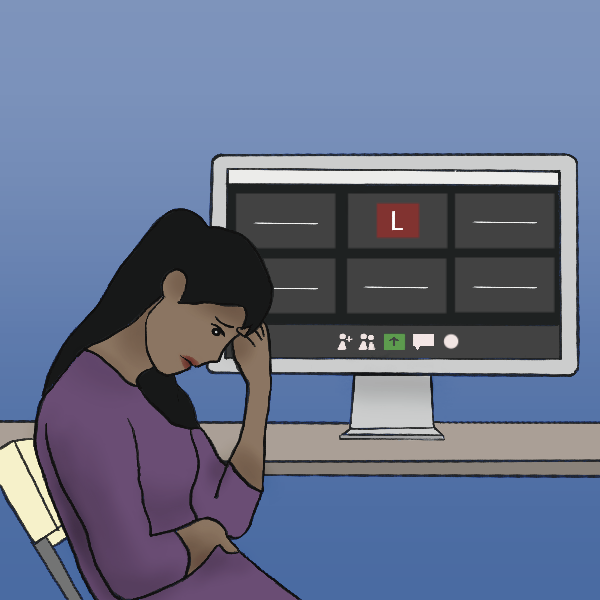
By now, we have all experienced the quiet discomfort of a Zoom call from our homes: we’re usually running late, not sure what to wear and assume the person on the other end can tell we’ve just rolled out of bed. This cycle became a regular part of our lives throughout the COVID-19 pandemic, and it has stuck around by effectively following the times when we can’t host those same sessions in person.

Our world is changing, and fast; however, now that COVID protocols have lessened, should we stay the course with the rapid increase of these online interactions?

Following the pandemic, there has been a blatant integration of technology and a widely recognized increase in reliance on it. In educational institutions, work environments and other areas, almost all interactions are being conducted entirely online. Technology-based engagement has quickly become the new normal, with both job interviews and jobs themselves being done from people’s homes.

For UC Davis students and staff, there is a rising question of whether or not they feel connected to the university following this technological shift. The on-campus dynamic has completely changed, sending students and staff home to their apartments and dorm rooms hours earlier than ever before as the urgency to be on campus to attend courses or activities dwindles.

Is the convenience of being able to watch lectures online through Lecture Capture and other sources worth the loss of the in-person classroom experience?

Many professors, both at Davis and globally, have expressed feeling disconnected from their students in a way that was unknown to them in a pre-pandemic world.

“No matter what I record on Zoom, it is so inferior to what you hear in the classroom,” David Osleger, a geology professor at UC Davis, said. “The classroom just feels connected; students feel like they’re actually part of something instead of online, where they’re just being passively spoken to. The depersonalization of the university is a really disappointing trend.”

Recently at Davis, students have begun discussing that many of their activities have been moved to an online platform as well. Namely, Community Advisor (CA) applications for the upcoming year were conducted entirely online and asynchronously. In other words, students recorded themselves responding to questions without participating in an actual interview. Applicants were told they would receive word of their application status in February.

“I think there are a lot of pros and cons,” Kyra Victor, a first-year cellular biology major, said regarding the CA interviews. “It’s really convenient and allows for people to not have to travel for interviews, especially as it becomes more common for people to work from home. Still, to me, it felt way harder to make a ‘good impression’ because I feel like people tend to be less expressive when talking to a screen as opposed to a person.”

The sheer convenience of being able to conduct interviews, office hours and even advising appointments online has completely changed the dynamic of many UC Davis activities.

While many at Davis and other universities have reported feeling uncertain and at odds with the extent of the new technological normalcy, many others find that there are more pros than cons. These online opportunities have allowed people to attend important personal events because their work and school lives can often accommodate their absences.

“For many, digital interactions could only do so much as a stand-in for in-person communication,” a Pew Research Center article stated. “About two-thirds of Americans (68%) say the interactions they would have had in person, but instead had online or over the phone, have generally been useful — but not a replacement for in-person contact. Another 15% say these tools haven’t been of much use in their interactions. Still, 17% report that these digital interactions have been just as good as in-person contact.”

While some seem to appreciate the convenience of online interactions, many find that it does not seem worth the connections that we are losing with our peers, coworkers and professors. It is difficult, even impossible for some, to find a feeling of connection with people they’re working with when they’re collaborating from the privacy of their own bedroom.

“Before moving to campus, my course advising appointment was done online and I wasn’t a huge fan of it,” Ashley Rewa, a first-year sociology major, said. “I figured that once we were all on the same campus, those kinds of appointments would be in person — but so far that hasn’t changed. I feel pretty disconnected from the school sometimes. It really isn’t the same doing so many of my activities from my dorm room.”

There are many activities that have yet to be conducted in person again after switching to an online platform throughout the pandemic. At UC Davis, many students and staff are expressing the same complaint: they feel separated from the college community. Despite these feelings of isolation, we’re not too far gone yet. Even though technology is becoming the new normal, it has yet to take over university campuses completely.

Until then, students and staff are doing what they can to maintain and create new connections with one another, both in-person and online.


Written by: Zoey Mortazavi — features@theaggie.org

Los Aggies pierden ante Cal Poly durante su primer juego de la temporada en su casa

El equipo de vóleibol femenino de Davis pierde la racha ganadora en su quinto partido.

Por Megan Joseph — sports@theaggie.org


El primer partido de la temporada en casa de los Aggies no fue como se esperaba. Los Aggies tuvieron su primera derrota devastadora de la temporada contra los Cal Poly Mustangs el día 5 de Octubre. Después de cuatro partidos ganados, los Aggies eran los favoritos, pero no pudieron alcanzar la victoria.

Si bien los Aggies nos tuvieron cautivos cuando ganaron el primer set, los Mustangs hicieron una gran remontada y ganaron los tres sets que faltaban. Este resultado deja a los Aggies con cuatro partidos ganados y una derrota, al igual que los Mustangs. 

El entrenador Dan Conners habló con UC Davis Athletics después del partido y dijo: Debemos aprender de esta noche y hacer un mejor trabajo para prepararnos para partidos como este en el futuro”.

Conners confía plenamente en que su equipo regrese más fuerte esta temporada y mantener su racha ganadora en alto durante la temporada a pesar de las bajas estadísticas del juego. Los Aggies hicieron su mejor trabajo, pero solo pudieron mantener un porcentaje de bateo de 0.205 y cometieron cerca de 25 errores de ataque. Con la esperanza de que esto solo haya sido un mal momento para el equipo, deseamos ver mucho más impulso y un mejor rendimiento para el siguiente juego.

En el primer set, los Aggies iban perdiendo por una cantidad sustancial de puntos, hasta que la ofensiva tuvieron una rancha de anotar tres pelotas que le dio ventaja sobre el equipo de San Luis Obispo y los llevó a ganar el set por 25 a 23. 

Después de eso, los Mustangs le dieron la vuelta al partido y ganaron los siguientes tres sets. Los Aggies intentaron aguantar y consiguieron dar algunos buenos golpes; sin embargo, los Mustangs hicieron un mejor partido y jugaron mejor. 

A pesar de la tremenda pérdida, Olivia Utterback de tercer año tuvo un rendimiento impactante esta temporada con 18 anotaciones. Esto marca su mejor juego de la temporada con un porcentaje de bateo de 0.351, que es muy difícil de alcanzar para muchos jugadores. 

Utterback ganó un doble-doble —cuando un jugador obtiene un número de dos dígitos en dos de cinco categorías para el juego individual— en el juego debido a sus 10 ataques y 18 anotaciones. Utterback definitivamente ha puesto un nuevo ritmo a la temporada con todas las estadísticas nuevas e impresionantes que ha demostrado. 

Otra jugadora en su tercer año escolar, Amara Aimfua, enseñó sus excelentes habilidades con trece anotaciones y un porcentaje de bateo de 0.205. Aimfua usó su conocimiento del juego para calcular puntos contra el equipo y ayudó a los Aggies a ganar uno de sus sets.  

Continuando la temporada como libero, Julia Ng de tercer año se mostró muy calmada y estable en su posición y ayudó a los Aggies a obtener 16 ataques y asistió cuatro veces. El equipo no podría haber jugado durante tanto tiempo de no haber sido por la ayuda de Ng. 

Encontrando su lugar en el equipo, Mia Starr de primer año lideró el número total de asistencias en el juego con un sobresaliente conteo de 19 asistencias y seis ataques. Starr definitivamente se ha unido con el equipo y ha encontrado su ritmo.   

Con todo este talento en el equipo, podemos esperar ver una nueva ofensiva y una defensa ardiente de los Aggies en los próximos partidos. 


Traducido por:

Kevin Fabian

Gissel Ventura Rivas

Ashley Preciado

Anahí Reyes Atristain

Alfredo Vázquez Aguilar

La Feria de Participación de UC Davis ofrece oportunidades de carreras y conexiones sociales

La feria del 11 de octubre ofrece a los alumnos la oportunidad de explorar los recursos, clubes y organizaciones disponibles en el campus de Davis.


Por ELIZABETH WOODHALL — features@theaggie.org


La Feria de Participación ofrece una oportunidad para que los alumnos recorran el predio y conozcan las diferentes maneras de involucrarse en el campus. Identificada como “la exhibición anual de organizaciones de alumnos” en el sitio web del Centro de Participación Estudiantil de UC Davis, la Feria de Participación será el día 11 de octubre de 2023, de 12 del mediodía a 4 de la tarde. 

Lian Boos, director del Centro de Participación Estudiantil, dijo que la Feria de Participación puede verse como una tradición de larga data, que existe desde hace casi 40 años. Con el tiempo, la Feria de Participación ha evolucionado para adaptarse e incluir un creciente número de clubes y organizaciones registrados en el campus.

“Invitamos a todas las organizaciones estudiantiles del campus, y pueden inscribirse para presentarse en la Feria de Participación”, dice Boos. “Tenemos mesas limitadas; este año hubo más de 300 mesas disponibles por orden de llegada. Hace dos años, solo fueron 200 organizaciones. Este año serán alrededor de 400. Tenemos más de 788 organizaciones en el campus, lo cual es bastante, y nos hace estar constantemente pensando maneras de aumentar la capacidad para poder albergar más organizaciones del campus”.

Con más de 5,000 de alumnos que asisten a la Feria de Participación, Boos menciona que la energía suele ser emocionante y concurrida. Y con tantas oportunidades disponibles, también puede ser abrumador por la cantidad de alumnos que pasan y se presentan. 

“Invitamos a todos los estudiantes a participar para que puedan pasar y conectarse con cualquiera de nuestras organizaciones de estudiantes”, dice Boos. “Va a estar lleno; es emocionante; corre mucha energía por el patio. Puede ser abrumador para ambas partes […] Es un día ajetreado y los estudiantes que se presentan pueden llegar a ser proactivos, abiertos, cálidos e inclusivos”.

Incluso si los estudiantes no encuentran una organización o un club que les interese, Boos dice que la Feria de Participación no es la única manera de conectarse. Aggie Life es una excelente manera de estar al tanto e involucrarse sin estar en persona, especialmente para los estudiantes más introvertidos.

“No todas las organizaciones asisten a la Feria de Participación; entonces si estás caminando por la feria y no encuentras una organización que te emocione y con la que te sientas motivado a ser parte, hay más oportunidades en Internet para aprender sobre otros grupos, como Aggie Life, una plataforma virtual donde puedes buscar información sobre cada organización del campus y conectarte desde ahí. Los sitios web tienen información de contacto de las personas involucradas en estos grupos entonces puedes buscar allí”. 

La feria de participación misma puede ser muy concurrida y, si eres introvertido, puede ser abrumador. Pero hay otras opciones para conectarse con las organizaciones del campus. 


Rachel Bingham, la coordinadora de First-Year Aggie Connections, dice por medio de correo electrónico que esta feria puede ser una “experiencia de paso” en lugar de un evento en el cual estar allí durante todo el tiempo, aunque los estudiantes pueden hacerlo si lo desean. 

“Habrá muchos grupos promocionándose, por lo que es probable que sea imposible visitar todas las mesas”, dice Bingham. “Los nuevos estudiantes deben llegar con algunas ideas sobre qué tipo de participación cocurricular están buscando. Si los participantes ya saben que están buscando aprender más sobre clubes/organizaciones basadas en identidades personales, pasatiempos/intereses, futuras trayectorias profesionales o extracurriculares como atletismo, puede ser más fácil navegar a lo largo de esta feria tan grande”. 

Bingham continuó hablando sobre la importancia de experimentar nuevas cosas para los estudiantes de primer año.

“Una parte de la experiencia de los estudiantes de primer año es sentirse cómodos estando afuera para poder integrarse a una nueva comunidad”, dice Bingham. “Esto significa ir a las mesas y prepararse para tener muchas conversaciones con los representantes de los clubes”.

Bingham explicó que la Feria de Participación es más que dejar que los estudiantes conozcan qué organizaciones, clubes y recursos están disponibles; también puede servir para crear relaciones con otros estudiantes. Esencialmente para los estudiantes de primer año y los de transferencia, la Feria de Participación puede ser una buena oportunidad para conocer a otros estudiantes que comparten sus intereses.

  “Es muy importante para los nuevos estudiantes asistir a la Feria de Participación porque integrarse a un club u organización es una de las mejores maneras de divertirse y encontrar su propio grupo de amigos, mentores y aliados”, dice Bingham. “Sabemos que los nuevos estudiantes que son aceptados a UC Davis vienen con una experiencia extracurricular vasta, y probablemente están buscando continuarla y extenderla durante su tiempo en la universidad. La Feria de Participación solo ocurre una vez al año, entonces los estudiantes de primer año deberían estar tomando decisiones importantes ahora sobre cómo participar, y estas decisiones podrían durar para el resto de sus carreras en UCD”.

El UC Davis Hackathon Club, que se describe a sí mismo como un hackathon universitario en el sitio web, es solo uno de los varios clubes que se estarán promocionando en la Feria de Participación de este año. Miembros del equipo compartieron su perspectiva sobre ser parte de este gran evento.

Shounak Ranabhor, estudiante de cuarto año de la especialidad de Biología Celular y presidente y CEO de UC Davis Hackathon, dice que la feria permite a los clubes alcanzar “un gran repertorio de estudiantes”. 

“Este es uno de nuestros lugares favoritos para encontrar un montón de diferentes estudiantes, especialidades, historias de vida y experiencias, y ponerlos a todos en el mismo crisol para que nos conozcan y ver qué podemos hacer por ellos”, dice Ranahbor. “Cuando vine a la Feria de Participación siendo nuevo en UC Davis, aprendí mucho simplemente caminando por la feria con gente parecida a mí. Puedes hacer nuevos amigos; conoces mucha gente que puede que venga de los mismos lugares que tú o de lugares diferentes”.

Fiona Chau, estudiante de tercer año de doble especialización en Economía Gerencial e Inglés, también directora principal de Finanzas de Hackathon, dice que en la Feria de Participación realmente se espera que los estudiantes asistan y aprendan más sobre los clubes y organizaciones disponibles para ellos.

“La Feria de Participación es mucho más que solo asistir a un evento”, dice Chau. 

“Es conectar con nosotros para que podamos ayudarte a tener éxito en tu carrera académica aquí en UC Davis; independientemente si eres un estudiante de transferencia, de primer año, júnior, etc., te invitamos a participar. Formar parte de este evento y conectar con nosotros en persona crea una conexión, y por ende promovemos eso, como también el simple hecho de hablar entre nosotros como estudiantes, creo que eso ayuda mucho”.

Rachel Yap, estudiante de cuarto año con especialidad en Diseño y Psicología y presidente de Hackathon, dice que la Feria de Participación permite que grupos como Hackathon se acerquen a diferentes estudiantes y los motiven para que se integren. 

“Allí hay una gran mezcla de experiencias”, dice Yap. “Es como un gran grupo que normalmente no se puede reunir por tener que estar presente en las clases. Pero en la Feria de Participación, todos están allí, todos los que están interesados y de todas las especialidades. Es simplemente una gran mezcla de experiencias que nos gusta aprovechar”.

The Pantry, una organización dirigida y organizada por estudiantes que ofrece comida y recursos esenciales a los estudiantes, también formará parte de la Feria de Participación. El encargado de The Outreach, Qinyin Huang, estudiante de cuarto año con especialidad en Cine y Medios Digitales, junto con el encargado de External Affairs, Charlotte Zhao, estudiante de tercer año con especialidad en Psicología y Ciencias Políticas, están de acuerdo en lo que la Feria de Participación puede ofrecer. 

“También es un evento muy interactivo, cada stand tiene muchas cosas distintas que ofrecer, por lo que los estudiantes pueden llegar y ponerse a conversar con la gente”, dijo Zhao. 

Zhao también explicó que la feria de participación está destinada a ser una experiencia amigable e inclusiva para todos, especialmente para los nuevos estudiantes y los estudiantes de transferencia que no están muy familiarizados con la vida en el campus. 

“Es una buena oportunidad para que los estudiantes de Davis conozcan lo que ofrece la escuela”, dice Zhao. “Lo digo porque en mi primer año, me sentí como una estudiante perdida y no sabía qué clubes, recursos y organizaciones estaban disponibles para los estudiantes. La Feria de Participación es un gran evento de todo el campus que está abierto para todos y es una buena manera de ver todo lo que los clubes pueden ofrecer y es un gran ejemplo de cómo los estudiantes pueden tener acceso a oportunidades que no sabían que existían”. 

Qinyin explicó que la Feria de Participación ocurre cada año y permite a los clubes mostrar las oportunidades que están disponibles para los estudiantes que quieren participar.

“Creo que lo realmente especial de este evento es que es anual, por lo que es una oportunidad para que todos los clubes se presenten y demuestren lo que pueden ofrecer”, dice Qinyin. “Es una bonita interacción ya que involucra a más personas con la vida del campus, y muchos de estos clubes están destinados a construir nuestra vida académica y social”.

Ya sea que los estudiantes estén promoviendo su club o sean nuevos estudiantes tratando de ver de qué se trata la vida en el campus, la Feria de ​​Participación promete un ambiente enriquecedor que ofrece infinitas oportunidades y permite a los estudiantes formar conexiones duraderas. 


Traducido por: 

Chelsea Rodriguez

Liz Lopez

Nandini Jagarlamudi

Jason Tapia

Caetano Abransonward

Laura Jojoa 

Frida Lopez

Catherine Sanchez

Nohemí Dueñas Cervantes

Giselle Castañeda 

Graciela Quinones

Tiffany Ramirez

Lesley Reyes 

Sarah Bautista

Estudiantes se destacan con el Programa Académico SEED de UC Davis

Cómo el programa ha ayudado a estudiantes con discapacidades intelectuales a encontrar una comunidad y adquirir habilidades para la vida diaria y el trabajo mientras se hacen independientes. 


Por AMBER WARNKE — features@theaggie.org


El programa Redwood SEED (Supported Education to Elevate Diversity, educación con apoyo para la diversidad) es uno de los programas para discapacidades más novedosos de UC Davis. Diseñado para apoyar a estudiantes de 18 a 23 años con discapacidades intelectuales en la formación de habilidades para la vida y el trabajo, la organización empezó a apoyar a sus primeros estudiantes en 2021, y los estudiantes más avanzados del programa se encuentran en su tercer año actualmente.

Los estudiantes del programa viven en los dormitorios del campus y son motivados para unirse a clubes y organizaciones, y recibir apoyo de sus mentores. Ian Hutchings, estudiante de segundo año del programa SEED, disfruta vivir en el campus y hacer las actividades que se proponen allí. Aunque vivir tan lejos de su familia le pareció difícil al principio, disfruta sus experiencias formando amistades y participando en actividades del campus.

 “Es divertido aquí, pasar tiempo con amigos”, dice Hutchings. “He conocido a muchas personas aquí, me encanta pasar tiempo en la MU con mis amigos y ver los juegos de fútbol americano… yo pertenezco aquí”.

Ryan Fitch, estudiante de tercer año del programa SEED, también hizo nuevos  amigos mediante el programa. “Extrañé a mis padres y hermano Aiden, pero fue muy divertido pasar tiempo aquí con mis nuevos amigos”.

Mientras que algunos estudiantes encontraron la transición de casa al campus universitario como una situación de mucha ansiedad; a muchos estudiantes les encanta y disfrutan vivir y aprender en comunidad, de acuerdo con Roshan Khandhar, estudiante de primer año del programa SEED. “Me daba mucho miedo porque es un campus grande… el campus tiene 5,300 acres”. Cuando se logró adaptar, descubrió que es un lugar donde “todas las personas son acogedoras” y le llamó “una cuarta casa y una familia para mí”. Ahora quiere que las personas sepan que “las personas con discapacidades no están solas y, ya sea en una escuela privada o pública, hay  programas que pueden ayudarlas a prosperar… siempre hay un lugar para ellas, no están solas”. 

Además de enfocarse en el desarrollo de relaciones, lo cual ofrece el programa mediante clases sobre aptitudes sociales y actividades cotidianas, los estudiantes del programa SEED también pueden ser introducidos en una variedad de oportunidades de trabajos alrededor del campus al principios del trimestre de primavera en su primer año.

A medida que los estudiantes se adaptan a su trabajo, avanzan a través de una “escalera de oportunidades”, ya que desarrollan la resistencia para trabajar más horas y más días durante el tercer y cuarto año. Fitch trabaja para Aggie Media como fotógrafo y solía trabajar en la Facultad de Medicina Veterinaria de UC Davis como camarógrafo, donde  dice “me dieron una lista de cosas que hacer, y las hice”. Su  objetivo es “convertirse en fotógrafo de graduación después de graduarse”.


Khandhar aspira a ser independiente y seguir sus pasiones en su futuro. “Quiero vivir  en mi propio apartamento cerca de la casa de mis padres. Ya que esté solo, compraré mi propia membresía del gimnasio”, dice Khandhar. Se está preparando para convertirse en entrenador físico para personas con necesidades especiales en el futuro. Khandhar cuenta con experiencia en natación, baloncesto, golf, fútbol, béisbol y sóftbol.

Los estudiantes del programa SEED participan en ejercicios de planificación de la vida, incluida la lluvia de ideas y la preparación para tomar decisiones de una carrera en el futuro. Esto se lleva a cabo asignando a cada estudiante de cada año su propio cohorte y tomar “clases fundacionales, personalizadas, así como clases de UC Davis que suman créditos en su área de interés”, según la página de información sobre el programa en el sitio web de UC Davis. 

Durante el curso de cuatro años, estos programas, cursos y oportunidades pueden tener un impacto duradero en el potencial de la carrera de los estudiantes. Un estudio del año 2020 encontró que el 59 por ciento de los estudiantes con discapacidades intelectuales que participaron en un Programa postsecundario y de transición para estudiantes con discapacidades intelectuales, cuyo programa “Redwood SEED” se define como tal, fueron contratados un año después de su graduación. El mismo estudio contrasta ese número con un 19 por ciento de sus compañeros que no participaron en ese programa. Actualmente, solamente 263 de las 4,700 instituciones que pueden otorgar diplomas en el país ofrecen programas para estudiantes con discapacidades intelectuales, según un artículo publicado por Atlantic.

Además de aumentar la conciencia sobre el programa SEED y sus beneficios para la comunidad de personas con discapacidades, los estudiantes de UC Davis pueden ayudar en el programa solicitando trabajo como mentores. El programa SEED emplea actualmente a más de 100 estudiantes de UC Davis como mentores en cinco áreas: Académica, Inclusión Social, Salud y Bienestar, Empleo y Vivienda Residencial. “ Siempre hay lugar para ayudar, para ser un mentor en el programa”, dice Hutchings. 


Traducido por:

Caetano Abramsonward

Harumi Arvizu Nansen

Sarah Bautista

Giselle Castañeda 

Nohemí Dueñas Cervantes

Nandini Jagarlamudi

Laura Jojoa

Lauren Kim

Frida Lopez

Liz Lopez

Christopher McKerracher

Tiffany Ramirez

Lesley Reyes

Chelsea Rodriguez

Catherine Sanchez

El gobernador Gavin Newsom firma proyecto de ley sobre acción climática en Davis

Newsom firma proyecto de ley sobre acción climática y hábitat en Davis del senador estatal Bill Dodd. 


Por ALMA CULVERWELL – city@theaggie.org 


El 4 de octubre, el gobernador Gavin Newsom aprobó el proyecto de ley del Senado (SB) 256, lo que permite a la ciudad de Davis crear reservas de especies en peligro y tomar una mayor acción climática. El proyecto de ley fue presentado por el senador Bill Dodd (distrito 3 del Senado).

El proyecto de ley SB 256 modifica la Proposición 70, la cual fue aprobada en 1988 y autorizaba $776 millones para financiar la adquisición y rehabilitación de los parques y las áreas de vida silvestre de California, y asignaba $1.97 millones para la ciudad de Davis. El proyecto de ley permite a la ciudad de Davis colaborar con Yolo Habitat Conservancy para poner servidumbre ambiental en propiedades específicas en necesidad de preservación o rehabilitación.

Tracie Reynolds, gerente de Open Space Program de Davis, que se dedica a proteger las tierras de cultivo y las áreas de hábitat de la comunidad, describe el efecto de SB 256.

“Básicamente la legislatura permite que la ciudad ponga servidumbre ambiental de conservación del hábitat en esas ocho propiedades si quisiéramos”, dice Reynolds. “Nada ha sido aprobado, todavía tendrá que pasar el proceso de la comunidad y ser aprobada por el concejal de la ciudad y todo eso, pero antes no lo podíamos hacer y ahora sí podemos si quisiéramos.”

Reynolds describió que esto es un paso crucial para avanzar en la implementación de Yolo Habitat Conservation Plan, un plan introducido por primera vez en los 90 que trabaja para conservar hábitats y especies en peligro en el Condado de Yolo.

Reynolds habló sobre el proceso inicial para el desarrollo y el resultado de la nueva propuesta, en la cual se lleva trabajando un tiempo.

“Hace varios años hablé con Yolo Habitat Conservancy. De hecho, ellos se acercaron a mí para plantearme la posibilidad de poner un hábitat en algunas de las propiedades de la ciudad a lo largo de South Fork de Putah Creek […] así que en ese momento traté de trabajar con el Estado en eso, pero el texto que estaba en la Proposición 70 básicamente nos impidió hacer eso, entonces lo puse a un lado ya que no podíamos hacerlo”, dice Reynolds. “Básicamente dijeron que no podían poner una servidumbre ambiental a menos que tuviéramos una legislatura activa, entonces dije ‘creo que eso es mucho; voy a ponerlo a un lado por ahora’.

Reynolds explicó los objetivos a largo plazo del proyecto de ley y también el Plan de Conservación de Hábitat de Yolo.

“En principio, lo que trato de hacer es lentamente conservar la tierra de cultivo, ya sabes, trabajar con agricultores alrededor de la ciudad para poner servidumbre ambiental de conservación en sus propiedades. Algunas de mis metas son tratar de adquirir más tierra a lo largo de South Fork de Putah Creek para asemejarlo más a un hábitat y un área con acceso público y para proteger más tierras de cultivo alrededor de la ciudad”, dice Reynolds. 

También motivó a los miembros de la comunidad que se mostraron apasionados por la causa a involucrarse a través del trabajo voluntario y el apoyo al programa de espacios abiertos de la ciudad, así como Measure O, que es un impuesto predial dedicado a la restauración del hábitat.


Traducido por:

Sarah Bautista

Giselle Castañeda 

Nohemí Dueñas Cervantes

Laura Jojoa

Frida Lopez

Tiffany Ramirez

Lesley Reyes

Catherine Sanchez


Davis MoMA: Cow with a pearl earring

Original: “Girl with a Pearl Earring” by Johannes Vermeer


Drawn by: Nimra Farhan –– nfarhan@ucdavis.edu

Disclaimer: (This cartoon is humor and/or satire, and its content is purely fictional. The story and names of “sources” are fictionalized.)

Toll lanes suggested as part of proposed improvements for the Interstate 80

Caltrans proposes to improve traffic and safety on I-80 between Davis and Sacramento


BY EMMA CONDIT — city@theaggie.org


The California Department of Transportation (Caltrans) has proposed a project to improve safety and congestion on Interstate 80 (I-80) between Davis and Sacramento. If approved, construction would begin in October of 2024.

The project would be funded in part by an $86 million grant from the federal government, as well as state-matching funds which would cover additional costs. The Caltrans website states that the total estimated cost will be $230 to $465 million, depending on which plan is chosen.

Sacramento’s population has increased significantly in the last 15 years. Since 2010, the Sacramento area’s population has increased by 15 percent, as opposed to California’s 5 percent. The majority of new residents have come from the nearby Bay Area, and this growth is not predicted to slow any time soon.

Autumn Bernstein, the executive director of the Yolo County Transportation District, explained the goal of the project and talked about this population growth

“[The I-80] is already one of the worst bottlenecks in Northern California,” Bernstein said. “With the kind of population growth that we’re seeing, congestion is expected to get worse. If we do nothing, it’s not like it’s going to stay the same. It’s actually going to get worse because of the growth in both the Bay Area and Sacramento.”

Bernstein also shared that this Yolo County highway expansion project follows others that have already taken place in Solano County and the Bay Area.

Caltrans, in collaboration with Yolo County stakeholders, has proposed numerous policy alternatives for I-80. Each of these would create varying levels of efficiency and safety on this highway.

Policy alternatives include the construction of high occupancy vehicle lanes (HOVs), high occupancy toll lanes (HOTs), express lanes, direct connector lanes and transit-only lanes. Caltrans may also convert existing lanes into these managed lanes.

Many of these policy alternatives also include a component that would generate revenue for the county. Leo Morales, a design engineer for the project, pointed out the multiple benefits of fees from managed lanes.

“This [plan] creates revenue to mitigate traffic congestion,” Morales said. “It also provides benefits to other users that aren’t driving.”

In a toll lane, drivers who use the lane would be charged a fee. The fee amount would depend on the day’s traffic and would allow the lane to maintain a steady, fast speed. The revenue generated by the tolls would go toward the county.

“The toll revenue creates a source of funding that can be reinvested in transit,” Bernstein said. “The toll revenue would increase [the] frequency of buses on the causeway, improve service on the Capitol Corridor, offer discounted fares for both the YoloBus and the Capitol Corridor [and] improve the bike path along the causeway. It’s really to encourage and incentivize people to get out of their cars.”

As mandated by SB 743, Caltrans has also provided mitigation techniques to counter the increased driving capacity that would come from highway expansion and ease traffic. These include improving micro transit within Yolo County by subsidizing bus fares, promoting ride-sharing and increasing bus frequency during busy hours. Additionally, they propose building housing near transit — by creating affordable and accessible housing where jobs are, there is less need for people to commute on I-80 and to use cars.

This project is currently subject to public review and commentary. On Nov. 28, Caltrans held a public meeting at the West Sacramento Community Center, where residents asked questions and provided feedback about the project.

At the meeting, Yolo County residents brought up concerns about managed lanes. One resident raised concerns about inequality in traffic times, explaining that not all drivers can afford to pay fees in exchange for shorter driving times. Another resident was concerned that transit-only and carpool lanes would disadvantage truck drivers who fall into neither category.

Nicole Gonzales, a Sacramento resident who commutes to work in Davis, offered her thoughts on the project.

“I’m for the plan,” Gonzales said. “Construction is brutal, but I know in the long run it’s going to be beneficial. Tolls ease congestion significantly, and I’ve had a Fastrak for years. It’ll make a huge difference.”

Valeria Becerra Angulo, a fourth-year international relations major, commutes to school from Sacramento each day, and her drive takes anywhere from 25 to 60 minutes. She offered her thoughts on the construction of a new lane.

“I think it could potentially help,” Becerra Angulo said. “But people take up lots of space when they drive, and I think more patrolling or a designated lane for trucks would be better.”

She also pointed out the price she pays as a commuter.

“I already pay four dollars a day to park on campus,” Becerra Angulo said. “And I pay $50 a week [for] gas. I don’t want to pay more to be in a toll lane.”

Ultimately, Morales described the role of community feedback in the approval process.

“It’s essential. It’s also a legal requirement,” Morales said. “But we take this very seriously. We want to hear your feedback, we want comments and we’re hoping that we get positive and negative comments. We’re gonna accept all of them and consider everyone’s opinion.”

There will be another public meeting about the project on Dec. 13 at the Mary L. Stephens Library in Davis. The public circulation comment period will end on Jan. 5, 2024.


Written by: Emma Condit city@theaggie.org