57.6 F
Davis

Davis, California

Tuesday, December 23, 2025
Home Blog Page 123

El nuevo sistema de IRM puede capturar imágenes en vivo del movimiento de las muñecas

Esta tecnología emergente mejorará el diagnóstico médico y el conocimiento anatómico. 

Por KATIE HELLMAN — science@theaggie.org 

Un estudio reciente publicado en el British Journal of Radiology ha enseñado que un nuevo sistema de imágenes por resonancia magnética (IRM) puede capturar el movimiento de las muñecas en vivo. Estos nuevos sistemas pueden conducir a una mejor comprensión de la anatomía de la muñeca humana y permitir avanzar hacia el futuro de la tecnología de diagnóstico. 

“Una comprensión detallada de la cinemática funcional de los tejidos de la muñeca que son necesarios para realizar las actividades de la vida diaria es esencial para diagnosticar y tratar eficazmente la disfunción de la muñeca”, explica el estudio. “La resonancia magnética en tiempo real de la muñeca en movimiento es factible con 0.55T (Tesla) de alto rendimiento y puede mejorar la evaluación de la disfunción dinámica de la muñeca”.

Abhijit Chaudhari, profesor del Departamento de Radiología y director provisional de UC Davis Imaging Research Center, comentó acerca del valor del nuevo avance en una entrevista con UC Davis Health. 

“Las imágenes en movimiento son una nueva herramienta para diagnosticar una disfunción de la muñeca, ya sea durante el movimiento o cuando hay carga en la articulación”, dijo Chaudhari. “La muñeca es muy compleja, entonces la habilidad de visualizar movimiento va a tener un impacto enorme”.  

Las imágenes tradicionales de IRM fijas usualmente dan información muy precisa sobre la estructura interna de la muñeca. 

Las imágenes por resonancia magnética tienen alta resolución espacial y de contraste, y pueden caracterizar los huesos y tejidos blandos sin usar radiación ionizante, lo que la convierte en una modalidad de captura de imagen ideal para asistir en condiciones patológicas que afectan las articulaciones”, afirma un estudio publicado en PubMed.

Sin embargo, a pesar de su confiabilidad, las IRM actuales tienen un grave problema: las imágenes fijas tienen dificultades para detectar la inestabilidad dinámica, que se refiere a las articulaciones inestables que solo son visibles durante el movimiento. Evaluar la función de la muñeca mientras la muñeca está en movimiento es la clave para diagnosticar ciertas lesiones y administrar tratamiento posterior. 

Robert Szabo, profesor de Cirugía Ortopédica en UC Davis, y Robert Boutin, radiólogo musculoesquelético y profesor de Radiología en la Universidad de Stanford, junto con Chaudhari, a lo largo de más de diez años, han desarrollado tres máquinas Tesla (3T) para escanear el cuerpo en vivo. Aún con el desarrollo de esta tecnología fascinante, usar un imán con una fuerza de campo alta creaba objetos en las imágenes que hacían difícil obtener una interpretación clara del escaneado por IRM.

Para resolver este problema, Chaudhari, Szabo y Boutin empezaron a trabajar con Krishna Natak, director de Dynamic Imaging Science Center (Centro de Ciencias de Imágenes Dinámicas) de la Universidad del Sur de California. Recibieron una beca para crear un sistema de IRM de 0.55T que pudiera desarrollar imágenes en movimiento a 78 cuadros por segundo. Esto permite obtener imágenes dinámicas precisas en cuestión de segundos sin objetos que obstruyan la habilidad de interpretar informes radiológicos.

“Las fotos dinámicas junto con las estándar, los escaneos de IRM fijos, nos enseñan una anatomía específica de la muñeca que nunca antes había sido evaluada a este nivel”, dijo Szabo durante una entrevista con UC Davis Health. “Esto tiene una tremenda relevancia para evaluar heridas y llevar a cabo más investigaciones sobre las funciones de la muñeca”.

Traducido por:

Kevin Fabian

Nevaeh Herrera

Diego Ramirez 

Alejandra Ponce

Ashley Preciado

Anahi Reyes-Atristain

Alvaro Vaca Mendoza 

Alfredo Vazquez-Aguilar

Gissel Ventura Rivas
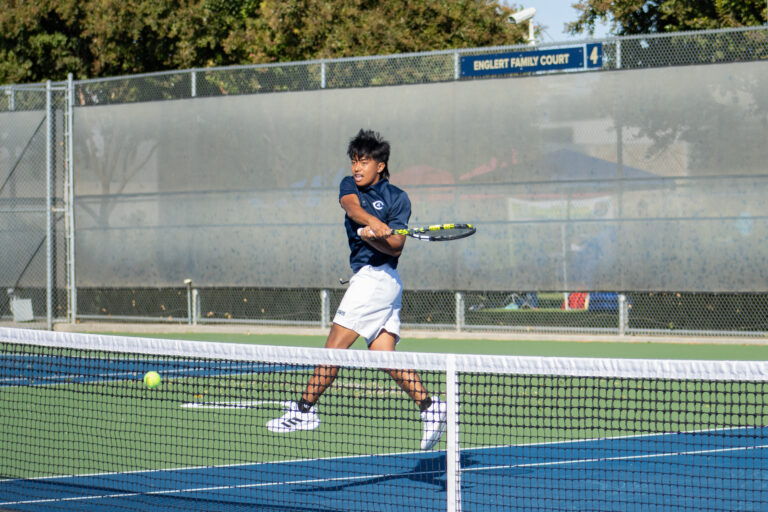
El equipo de tenis masculino de UC Davis domina la cancha en el Aggie Invitational

Savkin gana la división individual en su debut universitario.


Por Megan Joseph — sports@theaggie.org


Con un inicio de temporada pisando fuerte, los Aggies hicieron un torneo de tenis masculino muy exitoso que terminó en una victoria para el equipo. En su casa, los Aggies tuvieron varios desempeños destacados de parte de todo el equipo, pero especialmente por parte de la clase nueva.
          El Aggie Invitational ha visto grandes despliegues de los jugadores en el pasado y este es el octavo año consecutivo en el que UC Davis organiza el torneo para comenzar la temporada de otoño.  

El primer día del torneo, el 29 de septiembre, marcó el comienzo de la carrera universitaria del estudiante de primer año Ivan Savkin. El nativo de San Diego impresionó a todos con su dominio de los partidos individuales del vuelo C durante el fin de semana. Poco a poco fue noqueando a todos sus oponentes del torneo, ganando así su primer título de división universitario. Savkin enseñó su conocimiento del juego y su talento natural con la raqueta a medida que dominaba el torneo, no solo en la división individual. 

Además de defender su división individual, Savkin también fue parte del dúo ganador de dobles con el estudiante de cuarto año Ryan Torres. Teniendo mucha experiencia como parte del equipo de los Aggies y en la división de dobles, Torres demostró por qué es un atleta de Davis muy respetado. Torres y Savkin, los estudiantes de cuarto y primer año que trabajaron en pareja, aprendieron a jugar bien entre ellos y vencieron a todas las parejas de dobles rivales, con lo cual ganaron la competencia de dobles. Juntos, hicieron una dupla fuerte y eso se demostró en un partido jugado con comunicación abierta y movimiento hacia la pelota. 

Manteniendo el impulso y el ritmo establecidos por Savkin y Torres, el resto de los Aggies derrotaron a muchos oponentes y se mantuvieron en la cima. En las divisiones individuales restantes (vuelos A y B), Brett Brinkman de cuarto año y Constantinos Djakouris de segundo año llegaron a la final. Brinkman, un veterano del juego, mantuvo en alerta a los jugadores contrarios con sus servicios y golpes poderosos. Desafortunadamente, Brinkman fue eliminado en el último partido individual de su vuelo, pero aun así demostró un buen desempeño.

  1. Djakouris también dio una buena batalla, pero no pudo salir ganador en su partido final. C. Djakouris, un Aggie en su regreso, exhibió su asombroso talento y habilidad contra sus oponentes mucho más experimentados, manteniéndose al ritmo de todos los jugadores mayores y sin mostrar signos de preocupación.  

El miembro nuevo de cuarto año, Andreas Djakouris, no llegó tan lejos como algunos de sus compañeros, pero merece crédito por alcanzar las semifinales en la sesión A de los partidos individuales. Todavía ajustándose como un Aggie y transferido recientemente de UC Riverside, A. Djakouris ya ha demostrado su potencial. Ha ganado sus primeras batallas con su servicio “ace” a pesar de que apenas está empezando.

En general, los Aggies demostraron su entusiasmo por jugar la temporada y por ganar. Es indudable que el equipo ha traído nuevos talentos que pueden ser lo que los Aggies necesitan para llegar a la final y ser campeones de la temporada. Con los partidos y torneos que se aproximan esta temporada, podemos esperar juegos más impresionantes y dominio de la cancha, no solo por parte de los estudiantes de cuarto año, sino también de los estudiantes de primer año.


Traducido por:

Nevaeh Herrera

Alejandra Ponce

Diego Ramirez

Alvaro Vaca Mendoza

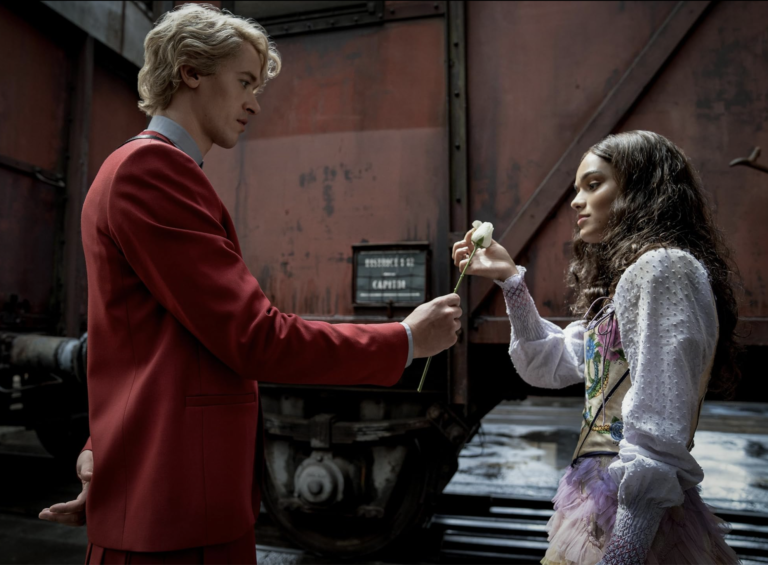
‘The Hunger Games: The Ballad of Songbirds & Snakes’ proves why the franchise remains popular

The new prequel shows how Snow always lands on top — sort of


By ELIZABETH WOODHALL — arts@theaggie.org


“The Hunger Games: The Ballad of Songbirds & Snakes” was released on Nov. 17 with a runtime of two hours and 37 minutes. Currently at 66 percent on Rotten Tomatoes, it is nevertheless a box-office success at $98.5 million in revenue, according to USA Today. If you are a fan of the Hunger Games franchise, this movie will prove to be a gruesome addition to the trilogy.

The prequel was announced in 2020 and was said to “revisit the world of Panem sixty-four years before the events of The Hunger Games, on the morning of the reaping of the Tenth Hunger Games,” according to a press release with Suzanne Collins, the author of the original novel series. The prequel is from the perspective of Coriolanus Snow, who fans may know as President Snow from the original trilogy. Like the original trilogy, “The Hunger Games: The Ballad of Songbirds & Snakes” was directed by Francis Lawrence.

Despite its PG-13 rating, this movie does not shy away from the harsh realities of the aftermath of the war that plagued both the Capitol and the districts. The first scene takes place during the First Rebellion, where a younger Snow (performed by Tom Blythe) and his cousin Tigris (performed by Hunter Schafer) view their neighbor murdering someone, seemingly referencing the Capitol’s acts of cannibalism happening during the war. As they come back home, it’s announced that Snow’s father, a military general, was murdered by a rebel in District 12. This is a plot line that strays from the book but creates a digestible piece of information: Snow’s hatred for District 12 is not limited to just the Capitol’s hatred for the districts, but it is also because they took his father’s life.

Years later, Snow lives with his grandmother and Tigris in an apartment that has not been inhabited in a long time — and it seems to be dealing with a rat problem, as seen by the box of rat poison tucked away under his desk. This is not the image that fans of the original trilogy have of President Snow: untouchable, fragrant of roses and living an extravagant life. Instead, Snow is struggling to keep everything under his control, even as a student in the Capitol’s prestigious Academia. Despite the economic turmoil the Snow family experiences, both Tigris and Coriolanus are confident in their abilities to succeed amidst the chaos, saying, “Snow always lands on top.”

In comparison to the book, the students of the Academy are told that they’ll be mentoring the tributes of the Tenth Hunger Games. In addition, Dr. Gaul announces the Plinth Prize, a university scholarship provided by a wealthy family — the Plinths, formerly from District Two. The prize will be granted to the winning mentor, whose job is to create a “spectacle” out of their tribute. With the games declining in viewership back in the districts, Dean Highbottom, the “creator” of the games, wants to challenge the mentors to get creative with them.

As all the mentors are assigned their tribute from the district, Snow is finally announced as the mentor for the female tribute from District 12, Lucy Gray (performed by Rachel Zegler). To sabotage Snow, Dean Highbottom assigns Gray because District 12 is among one of the weaker districts plagued by poverty and malnourishment. Despite this misfortune, Gray serves as the perfect tribute for the tenth Hunger Games: she’s a performer who can put on a show.

Once on stage, she performs “Nothing You Can Take From Me,” a song that shows everything that cannot be taken away from the Capitol. Everyone is moved — the Capitol and the district, holding their breath as her voice takes over the speakers. Zegler captures Gray’s spirit perfectly: a girl who will not be defined by the Capitol, and she is a performer in a way that allows her to survive both inside and outside of the arena.

It’s here where we see Gray and Snow form a stronger bond. He no longer sees her as an inhumane animal — an image that many people from the capitol have of people from the districts — but sees her as someone who is displaced from her home. She also mentions that she is not actually from District 12, but part of a Covey that would travel around, performing and trying to earn money, until they were forced to stay.

Once Snow knows that he stands a chance at making Gray a victor, he risks everything to protect her while she’s in the games, which will later prove to be a big mistake for him. He is divided by his love for Gray, his controlling nature as a Snow and standing with the Capitol — a war that even he cannot win if he doesn’t pick a side. This desire to protect her creates additional changes to the way future Hunger Games work. In the games after, the tributes were well-fed and housed and some people could sponsor them. This created a game that was more entertaining for the viewers, and it even encouraged tributes to volunteer, since winning allowed them to gain money and fame.

This division between the Capitol and the districts happens to Sejanus, someone who is formerly from District 2 and is forced to live in the Capitol, where he happens to mentor someone he knew from District 2. He is forced to pick between staying alive in the Capitol or doing what’s right. He is often swayed by Snow, who tries to keep him alive because he knows there’s a great risk if he doesn’t. Not only would Snow lose any chance of getting the scholarship, but defying the capitol would prevent him from redefining the Snow legacy. He knows that Sejanus has the privilege of not caring about that, which is probably why he holds greater power in changing the rotting structure of the Capitol.

With both forms of media, there was a clearer picture of what served as useful for understanding the original trilogy — and what made it weaker. Collins shows when Snow’s hatred for District 12 bloomed. It wasn’t just his father’s death that acted as a catalyst, but it was his relationship with Gray and her use of the “mockingjay” that he ran away from. Not only do we see Gray perform “The Hanging Tree,” but we see the song’s origin and why it was used by District 12 during the rebellion in the third book, “The Hunger Games: Mockingjay.” Katniss Everdeen’s performance of the song is what ultimately leads the revolution.

We also learn about the brutal nature of the first few Hunger Games, the original creator and the intention behind these games that evolved to be something more strikingly disgusting and inhumane. Once believed to be a form of punishing the people from the district, keeping them contained and reminding them of the war, Snow tells Dr. Gaul that it’s meant to expose the violent human nature that can only be controlled by the Capitol.

This violent human nature is ironically one that the Capitol isn’t unfamiliar with. Beyond the annual Hunger Games, this new installation shows Dr. Gual’s mutations: district people were tortured, used as animals to experiment on, given animal parts, got their tongues cut out and completely transformed into what the Capitol desired. Although the movie is PG-13, the book does not hold back on showing the darkest desires and actions of the Capitol.

The Capitol is not exposed for everything that it is, and the movie scratches the surface to barely shine a light on it. The book, on the other hand, takes its time to create a disturbing story, and it’s guaranteed to make you hungry to know more. Collins does an amazing job of giving readers a foundation of how the Hunger Games transformed throughout the years and how it moved from just seeing the brutal murders of these tributes to something that people watched as entertainment.


Written by: Elizabeth Woodhall — arts@theaggie.org

Por qué los girasoles miran hacia el este

Un estudio de UC Davis encuentra una relación íntima entre la luz solar y la salud reproductiva de estas plantas.


Por ARYAMAN BHATIA — science@theaggie.org


Investigadores de UC Davis publicaron recientemente un artículo en New Phytologist explicando por qué los girasoles miran al este. Han descubierto que los girasoles miran al sol porque el incremento del calor mañanero atrae más abejas y también ayuda a las plantas a reproducirse de manera más eficiente.

“Una polinización eficiente a partir de insectos requiere respuestas apropiadas a factores ambientales internos y externos entre la planta y el polinizador”, plantea el estudio.

Cuando un girasol está en etapa de crecimiento, mueve su cabeza en dirección a la luz del sol.  Esto ocurre porque el girasol tiene un reloj circadiano interno, como se descubrió en un estudio anterior realizado por Stacey Harmer, profesora de Biología Vegetal y autora principal del artículo. Cuando el girasol madura, su cuello se vuelve más rígido, lo que hace que mire en una sola dirección.

“Es mejor para los girasoles mirar al este ya que aumenta su retoño”, explicó Harmer en una entrevista con UC Davis.

La investigadora postdoctoral Nicky Creux descubrió que cuando colocaba algunas macetas con plantas orientadas hacia el este y otras hacia el oeste, las primeras atraían más abejas que las segundas. Después de realizar numerosos experimentos, se descubrió que esto se debía a que las plantas orientadas hacia el este recibían más calor que las plantas orientadas hacia el oeste. La temperatura más alta daba un impulso de energía a las abejas que buscaban alimento por la mañana, y la luz solar directa también iluminaba marcas ultravioletas en los pétalos de las flores que eran visibles para las abejas, pero no para el ojo humano.

La dirección en la que miran los girasoles resulta ser un trabajo fundamental en su crecimiento y éxito reproductivo. Los girasoles demuestran una tendencia interesante para orientarse, como el comportamiento dinámico de la cabeza del girasol cuando sigue el viaje del sol a través del cielo. Los girasoles orientados hacia el Este, como se descubrió en una investigación meticulosa, tienden a producir semillas que no solo son más grandes sino también más pesadas.

Además, liberan el polen más temprano en la mañana, alineándose perfectamente con  el momento en que las abejas se embarcan en la misión de forrajear. La fuerza predominante de esta preferencia direccional está en la temperatura de la cabeza de la flor. 

Durante un experimento, los investigadores emplearon un calefactor portátil para calentar los girasoles que miraban al oeste. Notablemente, lograron resultados similares a los resultados observados en los girasoles que miraban el este.

Evan Brown, un estudiante de licenciatura en la Universidad de Virginia, realizó un experimento que involucraba girasoles macho estériles. Estas plantas tienen la capacidad de producir semillas, pero no pueden producir polen. Brown puso estas plantas estériles junto con girasoles normales, algunas mirando hacia el este y otras, al oeste. 

De acuerdo con un artículo de UC Davis, a través del genotipado, los investigadores detectaron el origen del polen responsable de polinizar los plantas macho estériles.

“El equipo descubrió que el polen de las plantas que miraban al este era responsable del crecimiento de más retoños en comparación con las plantas que miraban al oeste”, explica el artículo. 


Escrito por: Aryaman Bhatia — science@theaggie.org


Traducido por:

Harumi Arvizu Nansen

Lauren Kim


Transportation Services introduce cambios en el estacionamiento en todo el campus

Los cambios incluyen aumentos de tarifas y el uso de una nueva aplicación, aunque algunos cambios parecieron causar controversia en West Village.


Por SYDNEY AMESTOY — campus@theaggie.org 

Empezando el trimestre de otoño de 2023, una serie de cambios han sido realizados por Transportation Services, tanto en el campus de UC Davis como en el campus de UC Davis Health, incluido un cambio de la aplicación Parkmobile y un aumento de tarifas para socios.

Transportation Services anunció los precios nuevos para estacionamiento de afiliados en un boletín de agosto. Los precios de afiliados para alumnos por fuera del campus y empleados ahora son de $5.10. Los cambios afectan a todo el estacionamiento del campus de UC Davis y UC Davis Health, e incluso el estacionamiento controlado por Transportation Services en West Village.

El incremento en los precios garantiza que las obligaciones de Transportation Services sean completadas a través del campus, de acuerdo con Shelby Slutzker, especialista en marketing y contratación de Transportation Services. 

“Como el departamento se financia principalmente con ingresos de estacionamiento, el aumento de tarifas permitirá que Transportation Services siga proporcionando servicios a nuestros clientes, aborde el mantenimiento aplazado de años pasados y mejore la movilidad del campus”, dijo Slutzker.

Las nuevas tarifas llegan mientras el campus hace la transición de Parkmobile al nuevo sistema AggiePark.

AggiePark, el nombre del nuevo sistema de estacionamiento, se opera desde la aplicación de móvil AMP. Transportation Services anunció que el pago mediante Parkmobile ya no será aceptado a partir del primero de octubre, según el boletín de agosto.

Slutzker dijo que la transición a la aplicación ha permitido más control sobre los cambios hechos con respecto al estacionamiento. 

“No somos desarrolladores de aplicaciones móviles, entonces no podemos cambiar su aspecto necesariamente… pero podemos hacer una zona nueva si es más útil con AMP”, dijo Slutzker. “Creo que ha escuchado este ejemplo de algunos de nuestros superiores… Es como si trabajaras en una presentación y el tipo de letra es incorrecto, entonces lo mandas a servicio. Pasa mucho tiempo hasta que responden y cuando regresa, el tipo de letra es mejor, pero ahora el tamaño de la fuente es incorrecto. Y entonces lo vuelves a mandar a servicio. Y fue como… tuvimos que depender de Parkmobile para hacer esos cambios rápidos”.

Sin embargo, los cambios en el precio de las tarifas de dos horas de estacionamiento en las calles de los apartamentos The Green y Sol del campus de West Village han afectado a los residentes de estas áreas. 

Will Dunn, un estudiante de cuarto año de Ciencias Políticas y residente en The Green, encabezó una petición para cambiar los precios elevados de las tarifas de estacionamiento de dos horas cuando se enteró del cambio. La tarifa de estacionamiento de dos horas aumentó a $6 cada dos horas de 7 a. m. a 10 p. m., según Dunn. El estacionamiento solía ser gratis.

La universidad y Transportation Services trabajan con un contrato de arrendamiento con las entidades privadas que operan los apartamentos The Green y Sol. Esto significa que el estacionamiento de los apartamentos no es controlado por la universidad; sin embargo, el estacionamiento de la calle, sí lo es. 

“Este cambio está afectando en gran medida a los visitantes de West Village”, dice Dunn. “Ese es el efecto principal, y no estamos tratando de discutir sobre la manera en que está afectando el estacionamiento de los estudiantes, aunque es un inconveniente. Lo principal es que es un área de viviendas de alta densidad… En West Village, estamos al otro lado de la autopista, entonces hay un ambiente inherente en la geografía de la zona al que estamos integrados… Somos parte del campus técnicamente y no tenemos estacionamiento en la calle adyacente para visitantes”. 

El diseño de West Village en sí es la razón por la que muchas personas estaban molestas por el cambio, ya que dos horas de estacionamiento es la totalidad del estacionamiento de la calle en la zona, según Dunn. 

“Ellos inventaron este vecindario de la nada. Como consecuencia de eso, tienen el monopolio absoluto sobre el estacionamiento en la calle. Entonces esto no es un inconveniente menor, es imposible para los visitantes estacionar en cualquier otra parte” dice Dunn. 

Dunn creó una petición en Change.org con folletos por los apartamentos de The Green y Sol para plantarse en contra del cambio. Los comentarios de la página reflejan el impacto de este cambio sobre los visitantes. 

“Tengo familia que me visita todo el tiempo para ver a su nieto, entonces la situación del estacionamiento es ridícula”, dice uno de los comentarios. “El hecho que tengan un límite de dos horas y que tengan que pagarlo es ridículo. Yo no debería preocuparme sobre si les pondrán una multa de estacionamiento o no cuando me visitan”. 

Hubo dos reuniones entre el grupo de estudiantes residentes de West Village afectados, dirigido por Dunn, y Transportation Services para hablar sobre el impacto negativo y posibles cambios de los precios nuevos. 

Se explicó que la razón del cambio de precios era para mantener las calles de West Village y arreglar los baches que necesitaban arreglo en el pasado, según Dunn. 

“En el contexto del sistema de transportación de la escuela, es obligatorio que los campus cobren estacionamiento al profesorado, los estudiantes, el personal y visitantes”, dice Slutsky. “En un extracto de otra política, en conformidad con la implementación del plan maestro de educación superior de California de 1960, dice que el estacionamiento es un servicio que se ofrece a cambio de una tarifa y que es operado como empresa auxiliar autosustentada”. 

La primera iteración de cambios ocurrió cuando los precios se redujeron a un dólar cada dos horas, desde las 8 a. m. hasta las 10 p. m. 

Sin embargo, Dunn declaró que en la segunda reunión surgieron preocupaciones sobre cómo la aplicación de la ley a altas horas de la noche puede poner a las personas en riesgo si se les pide que muevan su auto en la noche o se recomienda visitar el complejo más tarde para evitar pagar la tarifa de estacionamiento.

Debido a estas preocupaciones, el precio actual es de un dólar por cada dos horas de lunes a viernes de 8 a. m. a 8 p. m.

“Hay muchos estudiantes que todavía encuentran todo esto escandaloso y tienen razón al sentirse así”, dice Dunn. “También hay mucha confusión. La universidad cobra tanto dinero en la matrícula y la renta y el lugar de estacionamiento y todo. Lo menos que pueden hacer es proporcionarnos estacionamiento… El sentimiento general es que a los estudiantes no les gustó sentir que se están aprovechando. Todavía las personas no están conformes con el estado actual de cosas, pero al menos los dólares que saldrán de los bolsillos de sus familiares y amigos serán menos”.


Traducido por:

Caetano Abramsonward

Harumi Arvizu Nansen

Adrik Blake

Nandini Jagarlamudi

Lauren Kim

Liz Lopez

Christopher McKerracher

UC Davis pasa del puesto décimo al sexto en la lista de universidades públicas según US News y World Report

Revisamos los datos para ver cómo se sienten los Aggies


Por FAITH DEMEULENAERE — features@theaggie.org


El lanzamiento anual del ranking de universidades públicas según U.S. News y World Report sirve como punto de referencia ─una clase de estudio─ para que estas instituciones midan el progreso y la calidad general de la educación.  

En una actualización reciente, la Universidad de California Davis emergió como una estrella en el escenario académico, ascendiendo del décimo al sexto lugar en la lista de las mejores universidades públicas. Este ascenso meteórico ha puesto a UC Davis a la par de instituciones renombradas como UC San Diego y la Universidad de Florida.

En el artículo “How the U.S News Calculated the Best College Rankings” (Cómo US News califica a las mejores universidades), World Report compartió su Lista de factores de calificación, las cuales incluyen, entre otros, la tasa de graduados, la tasa de retención de los alumnos de primer año, el conteo de los profesores a tiempo completo, la proporción de estudiantes por docente y las tasas de préstamos de graduados. 

En el discurso más reciente a toda la escuela del rector de UC Davis, Gary May, “Bienvenidos a un nuevo año académico”, comenta que Davis se ha elevado en estas áreas y menciona el reconocimiento de su mejora de estatus en la lista: “A medida que damos la bienvenida a una clase completamente nueva de Aggies esta semana, queremos que sepan que se unen a una institución que demuestra excelencia en investigación, enseñanza y servicio público todos los días”.

May también reconoce la posible razón por este positivo cambio declarando “ser reconocido como un líder en la búsqueda de soluciones para nuestros desafíos globales más apremiantes, tales como el cambio climático, los sistemas de comida, la salud global y la justicia social”.

Como respuesta al anuncio de May, han habido muchas reacciones sobre cómo se sienten los estudiantes al respecto de estar en una escuela con una calificación tan alta. “Creo que de hecho me siento orgulloso”, dijo San Baron, un estudiante de tercer año de Ciencias Políticas. “Sin embargo, nada se siente muy diferente. Siempre me he sentido orgulloso de ir a Davis. El cambio en los números no podría afectar mi opinión sobre mi escuela”.

Paul Linderman, estudiante de Ciencias Ambientales de cuarto año, compartió su opinión al respecto: “es bonito recibir un reconocimiento por el esfuerzo de los estudiantes y profesores para subir en el ranking. UC Davis ha sido subvalorada y ahora finalmente se está haciendo notar”.

Para explicar este cambio repentino que tiene emocionados a los estudiantes y el personal, debemos tener en cuenta que 2024 será el primer año de un cambio de metodología que incorpora temas sobre inclusión social y económica, como tasa de graduación de estudiantes de primera generación y equidad social a través de programas escolares, según el sitio web de US News y World Report.

Para algunos, es sorprendente que UC Davis esté por encima de universidades como UC Irvine y UC Santa Barbara en el ranking de universidades nacionales en el puesto 28 (empatando con USC en el puesto 28) y superando a NYU (puesto 35).

El año pasado, Davis se posicionó muy por debajo de estas universidades y ahora las ha superado ya que el año pasado, Davis se encontraba en el puesto 38 entre las universidades nacionales. Entonces, ¿cómo esta metodología llevó a Davis a un nivel tan alto? Los cambios en el algoritmo responsables por la subida de Davis en el ranking son, en parte, debido a la consideración adicional de las tasas de graduados para estudiantes que recibieron subvenciones Pell, así como las métricas que tienen en cuenta a los estudiantes universitarios de primera generación. 

El cambio metodológico de US News y World Report de 2024 que puso a Davis por encima del conteo es el reflejo de un nuevo concepto que podría ser considerado a la hora de elegir una universidad: dedicación especial a un acceso justo a la educación, éxito estudiantil en estudiantes con menores ingresos y rendimiento académico de estudiantes de primera generación. 

Los estudiantes y las estadísticas han remarcado que UC Davis garantiza el derecho de todos los estudiantes a una educación superior, más allá de sus antecedentes, y los ajustes en la escala de US News y World Report ahora lo reflejan.


Traducido por:

Lauren Conway

Diana Nery Domínguez

Kevin Fabian

Ximena Francisco Atecas

Karen García Santiago

Nevaeh Herrera

Mayerli Mazariegos Méndez

Teresa Monroy

Carol Pérez

Alejandra Ponce

Ashley Preciado

Ariadna Teodocio

Diego Ramírez

Anahi Reyes-Atristain

Alvaro Vaca Mendoza

Alfredo Vázquez-Aguilar

Gissel Ventura Rivas
Noemí Villalobos

Lo último en exposiciones de arte en Manetti Shrem Museum

Nuevas instalaciones en octubre ofrecen más experiencias dinámicas para ver arte


Por ANA BACH — arts@theaggie.org

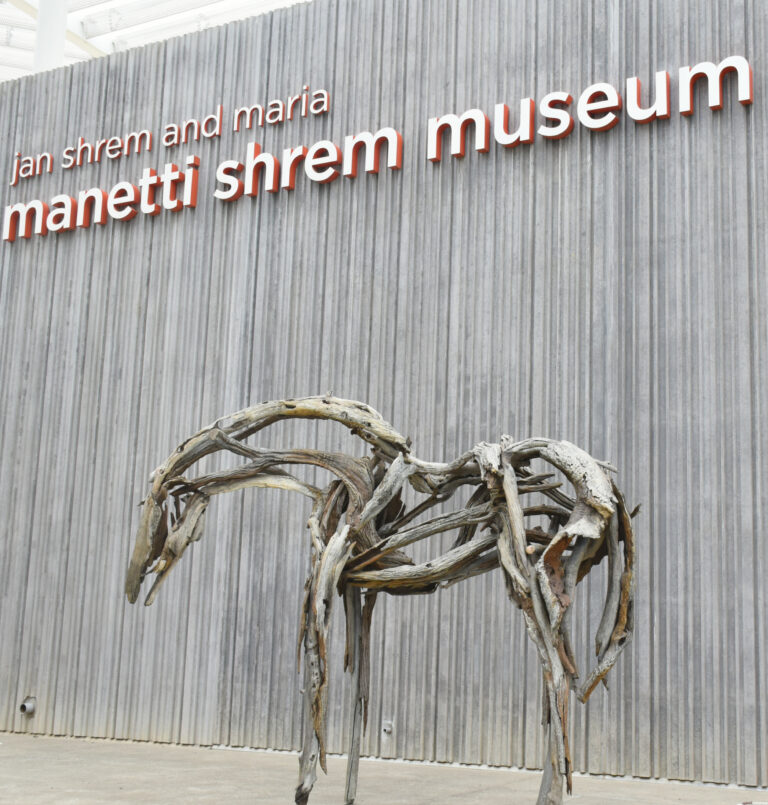
A principios de octubre se instalaron muchas obras de arte nuevas en Manetti Shrem Museum of Art, que está ubicado al lado del campus. El museo ofrece muchas experiencias para todas las edades, como expositores invitados, comida, música y actividades de artes manuales. La atracción principal, sin embargo, son los artistas presentados por temporadas y las piezas exhibidas de sus últimas colecciones.  

Debora Butterfield es una escultora estadounidense que trabaja en Bozeman, Montana. Practica su oficio en una granja pequeña donde viven ella y su esposo igualmente artístico, John Buck. Cuando no están en Montana, ambos trabajan en un estudio en Hawái. 

La graduada de UC Davis ha explorado caballos en muchas de sus obras durante los últimos 50 años. Estudiar su forma y estructura la ha permitido crear una de sus mayores compilaciones de trabajo, “P.S. These are not horses” (P.D.: Estos no son caballos). 

La intención que esconde detrás del título puede resultar engañosa, pero las obras proporcionan al espectador una comprensión más profunda del mundo equino. Muchas de las esculturas son abstracciones de la estructura corporal del caballo.

Adicionalmente, experimenta con bronce para crear esculturas de tamaño real. Butterfield también implementó sus piezas cerámicas anteriores de cuando estudiaba en UC Davis. 

De manera similar, Ayanah Moor utiliza la abstracción para cuestionar nuestros modos actuales de comunicación y cómo podemos usarlos para entender el arte. Además de pintar, Moor utiliza las impresiones, el vídeo, los medios mixtos y el arte escénico. La inspiración para su trabajo proviene de la motivación de pensar la identidad con la esperanza de profundizar en su esencia. “Undercover” ofrece a los espectadores una salida para explorar su propia identidad y ofrece una nueva perspectiva sobre cómo encontrar la raíz de uno mismo a través del medio abstracto. Se anima al público a reflexionar sobre las ideas de género, raza y sexualidad mientras observa la instalación.

El profesor y activista emérito de UC Davis, Malaquias Montoya, adopta una nueva forma de grabado político para abogar por la justicia social. Antes de enseñar en UC Davis, mantenía una posición de liderazgo en el movimiento de serigrafía social de mediados de la década de 1960. En “Malaquias Montoya and the Legacies of a Printed Resistance (Malaquias Montoya y los legados de una resistencia impresa), ha colaborado con muchos otros artistas para dar vida a estos vívidos diseños, denunciar y promover aún más la justicia social.

Lastly, Alicia Eggert has one piece that is present alongside the other installations. Eggert utilizes language and time instead of common art mediums such as paint or clay. “This Present Moment uses neon signage to modify the original phrase “This present moment used to be the unimaginable future” into the simpler phrase “This moment used to be the future”. The brightness of the neon light blatantly addresses the viewer, forcing them to grapple with the ambiguous statement. Students are welcome to contemplate their past, present and future selves when viewing this piece. 


Por último, Alicia Eggert presenta una pieza junto a las demás instalaciones. Eggert utiliza el lenguaje y el tiempo en lugar de medios artísticos comunes como la pintura o la arcilla. “This Present Moment” (Este momento presente) utiliza letreros de neón para modificar la frase original “This present moment used to be the unimaginable future” (Este momento presente solía ser el futuro inimaginable) por la frase más simple “This moment used to be the future” (Este momento solía ser el futuro). El brillo de la luz de neón se dirige descaradamente al espectador, obligándolo a lidiar con la afirmación ambigua. Los estudiantes pueden contemplar su yo del pasado, el presente y el futuro al observar esta pieza.

Manetti Shrem Museum es un recurso maravilloso para muchos estudiantes de UC Davis, así como para la comunidad de Davis en general. Aparte de los numerosos eventos que alberga el museo, las obras que presenta son igual de impresionantes y merecen ser exploradas. Muchas de las instalaciones estarán expuestas hasta junio de 2024.


Traducido por:

Lauren Conway

Ximena Francisco Atecas

Mayerly Mazariegos 

Teresa Monroy

Diana Nery Dominguez

Carol Perez

Ariadna Teodocio

Noemi Villalobos


The Editorial Board pretends to understand horoscopes

You deserve that finals week coffee — it’s written in the stars 

By THE EDITORIAL BOARD

Aries (March 21 – April 19): You are courageous, competitive, energetic and confident. Your competitive nature might make finals week a stressful time, but remember that trying your best is all you can do! As a fire sign, it’s easy to let the stress get to you, but remember that there are ways to escape your finals anxiety. Take a break from studying! Head to the gym, watch a movie or make yourself a delicious snack. Not to mention, believing in yourself is half the battle, and you know how to do that. You’ve got this, Aries.

Taurus (April 20 – May 20): Tauruses are stable, driven, stubborn and patient. This is your time to shine! Applying yourself to your studying will get you far. A quiet environment without many distractions is probably the best place for you to get in the zone. As an earth sign, you’re already pretty grounded, but finals week may be stressing you out. Remember that getting outside and taking a walk around the neighborhood or in the Arboretum can be a great way to get refocused. You can do it, Taurus. 

Gemini (May 21 – June 21): As a Gemini, you’re outgoing, flexible, indecisive and enthusiastic. You tend to be juggling a variety of passions, hobbies, friend groups and subjects. You have a quick mind and easily retain details, which is helpful when it comes to exams. Being the social butterfly you are, now may be a good time to study with and lean on your friends for some extra support. We believe in you, Gemini!

Cancer (June 22 – July 22): Known for your creativity, emotional depth, loyalty and nurturing energy, as a Cancer, you may be feeling all the anxiety and stress that comes with finals. Water signs like you tend to be pretty emotional. Take a step back and reflect on what’s most important to you. Go visit the cows on Dairy Road or treat yourself to an ice cream and walk around downtown. You have all the tools to make this week a successful one, but try not to get too in your head about it. Taking breaks is important too! Happy finals, Cancer. 

Leo (July 23 – Aug. 22): As a Leo and fire sign, you are charming, generous, confident and ambitious. This finals season, use your natural ambition to your advantage, but also remember to set realistic goals for yourself. Taking on too much at one time can lead to burnout. You are prone to cramming, so try to start studying sooner by incentivizing yourself. Give yourself little treats after you finish up an important assignment or section of your textbook. This doesn’t have to be anything crazy, it could be a break to play your instrument or a coffee from your favorite shop. It’s all about planning, Leo. Good luck! 

Virgo (Aug. 23 – Sept. 22): Okay, Virgo. This is your time to shine. Virgos are perfectionists, reliable, kind and hardworking. Your organizational skills are paying off as we speak! As we near the end of the quarter, find a nice and quiet place to study and let your strong work ethic take over. Remember to prioritize your mental health as well, and balance working with self-care, however that looks for you. Even just a short nap may do you wonders. You can do it, Virgo!

Libra (Sept. 23 – Oct. 23): Libras are known to be idealistic, magnetic, tactful and charming, but can also sometimes be prone to getting distracted and procrastinating their work. Study groups with your studious friends are your ticket to success this finals season. If you’re not in the mood to study with your friends, going somewhere like the library or a coffee shop can be helpful. Having people around you holding you accountable will inspire you to get your work done like we know you can. Stay strong, Libra. 

Scorpio (Oct. 24 – Nov. 21): As a Scorpio, you are passionate, intuitive, independent and determined. You also tend to be in touch with your emotional side as a water sign. Be kind to yourself as we approach finals week. Scorpios tend to be methodical, so you are usually a good student with study habits that are well-planned. Remember that balance is important as well. Take time to nurture your mental health and check in with yourself. Stay hydrated and fed, get outside, stretch, then apply yourself to your studies! Success isn’t just about good grades. Knock ‘em dead, Scorpio.

Sagittarius (Nov. 22 – Dec. 21): Sagittariuses are known to be adventurous, funny, honest and curious, though sometimes boastful. Take advantage of your inquisitive side and find the joy in learning to make it through the last days of the quarter. Make a plan for yourself before you start studying. This means writing out a to-do list! Sagittariuses tend to get distracted, so being able to see what’s required of you written out will be a great way to hold yourself accountable. Stay knowledge-hungry, Sagittarius!

Capricorn (Dec. 22 – Jan. 19): Capricorns tend to be hardworking, sarcastic, consistent and practical. As a student, you tend to be goal-oriented and disciplined, so making a finals study schedule and setting goals for yourself is a really effective way for you to get things done. Remember to take some refreshment breaks and prioritize your mental health. Treat yourself to a coffee to fuel your grind. Go get ‘em, Capricorn! 

Aquarius (Jan. 20 –  Feb. 18): As an Aquarius, you are naturally creative, open-minded, unpredictable and intelligent, though sometimes spacey. You tend to develop your own approach to learning and complete tasks at your own pace, so make sure you are setting aside a good amount of time to study and finish up class assignments. Try studying in a park (weather permitting) or making up a funny song to memorize equations. Use your creative mind to come up with a study plan that will work for you, because it might not be what works for others. Wishing you success, Aquarius!

Pisces (Feb. 19 – March 20): A Pisces is compassionate, imaginative, artistic and generous. As we near finals, make sure to prioritize yourself as well instead of only helping others succeed. Pisces tend to be very dedicated towards their goals, so setting ones that are realistic and achievable will work well for you. Using your artsy side may also work to your advantage! Have fun with your notes, make them look pretty if it will help you remember them. Hang in there, Pisces. 

Written by: The Editorial Board

Why ‘Survivor’ continues to be relevant in 2023

How a classic reality TV series continues to captivate old and new fans alike


By ELI KELLEY — arts@theaggie.org


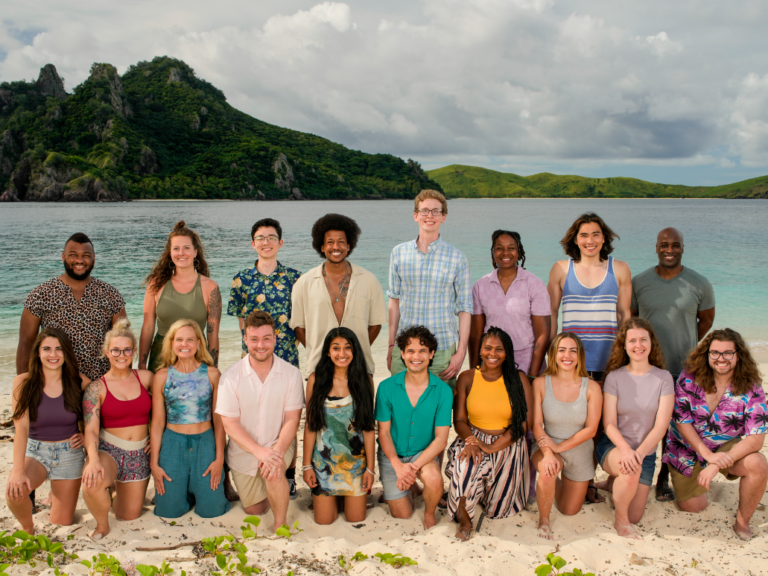
“Survivor” is older than most of the students reading this. The show has been airing for 23 years and is currently on its 45th season. It helped ignite America’s fervor for reality TV in the 2000s and has continued even as many other reality shows have been snuffed out. The show’s viewership has gone down over the years — as has most television viewership — yet in the last decade it has steadily remained roughly the 25th most-viewed television show in the United States. Millions of viewers are motivated to come back every season, and it isn’t just die-hard fans. In fact, now may be an especially good time for new viewers to see what makes “Survivor” special.

Presumably, some readers are raising their eyebrows at this point. Reality television — not unfairly — has a bad rap. Many shows are plagued by poor production, manufactured drama and uninteresting characters. “Survivor” is not immune to these problems. However, the show has some unique strengths that lessen these issues and help make it stand out.

The format of the show is as follows: In the first stage of the game, players are split into teams who each live on separate tropical beaches. Every few days, these teams compete in challenges that are some combination of obstacle courses, puzzles and endurance tests. The losing team then has to vote one of their members out of the game. Eventually, all remaining players come together and live as one team. Now, during challenges one person wins immunity instead of the whole team and players vote one another off to join the jury — a group of the last seven-to-10 players voted off. When three players remain, the jury casts their ballot for who, out of the remaining players, should win the million-dollar prize. There are a few elements left out of this summary, but the process described here is the core of “Survivor.”

The voting is what gives “Survivor” its vitality. Voting has no guidelines. Rarely does being a helpful teammate or likable person guarantee safety. Abrasive players are frequently kept around past the point anyone can put up with them. The main thing that drives voting is who players believe and trust they can work well with and what will make them winner-worthy at the end of the game.

At its core, “Survivor” is a game about trust and relationships. Despite producers sometimes trying to manufacture exciting moments, the relationships depicted are always real. Several players have forged real romantic relationships after leaving the show, including five lasting marriages (and a few marriages ending in divorce). And it’s not just romantic relationships — “Survivor” shows people developing deep and oftentimes surprising bonds of friendship with one another. The combination of manipulation and strategy leads the show to play host to deep betrayals, showing how people can or cannot move forward after their trust is destroyed.

For anyone interested in how people tick, “Survivor” provides dozens of fascinating case studies. The format of the show makes players viscerally confront what makes them able to trust another person and what circumstances can permit them to violate another’s trust in them.

While the show has an impressive back catalog, several recent tweaks to the format make now a promising time to start watching “Survivor.” New to the currently-in-progress 45th season, episodes have been lengthened from ~40 minutes to up to ~90 minutes. Prompted by the writing and acting strikes of this year, “Survivor” was extended to fill empty programming blocks for the show’s parent company CBS. Rather than dilute the show, these extra minutes provide space for countless small, human moments that would have otherwise been left out. Every person on screen has time dedicated to understanding them and their relationships with other players. This new format — which CBS is continuing for the show’s 46th season — allows the show to be more entertaining, nuanced and exciting.

Another recent change — this one beginning in the show’s 41st season in 2021 — is that all casts now have to be comprised of at least 50 percent Black, Indigenous and people of color (BIPOC) members. This commitment to diversity has been great for the show as an increase in diversity means an increase in the variety of life experiences. This variety of experiences leads to more interesting relationship dynamics as players learn how to adapt and bond with one another given their different outlooks.

Unfortunately, in contrast to the show’s commitment to racial diversity, “Survivor” has increasingly tended toward bringing in players from well-educated, urban backgrounds rather than from a broader range of settings. Diversity is a complex issue and “Survivor” doesn’t handle it perfectly. Still, their efforts to increase BIPOC representation is a positive step in both increasing diversity in media and making the show more engaging.

“Survivor” hasn’t died because it hasn’t stagnated. The people making it are always coming up with changes. Not all of these innovations work; many seasons have one-time gimmicks that are quietly forgotten. Many other changes, however, turn out to be improvements. And underneath all the small tweaks, the core structure of “Survivor” is a beating heart that fuels season after season of quality television. For that reason, “Survivor” will continue to survive for a long time to come.


Written by: Eli Kelley — arts@theaggie.org

Parking on campus

Drawn by: Emma Lapidus –– eblapidus@ucdavis.edu

Disclaimer: (This cartoon is humor and/or satire, and its content is purely fictional. The story and names of “sources” are fictionalized.)

Embrace your writing classes

Taking advantage of small class sizes helps develop your writing skills 


By CLAIRE SCHAD — cfschad@ucdavis.edu


When I transferred to UC Davis last fall and realized I would need an additional writing class to fulfill my university writing requirement, I was not exactly thrilled. I had already taken two writing courses before transferring but, even with that experience, the prospect of another upper-division writing course was stressful.

After taking fall quarter to get acclimated, I decided I might as well get the upper division writing course out of the way, and I made my way to Schedule Builder. To my surprise, there were so many different courses available to meet the requirements. From “Business Writing and Advanced Composition” to “Writing for Law and Fine Arts,” the options were much more extensive than I had anticipated.

After working to find a course that both sounded interesting and fit into my schedule, I decided on “Writing in the Professions: Social Justice.”

When winter quarter came around, I was pleasantly surprised when I arrived at the first class and found only 24 peers. This was by far the smallest course I had taken at UC Davis, and it was a welcome change from 100+ person lectures. Additionally, I was pleased to find out that my professor had opted for contract grading, meaning that we were guaranteed a certain grade as long as we submitted all of the work.

As the quarter progressed, I found the small class size made it much easier to build relationships with my professor and fellow classmates. I also found myself becoming more comfortable and engaged with my writing since I wasn’t always worried about the grade I would receive.

Another great aspect of upper-division writing courses is the amount of feedback that you receive both from your professor and your peers. For each major assignment, I completed multiple drafts, and each of them received extensive outside feedback. And it wasn’t just surface-level feedback consisting of comments like “good job” or literally just “?” (which I have indeed received), but rather well-thought-out and targeted feedback that helped me improve my writing.

To my surprise, the upper-division writing course that I was previously dreading quickly became my favorite class, and I felt like I was actually becoming a better writer.

Too often it feels like the courses we take are engaging and interesting for only the 10 weeks we are enrolled in them and don’t lead to lasting benefits to our education. Afterward, there’s often a disconnect between the material we worked hard to learn and what we learn later on. Whether it was a specific GE requirement I took just because it sounded interesting or an upper-division major class that was overly specific, I often find myself not using most of the material I learned after the quarter ends.

Writing is different. We use the skills gained from writing classes every day. Whether it’s writing an email or working on an essay for another class, I can feel myself applying the skills that I learned in my upper-division writing classes.

Transparently, after I took my first upper-division writing class, I liked it so much that I promptly added a minor in professional writing, and I have since taken additional courses. While you may be thinking I’m just someone who really enjoys writing (which is true), I too had my doubts about the upper-division writing courses, so I encourage you to approach them with an open mind.

No matter what you are majoring in, your career will require writing in some form, so try to pick a writing class that sounds interesting, and welcome the change in style and pace from your other courses. Whether you build a meaningful relationship with the professor, develop your personal writing style or just get a little more practice, writing courses are sure to offer you many opportunities to improve. After all, it is a graduation requirement, so you might as well embrace it.


Written by: Claire Schad — cfschad@ucdavis.edu 


Disclaimer: The views and opinions expressed by individual columnists belong to the columnists alone and do not necessarily indicate the views and opinions held by The California Aggie.


Davis League of Women Voters releases survey report addressing housing concerns in Davis

The organization presents a General Plan and Community Vision Committee Project Report to the city 


By ZOE SMITH — city@theaggie.org


On Nov. 6, the League of Women Voters, Davis Area (LWVDA) released a report that’s been in the works since 2021 called the General Plan and Community Vision Committee Project Report: “A Vision of Our Future in Davis: Ideas and Thoughts from the Community.” As part of the project, the LWVDA surveyed Davis residents to get their input.

The report was created in response to the city of Davis’ General Plan which was written in 2001 and was last amended in 2007. A city’s general plan typically serves as a blueprint for its future. It creates policies and a vision so that as a city develops it runs smoothly. As the city of Davis has grown over the past two decades, the LWVDA believes the general plan needs updating.

Mary Jo Byron, ex officio board member and past president of the LWVDA, has been deeply involved in the LWVDA General Plan and Community Vision Project Report.

In a league meeting that took place at Mary L. Stephens Davis Library on May 15, Byron gave a presentation to fellow league members about the report.

“The city’s general plan of 2001 is out of date and is not consistent with the realities we face today,” Byron said. “The update process is supposed to start in 2023. We started in 2021. We spent a lot of time doing research and talking to different kinds of people in regards to Community Vision, but the city has had to put it off and put it off mainly because they have a number of other things that they have to deal with.”

The LWVDA General Plan and Community Vision Report was emailed to the Davis City Council on Sept. 28. They have not responded to it yet. The league plans to present the results from their survey to the council on Jan. 9, 2024.

“Our goal or objective was basically to help the city council understand the importance of updating the general plan and how much we were in need of a community vision to lead us into the next 20 years,” Byron said. “It was not [made] to reprimand them or to be negative. It was a positive experience to show them how much people were interested in the update of the general plan and community vision.”

The league surveyed 932 Davis residents who were 18 and over at various locations throughout the city. Participants were asked to rate general plan elements that need to be addressed by the city council from a scale of one to four, with four being the highest priority and one representing the lowest.

The categories were: housing, safety, land use, conservation, open space, circulation (i.e. transportation) and noise. Participants found the issues of housing and safety to be most pressing. Supplemental elements such as social justice, community service, arts & culture, economic development and neighborhood design were also surveyed on how high of a priority these need to be addressed. Social justice and community service were found to be the highest priority.

Komal Hak, director of communications, strategy and marketing for the league, has been a member since 2019. She initially joined after graduating from UC Davis and becoming interested in local politics, specifically in Measures H and J which have to do with zoning laws and affordable housing. Hak oversees the social justice/equity diversity lens of the league.

“There’s just a glaring need for affordable housing,” Hak said. “Not government subsidized housing necessarily. There’s a lack of inventory for the middle income group and lower income group to sustain a whole life in the Davis community.”

In addition to the survey, the league also recorded results from five focus groups. The issue of affordable and accessible housing was one topic that participants found important for the city council to address urgently.

Because Davis has limited infill land available — meaning unused open land meant for urban development and complicated zoning laws such as Measure J, which prevents farm land from being turned into high density residential housing — focus group participants opted to build up instead of out, preferring taller buildings to urban sprawl.

Eileen Samitz has been with the league on and off for years and was involved in the development of the original city plan published in 2001.

“Davis had one of the most generous, affordable housing requirements of 35 percent for many years,” Samitz said. “But because of inflation, labor costs, material costs, especially land costs, that number just doesn’t work anymore.”

Samitz believes that addressing the housing crisis will take years but that the survey will help show the concerns of Davis residents to the city.

“The city has needs which the survey will show exactly what those are,” Samitz said. “Addressing those [needs] and getting the city to be able to update the plan and put in more affordable housing for both apartments and small properties is very complicated, and will take years.”


Written By: Zoe Smith city@theaggie.org

Unitrans buses to be replaced with giant tandem bicycles

Put the pedal to the metal!


By AUDREY ZHANG — aurzhang@ucdavis.edu


UC Davis’ title as the biking capital of California is under threat. UC Berkeley recently declared plans to open a new School of Clownery to try and consolidate all their idiots into one contained place. This year marks the completion of Berkeley’s newest campus, where students are required to wear face paint and travel by unicycle.

Chancellor Gary May released a statement yesterday morning on how our university could defend its title and keep its No.1 spot for most biking accidents in a week. Starting Monday, Unitrans buses will be replaced by giant tandem bicycles. It’s the natural step to UC Davis’ commitment to a greener and sillier campus. Other benefits will include saving on gas costs, great-looking legs and a significant decrease in sitting next to someone who smells like they haven’t showered in days.

These Unibikes will seat approximately 70 students at maximum capacity and can travel at the same speed as the old Unitrans — as long as none of those passengers skipped leg day. There will be no coverage to protect them from rain, as scientists recently made the groundbreaking discovery that people will move (and bike) faster to get out of unpleasant dampness. UC Davis engineering students are already working on the double decker Unibike, too. Those sitting on the second floor will be given bike pedals to use so that they can feel like they’re contributing, even if the pedals aren’t attached to any wheels.

There has been a petition to opt for the far more festive party bikes instead, like the ones driven by drunk tourists in Napa Valley at 10 a.m. Advocates have yet to realize that if UC Davis were to adopt these bikes, the party mood would be significantly impacted by impending classes and the lack of alcohol to cope.

Student responses to this coming change have been ambivalent, since most believe that this is all just some big joke. They’re not wrong.


Written by: Audrey Zhang — aurzhang@ucdavis.edu


Disclaimer: (This article is humor and/or satire, and its content is purely fictional. The story and the names of “sources” are fictionalized.)

On the necessity of empathy

Dehumanizing our rivals cannot lead to peace


By JOAQUIN WATERS —- jwat@ucdavis.edu


It’s easy to make a fist. There are so many reasons to be angry. Depressingly, there seem to be more reasons with each day that passes. There is a feeling in the air — stronger with every passing year, it seems — that society, both global and domestic, is speeding toward a reckoning of some kind. Global fascism is on the rise, political infighting has become the norm and our time in isolation has left us more alienated than ever.

It’s natural to want to embrace anger. At this point, what other avenues are there to enact the social change we dream of? To turn the world into a better, more equal place? In such a touchy environment, it’s easy to forget that sometimes the most profound thing we can do is to lay down our weapons and try to connect with someone — even someone opposed to us. I’m sure that many reading this are rolling their eyes. But I implore you to hear me out before making a final judgment.

I’m a pacifist, but not to a dogmatic extent. Though I abhor violence, that doesn’t mean I deny its necessity at certain times. There are those among my tribe who believe that non-violence is always the answer, but I don’t believe that is the case. There are moments in history when change must be forced. But more often than not, change happens slowly, one person at a time — and this is true of both positive and negative change.

Bigoted and fascistic ideologies grow like a cancer in societies, overtaking one person at a time until they have metastasized to the point of being fatal. I believe the reverse is also true: one small act of kindness will not in itself save the world; but just like hate, kindness spreads. With each small act of kindness or understanding toward those who oppose us, a little bit of that cancerous hate dies away. We need fighters but, though their praises are less sung, we also need healers.

The next time you find yourself engaged in a heated debate over something you find extremely important, take a moment to look your opponent in the eye and say, “I disagree, but if you promise to try and understand why I feel the way I do, I promise to do the same.” How someone responds to this says a lot about who they are: if they reject or belittle the proposal, then they have merely proven your point and given you the moral high ground. If they accept, though, you may find that the line between enemy and friend need not be so clearly delineated.

What I’m advocating for is easier said than done. But that is exactly why it’s so important. It is always easier to punch a jerk in the face than to try and change their mind or to ask them why they feel the way they do. But I firmly believe that it is the responsibility of those who stand against hate not to dehumanize our enemies and to remember that all hate stems from fear. If all we do is feed into the fears of our enemies, we risk further alienation. Of course, it goes without saying that sometimes people are beyond forgiveness or understanding — but not always. And really, what do we have to lose by leading with kindness? Only our pride, which, as they say, goes before a fall.

In this spirit, I will give the last word to two great men who dedicated their lives to fighting racism in America their way.

Just before his execution at the onset of the Civil War, extreme abolitionist John Brown wrote these words: “I […] am now quite certain that the crimes of this guilty land will never be purged away but with blood.”

Daryl Davis, a contemporary figure who has spent much of his life showing members of the Ku Klux Klan the error in their racist ideologies and convincing them to lay down the robe, gives a counterargument: “When two enemies are talking, they’re not fighting. It’s when the talking ceases that the ground becomes fertile for violence. If you spend five minutes with your worst enemy […], you will find that you both have something in common.”

There is truth in both statements and the wisdom of lives spent combating evil. But Davis’ words are just as brave, and I confess it is those words I take more to heart. It’s easy to make a fist. It’s harder — but equally necessary — to extend an open palm and say, in total honesty, “I come in peace.”


Written by: Joaquin Waters — jwat@ucdavis.edu


Disclaimer: The views and opinions expressed by individual columnists belong to the columnists alone and do not necessarily indicate the views and opinions held by The California Aggie.


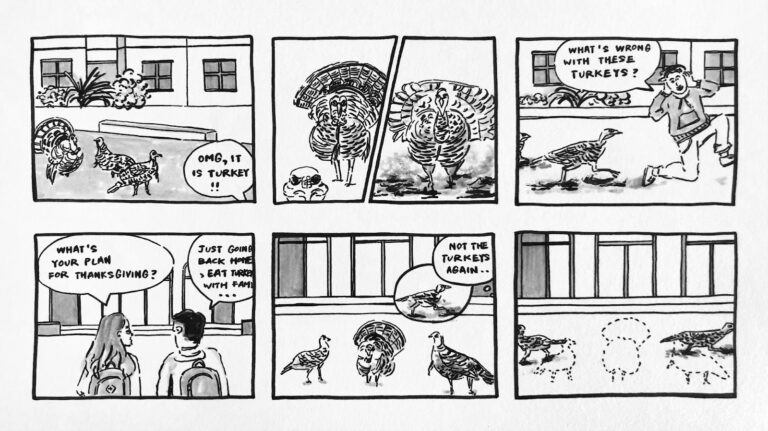
Campus turkeys

Drawn by: Lanhui Zhen –– lazhen@ucdavis.edu 

Disclaimer: (This cartoon is humor and/or satire, and its content is purely fictional. The story and names of “sources” are fictionalized.)