55.7 F
Davis

Davis, California

Wednesday, December 24, 2025
Home Blog Page 118

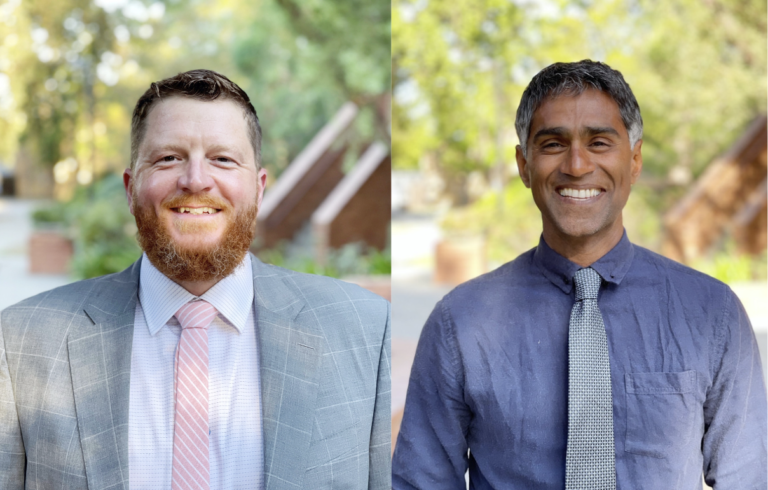
ASUCD Judicial Council holds first impeachment hearings for President Ojeda, Interval Vice President Raghunathan

The Jan. 12 hearing was the first of two to decide if the executive team will be removed from their respective offices


By VINCE BASADA — campus@theaggie.org


On Jan. 12, the ASUCD Judicial Council held impeachment hearings for both ASUCD President Francisco Ojeda and Internal Vice President Aarushi Raghunathan. At each hearing, the Judicial Council heard opening statements and presentations of evidence. 

Recently appointed Senate Pro Tempore Chasa Monica served as petitioner on behalf of the Senate in both cases: ASUCD Senate v. Ojeda and ASUCD Senate v. Raghunathan. Ojeda and Raghunathan both represented themselves without representative counsel. Presiding over the case were Head Justice Katrine Lee, Deputy Head Justice Albena Goulisheva and Justices Madison Whittemore and Samantha Figlietti.

If the Judicial Council rules against the pair, whose cases are separate, President Ojeda and IVP Raghunathan will be removed from their respective offices. If both are removed from office, Monica will become the new chief executive, as per the ASCUD Constitution. 

The hearing, in contrast to the closed special session at which the impeachment resolutions were drafted and unanimously passed, was open to the public.

The Judicial Council first heard opening statements in ASUCD Senate v. Ojeda, during which the petitioner affirmed that while the ASUCD Constitution is somewhat vague in its required threshold for an elected official to have committed “gross misconduct” or otherwise be considered “incapable of their office,” the responsibility of interpretation is left to the Senate. 

Ojeda, in his statement, disputed the Senate’s claims that he violated ASUCD bylaws. He also cited a conference in Los Angeles as an explanation for some previously disputed absences. 

Upon receiving questioning from Head Justice Lee, Ojeda said that since his impeachment, he has been working on the Inclusive Scholarship to help AB540 students and has attended all necessary meetings required by his position.

Next, Monica alleged that Ojeda mishandled the Priorities Resolution and State of the Association (SR #1), as well as argued that Ojeda failed to establish and maintain executive task forces to aid in the administration of ASUCD.

“The Senate has already demonstrated that President Ojeda is not a strong advocate individually, and [his] failure to establish any advocacy infrastructure whatsoever illustrates that he is conducting negligible advocacy or administrative work as president,” Monica said.

Ojeda presented no evidence in his defense, saying that he had misinterpreted the deadline for the submission of evidence 24 hours before the start of the hearing as being a strict cutoff, though Head Justice Lee clarified that it had been a flexible guideline. Additionally, Ojeda later said in an interview with The California Aggie that he was under the impression that the presentation of evidence would be saved for the second hearing.

“I feel like people have been mostly focusing on very few aspects of my performance as president,” Ojeda said. “That doesn’t mean I have not fulfilled my other performances, and I think some people have seen the fruits and the produce of my other work.”

After public comment on the case and a brief recess, the Judicial Council moved on to hear opening statements in the case of ASCUD Senate v. Raghunathan.

“The Senate will acknowledge that much of the other listed failures are in connection to the Executive office as a whole,” Monica said. “However, the ASUCD Senate impeached IVP Raghunathan on the grounds of failure to perform duties in connection to conduct towards members of the public.”

Raghunathan then read her opening statement.

 “I believe that misogyny has played a huge role in my impeachment,” Raghunathan said. “Not only did I receive far less warning than the other impeachment of a man taking place, mine also has almost no merit and it is not nearly equal in grievance to the president’s.” 

Raghunathan cited the fact that only two of the 14 people who voted to impeach her are women.

Petitioner Monica, in the presentation of the Senate’s evidence against IVP Raghunathan, read from the resolution impeaching her. 

“Raghunathan has displayed general unprofessionalism while performing the duties of internal vice president throughout the quarter,” Monica said. 

This includes failing to promptly hire Senate and executive staffers, according to Monica. 

In her response and evidence, Raghunathan presented several screenshots of correspondence between herself and fellow members of the executive branch and Senate, alleging that they were as unprofessional in their messages as they impeached her for being, as well as being absent from meetings without valid reasoning. 

She also said that she had been unfairly blamed for the mishandling of SR #1, which she alleges was not originally her responsibility, but the president’s. 

 “I have [a text] from [another person involved in ASUCD activities], ‘I’m going to go to the gym to flirt on boys, I might be late,’” Raghunathan said. “That was an hour before our senate meeting. I would say that’s not professional.”

Raghunathan then spoke on her absences throughout the quarter, asking if there is anyone in the association who has attended every meeting of every commission, committee or unit throughout the quarter that they were not required to. 

“If we’re going to impeach me on the basis of not showing up to committee meetings, which I’m not required to, I would say we should impeach the entire table for not showing up when that’s actually one of their duties,” Raghunathan said.

She also attributed some of her absences, which were included as a reason for her impeachment, to ongoing health issues, which she asked to remain private. 

“It’s so unfair to say that I couldn’t preside well [over the Senate] when I had [health problems] the day of the impeachment hearing, and I still showed up over Zoom, and I still showed up the next day to preside over the entire Senate meeting,” Raghunathan said. 

When the floor opened for public comment, several members of the student body expressed their own concerns with the proceedings and largely defended Raghunathan, and Ojeda to some extent. The Judicial Council adjourned soon afterwards.

The date for the second and final impeachment hearing, at which parties will have the opportunity for cross-examinations and to make closing statements, is set to take place soon after the first hearing. As with the first hearing, members of the public will be invited to attend. Final rulings on both cases by the Judicial Council are expected shortly thereafter.

Written by: Vince Basadacampus@theaggie.org

The butterfly effect

Drawn by: Emma Lapidus –– eblapidus@ucdavis.edu

Disclaimer: (This cartoon is humor and/or satire, and its content is purely fictional. The story and names of “sources” are fictionalized.)

The consequences of cannabis and why young people use it

The drug commonly used for enjoyment and coping purposes may lead to cognitive, sleep and other somatic issues


By KATIE HELLMAN — science@theaggie.org

Cannabis, also frequently referred to as marijuana, weed or pot, is the most commonly used federally illegal drug in the United States. Marijuana affects parts of the brain that control movement, memory, learning and decision-making. It is considered a Schedule One substance under the Controlled Substances Act, meaning it meets the requirements of having a high abuse potential and is not approved for federal medical use. It is currently legalized for medicinal and recreational use in 24 states as well as the District of Columbia.

UC Davis Health researchers and scientists at the University of Washington surveyed teenagers in a six-month-long study published in Psychology of Addictive Behaviors that aims to provide insight into why young people use cannabis.

“The study tested whether internal cannabis motives (coping and enjoyment) mediated longitudinal associations between cannabis demand, use (hours high), and negative consequences,” the study reads. “Mediation models revealed that enjoyment motives mediated the association between amplitude and persistence and use. In addition, coping motives mediated the association between amplitude and negative consequences.”

The greater the demand and desire that teenagers had for cannabis, the more likely they were to use it for enjoyment and coping purposes, according to the results of the study. The teenagers who fell into this category were also more likely to use greater amounts of the drug and suffer from negative side effects. 

A study detailing the self-reported consequences of marijuana use revealed that issues with productivity, relationships, paranoia and time management skills were only some of the problems experienced by marijuana users.

“Sleep and cognitive (including attention and concentration), motivational, and memory issues were the most frequently listed self-generated negative effects of marijuana among this sample of young adult students,” the study reads. “Other self-generated types of consequences included eating (e.g., eating too much), problems with lungs or coughing, feeling antisocial or experiencing social awkwardness, physical difficulties (e.g., feeling dizzy, sick, uncoordinated), not getting things done, and spending too much money.”

Cannabis is currently a public health concern; about 15 percent of teenagers report marijuana use in the past month and about 9 percent of users become addicted. The risk of eventually becoming addicted to cannabis or developing a cannabis use disorder increases if the age of onset of cannabis use is younger.

Marijuana is linked to school failure… Compared with their peers who don’t use, students who smoke marijuana tend to get lower grades and are more likely to drop out of high school,” the National Institute on Drug Abuse marijuana brochure reads. Additionally, “high doses of marijuana can cause psychosis or panic when you’re high” and “can worsen psychotic symptoms in people who already have the mental illness schizophrenia, and it can increase the risk of long-lasting psychosis in some people,” according to the brochure.

Despite the addictive nature of marijuana, users who wish to limit or eliminate their drug use can do so with the help of methods like behavioral therapy, psychoeducation and inpatient or outpatient programs.

Written by: Katie Hellman — science@theaggie.org

Here is what your New Year’s Resolutions should be

Are you really capable of the reflection required to implement lasting, valuable changes in your life? No, you aren’t, and that’s why I did it for you 


By GEETIKA MAHAJAN— giamahajan@ucdavis.edu 


Let’s be honest; most peoples’ New Year’s resolutions would not pass a turnitin.com plagiarism test. Every list, every year, is the same unoriginal BS; in January, you swear off junk food and promise yourself you’ll finally read that one book you’ve always wanted to finish, and from March to December, your sugar-free snacks just collect dust and take up space. As does the copy of “Ulysses”/”War and Peace”/”The Odyssey.” But you want me to believe that 2024 is the year you finally break that cycle? Okay. Sure. See, the problem is that you think these resolutions are going to quantifiably improve the quality of your life — and when they don’t, it’s easy to give up. That’s because you’re not lucky enough to have problems as surface-level or easily fixable as poor eating habits or illiteracy; your issues go much deeper than that. Fortunately, I have curated this very helpful and highly specific guide as to what your resolution should be based on my own personal observation. Please internalize what I’m saying here. I wrote this because most of you guys annoy me. 


Ugly guys with girlfriends: This list is not for you sweetie 🙂 you just stop reading here. 

Girls with ugly boyfriends: Girl, dump him, please. 

Everybody on “WaterTok”: Congratulations on somehow inventing a drinking problem that doesn’t involve alcohol. I know I said that poor eating habits weren’t the issue, but come on. Your water is neon pink and sparkly — you’re drinking a Stanley Cup full of chaser. Next time you fill a glass of water, challenge yourself! Try to drink it without adding two tablespoons of sugar. You can do it. I believe in you. 

The Spotify Intern Who Keeps Queuing “Bags” by Clairo After Every Song I Play: I know what you think about me, you loser. Stop. That’s all I want you to do this new year. Joke’s not funny anymore. And if you’re going to keep running the same track you could at least make it the Electric Lady Studios version…

Swifties: You guys are wasting your skills. Get a hobby (a real one) or join the CIA. 

Taylor Swift: Girl if you don’t give the atmosphere a damn BREAK put the keys to the jet DOWN and go record “Woodvale.” 

“Succession” Stans: It’s four rich white people. Stop crying. They’ll be ok, I promise. 

People who got Burlington as their Spotify Wrapped Location: You want to go to therapy. You want to go to therapy so freaking bad.

Everyone who bought the Starbucks x Stanley cup: I don’t even have a joke for you. Consumerism rots your brain from the inside out. That cup is so ugly you should burn it. 


Anyone and Everyone working at Glossier Inc: I know about a million people have asked/pleaded/begged on their knees for you to bring the old Glossier You formula back. I’m not going to do that, okay? Relax. I just want you to tell me why. Because there’s no way you guys aren’t doing this on purpose. I know you see those comments I KNOW YOU SEE EVERYBODY’S COMMENTS. Like, there has to be a reason you’re ignoring them, right? Is it some kind of inside joke? Have you been cursed? Just tell me. I’m not gonna tell anyone else. I promise. Just tell me. Come on just tell m-

Geminis: We as a collective need to move towards embracing the toxicity and manipulation everybody assumes we’re capable of because I personally am sick of getting all the heat that comes with being two-faced and backstabbing without any of the fun.

All the other signs: I have no thoughts or feelings about you guys you can keep doing what you’re doing or do something completely different I really don’t gaf this is not a goddamn horoscope. 

Merriam-Webster: Why is motherquake not in the dictionary yet. Your 2024 resolution is put motherquake in the dictionary. 


Written by: Geetika Mahajan — giamahajan@ucdavis.edu 


Disclaimer: (This article is humor and/or satire, and its content is purely fictional. The story and the names of “sources” are fictionalized.)


Culture Corner

The Art Desk’s weekly picks for music, movies and more 


By SAVANNAH ANNO — arts@theaggie.org


Album: “Moveys” by Slow Pulp (2020)


With mellow instrumentals, smooth vocals and introspective lyrics, “Moveys” seems fitting for the start of winter quarter, offering listeners a moment of melodious reflection. Chicago-based band Slow Pulp formed the debut album while on tour with Alex G, and the influence of his hazy, magnetic sound can be heard in the album’s steady drums and strong guitar. The opening track, “New Horse,” sets the tone with a looping instrumental and dreamy singing that explores ideas of regret and self-growth. The band’s most popular song to date, “Falling Apart,” captures how easy it is to find yourself in cycles of failure, a moody message hidden in a catchy wave of sound. Each track is able to find the perfect balance between hard-hitting lyrics and an almost groovy, warm set of instruments. Put it on during your first study session of the quarter, while you’re walking to and from the bus stop or having a relaxed night in with friends. 


Book: “Greek Lessons” by Han Kang (2023)


My favorite read of 2023, “Greek Lessons” details the unique relationship formed by a woman who loses her ability to speak and her Greek language teacher who is losing his sight. As they connect, they each begin to learn more about the other’s past and, through this, gain a new understanding of life and intimacy. A winner of the Booker Prize for her novel “The Vegetarian,” Han Kang’s writing is overflowing with precise detail and sharp observation, especially as she explores the fascination the main character has with the ins and outs of language. This novel is perfect for anyone who needs a quick read that’s still able to carry an emotional punch highlighting the importance and beauty of human connection. 


Movie: “We the Animals” dir. by Jeremiah Zagar (2018) 


A sure hit with “The Florida Project” or “Moonlight” fans, “We the Animals” explores the complexities of familial relationships through the perspectives of the children rather than the adults. An adaptation of the 2011 semi-autobiographical novel by Justin Torres, the movie soars to new creative heights by including animated illustrations and surreal scenes taking place in the sky, referencing the book’s strong imagery and metaphorical language. The story follows three brothers as they fight to survive a dysfunctional household and closely focuses on the youngest brother, Jonah, as he comes to understand his sexuality. Each 16mm-shot scene is packed with raw emotion, bright colors and explosive dialogue that leaves you wishing for more. 


Song: “I Figured You Out” by Elliott Smith (2017)


It’s cold outside, meaning it’s time to start listening to Elliott Smith again, or maybe for the first time. A quintessential indie/folk songwriter of the 90s, Smith has been noted as a large influence on current artists like Phoebe Bridgers and Sufjan Stevens, pioneering the sad, wispy sound you can find all over the radio today. “I Figured You Out” is an acoustic track on the 2017 expanded edition of his third album, “Either/Or” (1997). Not making the cut for the record’s original edition, Smith gave the song to Mary Lou Lord, who released her version in 1997, two decades before his original demo was finally put out. While I enjoy both, Smith’s melancholy and almost bitter sound is unmatched, fitting the song’s lyrics about a bad romantic partner. I’d recommend it to anyone in need of a track that syncs the season’s chill. 

Written by: Savannah Anno — arts@theaggie.org

UC Davis students discuss their unique clothing brand, we2cow

Founders Brianna Romine and Ian Gomez share how the company got its start, the way it’s run and where it’s going


By YASMEEN O’BRIEN — features@theaggie.org


         You’ve probably seen their iconic cow design adorning Davis students’ attire and accessories for sale at the Davis Street Market or stocked in various shops downtown. Local clothing brand we2cow has quickly risen to fame in Davis and become an established part of the community. Founded by high school sweethearts Brianna Romine and Ian Gomez, the company is turning heads with its original Davis-themed merchandise.

         Their first inspiration came in 2021 during Gomez’s first year at UC Davis. It began with a simple shopping trip. Gomez was looking for UC Davis clothing at the bookstore on campus but found nothing creative beyond the classic logo. Plus, the price point was too high to spend on something he probably wouldn’t end up wearing very much.

Around this time, Romine was fortuitously gifted an embroidery machine despite not having experience with the craft. Soon after Gomez’s experience at the bookstore, they decided to sketch a couple of Davis designs and embroider a sweatshirt for him. 

“The intention was just for Ian to have an original piece that he genuinely liked,” Romine, a fourth-year psychology major, said. “And to take advantage of my embroidery machine.” 

The cow graphic, designed by Gomez, was on this first sweatshirt. When he started wearing it around town, people complimented him and asked where he bought it. Gomez and Romine began making clothing with the cow image for friends by request, but when they started the we2cow Instagram account and began selling their creations at local markets, the company quickly gained popularity.

They attribute a large part of their success to a “Valentine’s Day Giveaway” where they had people follow a series of directions to get to know the brand through their social media account and get them excited about the possibility of winning. 

It increased their Instagram following by 1,000 and their orders grew to over 100 at one time. Romine recalled people arriving early at the Davis Street Market to secure a we2cow item before she and Gomez even had a chance to set up their vending table and hang up their pieces. 

“It was really sought after in the beginning. It was a little bit overwhelming.” Romine said.

Romine transferred to UC Davis in the fall of 2022, so in the beginning, she was embroidering everything back in San Diego — where she and Gomez grew up — and would either ship the merchandise to Gomez or fly out to Davis and fill her suitcase with we2cow items.

Part of we2cow’s draw is the originality and creativity that comes with the brand’s designs. 

“99% of the time we made it ourselves,” Gomez, a fourth-year biological systems engineering major, said. “Well, Bri’s the one who made everything. I usually do the design and social media, and Bri’s the one who does all the manual labor.”

As the company grew and would have to fill 100 or 200 orders at a time, the duo had to supplement production by getting their designs embroidered somewhere else. Gomez shares that this is a very recent decision, with their merchandise now being sold in stores such as The Davis Creamery and the Avid Reader bookstore downtown. They say it’s hard to keep up sometimes given that they are full-time university students.

“Ian and I, at the beginning of all of this, said: ‘We’re students first before anything,’” Romine said. “So it’s really hard for me to find the time.” 

Each sweatshirt, shirt or hat can take anywhere from 40 minutes to an hour when Romine does it herself. She recounted a hectic time selling their designs at Davis’ Whole Earth Festival. 

“Ian would leave from the actual event to come back [to their home] just to make more stuff so we would have enough [to sell].,” Romine said. 

Romine said that in preparation for the event they had three embroidery machines going “24/7” and would run between them alternating items to make sure they were maximizing their time and making the most apparel they could.

Before we2cow, the couple had started a different clothing brand with original designs, but it was much less successful. We2cow allowed them to reach many more people with their art. 

“It felt good to create something that had some sort of impact,” Gomez said. 

Romine agreed and furthered his sentiment. 

“I think the main thing is that we wanted to put something out there that was unique to Davis, and that we genuinely liked,” Romine said. “We hoped that other people would like it too.”

“I enjoy when people come up to us and tell us they genuinely like the design and show us we’ve made an impact,” Romine said. 

She continued that people commonly buy we2cow items as gifts for their loved ones, especially for family or friends back home since their designs represent the town and school of Davis.

UC Davis Alumnus Andrew Bass appreciated the company’s hard work and recognized the influence it’s had over the school and town. 

“We2cow has impacted Davis by being an example of that alternative culture that Davis is so rooted in: they offer student-made one-of-a-kind merchandise,” Bass said. “Wearing and seeing their merchandise outside of Davis brings me such a sense of pride. I live in San Francisco now and wear my stuff from them all the time.”

Gomez and Romine will be graduating and leaving Davis at the end of 2024 and are unsure how or if the business will continue once they graduate. 

“We don’t really know what’s in store, but I think we both just hope for the business to grow as much as possible,” Romine said. 

“I think we’re limited because it’s a product very specific to Davis,” Gomez said.

Regardless of its future, we2cow has allowed them to make connections with fellow student creatives, impact a wide range of Davis residents and serve as an essential part of the art scene in our community.

Those who want to see more of the brand can find we2cow on Saturdays at the Davis Street Market, on their Etsy shop, at The Davis Creamery and Avid Reader or follow their Instagram page, @we2cow, for more information. 


Written by: Yasmeen O’Brien — features@theaggie.org

Student pretends to be interested in professor’s personal life to avoid pop quiz

Not all heroes wear capes — sometimes they pretend to be interested in other people’s knitting projects


By AUDREY ZHANG —  aurzhang@ucdavis.edu


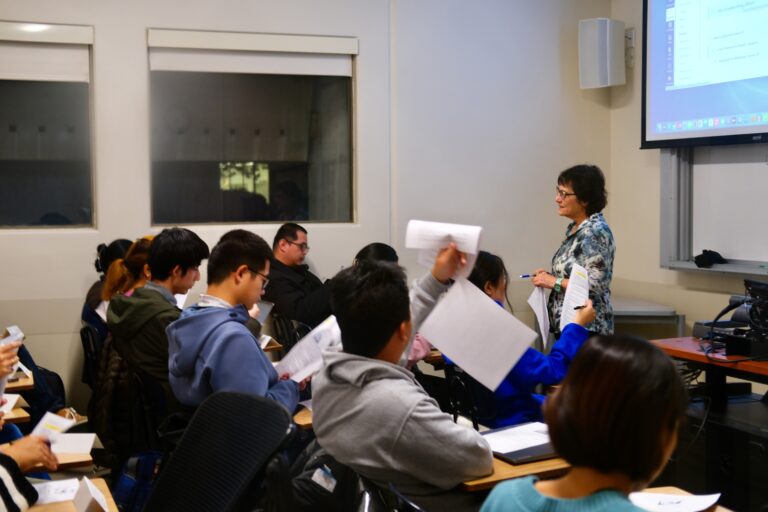
She’s almost done it. Her classmates watch with bated breath. The clock ticks ever closer towards 3 p.m. If she can just keep the professor talking for five more minutes, they’ll all be safe. 

“Do you have any pets?” Bingo. The class collectively coos over pictures of the ugliest dog they’ve ever seen, stuffed into a pink tutu. Three o’clock hits and half the class is already out the door. They’re safe for another day.

“Where did the time go? I suppose we can get around to it next week,” the professor said. And just like that, a new national hero is born. At least until the next pop quiz.

We asked this student to share some of her secret techniques. Here are her top tips:

“It’s very easy to miss, but underneath all that argyle and misery, professors are actually people just like us. I was surprised too when I found out. Once you understand this, it’s simple. Just talk to them like they’re your friends who also happen to hold your futures in their hands.”

“Children are a surefire topic, as long as you’re willing to agree with whatever parenting tactics they use. If the professor looks old enough, you can probably get them to complain about phones and social media. Real heroes sit in the front row and smile at their phones. Nothing gets them ranting faster.”

“Have a friend distract the TAs so they can’t remind the professors to get back on track. Asking how many years of grad school they have left is a safe bet, it puts them into a depressive haze for at least a few days.” 

“Economics professors are easy, ask them to solve any problem and they’ll eventually conclude that the most optimal solution is to kill poor people. You’ll be uncomfortable, but you won’t be taking any extra work.”

“Others are more unpredictable. It’s hard to guess at first glance, but even the harshest of professors have their weak points and hobbies. Go out armed with new knowledge. Be careful not to go in too deep. Otherwise, they might end up liking you.”


Written by: Audrey Zhang — aurzhang@ucdavis.edu

Disclaimer: (This article is humor and/or satire, and its content is purely fictional. The story and the names of “sources” are fictionalized.)

UC Davis’ Asian and Pacific Islander Queers Club provides a safe space for students and community members

The club aims to be a place of respite for those of the AAPI and LGBTQ+ communities


By SAVANNAH BURGER — arts@theaggie.org


With UC Davis being a hub of diversity, there are many student-founded and led groups that act as smaller communities to give students the opportunity to relate to one another regarding specific experiences around race, religion, gender, sexuality, interests and more. The Asian and Pacific Islander Queers Club, otherwise known as APIQ, has been a center for Asian and Pacific Islander students who are also a part of the LGBTQIA+ community since 1997.

“APIQ is a place to talk about people’s unique struggles that come with being a queer Asian and fosters a community that truly understands one another,” Nid Lefkoff, a second-year anthropology major, said.

Lefkoff, the internal operations chair of APIQ’s core cabinet, has been a member of the club for a year. He, alongside his other cabinet members, runs the meetings and organizes multiple activities and special events throughout each quarter. These events include craft nights, journaling, music exchanges, speed friending and cultural picnics. Every meeting is designed to provide a space where seasoned members and newcomers alike can be open and vulnerable with one another about their lives while feeling safe and heard.

“Seeing people that have so much in common with me makes me feel so seen and happy,” Lefkoff said. “Where I grew up, I could count the number of queer Asians I knew on one hand, but coming to APIQ, it reminds me that there are people that truly understand some of my hardships.” 

Aside from the larger planned events, APIQ’s general meetings, which take place every other Monday at 6:30 p.m. in the LGBTQIA+ Resource Center, usually start with socializing between members, followed by a prepared slideshow detailing staff introductions, announcements and that night’s activity. In addition to this, queer history is also given a space in every meeting. 

As a part of the initial presentation, the APIQ Spotlight is revealed, which is a short biography of a renowned figure of the queer AAPI community. This profile includes their achievements and role in the community in driving progress.

 Fourth-year evolution, ecology and biodiversity major Juno V. is the historian chair of the group and writes many of the Spotlights. 

“I hope that by the work we do, we are able to provide members and newcomers with a similar sense of belonging and community,” V. said. “I’ve also grown professionally through my role as the historian of the club. I’ve learned new skills such as newsletter writing and publishing, photography management, interviewing skills and more.”

Along with providing opportunities to socialize and connect with other AAPI queer individuals, APIQ also grants its members training in the professional world. Shiloh Colongon, a second-year psychology and human development major, is the publicity chair of the club. She, along with V., said that APIQ has allowed her to grow professionally. 

“As publicity chair for APIQ, I am able to grow personally and professionally from collaborating with the other board members and gain hands-on experience in planning out events and assisting in promoting the meetings,” Colongon said.

You don’t have to have a chair in the cabinet to be able to receive professional experience. Every year, the group selects people to become interns, granting them the opportunity to be more involved with the behind-the-scenes of the club and the community at large. Multiple chairs, such as Lefkoff and Colongon, started out as interns. Although the application window has closed for the 2023-2024 school year, details of future intern recruitment can be found on their Instagram page.

APIQ is defined by its members as a place that is dedicated to ensuring that students can take a load off from their studies and connect with their community while having fun. 

“Doing something as simple as hosting events where people can meet each other and the conversations that are had in our space can be very meaningful — it’s easy to get lost in schoolwork and loneliness. I hope that APIQ is a respite from that for our members,” Angel L., fourth-year community and regional development major, said.

Now the senior advisor, L. describes the community created by APIQ as being vibrant and joyous. APIQ is a place where people can be open with their identities, struggles and lives surrounded by their culture and queerness. All queer, trans and questioning Asian and Pacific Islanders, as well as any other interested students, are welcome to be a part of this understanding and accepting on-campus community. 


Written by: Savannah Burger—arts@theaggie.org

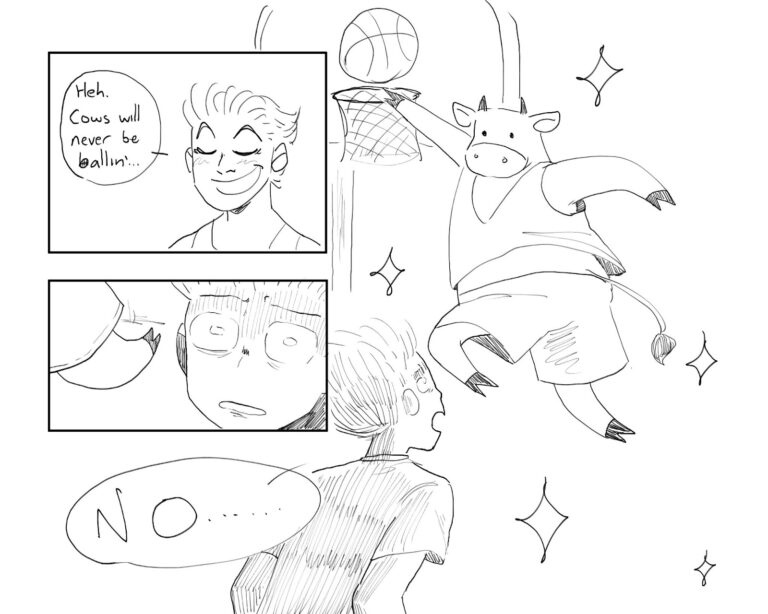
Cowball

Drawn by: Mia Piece — mnpierce@ucdavis.edu

Disclaimer: (This cartoon is humor and/or satire, and its content is purely fictional. The story and names of “sources” are fictionalized.)

UC Davis Center for Leadership Learning to host ‘Aggies Leading the Way!’ conference on Feb. 3

Registration for the annual leadership conference will close on Jan. 21 


By AALIYAH ESPAÑOL-RIVAS — campus@theaggie.org


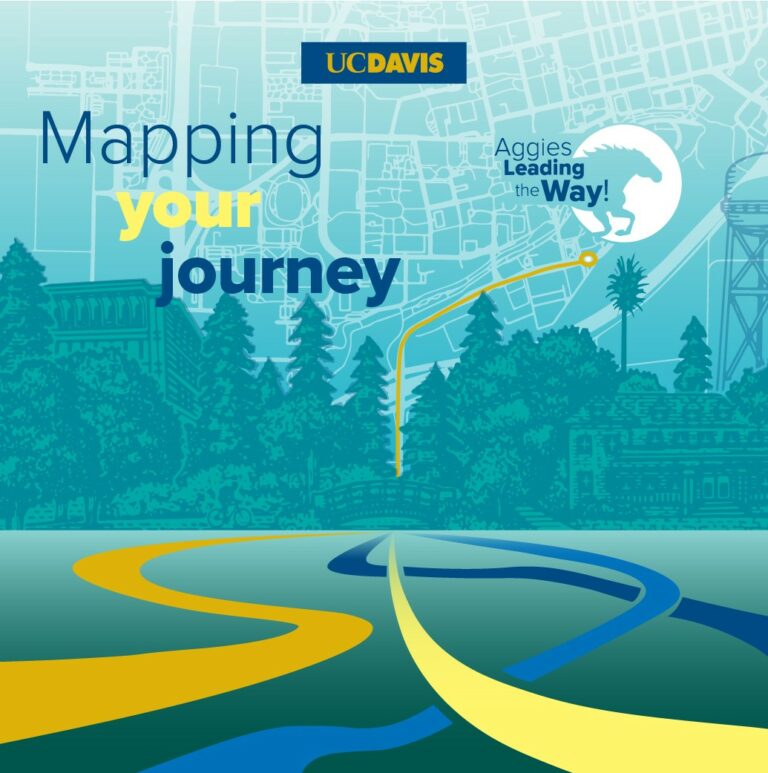
The UC Davis Center for Leadership Learning (CLL) will host their 11th annual “Aggies Leading the Way!” leadership conference on Feb. 3.

Comprised of workshops, keynote speakers and opportunities for networking, the conference aims to provide UC Davis students who are interested in strengthening their personal, professional and leadership skills an event to connect with those who have the same interests. According to the CLL website, it is a free, all-day event open to undergraduates across all majors and class levels. The event will be held at the UC Davis Conference Center. 

Director of the CLL Christie Navarro said that the conference was first introduced in 2010, before undergoing a three-year hiatus due to budget constraints and staffing issues. However, it was revived in 2014 and made its debut with the theme “Discovery, Partnership, Change.”

Since then, the center has hosted the event every year, with the theme of this year’s conference being, “Mapping Your Journey.” 

The theme, developed by the CLL interns, was chosen after brainstorming and taking into consideration the suggestions from evaluations given to last year’s attendees. Iris Chen, a CLL peer leader intern and second-year psychology and economics double-major, described how hard the process of choosing a theme was, given the many good ideas proposed. 

“It was hard to delete some good ideas too — there was one about cooking, like the different ingredients of leadership — but we settled on transportation,” Chen said. 

“Mapping Your Journey,” acknowledges the different ups and downs that UC Davis students may face throughout both their academic and career journeys, equipping students with the skills to continue moving forward with purpose.

 “The decision was made to create a space/conference where students explore how to turn their goals and dreams into reality, while also learning from the process itself,” Navarro said via email. 

Chen acknowledged the benefits of this conference because leadership is something that most want to be involved in. 

“There’s a lot of things about leadership that [attendees will be] able to learn through this conference, such as developing their inner values,” Chen said. 

Shanece Stuart, a fifth-year communications major and CLL peer leader intern, also believes that the conference brings awareness to the existence of the CLL itself, which serves as a resource for all students. 

“[The conference] gives an opportunity for us to expose ourselves, but also teach students different life skills,” Stuart said. “[The] leadership we see is an important skill to have in life in general, but there are also other fun activities and workshops at the conference.” 

Chen, who also attended the conference last year, hopes students will not only gain something through the opportunities and resources of the conference but also form friendships with other attendees. 

“What I hope students will get out of it this year are the opportunities, knowing that CLL exists and also creating friendships within the conference with those who value the same things as you,” Chen said.

To register, UC Davis students can visit the CLL website to fill out a 15-minute form and answer two short-answer questions to reserve a spot. Registration closes on Jan. 21. 


Written by: Aaliyah Español-Rivas — campus@theaggie.org

Basketball season ramps up with home-game win as Aggies beat CSUN

A record-high game with a final score of 95 to 75


By MEGAN JOSEPH — sports@theaggie.org


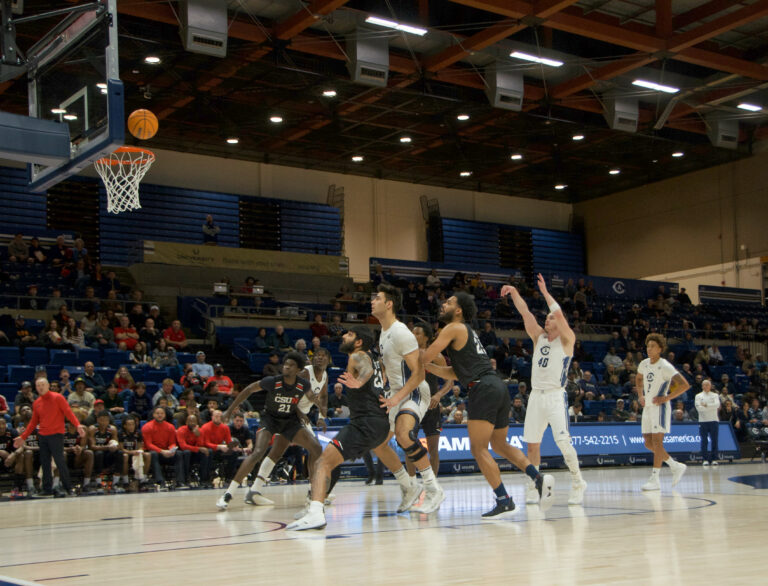
With tensions high on the court, the Aggies played a stellar game against the California State University, Northridge (CSUN) Matadors on Jan. 11. The game began on a rough note with both teams feeling the pressure, acquiring multiple fouls within 10 minutes of the first quarter. Despite both teams’ fouls, it did not take the Aggies long to gain control of the game and the lead.

With a season-high score of 95 points from the Aggies, fans saw strong performances from all over the court, including from fourth-year Kane Milling, third-year Ty Johnson and fourth-year Elijah Pepper. All three players put up a minimum of 20 points in the game, leading the Aggies to control the court. 

Following the recent three-point overtime loss against UC Irvine, the Aggies have been looking for a comeback to their winning streak. After this record game, the Aggies have not only achieved their comeback but so much more. 

Milling, the leading scorer in the game, attained a new personal best of 27 points with his consistently accurate three-pointers. The France native scored in the double figures early on in the game, giving the Aggies the upper hand for the rest of the time on the clock. Since joining the UC Davis team in 2021, Millings has become a force to be reckoned with on the court. As one of the players with the most starts this year, fans can expect to see a lot more from Millings as the season continues. 

Another notable performance in the game — especially regarding free throws — came from Ty Johnson. In most Aggie games, Johnson can be seen contributing to both ends of the court. A dynamic player, he not only scored a total of 20 points against the Matadors but also had a total of four assists. Johnson contributed to the Aggies’ aggressive demeanor in the game with his fast movements on the court and dribbling ability. 

Last but not least in this stellar trio is Elijah Pepper. Pepper, seen wearing jersey number 40 on the court, is an impressive player with his all-time leading scorer record for the Aggies, as well as his ability to distribute the ball. Pepper demonstrated his skills as a well-rounded player as he contributed 20 points and seven assists to the team. As a key performer to the Aggies’ offense this year, Pepper will be pivotal to the team’s ability to make it to the playoffs. 

With the Aggies having such a successful first two quarters, CSUN was left scrambling to stay in the game. At the beginning of the third quarter, CSUN staged a strong comeback with a newfound determination that earned them a considerable amount of points. However, the Aggies had defensive players prepared for a challenge. Forcing 15 turnovers, the Aggie defense prevented a significant amount of CSUN drives to the basket. Fourth-year Niko Rocak had a particularly impressive defensive performance with his considerable amount of steals. 

Rocak, playing as center for the Aggies, currently leads the team in blocks this season. Although Rocak had a decent amount of fouls in this game, it didn’t show in his gameplay, allowing him to become an important part of the Aggies’ 32 total rebounds. As this is only Rocak’s second season playing for UC Davis, his bond with the team is shown through the group’s effective communication on the court. 

Another valuable member of the Aggie’s defense is fourth-year Francesco Borra. Borra proved to be indispensable against CSUN as he kept the Aggie team spirit high, especially when he had a steal-turned-dunk that left the crowd cheering. Standing at seven feet tall, Borra is a great addition to the Davis defense with his unmatched ability to block and rebound.

Overall, the Aggies have really come into their own at the start of a season that leaves fans enthusiastic about what is next. With the team’s unity, communication and power, the Aggies are definitely a strong candidate for the playoffs — and maybe even further. 


Written by: Megan Joseph  — sports@theaggie.org


Instagram account showcases fashion in Davis

0

UCD Fits aims to spread love through fashion and foster a sense of community


By LAILA AZHAR — features@theaggie.org


In October of 2021, current fourth-year sociology major Cleo Harrison-Felner and fourth-year design major Olivia Hurley had a conversation in their dining hall. 

“We were like, Davis style and fashion is so underrated. People think we’re just this little farm; Cowtown. They don’t know that people dress well here,” Harrison-Felner said . 

Inspired by @watchingnewyork, an Instagram account documenting fashion on the streets of New York City, the two decided to start an account dedicated to fashion in Davis. Thus, @ucdfits was born. 

The account, which today has amassed over 3,000 followers, is a collection of photos Harrison-Felner and Hurley have taken of outfits around Davis, often grouped into themes, such as duos, long dresses/skirts or monochrome outfits.

“It puts kind of a pressure on us to try and dress well for school,” Harrison-Felner said. “If we’re going to take photos of other people it’s always so embarrassing when we’re at school in our sweats.” 

Despite its popularity, there is some confusion about the way the account is run. “Most of it, I would say, is us just taking pictures of people,” Hurley said. “We really would want people to submit. People don’t know that they can, and then some people think that we only do submissions. It’s very confusing.”

“We always get everyone’s permission,” Hurley said. “We’re never just taking pictures of people. I know some people think we do that too, but we tag people. They always know.” 

From psychedelic florals to slick leather jackets to hand-made sweaters, the clothes showcased on @ucdfits display Harrison-Felner and Hurley’s appreciation for a wide variety of styles. 

“I love a hat,” Harrison-Felner said in regards to her personal taste. 

“I was gonna say I love a scarf,” Hurley said. “I feel like Cleo’s a big shoe person.”

“I’m really into fun socks and tights too. If people have cool tights, cool shoes and anything else on, I’m like that’s a good fit. That’s all they need,” Harrison-Felner said.

Both founders’ interest in clothes began long before they started the account. 

“When I was younger I wanted to be a fashion designer, and then I realized I don’t like to sew, so there’d be a huge issue there,” Harrison-Felner said. “My parents rented Project Runway DVDs and they would put those on, and I would be glued to the TV watching Project Runway. I was so into it.”

Hurley also cites her family as a source of inspiration. 

“My mom and I have been thrifting my whole life,” Hurley said. “She’s always just given me all her clothes. Everytime I come home from school there’s always at least like ten items of clothing on my bed of things that she’s getting rid of. So I think a lot of it really comes from her.” 

Harrison-Felner and Hurley’s fashion has also been influenced by their time in Davis. 

“I feel like I kind of lost my sense of style in high school,” Harrison-Felner said. “But then coming to Davis, everybody really is able to express themselves and there’s very little judgment.”

“Cleo and I are roommates,” Hurley said. “I think us living together, as well as with our other roommate, motivates all of us to dress better.”

Fashion can seem like a hobby people partake in alone; getting ready in the morning seems like a solitary process. But Harrison-Felner and Hurley’s approach to it is communal. They both draw inspiration from the people around them, and through @ucdfits, have created a positive environment to acknowledge their community. 

That love for the community is evident in how they describe their experience running the Instagram account. Hurley mentioned how grateful she is to be able to talk to people she wouldn’t have otherwise gotten the opportunity to meet. 

“That honestly is the reason why we started it — we’d just be like, ‘That person’s so cool, like, I just wanna tell them they look good.’” 

Continuing in the same vein, Hurley said, “I mean it’s always a treat for us to just go up to people and compliment them. It immediately makes someone else’s day, which then makes your own day.” 

@Ucdfits has in turn made them feel more connected to Davis. 

“It’s been really good in terms of my involvement on campus,” Harrison-Felner said. “Especially our first year of doing it, we made all these friends through it, and found out about so many other clubs and organizations around campus.” 

“It’s really pushed me out of my comfort zone,” Harrison-Felner said. “I do not like starting conversations with strangers, that’s not something I associate as a character trait of mine. But it’s been exposure therapy to do UCD Fits, because it forces us to go up and talk to people, and so I really appreciate that.” 

First-year international relations major Aminah Syed’s Halloween costume was featured on the account. Expressing her appreciation for the connection the account brings, she said, “I’m glad to have found fellow creatives at UCD who share my love for fashion even if it’s simply through the digital world.” 

Using fashion to bring people together, @ucdfits has gone beyond being just an Instagram account. Harrison-Felner and Hurley hosted a clothing swap with vintage store Luna & Wulff, where they also collected donations for ASUCD’s Aggie Reuse Store. They filmed a video in collaboration with local thrift store Yesterday, and consistently use the account to promote student designers. 

“I just think that spreading love is probably my favorite thing, and spreading hype and appreciation to other people,” Hurley said. 

From its inception, the account has done just that, and throughout its two years running, @ucdfits has become a valuable part of the Davis community. 


Written by: Laila Azhar — features@theaggie.org

Davis City Council selects Josh Chapman for 2024 mayor, Bapu Vaitla as vice mayor

The Davis City Council appointed the positions of Mayor and Vice Mayor without a general election


By CHRIS PONCE — city@theaggie.org

At approximately 1 a.m., after a long discussion regarding a resolution calling for a ceasefire to the war in Gaza, the Davis City Council still had to address Item 6 on the agenda — appointing a new mayor.

In Davis, mayors are appointed yearly by the city council rather than by a general election. At the Dec. 12 city council meeting, the council selected councilmembers Josh Chapman and Bapu Vaitla to serve as mayor and vice mayor respectively for 2024. 

Davis City Manager Mike Webb briefed the council on the rules and processes of selecting a new mayor and vice mayor. Webb said factors such as seniority, the ability to run meetings and the ability to find consensus amongst the council should be considered in the council’s decision. Councilmembers can only serve as mayor for up to two years out of their four-year councilmember term. 

During the meeting, Vaitla thanked last year’s mayor, Will Arnold, for his service to the city and specifically for his leadership during the serial stabbings that occurred in April. Vaitla suggested that Chapman, who was previously vice mayor, should be the new mayor. 

“I think we had a great mayor, and I think [Chapman] would be a fantastic mayor as well,” Vaitla said during the meeting. “[Chapman] has a great leadership style that brings people together [and] builds consensus and I would love to see [Chapman] in that mayoral role for the next year.”

During his time as mayor, Arnold oversaw projects such as the Downtown Davis Plan, Hate-Free Together and the Climate Action and Adaptation Plan. Arnold said that it was an honor to serve and that he would be open to continue as mayor.

“It has been and continues to be one of the honors of my lifetime to serve our community in this capacity,” Arnold said. “This year, as we all know, has been not what any of us could have expected. And I know whatever I thought the mayorship was a year ago, I have learned that I had no idea.” 

Councilmember Gloria Partida, who was also formerly mayor, thanked Arnold for his leadership but said that there should be a new mayor in order to allow time for other councilmembers to serve in the role.

“Thank you Will, because I’ve really enjoyed your leadership,” Partida said. “And it has been a tough year. We had the serial stabbings and that was a really tough time for the community and you got in front of all of that press and did a really good job of guiding us through that.”

Chapman said that this was the first time the council was electing a mayor by this process and that they should re-examine if there should be changes made.

“No matter what happens tonight, I would encourage us to look at this process on a deeper level to figure out if there [are] changes that we can make,” Chapman said.

Partida also said that she hopes the council will discuss the possibility of having a ballot for residents to elect a mayor at large, rather than being appointed by the council. 

“I would love for us to have a conversation about putting on the ballot an extra box that people can check and vote at large for mayor so we’re back to our old system of choosing mayors, but that’s a different conversation,” Partida said.

During the meeting, Vaitla asked Chapman if he’d be willing to serve in the position and then motioned to nominate him as mayor after he said he’d be willing. Councilmember Donna Neville seconded the motion. Partida shared that, while she disagrees with the system of appointing mayors, she would be happy to see Chapman in the role.

“I think this is a bad system, and I think that for me this sort of makes the point that we should stick to one-year [mayoral] terms because then it’s just what you expect unless there’s an extenuating circumstance,” Partida said.

The council unanimously voted Chapman as mayor. Partida then nominated Vaitla as vice mayor which the council unanimously voted on as well. 


Written by: Chris Ponce — city@theaggie.org

Who is Santa?

The big guy is more complicated – and more interesting – than you might think


By JOAQUIN WATERS — jwat@ucdavis.edu


It’s a new year! And you know what that means: it’s officially time to pack up all the Christmas decorations and stop being festive for the next 11 months. Even though winter has technically just begun, the holiday that the season is most associated with has come and gone, so it’s time to pack up all the trimmings. Everything must go: the wreaths, the nutcrackers and especially the eighty-something Santa Claus figurines that your grandmother has covered every square inch of her house with, turning the living space into an anxiety-inducing porcelain labyrinth from which there is no escape. So, in honor of the end of the season (and because I committed to write this piece weeks before Christmas), I figured now is as good a time as any to explore the ubiquitous question: who is Santa Claus? 

Now, I know what you’re thinking: what a dumb question! Everyone knows who Santa Claus is. He’s a functionally immortal jolly old man in a red suit who lives in an industrial factory located at the northernmost point of the planet, and who travels around the globe once every year in a sled pulled by reindeer at what must surely be supersonic speeds, delivering moral judgment upon the children of earth and rewarding the worthy with LEGO sets and T-shirts that are two sizes too big. But these are merely the basics. Have you ever actually thought to ask the question of where the big guy comes from? What is his origin story? Is he an alien exiled from Planet Christmas? Was he bitten by a radioactive reindeer? Well my friends, the answer is actually far more complicated – and interesting – than you might think.

The modern version of Santa Claus originates from the famous children’s poem “Twas the Night Before Christmas,” supposedly written in 1823 by the American writer Clement Clarke Moore. It was this poem that popularized the image of a jolly, bearded old man delivering presents on Christmas Eve through the aid of a sled pulled by eight reindeer. From practically the instant the poem hit shelves, its version of Santa Claus became the symbol of Christmas in the United States. The American version of Santa Claus was further solidified (but not created, as is commonly thought) by a series of Coca-Cola ads that ran in the 1920s which featured Santa in a bright red coat (possibly to draw a visual connection to the bright red color of Coca-Cola cans). So there you have it; the modern origin of Santa. But still the question arises: where did these ideas come from?

The most commonly accepted origin posits that the “secret identity” of Mr. Claus is none other than the legendary figure of Saint Nicholas. Very little is known about the historical Saint Nick. Traditional accounts claim that he was born in the third century in the Greek port city of Myra, to wealthy parents who raised him as a devout Christian. In later years, he came to be worshiped in Greece as the patron saint of sailors – sort of a Christian substitute for the pagan god Poseidon – but as his popularity grew, his role was soon eclipsed. Among many other things, Saint Nicholas came to be known as the patron saint of children. As is wont to happen to legendary figures, the singular image of Saint Nick eventually fragmented into several variations all across Europe. The Dutch variation, Sinterklaas, who is garbed in a long red robe and rides a white horse, is usually cited as the most direct source of inspiration for the American vision of Santa Claus. 

But while Saint Nicholas may have been a source for the jolly old man we know and love, he was certainly not the only one. In fact, Santa’s roots run far deeper than many would have you believe. Before Christmas, the most common winter holiday in Europe was Yule, a ritualistic celebration which has its roots in Germanic and Norse Mythology. Yule was meant to honor the coming of the god Odin as he rode across the sky on his eight-legged horse Sleipnir chasing animals – an event known as the Wild Hunt. Odin, father of Thor and king of the Aesir, was frequently depicted in art as a bearded old man who wandered the Earth, often entering the houses of mortals through the chimney to pass moral judgments on his subjects. It is also from Norse Mythology that the concept of elves and dwarves as master craftsmen originates. As Christianity spread, Christmas was transposed onto Yule and the association with Odin and the Wild Hunt dissipated. But the holiday never quite lost its pagan elements. The image of the bearded man surrounded by elves and animals persisted, morphing into the folkloric figure of Father Christmas (immortalized by Charles Dickens as the Ghost of Christmas Present) before finally being melded onto Saint Nicholas to become Santa Claus. 

So there you have it. Santa Claus has alternately been an ancient Norse god, a Christian saint of sailors and children, a soda mascot and many other things that I didn’t have time to get into. Santa Claus is the sum total of all of these things: pagan rituals, Christian globalization, American consumerism. What’s the moral of this story? I suppose that every culture hero and iconic character we take for granted today has its roots in ten thousand other figures that have all evolved or been changed to suit modern agendas. Oh, and they should totally make a movie where Santa Claus is literally Odin. That would be super sick.


Written by: Joaquin Waters — jwat@ucdavis.edu

Disclaimer: The views and opinions expressed by individual columnists belong to the columnists alone and do not necessarily indicate the views and opinions held by The California Aggie.

Let’s be honest: ‘The Batman’ is not as perfect as people say it is

A film as necessary as cotton candy to a healthy diet


By MALCOLM LANGE —- mslange@ucdavis.edu


Apart from being potentially the weakest Batman with the lamest car chase, Matt Reeves’ “The Batman” is a great movie. It was written intelligently, performed excellently and, overall, an exciting movie to watch. This is not a very “hot take,” as many people have been raving about the film since its release in 2022. The “hot take” I would like to introduce is that it was unnecessary to the Batman universe and overhyped. 

It gets a lot of praise, and for the most part, it should. It was a very well-directed film; it was cinematic and thrust you into the city of Gotham. However, the Batman story that was displayed was very familiar. It is hard to find completely new stories and themes for a character as old as Batman. There have been so many versions of Batman that it would be impressive if they came up with a new and exciting take on the vigilante. 

Yes, I am aware that they did certain things differently in this adaptation of Batman than in past ones. The main one that people like to point out is the darkness and grittiness of Gotham —- it is probably the darkest Gotham seen in live-action. However, a relatively dark and grimm version of Gotham City is already seen in the TV show “Gotham.” In that version of Gotham, we see more of the gangs and power struggles in Gotham and how awful the city really is. The only thing it is missing is it isn’t as grotesque as the movie makes it out to be. However, I believe that to be only because TV and movie ratings allow different amounts of violence. So, there is already a Gotham that showcases the mob bosses, gangs, corruption and politics that “The Batman” has. There is nothing new or unique to attribute only to this version. 

The most interesting part of this movie was the antagonist, Riddler. The Riddler was a great character, not only because he challenged Batman’s belief in himself but also because he was more effective than Batman in fighting corruption. The Riddler was murdering the corrupt leaders of Gotham in an attempt to make it a better place, a very similar motive to Batman. In the movie’s final act, the Riddler even admits he believed they were on the same side, that they were helping each other, and that it was Batman who inspired him to do everything that he did. Batman is faced with an unintentional consequence of his own existence. In contrast, looking at “The Dark Knight,” the Joker’s origins are unknown. Still, it can be assumed that his obsession with Batman motivates him for most of the movie.

The final aspect of the story that receives high praise is that it doesn’t feel like a full superhero movie but is more of a detective film. This is true to a certain degree. Yes, Batman has a lot more “detective” work cut out for him in this movie, but besides the little riddles that the Riddler leaves for him, there is not much else that Batman figures out on his own. The Riddler has to hold his hand through each step of the puzzle so that Batman can finally see the kind of corruption that has a hold of Gotham. While the Riddler is spelling everything out for Batman, we see a couple of clever solves from Batman with the cipher puzzles or recognizing certain people’s broken noses and how to pull up a carpet. Apart from those specific successes, Batman relies on the Riddler to give him all the answers, which the Riddler is inclined to do as he believes they are on the same team.

Neither Batman nor the police had any background or what feels like standard detective work. The strange gimp mask worn by the Riddler cannot be a commonly bought item, and probably not purchased by the Riddler until he decided to commit those crimes, meaning a relatively simple store and purchase history search should have helped find the Riddler’s identity, which would make it easier to find him. It also would have helped because then, when 50 or so other men are buying the same model from potentially the same store, that should probably raise some red flags and alert the police or Batman that the Riddler is growing a fan base, which is very dangerous. 

Batman also should have tried to trace back the photos of the mayor coming out of the club owned by the Penguin. The Riddler had these photos on a thumb drive, taken across the street from the club’s entrance, and it turns out that is where the Riddler was living. The apartment across the street from the club. If Batman tried to go to where the pictures were taken and find out who stayed there to figure out who took the picture, he might be able to find out to whom the pictures were given. At least that could have been Batman’s thought process; in actuality, it would have led him straight to the Riddler because he took the pictures. This is all to say that Batman did not do fantastic detective work throughout the film. When the Riddler was not giving him the answer, he only solved a couple of riddles. 

“The Batman” is not as perfect of a Batman film as many people claim. We already had a dark Gotham, with villains who challenged Batman’s faith in himself and, to top it all off, he was not even that good of a detective. Again, I did enjoy the movie; it was executed incredibly. It is also a very unnecessary Batman movie. We have seen so many different Bruce Wayne variations in the past decade alone that we should focus on a new hero, like getting a good Robin or Knightwing movie. Even though “The Batman” is a good film, it would have been more interesting to see a movie about a new character instead of rebooting the same vigilante repeatedly. 


Written by: Malcolm Lange — mslange@ucdavis.edu

Disclaimer: The views and opinions expressed by individual columnists belong to the columnists alone and do not necessarily indicate the views and opinions held by The California Aggie.