55.5 F
Davis

Davis, California

Wednesday, December 24, 2025
Home Blog Page 117

UC Davis named greenest campus for eighth consecutive year

Student organizations discuss both areas of success and room for improvement based on this ranking


By BENJAMIN CARRILLO – campus@theaggie.org


In 2023, UC Davis was named the greenest campus in the nation for the eighth year in a row by the GreenMetric World University Ranking, maintaining the campus’ reputation for striving towards a minimal waste environment. The university was also ranked fifth most green campus in the world for the fourth year in a row.

According to the UC Davis Sustainability Office, this ranking is determined through a variety of criteria and their analysis to determine the ranking of UC Davis in comparison to other schools. These criteria include setting and infrastructure, energy and climate commitments, wastewater transportation and education and research.

Kelli O’Day, the assistant manager for the UC Davis Sustainability Office, discussed the achievement in greater detail. 

“Continuing to make progress is so important, and we have to keep the momentum going,” O’Day said. “We submit reports and get information to understand where we are, and where to go further from there. In the future, we’ll make sure that plans, such as the Fossil Fuel-Free Pathway Plan, are implemented and that students are still well informed on how to lessen their footprint.” 

The Fossil Fuel-Free Pathway Plan strives to eventually eliminate the usage of fossil fuels at UC Davis. O’Day emphasized this plan as one of the many ideas in the works to maintain the position as the greenest campus for a ninth year. 

“If you think about the history of sustainability at the school, there are student-initiated guidelines that we follow, and the students are the guidelines here, creating programs such as Unitrans and the Coffee House,” O’Day said. “Here we are, 60 years later, and they are still here.” 

One of the countless student programs within UC Davis is the Zero Waste and Sustainability Club. Kili Kato, co-president of the club and a third-year marine and coastal science major, spoke on this achievement.

“As a campus, we need to promote more sustainability initiatives and put into framework some of the larger pieces, and that comes with voting in legislation and getting more acts approved to further green initiatives,” Kato said. “The community is the heart of Davis, and collaboration is the key to keeping our campus green.” 

Emily Dumont, a third-year environmental science and management major and vice president of the Zero Waste and Sustainability Club, specifically discussed their involvement with sustainability. 

“I feel like there’s a huge emphasis on reducing single-use products, and switching to post-consumer recyclables,” Dumont said. “Our club strives to mention the importance and show willingness to prevent single-use products as much as possible. The Green Initiative Fund was recently not passed, and if this fund fails to pass [again], there will be many resources lost on keeping us in the number one spot. It’s important to vote and ensure that we keep the legislation talked about.” 

Additionally, Amelia Swanson, a third-year sustainable environmental design major and co-president of the Zero Waste and Sustainability Club, also talked about what sustainability means to students at UC Davis. 

“I feel like Davis has a lot of amazing teams, and there’s so many opportunities and internships for students to get involved [with] on the campus,” Swanson said. “Professors and Learning by Leading programs get students involved with the outdoors, and each has a role in keeping the campus more sustainable. I think overall it’s really good and gives students the opportunity to learn a lot and help the campus.” 

A great example of one of these volunteer opportunities is the Aggie Reuse store, a zero waste program that is a mutual aid thrift store, where everything is second-hand. Elyssa Lieu, one of the Aggie Reuse directors, emphasized the versatility and importance of the organization.

“It’s really nice to be a part of the conversation in UC Davis, and team up with other sustainability teams to come up with events to promote sustainability and our program,” Lieu said. “While being number one is great, it’s even greater to maintain that position and work towards a common goal. I’d say that Aggie Reuse is just one part of the larger sustainability story being built.” 

Victoria Mattsson, another representative of the Aggie Reuse program, went on to explain the nuance of being first in the nation, and what that truly means to her. 

“I do think rankings are kinda silly, but there is of course some meaning to it,” Mattsson said. “It’s such a huge draw for so many prospective students and faculty members. But what’s important to note is that the campus and community should continue to strive for greater collective sustainability, pushing for ourselves and administrators to keep improving over time. While a great achievement, it’s not an invitation to just sit satisfied where we are.” 


Written by: Benjamin Carrillo – campus@theaggie.org

How and why to be intentional about the time you spend alone

FOMO’s gone too far

It’s not on your Google Calendar, but sometimes the part of the day you’re looking forward to the most is going home, putting your phone on Do Not Disturb and reading a good book. Our society pushes for us to be social — even stigmatizes people who regularly spend time alone — but spending time with yourself is equally as important for personal growth and mental well-being. It allows us to recharge, prioritize what’s important and check in with ourselves. 

We need time to decompress, especially as students who are dealing with academic stress on top of the normal stresses of life. Solitude gives you the space to just exist without the expectations that come from work, family, friends or society in general. It gives you time to reflect on what is no longer working for you, as well as to be grateful for what you have. Spending time with yourself also plays a pivotal role in maintaining your mental health by allowing you to tap into your feelings and process complex experiences. 

Not to mention, there is actually research behind why solitude is good for you. A 2014 study conducted by psychotherapist and author Emily Roberts demonstrated that embracing alone time is an important aspect of building strong self-esteem. Those who embrace solitude as a form of self-care and therapy experience more confidence and positive feelings about themselves. Stress and anxiety arises from uncontrollable forces, so alone time allows one’s mind to unwind, combat exhaustion and process feelings and thoughts. 

This is especially important for young people (us) who are still finding who we are. How are we supposed to learn what we like, the kind of people we want to be or what’s most important to us if we don’t take the time to ask ourselves? This is where being intentional about how we spend our time alone comes in. It is especially important to have personal time that is not spent online in the age of social media, since it’s nearly impossible to fully withdraw from others when we are connected at all times. 

Sometimes, it can feel like spending time alone isn’t a valid excuse for deciding not to hang out with friends. If hanging out with yourself feels like a more productive way to spend your time, do it. You don’t have to feel guilty because you know yourself and your needs, and you should trust and respect that. Most people have used a false excuse to cancel plans (Sorry! My mom called! I definitely didn’t just want to watch “Gilmore Girls.”) but there’s no reason to be embarrassed about the time you take for yourself.

Taking the time to listen to your own needs will make you a better, calmer, kinder person for the people around you, whether it’s for loved ones or strangers. Stretching yourself thin by forgetting about your identity, desires or priorities will only make you feel stressed and tense. You can’t fill anyone’s cup when yours is empty.

So while it may feel uncomfortable to spend time alone, it’s important to learn how to embrace it, because there are going to be points in your life when you’ll be alone. And for those of us graduating, especially if we’re moving somewhere new, that time may be sooner rather than later. Learning how to feel empowered by it rather than afraid is going to make those stages of life easier and more enjoyable. So do it now — as a little present to your future self.

Now don’t get us wrong, we’re not saying to become hermits. Being social is just as important as being alone, and meaningful connections are the most beautiful and fulfilling parts of life — especially your connection with yourself.

Here are some ideas for spending intentional time with yourself:

  1. Crafts. Art can be really therapeutic, and a way for you to practice being present. Scrapbooking, collaging, painting, knitting, sewing, crocheting, etc.
  2. Reading a book! Putting yourself in someone else’s shoes may be exactly what you need to validate your feelings. If you’re looking for recommendations, check out our recent editorial!
  3. Take yourself out to dinner at a restaurant. Listen to some music, read a book or just sit back and people watch. Use the time to hang out with yourself.
  4. Write or journal. Journaling is a productive way to get your emotions out and reflect on your accomplishments, low points or just process your feelings.
  5. Run errands — go thrift shopping or grab a coffee. It’s nice to run on your own schedule and not have to worry about waiting on or being rushed by others. You get to make all the decisions.

Written by: The Editorial Board

Affordable meditations offered twice a week to help ease anxiety, suffering

Free and donation-based mantra meditation and kirtan classes bring together and uplift community members in Davis and Woodland


By ZOE SMITH — city@theaggie.org


On Jan. 10, 12 locals gathered at the Davis Community Church to participate in a weekly mantra and kirtan meditation hosted by married couple Anna Matthews and Sam Dreis. The two hold free and donation-based meditations at Davis Community Church every Wednesday from six to 7:30 p.m. The two also host a weekly vegetarian dinner and kirtan meditation at 5:30 p.m. at their house in Woodland every Sunday.

This particular mantra meditation is a series of chants in Sanskrit that praise divine Hindu deities. When these mantras are chanted in a group with music, it is called kirtan.

“It is recommended to focus one’s attention by resting your heart and mind upon transcendental mantras, which are different qualities or names of the Supreme,” Matthews said. “By resting in these healing sound vibrations, a person is able to experience relief from anxiety, an overactive mind, anger and fear. Not only that, but a person experiences their peaceful, loving nature and can gain confidence and a deeper understanding of themselves and others.”  

During the meditations, Matthews and Dreis lead the group by playing the guitar and ukulele while singing their chants to different melodies as the participants sing along. 

The schedule of these meditations is up on the website, Davis Meditation, where there is also an option to RSVP to different events. 

Two studies produced by the National Institutes of Health (NIH) show the positive effects of kirtan when combatting depression and anxiety which showed notable improvement in participants who practiced these meditations regularly. 

“We may be interested in meditation because we want to sleep better or improve our focus, we may be experiencing a lot of stress from school or work,” Matthews said. “The good thing is that by practicing mantra meditation one is able to address these issues and so much more. One can cultivate spiritual love and thereby experience profound happiness that mundane material activities and experiences don’t offer.” 

Karina Veal, a recent graduate from UC Davis, has been attending the weekly mantra meditations at the community church since the summer of 2023. 

“[It makes me feel] so grounded and so clear,” Veal said. “Like I can get done what I want to get done in a very gentle and calm way. Anything I was worried about before is kind of gone. 

Veal said this type of meditation has helped them deal with recent grief in their life.

“My grandma passed away a couple of months ago, and then I was really sick with the flu and just some other heartbreaking stuff [happened] in my life,” Veals said. “I feel like the kirtan just opens you up a little bit and heals your heart in a way.”  

The mantra meditation consists of the participants sitting in a circle, getting comfortable, taking deep breaths and chanting along in a group. 

“When you surround yourself with like-minded people in this way, who are also chanting mantras, […] you feel camaraderie because you know that you’re all focusing on the solution together,” Matthews said. “And that’s a powerful message to send the world by gathering together and focusing upon the solution rather than getting together and blaming others, […] then we can go out in the world and see others through those eyes of love and see them as who they are. They also need love, they’re just like me.”

First-time meditation attendee Camille Romero talked about their experience with the session. 

 “At first, I felt kind of shy and apprehensive,” Romero said. “But towards the end, I started to remember the music lessons I got when I was in middle school […] I haven’t remembered that in a long time. So I felt very connected to that experience and also the experience we’re having.”

Romero is a part-time bus driver, UC Davis student and lab tech. Romero said that on top of their schedule, they want to make time for meditation now.

“I think the suggestion of implementing the meditation in the morning is really powerful,” Romero said. “Recently I’ve been having a lot of struggles with anxiety and depression and I’ve been using prayer in the morning to kind of ground my soul. So I think this would be nice, in addition to that.” 

Matthews has also been able to find relief from anxiety through mantra meditation and kirtan. 

“When I first began this process over 20 years ago, I experienced panic attacks a few times,” Matthews said. “It was really scary and I was always on edge, worrying that it might happen again. When I came across the chanting of mantras, my mind had something to focus on that gave it real rest and my heart began to find happiness. To this day, I have not experienced another panic attack because I practice regularly.”

Written By: Zoe Smith city@theaggie.org

Another year of fashion trends

0

UC Davis students speculate what styles the new year will bring


By JULIANA MARQUEZ ARAUJO — features@theaggie.org


2023 consisted of some of the most creative and versatile fashion trends yet, making many excited for what fashion in 2024 will look like. Fashion statements tend to go down in history, especially in today’s generation which focuses extensively on “iconic” images from the past that have largely shaped our styles today. 2024 can be expected to create that same impact.

At one point, the clothes that our parents wore were seen as outdated or “too tight,” but that view has changed. Nowadays, many are disappointed by the fact that their parents or grandparents have not saved their clothes for their future posterity. This supports the idea that many fashion trends seen today are derived from previous decades, with the early 2000s being one of the popular sources of inspiration.

“There’s never a new trend, everything is old. These [trends] came back probably from the ‘90s or 2000s,” Jade Joya, a third-year psychology major, said.

The majority of trends that arise with every new year often hold a resemblance to, if not a complete copy of, a past look. For example, bows and frills have always been in style — starting as far back as the late 1600s — and although they have consistently held influence in recent fashion trends, they have been gaining attention very quickly since 2023, so much so that the trend will likely follow into the new year.

How better to predict fashion trends than to look at influencers? Everyone with social media has been influenced in some sense. Many would argue that these media figures are the real trend starters.

More than ever, fashion trends are focusing on the aesthetic and character that a person tries to portray. If there is a figure or an aesthetic that one looks up to on a social media app, it is likely that they will try to embody that same character.

While early 2023 relied heavily on baggy everyday wear, the “clean girl aesthetic” rose to popularity towards the end of the year.

“Clean girl makeup, I think, has also drifted over to fashion, cause now the ‘messy’ look is not as popular; [clothes] are more form-fitting,” Genesis Dominguez, a first-year anthropology major, said.

She gave the example of flare leggings having their moment in the spotlight. Many considered them to be a staple piece in one’s wardrobe, not only for their versatility but also for their effortless look while still allowing the body to be comfortable. 

When bringing up the topic of the “clean girl aesthetic,” one must also focus on the rise of its counterpart, the “coquette” aesthetic.

Yes, Marie Antoinette has managed to remain a prominent figure in not only historical events but also in fashion. She is undoubtedly the face of the movement. From her adorned bedroom to her soft, pastel outfits, Antoinette’s influence will surely continue to reign in the new year.

As fashion trends resurface, people are considering the notion that while wearing certain pieces used to mean one thing, they now represent another.

For example, while feminine clothing and accessories, such as bows, previously symbolized obedience and innocence, women are finding more female solidarity through wearing that style. Therefore, renewed trends are sending a different message.

Or maybe it’s the opposite, and people are wearing these pieces that remind them of their childhood to reconnect with an innocence that they feel has been lost in adulthood.

Regardless, bows are at the height of their popularity; from the looks of it, they are not going anywhere anytime soon.

While it is a difficult task to anticipate where the majority may flock in 2024, many have speculated that this new year will continue to be heavily influenced by the price tag of particular items. Much of this theory has to do with the public viewing cheap items in poor taste and expensive items to be trendy. After all, trends are what creates the increase in prices for whatever item is in high demand. So, if anyone is looking to participate, be prepared.

Communities are sharing their own personal hopes for 2024, as there are new possibilities for the potential resurfacing of old fashion statements that have been ignored in the past. 

“Honestly, if anything good comes out of [2024], I hope longer skirts come out of it,” Dominguez said. “Like cute 50s style skirts.”

As for shoes, Uggs are undoubtedly making a comeback in the new year. It is no secret that the lazy, effortless look has been on the rise in the past year, and many are thankful for it.

However, different locations inspire their own impressions. Ren Romero, a first-year undeclared major, brought up the expressiveness of fashion on a college campus: “Especially since coming to Davis, I’ve noticed that there’s a select few people that have a more loud wardrobe,” Romero said. 

Layering clothing and accessories seems to be a trend that will stick in 2024, as people are flaunting tights in a bold way.

The wonderful thing about trends is that they are optional. If there is anything to be noted from past events, it is that certain styles fluctuate through being in style one moment and out the next. 

Based on the range of opinions, the best fashion trend of 2024 may be the movement to flaunt individuality.


Written by: Juliana Marquez Araujo — features@theaggie.org

UC Davis Mental Health Initiative to hold annual mental health conference

The primary purpose of the event is to create a space dedicated to promoting mental health awareness and discussion


By RAGAVI GOYAL — campus@theaggie.org


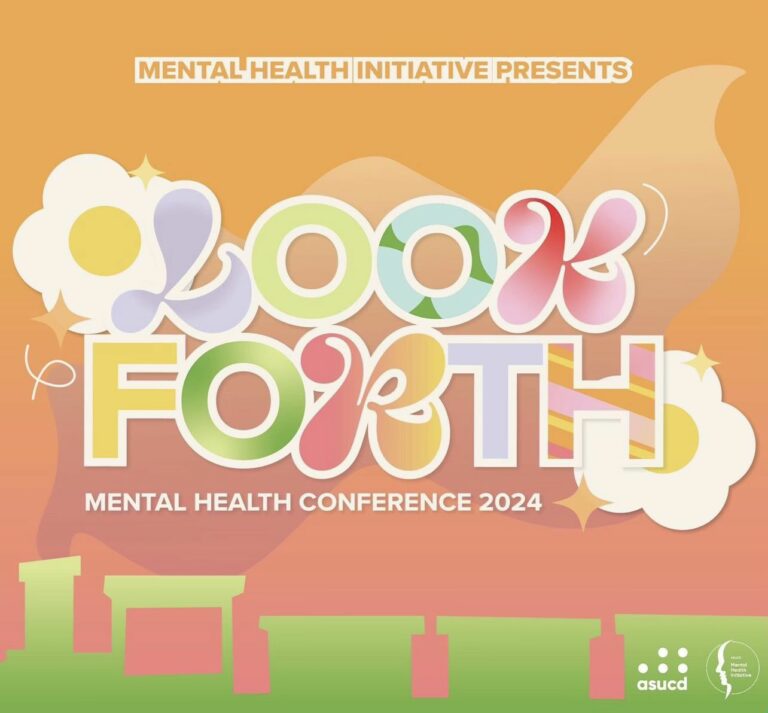
On the weekend of Feb. 17 and 18, the UC Davis Mental Health Initiative (MHI) will hold its annual mental health conference at the UC Davis Conference Center. The theme of this year’s conference is “Look Forth,” and admission is free.  

The conference first began in 2015 and is now one of the largest student-run conferences in California, according to Astha Soni, a fourth-year psychology and human development double major and unit director of MHI. 

With several planned workshops, seminars from keynote speakers, caucuses led by MHI and interactive healing spaces, Soni said that the primary goal of the two-day event is to create a space to discuss mental health issues. 

The organization began planning for this event over a year in advance, according to Antonio Valencia Gallardo, a fourth-year psychology and human development double major and unit director of MHI.

“The planning begins with reserving space for the event in advance, reaching out to the keynote speakers beforehand and to other organizations asking them to be a part of the conference, as well as asking other student organizations on campus to have performances and participate in our conference,” Gallardo said. “There’s also a lot of graphic work that needs to be done, [which is] why we start pretty early.”

The funding for this conference is allocated through ASUCD. 

“Being a part of student government gives us the opportunity [to use] school funding, which is really nice,” Soni said. “We’re usually able to cover most of our conference expenses through the budget that we’re allocated.”

However, planning the conference has become more difficult for MHI, especially coming back from the pandemic, according to Soni.

“Last year was our first year back in person, hosting an in-person conference,” Soni said. “So it was a little harder to get attendees. The main challenge [we] face is advertising and getting attendees to come.” 

Gallardo said that students should attend the event because it has something to offer to everyone. 

“We provide so many activities that you have a place to learn or do something, no matter what you attend,” Gallardo said. “We also have really cute merchandise coming up because of the conference.”

For example, Gallardo said that the Mental Health Association of San Francisco will be hosting a mental health crisis and first aid training at the conference. The training will teach attendees about steps that one should take when they or their peers are struggling with their mental health, according to Gallardo.

Soni and Gallardo also outlined another workshop that will take place at the conference in partnership with Rethink Ice Cream, an ice cream company based in California that was founded on the basis of mental health advocacy. Soni said that this workshop will be especially interesting as the company will discuss the process of creating their ice cream business with addiction recovery in mind and how this intersects with mental health. 

There will be several other activities related to topics such as body positivity, social activism with mental health, queer and trans mental health and bipolar mental health, according to Soni. 

“We encourage people to attend the conference to take a break from whatever they might find overwhelming and to give people space to practice self-care and teach them about what self-care can do,” Gallardo said. 

Students wanting to attend can find the pre-register link for the conference through the MHI Instagram page. All pre-registered attendees will receive a wellness goodie bag, according to their social media page, as well as a food voucher for food trucks and exclusive merchandise. 


Written by: Ragavi Goyal — campus@theaggie.org


Pachamama: A coffee company like no other

The farmer-to-customer connection that brings high quality coffee to Davis residents


By MAYA KORNYEYEVA — mkornyeyeva@ucdavis.edu


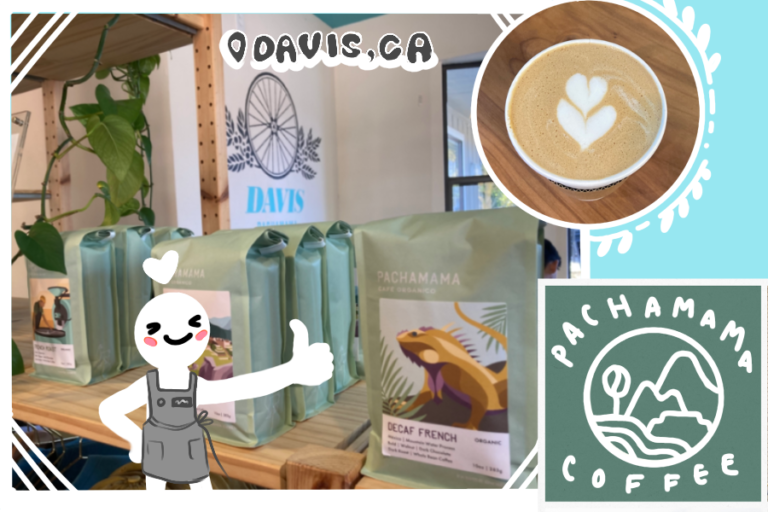
Tucked away at the farthest end of downtown Davis, Pachamama is a quaint coffee house that serves only the highest quality, ethically sourced coffee. Seeing as I am already deep into my second year living in the city of Davis, I am astonished that it took me so long to visit such a unique location — Here’s how it happened.

This past weekend, I gave my friend a lift to the train station in the early hours of the morning. The air was chilly, and the rain and wind swept up the dried leaves and swirled them about. After saying goodbye, I decided to wander downtown, hoping to stop by one of my usual coffee locations — Mishka’s or Philz — for some caffeine and a bite to eat. 

I barely stepped onto the G Street sidewalk when I saw Pachamama, a small cafe from which I could hear soft laughter and music. When I entered, I was greeted with the scent of espresso and the delicate blue hue of the ceiling. The faces of coffee farmers smiled down at me from one of the walls, and cups with latte art lined the countertop next to the bar. 

After taking my first sip of the dulce de leche latte (a seasonal fall drink), I could immediately tell that the craft of the coffee was much higher than I was accustomed to; the espresso was creamy and blended beautifully with the milk, and the flavor was elevated by the subtle notes of caramel. I sipped the coffee as I walked through the drizzling rain back to my car and I couldn’t help feeling a sense of peace. 

Upon arriving back at my apartment, I sat down to do a little research on Pachamama; I wanted to know what made their coffee so delicious and why I had never heard of the company before. 

Turns out, the faces of the coffee farmers I saw on the wall of the cafe were actually the owners, and they lived all over the world — in Peru, Ethiopia, Mexico, Guatemala and Nicaragua. While most major CEO-run coffee companies like Starbucks and Peet’s Coffee simply buy coffee beans from farms in these regions, the farmers who operate Pachamama are part of a cooperative — meaning that they can help control their coffee prices and carefully manage the quality of the coffee they produce, acting as both buyers and sellers.  

Being a part of a cooperative allows a coffee farmer to have better access to international markets, technology for farming/refining coffee beans and more agricultural and economic opportunities. This also fosters community and permits coffee farmers in the cooperative to work together to efficiently solve any problems that arise within the supply chain. 

The international market for coffee is historically oversaturated with low quality beans that are sourced unethically from underpaid farmers. The coffee plantations themselves are also increasingly affected by rising temperatures and, due to climate change, are facing an uncertain future. A business like Pachamama brings shade-grown organic coffee straight from the farmer to the customer, meaning that the coffee is actually priced for what it is worth and puts money directly into the pockets of the farmers.  

While it is true that the beverages at Pachamama are priced slightly above other coffee shops in Davis, they are, in my opinion, truly worth the spend. The virtuosity of the company’s mission, the obvious care with which they handle their product and the quick and quality service all work to create a model for what I believe all coffee companies should strive to be: a business that prioritizes ethical sourcing and worker compensation at every step along the way. 

I am incredibly grateful to have stumbled upon Pachamama (better late than never, I always say). That day I received not only a stellar cup of coffee, but also a story — a tale of how coffee is not just a product to be sold on the shelf but the livelihood of thousands of people. While the Davis Pachamama may be located on the very outskirts of downtown, it is absolutely a destination to be discovered and enjoyed. 


Written by: Maya Kornyeyeva — mkornyeyeva@ucdavis.edu


Disclaimer: The views and opinions expressed by individual columnists belong to the columnists alone and do not necessarily indicate the views and opinions held by The California Aggie.

A guide to license plates

The numbers and letters on your car can reveal more than you think 


By ELI KELLEY — arts@theaggie.org


Countless groups are devoted to the identification and classification of the natural world. Birds, butterflies and beetles have occupied uncountable hours of hobbyist attention. In cities, options for wildlife enthusiasts are more limited. Though natural fauna has been expelled from many city streets, we’ve constructed strange beasts of our own with a variety that challenges even the beetle. While bird watchers and beetle catchers may be hard-pressed to pursue their interests in these urban circumstances, there’s another kind of creature that’s equally deserving of study. The curious and the perceptive can find a great deal of interest and pleasure in examining the most ever-present of our urban beasts: the automobile.

Among all vehicles, license plates are the feature that unites them as both unique and of a kind. They’re the DNA of motor vehicles; no two are the same, even as they share a common structure and design. For anyone interested in the dizzying variety of plates out there, this guide will serve as a primer to the license plates you’re likely to see both around Davis and beyond.

With the exception of custom license plates, all California license plates have a structure to them. A skilled observer can discern a surprising amount from a car’s plates. For instance, license plates are made sequentially. The plate printed after “3XYZ891” will read “3XYZ892.” This can let you know how long ago a car was registered. For instance, the first plate printed using California’s current design for standard license plates was “1AAA000.” That was in 1980. As of early 2024, a plate was printed that read “9KVY267.” The first digit is an easy way to tell approximately when a car was registered. 

Since no two plates are the same, a nine being in the first position suggests that we’re running out of possible license plates of that format. Once the current well of possibilities runs dry, likely a new format will be chosen and the process will start anew.

A perceptive reader may have noticed a reference to “standard” license plates (and congratulations to that reader — their car-watching journey is off to a good start). Most cars share that format of one number followed by three letters followed by three numbers. An experienced observer, however, will spot other formations. 

One example is vehicles registered for commercial use — this usually means large trucks and vans, but also includes some pickup trucks whose owners discovered that commercial plates allow them to park in “commercial only” parking spots. Recently commercial plates took a format that began with the plate “1A00000.” Since commercial plates have two more digits and two less letters relative to standard plates, there are far fewer possible commercial plates (because there are 24 letters and only 10 digits). This led to a shortage of plates, and now commercial plates take the form of “10000A0.”

Running out of plate combinations is a common occurrence. This is especially true for plates made for permanently disabled persons, which have in total only five digits and letters. The format for these plates has changed many times in even just the past few decades. Despite the variety of forms that disabled persons (DP) license plates can take, they’re easily identifiable by the common white and blue “disabled sign” of the figure in a wheelchair. These plates also have in small letters next to the main text of the license plate the letters “DP.” There are also disabled veterans plates that look similar and have the letters “DV.” Some forms these plates have taken over the years include “00001(DP),” “(DP)00001,” “(DP)A0001,” “0001A(DP),” “(DP)001AA” and “AA001(DP).”

License plates can take many forms. Some are common. Others are deeply obscure. The selection referenced here is nowhere near a comprehensive guide. But, the fact that it can’t be serves as a testament to one of the core joys of watching license plates: it’s never finished. There are always different and new formats whose purpose can be deduced. There are always surprising combinations of letters and numbers to be found. For better or for worse, cars are a given nearly anywhere you go. Why not then look for the beauty in this system whose reach touches so many areas of modern life? 


Written by: Eli Kelley — arts@theaggie.org

Argument starter cards

Drawn by: Sandhya Pfile –– sbpfile@ucdavis.edu

Disclaimer: (This cartoon is humor and/or satire, and its content is purely fictional. The story and names of “sources” are fictionalized.)

Victor Lagunes, teacher and union leader, enters District 2 Davis City Council race

Lagunes recently announced his candidacy for city council District 2, currently held by Councilmember Will Arnold


By HANNAH SCHRADER city@theaggie.org


Victor Lagunes is a Da Vinci Junior High History teacher and has worked for the school since 2013. He is president of the Davis Teachers Association and is a board member of the Davis Community Action Network. Lagunes next goal is to be elected to city council.

Before working in the Davis Joint Unified School District, Lagunes obtained his bachelor’s degree in teaching credentials and master of teaching from UC Davis. His experience has influenced his platform for city council, focusing mainly on providing Davis with high-quality education and affordable housing, as well as supporting small businesses in Davis.

“We have a lot of challenges right now in terms of offering housing, and I think that one of the distinct key links that I see from my experience is the link between housing and our schools and the success of our schools,” Lagunes said.

Lagunes said all of the issues his campaign is focused on are related, especially housing and education. 

“I think that you start seeing the overlaps and also the importance of how one discussion can’t be separated from another, right?” Lagunes said. “When you talk about what some of these [issues are], you have to talk about others in connection to those.”

When asked how Lagunes plans to achieve his goals, he said he will try to understand the city’s current situation and evaluate how to integrate these issues to create a realistic plan.

“I think that it is about the needs that the community has in that moment and jumping in and making sure that I am engaging with the community,” Lagunes said.

Lagunes said his ability to learn is what makes him a unique candidate and that he will dedicate himself to serving the Davis community if elected.

“One of the things that I know is that I’m willing to walk the walk and do the work in order to learn what I don’t know,” Lagunes said. “I think that that’s one of the things that’s going to be most critical should I be elected. I hope that […] people recognize that I’m going to do what I need to do in order to be successful and I think that I’ve had that experience already.”

Mark Housing, a UC Davis professor of physiology who works with Lagunes with the Davis Community Action Network, believes that Lagunes is an advocate for teachers in the Davis community.

“I think [Lagunes] is acutely aware of [issues facing educators] and has been advocating for solutions to it for years, including higher pay for teachers, and has now gotten on board with Davis candidates and its inception,” Huising said. “I’m grateful for what happened. He’s just a phenomenal leader and a very nice person to vote for.” 

Huising said that Lagunes is young and has something to offer that sets him apart from other candidates in this race.

“I think [Lagunes] is young,” Huising said. “I think he’s articulate. He’s most focused on leadership. As far as [who] he represents, [you] have somebody like him [who] decided to run while he’s still relatively young.”

Huising shared what he believes Lagunes would bring to the Davis City Council if elected. 

“We have to ask ourselves some really careful questions […],” Huising said. “What type of community, housing and neighborhoods are we building for tomorrow? And I’d be stoked to have somebody like [Lagunes] bring these issues to the forefront at the city council.”


Written by: Hannah Schrader  city@theaggie.org


A winter wind down with some of our Aggie Athletes

0

Tips for athletes to find balance in stressful times


By MI’ZAUNI REESE — sports@theaggie.org


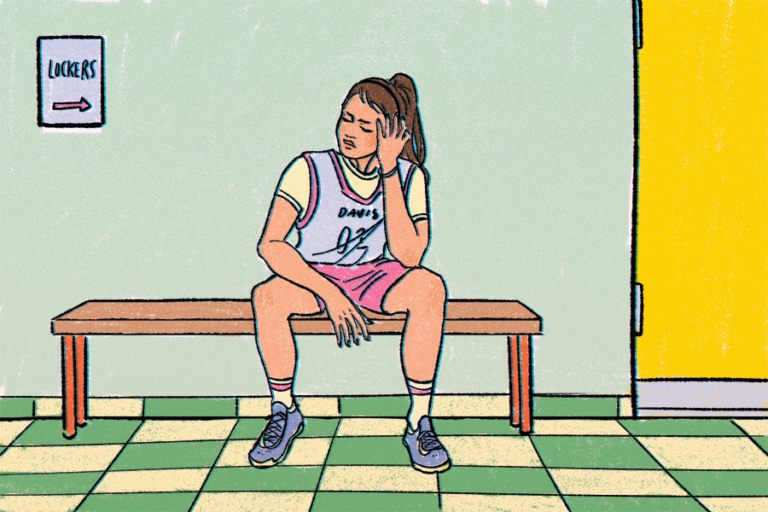
Aggie athletes are some of the most dedicated and hardworking, yet often forgotten, members of our community. Maintaining highly demanding schedules with both academic and athletic commitments is no easy task for athletes. School breaks are one of the few chances Aggie athletes get to take a break from their normal schedules and focus on themselves. 

As winter break has just come to an end, many athletes, like second-year medical and molecular biology major and cheerleader Eden Martin, took the opportunity to reconnect with themselves and be mindful about the relaxation they need. Martin spent her winter break deepening her faith, reading Christian non-fiction and practicing mindful breathing which are key to her active performances during the school year. 

These activities of self-development and productivity not only help her relax, but also make her feel purposeful with her time. Alternatively, Martin also enjoys taking pilates classes which provide her with a form of exercise that is non-goal-oriented and still allows her to maintain her health. 

The overwhelming feeling of stress that comes from sports can be constant for many Davis athletes and hard to manage. Martin, having already been a Davis athlete for a year, gave advice to those feeling this type of stress. 

“Sit outside in the sun and reconnect with yourself,” Martin said. “Take a breather, slowing your breathing and being mindful of your body, [it] will really help center you and allow your mind to slow down.” 

Martin also recommends investing in a planner to stay organized during the school year — a tip all UC Davis students can use.

Similarly to Martin, second-year football player Nick Tyler, a science and technology major, also likes to take advantage of free time during breaks from school by catching up on his R&R. Tyler regularly goes to the gym to stay healthy, but he also makes sure to make up for lost sleep and spends lots of time with his younger brother. 

During the school year, Tyler has a meticulously planned schedule that he adheres to, ensuring he gets everything done in a timely manner. He sets alarms throughout the day with reminders of tasks and obligations, which he would say is his “holy grail.”

 In reminiscing about his time as an Aggie so far, Tyler said that “the beauty is in the process and hard work, not the destination.”

In contrast, some athletes turn to additional competition and pressure as a method of distraction from sports. Fifth-year political science major and football player Jeremiah Chukwudobe finds relaxation in high-intensity basketball games with his friends and other intensive activities. Over break, he took time to travel to Nigeria and spend time with long-distance family and friends. This brought him immense joy and renewed his excitement for his upcoming graduation. 

“Time management is essential,” Chukwudobe said. “Stress derives from a lack of a plan, if you have structure, there is no need to worry. Your life will be better balanced and more enjoyable if you carve out time for things rather than scrambling through your day.”

Additionally, some athletes turn to cleaning and refreshing their space for that relaxation and renewal feeling, including third-year gymnast Ava Scafani.

“Cleaning my living space before break gives me a sense of calm, knowing that I will be able to come home to a clean apartment after break,” Scafani said.

During break, she mostly spent her time doing things she otherwise would not be able to during the school year due to her busy schedule. Scafani enjoyed watching movies, reading and cooking in her downtime at home.

 During the school year when Scafani feels overwhelmed or stressed, she takes time to chat with friends and family. 

“Catching up with people she is close to gives my mind a break,” Scafani said, “as well as taking many walks outdoors and journaling.” 

Scafani insists on one other piece of advice for Aggies who are feeling the pressure that comes with being an athlete.

“Develop a routine that includes both necessities and time to unwind, establishing time for yourself is crucial to success,” Scafani said.

All of these athletes are stars on the field, representing our community and uniting students and staff as fans and supporters, while managing their own struggles. Breathing, exercising and cleaning are ways anybody can manage their stress and take the time to prioritize themselves while still maintaining a face-paced life. Everyone, no matter if they’re a  student, athlete or teacher, should take the time to relax and find a way to balance themselves to stay motivated and ready to take on the new year. 


Written by: Mi’Zauni Reese — sports@theaggie.org


Davis MoMA: Son of ‘X’

Original: “The Son of Man” by René Magritte


Drawn by: Nimra Farhan –– nfarhan@ucdavis.edu

Disclaimer: (This cartoon is humor and/or satire, and its content is purely fictional. The story and names of “sources” are fictionalized.)

‘Sexcessful’ tips from UC Davis’ Love Lab

0

Sexual Well-being Student Coordinator Tristan Fernandez-Acosta speaks on the often unasked questions about students’ sex lives


By FAITH DEMEULENAERE — features@theaggie.org 


Not many students are aware of The Love Lab, which is, according to their website, “a mobile cart stocked with external condoms, internal condoms, dental dams, water-based lubricant and silicone-based lubricant available to UC Davis students at no charge. It also provides pads and tampons, in addition to educational materials, buttons, and stickers.” 

Tristan Fernandez-Acosta, a second-year psychology major and the sexual well-being student coordinator for The Love Lab, commented on the mission led by Davis’ Love Lab to break the stigma around sex and foster open conversations.

“What turns sex into a taboo would be the negative stigma around it for generations from society as a whole, family, cultural and religious beliefs,” Fernandez-Acosta said. “Family is the first influence anyone has, and oftentimes sex isn’t talked about in households, which reinforces the idea that sex is bad or wrong to talk about, along with the societal influence that speaking out about sex is ‘inappropriate.’”

As a society, we must accept that sex is a normal, natural part of life, according to Fernandez-Acosta. Some schools even go as far as to support the idea that sex is taboo when teaching sex education to their students by providing little to no real information. 

“The only real solution is to support people who have questions, thoughts or concerns about sex rather than putting them down for not knowing when some are just seeking answers they never got and are curious,” Fernandez-Acosta said. “Extensive and inclusive sex education in schools would definitely make an impact, but the support also needs to come from parents, peers and slowly erasing the reputation society has given sex.”

The Love Lab provides educational workshops, demonstrations, free safe sex products and resources for STI testing and gender care. All of these things and more are provided at the Cowell Building.

Nina Finsch, a first-year undeclared major, like many other first-year students, had previously not heard of The Love Lab. 

“I’d have to check that out, it seems like a cool option for students,” Finsch said.

When it comes to discussing the topic of sex, many shy away. However, Fernandez-Acosta advises against that.

“[Though] it may be a tough topic, [try to] be aware of your sex partners’ previous and current sex partners in regards to preventing STIs and just being informed,” Fernandez-Acosta said. “Don’t feel afraid to talk with your partner about what is and isn’t okay for you during sex — discussing what feels best for each party can help with navigating your first couple experiences.”

The Love Lab wants students to remember that sex doesn’t have to be a scary thing — it’s not wrong, and “it’s completely normal to be nervous or to have doubts due to prior experiences and [lack of] information,” Fernandez-Acosta said.

Sophie Muñoz, a third-year biology major, discussed the negative effects of stigmatizing one of the common aspects of a college student’s life.

“There is a lot of stigma around the sex lives of college students,” Muñoz said. “It’s hard to find [one’s] self-identification in it.”

If anyone is experiencing any sort of trouble with sexual experiences, The Love Lab’s Instagram direct messages are always open for support. Additionally, the Gender Care Team can always guide Aggies in the right direction.


Written By: Faith DeMeulenaere — features@theaggie.org


UC Davis Fire Department launches program to improve mental health, basic needs access across campus

Health 34 is available 24/7 to help individuals find resources and necessities before a crisis occurs


By MADISON PETERS — campus@theaggie.org


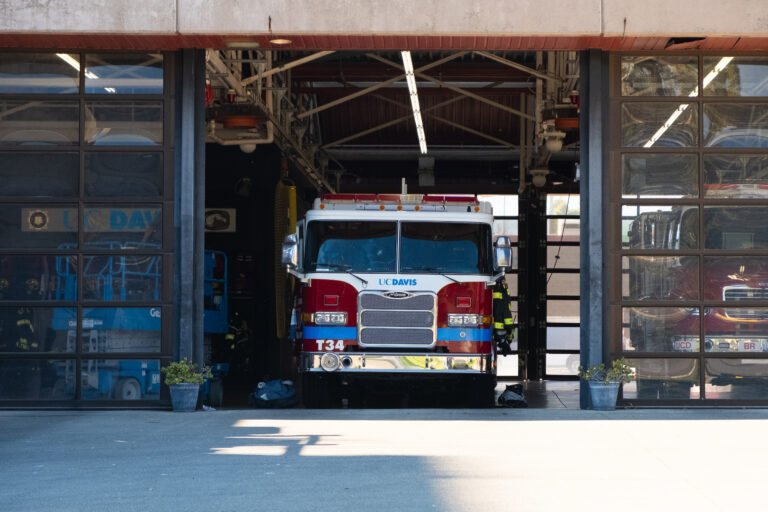
On Sep. 5, 2023, the UC Davis Fire Department launched Health 34, a new non-emergency service dedicated to reducing crises by providing services for mental health and access to basic necessities across campus. The program is available every day and hour of the year.

UC Davis Fire Chief Nathan Trauernicht started Health 34 in order to address disparities in the emergency system and other institutions, specifically those geared toward mental health.

While the program has been in the works for seven years, it was presented to the Chancellor’s Board after witnessing the exacerbation of mental health issues due to the pandemic, according to Trauernicht.

“I use the tagline, ‘reimagining compassion,’” Trauernicht said. “How do we as an institution do something different than what we’ve been doing that’s obviously not helping everyone that needs help? How do we navigate people [towards] resources, and then how do we find out what the barriers are to them accessing it? Then, how do we take those barriers down wherever we can with the goal of preventing crisis wherever we can?”

Trauernicht explained that if someone is experiencing any struggle, from anxiety about school to food or housing insecurity, they can call the seven-digit number: 530-754-3434. There, they can talk to a Health 34 provider who can either lend an ear to listen or navigate people to the resources they need at zero cost.

“At its core, we are service navigators and health educators available 24/7, 365 days a year to be there with you in the time that you need us, to give you resources and reassurance and to check in and find out if you are continuing to support your ongoing wellness,” Trauernicht said.

This program is unique in that members of the team can come meet the caller in person as long as they are on the UC Davis campus, according to Stormi Homdus, a Health 34 provider. 

Upon receiving a call, Homdus said that members of the Health 34 team would arrive in a temperature-controlled, ADA-compliant van that provides a safe environment to talk in. All providers have extensive backgrounds in both the emergency system and as paramedics.  

The van is also equipped with necessities such as ice packs, pencils, deodorant, feminine hygiene products and shelf-stable foods.

Homdus then spoke on the range of services that Health 34 provides.

“If you don’t have access or don’t want to go to the emergency room, but you need an ice pack, we can help you with that,” Homdus said. “Anxiety, depression [or] thoughts of self-harm, anyone is welcome to call us for that. We’ve helped people with emergency housing — we have access to get that ball rolling and we’ve helped people move their stuff as well. We’ve given people snacks, food or anything to make their day a little bit better.”

The services provided by the program are not only available to UC Davis students but also to faculty, unhoused populations and anyone else who may be struggling in the Davis area, according to Blythe Clark, a Health 34 provider.

Clark said that the team’s goal is to meet every case with compassion and kindness.

“There is a huge benefit to human connection and having someone answer the phone,” Clark said. “There’s a voice on the other side of the line that’s here to be with you when the world feels really unmanageable.”

Since its launch, Health 34 has successfully answered over 235 calls for assistance and has had more than 1000 interactions, according to Clark.

The program collaborates with many on-campus resources such as Aggie Compass, The Pantry, the LGBTQIA+ Resource Center, Health and Wellness Services and countless others. 

Health 34 can also navigate and provide transportation to these services, but can also provide their own services to fill in the gaps during the hours when these resources are not available, according to Trauernicht.

When asked about goals for the upcoming quarter, Health 34 Provider Destiny Rogers said that she hopes to make more connections with resources both on and off campus, on top of hoping people would feel more comfortable calling when they need help.

“Our goals are going to be visibility and marketing and just making sure that everyone knows we exist,” Rogers said. “One of our goals is to let people know or embrace the fact [that] we are here for them no matter what. They are not taking up a resource, they are just as important as anyone else and they can truly call any time. People really struggle with the 24/7 aspect, but we are truly there 24/7 and we hope people embrace that.”

Additionally, Clark said that the program is looking for student feedback to help improve their service in any way possible.

“If students know about us and see a place that they think we would be helpful or they’ve had contact with us and have feedback, we are really open to learn from them,” Clark said.

Trauernicht encouraged people to stop by the red Health 34 van if they see it on campus  to get any resources they might need or even just to chat.  

Trauernicht ultimately wants Health 34 to reimagine how care is given to a community.

“No matter who you are or where you come from, we all struggle,” Trauernicht said. “We want to make UC Davis a place where we recognize that struggle is part of life and no one has to go through it alone. Please reach out for help early so we can connect people to resources before they reach a point of crisis.”

Written by: Madison Peters — campus@theaggie.org

Should the inside of the Art Building be covered in graffiti?

Students weigh in on why they would like to make a space that reflects their creativity 


By SAVANNAH BURGER—arts@theaggie.org


Despite being the central building for all of the studio art classes on campus and the department building of the art studio major, the Art Building itself isn’t characterized as very, well, ‘artsy.’ In fact, upon going inside, you’ll find that the vast majority of the building is comprised of seemingly endless white walls that occasionally have student art pieces displayed throughout the quarter.

“It’s depressing. It’s sad. There’s nothing going on — it’s blank,” Marceline Bausone, second-year design and art studio double major, said.

She, along with many other students, agree that the current aesthetic state of the Art Building is bland, cold and distant.

“It gives prison,” Bausone said. “It’s like I could be incarcerated there.” 

The white walls don’t come off as warm and inviting, but rather stale and removed from any sort of personality. In short, the opposite of what someone would expect an art department building to be like. Other students, such as fourth-year art studio major Danielle Dizon, share these same sentiments.

“I remember first touring here before I was a freshman, and there’s just nothing around here. It feels kind of dungy,” Dizon said. 

Granted, some may argue that the walls need to be white to contrast and compliment displayed artwork. However, there are many other walls, such as those in the first floor, bathrooms and stairwells, that are left completely devoid of any sort of decoration or display throughout the entire year. 

Dizon pointed out that if the Art Department were to allow students to paint or otherwise decorate these walls, it would be a great opportunity to spotlight artists. The department could even choose to paint over large student pieces every year for a clean slate and spotlight another artist in the same wall space. 

Additionally, there are mural-focused art courses where the attention could be on students painting murals all over the art building, breathing into it some sort of creative life. What better canvas to paint murals on than a white-walled art building begging for character?

As the building is the center for hundreds of art majors, it doesn’t come as a surprise that we’ve seen an introduction of graffiti. Treating the white walls like blank canvases waiting to be filled, graffiti has pushed back against the barren walls of the Art Building.

These wall illustrations, however, are painted over time and time again. There are some areas, such as the northernmost flight of stairs on the right side of the building, that are seemingly designated for students’ creative graffiti and not covered up. The question is: should the rest of the building embrace this freeform, artistic approach of decorating the walls?

Third-year design and art studio double-major Mateenah Muhammad supports the allowance of appropriate, artistic graffiti to cover the halls.

“I think it’s a great way to fill the walls up because this is an artistic, creative space with individuals and also you can see with other people — their styles and stuff like that,” Muhammed said. “I personally enjoy it.”

A lot of the graffiti works to pull away from the perceived cold, lifeless atmosphere that the blank walls produce — some are beautiful, others are funny.

“It brightens my day to see people like, you know, the funny little things that they think up in their mind and put on the walls,” Muhammad said.

There are endless ways the walls in the Art Building can be utilized not only for decoration, but also as a tool for art majors when creating public murals, installations or other forms of art. The fact that graffiti persistently spreads across the building despite being painted over repeatedly shows that many students want the building to be something more than white and empty and they resist the eradication of their art. 

There is potential that the Art Building could double as both a university hall and a giant exhibition of the works of UC Davis’ art majors, ranging from graffiti to murals and sculpted installations.

Although both current and future graffiti should be monitored to filter offensive content, to welcome it and give consent to students to adorn the building with graffiti could be the first step in starting a student tradition of making the Art Building uniquely and creatively their own.


Written by: Savannah Burger—arts@theaggie.org


Davis hosts 30th annual Martin Luther King Jr. Day celebration

The celebration highlighted “peace activism”


By ALMA CULVERWELL city@theaggie.org 


On Monday, Jan. 15, the city of Davis and the Davis Human Relations Commission hosted their 30th annual Martin Luther King Jr. Day celebration at the Veterans Memorial Theater. This year’s celebration highlighted “peace activism” and showcased support and solidarity in the face of adversity.  

Josh Chapman, who was recently sworn in as mayor, talked about the importance of the event and said that he’s proud that the Davis community fosters inclusion. 

“This annual event is a time to celebrate and honor the life and impact of Dr. Martin Luther King Jr.,” Chapman said. “I am proud to live in a community that fosters equality and supports opportunities for inclusion. We reaffirm that Davis is a place where all people belong and are welcome and where violence and hate are not part of our basic fabric.”

The event included an exhibit put together by local high school students taking ethnic studies and hosted several speakers and performers highlighting themes of unity, activism and accountability. Some of the speakers present included Rev. Connie Simon from the Unitarian Universalist Church of Davis, chair of the Multicultural Community Council Tessa Smith, dance group Afro Mini Vibes and Davis Poet Laureate Julia Levine.

The event also included a variety of media to commemorate Martin Luther King Jr. including photos, live music and poetry readings.

Many speakers urged the audience to focus on solidarity and accountability in the upcoming year.

“I’m going to ask you this year to call people into those tough conversations,” Smith said. “If we lead with our humanity and lead our conversations centered around our shared values, we can come through this together and be stronger and stay in unity [against] those things we do agree with.” 

Simon similarly urged community members to consider their actions and to be the change they wish to see in their community.

“In many ways, it feels like it is already too late, but I promise you it isn’t,” Simon said. “As long as peace and justice-loving people draw breath, it is not too late for each of us to lean into the work of peace and justice. It’s not too late for each of us to do the work of love. It’s okay if you start simply, because we all have to start somewhere. […] If you want to see more love, then be love.”  

Doors opened for the event at 10 a.m., with speakers and performers starting at 10:30 a.m. The event also included tabling from local civil rights groups and concluded with a march from the Veterans Memorial Theatre to the Solidarity Space in Central Park at 12 p.m.

NJ Mvondo, chair of the Davis Human Relations Commission, acknowledged the work of current civil rights activists during the celebration.

“We can’t honor Dr. King’s principles as well as the civil rights movement without also acknowledging the work of everyone who today is uplifting his legacy by advocating for peace and solidarity, and that includes people in this room,” she said. “We are dealing with lots of conflicts right now, […] the number one answer to that is showing up in solidarity.” 


Written By: Alma Culverwell city@theaggie.org