56 F
Davis

Davis, California

Wednesday, December 24, 2025
Home Blog Page 116

Student-run clinic at UC Davis is medically and culturally aware of its patients’ needs

0

Paul Hom Asian Clinic provides free health care to Asian population in Sacramento


By LYNN CHEN — features@theaggie.org


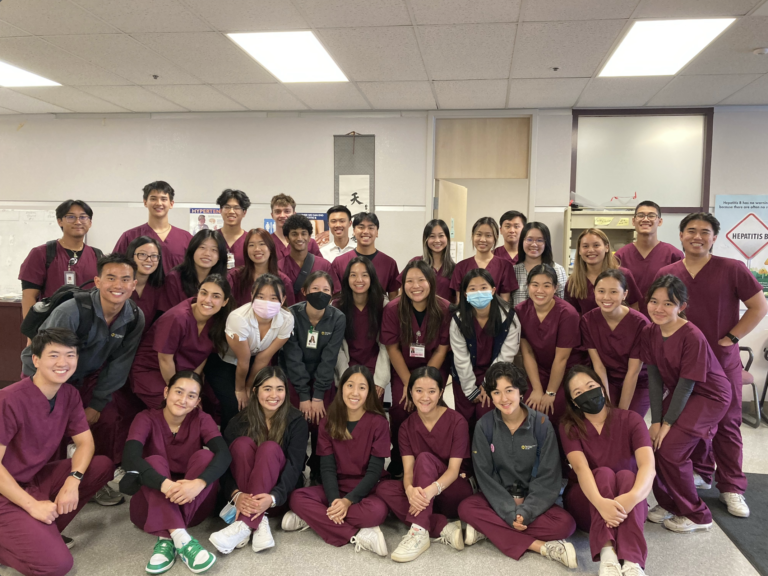
Student-led organizations from UC Davis can make great impacts on local communities. The Paul Hom Asian Clinic, a free student-run clinic located in Sacramento, is dedicated to providing free primary care services to the underserved and uninsured Asian population in Sacramento.

Eight different health-related committees comprise the undergraduate branch of the clinic, each focused on looking after a specific aspect of patient health. For example, there are committees revolving around neurology, women’s health and Covered California services.

In order to accomplish its mission in a linguistically and culturally sensitive manner, the organization also offers translation services concurrent to its clinical setting. You can find student volunteers who speak languages such as Mandarin, Cantonese, Korean and even Spanish.

The clinic itself is staffed by undergraduates, medical students and doctors from UC Davis and its medical school, all of whom are passionate about advocating for adequate health care for Asian immigrants.

“It was never pushed upon us that we needed to work harder,” Aastha Lele, recent UC Davis graduate and previous English patient advocate for the Paul Hom Asian Clinic, said. “Everyone [knew] that they wanted to do well, and it was a culture I really enjoyed being a part of.”

David Wei, a first-year economics major, agreed with this sentiment as well. Wei has already visited the clinic once and is a current applicant for the Mandarin patient advocate position.

“It’s super cool to see how detail-oriented everyone was about the most effective way to treat patients,” Wei said.

Students at the clinic were mainly motivated by the pressing medical needs they understood their patients had.

“[Our patients] wouldn’t be able to access health care anywhere else outside of our clinic,” Bradnon Gatanaga, an undergraduate co-director for the clinic, said. He is also currently a fourth-year neurobiology, physiology and behavior major looking to enter the medical field.

“They have a language barrier and can’t go to any doctor or a regular healthcare service,” Gatanaga said. “But being able to provide such a unique, important and necessary service […] to people who [otherwise] wouldn’t be able to get — that is such a gratifying experience.”

The level of cultural competence the clinic maintains for its patients is part of what makes it such an impactful organization, to both the patients and those who work at the facility.

“What makes the [volunteer experience] so redeeming is that a lot of patients really valued what we did as undergrads,” Lele said. “When I spoke Hindi to a few of the patients I translated for, it made them feel like they were at home and being taken care of. They would invite me over for dinner and say stuff like, ‘I’ll cook like your grandma does!’”

Though Lele had to decline their offers, she was touched by how much the patients appreciated what the volunteers did. In fact, this experience from being part of the Paul Hom Asian Clinic is one of the reasons Lele is a pre-med student now.

The organization also provides effective medical treatment in concurrence with its translation services.

“One of our patients came in and brought us a whole box of doughnuts, just because they were so grateful for us being able to help them with a [health issue] that they’ve been having,” Gatanaga said.“They actually did have a primary care provider of their own who wasn’t [that effective]. But then they came to our clinic and said that our care was really phenomenal, and that [we] were really able to help them.”

Many of their patients actually have their own health insurance and can access primary care providers, according to Gatanaga. However, they choose to come to the Paul Hom Asian Clinic for its excellent and thorough services.

Beyond offering quality primary care services to the Sacramento Asian community, the organization is also committed to providing opportunities for its undergraduate members to gain experience in medicine.

Lele believed that the process of translating for patients and seeing how they get cared for by doctors developed members’ knowledge of medical treatments.

Additionally, when Lele was still in the clinic, medical students would often host “drug of the week” presentations to undergraduates. These were based on material the medical students themselves were currently learning.

“They made the meetings so that undergrads would be open to asking questions about the [drug] mechanisms that were being presented,” Lele said.

Despite all that it has already accomplished, the Paul Hom Asian Clinic is also working to continuously improve its work and the care it supplies.

For example, Gatanaga recently implemented a psychiatry screening program to ensure that at least once a year all patients can have an avenue to discuss their mental health.

“Since then, we’ve actually had a really big influx of patients coming into our psychiatry specialty days,” Gatanaga said. “I feel like I’ve been able to do a lot of projects that I’m [passionate] about. As a leader in the clinic, you really have the power to make changes.”


Written by: Lynn Chen — features@theaggie.org

Find your perfect read in 2024

Eight to-be-released books to add to your reading list 


By SAVANNAH ANNO — arts@theaggie.org

As New Year’s resolutions have been made and Goodreads goals have been set, it’s time to find out what books will be hitting the shelves in 2024. Spanning from historical fantasy to personal essay collections, there’s something new for every type of reader. Here’s a list of eight of the most anticipated books set to release between Feb. and April: 


“The Bloodied Nightgown and Other Essays” by Joan Acocella 

This recommendation is for anyone who’s had to read “Beowulf” for school and actually ended up enjoying it. Having worked as a critic for The New Yorker since 1995, Acocella’s most recent essay collection delves into her sharp opinions on J.R.R. Tolkien’s famous lecture on “Beowulf,” comedian Richard Pryor and more –– to be revealed upon its release. Having just passed away, the 24 essay-long collection celebrates Acocella’s life and work. Scheduled for release on Feb. 20, 2024. 


“Fruit of the Dead” by Rachel Lyon

In “Fruit of the Dead,” Rachel Lyon works to reimagine the Greek tale of Demeter and Persephone, following a contemporary mother, Emer and her daughter Cory. Cory is thought to be missing after a summer as a camp counselor. In reality, Cory has been charmed by the luxury and looks of Rolo, a father of one of her campers and meant to be the book’s version of Hades. Rolo invites Cory to stay with him on a private island, unbeknownst to her mother. The tale explores the complications of motherhood as Emer chases Cory and both grapple with feelings of loneliness and abandonment. Scheduled for release on March 5, 2024. 


“Until August” by Gabriel Garcia Márquez

Discovered 10 years after the Nobel Prize winner’s death, “Until August” is 2024’s most unexpected release. Márquez explores the lives and love of women through his main character Ana Magdelena Bach as she travels to and from an island and grapples with the death of her mother. Scheduled for release on March 12, 2024.


“Who’s Afraid of Gender?” by Judith Butler

“Who’s Afraid of Gender?” is a deep dive into recent “anti-gender” movements and violence against LGBTQ+ groups. A philosopher and professor at the University of California Berkeley, Judith Butler aims to get to the root of these events in their new nonfiction novel, as they investigate the motives of these movements and how to move forward. Scheduled for release on March 19, 2024. 


“We Loved It All” by Lydia Millet

Lydia Millet has written over a dozen pieces of fiction and ecological critiques, earning her a finalist spot for both the Pulitzer Prize and the National Book Awards. In “We Loved it All,” she decides to get personal. Using a memoir format, Millet pulls stories from her own life and writes to explain the importance of the natural world. Expected to be a moving read for anyone interested in climate science or with a strong connection to the outdoors. Scheduled for release on April 2, 2024. 


“The Familiar” by Leigh Bardugo

Beloved author of the “Shadow and Bone” universe, Bardugo returns this year with a new standalone novel. The story follows a servant, Luzia, as she is forced to use her powers to elevate the social status of the family she works for. The novel is set in the Spanish Golden Age and provides commentary on the Spanish Inquisition as Luzia’s life becomes full of danger, magic and romance. Scheduled for release on April 9, 2024.  


“Knife: Meditations After an Attempted Murder” by Salman Rushdie

After surviving a brutal attack in 2022, being stabbed on stage right before beginning a lecture at the Chautauqua Institution in New York, Rushdie aims to show his perseverance and healing process through “Knife.” The memoir follows his experiences and challenges after the incident that resulted in the loss of sight in his right eye. Known for his magical realism and historical fiction pieces, readers are excited to see his writing style in a new form. Scheduled for release April 16, 2024. 


“Funny Story” by Emily Henry

Now a figurehead for contemporary romance, with four New York Times Best Seller novels, readers can’t get enough of Emily Henry. In “Funny Story,” Miles and Daphne have one thing in common: Daphne’s fiance leaves her for his childhood best friend, and Miles is the ex-boyfriend of that childhood best friend. The two become roommates, and we can only imagine what Henry has in store for them afterwards. Scheduled for release on April 23, 2024. 


As more and more writers are tackling issues like climate change and gender politics, while still creating worlds filled with magic and human connection, genres collide and books become increasingly diverse. 2024’s wide variety ensures that there’s a perfect book in store for everyone, whether you’re a devoted Márquez reader, a nonfiction lover or someone craving a fantastical romance. 


Written by: Savannah Anno — arts@theaggie.org

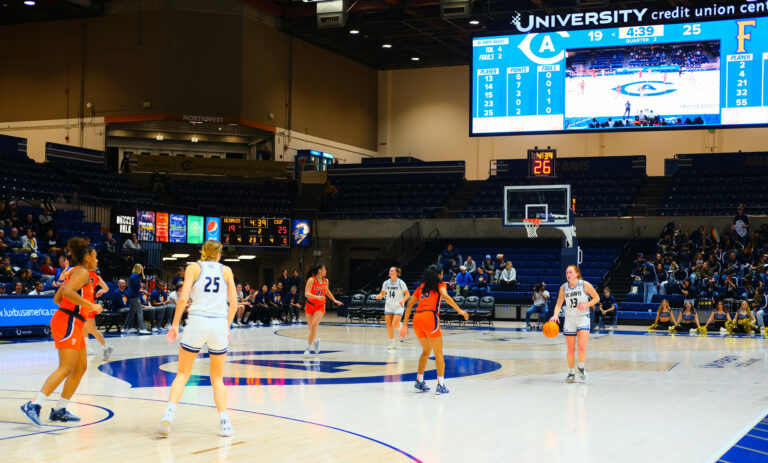
UC Davis women’s basketball defeats CSU Bakersfield Roadrunners 62-46

The Aggies hold on to four wins and two losses at the start of this conference season 


By LUCIENNE BROOKER — sports@theaggie.org


After a rocky start to the conference season, the UC Davis women’s basketball team was able to turn their performance around and win four consecutive games. With losses against UC Santa Barbara and Cal Poly in the opening matches of the season, the future was looking bleak for the Aggies. However, the team stayed optimistic and was able to make a comeback streak, most recently defeating CSU Bakersfield in the latest match. 

On Jan. 4, UC Davis earned their first conference win of the season — defeating UC Riverside in a tight match. The Aggies held the advantage for most of the game, but that wasn’t enough to stop the Highlanders from remaining a formidable opponent until the final whistle was blown. 

The Aggies put on one of the best performances we’ve seen all season, leaving the Highlanders to play catch-up. Tova Sabel, a fourth-year psychology major, led the team in points scored — a total of 16 points — with Megan Norris, a second-year political science major, and Evanne Turner, a fourth-year psychology major, right behind her with 13 points each. Additionally, Sydney Burns, a third-year human development major, had a team-high of five assists. However, despite a strong game from the Aggie offense, things got tense in the final quarter with the Highlanders refusing to give up the game. 

Heading into the final 10 minutes of play, the Aggies held a comfortable 20-point lead and were trying to run out the clock when the Highlanders attempted a comeback. The Highlanders went on an 18-2 scoring run to cut the lead to just three points with less than a minute left on the clock. The Aggies, feeling the pressure, were not ready to let their first conference win slip away. With an outstanding defensive play, the Aggies were able to prevent the Highlanders from capitalizing on their last chance to score. 

In one final play, Norris converted to free throws to clinch the 63-59 victory for UC Davis. Despite some nervous moments for both Aggie players and fans, there were plenty of positives in their performance. Notably, the defense held the Highlander offense to a record low of 34.8 percent shooting from the field, a statistic that definitely helped ensure their ultimate victory.

Next up, the Aggies faced a quick turnaround as they headed back to the University Credit Union Center in Davis to face off against UC Irvine on Jan. 6. The team treated a passionate crowd of 1,012 Aggie fans to a thrilling match as they defeated the Anteaters 60-57. Sabel and Turner again contributed great success to the team — 16 and 13 points respectively. They were joined by Mazatlan Harris, a third-year animal science major, who scored 8 points. 

This time, Davis was the team forced to play catch-up for most of the match as UC Irvine’s offense gave a stellar performance. However, it was ultimately the Aggies who were able to take the lead in the final moments of the game. With a game-changing steal by Bria Shine, a third-year neurology, physiology and behavior major, in the last seconds of the game, UC Davis earned their second conference victory and improved to a 2-2 season record. 

After her massive performances against both Riverside and Irvine, where she scored 16 points in each game, Sabel was named the Big West Player of the Week. The guard has provided a huge boost to the Aggie offense this season, averaging over 14 points per game. 

After two tight victories, UC Davis players and fans were relieved when the team comfortably defeated CSU Northridge 55-45 on Jan. 11. The offensive trio — Turner, Sabel and Norris — combined for 41 of 55 points, and Burns again led in assists. The Aggies took the lead in the first quarter on an 11-0 run and never looked back, maintaining their lead for the rest of the game thanks to stellar defense. 

With another comfortable win against CSU Bakersfield, the Aggies improved to 4-2 in the conference and jumped to the fourth spot in the league. Their 62-46 defeat of the Roadrunners relied heavily on an electric performance by Turner, who scored 22 points and nearly tied her season high. Additionally, Sabel and Norris continued their high-scoring streaks to contribute to the team’s offensive power. 

The Bakersfield Roadrunners were not at their best, playing a poor game after being forced into unnecessary mistakes at the hands of the Aggie defense —- ultimately costing them the win. Again, Davis’ strength never faltered after taking the lead in the first quarter, leaving Aggie fans excited to see Lena Svanholm, a chemistry graduate student, return from injury and score some points.

UC Davis women’s basketball will face UC Irvine this week for another time this season as they look to move up in the conference standings. This match will undoubtedly be an exciting one as the Aggies look to continue their winning streak and make fans proud.  

Written by: Lucienne Brooker — sports@theaggie.org

Augmented reality glasses may be the future of surgery

This technology allows surgeons to visualize their patients’ anatomy without making a single incision


By KATIE HELLMAN — science@theaggie.org

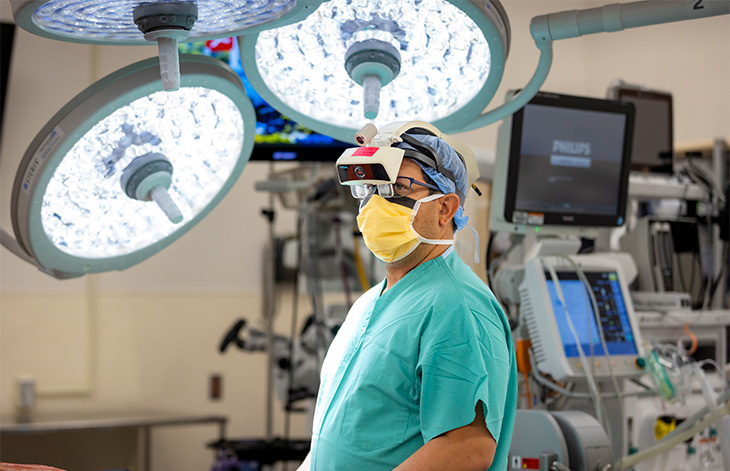
Part of a surgeon’s responsibility is to cut into their patient in order to visualize and fix their medical issues. But what if surgery didn’t need to be so invasive? UC Davis Health’s spine surgeon Safdar N. Khan is one of the first surgeons in the United States to use augmented reality glasses during surgery, which allow him to view a patient’s spine in 2D and 3D without opening them up.

Augmented reality is a technology that incorporates digital information into a user’s real environment — this is different from virtual reality, where the user becomes immersed in an artificial world.

Augmented reality glasses allow Khan to make smaller incisions and more accurately perform procedures, reducing the potential for complications. Surgeries can also be done at a faster pace, leading to a shorter recovery time.

“Real-time augmentation of surgery usually involves the blending of acquired 3D imaging with surgical reference points,” a study by PubMed reads. “AR [augmented reality] is the addition of artificial information to one or more of the senses that allows the user to perform tasks more efficiently. This can be achieved using superimposed images, video or computer-generated models.”

Khan, a professor of orthopedic surgery and vice chair of surgical innovation in the Department of Orthopedic Surgery, believes that augmented reality will be utilized more frequently in medicine — especially by future surgeons who grew up in the era of technology and virtual reality.

“I think AR is the next step within the zeitgeist of surgical innovation, where we have to think outside the box to find solutions that match the challenges we’re seeing,” Khan said in an interview with UC Davis Health.  

Khan has a plan to build an augmented reality studio through Aggie Square, a Sacramento-based innovation hub, to further the evolution of the technology.

“This is a first of its kind at UC Davis Health and demonstrates our firm commitment to fostering translatable technological innovation — and helping our faculty catalyze their entrepreneurial ideas,” R. Lor Randall, chair of the Department of Orthopedic Surgery, said in an interview with UC Davis Health.

UC Davis Health has already been making progress on the use of augmented reality in healthcare. The 3D Printing and Visualization (3D PrintViz) lab allows surgeons to view their cases in a hands-on, innovative way. It utilizes augmented reality to create holograms, and the virtual models can be analyzed and manipulated so surgeons can better understand how to best treat their patients.

As augmented reality applications continue to advance, they will pave the way toward improved patient care, safer procedures and a new future of medicine.

Written by: Katie Hellman — science@theaggie.org

Davis City Council discusses partnership with Caltrans I-80 project, thanks Councilmember Arnold for time as mayor

The city council discussed a comment letter regarding the Caltrans Draft Environmental Impact Report 


By CHRIS PONCE — city@theaggie.org


On Jan. 9, the Davis City Council held their first regularly scheduled meeting of the month. At their meeting, the council swore in Councilmember Josh Chapman as mayor and authorized letters of intent to partner with the California Department of Transportation (Caltrans) on their Interstate 80 (I-80) expansion project.

The meeting began with the transition of power from Councilmember Will Arnold to now Mayor Chapman. Chapman was sworn in by his two sons as he recited his oath of office. Chapman read a letter that thanked Arnold for his time as mayor and acknowledged the challenges he faced in 2023.

“Mayor Arnold led the city with conviction, courage, resilience and humor during an especially challenging year that included unprecedented storms, the stabbing deaths of local residents, bomb threats and more,” Chapman read. “And whereas Mayor Arnold was a stabilizing force for the community and was the right mayor at the right time.”

Yolo County Supervisor and former Mayor of Davis Lucas Frerichs spoke during the public comment section of the meeting to thank Arnold for his time as mayor. Frerichs shared that he has known Arnold for nearly 30 years, dating back to high school.

“Will Arnold was student body president of Davis High School when I was a brand new student at Davis High School, in my senior year,” Frerichs said. “Will was assigned to tour me around Davis High — so I have watched you and [your] love for this community for nearly 30 years.” 

Newly elected Vice Mayor Bapu Vaitla spoke at the end of public comment regarding the mayor transition. Vaitla said that Arnold served during “one of the most difficult years in the history of Davis,” specifically referring to the stabbings that occurred last spring. 

“It marked every one of us in different ways. For some of us, we may never think about it again, but we’re going to carry it around as a piece of us,” Vaitla said, referencing the stabbing incidents. “And for some of us, we’re going to think about what happened every day and it’s going to be in the air we breathe.”

Vaitla shared a confidential moment from the middle of the stabbings where the councilmembers shared their feelings and thoughts in the moment. Vaitla said that Arnold told each councilmember what kind of mayor of Davis they would represent.

“‘[Partida], I think of you as the mayor of social justice’ and [Arnold] went around to [Chapman] and I and gave us all our titles, mayor of something, some essential part of life in Davis he thought was our passion and what we were in the office for,” Vaitla said. “And then he started tearing up a little bit like he is now, and he said pretty quietly, ‘And I think of myself as the mayor of playgrounds.’”

Vaitla said that this title rang especially true since Arnold loves people and children. Arnold was willing to do anything to protect the people of Davis, according to Vaitla. 

The next major agenda item the council discussed was the proposed Caltrans I-80 expansion project.

Caltrans is looking to expand the I-80, as it runs through Davis, according to the Davis city attorney. The state has held multiple public workshops in the area to gather community feedback on the plan.

Some of the Caltrans proposed options to expand the I-80 are: toll lanes, high occupancy vehicle lanes (HOVs), high occupancy toll lanes (HOTs), express lanes, transit-only lanes and direct connector lanes.

Item 8 on the city council agenda addressed a comment letter response to the Caltrans Draft Environmental Impact Report (DEIR) of the project. City staff drafted the comment letter about the DEIR in regards to The California Environmental Quality Act (CEQA) regulations. 

The DEIR was reviewed by the Bicycling, Transportation and Street Safety Commission and the Natural Resources Commission, according to Councilmember Donna Neville. The draft letter was presented to the council to gather their direction about the process.  

Vaitla expressed concern regarding the DEIR, specifically Alternatives 2-5 which propose building HOVs and HOTs. Vaitla also submitted a public letter to Caltrans with his criticisms of the DEIR, in which he specified that he was expressing his own views and not the city’s. 

“A few years after this project opens, the I-80 is going to be congested again, but it’s going to be congested with thousands more cars,” Vaitla said. “[…] We’re not adding lanes to Covell and Mace, so there will be no lag on the congestion effects on us.” 

Neville shared concerns that Alternative 6a, which would add a transit-only lane, would incentivize more use of public transit and said that Caltrans should study the effects closely.

“I do think there’s real value in asking Caltrans to study that alternative more deeply,” Neville said. 

After a discussion regarding the letter, the council authorized three letters to partner with Caltrans on the proposed project. Chapman expressed his support for the need for toll lanes to fund transit in the area. 

“I have been and continue to be in support of a managed toll lane on this freeway,” Chapman said. “There needs to be a way we fund transit.” 

Written by: Chris Ponce — city@theaggie.org

Why we should put a cow on the city council

Moo


By AUDREY ZHANG — aurzhang@ucdavis.edu


Remember Caligula? Roman Emperor Caligula? Tried to give his horse a seat in the senate Caligula? Well, if he spent more time trying to get the horse that seat instead of faffing about in Britain, then maybe the horse could’ve told him that his senate was going to kill him. This is why I’m proposing that the new head of the city council should be the beloved cow.

Everyone knows animals are pure in heart. Cows can’t profit off of unpaid labor or refuse to pay their workers a living wage. Cows can’t run illegal businesses — they can’t even read. While it’s true that not all animals are fit for civil service (we all know what happens when there’s an elephant in the room), several cities have already elected dogs and pigs as mayors and council members. I see no reason why a cow wouldn’t be just as good. They already have experience running intensive ad campaigns at Chick-fil-A. Come on, maintaining a charming image despite advocating for the eradication of another species? Dictators could learn a lot from that kind of PR skill.

Conflicts and disagreements would evaporate overnight in the council room. It’s hard to be angry when you’re staring into loving, bovine eyes.

Several strong candidates have already stated they intend to run for the position.

Holy Cow: He’s been blessed by leaders from multiple religions. A worldly creature.

Ground Beef: He’s promised to come out of retirement and return to being a cow if he gets the position.

Moo-lan: She has vowed to bring honor to us all.

Phil: He’s Phil. Enough said.

Call your local representative and show up at the polls. It is your civic duty to make sure that the next council member has all of our best interests in mind.


Written by: Audrey Zhang — aurzhang@ucdavis.edu


Disclaimer: (This article is humor and/or satire, and its content is purely fictional. The story and the names of “sources” are fictionalized.)

Culture Corner

The Art Desk’s weekly picks for movies, TV, music and more 


By ELIZABETH WOODHALL  — arts@theaggie.org


TV Show: “Yellowjackets” by Ashley Lyle and Bart Nickerson (2021) 


After being convinced by a few of my friends to check this show out, I thought I’d give it a shot. Who doesn’t like a survival show with lesbian characters? Set in New Jersey in 1996, a high school girl’s soccer team, who go by the Yellowjackets, have just placed in the national tournament. There’s some growing tension between the team members, as they will do anything to win this tournament — even if it means eliminating people from the team whom they deem a liability. On the way to the tournament, their jet crashes and leaves them stranded in the woods, forcing them to survive with nothing more than their naivety. As someone who isn’t a big fan of gore and thriller, this show does not shy away from it — at all. The first few seconds capture a girl running through the woods, anxiously escaping an eerie presence that follows her and dying moments later from wood spikes that pierce her body. Within the timeline of the show, the viewer is continuously displaced between the past and the present and even the future, 25 years after the crash. There’s a persistent feeling they never truly escaped whatever lured them deeper into the depravity for survival. 


Book: “Everyone in this Room will Someday be Dead” by Emily Austin (2021)


As if the title doesn’t tell you enough about this morbidly-but-weirdly-funny book, it’s one that leaves a reader with a sense of dread that’s gently wrapped in a warm blanket of laughter. Gilda is a 27-year-old lesbian who has recently gotten into an accident, leaving her with an injured arm and a heightened perception of inescapable death. She somehow finds herself as an administrative assistant at a Catholic church — not by choice, as she was only inquiring about a therapy group. Instead, she is confused for a new applicant when she finds out that the older receptionist passed away. The former receptionist left an open conversation with a friend on the work computer, and Gilda strikes up a conversation with her, seemingly too scared to break the news of the receptionist’s passing. We move from the past and present to illuminate the fragmented mind of Gilda, who struggles with depression and anxiety. The story encapsulates the intricate life of someone who obsessively thinks about death — the fear put there over time as she forces herself to live an unfulfilled life. As she navigates faith, her relationship and friendships with unlikely people, her concealed identity threatens to jeopardize everything she’s started to appreciate about life. 


Movie: “No Hard Feelings” by Gene Stupnitsky (2023)


Jennifer Lawrence makes her grand comeback to the big screen in this film alongside Andrew Feldman. It follows the summer of 32-year-old Maddie Barker, who is struggling to make ends meet and faces bankruptcy as her hometown of Montauk, New York, sees an influx of wealthy people that raise the cost of living. With no car to work as an Uber driver and the increasing property taxes of her mom’s house, she is looking for any opportunity to get quick cash. She notices a Craigslist posting that offers a Buick Regal in exchange for dating a 19-year-old guy, Percy, who is going off to Princeton and lacks any true life experience outside of the academic sphere. This movie is filled with awkward instances of misinterpretation as Maddie desperately attempts to seduce Percy, who is hesitant to open up and form a relationship with her, due in large part to the almost 13-year age gap between them. Even though he is incredibly smart, he is quirky and stupidly naive; she is confident and determined to get that Buick. This movie is labeled as a sex comedy, but there’s a true connection between these characters that surpasses just sexual desire and shows a greater appreciation for vulnerability and change. 


Album: “Cigarettes After Sex” by Cigarettes After Sex (2017)


Although this band has grown increasingly popular on TikTok, sitting down and listening to this album really proves to listeners that they deserve all the hype. There’s something melancholy about their sound that makes it the perfect album to listen to while walking around campus, shuffling through the crowd and catching the bus. This album explores themes of heartbreak and longing, which can most clearly be observed in the song “K,” as the narrator talks about an important, but now long-gone, person in his life — Kristen. Her absence is one that’s left him alone, longing for when she slips right “back in bed.” The slowness of falling in love is present in “Sunsetz,” but it’s one that’s shadowed by the loss, too: “Recurring visions of such sweet days.” The album is brightened by tracks like “Sweet,” showing the softness of mutual love and respect. This band is known for their simplistic yet powerful instrumentals, such as the electric guitar, bass and drums, that define their distinct sound as one that’s heart-wrenching and may require some tissues. 

Written by: Elizabeth Woodhall — arts@theaggie.org

Guy takes Gender Studies Class for the exact reason you’re thinking of

Somebody get me a free tampon


By ALLISON KELEHER — adkeleher@ucdavis.edu


I just started my Introduction to Critical Gender Studies class and I like to sit in the middle row. As the class filled in on the first day, very few sat next to me in the front row, and one caught my eye. He was exactly my type. Imagine my pupils being replaced with hearts because I love indie/alt men —- especially if they’re tall. I couldn’t tell if he was tall or not, so I wasn’t obsessed quite yet. Class began and I took very few notes since the professor was only discussing the syllabus. Syllabus lectures always bore me, so I zoned out a couple of times while the professor was rambling on about the readings and grades. 

Out of the corner of my eye, I saw a hand shoot into the air from the front row. My man. Even in the dim lighting of the lecture hall, I noticed he had silver rings on his fingers. Even better — chipped black nail polish on his fingernails. The professor paused in order to take his question. “I really think the male gaze had an impact on…” 

I snapped out of my trance, confused about what exactly he was analyzing. I turned to the girl sitting on my right and whispered “Aren’t we still talking about the essay grading?”

She laughed quietly and I didn’t really get the joke but I turned back to the front and he was still talking. The professor was nodding and she might have been the only one listening to what he was saying. “Alright thank you for that analysis, I really appreciate the eagerness, but as I was saying about the midterm…”

You’ll never believe what happened next. He interrupted her. “Professor, I don’t think you understand.”

I glanced around the room and everyone either seemed annoyed or severely confused. He was openly gaslighting our professor. She has multiple PhDs and he has chipped nail polish and the audacity. I called time of death on my crush at that moment and waited for him to finish his monologue. 

The professor managed to transition smoothly away from his comments and it was beautiful to witness how she handled that. Personally, I would’ve just told him to keep his pretty mouth shut. 

The remainder of the lecture was spent introducing the topics we would discuss in class. I zoned out the rest of the lecture, and I think I somehow took a nap with my eyes open. I snapped out of it when I heard a booming voice say “TAMPONS SHOULD BE FREE!” 

Real. They should be free. I could tell it was the indie boy who said it just by his voice and irrelevance. I figured this was just another one of his interruptions, but I looked down and I saw his shoulders shaking and lip quivering. He was crying. 


Thankfully, class ended so this didn’t need to be addressed in lecture. As I was shuffling out of the lecture hall, I noticed that the indie boy was talking to a group of girls and showing off his bicep tattoos. Ew.

I took out my phone and dropped the class. 


Written by: Allison Keleher — adkeleher@ucdavis.edu


Disclaimer: (This article is humor and/or satire, and its content is purely fictional. The story and the names of “sources” are fictionalized.)

2024 could be a lifeline for ‘Doctor Who’ fans

Unpacking how bad the last seasons were and what to expect this year


By MALCOLM LANGE —- mslange@ucdavis.edu


Last year, “Doctor Who” celebrated its 60th anniversary with a three-part special. Those three episodes, along with a Christmas episode released on Dec. 25, were the only real “Doctor Who” content released in the year of its 60th anniversary — a very disappointing realization for fans everywhere. In such a monumental time for the show, we, as fans, only got four total specials for the entire year. Additionally, they were all released from November to December, making the last two months the only time for celebration. 

Luckily, there’s good news in this somewhere: we are getting a real season. Set to be released in May, it stars Ncuti Gatwa as the 15th Doctor. Unluckily, it will only contain eight episodes. Even with the disappointingly small amount of episodes for this new Disney+ show, “Doctor Who” seems to be heading in the right direction — back on track and even better than it was before. 

The quality of the show, many would say, has been on a downward trajectory since Jodie Whittaker took the mantle of the Doctor. Though there are claims that this stems from sexism and resentment due to the role being played by a woman, this gradual decline is not because of the Doctor’s gender or the writer’s script. 

“Doctor Who” has been around almost consistently for 60 years, with only a small gap from 1989 to 2005 when audio series and books took the place of the show. The Doctor has encountered many different trials: aliens, world-ending events and the mortality of humans. 

The Doctor himself has also aged significantly since the start of the show back in the 1960s. Most estimates of the Doctor’s age from the first episode put him at around 230 years old, with the 12th Doctor marking his age at now over two thousand years old. Despite the aging of the character, the show has managed to stay young despite its six decades of life, breathing new life into it through change. 

Over the years, the show has evolved and changed many times and many ways. In fact, that idea is the purpose and whole concept of the show: the Doctor never dies, he only changes. This makes the differences in Whittaker’s seasons to not necessarily be a bad thing, just something new. The writers took risks and not just by having a woman play the Doctor — the storylines they introduced were a welcomed update to the show. 

They completely rewrote the history of two races, the Time Lords and the Gallifreyans, introduced one of the most interesting and powerful villains and had the biggest universe-ending event. Many fans were not happy with these different types of stories. I, however, believe that if Chris Chibnall, the head writer for Whittaker’s seasons, was given more support and time to flesh out these stories, we would’ve been able to see their full potential. 

Specifically, the “Timeless Child” plotline is one that outraged many fans of the show, as it completely throws away substantial history and lore from “Doctor Who” and leaves a lot of questions and plot holes unanswered. However, I believe that until the whole storyline has reached its conclusion, it is too soon to make a full judgment on if it was a mistake to include. Coming up with new twists and stories for a 60-year-old show is no easy feat, so I definitely cut Chibnall some slack. 

This, as well as underdeveloped characters, was just one of the problems facing Whittaker’s tenure as the Doctor. The show still, however, felt like “Doctor Who.” It was fun to watch how she would solve puzzles and escape the enemy each episode, all the while making quips and sarcastic comebacks. Most of the hate, I believe, stems from her having to replace an incredible line of Doctors and storylines before her. 

David Tennant’s last season as the Doctor, written by Russel T. Davies, was incredible. After Davies, Steven Moffat took on as the head writer and gave “Doctor Who” some of the best and most iconic seasons the show has seen. Then, Whittaker with Chibnall’s writing gave us more of Russel T. Davies’ earlier seasons — good, but not phenomenal like the Moffat era. The stories didn’t have the same arcs that Moffat’s had, and most episodes didn’t feel very important to watch. You obviously knew the Doctor was going to win in the end, and very little character development occurred. 

Chibnall’s seasons felt like a revamped version of Davies’ writing, with some differences and influences from other seasons. So, why is it perceived that the Davies era was so much better than Chibnall’s? I believe that some of it has to do with nostalgia and acting capabilities. Obviously, if you have watched the show for 13 seasons, you must have some love for the series — most likely the earlier seasons that you watched first. Some of Davies’ seasons have truly awful episodes of “Doctor Who,” yet no one seems to complain about any of them as much as they do about Chibnall’s, even though there were some amazing episodes in Whittaker’s seasons. . 

This is where acting abilities come in — Whittaker just was not as strong of an actor as past Doctors. She is by no means a bad actor, but David Tennant carried most of the Davies’ era with his acting and screen presence. His great character choices helped hide the poor writing, while Whittaker’s acting capabilities were not enough to cover up bad writing. 

Why then, do I believe that the show is heading on an upward trajectory if Russel T. Davies is back, when I believed him to have some of the worst episodes in the show? Again, it comes to who is playing the Doctor. Already from the 60th anniversary and Christmas Special starring Ncuti Gatwa, there were weird writing moments, strange dialogue and just ridiculous — some would say, bad — story devices. However, Gatwa and his co-star Millie Gibson were standouts, and it will be very exciting to see them in the upcoming season. 

Finally, because writers and producers are taking a longer amount of time to come out with the new season, it appears they are using a lot of care and precision, which the Chibnall era lacked. As sad as I am to wait so long for more “Doctor Who” content, I am sure it will be worth the wait. 


Written by: Malcolm Lange — mslange@ucdavis.edu 


Disclaimer: The views and opinions expressed by individual columnists belong to the columnists alone and do not necessarily indicate the views and opinions held by The California Aggie.

Putah Creek Water Management Initiative seeks community input

The Lower Putah Creek Coordinating Committee navigates farming and environmental concerns along the multi-use Putah Creek 


By EMMA CONDIT city@theaggie.org


As part of its initiative to manage Putah Creek, the Lower Putah Creek Coordinating Committee (LPCCC) is seeking community feedback from stakeholders in Solano and Yolo County. On Jan. 10, the committee held a meeting in Davis to discuss the Putah Creek Water Management (PCWM) Initiative and allow attendees to provide comments. 

The PCWM Initiative is led by the LPCCC, a group of experts and stakeholders established by the Solano County Water Agency. The initiative aims to “coordinate water use and distribution for everyone from riparian water rights holders to groundwater recharge, fish, wildlife and more,” according to its website

Andrew Fulks, a member of the LPCCC and the assistant director of the UC Davis Arboretum, explained that these meetings should involve the public in the management of their waterways. 

“The bottom line is this: we’ve got a shared resource and we need to meet compliance at the various spots along the creek for the environmental flows,” Fulks said. “[…] We don’t know the exact solution, but we know we need more communication and coordination between the growers who divert water and the agency who’s supplying the water.” 

The issues facing Putah Creek are part of a complicated management system. Growers are allowed riparian rights along the creek, through which they can divert as much water from the creek as needed. However, the creek is a shared resource — it also serves environmental and recreational purposes. For example, monitored spots along the creek must meet a minimum flow requirement in order to support the stream’s salmon and wildlife populations. 

The Solano County Water Agency aims to meet growers’ water needs while maintaining an efficient use of resources. Lack of communication between all stakeholders, both upstream and downstream, makes this difficult. 

Historian Scott Miltenburger provided an overview of Putah Creek, highlighting how water management defines the state of the creek.

“By the 1890s, intensive fruit and nut agriculture took over,” Miltenburger said. “The creek was also used for cattle and livestock grazing. Later, the mining of stream gravel became a major use.” 

During this time, the creek looked nothing like it does now — with little plant life and subject to frequent floods and dry patches.  

The 2000 Putah Creek Accord is the most recent legislation governing the stream. LPCCC Streamkeeper Max Stevenson explained how deliberate flow-management efforts have created the fern-filled, water-filled creek we see today.  

“After 1970, the creek’s flow was operated on a fixed-release schedule, so they started releasing water all the time,” Stevenson stated. “Then in 2000, the Putah Creek Accord added even more water for the environment. […] Because of decades of habitat restoration, the salmon population, which used to be really low, came back, way more than they were here historically.”  

Recent drought conditions, however, have prompted growers along the creek to switch from groundwater irrigation to pumping from the creek, enhancing the need for better communication and water-tracking systems.

During the meeting, some participants expressed their confusion about the PCWM Initiative. 

“I’m not sure the problem has been adequately defined from my perspective,” one participant said. “To me, the creek is working just fine. So I’m just not sure why we’re all here. What is your total budget on this? What is the purpose of these meetings?” 

Landowner and walnut farmer Herb Wimmer spoke on behalf of the LPCCC to explain the recent need for water management. 

“We’re at an inflection point in the creek in that we have an opportunity to make the creek much, much better than it has been — in a way that we think can be reached through communication and collaboration,” Wimmer said. “We need to be sure that whatever it is that we do reflects the needs of all the consumers for water along the creek. […] We’re finding out how little we really know about what we need to come to a real solution.”

The LPCCC plans to hold more gatherings throughout 2024 and will draft possible solutions. The management of Putah Creek will continue to depend on public input. 


Written by: Emma Condit — city@theaggie.org


Does the pressure to choose a major take away from valuable learning experiences?

0

UC Davis students reflect on what drew them to their majors


By JULIANA MARQUEZ ARAUJO — features@theaggie.org


The duration of college, however long it may be for each individual, is a tedious journey through students’ exploration of their careers. Throughout this time, students may doubt if the direction they are heading is the right one for them. Countless students find that with each class and professor, their passion for their major only grows. 

Inversely, numerous students decide to change their paths; in fact, about 80% of students change their majors at least once during their time in college.

When an interest or hobby turns into a career goal, multiple factors may play into the loss of passion for that certain interest.

First-year music major Chris Meza said that he has questioned his career goal.

“I was actually so worried about that when I first decided to stick with music,” Meza wrote through an Instagram direct message. “But I think because I chose [music] as my major, I only found it more interesting and enjoyable because I was able to take classes that really piqued my interest instead of becoming bored with it.”

A large factor in the process of a student’s educational journey is the confidence they gain from the classes they take. The ability to be offered various options to complete a major requirement gives students the freedom to experiment with classes that appeal to them most. For others, however, past experience helps build their motivation.

Second-year education studies graduate student Sabrina Aragon said she was deeply involved in school ever since she was young when her interest in teaching began.

“I have really just admired teachers for the longest time,” Aragon said.

Aragon shared her progress in honing her passion in a professional setting.

“[College] has allowed my passion to grow because I have been able to see how impactful it is to be in a position where I can help others also grow and love education, too,” Aragon said.

While Aragon was fortunate enough to view college as a place that has allowed her to explore her inspiration, she said there remains a large percentage of students who change their major, and ultimately, the direction they want their futures to head.

Grayson Tess, a first-year sustainable agriculture major, discussed the presumed hierarchy system within college majors.

“I feel like it’s a bit strange that you have to declare a major immediately,” Tess said. “I know that there’s an undeclared option but it is pretty far down there; it kind of sets a pressure to declare a major.”

Tess also highlighted the societal pressure on students to define their futures by declaring a major, but simultaneously asking them not to linger on indecisiveness.

“There is a thing within college and even without it — a pressure from people around you of, ‘You need to figure out what you’re doing with your life,’ and college is the place to figure it out, ‘But you shouldn’t be figuring it out for too long,’” Tess said.

Tess shared that their extensive planning before entering university contributed to their successful experience with their major. 

“In junior year, one of the topics for debate was whether organic agriculture should be implemented more, and I had a more fun time than I usually do doing that research, so I was like, ‘Oh, maybe I should look into this,’” Tess said.

They said that for months they focused extensively on a project centered around using algae as an alternative protein source, which caught their interest. 

“I kind of always knew that I wanted to do environmental science, and I think I especially knew that it was probably going to have to do with something like plants,” Tess said. “I felt for a while that a lot of sciences can be very disconnected with dealing with people, and after doing that project and seeing more real-world impacts, I felt that agriculture wasn’t going to be totally isolated.”

Students with majors that can lead them to emotionally intense jobs may have doubts for contrary reasons, such as ensuring their mental stability to handle the potentially jarring scenarios that come with their desired careers.

For example, Carol Rodriguez, a fourth-year psychology major, shared that social work can be intense and even triggering for those working in the profession. 

“There’s a couple of friends I know that work with kids specifically and [their] mental health, so seeing [the kids] struggle through it is like, ‘Whoa, that hurts,’” Rodriguez said. “It is something that is difficult but very rewarding because it is something that can help people [and] save people too.”

Rodriguez chose her major due to a personal connection with mental health.

“I am more interested in the mental health aspect of [psychology] and helping people with clinical stuff as well, since that’s something that I struggled with before,” Rodriguez said. “So I wanted to learn more about it and understand more about myself.”

Personal connections and hobbies may be the initial interest within many students’ majors, but the goal of college is to explore multiple fields so that eventually students may find themselves on the path best fit for them if they are not on it already.

“College is just some extension for trying new things and figuring out what you like and what you’re good at,” Tess said. “Putting pressure on yourself to pick a major you may not be connected to isn’t always the right decision. It’s okay to take your time to choose.”


Written by: Juliana Marquez Araujo — features@theaggie.org 

Yolo County announces challenge to encourage reading in 2024

The program challenges participants to see how many books they can read in the year while strengthening community


By MADELEINE YOUNG city@theaggie.org


With the start of the new year, the Yolo County Library has announced the continuation of its year-long reading program, challenging residents to read more books suggested by provided prompts. 

The program, known as “52: a Yearlong Reading Journey,” is free and sponsored by the Yolo County Library Foundation and various friends of the library who have curated a checklist consisting of 52 reading prompts to give participants ideas about what to read. 

Public Information Officer of Yolo County Dwight Coddington, who announced the program in a press release, explained how the idea for this challenge came about in 2022. 

“[The program] takes its inspiration from popular online community reading challenges such as Goodreads’ yearly challenge and Book Riot’s ‘Read Harder Challenge,’” Coddington said in the press release. “In 2022, the Library introduced its own program where the incentive is the act of reading itself. The 2024 52 Challenge continues to provide readers of all ages a way to spark their intellect, curiosity, and emotional intelligence throughout the year.”

The challenge consists of 52 prompts such as “Read a book with a one-word title” and “Read a book about an artist you admire,” designed to make reading goals more attainable and provide a fun way to choose books for the year.

Margaret Pelrine, an adult services librarian, said that the program was designed to get residents to read to go on a “reading journey” rather than to get a prize.

“We intentionally designed the 52 Challenge as a program whose focus is on the year-long reading journey instead of one where participants check off boxes to get a prize,” Pelrine said. “Every week, we’ll give you an idea in the form of a prompt to inspire your next read. At its heart, 52 is about reading for the joy of reading.” 

Beyond this, the program also tries to foster a sense of community where participants can recommend their favorite titles and gain inspiration for their next literary adventure.

“The 52 Challenge is also about community,” Coddington said. “People often ask library staff to recommend good books to read. 52 provides space for readers to recommend their favorite titles to others in their community. Look for the 52 Challenge display next time you visit any Yolo County Library branch to see what your neighbors are reading.”

This challenge is also a great way to connect with others through book clubs and sharing recommendations. 

“The 52 Challenge is an all-ages program,” Coddington said. “The library encourages everyone to spend time reading for themselves every day. This is an opportunity to slow down, take a break from everyday stresses, improve your body and mind and model great reading habits.”


Written by: Madeleine Young  — city@theaggie.org


Being a Unitrans driver requires both technical and social skills

0

Students and alumni share details on the training process and what they’ve learned so far


By LYNN CHEN — features@theaggie.org


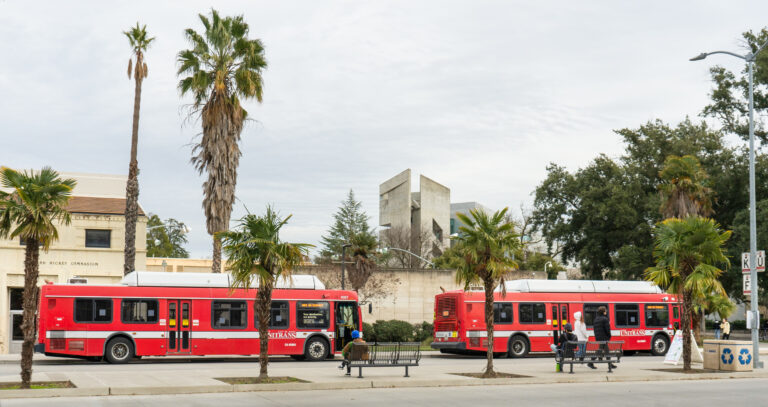
Arguably, one of the most important jobs on campus is the Unitrans transit driver. Many students and Davis locals depend on Unitrans to attend classes, run errands or just travel around town. The student-run transportation service is a safe, economical and environmentally conscious option for the city’s residents.

Trainees looking to become a driver must participate in a three-phase training process, according to Miles Riehle, a Unitrans transit driver and a third-year environmental policy analysis and planning major.

First, trainees and a cohort of others hired at the same time undergo in-person classes with a training manager to go over the basics of being a Unitrans employee, what the role will look like and how the training will progress.

Once they are finished with this phase, the drivers-to-be go through one-on-one training sessions with a trainer to earn their Class B licenses free of charge. During this step, trainees learn the mechanics of driving a Unitrans bus and get the feel of the process. 

During the third phase, called route training, new employees take control of a bus in service with a trainer beside them.

 “The whole process takes about a quarter, depending on how you do it,” Riehle said

Fortunately, despite how long and packed this process seems, Unitrans employees are compensated for their training.

Additionally, transit drivers gain a variety of skills with the experience of training and eventually working with Unitrans.

UC Davis graduate Elaine Pascual recalled what she learned in her time being a transit driver. 

“[I] definitely [learned] time management and being able to deal with people in a professional way without being stressed out,” Pascual said. 

Riehle reported a similar response to Pascual and further spoke on the professional benefits of the position. 

 “I feel like my customer service skills got a lot better,” Riehle said, “because you deal with people all the time — whether that’s people who are getting on the bus or people who have questions about where to go.”

He elaborated on this thought, noting that while transit drivers work mostly alone, their position also requires collaboration with their supervisors and other drivers to ensure that services run efficiently and safely.

“You have to be able to talk on the radio […] and have concise communication,” Riehle said. “Just being able to convey what you need to convey very efficiently, I think [that skill] has improved as well.”

Driving is, of course, another skill that is improved upon when trainees join Unitrans. 

“[…] I do think that driving a bus makes you a better driver generally,” Riehle said. “On top of that, [the job] gives you a sort of an acute awareness of your surroundings.” 

Riehle also explained that maneuvering a bus has allowed him to become more sensitive to other road users while driving.

Additionally, Unitrans drivers have very flexible job schedules that enable them to have a healthier work-life balance. For instance, employees get to choose what time their shifts happen and which lines they would like to operate. 

“[This] makes my schedule a lot more malleable,” Henry Guo, a third-year animal science major and current transit driver and route trainer at Unitrans, said. “I just need to pick up the minimum requirements [for shift hours]. If I have a heavy quarter, I wouldn’t pick up that many [hours], [but] if I have a light quarter, I can pick up more hours and get paid a little more. I get to prioritize [my schedule].”

Overall, being a transit driver for Unitrans demands skills on the road as well as with people, but there are also benefits that come with the job. To some, however, another bonus comes from just being able to transport passengers to where they need to be.

“There’s some pride that comes with driving your fellow students,” Riehle stated. “It’s a very cool position.”


Written by: Lynn Chen — features@theaggie.org
Movie Review: “Saltburn”

A movie filled with obsession, deception and hunger in more ways than one

By ELIZABETH WOODHALL — arts@theaggie.org


“Saltburn” was released in theaters on Nov. 17, 2023 and has recently been added to Amazon Prime Video. It first premiered at the 50th Telluride Film Festival and has since won over critics, with several nominations at the 81st Golden Globes. 

The film is beautifully crafted by director, producer and screenwriter Emerald Fennell, with Jacob Elordi and Barry Keoghan acting as the male leads. Despite the film’s growing popularity due to various nude and sex-related scenes of Keoghan, this movie has a far more compelling story to tell. It shows how far obsession can take someone — even as far as the grave. 

Set in 2006, viewers see Oliver Quick (Keoghan) struggle to fit in as a student at the University of Oxford. Not only does he appear to be socially awkward, but he shares that he comes from a family that struggles with substance abuse and several mental health issues. 

Enter Felix (Elordi), an upper-class student who doesn’t seem to struggle to fit in at school and who takes an interest in Oliver after borrowing his bike. Later in the film, Oliver shares with Felix that his father has suddenly passed away. As Felix is left with the uncertainty of what to do next, he invites Oliver to his home in the countryside — Saltburn. 

Once Oliver arrives at the manor, there seems to be an eerie feeling that something isn’t right. Whether it’s the darker atmosphere, the creepy staff or the focused view of Oliver observing Felix in a seductive manner, the audience notices a shift in how Oliver behaves at Saltburn. Oliver doesn’t struggle at all when introduced to Felix’s family; in fact, he seems to get along with them fairly well. Not only is he charming, but he also provides a natural balance in the house and fits into the family dynamic comfortably. 

Even with trying to appeal to his family, they aren’t the only people Oliver is trying to appease as he becomes increasingly obsessed with Felix. This obsession is one that is both sexual and pervasive: not only does Oliver desire Felix sexually, he also desires to become him. 

Throughout the film, he continues to play up to his seemingly “humble” background in an effort to become closer to the family. However, this closeness surpasses the realm of normalcy when he observes Felix masturbating in the tub and drinks the bath water filled with semen. 

Oliver attempts to seduce other family members, including Venetia and Farleigh, Felix’s sister and cousin, respectively, but they are no strangers to his tricks. Things start to get more complicated when it’s revealed that Oliver has lied about his upbringing. Not only is his dad alive, but he grew up in an upper-middle-class family. This makes the viewers question his demeanor earlier in the film when he acted wary about entering the Oxford higher-education sphere. Oliver goes from a character who is pitied to a character whose obsession and deceitful nature are feared. 

Despite “Saltburn” growing in popularity because of the questionable sexually explicit scenes, this movie has many aspects that should drive viewers to go see it. Not only is the cast incredibly talented in this dark comedy, but the movie’s character’s close-up shots, scenery of the countryside and beautiful architecture all work together to make watchers move past discomfort to unveil the dark secrets Saltburn conceals. 


 Written by: Elizabeth Woodhall — arts@theaggie.org


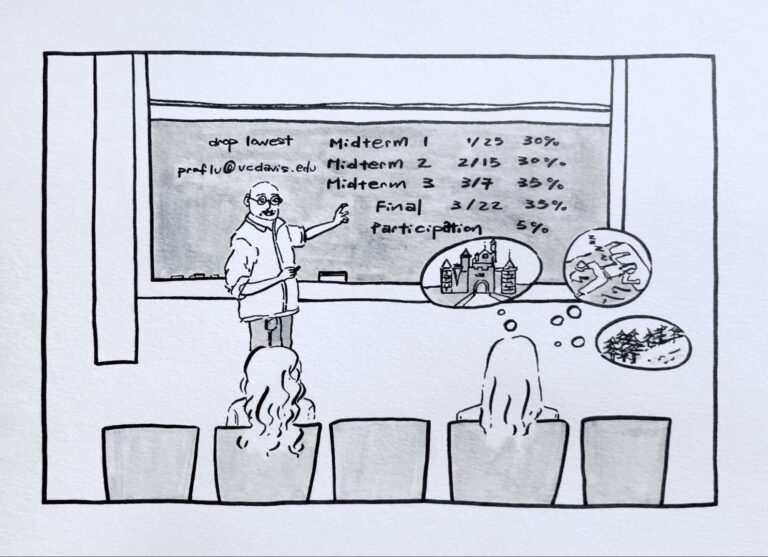
First day of school

Drawn by: Lanhui Zhen –– lazhen@ucdavis.edu 

Disclaimer: (This cartoon is humor and/or satire, and its content is purely fictional. The story and names of “sources” are fictionalized.)