54.1 F
Davis

Davis, California

Tuesday, December 23, 2025
Home Blog Page 115

Putah Creek Council welcomes new stewardship members to their team

The new members will learn techniques to carry on the conservation work of the council for years to come 


By ZOE SMITH — city@theaggie.org


On Jan. 20, the Putah Creek Council welcomed new stewardship team members to their program through the first of two training sessions. The second training session’s date is yet to be determined but is projected to take place during the summer.

According to the Putah Creek Council Instagram page, @putahcreekcouncil, in the training, “new members will learn ecosystem restoration techniques, native plant identification, and hands-on fieldwork.” 

The Putah Creek Council is a conservation group that began in 1988 but wasn’t made official until the legal battle of the Putah Creek Accord. The Accord came from a lawsuit launched against Solano County Water Agency, Solano Irrigation District and other Solano entities that was won by the Putah Creek Council, the city of Davis and UC Davis. The settlement from that lawsuit and the law that was put in place protect the Putah Creek water flow and the native fish life.

Maddie Galal has been the stewardship team coordinator for the Putah Creek Council since Oct. 18, 2023. Before this, she got her degree from UC Santa Cruz in Environmental Studies. Galal shared what she will teach on the first training day.

“We’re going to go over our organization’s history and mission, some of our current restoration projects and our partners on those projects,” Galal said. “Then I’m going to talk about the logistics of being a stewardship member and how the stewardship team can help with the events. [We’ll go over] some tool safety, and communication tips for talking to the volunteers and managing them. We’re also going to do a brief training on how to plant a tree.”

In collaboration with local volunteers, the stewardship team has been able to do years of important restoration work in the Putah Creek Watershed, which is an area of 70 miles that starts at Cobb Mountain.   

Funding for the stewardship team comes from donors such as Yocha Dehe Wintun Nation, Yolo Resource Conservation District, Point Blue Conservation Science and the Center for Land-Based Learning, as well as work from the Putah Creek Council.  

“Our volunteer events are open for all community members, you do not have to be a part of the stewardship team to volunteer with most of our events,” Galal said. “We have nursery volunteer events, every Wednesday, that’s with the nursery team. They’ll do plant propagation, seeding and maintenance, or you can come out and join any of our other stewardship events. I typically have an event every Saturday […] like creek cleanups and plantings.”

Rick Hein is a retiree who has been a stewardship team member since 2002. Hein talked about the Putah Creek Accord and his time within the group.

“The creek essentially disappeared one year,” Hein said. “There was no creek because all the water had been diverted […] so this group of people got together. There was some discussion about what [they were] going to be called. Basically, they became the Putah Creek Council, and they sued the water department for water flow to maintain the habitat.” 

Fish like salmon and steelhead trout, which are both found in Putah Creek, need a fast flow of water to make it to the ocean. Due to the Putah Creek Council’s efforts, there is now a developed flow that allows these fish to spawn and thrive. 

“Seeing the salmon in the creek, that’s really rewarding,” Hein said. “A lot of this stuff has been done with an eye towards recreating historic habitats. One of the things that [were] in the creek was salmon, but there hadn’t been any in many decades [until] 10 years ago or so, it’s fairly recent, salmon started returning.”

According to Hein, it is due to the hard work of the Putah Creek Council that the fish flow has improved and the natural habitat has been restored.

“Thousands of salmon were in that creek,” Hein said. “I was just so proud that we did that. If we had not come along […] there would be no salmon.”

Liz Reay has been involved with the council for 15 years as a stewardship team member and is in her third year on the board of directors. On the board, Reay helps with fundraising, contributes to the operations monetarily and provides aid to the executive director when making decisions for the council.

“We do cleanups and grow native plants and plant them out there to help create a difference to really improve the local landscape and the local plant wildlife,” Reay said. “We provide an environment where people can go out on walks and really appreciate nature.”

When volunteers participate in habitat enhancement field days and native plant nursery work days, they get their hands dirty and gain knowledge on how to plant, prune, create irrigation and maintain the native land of Putah Creek. 

“It’s one of those things where when you start going to events, you meet a type of people or a group of people that you’d want to sit down and have a beer with and talk to for several hours,” Reay said. “These are the people that are concerned about the environment and want to help and want to really do things for the community. This is a superb group. It really is.” 


Written by: Zoe Smith  — city@theaggie.org
 

People of different faiths hold vigil for civilians, children killed in Gaza

The interfaith vigil featured members of different faiths calling for a ceasefire 


By CHRIS PONCE — city@theaggie.org


Content warning: This article contains discussion of violence.


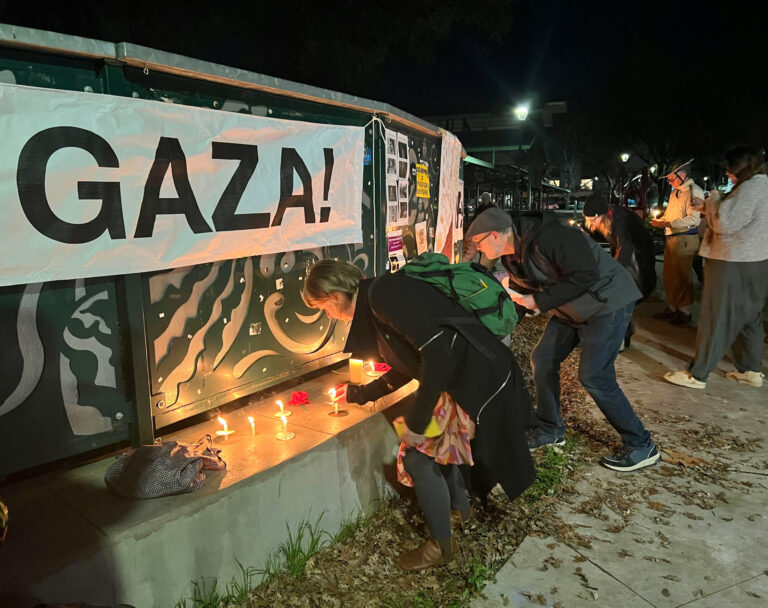
On Thursday, Jan. 18, people from different walks of faith gathered at Central Park for one common goal: calling for peace and a ceasefire to the war in Gaza. 

A banner at the event read “Rep. Thompson — CEASEFIRE” and signs read “work towards peace, not annihilation” and “no taxes for genocide.” Organizers of the vigil passed out candles, handed out red poppies made of paper and played the tambourine as the number of people in attendance grew. 

The event, titled “Interfaith Vigil for Peace in Gaza,” was hosted by people of Jewish, Muslim, Christian and several other faiths who shared common concerns about the number of civilian casualties in the Israel-Hamas war.

“Those of us from different faith traditions who organized this event did this because we grieve with all our hearts and souls the tens of thousands of people who lost their lives, especially the children,” organizer and speaker at the event Nick Buxton said. 

According to Palestinian authorities, the death toll in Gaza has surpassed 24,000, with an estimated two-thirds being women and children. The Director-General of the World Health Organization (WHO) Tedros Adhanom Ghebreyesus stated that on average, one child is killed every 10 minutes in Gaza. 

Those in attendance prayed for those in the afflicted regions, with children’s shoes hung along a shoe rack to symbolize the children killed since the war began. 

“We’re united as a community in believing every life is precious, that a Palestinian life is equally worthy as an Israeli life,” Buxton said. “As [the last speaker] said, a child is dying now every 10 minutes in Gaza. That means by the end of this vigil, six more children will be dead. Children with huge potential, with dreams, with hopes, with possibilities cut short with the drop of a bomb.”

Rabbi Seth Castleman, with the Congregation Bet Haverim, said there is a tendency to forget the interdependence of Jewish Israelis and the Palestinian people. 

“Our hearts are broken,” Castleman said. “It’s a scary thought that it’s brave to speak out for peace. The destiny of Jewish Israelis and the Palestinian people are intrinsically tied up in each other, they are interdependent. […] The dividing line is not between Israeli and Palestinian, between Jew and Muslim, between us and them. If there is a line of division it is between those that are for peace and those who are for violence.”

Castleman talked about the cycle of violence and how healing can take years. He shared the story of Moses and the enslavement of the Israelites to Egypt to express his message. 

“It took 40 years of wandering to leave behind the mental constriction, the trauma of the enslavement,” Castleman said. “I fear that every time we have another cycle of this violence, we have to reset our clocks for another 40 years of healing.” 

Ann Kjemtrup is Muslim and a part of many different faith-based groups such as the Celebration of Abraham and Sisterhood of Salaam Shalom. Kjemtrup believes the vigil was a way for the community to support each other outside of echo chambers. 

“It’s a time where we really have to hear each other’s pain,” Kjemtrup said. “It’s not the people on the ground who are doing this — it’s power, it’s money, it’s so many things [that are] causing this pain and destruction. We need to find a way to be able to connect with each other, away from the slogans and away from echo chambers.”

There have been several campus protests for Palestine since the Oct. 7 attacks and a surge of related activism across college campuses. Kjemtrup said that if anyone is going to be politically active, they need to do so peacefully.

“The bottom line should be activism about peace,” Kjemtrup said. “If you’re going to [use] islamophobia and antisemitism, that should not be part of our push for peace and I’m sorry that it is. I think today’s event underscored that everybody is human, everybody is feeling pain and it doesn’t matter what religion you are.”

Buxton shared that today’s event showed the importance of interfaith diversity in events like this. 

“What we showed is that there isn’t a face divide here,” Buxton said. There is of course a difference of opinions but there is actually unity across all faiths about the preciousness of life.”

He shared that some in the community have ties to those in Israel and Gaza, including a friend of his who’s lost dozens of her family members. 

“I have a friend whose sister lives there right now, who’s lost 55 [members] of her extended family,” Buxton said. “She’s not been able to contact her sister for seven days — her closest relative — and she doesn’t know if she’s alive. She’s a friend, it’s horrifying and it compels us as humans to respond and to act.” 

Buxton is a Christian and shared the role his faith has had in responding to the events overseas. 

“A core tenet of Christianity is to love your neighbor as yourself, and our neighbor, we need to think of it as not just who we live next to in Davis,” Buxton said. “We are in a global community; our neighbor is a family in Gaza [and] a family in Israel.”


Written by: Chris Ponce city@theaggie.org

UC Davis Center for Chicanx Latinx Academic Success launches inaugural Sí Se Puede Institute

The one-day seminar aimed to help students on academic probation or subject to dismissal


By RIVERS STOUT — campus@theaggie.org 


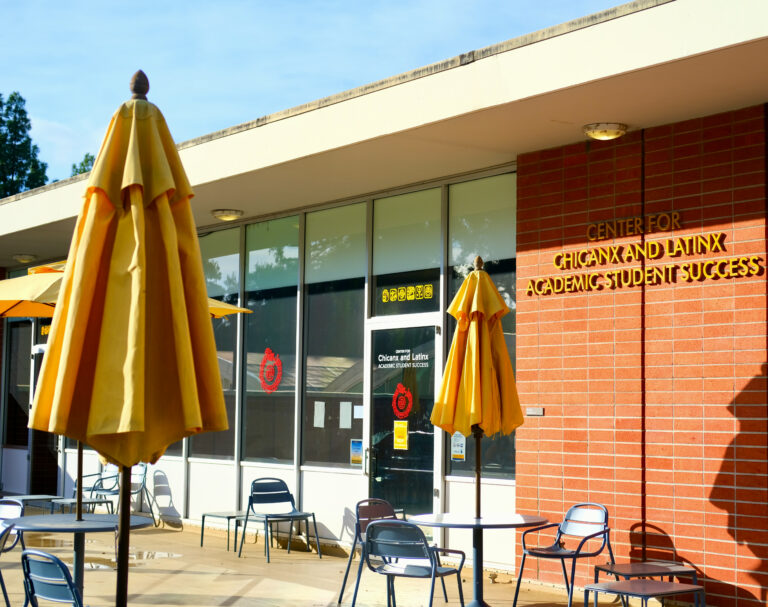
            On Jan. 7, the Center for Chicanx Latinx Academic Success, also known as El Centro, held its inaugural Sí Sue Puede Success Institute. This one-day event served to aid students who are experiencing academic probation or are subject to dismissal and want to improve their academic success. 

     “The whole purpose [of Sí Se Puede] is to provide a support system for Chicanx [and] Latinx self-identified students through the process of navigating probation and dismissal,” Rodrigo Bonilla, director of El Centro, said. “When I took over as director, I noticed a couple of trends. One of those trends was that there’s an alarming rate of students who identify as Chicanx [or] Latinx who were facing probation and dismissal, at the beginning of winter quarter specifically.”

            The institute itself was a one-time event for this academic year, but Bonilla said that El Centro offers other forms of support during the entire year through seminars and a variety of in-house services.

            “At first, I developed a ‘subject to dismissal’ seminar,” Bonilla said. “Through this seminar, I realized the extent of making this available, helping students understand the policies, the resources available to them [and] helping them understand how to successfully be able to navigate this process. I wanted to make it available to more students, [and] this is why the Sí Se Puede Institute happened. In the seminar, I’m limited to 15 to 20 students. In the [event], we had about 60 students present.”

Events such as seminars or the institute are great opportunities for students to become connected to the resources that El Centro offers, according to Bonilla. 

            “We focus a lot on building community, so the entry point might be the seminar or the institute, but that allows our students to know that this is a place that supports them throughout their entire undergraduate experience,” Bonilla said. “Even though those are the entry points to them coming here, that exposes them to the variety of services that we offer, and allows them to continue returning for those services we offer.”

Specifically, Bonilla pointed out that the center offers academic tutoring services, writing assistance, study and learning strategies and resources to mental health services and Latinx-identified therapists. El Centro also collaborates with the Internship and Career Center to help students navigate internships and build their resumes. 

Ultimately, the main goal of Sí Se Puede was to destigmatize what it means to be on academic probation or subject to dismissal. 

“I think that we don’t normalize it enough,” Bonilla said. “The reality is that a lot of our students face it at some point, but it becomes this taboo topic [that] nobody wants to talk about. We started the institute to reframe this. [By] naming it Sí Se Puede, we are reframing it itself because we are saying, ‘Yes we can.’”

Bonilla then went into the benefits of holding an event as large as this one on the topic. 

“When you see a room of 60 other students, you think, ‘It’s not just me,’” Bonilla said. “Academic probation or [being] subject to dismissal should not be an identity students carry with shame, and that [it’s in] any way telling of their capacity to perform academically.”

When asked if this is an issue specifically facing the Latinx student population, Bonilla disclosed that while El Centro does not have access to the figures for all ethnicities, he does believe that underrepresented communities are disproportionately impacted. 

“We have 7,600-7,800 [Latinx] students; out of those, 1,000 of them are on probation and dismissal every quarter,” Bonilla said. “The reality is some of them just may not have access to the support to rethink the way they study or they might not even have the same level of college prep or be able to access resources.”

Bonilla’s goal is for the ideas of Sí Se Puede to be implemented institutionally to better help Latinx students navigate the college process. He also emphasized that students of any standing could join the culturally inclusive space, even if they only wanted to improve their academic habits and weren’t necessarily at risk of dismissal. 

“We had a variety of folks from a variety of identities and academic standings come in,” Bonilla said. “We opened our invitation to everybody because our goal is to help as many people as possible.”

            Bonilla said that while they wish to be able to assist more students, El Centro has only scratched the surface of the issue. The reality is that they alone do not have the capacity to aid every student as they only have three career staff. They will continue to offer Sí Se Puede in future years and will have seminars available throughout the academic year. 


Written by: Rivers Stout — campus@theaggie.org 


The annual Davis Odd Fellows Chocolate Festival is back

Returning for the first time since the pandemic, the chocolate festival will feature several local vendors 


By HANNAH SCHRADER city@theaggie.org


On Feb. 4, after a hiatus following the COVID-19 Pandemic, the Davis Odd Fellows will hold their annual chocolate festival at the Davis Odd Fellows Lodge, featuring dessert vendors from all over northern California. 

Kurt Roggli, retiree and former 2022 Grand of the Davis Odd Fellows organization, still performs music with the Davis Odd Fellows. Kurt Roggli is a co-founder of the festival. He spoke about the origins of the Davis Chocolate Festival. 

“It started — geez, I don’t know, five, six, seven years ago when another odd fellow, Dave Rosenberg, and I were sitting around musing and he said ‘Let’s have a chocolate festival,’” Kurt Roggli said. “So, he and I got together and sort of organized the first one. […] We were very ambitious and we had speakers and so on, but we’ve learned over the years to pare it down a little bit because we were really trying to do too much but we still got a whole lot going on.”

Juelie Roggli, Kurt’s wife and current secretary of the Odd Fellows, shared that the festival hosts fundraisers to give back to the community.

“We have various fundraisers throughout the year and the money goes to various things,” she said. “And anytime somebody thinks of something, some fun, new innovative way to raise money, we try and get a committee together and do it […] This one was a no-brainer; chocolate is something everyone wants to get involved with.”

Juelie Roggli shared the layout of the event and some information about the vendors that will be attending. There will be about 12 total vendors from across northern California coming to attend the chocolate festival. 

“We’ve got a couple coming from the Bay Area, we’ve got a couple coming from the foothills, Davis, Sacramento, Elk Grove, […] [and] we got the Davis Creamery,” Juelie Roggli said. “Well, not only do they sell their products, but they will have [free] samples of everything.”

Davis Odd Fellow member and host of the cookie bake-off Diane Steele provided more details on the prizes for the competition.

“I’m a quilter and I sew, so the first-place prize is a handmade apron that’s made of cookie fabric that I’ve made,” Steele said. “And then the second and third place [winners] get little medals that say ‘chocolate fest’ and bragging rights. Yeah, you get your name in the paper and it’s just, you know, it’s fun.”

The festival is finally back after its hiatus due to the pandemic, and Steele hopes the event will go on for years. Steele shared the history of the event and how it was impacted by the shutdown.

“We had it for four years from 2016 to 2019, then the pandemic hit, and we didn’t have it, and we’ve resurrected it,” Steele said. “So this is the first year [back] and I can see us doing it [from now on] because the chocolate fest, it’s just a really fun thing for the lodge. The money raised goes to summer camp funds for local kids who apply for it.”

Steele said they charge 10 dollars to the public for tickets and they are limited to 400 attendees. Vendors keep all of their profits from the event. The ticket proceeds will be used to help kids in Yolo County, according to Steele. 

“I like being part of the committee that puts it on,” Steele said. “We need [a committee] all the time and there’s a lot of different people that are doing a lot of different things within the chocolate fest. We get vendors who come and we give them a free booth. We do not charge for the booth. And all they have to do is have samples just to hand out.’

Upper Crust Baking is a family-owned bakery on G Street managed by Loren Kalisky, son of the bakery’s founders. The bakery is one of the many vendors being featured at the festival, but Kalisky shared what he’s looking forward to most. 

“The chocolate festival is one of my favorite events of the year,” Kalisky said. “I would say I’m personally a ‘chocoholic’ so I have a particular affection for the chocolate festival. It’s always nice to go in and see the other vendors and what kind of tasty treats everybody’s got. Of course, it’s [also] a great way to get our name and our products out there and have some nice interaction with the community. So we always look forward to serving the community and the opportunities to get out into the city.”


Written by: Hannah Schrader  city@theaggie.org


ASUCD Judicial Council holds second impeachment hearing for ASUCD President

This was the second of two hearings to decide if President Francisco Ojeda would be the organization’s first executive officer to be removed from office


By VINCE BASADA — campus@theaggie.org


On Jan. 15, the ASUCD Judicial Council (JC) held its second and final impeachment hearing in the case of ASUCD Senate v. Ojeda. Following the first impeachment hearing on Jan. 12, the second opened with cross-examinations and ended with closing statements and public comment. 

The case regarding Internal Vice President Aarushi Raghunathan, ASUCD v. Raghunathan, was also scheduled for the Jan. 15 session. However, Raghunathan’s case was delayed due to “unforeseen circumstances,” according to Head Justice Katrine Lee. 

The Senate, which petitioned the case, was represented by Senate President Pro Tempore Chasa Monica, Senators Trinity Chow and Dani Antonio and Internal Affairs Commission Chairperson ThuyAnh Truong. President Ojeda, the respondent, had no representative council. Alongside Head Justice Lee on the JC, Deputy Head Justice Albena Goulisheva and Justices Madison Whittemore and Samantha Figlietti ultimately decided the fate of the case. 

Ojeda began with the cross-examinations, asking if the petitioners would have made any changes during the impeachment process if given the opportunity to do it again. In response, the Senate said they wished they were more transparent with the public about the impeachment, but ultimately would not have changed the process in which they carried it out. They later reasserted their position that they followed the ASUCD Constitution and all bylaws in carrying out the impeachments, which began as censures.

The petitioners later said that holding the meeting in which the president and IVP were impeached as a closed session was only decided after speaking with both the president and IVP, who had the right to make the session public. Given that the pair are both elected officials and student workers, the petitioners said that a closed session was the best way to discuss workplace behavior and respect their privacy rights as employees. 

The Senate decided we could not and would not make any decision on censuring or impeaching [the President and IVP] without hearing both of their input[s] in this space where we could freely and respectively address the concerns,” Chairperson Truong said during the hearing.

Ojeda then questioned the petitioners on why they “rushed the passing of the impeachment resolutions” before the swearing in of four new senators, which was scheduled for the following day.

“This impeachment was not rushed, and in fact, it was late,” Truong said in response. “This entire time, these behaviors and actions [by Ojeda] were happening within the ASUCD Senate. It took us a long time to vote for this decision.”

Following Ojeda’s questioning, Senator Antonio began the respondent’s cross-examination. She started by examining Ojeda’s handling of SR #1, a constitutional duty of the president to establish goals for the association and one which the petitioners alleged he had failed to do successfully. They asked him if he was able to introduce SR #1 on time, and he responded that he did not.

“Despite not being the main author, nor being the individual who introduced SR #1, President Ojeda remained as a co-author on the resolution,” Antonio said. 

SR #1 ultimately was not passed. Ojeda and the executive branch failed to properly introduce and pass SR #4 as well, according to the petitioners. Ojeda acknowledged that he had delegated part of this duty to IVP Raghunathan.

“[Ojeda] not only passed on this responsibility to IVP Raghunathan but also did not contribute anything but a single space on this piece of legislation,” Antonio said.

Antonio then questioned whether Ojeda properly released his verbal State of the Association, which Ojeda titled as a “quarterly report,” to the public. Specifically, she asked if the written version was shared with the public and The California Aggie for dissemination among the student population. 

Ojeda responded that he sent the speech through an internal ASUCD email list.

“To my understanding, senators understood there were currently two confidential projects [in the State of the Association],” Ojeda said. “[The State of the Association] was for ASUCD: the unit directors, business managers and government people.” 

Upon further questioning, however, he acknowledged that he gave his speech at a public Senate meeting.

As part of the last line of questioning, they asked Ojeda about the lack of executive task forces established during his tenure. Antonio also questioned Ojeda on his support network, noting that he is still without a chief or head of staff. His chief’s onboarding has been held up with “ASUCD HQ” since week seven of fall quarter, according to Ojeda. 

After further questions about the hiring process of ASUCD administration, the petitioners ended their questioning. They were the first to give closing statements. 

“I would like to reiterate [that] this impeachment was unanimous,” Truong said. “[That is] 20 different [ASUCD officials] with diverse political beliefs, advocacy goals and personal aspirations. All 20 of President Ojeda’s closest peers and closest co-workers obtained his demonstrated actions and character as not capable of being ASUCD President.”

As it stands, with evidence and accounts presented, the ASUCD is being led with no direction and is communicating without a voice,” Monica said. “President Ojeda has time and time again failed to adhere to his responsibilities as CEO of ASUCD and has failed to represent and serve the over 30,000 students as their primary advocate.”

“We cannot trust him,” Monica added. “This is not just a disservice to the student government officials of the association, but truly a disservice to all UC Davis students. We have already risked 10 weeks of the year with President Ojeda. We should not even risk another day with someone who’s clearly incapable of effectively communicating and fulfilling the duties of the ASUCD President.”

In his closing statement, Ojeda raised a question about the implications of the impeachment.

“Do we want a precedent in which Articles of Impeachment are reserved only for the most serious of misconducts and infractions against the student body?” Ojeda said, “Or do we want to set a precedent in which anyone is subject to dismissal if others believe they can do better?”

He also introduced new evidence, citing ASUCD bylaws regarding the uses of closed sessions. He said that by not notifying him of the possibility of impeachment before the meeting, the Senate had violated guidelines.

“I love my work in the association,” Ojeda said. “I love the work we do for the student […] I’ll continue to work hard to create change and improve the amazing community that is UC Davis. I’ll provide the same wonders and help and assistance that this association and campus have provided me when I needed it. I completely believe that during my time as president, I have been productive and fulfilled the requirements [and] at least, the responsibilities of my position.”

Public comment afterward was largely in favor of the president. Several individuals, including members of the Davis College Democrats, claimed that they were close friends with Ojeda, expressing their belief that the impeachment was undemocratic and would set a dangerous precedent. However, one student criticized Ojeda for introducing new evidence in his closing statement, which is largely considered against standard practice as it gives the opposing party no opportunity within the hearing to respond. 

Written by: Vince Basada — campus@theaggie.org

Commentary: Why a crested or gargoyle gecko makes the perfect college pet

All you need to know about the coolest scaly study buddies


By SAVANNAH BURGER—arts@theaggie.org


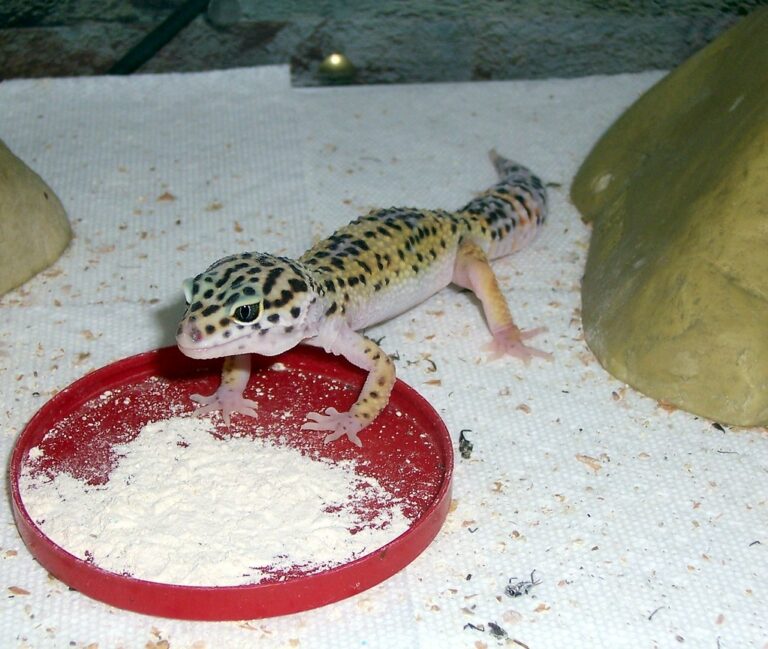
Are you thinking about getting a pet while completing your degree at UC Davis but don’t know which is the perfect fit? Well, I have news for you — the perfect college pet is not a cat, dog, bird or rodent, but rather, a reptilian. Geckos, specifically the crested and gargoyle geckos, besides being super cute, make wonderful and easy-to-care-for pets that can perfectly fit into your busy class schedule. 

Crested geckos and gargoyle geckos hail from the subtropical islands of New Caledonia. They range between seven to 10 inches long, can stick on many surfaces, have the cutest little faces and are known to be great with hands-on activity with their human caretakers. The main difference between the crested and gargoyle geckos, as they are exceedingly similar, is that gargoyle geckos need more insect-based protein in their diets than crested geckos. In addition to this, if they drop their tails, unlike cresteds, gargoyles can regenerate them.

Being a crested gecko owner myself, I can vouch that if you follow their basic living requirements, crested geckos and gargoyle geckos are the best option for anybody, be you a beginner or advanced reptile owner. I got my crested gecko, Bijou, who is now almost five, as a total beginner in my sophomore year of high school. I did tons of research beforehand, got the necessary supplies and she’s been living happily and healthy ever since. Bijou is about nine inches long with a mellow temperament — when I take her out, she’ll slowly crawl around or just sit on my shoulder. Both crested and gargoyle geckos, which are nearly identical in their living requirements, do great with handling. This isn’t the case for many other lizards and geckos, so pay attention to this if you want to get hands-on with a different type of reptile.

Keep in mind that the most important thing to know before you get your crested or gargoyle gecko is that they can live up to a very long time. Sebastian Hawn, a second-year art studio major and proud gargoyle and crested gecko owner, stressed this detail.

“The biggest requirement is time; long-term time,” Hawn said. “I’ve had Asher, my crested gecko, since 2008, so he’s turning 15 this year. They can live up to 30.”

Time commitment is the key factor when thinking of becoming a future gecko owner. I see their longevity as a positive feature. Because many people live in smaller spaces, be it dorm, apartment or room sharing, they often want to get a small pet such as a fish or small rodent. The main caveat to these tiny animals, however, is that they only live two to three years — four at the most. If you want a pet that will stay with you throughout and after college, a crested or gargoyle gecko is for you. 

Even though they’re a big commitment in the long term, when it comes to the day-to-day, they require very little of your time, making it easy to fit them into your busy class schedule. Crested and gargoyle geckos are nocturnal, so by the time you come home from classes or work, they’ll be awake and active. If you want your gecko to be accustomed to handling, start by taking them out for 10 to 15 minutes every day or every other day. Other than that, they’re chill hanging out by themselves, being that they are solitary animals.

Another thing that geckos have over other pets: they don’t have pungent odors. If you spot-clean your lizard’s enclosure every now and then, and/or have a clean-up crew of small decomposers such as isopods or springtails, your gecko shouldn’t smell at all. This is one of the many reasons that a gecko is also a great option if you share a living space with someone else. Geckos, unlike animals such as dogs and cats, are able to be happily contained in a smaller space full-time.

“They have a small footprint, Hawn said. “Their tank is going to need to be at least 18 inches by 18 inches by 24 inches.” 

Hence, if your roommate isn’t interested in having your pet in their space, a gecko shouldn’t be a big problem. Don’t worry about noise, either. Crested and gargoyle geckos rarely make any noise at all. Not only this, but it’s nearly impossible for them to ruin any type of furniture. For these reasons, I guarantee that they are low on the invasiveness scale when it comes to your cohabitants’ personal space.

Let’s talk about overall costs — this is yet more proof that geckos are superb for people living on college student budgets. Compared with most other pets, they’re incredibly affordable. Although they do have a somewhat pricey upfront cost, I typically don’t spend more than fifteen dollars a month on Bijou.

“You’re going to need an upfront investment of probably a fair bit of money depending on what you’re going for, but definitely less than $500 for an initial setup,” Hawn said.

Including lights, a tank, plants, supplies and the lizard herself, I may have spent around $300 in total for Bijou’s initial setup. This is very financially accessible when compared to the average upfront costs of something like a dog or cat, which are commonly at the very least $1,000 with adoption fees, registration, supplies and vaccinations. Food for these geckos is equally as affordable and quite simple. They can range from powder that you mix with water, to baby food, to live crickets or small worms. If you don’t want to get into the creepy-crawly side of gecko food, you can always give them protein in alternative methods, such as baby food from the supermarket or protein-powdered worms or crickets.

So, if you find yourself studying in your room, dismal and alone, wishing for a little critter to keep you company — you know exactly which animal would fit the job. Just remember, before committing to anything, do your research.


Written by: Savannah Burger — arts@theaggie.org


Davis MoMA: Yin & Yang

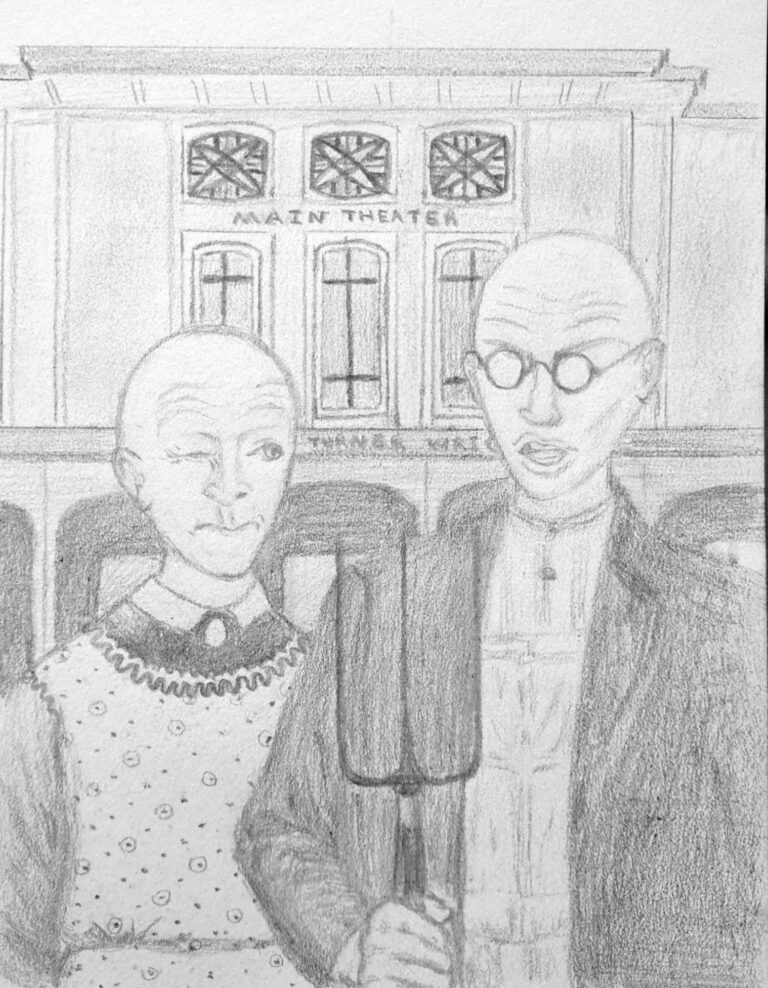
Original: “American Gothic” by Grant Wood


Drawn by: Nimra Farhan –– nfarhan@ucdavis.edu

Disclaimer: (This cartoon is humor and/or satire, and its content is purely fictional. The story and names of “sources” are fictionalized.)

ASUCD Senate passes Organizations Without Legitimacy (OWL) Act to increase support for unregistered student organizations

The OWL Act will provide necessary resources to unregistered student groups such as funding, sponsorships and tailored support for the club registration process


By MADISON PETERS — campus@theaggie.org


On Thursday, Dec. 7 2023, the Associated Students of UC Davis (ASUCD) Senate passed the Organizations Without Legitimacy (OWL) Act aimed at increasing support for unregistered student organizations.

Former Senator and primary author of the bill, Gaius Ilupeju, wrote the bill after witnessing pre-existing inequities between established student organizations and newly developed student groups.

“Student organizations on the UC Davis campus currently face tremendous barriers to receiving support or recognition from the university,” Ilupeju said. “They have to navigate the club registration process that can be challenging for new student groups and if student groups are formed before or after the club registration deadline, they face difficulty reserving space and securing funds for event programming.”

The bill was endorsed by both unregistered and registered student groups, such as Cow 4 Mascot, Faces of African Muslims (FAM) and the Bengali Student Association (BSA). 

Third-year economics major and president of BSA, Asif Ahmed, spoke on the club’s decision to endorse the bill.

“There are other ethnic clubs on campus such as the Nepali student organization [who] don’t get official funding from the school,” Ahmed said. “For the rest of the year they couldn’t do anything because of funding, and when we saw the bill, we [knew] running a club without any funding is hard and we [wanted] to help out.”

According to Ilupeju, the OWL act will give unregistered student organizations access to funding opportunities, administrative and legal support from the Senate, room reservations on the third floor of the MU, administrative guidance from the university and help with the club registration process as a whole.

Currently, these resources are limited to registered student organizations and are provided by the co-sponsorship policy that the Senate employs through the Affiliated Student Organization Program. The OWL act amends this policy to extend these benefits to unregistered student organizations as well.

Ilupeju explained the current guidelines of the co-sponsorship policy.

“I don’t think many people know this, but if a student organization wanted a major artist on campus, a comedian or a speaker they can reach out to ASUCD, especially one of the programming units like Entertainment Council or KDVS, and they can enter a co-sponsorship through that unit,” Ilupeju said. “[The club] gives [the Senate] a plan of what they are trying to do, and how it supports the community and we co-sponsor that event either by helping with funding or marketing.”

According to Ilupeju, not having these sponsorships can severely hinder unregistered student groups from having access to necessary resources such as a space for the club to meet.

“If you are an unregistered student group it’s nearly impossible to get a room reserved, because you aren’t even in the system and you have to jump through hurdles to do that,” Ilupeju said.

The difficulty of the club registration process and funding issues, according to Ahmed, is an obstacle that even registered clubs face.

“I’m grateful that the previous boards managed to make [BSA] a registered student organization, so we have a lot more support than other groups,” Ahmed said. “[But] because we are small, we can’t do a lot of fundraising and we have to go through a lot more negotiation with the Center for Student Involvement (CSI) and the retention centers to get funding. I get the struggles [of the process], but not to the extent of non-registered clubs.”

As of now, the bill has a sunset clause in which unregistered student groups will receive support for one whole registration cycle, which lasts about a year.

“Right now the plan is to help student groups from the time that they want to form until the next possible time they can become registered,” Ilupeju said. “After that, if they feel like they still don’t have adequate support or they aren’t able to go through that process successfully, then a possible renewal can be reviewed.”

A rolling application is set to be released early this winter quarter and will be open to all unregistered student organizations.

“Multiple individuals who want to start a group and who need help getting registered, need funding [or] need space, are the only qualifications,” Ilupeju said.

As for the future of the bill, Ilupeju said that they are emphasizing flexibility since amendments might need to be made for unique cases.

Ahmed spoke on the significance of having a registered community, and said that unregistered student groups should have the same opportunities.

“I’m an international student, so when I came here for the first time from Bangladesh, I didn’t have a community [and] I didn’t know anyone here,” Ahmed said. “One of the things that I was looking for on the websites is a Bengali community and BSA showed up on CSI’s website. I reached out to them, I went to their events and I found my community there. I think it’s very important for every student to feel at home wherever they are even if they are from here. People feel safe when they are around [similar] people.”

Written by: Madison Peters — campus@theaggie.org


New studio and gallery brings ‘art renaissance’ to Davis

0

Secret Spot’s founders discuss their recent open-call show and Davis’ art scene


By LAILA AZHAR — features@theaggie.org


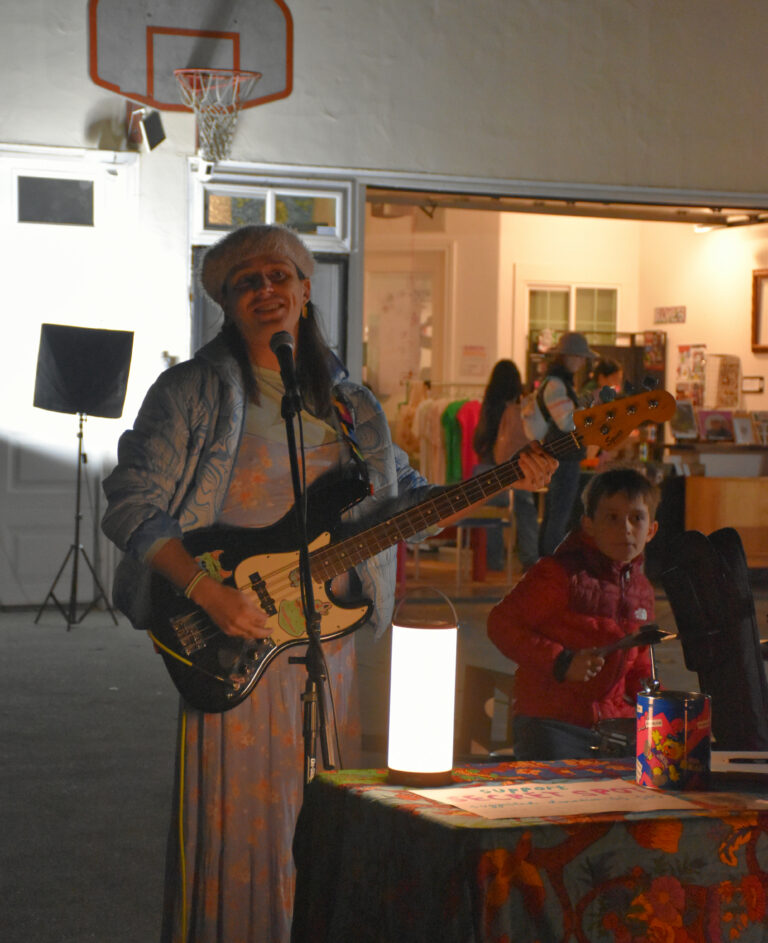
Secret Spot Davis is just that — a secret spot. Located behind The Wardrobe, the art studio would be hard to come across to anyone who wasn’t looking for it. 

“We’ve lived in Davis our whole lives and we know lots of lifelong Davis people,” Harry Greer, one of the co-founders, said. “We would tell them where the spot was, and they’d be like, ‘Where?’”

Once you are in on the secret, however, it’s hard to forget it. 

On Jan. 12, the studio hosted an open-call show titled “YOU,” aimed at highlighting the local community’s art. “It’s a show about you,” an Instagram post advertising the show described it. “No application fees, all levels, all humans.” 

Far from the silence typically associated with art galleries or museums, Secret Spot buzzed with excitement. People laughed and chatted as they roamed the studio. Visitors joined in with Greer playing a drum and bass set, filling the venue with lively music. 

The show displayed a wide variety of art, from vivid paintings of mythical creatures to poetry pasted on a glittery canvas, to a skateboard covered in colorful doodles. In one corner, jewelry, stickers and tarot cards were for sale. In another, a man stood completely still. “Weird Art Gallery Visitor,” the gallery tag pinned to his shirt read. “$50.” 

“What happens if we give you $50?” a visitor asked. He didn’t break his silence.

Secret Spot opened its doors in September of 2023. The studio’s founders — Greer, alongside Toni Rizzo and Stephanie Peel — had previously been working from home. 

“It was really cramped,” Rizzo said. “I really just needed a studio space.” 

The space that Secret Spot has afforded them has allowed their art to reach new heights — quite literally, as their previous show, “The Big Show,” involved the three artists painting on five-by-four-foot canvases. 

Greer cites the memory of the three artists “cranking it out together” for “The Big Show” as one of his favorite memories of the studio. 

“I’m pretty new to painting, so it was quite the undertaking,” Greer said. 

Their most recent show, “YOU,” was Peel’s idea.

“I wanted to do something to give back to the art community,” Peel said. 

For the vast majority of the artists involved, “YOU” marked the first time their work had been hung in a gallery, exemplifying Secret Spot’s goal to support emerging artists. 

“As cool as the established art community is in town, it’s not really geared towards younger people, it’s not geared towards people who are not really experienced in the art world yet,” Rizzo said. “We wanted something new that most people could relate to.”

Peel echoed this sentiment, saying she “wasn’t satisfied” with existing opportunities. 

“I was looking for the ‘weird,’” Peel said. 

Secret Spot’s commitment to emerging artists and subversive art is reflected in more than just the unique pieces exhibited during “YOU.” The wide variety of artist statements told stories of their own. Some consisted of paragraphs, some were a few lines. Some were typed and printed, some were handwritten. One was even written on a UC Davis College of Engineering post-it. 

“A lot of people had never done an artist statement before,” Greer said. “So it was really cool seeing people try to describe themselves and their work.”

Rizzo expressed her gratitude for being able to give people first-time experiences, whether that be with writing an artist statement, wiring a canvas the proper way or displaying their work. She also described gallery experiences of her own, “[I] didn’t know anything, and learned so much the hard way.” 

She aims to share her artist knowledge with the greater Davis community. 

“Long gone are the days of just focusing on yourself and getting yourself ahead,” Rizzo said. “Knowing how much work it has taken for us to get our foot in the door, might as well keep our foot in the door for everyone else.” 

This collective approach to art, which looks out for the community as a whole, is reflected in the Secret Spot founders’ love for the Davis art world. 

“Support your local scene. Find the weird things happening and go to them,” Greer advised, recommending the Good and Weird Davis website as a resource to find events. 

“If you want cool stuff in your town you have to support the cool stuff,” Rizzo said. 

Greer described Davis as “highly underrated” and “magical,” and credited it as an inspiration for his art. 

“I couldn’t separate Davis from my work. The stuff that I make is a reflection of having lived here my whole life,” Greer said. “Davis has plenty of cool art happening at all times, but it’s below the surface. You have to dig just a little bit.”

Secret Spot is the perfect example of this. The studio may be slightly elusive, and its branding leans into this fact, with flyers around town asking, “Have you found the Secret Spot?” 

However, once you’ve done the little bit of “digging” required to find it, you’re exposed to a side of the art community in Davis that goes beyond just the art itself, serving as a haven for those who work outside traditional notions of art. 

“Secret Spot, while it is physically a studio and part-time gallery, more than anything it’s the idea of bringing an art renaissance into town,” Rizzo said.


Written by: Laila Azhar — features@theaggie.org


In defense of bad grammar

You’re not wrong


By MOLLY THOMPSON — mmtthompson@ucdavis.edu 


Here’s an experience that is shared across the country and among generations: your middle school English teacher responding to your innocent, honest ask of “Can I please go to the bathroom?” by saying, with every ounce of condescension and satisfaction they can muster, “I don’t know, can you?”. That teacher believed that they were right and you were wrong. They would claim that what you said was improper grammar, and should be corrected. But actually, they were wrong and you were right. Not about the fact that they were — on a technicality — more grammatically correct than you (according to Standard American English), but about the idea that what you said was a problem that needed to be corrected.  

Last quarter, I took a very basic linguistics class and I haven’t stopped thinking about it since. For an assignment, my professor had us ask different people from different places whether or not they considered certain phrases “normal,” or grammatically acceptable. The phrases were “I’m finished my homework” and “I’m started my homework.” I reached out to people from the East Coast, the Midwest, and all up and down California. Out of the ten or so people I surveyed, only one said that she would consider the phrases normal if she heard someone else say them, though she would never say them herself. Everyone else vehemently asserted that they believed the phrases were incorrect, unacceptable and wrong. 

I think if I had been on the other side of that little experiment and I was being asked about the phrases, I would have had a very similar reaction. I probably would have said that they were inaccurate and unsuitable. But given the perspective of the experiment, I was surprised at the sheer magnitude of the common consensus revealed by my results. People were so passionate and adamant about how abnormal and unacceptable the phrases were — I got responses like “that’s honestly so not okay,” “no, they sound weird,” “no, those sound lame” and even “I AM SO STRONGLY AGAINST THAT.” 

The point of the assignment was to show us the impact that language has on how we interpret society and to highlight the value our judgments make regarding how people speak and write. If it wasn’t pointed out to me, I’m not sure I would ever have noticed how common it is for people (myself not excluded) to form these intense opinions based only on a single sentence that doesn’t comply with what we consider to be the socially acceptable dialect. The reactions I got seemed so drastic for such a small offense, but I likely would have had a similarly extreme response if I had been on the other side. 

We’re taught from such a young age that there’s a singular “correct” way to articulate ourselves and many of us take pride in how well we’ve honed that skill. Standard American English (SAE) is the dialect that’s utilized by United States official organizations and is generally considered the “proper” way to speak and write in the U.S. —  it’s what you were taught in English class. But it’s not the only way to speak English, nor should it be considered better than any other dialect. 

SAE is the “prestige dialect” in the U.S., which means that it’s the way that professionals and the upper class are expected to speak. This becomes an issue because it means that anyone whose speech doesn’t fit into SAE is perceived as lesser (whether that be less intelligent, less qualified, of lower class, etc.) than those who are comfortable with the standard dialect. A lot of common alternative dialects come from minority populations — for example, communities of people whose first language isn’t English or racial groups for which their way of speaking English is deeply rooted in their history and culture. This contributes to a terrible feedback loop in which minorities are already oppressed and underprivileged, they might not have the resources to familiarize themselves with SAE and they don’t have opportunities to gain those necessary privileges and resources because they’re unfairly judged for whatever non-standard dialect they communicate in. 

The example phrases from my assignment are perfectly acceptable phrases in many dialects of American English. Yet people immediately projected value judgments about them and their hypothetical speakers, claiming they were “weird,” “wrong” and “lame.” We shouldn’t judge people based on their grammar. Speech that isn’t compliant with SAE isn’t inaccurate or inappropriate; it’s correct in a different dialect. The point of language is to communicate. If someone said “I’m finished my homework,” you would know exactly what they were trying to convey to you, so it’s futile to claim that they’re wrong or put energy into changing how they said it. As a society, and particularly as college-educated individuals, we need to be more accepting of grammar and speech — proficiency in SAE has absolutely no correlation with intelligence, professionalism or capability. Standard American English shouldn’t inherently be perceived as an indication of value. Speak however you want to, and go tell your grammar-police middle school English teacher that you were right all along. 


Written by: Molly Thompson — mmtthompson@ucdavis.edu


Disclaimer: The views and opinions expressed by individual columnists belong to the columnists alone and do not necessarily indicate the views and opinions held by The California Aggie.

We will not wait for another school shooting

The Editorial Board stands in solidarity with a nationwide call for gun reform

You may not have heard, but there was a big commotion in the world of college newspapers late last year. The Daily Tar Heel, the student newspaper of University of North Carolina at Chapel Hill (UNC), published a front page that went viral. After a horrific shooting on campus that killed a faculty member and had students barricading themselves anywhere they could, their editorial board ran an issue to describe the experience from students’ perspectives. Instead of a traditional headline, the entire front page was filled with text messages sent and received by students during the three-hour lockdown, including heart-wrenching lines like “I am so sorry this is happening” and “Still going on and coming closer, hoping it’s cops.” 

The Daily Tar Heel was reported on by NPR, acknowledged by President Biden and applauded by people around the country who recognized the difficult feat of reporting this subject. It was an undoubtedly impressive display of vulnerability and resilience but it was also an example of precisely the type of work that is so important to student newspapers. 

At The California Aggie, we are incredibly proud to cover everything from light-hearted reviews of our favorite books to controversial current events that impact our students. The stabbings last spring, the reported assault in the fall, the violence in the Gaza strip — while the editorial board never wants to have to cover things like this, reporting on events that are important to the UCD community is an important and fulfilling task. With print media dwindling in popularity, sometimes tragic events like these highlight why quality journalism is still worthy of attention. 

The problem with the response to the viral UNC issue is that for all the outrage and emotion, nothing changed at a state or national level. The passionate testimony from students was not met with policy changes or even sustained public outcry. As with so many devastating events, the media coverage and awareness spiked within a week and then steadily faded from the memory of most Americans.

To a certain extent, this is the only reaction we can reasonably expect. The UNC shooting changed the lives of those involved forever, but the story was not unique. Only a few months later, the University of Nevada, Reno experienced a shooting that left at least three people dead. This is just another incident in the long, long string of campus shootings familiar to American news cycles, briefly flaring the public conscience before we all move on.

With 2024 being an election year, we can already see the return of debates surrounding gun control, heavily influenced by corporate interests. New technology brings new concerns, like “ghost guns” made by 3D printers and distributed without regulation. But the basic facts remain the same. The majority of all gun-related deaths in the U.S. are suicides. Self-defense gun use is rare and not more effective at preventing injury than other protective actions. Since 1999, there have been 394 school shootings in the U.S. Our current firearm policies are not preventing crime and are endangering our communities, especially our youth.

In California, we have the strongest gun laws in the country, including background checks, no “Shoot First” law and mandatory secure storage around children. As college students here, there are times to be grateful for the protection we have. However, the bare minimum, common sense laws in California are not enough to set us at ease. Californians have reported guns crossing state lines from Nevada, including the semiautomatic rifle used at the 2019 mass shooting in Gilroy. Moreover, watching students around the country live in fear because of lax gun laws is not an option. It is essential that we shift American societal and political attitudes to prioritize public welfare.

This week, roughly 60 college newspapers and 90 student groups have joined together to demand that gun violence be taken seriously in America and to declare a steadfast commitment to prioritizing human lives over the interests of gun lobbies. The Editorial Board stands with this coalition and supports their call to action:

“We invite you to join this generation’s community of organizers, all of us united in demanding a future free of gun violence. We understand the gravity of this commitment, because it’s not simply our lives we protect with prose and protest. It is our way of life itself. 

We will not allow America to be painted in a new layer of blood. We will not allow politicians to gamble our lives for NRA money.

And most of all, politicians will not have the shallow privilege of reading another front-cover op-ed by students on their knees, begging them to do their jobs — we do not need a permission slip to defend our freedoms. They will instead contend with the reality that by uniting with each other and among parents, educators and communities, our demands become undeniable. 

We feel intense anger and frustration and sadness, and in its wake we search for reaffirmations of our empathy — the remarkable human capacity to take on a tiny part of someone else’s suffering. We rediscover this fulfillment in our organizing, in our community, in not just moving away from the unbearable pain of our yesterday but in moving toward an unrelenting hope for our tomorrow.”

College journalism will always be tasked with reflecting the highs and lows of college life, but there’s no reason the lows should include being faced with the threat of gun violence on campus. The Editorial Board urges you to volunteer, educate, donate and vote to support stricter gun laws and safety for the youth of America. 

Written by: The Editorial Board

Spring Break Countdown

Drawn by: Lanhui Zhen –– lazhen@ucdavis.edu 

Disclaimer: (This cartoon is humor and/or satire, and its content is purely fictional. The story and names of “sources” are fictionalized.)

Ideas shouldn’t be monopolized by corporations — cartoon or otherwise

Ideas shouldn’t be monopolized by corporations — cartoon or otherwise


By JOAQUIN WATERS — jwat@ucdavis.edu


At midnight on Jan. 1, 2024, a quietly momentous thing happened: Mickey Mouse, mascot of the Disney brand and legendary symbol of childhood joy and American consumerism, officially entered the public domain. This means that the original version of the character — the black-and-white incarnation from the 1928 film “Steamboat Willie” — is now free for anyone to use without fear of a cease-and-desist from the Mouse House. An early version of Minnie Mouse is also included. 

There are caveats, of course. Since Mickey is also an official Disney trademark, it remains illegal to mislead the public into thinking your iteration was sanctioned or created by Disney. And the most iconic version of Mickey, the one with red shorts and expressive eyes, remains off-limits (though not for long…we’ll get there). Nonetheless, this is incredible news. Anybody can produce and sell a cartoon or a storybook featuring the original Mickey Mouse. Bizarre and creative renditions such as romance novels or horror stories need no longer be relegated to the realm of fanfiction. It’s difficult to fathom, isn’t it? For a character so unanimously associated with corporate intellectual property to suddenly be free for anyone’s legal usage feels impossible. But the day has come. It’s been a long road. Allow me to tell you how we got here, and how in the years to come, this historic moment will be remembered as merely the tip of the iceberg.

The “public domain” is the legal realm that fictional works and characters enter when their copyright expires and the legal hold that the creators and/or distributors of said work dissipates. The expiration of copyright originally came  — depending on which was first  — 50 years after the creator’s death or 75 years after initial publication. However, in 1998, Congress passed a bill called the Copyright Term Extension Act, after which 20 years were added to each of these expiration dates. Now, copyright expires 70 years after the creator’s death or 95 years after initial publication. Disney was unsurprisingly a major proponent of the bill, leading it to be derisively nicknamed the “Mickey Mouse Protection Act.” But alas, come 2024, they could not delay the release of their beloved Mickey for any longer. And Steamboat Willie is just the beginning; in 2036 their classic 1940 film “Fantasia” enters the public domain, bringing the version of Mickey from “The Sorcerer’s Apprentice”  — the blueprint for the most iconic versions of the character  — with it. 

Even earlier (in 2030, to be precise), Donald Duck will join Mickey in the public domain. Duck and Mouse will finally be allowed to profess their undying love for one another and enter into a mutually supportive polyamorous relationship with Minnie — and, more importantly, whoever tells this story can monetize it. 

It gets crazier: in 2034, Superman will be free. In just 10 short years, anyone can make a Superman movie  — for that matter, Marvel could — so long as they don’t infringe on the DC trademark (in other words, as long as they don’t claim to be associated with DC) and adhere to the character as depicted in the 1938 “Action Comics #1,” in which practically everything we associate with the character is already present (like the planet Krypton and the Clark Kent alter-ego). The following year, Batman joins him. The year after that, so do the Joker, Wonder Woman and Captain America. This turn of events is perhaps even more difficult to fathom; Marvel and DC Comics have built their respective empires by building massive universes out of characters they own. Anything produced outside of their corporate umbrellas is not only illegal, it isn’t considered canon. This concept of canon is central to these characters’ worldwide fanbases, and in only a decade it will start to become irrelevant. Superhero universes won’t be the only ones affected, either. In 2033, the characters from “The Hobbit” will enter the public domain. In 2034, so does James Bond. And the list goes on and on.

Is this a good thing? Certainly not for the corporations these characters belong to. But in this writer’s opinion, it’s tremendous news for art in the long run. Take “The Wizard of Oz”: creative reimaginings like “Wicked” or Disney’s own “Oz the Great and Powerful” would have been impossible to produce had the original novel not entered the public domain in 1956 (pre-Mickey Mouse Act). That’s to the story’s benefit. 

Mythology is not a static thing; it is meant to change, to expand, to evolve and take on new forms for new generations. The great irony of Disney’s attempts to extend copyright law is that they built their empire by taking advantage of public domain works like the fairytales of Hans Christen Anderson (“The Little Mermaid”), the Brothers Grimm (“Snow White and the Seven Dwarfs”), Lewis Carroll (“Alice in Wonderland”), Middle-Eastern folklore (“Aladdin”) and countless other tales that form the bedrock upon which all the Disney classics are built upon. Practically none of their legendary films would exist without the public domain; the company would have been barred from making them. 

Ideas must be free. Perhaps not from inception  — artists have a right to profit from their work — but eventually, the day must come. For Mickey Mouse, the day has come. And he’s just the start.


Written by: Joaquin Waters — jwat@ucdavis.edu

Disclaimer: The views and opinions expressed by individual columnists belong to the columnists alone and do not necessarily indicate the views and opinions held by The California Aggie.

Gunrock yearns to be a tote girly at the FarMar

Somebody get Gunrock a tote and some lemonade


By ALLISON KELEHER — adkeleher@ucdavis.edu


Day after day… week after week… year after year, Gunrock has repped and cheered for UC Davis athletics. Gunrock, the strong and muscular stallion, is the UC Davis symbol of power and athleticism. People always say, “How do you do it, Gunrock?” But no one ever asks, “How are you, Gunrock?”

Well, if you had even bothered to ask, you would know that it’s difficult for Gunrock to be so strong and masculine all the time. Upholding that image for one of the top public universities is a lot of pressure. Gunrock sees all the girlies coming into the football games with their UCD crop tops, bucket hats and — oh my gosh — the tote bags. Gunrock yearns for a tote bag. 

One day, Gunrock got a post notification for a resident hall tote bag painting activity. (Of course, Gunrock has post notifications on). When Gunrock arrived at the event, all the first-years gathered around to take pictures. Fame isn’t easy. Once everyone got a picture, Gunrock made sure to have them tag @ucdavisaggies before trotting over to an empty seat on the table. 

“Gunrock! You’re going to make a tote bag?!” one first-year questioned.

Gunrock ignored this silly question and made a mental note to check how this first-year even got admitted in the first place. After a couple of hours of hard work, his tote bag was a mess. It took a lot of willpower to hold in the emotions. Painting is hard with hooves. Gunrock grabbed the tote and stormed off to go throw it away in the trash. The event was made sadder by the realization that the tote bag wasn’t compostable, despite Gunrock’s wishes. This is supposed to be the most sustainable campus, after all. 

An empathetic first-year saw the frustration through all the manliness and strength and approached Gunrock holding her official Davis Farmer’s Market tote bag with the little watermelon on the front. “Here you go, Gunrock,” she said. 

Tears welled in Gunrock’s eyes, but Gunrock shoved those emotions aside to envelop the kind first-year into a big hug. Her friend took a pic of the hug, so Gunrock made sure to get tagged in the photo. As Gunrock was leaving with a new tote bag in hand, the first-year asked, “Are you going to the farmers market this Saturday?”

Gunrock thought about it for a moment and ultimately decided on “Yes.”

That Saturday, Gunrock attended the Davis Farmers Market for the first time, tote bag on his shoulder. For the first time, Gunrock wasn’t afraid of all of the obligations and responsibilities. Gunrock collected a bunch of vegetables and fruit and even got a chocolate croissant to snack on during his trot home. It was a magical day being a tote girly. 

However, Gunrock also decided that day that the tote bag life wasn’t as expected. The tote was so aggravating! It kept falling off of Gunrock’s shoulder since it was so furry. The official statement made by Gunrock’s team was, “Tote girlies are better than me because I can’t deal with all of that.”


Written by: Allison Keleher — adkeleher@ucdavis.edu


Disclaimer: (This article is humor and/or satire, and its content is purely fictional. The story and the names of “sources” are fictionalized.)

Rep. Mike Thompson announces effort to enact ban on large capacity magazines

Thompson announced that a discharge petition had been filed for the Keep Americans Safe Act, requiring a vote in Congress about banning large-capacity magazines


By ANTHONY W. ZAMMIKIEL  — city@theaggie.org


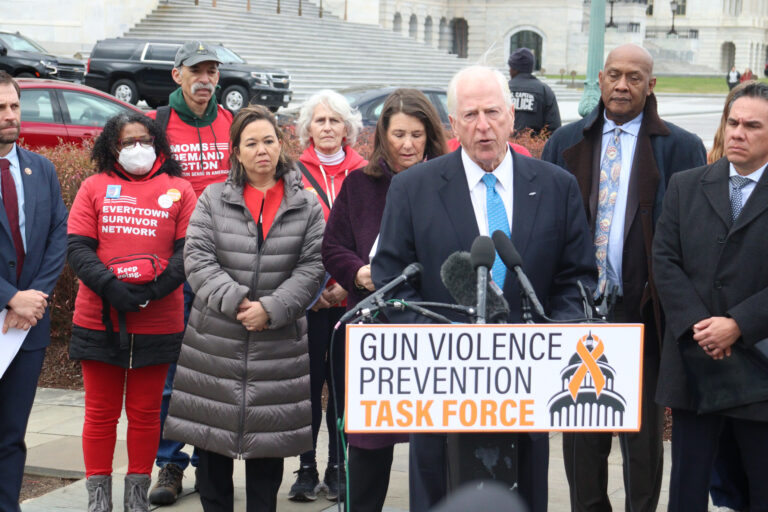
On Jan. 11, Representative Mike Thompson (CA-04), who represents Davis and most of Yolo County, announced his intention to file a discharge petition for the Keep Americans Safe Act. The petition would require a vote from Congress on whether to pass a ban on large-capacity magazines for semi-automatic and automatic guns. 

Accompanied by Representative Dianne DeGette (CO-01) at a DC press conference, Rep. Thompson spoke about the necessity for Congress to take decisive action to regulate large-capacity magazines. 

“Large-capacity magazines are a threat to our kids in schools, our communities and to our law enforcement on the streets who are outgunned by dangerous individuals in possession of these magazines,” Thompson said. “The only reason someone would want a large capacity magazine for a semi-automatic weapon would be to inflict massive amounts of carnage in a short period of time. I am proud to work with Diana DeGette to advance this commonsense piece of legislation, and I implore my colleagues on the other side to work with us to help save lives.”

Rep. DeGette represents much of Denver city and county in her home district. At the press conference, DeGette called the gun violence crisis an “epidemic” and said this petition would address the crisis.

“High-capacity magazines serve no purpose other than to amplify the destructive potential of firearms,” DeGette said. “Sensible gun safety protects our collective well-being, because, as we’ve seen, someone with a high-capacity weapon can commit these shootings anywhere, anytime. So the time to act is now, and this discharge petition gives us the opportunity to address the epidemic of gun violence that has claimed far too many lives.” 

The Keep Americans Safe Act aims to authorize the implementation of a buyback program for individuals within possession of high-capacity magazines. The legislation would also give law enforcement the ability to dispose of any high-capacity magazines that were illegally possessed. 

Roan Thibault, an organizer with Students Demand Action at UC Davis, talked about the move by Thompson to require congressional action to address gun violence.

“Our chapter and the broader national network strongly support Rep. Thomspon’s leadership to keep communities safe from gun violence,” Thibault said. “Guns are the leading killer of college-aged students, and high-capacity magazines make this toll even deadlier. Nearly twice as many people are killed when mass shootings involve high-capacity magazines and nearly ten times as many are wounded.” 

Students Demand Action at UC Davis is part of a national network of 700 chapters with the goal of ending gun violence, according to Thibault.

 “We advocate for a range of solutions to tackle every facet of gun violence,” Thibault said. “From background checks on every gun sale to red flag laws and prohibiting assault weapons, these policies effectively combat gun violence.”


Written by: Anthony W. Zammikiel  — city@theaggie.org