52.4 F
Davis

Davis, California

Tuesday, December 23, 2025
Home Blog Page 128

Culture Corner

The Art Desk’s weekly picks for music, movies and more


By ANNABEL MARSHALL — arts@theaggie.org


Album: “The Dreaming Room” by Laura Mvula (2016)

Look, there’s no point denying that 2016 was the best year for music ever. It was so good, someone wrote a book about it. That just makes it all the more impressive how vibrantly this album stands out. Written by classically-trained British singer Laura Mvula largely about her divorce, “The Dreaming Room” is a boldly vulnerable exploration of love after loss. Mvula masterfully combines Jamaican and Caribbean-influenced rhythms with her impressive vocals, all while being backed by the actual London Symphony Orchestra. Are you backed by the London Symphony Orchestra? I didn’t think so. Not only did it win her an Ivor for Album of the Year, but it also got her dropped from her record label (via email) for unspecified reasons! If “Show Me Love” doesn’t make you feel something, you might want to check your pulse.


Book: “The Sirens of Titan” by Kurt Vonnegut (1959)

Look (again, still over here!), I’m never not going to recommend Vonnegut. It’s just who I am. I have zero qualms with “Slaughterhouse Five” or “Breakfast of Champions,” but while “The Sirens of Titan” might be just outside of your syllabus, it’s very much worth the read. Featuring names and phrases like “Malachi Constant” and the “Church of God the Utterly Indifferent,” you could honestly read it just to hear what it sounds like aloud. But it’s worth much more than that. What some term as comic science fiction is better described, in my opinion, as a narrative chess game Vonnegut is playing with himself to which patient, lucky readers bear witness. TLDR: I cried about a little alien guy.


Movie: “Submarine” (2010) dir. by Richard Ayoade

What happens when the chick from “The Shape of Water,” the nerdier nerd from “The IT Crowd,” some bit player from “House of the Dragon” and Ben Stiller combine? The best movie I’ll ever see in my life, that’s what. Adapted from Joe Dunthorne’s novel of the same name, this Welsh coming-of-age film is precisely why Richard Ayoade (the one from The IT Crowd) will always be my favorite director. Its genuine, unflinching portrayal of adolescence — accompanied by unmatched humor and love — is reminiscent of later works like Bo Burnham’s “Eighth Grade” or Greta Gerwig’s “Lady Bird.” The cinematography makes you go, “Wow, someone really cared about how each frame of this movie was shot.” Oh yeah, and Ben Stiller was a producer for some reason.


TV Show: “Psych” (2006 – 2021)

Dulé Hill is, without a doubt, one of the most underrated sitcom actors of the last thirty years. After a glorious seven-season stint on critically-acclaimed “The West Wing,” he lodged himself into another comedy that would soon become an American staple. Psych! (No, actually. “Psych.”) A show about a fake psychic detective (Jame Roday Rodrigez) and his best friend (Dulé Hill). What more could you possibly want and also receive? What about the most complex, rewarding father-son relationship I have ever seen in a comedy? What about a romantic interest that slow-burns your cold, dead heart back to warmth? What about a musical version that was released in 2013 for no apparent reason? You got it. No one commits to a bit like protagonist Shawn Spencer, and that alone is enough to make “Psych” an infinitely re-watchable gem.

Written by: Annabel Marshall — arts@theaggie.org
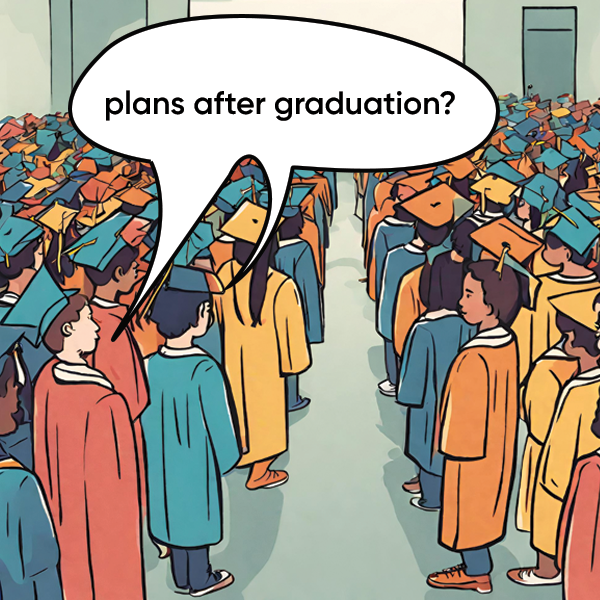
Please stop asking me what I’m going to do after graduation if you only care about my career

How the all-encompassing question tries to take over our senior year


By CLAIRE SCHAD — cfschad@ucdavis.edu

To all my fellow fourth-years: congratulations, we have entered our final year and we are almost there!

But not so fast…

“So, what are you going to do after you graduate?”

If you’re a fourth-year like me, you are likely all too familiar with this question. As we enter the holiday season, full of gatherings with family and friends, we will probably get to experience the frustration of this question even more than we do now — if that’s possible.

Whether it’s at the Thanksgiving dinner table in front of your entire extended family or in a conversation with your friend’s parents, the question is sure to come up. For those of us who don’t have a concrete plan after graduation, this can lead to an awkward situation. For me, a political science major, this usually looks like trying to explain that one: no, I don’t plan on being president one day, and two: trying to share what I’m actually interested in, all while carefully attempting to shift the topic of conversation away from myself.

Nevertheless, this question always leads me to a place where I feel an overwhelming sense of unpreparedness, which is not actually warranted. I have worked hard in my classes, explored my areas of interest and figured out what I do (and do not) like; I’ve had internships and made lasting connections. I shouldn’t feel unprepared for life post-grad, but yet here we are.

I don’t blame those asking this all-encompassing question, but rather I appreciate that they care enough about me to ask. However, I am frustrated with the social norms surrounding post-grad life that expect us to have some clear path forward, preferably where we will make lots of money.

Sure, if you are a pre-med or pre-law student, you likely have your sights set on medical or law school for at least a couple of years and have a satisfying answer to the common question. Or, maybe you majored in electrical or mechanical engineering, which has the highest median salaries for 25 to 29-year-olds with bachelor’s degrees, and you are graduating with multiple lucrative job offers, and therefore your friends and family aren’t all too concerned with your post-grad career prospects.

However, those of us who didn’t take these paths have equally exciting reasons to look forward to post-grad life. Why don’t people realize this? Well, it’s likely because we live in a society that is heavily influenced by the amount of money that an individual makes after graduation: in other words, success is gauged on income. Those who major in the STEM field top out almost every ranking of income earned post-grad. In contrast, those who major in social sciences or arts and humanities rank among the lowest in income.

So, every time someone asks me what I am doing after graduation, there is a mutual understanding that I chose a major that doesn’t usually result in an exceptionally lucrative post-grad career. And most times, the question is solely focused on my career goals. This leads me to a place where it feels like those who ask this question are only concerned with how monetarily successful I will be post-grad.

Why don’t people ask about my undergraduate experiences or what I’m interested in, the very specific things I have been trying to figure out for the last four years? When asked, these types of questions allow us to feel excited about our accomplishments and what they could lead to in the future, rather than unprepared because of what we might not know.

So to my fellow fourth-years, even though we have reached the point in our academic career where people are far more interested in what we plan to do after graduation than what we are doing right now, I challenge you to reframe the “What are you doing post-grad?” question. Even if this means hijacking the questions that your loved ones ask you and talking about your accomplishments and interests. If we keep doing this, maybe, just maybe, we can help shift the norms surrounding post-grad expectations. After all, if they really are interested, they will be happy to hear about any developments in your exciting life, career-related or not.


Written by: Claire Schad — cfschad@ucdavis.edu 


Disclaimer: The views and opinions expressed by individual columnists belong to the columnists alone and do not necessarily indicate the views and opinions held by The California Aggie.


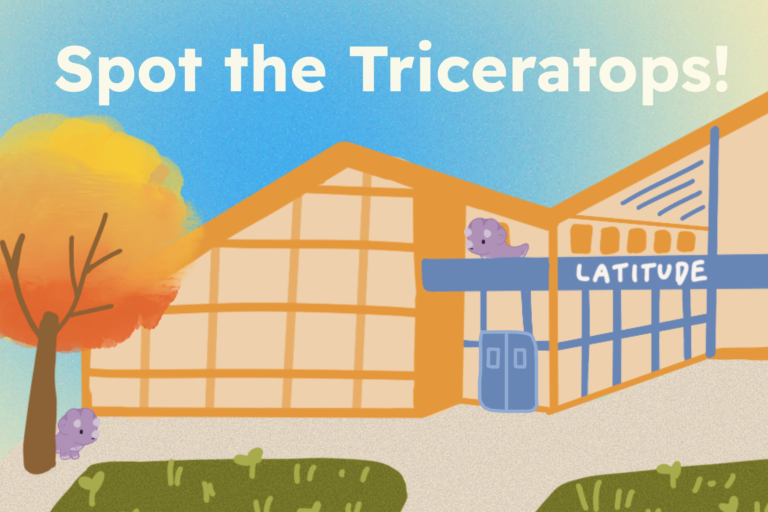
Davis Triceratops Club works hard to foster a sense of community through creativity amidst leadership changes

Students find joy in hosting and participating in scavenger hunts for crocheted dinosaurs


By LYNN CHEN — features@theaggie.org


It is no easy feat running a large club like the Davis Triceratops Club.

Currently, the club’s Discord community boasts 5,158 members and each of its events have been wildly popular among students.

The club crochets tiny, colorful dinosaurs and hides them in locations around the UC Davis campus and its vicinity. Students in the club’s Discord community then go on scavenger hunts for these dinosaurs based off of hints given by “droppers” — those responsible for creating and concealing the stuffed animal prizes. Once a dinosaur is discovered, the finder is deemed the “parent” of their new stuffed toy.

Elizabeth Lau, a second-year civil engineering major, recounted her experience participating in one of the club’s hunts as “chaotic” and “extremely popular.”

She described how she saw a “massive flood” of people walking and riding on bikes to search for the stuffed animals which was “a little overwhelming.”

Melody Adams, a fourth-year psychology major and member of the dinosaur production team for the Davis Triceratops Club also furthered how excited the hunting community can get about drops.

“There are some hunts where I’ve seen like 20 to 30 people all searching around,” Adams said. “If I drop [another] hint, people will start screaming, ‘There’s a new hint, there’s a new hint!’”

“I’m just sitting there, like, ‘this is crazy,’” Adams said.

For those who are unable to procure a crocheted triceratops in a scavenger hunt, the club also hosts raffles and flash sales for its soft animals.

Ada Lei, co-founder and president of the Davis Triceratops Club, attributed the events’ successes to the demand for the stuffed prizes themselves.

“[The crocheted] dinosaurs are generally free stuff for people, and college students love free stuff,” Lei said. “Especially if it’s cute and soft and cuddly.”

In addition, Lei stated that the popularity of the hunts reflected the sense of appreciation the Discord community had for the club itself.

“I think a lot of our community, they see the amount of effort that we put into behind the scenes to crochet each piece […] and to being generous enough to put them out for free for students to just have fun,” Lei said.

On a regular basis, the club hosts “Daily Dino Drops,” which are hunting events that occur randomly and relatively frequently throughout each week. Additionally, each month the color of the prize triceratops changes, making each dinosaur a more distinctive and charming object to scavenge for.

Members in the Discord community can also look forward to limited-time events that feature exclusive dinosaurs.

For example, occasionally a wild “Aggieceratops” might be dropped in an area. These dinosaurs are specially crocheted with blue and gold horns instead of the usual white ones to show off the UC Davis college colors. However, “Aggieceratops” are especially difficult to find due to their vague location hints and the considerable competition to find them.

Additionally, whenever the Discord community reaches a member count milestone, special dinosaurs are released as well. The most recent ones were white-bodied with blue and gold horns.

Another special event that happened the previous month promoted “Franken-Dinos” — crocheted triceratops made from the scrap yarn of other drops. The idea for this event originated from Adams and was especially on theme for Halloween.

Whether it’s for regular drops or special event drops, contributing members of the club take much care in making the scavenger hunting experience fun for everyone.

“I try to go for places that people might not think of right away,” Adams said. “Sometimes, you might look at something and it looks […] like a really great spot, but I know the hunters will see that too.”

“So I [tend to] go a little bit off the beaten path — maybe around the corner of a building or instead of hiding [the dinos] at eye-level in a bush, I’ll hide it a little below eye-level or a little above it because sometimes people forget to look up,” Adams said.

Adams is a prolific “dropper” for the club and finds joy in contributing to the school community.

“When I first joined, I was just a member, and I really appreciated what they were doing,” Adams said. “People were getting involved and making friends, and going to new places on campus that they’d never seen before.”

However, despite passionate club members and a dedicated online community, the organization is facing some challenges with running operations smoothly.

“I’d say the largest setback we’ve had is an offset in leadership,” Lei said. “I say I’m the co-founder of Davis Triceratops because the other co-founder up and left all of a sudden.”

Additionally, many previous members have graduated UC Davis, which exacerbated management and organizational difficulties for the club.

Because of this upset in leadership, the club closed down its Discord server for a period of time over winter break in 2022. It reopened again a few weeks into January of 2023 after some reorganization of the online server and the club itself.

“It takes a lot of time and effort and it takes a big team to run such a large club,” Lei said. “There are a lot of things to take into account.”

For instance, since the goal of the club is to keep things fun and refreshing for the online community –– hence the monthly color changes in triceratops and frequent hosting of exclusive events –– the board members feel the need to keep producing new, original ideas.

“The new ideas also need review,” Lei said. “We need second opinions and you really need a whole team to decide.”

Lei also admitted to suffering from burnout from running the club.

“A lot of that is in part because of how we started out [the club],” Lei said. “We [scaled up] just by doing more […] but that wasn’t the healthiest thing.”

For Lei, one of the most important lessons she’s learned from building the club from scratch is clearly defining how things are organized within a group.

“When we just started out […] the number one goal was to see how many dinos we can put out; [making dinos] was more about how much fun everyone was having,” Lei said. “But in having that being the […] main goal, we sacrificed a lot of our personal time and efforts. After a while, it became overbearing.”

To battle the burnout she has been suffering with the club, Lei has been trying to delegate tasks and depend on the team more.

Moreover, Lei has started to incorporate more aspects of what she enjoys or is passionate about into the club.

“I want to take a step towards philanthropy, especially with the amount of funding that we make as the Davis Triceratops Club,” Lei said.

She said that she was considering offering a percentage of all the funds raised to a certain philanthropic organization that changes every month.

“We don’t have a particular sort of field that we’re gearing donations towards, but rather we want to contribute to community-voted [charities],” Lei said. “I’d like to see that we’re making a step to contributing funds towards whatever [the community] is passionate about. It comes back to that sense of appreciation.”


Written by: Lynn Chen — features@theaggie.org


Senate hears quarterly reports, passes three constitutional amendments

Both the Bike Barn and the External Affairs Commission gave their quarterly reports and an amendment looking to move ex-officio positions to the legislative branch was added to the ballot


By SYDNEY AMESTOY — campus@theaggie.org 


Vice President Aarushi Raghunathan called the Nov. 2 senate meeting to order at 6:15 p.m. After roll call, she read the UC Davis Land Acknowledgement.

The first item on the agenda was the confirmation of four new Student Health and Wellness Committee commissioners. Candidates told the senate their plans for expanded mental health advocacy on campus and were unanimously confirmed. 

A new chairperson for the STEM committee was then confirmed unanimously.

Teddy Mates-Muchin, business manager for the Bike Barn, then presented the senate with the Bike Barn’s quarterly report. This included the current financial standing of the Bike Barn, with employee wages increasing by one dollar and the recent hiring of new mechanics. 

According to Mates-Muchin, the Bike Barn’s newest program, “Lit Not Hit,” was successful in its inaugural run. The program, which gives bikers free headlights, has stopped due to the supply of lights running out. Mates-Muchin then called on ASUCD to help with continually funding the project. 

Bike sales halfway through this quarter have been successful and are expected to meet past year expectations, according to Mates-Muchin. 

“We’ve sold just about 200 bikes this year, which is about $95,000, which is more than half of our budgeted bike budget,” Mates-Muchin said. “That’s about where you want to be. For labor, we’ve made about $35,000 in labor, which is not bad. In parts sold, we’ve made around $91,000. For these numbers to be so high halfway through the first quarter feels pretty promising. This is our biggest season, so I feel pretty good about these numbers and that we’ll be able to keep making money as the year goes on.”

However, according to Mates-Muchin, there have been some onboarding issues for new employees as well as scheduling issues due to the Bike Barn still relying on manual scheduling systems versus digital ones. 

Next on the agenda, the External Affairs Commission (EAC) Chair Daniel Mojica gave the EAC quarterly report.

Mojica told the senate the current goals for the EAC, including providing more adequate lighting around Davis, revitalizing the ASUCD housing committee and advocating for the use of Aggie Cash at downtown establishments. 

Mojica also brought up current activity within the EAC, including the promotion of safety and advocacy for the transgender community in Davis, especially following recent events such as the bomb threats made to a local library

The report ended with a plea from Mojica to the senate for engagement in discussions and projects with the EAC, highlighted by a TikTok edit of the senators who have spoken with the EAC in recent months. 

“If you want to be in an ‘emo boy’ TikTok edit, just show up to our meetings,” Mojica said. “That’s all I ask. We’d really appreciate it if you guys were to include us more in more discussions with legislation, whether that be any projects or any ideas you have going on.”

The meeting then went into public comments. First, former ASUCD President and UC Davis alumni Ryan Manriquez raised an issue involving ex-officio positions. This was specifically in regards to the executive branch positions such as transfer student representatives and international student representatives having voting rights, which they were recently granted by the senate. He advocated on behalf of Constitutional Amendment #87, which seeks to move such positions to the legislative branch, which would maintain their voting rights, but give them similar duties that senators must perform as well. 

The senate was then told to be prepared for a possible spending bill to come to the table in the next few days regarding more backing for the Bike Barn’s “Lit Not Hit” program, a bill that they said could potentially exceed $20,000.

ASUCD Controller Allyson Francisco then cautioned the senate that they have already gone through around a quarter of their budget for the year.

“So I would like everyone to, seriously, if you’re proposing a spending bill, please come and talk to me. Please get my input offerings, I would greatly appreciate it,” Francisco said. “Seeing all these spending bills come through and having no knowledge that they’re happening is kind of hard.”

After public comments, the senate took a break. The meeting was called back to order at 7:53 p.m. 

Previous legislation was approved, and new legislation was subsequently moved to the Internal Affairs Commission for review. The consent calendar was also approved.

The meeting then considered old legislation, beginning with Student Resolution (SR) #2, which asks ASUCD to under no condition accept the new Beverage Pouring Rights Contract with PepsiCo that the UC Davis administration may potentially sign soon. 

 “The Beverage Pouring Rights Contract restricts the beverage options available to students, limiting their ability to make healthy and sustainable decisions,” the resolution read.

SR #2 was passed unanimously. 

SB #17, which would allocate $838.76 to the Elections Committee in regards to a voting participation giveaway planned for the upcoming fall ASUCD elections, was then considered. 

After discussion on prizes, which was ultimately settled on one iPad and one Apple Pencil, the bill passed unanimously.

SB #18, which would allow registered student organizations to endorse ASUCD legislation, was then discussed. After deliberation, the bill was passed.

Constitutional Amendment (CA) #86, an amendment that would change the titles of members of the ASUCD judicial branch to justices, was also passed unanimously. 

CA #87, which would move the Transfer and International Student Representatives to the legislative branch, was deliberated on next. This, along with CA #88, which would change the number of members in the judicial branch from five to seven, was passed and subsequently added to the spring 2024 ASUCD Elections ballot. 

The final agenda item saw the senate move into open forum. 

The open forum was dominated by discussions regarding parking after fourth-year anthropology major Jacob Hill, dressed as a pirate, came forward with concerns about new C and C-plus parking rates by the Transportation Services. 

“I’m here to talk about ‘p-arrgh-king,’” Hill said. “I’ve noticed [that with] some of these rates, the way it’s organized doesn’t really make logical sense. Specifically, the C and C plus parking [are things] I don’t personally agree with or understand. So let’s say you’ve got C plus parking for employees and students, then we have C zone which is just blank so I’m assuming that’s for visitors. There are only three kinds of people coming to campus. Employees, students and visitors are all you can be. So I’m trying to figure out, first of all, why the C plus, which is geared towards employees and students, is more expensive.”

The discussion ultimately led Senator Gaius Ilupeju to ask for two senators to come forward and become the adopted senators for the ASUCD Equitable Parking Oversight Committee.

“Passion,” Ilupeju said, in response to being asked what he was looking for in the adopted senators.

Ultimately, Senators Chasa Monica and Curtis Chen were selected to be the committee’s adopted senators. 

Vice President Raghunathan then urged senators to attend a meeting on Nov. 7 with Chancellor May, as well as to read bills for grammar inconsistencies before senate meetings.

“We can’t just stay in questions in text forever,” Raghunathan said. “You should know how you’re going to vote before you get in here.”

The meeting was then adjourned at 10:33 p.m.

Written by: Sydney Amestoy — campus@theaggie.org

ASUCD 2023 fall election endorsements: Consider the following

The Editorial Board endorses five candidates for ASUCD Senate

By THE EDITORIAL BOARD

ASUCD fall elections began on Monday, Nov. 13, and voting will be open through Friday, Nov. 17 at 8 p.m. Undergraduate students can cast their votes on the ASUCD elections website

 This election cycle, there are 21 candidates running for six available Senate seats. The Editorial Board interviewed 14 of the 21 candidates running for Senate. Those who were not interviewed did not respond to the Editorial Board’s request for an interview. 

We urge all undergraduate students to both participate in the election and consider getting involved in student government in future election cycles to ensure that ASUCD elected officials accurately reflect UC Davis’s diverse campus. 

Here are The California Aggie’s endorsements for fall 2023 ASUCD elections:

Katia Bouali (she/her/hers) — Olive Branch

Fifth-year political science major Katia Bouali’s platform surrounding the improvement of racial equity, mental health awareness and student safety makes her a compelling Senate candidate. If elected, Bouali said that she plans to pass a bill which would require that any senate resolution regarding racial equity be closely monitored after it is enacted, which the Editorial Board agrees is crucial to holding the Senate table accountable. Her goals of improving the mental health care system at UC Davis, specifically through urging the administration to hire more counselors, highlight her passion for mental health awareness. As a whole, Bouali’s wide-ranging and attainable legislative plans make her equipped for success if elected as a senator. 

Sam Hopwood (he/him/his/they/them/theirs) — Movement 

The Editorial Board endorses second-year political science major Sam Hopwood because of his passion and commitment towards improving the labor conditions of students. We believe that his goals of increasing student worker pay, bettering on-campus work environments and lowering student fees highlight his investment in UC Davis students. The Editorial Board was also compelled by his intention to put pressure on Gary May and the UC Board of Regents to follow through on their promise to disinvest in the weapons and gun lobbying industries. Hopwood has considerable experience in labor organizing, which gives him the knowledge necessary to make legislative strides in the Senate if elected. 

Amanda Clark (she/her/hers) — Connect

Amanda Clark, a third-year political science — public service and psychology double major, has both extensive leadership experience and a wide range of policy goals. The Editorial Board was extremely impressed by her plans to advocate for students with disabilities, such as implementing a mobile order feature at the CoHo for students with mobility impairments and improving Unitrans terminal signage for students with visual impairments. Clark’s other platforms are compelling, which include destigmatizing mental health and promoting on-campus environmental sustainability. Her experience as the ASUCD Judicial Council Chairperson and as an Internal Affairs Commissioner makes her a well-rounded candidate with the ability to achieve important policy goals if elected as a senator. 

Noblejot Singh Sandhu (he/him/his) — Independent 

Third-year political science — public service major Noblejot Singh Sandhu impressed the Editorial Board with his comprehensive platform. Sandhu’s campaign goals, such as increasing the visibility of on-campus resources and connecting faculty, student organizations and ASUCD to create a more streamlined transfer of information, make him a compelling candidate. His experience working in the nonprofit sector and in local, state and federal legislation strengthens his candidacy. We believe Sandhu’s experience and robust plans to achieve his legislative goals make him a very qualified candidate for the Senate. 

JT Eden (he/him/his) — Connect 

The Editorial Board endorses JT Eden, a third-year environmental policy analysis and planning and international relations double major and the current ASUCD Senate President Pro Tempore. We believe that his extensive experience with on-campus leadership, such as his time serving on the Internal Affairs Commission and as the ASUCD Internal Vice President, make him a qualified and well-versed candidate. Of his platforms, the Editorial Board was especially impressed by his plans to alleviate on-campus parking costs for students in need and to prioritize student workers in the ASUCD budget. Because of his tangible legislative goals and over two years of ASUCD experience, we believe that Eden will have a great impact on the Senate table if elected. 

Written by: The Editorial Board 

Subject: The art of the follow-up and other emailing tips from seasoned professionals

0

To: Students everywhere (and also some of our professors, to be honest)

By THE EDITORIAL BOARD 

Hi all,

Hope you’re doing well! You’re probably rather busy with midterms and early holiday preparations, but if you have a minute, we’re hoping to share some tips with you on how to combat your email anxiety.

To some, a blank email draft induces overwhelming dread, but trust us — if you learn a few simple rules about the art of emailing, you can feel the same satisfaction crafting a message to your TA to beg for an extension that you do crafting the perfect text for your best friend’s situationship. 

First and foremost, you need to decide if the question or request you have should even be an email, or if it should be a meeting. And conversely, could any of the meetings you’re planning just be an email? 

COVID-19 protocols acclimated us to avoid meetings, and find alternate forms of communication — this period helped many of us to realize that our time is valuable, and when we can communicate information in a more concise manner, we should consider doing so. But if your email is going to turn into a two-month-long, 53-message back-and-forth with unreadable PDF attachments and seven people “looped in,” please just schedule a meeting instead. 

If you’ve decided that your question/letter of rec request/plea for mercy after Gradescope spent 37 minutes processing your submission and made you miss the deadline should take the form of an email, the next step is to think carefully about what you’re trying to accomplish with this message.

You want to minimize the back-and-forth as much as possible, so try to anticipate questions that the receiver may have or problems that may arise. If you’re asking for a letter of recommendation, think ahead and attach your resume, a description of the job or grad program you’re applying to, the email address or website they would need to send the letter to and so on. If you’re sending a file that may be confusing to open, attach instructions on how to do so before they have to ask. Link websites or articles you mention and attach the contact information of people you reference. Thinking ahead in this way will make the exchange less frustrating for both of you.

And yes, this is when you have to write a subject line. Our best advice for this is to think about what would make you click on an email in your inbox — they should be able to read the subject line and already have a clear idea of what the message will contain. It’ll also serve as a reminder of your email in the time between when they first read it and when they respond. 

Speaking of tone, striking the line between being confident, but not rude; enthusiastic, but not aggressively eager, is hard, but essential. Where the answer to “How many exclamation points is too many exclamation points?” lies will vary widely by situation, and we can’t give you a concrete answer. But we can tell you that it’s worth putting thought into what your relationship with the person you’re emailing is, what sort of relationship you might want to build with them in the future and what image of yourself you want to give off.

When you send your email, unless it’s urgent enough to require a response day-of, try using the schedule send feature to send your email out at a more socially reasonable time. You, like us, might tend to write emails best in the dead of night, but if you schedule your message to be sent at 9 a.m. it’ll be at the top of their inbox when they get into the office instead of buried deep below.

Now, you might think that’s it — you’ve sent your message, what more is there to do?

But one of the key points to becoming a master emailer comes after clicking send; it’s about knowing when and how to send a follow-up email. You’re probably thinking of the classic, “Just checking in…,” slightly panicked reminder. 

But it doesn’t have to be that way — the best tip we can give you when it comes to follow-ups is to act as though the person on the other end of your email has the best intentions, even if you don’t actually think they do. By extending them grace, acknowledging that they’re probably busy and telling them that you “totally understand,” you’ll minimize the amount that they feel attacked by receiving a second message.

Acting as though the person you are emailing has the best of intentions also means assuming that they genuinely want to get back to you and help with whatever you’re asking them. Changing your perspective in this way will help you to sound more confident and less desperate in your follow-ups, and will mitigate the feeling of being annoying or nagging you may otherwise get if it reaches this point.

Yes, you are preying slightly on the guilt they will feel at not responding sooner. But you are also helping them remember that you and your message exist somewhere in the deep dark void of their Gmail, and we like to believe that they’ll appreciate that reminder.

Our final tip? Go into your email settings and set the “Undo Send” period to the longest time interval option. No, really. Those 30 seconds will be immeasurably valuable to you at your lowest emailing point, when you’ve been copy-pasting the same body email template but forgot to change the name at the top (a devastating realization — but avoidable with undo send!). 

Thanks for your time — we hope this helped! Please feel free to reach out via email if you have any questions.

Regards,

The Editorial Board

Davis Cards & Games seeks to provide a place of community for those who attend their events

The local business holds weekly tournaments and other events featuring fantasy-based games


By ZOE SMITH — city@theaggie.org


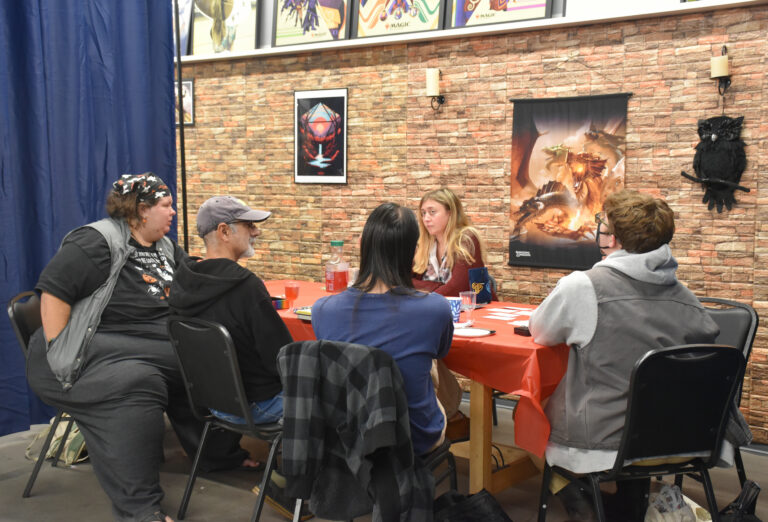
Davis Cards & Games supplies the Davis community with games, books, puzzles and models as well as a place to meet to play games. The business holds events for the community every day, with each day of the week featuring a different game for attendees to play.

On Saturdays, people of all ages gather at the local business to play the popular fantasy role-playing game “Dungeons and Dragons” (D&D). On Mondays, people play the “Magic: The Gathering” event called “Community Commander” at 4 p.m. On Tuesdays, you can find people playing “Pokémon League- Best of One” at 6 p.m. On Thursdays, there is a “Yu-Gi-Oh Advanced Tournament” and a “Digimon TCG Tournament.”

Davis Cards & Games wants to create a business where all people can feel welcomed and safe at their events.

“I’d say the important part of a business like this, especially in a college town, is [being] a good place… separate from your work in school where you can unwind and be yourself,” Brian Roy, manager of Davis Cards & Games, said. “Especially since we try to facilitate a space for people of all walks of life. A big part of our business model is trying to be inclusive to the LGBTQ+ community and really anyone who needs a place to unwind and to not have to worry about finals.”

Eli Chen, a regular at Davis Cards & Games, usually plays “Pokémon League – Best of One” on Tuesdays. Chen comes for the business’s environment.

“Everybody’s very friendly,” Chen said. “It’s a very welcoming environment. All the staff at the games are very friendly. You know, it’s just chill. Just a good time. I came here first two years ago because that’s when I first came to Davis and since then I’ve just been on and off. I pretty much know the regulars. There’s usually not too many people here [for Pokémon]. But for ‘Magic’ and ‘Yu-Gi-Oh’ I imagine it’s far more popular […]. We have a pretty dedicated, pretty decent community.”

Ray Fabionar has been an employee at Davis Cards & Games for two years. He runs the kids D&D events on Saturdays. Fabionar loves the people who show up to participate in their events.

“D&D nights are a lot of fun,” Fabionar said. “I run kids games, birthdays and special events. We also have community events where anyone can drop in and join. It’s a lot of fun. The ‘D&Ders’ we have here, I love them. They’re all really great people. The events themselves can get pretty wild, pretty excitable. But there’s usually some good adventuring.”

Roy spoke about which events are the most popular at Davis Cards & Games.

“I think Fridays, Mondays and Thursdays are our busiest [days],” Roy said. “We have free ‘Play Commander’ on Mondays — that gets in a lot of people, especially since it’s free. Friday is the ‘[Friday] Night Magic’ draft, [which is] a very popular format. Thursday is when we have ‘Digmon’ and ‘Yu-Gi-Oh’ — ‘Yu-Gi-Oh’ is maybe one of our most popular games. So that one brings in tons of people every week as well.”

For those interested in checking out an event, the November schedule can be found on the business’s website.


Written By: Zoe Smith city@theaggie.org


We still feel the aftermath of Zoom University

Reconnect to your peers, professors and education offline


By JOAQUIN WATERS —- jwat@ucdavis.edu


There’s one university that every student my age has attended. This is a school unlike any other. It has only one classroom. The walls of this classroom are either blindingly white or suffocatingly dark, depending on your preference. The desks are similarly malleable; one can hide themselves from view completely if they wish, though sometimes the professors understandably take issue with that. Distractions are many at this school, and connection with your peers is borderline impossible. I am speaking, of course, of the dreaded Zoom University.

It is undeniable that something crucial was lost in the quick shift to online learning at the onset of the pandemic. Much as we tried, stiff disinterest and awkwardness infected Zoom U almost immediately. The professors struggled with the technology. The students (myself included) struggled with distractions. One by one, those little squares displaying our “smiling faces” went black, now displaying only our name and the occasional emoji to indicate we were still there. One by one, the professors stopped caring whether we turned the video back on. Everyone stopped caring. And like that, my high school years petered out with a whimper.

I am entering my third year at UC Davis, and (other than a mercifully brief period in January 2021) Zoom U is a thing of the past. And yet, I still find consistent reminders of it everywhere I look. It struck me early on in my freshman year that though we may have left Zoom itself behind, the Zoom mentality did not leave us. The disinterest and awkwardness that were its hallmarks can be found, on some level, in all of my early classes. And though this has waned in recent years, I still feel its influence. Students (even friends) still tend to sit apart from one another in lecture halls, almost as if unconsciously recreating those little squares. Lab discussions can take an excruciatingly long time to get going, if they ever do; every time I hear a TA awkwardly dismiss students early after realizing that nobody wants to speak, I am uncomfortably reminded of the moment in Zoom U when I observed a breakout room full of black boxes, all of whom have collectively decided to stay silent until the five-minute “discussion time” was up.

It must be said, of course, that this is not entirely a symptom of the pandemic. The teacher-student relationship has always been defined by a give-and-take and one that frequently collapses if too little effort is given by either party. Regardless, Zoom University — necessary though it was — cultivated an environment that discouraged passion. Teachers and students alike were given reasons to contribute less in a scenario that necessitated more. Education suffered greatly as a result. We may have widely left Zoom U behind, but it hasn’t left us behind.

So how can this be fixed? In my opinion, there is a simple (but deceptively difficult) solution: a widespread return to hands-on learning. At the risk of sounding antiquated, years of the Zoom mentality have led me to the conclusion that the most effective form of education is still the kind that forces us to engage intimately with what we are studying. One can’t be expected to truly understand a subject like botany solely through PowerPoint lectures and discussion posts on Canvas. A guided trek through the Arboretum would be much more conducive. The same goes for broader things, like note-taking. Many of my professors have admirably tried to adjust to the times by allowing and even encouraging note-taking on our laptops, but I still find that, for me, writing physical pen-and-paper notes drills things into my head far more effectively than jotting the same concepts down on a Google Doc. The allure of opening another tab —- another thing cultivated by online learning —- is too strong. Some may argue that one can still get distracted while writing physical notes, which is true but is doodling in the margins really comparable to opening up YouTube?

This is not to say that classrooms should ignore modern technology entirely. That is simply not realistic. Nor is it meant to downplay the work done by so many in a virtual setting. Online classes should be an option; there are many who are genuinely helped by the format being available, and many who, for whatever reason, have no other option. I would never suggest that the option be removed. All this is only to say that the time spent learning entirely through a screen has given us the false assumption that it is a suitable replacement for learning through experience. Time has proven that it is not. Balance is required. Just as we need to feel the wind in our hair and hear the chirping of birds to remember what it is to be alive, we need to feel the ruled paper between our fingers and hear the squeak of a marker on the whiteboard to remember what it is to learn.


Written by: Joaquin Waters — jwat@ucdavis.edu


Disclaimer: The views and opinions expressed by individual columnists belong to the columnists alone and do not necessarily indicate the views and opinions held by The California Aggie.

Ditch the ‘grindset’

Show up for yourself before you show up for your midterms


By MOLLY THOMPSON — mmtthompson@ucdavis.edu


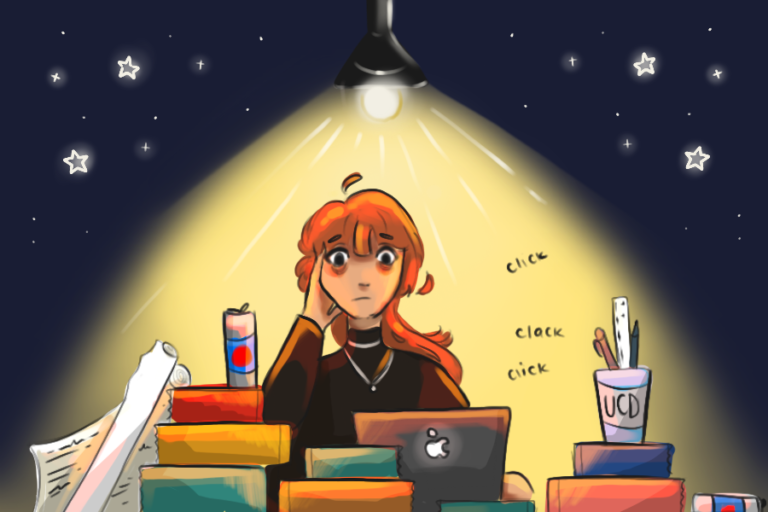
It’s November. The sun sets earlier, but you go to bed later. Assignments roll in like the fog on ever-cooling mornings, flooding your Canvas dashboard like the floor of a faulty dorm shower stall. You’ve spent enough time in the library to consider bolting yourself in one of those timed locking study rooms for good, and there’s more caffeine in your body than serotonin (Peet’s Coffee is rolling in your Aggie Cash). Welcome to midterm season: you’ve fully submitted yourself to the grind. But before you get your next refill of mediocre, dining-hall coffee, consider the following. This is my case for you to ditch the “grindset”— your body, brain and GPA will thank you.

Here’s the thing: you will, objectively, perform better if you have a healthy balance between your schoolwork and the rest of your life than if you don’t. No ifs, ands or buts. Firstly, sleep. Yes, Health, Wellness and You was right. The fact of the matter is, when you sleep (and I’m talking seven-to-eight hours, full R.E.M. cycle, dream-that-your-kindergarten-crush-is-proctoring-your-drivers-test sleep), your brain goes through and flushes out all the icky gunk that you built up in there all day. All of the things you didn’t know you took in and won’t remember tomorrow? Gone. It’s beautiful. Even better, all the important things that you actually need? They get tucked in nice and cozy, safely seatbelted for the long haul. If you don’t sleep, that gross build-up will get in the way of the good stuff, and you won’t do well on your tests. Cramming isn’t going to do you any good if you can’t remember any of what you read — go to sleep.

Similarly, you need to take breaks. I know it feels like you’re procrastinating, but breaks are crucial. Experts vary in their verdicts on how long the human brain can focus without a break, but the general consensus is that you’re actually more productive if you work for shorter periods of time with substantial breaks in between. As counterintuitive as it seems, that means no more long blocks of hours on end at your desk. Go get a hot chocolate. Go see the cows. Give Peet’s Coffee more of your Aggie Cash. I don’t care what you do, just set the work aside for a bit. Then open your computer again — you’ll be amazed at how much more approachable your workload seems from fresh eyes. Your productivity will improve, your quality of work will improve, your understanding of the material will improve and (get this) you’ll probably be happier too.

The bottom line is that you have to take care of yourself. If nothing else, let your motivation be that your performance will only benefit from it. We all hear those sentiments from everybody right around this time of the quarter — professors, TAs and even the UC Davis Instagram page. They all say “drink water, get enough sleep, spend time with your friends and go to the ARC,” but you can see behind their eyes that asterisk that means “only after you finish that midterm paper.” In reality, your degree doesn’t mean anything if you’re not in a state to do anything with it, and you won’t be if you don’t start being your own best influence. Be nice to yourself. Be gentle. Here’s the tough love (emphasis on the love): you have to come before your school work, you have to eat food, you have to drink water, you have to sleep and you have to relax. Live your life. Do your best. Ditch the “grindset.”


Written by: Molly Thompson — mmtthompson@ucdavis.edu

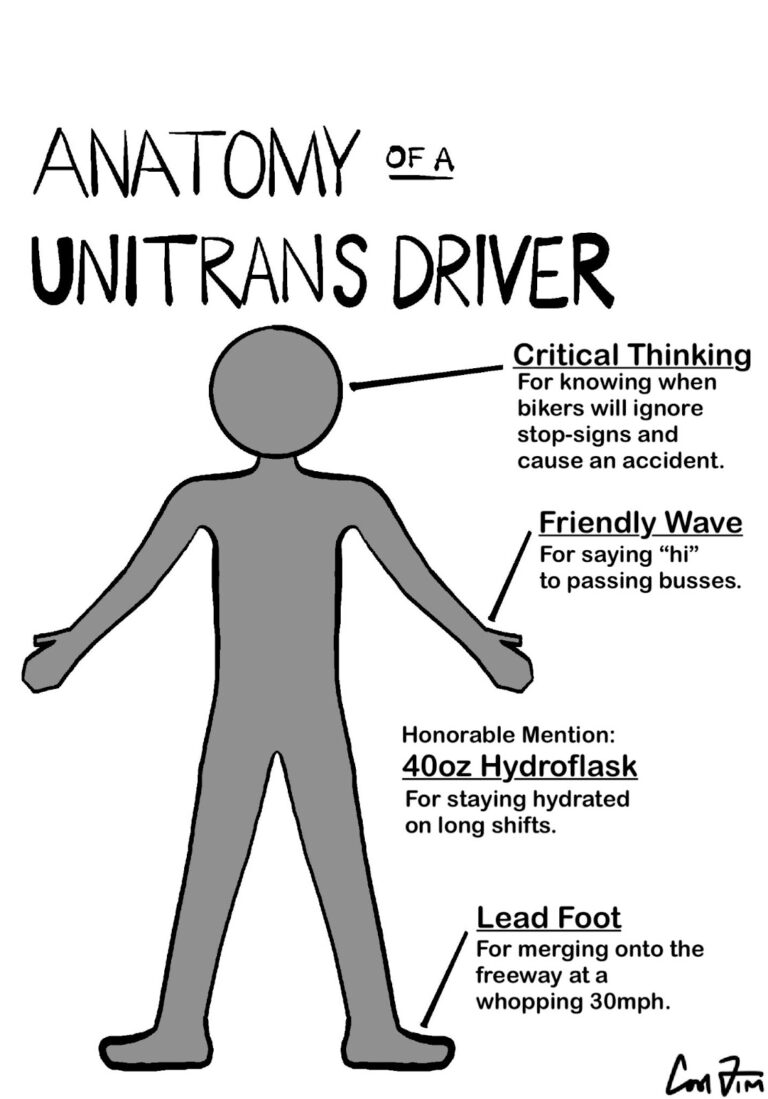
Unitrans Driver Anatomy

Drawn by: Sandhya Pfile –– sbpfile@ucdavis.edu

Disclaimer: (This cartoon is humor and/or satire, and its content is purely fictional. The story and names of “sources” are fictionalized.)

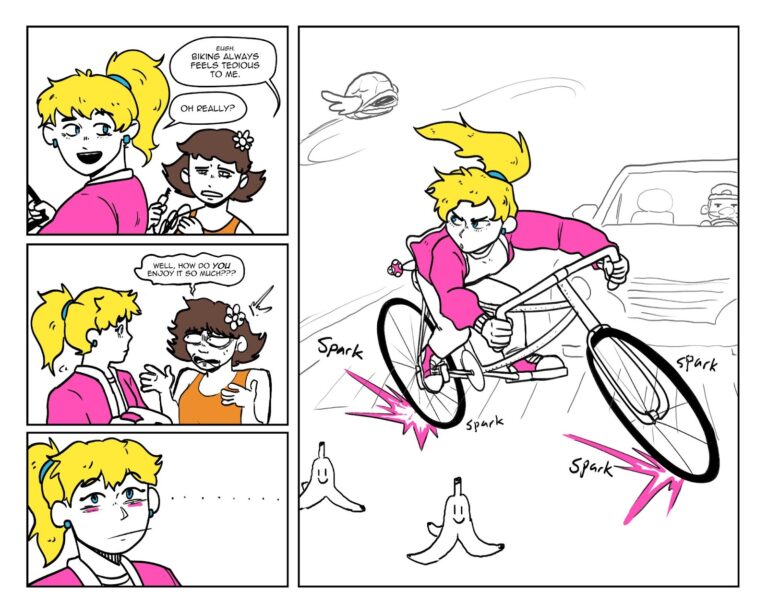
Drifting

Drawn by: Mia Pierce –– mnpierce@ucdavis.edu


Disclaimer: (This cartoon is humor and/or satire, and its content is purely fictional. The story and names of “sources” are fictionalized.)

No one should have expectations for winter quarter

We should call it fall quarter session II instead 


By ANDIE TARABZOONI — rmtarabzooni@ucdavis.edu


Getting out of the festive, “it’s the most wonderful time of the year” mindset and entering winter quarter at the University of California, Davis is the most whiplashing set of events that can occur to an individual. Instead of being blown away by the bright lights and homey feeling during winter break, I am instead blown away by the wind gusts that attempt to return me to my humble abode.

You would expect to encounter comforting events and retreats; in turn you are locked in the Shields Library prisons until you’re free from the 20-unit course load that you thought would be a “good idea” midway through your midterm-ridden fall quarter. The problem with winter quarter is the fact that no one knows what to do, ever. One day the sun is shining and hope is restored in the world, the next day the rain has flooded your room and left you for dead to spiral into the abyss.

None of the fun holidays occur in winter quarter, except for St. Patrick’s Day (shoutout to the Irish). What fun is there to be bombarded by the candy grams crowd outside the Memorial Union on Valentine’s Day? Even if you were in a relationship, what exactly can you do when it’s 40 degrees outside and the grass is just there to fool you into stepping in mud?

The timing really sucks. Winter quarter compensates for the fact that you’re so far away from summer break, (and any break really) by giving you two long weekends, yippee!  But seriously, you get winter break — which makes you realize maybe you’ve romanticized your family dynamic a bit too much — only to go through a dreadful three months of gloom, the wind’s reign of tyranny and the most evil professors you’ve ever met. Then, once you’re finally free and survive the most character building months of the year, you only get a week off to recover and reload.

Electronics are not your friend in winter either. This might be more personal, but last year, despite using an umbrella and having a protective laptop case, the rain broke my laptop and made me use the open access computer labs on campus for a month. It was really sad. Along with that, my power cut out three times which again, not great when you’re in an academic session.

This is not to say that winter quarter provides nothing, I actually really enjoy winter quarter. But, you have to lock the door and throw away the key to any plans or expectations you have for winter. Winter quarter chooses what happens to you, not you. If you really feel like your life is crashing down during winter, maybe it’s time to leave the Shields cells and get some Black Bear Diner Hot Chocolate or buy yourself some candy grams. The world is not ending; the sun just hasn’t shined in 40 days, but it will.


Written by: Andie Tarabzooni— rmtarabzooni@ucdavis.edu

Disclaimer: The views and opinions expressed by individual columnists belong to the columnists alone and do not necessarily indicate the views and opinions held by The California Aggie.

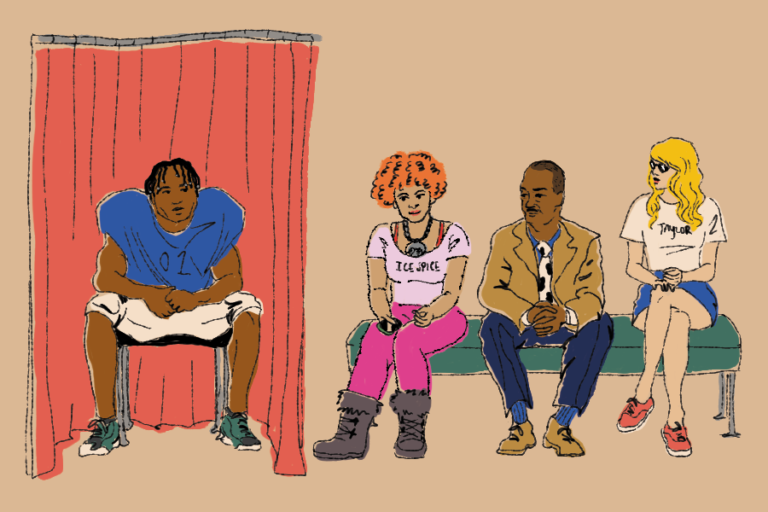
Which celebrity we need to set up with our star football player

It would be in our Wildest Dreams that we see New Romantics emerge in a relationship akin to a Love Story, if not, then we’ll Shake it Off for a Cruel Summer (Taylor’s Version)


By CARMEL RAVIV — craviv@ucdavis.edu


A few months ago, an honest working man of the name Travis Kelce had a bracelet, a phone number and a dream — and his mom for emotional support. He defined to the world how to shoot your shot and now he’s dating the megastar sensation that is Taylor Swift, at the peak  of her Eras tour hype.

I don’t know if anyone else knows this, but Kelce is an NFL player for the Kansas City Chiefs — which sounds like a problematic name in my opinion and the team isn’t even based in Kansas. But since his relationship with Taylor Swift started getting official, his NFL games are increasing in views, his ratings for tight end re-election have gone up, the team’s stock prices have doubled and a bunch of Swifties have forced their boyfriends to dress up as him for Halloween. He cracked the code, and that’s exactly what UC Davis has to do.

Every year, we try new strategies with our football team in hopes of getting our big break, our big win, but this was clearly the wrong idea. Playing better football isn’t gonna make us a better team. Dating relevant celebrities is. That is why I am formally pitching a list of celebrities that we need to set up with our UC Davis star tight quarter safety backer running offensive linemen tackle person position, or something.

  • Ariana Grande: I think this could work if we said pwetty pwease
  • Bhad Bhabie: She could sing our walk up song and it would be so hype
  • Coach Sue Sylvester: Would whip those boys into shape
  • Idk maybe Taylor has a sister who’s single? Worth a shot ahaha
  • Esteemed psychology professor Priscilla San Souci: Can explain to the team what went so wrong in their childhood that they feel a need to assert their manhood by chasing balls and hitting each other
  • The rival school’s quarterback’s sister


Written by: Carmel Raviv — craviv@ucdavis.edu


Disclaimer: (This article is humor and/or satire, and its content is purely fictional. The story and the names of “sources” are fictionalized.)


Out of five of the most iconic slasher killers, who would win in a fight?

Let the best slasher killer prevail


By MALCOLM LANGE —- mslange@ucdavis.edu


In the spirit of Halloween, now come and gone, I found myself watching some classic slasher films over the past month. As I jumped between different iconic franchises, I began to wonder — who out of these villains would win in a fight?

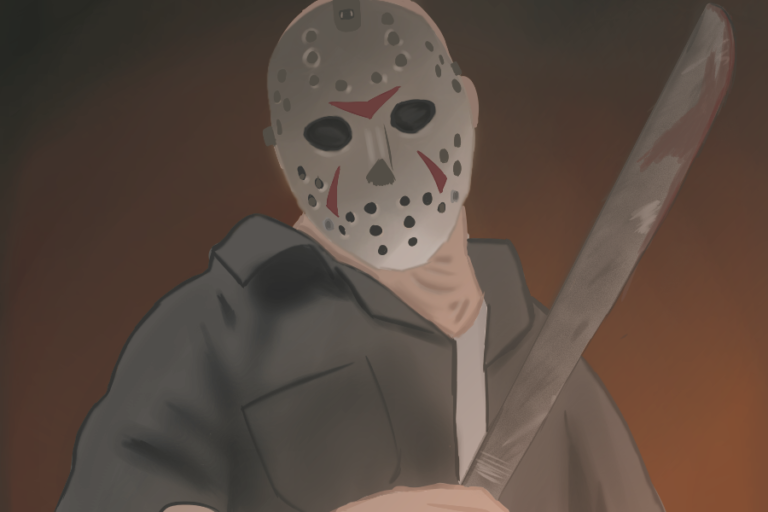
So I chose five of the most iconic and classic slasher movies from the 70s, 80s and 90s. The movies and their respective killers are: “Friday the 13th” with Jason Voorhies, “Halloween” with Michael Myers, “A Nightmare on Elm Street” with Freddy Krueger, “Scream” with Billy Loomis and Stu Matcher and “The Texas Chainsaw Massacre” with the Sawyer Family. These movies are not only an introduction to some of the most famous killers of cinema, but also the only movies I could find streaming. Sorry, but I was not about to buy the original “Hellraiser” for $12 to include Pinhead.

Also, I would like to give a disclaimer. There will be spoilers for each movie that I will be comparing the killers from. However, you have had over 30 years to watch all of these films, so I don’t feel too bad ruining their endings.

Before we begin, we have a huge problem to address. Which canon are we basing this on? Canon is what exists in a fictional world. “Halloween,” a movie series that began in 1978 and has gone through many reboot/retconning events — when the newest movie will undo or pretend as if a previous movie or event did not exist, therefore changing the canon. For example, there are 13 total movies in the “Halloween” franchise, but only four of them are canon as the 2018 “Halloween” installment retconned every other movie except the original. What I have chosen as the canon for each movie series is the original works. I am not including any “returns” or “revenge” movies in a franchise. Once the killer is defeated or killed, I count that as the end of the original storyline.

Having this in mind, here are the movies that I will be using to base how powerful each killer is.” Friday the 13 part II,” “III” and “Final Chapter,” “Halloween I” and “II,” “A Nightmare on Elm Street,” “Scream” and “The Texas Chainsaw Massacre” (TCM).

The killers of “Scream” or TCM movies are exclusively mortal and have no signs of superhuman abilities. Without these, the Sawyer Family, as well as Billy Loomis and Stu Matcher are ruled out as true contenders since the other three have inhuman and heightened abilities and powers. As much as it pains me — “Scream” is one of my favorite movies — I do not believe that either of those killers would stand a chance against any of the other three.

Looking at the other three now, I am going to start with Freddy Krueger from “A Nightmare on Elm Street.” This will most likely be the most controversial aspect of this article. The whole franchise has so many different interpretations and no clear answer as to which one is correct. Some speculate that the whole ending of the first film is a dream within a dream, and Nancy (the protagonist) never wakes up throughout the rest of the movie franchise. Others will say the whole movie is a dream, and some believe that Nancy did defeat Freddy but the end was Freddy killing Nancy’s mom. With that said, I am only going to look at the first movie since that was the original story before it started getting meta and convoluted.

Freddy is a psycho killer who invades your dreams and torments you. After a couple of horrific nightmares that he induces, he will kill his victim in their dream which also kills them in real life. However, Freddy was defeated by Nancy when she turned her back on him and was no longer afraid of her nightmares. This (in some theories) stopped Freddy from killing her and made him powerless against her for the time being.

Now let’s jump to Jason Voorhies and Michael Myers. Both of these killers have a lot of similarities. They have incredible strength and inhuman resilience to injuries. However, Michael has a bit of an upper hand because he is more resilient. Michael and Jason show similar signs of resiliency within their respective movies, but Michael in one night gets stabbed in the neck and eye and is shot at least six times (“Halloween”). And how does Michael react? He falls off a two-story balcony, escapes capture basically unscathed to continue his murder spree just a few hours later (“Halloween II”). Jason has taken many hits as well, but it seems like he is more affected by these injuries. After being stabbed in the leg, Jason is seen limping while he chases his victim (“Friday the 13th part III”). Michael would never. However, the big difference that gives Michael an edge is his lack of emotions and a higher intellect.

In their films, both killers have set traps, used disguises and murdered a handful of people. Jason, however, is more sporadic and clumsy compared to Michael. Michael is more methodical. Jason runs around and knocks things over in a chase while Michael calmly walks towards his prey. While fighting Jason, multiple people have survived a wrestling match with him. Michael does not give them that chance. The only person to survive Michael after he catches them is the protagonist Laurie Strode. The final nail in the coffin, however, is the fact that Jason has been manipulated by his past on two separate occasions which allows the protagonist to land a very heavy blow. Michael is not plagued by this weakness.

With Michael beating Jason, it just leaves Michael versus Freddy. This is a very easy win for Michael as Freddy only has real power over someone in their nightmares and it is unclear if Michael can even have nightmares. He has been described as someone with no soul, no thoughts or feelings behind his eyes. He is the “Boogeyman.” If that is true, why would we believe that he can be affected by nightmares, let alone that he even dreams? If this is the case, I believe that it is safe to say that Michael Myers would defeat Freddy similarly to Nancy (by not being afraid), making Michael the winner out of all of these iconic slasher killers.


Written by: Malcolm Lange — mslange@ucdavis.edu

Disclaimer: The views and opinions expressed by individual columnists belong to the columnists alone and do not necessarily indicate the views and opinions held by The California Aggie.

How decolonization narratives neglect the ending

Western presentations of colonialism say the quiet part out loud when they don’t say anything at all


By GEETIKA MAHAJAN — giamahajan@ucdavis.edu


The story of colonization is over-simplified and over-sanitized in almost every retelling: Native Americans “died out” because of “disease”; the British “modernized” the people and technologies of India; the French “influenced” the culture and food of Vietnam. This is the kind of slippery and vague language that dominates most presentations of colonialism, disguising the brutality of occupation by making all of its consequences sound like they were a matter of circumstance. In actuality, nothing about colonization is passive, i.e. no part of it “just happens.” It takes violence to be able to seize control over an external territory, it takes violence to be able to maintain a presence there and it takes violence to be able to effectively resist occupation.

When I was in high school, the history textbooks that were used in class neglected this last part. Vague references to “Gandhi” and “ahimsa” essentially gave readers the impression that empires would occupy a land for a period of time, and then retreat after facing some amount of resistance. Empires, however, do not fade into obscurity. The issue with this presentation of colonialism is that it fundamentally misrepresents what the purpose and motives of the empire are: not humanitarianism, or benefitting its own people — its loyalty is primarily to expanding its own influence through the acquisition of land and wealth. The goal of colonialism, both in the past and in the more disguised form it takes today, has always been to expand Western hegemony.

Peaceful, non-disruptive methods of protest are not useful in this context. Kwame Ture, a prominent civil rights organizer, expressed that “in order for non-violence to work, your oppressor has to have a conscience.” The very act of entering a foreign land and manipulating its socio-economic systems for the benefit of another nation is evidence of the empire’s lack of conscience when it came to the colonized people. As such, nonviolent protest was never an option for those who sought the liberation of their country. Narratives of colonialism that fail to take this into account distort not only what an independence movement looks like, but the nature of the colonizer. To present any empire or Western power as an entity that would just leave a colony assigns them an undue amount of grace and humanity.

The issue with this misrepresentation is not just how it affects perceptions of past events; it also colors our view of current events. When “safe” figures like Martin Luther King and Gandhi are celebrated as catalysts of change, while equally important, but perhaps more divisive leaders in liberation movements get a sentence or two dedicated to their efforts, it’s easy to believe that the path to change resides in quiet, peaceful resistance. But systemic issues are deeply ingrained into the way a country functions — oftentimes, there are people who are harmed by these issues, but there are also those that profit off of the systems in place.

Colonialism is the most obvious example of this, which is why decolonization has always been a violent process. The British, French, German or American empires did not leave any of their former colonies because they were asked politely, but it is often presented as though it was a peaceful resistance that resulted in the end of colonization, or that the empire eroded away with time. This portrayal lacks both nuance and historical accuracy; it does not acknowledge that colonialism in and of itself is an act of violence. The actions of resistance movements cannot be viewed in a bubble because they are symptoms of the original act of violence, perpetrated by the colonial state.

I believe that it is important to keep this in mind, even in the present day. Though the empires of the past have fallen, Western hegemony is still very much a goal for most Western leaders, even as methods of expanding this sphere of influence grow more subtle and the media uses veiled rhetoric to avoid identifying who the real perpetrators of violence are. It’s important to think about the story of colonialism and who tells it, what kind of language they use and which governments seem to sound more like purposefully vague history textbooks. It’s important because, no matter how much the mouthpieces of the West obfuscate it, it’s a very simple story and it always ends the same way.


Written by: Geetika Mahajan — giamahajan@ucdavis.edu


Disclaimer: The views and opinions expressed by individual columnists belong to the columnists alone and do not necessarily indicate the views and opinions held by The California Aggie.