55.9 F
Davis

Davis, California

Tuesday, December 23, 2025
Home Blog Page 127

Student Housing and Dining Services makes Segundo Dining Commons sole dining hall open on weekends

The change was made for the 2023-2024 academic year and a petition has since been created to advocate for the reopening of all dining commons on the weekends


By KEGEN WELLS — campus@theaggie.org


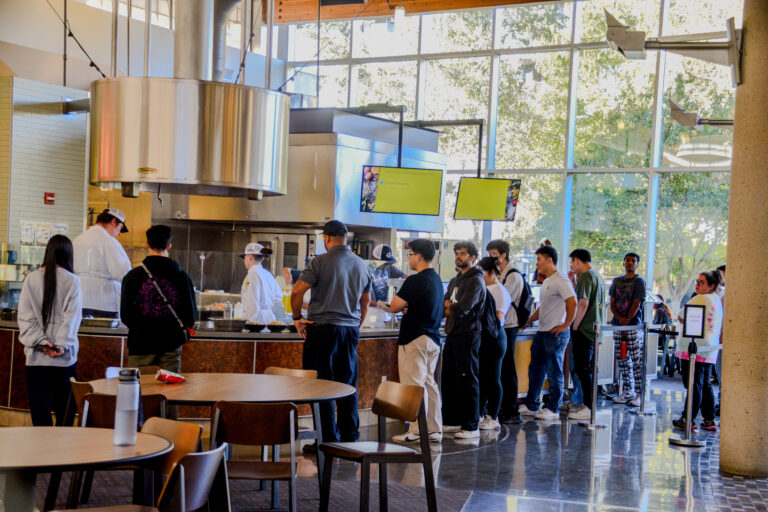
Starting in fall 2023, the Student Housing and Dining Services (SHDS) have closed two out of the three UC Davis dining commons during the weekends, with the Segundo Dining Commons as the only shared dining location for the various resident communities.

Kraig Brady, the executive director of Dining Services, discussed the reasoning behind this change.

“After studying our students’ weekend eating patterns, along with the low participation of weekend meal plan holders, consolidating our program out of our Segundo Dining Commons creates a greater operational efficiency that saves money for residents,” Brady said.

This decision was made after reviewing the needs of operations to best fit students through an annual report taken by SHDS, according to Brady. In past reports, it was shown that when all dining commons were open, low usage of the dining halls on weekends contributed to limited food offerings.

“This consolidated programmatic adjustment allows for an enhanced service experience,” Brady said. “[This includes] a larger array of food options [with] additional events and entertainment.”

Brady noted that there are food options available seven days a week in the Cuarto and Tercero residential markets, which accept Aggie Cash included in the meal plan.

Many first-year students with seven-day meal plans are upset by this change as they claimed that they were not notified of this prior to enrolling in the plan.

Sheila Soltani, a first-year life sciences major, created an online petition titled, “Justice for 7-Day Meal Plans,’’ advocating for the opening of all dining halls. This petition also highlighted the need to increase the availability of vegetarian and halal food options in the Segundo dining hall.

“Only one dining hall is open on the weekends, [the] Segundo Dining Commons,” the petition read. “They have very little vegetarian and halal options in general. They also close [early] at 8 p.m. on the weekend.”

The petition began on Oct. 1 and has received over 600 signatures since.

“If I had known earlier, I would have chosen the 5-day meal plan,” Soltani said.

Residents at Cuarto and Tercero have the option to switch to a 5-day meal plan, according to Brady, if they believe that it would better fit their needs throughout the school year.

“Every year, changing meal plans is common as students adjust to their eating habits throughout the year,” Brady said. “Some students decrease to a 5-day meal plan, and some students increase to a seven-day meal plan.”

The current hours of operation are set to continue through the remainder of the 2023-2024 academic year.


Written by: Kegen Wells — campus@theaggie.org
Grandparent mortality rates up 50 percent during midterm season

Students beware, your care packages and homemade cookies may be at risk


By AUDREY ZHANG –  aurzhang@ucdavis.edu


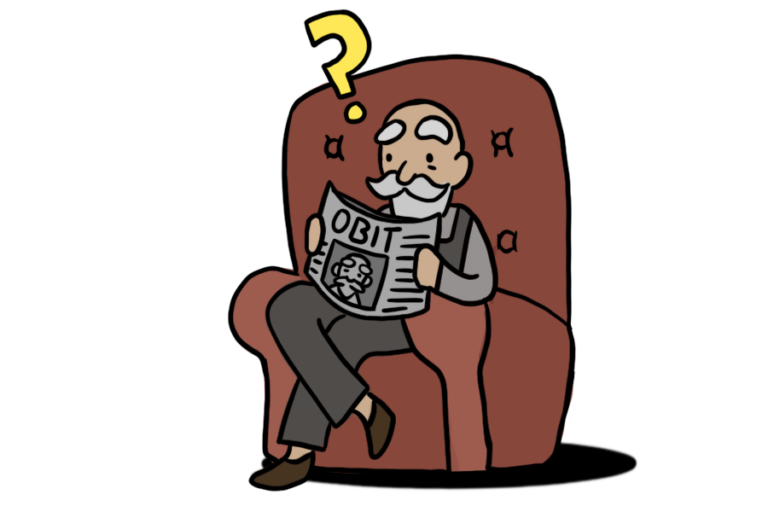
Very real and legitimate scientists have discovered a correlation between grades and grannies. There’s a significant uptick in mortality rates amongst seniors, especially those with a grandchild in college.

One very real scientist said, “It’s all that ambient stress in the air. Grandparents are reminded of their own college grind and they’re too weak to handle it. A similar phenomenon happens the day before Christmas and forgotten birthdays. It’s why so many gifts get lost in the mail.”

Results may be a little skewed due to the business practices of one Oskar Sam, who has “died” 42 times this week.

“I do fake funerals, untimely strokes and falls, and heart attacks,” Sam said. “My contact number is–”

The scientists assured us that Oskar Sam’s “deaths” were excluded from the data, and that their own business gets you a much better dead grandparent at much better rates. They haven’t been getting much work lately. UC Davis focus groups say it’s because their slogan “Is your grandparent alive? Do you need them to not be?” targets a very different market.

This has deeply impacted the community. One unfortunate soul has lost five different grandparents this week. Each one of his professors was told a different name, as well as his roommates. We asked him how he felt about the scientists’ findings.

“Five!? That’s terrible,” Joe Schmoe said. “Oh wait, I thought you were talking about my chemistry grade. Nevermind.” What we can only assume is his sixth grandpa came to visit him at his dorm during the interview. What a brave soul.

Jane Doe struggled not to cry when giving her statement. “Grandpa Oskar always loved calculus, he spent his final days solving math problems. I don’t think I can go into that classroom without thinking of him. And I know I’m not the only one. Maybe we can just . . . cancel it altogether?”

Professors are scrambling to accommodate in the wake of this series of unfortunate events.

“I hope we can all spare some kindness for everyone affected by this tragedy,” Professor Whats-His-Name said. “I know my own students will be understanding of me taking an extra few months in grading their papers. My own grandfather passed away just yesterday, after all.”


Written by: Audrey Zhang – aurzhang@ucdavis.edu

Disclaimer: (This article is humor and/or satire, and its content is purely fictional. The story and the names of “sources” are fictionalized.)

Davis Community Action Network launches ‘Community Voices’

0

The project received feedback from the community on their hopes for the future of local affordable housing


By HANNAH SCHRADER — city@theaggie.org


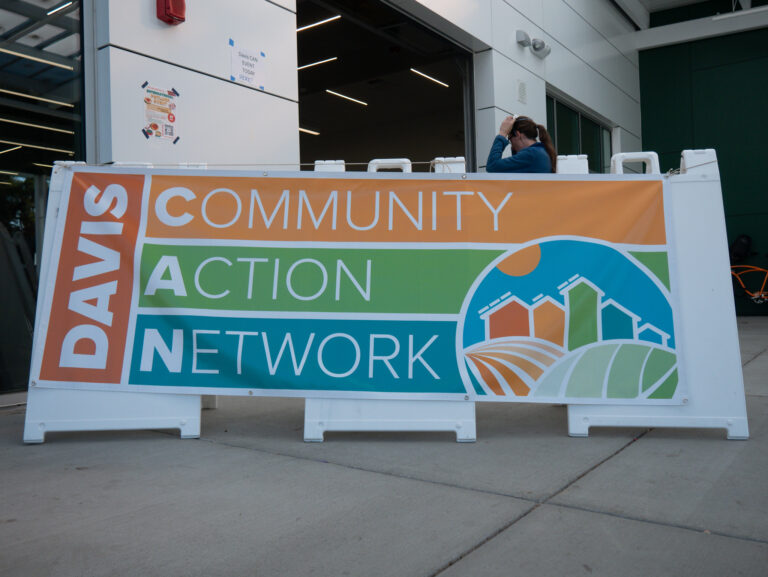
On Sunday, Nov. 12, the Davis Community Action Network (Davis CAN) launched their Community Voices Project at the Da Vinci Tech Hub. The organization held the event to gather public input on the future of affordable housing in Davis.

The meeting focused on a presentation of what Davis CAN is, the need for action to be taken on the affordable housing front and a small group discussion for community members.

NJ Mvondo, a board member of the Davis CAN, discussed how the Community Voices project came together.

“There is also concern about the general plan of the city, which is outdated, so my point is that there are several little crises everywhere that triggered the need for an organization like this one to be created so that we are able to pull resources together,” Mvondo said. “We are able to bring together people who [are not] seeing the same thing, quite the opposite. We all have different opinions on a variety of things. But we agree on something: Davis needs more housing [and] it needs to be affordable.”

During the event, Mvondo broke those in attendance into smaller groups to discuss ongoing housing issues and gather data on community input. Mvondo talked about the importance of gathering feedback.

“It’s different every time; today we’re going to group people by neighborhood and there’s going to be some developers in the house,” Mvondo said. “Today really is a listening session. So we need to hear from people, we are gathering data and then that’s going to inform how we are moving forward.”

Victor Lagunas, another board member for the Davis CAN, gave an introductory presentation that discussed the Davis community.

“I am humbled to be part of this team. I think that this is a great group of people… that have value in trying to make Davis and the greater community a really wonderful place,” Lagunas said.

Lagunas introduced the Davis CAN board and then stated the Davis CAN principles.

“Our Davis Community Action Network is guided by these following principles,” Lagunas said. “Number one, we believe that racial, social [and] environmental justice and the intersection of that has to be at the center of all of our efforts. That goes along with two, which is that we acknowledge the impact of structural inequities… as well as how how they impact our community and how we need structural changes to address them. Three, we value the collective well-being of our current and future community.”

Judy Ennis, the executive director of the Davis CAN, then continued the introductory presentation by emphasizing the importance of putting a plan in place to make the future of affordable housing in Davis climate-friendly.

“We are already a different Davis and we are becoming [a] different Davis every day moving to the future, especially in light of climate change,” Ennis said. “We need an updated general plan in order to address the context that we’re working in now and what’s coming up.”

Ennis recognized the role that the university plays in Davis and the students who are suffering as a result of Davis lacking affordable housing.

“The next statistic might surprise [you]: 18 percent of students have experienced homelessness or housing insecurity,” Ennis said. “That’s an outrageously high number [and] one cause is housing costs again and again.”

To finish the presentation, Ennis shared the importance of working together as a community to solve the housing crisis in Davis while also doing so in a way that is climate-friendly.

“We don’t own this work,” Ennis said. “DCAN (Davis Can) is one of many. These groups that you see up here are all doing different work right now to push our community forward into the future.”


Written by: Hannah Schrader  city@theaggie.org

Athletes are more than just their respective sports

0

Spotlighting UC Davis athletes and their goals off the field 

By MI’ZAUNI REESE — sports@theaggie.org

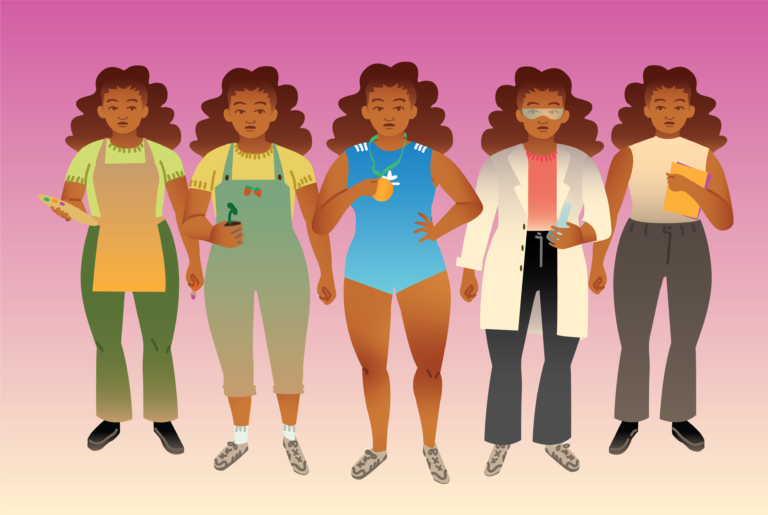
With UC Davis boasting an extensive Division I athletics program, it’s easy for Aggie fans to forget that athletes have lives outside of the locker room. Many Davis athletes participate in all facets of campus life; whether it be working at the CoHo or leading student governing bodies, these players are dedicated to making the most of their university experience.

Jeremiah Chukwudobe, a fifth-year political science major playing for our football team, finds himself deeply immersed in the Davis community as a leader of Athletes in Action, an organization set to spread the principles of Christianity. Jeremiah got involved during his first year at Davis and became more rooted in the organization as years went on.

Through Athletes in Action, Jeremiah has become a community leader in bridging the gap between differing athletic teams, as well as an “emotional rock” for many athletes on various teams, as he spreads the word of God. His passion for religion is more than biblical, as he describes his community work as a lifestyle, more so than a religion. Chukwudobe described “love” as the principle he pushes for the most.

“God says love covers a multitude of sins,” Chukwudobe said. “With rumors of war and everything going on, there has been a lack of love in the world. I hope that if I can leave seeds of love, they can spread and grow and make the world a better place, little by little.”

Kaitlyn Lyle is a fourth-year psychology major and mental health advocate. Lyle has been representing the UC Davis gymnastics team in both bar and beam events. Lyle is profoundly invested in promoting and supporting student-athlete mental health, as it far too often pushed to the back burner for many athletes while they juggle class, sports and other extracurriculars.

As an active member of Athletes for Hope, a non-profit advocating for student-athlete mental health, she is essential in the creation of curriculum and protocols for the prevention and normalization of mental health in athletics. She went on to describe what she thinks athletes need to focus on.

“You are not your accolades, you are human,” Lyle said as she urged athletes to open up the conversation about mental health. “Vulnerability is a superpower, not a weakness.”

She then explained how she finds the time and motivation to participate in Athletes for Hope, the on-campus Mental Health Student Athlete Resource Group and Asian/Pacific Islander Student Athlete Resource Group.

“My purpose lights my fire and my passion fuels it,” Lyle said. “What pushes me to excel is the potential impact I can make on the community and the possibility to create a better future.”

Lyle will hopefully soon formalize her work, as she works with Athletes for Hope to create a National Athlete Bill of Rights to protect athletes, especially their mental health. You can hear more about this on her podcast, “Athletes for Hope,” a platform for athletes to share their stories and experiences with mental health.

With a long-standing history of community service within the Los Angeles community, Alexys Ford now puts most of her efforts toward supporting the UC Davis Black Student Athletes. As a fifth-year psychology major and now a prominent leader of the track and field team, Ford allocates time to hold a position as a board member of the Coalition for African  Diaspora Student Athletes (CADSA).

The purpose of CADSA and the work she does is to bridge the gap between CADSA organizations/resources and the Black athletes on campus. She described the overarching goal as being to create a safe space in which Black athletes feel welcomed, supported and validated.

Her work is self-defined as “…advocating for Black student athletes while they strive to overcome the unique set of challenges that we face as athletes and students at predominantly White institutions.” This activism remains close to her heart.

Ford continued to talk about her impactful work and her mission with CADSA.

“This work impacts me a lot because I see firsthand these disadvantages or lack of attention we are receiving as African American student athletes,” Ford said. “I want to help other people like me, who feel like their voice isn’t heard.”

Overall, the bridge between being an athlete and a student at UC Davis has never been so complicated and impactful. It is important to remember the significant contributions these athletes make to the Davis community even if it does not involve applying their sport expertise. Although we acknowledged only a few of our university’s athletes who play a bigger part in our community, all of the athletes are more than just their role on the field.


Written by: Mi’Zauni Reese — sports@theaggie.org

Let’s settle this: Which egghead is the most disturbing?

A definitive ranking of all the eggheads based on how bad of nightmares they induce


By MALCOLM LANGE —- mslange@ucdavis.edu


Everyone at Davis has heard of the famous eggheads. These Davis landmarks are spread throughout the East side of the UC Davis campus. Each egghead is special and expresses a fun and unique character. These sculptures were created by late UC Davis professor of ceramics Robert Arneson, with the first installment in 1991 and the last in 2009. They are widely accepted as a quirky representation of the university; the town of Davis has also embraced them with their love for unconventional public art.

However, as much as they are received with positive attitudes from faculty, students and residents, there are specific egghead designs that I question more than others. To get to the bottom of these strange statues, I will go through each egghead and rank how nightmare-inducing it is on a scale of one (not being scary at all) to ten (even Freddy Krueger has nightmares of this).

The least scary egghead, with a ranking of one, is Bookhead. Bookhead is the lovable little egg that stands guard at the entrance to Shields Library. Bookhead ranks this low in scariness because there is no apparent oddity about him. He has a neutral and relaxed expression. There is a sense of comradery that most UC Davis students feel with him — always being stuck at the library. Bookhead is also a part of a superstition where students will rub their head for good luck on a test. How could anyone be terrified of a studious egg who helps you on a midterm or final?

Next on my list is Stargazer. Stargazer ranks three on the scare-o-meter for his lack of malicious oddities. Similar to Bookhead, there is nothing too obscure about this egghead. His most prominent features are his swirling eyes and uncomfortable smirk. Even with these less-than-normal features, there is nothing inherently evil about this egghead. There is no danger when looking into Stargazer’s ceramic, swirly eyes. He also seems to be having a good time. I mean, who does not like looking up at the stars every once in a while? Some would even go as far as to call Stargazer “a vibe.”

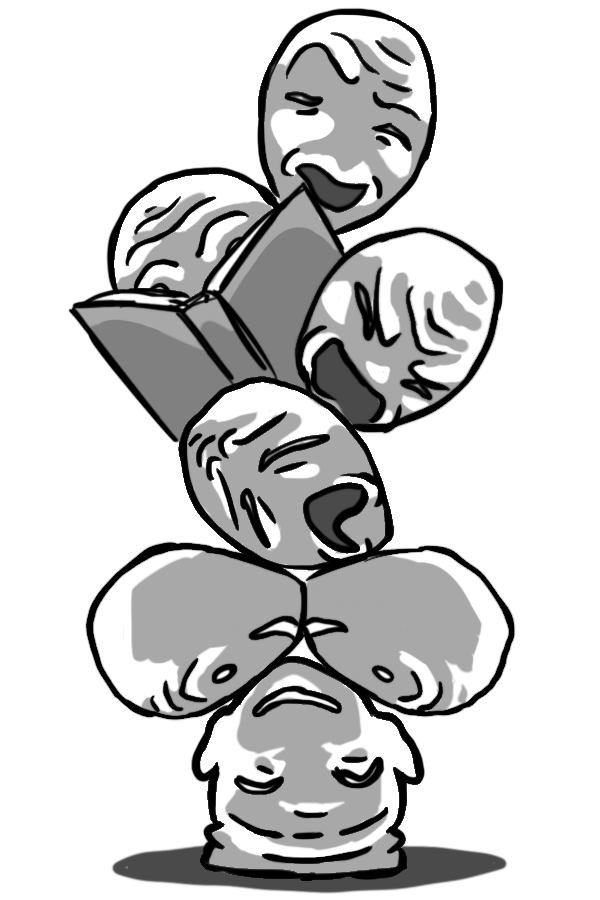
Now we start to get to the eggheads that truly intrude on my slumber. One of the duo eggheads ranks next with a six. It is the Yin and Yang, near the art, music and theater complex. These eggheads feature one lying on its side, looking thoroughly unamused, and the other upright with its eyes closed, yelling at the first with an angry expression. The one on its side does nothing for me; he is normal. If I ranked that one by itself, he would have a relatively low score. However, it is the angry, screaming one that brings up a sense of panic. He definitely is the most aggressive out of all the eggheads. If you were to bump into him, I would expect him to turn around and start yelling at you. He is not having a good time and definitely needs to take a chill pill.

The runner-up for scariest egghead is See No Evil and Hear No Evil. These eggheads were moved right near King Hall, UC Davis’ law school. Both eggheads have no ears and are looking across at each other with warped faces. One eye is closed and the other open but with an uncomfortable slit for the pupil. Their eyes are not proportional to each other, and the closed eye drags down slightly. They are speaking out of the corners of their mouths, which gives them an odd shape. It truly looks like they were left in the sun a little too long and melted a bit. This gives them an eight on the scare-o-meter.

Finally, the scariest egghead, Eye on Mrak. This egghead is upside down and squashed into the concrete, flattening the head. He is wrinkly and looks as if his forehead is slightly deflated as a result of being slammed into the ground. He has closed eyes and a huge smile showcasing his pearly whites. While he has the biggest smile out of the other eggheads, seeing his teeth for some reason is very uncomfortable. He also has the weirdest feature, which is an eye on the back of his head to symbolize that the chancellor is always being watched by the students, as it was pointed at the chancellor’s office. However, the chancellor’s office has been moved, so he is creepy with no extra meaning attached. Eye on Mrak receives a whopping 11 on the scare-o-meter for genuinely being a nightmare to bike past every week.


Written by: MALCOLM LANGE — mslange@ucdavis.edu


Disclaimer: The views and opinions expressed by individual columnists belong to the columnists alone and do not necessarily indicate the views and opinions held by The California Aggie.

Stop the stocking stuffers

A hate letter to the ‘Boo Basket’


By MOLLY THOMPSON  — mmtthompson@ucdavis.edu


You thought the spookiest thing that happened this October was your 8:00 a.m. Monday morning calculus midterm after “Halloweekend?” Think again. “Boo Baskets,” as they’re called, are a recent trend of Halloween-themed gift sets that couples curate and exchange around Halloween. The plastic buckets full of sickly sweet candles, gaudy fuzzy socks and cheap (but granted, festive) mugs that haunt your TikTok and Instagram feeds? Those are spooky. They’re a product of the immensely wasteful and unsustainable culture that’s especially exacerbated by the rapidly shifting social media landscape — it needs to change.

Don’t get me wrong, I’m a lover of holidays — I want an IV drip of gingerbread and pumpkin spice. This is in no way an anti-celebration perspective, this is an anti-unnecessary-waste appeal. The thing about trends and phenomena like the Boo Basket is that they prescribe buying stuff for the sake of buying stuff. You’re not necessarily purchasing products because you think the receiver will love them so much (of course, you think it’ll make them happy) but you do it more for the concept itself. We’ve all been there: you’re walking through the holiday aisle of Target, picking up random stuff that’s cute, cheap and holiday-themed. It’s not stuff you would have bought otherwise, it’s not necessarily stuff your partner actually wants and, let’s be honest, it’s not often stuff that they’re going to want to keep. You can only have so many novelty mugs with ghost faces on them or cranberry muffin-scented candles before you start having to make cuts — which means that a lot of it is inevitably going to be thrown away.

The Christmas stocking is another prime example of buying stuff for the sake of buying stuff. Most of the time, “stocking stuffers” are little trinkets and things that you forget about a couple hours after you receive them. Big conglomerate companies turn massive profits selling little plastic gadgets and miniature cosmetic products with extra-festive packaging that you don’t actually want, but you like it because it’s there. Welcome to capitalist heaven: the Walmart dollar section.

But as aforementioned, I’m no Grinch — I want to be embalmed in peppermint and cinnamon. I fully support you wanting to show you affection and embody the holiday spirit, I just don’t want you to throw it away afterward. So consider this: instead of buying a plastic bag of individually wrapped candy, make a batch of cute, themed cookies. Get your loved one a cozy, fun book to read. Show them how much you love them by taking them apple picking and treating them to a hot chocolate instead. Stuff your stockings with biscotti from a local coffee shop, a box of tea or a bracelet you made. It’ll mean more than the Target candle too. Your “Boo,” the planet and your wallet will thank you.

I don’t want you to give up your fun. I want you to let the holidays bring you all the best warm and fuzzy feelings. In the draining, soul-sucking world of higher education, we have to take what we can get when it comes to serotonin, and holidays are a wonderful source of this. But I urge you to find your joy in a way that is, at least, slightly less wasteful and unsustainable than society so often demands. I mean, we want to be able to enjoy a lot more Halloweens, Hanukkahs and Christmases, right? We’ve got to give the planet some of that holiday love too if we want to keep celebrating. The Grinch himself, true icon that he is, really says it best: “Maybe Christmas (he thought) doesn’t come from a store. Maybe Christmas perhaps means a little bit more.”

Written by: Molly Thompson — mmtthompson@ucdavis.edu

Season change

Drawn by: Lanhui Zhen –– lazhen@ucdavis.edu 

Disclaimer: (This cartoon is humor and/or satire, and its content is purely fictional. The story and names of “sources” are fictionalized.)

Protest arises in response to Riley Gaines on-campus speaker event on Nov. 3

The UC Davis Police Department reported instances of assault and vandalism at the protest outside of the event


By RIVERS STOUT — campus@theaggie.org


On Nov. 3, Riley Gaines spoke at the UC Davis Conference Center. She was invited by the Davis College Republicans (DCR) to speak on women’s participation in sports.

After DCR announced the speaker event, a call to action began to spread on campus.

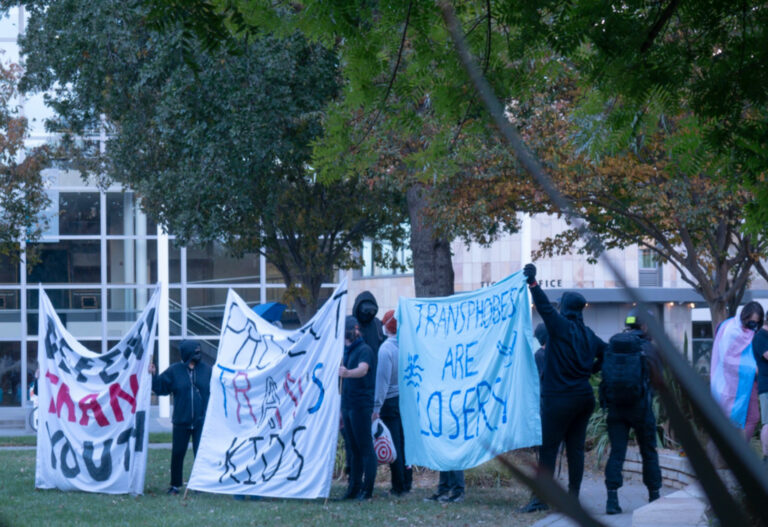
“Transphobia is not welcome in Davis…,” both posters found on campus and posts made online read. “We will not stand for that bullshit… Be ready to make noise.”

The poster read that there would be a protest on the Vanderhoef Quad at 5:30 p.m. on Nov. 3, an hour and a half before the speaker event would take place.

Around 100 protesters went across the field from the event to protest. The organizers and participants brought banners, masks, umbrellas and strobe lights.

“I was actually very impressed by the organization of the protest [and] I very much respect and thank the people who helped organize it,” a source who asked to remain anonymous said. “They made sure we knew our rights and that we knew the rules as protesters and they kept us safe. I think that was very kind of them, honestly, because good organization is what makes a good protest, what makes it effective and it’s what makes the rest of us feel secure.”

Also outside of the event, Jeff Boone and Anita Boone, CEO and Office Manager of the non-profit California Statewide CDC, discussed their support of Gaines and her support towards women’s rights.

“I feel it’s very important to allow both sides to speak, and that’s being shut down all over the country,” A. Boone said. “It seems like the Republican voice is just getting shut down no matter what issue they’re talking about. And, I too, want to protect women’s rights.”

When asked if the issue being covered that night was on transgender people, A. Boone declined and stated it was on the issue of “Women competing in sports against biological men.”

“She’s definitely speaking pro-women, I’ve only heard her say she doesn’t want to compete with biological men,” A. Boone said. “That has nothing to do with being transgender.”

Protestors discussed their objections to the event.

“A lot of TERFs [transgender exclusion radical feminist], which is what Riley Gaines is… like to cry about how they’re not transphobic, they’re pro-women,” the same anonymous source said. “If you don’t include trans women then congratulations you’re a fucking transphobe.”

In addition to the discourse regarding Riley Gaines, the protesters also spoke against Chancellor Gary May’s permission for the event to happen in the first place.

“It’s a bigger issue than simply one person,” the anonymous source said. “The reason I think it circulated to be about Chancellor May is that he allowed [Gaines] to be on campus and has allowed many Republican speakers to be on campus and has allowed this kind of bigotry to spread and say that’s in the name of appreciating both sides… No, that’s not an opinion, that’s a value and you’re a bigot.”

The UC Davis Police Department and private security organizations guarded the venue which was also surrounded by a barricade.

According to a statement by UC Davis News and Media Relations, by the end of the protest, two accounts of assault had been reported.

“No one requested medical attention,” the statement read. “Police also fielded a separate report of vandalism. Protesters broke the glass on doors and a window on a campus building a short distance from the event. Graffiti was painted on one building and Egghead statues. No one was arrested.”

Written by: Rivers Stout – campus@theaggie.org

You don’t need to go home to have a good Thanksgiving break

Take time to celebrate yourself and your found family, no matter where you are


By THE EDITORIAL BOARD


This quarter has been uniquely difficult. There has been no shortage of traumatic events, both locally and globally, that have been difficult for many members of our community to process and recover from. While every school year comes with its own set of challenges — assignments, midterms, morning classes and more — there is a gravity to this quarter that cannot be ignored. This makes it all the more important for students to take advantage of the time to recharge over Thanksgiving break.  

 For many students, those two days (or whole week, depending on how committed you are to attending your classes) present a chance to head home and spend time with loved ones while enjoying a hearty home-cooked meal. However, there are plenty of college students who don’t have this opportunity. Whatever the reason for this may be, the Editorial Board is here to share a few tips for enjoying the break even if you don’t have a traditional holiday experience to look forward to.

First, take a moment to reflect on your support systems in Davis. Maybe your roommates are always there to make you laugh when you come home at the end of a long day, or you have a professor who has gone the extra mile to help you understand a difficult concept. The Thanksgiving holiday doesn’t have to be a celebration of your immediate family — it could also serve as a day to express gratitude for those who have supported you through your college years.  

Our first suggestion for how to do so is to curate a holiday atmosphere where you are. Hosting a dinner party can be a fun and personal way to celebrate. Grab some friends, flowers and a few ingredients from your favorite local grocery store (or the farmer’s market, which conveniently falls on the day before Thanksgiving), then spend time cooking and eating with your loved ones. If there aren’t many people in your circle who will be in town over the holiday, you can always hop on a Zoom or FaceTime call to virtually spend the day together. 

Of course, you can also spend the day celebrating the most consistent relationship in your life — the one you have with yourself. Treat yourself to a day or two spent truly study-free and do the things that you love to do but may not have time for during the rest of the quarter. A personal favorite pastime of the Editorial Board is taking a walk in the Arboretum. The conditions are ideal this time of the year, as the leaves have changed colors and the days aren’t too cold or too hot. Pop in a pair of earbuds, put on your favorite playlist and enjoy the serenity of the space.

There are plenty of other things to do on a day off if you’re not interested in a leisurely walk. You could read that book you’ve been meaning to start all quarter, binge-watch a comfort show, deep-clean your room or even write letters to family and friends that you aren’t able to be with in person. Volunteering or donating can also be fruitful ways to show gratitude for the greater Davis community. Tree Davis, Empower Yolo and the Yolo Food Bank are all reputable organizations that stand for important social causes. Catching up on all the sleep you’ve missed this quarter is always a valid option as well. 

Whether or not you take part in traditional Thanksgiving activities next week, you can always take advantage of the break. Even if you are excited to head home and spend time with loved ones, consider checking in on your friends who may not be able to do so. We all deserve to have grace and consideration extended to us this holiday season.     

Written by: The Editorial Board

UC Davis Lights Festival to shine light on AAPI and MENASA communities on Nov. 18

Hosted by the Cross Cultural Center, the festival will include an array of cultural performances, food and craft vendors and community booths 


By KAYA DO-KHANH — campus@theaggie.org


On Saturday, Nov. 18 from 3 p.m. to 7 p.m., the UC Davis Cross Cultural Center (CCC) will be hosting the first-ever UC Davis Lights Festival to shine light on the Asian and Pacific Islander (AAPI) and the Middle Eastern North African South Asian (MENASA) communities.

The festival will take place on the quad, and admission is free and open to the public.

Previously, the CCC hosted an annual night market for the AAPI community, and the Light Festival is an evolution of that original event. The CCC hosts a culture day for each of the portfolios that they serve, but the MENASA community portfolio would hold an annual MENASA leadership retreat instead of a specific culture day.

After returning from the pandemic last year, there was no retreat and the CCC board discussed how to revamp their culture days. During that conversation, some of the student community coordinators advocated for a culture day that celebrated and connected both the MENASA and AAPI communities together, according to the Program Coordinator at the CCC, Lou Cha.

“Yes, we are celebrating both communities in one culture day, but also we wanted to showcase how large our diaspora is and that we are so different as much as we can be the same,” Cha said. “We are so similar as well, so we’re just hoping that everyone walks away feeling like they have a place they can belong and a place where they can feel seen.”

The name for the Lights Festival came from how large and different the diaspora was and how they wanted to shine light on the two communities.

“We also understand how [light] can be perceived differently,” Cha said. “That was the way that we could continue to be creative with the concept of light, how light can be presented and the symbolism of it.”

On the quad, there will be a stage set up for cultural performances as well as an array of food and craft vendors and community booths. The community booths include activities such as henna tattoos, origami, lantern decorating, ribbon lei making and diya painting. Student organizations will also be tabling to share their resources and connect with the community.

“There are a lot of communities I’ve never heard of, and I think that way it can kind of bring not only the AAPI and MENASA community closer together but also the community of UC Davis and the surrounding areas closer to each other because every culture is beautiful, [and] every culture has a story,” third-year environmental policy analysis and planning major and AAPI Community Coordinator for the CCC Melissa Segura said.

The planning committee for the festival is made up of students, staff, alumni and community members. They are in charge of creating the vendor and cultural performances list, ensuring that the chosen groups and businesses are local and connected to the AAPI and MENASA communities.

“I think it’s just really cool to get to work with the community,” Segura said. “To plan such a big event is that we can always say it’s for the AAPI and MENASA community by the AAPI and MENASA community, just because we have so many diverse voices. It kind of makes the light festival just a little bit brighter in that sense, because we have input from all different sorts of communities.”

Her biggest goal for the festival is to represent as many communities at the university as possible and to “make sure that they know we recognize them and that they shine in our eyes,” because not every community is always represented in campus events.

One thing she did to ensure as many ethnicities were represented as possible was include all communities in the design for a t-shirt for the Light Festival, which will be sold at the event. The event coordinators are encouraging attendees to come dressed in their cultural clothing to be entered into a raffle to win a free t-shirt at the festival.

“I think one part of being in a community where there’s a lot of diversity is appreciating other cultures,” third-year cognitive science major and AAPI Community Coordinator Ritu Goyal said. “A lot of times it’s very easy for us to have a certain perspective, but I think it’s so important to have cultural awareness and there being cultural intersectionality […] I think that’s like a huge part, an aspect of just understanding other people and knowing where they come from.”

According to Segura, the event gives people another way to see different cultures as the different vendors will allow attendees to experience the cultures through spirituality, art and food. Some of the food vendors the planning committee chose includes Dumpling House, Nox Barbeque, D’Groback Bay Area, Shah’s Halal Food Truck and Share Tea. Cultural performances include Coconut Dance, Davis Chinese Orchestra, Hmong Student Union Fashion Show and Indian Classical Dance.

Fourth-year political science major and MENASA Community Coordinator for the CCC Amaal Idoui said it would be like a “mosaic of cultures,” and that “all students can take away something and find something that hopefully fits their niche.”

“I’m just excited for an opportunity for our communities to come together and share the space,” Idoui said.

Written by: Kaya Do-Khanh — campus@theaggie.org

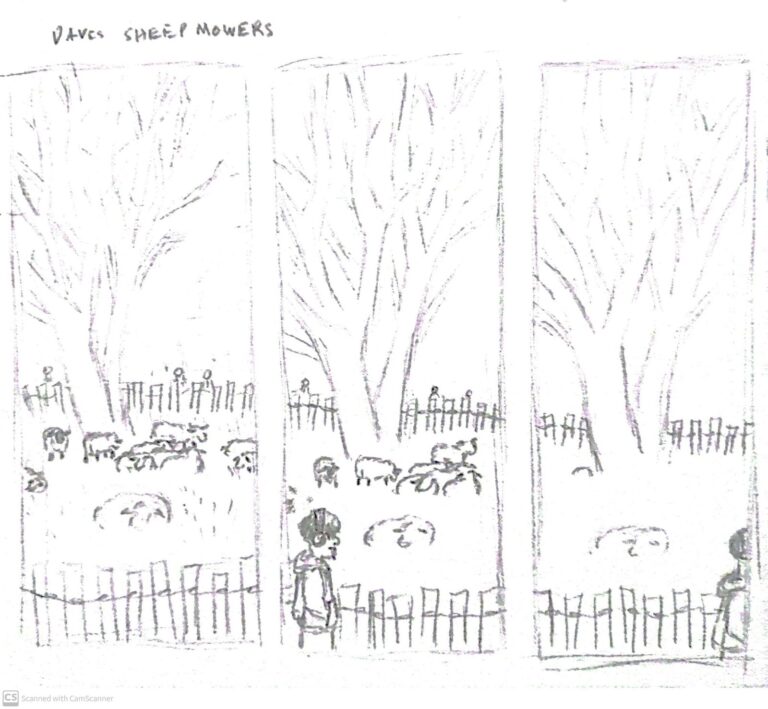
Davis Sheep Mowers

Drawn by: Nimra Farhan –– nfarhan@ucdavis.edu

Disclaimer: (This cartoon is humor and/or satire, and its content is purely fictional. The story and names of “sources” are fictionalized.)

Ballerina Misty Copeland speaks at UC Davis Women & Philanthropy event

0

Copeland and other guest speakers inspire students to persevere in the face of adversity  


By ZOEY MORTAZAVI — features@theaggie.org


Becoming a ballerina: the epitome of childhood dreams all over the world. Something about the elegance, grace, flowy costumes, tights and talent displayed by ballet dancers is effortlessly captivating. Because it is a profession that is so defined by its poise, it is no surprise that many aspire to become ballerinas themselves as they grow up. Throughout the history of ballet dancing, the image of what a ballerina is has dramatically shifted, allowing for all people to join the practice. For a long time, however, this was not the case.

Dancers such as Misty Copeland, a prima ballerina who entered the ballet world before it had diversified, became part of a movement to make ballet more approachable for people of all races and genders. Copeland has served and continues to serve as an inspiration for dancers everywhere.

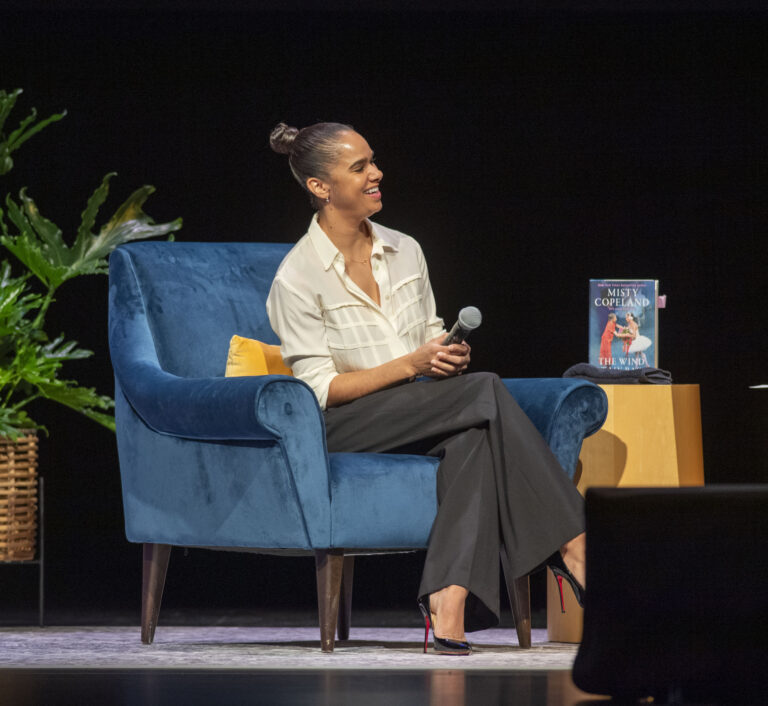
On Nov. 5, Copeland came to speak at UC Davis. The event was presented by the Women & Philanthropy community, which strives to unite and inspire women to take on leadership roles and inspire others. Copeland was the first Black woman to be represented as a principal dancer in the American Ballet Theatre (ABT), one of the most prestigious dance companies in the world.

The event was split into two parts: for the first half, three of Davis’ very successful alumni spoke in a panel, discussing their careers, backgrounds and their roles as women in male-dominated fields. These alumni were Kimberly Budil, director of the Lawrence Livermore National Laboratory; Rinki Sethi, vice president and chief information security officer at BILL and Victoria Coleman, director of winemaking at Lobo Wines in Napa.

Throughout the event, these women discussed their roles in male-dominated fields, first as a mentee, then as a mentor to other women joining their professions. They also acknowledged how important family and support systems have been in helping them reach where they are today. All three had stories to tell, revealing how they achieved their success through the people that supported and taught them.

“When I didn’t believe in myself, and I didn’t think I grasped what [my mentor] was telling me, he just proved to me that I knew what I was doing,” Coleman said.

Now, Coleman is the first Black woman to be a winemaker and producer in Napa, California.

Every woman speaking at the event offered advice and sentiments about how they got started in their careers, as well as the fact that they were some of the first to do so. Each one became a trailblazer in their respective field, making historical advances through their innovations and work. When this panel concluded, there was a brief intermission, after which Misty Copeland spoke.

Despite the impressive titles Copeland holds now, she had an unusual start to her dancing career. She didn’t begin taking dancing lessons until age 13, which is considered late in comparison to many ballerinas, with most beginning their training at a very young age. Living with five siblings and her single mother in a motel room that was two hours from her school, Copeland ended up in a ballet class that was run by her local Boys and Girls Club. While her mother was busy working multiple jobs to support her kids, the Boys and Girls Club was one of the only after-school options for Copeland.

“I’m the fourth of six children; there was so much fighting for the spotlight and attention and I never wanted that,” Copeland said. “But through dance, I started to find this quiet place that was all mine, and it just kind of blossomed over the course of four years, which was the amount of time I spent training.”

Copeland is widely known as a trailblazer in the dance universe. She struggled to find her place as a ballerina growing up; she had never seen other Black women represented in the ballet world, which made joining it intimidating. She noted that the people around her became a consistent source of support and inspiration, reminding her that it is an admirable and necessary thing for someone to be the first to do something. Learning to break boundaries has been a defining aspect of Copeland’s career.

Following some of her more famous performances with the ABT, which included Juliet in “Romeo and Juliet,” as well as both the principal roles in “Swan Lake” and “Firebird,” Copeland has begun new projects centered around philanthropic efforts. Namely, she founded the Misty Copeland Foundation, through which she runs the “BE BOLD” program. With this foundation, Copeland hopes to bring diversity and equity to the dance world, bringing opportunities for children to explore their interest in dance. Through “BE BOLD,” Copeland aims to remind children that there is a place for them in the dance world if they want it.

“We want to remind dancers that you have a voice beyond just using your body as a voice,” Copeland said. “There is so much beauty and joy in our authentic stories and experiences of being exposed to dance and to art.”

Copeland has also served as an inspiration to some of UC Davis’ students, and many were excited to hear her speak over Parent and Family Weekend.

“After all the adversity she has faced and time she’s spent in a world that told her so many times that she didn’t belong, she still shows up for herself and the causes she cares about,” first-year communications major and dancer Molly Thompson said. “At Davis, we constantly hear about ‘diversity, equity and inclusion,’ but putting a face and a real story to that sentiment makes it so much more powerful. Her presentation here is a testament to that.”

Between her career and her philanthropic efforts, Misty Copeland is an important figure for both the dance world as well as for anyone trying to immerse themselves into activities where they might not feel like they belong. Her story can serve as a lesson to people everywhere; when it comes to having a passion, allowing that to lead you is the most important thing you can do. Despite roadblocks or even feelings of imposter syndrome, it is not only okay to be the first to take a risk in order to follow a dream, it is one of the bravest things a person can do.


Written by: Zoey Mortazavi — features@theaggie.org

How to turn your apartment into a home

Tips from a recently mooved-in student


By MAYA KORNYEYEVA — mkornyeyeva@ucdavis.edu


Often, a blank canvas is seen as daunting and perhaps even overwhelming. The amount of empty space requires quite a bit of imagination to conceptualize, and then lots and lots of patience and hard work to bring into fruition. When I moved into my new apartment in Davis this summer, I felt all those feelings associated with staring at a blank canvas.

I had just a few things with me — my bed, my desk, some kitchen supplies, some clothes and a box of sentimental objects. Now, I just needed to figure out how to arrange them. Initially, this wasn’t so difficult, but when I finished putting everything away my room looked bare and a little sad: it’s as if I just put some random stuff in an empty space and convinced myself it was fine.

Over the course of the next few weeks, I worked diligently to ensure that my apartment felt less like an assortment of storage rooms and more like a lived-in home — a place where I could feel comfortable and rely on to bring up my mood after a rough day of classes. Here are a few tips that really created an impact on my interior space, and which I believe made all the difference in generating a cozy and warm atmosphere in my new apartment.


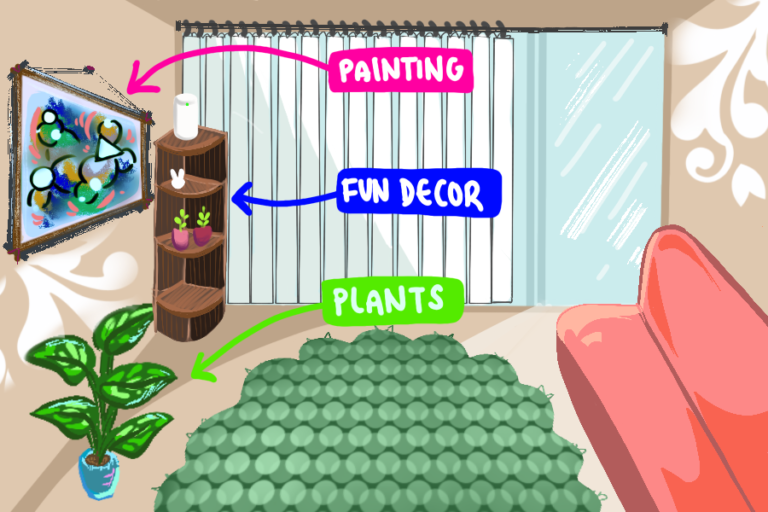
  1. Add some indoor plants: With the off-white walls and the gray carpet, my apartment was initially quite devoid of color: almost like those “sad beige toys” that everyone is advertising nowadays. After walking though Trader Joe’s for the first time this fall quarter and noticing the glorious display of plants in all colors and sizes, I couldn’t help but take a few with me. The second my Monstera entered the living room, I felt my spirit lift. My small pink rose and assortment of fresh herbs followed, and soon the space was brimming with vegetation. Many indoor plants like the Monstera, Golden Pothos and Snake Plant require minimal maintenance, which makes them perfect for busy college students balancing their school/work schedules.


  1. Fill up the wall space: Walls are an important part of your apartment not just because they hold up the ceiling (duh), but also because they can hold paintings, posters, calendars, cards, photographs and almost anything else you can think of. These additions to an interior space add so much life to your room and can showcase some of your personality. Whether it’s a poster of your favorite band, a collection of quotes from your friends, a massive painting, a wall mirror, a hanging shelf or even LED lights, optimizing and designing the vertical dimension of your apartment is crucial to creating a room that is curated to you.


  1. Add some decor: My third and final tip is to keep an eye out for interesting objects and/or pieces of furniture. Facebook Marketplace is a great tool to use if you’re looking for cheap, second-hand household items, and often there are some real gems hidden among the old mini fridges and dusty pans. For instance, I recently collected a tall corner shelf for my living room, which proudly holds my wifi router and a miscellaneous assortment of books and gadgets. Not only is it functional for storage, it’s also an unusual piece of furniture that sparks curiosity and conversation amongst my houseguests. Similarly, I also tracked down a gorgeous tinted-glass bowl, now filled with fruits and sitting pretty on the kitchen counter. The bottom line is, don’t hoard unnecessary items; instead, collect a few pieces here and there that tell stories and add contrast to the bountiful Ikea furniture already present.


I hope these recommendations help make the “blank canvas” of your new apartment or dorm room feel less intimidating, and perhaps a little more like a creative adventure. Just have fun with it, and in no time your residence will start feeling more like a home.


Written by: Maya Kornyeyeva — mkornyeyeva@ucdavis.edu


Disclaimer: The views and opinions expressed by individual columnists belong to the columnists alone and do not necessarily indicate the views and opinions held by The California Aggie.

Artist lecture from Nettrice Gaskins: ‘Theory, Content and Style for the AI Revolution’

Artificial intelligence acts as creative expression 


By ANA BACH — arts@theaggie.org


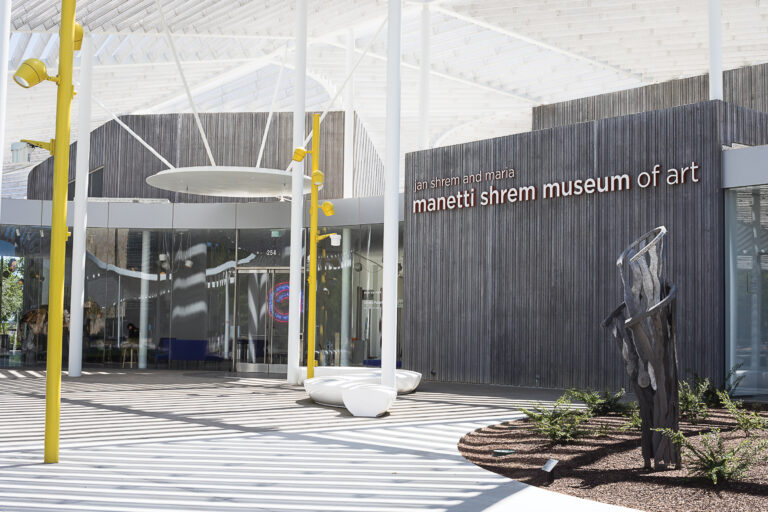
On Nov. 3, Nettrice Gaskins came to UC Davis to discuss her work in the art and artificial intelligence (AI) field. The UC Davis Design Department and others witnessed her talk titled “Theory, Content and Style for the AI Revolution” at the Jan Shrem and Maria Manetti Shrem Museum of Art. Gaskins went into great depth about her methods surrounding her creative process as well as how others can benefit from using AI in other fields.

In her presentation, Gaskins used her art to explain her motivations and cultural critiques. Her work centers on African Americans, Afrofuturism and STEAM (Science,

Technology, Engineering, Art and Math) education for historically marginalized communities.

She began her talk by discussing several concepts she considers when creating her art. Gaskins first drew attention to the innovation of form, then explained the potential difficulties of using AI software to create art. Utilizing vernacular and prompts to make illustrations while also creating a visual abstraction of the subject that matches her vision for the project is one of the challenges with digital art. Another relevant component to consider is mechanical reproduction. Copying, redrawing and remixing all fall within the medium of technology, where found objects (or in this case, concepts) are reappropriated into something new. Digital manipulation of visual content is the essence of AI’s function in the art world.

“It’s like taking things from the environment and innovating them,” Gaskins said.

Her main emphasis was placed on the phenomenon of generative AI, describing the culmination of AI, machine learning and in-depth learning. Generative AI has the ability to produce several versions of an image in a short amount of time by using a neural style transfer that can adopt the visual appearance of another image.

“It’s a new understanding and amplification of modern art forms,” Gaskins said.

As a means of practicing the different techniques Gaskins researched, she worked on different projects playing with generative AI every day for a full year to better understand form and content. Additionally, she took tapestries and applied specular reflection, amplifying the light on an image, to enhance the shine as fading for certain subjects. Gaskins continues to open new trains of thought for the limitless possibilities that AI has, especially in the art world.

As productive as AI has been in more fields than one, there have been some drawbacks with biases that have been embedded within the algorithms. One example that Gaskins touches on is typing in simple prompts such as, “a picture of a felon.” The images that would come up for her were mainly mugshots of Black men or photos of them in jumpsuits. In some cases, pictures of baboons and other orangutans would pop up as search results. This is just one example of a prompt that generates inherent racial prejudice.

Another prompt that she typed in asked for “portraits of a lawyer” in which she received many images of men posing in suits. Not a single portrait of a woman was generated. These biases are slowly but surely being reprogrammed, as many people are using more detailed prompts to help the software reassess what images are popping up.

“There is a humanity when humans intervene in the process. The machine is just assisting the thought process,” Gaskins said.

Gaskins received a doctorate in digital media from the Georgia Institute of Technology and an M.F.A. in art and technology from the School of the Art Institute of Chicago. Additionally, she has written a book titled, “Techno-Vernacular Creativity and Innovation,” where she discusses her methods of STEAM learning that engage students from historically marginalized communities in culturally relevant and inclusive maker education. Her work has been exhibited at a Leoni Art Project group show in Genoa, Italy, the Museum of Contemporary African Diasporan Arts in Brooklyn, New York and the Smithsonian’s “FUTURES” exhibition.

AI has generated some thoughtful commentary from a wide range of opinions on whether it takes away from valuable learning experiences for students or if technological efficiency is beneficial in the research field. Gaskins gives us a reason to believe that the practical nature of it isn’t the only benefit. Experimenting, or rather “painting with pixels,” is just one of many ways to redesign our way of thinking about the traditional societal processes that continue to evolve faster than ever before.

“I want to remix algorithms. I don’t want one, I want five. I want to test the limit,” Gaskins said. “Why do it? Because it’s cool.”


Written By: Ana Bach arts@theaggie.org

Your guide to staying warm this fall

0

Read some tips and tricks from Davis students on how to layer your clothes for the cold season


By BREANNA SANDERS — features@theaggie.org


It seemed as though it was an overnight change: from strutting through downtown in the warm late-summer days to shivering while biking in the cold, each shallow breath accompanied by a thick fog indicating the brisk fall is upon us.

For Davis residents this is just the beginning as fall fades into winter and brings colder mornings and earlier nights. How will we persist? How will we, with all these factors stacked against us, rise out of our warm beds and make it through the day? The answer is simple: learn to layer.

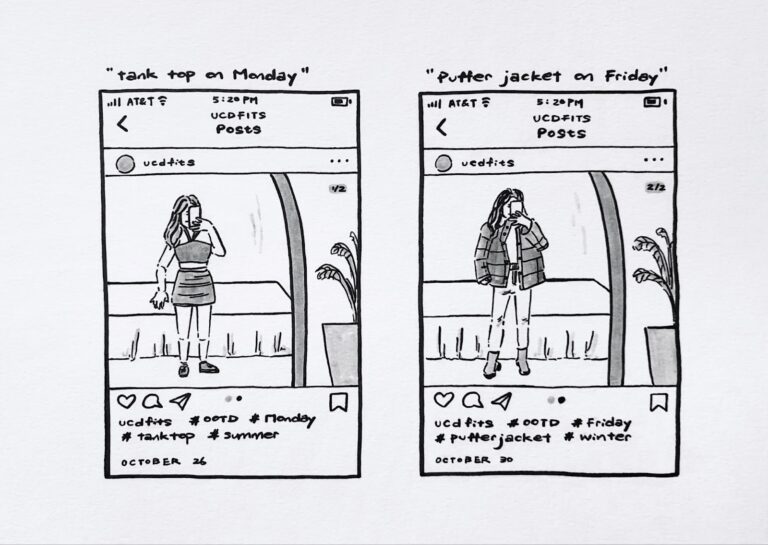
Learning to layer your clothes can be tricky, but these tips should help you stylishly survive. First things first — what does it mean to layer clothes? Putting items on top of each other can create a sense of warmth and allow you to use items in your closet year-round. To allow a versatile and lasting wardrobe, focusing on how your own items allow for layering is a good place to start, rather than trying to curate a whole new collection.

I got the opportunity to interview this year’s Whole Earth Festival (WEF) directors Olivia Hurley, fourth-year design and community regional development double major, and Emma Mele, fourth-year environmental policy analysis and planning major.

Mele explained her reasoning that “if [her] legs are warm, then the rest of [her body] is pretty [warm enough].” In order to achieve the level of coziness to her liking, Mele manages to get up to four layers consisting of tights, leggings, thin(ish) pajamas and finally her signature look of baggy pants. While four layers might seem excessive to some, Mele, who grew up in Los Angeles, is not equipped for the chilly weather that drops into the 50s, 40s and even 30s, expressing that “the lowest it gets [at home] is a cool 65, and even then [she’s] shivering.”

As for top layers, Hurley advised that a long-sleeve can make all the difference.

“A tight long sleeve goes miles,” Hurley said. “If the shirt allows air movement through, it defeats its whole purpose.”

In general, try to throw on a layer of skin-tight clothing as a base. If the weather calls for more coverage than a tight-fitting long sleeve can provide, you can layer with a tank top, long sleeve, t-shirt, sweater or sweatshirt and finally an overcoat.

During the fall months when the days still warm up on occasion, which can create overheating challenges for our highly layered friends, you should have the ability to remove some layers, jacket or long sleeve for example, to achieve a nice and moderate temperature. By staying vigilant on your necklines, length of layers and how your colors are mixing, you can create a multitude of combinations of layers to help you all season long.

Some other accessorizing essentials that will be helpful this fall and winter are gloves, double sock-ing, hats and scarves. Our WEF directors both shared that they prefer to double sock with a normal sock first, and a fuzzy pair on top. Briana Huynh, a second-year biochemistry major and employee of the Aggie Reuse Store in the Memorial Union, emphasized to biking students to “wear gloves when you bike, and [to wear their] hood up.” Mornings, and honestly, entire days during the height of the winter season, are unbearable without gloves.

Our WEF directors echoed the same sentiments and Hurley attested to the warmth that hats give her, she points out that throughout the year “you will always see [her] in a hat.” Mele also added scarves into the conversation, originally forgetting to mention them, showing that we often forget how useful they can be.

Gearing up for the winter season requires more than just layering, though. As the sunset begins to lengthen our evenings and the chilling fog settles on Davis, sometimes all you want to do is lay on the couch, stream a feel-good movie, cuddle up in a warm blanket and enjoy the wide variety of comfort Davis can offer.

Happy fall, Davis! Wishing everyone a warm and cozy season.


Written by: Breanna Sanders — features@theaggie.org