55.9 F
Davis

Davis, California

Tuesday, December 23, 2025
Home Blog Page 126

Culture Corner

The Art Desk’s weekly picks for music, movies and more


By NATALIE SALTER — arts@theaggie.org 


Album: “The Land Is Inhospitable And So Are We” by Mitski (2023)


If you’re anything like me, and have a penchant for the most melancholic and heart-wrenching music, you’ll be enraptured by Mitski’s most recent album, “The Land Is Inhospitable And So Are We.” Its opening track, “Bug Like An Angel,” cuts to the chase with its mournful and introspective lyricism, with Mitski touching upon broken promises and the treacherous comfort a drink can bring to a lonely soul. Still, though the album has its woeful moments — “The Frost” muses upon lost friendships, while “I’m Your Man” is laced with poetic self-loathing and a desperate longing to be loved — Mitski demonstrates her talent for masterfully capturing an immense range of emotions through tracks such as the romantic “My Love Mine All Mine” and the shiningly hopeful “Star.” Whatever you’ve felt, be sure that Mitski has felt it too and put it into words with a stunning eloquence that reminds you that your experiences are not only yours.


Book: “Jane Eyre” by Charlotte Brontë (1847)


I know what you might be thinking — “‘Jane Eyre,’ what is this, AP Literature?” — but trust me when I say, if you haven’t already enjoyed Charlotte Brontë’s Gothic masterpiece through the joy that is high school assigned reading, you’re missing out. Though unassuming at first, it is the woeful tale of the titular character’s journey to becoming a governess for the young ward of the brooding and wealthy Mr. Rochester. Without disclosing the novel’s unexpected twists and turns, “Jane Eyre” is an initially withdrawn novel that conceals a dark and compelling story beneath the surface. Not to mention the novel’s melancholic aura is perfect for the gloomiest of November days. Brontë’s polished and immersive writing will capture the attention of even those with AP-Literature-summer-reading-trauma and is a classic more than worth the critical praise it receives. 


Movie: “Stardust” dir. by Matthew Vaughn (2007)


“Stardust” has all the makings of a proper fantasy film — magic, romance, sword-fighting, a political succession crisis that could be right at home in an episode of “Game of Thrones” and yet it remains one of the most underrated and excellent gems of the genre. When Tristan Thorne (Charlie Cox) promises his unrequited love that he will bring her a fallen star in exchange for her affections, he is thrust into a fantastical world of flying pirate ships and conniving witches hungry for eternal youth, all whilst the male heirs of the nearby kingdom compete for the newly available title of king. Between Claire Danes’ radiant (quite literally) performance as the fallen star Yvaine and Robert DeNiro’s delightfully subversive Captain Shakespeare, what ensues is a brilliant and heartwarming adventure that will surely find its way into your heart, and into your collection of ever-rewatchable comfort films. 


Song: “Margaret” by Lana Del Rey ft. Bleachers (2023)


“You’re asking yourself, ‘How do you know?’” Jack Antonoff, lead singer for Bleachers and collaborator on the track “Margaret” vocalizes with palpable emotion. “And that’s your answer: the answer is ‘No.’” Though American singer-songwriter Lana Del Rey’s newest album, “Did you know that there’s a tunnel under Ocean Blvd,” is filled with moving sentiments, listening to “Margaret” invokes a particularly bittersweet feeling, between its slow instrumental and reflective lyrics. On this track, Del Rey and feature Bleachers muse on the idea that “when you know, you know,” urging the listener to reflect on the past while also acknowledging when it’s time to let go. It’s hard not to listen to a song with such hard-hitting lyrics and not come out feeling a little introspective, if not also a little more grateful for everything that makes life worth living, even the littlest of things. 


Written by: Natalie Salter — arts@theaggie.org

ASUCD fall 2023 election results announced

Voter turnout was between nine and 10 percent for this election


By LILY FREEMAN — campus@theaggie.org


In the ASUCD fall 2023 election, 21 candidates ran for six seats in the Senate and three constitutional amendments were voted on. Here are the results:


Jonathan Ng was elected to the Senate. 


Katia Bouali was elected to the Senate. 


Curtis Chen was elected to the Senate.


Yara Kaadan was elected to the Senate. 


Jacob Klein was elected to the Senate.


Leah Jung was elected to the Senate.


CA #86, which moves to change the title of members of the Judicial Council to justices, passed with 79.62% of the vote. 


CA #87, which formally establishes the Office of the Transfer Student Representative and the Office of the International Student Representative as legislative bodies, removes them from the executive branch and formally defines what it means to be an ASUCD representative, passed with 87.99% of the vote.


CA #88, which moves to change the number of members on the Judicial Council from five to seven, passed with 92.2% of the vote. 


While ASUCD can not determine a specific voter turnout percentage due to there being no fee referendums on the ballot, the voter turnout for this fall’s election was between nine and 10%, according to Elections Officer Reid Rizk. 


“This is encouraging,” Rizk said. “It’s definitely better than where we were this time last year.” Last fall’s turnout was 5.58%. 


Rizk also said that voter retention rates improved with this election. 

“We only lost about 250 people from the measure ballot to the Senate ballot, which in previous elections, we’ve lost about one thousand people,” Rizk said. “The fact that people took the time to go [to] the next page and vote is encouraging. It’s all better than where we were last year.”


This fall’s elections had a greater focus on internal improvement, according to Rizk. 


“For me, the priority of this election was less about getting out the vote and [more about] building things up,” Rizk said. “I believe that we needed to do a lot of stuff on the inside to make processes work and make sure that we’re cooperating as a whole.” 


However, during the spring 2024 elections, Rizk said that ASUCD is aiming to have a much more external focus. This is especially because there is going to be at least one student fee referendum (including The Green Initiative Fund) on the ballot, which requires a 20% voter turnout to be implemented. 


“We’re hoping this will allow us to promote more, do more posters and more outreach in general,” Rizk said. “We’ve set aside a lot of money for the spring election, and I’m hoping the next elections officer who comes in uses that in a smart way.” 


Written by: Lily Freeman — campus@theaggie.org


Technique developed to analyze the impact of COVID-19 on the immune system

Positron emission tomography is allowing scientists to study how viral infections affect T cells


By KATIE HELLMAN — science@theaggie.org 

Positron emission tomography (PET) is a technique used by scientists and medical professionals to better understand various body systems. It utilizes a tracer, which is a radioactive drug, to get a clearer image of metabolic activity.

UC Davis scientists are using PET to analyze the impact of COVID-19 on the immune systems of recovering patients. These studies could lead to increased knowledge of how the body responds to infection and pave the way toward advancements in the field of immunology.

Understanding the adaptive immune response to viral infections and subsequent immunological memory is critical for the development of vaccines and therapeutic options,” the study, published in Science Advances, reads. “Most of the immune cells involved in the adaptive immune response and immunological memory reside and function in tissue, particularly in lymphoid organs such as the bone marrow, spleen, tonsils, and lymph nodes.”

The uEXPLORER is a total-body PET scanner developed by UC Davis scientists along with United Imaging Healthcare. It allows for both dynamic imaging and kinetic modeling in organs throughout the body and produces higher-quality images than traditional PET scans.

“Because it captures radiation far more efficiently than other scanners, EXPLORER can produce an image in as little as one second and, over time, produce movies that track specially tagged drugs as they move around the body,” an article by UC Davis Health states. “The developers expect the technology will have countless applications – from improving diagnostics and tracking disease progression to researching new drug therapies – and ultimately a profound impact on clinical research and care.”

The research focuses on the use of PET to measure the distribution of CD8+ T cells in humans, which become activated during a viral infection in order to locate and kill infected cells. A portion of these T cells become antigen-specific memory T cells that protect against reinfection long-term, and they are typically found in non-blood tissues.

The study consisted of three healthy participants and five patients recovering from COVID-19 with mild symptoms of infection. The participants were then injected with radioactive liquid to target CD8, which was followed by a 90-minute scan, a 60-minute scan after six hours, and then another 60-minute scan after 48 hours. The patients recovering from infection repeated these scans after an additional four months.

Researchers discovered that there was a high uptake of CD8+ T cells in the lymphoid organs of the eight participants, mainly in the spleen but also in the bone marrow, liver, tonsils and lymph nodes. Furthermore, CD8+ T cell concentrations were much higher in the bone marrow of recovering patients than they were in the healthy individuals. The additional imaging obtained after six months showed that these concentrations had increased from their levels during baseline scans.

Negar Omidvari, first author of the study and assistant project scientist in the UC Davis Department of Biomedical Engineering, commented on the significance of the findings in an interview with UC Davis Health.

“Bone marrow has been identified as a major pool and the preferred site for proliferation of memory CD8+ T cells following a viral infection,” Omidvari said. “This trafficking of memory T cells to certain tissues like the bone marrow is critical to developing immune memory after viral infection.”

The PET techniques utilized for this study have multiple applications in the medical field; this includes the study of immune response following infection, immune memory, treatment response in cancer patients and the development of future vaccines. 

Written by: Katie Hellman — science@theaggie.org

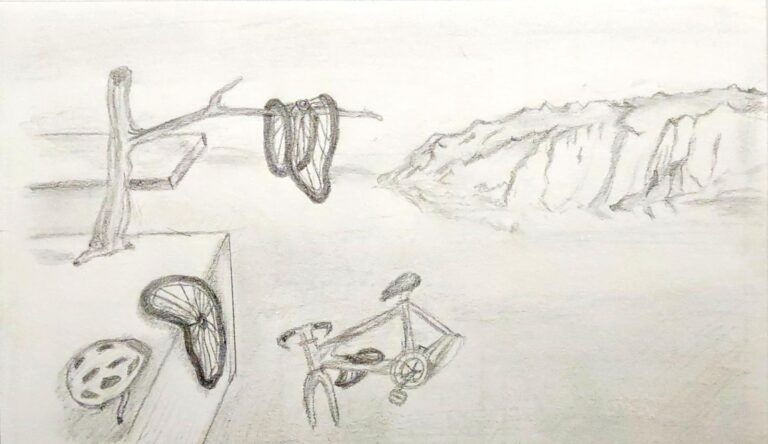
Davis MoMA: Melting Bikes

Drawn by: Nimra Farhan –– nfarhan@ucdavis.edu

Disclaimer: (This cartoon is humor and/or satire, and its content is purely fictional. The story and names of “sources” are fictionalized.)

Networking, hands-on coding experience and free pizza all highlights of female-centric HerHacks event

Girls Who Code hosts beginner-friendly hackathon focused on sustainability and student life


By SONORA SLATER — science@theaggie.org 


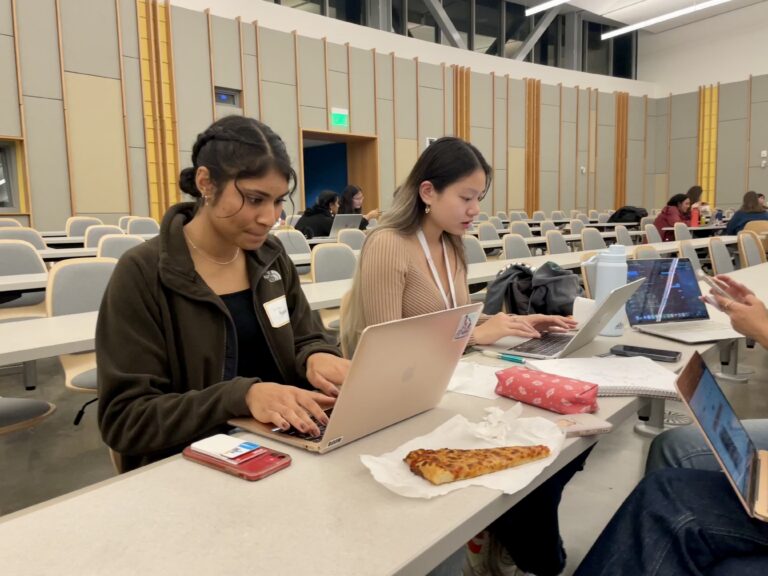
“This is my first hackathon,” first-year data science major Varshini Peddinti said with an excited smile, sitting in California Hall on a rainy Friday night waiting to participate in the HerHacks hackathon. She wasn’t alone in the sentiment — in fact, it was echoed by many of the nearly 100 attendees of UC Davis’s first female-centric hackathon. 

The event, which took place on Nov. 17, was hosted by the UC Davis chapter of Girls Who Code, a national organization that aims to support and increase the number of women in computer science. 

Hackathons are collaborative events in which teams design code-based solutions, such as websites or prototype apps, to thematic problems, like elections participation or campus sustainability. They’re meant to be an opportunity for networking and experiential practice in coding and design — and they are these things. But with their long hours and technically-advanced participants, they can also be something else: intimidating. 

The idea behind HerHacks, according to first-year data science major and co-lead of the HerHacks committee Keren Skariah, was to make hackathons more approachable. Instead of a several-day time period, participants were given about two hours to build their solution. And rather than code being the only acceptable submission format, the students were encouraged to use basic tools like Figma or even Google Slides to design and present their project. 

For nearly 80% of the students who signed up, according to Skariah, HerHacks was their first hackathon. But even if there were some people who had previous coding experience, Skariah said that they designed their scoring rubric for the event to focus less on traditional measures of difficulty and more on less technical aspects of the design.

“Does it go with the theme?” Skariah said. “How creative is it? How was their presentation? That type of stuff was more emphasized, because if we really did emphasize that it’s beginner friendly, we didn’t want the people who won just to be the ones who actually coded something.”

Despite the changes, the basic structure of a hackathon was still intact: the organizers gave the teams a “problem,” or a general theme, and the teams took that theme and designed solutions. So what problem were the HerHacks participants solving?

“Ours was the three S’s: Social impact, Sustainability and Student life,” Skariah said. “For example, [you could] design a recycling app that shows you where the closest recycling bin is on campus.” 

The winning group, Skariah said, came up with the idea of an app called Bike Buddy that was meant to encourage students to bike to campus. On the app, users would have a virtual pet, and when you biked you would earn coins that you could use to buy food and toys for the pet.

Many of the groups that formed knew each other prior to the event, but for anyone who didn’t know people interested in participating, the organizers made it easy for students to sign up alone, and be randomly placed in groups when they arrived at the event.

“I remember pairing [groups] up in the beginning of the night, like, ‘Oh, hey, do you guys want to work together?’” Skariah said. “And at the end of the night, I saw them making jokes together. So I think HerHacks definitely fostered a community and brought a lot of people closer together.”

She went on to emphasize the importance of female community in the tech industry specifically, saying that she has experienced and heard about coding environments in which women are outnumbered. 

One of the ways their team tried to promote building community even beyond the event was by inviting “mentors” to the event, including female upperclassmen at UC Davis who hold leadership roles in STEM clubs as well as female faculty members in the computer science department. The mentors were there to offer immediate advice on the teams’ solutions, as well as to answer any questions about internships or careers in tech.

“If any of us needed any advice on how to get an internship, they were like, ‘Hey, I’m your girl, if you need help,’” Skariah said. “That type of networking, and having the resources right there [is great]. I can talk to someone who’s been at my dream internship, and I can ask them, ‘What did you do to get there?’” 

This may have been the first hackathon held by Girls Who Code — but according to organizers, it won’t be their last.

“There was one group I saw that didn’t get [an award],” Skariah said. “And they were like, ‘Guys, next year, that’s gonna be us.’ So they were already deciding they’re going to do HerHacks next year and going to be a group next year. And that just made me so happy.”

Skariah said that she felt proud of the event, despite the fact that “not everyone came out as a coding pro.”

“I feel like everyone definitely came out with a stronger network,” Skariah said. “Or everyone came out with a stronger passion for tech, or with a bigger knowledge on what a hackathon is, and those are wins in my book. I’m really proud of the fact that I can say we made a meaningful impact on the girls at Davis.” 


Written by: Sonora Slater — science@theaggie.org


The Editorial Board meets with Chancellor Gary May, UC Davis administrators

May and administrators discuss Leidos involvement, campus safety measures, an academic advising overhaul and more

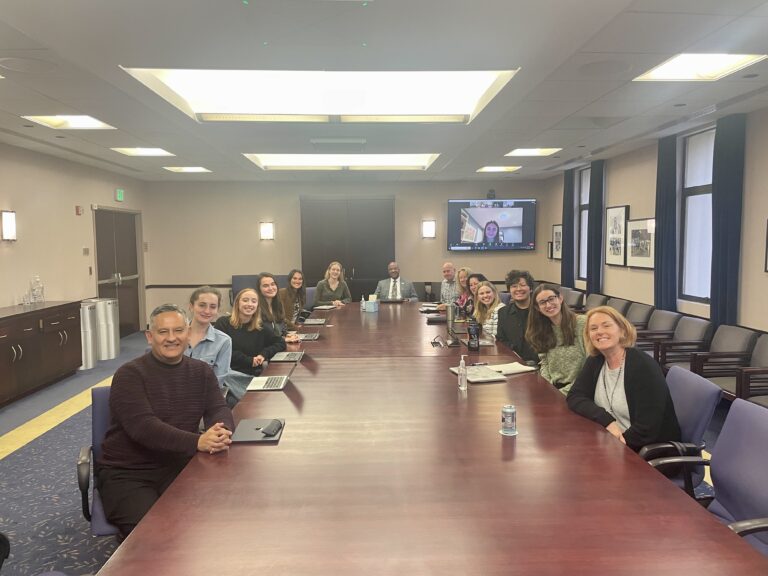
The California Aggie’s Editorial Board met with Chancellor Gary May, Provost and Executive Vice Chancellor Mary Croughan, Associate Chancellor and Chief of Staff Karl Engelbach, Vice Chancellor for Student Affairs Pablo Reguerin, Vice Chancellor for Finance, Operations and Administration Clare Shinnerl, Vice Chancellor of the Office of Diversity, Equity and Inclusion Renetta Garrison Tull, Chief Marketing and Communications Dana Topousis, Chief Campus Counsel Mike Sweeney, Associate Athletics Director Heather Hunter and Faculty Advisor to the Chancellor and Provost Ari Kelman.

Below is a transcript of the Nov. 21 meeting that has been edited for length and clarity, and some of the questions have been reordered for the sake of readers’ ease in navigating the meeting content. Where questions have been moved, we have noted the change.

TOPIC 1: ISRAEL-PALESTINE CONFLICT

Q: Last month, a UC Davis faculty member shared a post on X that directly addressed “zionist journalists,” stating that they “have houses [with] addresses” and “kids in school,” seemingly intended to come off as threatening. The university has since put out a statement condemning the post and stating that the review process for instances like these is confidential. What do you consider to be the university’s responsibility towards students and other UC Davis community members who may feel triggered or threatened by this incident?

May: Yeah, great question. As you know, I strongly condemned the poster’s public statement after it was posted, after I became aware of it, just as I would with any similar hateful, revolting comments that are really antithetical to our values here at UC Davis. My responsibility is to provide an environment where everybody feels comfortable and safe and can succeed. So in a situation like this, where the faculty Code of Conduct may have been violated, we review the matter, and the provost then refers the matter to the appropriate campus offices that investigate harassment and discrimination in faculty conduct. We don’t comment on specific personnel matters, generally, as they are confidential; they’re privacy matters. We recognize these comments impact members of the community, though. We have robust resources in place to support those members of the community, including students, faculty and staff, with a holistic system that addresses mental health and cultural experience and more.

Reguerin: Also, a big part of being responsive was being able to respond to the various increases in concerns that were expressed. The Provost’s Office took the lead, and there were a lot of different constituent groups. But in terms of students and parents and making sure they feel safe, we followed up beyond the Provost’s Office with individual students through our student support team, as well as with parents.

Q: Just to follow up, you said that you don’t comment on matters like this because they’re confidential — is there going to be a time when we can expect updates on the status of the complaints? 

May: No, unfortunately, the whole process is confidential so I can’t discuss details. We do follow the system-wide policies for faculty conduct, and there are very specific procedures that are available that we can refer you to if you’d like to see them. 

Sweeney: Yeah, so just like for students, for employees the law explicitly prohibits us from discussing personnel matters. While the Chancellor prefers transparency, the law in this case does not allow for that transparency, unfortunately, and so it’s not satisfying, but we need to comply with the law in this area.

Q: Recently, events related to the Israel-Palestine conflict have generated a reaction from students on campus in the forms of rallies, protests, walkouts, vigils and more. What role does the university play in creating a safe environment for students to express their often conflicting views on these matters? 

May: First, we recognize the community wants to express their perspectives, including some very strong and divergent viewpoints. And it’s not just the students, it’s the entire community; faculty and staff are in that boat as well. While there have been some incidents of what I would call disrespectful behavior, at least at this point, the reactions have not been violent. I know that many people are really deeply personally impacted by these events. In fact, we met with a group of [Davis] Faculty for Israel and some of the [members of] Aggies for Israel this morning and talked about these issues. I’m appreciative of how our campus community members are generally embracing the principles of community until [the events on Nov. 17]. Our Student Affairs team works really closely with the student groups that are hosting the events to make sure people understand the principles of free speech and responsible speech [to host] events in constructive ways to deal with dissent and disruption. Our Harassment and Discrimination Prevention Program (HDAP) is working with anyone who has filed a complaint and we encourage people to report any incidents they feel are inappropriate, where they feel like they’ve experienced pain or discrimination.

Q: Does the university have the obligation to step in and regulate these events at a certain point? If so, when would that be?

May: Our first obligation is to support a free and open environment — a non-violent environment for speech on campus. If safety becomes a risk, we of course will respond and are prepared to respond. If policies are violated, we will respond. So we monitor all of these events very closely to ensure that safety is recognized and paramount. The Student Affairs team works really closely to monitor the groups that are having the events and campus police and others help us to create open lines of communication before and after and during the various events.

Q: Recently, Davis police reported antisemitic graffiti near Highway 113. The city of Davis, as well as the campus, have a history of antisemitic incidents according to many Jewish communities. As tensions on campus rise in correspondence with the Israeli-Palestinian conflict, what action is the administration taking to prevent antisemitic and Islamophobic incidents on campus in the future? 

May: I’ve made many statements about this and said over and over again, and I’ll keep saying it, that hate has no place on our campus. The events in the world and Israel and Gaza have had a profound and personal impact on many in the campus community. I’ve met with students and staff and faculty who have been impacted by the conflict. I’m always committed to working closely with our leaders in these various communities — the Jewish community, the Muslim community — to ensure Davis is a place where all feel welcome and all feel like they belong. You may have seen that President Drake made an announcement last week about significant investments in all the campuses from his office to ensure there are resources to help the campuses respond and educate people on these issues surrounding antisemitism and Islamophobia. He announced that he will form an Office of Civil Rights at the system level in addition to the resources being provided, and I’ll just remind you that we’ve partnered with the city of Davis and Yolo County on an initiative we call Hate-Free Together that kicks off in January after a long delay with a series of community workshops. Last week, campus leadership shared a video with the campus community where we all sort of reinforced and re-emphasized the principles of community together; I hope you get a chance to see the video and I hope it had some impact.

Reguerin: We have a number of programs across our different Identity and Retention Support Centers for students, so there are ongoing activities and workshops with our counseling services team. We have offered to send counselors to help debrief with groups; that usually works better in what we call a push-in model, where there are student groups that may be already coming together. [And we] certainly make our counseling services available. We have a lot of education from orientation through messaging that we do on social media as well, in terms of just conversation and supporting each other. Students play a big role in supporting each other through the work of CSI in supporting students to organize informed peer groups. Support is really important and has been one of the main areas of response. Our job is not to create but to support students in organizing, getting together [and] getting spaces through CSI. We definitely feel this is a shared responsibility, both in terms of us being responsive and ensuring students can organize and get together and support each other as well.

Q: You sit on the board of Leidos, a company that, among other things, works with the Israeli Ministry of Defense. What initially went into the decision to be a part of this board and has the recent violence in the region or student gatherings related to the Israel-Palestine conflict affected how you feel about supporting Leidos?

May: First of all, I want to thank you for the question. This has generated a lot of energy around campus, a lot of misinformation, and what I would call illogical, inaccurate reactions and insulting reactions. In most of those types of reactions, in almost all cases, no one has talked to me directly, so I appreciate you asking me directly the question. I’ve always been transparent about my service on this board. In fact, it is a requirement in the UC that all outside professional activities be reported annually and disclosed, so those reports are available. I’ll just start at the beginning, and I apologize if the answer gets long, but I just want you to kind of get the context. 

So I was invited to join that board in 2015. Before I became chancellor here, I was dean of engineering at Georgia Tech. I was invited, by a person who was a fellow board member and at that time, also the CEO of a company, was a friend and a fellow alum of Georgia Tech, and he was also a generous donor to the university, so I decided to join. I think I was invited because there was a retiree board member who was an academic, and they wanted to replace that expertise. They also were seeking to add diversity to the board and they wanted someone who could help them add to their STEM diversity in the workforce, which are things I’ve sort of been championing for a long time. Service on the board of a public company is widely viewed to be a huge honor, which is something I don’t think is recognized, and my appointment was initially actually celebrated at Georgia Tech. I was very stunned when I got here and it was viewed as controversial. I didn’t really expect that or know what to do with it. By the way, these appointments are not uncommon in academia; just for example, the engineering dean at Berkeley [and] the engineering dean at Ohio State also had board appointments, and we could go on and on. There are many people that have board appointments who are academics. The primary role I have on the board is to advise the CEO, which is the role of the board in general, and the executive leadership of the company. I have served on three committees since I’ve been on the board; I’ve been on the Ethics and Compliance Committee, I’ve been on the Human Resources Committee and on the Technology and Information Security Committee. 

So to the point of the question — a few weeks ago, I spoke directly with the CEO of the company, Tom Bell, about the level of Leidos’ involvement in the Israel and Hamas war. In response, Tom sent me a fairly detailed document containing every current Leidos contract in Israel or with Israel, so I reviewed that. I was very reassured and can say with confidence that there are no current activities that involve Leidos in the conflict. None. The vast majority of the current activity involves civil infrastructure-type projects. Those of you who fly, I’m sure you’ve seen the Leidos-branded archways that you go through at TSA security — those are the kinds of things that exist all over the world, including in Israel. And without being too specific, if you add up the total dollar amount of all the projects, it’s just a minuscule fraction of the company business — that would not even be impactful to anything that’s happening in Gaza. These same types of questions were leveled at me and Leidos when the Trump administration was caging kids at the border, if you remember that, and I did the same thing then as I’m doing now. I asked the company for some assurance that the company was not involved in activities that I personally viewed as unacceptable, and they were not involved at all. The point I’m making there is that I see part of my role as board member to ask these ethical questions. I try to guide the company in the way that I think is the right way. So with respect to my fellow board members who I think are all upstanding, ethical people, I think that if I were not on that board, I’m not sure who would be asking these questions. I think it’s important to have my voice heard on these issues. 

Kelman: It’s been a long few weeks, and people, as [May] said, have been leveling a lot of allegations at a number of administrators, specifically at [May]. The chancellor is a public face of the university. I think that might be particularly true right now because [May] represents the university values in a variety of different ways, and he does so in ways that I think, for the most part, we’re all very, very grateful for and I want to also echo something he just said. It’s actually terrific to have the question asked directly, rather than have people making these sorts of scurrilous comments. I think the subtext, though, is that somehow the chancellor’s service on this board undercuts what he does for the campus, and it doesn’t sit well with me. The chancellor is right that this is not uncommon at all; the chancellor’s provost, academic leaders of various kinds and deans sit on these sorts of boards. It’s not atypical at all; the only thing that is atypical is that it’s hard to get on the board, and these are tough positions. So it’s not unusual. 

Since [May has] been here, we’ve improved retention and graduation rates for students by a lot, and I can give you numbers on that. We’ve added more than 6000 beds to our housing, which has made it possible for more students to come here. [He] has also improved our relationship with the city of Davis in ways that are impossible to quantify, established the Aggie Compass Basic Needs Center and has attended to the basic needs of students in ways that are really extraordinary. I mean, it’s just a level of dedication and attention that I think is remarkable. He’s still working with other people in this room, including students and the city of Davis with the COVID pandemic, in ways that the national media lauded us for almost universally and that got an immense amount of really terrific public relations for the campus, but also kept people safe, which was much more important. We were able to allow students to make progress towards their degrees and we had a remarkably low rate of infection. I don’t know how many of you were here at that time, but it was incredible to be able to go into the ARC and get tested and feel like we knew exactly where we stood, whether we had COVID or not. It was kind of an amazing thing. I don’t have the exact numbers, again, but about $2 billion in philanthropic funding, started construction on Aggie Square in Sacramento, [added] about $5 billion and 25,000 jobs to the regional economy, [Davis has] been named the number one university in the nation in terms of sustainability and diversity [and] achieved top 10 status in six different national rankings. I mean, I can go on and on. 

The point, though — actually, I want to make a few — is that, if anything, this kind of board membership redounds to the benefit of the campus, and in no way that I can imagine has undermined the chancellor’s ability to lead the campus. I want to be absolutely clear — and no one in this room is suggesting it, it’s just a connection in my own mind — when an academic leader of color is generating wealth for their family, it’s odd to criticize that. But when I’m seeing the characterizations on campus, it doesn’t sit well. This is a scholar of color who has ascended to the very, very top of his field as an academic leader and now has ascended to the top of his field as an administrator. He’s doing something that helps the campus and when people talk about it, they’re just not telling the truth about what this company does, or what his membership on that board means. As I say, it’s been a tough week, and I apologize, I obviously am somewhat emotional about all of this. But it’s really difficult because he does represent values that all of us hold dear and he’s done that in a remarkable way. I know that we’re only talking about a small fraction of our community, but it is a very, very loud fraction of our community making these allegations. It’s really been a lot. That’s all I would say.

Sweeney: I want to say a follow-up comment and I want to thank student journalists. I actually believe in journalism, and I believe in newspapers and media, the real media, because your responsibility is to go out and learn the truth and report the truth. I’ve seen statements that you know, “blood [is] on your hands.” That is made up. It is not fact, it’s rhetoric, and your responsibility as you go through your future career is to investigate fact. It’s very easy to state something that’s not true, but to actually learn the truth is hard to do, and then report it. It is not a fact that Leidos is providing weapons for the Israeli army, period. End of story. Leidos, when you go through an airport, you will see it. It’s engineering equipment for the security of going through an airport. It’s just flat-out made-up stuff. I personally appreciate young journalists going out and getting facts and reporting facts and not just defaming people with untrue information.

Q: Just a brief follow-up, you mentioned you recently re-reviewed some of the projects in Israel that made you feel okay about the situation — is there public access to that so that students who are concerned could access that?

May: No. I mean, it’s a private company and their competitors would be able to view those kinds of things. I’m a fiduciary member of the board and I can’t share the business of the company. If I could, I would, but it would be a breach of my commitment to the company.

Sweeney: I just lectured you about getting information — I wonder if there’s something we can do. Maybe you can communicate with a public affairs person with the company.

TOPIC 2: CAMPUS AND CITY SAFETY

Q: Public institutions in the city of Davis, including the library and public schools, were sent multiple bomb threats this fall, and many of those contained anti-LGBTQIA+ rhetoric, as tensions are growing about the rights of trans youth in Davis. What would you like to say to students who may feel unsafe in Davis due to these threats?

May: Those students have my utmost empathy and sympathy. We stand with our transgender and non-binary community members. We just had a reaffirming event last week to demonstrate that I encourage everyone to take advantage of the available resources that we have. If there is some sort of urgent concern or emergency, or a specific threat, obviously, you want to report it to the HDAP program I mentioned earlier. If someone in their community feels like they need support, we have resources; we have the LGBTQIA+ Center and Student Health and Counseling Services which provide resources for those communities. 

Reguerin: Just going back to something I mentioned earlier, we all have a role in affirming.  A good way of countering that chilling effect and having a warming effect is through validation, and we do that across a number of different programs. It is also meaningful from peers and students and if there are ways that we can amplify that, we’re always happy to partner in doing that.

Tull: I was just going to say that our office has been working with [Reguerin]’s office and Student Affairs and others also, to make sure that our Gender Recognition and Lived Name Initiative is going forward smoothly. There’s training available and there are a lot of resources that have been added to our websites to make sure that people are going to feel welcome on campus and that they’re being called the right names and that they have the kinds of information that they need to move forward. So I just wanted to say that there’s a lot of information that is being taken care of and there are a lot of things that are happening in the background to make sure that people are going to feel comfortable and feel very welcome on campus.

Reguerin: Also, with our mental health equity funding that we received a couple of years ago, we created a new position at the LGBTQIA+ Center, which is a trans educator position. That person, since they’ve come on board, has also started the Trans Advocacy Network. It’s really important [to be] a subject matter expert, but it’s everybody’s responsibility across the campus to be inclusive. The Trans Advocacy Network is a group of staff and faculty from a variety of different areas and we’re trying to mobilize that group. Those have been some of the more recent efforts to help address these issues as.

Q: Following from that; you’ve already touched on this, but what is the university’s responsibility to students and their safety when it comes to controversial events on campus, such as the recent Riley Gaines event?

May: Whenever we have a speaker like Riley Gaines, Charlie Kirk, whoever it might be, there are two false narratives that always emerge. One is “[the university] invited them.” A registered student organization provides the speaker, and they have the right to do that and they can have diverse viewpoints. The other one is “[the university] can stop them from coming.” That’s also false. As Mike [Sweeney] also often reminds me, this is a freedom of speech issue and you cannot restrict or constrain a speaker in any way on a content basis from speaking on our campus, so it’s going to happen again. First of all, you don’t want me deciding who can speak. Let me just assure you of that. You don’t want me to be making those decisions. This is an open environment and any and all points of view are welcome to be heard. Not necessarily endorsed, but heard. And that’s just the academic environment. That’s the way I think it should be. We always make sure safety is a priority. You know, despite the property damage that has occurred at some of these events, there has not been any, or very, very minimal violence or injuries at the event, so we want to make sure we keep it that way. It’s a part of the university environment that we should appreciate that we can hear from all points of view.

Q: This question has been moved from its original order in our questionnaire for the ease of reader navigation. No content within the question or answer has been rearranged. Reports of sexual assault and public masturbation taking place on campus have caused students to be concerned for their safety. What actions are being taken to ensure that students feel safe and comfortable on school grounds?

May: Let me first just correct one piece of misinformation in the question. The flashing incidents did not occur on campus; they occurred in the city of Davis, but I’m not excusing them. We’re continuing to investigate the alleged assault that happened on campus; the investigation has not concluded. We have allocated $20 million over the next five years for various safety measures. I’ll have Clare [Shinnerl] elaborate, but better lighting, more blue light stations, safety rides — all those types of things will be increased. So we’re going to continue that every year. Safety is not just the campus’ responsibility, it’s a shared responsibility. A lot of incidents happen because people have not behaved; for example, propping open doors at the various academic buildings lets thieves get in. So if you could just make sure you follow the safety tips that we put out, those have been recommended by UC Davis Police. You can find them on the police department’s homepage. Make sure all your contact information is up-to-date on your Aggie Alert and your messaging systems. And if you see something, say something. If you see someone in distress or in a situation that needs attention, make sure you bring it to the proper university official right away, whether it’s by phone or blue light or whatever. 


Shinnerl: Yeah, just the $20 million is a substantial investment over the next five years. Lighting is a lot of it, like that Mrak example I gave you. And it’s not only LED, but the lights are much brighter and they shine down. We’re having another lighting walk in January. But it’s helpful for all of you to point out where you walk on campus, which areas are most important. Then we’re going to create a dashboard so you can follow these projects; we do get a lot of requests for information on that, and we’re still developing them. But as we develop the projects, we’ll create a dashboard so you know how many new blue lights there are and where they are.

TOPIC 3: CAMPUS RESOURCES

Q: Mental health resources are advertised as being readily available to students. However, students frequently struggle to make appointments due to long wait times to see a counselor and often feel like the counseling services don’t adequately address the scope of some students’ issues. In the spring, you told us about struggles with providing competitive salaries that allow UC Davis to remain fully staffed with counselors and therapists and referenced a plan to work with UCSF to solve this issue. What progress has been made on this project or on other plans to solve counselor understaffing on campus?

May: I’ll turn to Pablo [Reguerin] to help me, but mental health resources have always been a priority for the campus since I first had the Mental Health Task Force in 2017. Currently, we have 36 [full-time equivalent] counselors with five psychology interns and four postdoc residents, one more counselor starting next month and we’re in the process of hiring for nine open positions. So we’ve provided resources to hire nine more people. Non-crisis appointments are available within two weeks and students can schedule them online, or they can call the number (530) 752-0871. Crisis visits are available immediately, Monday through Friday, nine to five in person at the Acute Care Office and can be attended by phone or secure Zoom. After-hour support is available as well by calling the same number or texting “RELATE” to 741741. You can use online scheduling to schedule a counselor with a certain specialty or language or demographic if we have those available. I will say it’s a challenge to represent all the demographics that we have on the campus among our student body; it’s an ongoing challenge but you can save those preferences when you make your appointment and try to see a counselor that’s to your choices. Student Housing and Counseling Services provides mental services to about 15% of the student body and there are also free online telehealth mental health counseling appointments via third party vendors such as Lyra. You can access Therapy Assistance Online (TAO), which is a learning module platform for easy-to-follow exercises and mental health strategies. As I mentioned, resources from the UC system are becoming available to the campus shortly. 

Reguerin: We have a couple other resources to consider; we have a number of therapy groups and that can be a good way of starting. We try to have a variety of entry points that work for some students; they are thematic psychoeducational, so it’s a different approach, but we have a number of groups who find that really helpful. Also, we have our crisis support services, so the same day, you can go and see somebody. Crisis is something where there’s not one common definition. We always tell students that if you feel you’re in crisis, that’s sufficient. There’s not some definition, like you have to be at a certain point or you have to be at a point of hurting yourself — crisis is how you define it as a student, so we’ve thought about other ways to message that, but we also have same-day service appointments available as well. And just keep in mind that crisis is whatever a student would define as a crisis for them.

Croughan: So in the question, you referenced the UCSF program. What that program is, is it’s a joint program in doctorates of nursing practice that’s specific to psychiatry. And it’s UCSF, UC Davis, and I can’t remember the third UC campus that’s involved. In that program, we’ve always been a lead, but it’s actually physically going to become ours alone. We will have Doctors of Nursing practicing psychiatry [at] the Sacramento campus, getting their degrees and they will have a required rotation clerkship through the Student Mental Health Counseling Program. For two reasons: there will be qualified people to provide services, and also, importantly, hopefully, they’ll love it, and they will be willing to stay on. Because our biggest issue has been hiring people. The money was allocated — we allocated sufficient funding to hire a lot of people three years ago, and it’s just really hard at our campus and every other university across the United States to have people do it. It turns out — no offense to students here — but I actually gave a talk on this about a year ago with other panelists. The number one area of burnout of any staff at the university is student mental health providers. From their perspectives, these are young people who have their entire lives ahead of them and you see devastating circumstances and lack of resources outside, with the family and access to insurance and other providers and so forth. People just burn out really, really quickly and they end up going into private practice where they can control their hours and work part-time and kind of recover. That’s not a Davis thing, that’s a national phenomenon going on and it was made substantially worse after COVID. We’re sorry; we’re trying really hard. We tried to get creative in how to identify people and get them interested in staying.

Shinnerl: I do want to add that since the last time we met, we officially launched Health 34. So that’s the fire department. They’ve been very busy. They are not clinicians, but the goal is to help people before they get into crisis, to avoid a crisis. They also help [students] navigate [on-campus resources]. There’s so many, it gets a little complicated where to go so they can help connect students with resources. I think it’s been very successful.

Q: The Pantry is closing its doors to non-student community members. Although The Pantry is an ASUCD unit, what do you know about what inspired this decision? What do you think we owe to the community of Davis as a public institution regarding food security?

May: The decision to only support students I think is rooted in the understanding that the funds used to purchase the food were generously donated with the specific intention of supporting the student community, so I think that’s where they were going with the action. You know, we always deeply value the support we receive from donors and we want to ensure that [the use of] those contributions respect the intention behind those contributions.

Reguerin: We know that our Pantry, the capacity and the location is insufficient for the demand. We’ve been working with ASUCD and we have a new space, and it will be a better experience overall, but a little bit more of a shopping-type of experience and a better-suited capacity. They work very closely with Aggie Compass and they look at the utilization data regularly. I think it’s going to take a little while to get everything in place, but certainly by this academic year we would anticipate that being launched and to have a new and improved experience. But this is an ASUCD program and certainly we respect that. We appreciate the ability to partner with them because it’s had such a big benefit across the campus.

Q: The Menstrual Equity Act asks CSUs and UCs to provide “an adequate supply of menstrual products, available and accessible, free of cost.” However, product dispensers on campus are frequently empty and student organizations often hand out free products to compensate. What is the role of the administration in providing menstruating students with products, and what steps are being taken to mitigate this problem?

May: So we’re talking about AB 367, which passed in 2021, and it requires all the CSUs and community colleges across the state to start offering free menstrual products for students, at least at one central location on the campus. The bill encourages private UCs and private [colleges] to follow suit but does not require them [at those places]. Here at Davis, we have dispensers. We have free pads and tampons at 23 campus bathrooms. We have a menstrual product section of the UC Davis Sexcess map, which I didn’t know we had before this question. So the products can be found in various women’s restrooms as well as the gender-neutral restrooms at various centers and The Pantry. Back in 2019, Student Affairs funded a project, a pilot project, proposed by students, and partnered with custodial services to implement the project. Following the pilot, full-funding finance operations administration committed to funding this through the end of this academic year. So we’ll be revisiting this pilot soon. 

Shinnerl: I appreciate hearing that you thought they were not well-stocked. I think we’re looking into that, I think some are more popular than others. So maybe it’s just adjusting the supply in the right location. But we are monitoring and evaluating. 

Q: A common problem among students around pass times is that they can’t schedule academic advising appointments less than a month out. Does this have to do with the fact that the university is understaffed in advisors and are there measures that can be taken to prevent these problems in the future? 

Croughan: We are doing a ton of work around advising right now, both in terms of numbers of advisors and how long it takes to get appointments. Some people prefer to look at advisor-to-student ratios. We personally think that the length of time it takes you to get in to see an advisor is the better measure. So anybody who disagrees with that, tell me now because that’s what we’re really trying to address. Pablo and Ari, as co-chairs of our Student Success and Equitable Outcomes Task Force, brought forward three related proposals on advising to me. We’re looking at those in their entirety, trying to come up with one whole from those three. And that’ll be the first phase of increasing the numbers of advisors and changing some things about the approach. But after a few more phases, I’m thinking, it’s probably going to end up being a three-phase approach, landing in a place where we have holistic advising available to students. So that if you go in to meet with an academic advisor, they’re helping you with all those aspects; if you’re having issues with financial aid or you need mental health counseling, you need help with internships and career advice, that will be co-located and you can literally walk two feet over to the next person to receive those services. I think the critical things that come up for students, some of it has to do with software we have called the degree audit software. Both between our advising members and students, we find that it doesn’t always give somebody the same answer. An advisor might see one answer on one day and a different answer on another, for example, about how many units you have left to complete before you can graduate. That is a problem of the software, not of the advisors. So we’re also doing a whole-scale examination to see what new software we can implement on campus so that it’s done correctly, you get the right information and it’s also visible to students more holistically as well. So it’s a pretty big overhaul, honestly.

Q: The AggieEats food truck was initially funded by a donor, but only for a year — are there any updates on plans to keep the project going or updates on plans to make it available to faculty and are there any other updates on the project altogether?

May: I will just say that it’s been a huge success on campus. I’m very proud of it and I was really happy to drive the truck on the first day.

Reguerin: It’s been, as Gary [May] mentioned, very popular. It’s serving about 579 meals per day and I know we’re looking to increase that, so there’s no concern or risk of the program going away. There was some seed funding that helped the project get off the ground, buying the truck itself, but we’re actually looking at our capacity. The big part of the pilot was to test the connection between what we can produce in the dining commons because that’s where the food is made, and then the distribution. We would love to serve everybody, but at this point, we’re running out of meals for just within students on some of the days. We don’t have plans until we can increase the capacity, expanding it beyond students at this time, but it’s definitely something we’d like to look at. It’s also been very popular with donors in terms of sustaining the program, as well as our own Aggie Compass budget. So we are looking at trying to figure out how to expand it, but it’s not even in question [if] the program [will] continue. If it were to become ineffective or not useful, of course, we would re-evaluate it, but it is not a resource-based issue.

Q: This question has been moved from its original order in our questionnaire for the ease of reader navigation. No content within the question or answer has been rearranged. There’s currently an ASUCD survey being held to gauge both student and faculty opinions on requiring mandatory lecture capture recordings at UC Davis. What is the university’s current stance on enforcing mandatory lecture recordings in every class and are there limitations to doing so? 

Kelman: When the campus pivoted back to in-person instruction in the wake of the COVID crisis, we, meaning the administration, created a program that allowed faculty to opt-in to lecture capture. The provost funded it and in its initial iteration, we had between 80 and 100 courses per quarter in the program, and that program is still in place. The faculty that want to do that are still able to do so and students are able to request that faculty would do so, knowing that this support is in place. In-person instruction has a lot of benefits, probably the most important of which is that learning is a social process, right? We take cues from one another when we learn, we sit next to each other — you just nodded your head at what I said, which I appreciate. That affirmation meant a lot to me, but also it cued other people that they should be paying attention to what I was saying. And when I lecture in courses, this is a social process. Not to mention that when you’re sitting in a classroom with peers, you find other people and say, ‘Do you want to study together? Do you want to hang out? Do you want to spend time together?’ and one of the most difficult elements of the COVID crisis was that it led to a lot of feelings of isolation, and we’re trying to move past that as quickly as we can. And then finally, to make something like this mandatory runs up against one of the elements that some people would say is kind of the bedrock of the University of California system, which is shared governance. You’ve probably heard people talk about this. It means that the faculty control the curriculum; the administration doesn’t get to make decisions about how the curriculum gets delivered. So earlier, the chancellor said that you don’t want him making choices about who gets invited to campus because it would just be the cast of Star Trek over and over and over again. We want a diversity of perspectives. You don’t want me or the provost or campus counsel or any administrator deciding what’s good, what gets taught in classrooms. Faculty are the subject area experts. They know what they’re doing and so they make these decisions. So ultimately, if we were to try and make anything like this mandatory, we would have to work with the faculty and with the Academic Senate, and they’ve been very, very clear to date that teaching in two modalities — simultaneously teaching in-person and remotely — represents twice the work, so they’re not eager to do that. Also, they think that the social dimension of teaching and learning is so critical to what they do. 

Croughan: We added to all the structure that was already talked about that IET put together, and then we actually pay a student to be there to oversee the lecture being recorded, and you’ve got to have a classroom that has the right technology and so forth to do that. While it was about 80 to 100 faculty per quarter initially, now it’s down to 25, 27. I was actually asked by IET this year, ‘Do we want to even keep offering this?’ and I said yes. But what most faculty have turned to is putting their laptop in front of them and just pushing the button to record themselves on Zoom and then uploading a recorded Zoom lecture. It may or may not be the same quality and probably isn’t; you don’t have to go very far off camera or move very much, and now you’re off-screen and you’re just staring at a blank screen. I’m sure everyone in this room has experienced that when going back to look at a recorded lecture, but you’ve got the content as long as the audio still picks up. So the faculty see this as purely backup for students who have missed a lecture, not instead of coming to lecture, so they have been incredibly hesitant — I wouldn’t say adverse, but hesitant — to requests from students for moving everything to be remote or online. 

There are a lot of things you just can’t learn besides the social aspects. [Think about] the amount of money and time we spent mailing everyone their art supplies and their laboratory supplies during COVID. Raise your hand if you’re somebody who was here to actually get all of your chem lab experiment material so you could do it on the kitchen table or the bathroom counter. That wasn’t a good way to learn chemistry and lab techniques. You really kind of have to be here. Having said that, summertime is a really good time to actually offer online courses — quality online courses, not lecture capture — because many students need to be working in the summer or they have an internship or they have a co-op position, something like that. So we’re trying to build those up and we have six new online courses that will be developed by this summer and another four by summer 2025. We selected the courses to be ones that students have trouble getting into in a timely manner during the academic year, so that you can use summer. Just even taking one or two courses, you can really move your time-to-degree forward very well by doing those courses, but they are online-approved by the Academic Senate and will be the higher-quality courses too. So I think we’re trying to approach this from multiple ways.

TOPIC 4: SUSTAINABILITY

Q: The Fossil Fuel-Free Pathway Plan has faced some delays in completion and in gathering feedback. Could you give us a status update on what it entails, where the plan is currently at and what the next steps are?

Shinnerl: This was written by a lot of people and was very inclusive. I think when you’re inclusive to students, faculty and staff, things might take a little bit longer, but they’re done the right way. Also, we opted for a public comment period. That was the right thing to do. It was a public comment period kind of over the summer. And then we thought, we wanted to make sure all the students were back and the faculty were back for October, so I think the delays are resulting in a better, more inclusive process. But I just explained kind of why it’s a little bit longer. We expect to have it on the chancellor’s desk early in 2024, so that’s our goal. I think it’s great, it’s a very long document, a lot of great ideas. So just to highlight what it’s going to say, I’m sure you have seen the draft, it’s a public comment period. So you’ve probably seen it, but it’s to be 95% fossil fuel-free based on a 2019 baseline because that was our most recent kind of full operation, pre-COVID year, by 2040. That’s what the document entails for all of our campuses. So not just Davis, but Sacramento and our outlying areas. We’re a leader in the UC; we’re far ahead of other campuses. 

Well, Santa Cruz just published theirs, it was written by a consultant. I don’t mean to criticize my Banana Slug colleagues, but we did not have a consultant. This was written by experts here. But they published it and I’ll just also tell you that their plan is not very realistic, either. They want to be fossil fuel-free by 2030; that means their whole campus would need to be dug up at this point. So probably a little over-ambitious. I will say, though, that the chancellor has endorsed the use of another $55 million for the next phase of the Big Shift. So that’s on top of about $55 million that was spent two-to-three years ago. This is just an example of our commitment to reducing fossil fuels. That is our biggest use of natural gas on this campus and will be the biggest driver to reaching those goals. I can give the thirty-second, high-level overview of the Big Shift. So to create steam, you need to use natural gas, and that is our fossil fuel-free drainer. But now we’re converting to heating this campus and cooling this campus with hot water, and to create hot water you can use electricity. So it’s really just a complete conversion, but there are many, many phases. So the first is finished. The second is underway, and there’s probably about six. It’s pretty expensive to get it all done, but every building has to be re-designed to connect differently.

Q: If there’s anything else you want to cover, what other measures are being taken to ensure that UC Davis stays this sustainable green campus other than the plan?

Shinnerl: Well, I think we’re number one in the country. But that also means we have a lot of competition to stay up there. I think one of the big things that we’re working on right now is getting rid of plastic by July 1 of next year. I’m working with Pablo [Reguerin]’s team. It’s challenging, but we’re committed to doing that. So we spend a lot of money on things like old air conditioning units or conversion of lights, but when you leave here today and you walk down Mrak Mall a month ago, those were different lights, and now those are all LED. So around campus, it’s not only improving the lighting, but it’s also far more energy efficient. 

CLOSING QUESTION

Q: Being part of a large public institution, it can be difficult to feel like there’s a sense of unity and community with so many students and staff. What have you done in your collective positions to foster a sense of togetherness and a close-knit community, and what do you think you could do to better support this kind of environment?

May: Yes, great question. It is difficult in a large, complex university like we have here. I try to set the tone myself by being as accessible as I possibly can: I give you access to us at these quarterly meetings, have my Checking in With the Chancellor email once a month, lots of social media presence — though this has become more and more dangerous for me recently — I take students to the movies; I took our Native students to see the “Killers of the Flower Moon” movie a couple of weeks ago. Actually, the data, believe it or not, shows that UC Davis is a place where students do feel at home. According to the 2022 UCUES survey, the University California Undergraduate Experience Survey, 86% of the respondents said that UC Davis at some level gave them a sense of belonging, so we feel good about that. And we’re going to continue to do what we need to do to keep that momentum going.

Reguerin: So I would say, just building off of that, the UCUES data is taken every other year, so in 2018, 2020 and 2022. We’ve also seen some narrowing of gaps across different racial groups and different groups overall. I think the work we do around the community centers helps with that overall, and then of course supporting students, building a sense of connection through the student organizations. Our work through CSI continues to be very important in that process as well.

Correction: A previous version of this article incorrectly stated that the dean of engineering at Iowa State sits on the board of Leidos. The quote meant to state that the dean of engineering at Ohio State sits on this board. The article has been updated accordingly.  

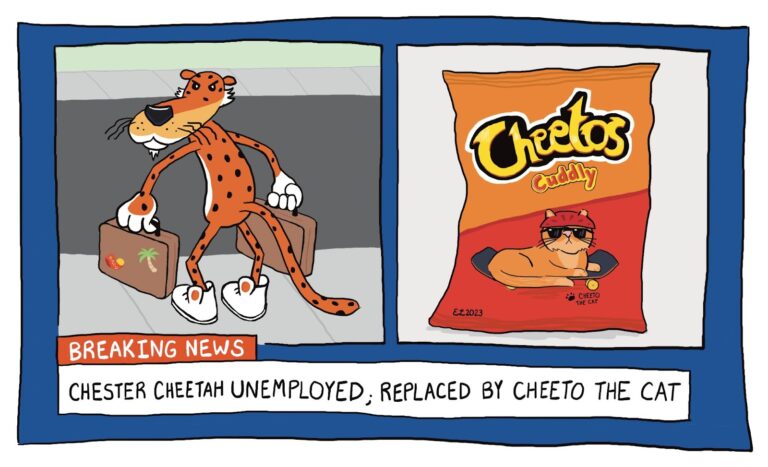
The fall of Chester Cheetah

Drawn by: Emma Lapidus –– eblapidus@ucdavis.edu

Disclaimer: (This cartoon is humor and/or satire, and its content is purely fictional. The story and names of “sources” are fictionalized.)

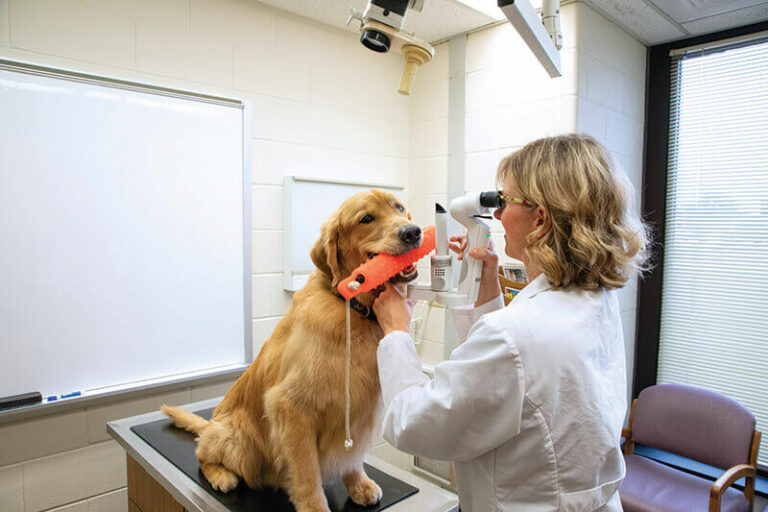
New dog spa opens in Davis

0

Dogtopia provides the Davis dog owner community with a unique dog spa and daycare experience   


By ZOE SMITH — city@theaggie.org


Dogtopia, a dog spa, daycare and boarding facility, opened in Davis at the beginning of July this year. Dogtopia itself is a chain and has locations all over the United States and Canada. 

The owner of the Davis Dogtopia location, Cindy Hespe, is a retired pharmacist and former editor of the California Journal of Health-System Pharmacists. Hespe believes that there are no dog daycares like Dogtopia in Davis. 

“There’s nothing like it around,” Hespe said. “There’s nothing in Davis or Woodland or Winters or Dixon. There are kennels, but there aren’t dog daycares that are like this. We work on socialization of the dogs [and] on educating them to be better canine citizens by working on basic commands with them.”

Dogtopia not only provides daycare and boarding for dogs, it also provides a place for dog socialization, a play environment, spa services and dog training all in a safe facility with highly trained personnel. 

“It’s a service for the community because people work long hours, and they want a safe place for their dog to go,” Hespe said. “And [also] during the day while they’re working or if they’re even going on a day trip to [San Francisco]. We actually get a lot of retirees that will do day trips to San Francisco or Tahoe, and they need a safe place for their dog, so they can bring him here.”

Dogtopia is unique in the services it provides the Davis community. There are three different playrooms for the dogs who are separated by size and temperament. Dogs also undergo a meet-and-greet process before getting admitted into Dogtopia. They have a wellness check, their comfort in a crate is evaluated and their response to staff touch and interaction is recorded, as well as their reaction to open play with other dogs. 

“We have had a lot of excitement in the community because Davis is such a big dog community,” Hespe said. “[…] We’ve had a lot of pet parents just thank us for bringing this to the community because it was needed.”

Jordyn Mines, a third-year human development major at UC Davis and a canine coach and rover at Dogtopia, has been working at Dogtopia since it opened. 

“I’m a canine coach,” Mines said. “It’s when [you] directly work in the rooms with the dogs and you’re coaching them or training them on obedient behavior and making sure that they’re playing safely.”

Mines also works as a rover at Dogtopia.

“[That’s] when I’m going around and doing the meet and greets when we get new dogs,” Mines said. “I make sure the canine coaches have everything that they need.”

Dogtopia also holds charity events where pet owners can buy a treat for their dog or have a fall photoshoot done for their pup, and all the proceeds go to supporting a service dog for a veteran. The calendar of Dogtopia charity events can be found on their website. Mines believes that the business uses their finances for good.

“I’ve been telling people it’s been my favorite job I’ve had so far,” Mines said. “I think it’s nice that we prioritize safety and cleanliness because, while it is important for the dogs to have fun, we have the right goals in mind. […] I also like the things that the Dogtopia company funds. We sponsor ESA dogs to help blind people and we also promote adults with autism being employed.”

Ivy Garrett, a third-year animal biology major at UC Davis, has also been a canine coach and rover at Dogtopia since they opened.

“Working at Dogtopia has been an invaluable experience,” Garrett said. “It’s taught me extensively about dogs, infectious diseases, cleaning protocols and has been a journey of personal growth. The team spirit here is remarkable; we’re a group of dedicated and hardworking individuals, valuing each other’s contributions and ensuring a seamless routine. Above all, the connections forged with the dogs have brought immeasurable joy into my life.”

Garret talked about some of the dogs who use Dogtopia’s services and help make her job memorable.

“Every day brings a multitude of unforgettable moments,” Garrett said. “From Sherlock, the dog who walks himself into daycare, to Whisper, the water-splashing puppy and Frodo, the adventurous husky diving under play equipment. There’s never a dull day at Dogtopia.”


Written By: Zoe Smith city@theaggie.org

Genetic research may allow golden retrievers to live longer

A gene variant in the breed has a significant association with cancer occurrences


By KATIE HELLMAN — science@theaggie.org 

Golden retrievers are known for being playful, affectionate and gentle, making them one of the most popular dog breeds around the world. Unfortunately, these beloved pets are also known for one more key characteristic: they are diagnosed with cancer at alarming rates.

Golden retrievers have a typical lifespan of 10-12 years, and around 65 percent of them die from a form of cancer. The most common cancers that affect golden retrievers are lymphoma, hemangiosarcoma, osteosarcoma and mast cell tumors; they compromise around 80 percent of all cancer deaths in this breed. 

A new study from UC Davis has identified a variant in the 5’UTR (a region of messenger RNA) of the ERBBR genes in goldens, which is correlated with lifespan and plays a role in the risk of developing cancer. 

“The association to ERBB4 was certainly intriguing since golden retrievers are predisposed to cancer and ERBB4 is a member of the EGFR family of oncogenes,” the study reads. “ERBB4 is also the only member of the EGFR family that can function as either an oncogene or a tumor suppressor gene.”

The study consisted of over 300 golden retriever participants. DNA was collected from the blood of golden retrievers who had died young and from goldens who were alive at the age of 14. The findings revealed that the goldens with the aforementioned gene variants lived for an average of 1.9 years longer, which is about a 15-20 percent increase in lifespan.

Additionally, female goldens lived for a noticeably longer time than their male counterparts, even when both groups had the gene variant. This is likely due to the interaction of hormones like estrogen, which play a greater role in the development of females than males.

Certain variants in this gene are linked to a two-year increase in lifespan. ERBB4 is in the same gene family as HER2, a gene associated with rapid cancer growth, and is specifically correlated with human epidermal growth factor receptors. Additionally, the gene belongs to a protein family that is prevalent in human cancers as well, meaning that this new research can have implications in both the veterinary and medical fields. 

Danika Bannasch of the UC Davis School of Veterinary Medicine co-authored the study and commented on its significance in an interview with UC Davis Health. 

“There are going to be many genes involved, but the fact that the gene associated with longevity is also a gene involved in cancer was really interesting to us,” Bannasch said.

The co-corresponding author of the study, Robert Rebhun of the School of Veterinary Medicine, commented on the potential impacts of these findings on human cancer research.

“If we can confirm that this variant plays a role in longevity or in the onset or progression of cancer in golden retrievers, future mechanistic studies will be aimed at determining how this variant is altering genetic or environmental risks of cancer,” Rebhun said. “Because this family of genes is known to be dysregulated in human cancer, these studies may also be important in the development and progression of some human cancers.”

Written by: Katie Hellman — science@theaggie.org

Here’s what the Editorial Board is grateful for this Thanksgiving

Spoiler alert: it’s not finals season

By THE EDITORIAL BOARD

We’ve all heard the benefits of gratitude extolled: better sleep, less anxiety, lower levels of depression and so on. During the Thanksgiving season, gratitude is especially placed in the limelight. As an Editorial Board, we want to acknowledge that this holiday has a complex history that isn’t all worth celebrating, originating during a time of violence against Native American people. That said, we think it’s possible to acknowledge the history of the holiday while still valuing this time with family and friends and using it as an opportunity to reflect on the good things in our lives. And as college students, we could certainly use as much improved sleep and lessened anxiety and depression as we can get. So, here’s what the members of the Editorial Board are grateful for this year. Happy Thanksgiving! 

We should take a moment to acknowledge the land on which we are gathered. For thousands of years, this land has been the home of Patwin people. Today, there are three federally recognized Patwin tribes: Cachil DeHe Band of Wintun Indians of the Colusa Indian Community, Kletsel Dehe Wintun Nation, and Yocha Dehe Wintun Nation. 

The Patwin people have remained committed to the stewardship of this land over many centuries. It has been cherished and protected, as elders have instructed the young through generations. We are honored and grateful to be here today on their traditional lands. 

Sonora Slater, Editor-in-Chief

From the running list in my notes app — I’m grateful for the girl at the CoHo last week who told me she liked my earrings, and then gave me two strawberry crumble bars instead of just the one I ordered. I’m grateful for the freshman who DMed The Aggie to tell us that our new issues are the highlight of her Thursdays and for the woman in my welding class who brought us all pineapple guavas from her garden on the last day of class. I’m grateful for Sunday pick-up soccer games, and for the girl I ran into at the MU last month who told me that although we’ve never met, we’ve followed each other on Instagram since freshman year, and she’s been rooting for me as she’s watched the trajectory of my journalism career. And more than anything, always, I am grateful for the friends, roommates and coworkers that I was somehow lucky enough to find, who are the reason that, for at least one more year, Davis feels so much like home.

Clara Fischer, Managing Editor

As we near the end of another quarter spent in Davis, I’m feeling grateful not only that — let’s be real — it’s almost over, but also that I have plenty of good memories to outweigh the stress that these 10 weeks brought. I have spent more time than I care to admit in meetings this quarter, but I feel extremely thankful for the company of my coworkers during that time and loved ones outside of it. Not only have I formed new connections, like those with the members of this year’s Editorial Board, but I have rediscovered my unwavering gratitude for the connections that I already have in my life. To my friends, new and old: thank you for providing me with so much genuine joy and support.   

Lily Freeman, Campus News Editor

Now that I am almost finished with my last fall quarter here at UC Davis, I am more thankful than ever for the love and support that surrounds me from all corners. To my roommates and boyfriend, who know me better than I know myself and possess a high level of coolness that I aspire to live up to, I am forever grateful to call you my best friends (and to have total access to your closets). To my family, who I have mastered the art of long distance communication with, thank you for keeping my head up via FaceTime call for the last three years. To my campus news writers, thank you for making my job easy. To the Editorial Board, thank you for making me better at my job. I can’t believe I get paid to work alongside a talented group of writers who also never fail to make me laugh. I should also give an honorable thanks to box hair dye, Mishkas and my band for specifically getting me through rough times this quarter. 

Chris Ponce, City News Editor

I’m truly lucky for all there is to be grateful for in my life. This year I wanted to talk about how thankful I am for where I come from. In Davis, sometimes it feels like everyone you meet is from the Bay Area or some town in Northern California I’m not familiar with. With home being hundreds of miles away, it’s this time of the quarter when I remember how much I miss my family and home. I wouldn’t be here, writing this editorial at this university, without the people who made me who I am. The phrase “remember where you came from” might be slightly overused, but it’s something I remind myself of every day. I grew up in a small desert town, and when I was a kid I used to talk about how excited I was to get out of there. However, with age comes appreciation and nostalgia — I couldn’t be more grateful for the place I got to grow up at. I think about how lucky I am that I got to grow up in a town so different from others. To the giant Joshua Trees growing like weeds, sunsets that are fiery red and my favorite panadería downtown, I am so grateful for you. 

Annabel Marshall, Opinion Editor

In my senior year, I feel even more grateful for each moment knowing there’s many things I’m experiencing for the last time. There’s so much to be thankful for: my super cool housemates, dinner parties, concerts, postcards, love letters, interesting classes, the sweater I got for four dollars at Goodwill, new music, old movies, phone calls from my little brother, good weather, laughter, In-N-Out burgers, my dog and plenty more. And, of course, I am deeply appreciative of my wonderful writers on the Opinion Desk (whoop!) and my mostly okay coworkers on Ed Board. I can only hope that next year my life will be as enjoyable and meaningful to me as it is now. 

Yasmeen O’Brien, Features Editor

There are so many things I am grateful for, especially this year. I have been overcome with nostalgia as I enter my last year at UC Davis, and am so thankful for our little town that has made my time in college more special and meaningful than I ever dreamed of. I’m thankful for my lovely roommates who make me laugh endlessly and who have loved and supported me through it all. I feel so lucky to call you my best friends. Thank you for your wisdom and presence in my life. I am thankful for my family, and especially my parents who have always encouraged us to be our creative, justice-seeking, silly, authentic selves. I am thankful for my education and for freedom. I am incredibly grateful for my wonderful coworkers and writers who have made me excited to come into work every day. Thank you for all your hard work. It takes blood, sweat and tears to run a newspaper, and these people do it with profound grace! Lastly, I’m thankful for everything that has made me grow, especially the things I have learned the hard way. And of course for music, dancing, writing and all the love in my life. 

Ana Bach, Arts & Culture Editor

This fall quarter flew by fast, but it’s times like these that help me pause and reflect on the little things in my everyday life that make me appreciate where I am in the world. College life feels like the calm before the storm, a period of transition into the real world without the same consequences you would normally face. Sporadic late-night snack runs with my housemates and jumping on the trampoline are things that get me through the day that might not be waiting for me in the scary adult world. Our daily Editorial Board meetings, the live music in Central Park, game nights, dance parties and all the ways that our little town of Davis finds community truly make me stop dead in my tracks. I cannot begin to express how lucky I am to have such a safe space, where the environment as well as the people have supported me in all my endeavors. As a period of rest and relaxation is well-deserved, it’s a bittersweet feeling to part from all the things that make Davis so special. I can safely say that all those things will still be here when I come back and that is what I am truly grateful for. 

Megan Joseph, Sports Editor

As this year is coming to an end faster than any of us have expected and the stress of holidays and finals is starting to materialize, the moments when I can go home and have a delicious home cooked meal that get me through. Thanksgiving is one of the few excuses I have to be sappy toward my friends and family and reminisce on all of the fun moments I have had throughout the year. Although it has been a whirlwind, it has brought me so much to be thankful for with all the funny, wonderful and chaotic moments. I’m grateful for all of the late-night drives to Dutch Bros with my eight housemates (yes, all eight) where we sing a mix of pop, rap and country at the top of our lungs. I’m grateful for all of the laughs on the couch with my family where we tell each other the most random stories from our time apart. I’m grateful for all of the random shopping trips with my friends where someone always ends up getting lost (usually it’s me). I’m grateful for the random yoga retreats that my mom keeps talking me into so that I can “clear my chakras.” All I can say is that I love doing life with all of my people and I cannot wait for the future memories that we will make, no matter how far away we may be.

Katie Hellman, Science & Tech Editor

With finals looming around the corner and the sun clocking out at 5 p.m., it can be easy to focus on the negativity in the world; take a step back and remind yourself of the things that bring you joy. There are plenty of small things I’m grateful for — the glow stars plastered on my ceiling haven’t lost their sticking abilities yet, Trader Joe’s always has peanut butter cups in stock, sometimes I can find my entire study guide on Quizlet — that I often take for granted. I’m also grateful for the most obvious, but perhaps the most important things in my life: people! The love and support I share with my friends and family and even the small interactions I have with classmates and kind strangers are what make life worth living. I can’t wait for the many items I’ll be able to add to my list in the future — new friendships, new experiences, and hopefully some new writers on the science desk (!!!). 

Written by: The Editorial Board

Why TikTok Shop is revolutionizing online consumerism

A dive into influencer marketing 


By MAYA KORNYEYEVA — mkornyeyeva@ucdavis.edu


After rocketing to major success as a social media platform, TikTok recently announced the addition of TikTok Shop: an online shopping platform curated for TikTok users. The idea behind the platform is to give influencers and small businesses a way to easily market their products to users, while at the same time aiding customers in the discovery of new products and subsequent ease of purchase.

Before the launch, businesses operating on TikTok would simply redirect potential customers to their website via a link in their bio. Now that TikTok Shop is a readily available feature, you can simply click the tab and scroll through a page of thousands of listed products.

What makes TikTok Shop so unique is the “video review” format that is crucial to persuading potential buyers. While other online shopping websites like Ebay and Etsy share similar features to TikTok Shop — such as photos, reviews, product information and star ratings — they don’t contain the social aspect of influencer marketing.

By definition, influencer marketing is strategic product promotion through the use of individuals with a large online following, who aim to create positive media around a certain product. And TikTok is full of them — almost every other video that I receive on my feed is an influencer hyping up a product on TikTok Shop.

Why is this method of marketing so effective? The answer comes down to building credibility. Influencers spend their entire careers aiming to reach a large audience; to do so, they often make themselves relatable, funny or otherwise charismatic. These traits, along with the material they are making content about, help create a personal link between the audience and the influencer. If you follow your favorite Youtubers for example, you learn a lot about them and continually support them with your views, forming a kind of relationship with them (even though you may never have spoken to them before).

This credibility can be applied to influencer marketing. When someone you follow shows you a product or service that they personally enjoy, it doesn’t feel like heartless spam. Rather, you are hearing a first-person account from someone you “know,” which is much more influential than hearing it from a stranger.

On another, slightly more morbid note, TikTok shop also caters to a very specific audience: mainly millennials and Gen Z. Gen Z in particular is a generation of young adults who were exposed to technology and online shopping at an early age. Since purchasing products online is simple and easy — with a few clicks being all it takes to order something right to your door — TikTok businesses capitalize on compulsive purchases made by algorithm-addicted teens. With trends like “#TikTokmademebuyit” becoming increasingly popular on the platform, more and more influencers are profiting from selling nonessential items to a generation raised on standardized overconsumption.

As TikTok Shop is beginning to gain traction, there has been a subtle yet very important change to the way some companies are now approaching marketing their items. For instance, Amazon has recently introduced a new “scroll” feature in their app called Inspire. Similar to TikTok, Inspire allows users to view a mixed feed of short videos and photos that both advertise and review the products available on the site.

With a company as large and powerful as Amazon attempting to incorporate a TikTok-style social media feed, the future of online shopping seems to be on the verge of a transformation. I predict that, as technology keeps rapidly evolving, so will digital commerce in the upcoming years.


Written by: Maya Kornyeyeva — mkornyeyeva@ucdavis.edu


Disclaimer: The views and opinions expressed by individual columnists belong to the columnists alone and do not necessarily indicate the views and opinions held by The California Aggie.


California Poet Laureate Lee Herrick reads at Davis event

0

The poetry reading was part of the recurring bimonthly poetry nights held at the John Natsoulas Gallery 


BY EMMA CONDIT — city@theaggie.org


On Nov. 3, California Poet Laureate Lee Herrick attended Davis’ bimonthly poetry night. This was the most recent of the poetry nights hosted by Dr. Andy Jones at the downtown John Natsoulas Gallery. This event lasted about two hours and had UC Davis and Davis Senior High School students, poets and other members of the community in attendance.

The evening began with a performance by Davis flutist, Dr. Rachel Taylor Geier. Then, Herrick began his poetry reading — his poems consisted of new and old works, and the topics ranged from delicious foods, adoption, crosswords and his idea of California.

“In my California, paperbacks are free and farmers markets are 24 hours and always packed,” Herrick said, reading from his poem “My California.” “The trees and water have no nails in them, the priests eat well, the homeless eat well.”

The California Poet Laureate is a two-year, governor-appointed position created in 2001 by Gov. Gray Davis. The goal is to share the art of poetry across the state of California and inspire emerging artists, according to the California Arts Council website. Herrick previously served as the Poet Laureate of Fresno and was appointed to his current position by Gov. Gavin Newsom in Nov. 2022. Herrick described his feelings about the position.

“It’s an incredible honor and humbling,” Herrick said. “It is an opportunity to meet poets throughout the state. […] It’s an opportunity to share with new audiences.”

After Herrick’s reading, the microphone was opened to the audience where Davis poets could share their works. One of the participants was the former Davis Poet Laureate Allegra Silberstein who shared a poem about grief.

“We’re drawn to the moon,” Silberstein said as she recited her poem. “We’re old in our sweet ruin, and that is of no concern for the parting time is coming soon.”

The Davis Poet Laureate is an honorary 2-year position created in 2009 by the Davis City Council. This role promotes the celebration of poetry through the city of Davis and Yolo County. Silberstein served in this position from 2010-2014.

Dr. Jones, the event’s host and a UC Davis professor, spoke of poetry night as a whole.  Jones said this event allows people to meet community members who they would otherwise not meet and be inspired to write.

“Events like this are important because they bring people together to appreciate the arts,” Jones said. “Poetry night is an oasis of creativity and unexpected connections.”

Each Davis poetry night is held on Thursday and begins at 7 p.m. The event is free and open to the public, and you can find more information here. Herrick encouraged people from Davis to write and engage with these events.

“Read as widely and as deeply as you can,” Herrick said to emerging poets. “Exploration and wonder and curiosity are important. Have faith in yourself and be open to discovery.”


Written By: Emma Condit  — city@theaggie.org

Easy recipes to share with friends and loved ones this Friendsgiving

A twist on a classic holiday to celebrate your chosen family


By LORENA ALVAREZ — arts@theaggie.org


With Thanksgiving just around the corner, many students look forward to Friendsgiving: an event when meals are shared with friends before going back home for the holidays. However, our tight schedules and limited cooking skills as college students make it difficult to plan a home-cooked dinner worthy of our friends’ time. Luckily, there are an endless number of easy-to-follow recipes at our fingertips, even if you are unsure of your cooking abilities. Here are some recipes that can be easily prepared for Friendsgiving, despite the overwhelming nature that midterms bear on the season of giving.

A cranberry brie biscuit dip is the perfect appetizer for charcuterie lovers. It only requires a round brie cheese, a quarter cup of cranberry sauce, a quarter cup of shredded white cheddar, rosemary, black pepper and 30 minutes. You can start by placing your favorite biscuits around the edge of a medium skillet with the brie in the middle. Bake it for about 10 minutes and add the cranberry sauce with white cheddar on top. After mixing the cheese and cranberry sauce, bake it for an additional five to seven minutes. Voila, you have an appetizer to start the feast.

A roasted apple salad with spicy maple-cider vinaigrette is an excellent choice for incorporating festive and appetizing greens into an otherwise salty and carb-filled meal. The roasted apple and maple cider vinaigrette complement the fall palette that many look forward to. The apples not only make the salad appear elegant, they also make it sweet and refreshing when eaten with mixed salad greens. This is the perfect side dish for Friendsgiving because of how effortlessly it can be thrown together. To make the process less time-consuming, you can bake the apples ahead of time. Simply roast the apples with olive oil and leave them to cool. While the apples are the main character in this plate, the dressing is the key to a sweet and savory salad. To prepare the dressing, mix two tablespoons of apple cider vinegar and olive oil, one tablespoon of maple syrup, one teaspoon of sriracha chili sauce, half a teaspoon of salt and a quarter teaspoon of pepper. Once ready to serve, drizzle the apples and dressing over the greens to enhance the salad’s beautiful palette.

The easiest side dish that will save the day if all else fails is mashed potatoes, or stuffed mashed potato tots if you want to make the dish more exciting. Mashed potatoes are known for being a comfort food because of their creamy and buttery flavor, but it is also a quick and easy side dish that anyone can make. Simply boil some potatoes and mash them, adding milk and butter to make them fluffy. If you are not feeling rushed for time, try making stuffed mashed potato tots. This is a fun twist on the traditional mashed potato recipe that’s sure to be a hit because of its convenience and flavor. The bite-sized pieces make eating them as a snack easy between classes. Like the traditional recipe, simply cook the potatoes and mash them. Once mashed, mix the potatoes with two cups of milk, a lightly beaten egg, half a cup of sour cream, three pieces of cooked crumbled bacon and a tablespoon of seasoning. After mixing, shape the mixture into tater tots, adding a cube of cheese inside if you would like to. Next, roll the tots in bread crumbs and butter mixture. Once done, simply bake the tots for about 20 minutes.

Choosing between turkey and ham is a yearly debate, but one thing is for certain: preparing the ham is significantly easier than cooking a turkey — at least in this amateur’s cooking experience. If you want to take the safer route, or just prefer ham, you should recreate “The Cookie Rookie’s” brown sugar glazed ham. This recipe provides clear cooking instructions, making cooking the entree a lot less intimidating. The key to making the perfect ham is to cook the ham 12 minutes per pound, according to the recipe. This will ensure that the ham does not lose too much moisture. To make the sauce, add one cup of brown sugar, half a cup of honey, a third of a cup of Dijon mustard, a quarter cup of unsalted butter, a quarter cup of apple cider vinegar, three cloves of garlic, a quarter teaspoon of ground cinnamon and a quarter teaspoon of ground ginger into a saucepan. Stir periodically and wait for it to bubble. Once it has started bubbling, lower the heat to low and continue cooking it for a few minutes. Wait for the sauce to cool down and add it to the ham an hour after putting the ham in the oven. Then, let it cook for the remainder of the cooking time.

That said, if cooking a ham, turkey or anything else for that matter is too intimidating and time-consuming, ordering a meal, entree or sides to-go from any grocery store like the Davis Food Co-op is always an affordable and convenient option.


Written by: Lorena Alvarez — arts@theaggie.org

The sexual tension between the G and J buses is unreal

Seriously, get a garage


By ALLISON KELEHER — adkeleher@ucdavis.edu


If you are a resident of North Davis, or have ever lived in North Davis, you have experienced the stifling sexual tension between two Unitrans bus lines, the G and the J. For a little background, the G bus transports multitudes of students to the UCD MU bus stop, while the J bus does the same for the UCD Silo bus stop. The MU and the Silo have a longstanding rivalry as hubs for UC Davis students and staff, so the relationship between the G and the J would never be approved of. These star-crossed lovers leave their bus stops every day, at every hour, and meet up on their routes. Since they can’t interact with each other, the G and the J play a flirtatious game of cat and mouse on their routes.

More often than not, the G arrives at the bus stop outside of Chautauqua apartments a little early, but the J is not far behind. Depending on the speed of its passengers’ boarding and disembarking, sometimes the J will pass the G. That is, until the next stop when the J is held up and the G takes the lead. According to my reliable source, “they’re flirting with their traffic patterns — it’s actually disgusting.” Usually, in the end, the G is victorious and is in the lead in front of the J. Another source claims that, “the G only wins their little game because the J is more popular.” However, the reliability of this source is uncertain, since they’re garage roomies with the J bus.

Eventually they’re both back onto Anderson Road, headed towards campus where they split up at Russell Boulevard and return to their bus families. As they bid each other farewell, the G and J rest easy knowing that they’ll see each other in an hour.

This modern day rendition of Shakespeare’s “Romeo and Juliet” is lived every day and every hour by the G and the J Unitrans bus lines. Hopefully they don’t kill themselves too — I need to get to class.

But, let’s get real. These buses need to own up to their little situationship and put North Davis residents out of their misery. It’s revolting to be awake at 8 a.m. and witness this intense flirting when I’m just trying to get to class. I feel like Unitrans should put them into a garage at night and they can work it out.


Written by: Allison Keleher — adkeleher@ucdavis.edu

Disclaimer: (This article is humor and/or satire, and its content is purely fictional. The story and the names of “sources” are fictionalized.)

Senators express frustrations with ASUCD President at Nov. 9 meeting

After a back-and-forth over Senate Resolution #4, senators grew annoyed over ASUCD President’s lack of action


By RODRIGO VILLEGAS — campus@theaggie.org


At 6:11 p.m., Senate President Pro Tempore JT Eden called the Nov. 9 Senate meeting to order. After roll call, he read the UC Davis Land Acknowledgement.

The meeting began with the CoHo quarterly report, presented by Foodservice Director with the Associated Students Dining Services Darin Schluep.

Schluep recently completed the CoHo’s participation in the Beverage Pouring Rights Industry Working Group.

“We voted to abstain from participating in that agreement moving forward,” Schluep said. “I appreciate the dialogue that I was able to have with all of you leading up to that vote, and I 100% support the decision and [I am] happy we went that direction.”

However, Schluep also cited the decision as a challenge because the CoHo’s transition away from the agreement includes a shift away from single-use plastic beverage bottles, which will change the beverage selection at their locations.

“[We] are gonna work with Student Housing… to unify our communication plan,” Schluep said. “We want to make sure that there’s a campus-wide message coming out along those lines, because it will be impactful — it’ll change what you see in our beverage coolers.”

Lastly, Schluep shared goals for the next quarter, which included a CoHo expansion.

“We’re very close to having a final design,” Schluep said. “This is for a pretty extensive patio on the west side of the Coffee House… providing better ADA [Americans with Disabilities Act] access… and then the other part of the project is to expand the portfolio of our employee break area.”

The Whole Earth Festival (WEF) quarterly report followed.

Co-Director of WEF Olivia Hurley expressed their goal to create a more educationally enriching festival this year as they feel the festival has moved more toward a musical and crafts festival.

Next, Academic Affairs Commission (AAC) Chairperson Britney Cao gave the commission’s quarterly report.

Cao spoke on “Syllabus to Browser,” a project intended to remodel Schedule Builder to include professors’ syllabi so that students can look at the course syllabus before registering for a class. The AAC hopes to launch a pilot program in spring quarter 2024.

The meeting then moved into public comments, which saw a student condemn the internal vice president’s behavior during the Nov. 7 meeting with Chancellor May.

“Cutting off a Palestinian student while they were sharing their grievances with the chancellor and the university is completely unacceptable and contributes to decades of silencing Palestinians as they struggle for freedom,” fifth-year political science major Yara Kaadan said. “The position of being internal vice president does not grant you authority over how we grieve and how we express our concerns with this university or Chancellor May as an individual.”

Afterwards, Eden ordered a break.

Once everyone reconvened, the Senate moved into the status of previous legislation. SB #17, SB #18, and SB #20 were all passed and signed; SR #2 was passed and signed; and CA #87 and CA #88 were passed and signed.

The introduction of new legislation followed. SB #22 was referred to the Internal Affairs Commission (IAC) and the External Affairs Commission (EAC); SB #23 was referred to the IAC; SB #26 was referred to the IAC and the Ethnic and Cultural Affairs Commission; SR #3 was referred to the IAC and EAC and SB #27 was referred to the IAC.

Next, the consent calendar passed unanimously, and the Senate moved on to consider old legislation.

SB #24, a bill that allocates $1,709.53 for the ASUCD Transfer, International and Freshmen (TIF) Friendsgiving Mixer, passed unanimously.

SR #4, an ASUCD Senate Resolution that states the overarching goals, priorities and business strategies of ASUCD for this year, was considered. After much deliberation, and due to ASUCD President Francisco Ojeda’s absence, the Senate decided to postpone the consideration of SR #4.

After the Senate progressed through the remaining agenda items, they again arrived at the consideration of SR #4. This resolution has been considered in several Senate meetings since the beginning of the quarter.

After two votes (which was one to pass the bill and one to table it) ended in stalemates, several senators expressed their frustrations.

“I don’t think we need to give [President Ojeda] any more second chances,” Senator Dani Antonio said. “It’s week six — this is embarrassing. It’s supposed to be done by week one, we can’t keep giving second chances.”

Senator Binh Do agreed.

“Constantly waiting and relying on somebody else, this is the inaction that people are talking about,” Do said. “It’s time we take action [and] end this right now. Let’s not waste student time, student fees on this senate resolution.”

Ethnic and Cultural Affairs Chairperson Kristen Le went on.

“If we can’t even expect our president to write a resolution in six weeks, what is the point of making it better?” Le said. “We have given him so many chances… There needs to be some accountability at this point.”

A last roll call vote ended in a vote of 0-11-3 (yes, no, abstain) and SR #4 failed.

Eden adjourned the meeting at 8:50 p.m.


Written by: Rodrigo Villegas — campus@theaggie.org