

‘Original: “The Starry Night” by Vincent Van Gogh’
Drawn by: Nimra Farhan –– nfarhan@ucdavis.edu
Disclaimer: (This cartoon is humor and/or satire, and its content is purely fictional. The story and names of “sources” are fictionalized.)
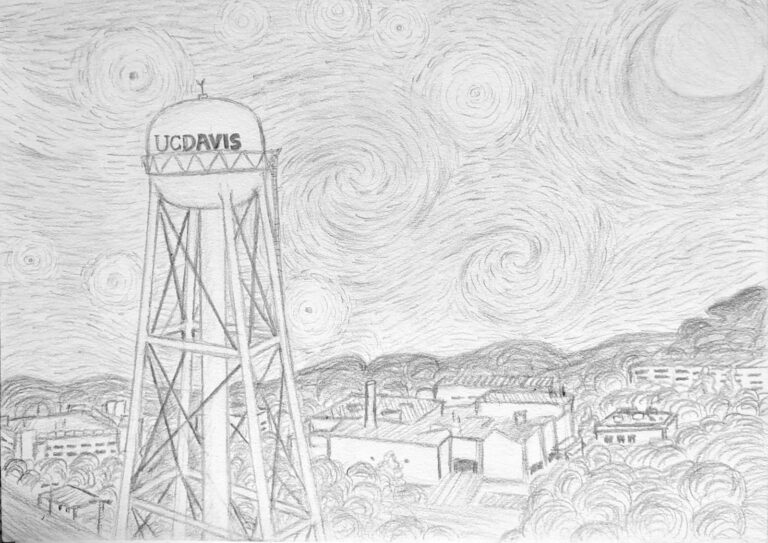
‘Original: “The Starry Night” by Vincent Van Gogh’
Drawn by: Nimra Farhan –– nfarhan@ucdavis.edu
Disclaimer: (This cartoon is humor and/or satire, and its content is purely fictional. The story and names of “sources” are fictionalized.)

The genius of TJ’s marketing strategy and some product recommendations
By MAYA KORNYEYEVA — mkornyeyeva@ucdavis.edu
Ah. Trader Joes. It is no understatement to say that this iconic grocery store franchise is, to me, like a beacon of light on the horizon: a place that I gravitate towards like a moth to a flame and which I choose over several other stores to do my weekly shopping.
Continuously, I am baffled by my fondness for Trader Joe’s. Is it, perhaps, my admiration of the detailed signage that adorns the shelves? Could it be my awe at the fresh rows of fruits and veggies, stacked high next to the flower bouquets? Is it the affordable prices, the incredibly friendly staff or the calming atmosphere that emanates throughout the entire store?
To tell you the truth, the answer could very well be all of the above. Even though Trader Joe’s never does any sales or discounts, and doesn’t offer an outlet for online shopping or a rewards program, I have never really felt the absence of these so-called “perks.”
One of the things that Trader Joe’s historically values is consistently offering affordable prices for their products, 80 percent of which are private label — meaning that they are made by Trader Joe’s and only for Trader Joe’s customers. By not outsourcing from other brands, the company can retain the full profit from their private label sales, and ensure that the quality never wavers.
This also creates consistency in their product availability; unlike many stores that discontinue brand partnerships every once in a while, I have noticed that Trader Joe’s keeps products for as long as they can, especially if it’s a popular customer favorite. The high value that they place on customer happiness and satisfaction is one of the many reasons that the chain continues to be a staple in many communities.
This focus on customer connection is absolutely the reason why I spend more money on trying out different Trader Joe’s products. Just last weekend, I was persuaded to purchase their new bakery item, the Chantilly cream vanilla bean sheet cake, because an employee avidly explained how delicious it was when they brought it home to try. It was indeed quite tasty, so no regrets there.
Similarly, every single time that I am checking out items with a cashier (have you noticed there are no self-check-out stations available inside Trader Joe’s?) they happily strike up a conversation, whether it is a simple inquiry about how my day is going or a kind comment about one of the products I purchased. Often I find myself comfortably chatting with them, even though I am not a very extroverted person.
Finally, the strong emphasis that Trader Joe’s places on the design of creative art for all their product labels continues to amaze me every single day. The fonts all look digitally printed, although the slight imperfections are proof that they were done meticulously by hand. The paintings that adorn the walls above the shelves also make the space feel bigger and brighter, and the lighting is a warm yellow with lots of emphasis on natural sunlight. The large selection of plants is also unusual for a typical grocery store, but it works to make the inside of Trader Joe’s vibrant and inviting.
Some of my favorite products that I keep coming back for include the “Taiwanese scallion pancakes” (a perfect lunch size!), the “dark chocolate peanut butter cups” and the “soft and juicy dried mango.” Trader Joe’s ice cream is also superb, and I’ve had a tin of their vanilla ice cream always stocked in my fridge for nearly five years. Not to mention, the “mini hold the ice cream cones” are absolutely delectable, and a perfect dessert to share with anyone (I guarantee those cones will be gone in three minutes, tops).
Overall, with their unconventional yet genius approach to marketing, — from word-of-mouth communication to decorative signage to private labeled products — Trader Joe’s maintains a high standard that many grocery stores don’t even begin to measure up to. This is why, if anyone asks, I will enthusiastically proclaim my love for Trader Joe’s over and over until I have convinced another lost shopper to journey through its glorious aisles.
Written by: Maya Kornyeyeva — mkornyeyeva@ucdavis.edu
Disclaimer: The views and opinions expressed by individual columnists belong to the columnists alone and do not necessarily indicate the views and opinions held by The California Aggie.

The artist acknowledges the controversy and stays true to his sound
By LORENA ALVAREZ — arts@theaggie.org
Bad Bunny has recently received backlash for his relationship with Kendall Jenner and his alleged hostility towards fans. Some fans blame the singer and supermodel’s relationship for the change in the melody in his song, “Nadie Sabe” and his defensive responses towards criticism. While some feel that his new album, “Nadie Sabe Lo Que Va a Pasar Mañana” has “flopped” and wonder if the album cover featuring a horse is a nod to Jenner, the shift from predominantly featuring reggaeton in “Un Verano Sin Ti” to trap in his new album is a return to his roots.
When you google Bad Bunny, as of Nov. 16, many articles spotlight his relationship with Jenner and his negative reaction towards AI-generated NostalgIA, completely disregarding his music. Although it has become natural to want to keep up with celebrities and their love lives, their romantic relationships should not influence how viewers perceive artists’ work.
This frustration towards the constant judgment and naive belief that we as fans know our idols as people is seen in “Nadie Sabe,” a single in his new album. Here, the singer opens with an orchestra filled with prose discussing the hate and misconceptions that come with fame.
“Making money while you comment/but nobody knows/what it feels/feeling alone with a hundred thousand people in front/that all the people talk about you/without knowing a thing, without knowing you/and they even wish you the death/but not me, I wish you good luck,” read lyrics from the song translated by Genius.
Bad Bunny goes on to acknowledge the hate he received for throwing a fan’s phone.
“You’re not my real fan, that’s why I threw your phone /the real ones, I’ll love forever,” the artist said.
Through “Nadie Sabe,” Bad Bunny notes his desire to stay true to himself, something he believes his fans will support. He even goes on to comment on the desire to confine artists to genres, noting that his music will not be bound to a single style or thing.
The singer demonstrated this with lyrics like “This album is not meant to be played and get a billion views/it’s so my real fans are happy” and “and it’s true, I’m not a trapper, nor a reggaetonero/I am the biggest star in the whole world… I have lost love, I have lost money/[for] my best defect, being very sincere/But I don’t lose faith nor the desire to kill [it].”
His blunt and vulnerable album was greeted with mixed emotions because of how different it is from “Un Verano,” an understandable reaction given that his most streamed songs on Spotify are “DÁKITI,” a collaboration with Jhayco at 1.84 billion streams and “Me Porto Bonito,” a collaboration with Chencho Corleone at 1.58 billion streams. These popular songs are reggaeton, which has led to some fans being disappointed by the shift to trap in “Nadie Sabe.” This change was met with surprise by fans who listen to his newer music, missing his first studio album, “X 100pre” which “was instrumental in bringing Latin trap to a global audience without diluting its regional spirit,” according to a review by Albums in Order.
Despite the general public having mixed feelings about the album, some fans responded positively to the reminiscent effect the album has.
Jessica X. Contreras, a fourth-year sociology major, commented on Bad Bunny taking the time to acknowledge his fans.
“I like his new album. Some songs more than others but I like how he recognizes his fans and his love for Puerto Rico,” Contreras said.
When asked about her go-to songs, Contreras noted the 2022 album, “Un Verano Sin Ti,” and Bad Bunny’s performance skills.
“I have so many [favorite songs]. It’s between ‘Moscow Mule’ and ‘Enséñame a Bailar’ both in his ‘Un Verano Sin Ti’ album. I like this album as well because it just reminds me of a good point in my life. I was able to go to his ‘Un Verano’ tour and hear it live. This album also celebrated Puerto Rico and it had overall a lot of ‘hype’ songs that were fun and cultivated happiness.”
Even though fans enjoy the music, it is still difficult for them to have access to the concert experience because of popular demand, resulting in ticket sales skyrocketing. Cristian Godinez, a fourth-year English major and professional writing minor, reminds those who could not buy tickets of other ways they could watch the show.
“I wouldn’t go to a concert of his because why would I waste that huge amount of money to see him?” Godinez said. “I could just do that in the comfort of my own home, watching his concert on YouTube or watching people I know post the whole concert on their social media.”
Mayra Torres, a student at Santa Rosa Junior College and Bad Bunny fan, also commented on the concert prices and the controversy, blaming Bad Bunny for how unaccessible his concerts have become overnight.
“I hate that they used dynamic pricing for him because Bad Bunny is a very popular artist, which made his tickets more expensive since they are always in high demand. I think the thing that many people didn’t realize [is] if it was set as normal prices tickets would have been a lot cheaper,” Torres said. “I luckily was able to find cheap tickets in the ocean of overly priced tickets and ended up paying $400 for pretty good seats… if rumors are correct and Bad Bunny’s stage is a floating stage then I will have a good view.”
Torres went on to note Bad Bunny’s return to his trap roots after side-tracking in “Un Verano.”
“I think that this was a good album, but it is definitely not my favorite out of all his albums, I would rate it a 7/10 overall. [That said], I really like the beat and the references to some of his past trap songs. For me, it was one of the closest to his old style of trap too.”
Amidst the controversy and feedback that Bad Bunny is facing, his newest album serves as a way to experiment with both trap and reggaeton elements, creating a new popular sound for this generation.
Written by: Lorena Alvarez — arts@theaggie.org
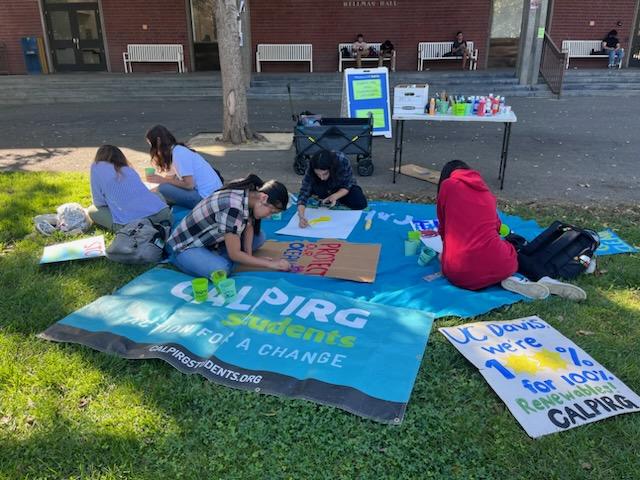
The campaigns aimed to increase student involvement in renewable energy, voting and eliminating single-use plastics
By RAGAVI GOYAL — campus@theaggie.org
During the fall 2023 quarter, UC Davis’ California Public Interest Research Group (CALPIRG) has pursued various campaigns to increase student participation in a variety of topics.
CALPIRG is a statewide non-profit organization that has been operated by students across the UC system since the 1970s, according to the CALPIRG website.
“[CALPIRG chapters] started popping up all over the country on college campuses to advocate for the public interest,” CALPIRG UC Davis Campus Organizer Marea Ayala said. “Young people felt like there was a lot happening in their world that they didn’t have a whole lot of agency over and thought that [this] really shouldn’t be the case.”
CALPIRG is training the next generation of activists, advocates and organizers, according to Ayala.
“Not only should young people not have to wait until after they get their degree to make a difference on issues that they care about, but a lot of the issues that we’re working on right now are just that urgent,” Ayala said.
To achieve this mission, according to Ayala, CALPIRG has held three different pledge drives during this fall quarter: the 100% renewable energy campaign, the new voters project and the “Beyond Plastics” campaign.
The organization’s lead campaign is the 100% renewable energy campaign, where their goal is to get the entire UC system to commit to 100% clean and renewable energy by 2035.
“Last year, [the UCs] signed on to have 90% renewable energy by 2045,” Sophie Massengill, a second-year environmental policy and French double major and campaign coordinator, said. “They have committed to being mostly renewable energy based and they can do it in a shorter timeline. We’re just trying to push it to an even quicker timeline given that we have less and less time every year.”
To participate in the pledge drive, according to Massengill, students both signed physical or digital petitions stating that they support the campaign and want UC Davis to be at 100% renewable energy within this new timeline and answered questions pertaining to why they care about clean energy.
“Once we get all of these petitions, there’s a certain whole number that we have we’ll turn in to the chancellor,” Massengill said. “Because the UC system is such a big and influential system, we really believe that if they make this commitment, it’ll cause a really big ripple effect of just a lot of other influential places making this change.”
The new voters project, which is the second campaign operated by CALPIRG, aims to institutionalize voting on campus, according to first-year political science major and CALPIRG Head Chairperson and Campaign Coordinator Rena Cohen.
“Our work basically involves reminding people that you have to show up at the polls and a lot of voter coalition work with some other organizations on campus,” Cohen said. “[We] try to target students at every avenue to reach out to them and tell them that they should vote.”
Cohen said that CALPIRG got over 20,000 students to show up at the polls for the 2020 elections and they have a similar strategy for the 2024 campaign.
Calpirg’s third campaign of the quarter, Beyond Plastics, revolves around getting the Davis City Council to ban single-use plastics in Davis, according to second-year environmental science and management major, CALPIRG Vice Chairperson and Beyond Plastics Campaign Coordinator Caitlin Perea.
“I am going to get student support and public support and try to get restaurant sign-ons as well and then lobby directly with Davis City Council,” Perea said.
The goal is to get support through petitions and social media and ultimately have a meeting with the Davis City Council to show them all of the support that there is for the cause, according to Perea.
All three campaigns are running throughout the fall 2023 quarter. Students can sign petitions through the UC Davis CALPIRG Instagram and website.
“A lot of issues that we work on are profound and students want to, can and should make a difference on them right now and CALPIRG enables them to do that,” Ayala said.
Written by: Ragavi Goyal — campus@theaggie.org

Recent graduates and Executive Director at UC Davis’ Internship and Career Center, Marcie Kirk Holland, share their experiences
By SABRINA FIGUEROA — features@theaggie.org
Graduation is one of the biggest events that will happen to a student in higher education. Being both relaxing and stressful, graduation is a double-bound finish line in which students feel the weight of coursework come off their shoulders, only for the weight of the “real world” to take its place.
Among students in the United States, about 87% agree that obtaining a bachelor’s degree or higher helps with acquiring a well-paying and stable career. However, an influx of recent Gen-Z graduates has taken to social media platforms, such as TikTok and X, to say that the act of acquiring said “stable career” is hard in 2023.
“I think it’s human nature to say something you don’t know how to do is hard. Students don’t know how to look for jobs, most of them have never done it,” Marcie Kirk Holland, executive director at UC Davis’ Internship and Career Center, said. “The way they have gotten their jobs in high school, or even their on-campus jobs, often is a little bit different than what they have to do going through looking for career positions. It’s brought with rejection. So yeah, that’s really hard.”
Rejection is difficult to go through, especially when you’ve just finished college and you don’t know that it’s normal. Fear of lack of experience adds to that frustration of rejection and the difficulty of finding a job. A LinkedIn analysis found that 35% of entry-level positions posted on their website required at least three years of experience.
Ibeth Ramos, a 2022 Sacramento State University alumnus with a degree in business and fashion merchandising, recalled her thoughts on the post-grad hiring process.
“I felt like maybe I would get rejected for some [positions] since I don’t have much experience in managing or anything besides retail,” Ramos said. “Anything that listed a lot of experience was frustrating because I always thought they would reject me.”
Future college graduates get anxious that they will have the same rate of rejection during that process due to inexperience.
“Having to get internships and experience for an actual job makes me a little more terrified than getting the actual job,” Karla Torres, a second-year health science major at Sacramento State, said. “I’m always like, ‘What if no [employer] wants me?’”
Students are heard when it comes to their fears of job rejection and inexperience, but they shouldn’t count themselves out yet. Holland explained that there are “transferable experience and skills” from regular customer service jobs, clubs and even coursework that can be put on resumes for employers to see.
“A job posting is a wishlist,” she stated. So if job-postings are posted on websites such as Handshake, the employers know that the target audience is going to be recent college graduates.
“The posting may say four years of experience is required,” Holland said, “but odds are high, most people applying will not have that.”
Ramos gave her advice on applying for positions that students may feel inexperienced for.
“Apply to as many jobs as you can even if you think you are not qualified,” Ramos said. “They might still give you a call back for an interview.”
It is also heavily encouraged to apply to jobs fairly early. Many think that you have to have the actual degree before you can apply to a job within your field of interest, but that isn’t true. In fact, it is encouraged that fourth-years in college start looking for a job before they graduate. Holland noted that this is because it can take several months for students to get a job offer.
“If you wait until after graduation, it might be that your lease is up in August, and you might have to move back in with people that you lived with in high school,” she said.
She noted that the new independence that college graduates may seek disappears if they have to go back to depending on their legal guardians.
At UC Davis, the Internship and Career Center urges students to leave their college experience with stable career positions by graduation. UC Davis human development alum Amena Mushtaq said she started looking for jobs right before graduation.
“The job I was looking for did not require a degree in my major, but it was highly preferred,” Mushtaq said.
On average, the amount of time it takes for students to get a job offer after they begin their search is about three to six months. At UC Davis, the average time frame is around six months, but varies quite a bit depending on the kind of networking and preparation the student does, such as attending career fairs at their schools.
Mushtaq shared her experience and said that she stayed confident in herself during the search process.
“I had experience in many areas related to the jobs,” Mushtaq said, “and knew it was all a learning process moving forward.” It only took her about one week to get her first job offer.
Ramos stated that it took her only a couple of weeks after her last semester at Sacramento State University began to get a job offer.
Karen Aguayo, a San Francisco State University alumnus with a degree in nursing further discussed this topic.
“I received a job offer three weeks after I passed my NCLEX licensing exam,” Aguayo said, “but it wasn’t until three months after that I received a job offer at my dream hospital and unit.”
The first job offers, though, don’t have to be accepted if the graduate doesn’t see the offer as sufficient. This can happen for a myriad of reasons, the main one being that recent graduates tend to reject job offers that have low salaries. A CNBC report showed that most students won’t take less than $72,000 and overestimate their expected salaries by $30,000. This overestimation can contribute to the difficulty level students perceive when acquiring and looking for a good career position.
“I’ll be honest, some people are unrealistic about what they’re going to make at an entry-level, but sometimes companies do try to undercut and don’t pay well,” Holland said. She explained that thinking through the offers — and even going to career advisors or family members for help — is an important step in the process.
Aguayo rejected her first offer due to the duration of the contract and the terms behind it, plus the incentive. She later elaborated that she received help from a family friend during the offer process, since she is a first-generation college graduate.
“I was frustrated because I felt like I had no one to fall back on at times,” Aguayo said.
“[…] Navigating everything on my own was new.”
Beginning career searches for positions is an overwhelming and difficult process, but that’s no secret. Although students can find themselves in pools of frustration and tears during this time, it’s not their fault and the feeling is mutual amongst many.
There are a plethora of resources for graduates to use much like the Internship and Career Centers at their selected schools, career fairs, family members and the use of networking through speakers, recruiters or internships.
Whether there is a long wait for the first job offer or students have to take a job that isn’t necessarily updated to the cost of living, the experiences of Ramos, Aguayo and Mushtaq show that there is still hope for students.
Written by: Sabrina Figueroa — features@theaggie.org

The Davis community showed support for the SPCA through games and a dog runway show
BY EMMA CONDIT — city@theaggie.org
On Nov. 12, Davis’ Sudwerk Brewery collaborated with the Yolo County Society for the Prevention of Cruelty to Animals (SPCA) to host a dog adoption event called “Dogs at the Dock.” The event lasted from 1-5 p.m. and was just one of the many dog adoption events that the Yolo SPCA holds throughout the year.
The event took place entirely outside and began with a meet-and-greet with dogs that needed adopting. Community members brought their pups, bought raffle tickets and socialized throughout the afternoon. Each raffle ticket supported the Yolo SPCA.
The SPCA is a non-profit animal shelter that serves as the mediator for pet rescues and their adopters. They focus on outreach and education and also aim to spay/neuter animals in the community to decrease pet overpopulation, according to their website. Rachel Gagnon, the SPCA’s canine program coordinator, described the work she does with dog adoptions.
“We want to find a good long-term fit for each animal,” Gagnon said. “We take a bit of time to review each application, but events like this give people a chance to meet the animals.”
Gagnon explained that the SPCA places dogs and cats in both foster and permanent homes. They receive pets of all ages from rescue agencies across the county. Pets that require long-term medical attention are placed in homes that can support their recovery.
The final event of the day was a dog runway show, where anyone with a dog could participate. Pups young and old sported hotdog costumes and tuxedos. Alex Fisher-Wagner, the events planner at Sudwerk Brewery and MC of the runway show, described how the event brings the community together.
“This was a fun way to not only support the Yolo SPCA but to also bring the community together,” Fisher-Wagner said. “The atmosphere here is great and a bunch of people came out. One of the great things about Sudwerk is you can bring kids and adults, you can bring your dog, you can listen to live music — it’s all free.”
Fisher-Wagner talked about what is ideal in a dog runway show and how to properly judge contestants.
“In a dog runway show, you’re looking for personality,” Fisher-Wagner said. “You want style points but also the enthusiasm of the owners and the crowd to get behind it.”
Ashley Ricafrentea, a recent UC Davis graduate and participant in the event, shared her thoughts.
“Things like this make me love Davis,” Ricafrentea said. “I’m glad my dog Georgia got to meet some other pets. We’ve had a great time.”
Gagnon spoke about SPCA adoption events and how events like this help raise awareness for dogs in need.
“Even if we don’t get adoptions [from these events], it just gets the word out and interest in the animals,” Gagnon said.
To adopt a dog or cat from the SPCA, there is an application online. For more information about the SPCA, you can visit their website with information regarding their services.
“Bark bark,” Ginger, an honorable mention in the dog runway show, said. “Woof woooof bark woof!”
Written By: Emma Condit — city@theaggie.org

A YouTube deep dive to give your brain the creeps
By MIAH JORDANE — mjcampos@ucdavis.edu
If you’re chronically online like me, then you often find yourself scouring YouTube looking for something new to watch. During high school, I endured a YouTube dry spell as I felt I consumed everything there was to consume. It’s thanks to this, though, that I explored a side of YouTube I feel needs more recognition! If you’re also experiencing a content dry spell, then I’ve got you covered with some videos that won’t make your brain rot, but might instead give you the creeps.
Originally published in 2004, the disturbing short series “Salad Fingers” by the artist David Firth stars a humanoid creature with muted sickly skin and long, arching fingers. However, this series didn’t start getting extremely popular until around 2010. This series is a classic in the odd, creative scene on YouTube. It follows a deranged yet eerily charming little green guy as he embarks on his extremely off-putting adventures to touch rusty spoons, create personas for his fingers and more. If this description entices you, then this series is a good starting point.
Though “Salad Fingers” is likely Firth’s most famous work, he has a plethora of other creepy and fun videos that are a bit less disturbing but just as interesting. I got sucked into his work during high school and explored his entire collection of videos on YouTube, so here are some of my favorites:
O9i 98bn “Cream” introduces an all-curing and all-powerful product that comes in the form of, you guessed it, cream. Created by a (not real) scientist named Dr. Bellifer, this video depicts what life looks like after this revolutionary product changes the lives of everyone and “cures” all personal and worldly issues. But this powerful product begs the question, is it too good to be true?
The next recommendation is a bit of a short series by Firth, too. They can definitely be watched separately and out of order, but I always enjoyed plowing through a couple of videos at a time in order to fully get a feel for the chaos they encompass. These videos are a bit difficult to describe, but it’s basically Firth’s imaginative play on creating false news. His style is a mashup of animation and real-life images blended together, which I feel adds to the chaos of the videos.
However, Firth does not stand alone when it comes to artists I binged on YouTube in high school. I also fell deep down the rabbit hole of Lee Hardcastle’s work. Though his work embodies a very creepy tone, it is vastly different in style to Firth. Lee Hardcastle works with claymation –– but with a twist. Through an extremely cinematic filming style, Hardcastle has created a large archive of unique videos, most of which are extremely gory.
He grew a lot of his fame through remaking movies or shows into 60-second claymated reenactments which explore what the shows/movies would have looked like if there was a lot more gore and violence. For example, some of the shows and movies he’s done this with are “Sean of the Dead,” “The Simpsons,” “The Belko Experiment” and more. Hardcastle also has had a few of his claymations showcased on Adult Swim including some “Rick and Morty” adaptations as well as some smaller projects like “Earlier” and “Fight Room.” However, my favorite claymations of his are some of his earlier works:
“Filthy Apes and Lions” –– a music video for Mark Stoermer’s song. This video uncovers an interesting storyline involving animals and secret spies in a zoo while being paired with the catchy song “Filthy Apes and Lions.” It’s a quick watch, but definitely one that I recommend.
“Ghost Burger [full film]” –– a 22-minute video that depicts the journey of a couple of friends who are hunting down ghosts in order to make burgers with them (obviously). This one is the sequel to “T IS FOR TOILET,” which I also highly recommend. The extremely vibey lighting in this video contrasts the intense gore, but I feel it makes even more of an enticing watch. Hardcastle describes this video in the description of the video as being “like a dodgy bootleg version of ‘Stranger Things’ if it was a cartoon show.” So, if this doesn’t draw you in, I’m not sure what will.
These two artists are only the tip of the iceberg when it comes to creatively creepy artists on YouTube, but they’re a great starting point. I couldn’t even dive too deep into all of their work and my favorite aspects about them, so I hope you take it upon yourself to discover things you personally like about them.
Written by: Miah Jordane — mjcampos@ucdavis.edu
Disclaimer: The views and opinions expressed by individual columnists belong to the columnists alone and do not necessarily indicate the views and opinions held by The California Aggie.
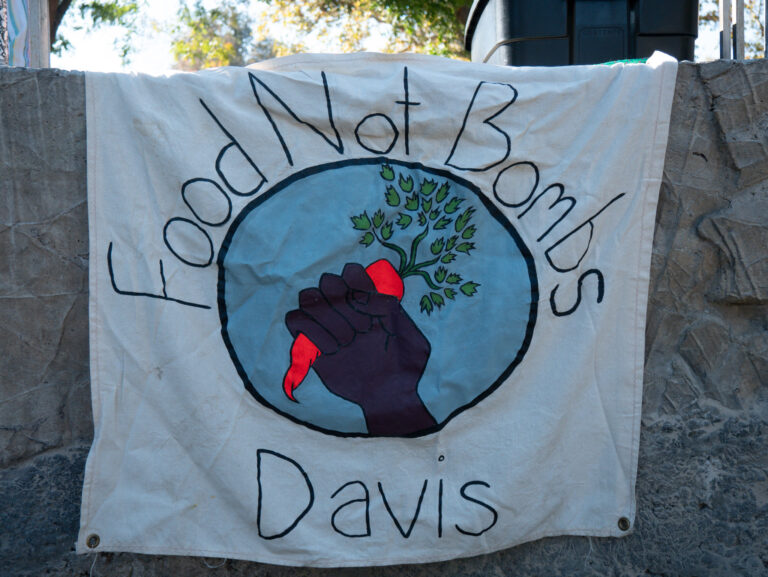
Volunteers continue operations of historic Food Not Bombs chapter in Davis
By LAILA AZHAR — features@theaggie.org
Boxes of fruit salad, rice and split-pea stew stacked on a ledge in Central Park don’t exactly seem like the hallmarks of a terrorist group. But Food Not Bombs, the organization behind this food distribution program, has been called exactly that by some government officials
When Brian Fieganbaulm was arrested at an occupation attempt of the Seabrook Nuclear Power Station in 1980, his friends attempted to raise money to pay for his legal fees by holding bake sales. Protesting led to social services and an increasing military budget. They dressed up as generals, displayed a poster that read, “Wouldn’t it be a beautiful day if the schools had all the money they needed and the air force had to hold a bake sale to buy a bomber?” and told people they were raising money to do just that — buy a bomber.
While they didn’t make much money, they caught people’s attention. At their next demonstration, the group set up a fake soup kitchen outside of a bank stockholder’s meeting — insinuating that this bank’s policies resembled the banks that caused the Great Depression. Not wanting the food to go to waste, they communicated the nature of the protest to the local homeless community and were able to share food with over 70 people.
And thus, Food Not Bombs was born. The organization collects food that would otherwise have been discarded from local grocery stores, bakeries and produce markets and distributes it to members of the community. From their inception, political action — specifically anti-war action — has been central to the group. As their mission statement puts it, “When a billion people go hungry each day, how can we spend another dollar on war?”
This commitment to political action alongside food distribution is central to a distinction the group makes. “Even though we provide meals and groceries to thousands of people,” they clarified on their website, “we are not a charity.” Rather, Food Not Bombs is a mutual aid group.
Mutual aid groups operate under the idea that current systems of power aren’t doing enough to meet people’s basic needs and that communities should come together to support one another.
It is exactly this involvement in politics that has led to surveillance by the U.S. government. Food Not Bombs has protested cities’ bans on groups feeding more than 25 people at a time without a permit, stating that “food is a right, not a privilege,” earning them the title of “food terrorists” from Orlando Mayor Buddy Dyer.
The organization was included on an FBI counterterrorism official’s list of “groups that people intent on terrorism might associate with.” Their meetings have repeatedly been infiltrated by law enforcement officials; their houses have been raided, their ties to other activist groups investigated. Co-founder Keith McHenry claims to have been arrested nearly 100 times for work relating to Food Not Bombs.
This intense suppression is the direct result of the financial interests of the U.S. government, according to the organization.
“Military contractors are worried that we might influence the public to realize our taxes could be spent on human needs instead of war,” they said. “Since we will provide food wherever and whenever it is needed, this interferes with the government’s ability to use food for social control.”
Despite the intense backlash they’ve faced, today Food Not Bombs operates over 500 chapters, including one here in Davis. The Davis Food Not Bombs chapter has been serving free vegan meals to the community on and off since 1996. Currently, the group can be found in Central Park on the 2nd and 4th Sundays of every month.
As Josh Redman, a volunteer with the group, described the work: “We collect donations from local farms, the farmer’s market and the food co-op and then we get together and cook a vegan meal and come out and share it at the park.”
Groups like Food Not Bombs help target a pressing issue in Davis: food insecurity. Defined as “a lack of consistent access to enough food for every person in a household to live an active, healthy life,” a study by UC Davis researchers found that 45% of undergraduates at UC Davis experience food insecurity.
“Food access and food insecurity are problems that can make or break a community,” first-year political science major Reena Panikar said. “Food Not Bombs gives people a crucial resource that they need.”
Staying true to the organization’s activist history, Davis Food Not Bombs has collaborated with clubs at UC Davis, such as Cops off Campus and Students for Reproductive Freedom. The group also works closely with other mutual aid organizations providing food to Davis residents. For example, the Davis Food Co-op, a community-owned grocery store, is one of the providers of food for Davis Food Not Bombs. Food Not Bombs has also provided food for the co-op’s “Freedge,” which is exactly what it sounds like: a fridge full of free food.
The spirit of community and solidarity are evident from the way Food Not Bombs volunteers talk about other mutual aid resources in Davis. “There’s lots of other food in town too,” Redman said, eagerly directing me to more resources. “The [Davis] Night Market is here Monday 9-11, there’s a whole bunch of things.”
Volunteering for a group that provides food to Davis can be a powerful way to help one’s community. As first-year international relations major Aminah Syed put it, “Volunteers are united by their passion for change and empathy for marginalized communities. It’s a perfect way to find like-minded people who are committed to the same causes as you.”
For students who want to get involved with Food Not Bombs, Redman said, “I would encourage people to come to a serving and meet people and talk there. There’s lot to do.”
Written by: Laila Azhar — features@theaggie.org

The proposal was brought before the council and resulted in discussions of a new revenue stream and its implications for residents
By HANNAH SCHRADER — city@theaggie.org
On Nov. 7, the Davis City Council convened its scheduled meeting and discussed a contentious proposal regarding a vacancy tax in the city of Davis. Vacancy taxes, such as a commercial vacancy tax, are taxes that charge property owners for vacant properties.
Mike Webb, the Davis city manager, presented background information on the tax, stating that it would need to be approved by voters in a ballot measure. He also discussed further implications.
“Some agencies, including some not far away from here, have implemented what they call [a] vacancy tax,” Webb said at the meeting. “As a tax, it has to be approved by the voters on a ballot measure, but as is the case in California, the ability to tax any number of issues is fairly broad for local jurisdictions. And that can include taxing property owners for residential, commercial or undeveloped land that is vacant […] for it not being in ‘productive use.’”
Webb then spoke briefly about the potential benefits of putting the vacancy tax into effect, stating that it could be used to encourage property owners to not leave properties vacant.
“A vacancy tax can be pursued for any number of reasons; it could be pursued as a revenue generation tool for a community,” Webb said. “More often than not, though, we see that they’re used as really more for land-use regulation. Sort of proxy to try to entice property owners to think twice about leaving a property vacant.”
Webb suggested that large investors are largely responsible for property vacancies in certain areas.
“Some of what we’re finding in other jurisdictions where there, I will say, can be fairly prevalent vacancies is […] a theme [due to large investors],” Webb said. “Where investors are coming in, buying up a large number of properties and, you know, maybe they’re not even investors that are local or even in the country, but they’re buying up the [..] property as investment properties.”
Alan Hirsch, a local resident, shared how this tax could prevent the housing crisis from worsening in Davis during the public comment section.
“I think we should make sure that infrastructure is fully used and [that] revenues come from it, so I would encourage you to consider this thing,” Hirsch said. “Consider a tax, because we certainly have a shortage of housing. I think we want to encourage that and get ahead of the game before someone comes and starts to withhold property from the market.”
Vice Mayor Josh Chapman discussed his focus with a vacancy tax, which is not necessarily for a revenue source but rather a way to manage some of the issues that the city has dealt with from vacant land space.
“I am supportive of us continuing this conversation and getting a more in-depth data set around what some of these are,” Chapman said. “[…] I would be interested in learning more about what options we have around commercial and vacant land space.”
While still considering the tax, Mayor Will Arnold expressed interest in narrowing the focus of the tax to primarily target commercial land vacancies.
“I’m more inclined to really want to dig into this on the commercial side,” Arnold said. “There are some significant commercial vacancies that exist in town and if the incentive isn’t there to get them rented, it may behoove the city to want to change that equation.”
Mike Webb closed off the discussion by mentioning the upcoming housing element that would allow the city to identify what is considered commercial land to further understand the implications of the tax.
“In terms of doing an updated inventory of commercial land, since we do have a number of properties that we’re bringing forward as part of the housing element for rezones,” Webb said. “[It] probably makes sense for us to coordinate on that and identify what properties are being changed to what designations and make sure all that is reconciled.”
Written by: Hannah Schrader — city@theaggie.org
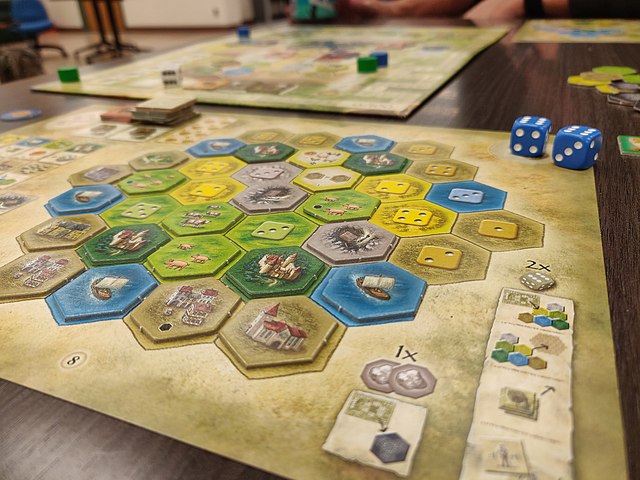
How board games go hand-in-hand with children’s psychology
By ELI KELLEY — arts@theaggie.org
As someone with a lifelong love of board games, I’ve sometimes looked at my earlier years of game-playing with regret. Why had I wasted so much time playing “Snakes and Ladders?” And not just “Snakes and Ladders,” there’s a catalog’s worth of games — “Monopoly,” “The Game of Life” and “Sorry” to name a few — which had captivated me as a child that I now consider boring.
In comparison with games I enjoy playing today, children’s games have little room for strategy, feature only the simplest kinds of interaction with your fellow players and determine the winner by little more than chance. However, there’s something to these games that once engaged me and countless other children. In thinking about this issue, I’ve identified several reasons why, for children, these board games continue to hold meaning.
Before knowing why children’s board games work, it’s important to know how they work. For starters, children’s board games feature large amounts of randomness. The winner of “Snakes and Ladders,” for example, is based entirely on what numbers come up on the dice. “Monopoly” and “The Game of Life” have some amount of player choice and therefore player strategy and yet, still, are heavily based on luck. I have never heard someone describe themselves as skilled at “The Game of Life” or “Monopoly,” in the same way someone would be skilled at chess.
As for why this matters, having a game based on luck evens the playing field. By being random, children’s board games are also egalitarian. A child has an equal chance of winning “Snakes and Ladders” if they’re playing with their parents, their best friend or an AI superintelligence. This can be empowering to children — in a world where adults hold the power, this is the first real chance a child has to be an adult’s equal.
These board games being so luck-dependent also keeps the rules simple. In many of these games, all a player does is roll a die and move their game piece that many spaces. Such rules are easy for children to learn and remember, a necessary feature as their brains aren’t developed enough to think through complex rules.
Only starting at around age 12 are children able to fully reason out abstract hypotheticals, according to foundational psychologist Jean Piaget. From ages seven to 11, their reasoning is more logical and rigid. Without the ability to think through multiple hypothetical futures, children have difficulty making long-term plans and strategies. Their brains aren’t well equipped to play complex 10-hour board games. Games with a simple and rigid structure like “Monopoly” are better suited to meet children where they’re at.
Children’s minds don’t develop passively, according to another influential psychologist, Lev Vygotsky. A child can achieve more advanced kinds of thinking at an earlier age through teaching and guidance. Mentors provide the “scaffolding” that children use to build their growing mental abilities. One of the most important roles of children’s board games is to help children learn new skills, to be that scaffolding.
Children’s board games are educational in several distinct ways. In “Snakes and Ladders,” children move their pieces forward based on the number on a die roll, which helps them both learn and count numbers. “Monopoly” can introduce children to the basics of negotiation as they make deals with other players. “The Game of Life” teaches not only skills but cultural values, as children play through a simulation of an archetypal middle-class American life.
Little of what makes these games good for children makes them fun for adults. Children’s board games are just that — games made for children. It’s a mistake, however, to assume that they’re merely a watered-down version of adult games. Children’s board games are good at being games for kids. I still dread “Monopoly,” but I’d play it for the sake of a young person who was interested. Whether or not they go on to enjoy board games later in life, nearly all children could benefit from what children’s board games have to offer.
Written by: Eli Kelley — arts@theaggie.org
The passionate student-staffed operation gives back to UC Davis
By LYNN CHEN — features@theaggie.org
On campus, there is a wide selection of food trucks to visit as students. Whether you’re a loyal fan of Shah’s Halal or a curious customer of the Smoothie Operator, there will always be a business for you.
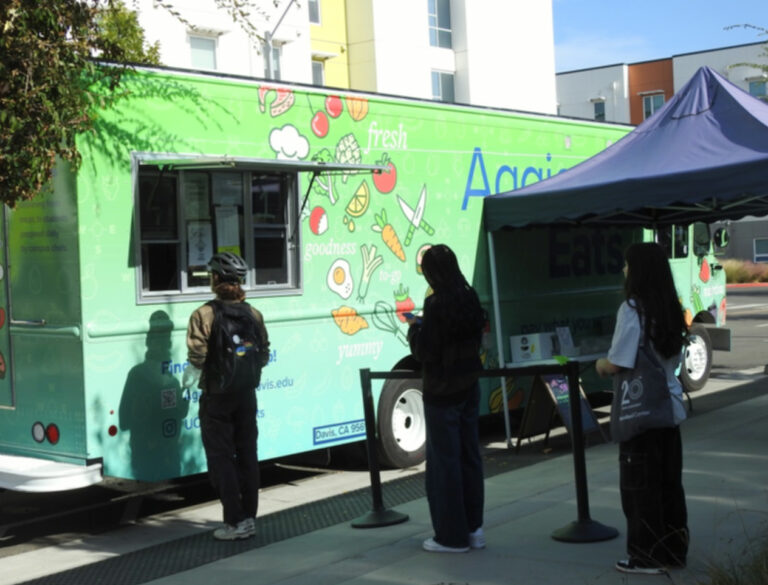
One truck that stands out from the rest is Aggie Eats, a service that aims to mitigate food insecurity among students.
From Monday to Friday, between 11 a.m. and 2 p.m., the Aggie Eats food truck distributes delicious, healthy meals to UC Davis students lining up for the program.
The operation runs on a pay-what-you-want pricing structure, so students can get the food for free or for a few bucks. Money that is paid goes right back to supporting the operation.
Meals that the food truck freshly serves include pork carnitas bowls with pinto beans and tortilla chips with pico de gallo salsa, chicken and potato bowls with broccoli and cheese as well as chicken tacos with papas con rajas and Spanish rice. Almost every day, the menu also offers vegan or vegetarian options for its meals.
Food insecurity at UC Davis is quite prevalent. In 2022, 42% of the student population reported having very low to low food security, according to the UC Undergraduate Experience Survey.
“We have had some students […] that come to the truck tell us that they survive on only us [for food],” Sal Ramirez, food truck coordinator for Aggie Eats, said.
Food insecurity on campus has especially been exacerbated by rising prices from inflation.
“The cost of food has gone up so much,” Ramirez said. “It makes it really hard for people of all age groups [to access proper nutrition].”
Ramirez added that these challenges are especially real for college students who are just beginning to learn to budget.
Additionally, food insecurity impacts the emotional well-being of a student. A person may feel shame over their circumstance or fear that there is a stigma associated with their food insecurity, even though the situation may have been uncontrollable in the first place.
Fortunately, Aggie Eats is focused on relieving the stress over this issue for students.
“It’s a safe spot when you come to the truck,” Ramirez said. “There ain’t no shame about it.”
“We all go through things and that’s okay,” he added. “Hopefully, we can brighten someone’s day and make it a little easier for them.”
At Aggie Eats, Ramirez is responsible for leading a team of student interns and Aggie Compass staff to make the food truck happen.
Even though the food truck operates for only four hours a day, a lot goes on behind the scenes to make sure the program runs smoothly during those hours.
Meals that are served mainly come from the Segundo Commissary Kitchens. Every morning, the kitchen staff cook and prepare all the food to be distributed later in the day. Every meal item is then bagged or boxed in large, separate containers to be picked up by the food truck.
At the same time, the food truck itself needs to be prepped for the day as well. Every morning at 7 a.m., student interns go and pick up the food truck vehicle from the Unitrans center. They complete tasks such as filling up the water tank in the truck, loading the food onto the vehicle and checking fridge and meal temperatures on the truck.
During its operating hours, student interns and staff at the truck package and portion out the food to each customer. On average, Aggie Eats distributes around 500 meals a day.
At the end of the day, the truck’s team works together to clean and return the vehicle back to the Unitrans center.
A lot of thought also goes into deciding the menu for students, which Ramirez achieves in collaboration with the Student Housing and Dining Services.
For example, the menu items change every week and are seasonal to make the eating experience more enjoyable for students. In fact, the truck has been quite active on its social media accounts to gauge students’ opinions on what it has been serving.
“We kind of want to give people what they want,” Ramirez said. “You want to feel good about what you’re eating.”
Ramirez also needs to consider the capabilities and equipment available at the Commissary Kitchens to cook certain foods.
However, since the goal of the program is to make nutrition and food as accessible as it can be for students, Ramirez has been considering making trade-offs in the ingredients of the food.
“We might start steering away from more expensive cuts of protein, such as beef,” Ramirez said. “You might end up seeing more chicken on the menu.”
This decision comes back to the fact that it’s difficult to know and measure the varying individual levels of needs in students, so the program has been trying to scale up its overall impact to support everyone.
“We are just trying to meet a wide range of needs, and it is complicated to do so,” Ramirez stated. “Our variety might be cut down, but at the end of the day, we’re just trying to make the most impact on students.”
With a great cause and plenty of effort going into it, it is no surprise that the Aggie Eats food truck is popular among students.
“It’s a bright green truck roaming around campus, so it definitely does draw a lot of attention,” Marilou Vazquez, a second-year community and regional development and Chicana/Chicano studies double major as well as a student intern for the Aggie Eats food truck, joked.
“But, I really think it’s a very popular thing because not only are our meals really good, we also serve a really good purpose,” Vazquez said.
Bianca Tomat, a third-year biotechnology and food science double major and student manager and social media chair for the food truck, added on to this statement.
“We were kind of a victim of our own success,” she said. “We never really had to promote or market [the Aggie Eats food truck].”
Tomat has been part of the program since its inception on campus.
“It was really fast growing and students knew about us really quick,” Tomat stated. “We were almost not prepared for this many students to just come to us.”
Furthermore, the program itself is powered by a tight-knit community of students and staff passionate about its cause.
“The whole food truck team is very close,” Vazquez said. “We have such a good relationship and environment in the workplace.”
“I take a lot of pride in our team, because I do believe that our team has this very awesome energy to it,” Ramirez said. “[The team] is very loving, it’s very playful. This is something that is very rare to see in any job. I think this is the thing I enjoy the most out of this experience.”
Ramirez hopes to nurture future leaders who can create work spaces where people can be happy, be themselves and learn the importance of interpersonal relationships.
“We’re doing something cool and everything [for UC Davis],” he said. “But it’s very, very important to me to try and make an impact on the students that work in our team.”
Written by: Lynn Chen — features@theaggie.org

My pitch for uniting the world, boosting the economy and advancing humankind
By MALCOLM LANGE —- mslange@ucdavis.edu
Next year holds an important event and its results could upset the current world order for the next four years. This is when our country depends on us to show a united front despite our differences. Of course, by now, you must know what I am speaking about — the 2024 Olympics.
The Olympics is a multinational sporting event viewed by billions of people around the globe. Approximately 3.05 billion people watched the last games. That is roughly 38.7% of the world’s population. But how do we increase the viewership? Almost the whole world is represented in the Olympic Games, so why aren’t more people watching?
The Olympic Games will host 32 sports in 2024, and people have debated which sports need to be added or removed for years. However, people need to focus on the bigger picture. Adding baseball back in will not drastically change the number of viewers. It is not about adding a new sport but a new league for each sport within the Olympics.
Here, I propose the Drug League. In the Drug League, there are very few restrictions on substance abuse. Sure, Usain Bolt is speedy; he pushes his body’s natural speed to extreme limits. But what about unnaturally? How fast could he run if he were permitted to use any drug he wanted? With the Drug League in the Olympics, we can finally see what humans are capable of to the fullest extent.
The Drug League will not just have sports where performance-enhancing drugs are permitted; there will also be some in which drug consumption is a requirement, and it will definitely not benefit the athlete. For example, javelin throwing but on acid, pole vaulting after drinking profusely or fencing while on ketamine. This will push the athletes to different types of extremes they otherwise would not have to face. It would give a better scope as to what we humans can endure physically and mentally and showcase the resiliency of these athletes. Do not worry, of course, there will be extensive physical checkups and paramedics for each event to ensure the safety of everyone.
Having a new addition to the Olympics and one as big as this would increase their viewership tenfold. Watching it would be amusing even if you disagreed with the Drug League as a legitimate sports league. A herd of intoxicated athletes trying to clear hurdles as they stumble around the race track? Now, that is entertainment.
Written by: Malcolm Lange — mslange@ucdavis.edu
Disclaimer: The views and opinions expressed by individual columnists belong to the columnists alone and do not necessarily indicate the views and opinions held by The California Aggie.
An end-of-season lookback from some of the players
By MEGAN JOSEPH — sports@theaggie.org
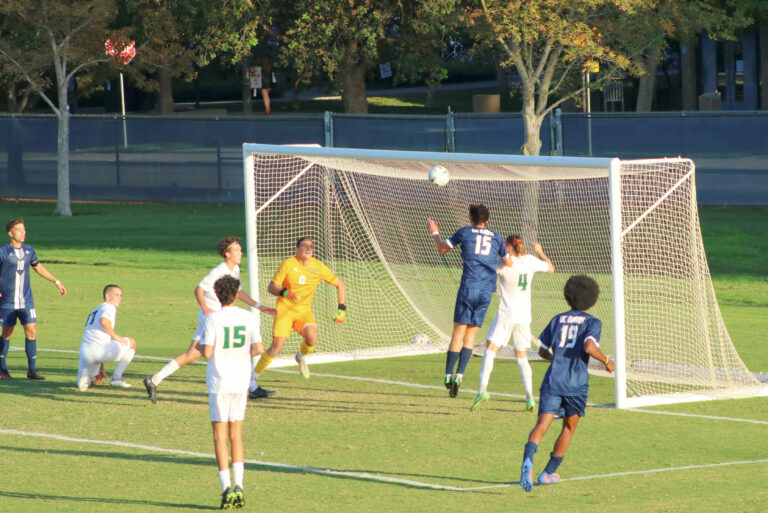
As one of the most well-known UC Davis Division I athletic teams, the men’s soccer team finished out their season with a difficult game against the UC Irvine Anteaters. The game ended in a nail-biting penalty kick (pk) shootout with neither the Aggies nor the Anteaters scoring in normal time or overtime during the game. The shootout began strong with both teams only missing one shot; that was, until Irvine’s goalkeeper Luke Pruter made a crucial save. When it mattered most, his save blocked an Aggie goal resulting in the 8-7 final pk score.
As the first Aggie to take a penalty kick in the game, second-year offensive player Cason Goodman reminisced about that moment in the game.
“I’d taken a lot of PKs in practice,” Cason said. “We really drilled those right before the finals. I knew I had to do exactly what I had been working on in practice. When you walk up there, it’s really surreal. You have to believe in yourself. I shot first and scored, so there was an immediate feeling of relief to set a strong tone for the team.”
Prior to the finals match, the Aggies earned a substantial amount of wins throughout the season — one of the most thrilling being the semifinal match against the Cal State Fullerton Titans. The Aggies emerged as victors having earned the winning score of 2-1. With the Aggies losing to the Titans earlier in the season, the win in this Fullerton game was a chance for the Aggies to show everyone that they were prepared to fight for the championship title.
Even with their immense success against the Titans, the Davis team still had a battle ahead. Cason, the leading scorer on the team this season, described how the Fullerton match provided momentum for the Aggies.
“I took the season one game at a time and after every game, you get more and more excited and [filled with] more belief,” Cason said. “Fullerton boosted us and earned [us] the win. Our coach said this last year, which I agree with, we peak at the right time. Going further into the championship also means new players find a way to score like Scott [third-year Scott Buie]; scoring in the semifinal for his first collegiate goal was incredible.”
Despite the strength the team displayed in the championship matches, the Aggies still underwent some hard losses this season. Nevertheless, the team did a great job of using those losses to fuel their motivation.
“We all knew that the loss or game did not define us as a team and was a building block for us,” Zack Lillington, a second-year offensive player, said. “If we wanted to get the result we wanted, everyone needed to look forward to the next game and we were all confident that we could just build off the loss.”
Lillington had an outstanding season, taking a record number of shots on goal and playing a considerable amount of time even while battling an injury. In the last few weeks of the season, Lillington suffered a knee injury from an on-campus bike accident that resulted in him getting reduced playing time in the finals. Even so, Lillington still played in the final games of the season, keeping the team together and unified.
“[The team is] more of a family than just a team,” Lillington said. “Just coming out and appreciating everyone for what they bring on and off the field is important. It is so much more than just soccer for all of us.”
Second-year defensive player Luke Goodman fought hard on the back line to prevent the Aggies from having any additional losses this season. As a resilient part of the back line, he commented on some of the hardest games for the team this season.
“Sac State loss, Causeway Cup loss and the final conference match senior night were tough,” Luke said, “And then going from there straight into the Cal Poly game the following week in the start of the playoffs was hard. But, many games were tough all season for different reasons that we tried not to focus on.”
The senior night game against the Sacramento State Hornets proved to be a serious challenge for the Aggies as the visitors scored an early goal that would go on to earn them the win. The Aggies held possession for the majority of the game with the help of fourth-year defensive player Ethan Hoard playing on the defense, but were just short of scoring and taking the lead. Hoard, having played for the Aggies for a significant number of seasons, spoke on the team’s positivity and unity.
“Throughout the losses, ties and wins, we still prevailed and got to the championship where our goal was,” Hoard said. “I think bonding is an understatement to say what we did.”
During his first experience holding a captain position for the team, Hoard handled the responsibility well, seeing the Aggies through their ups and downs as they played this season. Hoard highlighted what came with being captain for the Aggies.
“It was a shock how much stuff we had control over, like planning meals and helping with formation,” Hoard said. “But, the most important part was getting the entire team motivated and to listen to what needs or thoughts the players had so we could come together as a team.”
Along with keeping the Aggies motivated and ready for the upcoming games, it’s important for any team, including the Aggies, to have a strong connection and ability to work together cohesively. Luke described how the Aggies went about achieving this team dynamic.
“Team chemistry is important,” Luke said. “Everyone on the team gets along and loves each other. We are all super close as a team which is one of our greatest strengths.”
As the season is officially over for the Aggies, they are all looking forward to next season and working hard to prepare and train for whatever they will have to face. With the team immediately starting off-season training following their last game, they will train all winter long and have a small spring season before returning in the summer for the official season.
For their off-season training, the team practices on the field two days a week and the remainder of the week is spent playing indoor soccer or lifting weights — an intense schedule that should get the Aggies ready for their future games.
Following the end of the season, here is some advice and knowledge from some of the players on the team:
We have a lot of talented younger players and I’m excited to see how they develop, but everyone should use this time to improve their individual game and work on what they are good at,” said Cason.
“I’m looking forward to next season and coming out strong and knowing we had a great team this season and that it will move forward to next season,” stated Lillington. “Also, coming out with the confidence that we know we can win and we know that we can make it to places maybe we haven’t before. I think coming out with confidence is all we need to move forward.”
Luke noted that “coming from being the best one on your team to a group of amazing players can be hard where you might not feel like you fit in. Having the best mentality to handle that is crucial.”
Hoard emphasized the importance of a good mentality.
“Treat every game like it’s your last because sitting where I am now, the time flew and I can’t believe I just finished my last game,” said Hoard. “Play your hardest but also enjoy the games while you’re in them.”
Written by: Megan Joseph — sports@theaggie.org

UC Davis students and staff discuss options for students to become financially literate before entering the workforce
By ZOEY MORTAZAVI — features@theaggie.org
Throughout college, newfound financial freedom and responsibility hit the average student like a truck. Unexplored financial territory quickly plunges students neck-deep into student loans, bills, rent, taxes and plenty of other concepts that have been laid out since they were kids as “far off” or “adult” concepts.
The idea of the “broke college student” is a widely normalized concept, attached to stubborn stigmas announcing that college students have limited financial knowledge and can get themselves into trouble because of it. The question continues to present itself, asking whether anything can be done to begin taking some of these stigmas away. In other words, can college students beat the “financially illiterate” allegations?
Alongside this question, many are beginning to advocate for financial education to not only be an option, but something that will eventually become mandatory for all college students. With many of these unprecedented concepts creeping up on them very quickly, many students at UC Davis have expressed concern for the lack of mandated financial education at the collegiate level.
“If financial concepts are something we start to handle as young adults, it’s crazy that we aren’t taught more about them while we’re still young and in school,” Annaliese Dobbins, a first-year biochemistry major, said. “No one ever really explained how we’re just suddenly thrown into being an adult. It’s scary to feel like I don’t know how money works, and I want to change that. But with a major that has such a high unit count, I have a feeling I’ll struggle trying to fit a finance class into my schedule.”
There are a handful of finance courses offered at UC Davis, many of which can be applied to different majors and general education credits. Many at UC Davis are beginning to promote and discuss the fact that if students can make room for finance classes in their schedules, they should. Utilizing resources like schedule planning and course advisement, students can do research to see whether they can make space for personal finance courses to help them better prepare for their futures.
“Learning about personal finance early will definitely better prepare me for my financial life in the upcoming years,” Aditi Inamdar, a first-year neurobiology, physiology and behavior major, said. “As a student who is making the decision to change to the managerial economics major, taking some of these classes early on and learning finance will definitely help me grow within the business field.”
Professors working in economics at Davis aim to remind students that they should make time to learn about the nuances of the financial world so that it doesn’t creep up on them. Countless organizations and foundations work tirelessly to spread the message that college is a crucial time to become financially literate.
The U.S. News and World Report wrote that in a survey of approximately 30,000 college students from across the nation — coverage of over 440 institutions — only 53% reported that they felt remotely prepared to handle their individual finances.
“On the college side of things, we want to take whatever is taught in high school, if anything, and expand upon it,” Phil Schuman, president of the Higher Education Financial Wellness Alliance and executive director of financial wellness and education at Indiana University — Bloomington, said. “Really provide people a look at what post-college life could look like with what their financial situation may be based on their degree and based on how much student loan debt they may have.”
Many groups, including recent efforts by nonprofits such as Next Gen Personal Finance, have put efforts toward implementing more personal finance course options in the state of California, hopefully being fully mandated by 2029. However, it is a difficult thing to implement at a mandatory level for students. Despite the difficulty, there are many advocating for the eventual mandate of financial education courses for students — their advocacy argues that the payoff will be well worth it for students as they transition from college into their adult lives.
“A good foundation in finance is essential in today’s volatile market,” Jens Hilscher, a UC Davis professor who teaches a principles of finance course, said. “Whether saving for retirement, saving for a down payment on a house, choosing financing options when purchasing a car or when making business decisions, a good foundation in finance helps guide your decision making.”
Hilscher and other professors working in economics at Davis are currently promoting the UC Investments Academy, a program that is free to all students that promotes careers in the financial and economic world. Interested students are offered countless opportunities and resources to enter the financial field, as well as gain exposure to many already working within it.
There are a great deal of opportunities and resources available for students who are interested in learning more about their financial futures. Professors, both here at Davis and all across the country, would strongly recommend that students invest time in learning about one of the most crucial facets of their adult lives.
Ultimately, the idea behind this advocacy is to remember that it’s never too early to start planning ahead and educating yourself about these concepts before they’ve caught up to you.
Written by: Zoey Mortazavi — features@theaggie.org

The fanbase brings the franchise to life through clever theorizing of its animatronics, pizzeria and characters
By ELIZABETH WOODHALL — arts@theaggie.org
The much-anticipated film “Five Nights At Freddy’s” (FNAF) was released on Oct. 27, 2023, almost nine years after the first video game in the series was released in 2014. Although the film seemed to underperform based on critics’s reviews, with one Rotten Tomatoes review describing it as “muddled and decidedly unscary,” this was not the case for fans who were introduced to new lore — and who finally got to see this adaptation come to life.
The movie was initially going to be a Warner Bros. production but was ultimately moved to Blumhouse Productions, a company that is popular for delivering well-performing box-office thriller movies like “Get Out,” directed by Jordan Peele. Emma Tammi took on this project as a director and screenplay writer alongside Scott Cawthon, the video game creator.
Although the first game, “Five Nights at Freddy’s,” was meant to be underground with a smaller fanbase, the game has now seeped into the mainstream culture that has been cultivated by fans who theorize what everything means in the game. For example, some people who grew up hearing about the games learned about the “Bite of ‘87” and then went down a rabbit hole of countless theories of what it all meant.
The game holds a nostalgic element of horror, filled with seemingly nice but dangerous animatronics that haunt the once-popular Freddy Fazbear’s Pizza. The pizzeria was once known for its arcade-style, welcoming (but a little bit unnerving) ambiance. Children went there to have fun, play some games and most definitely not to get terrorized by the animatronics. The animatronics in the first game aren’t too hard to forget: Bonnie, a purple rabbit; Chica, a yellow chicken; Foxy, a pirate fox with an eyepatch and hook and Freddy, a brown bear.
The protagonist in the game is Mike Schmidt, a new night guard who has to make sure that everything stays well-maintained at the pizzeria. During those five nights, Mike has to switch between watching the security cameras and making sure that no one — aka the animatronics — gets too close to his office. Once they get close enough, the player has a few seconds to close the door before Mike gets torn up by the animatronics. Can’t forget about the energy saving, though: the players can only use up so much energy — usually taken up from looking through the security cameras, keeping the lights on and keeping the door closed — until it runs out, ultimately leaving the player without electricity. When that happens, Mike is cornered in his office, left defenseless and gets eaten alive by any of the animatronics who are “free-roaming.” Not too scary, right?
As the player navigates through the different nights, they learn more about the history behind the broken-down building that’s run by these animatronics who are hungry for human flesh.
The movie starts with a night security guard being strapped to a torture device, one that seems to trap him in an animatronic. In a scene that introduced a gruesome and gory death, watchers — both new to the franchises and those who are familiar with the lore — are in for quite the treat. The protagonist Mike Schmidt is forced to take on a job as a night security guard after assaulting someone who he interpreted to be a kidnapper but was actually the child’s father. Steve Raglan, Mike’s career counselor, offers him the job, stressing that it’s not an easy one and most quit after a few weeks. He is desperate for a job after social services threaten to take his sister Abby away from his custody and place her in the hands of her money-seeking aunt Jane. He now has to depend on Abby’s babysitter, Max, to take care of her while he is away at night. This causes a greater strain on their relationship since Mike cannot seem to understand why Abby is so detached from the world, scribbling away with her crayons and imagining a different world.
During Mike’s first night, he has a recurring nightmare of his little brother, Garrett, being kidnapped by a stranger while they’re on a camping trip. Unlike the past nightmares where it ends with him seeing the car drive away, this time, Mike encountered five kids who’ve witnessed it, too. They all run away before he can get his answers. On the second night, Mike falls asleep again with the help of his sleeping pills, but he is awoken by a strange gash. A police officer named Vanessa Shelly appears to aid him. Mike seems to be unaware of the place where he works, so Shelly briefly described that the place closed during the 1980s when five kids went missing, where the suspects nor the victims were ever found.
The audience finally gets to see the animatronics come alive on the morning after the second night. Jane hires a group of people — one of whom is Abby’s babysitter and has been feeding information to Jane — to vandalize Mike’s workplace and hasten the custody. As they trash the place, the group is terrorized by the animatronics, especially with the help of Mr. Cupcake, an animatronic that is small and shaped like a cupcake, resulting in a blood bath. But since Max disappears, Mike is forced to bring Abby to the pizzeria. For someone who is overprotective of Abby, mostly because of the trauma he faced from the disappearance of his little brother, it’s odd that Mike decides to bring her to a place that is known for the disappearance of younger kids.
Nonetheless, he brings her into the pizzeria, falls asleep and is awoken by Abby playing with the animatronics. She seems to connect with them and often communicates through drawings. It is then that the audience sees that they are possessed by the ghosts of the five missing children. As if that weren’t foreshadowing the lurking danger of having Abby there, Mike decides to bring her in again on his fourth night, especially because his brother’s disappearance seems to be linked to the animatronics. It is then that Abby is accidentally injured, and Mike gets Jane to babysit Abby. During that night, Mike finally confronts the little kids in his dreams, and they propose that he can stay with Garrett if he lets them have Abby, who seems to be content when they are around. He initially accepts, but after rationalizing it, he says that he takes it back — but it’s already too late because Foxy attacks him and then he is trapped in the torture device. He manages to get loose, and somehow Freddy, the bear animatronic, kills Jane and takes a cab back to the pizzeria with Abby but the driver doesn’t question it.
Vanessa cares for Mike’s injuries and reveals that she is the daughter of William Afton, the owner of the former pizzeria and the person who kidnapped and murdered the five children, including Garrett. He hid the bodies in the animatronics and captured their souls, which allowed the animatronics to be as realistic as humanly possible — literally. Mike defeats the animatronics, but they are revived by Steve (the career counselor) — actually William Afton — who reappears in a yellow rabbit suit, his signature. Ultimately, he is defeated by the animatronics who are led by Abby’s drawing, showing the truth of what happened to them. Williams’s suit triggers the internal spinlocks and locks him in. As the animatronics drag him off to a room, Venessa, Mike and Abby all make it out alive. As if she wasn’t traumatized enough, Abby asks Mike if they can visit them sometime.
Although many had expectations before going into the movie, beyond the very little knowledge of the original game franchise, the movie was surprisingly entertaining. Despite the many jumpscares and knuckle-cracking that may have distracted viewers, the movie offers a satisfying adaptation to all the passionate fanbase who bring these theories to life, making the franchise all that more enjoyable and terrifying.
Written by: Elizabeth Woodhall — arts@theaggie.org

©2021, ASUCD. Designed by Creative Media.