52.4 F
Davis

Davis, California

Tuesday, December 23, 2025
Home Blog Page 129

UC Davis Graduate School of Management becomes first in the UC system to launch a master’s in management program

The program is intended for students that have an undergraduate degree in a non-business field and do not qualify for an MBA program


By KAYA DO-KHANH — campus@theaggie.org


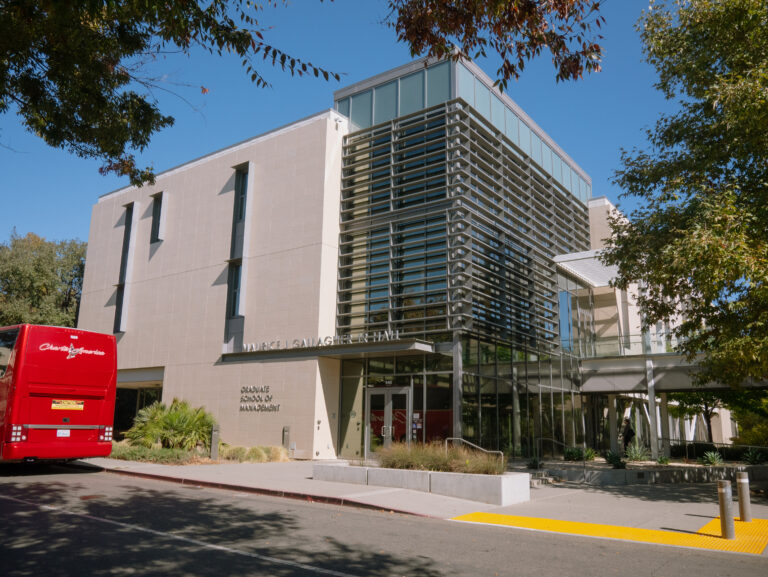
The UC Davis Graduate School of Management is the first school in the UC system to launch a master’s in management program, which will start in April 2024. This is just one of many firsts, as UC Davis was also the first UC school to create an online MBA program in 2019, according to an article from Poets and Quants, a news source that covers matters in the business school world.

The degree program offers a 15-month part-time online version which will start this April and a 9-month full-time program at the UC Davis campus, which is expected to start in fall 2024.

“The ability to take courses both in-person and online is relatively rare for a Master of Management course,” Dean of the Graduate School of Management H. Rao Unnava said. “We provide that flexibility. We are also planning on providing specialization tracks, which is also relatively rare in this type of a program.”

The program curriculum is designed after the MBA@UCDavis program which includes nine courses in the functional areas of business, such as accounting, economics, finance, marketing and strategy. With access to a flexible online option, the degree program will prepare students for the professional world and jobs in the private sector, according to a UC Davis press release. Students will also have the opportunity to meet with the school’s career development team in order to develop a personalized career plan during the program.

“Due to various living arrangements, cost-interferences and other factors, the multifaceted nature of the management program would be extremely beneficial,”

third-year managerial economics major and President of the Davis Accounting Society Misha Chakravarthy said. “It would provide a platform for those with other commitments to continue their career path.”

The program is an option for students who have an undergraduate degree in a non-business field and do not qualify for an MBA program, and there is no work experience requirement prior to the program. The Graduate Management Admission Test and Graduate Record Examination are optional and not required.

“Students can view this as their fifth-year experience, supplementing their learning in their non-business major with a solid introduction to business decision-making,” Unnava said. “Recent graduates, for example those who graduated about three years ago, can use their learning in this program to step into a management track in their jobs.”

The faculty of the program consists of the same faculty that also teach within the UC Davis MBA program. Unnava said that the main goals for the program once it starts in April 2024 is to launch the program smoothly and grow it to at least 200 students.

“Since UCD only offers managerial economics as their version of a business major, I would believe and hold all members of Davis Accounting Society to be non-business majors,” Chakravarthy said. “That being said, I believe that management is a holistic and necessary skill for almost every field and career. For instance, we have a bio major on our board and various economics majors in the club, [and they] would all thrive in a management graduate environment.”


Written by: Kaya Do-Khanh — campus@theaggie.org
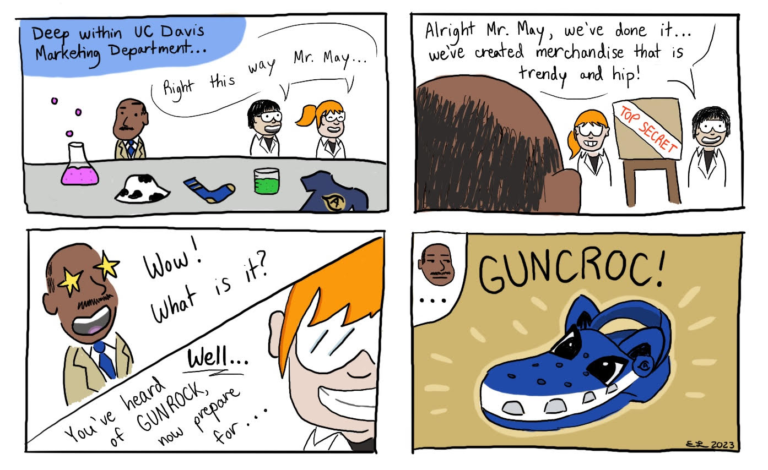
 

Marketing Mayhem: The first step

Drawn by: Emma Lapidus –– eblapidus@ucdavis.edu

Disclaimer: (This cartoon is humor and/or satire, and its content is purely fictional. The story and names of “sources” are fictionalized.)

Advising should be a resource, not a hurdle

Why UC Davis needs to reevaluate the goals of academic advising


By THE EDITORIAL BOARD


You’ve just barely crawled across the halfway line of fall quarter and, before you know if you will actually pass CHE 2A, it’s time to schedule your winter quarter classes. You should probably figure out what those classes are. After compiling a list of options and questions, you go to book an advising appointment because, well, you need advice. Sounds simple enough.

Nice try, loser. There are no appointments available for the next three weeks. Maybe check again in February. If you reach out to your major advising email, you can earn yourself a “Please refer to the website,” the website being a decrepit internet cave featuring course listings from 2018 and the contact information of faculty that are probably on sabbatical. Oh, and they just canceled the class you need for your minor. Good luck with that!

Trying to navigate advising at Davis can often feel like fighting through a snowstorm in flip-flops, except instead of frostbite, you’re going to need to take an extra year. Everyone knows someone with a horror story — an abandoned double major, transfer courses that didn’t transfer or a two-year-long attempt to get into DES 001. College is hard enough as it is, and when the “mandatory advising hold” kicks in, it can seem like someone behind a desk is trying to make your life harder.

The decentralized advising system of the College of Letters and Sciences, for example, requires that students schedule separate appointments for their college requirements and their major requirements. This ensures that you’re speaking to someone well-versed in the topics they advise. However, if you’re a student with two majors and a minor, you could end up with four advising appointments just to make sure you’re on the right track. Oh, and maybe you want to study abroad this summer — there’s another appointment. You’re an ROTC student or a student athlete? Another. With lengthy wait times, your simple query could easily stretch into next quarter.

Also, and we hate to be the ones to tell you this, the resources you’re using to check your requirements without advisor approval are deeply flawed. MyDegree is accurate in the way that asking your ex-girlfriend for love advice is useful: it might be true, or it might be some stuff she just made up to ruin your life. Many of these resources — MyDegree, OASIS, even printed departmental worksheets — are not replacements for an advisor’s explicit approval. While they can be helpful, they can just as easily misguide students who put their faith in the wrong spreadsheet.

Generally, advising at UC Davis is doing more right than it is wrong. Drop-in is a great option for students with simple questions or who just want someone to glance at their schedule. Advisors themselves are typically kind, patient people. It’s not entirely their fault when they misunderstand a situation after advising their fifth student of the hour.

But with something as important as requirements to graduate, there is little room for error. At UC Davis, advising is not being made the priority it should be for an academic institution. It’s ridiculous that some majors list requirements on their website that are at odds with the ones described on OASIS degree worksheets. To value both students’ and advisors’ time, the university should funnel resources into improving this system.

There are simple steps UC Davis can take to defray the hoard of students that stampede toward advising when pass times are released. Every major should have a robust FAQ readily available on their websites. Efforts should be made to encourage students to plan their classes well ahead of time, including by publicizing course offerings by quarter and providing early scheduling workshops.

Naturally, many students will still need to speak to an advisor. Ensuring that all departments are fully staffed proportional to the number of students enrolled is essential. Additionally, too many students have been told something by one advisor just to have it negated by another; advisors should be well-versed in university requirements and in agreement with others in their department.

When something goes wrong on the staff side —- a canceled class, a missed email or a  confused course recommendation —- the advising department should take initiative. Advisors and faculty should work with students to ensure that department confusion or delay doesn’t result in a postponed graduation. Sometimes miscommunication happens, but trusting an advisor or a UC Davis website should never be the reason students have to pay for an extra quarter of tuition.

Hiring and retaining more advisors would streamline the advising process, and not just because staff advisors would be less overwhelmed. Ideally, students would be able to consistently meet with the same advisor throughout their college career. By building a relationship with the student, they could better understand their goals, from career aspirations to intended graduation quarter. Having this knowledge could save time usually dedicated to students explaining their entire academic situation to a new face.

Ultimately, this is what advisors are for: not just fixing scheduling emergencies but actually guiding students through their time at UC Davis. Students from small majors often have this relationship with their advisor, but massive majors like political science and psychology are so jam-packed that students can go four years and six advising appointments without meeting with the same advisor twice. When professors and TAs switch each quarter, it can be incredibly impactful to have a consistent, available point of contact. UC Davis is neglecting a very valuable resource, one that would almost certainly improve student success —- and arguably make the advising role more rewarding.

No student should get an unexpected email after proudly walking the commencement stage telling them “Surprise! You didn’t actually graduate,” but it does happen. Adequate staffing, updated websites and reliable resources are the answer. Supporting advising departments is supporting students.


Written by: The Editorial Board

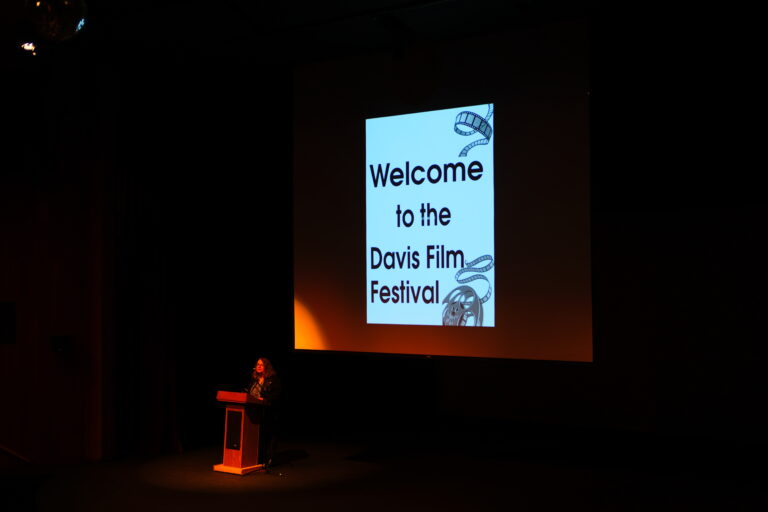
Davis Film Festival back again for its 15th year

0

The event was held Nov. 5 at the Veterans Memorial Theatre and featured a myriad of films


By HANNAH SCHRADER — city@theaggie.org


The annual Davis Film Festival was held from 2-10 p.m. on Sunday, Nov. 5 at the Veterans Memorial Theatre. The festival featured a variety of films, some of which covered issues facing unhoused individuals in Sacramento, the harms of e-waste and bullying and the long ventures of a newly ordained minister.

According to Bazooka, a local vintage Americana musical duo, performed at 5:30 p.m. to provide entertainment to guests during the dinner break portion of the festival. The afternoon section of the festival was intended for general audiences but the evening content of the films transitioned to mature audiences only.

The Davis Film Festival director, Judith Plank, talked about the history behind the film fest as well as the local film scene in Davis.

“When I started in 2003, there was no film festival in town,” Plank said. “And now UC Davis has the Student Film Festival and then the Feminist Film Festival. But still, they just kept short films and small categories. I have feature films, short films, the whole thing — we have the niche.”

Plank has been writing and performing since she was 12. Since then she has won several awards in Northern California. She has experience volunteering for film festivals and has worked with the Davis Varsity Theatre.

“I was a volunteer at a couple of festivals in Berkeley for several years,” Plank said. “I loved it. We’d sit there for hours. You know, you volunteer, but then you sit there and you just watch all these films for hours and hours. It’s really a lot of fun. I was a volunteer for a couple [of] years, then I brought a film from Sundance to Varsity theater in April [of 2003] — and the place was packed. I mean, I packed the entire theater.”

The festival will also likely expand to have a reception and alcoholic beverages in future years as stated on this year’s festival event information page.

“NO ALCOHOL will be sold at the festival this year. (Next year we probably will have wine and beer, along with a reception/party),” the website reads.

This year, the festival gave out two “Audience Awards” for films that came in first and second place. Next year they will also add “Juried Awards.” The goal of the festival is to bring the film lovers of Davis together, according to their mission statement.

In recent years, the film festival also faced delays because of the COVID-19 pandemic and other issues.

“You can’t say this is the 15th annual [festival] or anything like that, because with COVID, nothing’s annual anymore,” Plank said. “But anyway, we’ve been going for 15 years here.”
Laura Luke, a volunteer at the film festival, talked about her experience with the festival over the years.

“It is my fourth time [coming] to the Davis Film Festival,” Luke said. “I enjoy it every time [and] I have volunteered the last couple of times. It’s wonderful meeting the people who have worked on the films and those who are connected to their stories.”

Luke continued to speak about her experience with the local community.

“I also love meeting the people from Davis. I’m looking forward to next year and watching the festival grow along with the audience. Thank you to Judith for letting me be a part of the Davis Film Festival.”


Written by: Hannah Schrader city@theaggie.org


Davis community honors passed loved ones by celebrating Día de los Muertos

This year’s event at Central Park also acknowledged Transgender Day of Remembrance


By CHRIS PONCE city@theaggie.org


Content warning: This article contains discussions of transphobia.


While Día de los Muertos (Day of the Dead) falls on Nov. 1-2, students and Davis residents gathered at Central Park on Friday, Nov. 3 to celebrate the traditional Latino holiday. 

The event was hosted by the Davis Phoenix Coalition (DPC), YOLO Academy and other community groups. The gathering hosted several vendors as well as “ofrendas” (offerings left for deceased loved ones) decorated with marigolds. 

This year’s celebration also featured an ofrenda of transgender individuals who were killed for their identity. The ofrenda was inspired by the upcoming Transgender Day of Remembrance, an annual observance honoring transgender people who died due to anti-trans violence. The observation falls on Nov. 20. 

“I’ve lost a lot of transgender friends and family to violence,” Sol Valdes, a member of the Davis Phoenix Coalition, said. “I have a transgender sibling that I love very dearly. So this holiday to me means celebrating the life of the people that have come into our lives and changed us for the better and showed us that gender can be a spectrum, to be yourself freely and fully and to celebrate the people we lost to that struggle.” 

Valdes has celebrated Día de los Muertos before, but this was the first time she celebrated it alongside Transgender Day of Remembrance.

The ofrenda was decorated with trans flags, marigolds made from paper and photos of more than 20 transgender people who lost their lives. One of the photos was of Sherlyn Marjorie, a Latina trans woman and drag performer. 

“Transgender Day of Remembrance is an annual observation on November 20 that honors the memory of the transgender people whose lives were lost in acts of anti-transgender violence,” a note on the ofrenda read.

MariaIsabel Mandujano, a board member with Yolo County Communicare Health Centers, was tabling at the event and shared the importance of Día de los Muertos.

“This is so important because it’s a cultural event from Mexico and it’s very important to us to [celebrate the event with] this generation and future generations,” Mandujano said. 

Communicare Health Centers offers a grief support group for Spanish speakers every 2nd Thursday of the month from 5 to 6 p.m. The support center is located at 215 West Beamer St. in Woodland. 

“We support the Spanish speaking community when they struggle with mental health issues,” Mandujano said when describing the work Communicare does. 

Rather than being a day of mourning, Día de los Muertos is a day of celebration and honor. The bright orange marigold flowers that are placed on the altars are believed to help guide the souls of the deceased to the ofrendas prepared for them. 

The event was hosted across the street from the “Compassion Bench.” Marigolds and a framed photo were placed at the bench to honor the life of David Henry Breaux, also known as the “Compassion Guy.”  

Mandujano passed out pamphlets that explained the importance of altars and ofrendas on the holiday. 

“The altar is a mixture of ideas of our ancestors, who believe in the permanence of the bonds that kept the living with the deceased, who do not abandon this plane at all and live with the living,” Mandujano’s pamphlet read. “For the ancient indigenous peoples of Mexico, and to this day, death is life and transcendence that translates into rituals such as the offerings of the day of the dead.” 


Written By: Chris Ponce — city@theaggie.org

Protein has been identified that can be ‘switched’ on to activate cancer cell death

The CD95 receptor can be used alongside immunotherapy to kill cancer cells


By KATIE HELLMAN — science@theaggie.org 

Researchers from the UC Davis Comprehensive Cancer Center have identified a way to trigger the death of cancer cells. This new advancement could pave the way for the development of more effective cancer treatments. 

The findings were published in the Nature journal Cell Death & Differentiation, which discusses the epitome, a section of protein that can activate the larger protein, on the CD95 receptor (also known as the death receptor). The subsequent death of cells was observed specifically in ovarian cancer.

Despite its regulatory role and elevated function in ovarian and other solid tumors, another tumor-enriched death receptor called Fas (CD95) remained undervalued in cancer immunotherapy until recently,” the study states.

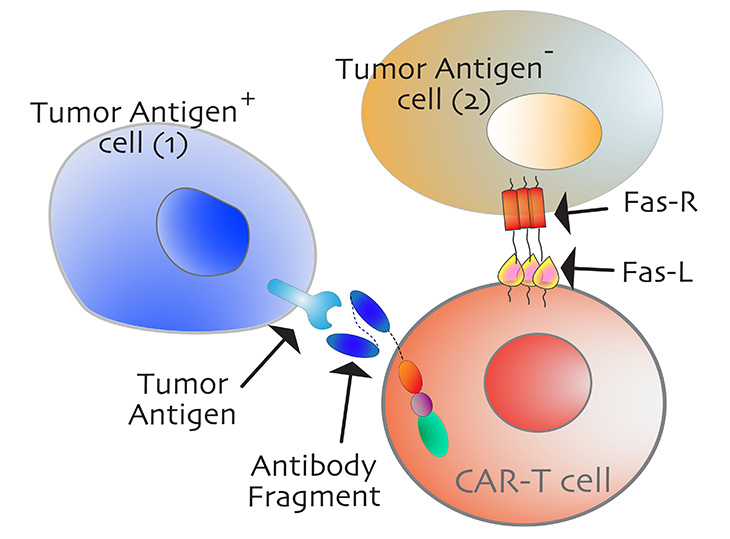
The CD95 receptors are located on cell membranes and release a signal upon activation, causing the cells to die. This new discovery could lead to the further development of existing cancer therapies, such as chimeric antigen receptor (CAR) T-cell therapy. This is a type of immunotherapy treatment that uses genetically modified T-cells (a type of immune cell) to kill cancer cells.

Current cancer treatments typically involve a combination of surgery, chemotherapy and radiotherapy. These can be very successful and allow patients to go into remission, which is when the signs and symptoms of their cancer are gone. However, patients can also relapse after their original treatment, which is why immunotherapies can help — they can be more successful at preventing cancers from recurring. Immunotherapies activate antibodies that allow solid tumors to shrink, although clinical trials are still underway to try and maximize their effects.

Jogender Tushir-Singh, associate professor in the department of medical microbiology and immunology, is hopeful that these new findings will improve the future of cancer treatments.

“This is a definitive marker for bystander treatment efficacy of CAR-T therapy,” Tushir-Singh stated in an interview with UC Davis Health. “But most importantly, this sets the stage to develop antibodies that activate Fas, selectively kill tumor cells, and potentially support CAR T-cell therapy in solid tumors.”

Now that the specific epitome has been identified, Tushir-Singh and other researchers can work on designing a new antibody class that can activate the CD95 receptor. This can also create a CAR-T bystander effect, where cancer cells are killed and CAR-T efficacy increases at the same time.

In bystander killing, “…targeted tumor cells are destroyed along with bystander tumor cells, regardless of whether they express an antigen,” according to an article by hospital network Mount Sinai. 

Written by: Katie Hellman — science@theaggie.org

UC Davis soccer wins their first game in the Big West Conference Championship

A hard battle for the Aggies against the Cal Poly Mustangs


By MEGAN JOSEPH — sports@theaggie.org


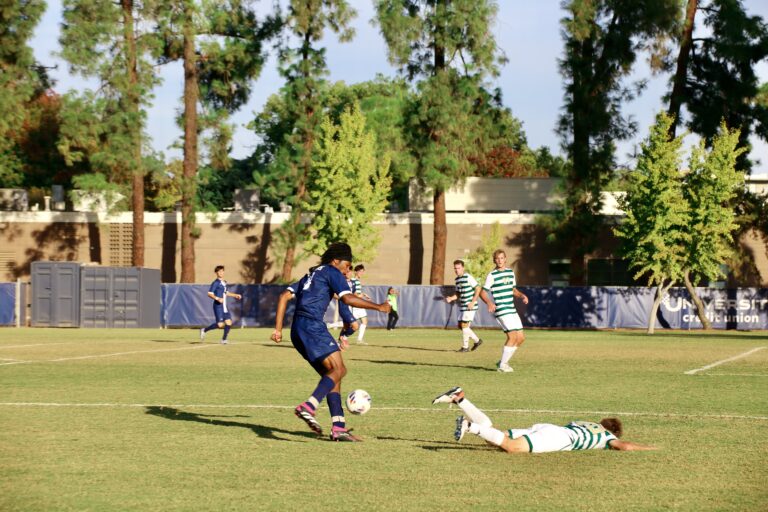
With a packed stadium and an enthusiastic student section, UC Davis men’s soccer had their first game of the Big West Conference Championship on Nov. 1. The game proved to be one of the most thrilling and close games of the season so far with both UC Davis and the opposing team fighting for a victory that would let them advance to the semifinals. In the end, the Aggies could not be stopped as they scored the only goal in the game. 

Tension and aggression seemed to be in the air as both teams were getting called out for many fouls throughout the game. The Cal Poly Mustangs’ very physical gameplay style could not be ignored as they proved to be an aggressive opponent for the Aggies. Nonetheless, the Aggies did a great job at stopping all of the Mustang attacks toward their goal. 

Starting the game off strong, the Aggies held possession of the ball and took numerous shots on the opposing team’s goal. Second-years Cason Goodman, Zack Lillington and Chase Tanon lead the offensive attack against the Mustangs’ defense. Goodman’s many breakthrough runs and passes helped the team take shots on the opposing team’s goal, utilizing his fast sprints and quick movements.

Lillington had one of his best performances of the entire season. He alone took a total of seven shots on the goal, which is the most shots by any Aggie so far this season. At the 11th minute of the game, Lillington had an outstanding breakthrough run that resulted in him taking a powerful right-footed shot toward the top corner of the net — mere inches away from going into the Mustang’s goal. It’s shocking we did not see a goal from Lillington in this game, but we are sure to see one in the future in the Big West competition. 

Tanon became the only player to score a goal in the entire game when he had his starring moment in the 81st minute of the game. A battle in the box, Tanon showed his dynamic footwork and ability to hold possession of the ball as he accepted a pass in the box from fifth-year Ryan Dieter. Tanon then took a touch away from his defender and passed the ball into the lower right corner of the goal, putting the Aggies one goal ahead of the Mustangs. Tanon has shown his true potential on the team with this goal combined with his other two goals in the past four games.  

Not only did the Aggie offense work hard for the win, their defense controlled the entire game with numerous chase downs and preventions to keep the Mustangs from scoring. 

Fifth-year Sean Bilter and fourth-year Ethan Hoard had an important job of maintaining teamwork as they both captained the game from the defense. Third-years Cole Pond and Jason Hsu and second-year Luke Goodman all did a fantastic job on defense as they gave it their all to keep the Aggies from getting scored on. The defense took many strong plays from the Mustangs, but they fired back with some of their own equally powerful plays and did not let the Mustangs score or shoot nearly as many goals as themselves.

Although the defense did a great job at keeping the ball out of their box and goal, fourth-year Chuck Janssen had some outstanding saves against the Mustangs. In the second half, the Mustangs came back from halftime and put up a strong battle for a goal, but that did not discourage Janssen as he stopped every ball that came close to the net. 

Overall, the Aggies had a very exhilarating start to their Big West Conference Championship, and we will hopefully continue to see wins by the Aggies as they advance to future rounds. After this game, it’s safe to say the Aggies will be a hard team to beat in this championship.


Written by: Megan Joseph — sports@theaggie.org 

Upperclassmen give advice on balancing college life, academics and a social life

0

How do first-year students’ expectations of college measure up against experience?


By AMBER WARNKE — features@theaggie.org


Freshmen at UC Davis are currently finishing up their first months of college, and adjusting to a new life away from home. With this comes excitement and anxiety as students face their first midterms, experience holidays in Davis and continue to branch out and join clubs. 

When Gabriel Mojica-Palafox, a first-generation student and first-year animal science major, came to Davis, he was worried he “wouldn’t have friends or find a safe place.” This fear of not finding community is common among first-year students, with many still searching for their group on campus. One thing that helped him was living in the CASA Learning Living Community, which “surrounded [him] with lots of groups of people with similar interests.”

Julianne Nguyen, a third-year environmental chemistry major, had similar concerns going into college. “I was really worried about making friends because going into high school you kind of already knew the people, but going into college I didn’t have any friends that were going to UC Davis with me, so it was really hard to find a community at first.” 

Similar to Mojica-Palafox, finding others with common interests was what ended up helping Nguyen find a sense of belonging. 

“Joining the band really makes finding a community and a friend group much easier… I didn’t join at the start of the year, I joined this time around October, so it was still a struggle … but I feel like the people were really welcoming,” Nguyen said.

For Talia Conn, a first-year sustainable environmental design major, the main difficulty she faced in her adjustment to college life was the workload. 

“I expected less work than I had in high school because I took a lot of APs, I took a lot of college classes, but this quarter… I have way more school work than I’ve ever had in my life,” Conn said. 

Conn said she could have been better prepared for college academics if she had “learned how to check Canvas, because sometimes I wouldn’t see the assignments I had and I would get behind on reading just because I didn’t see it. You’re expected to figure all of that out on your own and I didn’t know how to.”

Mojica-Palafox said that the studying habits required by college courses were difficult to initially develop. 

“In high school, I never needed to study, so studying was a new habit I had to build here. I just recently had my first midterms ever. They didn’t go the way I had wanted them to go but I’m just looking at it from a learning perspective so I can know what I need to work on, how I need to study going forward.”

Nguyen remembers her time adjusting to classes as a first-year and recommends self discipline in forming study habits to other first-year students.

 “Don’t skip classes because it all builds up. It’s important to not cram. You want to make sure you study the material a little bit each day, or every other day. Add your study habits slowly; you shouldn’t expect to reinvent yourself as a student immediately.”

Miles Bardin, a third-year applied mathematics major, has advice for first-years that they wish someone had told them.

 “Go to office hours and utilize the resources that you have. Especially with the lower-division chemistry and physics classes, the weed-out classes that are designed to be hard. If you don’t get help with that by going to office hours, talking to other students, looking at the [class] discord, it’s going to be a lot tougher than it otherwise could be.” 

UC Davis offers free drop-in advising services to all students in biology, chemistry, economics, math, physics, statistics and writing.

Bardin recounted when they first came to UC Davis; “I think I still had to make mistakes and find out how to get in the groove of being an academic weapon and also balancing the rest of my life.” They encourage first-years to avoid academic burnout as they find a balance. “Try not to get all consumed by school… Have fun, that’s half of what college is about.” 

Bardin also noted a difference in the expectations of one’s personal accountability in high school versus college. 

“There is more freedom in college; there’s more freedom to fall off, get out of the loop in terms of doing well academically, or even just doing well in general,” Bardin said. According to them, this is especially true for students experiencing living away from home for the first time. 

“It’s also the freedom to try new things without too great a fear of messing up irreparably,” Bardin said. “In terms of freedom, oftentimes you’ll have lots of flexibility with deadlines. You’ll have to keep yourself adhering to those deadlines so make sure you know how to prioritize what you’re doing, and actually stick to that.”

While first-years are entering the middle of their first quarter at UC Davis, they can continue to build strong habits that can help them throughout their college career. Finding an academic routine that works for them can help students from feeling overwhelmed as they continue to adjust to living in a new environment. 

Similar to academics, socializing is something that many students find takes more initiative and preparation than in high school. On such a large campus, it can be hard to find a sense of belonging, especially when classes change every ten weeks. But clubs and organizations can help with this. Finding a community on campus to plug into can make all the difference to a student’s college experience, with more than 800 groups to choose between. 

Lastly, students can find success in college by finding balance in their lives, prioritizing both academics, extracurriculars and self-care without overloading themselves, which can lead to burn out. Over time, as first-year students continue to adjust to college life in Davis, they can build a happy studious life filled with new opportunities.


Written By: Amber Warnke — features@theaggie.org


Viticulture and enology courses are hands-on, collaborative and prepare you for diverse career options

0

A tight-knit major and its department teach the science behind winemaking and cultivating grapevines 


By LYNN CHEN — features@theaggie.org


Economics, computer science, philosophy, statistics… and viticulture and enology? These are all different majors at UC Davis for undergraduates –– but, what exactly does viticulture and enology offer?

The Department of Viticulture and Enology at UC Davis is well-respected and praised. According to the department’s chair, David Block, Ph.D., members of the department have driven innovation in grape growing and winemaking in California and beyond for over 135 years. After all, campus is only 45 minutes away from Napa Valley, one of the world’s elite regions for wine-growing. In fact, UC Davis has strong connections with wine researchers and producers there as well.

Viticulture is the study of grape cultivation, while enology is the study of wine and the winemaking process. Students taking viticulture and enology (VEN) courses learn about the physiology and growth of grapevines, the world history behind grape growing, the chemistry, microbiology and sensory science of wines, as well as the technologies and chemical processes involved in winemaking.

To some, it may be surprising just how much of a “hard science” the major is, according to Patricia Howe, Ph.D., and lecturer for the Department of Viticulture and Enology.

For instance, the prerequisites for the VEN major include STEM classes that a pre-med student would take as well.

“You take physics, chemistry, biology and statistics,” Howe said. “If you are a scientist, this is a good field.”

VEN majors also participate in hands-on classes regarding wine production, sensory evaluation and wine stability.

“Our department also has a lot of hands-on experience through our laboratory classes,” Ron Runnebaum, Ph.D., an associate professor for the department, said.

Additionally, many students in VEN can also further practical applications of their knowledge through internship and research opportunities. Students may intern at a winery or vineyard over the summer, or travel abroad to famous wine-making regions in countries like France or Italy.

Furthermore, the field of viticulture and enology is an especially interdisciplinary subject.

“This field allows you to make connections across different specialties,” Howe said. “Lots of times, if you’re a biologist, all you do is biology; if you’re a chemist, all you do is chemistry. But, as a winemaker […] you need to be able to draw on all of your education, and sometimes even more. [For example], there’s a surprising number of philosophy majors that are winemakers.”

Equipped with high reasoning and logical thinking skills, philosophy majors can easily draw upon the sciences as viticulturists or winemakers.

“It’s an integration of all of the types of learning that you have and applying it to real world problems,” Howe said.

VEN also goes beyond its subject by employing skills one wouldn’t necessarily associate with STEM majors. For example, learning to use proper descriptive language is just as important as in hard sciences.

“In our class on the sensory evaluation of wine […] a large aspect of that is learning how to describe wines,” Runnebaum said. “Part of the labs [of that class] involve having sensory standards and being able to recognize them and describe them. Not everyone grows up with the vocabulary for wine, so [developing communication skills] is important.”

He stressed the importance of future winemakers being proficient in describing how wine products affect our senses, like taste or smell, in order to improve the quality.

Howe also agreed with Runnebaum’s point stating, “I mean, how many newspapers have a column on engineering, right? A lot of newspapers have a wine column or a restaurant review column, so I think that shows from a day-to-day living and cultural standpoint how talking about food and wine is important.”

The skill of effective communication has always been a useful tool to viticulture and winemaking, according to Runnebaum. Historically, wine grape growers needed to visually examine the plants and articulate their physical features, such as the leaf structure or characteristics of the clusters of berries.

“Now we have tools where one can look and compare the genetic makeup of a grapevine,” Runnebaum said.

In addition, VEN majors have to be able to collaborate well with others.

“A lot of [courses] are not just you working by yourself in a laboratory class, but also [you] working as part of a team. […] You’re developing skills that will be helpful once you go into the [wine] industry,” Runnebaum said.

At UC Davis, VEN students have the opportunity to interact with a diverse group of peers.

“I would say that one of the things that makes UC Davis so special is that there’s diversity, not just from a cultural standpoint, but from a professional standpoint as well,” Howe said.

Because viticulture and enology offers a wide array of job possibilities in the field, making friendships and networking in Davis could lead to connections in the larger winemaking industry and beyond. 

“I have classmates that are college professors now, I have classmates that are winemakers now and I have classmates that left the wine business. There’s a lot of connections from the people I met when I was a student,” Howe said.

Katarina Kent, a second-year viticulture and enology major, shares the same sentiment to Runnebaum and Howe.

“Communication is really big, because anybody you meet you’ll probably end up working with in some way or another in the future,” Kent said.

Viticulture and enology branches to diverse career paths as the industry itself is intricate and complex in its own way.

“You can go into grape growing or winemaking, and the companies that hire a graduate can be everything from a mom-and-pop, two-person tiny winery to a huge international conglomerate,” Howe said. 

Howe furthered that there are even possibilities of specializing which ranges from doing microbiology at an established company, breeding grapes or being an engineer that supports the winemaking equipment and facilities.

Job applicants can also go into the more commercial and business oriented aspects of the industry, such as marketing or human resources.

“I use the analogy of baseball a lot,” Howe said. “You can be a baseball player, but you can also be a coach, a groundskeeper, a bus driver or a physical therapist.”

All in all, VEN majors have the freedom to select future employment opportunities tailored to their interests.

Despite being quite a flexible option, VEN is still one of the more niche majors on campus. However, some perceive this as a benefit.

“It’s a really small major,” Kent said.  “[But] that was kind of something I was looking for.”

Possibly because of its smaller size, the major has a close community.

“The major itself and the community around it [are] quite tight knit,” Kent said. “I’m really looking forward to making connections [with others in the major].”

Wine is a drink of pleasure and studying viticulture and enology is a source of joy for many too. This is true for Kent.

“Hopefully, I can work in a winery one day, be able to make wine and give people the chance to appreciate good wines.”

Written by: Lynn Chen — features@theaggie.org

Senator threatens to file a complaint against ASUCD President at Oct. 26 meeting

The senator’s complaint arises amidst a lack of completion with SR #1, which was supposed to state goals and priorities of ASUCD during the 2023-2024 school year


By LILY FREEMAN — campus@theaggie.org


Vice President Aarushi Raghunathan called the Oct. 26 senate meeting to order at 6:14 p.m. After roll call, she read the UC Davis Land Acknowledgement.

Next, Katrine Lee, a third-year political science and Italian double major, was confirmed as the Judicial Council Chairperson. Julia Miller, a third-year human development major, was then confirmed as the SHAWC Chairperson. 

The senate then moved into public comments. UC Davis Campus Organizer with the California Public Interest Research Group (CALPIRG) Marea Ayala discussed the organization’s primary campaign that they are focusing on this school year. 

“We actually have chapters across every single one of the UCs [University of California schools],” Ayala said. “We’re collectively working to get all of the UCs committed to 100 percent clean and renewable energy. They say we’re the first generation to actually feel the effects of climate change and the last to do anything about it. That’s what we’re doing — we’re doing stuff about it.” 

Ayala said that CALPIRG will be launching their membership pledge drive next week and encouraged both the senate and students to learn more on the CALPIRG website.  

Senator Erek Leschyn spoke next. 

“I want to say this out loud to everyone, but this is also directed at President [Francisco] Ojeda,” Leschyn said. “I know the president is expected to give a State of the Association twice a year. Essentially because SR #1 is where it’s at, potentially setting those goals and expectations for the future of what ASUCD wants to do verbally would be really cool to do before the end of this quarter.” 

SR #1 is an ASUCD Senate Resolution passed at the beginning of every school year to state the overarching goals, priorities and business strategies of ASUCD for the year, according to the language of the bill. This resolution is typically written by the ASUCD President and is passed during the first couple weeks of the quarter. This resolution was discussed further toward the end of the meeting. 

After a break, the Senate saw a presentation given by ASUCD Controller Allyson Francisco and Foodservice Director with the Associated Students Dining Services Darin Schluep regarding developments in the CoHo Beverage Pouring Agreement (BPA).

The CoHo is not a participant in the current BPA with campus, according to the presentation. Francisco and Schluep have been participants in the BPA Working Group to determine whether or not there is value in the CoHo participating in the next iteration of the BPA. 

“Right now, a significant portion of the funds that go [toward] the Beverage Pouring Agreement goes to athletics,” Schluep said. “I’ve been in conversation with [Student Affairs] leadership and we’re all on the same page that we feel like the operators, the ones who are selling the beverages on campus, if we were to participate in something like this, would get a bigger slice of the pie.” 

The presentation said that a vote will be held by the BPA Working Group a week after the senate meeting. This vote will determine which of the three options UC Davis will decide on in terms of signing another BPA: go out to bid for the BPA, negotiate new terms based on the Berkeley BPA — which will adjust to reflect UC Davis sales volume and marketing opportunities — or participate in no BPA at all. 

“If you all say that you still do not want anything to do with Pepsi from an exclusivity agreement perspective, then we can continue to do status quo,” Schluep said. “But I wanted to put out what some of our options are as we move forward.” 

Schluep said that the terms for the CoHo participation in any BPA are a significant ask. 

“We would be gaining a lot,” Schluep said. “I’m kind of skeptical that they will accept it to be honest with you, but I would at least like to put [my] foot forward and represent our interests to the best of our ability.” 

Schluep concluded by saying that if the CoHo’s terms are rejected, then the CoHo would continue to refrain from joining any BPA. 

Following the presentation, Senate President Pro Tempore JT Eden suggested that the senate write a resolution to reflect the table’s updated perspectives on the matter. 

Next, the senate unanimously passed an Emergency Senate Bill, which would allocate $3,118.91 to KDVS for 15 students to attend the University of California Radio Network Conference from Nov. 3 to Nov. 5. 

Then, second-year computer science major and Unit Director for the Innovation and Research Lab (IRL) Shrey Gupta presented IRL’s quarterly report. 

Gupta said that IRL is still in the process of hiring for positions in both the software development and research and data areas. He highlighted that IRL’s goal for winter quarter 2024 is to be in full operation, with both of their branches being fully staffed and actively pursuing projects and collaborations.

Following this presentation, the senate moved on to consider old legislation. 

SB #8, which establishes the Equitable Parking Initiative by allocating $12,500 for parking subsidies and by establishing the Equitable Parking Oversight Committee (EPOC), passed unanimously.

SR #1 was then considered.

While the bill was authored by ASUCD Vice President Raghunathan and co-authored by ASUCD President Francisco, SR #1 has historically been introduced and written by the ASUCD President. 

“This is my best attempt at writing the goals and priorities and business strategies,” Raghunathan said. “I know there is a lot missing, but I really tried.”

“The untimeliness, lack of communication and transparency on SR #1 is an injustice to the students we represent,” Antonio said. “It is so disrespectful to everyone who has taken the time and effort to contribute or comment on this resolution that this has not been finished […] To my knowledge, this priorities resolution may be formulated and introduced by the President on week one of fall quarter. It was introduced, but it is incomplete.” 

Antonio then said that when ASUCD members have offered support in creating this resolution, there have been no follow-ups or communication as to how this resolution can be finished. 

“I’m sure we all understand that everyone is busy and has a lot of things to do, but saying this as a reason for the resolution being incomplete shows students that this is not a priority for them, despite this literally being the priorities resolution,” Antonio said. “It’s week four, and it’s not even 15 percent done.” 

Antonio went on to discuss the edit history of the document. 

“There have been extensive comments and suggestions for commission members and members of the legislative branch, while only a single space was made by President Ojeda,” Antonio said. “What does that say about our priorities as an association and our commitment?” 

Ojeda responded. 

“I apologize to all of the commissioners, commission chairs and the senators,” Ojeda said. “You all have been very understanding and I appreciate that […] I do understand the frustration.”

Ojeda went on to say that he is going to “fix the situation.” 

Antonio responded. 

“Just given the track record of what has been said and the commitments of making sure that it has been done, words mean nothing without action,” Antonio said. “This is just for full disclosure and I do not want anything to be under the rug, but if no progress is seen [on] SR #1 by Tuesday, I’ll file a complaint to JC [Judicial Council] on how this is not constitutional. I think we just need to hold ourselves accountable for the work that we do to make sure that this doesn’t happen again in future administrations.” 

Executive Affairs Commission Chairperson Daniel Mojica spoke next. 

“Thank you President Francisco Ojeda for apologizing,” Mojica said. “I also think the IVP [Internal Vice President] deserves an apology, only because this whole time she’s been at the front of this and we’ve been thrashing her for it. I just don’t understand why the IVP was given all this responsibility even though it’s supposed to be coming from you, our leader, the person who is representing not only us, but this entire campus. We know you have a lot of obligations, it’s just that you put yourself in this position of representing so much money and so many students. The fact that we can’t put together a single piece of legislation that sets out the goals for us as a body concerns me for the future.” 

Vice President Raghunathan elaborated. 

“I know SR #1 right now, as it stands, is trash,” Raghunathan said. “But I also know that I wrote the entire thing and I just feel like over the past few weeks, my personal reputation has been ruined because it looks like I messed up SR #1. I wanted to make sure that no one hates me and thinks it is my fault because I really tried […] I just wanted to say that this is not the [IVP’s] job. This is not my responsibility. I was trying to help. I was trying to cover. SR #1 is a big thing and it’s not my big thing.” 

Raghunathan went on to say that she feels as though many of her efforts have been diminished and the way people have talked about her work so far has been unsuccessful.

After more discussion, the senate agreed to table SR #1 until the next meeting. Raghunathan then adjourned the meeting at 11:30 p.m.


Written by: Lily Freeman — campus@theaggie.org

Culture Corner

The Art Desk’s weekly picks for movies, music and more


By SONORA SLATER — arts@theaggie.org


Book: “The Scorpio Races” by Maggie Stiefvater (2011)


It’s November. Do you know what that means? It’s time for my fourth yearly reread of “The Scorpio Races.” Maggie Stiefvater’s 2011 novel was made for this month, both because it matches the atmosphere of damp mornings and shorter days and because the story is set during the annual November horse races on the coast of the fictional Scorpio Sea. Returning champion Sean Kendrick goes up against Puck Connolly, the first girl to ever enter the competition, and both of them have something to lose if they don’t come out on top. The stakes are high and the suspense and vibrant characters in this cozy read will keep you turning the pages as the fall leaves blow away outside your window (and yes, they fall in love).


Album: “Stick Season (We’ll All Be Here Forever)” by Noah Kahan (2022)


This album is going to absolutely demolish my 2023 Spotify Wrapped — as it should, because Noah put some sort of magic into these songs to make them continue to hit so hard even after 12,000 listens. The title track, “Stick Season,” perfectly captures the heartbreak of wishing you could turn back time to take back the version of a friend or a lover that you had before time and complications tore you apart, and turned them into someone you can only miss. And the melancholy but oh-so-hopeful “You’re Gonna Go Far,” was written for people from small towns full of people they love, but who have dreams that take them further than the country roads that once marked the journey home.


I could go on, as I’m sure you can tell. But to me, the most beautiful thing about this album is the way that the lyrics mean so many different things to different people. These songs have resonated with me so deeply in one way, but I hope that when you listen to it (yes, when, not if) they take on a unique meaning for you, and you can carry the words with you the way I’ve carried them with me.


Song: “Evermore” by Mom Cars (2022)


I know, I know, you thought I was going to talk about “folklore’s” oft-neglected sister album. That “evermore” is also a masterpiece, but I’m here today to talk about the song by Mom Cars, a four-person indie/alternative rock group from our very own Sacramento area. Disclaimer, the band started at my high school for our February 2020 talent show, so I’m a little biased. They currently have an EP and an album, “Colder,” out on Spotify and Apple Music. “Evermore” is a single that was released separately in 2022, and while I love “Colder,” I keep coming back to this song, both because of the way it was tailor-made to be played at full volume in the car and because of this line that I’ll never get over: “The truth is, you’re no longer stuck in my head.”


TV Show: “Firefly Lane” (2021)


Looking for your next show to binge at 2 a.m. with your roommate while a single tear leaks out of your eye and you contemplate the significance of female friendships and the fleeting but meaningful nature of childhood connections? Look no further.


“Firefly Lane” is a two-season show based on the novel of the same name that follows the friendship between two women, Kate Mularkey and Tallulah “Tully” Hart, from their childhood as neighbors in the Seattle area, to their mid-twenties as reporters in a local broadcast news station together, to their 40s, when they’re well-established in their lives and careers. It weaves together stories of first love and marriages, celebrations and arguments, missed connections and second chances to tell a beautiful story about how friendships can change our lives, again and again.


Written by: Sonora Slater — arts@theaggie.org  

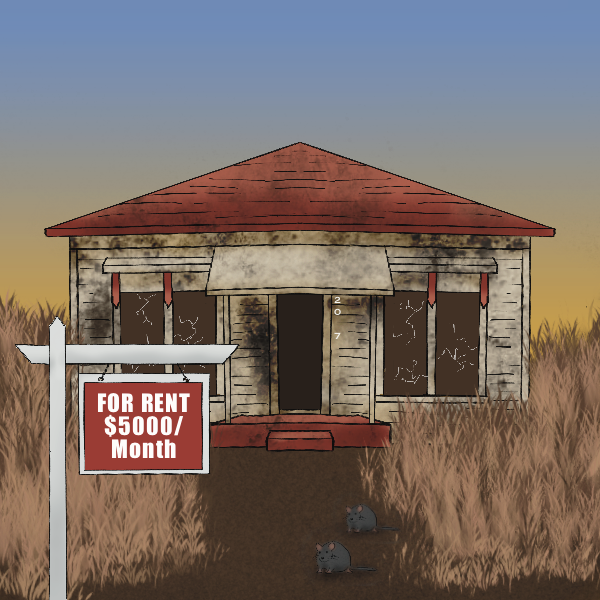
Off-campus students speak on the Davis housing crisis, price jacks, ant attacks and outdated shacks

Good and fair-priced off-campus housing is hard to come by according to statistics and students


By FAITH DEMEULENAERE — features@theaggie.org


Navigating the realm of off-campus housing poses a lot of challenges for the majority of students, packed with an array of hurdles. 

These obstacles encompass complex financial considerations, perplexing regulatory constraints and even potential legal transgressions, casting an unsurprising shadow over the experiences of first-time renters. 

This issue is particularly salient among students whose eagerness to secure proximity to campus makes them susceptible to occasional exploitation.

According to the UC Davis Housing Vacancy Report of 2021, “…the average rental rate for all units was $2,034 per month. This represents a 4.7 percent increase over 2020, when the average rental rate for unit-leased apartments was $1,943. This rental rate increase is above the 2.2 percent increase recorded between 2019 and 2020, but is comparable to historical annual rent increases, which range from four to nine percent per year.” 

The article also stated per person, rent averaged around just under $1,100 a month. This does not account for anything besides rent, such as utilities, parking, gardening services or Wi-Fi charges. It is estimated that these additional charges can cost anywhere from $50 to $150 per month per person.

According to the Vacancy Report shown above, four plus bedroom units are the most likely to be vacant in Davis by a large lead.

According to most housing websites provided by the Most Affordable Housing in Davis page from the localwiki, four plus bedrooms units seem to be the cheapest in singular and shared bedroom types. Even upon looking at the current rates from one of the various apartment complexes from that list, the cheapest option for a shared bedroom, meaning two people occupying one room, is $884. 

According to the UC Davis Housing Vacancy Report of 2010, a student could get an entire studio apartment for an average of $787. Since the cheapest option of 2023 was roughly $884 for a shared bedroom in a house of more than four people, when compared to 2010, a student would be paying only about $283 for the same thing.

In a span of a little over 10 years, what a student could once afford with the same amount of money has shrunk drastically. 

With this drastic price change, have any of the housing options gotten better? Better yet, have most of them even been refurbished since 2010?

“My maintenance man had to come to fix my heater and openly told me it was from the 70s,” Jessica Young, a fifth-year political science major, said. “I pay a little under $1,800 for a studio apartment. […] I’ve had friends who haven’t had a stove, oven, no free laundry or parking spaces, bug infestations, you name it. They are all still paying over a grand every month.”

Anna Bronstein, a third-year psychology major, brings safety into question when considering certain housing options in Davis, “We had someone going door to door, trying to unlock every door and break in. They [landlords] didn’t even install any sort of safety features or cameras for a while. When they did, it was a singular camera pointing at, like, one spot out of the entire [apartment] complex.” 

Many students could agree that the high pricing of off-campus housing does not always guarantee safety or a number of amenities.

 With that in mind, when students are considering renting they should always know their renter’s rights, research the property management or landlords, always alot room in budgeting outside of rent for amenities and have a mental list of what they value as a renter. Which, according to Young, can sometimes come down to valuing having a dishwasher over having your own bedroom: “You just have to pick your battles.”

Written By: Faith DeMeulenaere — features@theaggie.org

Davis events happening in November

Fun events that will get you through midterms and distract you amidst the winter depression 


By LORENA ALVAREZ — arts@theaggie.org​​


As we move into the colder season, finding the motivation to participate in activities outside of school work can seem challenging. Luckily, the university as well as the Davis area offers many opportunities to socialize with your peers and Davis residents amidst the brisk weather.

Many events are happening this November that will help get you in the holiday spirit and immerse yourself in the Davis community. For more information and events near you, visit allevents.in and for events specific to UC Davis, see the UC Davis Event Calendar.

The Davis Food Co-op, a grocery store owned by Davis locals, offers organic and local food. This store was established because of community members’ goal to foster sustainability and access to​​ “healthful, local and high-quality food.” The Co-op welcomes members to join them in their establishment, whether that be through joining the team or supporting them by shopping locally and attending the events they host to connect them to the community. The Co-op hosts many cooking classes throughout the year at the Teaching Kitchen, including an upcoming Thanksgiving Sampling Event on Thursday, Nov. 9 from 5 p.m. to 7 p.m. (you must sign up for a 30-minute time slot). For five dollars per person, you can sample some of their Thanksgiving entrees and sides. While it is not a cooking class, they will be advertising the food they will be featuring for the holiday and giving customers the opportunity to sample and pre-order their Thanksgiving dinner.

The Middle Eastern, North African and South Asian (MENASA) Student Resources Center is hosting a coloring and coffee session on Nov. 9 to help students destress during midterm season. The event is taking place in Meeting Room D at the Student Community Center from 6:00 p.m. to 7:30 p.m. They will be providing snacks, coffee and coloring supplies. All they ask is that students join them in this community-building event and RSVP at RSVP | Chai Chat: Coloring and Coffee or at menasa.ucdavis.edu.This event is an excellent opportunity to meet new people and take a much-needed break from studying. 

The Cross Culture Center is hosting a festival on Nov. 18 from 3 p.m. to 7 p.m. at the UCD East Quad to showcase the Asian and Pacific Islander and Middle Eastern North African and South Asian (AandPi x MENASA) culture. The festival will feature activity booths, art and food to “shine light” on a few of the cultures that make up UC Davis’ population. Don’t miss out on this opportunity to enjoy and learn more about your culture and or other cultures. 


Throughout this month, Davis International House is hosting Stan Padilla’s “Presente en el Sagrado Azul” art exhibit. The event is funded by generous donations and thus available to the public for free. Stan Padilla is a multi-media artist, educator and social activist. Padilla is a member of the Royal Chicano Air Force, an artistic collective based in Sacramento which was initially called the Rebel Chicano Art Front. 

“Initially named the Rebel Chicano Art Front, the RCAF was founded in 1969 to express the goals of the Chicano civil rights and labor organizing movement of the United Farm Workers,” according to the Royal Chicano Air Force Archives website. Through his art and published children’s books, the Yaqui artist illustrates ancient myths and legends. Those interested can also learn more about Native American values and teachings through Padilla’s children’s books: “Dream Feather,” “Deer Dance: Yaqui Legends of Life,” “Chants and Prayers,” “Yaqui Coloring Book: A Yaqui Way” and “A National Education: Native American.”

Written by: Lorena Alvarez — arts@theaggie.org

Students For Justice in Palestine host walkout and rally on Oct. 25

The walkout on the Wellman lawn was dedicated toward protesting the conflict in Gaza and Palestine and the rally was aimed at calling out administration 


By KAYA DO-KHANH — campus@theaggie.org


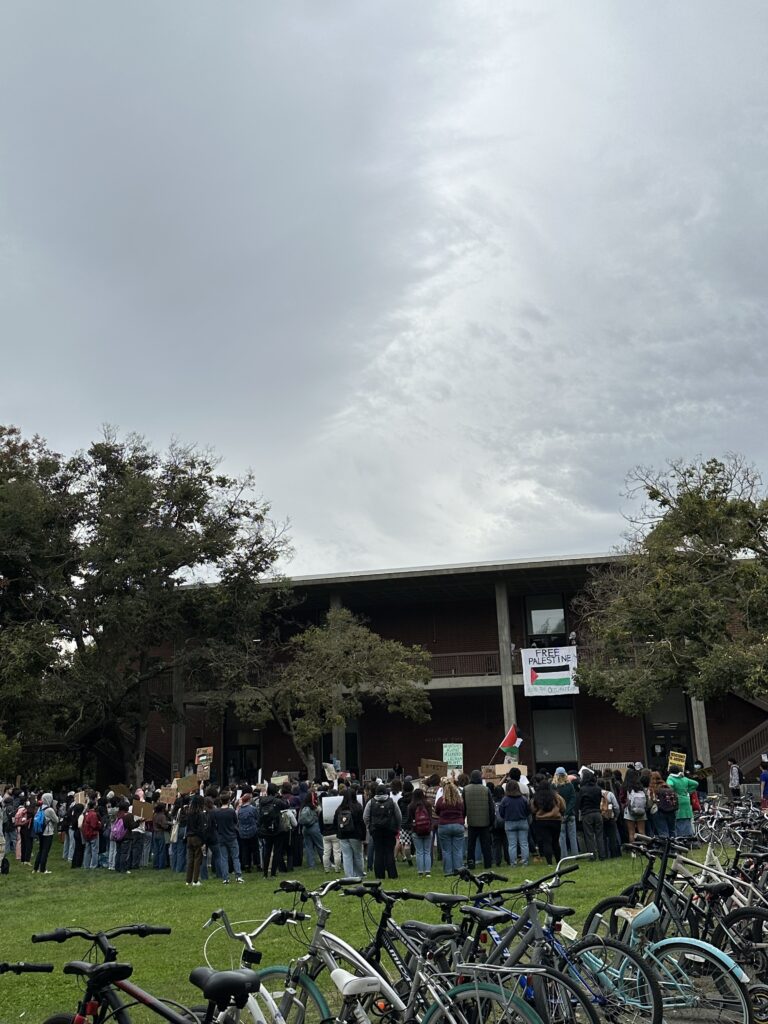
On Wednesday Oct. 25 at 12 p.m., the Students For Justice in Palestine (SJP) club at UC Davis hosted a walkout and rally on the Wellman lawn to protest the recent siege on Gaza. The walk out was dedicated toward protesting the conflict in Gaza and Palestine as a whole. According to a post on  SJP’s Instagram, the rally was held to “call our administration for their complicity in the genocide.” 

Draped with the black-and-white Palestinian keffiyeh scarves over their faces, a number of students walked out onto the Wellman lawn carrying signs that read “Free Palestine” and “No Justice No Peace.” Another sign read, “This law student doesn’t want to work for people that turn a blind eye to genocide.” 

Before the rally started, a member of SJP told the crowd to grab the free lunch that was provided which included lentils and water from tables set up at the front of the lawn. 

They were also handing out free masks as he told the people gathered on the lawn, “I really recommend covering your face because we are being surveillanced by UC Davis organizations and police.”

A group of students hung a large banner from the front balcony of the second floor of Wellman Hall with a drawing of the Palestinian flag along with writing that read “Free Palestine End The Occupation.” 

At 12:30 p.m., a speaker from SJP went to the front of the lawn with a bullhorn, gave a speech and led a series of chants, such as “Free, Free Palestine, Israel, Israel go to hell. Colonizers we don’t need them, what we want is total freedom.” People were waving the Palestinian flag and beating a drum. The students also chanted, “Up, up with liberation, down, down with occupation. Biden, Biden you can’t hide, we charge you with genocide [..] “Gary May, you can’t hide, we charge you with genocide.” 

There were flyers posted outside of Wellman Hall that had a picture of Chancellor Gary May that read in print, “Gary May sits on the board of Leidos, a defense company that works with the Israeli Ministry of Defense and the Israel Airport Authority […] Next time Gary says he rejects violence and hate, ask him if that includes all the refugees he’s helped murder.” 

The “Eye on Mrak” and “Bookhead” campus egghead statues were also graffitied with the words “Free Palestine” in black on Wednesday and were cleaned off on Thursday morning. 

“We have been overwhelmed by the amount of support we have received these past weeks at all of our events,” a caption on one of SJP’s Instagram posts said. “There is so much strength in numbers, and we never thought we would reach a point where our numbers reached this high. […] Our fight for liberation is nowhere near over, and we will not stop until Palestine has been freed. Palestine will be free by the people, for the people. Don’t stop showing up, don’t stop speaking, and never stop fighting.” 


Written by: Kaya Do-Khanh — campus@theaggie.org

 

People for Bikes ranks Davis No. 1 city in California for bikeability

The city of Davis was also ranked No. 7 nationally based on several factors


By ALMA CULVERWELL city@theaggie.org 


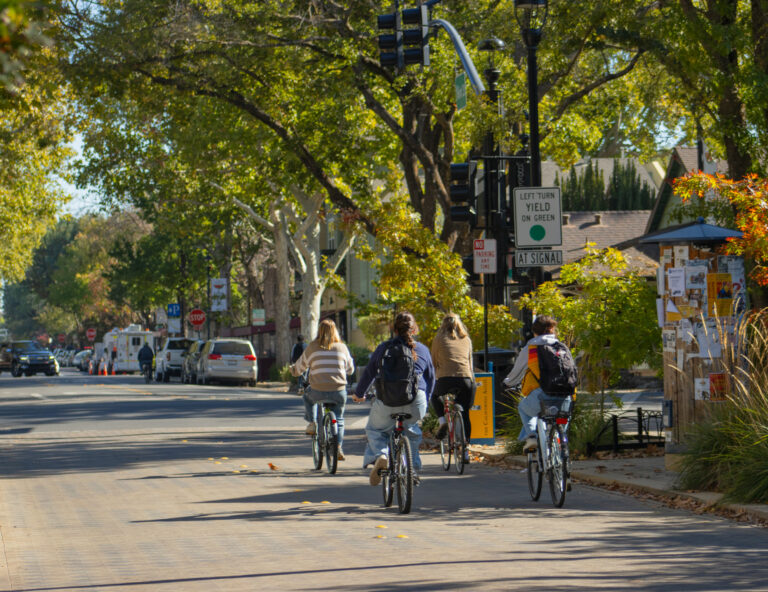
People for Bikes, a cycling coalition founded in 1999, recently ranked the city of Davis as No. 1 in the Pacific Region, No. 1 in California and No. 7 in the US for bikeability, with an overall network score of 77. The city of Davis was previously given a network score of 27 in 2022. 

The city rankings are based on several criteria, including speeds, protected bike lanes, reallocated space, intersection treatments, network connections and trusted data.

Rebecca Davies, city ratings program director for People for Bikes, described how the city rankings were decided. 

“Our City Ratings is based on an analysis of data from OpenStreetMap, which is an open map of the world, like Wikipedia but in map form,” Davies said via email. “We analyze every road or path in the city to determine if it is good for bicycling based on factors like the speed limit, dedicated bike infrastructure, and safe intersections. Then we assess whether someone could travel from where they live to nearby destinations using only streets or paths that are good for bicycling. That calculation is repeated over and over across the city to create an aggregate score on a scale of zero to 100 for the entire city.” 

People for Bikes originally started their city rankings in 2018, where the city of Davis got an overall score of 72. Davies talked about the thought process behind the implementation of releasing the city rankings.

“We needed a way to measure whether cities were making progress towards building safer streets that enable people to bike safely and comfortably from where they live to where they need to go,” Davies said in the email. “Before the City Ratings, we only had anecdotal evidence of progress, so we didn’t really know which cities were succeeding and which remained stagnant. Now we can identify cities that have progressed the most, cities that are moving fastest, and cities that lag behind, then use that information to advocate for more investments in safe bike infrastructure.” 

Davies explained that the city rankings measure the level of safe bike infrastructure and encouraged the city of Davis to improve its bike network. 

 “Davis is an expensive place to live. Very few people will ride a bike more than three or four miles in one trip, so they need to be able to afford to live close to the places they want to go, which means Davis and other cities need to build a lot more dense housing in walkable, bikeable communities,” Davis said in the email. “Additionally, investments in bike parking, bike share and e-bike charging all help accelerate bicycling.” 


Written By: Alma Culverwell city@theaggie.org