55.7 F
Davis

Davis, California

Monday, December 22, 2025
Home Blog Page 13

Your environment impacts the quality and ease of your sleep

Do cooler temperatures and less daylight make you feel tired? Your circadian clock may be shifting due to environmental cues

By KATELYN BURNS — science@theaggie.org

October has come to Davis. With cooler temperatures and less daylight, it’s natural to feel more tired. Your body’s internal clock, called the circadian clock, takes cues from the environment to help you stay alert in the day and sleep at night. Environmental cues, like light and temperature, reinforce or reset your circadian rhythms. 

When you wake during the day, the light sets your circadian clock. However, if you wake during the night and turn on lights — including your phone’s light — your clock resets and can interfere with sleep. 

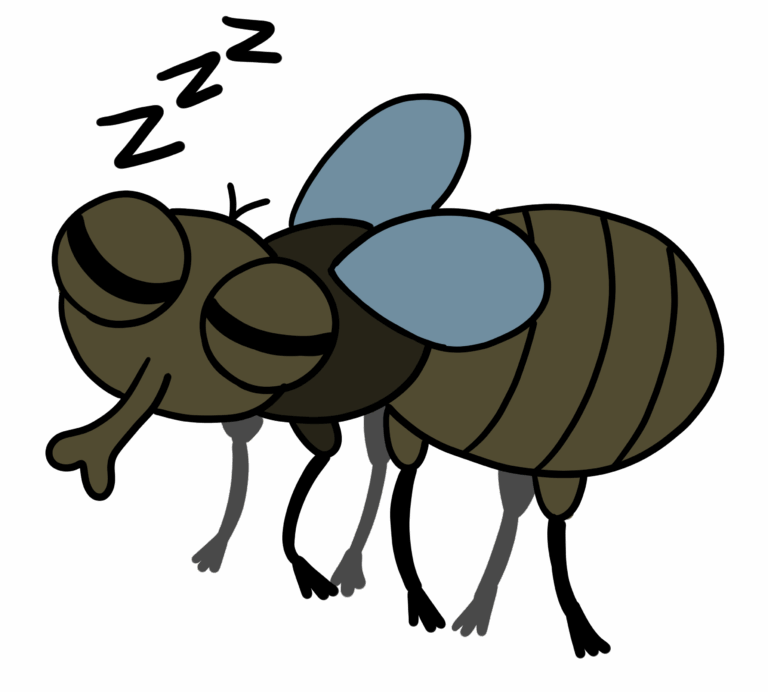
Fumika Hamada, a professor of neurobiology, physiology and behavior at UC Davis, uses flies to study temperature and better understand circadian rhythms.

“Temperature is also able to set the clock, [which is] one of the reasons we have body temperature rhythms,” Hamada said.

Humans and flies heat their bodies differently. Humans generate heat from their own energy because we are endotherms, whereas flies heat their body using the environment because they are ectotherms.

Flies are smaller and easier to manipulate, which makes them useful models in science. Additionally, ectotherms allow researchers to observe behavior to monitor body temperature changes, since ectotherms use the environment to heat their bodies. Flies have a similar body temperature rhythm to humans, which makes them a useful tool when creating comparisons. The results from such studies could then be used to find treatments for various sleeping disorders.

“The circadian neuron system receives temperature signal(s) and integrates this information with circadian information to orchestrate suitable behavioral responses,” a PubMed article reads.

Other ectotherms seen commonly around Davis are lizards. During the day, lizards are often visible in the sun absorbing heat, which increases their body temperature. During the night, they disappear. Their temperature preference rhythm is observable via their behavior.

Despite differences in heat production methods, both the body temperatures of flies and humans cycle from low in the mornings to high in the evenings, making flies an ideal model for studying body temperature rhythms.

“The temperature decrease is an important cue for the onset of sleep,” Hamada said.

You can help cue the onset of sleep using methods like lowering the thermostat temperatures at night or showering before bed to lower your body temperature. With cooler temperatures and less daylight, working with your circadian clock is essential to staying alert in the day and getting enough sleep at night. 

Written by: Katelyn Burns — science@theaggie.org

England conquers Canada in Women’s Rugby World Cup final

0

The 33-13 win gave England their third championship

By COLINA HARVEY— sports@theaggie.org

The first Women’s Rugby World Cup took place in the early 90’s, an era that also saw the start of other women’s sports organizations and events such as the Fédération Internationale de Football Association (FIFA) Women’s World Cup and the Women’s National Basketball Association (WNBA). 

Over 30 years later, the popularity of women’s sports, including women’s rugby, is booming. This year’s Women’s Rugby World Cup final drew 5.8 million television viewers, making it the most-watched rugby game this year and the most-watched women’s rugby union game of all time.

The match was held at Twickenham Stadium in England on Sept. 27. The stadium boasts a capacity of 82,000, making it the country’s second-largest stadium after Wembley. In front of a crowd of 81,885 fans, England and Canada faced off in an exciting match. 

The enthusiasm around women’s rugby has also been rising in the United States, thanks to the celebrity status of their star player, Ilona Maher. Maher gained traction on her social media platforms during the 2024 Tokyo Olympic Games, and has since become one of the biggest names in women’s rugby. 

Despite her stardom, the U.S. still has a lot of work to do in order to become a women’s rugby powerhouse. In the group stage of the tournament, the squad faced a defeat against England in their first game. While they went on to draw against Australia and beat Samoa, it wasn’t enough to advance to the knockout stage. 

The host country, England, was a clear favorite going into the tournament. They made easy work of their opponents during the group stage, beating the U.S., Samoa and Australia handily. 

Coming out of group play and into the knockout stage, England could not be stopped. In the quarterfinal, they beat Scotland, blocking them from scoring a try until the 82nd minute — with England having six tries total. 

In their semifinal, England played France, yet another team that was no match for them. In the quarterfinal, France was able to narrowly defeat Ireland; however, France was not able to keep their tournament run going once it faced England. The first half of the match stayed close between the two teams. However, in the second half, England was able to create separation and ultimately beat France 17-35, securing their spot in the final. 

Canada also dominated most of their opponents in the tournament. In group play, they had comfortable wins over Fiji, Wales and Scotland. In their quarterfinal match, they crushed Australia 46-5. 

In order to punch their ticket to the final, Canada had to defeat New Zealand in their semifinal match. Although Canada and New Zealand are ranked similarly in world rankings, some fans viewed Canada as an underdog because the New Zealand women are six-time winners, as well as back-to-back reigning champions. 

However, New Zealand’s strong reputation did not slow Canada down. They got off to a quick start and stunned New Zealand with two tries in the first 11 minutes. Although New Zealand responded with three tries throughout the game, Canada remained the dominant team throughout the match, which ended with a score of 34-19. 

Going into the final, England was heavily favored. However, no one could deny Canada as a strong contender for the championship. Only three countries, the U.S., New Zealand and England, have ever won the Women’s Rugby World Cup, with Canada looking to add itself to the roster. 

As the match kicked off, Canada opened with a try scored by Asia Hogan-Rochester and assisted by Fabiola Forteza, in just the fifth minute. Although Canada was able to score early, England’s Ellie Kildunne responded by scoring a breakaway try just a few minutes later. This was followed by two more tries by England’s Amy Cokayne and Alex Matthews, resulting in England leading 21-8 at the half. 

In the second half, Canada tried to fight back and close the gap, with a second try from Hogan-Rochester. However, England’s defense proved to be too strong for the Canadians, as they were unable to score a third. England outscored Canada in the second half as well, with tries from Abbie Ward and Matthews. The match ended 33-13, with England being crowned World Rugby Champions.

After being runners-up in the past two World Cups, finally clinching the win was extra meaningful to the England team. The Rugby World Cup 2029 will be hosted by Australia, with 16 teams fighting to take the reigning champion title away from England. 

Written by: Colina Harvey — sports@theaggie.org

UC Davis football defeats Weber State in 34-12 game

Offensive fireworks propel the Aggies to a 3-1 start to the 2025 season

By THEO KAYSER — sports@theaggie.org

On Sept. 27, the UC Davis Aggies’ football team hosted the Weber State Wildcats for their fourth game of the 2025 season. The Aggies’ strong start to the year continued, as they walked away having seized victory in dominant fashion, 34-12. 

The Aggies’ high-powered offensive performance began methodically, as the game’s first quarter saw neither team score any points. The first notch on the scoreboard came by way of a Weber State field goal three minutes into the second quarter.

After a scoreless first 23 minutes of the game for the Aggies, the floodgates finally burst after Quarterback Caden Pinnick, a second-year international relations major, reached the endzone on a two-yard goal-line run. After a successful point after touchdown, the score was 7-3 in favor of UC Davis. 

The game’s next score came in far more spectacular fashion when Carter Vargas, a second-year undeclared major, found the endzone by way of a 57-yard pass by Pinnick. Before the half concluded, the Aggies would score yet again as Hunter Ridley, a fourth-year communication major, nailed a field goal in the half’s closing moments to secure a two-score lead. The Aggies entered the locker room having scored 17 unanswered points over the course of just seven minutes.

The game’s third quarter more closely resembled the first, with both teams notching one field goal each. The fireworks would only continue upon the start of the fourth quarter, as a trick play saw Defensive Back Rex Connors, a fifth-year human development major, score his first career touchdown. This extended the Aggies’ lead to 27-6, about 90 seconds into the quarter. 

Finally, the Aggies’ last score came via more fireworks, this time with the firepower being supplied by Samuel Gbatu Jr., a fourth-year managerial economics major. He connected with Pinnick on an 85-yard score, the longest passing play of the Aggies’ season thus far. 

At this point, with nine minutes left to play, the Aggies held a commanding 34-6 lead, leaving Weber State with little hope for victory. While not enough to defeat the Aggies, the Wildcats did manage to score their first and only touchdown of the game with three minutes remaining. 

One score would prove to not nearly be enough, and the game concluded with a final score of 34-12, a third victory for the Aggies in their impressive beginning to the season. 

Key performances in the game came first and foremost from Pinnick, who finished the game completing 16 of his 27 pass attempts for 288 yards, two touchdowns and zero interceptions. 

Pinnick’s dominant performance through the air came to fruition with the help of the Aggies’ strong receiving core, headlined in this game by Gbatu Jr., who notched a 112-yard performance to go along with a touchdown reception. Vargas and Ian Simpson, a fourth-year sociology major, rounded out the group’s strong evening with 60 and 56 yards, respectively. 

The Aggies’ stupendous defensive performance should not go unnoted, either, as their dominance enabled the offense to hold Weber State at bay. Despite forcing zero turnovers in the game, the Aggies’ defense held the Wildcats to just 313 yards, and, of course, 12 points. This was achieved mainly through stifling run defense, as abundant tackles for loss held Weber State to a mere 3.2 average yards per rush.

 Jacob Psyk, a graduate student at the UC Davis School of Management, put up the group’s most impressive stat line, registering 2.5 sacks as part of his nine tackles in the game. Through just four games this season, Psyk has collected 4.5 sacks along with two forced fumbles.

After achieving a strong victory for the second week straight, the Aggies will look to continue their season’s momentum when they travel south to face Cal Poly San Luis Obispo on Oct. 4.

Written by: Theo Kayser — sports@theaggie.org

The Aggies host their 17th annual Pro-Am tennis tournament

0

Alumni, sponsors and tennis enthusiasts show up to show their support


 By DANIELLE WIRNOWSKI— sports@theaggie.org


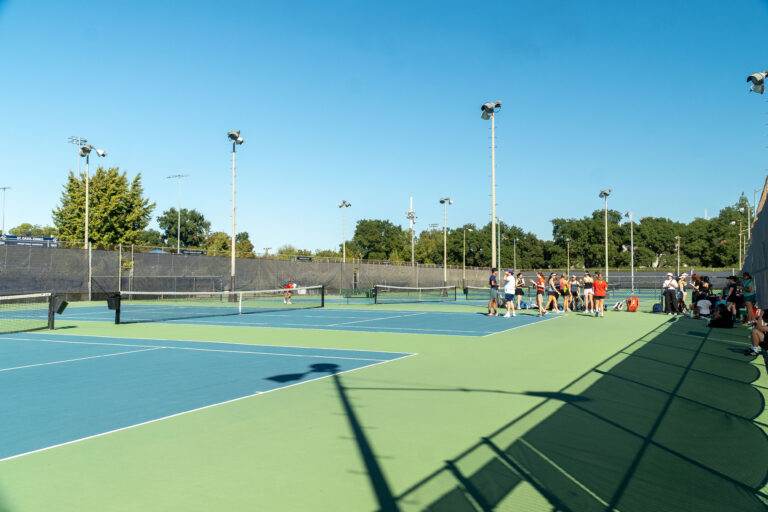
On Sept. 28, the Marya Welch Tennis Center held its 17th annual men’s and women’s Aggie Pro-Am, a fundraiser for both teams to support their upcoming season. 

A pro-am, which is short for professional-amateur, is a “pairs match that features teams comprising one professional player and one amateur player playing similar duos,” and is treated as a small-scale doubles tournament.

The Aggie Pro-Am was a chance for alumni, sponsors or even amateur players to play alongside the 20 collegiate women’s and men’s players for a fee of $125 per person. 

For those sponsors or tennis enthusiasts who wanted to join the social aspect of the Pro-Am, the Aggies offered a lunch-only option for $25.

The Aggie Pro-Am had an early start, with an 8 a.m. check-in and matches beginning at 9 a.m. After two hours of friendly doubles matches, the Pro-Am ended with a lunch, raffle and remarks from the coaches, before thanking the sponsors for their time and donations. 

General donations were also welcomed from members of the community, as spots are often limited to the number of players available. Anyone who was unable to participate in the Pro-Am is welcome to continue to show their support for the men’s and women’s teams through various sponsorship opportunities, such as the Champion Aggies Challenge

Various other sponsorship opportunities include: Sponsor a Young Alum, T-Shirt Sponsor, Court Sponsor, Center Court Sponsor, Tournament Sponsor and Gram Sponsor. Each level requires a different base donation, ranging from $125 to $5,000

The fundraising this pro-am collects is put towards any of the following: equipment, uniforms, rackets, funds for traveling or making improvements to team facilities.
In more recent years, the Aggie Pro-Am has been one of the major fundraisers for both UC Davis’ tennis teams.

 For the 2024 season, the Pro-Am was reported to be the “biggest pro-am event in UC Davis tennis history,” with a total of 127 attendees and 34 sponsors. Each program was able to raise roughly $20,000 from this event, proving the impact and importance of fundraising events for the future season. 

Over the past few years, the cost has increased from $100 in 2019 for the tournament and lunch to a $125 fee in 2025. The increase in price correlates with the expansion of sponsorship opportunities.

While the Aggies have yet to release information on how successful this year’s pro-am was, the men’s and women’s tennis players can expect this event to majorly support their season.

Pro-ams are a great way for the players to strengthen their community ties, build goodwill and foster a stronger fan base. It also allows the players to have face-to-face time with the sponsors and alumni, giving them an opportunity to meet those who help their team perform well during matches. 

In addition, it allows both teams to collaborate and form a bond with each other, as players are still getting acquainted. 

The Aggie tennis teams only meet each other for the upcoming season one week prior to the start of the quarter. Despite the men’s tennis season starting in early spring, their off-season is as critical a time as their regular season. 

The Aggie Pro-Am, along with other pre-season matches and invitationals, allows the 10 players on the team to get acquainted with each other, as well as the women’s team. These pre-season matches also give the players a chance to nail down their skills and strategies for their upcoming season. 

The Aggies made their way to UC Santa Barbara (UCSB) on Oct. 2 for the UCSB Classics.

Written by: Danielle Wirnowski — sports@theaggie.org

Culture Corner

The Arts Desk’s weekly picks for movies, music and more


By JORDAN POLTORAK arts@theaggie.org


Album: “Older (and Wiser)” by Lizzy McAlpine (2024)

As a long-time fan of Lizzy McAlpine, my claim to fame is that I loved her even before her songs became famous on TikTok. I discovered her music in 2020, when I had nothing better to do other than sit in my room and listen to music. I have enjoyed everything she’s released, from her very first EP to her most recent album “Older (and Wiser),” the deluxe edition of the album “Older” she debuted in April. It is truly amazing to watch someone experiment until they find their signature sound. 

You might recognise the track “Pushing It Down and Praying” from its TikTok fame. It details the experience of not quite being able to get over someone, starting off slow and building as the song progresses. The raw honesty of the song, accompanied with dramatic strings and piano, replicates the emotions McAlpine discusses. My personal favorite track is “Spring Into Summer.” McAlpine expresses similar emotions to “Pushing It Down and Praying,” but instead of fighting the feelings like she does on the previous track, McAlpine leans in and accepts them, perfectly wrapping up the album. The beginning of the track, soft and slow, lulls listeners into nostalgic content, while the chorus and bridge crescendo into a display of colorful sound. McAlpine shows off her extensive knowledge of music theory and uses it to create something both beautiful and heartwrenching, sure to blow you away.

Book: “Severance” by Ling Ma (2018)

This book follows Candace, a woman who lives in New York City amidst a virus that spreads and infects the world. The novel moves between the main character’s current life amidst the pandemic — as she joins a small group of survivors — and her childhood experience immigrating to the United States from Fuzhou, China with her parents. The virus, referred to in the novel as “Shen Fever,” causes those infected to become stuck in a zombie-like state, repeating a task until the person eventually dies. This repetition reflects that of Candace’s life in corporate America, where she held on to her mundane daily routines until becoming the last person left at her office. Eerily similar to some of the events that occurred during the COVID-19 pandemic, “Severance” serves as a reminder that the small, unique actions we engage in to keep life interesting should never be taken for granted.

Movie: “Opus” dir. Mark Anthony Green (2025)

“Opus” centers on a young journalist, feeling slightly frustrated with her career thus far, after she receives an invitation from the notorious Alfred Moretti, a fictional global superstar who has reached David Bowie and Freddie Mercury levels of fame. Announcing a new album for the first time in 30 years, Moretti invites a small group of journalists, talk show hosts and influencers to his home for a special preview. Upon arrival, the group learns that Moretti lives inside a remote compound, leading a large, cult-like group who call themselves Levelists. The main character, Ariel Ecton, played by Ayo Adebri, becomes fascinated with the Levelists and decides she wants to write her own piece on their philosophy. That is, until she uncovers the darker elements at play. This psychological thriller definitely lives up to the A24 name and explores ideas of fame in a unique way. 

TV Show: “Veep” by Armando Iannucci and David Mandel (2012)

While this show has been out for over a decade, I only recently discovered it over the summer. Safe to say, it did not disappoint. The show follows Vice President Selina Meyers (Julia Louis-Dreyfus) as everything that can possibly go wrong, goes wrong. The show follows her through seven seasons of satire, scandals and staff members who are terrible at their jobs. Every episode is laugh-out-loud funny and filled to the brim with witty, unparalleled wordplay. “Veep” answers the question: If all the characters on a show were terrible people, would you keep rooting for them? The answer is somehow yes — I cannot recommend it enough.


Written By: Jordan Poltorak arts@theaggie.org

Creatively Davis: the charm of the arts

Students discuss the value within UC Davis’ art programs

By IQRA AHMAD — arts@theaggie.org   

While UC Davis is ranked among the top public universities for research and is home to some of the most well-known veterinary science and agricultural programs in the world, the campus has also made sure to carve out space for its art history, art studio, design and performing arts majors. Tucked between the lecture halls and bike racks is a creative current that doesn’t clamor for attention so much as it hums insistently: the arts. 

For students, the arts offer the sly thrill of discovery: a mural that makes you pause, a gallery opening in a space you never noticed or a class lecture that feels less like a monologue and more like the start of a conversation.

Shaped by the campus’ geography, the faculty and the arts community of the greater Davis area, students spoke to the value and opportunities within UC Davis’ arts programs. 

A feeling of belonging

“When I was walking around campus for the first time, it was very beautiful,” Laila Penny, a fourth-year art history major, said. Penny is a campus tour guide, president of the Art History Club and works at the Jan Shrem and Maria Manetti Shrem Museum of Art.

“Students seemed productive in a way, but also very kind,” Penny said. “People held open doors for each other. It felt like a kind yet studious environment.” 

In perspectives like Penny’s, a feeling of generosity seems to be built into the very infrastructure of Davis. The Maria Manetti Shrem Art Hall — the main art studio building on campus — works as a hub for sharing ideas and promoting collective growth through its features of student work. 

“There’s a lot of student artwork on the first floor, all dedicated to sculpture,” Penny said. “A lot of the time, you can just walk in and see what students are working on. If you go up the stairwell, there’s a bunch of doodles all over the ceiling, so sometimes I just like to go there with friends and read them. It’s really good for inspiration, or if I just want to check out what students are into.” 

These everyday experiences — walking through hallways adorned with creative expression and observing students creating art — capture the vastly unique portfolio of artists within these programs. For students, there’s always an opportunity to be inspired and welcomed. 

Faculty who insist on the “why”

To many students, what truly distinguishes the arts at UC Davis is not just the sense of community, but the approach of the faculty and professors who treat teaching as an ongoing conversation. In Professor John Lopez’s undergraduate Renaissance seminar, Penny shared the value of his emphasis on conversation and inquiry. 

“It was very eye-opening,” Penny said. “He’s very involved in making sure students know what they’re learning and talking about.”

Penny also noted the importance of accessible and supportive faculty as a result of small classroom sizes, which have been found to foster greater personal connections and trust within educational settings. 

“We’re a small department, so you see the same people again and again,” Penny said. “It’s really nice to be part of a smaller department where you can form that sense of community.” 

Penny also discussed the importance of utilizing office hours in getting to know professors on a personal level and gaining a better understanding of course content. 

“Going to office hours has definitely helped me a lot,” Penny said. “It’s very comfortable to just go and ask a question as simple as, ‘How can I improve my writing on this?’”

 What makes UC Davis special for arts students isn’t just the beauty of the campus or its resources, but also the way that community is formed to create a space where ideas can thrive. For students like Penny, it is a place where curiosity is celebrated and conversations matter.

A city that doubles as a studio

Creativity doesn’t stop at the edge of campus, but spills right into the city itself. Between spaces like the Pence Gallery, the Basement Gallery, The Artery and John Natsoulas Gallery, student opportunities span from classroom to gallery and from theory to practice, all to discover how ideas take shape in real-world contexts. 

“I think that being well-rounded in interacting with […] the public and understanding the cogs that are involved with running such an institution has especially complimented my emphasis on museum studies,” Cadmael Tapia Zapata, a third-year art history major and student assistant at the Pence Gallery, said. 

The City of Davis itself is a partner in education, a place where art meets opportunity: it’s not just work hung on walls, but a civic presence. As Zapata shares, gaining experience provides a bridge for students, closing the gap between academic study and hands-on practice.

“Working [at the Pence Gallery] has given me an opportunity to feel like I truly understand what I am being taught,” Zapata said. “I do think it has set me up for future career experiences by not undermining me as a student, giving me opportunities in a professional environment and guiding me though the responsibilities that come alongside being a community center.”

UC Davis, while not advertised as a school for the arts, provides ample support and an environment conducive to learning both in and out of the classroom, according to students. With its ever-present sense of camaraderie and community, as well as the countless opportunities to get involved, arts students at Davis hold a unique key to inspiration. 

Written by: Iqra Ahmad — arts@theaggie.org 

Colors for every season

Is seasonal color analysis a worthwhile approach to personal style? 

By JULIE HUANG — arts@theaggie.org

Common sense dictates that specific colors flatter some people while washing out others, but the process of discovering the colors that look good on you can be tedious and time-consuming. Seasonal color analysis seeks to bypass that arduous process by organizing the effects of different colors on different complexions in a systematic and reliable way, assigning every person a color palette that suits them best. 

Inspired by the natural colors associated with the yearly seasons, there are four main categories of “color seasons” that one may fall into, depending on a mixture of factors involving one’s natural skin, eye and hair color. These four categories are then broken up into numerous subcategories, which might be called different things depending on which version of the system one is using, but nearly always feature similar concepts and guidelines.

The colors that are most flattering on a person can be found by determining certain qualities of a person’s complexion, such as whether their skin is warm or cool toned, according to seasonal color analysis.

“It definitely shaped the colors I choose to wear, and even how I do my makeup,” Soleil Castro, a third-year biological sciences major, said.

Using color seasons as a starting point, a person can determine the types of clothing, makeup, jewelry and other accessories that, according to the seasonal color theory, suit them best.  

“Every person does have a set of colors that complements them the best, and it can be a really good way to maximize your looks,” Castro said. 

Daryl Bordelon, a third-year English and ecology, evolution and biodiversity double major, stated that finding one’s personal color season usually consists of a process of trial and error.

“For a long time, I always felt like darker shades looked really bad on me,” Bordelon said. “Once I had the words that color seasons gave me, it gave me a framework for choosing colors that were flattering on me.” 

Bordelon considers herself a warm spring. Her complexion is primarily clear and bright, complimenting colors like golden yellow, coral, turquoise and warm greens. 

Crossreferencing the many different guides to seasonal color palettes, however, can become a bit tricky, as Bordelon explains. 

“Definitions get kind of vague because every source will show slightly different palettes for different seasons,” Bordelon said. 

Due to these numerous interpretations of what constitutes a specific season, Bordelon stated that describing certain details that are relevant to color seasons in general may be more useful than using terminology that not everyone is aware of. 

“It depends on my audience. If I’m talking to somebody who is really into fashion, maybe I’ll bring up the term ‘color season,’ but a lot of the time I just kind of get away with describing something,” Bordelon said. “Saying I like wearing pastels with warm undertones gets the same point across.” 

Despite appearing to place rules and restrictions on the shades and hues that one can wear, the value in seasonal color analysis can be found in its ability to stimulate personal creativity in one’s attitude towards styling themselves. 

“Wanting to sort yourself into fun little categories is as old as human nature,” Bordelon said. “Sometimes working from a limited place actually grants room for more creativity.” 

As an artist, Bordelon sees similarities between the process of overcoming art block with the everyday decision of choosing something from your wardrobe. 

“One of the best ways to break out of [art block] is to give yourself an arbitrary limit, work off of it and see how that pushes you out of your comfort zone,” Bordelon said. “For personal style, color seasons can be that limit.” 

The guidelines set by color seasons can also be disregarded or downplayed depending on individual preference, allowing for a more personalized experience. 

“I wouldn’t say it’s inherently limiting, especially because it’s not a set of rules that you have to follow. You can find what works for you,” Bordelon said. “For example, I’ve seen some sources say that ‘warm springs’ don’t look good in cool-toned pastels, but I look great in pastel blue, so I don’t necessarily listen to that specific aspect of my season.” 

Jessica Alvarez-Cruz, a third-year human development major, agrees that color seasons do not have to become a hindrance in the curation of a unique personal style. 

“It’s not like you’re being held at gunpoint to just stay in a certain category,” Alvarez-Cruz said. “You can indulge in other categories and find what works for you.” 

Ultimately, seasonal color analysis may operate at its most helpful when treated not as gospel, but as a source of creativity and inspiration.

“Really, it’s just a starting point,” Bordelon said. “To put it simply, it’s not that serious, okay?” 

Written by: Julie Huang — arts@theaggie.org 

How do UC Davis students find time for the arts in their day-to-day lives?

The importance of art in all its forms, according to the student community

By NATALIE SALTER—arts@theaggie.org 

Between classes, work and social commitments, it may be difficult for students to find time to engage with the arts. After a long day of intellectual and physical rigor, it is understandably more appealing to take a nap or scroll through lighthearted content on social media than interact with a narratively complex novel or an ongoing artistic project. Downtime that demands no mental effort is a necessary part of a healthy schedule and can help prevent complete exhaustion or burnout.

But art, in its diverse span of forms, can also provide enrichment and pleasure for those who seek it out in their free time. Whether this means keeping up with a good television series, tearing through dense fantasy novels, devoting time and energy to creative projects or attending live events, the arts are an integral part of Davis’ student culture.

For some, even something so simple as listening to an old favorite album or doodling in the margins of a notebook can provide artistic fulfillment.

“I have always been, and am currently obsessed with, creating soundtracks to my life,” Juliana Vasquez, a third-year English major, said. “Music has always resonated with me on the deepest level possible.”

She went on to explain how drawing connections between the works of musical artists and her own life makes her listening feel special. 

“I find it to be almost magical how you can discover a song that fits any and every period or moment of your life,” Vasquez said. “Whether that be playlists filled with crash-out songs dedicated to my situationships, party playlists that curate the vibe for every function or a collection of songs that encapsulate the essence of girlhood, there is always a song I can find comfort in.” 

Riley Martin, a third-year English major, also remarked that hobbies such as reading or playing video games can be comforting, transporting them into a completely different world.

“Having time to myself in the comfort of my own home to read is great, but I also love that I get the opportunity to pull out a book wherever I go and fall into that state of immersion,” Martin said. “It makes it easier to be in new places, and I feel like I get a moment to myself even in crowded areas.”

However, art may also fit best into students’ lives when it has tangible results, such as the development of a new skill or the acquisition of a homemade item. Students like Martin have found that a practical application for their hobbies makes them feel like they are accomplishing something substantial outside of their studies.

“Crafting is on the other end of the spectrum, but is still greatly important to me.” Martin said. “I get to feel inspired during weeks of work, gathering ideas and planning what I think would be a great new project. And then, when I finally find the time, I get to bring all of those ideas together to create something new, whether it be a special gift from a friend, a new piece of decoration for my room or an accessory I can add to my wardrobe.”

April Nguyen, a third-year biological sciences major, expressed feeling a similar sense of value in her creative endeavors. 

“I’m interested in art that can help me in some way, like sewing and pottery, because those are things that I can use everyday, and they feel more productive,” Nguyen said. “I don’t have a lot of time for hobbies anyways, so I like the idea of using them to help my everyday life.”

Whether it’s for emotional respite or creative satisfaction, Davis students are still finding time in their packed schedules to seek out the arts. Many of us turn to the arts for support without even realizing it, such as when we listen to a calming playlist or turn on a favorite comfort show after a rough day of classes. 

These hobbies and passions are outlets for imagination and mediums through which personal experiences can be processed and understood. Even in its simplest forms — a beloved song, a hand-knit sweater, a well-worn journal — art continues to give students sustenance and meaning, even in the midst of endless papers and exams.

Written by: Natalie Salter—arts@theaggie.org

Entertainment Council hosts Sunset Fest 2025

Artists Lyn Lapid, Blxst and two student-openers performed at the show

By GRACIELA TIU — features@theaggie.org

On Oct. 4, 2025, ASUCD’s Entertainment Council (EC) hosted Sunset Fest, the university’s annual fall quarter concert, at UC Davis Health Stadium. The free event — exclusive to undergraduates — featured headlining artists Lyn Lapid and Blxst, along with student openers Thai T and DJ Ami.

Known as ASUCD’s annual welcome-back concert, the event had a wide reach of over 5,000 attendees, with EC reporting that all available tickets had been claimed. The night also featured food vendors, water stations, photo spots and tabling by various ASUCD units.

The EC team members strategically chose the 2025 lineup to curate a specific energy and mood for the event.

“For this year’s Sunset Fest lineup, we wanted to go with something a little more chill and just kind of ease students back into that transition into UC Davis life,” Abby Wong, assistant director of EC and a fourth-year design major, said. “So with Blxst and Lyn Lapid, we know they’re pretty popular, especially on the West Coast. And we thought both of them have a very nice chill vibe to match the warm tones of this year’s Sunset Fest theme.”

Student opener Thai T, whose real name is Trevor Thai, came onto the stage around 6:15 p.m. The fourth-year global disease biology major and West Coast R&B music artist performed to a relatively small and growing crowd, but still brought an enthusiastic, pumped-up energy to his set. The night marked his first performance, and though most students did not know his songs, he still heavily interacted with the audience and tried to engage them with his mood-varying R&B tracks.

The Sacramento-based artist described how this opportunity gave him the chance to improve his performance style and learn from the headliners after him.

“The biggest thing I’m taking away from this performance is definitely the first experience of performing ever, and then how I’m gonna make it even better next time,” Thai said. “More crowd control, like Lyn Lapid [was] doing — I like how she’s making the crowd sing her songs. I know it’s harder because I’m an opener and nobody knows my stuff.”

Towards the end of his performance, Thai T said goodbye to the audience and began leaving the stage before the DJ onstage stopped him, telling him he was supposed to perform one more song. The surprise stunt ended with one of his most energetic songs yet, before the performer said his true goodbye. He later revealed in an interview that the moment was a last-minute, scripted idea for the performance, thought of by his friend in the sound booth.

“One of the guys […] was recommending it to me,” Thai said. “I was like, ‘Bro, that’s sick.’ It was a really good idea and I just used it. Apparently, I faked out the audio people, too.”

The night continued with DJ Ami, the stage persona of Amadeus Alcala, a third-year environmental engineering major. He made his introduction at 7 p.m. with a slow transition into a jungle-esque percussion beat that faded into a remix of TV Girl’s “Lovers Rock.”

During his performance, which featured electrifying house-style beats, the sun finished setting, allowing the technical production to truly shine. The lights came on throughout the songs, smoke started blowing in front of the stage and the jumbotron lit up, featuring meme videos and animated visuals. Throughout the set, the crowd continued growing, and more concert-goers got the chance to see DJ Ami radiate a genuine love for his craft.

“Performing at Sunset Fest as a student artist is huge for me,” Alcala said. “My friends and family are super supportive when I share music I’ve made, mixed or curated. Even at work — I cook in a kitchen and they’ll let me play my sets or songs while we do our thing. I really just want to put everyone on some happy tunes that I think they’ll like.”

After DJ Ami exited the stage, students eagerly waited for the next performer, Lyn Lapid. Students on the outer edges of the field ran towards the stage and cheered delightedly as she came out.

Her performance featured many of her most popular songs, including “Buzzkill” and “In My Mind,” and even included a recently released song, “The Simlish Song.” The audience size continued to grow during her performance as more students gained entry into the event, and Lapid made sure to keep everyone engaged. While talking between her set, she shouted out her Filipino heritage and led a UC Davis chant. She did her best to connect with the attendees, even though she briefly mistook the campus as being in Sacramento and not Davis (which she later attributed to a lack of knowledge of California’s geography).

“For me, it was really cool to see an artist who came up through social media,” Sophie Cabrera, a third-year art history major, said. “It makes it seem so attainable — I love music and I love seeing people create, so seeing a song I heard in 2020 on TikTok performed in front of so many people at UC Davis was a really cool experience.”

The final performance of the night began shortly after 9 p.m. and spotlighted Blxst, an R&B and soul-inspired rapper, singer and songwriter. During his set, he brought out singer Cheyenne Wright, whose vocals supported the high-energy yet emotionally potent tone set by his music. 

With 6.2 million monthly Spotify listeners at the time of the concert, Blxst’s presence as a headliner excited many students.

“His energy was insane, and I feel like he tried to interact with the crowd a lot,” Andrea Ngo, a second-year human biology major and Blxst fan, said. “I felt like seeing Blxst for the first time was crazy, especially because I ended up being one of the fans he high-fived at the end of his performance. I just couldn’t believe I was seeing him in real life.”

In putting on a show as large as Sunset Fest, members of EC had to work hard to prepare for the event and ensure the success of the show. All departments of EC were involved in putting together the concert, and Wong also made sure to shout out the event’s volunteers.

“Our volunteer team is responsible for recruiting hundreds of volunteers, because we can’t do this show without all the volunteer work involved,” Wong said.

Looking back, EC Unit Director Eddie Kim, a fourth-year human biology major, says that he is happy with the production value of the concert and is already planning improvements for future events.

“Throughout the event, we didn’t experience any technical difficulties [and had] smooth transitions and engagement with attendees throughout the stadium,” Kim said. “One aspect we could majorly improve on was the check-in process, and our team is looking forward to working diligently with security for future events.”

For some attendees who attempted to enter the concert at peak waiting time, the line could last over an hour, with lengthened security screenings at the singular entry point.

At the end of the day, Wong hopes that Sunset Fest provided students with a safe, freeing environment to transition into the new school year.

“Bringing students together through music is different from other forms of campus engagement,” Wong said. “We aren’t expecting anything from them other than just having good concert etiquette. But for them, this is a time when they can choose how to enjoy it, and often it’s a form of catharsis. It’s a break from school, from work — it’s just for fun. We hope that with our shows, students have a space to just relax, to dance, to meet other students, [all] with no expectations of them.”

Written by: Graciela Tiu — features@theaggie.org

Bigger and bolder — and more untouchable — than ever

0

You don’t know the life of a showgirl, babe

By MOLLY THOMPSON – mmtthompson@ucdavis.edu 

Taylor Swift’s 12th studio album, “The Life of a Showgirl,” released just 3 hours, 43 minutes prior to my writing this, and I’ve already listened to the whole thing twice. From just the promotion and aesthetics, it was evidently going to be a significant departure from her recent albums, but hearing it makes the distinction all the more stark. 

Right from the get-go, the album received mixed reviews. Sonically, it’s more reminiscent of Swift’s earlier projects like “1989,” “Reputation” and some of the punchier songs on “Red” — songs also made by “The Life of a Showgirl” producers Max Martin and Shellback, along with Swift herself. The songs that come from that particular team are top radio hits (“Style,” “Blank Space,” “I Knew You Were Trouble,” “Gorgeous” and more), which is also the vibe of many of the songs on her new album. I think this is one of the reasons why it’s been so polarizing — it’s very pop and a little campy.

But I think the real reason has been culminating for a while now: Taylor Swift isn’t relatable, and she hasn’t been for a long time. One of the biggest appeals of Swift’s early discography was its inherent familiarity — it felt like she was voicing the feelings inside of your head. When she was 20 years old writing about laying in her bedroom daydreaming about her crushes, we all listened and anguished along with her. But now that she’s writing about how “this empire belongs to me” and “you’re only as hot as your last hit, baby,” most of us simply can’t relate. 

Swift writes autobiographical songs: her niche is personal storytelling. So, naturally, as she continues to gain global renown, we as fans are going to feel increasingly distanced from the stories she tells. That doesn’t mean we can’t appreciate them, listen to what she’s saying, enjoy them or understand them, it just means that our relationship with her music is inherently different than it’s been at earlier points in her career. 

Taylor Swift is untouchable. Not because she’s so confident that nothing can knock her down, but because she’s one of the few true celebrities we have left in our growing culture of oversharing. With social media and the prevalence of “vlogging,” along with behind-the-scenes content, it’s never been easier to glimpse quotidian elements of the lives of superstars and feel as if they really are “just like us.” But Swift doesn’t participate in that, so she tends to appear more sacrosanct and elusive than others. Of course, other factors contribute to this and she’s not the only one perceived this way, yet it makes her all the more alluring. 

The thing about her recent work is that you don’t have to like it. This is especially true of “The Tortured Poet’s Department” and “The Life of a Showgirl” — I like to think that she made them because she had something to say, not because she felt the need to impress us. Both albums are vulnerable and blatant (as is characteristic of her portfolio), but they’re especially raw, something that is not characteristic of a project created solely as a performance. Somewhat ironically, this album — in all of its over-the-top sparkly glory — is perhaps more intimate than its sisters. It’s the juxtaposition of glamour and toil; of celebrity and domesticality; of diamonds and sequins and Louboutin; of sweat, hustle and selling out — “pain hidden by lipstick and lace.” She’s been jaded and has come out stronger than ever. She knows what she created and doesn’t need it to be your favorite. 

  For me, as someone who’s been emotionally invested in what Swift creates for more than a decade, this album feels like a victory parade. It feels like standing at the top of a mountain while adversaries are stuck at the bottom. It feels like growing up and becoming friends with your parents and siblings again after you hated them during your teenage years. It feels like learning from your mistakes and reading your old journal entries. It feels like being at peace and realizing that your life looks nothing like you thought it would, but you wouldn’t have it any other way. It feels like standing up for yourself, like burning bridges and shaking new hands, like putting people in their place and talking to yourself in the mirror. It feels like applause and hairspray; in what I can only try not to read too much into — it feels like taking a bow at the end of the show. 

Written by: Molly Thompson — mmtthompson@ucdavis.edu 

Disclaimer: The views and opinions expressed by individual columnists belong to the columnists alone and do not necessarily indicate the views and opinions held by The California Aggie

The extinction of public spaces

0

From sidewalks to screens, policies to partition

By NEVAEH KARRAKER — nakarraker@ucdavis.edu

Sometimes the loud hammering of construction, beeping of trucks and barricaded roads make me question whether it’s even worth going to class. Sidewalks are unusable and classrooms are nearly inaccessible near the Touchdown Tower (one of UC Davis’ iconic water towers) as bike racks continue to be uprooted and unusable. 

Like the chain-linked fence between the road and sidewalk, public spaces are often altered without the community realizing the implications of that kind of change. Construction is a physical reflection of the actual separation it’s giving rise to, which is subtle, but nonetheless present.

For example, building new apartments may seem like an excellent idea to combat the housing crisis, but what are the ramifications of it? Does it tear down senior centers? Does it actually help people, or will modernity contribute to gentrification and push out already existing neighborhoods? Before they get put into motion, these plans need to be analyzed from an outside perspective, through proper research and consideration of how they’ll impact the community as a whole.

Then comes normalization — believing the price for progress is inevitable. While in some ways it is, we don’t have to accept the first deal we’re offered. In many cases, policies are passed without thorough analysis and we end up sabotaging the integrity of our communities, even though we only intended to improve it.

Technological advancement (including metropolitan development and digital progress) enhances education and careers, but not without repercussions. Libraries are swapped out for databases of digital files, small owned businesses are being drowned out by large companies and trails and parks are shrinking under real estate pressure. 

Similarly, social media has become the new digital playground. It’s disgustingly over-monetized and algorithmic; there is no coexistence online like there is in the real world, it’s either strong animosity or enthusiastic encouragement. Face-to-face interaction promotes genuine connection in a way that online communication simply does not. As we spend more time on our phones and less time with each other, we lose not only those connections, but our ability to connect with each other in the first place. 

We claim that we want to nurture inclusivity, and yet we disregard the importance of community engagement. If we have nowhere to gather — especially nowhere that has free parking or admission — then disunion and contempt become the norm. Genuine interactions are what make us empathetic, grant us the ability to peacefully converse and temporarily breach our isolated bubbles; we can’t sacrifice our already scarce social opportunities for a new apartment building or department store.

Forcibly closing public spaces — and therefore reducing our ability to form and foster interpersonal connections — does two major things: it indirectly reduces our critical thinking skills by stifling activities that promote neurological activities (like those that take place outdoors or in a group). As a result, we become dependent on screens for entertainment and recreation, which makes it easier to indoctrinate our population and form dependent thinkers who aren’t used to questioning the information that crosses their social media feeds.

Society also becomes defenseless and easy to control if people have nowhere to congregate. The locations that were once the unifying bridge between all political parties, all races and all socioeconomic levels, are now driven by profit and consumption — you’re all “welcome,” but only if you buy something. You can enjoy yourself, but only if you sign up for monthly payments. The businesses that remain have to accommodate this new jurisdiction just to stay afloat.

A construction project can easily transgress into a cultural shift. As the sidewalk concrete cracks without repavement in sight, public spaces become obsolete — as does the foundation of our society. 

We cannot allow ourselves to become dependent on the technology freely given to us, and we cannot be naive to the consequences of the extinction of our public spaces — they are our livelihood and we must treat them as such. Our public spaces are integral to our social connections and our cultural autonomy, so it’s important to pay attention to what’s going on around us so that we can protect them. If we want to preserve the integrity of our society, we must consider the ramifications of development plans before we put them into action; what might seem like a good idea on the surface might end up causing more harm than good. 

Written by: Nevaeh Karraker—nakarraker@ucdavis.edu

Disclaimer: The views and opinions expressed by individual columnists belong to the columnists alone and do not necessarily indicate the views and opinions held by The California Aggie.

We are paying the price for AI

0

Grok, is this true?

By SABRINA FIGUEROA — sfigueroaavila@ucdavis.edu

From asking ChatGPT to write an email to directing xAI’s Grok to fact-check a Pop Base post on X, artificial intelligence (AI) has us in a chokehold. 

Since the first launch of ChatGPT-3.5 in November 2022, generative AI has been integrated into our lives — willingly for some and forcibly for others. It was initially branded as magic, looped in with wizards and witches that can create anything out of thin air. The reality is that AI has as much magical power as the Wizard of Oz — with only a man behind the curtain operating a complex system, trained on our own data, that keeps the illusion of magic, novelty and power. Still, if tech companies continue their quest to sell it as so, let it be known that magic has its conditions and often comes with a price.

We don’t have to wait to find out what that looks like: It’s already here, and it’s affecting small, low-income and Black communities first, many of which lack the political power to significantly change the operations of tech companies and their data centers. It’s another wave of environmental racism — a regression in the name of “progression.” 

Tucked-away in Southern Memphis, Elon Musk has built “Colossus:” a giant supercomputer that he utilizes to power his company, xAI, and the chatbot, Grok. In June 2025, the Southern Environmental Law Center found that Musk was operating 30 unpermitted methane gas turbines without any notice or regulation. Turbines such as these emit formaldehyde and smog-forming pollutants, increasing risk of asthma, heart disease and cancer. 

If that isn’t unethical enough, the surrounding area is predominantly made up of Black communities that have historically experienced environmental injustice and industrial pollution. The city closest to the xAI data center, Boxtown, for example, already has an average cancer risk four times the national average

Luckily, both the National Association for the Advancement of Colored People (NAACP) and Southern Environmental Law Center (SELC) have decided to sue Musk over this. However, a recent study from scholars at the California Institute of Technology (Caltech) and UC Riverside found that other communities all over the U.S. are still suffering from the emissions of fossil fuels burned to power AI. 

Carbon emissions travel from one area to the next, affecting communities, people and ecosystems beyond those local to the data centers. If we do not enforce limitations upon these Big Tech companies and we continue to use AI like a harmless toy, the consequences will soon catch up to us. Although society may discriminate, climate change does not. One minute it’s directly affecting people in a far-away community, the next minute it’ll directly affect you.

 The high energy demand, along with the mass amounts of water consumption necessary to sustain data centers, are expensive. Not for the tech companies, but for community members in the surrounding areas. 

Tech giants like Google, for example, are securing deals with utility companies that help them save money and make more profit. Just last year, Google scored a deal in South Carolina that allowed them to “pay less than half the rate that households pay for electricity,” according to an article by Capital B. This “deal” forced local households to cover the remaining cost through their own utility bills. 

Every year, generative AI has the potential to drive a racial economic gap by $43 billion, with low-income and predominantly Black communities having to pay for AI’s giant mess — both environmentally and financially. Generative AI has become an environmental issue, a public health issue and a social issue. As we continue to use AI as a search engine, an artist for lack-luster art, a writer for discussion posts we’re too lazy to write and more, we must ask ourselves: Is it worth it?

Big Tech and billionaires, like Musk, sell us magical supercomputers designed to help us, but it’s all a facade to make them more money at the expense of our health, critical thinking and literacy skills, communities and financial well-being. If you think for a second that companies in a capitalist society only have the goal to help the masses, think again. Their main concern is not people, it’s profit.

Before it’s too late, we must demand regulations on AI and Big Tech companies and hold ourselves accountable for abusing generative AI as more than a tool; for the sake of human lives and the planet. AI can’t save us time if there isn’t any more time left to save. 

Written by: Sabrina Figueroa — sfigueroaavila@ucdavis.edu

Disclaimer: The views and opinions expressed by individual columnists belong to the columnists alone and do not necessarily indicate the views and opinions held by The California Aggie.

Empathy: the key ingredient in intellect

0

Exploring the toxicity of intellectual prejudice 

By VIOLET ZANZOT— vmzanzot@ucdavis.edu

I’ve never understood the true definition of “smart,” and yet, I can certainly say that I’ve spent too much time feeling dumb. It’s this weird, ambiguous feeling — to feel a certain way about your own intelligence — because, while it shouldn’t be, it can be such an emotional experience. If your brain is a separate entity from your heart, why can thoughts hurt so badly? 

The pain that comes from feeling dumb is interesting to me. It echoes the expression: “The opposite of love is not hate, it is indifference.” I don’t think the opposite of being smart is being dumb, but is it indifference? 

I first asked myself this question (I will pose it to you now) as I was thinking about a boy I liked. Our forms of intelligence are very different, so I was pondering whether or not he and I would be compatible. I had chatted with him earlier that evening, and I remember him claiming that he isn’t as smart as me — that he doesn’t know as much as I do. I found this odd, considering I wouldn’t even be confident saying that I’m the smartest person in an empty room. 

This is the question I asked myself later: Does having the conscious awareness to consider our own intelligence inherently demonstrate some kind of intelligence to begin with? In other words, does wondering exactly how smart we are indicate that we possess a certain level of intelligence?

I certainly tell myself that thinking “I’m dumb” actually means I may not be; and, whenever I feel completely lost — I think “you can’t be found if you don’t know you’re lost, right?” 

I like to think that this self-reflection means something, especially considering that the real problem with self-imposed intellectual inferiority is that it involves multiple levels of perception. Beyond how we perceive ourselves, we often consider how we perceive others, how we assume others perceive us, how others actually perceive us and then how others perceive themselves. It’s a lot to read on paper, let alone process that this is how the world works. We lose empathy in the conversation around being “smart” because of these many levels of perception.

In my short time studying abroad, I’ve already noticed that Americans have a tendency to, as they say, “stick out like a sore thumb.” I am in London right now, and it’s painfully obvious that the rumors are true — we don’t come across as the brightest bunch. 

This is probably the main reason why this topic has recently been at the forefront of my mind: to be perceived as less intelligent because of the prejudice associated with my accent has certainly been thought provoking. 

Misjudgements are ignorant because they lack empathy. Empathy, it seems, is a key aspect of intelligence. If we cannot understand the language of someone else’s thought processes, any assumptions about their intellect may as well be errors in our own translation. It is foolish to assume our own knowledge is greater than others because they think in a language we are unable to understand. 

Written by: Violet Zanzot— vmzanzot@ucdavis.edu

Disclaimer: The views and opinions expressed by individual columnists belong to the columnists alone and do not necessarily indicate the views and opinions held by The California Aggie.

What’s with all the Republican DEI hires?

0

Is diversity within the Trump administration indicative of progress or a deeper sociocultural movement?

By GEETIKA MAHAJAN — giamahajan@ucdavis.edu

This past month, FBI Director Kash Pramod Patel bewildered the majority of the United States at the funeral of right-wing zealot Charlie Kirk. 

“Rest in peace brother,” Patel said into the microphone. “I’ll see you in Valhalla.” 

The comment drew widespread attention, first and foremost because of Patel’s insinuation that Valhalla (a Nordic myth) was still a relevant cultural belief, that Kirk had done something to deserve the afterlife of a warrior and that Patel himself was planning to die in battle soon (which, according to Norse mythology, is the only way to reach Valhalla). 

The bizarre statement could be explained as just another example of the Trump administration’s attempts to sound tougher than they really are, which it is, in a way. But Patel’s reference to a cultural belief that died with the Viking empire at the funeral of a man who vehemently disagreed with policies that made it possible to succeed as an immigrant in the U.S. is symptomatic of something else.  

What looks like a Diversity, Equity, and Inclusion (DEI) initiative from the outside is actually symptomatic of the worst colonial hangover of all time. An NBC article found that “Indians are perhaps the most well-represented minority group within the Trump administration” — despite making up a mere  2% of the national population. The current FBI director, Kash Patel, and the Second Lady of the U.S., Usha Vance (among others), are second-generation Indian Americans. They’re entrenched in an administration that’s imposing a $100,000 fee for the employment visas that made it possible for them to grow up in the U.S. in the first place.

Watching Vivek Ramaswamy, American entrepreneur and politician, proudly advocate for the end of birthright citizenship or Governor of South Carolina Nikki Haley implement some of the most stringent “show-me-your-papers” immigration laws is disorienting. From an American perspective, it’s odd to see children of Indian immigrants turn their back on other immigrants. From an Indian-American perspective, it’s kind of pathetic. 

The Trump administration hasn’t been randomly populated by Indian sycophants. Through a confluence of socioeconomic factors within India and America, the incoming immigrants are uniquely poised to occupy this specific niche and be particularly successful under Trump’s regime. The issue originates long before immigration itself — it starts as a byproduct of the deeply entrenched caste system in India. The subsequent structural inequality affects the opportunities, education and access Indian citizens have today. Ramaswamy discussed where his family fell within this hierarchy in his 2021 book “Woke, Inc. Inside Corporate America’s Social Justice Scam,” stating that “Kings were below us.”

While such a blatant appeal to false authority is a little nauseating to anyone who understands how horrible the caste system in India really is, it’s also indicative of the overall demographic pattern of Indian immigrants. Many people who come to the U.S. are fleeing war or famine, or looking to escape conditions of abject poverty. On the flipside, immigrants from India are largely the product of employment visas; consequently, they are college-educated (77% of Indian-Americans have a college degree, as opposed to 35% of all immigrant adults) and may even have jobs lined up the moment they land in America. Essentially, Indian immigrants arrive in the U.S. relatively well-positioned with stable roots back home. 

What this primarily implies is that such a demographic might be unsympathetic to the desperation and hope that fuels many immigrant stories. It explains the eagerness with which Haley and Ramaswamy so strongly emphasized their intolerance of other immigrant groups.

There’s also the assimilation aspect. Being a visible minority is difficult, and there’s been a significant rise in anti-South Asian sentiment in the United States within the past few decades. With racist caricatures like Ravi from “Jessie” or Apu Nahasapeemapetilon from “The Simpsons,” it’s understandable to want to prove you’re not like the stereotype. Ostensibly, the easiest way to do this is by demonstrating that you have the same cultural and political beliefs as the most “American” people in the country.

However, this is not to assign blame. Trump’s DEI hires aren’t victims of some unjust system that forced them to act evil, and nobody should sympathize with them. Currently, immigrants across America are being subjected to Deferred Action for Childhood Arrivals (DACA) rollbacks, family separations, visa attacks and the Trump administration making existence in the U.S. more precarious at every turn — these are people who have been directly victimized by a system that runs on racism and ignorant, anti-immigration sentiment. It’s much more difficult to feel sympathetic towards Usha Vance or Ramaswamy, even despite the racism they’ve demonstrably experienced within the Republican party. Maybe they’re locked in a room full of bullies, but it’s their own fault for closing the door. 

Written by: Geetika Mahajan — giamahajan@ucdavis.edu

Disclaimer: The views and opinions expressed by individual columnists belong to the columnists alone and do not necessarily indicate the views and opinions held by The California Aggie.

Human Relations Commission advances sanctuary city work and considers 2025-26 priorities

Commission emphasizes community input as it begins new year of work

By ALMA CULVERWELL city@theaggie.org 

The Davis Human Relations Commission met on Wednesday, Sept. 25 at 6:30 p.m. in Davis City Hall to review its agenda and set goals for the upcoming year. This commission advises the city on matters related to social equity, diversity and inclusion.

A central focus of the meeting was the Sanctuary City workplan. As a Sanctuary City, Davis law enforcement and city officials, in the course of duty, do not take into account if a person is undocumented. Immigration status is a federal issue rather than a local one, so this plan can be applied within Davis city limits, according to the City of Davis website. Davis was first declared a Sanctuary City in 1986, and reaffirmed in 2007 and 2014.

 Members voted to form subcommittees dedicated to different aspects of the plan, according to Staff Liaison to the Human Relations Commission Carrie Dyer.

“The [Human Relations Commission] moved to create subcommittees as a first step to do research and outreach to those with lived experiences as well as to local institutions to review current language and policies,” Dyer said. 

The subcommittees will explore efforts such as reaffirming and updating the Sanctuary City language, revising informational materials for residents, developing a one-time publication with “know your rights” information and providing education and training opportunities for businesses and city staff. Commissioners also discussed holding a public forum and expanding online resources to increase community awareness. 

In addition to the Sanctuary City plan, the commission began outlining its 2025-26 priorities.

“The commission is just beginning their work for the 2025-26 year, and the meeting focused on how to move forward with the council-approved Sanctuary City work and proposed additional work that they would like to focus their efforts on,” Dyer said. “The additional proposals will go to City Council for approval, prior to any work getting started on those.”

While several subcommittees were established in August, members reported no significant updates this month, as much of their work is still in the early stages. 

Dyer further explained the role of these subcommittees and how they support the commission. 

“At the August meeting, the [Human Relations Commission] determined a number of planning committees,” Dyer said. “Each month there is a standing item for the planning committees or subcommittees to provide a brief update on the work that they have done over the past month. As the committees were just established and many of the events are a ways away, there were no updates to note from last night.”

The commission also began discussions about adjusting its November and December meeting dates, which fall on city closures. Members considered holding one combined meeting or selecting alternative dates. 

Looking ahead, Dyer emphasized the importance of community involvement in the commission’s work.

“The [Human Relations Commission] always appreciates community engagement in their meetings,” Dyer said. “As the work for this current year is just beginning, having community input on [our] efforts surrounding Davis as a Sanctuary City would be very appreciated.”

By Alma Culverwell— city@theaggie.org