57 F
Davis

Davis, California

Monday, December 22, 2025
Home Blog Page 14

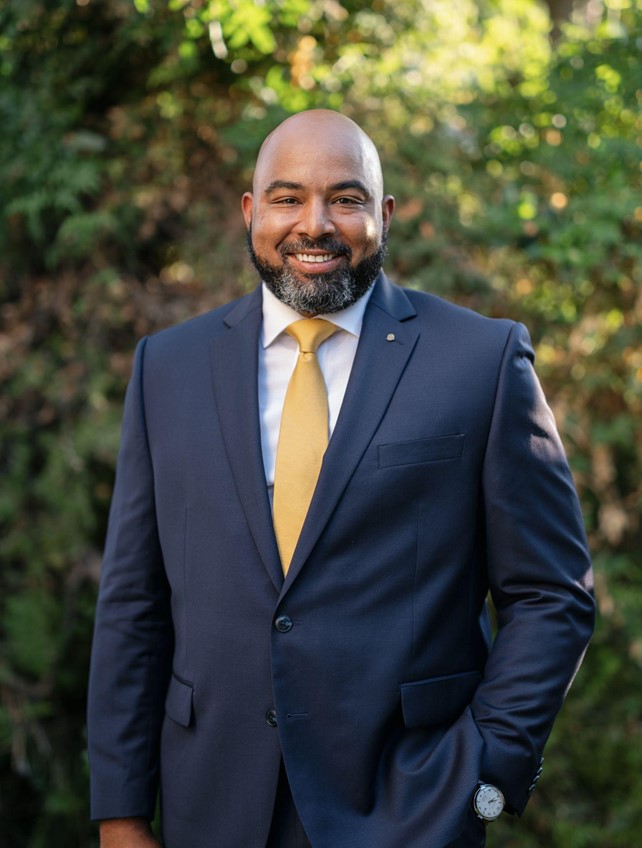
Daryel Dunston selected as new Davis city manager

Dunston spoke about his goals to address unhoused communities, balance the structural deficit and work alongside UC Davis leadership

By JORDAN POLTORAK — city@theaggie.org

During the Aug. 19 Davis City Council meeting, Daryel Dunston was chosen unanimously to be the new city manager. Dunston previously served as the assistant city manager in Santa Rosa and senior policy advisor in the vice mayor’s office in Oakland. 

“I learned a great deal in both cities,” Dunston said. “What’s consistent between the two is working with policymakers and understanding what the needs of the community are; looking at the resources that are available and helping to develop policy and program services that are going to make a positive impact on the community.”

Dunston then spoke about his goals of getting to know those who work alongside him. 

“First and foremost it’s getting to know the team; […] getting to know the leadership team and their deputy directors, managers, folks out in the field. ” Dunston said. “Also, [it’s] learning the council — I have to understand their idiosyncrasies, their policy concerns, their goals and vision they want to execute, because I am tasked with carrying that vision out.” 

Dunston expanded on his goals for balancing the budget and working with UC Davis leadership. 

“In addition to that, it’s no secret that we’re running a structural deficit, so one of my main priorities is to work with our finance team to come up with a plan to balance the budget,” Dunston said. “There are some forces at play out of our control. There are also a lot of opportunities for partnerships over at the university and to know the leadership over at [UC Davis].”

Dunston began his career in public service as a firefighter in Prince George’s County, Maryland before his transition into public administration. 

“Most firefighters would describe it as a calling. We have servant hearts. I want to do anything I can to help those in need. Going from a firefighter to public administration seems like a leap, but I’m still putting out fires, just metaphorical ones, and I’m still helping. It motivates me to be able to contribute to the public good.” 

City Councilmember Linda Deos spoke about her support for Dunston. 

“Throughout his career, [Dunston] has shown a deep commitment to public service through leadership roles in housing, emergency management and public safety,” Deos said. “That kind of dedication and versatility speaks volumes and will be an asset to our community.”

In Oakland, Dunston contributed to projects that served unhoused populations, such as working in Oakland’s Emergency Operations Center during the COVID-19 pandemic and as Oakland’s homelessness administrator in the city administrator’s office. He explained how some of these strategies may be transferable, while others may not work for the City of Davis.

“It is a statewide crisis — it is not national — and the unhoused population is not a homogenous group. They have different needs depending on how insecure their housing is. You have some people who may be one or two paychecks away from being out on the street, and they need support because we don’t want them falling into homelessness,” Dunston said. “Some people are extremely low income, they have no income, and they need a different level of service than others. […] The unhoused landscape in Davis [is] going to look different than in Santa Rosa and it’s going to look different than it did in Oakland. We’ll take a look at some of the things I’ve done in Santa Rosa and Oakland and see if it makes sense, and if it doesn’t, then we have to be creative,” Dunston said. 

Lastly, Dunston spoke about what he wanted students to know about him.

“I support advocacy efforts and the mental health crisis — I don’t know if we’ve seen it this bad nationally […] students are at the forefront of forcing public officials to take it seriously and to come up with interventions that speak specifically to students,” Dunston said. “That is something that I support. I want students to know that they have an ally in me and you will absolutely see me walking around on campus. If there is something that the city can do in partnership with the school to improve the quality of life for students, that is something we would lean into.” 

Written By: Jordan Poltorak— city@theaggie.org
UC Davis among top 10 best universities in new rankings

Ranking rubrics shift, feature different emphases on diversity and faculty research

By ROBIN FRANKLIN — campus@theaggie.org

For the fifth year in a row, UC Davis has secured a spot in the top 10 best public universities nationwide.

UC Davis tied for No. 9 with two other public universities — the Georgia Institute of Technology and UC Irvine — in the 2026 U.S News & World Report rankings released on Sept. 23, which is considered one of the most influential and highly read annual reports on higher education in the country. 

This is the second year in a row that UC Davis has ranked in the ninth spot.

Chancellor Gary May wrote his praise for the ranking in a recent LinkedIn post. 

“This ranking from U.S. News & World Report highlights our steadfast commitment to the success of our students,” May’s post reads. “The University of California, Davis empowers students from all backgrounds with world-class educational opportunities that prepare them for rewarding careers and service to their communities.” 

Since 2024, the ranking rubric for U.S. News & World Report has begun adding diversity scores into their calculations; rankings now evaluate the percentage of graduated students who are the first in their family to attend college, as well as the number of low-income students.

For the best national universities rankings, U.S. News also introduced new faculty research metrics, which report the average number of citations per publication and the percentage of a university’s publications that appear in the top 5% most-cited journals.

U.S. News also abandoned five pieces of its methodology: class sizes, the share of students in the top of their high school classes, the share of full-time equivalent faculty with terminal degrees, levels of giving by alumni and the proportion of graduates borrowing federal loans, according to an article by education news site Higher Ed Dive.

UC Davis did better in The Wall Street Journal (WSJ)/College Pulse 2026 rankings released on Sept. 29, placing No. 2 in the nation among public universities and No. 13 overall for how well it sets its graduates up for financial success.

The WSJ/College Pulse 2026 lists have continued to build on a rubric shift since 2024, now emphasizing post-graduate salary rather than college prestige. Student outcomes make up 70% of the WSJ ranking, broken down into three sections: salary boost (33%), time spent paying off tuition (17%) and the percent of students who are able to graduate (20%). 

Using two surveys of about 120,000 students and recent alumni, the WSJ rankings attribute the other 20% of the rubric weight to a college’s learning environment; this encompasses learning opportunities, preparation for career, satisfaction with facilities and how likely students are to recommend their college. The last 10% considers how diverse the campus is, measured by the percentage of students with disabilities, Pell Grant recipients and ethnicity. However, unlike the WSJ rankings, the U.S. News & World Report diversity categories exclude international students, as specific ethnicity data was not reported for this group, according to U.S. News.

In other UC school ranking news, UC Los Angeles (UCLA) has been dethroned by UC Berkeley in the U.S. News & World Report list as the top public school in the nation. UCLA had previously held the top spot for the past eight years. Meanwhile, UC Merced moved from No. 58 in top public schools last year to No. 25; UC San Diego maintains its streak at No. 6.


Written by: Robin Franklincampus@theaggie.org

So you’re sick…

The Editorial Board’s guide to getting through the frat flu (or any other seasonal illness you may be facing)


By THE EDITORIAL BOARD — opinion@theaggie.org


It seems to be that time of year in Davis where people all around us are succumbing to the common cold or some other virus (the members of this Editorial Board being no exception). An unfortunate reality of the quarter system is that being taken out by sickness can result in missing out on more classwork and lectures than one may expect. With stormclouds ahead and midterms around the corner, we’ve compiled some of our go-to tips to fight off the worst of seasonal illnesses and get you back on your feet.

As always, take our advice with a grain of salt; we’re students, not medical professionals. Be sure to go to your doctor regularly and when symptoms persist.


Tips for when you are sick

This cannot be overstated, but drink water regularly and stay hydrated. Experts say that adult males should drink 15 cups of water daily and adult females should drink 11 cups. You may have to drink a little more if you are sick, depending on your symptoms. Stick to clear fluids, like water, juice or broth. For boost, consider taking water with electrolyte powder or vitamins, like zinc or vitamin C.

Hot tea with honey does wonders for congestion and sore throats, but beware that not all teas are made equal. Herbal varieties are usually recommended; we like tea with turmeric, lemon echinacea and ginger. Avoid teas with caffeine, like black, green or oolong tea. Caffeine is a diuretic and can actually be dehydrating when sick. For that reason, avoid energy drinks and prioritize getting rest.

On that note, get plenty of sleep. Your body needs rest to recover effectively and help fight off infections.

If you have headaches and nausea, peppermint oil can sometimes help relieve symptoms. Sinus rinses can alleviate congestion, and gargling warm salt water helps soothe scratchy throats.

Try to communicate with classmates to stay informed on what you’ve missed in class (and offer notes in return if or when they are the ones stuck at home). Lecture capture can sometimes miss details and an in-person source of information is always helpful. Likewise, make sure to check syllabi for attendance and excused absence policies before emailing professors and teaching assistants.

Importantly, try to keep a positive mindset. No one likes being sick, but falling into doomism and despair — rather than keeping a recovery mindset — only creates extra hurdles for you to surpass. Give your body the time it needs to recover and avoid leaning into negative thoughts.


Tips for general well-being

Once you’ve recovered, there are several steps you can take to help prevent catching another virus. Daily exercise, including regular cardio, gets your heart pumping and keeps you healthier overall. Not all exercise has to be high-intensity: walking, yoga and other low-impact activities can be incredibly effective in their own right.

Even after having lived through a global pandemic, personal hygiene seems to be lacking among many. Wash your hands thoroughly, and consider carrying hand sanitizer or wet wipes in your school bag.

Staying hydrated is a lifelong, 365-days-of-the-year goal too — carry around a reusable water bottle and refill it often. Likewise, try to eat healthy and maintain a proper, balanced diet. Make sure to hit all the major food groups, eat enough fiber and protein and avoid processed and sugary foods.

Once the storms have passed, go outside! Fresh air can help regulate the body, and connecting with nature has been linked to improvements in mood and mental health. The Arboretum is an on-campus favorite, but there are several popular hiking paths within driving distance from Davis, including the foothills in Auburn and trails at South Yuba River State Park.

Looking out for your mental health is another way to take care of your physical wellbeing. The two are closely linked, so be sure to avoid overexerting yourself. In this effort, try to make time to build and maintain strong relationships with friends — prioritizing a strong social network promotes social wellbeing, which is a key element of your mental health.


A note on vaccines

Some diseases seem to rapidly disappear from the general population for a simple reason: vaccines. Herd immunity is real and vaccines are safe, effective and important. Several large retail pharmacies offer free walk-in flu shots for most insurance plans.

When it comes to getting COVID-19 booster shots, narrower national vaccine recommendations under Donald Trump’s administration have limited approving vaccines to adults aged 65 years and older, along with those with immunocompromising conditions. However, vaccines remain accessible nationwide to most adults, though insurance coverage varies. The California Department of Public Health and the West Coast Health Alliance, of which California is a member state, recommend that individuals over the age of six months get vaccinated for COVID-19.

Written by: The Editorial Boardopinion@theaggie.org

The Global Sumud Flotilla reminds us of the power of multi-national cooperation

Israel’s illegal boarding and detainment of activists, including Greta Thunberg, is unforgivable


By THE EDITORIAL BOARD — opinion@theaggie.org


On Sept. 1, the Global Sumud Flotilla — constituting 50 vessels and roughly 500 activists on board — set sail toward Gaza. On board the flotilla, there were representatives from 57 countries and more than $110,000 worth of medicines, including respiratory equipment and nutritional supplies intended for Gazan hospitals. The four groups that coordinated the flotilla and all on board shared one common goal: “to break the illegal siege on Gaza by sea, open a humanitarian corridor, and end the ongoing genocide of the Palestinian people,” according to the Global Sumud Flotilla website

However, their mission was cut short. This past week, the Israeli Defense Forces (IDF) illegally boarded all vessels and arrested 462 activists, with six still held captive

“Τhe Fourth Geneva Convention: Articles 23, 55 and 56 impose an obligation to permit the free passage of humanitarian aid and prohibit interference with relief operations or the targeting of civilian infrastructure,” a legal analysis of The Freedom Flotilla reads.

This makes Israel’s seizure and detainment of the aid workers on board illegal under international law — one of Israel’s many violations, according to a United Nations’ Human Rights press release. 

Among those aboard the Global Sumud Flotilla were: Greta Thunberg, a 22-year-old Swedish activist; Nelson Mandela’s grandson, Mandla Mandela; and Ada Colau, former mayor of Barcelona. While held by Israeli forces, activists claimed that Thunberg, along with other detainees, were “treated terribly” — with some being denied clean water and critical medication. While Israeli officials denied the alleged mistreatment, calling their claims “brazen lies,” thousands of people took to the streets in Spain, India, Italy and Tunisia, among other nations, in support of the flotilla movement and those on board.

Thunberg first garnered global attention in 2018 — at the age of 15 — for putting pressure on governments to address climate change. That same year, she founded Fridays for Future and has since worked to raise awareness about social injustices (beyond addressing environmental concerns, she has condemned Russia’s war on Ukraine and the worsening humanitarian conditions in Palestine) and give a voice to the youth of our generation.

Her activism has garnered both acclaim and criticism in the public eye. It is no secret that President Donald Trump and Thunberg have a fraught history; after Thunberg was expelled from Israel, Trump branded her as “angry” and a “troublemaker,” to which Thunberg replied in an Instagram post.

“I hear Donald Trump has once again expressed his flattering opinions on my character, and I appreciate his concern for my mental health,” Thunberg said. “I would kindly receive any recommendations you might have to deal with these so-called ‘anger management problems,’ since — judging by your impressive track record — you seem to be suffering from them too.” 

While this young woman — along with thousands of pro-Palestinian activists, medical professionals, lawmakers and advocates — is fighting to provide basic necessities to a population on the brink of collapse, politicians like Trump are discrediting her work. The Israeli Foreign Ministry went so far as to falsely claim that the Global Sumud Flotilla was organized by Hamas. Israeli National Security Minister, Itamar Ben-Gvir, also labelled the group of activists involved as “terrorists.” 

“I was proud that we treat the ‘flotilla activists’ as supporters of terrorism,” Ben-Gvir said in a statement. “Anyone who supports terrorism is a terrorist and deserves the conditions of terrorists.”

This is not the first time that Israel has illegally boarded aid vessels and deported activists: The IDF did the same to Thunberg’s earlier attempt aboard the Madleen in June. In continuously restricting aid from entering the Gaza Strip, Israel is maintaining the state of famine in Palestine, putting the lives of more than half a million Palestinians in danger. 

Both the United Nations (UN) and the World Health Organization (WHO) have “consistently highlighted the extreme urgency for an immediate and full-scale humanitarian response given the escalating hunger-related deaths, rapidly worsening levels of acute malnutrition and plummeting levels of food consumption,” according to the WHO website.

The hunger crisis in Palestine will also have generational consequences on its civilian population; effects of starvation can show up over the course of decades and, as well as severely stunt physical and brain growth — especially when seen in children. More than 54,600 children are facing acute malnutrition in the Gaza Strip alone, according to the United Nations Relief and Works Agency for Palestine Refugees in the Near East. 

“We inherit the memory of trauma on a molecular basis,” Hasan Khatib, a professor of genetics and epigenetics at the University of Wisconsin-Madison, said.

It is deeply disappointing that in our modern world, we are unable to come together as nations — backed by the strength and resources of our political leaders — in the name of peace and human rights. Grassroots organizations like the Global Sumud Flotilla, along with individual activists, are forced to pick up the slack for the complacency and inaction of world leaders. We need to hold our governments accountable for their behavior and their silence. While a true ceasefire agreement between Israel and Hamas seems uncertain, keeping an eye on Gaza continues to remain critical. 

The Global Sumud Flotilla and Thunberg’s leadership serve as a symbol of solidarity and resistance against Israel’s occupation of Gaza — of a movement that successfully drew global attention back to Palestine, even if they were unable to complete their delivery of life-saving aid. The movement demonstrates a rare instance of global cooperation — of geographically disconnected communities coming together to contribute something far bigger than themselves — to save the people of a nation that, for the past two years, haven’t felt a moment of peace. “Sumud,” the Arabic word for “resilience” or “steadfastness,” perfectly sums up the need to keep fighting, stay vocal and advocate for just and lawful action.

“No one has the privilege to say we are not aware of what is happening. No one in the future will be able to say we did not know. […] We are not even seeing the bare minimum from our governments. Our international systems are betraying Palestinians,” Thunberg said in a live address in Athens after her release. “I could talk for a very, very long time about our mistreatment and abuses in our imprisonment, trust me. But that is not the story. What happened here was that Israel, […] once again violated international law by preventing humanitarian aid from getting into Gaza while people are being starved.”


Written by: The Editorial Board — opinion@theaggie.org

Accountability and cooperation have been lost in the government

The detrimental cost of the government shutdown for the American people


By THE EDITORIAL BOARD — opinion@theaggie.org


A government shutdown, a phrase we often hear on what feels like a constant occurrence, is upon us yet again — not because of a natural disaster or a pandemic, but because Democrats and Republicans cannot agree on funding. Congress has failed to reach an agreement on appropriation bills for the upcoming fiscal year. 

As established in the Antideficiency Act, during a shutdown, the government “prohibits federal agencies from obligating or expending federal funds in advance or in excess of an appropriation, and from accepting voluntary services.” All non-essential government actions halt during this time period, which is what we are currently seeing with our government, starting Oct. 1.

This shutdown has arguably been one of the most extreme, as both sides are blaming one another, with no end in sight. The White House has released numerous statements regarding the shutdown, solely blaming the Democrats in Congress. With statements including “Democrats Betray Americans with Government Shutdown,” “Democrats Have Shutdown the Government,” and “Americans Don’t Agree with Democrats’ Actions,” no accountability has been taken. The administration is casting sole responsibility on the opposing party by spreading this harmful rhetoric, rather than finding a real solution to the issue. 

Federal agencies have also begun accusing the Democrats in Congress, releasing statements such as “The Radical Left in Congress shut down the government,” from the Department of Housing website, and “Due to the Radical Left Democrat shutdown,” from the Department of Agriculture website. Additionally, automated email templates for furloughed employees — messages that blame the shutdown on the Democrats in government — have been encouraged.

“I am out of office for the foreseeable future because Senate Democrats voted to block a clean federal funding bill (H.R. 5371) leading to a government shutdown that is preventing the U.S. Small Business Administration (SBA) from serving America’s 36 million small businesses,” an email template obtained by POLITICO reads.

The barrage of messages blaming a particular party is highly unusual in times of a shutdown. The government has traditionally maintained a non-partisan stance under these circumstances, focusing on serving the public rather than polarizing them. 

In response to all of the inculpation, the Democrats have remained firm in their position that they were left out of negotiations and would vote to pass the funding continuation so long as health care subsidies are expanded, ensuring citizens are able to obtain insurance through the Affordable Care Act. No matter who is to blame, one thing is true: The government has been shut down and American politics has taken a dangerous turn from compromise and accountability to accusations and hostility.

Federal employees are left without pay, trying to navigate their newfound financial instability and job insecurity. Individuals and families who rely on food assistance, students using financial aid and those relying on the federally supported healthcare system are left with uncertainty about what this means for their future. National Parks are forced to reduce operations, and airports are also facing longer lines and fewer workers. While a shutdown is bad for the government, the American people are paying the price for the feud. 

The federal agencies most heavily impacted are the Environmental Protection Agency with 89% furloughed; the Department of Education with 87%; the Department of Commerce with 81%; the Department of Labor with 76%; and the Department of Housing with 71%. These drastic cuts by the administration are detrimental to thousands of federal employees who will be left jobless and unable to provide Americans with their essential services. 

Beyond layoffs and funding impacts, the economy will also face dangerous effects from the shutdown. Grants will come to a halt despite the many families and businesses that rely on them, leaving them without any aid or support. Financial insecurity will proliferate, leading to substantial hardship in the form of potential bankruptcy and homelessness.

The effects of the shutdown should not be measured in political party wins and losses, but rather through the detrimental struggles the American people will be left to deal with — all because the federal government is unable to cooperate and accomplish its most basic task: keeping the government operating.


Written by: The Editorial Board — opinion@theaggie.org

Little red dots: understanding the history of our universe

Incoming assistant professor at UC Davis, Brenna Mockler, shares insights on her research on supermassive black holes

By EKATERINA MEDVEDEVA — science@theaggie.org

The James Webb Space Telescope (JWST) set out on its cosmic voyage on Dec. 25, 2021. The JWST is the largest and most powerful telescope built to date, featuring enhanced infrared vision that enables us to pierce through clouds of gas and interstellar dust to observe some of the first stars and galaxies that appeared after the Big Bang. The result is some of the most awe-inspiring and high-resolution photographs of the cosmos, including a very famous image of the Carina Nebula released by NASA in July 2022. However, just six months later, astronomers’ interest was piqued by a much subtler, but nevertheless mind-boggling detail that appeared in multiple JWST images of the early universe — little red dots (LRDs).

These very bright and extremely compact objects, which existed mostly during the first 1.5 billion years after the Big Bang, feature characteristics that put them outside of known categories of celestial bodies; objects like these were never observed by other telescopes at lower redshifts (i.e., closer to our time). 

The first two main theories that emerged attempted to explain their nature via extreme cases of processes that we are familiar with: one identifying LRDs with rapidly star-forming galaxies and the other with rapidly growing supermassive black holes (SMBHs).

“Since LRDs appear highly compact for how bright they are, it was first thought that they could be very, very rapidly star-forming galaxies with a lot of stellar mass in a very small volume,” CTAC Postdoctoral Fellow at Carnegie Observatories, Brenna Mockler said. “One indicator of this that people looked for and thought to have identified in some LRDs is the ‘Balmer break’, which is a drop in brightness on the spectrum associated with young stars that happens at the wavelength of around 3600 angstroms.”

Another problem with this theory is that it implies that these galaxies somehow grew extremely fast to very large scales, which is incompatible with what previous theories suggested about the mass budget available for star formation in the early universe. 

Currently, a majority of astronomers lean towards the theory that LRDs are accreting SMBHs. In a recent analysis, “about 70% of the targets showed evidence for gas rapidly orbiting 2 million miles per hour (1,000 kilometers per second) — a sign of an accretion disk around a supermassive black hole,” according to a NASA article on this topic.

However, this theory does have its shortcomings. One of them is that LRDs have not been observed to have intense brightness in the ultraviolet part of the spectrum, which is highly common in accreting black holes. While it may be due to a lack of information about the effect that extreme amounts of mass piled up on black holes produce, if further observations detect this high-energy emission, or the presence of jets, it could confirm that at least some LRDs are SMBHs. A discovery of gravitationally-lensed LRDs would be very useful, as it would allow observations with higher spatial resolution to put tighter constraints on the size of LRDs.

“We don’t really understand how the black holes that we see today got so large, especially the SMBHs that are at the centers of galaxies [also known as Active Galactic Nuclei (AGNs)],” Mockler said. “Even if you feed a stellar mass black hole formed by a supernova at what we think is its maximum accretion rate over the entire course of the universe, it still wouldn’t grow to the size of the largest black holes that we see today. One of the things that would help is if there were very rapid accretion episodes in the early universe to start building these black holes up at early times — people are excited about this theory because it has the potential to bridge the gap in black hole evolution.”

Mockler, who is part of the department of physics and astronomy, conducted most of her research on tidal disruption events (TDEs) — processes in which stars get eaten by black holes, producing massive amounts of energy. These events evolve in the matter of days and months, making them observable on a human timescale unlike many processes in space.

“I developed a model, a while ago now, for connecting the light curve evolution time scale to the black hole mass,” Mockler said. “The black holes that we notice involved in TDEs generally tend to be ones that didn’t have previously accreting gas around them, so they didn’t emit any light for us to be able to constrain their properties. But, when they do accrete a star, all of a sudden they light up and we can actually learn something about them, [for example] the mass of the system [they are in].”

Recently, Mockler has been involved in work concerning galaxy mergers, which open the possibility for the merging of the black holes in the center of those galaxies and result in gravitational waves that can be detected by the Laser Interferometer Space Antenna (LISA) and later studied to better understand how galaxies evolved.

“Going forward, one of the exciting things about both LRDs and TDEs is if LRDs are accreting black holes, then what we’re seeing is black holes accreting near or above the Eddington limit, which is the point where the radiation pressure from the material that’s falling in gets so strong that it balances the gravitational pull into the black hole, so nothing more would be able to accrete,” Mockler said. “However, if you have jets, for example, so the geometry isn’t fully spherical, you certainly can break it. But how easy it is to break this limit is really important for understanding how quickly black holes are able to grow. TDEs regularly feed black holes above their Eddington limits. And LRDs, if they’re accreting black holes, are also probably near or above their Eddington limits. So it’s this particularly extreme regime that helps us understand the limits of black hole accretion.”

As new theories on LRDs such as black hole stars emerge, these mysterious celestial objects remain a well of potential knowledge about how our universe came to be.

Written by: Ekaterina Medvedeva — science@theaggie.org

A recap of all the action from the first few weeks of the NFL season

Some teams underperform, while others surprise fans with early success

By COLINA HARVEY— sports@theaggie.org

When summer comes to a close, it means that the National Football League (NFL) season is just gearing up. Football fans prepare to clear their schedule every Sunday so they can catch their favorite team’s game. If you have not been keeping up with the first few weeks of the season, here’s what you need to know. 

Opening night began with an exciting matchup between the reigning champions, the Philadelphia Eagles and the Dallas Cowboys. Although Eagles defensive end Jalen Carter was ejected from the game for spitting on Dallas quarterback (QB) Dak Prescott, that did not stop the Eagles from beating the Cowboys 24-20. 

Right before the season began, the Cowboys traded defensive end Micah Parsons to the Green Bay Packers. The blockbuster trade proved to be shocking, as it was the product of a contract extension dispute. As the Green Bay Packers are set to play the Cowboys on Sept. 28, Parsons discussed his perspective on the upcoming game. 

[There are] no hard feelings there, at least from me, and I think it’s going […] to be a great atmosphere,” Parsons said in an ESPN interview.

Last season’s Super Bowl runner-ups, the Kansas City Chiefs, did not fare well in their first game of the season against the Los Angeles Chargers. The game, which took place in São Paulo, Brazil, ended with a Chargers win, 27-21

Led by QB Juston Herbert, the Chargers have yet to lose a game this season, going 3-0 so far. The Chiefs, however, had their first 0-2 start to a season since 2014, and are currently sitting on a 1-2 record. 

One team that has been outperforming its expectations are the Indianapolis Colts, who are also undefeated thus far. Much of their success is attributed to their new QB Daniel Jones, who is having a surprise breakout season after many lackluster seasons with the New York Giants. So far, they have managed to beat Miami and Tennessee in convincing wins, as well as secure a tight win against Denver. 

The Buffalo Bills, led by star QB Josh Allen, are also off to a strong start, beginning their season with a thrilling win over the Baltimore Ravens. The Super Bowl contenders can contribute some of this success to their ability to take care of the ball. They have not turned the ball over in their last eight games, tying the NFL record.

The San Francisco’s 49ers are another team to go 3-0 to start the season. While they have managed to win their games so far, they are also suffering from injuries to star players. In their week one matchup against the Seattle Seahawks, QB Brock Purdy suffered a turf toe injury that led to his absence for weeks two and three. Based on his condition, he may return for their next game against the Jacksonville Jaguars.

However, the 49ers defensive end Nick Bosa will not have as swift of a recovery. Due to an ACL tear he acquired on Sept. 21 in a game against the Arizona Cardinals, the former defensive player of the year will be out for the season. 

To make matters worse, San Francisco tight end George Kittle also suffered a hamstring injury in his first game. The timeline for Kittle’s return is not confirmed, but fans can expect him to be out for at least a few more games. 

The Cincinnati Bengals are also impacted by injury. Their QB Joe Burrow sustained a turf toe injury in a game against the Jacksonville Jaguars. There is no timeline for his return. In one and a half games played since Burrow’s injury, their backup QB, Jake Browning, has not shown much promise — throwing five interceptions between the two games. In their most recent game, they lost to the Minnesota Vikings 48-10. 

All of this action is just the start for the 2025-2026 season. Only time will tell if the undefeated teams will be able to keep up their strong start, and if the teams that are struggling will be able to turn their seasons around. 


Written by: Colina Harvey — sports@theaggie.org

UC Davis football seizes second win of season against Southern Utah

0

Aggies’ offense shines with a 50-point firework show

By THEO KAYSER — sports@theaggie.org

On Sept. 20, the UC Davis Aggies football team hosted the Southern Utah University (SUU) Thunderbirds for their third game of the season, hoping to shake off a difficult loss against the University of Washington (UW) two weeks prior. After being held to just 10 points in the game, the Aggies’ offense exploded, leading them to a 50-34 victory.

The game’s scoring began early when Zach Jones, a third-year undeclared major, scored an 11-yard touchdown run about a third of the way through the game’s inaugural quarter. 

On their next drive, the UC Davis offense kept the pedal to the metal, marching down the field for another score. This time, tight end Winston Williams, a fourth-year psychology major, caught the scoring pass from the arm of quarterback Caden Pinnick, a second-year international relations major.

However, after a dominant first three drives, the Aggies faltered through the next 15 minutes of action. First, SUU entered the scoring column with a bang, as a two-play drive saw them drive 50-yards, finished off in style with a 28-yard touchdown reception by SUU’s wide receiver Gabe Nunez. By the halfway mark of the second quarter, the game was knotted at 14. 

In response, the Aggies flashed their own explosiveness on offense, as Carter Vargas, a second-year undeclared major, notched a 50-yard run, followed by a six-yard score by Jordan Fisher, a third-year managerial economics major. After retaking the lead, UC Davis Head Coach Tim Plough’s aggressive gameplanning continued as the squad executed a two-point conversion to take their lead to eight.

Before the half concluded, SUU scored once more, but after a failed two-point conversion attempt, remained behind at 22-20.

After two high-octane performances from both sides in the first half, both teams remained firing on all cylinders in the second. The Aggies wasted no time before revisiting the scoring column, as during the first play of the half, Fisher scored a 75-yard touchdown run.

Still, SUU refused to roll over after another devastating blow to their defense. In response, quarterback Will Burns topped off an efficient seven-play, 66-yard drive for the Thunderbirds with a one-yard touchdown, drawing the deficit back to two points.

A few minutes later, the Aggies scored yet again, as Pinnick launched his second touchdown pass of the night. After this penultimate third-quarter scoring drive, Vargas cashed in one more touchdown to advance the Aggies’ lead to two scores.

The nail in the coffin came via yet another score by Vargas, this one from 47-yards out. After a successful extra point kick, the score sat at 50-27.

In the game’s closing moments, SUU scored one last time, leading the score to read 50-34 as the clock struck zero.

This explosive offensive performance from the Aggies featured several stellar individual performances to lead the charge. Headlining the explosion was the UCD rushing attack, which saw big numbers put up by both Fisher and Vargas. The two combined for 18 carries, 308-yards and four touchdowns, staggering with not only raw totals but also efficiency in their statistical profile. 

From under center, Pinnick played an efficient, clean game, completing 13 of his 21 attempts for 162-yards, two touchdowns and no interceptions. Pinnick’s choice target in the game was Samuel Gbatu Jr., a fourth-year managerial economics major, whose three receptions for 45-yards led the Aggies’ receiving score in both metrics. In support of the Pinnick-Gbatu connection, Vargas and Stacy Dobbins, a second-year human development major, each had strong performances of their own, tallying a combined four receptions for 67-yards. 

On the other side of the ball, standout Aggies were Sam Goligoski, a third-year communication major, Jacob Psyk, a graduate student at the School of Management and Nate Rutchena, also a graduate student. Goligoski and Pysk each recorded two sacks in the game, with Pysk also recording two forced fumbles. Rutchena recorded a key interception in the game in addition to two solo tackles.

The Aggies will hope to continue their positive momentum as their schedule hits full swing for the start of the school year. UC Davis is set to travel to San Luis Obispo to face off against the Cal Poly Mustangs on Oct 4. 


Written by: Theo Kayser — sports@theaggie.org

UC Davis men’s water polo team places sixth in the Overnight MPSF Invitational

0

A close battle for the Aggies with a final score of 12-14 against UCLA

By DANIELLE WIRNOWSKI— sports@theaggie.org

The Mountain Pacific Sports Federation (MPSF) Overnight Invitational, an early-season men’s water polo tournament for the collegiate level, was hosted by both UC Los Angeles (UCLA) and the University of Southern California this year.

This annual tournament serves as a chance for competitive early-season play to test the teams, as well as the coaching staff. It also puts the top-tier teams on display for the media and the fans before the season even starts. 

The UC Davis Aggies played three total games between Friday, Sept. 19 to Sunday, Sept. 21. The Aggies went up against Pepperdine University, UCLA, Long Beach State University (LBSU) and UC San Diego (UCSD), finishing in sixth place. 

The Aggies started the invitational against Pepperdine University on Sept. 19 at 1:30 p.m., coming prepared to fight for a victory. 

The Aggies started out in the lead. They maintained this lead until the fourth quarter, in which Pepperdine University was able to catch up to the Aggies, tying the score 12-12. UC Davis did this with only 16 seconds left in the game, pushing it into overtime. 

Baxter Chelsom, a third-year psychology major, made a total of 12 saves across the 38 minutes of gameplay, including both overtime periods. 

When the first overtime saw neither team score, the teams were forced to enter a second overtime period. The Aggies finally scored two more goals in the second period, giving them the victory with a score of 14-12. 

Oleg Shatskikh, a second-year life sciences major, secured five goals for the Aggies — two of which were taken in the second overtime, securing that victory over Pepperdine. 

After the previous win, the Aggies were ready for their match against UCLA the next day, on Sept. 20 at 8 a.m.

The Aggies put up a strong fight against UCLA, as they took a total of 32 shots across the four quarters, while UCLA’s team only took 30 shots. In addition, the Aggies were able to make eight total steals across the game, just barely under UCLA’s nine steals. 

Thomas Kiesling, a third-year economics major, was credited with three total goals against UCLA, with Andrew Hitchcock, a fifth-year communication major, trailing just behind with two goals. 

As vital as these two players were in scoring against UCLA, so were the goalkeepers. Brady Simon, a third-year communication major, led the team on saves with five saves made in just 16 minutes of the game. 

Despite the tough loss against UCLA, the Aggies were not done. They then went up against LBSU at 2 p.m., the same day. 

The Aggies brought determination and fight to the game against LBSU. The entire game was a back-and-forth battle between the two teams for who would emerge victorious. Across all four quarters, the Aggies took 16 shots and made a total of six steals compared to LBSU’s 27 shots and nine steals.  

The Aggies took the lead right from the start, as they scored within the first two minutes of gameplay. The Aggies were able to maintain this lead throughout the entire match, as they entered halftime with a 7-6 lead, and were able to double their score in the second half. 

Hitchcock was credited with two goals, scoring both back-to-back in the fourth quarter. Chelsom served as the goalkeeper for the entire game and accomplished 10 saves while in the water. 

The Aggies went up against their next opponent, UCSD, the following day at 11:30 a.m., taking the same fighting energy they had against LBSU for their match. 

The Aggies went on the attack from the first minute of gameplay, starting off with a 4-2 lead at the end of the first quarter, and a 9-5 lead going into the second half. Even by the end of the third quarter — despite the impressive amount of goals UCSD scored in those eight minutes — the Aggies still had the lead of 12-11. 

Shatskikh secured three total goals with only four shots taken, as the team took 28 shots. 

Unfortunately, UCSD managed to stop the Aggies from scoring for the rest of the game, taking three additional goals to officially give them the win with a score of 12-14.

Next up, the Aggies are set to play Santa Clara State University at Santa Clara’s pool on Sept. 27 at 1 p.m.


Written by: Danielle Wirnowski  — sports@theaggie.org

The beloved psychopath: A commentary

How the media perpetuates our sympathy towards evil when it comes to men

By BELLA PETERSON — arts@theaggie.org 

Nothing is more powerful than an attractive face belonging to the wrong person — you may have heard it before: “pretty privilege.” What’s even more dangerous: when you have beauty, charm and all the natural advantages you would need in our society to get away with almost anything, but as a man. Pair that with a killer instinct, and you have yourself most of the leading, psychotic male characters we see in our everyday entertainment. 

But it’s just fiction, right? What could be so harmful about this kind of portrayal of serial killers? To really answer this question, we must first travel back to the year 2000, when America was introduced to their very own psycho heartthrob: Patrick Bateman. “American Psycho” was originally a novel published in 1991, written by Bret Easton Ellis. Both a satirical and horror novel, the book confronts the concept of the ideal American man as he navigates leading a double life. 

What was originally a piece of fiction written to open a discussion about psychology and gender has since devolved into something entirely opposed to that original idea. As the film ages, it receives a mixed interpretation from audiences — from women being infatuated with Christian Bale, who plays Bateman in the film, to young men online using the character as a picturesque bar they should all meet despite his very obvious flaws.

The film presents Bateman as completely dissimilar to what the audience views him to be. In multiple points of the story, it is revealed that Bateman’s view on reality is skewed — the truth that he is spoon-feeding to the audience is meant to be unreliable. Instead of questioning the character’s narration, the movie spawned a mass following of young males and beloved dedication from women. 

Despite the questionable reality of Bateman’s actions, murderous or just cruel, the character is posed to be a monster of sorts. His demeaning views against women and toxic thoughts towards masculinity are a constant state of mind. But, under the shroud of his natural good looks and effortless charm, how could the audience not fall in love? 

Once the world had gotten used to Bateman’s face, they were then met with a new handsome devil to be enchanted by: Dexter Morgan. The television show “Dexter” (2006) presented a new idea to the masses: What if a killer had a set of morals? The unique situation was not a hard one to get used to; with Michael C. Hall leading as the main killer himself, it wasn’t exactly an issue to be on his side. 

In the show, Dexter consistently repeats his values to the audience through constant narration: that he’ll only release his killer urges against other “monsters.” In doing this, he puts himself on a moral highground of sorts — arguing that the audience shouldn’t feel the urge to question him because, afterall, he’s only taking out the bad guys. 

As the show continues, there is a progression in Dexter’s character as he learns to become more and more human. The humanity in him is a key factor to garnering sympathy from the audience and the “killing thing” can really fade to the background when you see a guy have a soft spot for kids and his wife. 

The brutality seen in Dexter isn’t necessarily the same as the kind seen in Patrick Bateman — it doesn’t stem from a place of hatred or malice towards specific groups of people. In the eyes of fans, the general concept of taking out “monsters” is more of a good rather than an evil. The show was a big hit in its prime, lasting eight whole seasons and branching off into multiple spin-offs with — you guessed it — Dexter Morgan leading the show. One way or another, he keeps finding ways to come back. 

After the major success of “Dexter,” it should be no shock to anyone that a similar show then made its way onto the map in 2018: “You.” “You” can be related back to “Dexter” in a lot of ways — following yet another classically handsome male who believes that, despite his acts of violence, he is somehow above it all. For Joe Goldberg, there is always a way to rationalize his criminal acts. In the show, we see Goldberg not only embrace the life of a murderer, but the one of a stalker as well. 

In a way, he is a manifestation of both Bateman and Dexter. Goldberg’s violence stems from a possessive view of women, yet he somehow always manages to redeem himself in the eyes of the audience with his moral code. With his “nice guy” persona, it can be easy to forget just how wrong all his doings are. At first glance, many might see his acts of violence to be endearing, as they come from a place of defensiveness for whoever his “love interest” (or victim) may be that season. In reality, as the season progresses, he falls into a devolution of sanity where even the woman he claims to love falls into his path of violence. 

Villainous tropes have frequently evolved over the years, and there’s nothing wrong with enjoying a good antagonist now and then. But, what happens is that slowly the audience finds themselves more and more willing to forgive the despicable actions that in real life so many would condemn. It isn’t hard for the lines between fiction and reality to blur together. The easier it gets for our sympathy to be presented, the easier it gets for killers like the men above to get away with their crimes. During the trial of Ted Bundy, a real man not so different from the ones described above, he weaponized his charm in an attempt to gain the trust of the jury. Before his trial, he used many of the same tactics as Joe Goldberg to lure his women to their gruesome ends. 

The uproar in praise these fictional men have received is not the fault of their creators.  The interpretation of these characters is a direct reflection of the issues at hand in our current society. Dexter Morgan, Patrick Bateman and Joe Goldberg’s false images are all manifestations of everything that is wrong with our current state of media literacy and our romanticization of anything we find visually appealing.  

It’s important to remember that not everything is as simple as it seems. We can’t help who we are attracted to or even who we find sympathy for, but we can remember that in the real world, men like this aren’t just handsome characters. They are a real evil that should be treated as such — pretty face or not. 

Written by: Bella Peterson — arts@theaggie.org

Three bewitching autumn reads for fall quarter

A handful of novels deserving of a spot on your bookshelf this season

By NATALIE SALTER—arts@theaggie.org 

Autumn often feels like the perfect time to delve into your reading list. As the weather cools and classes swing back in full, it’s easy to feel like disappearing into a good book. An autumn evening in bed while it’s pouring rain outside, with a mug of tea in one hand and a new read in the other, is a joy that is hard to beat.

Finding a book that is perfectly befitting of autumn’s cozy nights and overcast skies can make those evenings feel even more special. These three novels are right at home in the middle of fall; each so exceptional that you’ll find yourself struggling to put them down.


“Wuthering Heights” by Emily Brontë (1847)

An enriching and haunting tale of grief, generational trauma and the weight of the past, Emily Brontë’s stunning novel “Wuthering Heights” is a must-read for lovers of literature. Brontë spins a tale of unresolved agonies that tear their way into the present, as a new tenant finds himself unraveling the tangle of broken relationships that rose and fell between his own house and the estate on the nearby moors. 

A masterwork of the gothic style, a sense of mourning clings to every page of “Wuthering Heights” like creeping fog on the moors. The tempestuous relationship between the headstrong Catherine and the sullen Heathcliff is threatened by external and internal forces alike; what is left unsaid between them echoes outwards and pulls the ones around them into their tragedy. Brontë writes with incredible force, decisively exploring how abuse and grief send ripples of pain into future generations through just a handful of characters. 

Gothic novels are already best suited to being read in the colder, darker months of the year, and “Wuthering Heights” is so exceptional among them that it deserves top priority on your list for this autumn. Thrilling, tragic and ultimately, rather hopeful, “Wuthering Heights” is a stunning work of literature undeniably deserving of the title of “classic.” 


“A Darker Shade of Magic” by V.E. Schwab (2015)

In the world of “A Darker Shade of Magic,” there is not one London, but four. There is our utterly unmagical Gray London, the vibrantly magical Red London, the hopeless White London and Black London, who no one has entered or left in an eternity. Kell is gifted with blood magic, allowing him to traverse between these Londons as a messenger for Red London’s royalty. In secret, he collects keepsakes from the other Londons, a forbidden habit that threatens to shatter his life when he accidentally comes to possess a dangerous Black London artifact. 

An exceptional story of magic and its costs, the novel’s fascinating setting and rich narrative style will immerse you completely from the very first page. The novel’s characters —  the introspective yet courageous Kell, the bold Grey London cutpurse Lila, the mirthful Red London prince Rhy — are so complex and lively that they practically burst off of the page. And the mystery that Schwab creates will leave you furiously turning pages.

“A Darker Shade of Magic” is completely unlike anything else in the fantasy genre, and its magical mysteries make it a wonderful fit for your autumn reading list. Further, it’s the first in a trilogy, meaning that the enchantment doesn’t end here — you’re promised even more nights spent tearing through pages until the series’ very end. 


“The Haunting of Hill House” by Shirley Jackson (1959)

October is the best time of the year for indulging in what frightens you, and scary stories have long held an important place during the month. Ghosts and haunted houses, one of the most iconic bits of horror iconography, are a particularly fascinating way to both thrill readers and explore narratives of loss and unresolved pain.

Enter Shirley Jackson’s “The Haunting of Hill House,” a short yet memorable story about a mysterious estate and the brave residents who offer to investigate its secrets. The shy narrator Eleanor volunteers to stay in the house as an escape from the mundane misery of her life, and finds herself shockingly integral to the hauntings that occur there. This bone-chilling mystery unravels in increasingly strange and otherworldly ways throughout the novel’s pages.

In many ways, Jackson’s novel is a classic ghost story, with paranormal encounters aplenty, but it is equally so an enrapturing tale of personal relationships and self-discovery. The novel’s characters are as lively as the house is frightening, and their internal conflicts are just as fascinating as their external encounters. It’s an unexpectedly moving story, and just spooky enough to be best read in the middle of autumn’s darkest month. 


Though these three are standouts, the other entries from the genres they belong to are just as perfect for autumn. If you enjoy “Wuthering Heights,” exploring gothic literature may be worth your while; if “A Darker Shade of Magic” strikes your fancy, fantasy is always a wonderful choice for the colder months; and just like “The Haunting of Hill House,” scary stories are always best read in October. Don’t be afraid to expand your horizons beyond your usual genre selections — you may find a book that you’ll cherish long after the season has ended.

Written by: Natalie Salter—arts@theaggie.org

Review: Olivia Dean’s ‘The Art of Loving’ is a love letter to imperfection

This effervescent album is ‘So Easy (To Fall in Love)’ with

By IQRA AHMAD — arts@theaggie.org    

Modern romance often feels like an endless negotiation: a constant balancing act between independence and intimacy, boundaries and longing, self-preservation and surrender. In a cultural moment where cynicism about love often passes for wisdom, Olivia Dean’s “The Art of Loving” arrives like a tender rebuttal. The British soul-pop singer doesn’t simply pen ballads about desire or heartbreak; she sketches the fragile mechanics of how people try, fail and keep trying to care for one another.

The album opens with the brief but poignant title track, “The Art of Loving (Intro),” a hushed invocation that feels like Dean is inviting listeners into her private diary. Rather than launching into grandeur, she sets the tone with restraint — love, she suggests, isn’t fireworks and sparks so much as quiet, daily devotion. This patience carries into “Nice To Each Other,” a deceptively simple request that lands like a revelation in a world addicted to the “nonchalant” persona. With warm and conversational vocals, Dean reframes romance not as spectacle but as the radical practice of gentleness.

On “Lady Lady,” she claims her space with grace, offering an anthem for feminine dignity. It’s about trusting yourself and the process. There’s no bluster here, just quiet confidence layered over mellow grooves. 

By contrast, “Close Up” is an act of intimacy, a track that draws in toward the listener like a soft confession. Its minimal instrumentation mirrors its emotional nakedness. She explores the dissonance between intimacy and emotional distance, a reminder that love thrives in the vulnerable spaces where nothing is hidden.

Dean has always excelled at writing about the subtleties of emotional dynamics, and “So Easy (To Fall In Love)” showcases her knack for capturing both joy and danger in the same breath. The song is brimming with lightness, but its fragility keeps it grounded — falling in love may be effortless, but staying there is the real work. That theme turns darker on “Let Alone The One You Love,” where Dean confronts the bitter irony of hurting the very person you’re supposed to protect. Her delivery aches with guilt, as if she’s holding the pieces of a relationship she can’t quite glue back together.

Perhaps the album’s boldest track is “Man I Need,” a soulful song that demands attention. Dean paints yearning as an act of courage, unafraid to ask for what she wants.  

“Something Inbetween,” meanwhile, captures the purgatory of uncertainty, a half-state of intimacy and distance that feels like the emotional cousin of the “situationship.” Its hazy production mirrors the limbo it describes.

The album swells into bolder territory with “Loud,” a cathartic outburst where Dean refuses to be muted or minimized. While much of the record leans toward tenderness, this track erupts with unfiltered defiance, which relays the dynamic quality of her artistry. 

She reins it back in with “Baby Steps,” a gentle meditation on healing, patience and incremental progress. Love, as Dean reminds us, is not a leap but a slow practice of learning each other’s rhythms.

“A Couple Minutes” stands as one of the project’s most heartbreaking songs. Here, the scarcity of time becomes a metaphor for the fleeting nature of connection. The sparse arrangement leaves room for Dean’s voice to linger, as though she’s stretching each second into eternity. 

The final track, “I’ve Seen It,” is a quietly devastating conclusion. It’s not a fairytale ending, nor a tragedy, but a sober acceptance that she has seen love in all its forms, whether that’s tender, fractured or euphoric. 

What makes “The Art of Loving” so heartfelt is not its grandiosity but its restraint. Dean doesn’t mythologize love as an unattainable fantasy, nor does she surrender to the jadedness of our era. Instead, she approaches it like a craft, where love is imperfect, ongoing and put together by moments of beauty and moments of failure. Her voice, smoky and luminous, makes vulnerability feel like its own kind of strength.

Olivia Dean has always been a storyteller of the heart, but here she cements herself as something more — a cartographer of intimacy. “The Art of Loving” maps the jagged terrain of connection without flattening it into cliché. It is not an instruction manual or a happy-ever-after fantasy, but something more rare. It’s a portrait of love as it actually is: messy, tender, fleeting and worth every ache.


Written by: Iqra Ahmad — arts@theaggie.org 

Culture Corner

The Arts Desk’s weekly picks for television, movies, novels, music 


By JULIE HUANG – arts@theaggie.org


Movie: “How to Train Your Dragon” dir. Chris Sanders and Dean DeBlois (2010) 


Maybe I was reminded of this movie’s existence from the live-action release over the summer, but a casual listen to the track “Test Drive” from the original score lured me into rewatching the original. It jogged my memory as to why this animated film was one of my childhood favorites; I am forever in awe of the moment that Hiccup and Toothless soared into the sky, finally in sync, with triumphant music ringing out. While the book series on which the films are based on — written by British author Cressida Cowell — is much stranger and gets quite dark, the animated movie is always uplifting and the perfect pick for a feel-good movie night.   


Song: “Tonight, Tonight” by The Smashing Pumpkins (1994)


When I first heard it, this song seemed a bit too strong for me. It’s one of those tracks that requires a specific mood (and perhaps environment), in order to reach its full potential as a good song. However, this doesn’t detract from how amazing it is; When all the right conditions are met, “Tonight, Tonight” is a perfect, dramatic rendition of how it feels to be engulfed in nostalgia and dealing with all the mixed emotions that accompany this complex, slippery feeling. I am looking forward to listening to this as I commute back from class in the atmospheric darkness following a 7 p.m. discussion, reminiscing about cherished past moments, even if they ostensibly have nothing to do with campus sidewalks or bike paths. 


Book: “The Idiot” by Elif Batuman (2017) 


“The Idiot” is a bildungsroman — or coming-of-age novel — that also achieves an aesthetic I like to think of as “casual academia.” Being set in the mid-90s is crucial to the story’s development, but what the novel really captures is the timeless experience of being a freshly-minted student set loose in a university atmosphere, exposed to so much new knowledge but unable to wield it gracefully or with meaningful purpose. Instead, protagonist Selin Karadağ retains an awkward, untempered sense of personhood as she makes choices haphazardly and inexplicably, most of which change her life only slightly. Some of those choices, though, snowball into an entire saga of strange decisions, which sums up the novel’s entire plot. It appears to be as rudderless as a college student who is uncertain of their future and what they want to do with their life, but in that uncertainty, there is meaning for those who are looking for it. 


TV Show: “Gilmore Girls” (2000) 


Another fall classic for people who want to indulge in romanticized academia and cozy autumn aesthetics — while also wanting to watch a teen girl (and later, young adult) balance the ordeal of being a top student with a full-time job of making dubious decisions regarding her personal life. Rory Gilmore is one of the classic 2000s teen drama protagonists: her outfits and study habits are aspirational and her love life is definitely still entertaining — and still highly controversial, as the question of “Team Jess” or “Team Logan” endures. The show isn’t lacking in genuinely-emotional moments either, especially between Rory and her mother Lorelai, and, at times, her grandparents Emily and Richard Gilmore. They do have their disagreements, and their quirky (sometimes dysfunctional) family dynamics can come off as a bit grating or harsh at times, but the show is called “Gilmore Girls” for a reason. 


Written by: Julie Huang — arts@theaggie.org

Photography exhibit at Shields Library highlights history and livelihoods of Northern California farmworkers

UC Davis Labor and Community Center presents new David Bacon collection

By SAVANNAH ANNO — arts@theaggie.org

On view from Sept. 13 to Dec. 14, Shields Library will be exhibiting “In Camps, Under Trees and Evicted: Farmworkers Living Close to the Line in Northern California,” a collection of almost 90 photographs taken by union organizer and photojournalist David Bacon. 

The exhibition is a product of the UC Davis Labor and Community Center of the Greater Capital Region (UCDLCC), a subgroup of the UC Davis School of Law, co-directed by Professor of Law Leticia Saucedo and Professor Emeritus Robyn Magalit Rodriguez. 

“We were established to develop labor-centered, community-engaged, policy-relevant research, education and public programming that serves the labor movement and social justice struggles in Northern California,” Saucedo said. “We were fortunate to be able to collaborate with documentary journalist David Bacon [on this exhibit], who shares our values and mission, and who has been documenting the struggles of farmworkers for over 35 years.”

Raised in Oakland by a mother and father who were labor union organizers themselves, Bacon became familiar with labor struggles and movements at a young age, according to a 2019 interview with People’s World. After finding a job in a printing factory, Bacon began to organize his very first union — a worker-led group created to self-advocate for better work conditions, fair wages and overall stable treatment from their employers. 

Bacon continued this work for over a decade, and it wasn’t until the 1980s that he began to take photographs. 

“The beginning was utilitarian in a way — to publicize strikes, give prints to people on the picket line to take home to their families,” Bacon said via the People’s World interview. “Then I began to realize that the photographs themselves had a meaning beyond what I was using them for, in that they were a documentation, especially at that point, of the changing demographics of the workforce.” 

Transitioning into more photojournalist work, Bacon was first tasked with documenting the United Farm Workers (UFW), one of the most well-known labor unions in the country. Founded in the 1960s, UFW continues to work to protect farmers through advocacy, sponsoring labor laws and promoting education. 

“In Camps, Under Trees and Evicted: Farmworkers Living Close to the Line in Northern California” works to commemorate not only Bacon’s work as a photojournalist, but the effort and daily lives of farmworkers across generations. Making its first stop at Shields Library, the UCDLCC hopes to bring the collection of almost 100 photographs to various locations within the United States. Prior to his exhibition at UC Davis, Bacon’s work has also been featured at other University of California campuses, the Museum of Mexico City, the Oakland Museum of California and even various locations across Europe. 

Chronicling stories that span a period of 35 years, Bacon aims to humanize farmworkers, bringing their stories to audiences who he feels may often take them for granted. California alone employees roughly 500,000 to 800,000 farmworkers each year, with over 90% of them identifying as Hispanic. 

“It was especially important to highlight the lived experiences of farmworkers on our campus because Davis is located in and around many of the workplaces we see in the photos,” Saucedo said. “We thought the exhibit might be a powerful way to include the voices of workers in our campus conversations, and we hope it exposes UC Davis students to different ways to engage with the realities of worker experiences.” 

While farmworkers are responsible for growing and harvesting the food we consume every day — not only for Californians, but for our entire national and global populations — Bacon’s photographs show their labor being rewarded with hostile living conditions, low wages and a life on the outskirts of society. Longer descriptions throughout the exhibition feature organizers’ speeches, condemning unfair treatment and socioeconomic disparities while fighting for basic human rights. 

Bacon’s work documents farmworkers in various cities and towns, from Sonoma to Healdsburg to Fresno, as they work, rest and organize. Each photograph description includes the subject’s name and hometown, with workers coming from not just Mexico, but Guatemala, India, Pakistan and the Philippines. Honoring the farmworkers’ diversity, each label and description within the exhibition is translated into English, Spanish and Tagalog. 

Out of the hundreds of thousands of California farmworkers, over 70% are undocumented immigrants. As a result, much of Bacon’s coverage of UFW and farmworkers’ strikes has overlapped with immigrant rights movements. Along with his photographs, Bacon has authored multiple books and articles surrounding undocumented workers, the impact of the North American Free Trade Agreement (NAFTA) on life along the U.S.-Mexico Border, transnational communities and more. 

Bacon aims to plant seeds and ideas with his photographs. If he can shed light on the real people behind these movements and how government policies are impacting them, Bacon believes their stories will be able to inspire tangible change. 

“If we’re going to talk about immigration laws or migration or the workplace, let’s look at who’s there,” Bacon said. “What do those situations look like? Let’s listen to the people who are there, and then try and figure out what to do based on that. […] So now what [I’m] trying to do is to draw a picture of the world, or part of it, in an accurate way, in a fair way.” 

Today, farmworkers continue to face poverty, mistreatment from employers, ineffective heat-safety laws and Immigration and Customs Enforcement (ICE) raids. Still, as Bacon highlights through his photos, they continue to build communities, support their families, celebrate their culture and organize for a brighter future. 

“We’re hoping that the exhibition demonstrates the ongoing nature of farmworker experiences, [along with] their resilience,” Saucedo said. “While the photos span 35 years, they capture not just the past, but the present, lived experiences of some of our neighbors. They provide examples for the current atmosphere of uncertainty in immigrant communities throughout the region and the state and worker responses.” 

While the exhibition is on view, Bacon will also be working in partnership with the UCDLCC to host an upcoming photojournalism workshop on Nov. 12. During the workshop, Bacon will take students through his documentary journalism process and discuss how it’s evolved into his present-day career. The workshop will take place at Shields Library and an upcoming registration link will become available through the UCDLCC’s website in October. 

“The Labor Center’s mission is to disseminate information about the issues that working people face through research, scholarship and programming, but also through art and the documentary process,” Saucedo said. “We’re really fortunate that David Bacon agreed to work with us on this inaugural programming because it exemplifies the marriage between art and documentation that is necessary to tell enduring stories about workers in our state.”


Written by: Savannah Anno — arts@theaggie.org 

Interfraternity council rush begins week of Sep. 28

Interfraternity Council board members describe the fraternity recruitment process

By GRACIELA TIU — features@theaggie.org

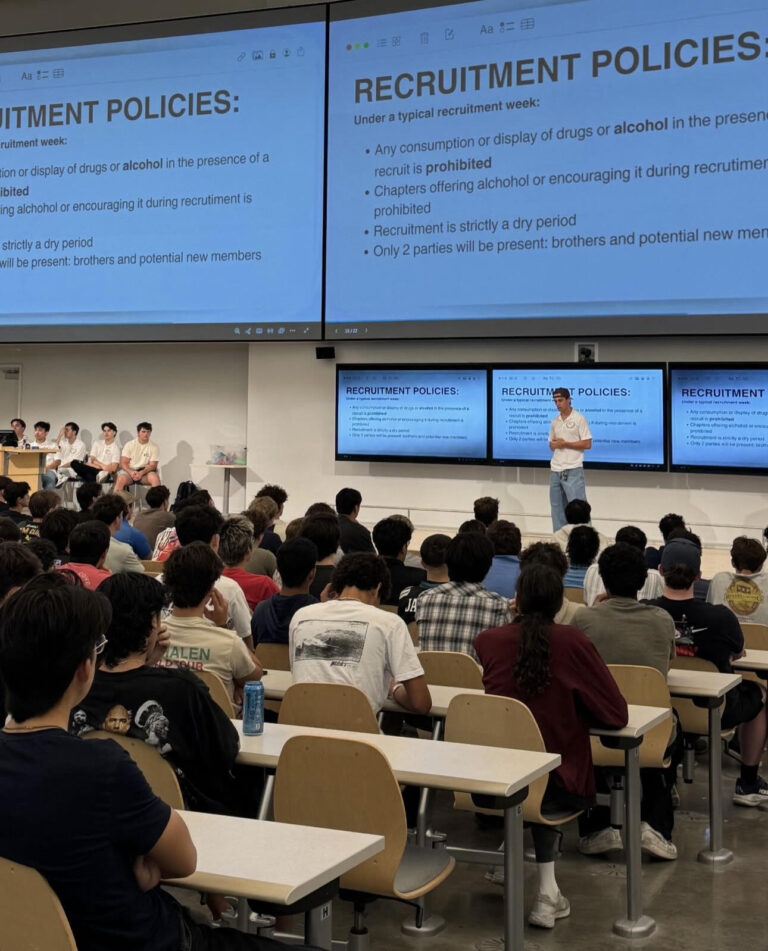
At the start of the school year, UC Davis Interfraternity Council (IFC) chapters on campus begin their recruitment process, commonly referred to as rush. During rush week, students have the opportunity to get acquainted with each IFC fraternity and learn more about Greek life on campus.

“IFC […] includes all of the social interest fraternities on campus, not including cultural interest fraternities,” Jonah Ross, the executive vice president of IFC and a fourth-year computer science major, said. “IFC rush is the process of exploring the fraternities that are a part of IFC, trying to find a group that you connect with as well as giving you the opportunity to meet the guys and attempt to get an offer, or a bid, to join their fraternity. While getting a bid is not guaranteed, we have 12 different chapters creating a diverse set of groups where anyone can find somewhere they connect with.”

Max Wozniak, the vice president of finance at IFC and a third-year aerospace engineering major, described how rush week begins. 

“This school year, rush will be happening during week one, starting […] with IFC kickoff, an info event happening in California Hall, followed by tours of the properties of our affiliated chapters,” Wozniak said.

Ross further explained the layout of rush, detailing how the days progress throughout the week.

“Monday through Wednesday of the same week is open to the rushee, where they can check out any chapters they want,” Ross said. “Thursday is the last day of rush, which is typically an invite-only night where chapters that are interested in a rushee will reach out and invite them to the last night of rush, which may include alumni speakers or more fleshed out conversations with guys they are really interested in.”

In the fall, IFC holds formal rush, which includes a kickoff and is typically mandatory for all chapters. While rush also occurs during the winter and spring, the process is more informal, and each fraternity chooses whether or not they want to recruit.

“This quarter, all of our 12 chapters are participating in recruitment,” Wozniak said. “Event activities and catering are up to the fraternities’ discretion, as long as they comply with IFC and campus-mandated rules, but they usually follow the ‘Football and Wings’ pattern.”

Though the events at each chapter vary, Ross outlined a shared theme among each chapter’s recruitment activities. 

“At the very core of each night, you will be talking to the members of the fraternity, not just for them to get to know you, but more importantly, for you to decide if that’s a place you could see yourself for the next four years,” Ross said. “Some fraternities will serve food, some will have games or sports — but the common factor among all of them is the conversations you will have.”

A common assumption about fraternity rush at any university is that it includes alcohol consumption and hazing. To combat this, the IFC, the Office of Student Support and Judicial Affairs (OSSJA) and the UC Davis campus have strict rules in place that aim to make recruitment fair and safe for everyone involved.

“The bylaws of the IFC and the code of conduct on our campus, as well as state and national law, strictly prohibit hazing during recruitment and further on in the fraternity experience,” Wozniak said. “Besides any PNM [potential new member] or fraternity brother being able to report misconduct, we have IFC board members, such as myself, doing ‘drop-ins,’ where we make sure organizations and recruits are following every rule.”

Ross described how UC Davis addresses concerns of hazing or other violations of university rules. 

“Any fraternity that is caught hazing goes through a thorough investigation by the [OSSJA] here at UC Davis,” Ross said. “There, a decision will be made on the proper course of action to take with the fraternity. We have no place for hazing here at Davis, and it’s something that we are constantly working to eliminate entirely.”

Although fraternities are often associated with various stereotypes, many current members believe that these assumptions do not reflect their experiences.

“Fraternities aren’t as secretive and exclusive as people may think; Anyone is welcome to come out and rush,” Levente Ryll, a Tau Kappa Epsilon member and second-year international relations major, said. “We come from all different backgrounds and majors, but center around the concept of brotherhood to help out each other and the community around us.”

Philanthropy, one of the strongest values of each IFC chapter, plays a central role throughout the entire rush period.

“Fraternities are really good for philanthropy to raise money via fun activities and games to help support certain charities, whether it’s a local community or a broader, more national community,” Ryll said. “We like to play a role in this to help make [things] better for those in need, especially when it comes to spreading awareness and fundraising to help a cause.” 

For most IFC members, the most meaningful aspect of rush is not simply choosing a chapter, but discovering the sense of community and connection that comes along with finding the right fit. 

“I think the most important role fraternities play, on our campus especially, is providing the feeling of belonging [that can be] so rare in college,” Wozniak said. “You can ask anyone involved in Greek life about why they chose their specific organization, and I can guarantee the word “home” makes an appearance. There’s a reason for that.”


Written by: Graciela Tiu — features@theaggie.org