60.8 F
Davis

Davis, California

Wednesday, December 24, 2025
Home Blog Page 175

Culture Corner

The Arts Desk’s weekly picks for movies, music and more


By ADHITHI ANJALI — arts@theaggie.org


Book: “Fun Home” by Alison Bechdel (2006)

Known for her cartoons and writings on gay and lesbian life in the U.S. since the 80s, Bechdel’s “Fun Home” uses comics and dry humor to navigate her relationship with her father after his suicide. Her blunt admissions leave you laughing while wondering whether you should have laughed at all. Nevertheless, the emotional impact goes both ways, and the attempt to understand her father — including his reasons for secrecy and his predilection for control — breaks through Bechdel’s protective analytical lens in a heart-wrenching need for human connection. 


Painting: “Our Town” by Kerry James Marshall (1995)

Toying with the imagery and tone of early 20th-century images of Americana, “Our Town” criticizes perceptions of a white, middle-class majority nation. The figures of Black children are starkly contrasted against a postcard-esque backdrop of white picket-fenced houses, lined with bright reds and filled by brighter whites. Marshall’s decision to barely render his characters emphasizes the displacement of Black people in the propagandistic ideal of American middle-class life. The painting is also overlaid with graffiti in some areas, asking the audience to consider the reality of what is depicted behind it. The painting is a part of Marshall’s larger “Garden Project” series. “Our Town” alludes to Thornton Wilder’s 1938 play of the same name, calling to attention the blindness of white creators to the presence of Black Americans, in art and in their own towns. 


TV Show: “Man Like Mobeen” (2020)

British comedian and writer Guz Khan brings to screen a comedic spin on life in the U.K. as a Muslim man supporting his friends, family and community. Playing the titular character Mobeen, Khan infuses the screen with energy and the quick-witted style of British comedy. Through this lens, Khan shows life in Small Heath, a poor and largely immigrant community, where Mobeen must care for his sister by himself. Of course, he has the support of weird and wonderful friends who antagonize him as much as they love him. The show offers quick laughs in the much-missed format of 30-minute TV comedy. Its first three seasons are available on Netflix, and a fourth season is on the way.


Album: “Aim and Ignite” by fun. (2009)

Indie pop with a little extra experimental rock style, the quartet fun. was terribly overlooked as a radio pop band after their single “Some Nights.” Before that, however, I believe they really created a unique sound and style in the lyrics and composition of their album “Aim and Ignite.” The album is concerned with a discontented youth, and its lyrics detail the neuroses of a modern adult. The album is theatrical, which is why I am so drawn to it. The opener, “Be Calm,” plays with tempo to follow the mind of the narrator. “Benson Hedges,” the following song, starts boldly with inspiration drawn from gospel singing, and the rest of the album follows with fun and energetic instrumentation.

Written by: Adhithi Anjali — arts@theaggie.org

UC Davis researchers develop cyborg cells

These semi-living cells offer a wide range of biomedical applications


By BRANDON NGUYEN — science@theaggie.org 


In a recent study published in the journal of Advanced Science, UC Davis biomedical engineers successfully synthesized “cyborg cells.” These semi-living cells exhibit traits of a living cell but are unable to replicate, allowing researchers to better control the conditions of the cells and manipulate them to carry out specific functions.

“Natural cells can perform complex tasks through synthetic genetic constructs, but their autonomous replication often causes safety concerns for biomedical applications,” the study reads. “In contrast, artificial cells based on nonreplicating materials, albeit possessing reduced biochemical complexity, provide more defined and controllable functions.”

Luis Eduardo Contreras-Llano, lead author on the study and a former molecular and synthetic biologist at UC Davis, explained how he helped create the cyborg cells.  

“By infusing living bacterial cells with a synthetic hydrogel, we could produce an extracellular-like matrix within them,” Contreras-Llano said. “This then produces these cyborg cells, that become programmable, do not divide and gain nonnative abilities that we can apply for biomedical purposes, such as delivering drug therapeutics to tumor cells.”

Artificial hydrogel is a synthetic polymer, which is composed of smaller, basic units that help build a net-like structure when exposed to ultraviolet light. Creating this matrix within a bacterial cell prevents it from splitting apart or replicating. It also enables the cells to be more rigid and resistant to environmental stressors that would usually kill normal cells. 

Dr. Cheemeng Tan, an associate professor of biomedical engineering at UC Davis and senior author on the paper, discussed some limitations of the cyborg cells his lab has created.

“Currently, we’re really working on how long they can be active,” Tan said. “Infusing live cells with this synthetic material can disrupt some protein expression, and in a sense these cells take a hit to their lifespan. So we’re still trying to improve and optimize the synthesis of these cyborg cells so that we can scale them up while maintaining purity of the product.”

Tan emphasized that these cells will not be deployed into the environment or healthcare any time soon, since safety and quality checks still need to be made. While, naturally, there are drawbacks to the cyborg cells in their early phases, Tan and Contreras-Llano expressed their optimism about their future biomedical applications and acknowledge this big first step.

“You can imagine in the future, we could have these cyborg cells serve as biosensors in the environment, not noticeable to the human eye,” Contreras-Llano said. “When a pathogen enters the environment or temperatures are hotter or cooler than normal, the cells could detect these changes and fluoresce to send signals back to notify us. Then, once they have served their purpose, they can die off harmlessly.” 

This is just one potential example of the wide range of applications these cyborg cells could have to help combat environmental or clinical dilemmas that would otherwise appear difficult to resolve. 

Written by: Brandon Nguyen — science@theaggie.org

A Davis oasis: explore the sustainable design and innovative lifestyle found in the Village Homes community

0

The ecologically engineered neighborhood has helped pioneer environmentally conscious living in Davis


By REBEKA ZELJKO — features@theaggie.org


Village Homes is a 70-acre subdivision in Davis, California, designed by Mike and Judy Corbett in the 1970s, according to the Village Homes website. The completed development includes 225 homes and 20 apartment units, as well as 23 acres of orchards, vineyards, parks, greenbelts, common areas and edible landscape.

The amenities and the environmentally conscious design are what distinguish this community from others. Sue Colombano, the president of the Village Homes HOA Board and longtime resident, said the community was unique from its inception. 

“My husband and I got interested very early on in 1979 when it was still being designed and developed,” Colombano said. “We would bike over in west Davis and see the area, and it really appealed to us. We saw all the vineyards, the orchards, the open space, and we decided to buy a lot so we could build a home. We wanted to build it in an energy-conscious, resource-conserving way, and so [the] Village Homes were perfect.”

Village Homes harbors many unique design elements intended to coexist with the environment. According to the Village Homes website, the design utilized a feature called “passive solar,” where “all the streets tend east-west and all lots are oriented north-south,” helping the homes store and effectively utilize the sun’s energy to regulate temperature. 

Other features, such as the street width, were also thoughtfully implemented in the area. According to the Village Homes website, the streets’ “narrow widths minimize the amount of pavement to sun in the long, hot summers. The curving lines of the roads give them the look of village lanes, and the few cars that venture into the cul-de-sacs usually travel slowly.”

Key design aspects like these prioritize the quality of life of residents and the integration of the community’s natural surroundings, according to Colombano.

“It’s pretty innovative,” Colombano said. “It makes me reflect on how [Mike and Judy Corbett] were visionaries. You can see the conscious decision-making in the design. Like the common areas, they’re consciously not fenced in because there is an understanding that you do have a community.”

These unique amenities quickly caught the attention of other Davis residents. Josephine Andrews, a UC Davis professor and resident of Village Homes, said the landscaping design is valuable to her. 

“I think the landscaping is really, really appealing,” Andrews said. “The paths are designed to take you kind of everywhere you would want to go. And in the spring, it’s just so beautiful. It feels like you live in a huge garden.”

This garden-like feel is due to a feature residents call “edible landscaping.” According to the Village Homes website, there are more than 30 varieties of fruit and nut trees as well as vineyards planted all over the properties. As a result, there is something that is ready to be harvested and enjoyed by the community nearly every month of the year.

“The community really enjoys and takes advantage of the abundance of fruit available to us,” Andrews said. “You would think this sort of thing would be more common.”

Andrews said that one of the distinct features in Village Homes is the shared plot design, where small groups of homes share and upkeep the common area their houses all face. 

“Something I think I love the most is that there’s no fencing,” Andrews said. “We sit in our kitchen, and we can see through the windows all these people walking by, families, children, dogs; it’s so uplifting to see that; it just really warms you up. And in these common areas, you all have to agree if someone wants to make any changes to your yard, so you have a stake in that sort of beautiful area that everyone can enjoy.”

The emphasis on community and shared resources is important to the cohesion of Village Homes. 

“It’s an amazing place to live,” Andrews said. “It’s very safe, nobody drives fast, there aren’t many roads, and the kids can really just wander in this large space very safely. You know your neighbors, even if you don’t really like them, you really know them, and that’s very important.”

Just as crucial as the community aspect, the incorporation of nature and urban development into a cohesive community is a signature component to Village Homes. Stephen Wheeler, Ph.D., a UC Davis professor in the Department of Human Ecology and longtime resident of Village Homes, said this hybrid design is valuable in a residential area. 

“It’s about creatively integrating green and gray,” Wheeler said. “The development industry in this country does not have that creativity. It instead follows a formula, and I understand it if there’s a lot of money at stake, but we need to be more creative in the ways we live and build in our communities in order to bring meaning back into our lives.”

Wheeler said that Village Homes is exemplary of human value over monetary value, where the latter is typically prioritized. 

“It’s all about, ‘Let’s be modernist as fast as we can,’” Wheeler said. “But we need to look at the takeaway from things like the great resignation, with people leaving their corporate and service jobs that don’t have any element of humanity in them. So on all of these fronts, whether it be work or the physical environment, we need to get back to something that really expresses our humanness.”

Wheeler said that these aspects of “humanness” are now very sought after in living environments.

“The proof is in the economic value,” Wheeler said. “It was originally built for affordable housing, and it quickly became the most expensive housing per square foot in Davis. Architects were not paid to do these things historically, there was no incentive, but now there’s a growing desire for it.”

It’s this irreplicable quality in Village Homes that makes it so desirable to buyers and so enjoyable to residents. 

“This is a unique community,” Colombano said. “It doesn’t fit everyone’s lifestyle. If you want privacy or don’t value this kind of community emphasis, it’s not the place for you. But if you do value orchards, vineyards and open space like we do, this is the perfect place to live and raise children. I still feel lucky to live here.”

Written by: Rebeka Zeljko — features@theaggie.org

ChatGPT: A useful tool or a herald of unemployment?

Generative AI programs have the potential to destroy intellectual labor


By EMILIE BROWN — emrbrown@ucdavis.edu


This article was not written by AI. (No, seriously.)

We’ve all heard of it. The AI promise to take the work out of everything from sending emails to writing your college admissions essays to finishing your novel. ChatGPT is taking over the internet and threatening unemployment for millions.

Chat Generative Pre-trained Transformer (ChatGPT), developed by OpenAI, is a free tool that interacts with users in a conversational way and allows them to ask text-based questions. In today’s digital age, more people are turning to AI-powered tools like it to help them with their writing needs. 

ChatGPT helps users do anything from translating languages, creating social media posts or writing essays quickly and with minimal effort, which explains why less than three months after its launch, ChatGPT has already had over 100 million downloads. It’s incredible; type ChatGPT into Google, download, type in anything you can think of and watch the AI eloquently spit out whatever you desire. 

However, ChatGPT’s efficiency comes with many negative effects, including putting writers, coders and journalists out of work. As you can imagine, AI that can quickly produce a coherent essay, article or program threatens the people who are paid to do the same thing. It seems to me that millions of blue- and white-collar jobs are threatened by ChatGPT. AI is able to pass college-level tests in almost all fields, earn an MBA, pass the written tests to become a doctor and the Multistate Bar Exam. While most technological progress in the 21st century has replaced manual labor, ChatGPT has the potential to replace intellectual jobs in thousands of fields. 

But don’t worry: ChatGPT still has some major flaws. We all know the internet isn’t perfect — there’s a plethora of misinformation, negative stereotypes and biases out there. Because ChatGPT draws and learns from the internet, it can, and often does, reuse incorrect information and show biases found online. ChatGPT’s writing isn’t perfect either. It’s missing the personality in writing only humans can provide. It has a very limited understanding of context and language, so it can be confused by common phrases. 

For now, ChatGPT is a unique tool and a great example of how helpful AI can be. While it has the potential to make our lives easier, it also has the potential to make many jobs irrelevant and put millions out of work. As technologies and AIs continue to develop, it’s crucial that we carefully consider their full potential to ensure they are used in ethical ways that are beneficial to everyone.


Written by: Emilie Brown — emrbrown@ucdavis.edu


Disclaimer: The views and opinions expressed by individual columnists belong to the columnists alone and do not necessarily indicate the views and opinions held by The California Aggie.

‘Get to the bargaining table:’ North Davis Peet’s Coffee holds celebratory rally after historic vote to unionize

0

Local leaders, community members, employees gathered outside the North Davis location to express their workplace grievances and garner support


By MADELEINE YOUNG — city@theaggie.org


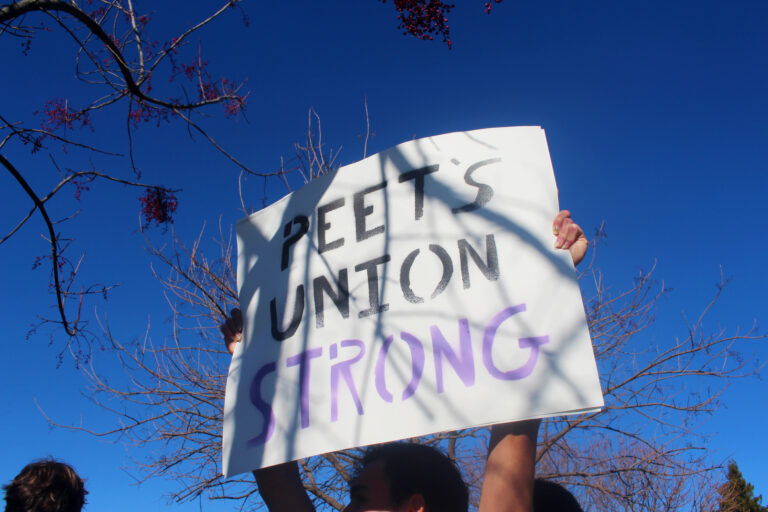
On Jan. 28, Peet’s Coffee workers, former employees and supporters held a rally outside the North Davis Peet’s Coffee location to celebrate a successful vote to unionize and garner support from the community.  

A week before the rally, the North Davis location voted 14-1 to join the Service Employees International Union (SEIU) Local 1021, making them the first Peet’s Coffee in the U.S. to unionize.

“The purpose of today’s protest is to first celebrate the victory of the first Peet’s Coffee in North America to unionize in a landslide election where they won 14 yes votes to one no vote,” rally organizer and Peet’s employee Jamaica Rettick said. “We’re also using this as a call to action for the community to support these workers to get to the bargaining table due to Peet’s creating conditions to the store that are really untenable for the workers.”

The rally featured both former and current employees who voiced their concerns regarding working conditions such as cut hours, a lack of significant raises, exhausting labor and more. Additionally, local leaders, including City Councilmember Gloria Partida, Deputy County Supervisor Sheila Allen and District 4 Supervisor Lucas Frerichs, came out to support the newly unionized coffeehouse. Frerichs spoke about the workers’ right to organize.

“The National Labor Relations Act was passed in 1935, which allows for an opportunity to organize, to collectively bargain and take collective action,” Frerichs said. “Even though that law has been in effect for almost 90 years, corporations are still trying to attack workers and stop workers from organizing. This may be the beginning, but this is not the end, not in the least.”

Alyx Land, shift lead, organizer of the rally and Peet’s employee since 2017, voiced his concern and disappointment regarding the conditions of the store. 

“I love our coffee and I really believe in the values and what we bring to people,” Land said. “I’m passionate about our work and I’ve seen the quality of our products decline along with the treatment and pay of employees at our location and others. Five years later, after working through the pandemic, we’re more stressed out than ever. We’re underpaid and overworked. I don’t want to burn out every month. My rent rises every year and combined with inflation, I may be less and less able to live there. I’ve been in Davis for seven years and I don’t want to be forced to relocate or continue living paycheck to paycheck, wondering how long I can do this before I have no energy left.”

With the first steps being made in collective bargaining, County Supervisor Allen commended the employees’ push to unionize. 

“I am pleased to know that this vote has gone through and that you are on the road now to one of the very important pieces of having a union, and that is collective bargaining,” Allen said. “It is hard for one person to make a difference, but collectively, you are so much stronger.”


Written by: Madeleine Young city@theaggie.org

Vice chancellor of research to leave UC Davis for new position

Vice Chancellor Prasant Mohapatra named the University of South Florida’s provost and vice president of academic affairs


By SYDNEY AMESTOY — campus@theaggie.org


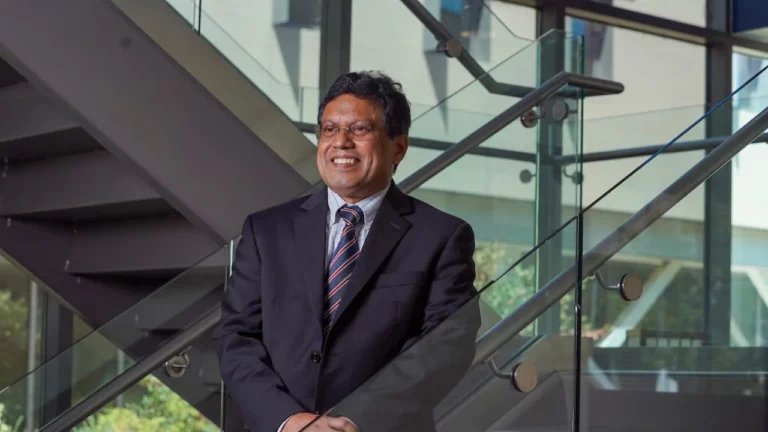
Vice Chancellor of Research Prasant Mohapatra is leaving UC Davis for the University of South Florida (USF), where he will become the university’s provost and vice president of academic affairs effective March 1, according to a recent press release

Mohapatra has been at UC Davis as a member of the faculty since 2001 and took on the role of vice chancellor of research in 2018, according to the statement on his departure. During his tenure in the Office of Research (OR) at UC Davis, funding increased for research across several disciplines, including public health and medicine and food and agriculture technologies. The university received a record-breaking $846.7 million in external funding in the 2017-2018 fiscal year, and last year that number surpassed $1 billion

Andy Fell, a news and media relations specialist for UC Davis, said that the search for a new vice chancellor of research is already underway nationwide.  

There will be an interim vice chancellor to fill the position after Prasant leaves until the recruitment is complete,” Fell said. 

A press release from Feb. 7 announced that Professor Emeritus Jeffery Gibeling will serve as the interim chancellor for research beginning March 1. He will serve for an estimated six months. UC Davis Chancellor Gary May will soon form a recruitment advisory committee, according to the release, to conduct the search for the next vice chancellor. 

Gibeling began his career at UC Davis as an assistant professor of materials science and engineering and holds multiple degrees from Stanford University. He has served in various academic leadership positions at UC Davis throughout the years, including as chair of the Academic Senate, chair of the Department of Materials Science and Engineering, vice provost of graduate education and more. 

The OR is in charge of accepting research funding and awards, assisting faculty in developing research studies and managing several research programs and facilities, according to their website. Fell said that the OR will continue normal operations as Mohapatra prepares to depart and Gibeling steps in. 

In a letter to students, USF president Rhea Law shared her thoughts about the addition of Mohapatra to their staff.

“With his strong teaching, research and leadership experience, I am confident Dr. Mohapatra will build on our momentum and take USF to new heights of academic excellence,” Law said.

According to the overview for the position, the provost is the second-ranking officer at USF, managing a budget of $626 million to “further the university’s academic mission.”

Mohapatra did not respond to requests for comment as of Feb. 5. 

Written by: Sydney Amestoy — campus@theaggie.org

Counseling group Adelante Mujeres promotes cultural understanding, facilitates meaningful conversations among Chicana and Latina students

Mental health counseling for specific communities acknowledges the unique experiences of students from marginalized racial groups on campus 


By MARIA MARTINEZ CASTRO  — features@theaggie.org 


In an effort to address the diversity of experiences and identities among the student population and their complexities, UC Davis hosts group counseling services for students to have conversations about mental health in safe and supportive environments. 

According to the UC Davis Student Health and Counseling Services (SHCS) website, group counseling services allow students to share feedback and personal experiences with peers while creating a sense of community. 

Counseling groups focus on themes such as living with anxiety, the graduate student experience and sexual assault and grief, among others. 

Within the multiple counseling groups that are offered, some solely focus on serving marginalized communities and their experiences. Due to their underrepresentation in higher education, students with marginalized identities often face a plethora of academic, financial and personal obstacles.

 As marginalized populations attempt to overcome the struggles of higher education, the process often takes a toll on their mental health.

At UC Davis, counseling groups such as the BIPOC Support Circle, Wellness Wednesday Talking Circle and Adelante Mujeres are counseling groups that address the unique experiences of marginalized students on campus. 

Adelante Mujeres is a group counseling service dedicated to providing a safe and supportive environment for students who identify as Chicana, Latina, gender fluid, gender non-conforming and two-spirit. Through the group, participating students can explore personal experiences on campus, create community and gain emotional support on topics such as navigating multiple identities, relationships and managing self-care.

Roxana Reyes, a licensed family therapist, has been working with UC Davis’s counseling services since 2010 and is the co-founder of Adelante Mujeres. 

Prior to the establishment of Adelante Mujeres, there was only one therapy group for Chicana and Latina students led by a male, Chicano facilitator, according to Reyes. This led many Chicana- and Latina-identifying students wanting a safe space where their identities and experiences were highlighted and understood.  

“We had a lot of female students [say] they wanted a group facilitated by women, for women,” Reyes said. “And so I think that the difference then was you needed to consent to therapy in order to be in the Latina group. And so we heard Latinas saying that they didn’t want to consent to therapy, but they wanted a space where they [could] remain anonymous if they wanted […] so we decided, well, let’s start something different for Latinas, by Latinas. And let’s have it as an informal drop-in support space. And so Dr. Rene Lopez and I started it then. That was probably 2011, and it just took off. It has been running every year since.”

Reyes said that support groups for marginalized communities have not always been provided at UC Davis. However, in the past years, it has become a priority for UC Davis to serve communities that are often underrepresented in counseling services. One of the actions taken was establishing the Community Advising Network (CAN), a group of diverse counselors helping students take care of their mental health. 

“We have definitely not had as many services focused on working with special populations, or marginalized populations as we do now,” Reyes said. “That is definitely unique and wonderful. And I think that it’s a result of the diversity of our staff now. So the establishment of the CAN program was actually […] out of a need to diversify staff on all the UC campuses and to reach out to students who don’t typically seek services.”

Group counseling tailored specifically for marginalized populations creates a space for cultural wealth and understanding, Reyes said. 

“Specific feedback I’ve got about Adelante Mujeres is that it is so nice to have a space that talks about culture as much as we talk about problems, like unpacking the stigma of using limpias, sage, energy work, using a curandero or going to a sweat lodge,” Reyes said. “There could be a fear of being pathologized and working with a therapist that might not understand the power of energy in your culture or […] your belief in chakra work.” 

 Marlene Velazquez, a licensed clinical social worker and behavioral health counselor at SHCS, is the facilitator for Adelante Mujeres in Spanish. Velazquez said people from marginalized communities often feel discouraged from seeking mental health services because of fear of judgment, because they do not see themselves represented in conversations about mental health or because they struggle to identify with service providers. She said that in her own undergraduate experience at UC Davis and as a Mexican-American, she often hesitated to seek mental health services. Coming back now as a behavioral health counselor, she said she hopes to break that cycle. 

“When I was a student, even though I knew I wanted to come into the field of mental health and be a counselor and whatnot, I never stepped foot into counseling services,” Velazquez said. “For the reason of feeling like no one’s going to understand my experience because the mental health field is, for the most part, seen as white therapists or for the white community. So when I saw my position, I was like, ‘Oh my god, this is my time to go back and at least be a face or a person or a name that students can at least see and be like, […] I think they, they may be [able] to understand.’” 

Providing students from marginalized communities with support to make sense of who they are can allow them to thrive against the obstacles they encounter in higher education, according to Reyes.

“I think that the commonality that we have on our campus is [that] everyone’s a student, but the way our identities develop are not in sync usually,” Reyes said. “Our identities kind of go on their own journey. Some identities are salient, while others are not. And so offering groups for students who are navigating these different identities that are salient to them, I think, is super, super helpful.” 

Written by: Maria Martinez Castro — features@theaggie.org

BRIDGE accuses Whole Earth Festival Committee of stealing their theme at Feb. 2 Senate meeting

The Senate table also heard quarterly reports from the Bike Barn, the Environmental Policy and Planning Commission and others


By LEV FARRIS GOLDENBERG — campus@theaggie.org


On Thursday, Feb. 2, ASUCD Vice President JT Eden called the Senate meeting to order at 6:12 p.m., read the UC Davis Land Acknowledgement and called roll.

First on the agenda was the confirmation of second-year international relations major Reid Henderson Rizk as the ASUCD Elections Officer. Henderson Rizk took questions from the table and was confirmed unanimously.

Next, the Senate added three new members to the Aggie Housing and Transportation Advocacy Committee (AHTAC). Third-year philosophy major Zachary Boggeln was confirmed as AHTAC chairperson and first-year psychology major Giovanni Terrones and second-year history and economics major Bihn Do were confirmed as members. 

The Academic Affairs Commission (AAC) received three new voting members — second-year cognitive science major Anita Thata, first-year computer science major Curtis Chen and first-year political science and English double major Spencer Smith.

The Senate also confirmed four alternates for the AAC: first-year art history major Isabelle Villanueva, first-year political science major Siyona Roychoudhury, second-year nutrition science major Lauren Nguyen, and second-year communication major Valerie Mostajo.

Following confirmations, the Senate opened the meeting to public comments.

Members from BRIDGE: Pilipinx Outreach & Retention Program and the SRRC voiced their concerns over the recently announced theme for the 2023 Whole Earth Festival (WEF).

Fourth-year neurobiology, physiology and behavior major Regina Garcia — the community youth development coordinator for BRIDGE — said that she helped choose the theme “Rooted in Resilience” for the 2023 Pilipinx Youth Conference (PYC). The theme for PYC, which will take place Feb. 18-19, was announced via Instagram and Facebook in early December.

“I am here to advocate for BRIDGE and PYC, as we have been notified that the Whole Earth Festival, an event facilitated by the ASUCD, has claimed the same theme as this year’s PYC,” Garcia said.

WEF’s theme announcement post on Instagram received hundreds of comments noting that PYC had already selected the same theme.

“Our community feels that our intellectual property has been taken and that our emotional labor has been neglected,” Garcia said. “We can empathize if this had been a coincidence of the imagined theme. However, with the specificity of our theme, we feel that our theme has been taken by the coordinators of the WEF.”

Garcia went on to request that ASUCD ask the WEF committee to change its theme and issue an apology to BRIDGE.

Fourth-year Asian American studies major Mattia Bianca Sayson, a mentor at the SRRC, also voiced frustration.

“To see that a space like the Whole Earth Festival, which has the full support of ASUCD, gets to promote this theme without even recognizing that the SRRC […] has been promoting this theme for months now, is absolutely disheartening, discouraging and frustrating for students who look like me,” Sayson said.

Multiple Senate members responded, including Senator Zeki Xu, who is also a staff member of WEF.

“I personally, and I know many other people in WEF, apologize for the fact that we used the same theme as you,” Xu said. “We understand how frustrating it is that we basically have taken away the thunder of your theme and I just want to emphasize that this was not intentional in any way.”

Xu also noted that he is willing to have a conversation with BRIDGE and the Pilipinx students committee to see what steps can be taken.

Senate President Pro Tempore Gaius Ilupeju, the ASUCD representative for the SRRC, noted that he was in favor of WEF considering a change of theme.

“While I understand the frustration and how unfortunate this is, I also do take offense at the suggestion at saying that ASUCD is not connected to or aware of […] issues that affect marginalized communities,” Ilupeju said. “We are not directly responsible for what other units do. WEF chose that theme on their own. It’s hard for us as a Senate table to take accountability when we weren’t directly involved in that decision. The best we can do is relay these concerns, but I can assure you that none of us takes us lightly.”

Senator Erek Leshyn commented next, saying that he disagreed with Ilupeju.

“We may not have been directly involved, but I think we should 100% take accountability for it,” Leshyn said. “I don’t think we should be making excuses. WEF is happening in May, and I think that is a lot of time to alter planning and change themes, so I am in favor of members of the public asking for WEF to change their theme.”

Garcia encouraged senators to make sure WEF gets back to them.

As of Tuesday, Feb. 7, WEF’s Instagram post announcing the theme had been removed.

Following the discussion, the Senate considered fifth-year sociology and political science double major Allie O’Brien for the position of AHTAC chairperson. O’Brien previously served in ASUCD as Chief of Staff for former ASUCD President Kyle Krueger. They are interested in training new advocates, creating a comprehensive playbook on how to advocate for housing and working with the city of Davis.

Several senators and committee chairpersons, including Environmental Policy and Planning Commission (EPPC) chair Mackenzie Field, responded enthusiastically to working with O’Brien.

The Senate confirmed O’Brien as chairperson, and third-year environmental policy analysis and planning major Thomas Howe as an AHTAC member.

Moving on to quarterly reports, the UC Davis Bike Barn’s business manager Yael Berrol, a fourth-year cognitive science major, discussed the unit’s recent accomplishments and challenges.

Richard Feltstykket followed with a quarterly report on Information Technology (IT). According to Feltstykket, IT is currently at 50% staff capacity and is hiring with the hope of returning to pre-pandemic staff levels soon.

The Senate then paused reports to suspend the bylaws in order to consider and confirm second-year human development major Kadira Wilkins for AHTAC Vice Chair.

Following a short break, the meeting was called back to order by Eden at 9:25 p.m., and the table heard the Office of the External Affairs Vice President (OEAVP) quarterly report from fourth-year international relations major Celene Aridin, the vice president of external affairs.

Aridin discussed the OEAVP’s recent Students of Color Conference in January and her goal to transition her staff from volunteer to stipend positions. The OEAVP’s goals for the year include ensuring state funding is being used appropriately at the UC, establishing Lobby Corps, continuing lobbying trips to the Capital and attending the Student Lobby Conference.

Following Aridin’s presentation, commission chairs gave ex-officio reports and senators presented officer reports.

Senator Priya Talreja noted that Unitrans wants to spread awareness about safety issues at the Silo bus terminal. Unitrans hopes that the problem, a result of the influx of students around the Teaching and Learning Complex (TLC), can be solved by moving the terminal to the Latitude Dining Commons area and adding student crossing guards next year.

Field, a fourth-year environmental science and management major, discussed EPPC’s recently posted Environmental Justice Report in the EPPC quarterly report. She also highlighted the Cool Campus Challenge coming in April, in which Davis will be competing with other UCs. According to the website, the challenge is “a friendly competition to reduce UC’s carbon footprint and create a culture of sustainability across campuses.”

The Senate then passed the consent calendar, which included four pieces of legislation SB #57, SB #55, SB #56, and SB #59.

Two pieces of old legislation passed. SB #50 addresses hiring delays in ASUCD committees and would give committee chairpersons the responsibility of hiring chairs.

According to the bill’s text, “the major change presented in this bill is requiring committee chairs to attend the meetings of their oversight commission. This will hopefully encourage a stronger relationship between the Commissions and Committees and allow the committees to receive the support they need.”

Senator Stephen Fujimoto and Eden both agreed to write legislation to strike this bill from the bylaws if the bill “turns out to be a disaster.”

SB #54 revives the Aggie Arts Committee as a committee of the ASUCD Senate and dissolves the Fair Trade Committee.

Fujimoto requested that two table members commit to being adopted senators for the committee — Senator Zeph Schnelbach and Senator Jacob Klein accepted the role of adopted senators.

The Senate then approved past meeting minutes and adjourned at 11:19 p.m. 

Written by: Lev Farris Goldenberg — campus@theaggie.org

A sneak peek into ‘Somebody I Used To Know,’ a new unconventional love story written by Dave Franco and Alison Brie

The writers joined a college publication roundtable to discuss the film premiering on Amazon Prime Video on Feb. 10


By ANA BACH — arts@theaggie.org


“Somebody I Used to Know,” a movie written by Dave Franco and Alison Brie, will premiere on Feb. 10 on Amazon Prime v+Video. On Feb. 2, the California Aggie had the opportunity to join a college publication roundtable with Franco, Brie and Jay Ellis, who plays Sean in the film, discussing the ideas that sparked the making of the film as well as some of the movie’s key takeaways.

Franco, known for his breakout role in “21 Jump Street,” and parts in “Neighbors” and “Nerve” joined together with Alison Brie, known for her comedic roles in “Community” and “Bojack Horseman,” to write the film. Brie and Franco also collaborated on Franco’s directorial debut, “The Rental.” This time, they said that they wanted to creatively share the stage and bond over their appreciation of the romantic comedy genre. 

“Alison and I had such a wonderful experience working together on “The Rental” and, since then, we’ve been very proactive in trying to find ways to collaborate,” Franco said. “The genre that we share the most mutual affection for is romantic comedies, so we decided to start there.”

The film initially follows a stereotypical rom-com plot line, but later changes course by focusing on the theme of self-reflection, driven by memories of past relationships.

“It starts out like a rom-com where you know — or think you know — where the story is going, but we really tried to subvert these expectations,” said Brie. “We are taking these complex characters, putting them in these classic rom-com situations and then showing very real human reactions. So, I think that kinda sets us apart.” 

The film aims to use past relationships — both platonic and romantic — and memories as tools to use for furthering your development in life.

While creating “Somebody I Used to Know,” Franco and Brie said they would write alongside each other, sharing ideas about how best to frame certain scenes and make humor and dialogue decisions to best fit what they wanted the film’s overall feeling to be. 

“The way it actually looked was, it was me at the computer typing away and Alison kinda pacing back and forth,” Franco said. “I would say to her ‘Alright, what would you say in this scenario?’ and she would just start improvising and acting it out and I would write down every word she was saying.” 

Franco tried to “diagnose” why the couple works so well together but ultimately stressed that it’s best not to “over-analyze” their dynamic. 

“In terms of why it works, we just have similar sensibilities and the same sense of humor. It might be annoying to say but for whatever reason, we just don’t butt heads when it comes to working together creatively,” Franco said. 

While filming the movie, Franco and Brie had the opportunity to meet with a nudist community, whose space is featured in the film. Franco explained that the inspiration for including a nudist colony in the film came from Brie’s high school experience.

“Alison went to a very progressive liberal arts school, where there was a rule that you don’t have to wear clothes anywhere except the cafeteria,” Franco stated, explaining how Brie would streak across campus, similar to how Brie’s character, Ally, does in the film.

Nudity in “Somebody I Used to Know” is representative of people’s purest forms and ties beautifully into the story with Ally’s development.

“The movie starts with Alison’s character very buttoned up and a little fierce and, by the end of the movie, it’s all out for the world to see, representing her getting back to her purest self,” Franco explained.

The nudist community that they collaborated with happens to be the oldest nudist retreat in the pacific northwest. “They were some of the most joyous, open, welcoming, happy people I’ve ever met,” Franco said. “It felt right for [Alison’s] character to end up in that scenario.” 

Brie shared that one of the keys of this movie is her knack for telling stories about women, citing the malleability of female relationships as well as the wide variety of feelings in those relationships as a driving factor behind this project. 

“I just love how [female relationships] can take on so many forms and two things can happen at the same time,” Brie said.

Franco discussed how the film challenges the stereotype of women struggling to choose between career aspirations and romantic relationships, emphasizing that the weight this ultimatum places on many.

“You can have both. You don’t need to choose one or the other and hopefully, you find someone, a partner, who understands you and who will make certain sacrifices so that you can be your truest self and explore all avenues that you want to,” Franco said. “When you are younger, you may have certain aspirations and dreams that don’t come to fruition as you get older. Even if you are not necessarily content in your current situation, it’s not too late to pivot and get back to the things that make you happy.”

Franco urged people to embrace nourishing their creative sides — and that it is never too late to do so. 

“I think about my own dad, who went to college for painting, then for the next forty years, he went away from that and into business,” Franco said. “In his last few years of his life, he got back into painting, just as a hobby, and I had never seen him happier… you don’t need to make a career out of these things, but you gotta listen to these urges inside of you.”

Franco said that women, and people in general, are often given ultimatums regarding their work and personal life balance, but that it is possible to “have your cake and eat it too.” Sometimes we don’t need to make a career out of those outlets that we have for expression, but we do owe it to ourselves to fulfill those urges. 


Written by: Ana Bach — arts@theaggie.org


Super Bowl LVII Preview

0

The Chiefs’ and Eagles’ Super Bowl matchup will feature star talent, sibling rivalry and potential revenge scenarios


By PATRICK FIGUEROA — sports@theaggie.org


This year, the Kansas City Chiefs will face off against the Philadelphia Eagles in the Super Bowl. The NFL season was long and grueling, but it has now reached the point where there will be a payoff for all of the blood, sweat and tears. While there are only 60 minutes of regulation play, the storylines surrounding the big game make it one of the most anticipated sporting events of the year. 

The Chiefs clinched their spot in Super Bowl LVII after defeating the Cincinnati Bengals 23-20 in the AFC Championship Game. Even with star quarterback Patrick Mahomes dealing with a high ankle sprain, he still managed to throw for over 300 yards and two touchdowns in the game. Defensive tackle Chris Jones also contributed with 10 pressures, five quarterback hits and two sacks that helped the Chiefs’ defense held the Bengals to 20 points. 

The Eagles dominated the San Francisco 49ers 31-7 to win the NFC Championship. The Eagles’ defense sealed the deal, as they achieved a 61.9% pressure rate on the 49ers’ passing plays. Edge rusher Haason Reddick was one of the many disruptors, logging three pressures, two sacks and a forced fumble in this game. 

The two-week gap between the conference championship games and the Super Bowl will help the Chiefs, who are currently dealing with multiple injuries in their receiving corps. Wide receiver Mecole Hardman is unlikely to play, but wide receivers Kadarius Toney and JuJu Smith-Schuster have time to recover after suffering different injuries in the AFC Championship game. 

The Super Bowl this year will also feature two incredibly talented brothers facing off: Chiefs’ star tight end Travis Kelce, who bolstered his Hall of Fame resumé with 110 catches, 1,338 receiving yards and 10 touchdowns this season, and Eagles’ center Jason Kelce, who gained his fifth first-team All-Pro nod for his work on the offensive line this season. Now, the two brothers will be the first pair of siblings to play against one another in Super Bowl history. 

On their podcast, “New Heights,” the Kelce brothers talked about what it is like to be facing off against one another for a chance to win the Lombardi Trophy. 

“If somebody is rigging it, thank you very much,” Jason Kelce said jokingly. “It’s working out in our favor heavily.” 

The Kelce brothers enjoy making jokes, but they also discussed the slim odds of playing against one another in the Super Bowl. 

“And did we think it would be both of us [in the Super Bowl]? I don’t know,” Jason Kelce said. “I thought it could happen, but I didn’t really ever fully anticipate it happening until pretty much last week. I was like, ‘Man, this could really happen.’” 

Travis Kelce said, “My entire time, I’ve been like, ‘That’s been the goal: to play my brother in the Super Bowl.’ Now that it’s actually happening, it’s kind of sick.” 

The Chiefs’ head coach, Andy Reid, will also be facing off against an important rival — his former team. Prior to becoming the head coach of the Chiefs in 2013, Reid was the Eagles’ head coach for 14 seasons from 1999 to 2012. During that span, Reid had a win-loss record of 130-93 but was fired after a subpar 2012 season in which the Eagles only won four out of 16 games. 

Since 2013, the Chiefs are 117-45 during Reid’s tenure as the head coach. They have also been to two Super Bowls, winning one of them against the San Francisco 49ers in 2019. 

In a press conference, Reid shared his thoughts on facing his former team in the Super Bowl. 

“I’m happy for them,” Reid said. “I’m happy for the city [of Philadelphia]. They’re passionate. They love football. I mean, I can’t wait until Kansas City and Philly clash. It’s gonna be awesome, man. What a great Super Bowl it’ll be.” 

Eagles’ head coach Nick Sirianni and Reid have history as well. When Reid was hired by Kansas City in 2013, he chose to let go of Sirianni, who was serving as the Chiefs’ wide receivers coach at the time. 

Sirianni was hired by the Chargers in 2013 and worked there until 2017. He would then work as the Colts’ offensive coordinator from 2018 until he was hired as the head coach of the Eagles in 2021. 

“I knew being as good as he was and the reputation he had, I knew he was going to get something,” said Reid when speaking about Sirianni. 

With so much history and talent going into the game, Super Bowl 2023 is sure to be a memorable experience for NFL fans. It’s also a great time to get together with friends and family to watch one of the biggest sporting events of the year as well as the conclusion of a memorable NFL season. 


Written by: Patrick Figueroa — sports@theaggie.org


Annual student-led conference highlights intersectionality in mental health

UC Davis Mental Health Initiative conference raised awareness for mental health advocacy and promoted several on-campus student resources 


By LILY FREEMAN — campus@theaggie.org


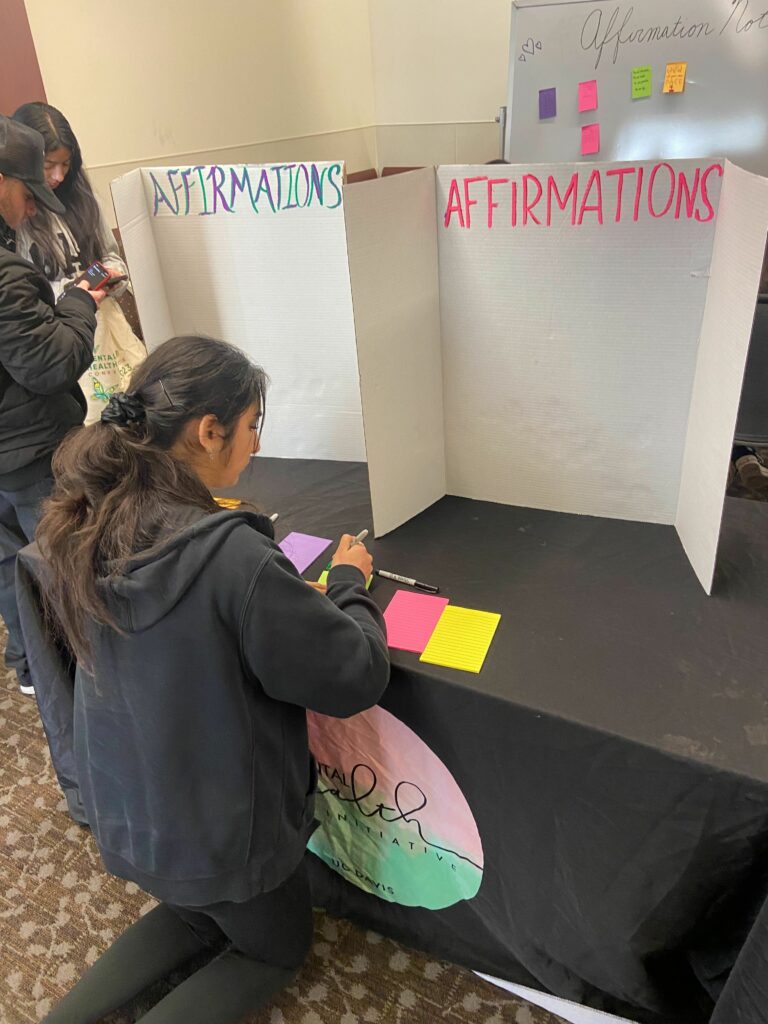
On Jan. 21 and Jan. 22 UC Davis Mental Health Initiative (MHI), a student organization dedicated to mental health advocacy, held the 2023 Mental Health Conference.

Dylan Ocampo, a fifth-year biopsychology major and the unit director of MHI, described the goals for the two-day event. 

“We just wanted to give folks the space to unpack these topics that we don’t necessarily discuss within our daily spaces,” Ocampo said. “A lot of our advocacy stems from educating the people who come to events like our conference and then for them to spread what they unlearned and learned to their peers and communities.” 

Two keynote speakers were featured at the event, according to Ocampo. Jenee Darden, an award-winning journalist, public speaker and mental health advocate, and Imadé Borha, a writer and mental health advocate who founded the nonprofit Depressed While Black, both spoke about their work on Black liberation within the mental health field. 

The conference also included a variety of workshops surrounding intersectionalities within mental health, which Ocampo said included topics like substance abuse, the Latinx and Hispanic communities, the connection between hip-hop music and mental health, the neurodivergent perspective and how to build healthy relationships through setting boundaries. 

Following these workshops were student and professional panels meant to facilitate conversation between attendees and community members dedicated to mental health advocacy, as well as “caucuses,” or small-group discussions between attendees. Ocampo explained that the discussion-based caucuses explored intergenerational trauma, toxic positivity and productivity culture. 

The conference ended with a resource fair featuring several on-campus mental health organizations. Aggies for Recovery, the Aggie Mental Health Ambassador Program, the Willow Clinic, the UC Davis Love Lab, the Aggie Compass Basic Needs Center and the UC Davis LGBTQIA+ Resource Center were just some of the organizations that attended. 

Johnalyne Love Samson, a fourth-year psychology major and the chief of staff of MHI, explained her main takeaways post-conference. 

“One of the lessons MHI has taught me is that we need to make time for the things we want to happen,” Samson said. “Destigmatizing mental health happens when we put effort into starting conversations with others about things we often only let ruminate inside our own thoughts.” 

Radhika Gawde, the ASUCD president, spoke on the conference’s focus on diversity and intersectionality in their programming from her perspective as an attendee. 

“MHI’s focus on intersectionality is incredibly important as the impacts of factors such as race, gender and socioeconomic status are often overlooked in conversations about mental health,” Gawde said. 

MHI is currently working on its upcoming May Mental Health Awareness Month project. Ocampo explained that the organization’s recognition of the national awareness month will consist of weekly events and advocacy projects surrounding a variety of mental health topics. 

Natalie Bruch, a fourth-year psychology major and the publicity coordinator of MHI, emphasized the next event, “Brain Freeze,” for community members to look forward to on Feb. 18. MHI will have various de-stressing activities available for students to participate in at the event, according to Bruch.

“We will be partnering with the Entertainment Council to put on the Brain Freeze event, where Raveena, the singer, will be performing,” Bruch said. “It is an event to help students de-stress mid-quarter.”

Ocampo ended with his reflections post-event. 

“I always tell my team no matter how big or small the contributions you make towards mental health, they still matter,” he said. “The conference just reminds me of our impact on the broader whole community, even if we may not see the total scope of our impact. We have each other and community to rely on, and this conference helped me feel this and see it in action.” 


Written by: Lily Freeman — campus@theaggie.org


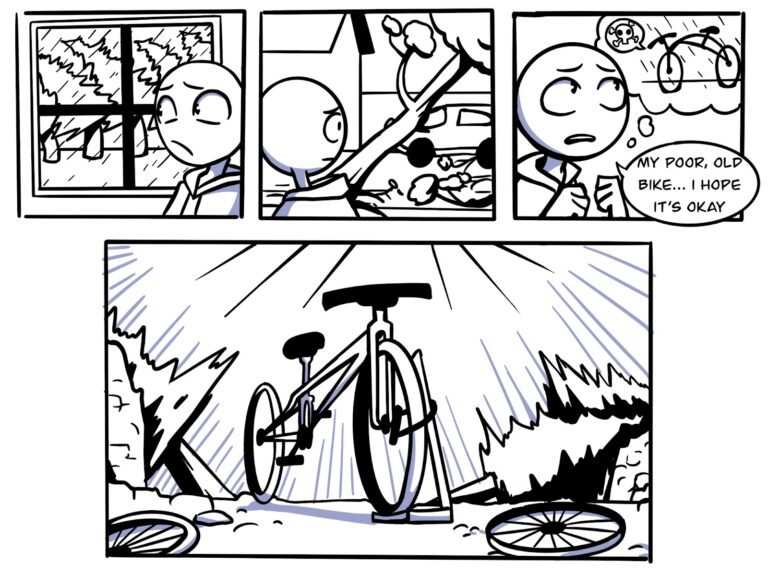
When your bike is stronger than you

By LIDYA SHCHERBAKOVA –– lvshcherbakova@ucdavis.edu


Drawn by: Lidya Shcherbakova –– lvshcherbakova@ucdavis.edu

Disclaimer: (This cartoon is humor and/or satire, and its content is purely fictional. The story and names of “sources” are fictionalized.)

Is a lie that soothes better than a truth that hurts?

Why it is always wiser to tell the truth


By YASMEEN O’BRIEN — yjobrien@ucdavis.edu


A few years ago, I was introduced to the Czech proverb: “Better a lie that soothes than a truth that hurts.” When I came across it for the first time as a 17-year-old, I thought it sounded beautiful and complex. I knew I was guilty of telling lies I believed were harmless and unimportant. Sometimes, I felt that a hurtful truth was unnecessary, especially as the people-pleasing teenager I was.

People tell these kinds of lies all the time. We compliment people’s outfits when we don’t especially like them. We tell our friends everything is going to be okay when we don’t know for sure. We tell that annoying person that we’re busy when we’re really sitting at home watching TV. We’ve all told the most common lie of all: “I’m fine.” 

Recently, I told my uncle I loved his Christmas gift as I calculated what I could get when I returned it. Sometimes, though, these lies backfire — my grandfather got stuck receiving unwanted owl figurines for 40 years.

Our parents told us lies when we were children that were intended to shield us from the evil of the world: our dog went to visit a sunny, peaceful farm for the rest of its life, a man named Santa Claus magically enters our home and brings us presents every year and babies are delivered by storks. Are we better off having believed these? Did this really shield us? Maybe these lies saved our childhood, or maybe they delayed our understanding of the world and created our first inklings of distrust.

It’s been four years since I first heard this proverb, and it doesn’t sound so beautiful anymore. I don’t know if it’s all the life I’ve experienced between the ages of 17 and 21, or my quest to become a better person, but my perspective has changed. Now, I believe the truth is always better, full stop.

But I do recognize that it’s not that simple. There are lies that appear to soothe, it’s true. But how much soothing do they really do? Sure, when you lie you don’t have to face an inconvenient truth. You are let off easier and it seems like no one gets hurt. The lie is enticing — it seduces us by offering us things the truth can’t. But just because someone can’t feel the pain you’re causing them doesn’t mean you’re not hurting them. It’s only a matter of time before the truth comes out. And it always does.

Truth, addressed and delivered with care, is much better than a lie, no matter how small it may seem. The lie will always cause more hurt in the end.

If you have ever been lied to, you are familiar with this feeling of disrespect, betrayal and insecurity. Your version of the truth is completely discredited. It feels like the person lying to you does not value or respect you enough to tell the truth. It’s cowardly to lie. Therefore, telling the truth is a kinder and more respectful choice. It is a very courageous act to confront the uncomfortable.

Lying to someone takes away their agency. It corrupts one of the most important qualities of being human: the ability to make free, rational choices. After all, it’s impossible to make informed decisions when you’ve been lied to. I am not claiming to be some perfect truth-teller, but I know I wouldn’t want my agency taken away. The golden rule applies here: “Do unto others as you would have others do unto you.”

Don’t get me wrong, there are some things I wish I didn’t know. Things I believe I didn’t have to know. It feels like I would have been happier without the truth. Ignorance is bliss, isn’t it? But when I stop to think about it, the bliss that ignorance gives you isn’t all that blissful. No matter how uncomfortable, the truth sets you free. And when given the power to set someone free with the truth or keep them caged with a lie, I hope you will choose to tell the truth.


Written by: Yasmeen O’Brien — yjobrien@ucdavis.edu

Disclaimer: The views and opinions expressed by individual columnists belong to the columnists alone and do not necessarily indicate the views and opinions held by The California Aggie.

Gun violence: When is enough, enough?

Recent mass shootings show that more national comprehensive gun reform is needed


By CLAIRE SCHAD — cfschad@ucdavis.edu 


In the first month of 2023, California and the rest of the U.S. was plagued with the awful reality that is gun violence. First, a mass shooting at a Lunar New Year’s festival left 10 dead and nine injured in the Southern California community of Monterey Park. Less than 48 hours later, seven people were killed by a violent firearm attack in Half Moon Bay, California. In January alone, the U.S. experienced 52 mass shootings and over 1,600 people were killed by guns. 

Every time a mass shooting occurs and is picked up by the media, the longstanding debate about gun rights and gun control gains traction. Typically, one side immediately calls for stricter gun laws and regulations, while the other argues that proposed laws only infringe on the rights of gun-owning Americans and won’t decrease shootings. 

This deep divide around guns in the U.S. has made it difficult for meaningful legislation to be passed. While certain states have made significant progress in passing and implementing gun control legislation, others have not.

This vast difference in access to guns in certain states has created loopholes for residents in states that have stricter laws. For example, while California has the strictest laws in the country, the bordering states of Nevada and Arizona act as safe havens for gun buyers. This phenomenon diminishes some of the effectiveness of California’s laws and illustrates that more comprehensive and national-level reform is needed. 

Over the past year, California state legislators have worked to pass a variety of laws aimed at reducing gun violence in the state. Domestic violence offenders who have faced felony charges are barred from owning guns. There is a ban on high-capacity magazines and noise-muffling silencers. People with certain mental health diagnoses are restricted from buying guns. Finally, and probably most famously, semi-automatic guns, largely known as assault weapons, are banned completely.

So what happened? Why weren’t these laws enough to protect the lives lost in Monterey Park and Half Moon Bay?

This is still largely unclear. As details continue to emerge from the shootings, it seems that both Huu Can Tran, the shooter in Monterey Park, and Zhao Chunli, the shooter in Half Moon Bay, came very close to meeting requirements that should have restricted their firearm access. They had both had previous run-ins with law enforcement and both appeared to be in current mental health crises. 

The weapon used in the Monterey Park shooting was a modified version of the MAC-10 pistol, manufactured in the 1960s and 1970s. It is now outlawed in California, as it is considered a semi-automatic weapon that has a threaded barrel and is designed to take 30-round magazines. However, the gun was purchased by the gunman in 1999, prior to the ban going into effect. Additionally, the weapon was not registered in the state of California and law enforcement officials are still unsure why. 

Similarly, the semi-automatic handgun used in the Half Moon Bay shooting was legally obtained. Additionally, this firearm did not have any features that would deem it illegal under California’s assault weapon ban.

No matter which way you lean on the gun debate, it is clear that more needs to be done to combat these deadly shootings that seem to happen daily. More widely available mental health resources are needed in addition to gun control; these two ideas don’t have to signal two sides of a debate.

Ultimately, these tragedies tell us that state-level weapon bans are not enough. While this may not have been the case in the recent mass shootings, people who are outlawed from buying weapons in California can still travel to neighboring states such as Nevada and Arizona and purchase firearms. The implementation of national-level, comprehensive gun reform could provide more funding and resources to ensure that guns are kept out of the hands of dangerous people. We must enact national comprehensive gun control now. For each day we wait, more lives are lost.


Written by: Claire Schad — cfschad@ucdavis.edu 


Disclaimer: The views and opinions expressed by individual columnists belong to the columnists alone and do not necessarily indicate the views and opinions held by The California Aggie.

Dynamic duo Pepper and Johnson lead UC Davis men’s basketball to victory over University of Hawai’i

Pepper has scored more than 27 points in seven games this season


By MARLON ROLON — sports@theaggie.org


The UC Davis men’s basketball team’s third-year guard Elijah Pepper and second-year point guard Ty Johnson are considered one of the best back-court duos in the Big West. The two combined for 51 points at the University Credit Union Center on Thursday night, helping the Aggies get the 75-63 win against the University of Hawai’i.

With the win, the Aggies split the season series against the Rainbow Warriors and are tied for fourth place in the Big West Conference with nine games remaining on the schedule. 

UC Davis enjoyed their best shooting night of the season, shooting 63.6% (28-for-44) in front of 1,961 fans. The home crowd was treated to a 29-point performance from Pepper and 22 from Johnson. 

“The crowd was great,” Pepper said after the game. “They really energized us.”

Although Aggie fans were cheering for most of the game, Hawai’i did not seem intimidated, as they got off to an early lead in the first half. Fourth-year forward Kamaka Hepa recorded his first three-pointer early in the first half which put the Rainbow Warriors up 12-8. 

UC Davis responded quickly, going on a 5-0 run with a layup from Pepper layup and a three-pointer from atop the key from third-year guard Kane Milling that put the Aggies in the lead, 13-12. 

However, Hawai’i’s defense put the Aggies on their heels, forcing them to turn the ball over early in the half. The visitors used their defense to gain possession of the ball and went on a 10-2 run; third-year point guard JoVon McClanahan put up seven points in less than a minute for the Rainbow Warriors. 

With 7:33 remaining on the clock, the Rainbow Warriors led by nine, 28-19. It appeared that Hawai’i was too much for the Aggies to handle with their tough defense and the ability to space the floor, find the open man and knock down shots. But, with the clock winding down in the final minutes of the first half, Pepper and Johnson decided to take over the game at the right time. 

Johnson buried a three-pointer that got the crowd on their feet. Pepper immediately followed up with a quick layup after the visitors missed their shot. Third-year guard Noel Coleman answered back by driving into the paint for a quick two, putting his team up by six points, 32-24 with 5:33 remaining. 

However, the highlight of the night came after a steal as Johnson sprinted down the court for a one-handed jam that brought the fans to their feet. This play electrified the arena and the momentum quickly shifted. UC Davis would go on a 13-2 run with Pepper hitting a jumper at the buzzer to end the first half. The 13-2 run helped the Aggies take control of the game. The score was 37-31 at halftime, with Pepper scoring seven points and Johnson dunking, which fueled the comeback.  

“Defenses are designed to stop [Pepper], and he still figures out a way,” said UC Davis Head Coach Jim Les. “[Pepper’s] an elite competitor and the hardest worker on the team, nobody wants to let him down.”

Pepper finished the half with 15 points; behind him was Johnson who tallied 11. The home team shot 60% from the three-point line, while Hawaii shot 36%.

Although UC Davis gained control of the game and took a commanding lead at the end of the first half, fourth-year forward Christian Anigwe, a key figure on the roster, went down in the last six minutes of the half. It seemed like a serious injury, as he did not return. Les was forced to rotate in second-year center Francesco Borra and second-year forward Niko Rocak to compensate for the loss of Anigwe’s presence inside the paint. 

Pepper got the second half started with a nice assist and found Borra for a hook shot as the Aggies continued to roll. In the 17th minute, UC Davis took advantage of a Hawai’i turnover as third-year guard Ade Adebayo scored a layup off a fastbreak and made it a 10-point lead, 45-35.

A few plays later, the Aggies expanded the lead to 14. Milling forced the steal and quickly found Johnson, who drove down the lane and was fouled, gaining two free throws. 

The Rainbow Warriors tried to claw back into the game in the last eight minutes of play, cutting the lead to eight points, at 60-52. In the next possession, though, the Aggies turned the ball over with a sloppy pass, but Johnson recovered the ball off a steal. UC Davis spread the ball around, and Pepper found Milling for an open-look three-pointer which he buried and put the home team up by 11.

“I liked our ball movement where guys were passing up a good shot to take a great shot,” Les said. “That comes from working hard in practice. Our practices have had great integrity and have been very solid. We’re getting contributions from a lot of people and that’s really paying off.”

The Rainbow Warriors would not recover from the Aggies’ offensive onslaught. In the final minute of play, Pepper sealed the deal with a stepback jumper to put UC Davis up by 16. Hawai’i finished the game by scoring the last four points in the game and fell to the Aggies, 75-63. 

Pepper and Johnson combined for 25 points in the second half, proving that they are more than capable of handling a top-two defensive team in the Big West Conference. 

“Our mindset is to just be aggressive, and we’ve really gelled at this point. Everything is clicking on and off the court,” Pepper said of the overall team chemistry. 

UC Davis holds two players in the top four in scoring in the conference: Pepper, leading all scorers and averaging 20.4 points per game (PPG) and Johnson, in fourth and averaging 16.3 PPG. Their offense is ranked third in the conference, but their defense is ranked ninth out of 11 teams. Still, with nine games remaining in the regular season, the top seed is up for grabs — and would be an advantage going into the postseason, since the No. 1 seed gets a bye in the first round of the playoffs.

The Aggies improved their overall record to 14-9 overall and 7-4 in conference play. UC Santa Barbara is in first place with an overall record of 18-3 and 9-1 in conference play, UC Irvine is in second place with a record of 15-7 and 8-2 in the conference, UC Riverside follows up in third place with a record of 15-8 and 8-3 in conference play while UC Davis is tied with Hawai’i for fourth place. 

The Aggies have their hands full with the upcoming fixtures; they go on the road to Riverside on Feb. 9 and then travel to Santa Barbara to play the Gauchos on Feb. 15. These next two games will be telling, as the UC Davis offense will be put to the test against contenders that can potentially win the Big West Championship. 

Written by: Marlon Rolon — sports@theaggie.org