60.8 F
Davis

Davis, California

Wednesday, December 24, 2025
Home Blog Page 174

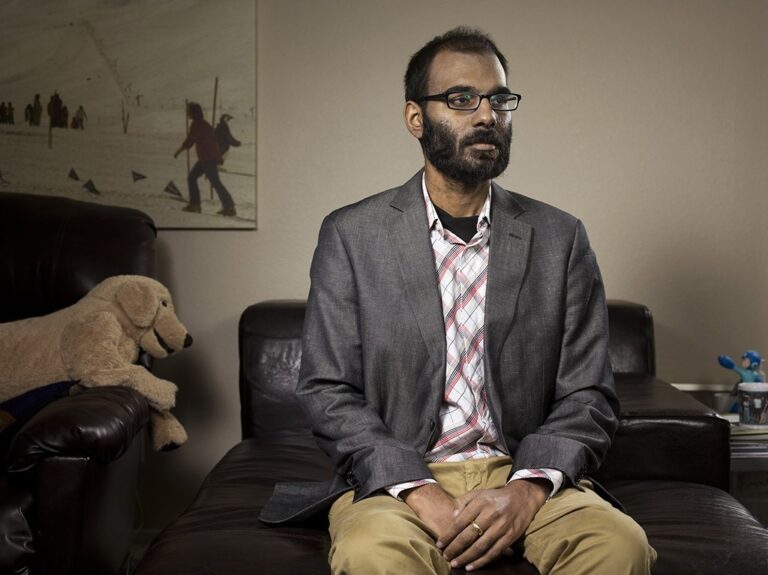
The College Board is watering down African American Studies

AP African American Studies course is a positive step, but contemporary issues must not be omitted


By CLAIRE SCHAD — cfschad@ucdavis.edu 


In recent weeks, the College Board has been under scrutiny for the new Advanced Placement (AP) course, African American Studies, which is currently being piloted at 60 schools across the country. 

Most notably, Florida Gov. Ron Desantis’s administration criticized the new curriculum for “lack[ing] educational value” and violating the state’s Stop the Wrongs to Our Kids and Employees (W.O.K.E.) Act, which works to prohibit teachings of critical race theory and similar ideas in Florida schools.

The new course is set to be introduced in hundreds of additional high schools next year, and access is expected to expand to all schools in the 2024-25 school year, when the first official AP test in the subject will be held.

The framework of the course is separated into four units: “Origins of the African Diaspora,” “Freedom, Enslavement, and Resistance,” “The Practice of Freedom” and “Movements and Debates.” Additionally, it requires a final research project on a relevant topic of the student’s choosing. 

The introduction of AP African American Studies would offer a much-needed deviation from the Eurocentric and misleading view that is often taught in many U.S. high school social studies courses. A portion of the curriculum is set to focus on African history prior to European interaction; a concept that is frequently omitted or skimmed over in other AP social science courses. This addition would provide a more comprehensive and accurate understanding of African American history.  

Since Desantis’s original remarks on the curriculum, some of the most controversial aspects have been removed, however, the College Board has stated that this change was not caused by political influence. Omitted topics include: intersectionality, the Black Lives Matter movement, Black feminism and issues surrounding the Black LGBTQ experience.

By eliminating many of the contemporary issues of race, the AP course will fail to fully promote a conversation about the existence of racism and oppression as it still exists today. Additionally, this exclusion will perpetuate the myth that anti-Black racism only exists in the past.

Too often in AP curricula, contemporary issues fail to be addressed. In my experience, many AP courses, such as AP U.S. History, brush over or do not include the events of the past 20 or 30 years. It is important to note, however, that this may be due to a lack of funding for current textbooks and materials in some school districts, such as my own, where the textbooks I received were often older than I was. 

Nevertheless, by not discussing contemporary events and movements, students may fail to make important connections between the past and present. This ability to highlight relationships between events occurring over time is critical to developing historical thinking skills, as defined by the College Board

While it is understandable that the curriculum has undergone revisions throughout the pilot period, it is disappointing that many relevant and current concepts have been abandoned. American high school students should receive a complete and comprehensive education representative of all student backgrounds. The addition of the AP African American Studies course would be a step in the right direction, but the curricula must be comprehensive.


Written by: Claire Schad — cfschad@ucdavis.edu 


Disclaimer: The views and opinions expressed by individual columnists belong to the columnists alone and do not necessarily indicate the views and opinions held by The California Aggie.
KDVS calls for creative freedom from ASUCD at Feb. 9 Senate meeting

SB #55 clarifies the role of the ASUCD Brand Guide, and SB #56 grants freedom over social media and websites for ASUCD units 


By KAYA DO-KHANH — campus@theaggie.org


On Thursday, Feb. 9, at 6:17 p.m., Vice President JT Eden called the Senate meeting to order and recited the UC Davis Land Acknowledgement. 

The Senate then moved into their quarterly town hall. 

One member of the public spoke about the lack of gender-neutral bathrooms in certain areas of campus. The speaker said that there are no gender-neutral bathrooms at Shields Library and that the closest one is at Sproul Hall or the Student Community Center, which they said “is completely inaccessible for people like me […] We need to set our priorities straight on stuff that actually impacts LGBTQ people every day. If you want to work with me, I’d be happy to do whatever it takes to get this done, because I want to make me and my community feel like we have a place in this public setting.” 

One of the senators spoke about a movement by students to put gender-neutral bathrooms in the library, saying that they recently assigned the issue to the Library Committee. 

Next, the ASUCD Elections Committee gave their quarterly updates, which included plans to work with Aggie Studios to create an election promotion video and to revamp their website. 

The Senate table then went over public comments. One of the topics brought up was the need for crossing guards in the Teaching Learning Complex area because of the increase of foot traffic with the opening of the new facility. 

Another public comment stated that they did not believe that conservative student group Turning Point USA should be allowed to invite speakers to campus due to the violence that broke out during their last event

Eden gave a quarterly report for the Personnel Committee, which reviews the personnel policies of ASUCD and proposes changes to those policies and to employee compensation. The committee has experienced onboarding challenges for ASUCD jobs, according to Eden, and has plans to propose a pay proposal for the next budget and create a HR position. 

Next, Brooke Isrow was confirmed as the chairperson of the Aggie Mentors Committee, which helps incoming freshmen and transfer students adapt to college life, with no objections. 

Elena Hung and first-year environmental science and management major Aaina Kapur were both confirmed remotely to the Student Sustainability Career Fair Committee with no objections. 

The senators then moved into elected officer reports, where they gave updates on their weekly schedules and progress on various projects. 

The status of previous legislation was addressed, and then there was a motion to pass the Consent Calendar. 

SB #55, a bill intended to define the ASUCD Brand Guide and clarify its role as a recommended, but optional, resource to design ASUCD materials, was passed unanimously. 

KDVS General Manager Cate Hatcher made a statement regarding SB #55 requesting the removal of the ASUCD logo from KDVS. 

“On an artistic level, I think it’s inappropriate to ask students to attribute credit to a group of students that we respect but who do not actually participate in our unit’s functions and who don’t actually create the art that we publish under our name,” Hatcher said. “We need to continue having freedom to create our own design portfolio for KDVS.”

SB #56, which grants ASUCD units, bodies and services increased freedom to publish and modify their own social media and websites, also passed unanimously. 

In regards to SB #56, Hatcher made another statement, this time in reference to the “poor state” of the KDVS website, requesting more control over it. 

Academic Affairs Commission Chair Megan Chung said that she was in agreement with the bills granting more creative freedom to units in the statement. 

“For some units, UC Davis is taking advantage of the fact that we call it UC Davis, and they’re taking credit for it,” Chung said. “We should uphold the fact that this is students doing this work, not UC Davis.”

SB #59, which allocates $4,586.86 from Senate Reserves to the ASUCD Pantry for the purpose of purchasing menstrual products, was passed unanimously, and SB #60 was tabled until Feb. 16. 

The senators approved past meeting minutes, and Eden adjourned the meeting at 11:50 p.m.

Written by: Kaya Do-Khanh — campus@theaggie.org

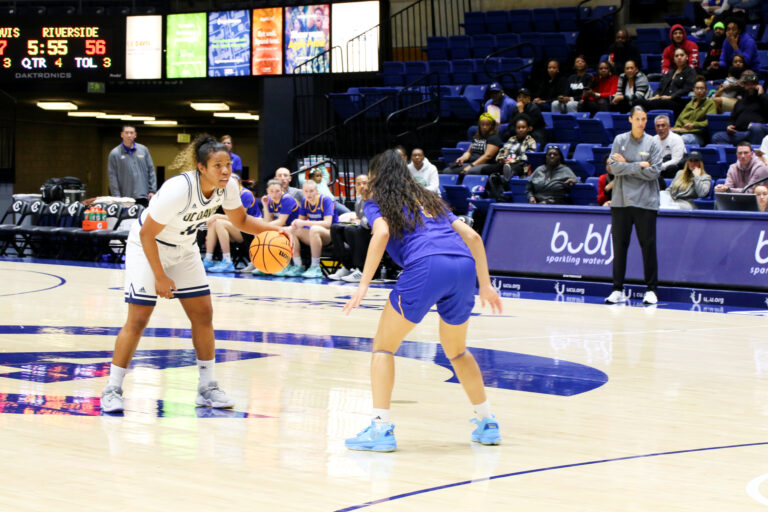
UC Davis overcomes adversity late in the game to secure conference win against UC Riverside

On her birthday, Sabel turns in a big fourth-quarter performance to propel the Aggies to victory


By MARLON ROLON — sports@theaggie.org


On Tuesday night, UCR (3-18 in conference play and 5-18 overall), who are last place in the Big West conference, came into the University Credit Union Center in search of a much-needed win against the UC Davis women’s basketball team. 

The Highlanders built an early lead and set the tone against the Aggies, who were out of rhythm with sloppy turnovers early in the game. However, the home team clawed their way back; UC Davis rallied back late in the game with stellar shooting from third-year guard Tova Sabel. The Aggies won 73-64, which improved their record to 7-6 in conference play and 11-12 overall. 

“I was really pleased with the way that we sort of overcame a lot of adversity throughout the game and found a way to win it,” said UC Davis women’s Head Coach Jennifer Gross. 

In the first quarter, UCR netted two quick three-pointers to start the game and took an 8-2 lead. During this span, UC Davis failed to convert open looks and turned the ball over due to miscommunication. 

As things settled late in the first quarter, third-year guard Evanne Turner knocked a pair of three-pointers down that put the Aggies up by one, 12-11. With just under two minutes left, UCR went back up with a pair of baskets in the paint. However, second-year point guard Sydney Burns closed out the quarter with a jumper that chipped the deficit to 15-14. 

“We felt like we couldn’t get our flow in the first half; we weren’t getting as much ball movement. And I thought we weren’t knocking down shots; we felt like we were a little bit stagnant.”

The back-and-forth action translated into the second quarter, but redshirt third-year guard Matehya Bryant shined for the Aggies with a 10-point outburst inside the paint.

In the final four minutes of the first half, UCR took a three-point lead after a pair of free throws, but UC Davis fought back, going on an eight-point run that saw them take a 32-27 lead. 

Just as things were looking good for the home team, second-year forward Mazatlan Harris lost control of the ball and attempted to dive to regain control of possession but fell hard and was accidentally stepped on. Harris, in tears, was slow to get up, but the play was kept alive. UCR took advantage of the situation, going on an eight-point run to close the half. 

The University Credit Union Center was stunned as they saw the Highlanders regain the lead in a span of one minute. 

“It felt like we were playing well, and then, within a minute, we had an eight-point swing,” Gross said regarding the final sequence of the first half. 

In the first half, UC Davis shot just 38% (11-29) from the field and 27% (3-11) from outside the paint, which is highly unusual from the team that leads the Big West in three-pointers made (7.8 per game). Moreover, Turner — the Big West’s leading scorer — was held to just eight points in the first two quarters.

“[Bryant] had a tremendous game, she had a really good first half,” Gross said of Bryant’s scoring abilities. “We were focusing on trying to slow her down in the second half defensively.”

Despite the Aggies’ changes going into the second half, Highlanders continued shooting the ball well into the third quarter, beginning with a 7-0 run to go up by as many as 10 points, 44-34. Just as it seemed like Riverside was getting ready to run away with the lead, everything changed in an instant. 

Graduate student guard Tess Sussman hit a three-point dagger that gave life to the arena, leading the crowd to burst into cheers. A few plays later, the Aggies went on a 9-0 run — Burns was feeling hot as she drained two three-pointers and Turner chipped in with a three of her own. 

UC Davis tied the game at 46, and the arena was buzzing. 

“Sometimes all it takes is one spark, and this particular one happened to be a three-point shot,” Gross said regarding the 9-0 run. “It’s contagious in a way you see the ball going in once and you just get a little more confidence.”

“We picked each other up, we made some big plays. We sort of gained a little bit of swagger after that point, and we did a nice job of executing from then on.”

Riverside wouldn’t give up, and they responded by immediately going on a 6-2 run in the final minute of the third quarter. They once again regained the lead, 52-47.

However, with under 30 seconds left, the Aggies answered back with a three-pointer from Sabel which cut the deficit to two points. 

The contest was tight heading into the fourth quarter, but Sabel appeared to flip a switch — she opened the quarter with a quick layup to even the score. Then, Sussman hit two free throws to put the Aggies up by two. 

From here on out, Sabel and Turner turned on the jets, scoring the last 14 points for UC Davis, ultimately winning the game 73-64. With Bryant less of a factor as the defense tightened up inside the paint, the Highlanders had trouble scoring in the second half.

The fourth quarter was highlighted by Sabel, who scored nine points, and Turner, who added seven points. 

“It’s her birthday, so she was ready for a big day,” Gross said of Sabel’s offensive performance. “She never got the opportunity to get going early, but we’ve seen in many games that she’s really capable. She’s a tough matchup; she could play inside, and she did a really good job down the stretch putting us up.”

According to Gross, UC Davis’s offense helped the team take the win. Turner led the charge with 18 points, Sabel added 16 points, Sussman had 14 points and Burns scored 12 points. 

“To have four people in double figures is big for us — It means that different people are stepping up,” Gross said. 

A few days later on Feb. 11, UC Davis lost to UC Santa Barbara 77-64 at the University Credit Union Center. The Aggies will hit the road to Southern California to face off against Cal State Northridge on Feb. 15 and come back home to host UC Irvine on Feb. 18.


Written by: Marlon Rolon — sports@theaggie.org


Comedian and UC Davis alum Hasan Minhaj formally invited to speak at 2023 commencement ceremonies

Students are rallying to create a social media campaign to catch the celebrity’s attention and convince him to accept the invitation


By LILY FREEMAN AND SONORA SLATER — campus@theaggie.org


Comedian and UC Davis alumnus Hasan Minhaj has been officially asked by the university to be the keynote speaker at one or more of the 2023 UC Davis commencement ceremonies, an invitation that, as of Feb. 14, is still awaiting a response. 

Minhaj was born in Davis, attended Davis Senior High School and later graduated from UC Davis in 2007 with a bachelor’s degree in political science. Throughout the early 2000s, he appeared in guest roles on various sitcoms and television shows, before joining The Daily Show with Jon Stewart in 2014. 

Since then, he has had an impressive career; he was the featured speaker at the 2017 White House Correspondents’ Dinner, hosted a Netflix comedy show in 2018 called “Patriot Act with Hasan Minhaj,” was listed among Time100: The Most Influential People of 2019 and starred in a Netflix special called “The King’s Jester” in 2022 after performing a comedy tour across the U.S. the year before. 

“Hasan Minhaj is probably one of the best known of UC Davis’ Alumni,” ASUCD President Radhika Gawde said.  “UCD students look up to him, and it would be incredibly meaningful to hear him speak at commencement.” 

Gawde and UC Davis Chancellor Gary May sent a formal invitation to Minhaj on Dec. 2, 2022, asking him to deliver the keynote address at one or more of the undergraduate commencement ceremonies for the class of 2023 on June 16, 17 or 18.

“As a UC Davis alumnus, your accomplishments as a comedian, actor and commentator on critical current events and social issues are remarkable and inspiring, and many of your students look up to you as a role model and leader,” the letter reads. “We would love for our graduates to be able to hear from you as they prepare to leave the university and take the first steps forward into their own futures.”

The letter also notes that if he is not available on those days to attend the ceremony in person, the university “would also be happy to record [Minhaj’s] remarks” so that they can be played at the ceremonies. 

An Instagram page with the handle @bringhasanminhaj gathered interested students through a Google Form in January, and the team behind it is now spearheading a social media movement to get Minhaj’s attention.

America Negrete, a fourth-year wildlife, fish and conservation biology major, described her enthusiasm about the possibility of Minhaj speaking at the ceremony. 

“He is definitely a figure that I look up to and knowing that he went to UC Davis and grew up here would make his words so meaningful,” Negrete said.

Joe Johnson, a fourth-year political science major, said that he would love to hear from someone like Minhaj, in part because he has the same major as him. 

“I’m a transfer student set to graduate this spring, and I would be thrilled if Hasan Minhaj spoke at graduation,” Johnson said. “He’s one of my favorite comedians, and as a political science student, I love his commentary on social issues.”

Max Insensee, who is also a fourth-year political science major, expressed specific interest in the humor and memorability that a comedian speaker could bring to graduation ceremonies in general. 

“Many of my favorite graduation ceremonies I’ve watched online are made better because a comedian spoke,” Insensee said. “We have been lectured for four years; we deserve a laugh on graduation.” 


Written by: Lily Freeman and Sonora Slater — campus@theaggie.org


Lecture room nosiness


Drawn by: Lidya Shcherbakova –– lvshcherbakova@ucdavis.edu

Disclaimer: (This cartoon is humor and/or satire, and its content is purely fictional. The story and names of “sources” are fictionalized.)

Unlucky in love? The Editorial Board’s got you covered

Fully-solicited advice from college students who have no more life experience than you


By THE EDITORIAL BOARD


As students, we know how challenging college life can be — from midterms to roommate drama and everything in between. Factor in a case of the lovesick blues and there’s no chance of making it through Valentine’s Day season in one piece. So, the Editorial Board opened a column for students to seek advice about any of their dilemmas. Below are a few of the questions submitted by The California Aggie’s readers, as well as our best (unprofessional) shot at solutions. 


Dear Editorial Board,


I had a relationship with a guy the past couple of months. It was wonderful to be around him and he’s a great guy who’s loved by all, but we broke up because he said he needed to work on himself more. I don’t understand why working on himself meant getting rid of us, especially since he was the one who wanted to be in a relationship with me in the first place. He wants to stay friends, and I care for him immensely, but I don’t know if staying friends will benefit me because I feel hurt that he gave up on us. My question is: what boundaries would you set in place to remain friends after a breakup?


From,

Hopeless Romantic


Dear Hopeless Romantic,


We feel for you — it’s never fun to be in a position where you feel hurt by someone you trusted. In this case, however, it may be best to take a step back and individually evaluate whether this proposed friendship would truly benefit either of you. Any relationship — platonic, romantic or otherwise — requires work, sacrifice and communication on both sides. If the two of you are on different pages in terms of long-term goals, it probably won’t be a very enriching friendship, as at least one of you will be unhappy. Plus, consider why this person wants to keep you around without committing to a full-fledged relationship; you may be doing yourself a favor by distancing yourself from them. 


At the very least, take some time away from this person to gain perspective on the situation, and then reevaluate after a few months have passed and you feel like you’ve adequately thought things through. In this case, we recommend setting a boundary based on respect for yourself rather than consideration for your ex-partner.


From,

The Editorial Board


Dear Editorial Board,


I have plenty of friendships with guys but not too much luck with dating. I’m on dating apps but haven’t really found people I feel I’m compatible with. Other than joining clubs, which I am already doing, how else can I meet people?


From,

Looking-for-love


Dear Looking-for-love,


While this is an unfortunate situation, you’re not the only one going through it. Social media has opened the door to a whole new world in the dating-sphere, which can make it hard to pick a good one, never mind the one. Our advice to you, dear reader, is not to worry too much. It sounds like you’re already doing a good job at forming genuine connections with people, as well as keeping your standards high. Why force something that’s enriching on its own into something that could potentially not be as fulfilling? 


That being said, if you’re really keen on entering a relationship that’s a bit more intimate than a friendship, consider focusing on doing activities that you’re truly passionate about (ideally ones that meet in person as frequently as possible). You’re more likely to find a connection with someone like-minded at an event that’s centered around a common interest — and even if you don’t, at least you’ll have a good time trying. 


From,

The Editorial Board


Dear Editorial Board,


My friend keeps going for guys who aren’t putting in the same energy she’s putting in, and ending up in relationships with people who are so focused on the surface level that they don’t bother to actually get to know her. How can I tell her that she deserves better and help her break this cycle? 


From, 

Concerned Friend


Dear Concerned Friend,


A case like this can be tricky; you may have your friend’s best interest at heart, but anything you say could be interpreted as an attack on her happiness. Make sure that you’re initiating the conversation in an empathetic and open manner, and be ready to listen to anything your friend says. She likely needs to focus her attention on the deeper-rooted issues at hand. Yes, there are a lot of emotionally unavailable people in the world, but the reason for gravitating toward this type stems from a lack of self-confidence. Let her know that she deserves to be with someone who respects her for all that she has to offer. If someone doesn’t realize that, or is treating her as if she deserves any less, they are not worthy of her time. 


Emphasize that she should focus on tending to the fulfilling relationships already present in her life, and make sure that she knows her friends have her best interest at heart. Suggest that she create a list of boundaries and desires for a partner while she’s single; we all know that love makes us do foolish things, so it’s good to have something tangible detailing exactly what we want from a partner before we have one. If she is already in a relationship and feels that it’s worth saving despite having flaws, advise her to clearly and calmly communicate what she’s feeling — if the response she’s given is anything less than receptive, she should take it as a sign to remove herself from the situation.


From,

The Editorial Board


Dear Editorial Board,


I’m in love with my cat. I give him so much time, love, food, energy, and I pour my heart and soul into our relationship. But he can not give me love… only bites and scratches (and not the good kind). Alas, my undying love will forever remain unrequited. Please help me make him fall in love with me.


From, 

Billy Bob Jones XIV


Dear Billy Bob Jones XIV,


“If you love something, set it free.”


From,

The Editorial Board


Written by: The Editorial Board

Commentary: Loving yourself on Valentine’s Day

Treat yourself this holiday season, regardless of your relationship status


By RUMA POUDELL — arts@theaggie.org


Valentine’s Day is coming up, and it’s time to bring some love into your life — whether you’re single, taken or in a “situationship” of sorts. Mainstream media shoves the narrative of a fancy dinner with a partner down our throats, but we can rewrite the script to fit whatever state of love we’re in. For all my single ladies (and people), here are some ways to spend the holiday. 

Number one: Axe-throwing. It’s a bit extreme, but hear me out. If you just got out of a relationship and are angry or resentful, let all of those feelings out with the powerful throw of an axe. Don’t be like SZA’s “Kill Bill,” where she outlines how she killed her ex, but throw an axe instead. Not at your ex-partner, but at a wooden board. Some may deserve it, but you don’t want to be a murderer — no matter how strong your rage may be.

For those experiencing softer — though maybe just as intense — emotions like grief or sadness over a loved one, listen to music. There’s something about sad love songs and just love songs, in general, that tug on your heartstrings when you’re already hurting. It’s a healthy way to get in tune with your feelings so that they can eventually pass, rather than suppressing them and having them come out all at once more drastically later. 

When a song fits my situation perfectly, I begin to absolutely sob in my room (but in a good way). An artist that comes to mind for me is Coldplay — their songs are very versatile and you’re bound to find one that fits your current situation. And, to end your night off, “So Sick” by Ne-Yo should leave you feeling ready to move on from crying. If songs don’t quite get the job done, you can always watch cheesy romance movies.

Now that you’ve hypothetically gotten any intense feelings of rage and sadness out of your system, it’s time to get some love flowing in you. 

A trending activity that is sure to fill you with love is a picnic with friends, which has been popular on TikTok recently. You can bake cakes, grab some themed table decorations and a pretty table set up and just enjoy each other’s company. 

Similarly, you can go to a park for a painting date and illustrate your feelings. If you go with someone, try making it a challenge by switching canvases every five minutes or so.

If you’re set on a traditional Valentine’s day, buy yourself flowers and a box of chocolates and wait on no one to do so for you. You can do those cheesy Valentine’s Day traditions for yourself. 

Regardless of the situation you’re in, if you’re in the Valentine’s Day spirit, there should always be a way to celebrate. For me, the holiday is a reminder to love myself and those I care about extra hard. Maybe redefining it for yourself can make you feel the same way too. 

Written by: Ruma Poudell — arts@theaggie.org

Correction: A previous version of this article contained a typo. This article has been corrected to reflect proper spelling.

Sunflowers’ circadian clocks make them a target for bees

Researchers find that controlled bloom patterns attract bees and improve pollination


By LILLY ACKERMAN — science@theaggie.org 


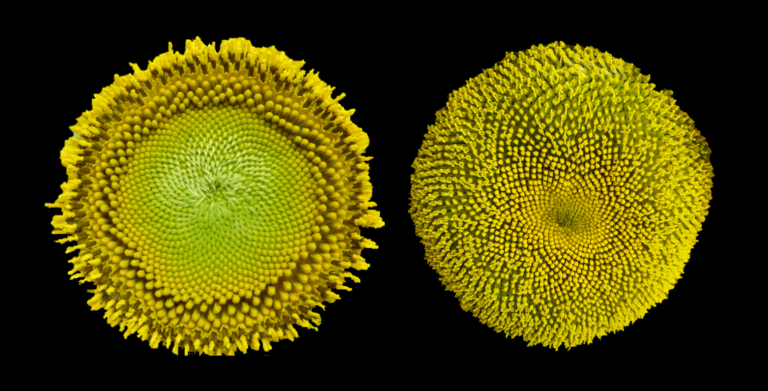
A new study from researchers in UC Davis’s Department of Plant Biology found that sunflower blooms are coordinated by their circadian clocks, opening different sections of florets in a ring pattern. This makes them optimal for pollination by bees, which are their main pollinator. 

Sunflowers are well known for their ability to turn and face the sun throughout the day. Their circadian clock, which is the natural cycle that they follow over every 24-hour period, controls this famous movement, but it also helps them maximize pollination by controlling how they bloom.

Dr. Stacey Harmer, a senior author on the study and professor of plant biology at UC Davis, says that sunflowers’ heads have a disk made up of thousands of individual flowers, or florets. When it comes time to release and receive pollen, sunflowers’ florets open in a coordinated pattern that attracts bees during a timeframe called anthesis. 

“When they’re in the middle of [anthesis], you’ll see that it [the blooming] goes from the outside of the disk to the inside of the disk,” Harmer said. “And you see sort of a target shape; you have rings — not spirals — of florets at different developmental stages[…]It’s like making a really great show for the pollinating bees.”

The disk forms a target shape by opening rings at different times; the outer ring will open one day, followed by a different inner ring the next day. The entire disk of florets opens in the span of approximately one week.

Each floret opens to release pollen just after dawn. This is coordinated heavily with when bee pollinators are most active and allows for maximum pollination. 

“This coordinated mass release of floral rewards at predictable times of day likely promotes pollinator visits and plant reproductive success,” the study reads.

Interestingly, the same ring of florets will release pollen in its male form one day and then be in its female form to receive pollen the next day. 

“They’re also super interesting plants because an individual floret is male one day, making pollen, releasing it, and the next day, it’s female, so it can receive pollen,” Harmer said. “And that’s a way they promote outcrossing between flowers.” 

Outcrossing is the transfer of pollen from one flower to a genetically different one. This is a beneficial process for the entire sunflower population as it increases genetic diversity, which improves the population’s resilience. The ability to adapt and respond to the environment is especially important amid a changing climate. 

 The timing of pollen release that sunflowers utilize depends upon light availability as well as the circadian clock, according to the study. Previous work has shown that temperature also affects its timing. 

This means that changes in climate can present mismatches between pollinator activity, which is governed mainly by their circadian clock, and sunflower anthesis, which responds to the environment. It is therefore crucial that plants’ circadian clocks are understood, so that appropriate measures can be taken to address mismatches detrimental to both bee and sunflower populations due to reduced pollination. 

“I think it is important to understand this in terms of agriculture in the face of climate change,” Harmer said. “I think this is going to be a potentially useful breeding target as breeders think about how to promote successful pollination.”

Written by: Lilly Ackerman — science@theaggie.org

Wildlife, Fish and Conservation Biology professor donates UC Davis teaching prize

The professor, John Eadie, will use the prize money to establish a scholarship to promote diversity within the WFC department


By RACHEL GAUER— campus@theaggie.org


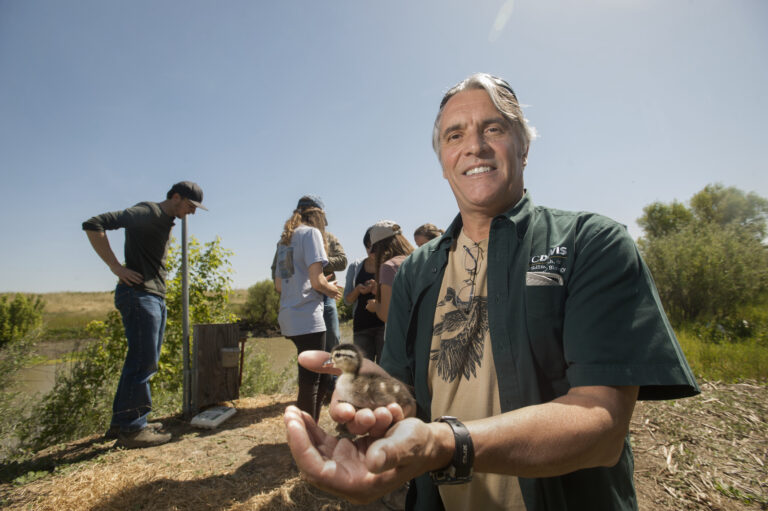
John Eadie, a professor in the Department of Wildlife, Fish and Conservation Biology (WFC) was recently awarded the UC Davis Prize for Undergraduate Teaching and Scholarly Achievement, according to a recent press release. The prize is awarded annually and honors a member of the faculty who is an exceptional teacher, lecturer and scholar. Eadie is the 36th recipient of the award. 

Eadie arrived at UC Davis in 1995 and has served as both the Dennis G. Raveling Endowed Chair in waterfowl biology and the WFC department chair. 

“After 28 years of teaching here, I still love what I do, and I’m still passionate,” Eadie said. “It’s an honor to work with students, and they keep me young. It’s just like — wow, I get paid for this?”

 Alexandria Ginez, a third-year WFC major who currently serves as a peer advisor in the department, commented on their experiences with Eadie.  

“My peer advising office is directly across from [Eadie’s], so I see him a lot,” Ginez said. “He is always just a ray of sunshine in the office; he’s really great to work with and talk to. If anything were to change my life goal from working with fish to working with birds, it would be John Eadie.”

Ginez has also taken WFC 111, “Biology and Conservation of Wild Birds,” with Eadie as a professor. The course is offered every fall quarter. 

“Every lecture was just so interesting, and he was really into the topic and very passionate about it,” Ginez said. “He had almost everyone attending on a regular basis. [It] tells you something if a professor can get everyone up before 9 a.m. to go listen to a lecture about birds.”

Annie Maliguine, a UC Davis alumna, graduated from the WFC program in 2018 and currently studies arctic sea ducks through a University of Alaska graduate program. Maliguine spoke on the influence Eadie had on her professional goals.

“He is someone who definitely influenced my whole career path,” Maliguine said. “I chose the WFC major initially when I was enrolled at UC Davis, but it wasn’t until I took [Eadie’s] bird class that I decided to pursue a career working with birds. I didn’t really even know that would be something I’d be interested in.” 

Maliguine said that she still keeps in touch with Eadie and has even gone to him for career advice. 

“He’s really approachable to everybody because he’s such a goofy guy,” Maliguine said. “Especially when you’re in a class full of so many other students, it can be scary to approach professors. But with him, he is just a big goofball and talking to him feels really easy.” 

The award also includes a monetary prize of $60,000, which Eadie has decided to use to establish a scholarship for underrepresented students in the WFC department. 

“I want to focus on what we can do to help students get hands-on experience without being financially or otherwise challenged,” Eadie said. “And especially what we can do to bring in new students that don’t know this is even a possibility for them. We really need to be training our next generation of professionals to better represent society as a whole.” 

Eadie explained that he and his wife, Jane Eadie, who currently works on the Chancellor’s Board of Advisors, wanted to create this scholarship in order to increase the number of professionals in the wildlife biology field with diverse cultural backgrounds and provide greater opportunities to incoming students. 

“With the prize money, it was a no-brainer,” Eadie said. “It is a great jump-start, and we can establish it right away. Jane and I, and perhaps others, will hopefully contribute continuously throughout the years.”

The scholarship has now been signed off on and will be available for incoming undergraduate students in the WFC department for the 2023-2024 academic year. 

Eadie reflected on his overall experience working at UC Davis, given that he is planning to leave the university next year. 

“I [plan] to retire in a year from now,” Eadie said. “[Davis] has been such a great campus to work at; the students are great and the staff are fantastic, and our department is amazing. It’s just been a really great ride. I feel pretty lucky– I don’t know how I got so lucky.”


. Written by: Rachel Gauer — campus@theaggie.org


Hundreds of UC student delegates come to Davis for Students of Color Conference

The annual conference was hosted at UC Davis from Jan. 20 to Jan. 22 with the theme “A World We Imagine”


By KAYA DO-KHANH — campus@theaggie.org  


From Jan. 20 to Jan. 22, the annual Students of Color Conference (SoCC) was hosted on the UC Davis campus by the UC Student Association (UCSA). The SoCC is the group’s largest and longest-running conference. It began in 1988 and “aims to serve as a safe space for students of color to engage in socio-political education and to strategize both statewide as well as campus-based actions and advocacy,” according to the delegation guide sent out for the conference. 

The theme for this year’s conference was “A World We Imagine.” ASUCD External Affairs Vice President Celene Aridin elaborated on the theme, saying that it focused on “[how] we see the world and [what] we want to achieve in terms of student advocacy and student engagement in this ideal world that accepts students of color for who they are.” 

There were more than 300 student delegates from across the UC campuses in attendance. The main conference took place in the ARC ballroom, while the workshops and identity caucuses were held in Wellman Hall. 

“This is the first year that we’ve had it in-person in a long time, and we were really excited to get to host it at UC Davis,” UCSA University Affairs Committee Chair Saishruti Adusumilli said. “It was really exciting just to have so many people from all over the state come and see the campus.”

Adusumilli, who served as the external affairs vice president for two years previously, said that one of her goals was for Davis to increase its presence within UCSA. 

“Over these past two years, I think we’ve done a really good job at representing Davis on a system-wide level,” Adusumilli said.

The keynote address was given by Taharka Anderson, who is a scholar, educator, speaker and organizer with over a decade of experience supporting social justice efforts. His research and activism focus on the social vulnerabilities of Black men and boys, the social construction and criminalization of Black children and anti-Blackness in schools and school discipline, according to his website.

There were 16 workshops offered at the conference, including “Women of Color In POWER,” “Closing Equity Gaps by Improving Financial Aid Awareness and Application Completion” and “Bayanihan: Uplifting Activism Within Cultural Identities.” A number of identity caucuses were also held by students and non-profit organizations, featuring guided discussion spaces for people with similar identities to come together and discuss their unique experiences. 

Valeria Cantor Mendez, a third-year community and regional development major at UC Davis, hosted the Central and South American identity caucus and said that she found the workshops “very educational and very inspiring.” 

“I feel like we were thoughtful about who [hosted] the workshops, and I really appreciated that,” Cantor Mendez said.

Aridin noted that this sort of attention to detail within the conference tied into their overall goal of inclusion and community.

“It was mainly to bring together students from across the UCs who identify as students of color and to empower them and show them that across the UC system, there’s a coalition of students who look like you,” Aridin said.

Written by: Kaya Do-Khanh — campus@theaggie.org

Commentary: ‘Breaking Bad’ portrays the moral ambiguity of human nature

The hit drama makes viewers question their own moral compass


By RUMA POUDELL — arts@theaggie.org


Vince Gilligan’s award-winning show “Breaking Bad” has regained popularity among Gen Z following a flood of TikTok trends centering the show, including an edit of the character Walter White mining diamond ore in Minecraft, or all things. 

Within the “Breaking Bad” universe, White is the show’s main driving force. He is a genius in the field of chemistry working an underappreciated job as a high school teacher when he is suddenly diagnosed with a terminal illness. His diagnosis drives him to reevaluate his life and the legacy he wishes to leave — one that doesn’t leave his family in debt with medical costs. This motivates him to cook and sell crystal methamphetamine with the hope of amassing a fortune. 

As the story unfolds, death becomes a thematic continuity across the show. White and numerous other characters, including Jesse Pinkman, Mike Ehrmantraut and Gus Fring, are responsible for the deaths of a handful, if not a cemetery-full, of individuals. Although no one person has the right to take another’s life, the context surrounding each death leaves us wondering if their actions are justified.
When it comes down to survival, who would you choose to spare: yourself or your opponent? And, if you choose yourself, can you live with what you’ve done to another human being? Characters in this show often find themselves in these life-or-death scenarios, and they all have their own justifications for choosing themselves.

White wants to provide for his family. Pickman wants to achieve financial independence and avoid living a life of messiness. Fring has a drug empire to protect. Ehrmantraut has his granddaughter to look after and provide for.

But as the story progresses, the characters begin to engage in more and more unlawful activities with little to no reason or context. In a later season, White reflects on his actions, and he admits to enjoying his life as a drug dealer more than his life prior to getting diagnosed and starting down this path. 

Despite the monster that White obviously becomes, watching the show for the very first time left me sympathizing with him and even despising other less problematic characters. Gilligan’s dynamic writing with realistic portrayals of various issues leaves you with your own twisted sense of character as you focus more on White’s story and progression compared to others. 

Anna Gunn, the actress who plays White’s wife, is one character who was flawed but more of a bystander compared to her husband. She reported that she faced harsh comments in her personal life due to how much audience members hated her character, as they failed to separate the actress from her role. This shows how much you can sympathize with or scrutinize people differently for their misconduct, all because of the way their character was written. 

Gilligan’s portrayal of characters in “Breaking Bad” touches on the moral ambiguity of human nature as they go through their struggles surrounding addiction, family dynamics, illness and business. This forces the audience to get in the mud, where it seems there is no absolute right or wrong. 

Varying opinions among audience members highlights the fact that we are all rooted in our experiences and values, leading us to our differences in beliefs. As you watch the show, it may be a fun idea to keep track of whose actions you can justify and who has crossed your line of reasoning. 


Written by: Ruma Poudell — arts@theaggie.org


Davis wastewater data shows increase in COVID-19

0

Wastewater-based disease surveillance contributes to greater health equity and is essential for monitoring viruses


 By LA RISSA VASQUEZ city@theaggie.org


Throughout January, COVID-19 levels have fluctuated, but are significantly higher in Davis than in other parts of Yolo County, according to wastewater monitoring in the city of Davis and UC Davis wastewater plants by Healthy Central Valley Together.

Dr. Heather Bischel, project lead for wastewater monitoring for Healthy Davis Together and assistant professor at UC Davis Department of Civil and Environmental Engineering, explained how wastewater can reveal COVID data.

 “Wastewater has a lot of different pathogens present in [it] that people excrete if they’re infected,” Bischel said. “The virus itself can be measured in wastewater [and] Wastewater SCAN is this large program that is now established where the city of Davis and UC Davis are participants in.”

Wastewater SCAN is a national wastewater monitoring project from Stanford University that has been rapidly expanding over the past six months as many different groups across the nation begin to launch their own wastewater monitoring projects since the pandemic.

Healthy Central Valley, an offshoot of the Healthy Davis Together campaign, highlighted the need for monitoring in the central valley long before Wastewater SCAN was established. In an email, Dr. Colleen Naughton, assistant professor of Civil and Environmental Engineering at UC Merced and wastewater monitoring project co-lead with Bischel, talked about the organization’s goals.

 “We had seen that there was a lack of wastewater monitoring for SARS-CoV-2 throughout the Central Valley compared to urban and coastal California and wanted to see expansion of this public health tool for greater health equity,” Naughton said. 

Wastewater-based disease surveillance contributes to greater health equity due to its cost-effective and unbiased testing of samples representative of an entire community, according to Dr. Bischel.

“After you’ve had a rising infection of [COVID-19], you’d expect the concentrations to go up during those relative surges, to see different signals for different viruses, and then they evaluate the wastewater against clinical information,” Bischel said. “What we monitor in the wastewater does correlate with what we know about transmission and infections, and that makes the wastewater data really useful for public health because then you can get an idea of the changes in terms of infections for these different targets.”

Different targets include other respiratory viruses such as RSV, influenza and other coronaviruses including variants of the SARS-COV-2 virus that causes COVID-19. Bischel talked about how wastewater can measure other viruses. 

“In addition to measuring the total amount of [COVID-19], we’re also able to target some specific variants and to measure the concentrations of different variants. [The Omicron variant] may be a bit more challenging [because] it’s the combination of recombinant variants that has genetic components from different variants,” Bischel said. “The data that we’re looking at for the city of Davis and UC Davis campus was focused on that kind of total amount of  [COVID-19] present, and understanding trends as they go up and down through time, and then we have some additional information on variants that can help complement [and] inform our understanding of new variants [as they] come through. How one [variant] is taking over relative to another.”

Naughton explained why variants such as the Omicron subvariant, XBB.1.5, are still a challenge even in a largely vaccinated community like Davis. 

“The City of Davis may have a high full — two doses — vaccination rate, but much of the country has not gotten their booster doses, especially the new bivalent boosters that are more effective against the current variants,” Naughton said. “Also, the current variants are very transmissible and many of our prior precautions, like indoor masking, reduced travel, etc, have been lifted and people are mixing more and more likely to spread and catch the virus. The vaccines are still effective at reducing hospitalizations and deaths, but you still can catch COVID-19 and have mild symptoms.”

The Davis community’s best defense continues to be wearing well-fitting N95 or KN95 masks in crowded indoor spaces, staying home when feeling sick, being up to date on COVID-19 vaccinations and boosters, testing for COVID-19 before events or travel and washing hands with soap and water, according to Naughton.

 “We may be tired of the pandemic and the virus, but it is not tired of us. We must still follow public health guidance,” Naughton said. “That doesn’t mean we can’t go about our lives, seeing loved ones and eating at restaurants but we can reduce our exposure when we can by wearing face coverings in crowded indoor settings and staying up to date on vaccinations. […]. With an expansion of rapid tests that are not reported to the health departments, wastewater is a reliable indicator of the level of infection in the community.”


Written by: La Rissa Vasquez city@theaggie.org

City council holds outreach meeting to discuss the 5th Street corridor

0

The city held a public meeting last week to discuss necessary improvements, how to make them


By ANTHONY W. ZAMMIKIEL  — city@theaggie.org 


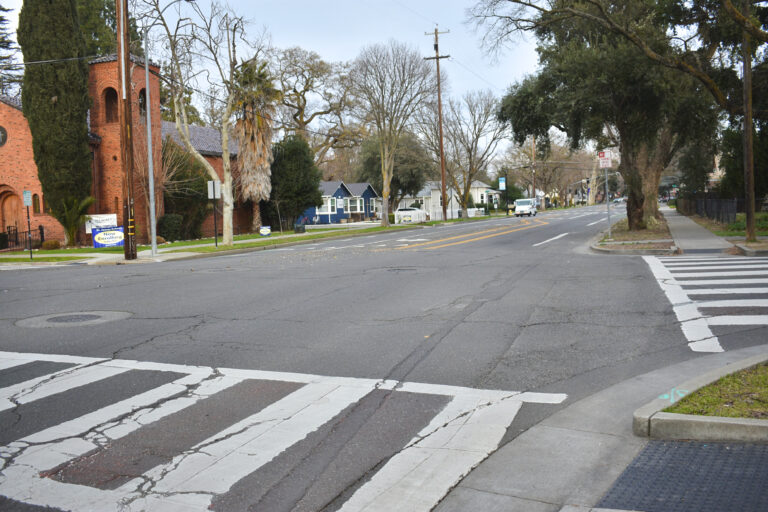
The Davis City Council hosted an outreach meeting for the public to discuss possible improvements to the Fifth Street corridor on Feb. 2 at 5:30 p.m. via Zoom. The meeting discussed changes to be made to the corridor, which runs from L Street to Cantrill Drive.

City staff will discuss the history of the Fifth Street corridor from L Street to Cantrill Drive to help identify the long-term needs and potential improvements to the corridor,” reads the official statement released on Jan. 23 by the city. “In addition, staff will update the community on the road striping pilot that is currently in place on Fifth Street from L Street to Pole Line Road. This is a study phase only at this time; budget would need to be identified before proceeding with implementation of any improvements.”

The city also released an additional statement on the improvement project.

“City staff will discuss long-term needs and potential improvements to the Fifth Street corridor from L Street to Cantrill Drive and are interested to hear from residents and business owners,” the additional statement said. “This study also includes an examination of the demonstration striping that was installed in early 2021. This is just a study. There is currently no budget for improvements.”

The city provided documentation outlining possible cross-section improvements. The six options for improvement are mostly dependent on budget, as options involving paint and plastic treatments will cost less than landscape treatments. The city has also proposed three bicycle lanes options: buffered bike lanes, one-way separated bike lanes and two-way separated bike lanes. 

An infographic detailing the section that is being considered for improvements was also posted on the city’s improvement projects page, with further information available on the citywide construction, improvement and maintenance projects pages. 

Questions about the outreach meetings should be directed to Ryan Chapman, the Assistant Director of Engineering and Transportation, at rchapman@cityofdavis.org


Written By: Anthony W. Zammikiel  — city@theaggie.org


Review: ‘When Breath Becomes Air’ explores the meanings of life and death

The late neurosurgeon Paul Kalanithi narrates his journey of living a fulfilling life while battling lung cancer


By SARAH HAN — arts@theaggie.org


“When Breath Becomes Air” is an autobiography of Paul Kalanithi, a neurosurgeon and writer who was diagnosed with lung cancer in his late 30s and passed away in 2015. The book outlines his life, detailing the moral inquiries and dilemmas he has contemplated since childhood.

The book begins with a prologue that describes a patient’s CT scan images of a “lung matted with innumerable tumors, the spine deformed, and a full lobe of the liver obliterated,” only for readers to find out that Kalanithi himself is the patient. 

I like how Kalanithi writes about death, which is a generally sensitive topic. It goes to show how unexpected obstacles are inevitable and the best way to overcome them is by accepting them — not pretending like they don’t exist or running away from them.

However, Kalanithi is also transparent about how difficult it is to accept death. There was a moment where he cried to his wife Lucy, which was unexpected since he seemed to be optimistic and stoic throughout the book. Nonetheless, it amplifies how scary and uncertain death can be, even for doctors and surgeons who regularly witness it.

What makes Kalanithi’s life so relatable is his progression from adolescence to adulthood. His childhood was characterized by curiosity, ambition and learning; for example, he moved to Arizona as a child and chose to acclimate to his new hometown by scavenging the desert plains for black widows, coyotes and more. As he grew into an adult, these characteristics transformed into wisdom, maturity and diligence.

But one element that stayed consistent since Kalanithi’s childhood was growth. Toward the end of the book, Kalanithi reflects on the idea of time, particularly how cancer had significantly shortened his. One specific segment stood out to me the most:

“You’re always thinking about what you’ll be doing five years down the line. But I don’t know what I’ll be doing five years down the line. I may be dead. I may not be. I may be healthy. I may be writing. I don’t know. And so it’s not all that useful to spend time thinking about the future—that is, beyond lunch.”

I was taken aback by how Kalanithi was willing to contribute to the world in any way, shape or form. Even in the face of death, he was formulating what he could do, which shows how humans, unwittingly or not, will always try to grow into a better version of themselves. In the grand scheme of things, writing or lunch may seem minute, but to Kalanithi, they were signs of powering through his cancer — and that, to me, was a lesson for sure.

The most heartfelt moments in the book were when his family appeared. Kalanithi grew up with two brothers and his parents, all of whom he characterized as hardworking and inspirational. Likewise, he greatly admired his wife Lucy, who motivated him to not only fight cancer but who was also beside him when he was a medical student at Yale. And probably the most precious to Kalanithi was his daughter Cady, to whom he dedicated the book.

Despite the obstacles, Kalanithi wrote hopefully in the last moments of his life. He dedicated a message to future Cady, which was intimate yet universal. He emphasized the importance of spreading joy and that it is one of the most crucial things in life.

Kalanithi expressed tremendous humility, empathy and insight, and this book perfectly reflects his legacy. I strongly recommend this book because it will leave you inspired, open-minded and most importantly, thinking about what you could contribute to the world. 

If I could pick out one line that sums up the entire book, it would be this: “What makes human life meaningful?”

Written by: Sarah Han — arts@theaggie.org

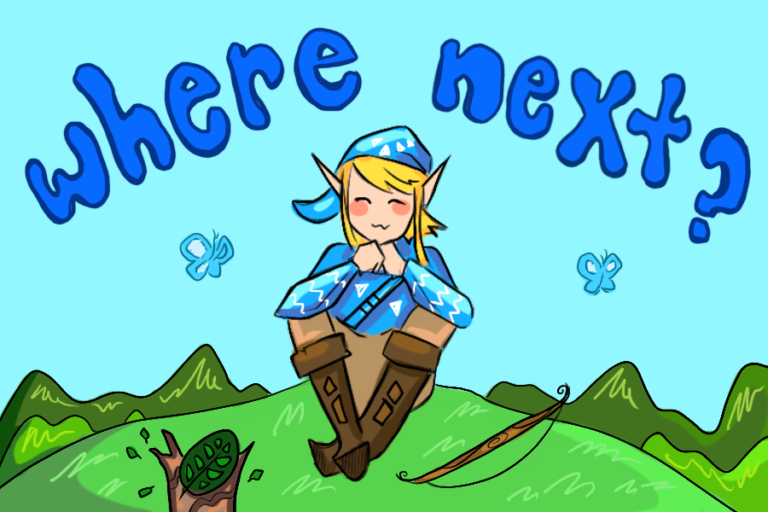
‘Breath of the Wild’ is the king of open-world gaming

Reasons why you should play the latest installation in Nintendo’s “Legend of Zelda” series 


By MAYA KORNYEYEVA — mkornyeyeva@ucdavis.edu


Imagine a game where you’re able to glide over valleys, climb any mountain, swim up waterfalls and surf on your shield, exploring virtually anywhere. You can interact with the non-player characters (NPCs), whether it’s to learn more about your main objective or about their personal stories and adventures. You can throw a mix of random ingredients in a cooking pot and create dozens of recipes for meals and elixirs. You can stop time, find magnetic chests, freeze water and fight mobs by throwing your metal weapon at them during a lightning storm.

Imagine all of this, and you’ve got “The Legend of Zelda: Breath of the Wild,” released on March 3, 2017, a revolutionary open-world game. Created and directed by Eiji Aonuma, the game was published by Nintendo for the Switch and Wii U gaming consoles, with the goal of allowing players to explore the interconnected world of Hyrule with minimal instruction and an unprecedented degree of freedom. 

Unlike games such as “The Witcher 3” and “Red Dead Redemption 2,” “Breath of the Wild” offers a less linear storyline. The protagonist, Link, journeys on a quest of self-discovery to reawaken the four Divine Beasts and defeat Calamity Ganon, an evil force attempting to take over Hyrule.

I began playing “Zelda” in March 2020 as a way to fill the empty days spent stuck at home during quarantine. I was immediately taken aback by the charming and immersive features of the game and thrived off of the satisfaction of beating a Yiga Blademaster or completing a particularly difficult shrine. And I’m still playing: even with the main campaign complete, I don’t think I will ever be able to fulfill every side quest in the villages or chase every dragon — “Breath of the Wild” is just that expansive.

I believe what makes this Zelda game so unique is the map design, which offers multiple intricate terrains with unrestricted paths that the players can choose to follow. While fast travel is an option in the game, I find it unnecessary because there’s just so much to discover along the way. From magical plants to lost memories to Korok seeds, the game offers items and side quests at practically every step.

Beyond the top-tier features of the map, I enjoy the fact that, unlike many video games, “Breath of the Wild” doesn’t hinge on an XP or a level system. At the very beginning of the game, the players are given all the tools they need to beat the antagonists. If you wanted to, you could go fight the final boss at the very start of the game and have a chance of winning.

This is possible because there’s almost no point-to-point traversing. Link, the protagonist of the game, can follow the centralized storyline if he chooses, but he can also traipse off into the wilderness. The game excels at allowing every person to play at their own pace, with a heavy reliance on problem-solving and context clues rather than tutorials.

Another key feature of the game that I adore is the inventive design work for the shrines, ancient tech and the Sheikah Slate. According to Takuhiro Dohta, the technical director of “Breath of the Wild,” these designs were all inspired by the Jōmon period in Japanese history. The Jōmon period is the earliest era of ancient Japanese civilization and the least well-known, beginning around 14,500 BCE and characterized predominantly by its ”cord-marked” or ”patterned” pottery style.

Of course, this is not to say that “Breath of the Wild” is perfect. There’s definitely some frame lag, and the shrines can be frustrating at first and progressively feel repetitive or even dull to an experienced player. Nothing great is without its faults. 

However, “Breath of the Wild” still occupies an unparalleled position in the gaming world. Due to its initial popularity and Link’s lovable personality, the developers are coming out with the highly anticipated sequel “Breath of the Wild: Tears of the Kingdom” on May 12, 2023. It would be an understatement to say that I am excited about its arrival; with better graphics and a brand new adventure in reach, this continuation is sure to be a massive hit.

I highly recommend “Breath of the Wild” for anyone looking to test their deduction skills or just to have some fun and explore — you can gain more than 50 hours of phenomenal gameplay. “Breath of the Wild” is one of the best Nintendo games out there (which is quite a feat because of Nintendo’s astounding reputation and massive catalog) and an absolute must-play. 


Written by: Maya Kornyeyeva — mkornyeyeva@ucdavis.edu

Disclaimer: The views and opinions expressed by individual columnists belong to the columnists alone and do not necessarily indicate the views and opinions held by The California Aggie.