59.1 F
Davis

Davis, California

Wednesday, December 24, 2025
Home Blog Page 173

City Council considers four different proposals for continuing G Street closure, debates the future of the street closure

0

Last month’s council meeting included a presentation on different options to address public concerns about the continued closure


By ANTHONY W. ZAMMIKIEL  — city@theaggie.org 


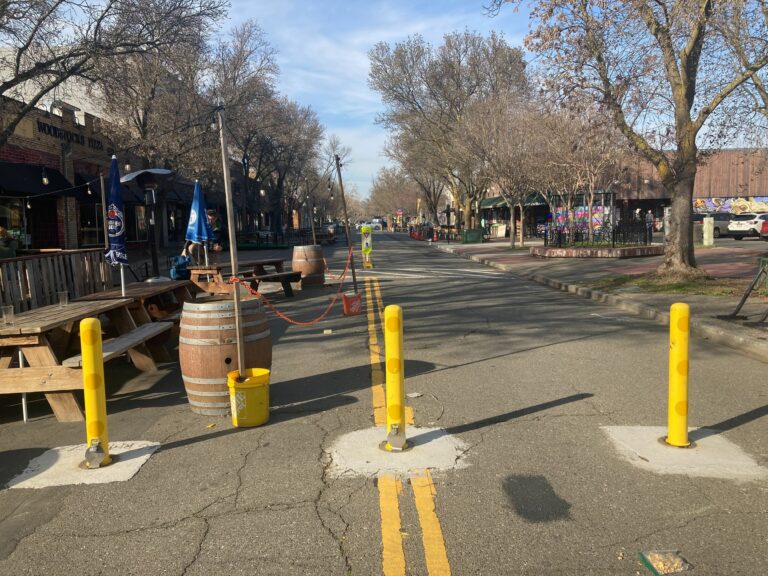
Davis City Council agreed on proposal measures to address ongoing public concerns and suggestions for the G Street closure between Second and Third streets last month. This comes after a presentation made to the Bicycling, Transportation and Street Safety Commission on Jan. 12, at which the commission voted to keep the closure more permanently car-free and begin discussing ways to utilize the road as a common space for the public to gather outside the dining areas. 

“The closure of G Street and use of downtown parking spaces and sidewalks for outdoor dining was initiated as a collaborative ‘Open Air Davis’ pandemic response effort to promptly assist businesses with challenges presented by COVID-19 restrictions and public health protocols,” according to the staff report delivered to city council. “Expedited, no cost, temporary use permits for outdoor dining were approved through the City’s Emergency Operation Center to enable businesses to operate outdoors. These temporary outdoor uses enabled businesses to continue to operate under emergency conditions and greatly contributed to the survival of many businesses that would have potentially faced closure.”

The staff noted that since the state of California elected to “re-open” in June 2021, the city has opted to continue issuing Temporary Use Permits (TUPs) to businesses located on the closed section of G Street to address public hesitancy toward dining indoors. Following meetings with the Downtown Davis Business Association (DDBA) in July of 2021, the city did agree to re-open the section of E Street between Second and Third Street, which was closed during the early pandemic.

In a presentation given to the council by Ryan Chapman, Assistant Director of Public Works, the council received four options to consider for upcoming adjustments to the closed section. The first option includes reopening the section for vehicle usage, which would be how the section between Second and Third streets was before the pandemic closure started in 2020. The second option details how the section would remain off-limits for traffic, and that the section would be available for restaurants and other businesses to expand outwards on the street. However, Chapman notes that there are going to be protocols developed by the City Council to improve maintenance and to beautify the street for outdoor activities. 

The options proposed are not limited to re-opening or not re-opening, as Chapman notes. The third option allows for temporary closures, meaning that the street would be reopened to traffic, however, special events would be allowed, and the City Council could also consider whether select times of the week would require closing the section. The fourth and final option includes re-opening the northbound side of the road and keeping the southbound side of the road closed for outdoor dining, and additional room for outdoor activities. 

The staff report notes that there has been a lot of debate throughout the community about the options that the council is deciding upon, including concerns about the cleanliness and appearance of the shared space located at the site of the ongoing closure, discrepancies between restaurants’ outside dining spaces and that some businesses do more upkeep than others. The staff report said that there will need to be requirements developed to address these ongoing issues with cleanliness if the street is to remain closed.

The staff report continues, “the current approach to issuing TUPs has led some businesses disproportionately benefiting from increased dining space with little or no additional cost, while potentially negatively affecting others along G Street. This has been expressed as businesses being able to essentially rent the public space for little or no cost, thereby receiving a financial benefit.” Suggestions made by the Davis Public Works Department (DPWD) include creating a fee calendar for advantaged businesses to allow for a more equitable commerce policy. 

The report concludes with the DPWD providing resources for both the council and the public to learn more about similar closures throughout the nation, stating that, “In addition, there might be grant funding to assist in the implementation of more permanent changes such as removal of gutters or the installation of at grade planters and other low impact storm control solutions but it would take several years to secure funding and construct a project using these sources. Alternatively, the City Council could direct utilization of alternative sources, such as American Rescue Plan Act funds (potentially including those already allocated for Downtown enhancements).”

As of January 17, city council has tentatively agreed to allow the closure of G Street between Second and Third streets to remain more permanently, with participating Council members voting to uphold the second option for the time being. The City Council will now continue to work on possible improvements and vote on the adjustments that need to be made. 


Written By: Anthony W. Zammikiel  — city@theaggie.org

My official ranking of UCD majors but only the ones I remember and some that I just made up

Good morning design majors! I hope all your dreams come true <3


By ANNABEL MARSHALL — almarshall@ucdavis.edu 


Like winter quarter, this list goes from okay to terrible to worse.


Atmospheric Science: I love weatherpeople. 10/10

Physics (B.A.): Absolutely blows my mind that you can get a bachelor of arts in physics. Rails my brain. Slurps my gyri. 

Animal Science: Cute.

Plant Science: Cuter.

Entomology: No longer cute.

International Relations: Half the nicest people I’ve ever met and half people I wouldn’t trust to negotiate my lunch order.

American Studies: Hilarious. What does this mean?

Global Disease Biology: To the classes of 2025 onward: I’m so glad I didn’t have to read your college essay about COVID.

Art History: Exactly what I would study if I were a nepotism baby.

Environmental Engineering: Honest to Jebus, cannot remember if this one actually exists. Seems like something we would have.

Wildlife, Fish and Conservation Biology: Amazed by the implication that fish are not wildlife.

Neurobiology, Physiology and Behavior: How does it feel to have to use two to three sentences to explain your major to everyone you meet? Shut up. 

Human Biology: I’ve met four human bio majors and none of them can explain to me why this major exists.

Aviary Sciences: I don’t trust anyone who makes birds their personality. You are defending a sentient weapon that works for the Devil, who is not a nice guy.

Classics: Just tell me what the plan is. I actually want to know.

English, Creative Emphasis: Just because you’re gay doesn’t mean you’re good at writing poetry. For you. For me, it does.

English, Lit & Crit Emphasis: Just because you’re a non-confrontational straight man does not mean women want to sleep with you. They want to sleep with me ‘cause my poetry is so good.

Data Science: Boo. All science has data, idiot.

Material Science: We have to stop with this trend of just putting “Science” after a word and pretending it’s a career path. 

Cognitive Science: See above.

Political Science: See above. Plus, this one is definitely not a science.

Food Science: See above above. Also, there is no way we need both Food Science and Nutrition.

Civil Engineering: A great way to tell people that your parents bought you too many LEGOs as a child or that you are pursuing a passionless career in the pathetic hopes of a stable future. I’m not using any bridge built by a civil engineer who graduated during the pandemic. And if building bridges is not what a civil engineer does, please, do not tell me. I do not care.

Education: Technically a minor. Whatever. How are some of you people so mean? Don’t you want to work with children? What is going on? Your pink hair is not distracting me from your disappointing personality.

Landscape Architecture: I’m just mad that no one offered this as a career option to me when I was 11. I was told to choose between doctor, lawyer, pop idol, teacher or stripper. Where was “greenery stylist?”

Philosophy: Be a nicer person. Stop making your friend’s birthday party about existentialism and glaring failures in the U.S. legal system.


Written by: Annabel Marshall — almarshall@ucdavis.edu 


Disclaimer: (This article is humor and/or satire, and its content is purely fictional. The story and the names of “sources” are fictionalized.)

Support coffee farmers, check the labels

Buying certified specialty coffee has a positive impact on local growers


By MAYA KORNYEYEVA — mkornyeyeva@ucdavis.edu


Ah, caffeine. The chemical substance many of us college students depend on to get through lectures and focus on homework (I write this while sipping on an “Ecstatic” iced coffee from Philz). The most beloved and common form of caffeine is found in coffee, bought at a local cafe or taken from our UC Davis Dining Commons.

However, a lot goes into creating this dark, rich drink. Coffee is one of the top exports for many countries in Latin America, Africa and East Asia. Thousands of smallholder farmers depend on the production of coffee beans for their incomes, and things haven’t been looking great for nearly half a century; in part due to the way coffee exports have been set up by the International Coffee Agreement (ICA).

The infamous ICA, negotiated in 1962 by 54 countries, created a quota system for each country’s coffee exports in an effort to set equitable prices for farmers. This system worked for almost 30 years until 1989 when the growing shifts in coffee consumption destabilized the agreement and sent prices into a downward spiral.

This disproportionately affected coffee farmers, lowering the global market price per pound and causing many producers to cut their living expenses in order to survive. The changing market also fostered a trend of disequilibrium, giving more power and money to international trading-and-buying companies and taking away profit from export countries.

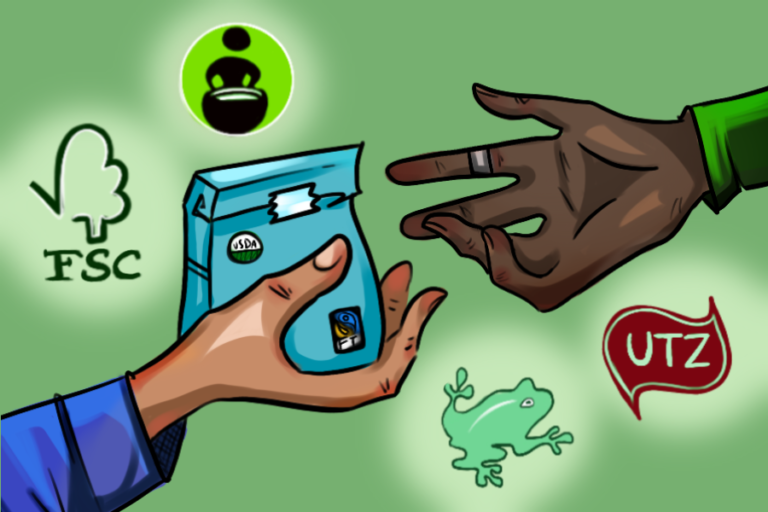
Naturally, governments and local groups scrambled to remedy this. In the time since, coffee prices have slowly inched back up due to several big reforms created to help origin countries. I believe one of the most important developments was the introduction of specialty coffee certifications like Fair Trade, Rainforest Alliance, Organic, UTZ Certified, Nespresso AAA Sustainable Quality and Starbucks C.A.F.E practices.

These labels were a direct response to the coffee crisis, and place a “premium” on coffee price or quality to generate extra revenue for farmers whose product meets certain criteria. The standards set by companies like Fair Trade (1997) help incentivize smallholder cooperatives to improve coffee yield and quality and are one of the fundamental reasons why coffee is regarded as a pioneering industry for sustainability regulations and certification.

As Fair Trade flourished, other organizations were battling on different fronts. For instance, the Rainforest Alliance (1987) was leading a mission to conserve biodiversity and ensure sustainable livelihoods and practices, while UTZ Certified (2002) was working towards improving market transparency by giving farmers access to market information, strategy and pricing.

When buying coffee or any other product, I’ve noticed that consumers rarely inquire about the source, with the most attention being a glance to check if the item is certified “organic,” followed by a sigh as they grudgingly dish out a few extra dollars at the register. But there is a reason for the fact that a majority of organic and fair trade coffee is a bit more pricey: not only is it higher quality, but the price boost ensures that coffee farmers are actually profiting from the sale and making enough to support themselves. Approximately 50% of coffee farmers live below the poverty line. Taking that extra time to glance over the labels and certifications can ensure that you aren’t supporting a brand that actively exploits farmers and instead that you are contributing to the furthering of sustainability and environmental practices.

Like switching from plastic products to reusable materials, coffee is a case study of how agricultural practices and commodity markets can be altered by consumer preferences. A small shift in mindset could mean more power to local growers and even greater access to technology and education, boosting the coffee sector to a greater level of inclusion and equitability. So the next time you’re at the supermarket looking for your coffee fix, make sure you check the label.


Written by: Maya Kornyeyeva — mkornyeyeva@ucdavis.edu


Disclaimer: The views and opinions expressed by individual columnists belong to the columnists alone and do not necessarily indicate the views and opinions held by The California Aggie.

ASUCD senators and executive officers listen to student concerns at Feb. 7 student-employee listening session

Many ASUCD employees voiced concerns about onboarding delays, uncompensated positions 


By SYDNEY AMESTOY — campus@theaggie.org


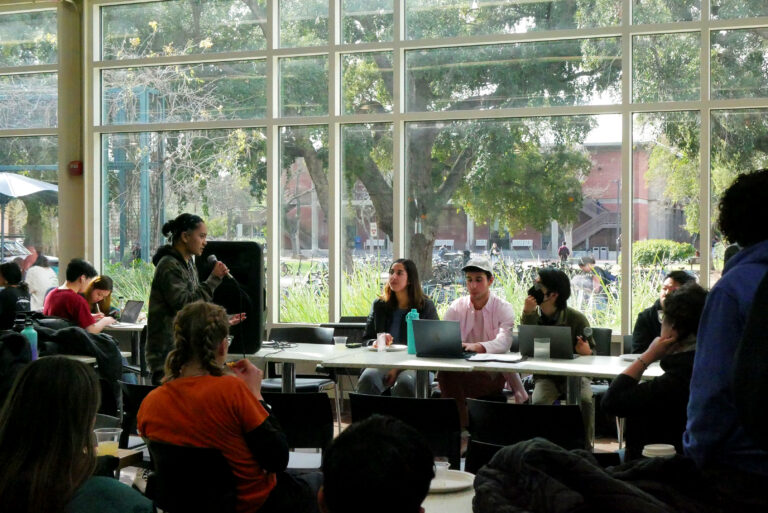
ASUCD Senator Stephen Fujimoto, along with other members of the Senate table, held a student-employee listening session at the CoHo on Feb. 7.

During the session, numerous student employees, the majority of whom work within ASUCD units, expressed their concerns and ideas for improvement in regard to their working conditions. Many of the comments referenced delays in the ASUCD onboarding process for employees, which mean that employees sometimes have to wait long periods of time after being hired before they receive their first paycheck, according to the students who spoke at the session. 

ASUCD Internal Vice President JT Eden addressed these concerns, saying that the Senate table has been working on improving the onboarding process throughout the last quarter.

“There’s a couple of playing factors in the onboarding process,” Eden said. “There’s our end of ASUCD, which is receiving a hiring notice and then making sure that they get started on the onboarding process. And then there’s the whole UC-wide part. And with [either of] those steps, something can go wrong. Different kinds of delays […] can take anywhere from two weeks to several weeks, months, whatever.”

Fujimoto said that the Personnel Committee is also looking into the idea of hiring for a human relations (HR) position to help speed up the onboarding process. 

“[We] allocated $100,000 for an HR position,” Fujimoto said. “The rest of the money that is not spent for the HR professional will be used to hire another career staff position. The timeline for this has admittedly been delayed as we have been unable to set up a meeting with a Student Affairs administrator.”

Other concerned ASUCD volunteers included a former campaign coordinator for the External Affairs Commission, who spoke during the session in regards to the lack of compensation for volunteer work that they said often goes far beyond what’s expected. 

“I am in agreement that if you do labor, you should get paid for it,” Fujimoto said. “I don’t think that’s a very controversial thing to say, and I hope everybody on this panel agrees.”

The idea of decreasing the percentage of workers who are paid via a stipend rather than hourly wage was also brought up before the panel, in addition to securing pay for those who are currently ASUCD volunteers. According to Fujimoto, a 2020 ASUCD referendum featured a bylaw that designates some of the ASUCD budget to convert 20% of stipended ASUCD jobs to hourly positions.

“I can commit right now to making sure that at least 20% of stipend positions will be moved to hourly,” Fujimoto said. “But I’ll be pushing for more — honestly, I [am] hopeful that we can get rid of stipends completely this year.”

Ella Rosenthal, a third-year neurobiology, physiology and behavior major and a service manager at the Bike Barn on campus, spoke at length about some concerns she had in regards to the onboarding process. 

“We have personally dealt with [onboarding delays] a lot, especially with students who are working past their graduation date, or have sometimes worked for months without being aware that they weren’t going to be paid,” Rosenthal said. “It also has been a problem for promotions. We go through internal promotions about every year for our employees, but this process is incredibly slow for them to receive their increased pay rate.”

Rosenthal went on to bring up safety issues at the Bike Barn, such as razors used for mechanic purposes not having proper handles, and general repairs that she said the building needs.

“I’m really glad the employee brought up their concerns around the safety of their workplace since I don’t think any of us on the Senate table were aware of that issue,” Fujimoto said after the meeting. “They specifically mentioned using equipment that made them feel unsafe. The Senate has unrestricted funds that it can vote on allocating to almost anything, so if the safety issues are stemming from a lack of funding, we can definitely address that.”

The listening session wrapped up at 2 p.m. According to Fujimoto, who organized the event, there are plans for more sessions in the future, in line with his platform focus on advocating for student workers. 

“The [Senate] oversees and is responsible for all ASUCD revenue and how it is allocated as well as policies and regulations for the operation of the association,” Fujimoto said. “The most direct, and likely impactful way, is that we as senators will vote on wages for all positions in ASUCD, which is a responsibility I do not take lightly.”

The Personnel Committee is also working on other ways to address student-worker concerns, according to a press release after the event. The release said that the committee plans to “create a classification series” for ASUCD paid positions in order to make recommendations about pay rates for next year, and is also working on “incentivizing volunteer hour tracking” in order to gather data about what fiscal impact a switch to hourly, paid positions would have on the ASUCD budget. 

Written by: Sydney Amestoy — campus@theaggie.org


‘Bad’ fires are burning forest ecosystems in the Sierra Nevada, southern Cascade regions

High-severity wildfires are occurring much more frequently than these forests are accustomed to


By BRANDON NGUYEN — science@theaggie.org 


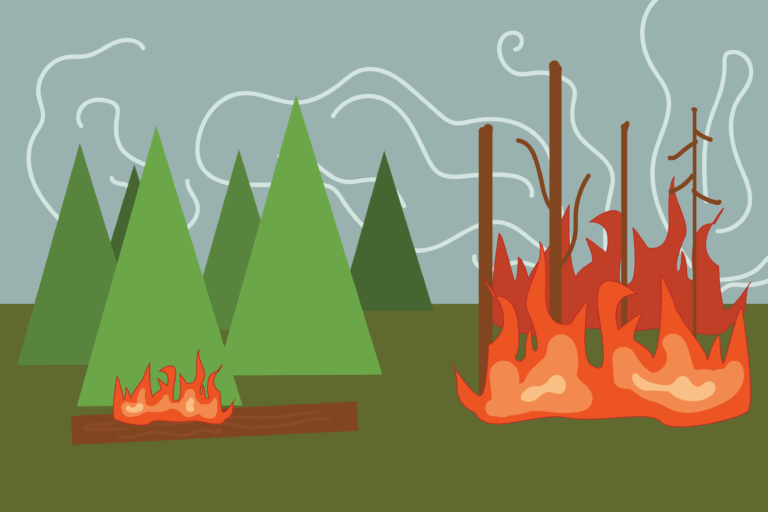
A UC Davis study published in the journal Ecosphere recently reported that in the past decade, the Sierra Nevada and southern Cascade forests have had a drastic increase in “bad” fires. These fires are scientifically known as high-severity fires, which is a classification that denotes that more than 95% of tree biomass is burned from one fire within an area. 

Dr. Hugh Safford, the senior author of the study and a research forest ecologist in the Department of Environmental Science and Policy at UC Davis, explained why rates of high-severity fires have almost quintupled from 10% to 43%. 

“Humans have had the greatest impact on these forest ecosystems over the last two years since we put out nearly all fires in the system, which historically was a natural part of the way that these ecosystems function and the species in [them] are adapted to these fires,” Safford said. “We’ve been focused as a result more on the actual effects of fire rather than just the occurrence or the area of it, and that’s what you call fire severity — describing the ecosystem effects of fires in terms of tree biomass lost.”

Fire is a fundamental ecological process, but excessive human intervention has disrupted the balance in these forests. Years of fire suppression have led to an accumulation of forest density and tree biomass, which ends up being an ample source of fuel for fires to grow into high-severity fires. In addition, global warming and the drier climates in California provide favorable conditions for “bad” fires. 

John Williams, the lead author on the study and a project scientist at Safford’s lab at UC Davis, explained the reason for conducting the study. 

“This was a follow-up study to a previous research that looked at patterns of severity in different tree types in the Sierra Nevadas and some Cascade forests from 1984 to 2009,” Williams said. “The motivation behind this was that we’ve had nine of 10 of the biggest wildfires in California history since 2009, so we want to look at how these patterns have been changing. Most of the Sierra Nevada ecosystems are adapted to low-to-moderate severity fires, and what we’re seeing is a much higher rate of high-severity fires than these forests are accustomed to.”

Before 1850, much more land area was burned annually, with 90% of the fires being low-to-moderate severity fires. However, today, less land is burned annually, but more is burned by high-severity fires at a higher frequency. but more is burned at a high frequency and severity. 

“As a result of the increases in high-severity fire and the […] reductions in the percentage of area burned at low-to-moderate severity, [there have been] loss of carbon storage, increased plume emissions and decreased air quality, increased erosion and adverse impacts on soil nutrients, microbial processes, and hydrology,” the study reads. “Additionally, studies have shown that shifts in burning patterns correlate with failures in conifer regeneration, changes in the balance of fire-tolerant and fire-intolerant species [and] negative impacts to overall species diversity.” 

Reversing this pattern of fires would require substantial increases in area and percentage of forests burned by low-to-moderate severity fires through methods like controlled fires and forest and resource management interventions, as well as working to reduce tree biomass. More importantly, assessing wildfires that do break out to see if they can be low-to-moderate before impulsively suppressing them is critical, since these wildfires themselves can actually be a management tool. 

“We’re able to put out more than 98% of all fires before they get to a couple of 100 acres,” Safford said. “So even today, our success at putting fires out is just kind of unbelievable. That said, when you have a really fueled, rich landscape; a really hot day; a big wind; an ignition in the wrong part of the landscape and people can’t get to it, those are the fires that you and I end up seeing on the news because those are the ones we lose control of.”

According to Safford, most of the fires put out are most likely under conditions that would not have led to high-severity fires. In fact, National Park Services in Sequoia and Kings Canyon as well as in Yosemite let a high portion of fires on their landscape burn after assessing them.

“Wildland fire use is probably the major solution; we need to start thinking really hard about not putting out all wildfires immediately because really they’re going to treat 70% to 90% of the landscape, whether we want them to or not,” Safford said. “And it would be better that they treated them under benign weather conditions than under severe weather conditions because the effects will be much better and beneficial to our forests.”

Written by: Brandon Nguyen — science@theaggie.org

Commentary: The importance of children’s horror movies

How the genre can provide another outlet for kids’ fears


By ADHITHI ANJALI — arts@theaggie.org


What do “Friday the 13th” and “Courage the Cowardly Dog” have in common? What about “Coraline” and “It?” While the amount of gore definitely varies, they are all undoubtedly horror stories that bring their viewers to the limit of their anxieties. Of course, if you watched “Courage the Cowardly Dog” or read “Coraline” now, you might not be inundated with the fear it is supposed to instill in its intended audience: young children.

One might ask why the same kids pacified by an episode of “Arthur” should be exposed to horror at all. After all, the genre’s most quintessential examples contain violence and blood. “Videodrome” and “Parasite” probably present a completely incomprehensible form of horror for the child. The appeal of these films likely comes from a response to the intersection of social and physical fear — the idea that there are forces beyond your control acting on your body. (For more insight on this aspect of horror, check out  “Powers of Horror” by Julia Kristeva.)

But, a young child — by which I mean 10 years old or younger — arguably does not have a concrete conception of the social constructions that produce fear and loss of autonomy, like the panic about sex in “Friday the 13th” or class conflict in “Parasite.” However, horror is still present in childhood: the monster in the closet, the ghost in the hall, the dark horizon after sunset when you can still make out someone — or something. 

These fears still reflect the unnamable lack of control a child feels when they understand that there is an unknown, perhaps unimaginable, aspect to their world. And yet, the only response is to imagine what it possibly could be.

Whereas we can enjoy the catharsis of horror, as we see the unraveling of order take place rather than remaining struck by the debilitating fear that something is wrong, children seem to lack a new and unique outlet for their daily encounters with the unfamiliar. Children also inhabit a world designed for and by adults. Can you recall the feeling of being left out of the loop, knowing there were larger pieces in place that moved you before you could think for yourself? 

What children’s horror can do is offer an outlet that acknowledges that fear. “Coraline” understands the limits of a child’s power in their family and recognizes these feelings of being trapped and helpless. Even the regular ghost story communicates that your fear is not unaccounted for. For a time, it might give you something new to be afraid of, but it confirms a secret truth: that there are unknown and unimaginable possibilities in this world, good or bad. 

A child can often see the gap in their knowledge of the world. They may not understand this gap, but they are able to recognize a discrepancy between the way they respond to a closed door and the way their parents might react. Horror offers a bridge for that gap, saying, “Yes, there is something scary behind it, but the only way to know is to test it.”

Of course, there are aspects of horror in other children’s media. Various books I remember reading laid out war, death and other forms of violence, but fear was not often at the forefront of the creation of that work. However, a good horror book or film hinges on these uncomfortable feelings to produce terror and wonder. 

In the same way, many adults find pleasure and thrill in consuming media designed to capitalize on our fear, there are children who can sense that fight-or-flight response and want to test it. Courage, too, lived in a world not designed for him, but he had to face it every day. Children’s horror can provide a space for kids to do the same.


Written by: Adhithi Anjali — arts@theaggie.org

Sacramento Kings’ successful season has captivated local basketball fans

0

Kings’ fans excited at prospect of ending a 16-year playoff drought 


By PATRICK FIGUEROA — sports@theaggie.org


Upon sunset, you might see something in the sky if you are driving near downtown Sacramento. It is a purple laser beam coming from the Golden 1 Center — the Sacramento Kings basketball arena. The beam was introduced for the 2022-2023 NBA season to signify a Kings’ victory. However, for a franchise that has been unsuccessful for most of the 21st century, the beam also signals hope for what is shaping up to be one of the best seasons in the Kings’ recent history.

The Kings have been in a 16-year playoff drought, which is a time period defined by the failure to reach the postseason in consecutive seasons. The Kings’ playoff drought is the longest active playoff drought in American sports. However, the 2022-2023 NBA season has been a treat for Kings’ fans because currently, the team is one of the best in the Western Conference.  

Through 55 games, the Kings are in third place in the Western Conference with a 31-24 record. For reference, the most games the Kings have won in the past 16 years was 39 games during the 2018-2019 NBA season. For Kings fans who have watched basketball during this 16-year stretch, this season has been a memorable experience so far. 

“This entire season has felt like a dream,” said Timeout Radio Host and Kings fan Rohan Baxi. “I finally feel a sense of pride being a Kings fan and atop all our long-time rivals.”

“This Kings’ season has been amazing for me so far,” said Davis local and lifelong Kings fan Will Wyman. “The last time we had this many wins at this point in the season I was in, like, first grade. It’s crazy for me to see a good Kings team on a nightly basis.”

“I have been a Kings fan ever since I started watching basketball in middle school,” said Peni Billings. “They have been in a playoff drought before I was even a fan, so to finally be able to witness such a feat truly is a great feeling.”

When speaking with Kings fans, they often express their love for the gameday experience at the Golden 1 Center. 

“The arena is amazing. [It’s] a great addition to Downtown Sacramento. The fans are so loud that it seems like a playoff game,” Baxi said. “The Sacramento area has continued to show up through the ups and downs of this 16-year drought, and I can’t even imagine what it will be like come playoff time.”

“I have been to a good handful of games this year — I think six games,” Wyman said. “The atmosphere inside Golden 1 Center is awesome. I think the Kings have the best fans in the NBA, and the rest of the league is finally starting to notice.” 

According to ESPN’s 2023 NBA Attendance Report, the Kings’ average attendance for home games is 17,115 fans. For reference, the Golden 1 Center’s maximum capacity is 17,608.

There have been several major contributors for the Kings this season, but their fans seem to agree that one player is a large reason for their success: center Domantas Sabonis. 

He’s the catalyst for everything the Kings do on the offensive end,” Wyman said. “He’s an amazing rebounder and a smart playmaker, two things that pay dividends for this team.” 

Last season, the Kings acquired Sabonis in a trade that sent fan-favorite point guard Tyrese Haliburton to the Indiana Pacers. Kings fans and NBA analysts were originally unhappy with the trade, as they believed that the Kings traded away a future star for Sabonis. However, Sabonis was recently given the honor to represent the Kings in the NBA All-Star Game, a feat unheard of in the team’s recent history. The last Kings’ player that was named an All-Star was center DeMarcus Cousins during the 2016-2017 NBA season. 

There are still many games to be played before the NBA regular season ends on April 9. In a tightly packed Western Conference, the Kings will have to continue playing at a high level if they want to end their playoff drought. No matter how the rest of the season pans out though, Kings fans have made lifelong memories during the first 55 games of the 2022-2023 season.

“The seven-game win streak in November,” Baxi said, reminiscing on his favorite memory of the season so far. “[It] included quality wins versus the Cavaliers, Lakers, Warriors, Nets, Spurs, Pistons and Grizzlies.”

Billings said, “Other than winning, obviously, I believe my personal favorite memory of the Kings so far is this newfound energy they seem to be playing with. The pairing of Domantas Sabonis and [point guard] De’Aaron Fox is spectacular. Having [Sabonis] take the load away from Fox if need be, and he can dish out to role players like [shooting guard] Kevin Huerter.”

Wyman said, “My favorite part of the Kings season so far has been the beam. It’s incredible. It brings the fans and the players together in a very special way. It’s really cool to leave the arena after a win and see that purple laser shooting into the sky.”

For Kings fans, the 2022-2023 NBA season is like the beam shining in the Sacramento night sky. It is a sign that things are getting better, and the future is bright for their team.


Written by: Patrick Figueroa — sports@theaggie.org


Love is in the air: Get to know some couples whose relationships began at UC Davis

0

Whether you are looking for love or following it to Davis, there is no shortage of love to be found on campus


By REBEKA ZELJKO — features@theaggie.org


At UC Davis, all Aggies, students and alumni alike, have a shot at love. With no shortage of people and date spots, you are bound to find a special someone to make memories with.

Two individuals, who wish to remain anonymous, are straight out of a modern romance, and their story starts in a very modern way. 

“If I could redo the way we met, I would literally choose any other way,” the first individual said. “I hate saying that we met online. It feels like I have to whisper it, but that’s what happened.”

The couple met during their second and fourth years at UC Davis, respectively. The UC Davis campus had just reopened after the COVID-19 pandemic shutdown, and people were just getting back into in-person dating.

“We talked online for, like, 20 minutes, and then [they] asked me if I wanted to get coffee,” the first individual said. “I was just having fun, but when we went for coffee at Pachamama, we ended up talking for, like, five hours until they closed.” 

The two hit it off, and it was the first of many dates in Davis. 

“Then we had our second date, and that was really, really fun,” the first individual said. “We went to the Varsity Theatre, and we watched ‘Lamb.’ It was horrifying but also really cute. Afterward, we went to [The Davis Food Co-op] and there was this massive prickly pear tree.”

This unassuming prickly pear tree became central to a sweet memory the first individual shares with their partner.

“[My partner was] like, ‘I walk past this prickly pear tree every day. We need to get prickly pears,’” the first individual said. “Those prickly pears weren’t even that good, and pretty much the whole night, our hands were covered in these prickly pear thorns, but I have happy memories from that day.”

Davis holds much significance in this couple’s relationship, even after one of them graduated in spring 2022.

“All of our first few dates were in Davis,” the first individual said. “[Their] place was really nice because it was on 1st Street, so [they were] right next to campus. We spent a lot of time downtown because of it. [They] moved out to San Francisco now, but when [they visit], [they] always [tell] me we have to get Ali Baba’s and walk in the Arboretum. [They’re] obsessed with the ducks.”

Davis has been the backdrop for many relationships, old and new. Antonio Delgado, a second-year communications major, followed his high school boyfriend, Max Carvajal, to Davis. 

“I had never seen Davis before, so I planned a few trips throughout the year to come and visit my boyfriend and also to see what Davis had to offer,” Delgado said. “On my second trip, I actually flew up to Davis for Valentine’s Day, and we spent the day downtown, which was really memorable. After three years of being together, we have spent every Valentine’s Day together in Davis.”

Delgado shared some of his go-to date spots in Davis.

“We love going downtown and trying different things,” Delgado said. “We’ve gone to Let Them Eat Cake, and we love trying out all their different cupcakes and [macarons]. We also love going to our favorite coffee place, Philz. We used to go to Philz together back home a lot, so it reminds us of a home away from home.”

Others find Davis to be the common thread in their love story. Craig Anderson, a UC Davis alumnus who graduated in 1997 with a degree in atmospheric science, attended school with his now wife, Anna Bereczky-Anderson, who graduated in 1998 with a degree in political science. 

Anderson had known Bereczky-Anderson since he was 16 years old. When a mutual friend visited Davis, they reconnected, which sparked the beginning of their love story. 

“[Anna and our friend] came over to my dorm area and put a note on the bulletin board,” Anderson said, “and I don’t know what caused me to look at it because I never really paid attention to what was posted on there, but I saw the note. It said that she was in town and that we should get together before she left. So I called her by payphone, and we hung out that afternoon.”

She and Anderson stayed in touch after he went home for summer break.

“We wrote letters to each other the whole summer until the fall, basically getting to know each other and seeing if we wanted to date,” Anderson said. “I obviously really liked her, and so when I came back, we started dating.”

In Davis, Anderson found himself spending a lot of time walking his girlfriend’s beloved dog, Ricky the beagle, who he said is a renowned escape artist. 

“We would walk her dog through the Arboretum and around the ponds in West Davis, all through the neighborhoods,” Anderson said. “A lot of times, he got loose, so when he managed to escape, we would just go to the nearest food place, and he was probably nearby.” 

Ricky’s escapades were inconvenient but always memorable for the couple. 

“It was the night before she and her mother were going to Italy,” Anderson said. “I got a call from them saying that the dog got out, so we were all driving around, trying to find the dog, and someone found him in the bushes next to Carl’s Jr., probably chomping on something.”

Memories like these inspired the couple to remain in Davis after they graduated. They are celebrating their 30th anniversary this fall, with “four crazy kids all over the world.” 

Written by: Rebeka Zeljko — features@theaggie.org

ARC hip-hop classes are a mood-booster for dancers of all experience levels

0

UC Davis student recreation dance instructor Evie White builds up students’ confidence through her classes


By ANA BACH — features@theaggie.org 


The competitive world of dance offers a platform for experienced dancers to compete with one another, advancing their skill sets and performances to prepare for their professional dance careers ahead. For others, dance is a fun, confidence-building activity. All are welcome at the Activities and Recreation Center (ARC) hip-hop classes, taught by second-year international relations major Evie White though.

White is a former competitive dancer, and her work on campus as a dance instructor allows her to teach hip-hop classes while giving her students a platform to build confidence that will allow them to be successful even after they leave the studio.

“I just love screaming and hyping people up,” White said. “I honestly look at my class more as a confidence-building class than a dance class. Dance just translates over to so many other aspects of your life.”  

The PAVE School of the Arts student reminisced about her competition days and her experiences dancing for The Innovate Dance Company studio.

“Essentially, PAVE stands for performance, artistry, versatility and exposure,” White said. “My coach instilled in us that we should be well-rounded dancers. We would have these intensive weeks as our audition for the company. She would have these choreographers come in, and it was just all blind classes. We didn’t know who was coming in to teach that day. So I was doing ballroom at some point, dancing in heels, ballet, you name it.”

White emphasized the intensity of dance culture, especially in Orange County, and compared the mannerisms of the practice to the hit Lifetime show “Dance Moms.”

“There would be parents that would get [upset] because they would see me in the front row,” White said. “I see girls who are nine or 10 years old, and they are already doing jobs, auditioning and skipping school.”

Though White always loved dance, she said that her busy high school schedule consisted of a number of extracurriculars.

“In the end, dance was the most important to me,” White said. “Still, I’ve always wanted to try to find that balance, and I knew dance wasn’t going to be my one and only. What I was worried about coming into college was thinking about how I incorporate this into my college life because I don’t want to give it up. Teaching, I found to be the best route for me to still incorporate it.” 

The transition White made from her experience in the dance world to teaching dance combinations to students who are just trying out dance for the first time seems like a big jump. But White said that she’s found that she loves teaching newcomers. 

“Personally, I love teaching people who have zero experience with dance,” White said. “They’re just there for a good time. I love that I am teaching people in college because that just shows me that they are here because they want to be here.”

White compares the rush of performing a dance to an “indescribable adrenaline high.” 

“I tell people that it’s an indescribable feeling,” White said. “The rush of energy when you are performing in front of a crowd is like nothing else. It’s just insane when you have all these people watching you. You feel like you are just on top of the world. If you’re an adrenaline junkie, it’s that same feeling when you are on stage. There’s 100% always nerves. But every time you go out, it ends up being fine. It’s muscle memory at that point.” 

During White’s classes, her main priority is making sure students are comfortable with themselves, not perfecting their dance technique. 

 She starts her classes by getting her students amped up with high-energy music and movement, incorporating a dynamic warm-up with fast-paced hip-hop music. The movement also allows students to pulse to the beat for a deeper stretch and helps them get acclimated to the tempo of the routines to come. 

She later has students line up in groups, asking each to perform their own variation of a catwalk. White stands between the lines to offer a great deal of support and positive affirmation. 

“I have all of my students strut across the floor […] every single class because I just want them to learn to walk with confidence,” White said. 

From there, she starts to teach the students the sequence without music, using counts to help with movement cues and segments the dance into a couple of counts at a time. Once the students have a good idea of the movements, they rehearse the sequence with music a couple of times and White answers questions about the form of any dance moves. 

At the end of White’s classes, each group performs the dance one at a time, while the other participants gather around, cheering in support. White also extends her assistance after class if students want more help with the sequence or would like to work toward perfecting it. 

The class is an energized environment for individuals of all experience levels who are comfortable making mistakes and using their own techniques to play up to their strengths. 

Elisabeth Van Roijen, a third-year graduate student in environmental engineering attends White’s classes every Tuesday. 

“Her energy is contagious,” Van Roijen said. “The very first class I came to, I came really tired because it’s a late class. As soon as I left, I couldn’t sleep because I was so hyped with energy. I always come because I know it’s always gonna lift me up and make me happy.”

Van Roijen emphasized the confidence she gained through White’s encouragement. 

“I think it’s how she hypes everyone up,” Van Roijen said. “I am not a very confident person, but she pushes you to be out of your comfort zone and really just own it. It’s a really comfortable space, and it’s just a lot of fun. I really enjoyed this class, and it’s the highlight of my week.”

White has cultivated an environment that brings joy to all of her students — and herself. Her main focus is making sure that everyone feels pride in their abilities and moves through the rest of their day feeling better than when they came into class.  

“I feel great when I leave,” White said. “Sometimes I come in, and it’s not the best day. I have just had an entire school day, and I am a little tired, but every single time I have left teaching, my mood is immediately 10 times better. Every single time.”  

Written by: Ana Bach — features@theaggie.org

Iniciativa del campus Taller Arte del Nuevo Amanecer alienta el empoderamiento de la comunidad Chicanx y Latinx a través de la expresión artística

Miembros de la comunidad crean pósteres y murales para promover el bienestar y celebrar la cultura


Por MARIA MARTINEZ CASTRO — features@theaggie.org

Traducido por JOSÉ HERNANDEZ

Read this article in English.


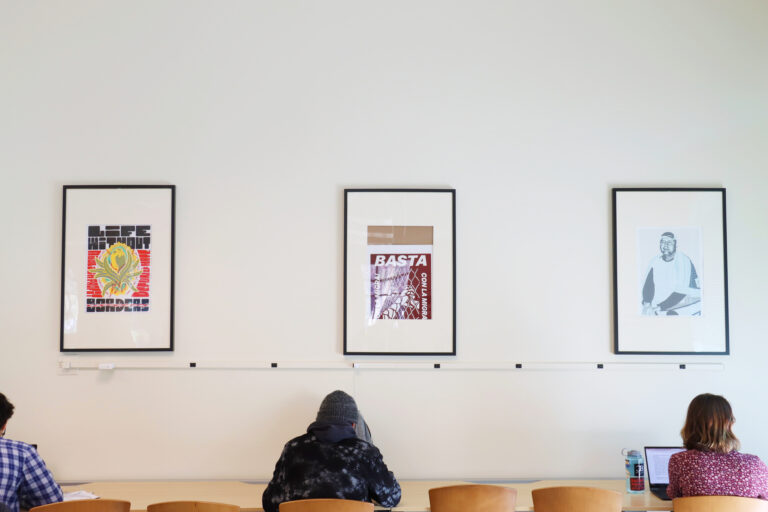
Mientras que en el campus de UC Davis, los estudiantes, el personal y los visitantes se encuentran con arte colorida, pósters representando la cultura y las experiencias de las comunidades Chicanx y Latinx, así como mensajes de abogacía, protesta y empoderamiento. 

Creado por Taller Arte del Nuevo Amanecer (TANA), muchos de estos pósteres están en las paredes del salón 193 de la biblioteca Shields y llaman al cambio, reconocimiento, celebración y el bienestar de la comunidad. 

TANA es un espacio de taller que sirve como estudio de serigrafía, enseñanza de arte y un espacio de exhibición chicanx y latinx, de acuerdo al sitio web de TANA. A través de su espacio físico y sus programas, TANA tiene el objetivo de promover una comunidad de crecimiento usando arte y cultura.  

Ubicada en Woodland, TANA es una asociación colaborativa entre UC Davis y el programa de estudios chicanos, la ciudad de Davis, la ciudad de Woodland y las comunidades de los alrededores. 

La idea de TANA surgió de un proceso de colaboración entre sus dos cofundadores, Carlos Jackson y Malaquias Montoya. 

Montoya, quien es un profesor emérito en el departamento de Estudios Chicanos, desarrolló cursos de elaboración de carteles de serigrafía (CHI 172) y crear murales (CHI 171) a UC Davis. Jackson obtuvo una maestría de Bellas Artes en el Estudio de Arte en UC Davis y es ahora el decano de la Escuela de Sellos de Arte y Diseño. 

Como estudiante, Jackson se acercó a Montoya, con la idea de crear un centro comunitario de artes. Después del planeamiento, construcción y el proceso de desarrollo, TANA abrió un espacio físico en 2010. 

Montoya dijo que en desarrollar su trabajo de curso y TANA, él fue influenciado por su experiencia previa y conocimiento de los talleres comunitarios, o talleres de trabajo. Los talleres se enfocan en las comunidades chicanx/latinx y el empoderamiento y la recordación de la historia. 

“Yo salí de los años 60, donde los talleres de trabajo como este, fueron muy importantes para nuestra comunidad,” Montoya dijo. “Los artistas fundaron talleres en las grandes ciudades, los barrios grandes, y la idea principal era traer el arte a las comunidades a las que pertenecían. La idea era educar nuestra comunidad y a los niños y niñas [sobre] nuestra arte.”

Esto es importante especialmente porque mucha cultura e historia de las comunidades marginalizadas ha sido borrada a través del tiempo por el colonialismo, de acuerdo a Montoya. 

“La mayoría de nuestras familias de esa época habían perdido su cultura porque eso era lo que pasaba cuando los conquistaron,” Montoya dijo. “El conquistador mira muy necesario destruir la cultura.”

Las talleres de serigrafías de TANA permitieron a los miembros jóvenes y vulnerables de la comunidad promover identidad positiva y participación cívica, usando el arte y la cultura como principios para fortalecer los lazos comunitarios, de acuerdo a su página oficial.

Los pósteres sirven como una voz para los miembros de la comunidad que históricamente han sido silenciados y hablan sobre la historia oculta y las clases sociales, dijo Montoya. 

“La idea detrás del póster es que sería una voz de nosotros hacia nuestra comunidad,” Montoya dijo. “Nosotros […] damos una voz para hablar sobre la injusticia que tenemos en nuestra comunidad. Tal como los murales de pintura de Diego Rivera [y] los artistas en México cuando [Jose] Vasconcelos, quien era Ministro de [Educación Pública] trajo artistas para traer la historia de regreso a la comunidad. Los artistas empezaron a pintar la historia de México. De la misma manera, eso es lo que nosotros estamos haciendo. Eso es lo que hacen los talleres. Excepto que los talleres [también] tratan con problemas que se presentan a diario, tales como la brutalidad de la policía.”

Jose Arenas, el actual director de TANA, mencionó que los pósters tienen la habilidad de inspirar y alentar a los miembros de la comunidad a mantener conversaciones que los lleven a progresar. 

“Estamos usando el póster, lo impreso, como vehículo para autoexpresión y para hablar de los problemas que están sucediendo en la comunidad […] como algo que visualmente puede provocar ideas, diálogo y cambio,” Arenas dijo.

TANA le permite a las comunidades chicanx/latinx ser vistas y empoderadas, Montoya comentó. 

“Trayendo el arte a las personas, las despiertas a quien son y les traes orgullo,” Montoya dijo. “Y se miran a ellos mismos de una manera diferente.” 

Para alcanzar más allá, involucrar y empoderar la comunidad, TANA crea murales con los organizadores y compañeros de la comunidad. El componente del mural de TANA es una extensión del taller del mural dentro del programa de Estudios Chicanos y Chicanas en UC Davis. 

  “En el caso [creación de murales] de la clase en [el] Departamento de Estudios Chicanos y Chicanas, […] los estudiantes de UC Davis se comprometen y [hablan sobre] estos problemas con miembros de la comunidad, entonces a través de este proceso, derivar y [componer] una imagen, un mural, que realmente refleja esas prioridades.”

Los estudiantes de UC Davis y los jóvenes de las comunidades de alrededor son el centro de los esfuerzos de TANA. A través de la colaboración con el Departamento de Estudios Chicanos y Chicanas, los estudiantes de pasantía en UC Davis ayudan en su funcionamiento dirigiendo talleres, así como también organizando guía de oportunidades para los jóvenes de Woodland. 

“Una de las cosas que nos estamos enfocando es en profundizar estas asociaciones regionales con escuelas y organizaciones enfocadas en la juventud,” Arenas dijo. “Esencialmente, estamos sirviendo como un centro cultural e integral que con esperanza enriquezca las vidas de los jóvenes y familias así como avanzamos en la comunidad.”

De acuerdo a Montoya, el corazón de TANA existe en mirar las familias chicanx y latinex y la comunidad uniéndose a través de la creación del arte y la celebración de cultura. 

“Lo más maravilloso ha sido cuando hemos tenido exhibiciones de estudiantes y ellos han traído a sus padres a las inauguraciones,” Montoya dijo. “Algunas veces te salen lágrimas solo de pensar que es la primera vez que este hijo o hija [ha] llevado a sus padres para observar obras de arte en una galería. Yo he encontrado nuestra comunidad, [nuestra] gente no hace eso, en realidad porque nosotros nunca lo trajimos de esa manera. Pero ahora es maravilloso mirar a una mamá y a un abuelo estando de pie y tener a un estudiante joven o un creador de póster explica a ellos que ellos hicieron y que están haciendo y cuál era el propósito. Eso, para mi, es la satisfacción más grande.”


Escrito por: Maria Martinez Castro — features@theaggie.org 

Traducido por: José Hernandez

Campus initiative Taller Arte del Nuevo Amanecer fosters Chicanx/Latinx community empowerment through artistic expression

Community members create posters and murals to promote well-being and celebrate culture 


By MARIA MARTINEZ CASTRO  — features@theaggie.org 

Lea este artículo en español.


While on the UC Davis campus, students, staff and visitors might encounter colorful art posters depicting the culture and life experiences of the Chicanx and Latinx communities, as well as messages of advocacy, protest and empowerment. 

Created by Taller Arte del Nuevo Amanecer (TANA), many of these posters line the walls of room 193 in Shields Library and call for change, recognition, celebration and community well-being. 

TANA is a workshop space that serves as a silkscreen studio, art teaching center and Chicanx/Latinx exhibition space, according to the TANA website. Through its physical space and programs, TANA aims to promote community growth using art and culture. 

Located in Woodland, TANA is a collaborative partnership between the UC Davis Chicana/o Studies program, the city of Davis, the city of Woodland and the surrounding communities. 

The idea for TANA was born out of a collaboration process between its two cofounders, Carlos Jackson and Malaquias Montoya. 

Montoya, who is a professor emeritus within the Chicana/o Studies Department, brought courses on silkscreen poster making (CHI 172) and mural making (CHI 171) to UC Davis. Jackson earned a Master of Fine Arts in Art Studio from UC Davis and is now the dean of the Stamps School of Art and Design. 

As a student, Jackson approached Montoya with the idea of creating a community arts center. After the planning, construction and development process, TANA opened its physical space in 2010. 

Montoya said that in developing his coursework and TANA, he was influenced by his previous experience and knowledge of community talleres, or workshops. Talleres focus on Chicanx/Latinx community empowerment and remembering history. 

“I came out of the 60s, where workshops like this, talleres, were very important to our community,” Montoya said. “Artists founded talleres in the big cities, the big barrios, and the whole idea was to bring art to the communities that they were from. The idea was to educate our community and educate the children [about] our art.”

This is especially important because a lot of the culture and history of marginalized communities has been erased throughout time by colonialism, according to Montoya. 

“Most of our families of that age had lost their culture because that’s what happens when you get conquered,” Montoya said. “The conqueror sees it very necessary to destroy one’s culture.” 

TANA’s silkscreen printing workshops allow young and vulnerable community members to promote positive identity and civic participation, using art and culture as a means to strengthen community ties, according to their official webpage

The posters serve as a voice for community members that have been historically silenced and speak on hidden history and social issues, Montoya said. 

“The idea behind the poster is that it’d be a voice from us to our community,” Montoya said. “We […] give them a voice to speak about the injustice that we have in our communities. It’s just like the mural paintings of Diego Rivera [and] the artists in Mexico when [Jose] Vasconcelos, who was Minister of [Public Education], brought in artists to bring the history back to the community. The artists started to put down and paint the history of Mexico. In a sense, that’s what we’re doing. That’s what talleres do. Except talleres are [also] dealing with issues that are present daily, such as police brutality.”

Jose Arenas, TANA’s current director, said that the posters have the ability to inspire and encourage community members to hold conversations that lead to progress. 

“We’re using the poster, the print, as a vehicle for self-expression and for speaking on issues that are happening in the community […] as something that can visually trigger ideas and dialogue and change,” Arenas said. 

TANA allows for Chicanx/Latinx communities to be seen and empowered, Montoya said. 

“By bringing art to the people, you awaken them to who they are and bring pride to them,” Montoya said. “And they look at themselves in a different way.” 

To further reach, engage and empower the community, TANA creates murals with community organizations and partners. TANA’s mural component is an extension of the mural workshop within the UC Davis Chicana/o Studies program. 

“In the case of the [mural making] class in [the] Chicana/o Studies Department, […] UC Davis students engage and [talk about] these issues with community members, then through that process, actually derive and [compose] an image, a mural, that really reflects those priorities.” 

UC Davis students and youth from surrounding communities are at the center of TANA’s efforts. Through TANA’s collaboration with the Chicana/o Studies Department, UC Davis student interns assist in its operation by leading workshops, as well as organizing mentorship opportunities for Woodland youth.  

“One of the things that we’re really focused on is deepening these regional partnerships with schools and youth-focused organizations,” Arenas said. “Essentially, we’re serving as an integral cultural center that hopefully enriches the lives of youth and families as we move forward in the community.” 

According to Montoya, the heart of TANA exists in seeing Chicanx/Latinx families and  the community come together through the creation of art and the celebration of culture. 

“The most wonderful thing has been when we’ve had student exhibitions and students bring their parents to the opening,” Montoya said. “It brings tears sometimes just to think that this is the first time this son or daughter [has] taken their parents to see artwork at a gallery. I’ve found our community, [our] people don’t do that, really because we were never brought up that way. But now it’s just wonderful to see a mom and a grandfather stand there and have a young student or poster maker explain to them what they did and what they’re doing and what it was for. That’s, for me, the biggest satisfaction.” 

Written by: Maria Martinez Castro — features@theaggie.org

Public libraries are home to more than just books

With a new Davis library on the horizon, the Editorial Board urges you to take advantage of the variety of resources your local library has available


By THE EDITORIAL BOARD


The year is 2008, and the bell rings, signaling the end of the school day. You catch the bus home, microwave some Bagel Bites for a snack and then bike over to the library to meet up with your friends. When you arrive, you walk to the middle-grade book section and eagerly scan the shelves for the 643rd book in the Warrior Cats series. Of course, it’s checked out. The concept of putting books on hold is still foreign to you.

Public libraries were a staple of many of our childhoods, back when reading meant escaping into another world, rather than a stressful assignment that we try to avoid when at all possible, unless you’re an English major. Maybe even then. 

But the Editorial Board is here today to say that taking advantage of library resources isn’t something that should stay in the 2000s, like denim vests and nonexistent eyebrows — public libraries have more to offer than you probably realized as a kid, and this is only becoming more true as they work to adapt to the modern age and cater to underserved communities. 

Of course, the primary function of public libraries remains: they are a great way to read books without having to commit to the cost and storage issue of purchasing them directly. They also have rotating displays, which can help you to find books you might not have otherwise picked up. Their collection includes fiction, but also other genres like history, memoir and political and religious commentary to name a few.

Mental stimulation like reading can help prevent or slow down the onset of Alzheimer’s and dementia and improve your writing skills and vocabulary. In addition, reading reduces stress, helps you sleep better, improves communication skills and may even make you a more empathetic person due to the forced practice of seeing life from other perspectives. 

If reading a physical book just isn’t for you, there are still plenty of other options available at the library. Audiobooks are available for check out and are becoming increasingly popular, with some read by the author or featuring different readers for each main character. Even for those who love to read physical books, audiobooks are a great way to fit reading into your schedule when you’re busy, because they’re made for multitasking: Biking to class? Audiobook. Cooking dinner? Audiobook. Laundry? Audiobook. Cleaning your room? You guessed it — audiobook.

Basically, forcing yourself to do domestic adult tasks is made infinitely easier when you can pair them with diving into a story. Plus, audiobooks are great for people who are vision-impaired or have learning disabilities like dyslexia. Audiobooks are even easier to access if you use Libby, an app that allows you to input the number from your library card and gain virtual access to e-books and audiobooks from your local public library, including the Yolo County Library in Davis.

Now that we’ve convinced you to pick up a book again, we’d be remiss to not also note the wide variety of other resources available at the libraries in the Davis area, and at many public libraries throughout the state. 

In California, library patrons can check out free vehicle day-use passes for many state parks. At the North Davis library, patrons can take advantage of Yolo Reads, a free tutoring service for adults who want to improve their writing skills, Books by Mail, a free service that mails library materials to you if you have difficulty visiting the library, Discover and Go, which offers free or discounted passes to local museums, meeting rooms that are available for public use by non-profit groups. They also provide access to public computers, WiFi and printing, “storytimes” for kids in a variety of languages, community-wide events like Board Game Night, coming up on Feb. 22 and even, although the service is currently paused due to COVID-19, instruction in building small objects with a 3D printer

Public libraries are meant to be more than just a place to check out books; as they adapt to remain relevant in the age of e-books and Amazon, they have become community-gathering places. Locally, plans for opening a new public library in South Davis are moving ahead after the city received a state grant.

This new location is meant to serve the community in many ways, including as a climate resilience hub which will provide resources and shelter to community members before, during and after extreme weather events, according to an article by the Davis Enterprise. The article further states that 40% of residents in South Davis are considered low-income, and these areas that display income inequality could benefit from ready access to computers, WiFi and other library services.

We sometimes think of public libraries as a thing of the past, but they have a lot to offer us as individuals and as a community. The Editorial Board encourages you to take advantage of the resources they provide: pick up a book, download the Libby app, borrow a state park pass and go on an adventure with friends and generally check out all that the library has to offer. (Yes, we’re giving you permission to reread Warrior Cats again. This time, you’ll even know how to place a hold on that one book in the series you could never find! Ah, the joys of adulthood).


Written by: The Editorial Board

Campus-wide ‘Moment of Reflection’ encourages community to pause, recognize the weight of recent tragedies

The event featured guest speaker Quentisha Davis Wiles and highlighted on-campus mental health resources available for students


By SONORA SLATER — campus@theaggie.org  


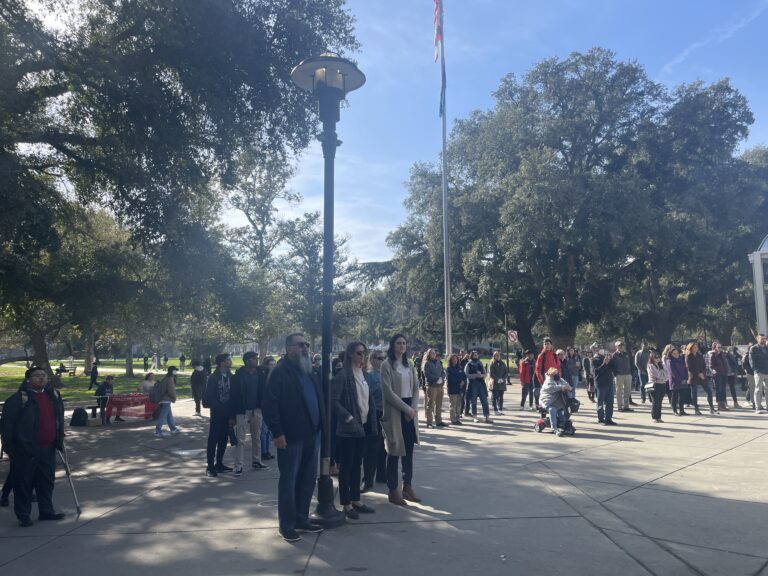
A campus-wide “Moment of Reflection” took place outside of the Memorial Union at noon on Feb. 1, offering a space for community members to come together to reflect on the tragedies that have taken place over the past month, including gun and police violence throughout California and beyond, and closer to campus, the death of a UC Davis student on Jan. 24.

There were several speakers at the event, including International Student Representative Keven Zhou, ASUCD External Affairs Vice President Celene Aridin and Rev. Quentisha Davis Wiles, the senior pastor at St. Mark’s United Methodist Church in Sacramento.

There were also tables set up in the area highlighting various mental health resources available to the campus community, including Student Health and Counseling Services, Aggie Mental Health, the ASUCD Mental Health Initiative and the Craft Center.

Wiles centered her speech around the idea of compassion, saying that the word speaks to the idea of “having your heart impacted by great suffering, and having a great desire to respond.” She invited listeners to pause and recognize the recent tragedies our school, state and nation have suffered, and the weight that can place on people as they “continue to live [their] day-to-day lives.”

We are inundated by violence at home, in our schools, at the shopping stores, in our faith communities, in our work communities; we are not exempt from the violence, none of us,” Wiles said. “And yet, we continue to live, [as] people who understand that bad things happen, but we have the power and ability to make a difference.” 

She went on to explore what it might mean to take action following these tragedies, first saying broadly that she believes we must be people who “don’t ignore the things happening around us,” before speaking directly to “those […] who are studying policy or are in positions of leadership.”

“For those of you who have authority, take authority,” Wiles said. “As the granddaughter of someone who served in the Korean war, as the niece of law enforcement officers, I want to say that policy gives permission for people to do certain things. When we don’t change policy, when we don’t take responsibility, when we don’t care about the situation in front of us because it doesn’t impact us directly, we participate, and we give permission.”

Next, Wiles invited attendees to take “three collective deep breaths,” each with a different theme to meditate on. She explained that the first was “in the spirit of self-care.”

“We have to remember that no matter what we have been charged to do in this world, whatever our assignments are, we are our most valuable assets,” Wiles said. “We are. [Flight attendants] remind us that if there is an emergency ever, you secure your own oxygen mask first. We can’t help anyone else unless we are secure.”

The second breath was “in honor and admiration of our community.”

“People have taken time out of their schedules in their day when they could’ve been doing anything, but they chose to be [here],” Wiles said.

The third and final breath was “for our nation.”

“Our nation is calling out to us, those who are compassionate enough and bold enough, to use our pain and anger constructively,” Wiles said. “To not do harm but progressively make a difference in love and in care and in faith, to leave our mark on the world.”

Wiles then invited those gathered into a full minute of silence from 12:10 p.m. to 12:11 p.m. before ending her speech by asking people to turn to someone next to them and share something that they liked about the UC Davis community. 

Zhou spoke next. His speech referenced UC Davis’s Principles of Community and encouraged students and other listeners to strive to maintain a culture based in these principles. 

“We have an obligation to build and maintain a culture and climate based on mutual respect and caring,” Zhou said. “Let us come together to support each other in this difficult time. 

In the end, I believe that love, unity and compassion will always triumph over hate, division and violence.”

The event was put together very quickly, according to a recent press release, with the idea coming from Cecily Roberts, the director of the Women’s Resources and Research Center. The release said that organizers thought “[it] was important to acknowledge the difficulty of continuing on with daily tasks at work or school when so much tragic news is weighing heavily.”

After the event, there were artificial white roses with positive quotes attached available for community members to take home, and attendees were encouraged to stick around and talk to those around them.


Written by: Sonora Slater — campus@theaggie.org

Every climbing series, movie you didn’t know you needed to see

“Free Solo” is not the only climbing movie, actually


By SOPHIE DEWEES — arts@theaggie.org


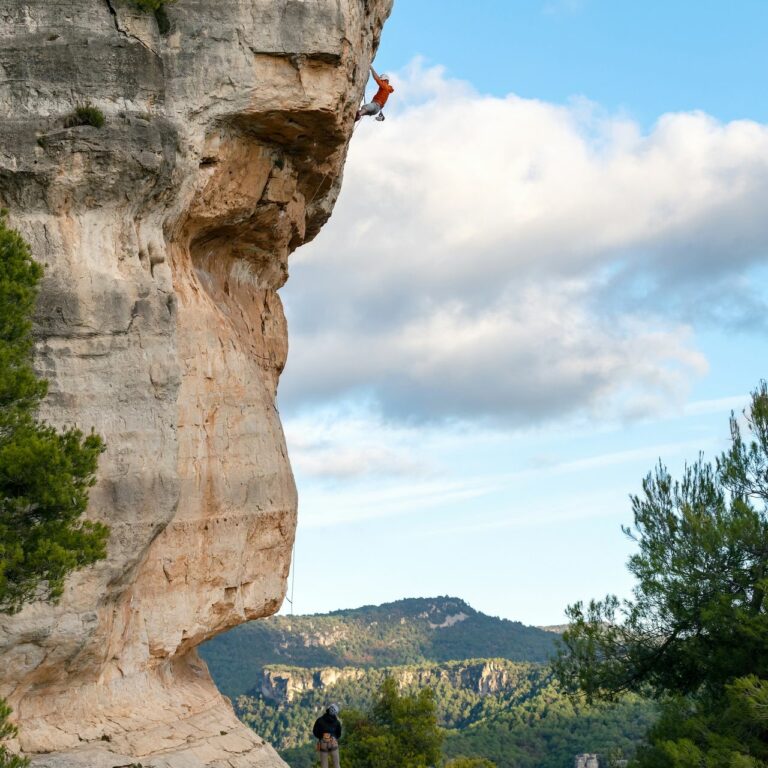
Scaling sheer cliff faces with your toes resting on minuscule edges just big enough to hold your weight definitely isn’t for everyone. And although rock climbing has greatly increased in popularity with the rise of indoor rock gyms and the inclusion of the sport in the 2021 summer Olympics, it still takes a specific kind of person to look at an outdoor boulder, a teeter-y 60-foot slab or even an artificial brick wall and say, “Yeah, I would want to climb that.” But even if you would rather do anything else than take a 20-foot fall on a rope, there are a myriad of great climbing documentaries and series that can be enjoyed by the avid climber and those mildly interested in climbing alike.


“Valley Uprising”

This documentary is a great one to start with, as it describes the history of rock climbing in Yosemite National Park. The film explains how the now widely popular sport began as a fringe movement led by “dirtbags” —  climbers known for partying and taking food from dumpsters who lived somewhat illegally in the park. It interviews and shares footage of some of the sport’s greats such as Lynn Hill (who made the first free ascent of the Nose of El Capitan in 1993) and Alex Honnold (who climbed a different route of El Cap without ropes in 2017, see below for more). The makers of the film also document the evolution of climbing equipment and practices and the infamous feud between legendary rock climbers Warren Harding and Royal Robbins. 


“The Climb”

Hosted by professional climber Chris Sharma, HBO’s new show “The Climb” is the first widely viewed outdoor climbing competition. It exhibits many different climbing styles including deep water soloing (climbing without a rope over deep water), sport climbing (climbing while clipping into bolts along the way), trad climbing (relying on gear placed in cracks) and bouldering (climbing shorter distances without a rope), to name a few. As a climber getting into sport climbing, I appreciated that contestants discussed being afraid of falling and how they were able to overcome this fear in a high-stress, competitive environment.

I will say, a few of the show’s choices were questionable, such as having two contestants go against each other on an indoor speed climbing wall (essentially, a standardized route that you climb as fast as possible) in an elimination round. This felt antithetical to the point of the show, which was to test climbers’ skills outdoors. Jason Momoa (yep, the actor who played Aquaman and Khal Drogo from “Game of Thrones”) also oddly makes short-lived appearances at the beginning of each episode to discuss the upcoming climbs with Sharma, which in my opinion does not contribute much. That said, the series gives climbers the potentially life-changing chance to earn a sponsorship from a major climbing clothing brand in a format that is both highly entertaining and illustrates the diverse nature of the sport.


“Free Solo”

Probably the most well-known climbing film, “Free Solo” tells the story of professional rock climber Alex Honnold’s long-term goal of free soloing (climbing without ropes) the “Freerider” route on El Capitan in Yosemite. El Cap is an iconic 3,000-foot rock face in, as they put it in the documentary, “the Mecca of rock climbing:” Yosemite National Park. The movie describes Honnold’s background in climbing and his process for “projecting” the climb — which means learning all of the different moves on rope before trying a rope-free ascent. 

While watching this film is sure to make your palms sweat, as a single foot slip could send Honnold plummeting to his death, it is a fascinating depiction of a climber and his (perhaps unreasonable) goal to scale the world’s largest granite monolith in climbing’s purest form — with only shoes and a chalk bag.


“The Dawn Wall”

“The Dawn Wall” shares professional climbers Tommy Caldwell and Kevin Jorgeson’s 19-day adventure on the face of El Cap that is first hit by light in the morning. It was originally thought to be unscalable, as there was no clearly defined route before their ascent. Caldwell spent nearly six years on the project before its completion, and the big wall route is considered by many to be the hardest in existence. 

In this film, you learn more about Caldwell’s background (specifically, that he is the only person to date that has completed such a difficult climb with only nine fingers) and come to understand how someone can tackle such an enormous project with grace and positivity. 


“The Alpinist”

The focus of this documentary, Marc-André Leclerc, was (at least based on his portrayal in the film) a sweet, reserved person who was uninterested in fame or recognition despite his immense talent. He completed some of the most impressive climbs in history, free soloing extremely difficult ice and mixed (a combination of ice climbing and regular rock climbing) routes, which is nearly unheard of in the sport. 

The biggest flaw in the film is mainly that it lacks footage of many of Leclerc’s ascents. However, I hesitate to even call this a flaw, as it contributes to the overall depiction of Leclerc as a person who climbs because he loves to, not to seek sponsorships or acclaim.


“Reel Rock” (all the seasons, really)

Reel Rock” is an annual film festival that shares short films about up-and-coming climbers. Several older seasons are available for free on the Red Bull website and offer a peek into the projects of climbers around the world. These include the likes of Honnold and Caldwell’s ascent of the Fitz Roy traverse in Patagonia in 2014 to professional climber Nina Williams’ attempt to climb a 15-meter boulder in the Buttermilks in 2019. If you’re looking for just a taste of what outdoor climbing has to offer, all the seasons of “Reel Rock” provide a short look at harrowing feats by some of the best climbers in the world. 


Written by: Sophie Dewees — arts@theaggie.org


Francesca Wright announces candidacy for vacated District 3 council seat

0

Wright hopes to represent District 3 with a focus on housing and community engagement


By MADELEINE YOUNG — city@theaggie.org


On Jan. 25, Francesca Wright formally declared her candidacy for Davis City Council. Wright is campaigning to fill the District 3 seat recently vacated by Lucas Frerichs, who left the council after his successful election into the Yolo County Board of Supervisors. 

The special election will take place on May 2 with mail-in voting. Davis residents who reside in District 3 will be mailed their ballots in April. 

Wright, who is the cofounder and coordinator of Yolo People Power and a founding member of Women in Leadership Davis, will focus her campaign on housing, climate change, city services and community engagement. 

“One of my core focuses is basic city services,” Wright said. “Our roads are just really needing repair and people expect good quality services from this city and we’ve been having staffing issues. I want to make sure we can get back to the right size staff and planning and building department” 

Wright has also been adamant about prioritizing dealing with the housing shortage in Davis which significantly affects students and staff at UC Davis.

“I think the biggest crisis that Davis faces is the housing shortage, and we’ve had a large expansion of students on campus and the university has made some progress in additional housing, but it’s still inadequate for the demand,” Wright said. “We have more land than any of the UCs in the state and I hope to be able to work with the university to get more housing in line for production”. 

Cynthia Rodriguez, a defense attorney of 40 years and former candidate for Yolo County District Attorney, has endorsed Wright’s candidacy for the District 3 seat.

“I am so proud to endorse Francesca Wright for City Council,” Rodriguez said. “Her vast knowledge of local, state and federal government and politics and her capacity for seeing reasonable success and workable resolutions to the issues facing communities today is remarkable and a gift to our local needs and functioning. Francesca Wright should be recognized as a strong, hard-working and singularly perceptive thinker who would well represent us all.”

Wright discussed how she plans to work with fellow council members to continue improving the lives of workers and local farmers if elected. 

“I look forward to working with my fellow council members to examine how we can support startup small farmers in the periphery,” Wright said. “Where we have land that we’ve acquired […] so that we can actually benefit, not only preserve our beautiful farmland but make it available to our young people who are studying sustainable agriculture at UC Davis.” 

After announcing her campaign, Wright has been canvassing throughout Davis to garner support. Wright talked about the people she’s met on the campaign trail so far and what she’s taken away from going door to door.

“I’m finding that we have neighbors who care about neighbors,” Wright said. “We have people who really want to do the right thing and I’m just impressed with how every neighborhood I go to, there’s people who ask really good questions.” 


Written by: Madeleine Young city@theaggie.org